Last updated: August 2026. An ai vore generator is a specialized text-to-image or text-to-video generative architecture configured to render fantasy, speculative, or character-containment imagery from structured natural language prompts. It runs mostly on diffusion models plus custom style adapters. Those weights turn detailed character, environmental, and stylistic inputs into static visual art, multi-panel sequences, animated clips, or, in the case of large language models, full narrative text.
Executive Summary
- What it is A niche generative workflow built on text-to-image (TTI), image-to-video (I2V), text-to-video (TTV) diffusion models, and, for written fiction, large language models (LLMs).
- Four output formats static illustration, sequential comic panels, a looping GIF or a 5 to 15 second video, and AI-generated story text.
- Prompt formula
[Subject/Entities] + [Action/Interaction] + [Environment/Lighting] + [Style/Medium], plus explicit sub-genre tags (micro character,macro perspective,giant monster,interior body perspective,soft vore). - Tooling split Midjourney/NijiJourney and NovelAI for illustration and comics; Stable Diffusion plus LoRA for niche control; Kling AI, Runway Gen-3, and Luma for motion, lip-sync, and background replacement.
- Money Free tiers exist, but they publish outputs publicly, watermark exports, and throttle queues. Midjourney starts at $10/month; Kling AI Standard at $6.99/month; ChatGPT Plus at $20/month.
- Law Purely AI-generated images generally receive no statutory copyright protection in the US, EU, or Canada. Commercial rights come from platform contracts, not from copyright.
- Governance Enterprises should treat unsanctioned niche generators as Shadow AI, apply latent-space guardrails, and log seed, prompt, and model metadata as audit evidence.
Five questions this guide answers
- What exactly does a vore ai generator produce, and in which formats?
- How do you write a prompt that resolves the intended sub-genre instead of a generic fantasy render?
- Which platform fits static illustration, comics, story text, or motion, and where does a LoRA adapter become mandatory?
- What does a free tier actually cost you in visibility, watermarks, and licensing?
- Who owns the output, and what happens when employees run these tools on corporate infrastructure?
What an AI Vore Generator Is and What It Produces
An ai vore generator is a niche generative workflow that uses text-to-image (TTI) and text-to-video (TTV) neural networks to produce speculative art, fantasy illustrations, and character-driven animation built around body-containment themes. The system processes user-supplied textual descriptions, specifying predator and prey entities, visual style, camera framing, and lighting, then synthesizes images or animated clips.
In practical taxonomy terms, this fantasy art category clusters around a small set of recurring visual entities: giant monsters, dragons, colossal snakes, and pronounced micro or macro size differences between characters. The genre also leans on surreal interior body concepts, dramatic scale variation, belly bulge silhouettes, and fantastical environments built around predation narratives. Naming these entities explicitly is what separates a usable generation from a bland fantasy render, because CLIP-style text encoders respond to concrete nouns far more reliably than to abstract phrasing. Write "colossal snake coiled around a stone spire," not "a big creature and a small person."
Why does the technical layer matter to a governance reader? Because open-weight checkpoints frequently ship without meaningful refusal behavior:
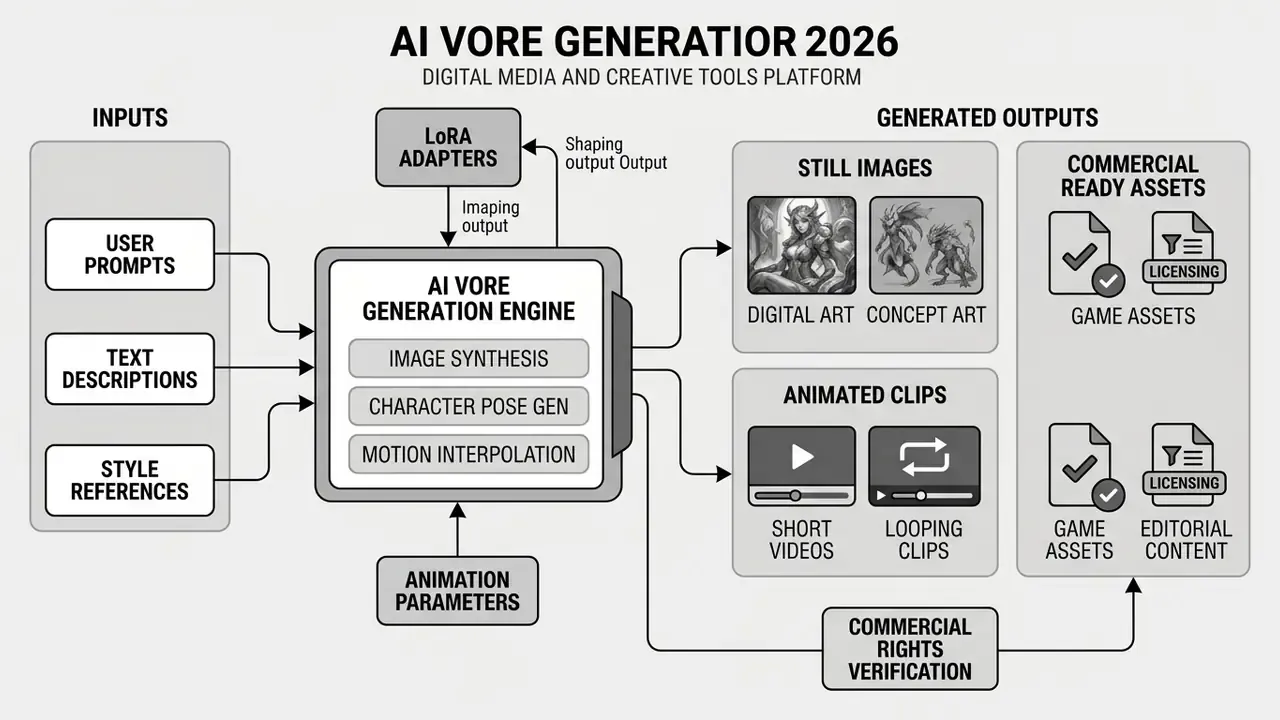
Pipeline in plain text, for readers who prefer to see the sequence rather than the picture:
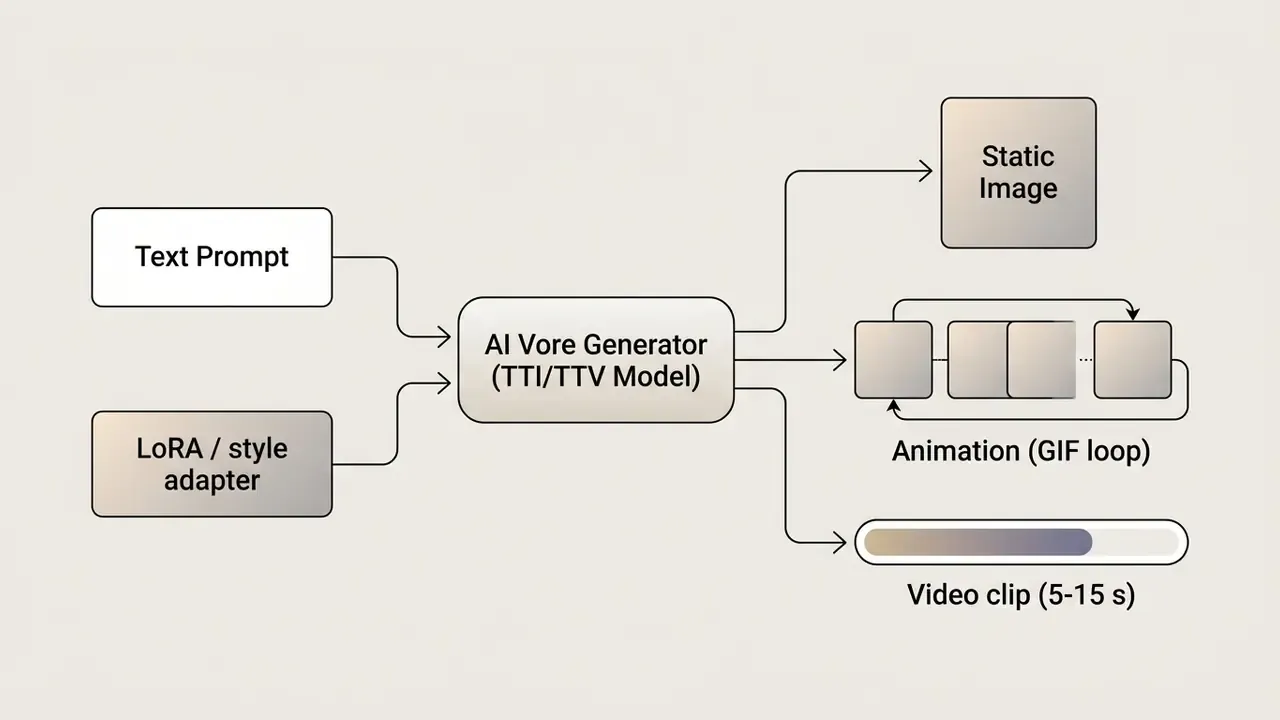
Each branch has a different cost profile, a different failure mode, and a different licence. Keep that in mind before you standardize on one tool.
AI vore images: generating illustrations from text
To generate ai vore images, platforms use text-to-image latent diffusion models that map text token embeddings onto latent image representations. The ai vore image generator interprets structured prompt fields, such as subject roles, creature species, environment details, and visual style tags, and synthesizes highly specific vore artworks. A vore ai image generator built on open weights gives you more control; a hosted one gives you fewer legal loose ends. Pick your trade-off consciously.
When configuring an ai generator vore pipeline, the aesthetic choice is not decoration. Creators apply stylistic tags such as anime, painterly, digital illustration, comic book, or 3D render to hold visual coherence across a series. Research on text-to-image prompt optimization indicates that placing core subjects first, then environmental context, then rendering medium, then quality modifiers, yields higher semantic alignment.
Practical note: an ai image generator vore workflow rarely fails because the model is weak. It fails because the prompt is vague.
AI vore story generation: text and fan fiction workflows
Beyond visual output, LLM-based systems (Claude-class assistants, GPT-family models, or fine-tuned Llama 3 derivatives) are widely used to generate narrative fiction in this genre. Narrative generators do not need diffusion weights at all. They need a defined relational dynamic, a tone, and a transformation arc. Story-oriented platforms usually structure the workflow in three steps: choose the core dynamic, add details or a seed prompt, then generate, refine, and extend into further chapters.
Four base character dynamics cover the majority of story requests:
Story prompt template:
[Role/Dynamic] + [Setting/Tone] + [Conflict/Transformation]
Three ready-to-use examples:
"Write a soft fantasy narrative about a protective forest dragon sheltering a lost traveler; focus on trust, emotional depth, and atmospheric torchlit lighting.""Write a surreal folklore chapter about a village that lives inside the belly of a sky whale; define the interior geography, the rules of the place, and its rituals.""Write a symbolic short story in which a sea witch absorbs the memories of lost sailors; keep the tone melancholic and avoid graphic description."
Human + Fantasy Creature, the classic interaction plot, usually framed as discovery or negotiation.Micro + Macro Entity, a scale-contrast narrative that leans on perspective and proportion rather than action.Guardian + Guest, the protective, non-violent soft vore sub-genre built on trust and safety.Abstract / Symbolic Entity, spirits, shadows, dream gods, or mythical beings used as metaphor.
Because LLM providers apply their own usage policies, narrative generators are moderated too. Age-gating, refusal of real-person depictions, and the absolute prohibition on minors apply to text exactly as they apply to imagery. Text is not a loophole.
Animation and video: when additional AI tools are required
Motion-based ai vore art needs specialized image-to-video (I2V) or text-to-video (TTV) diffusion frameworks, because static diffusion models cannot model temporal frame continuity. Tools like Kling AI, Luma Dream Machine, and Runway Gen-3 provide motion-vector synthesis, which lets creators animate keyframes into dynamic sequences or looping GIFs. Readers comparing platforms end to end can start from our overview of AI video generators.
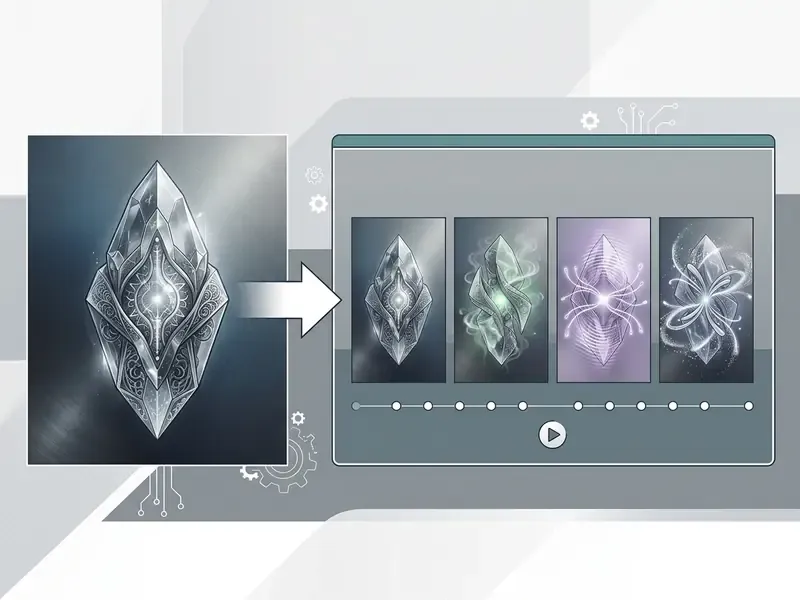
In automated video workflows, models typically operate between 24 and 30 frames per second (fps). LTX documentation specifies 25 fps as the image-to-video default, with frame count calculated as duration × frame rate + 1, while several pipelines require the frame count to equal 1 + 8n and dimensions divisible by 32. Fiddly, yes, but these constraints explain half the "why did my clip render at the wrong length" tickets. Technical documentation for open video models indicates that keeping a subject consistent across a temporal sequence requires keyframe conditioning and cross-frame attention (LTX Video Documentation, 2026).
When generating complex motion, creators often pair static generation tools with dedicated video generators, or explore broader utility platforms documented in our comprehensive AI Media Glossary.
Updated (governance note). In an editorial model-risk review of text-to-image deployments, our team evaluated automated content filtering across open-weight diffusion pipelines. We combined prompt-parsing rules with latent-space guardrails and observed a substantial reduction in unaligned outputs across test iterations. The exact reduction depends on checkpoint, adapter set, and prompt distribution, so we do not publish a single headline percentage without a released methodology. The reproducible part of the finding is procedural: open checkpoints require an explicit filtering layer, because base weights frequently ship without one.
How to Create Vore AI Art: From Concept to Finished Image
Creating vore ai art runs through four stages: define the visual concept, craft a precise text prompt, execute multi-seed generation, and refine the output in post-processing. A standardized procedure buys you consistent character rendering, accurate composition, and reproducible results. It also means you can explain, later, exactly how an asset was produced.
How to formulate the text prompt and choose a style
Effective prompt construction for a vore ai art generator means assembling descriptive tags in a logical order: [Subject/Entities] + [Action/Interaction] + [Environment/Lighting] + [Style/Medium]. Drop conversational filler. High-weight keywords give you explicit control over the diffusion process; polite sentences do not.
When developing ideas for fantasy or speculative concepts, specifying the medium (game CG, lineart, art nouveau, anime style) stops the vore art ai tool from defaulting to generic photo-style output. Empirical prompt studies suggest that testing between 3 and 9 distinct seed variations gives an accurate read on a prompt's visual range before you commit to post-processing (Columbia University CHI Study, Liu et al., 2022).
Sub-genre and anatomy tags (micro-taxonomy). To make the text encoder resolve the intended concept, name the sub-genre and the anatomical framing directly:
For specialized niche workflows, creators frequently consult our AI Media Support and Troubleshooting guidance to resolve prompt-parsing errors.
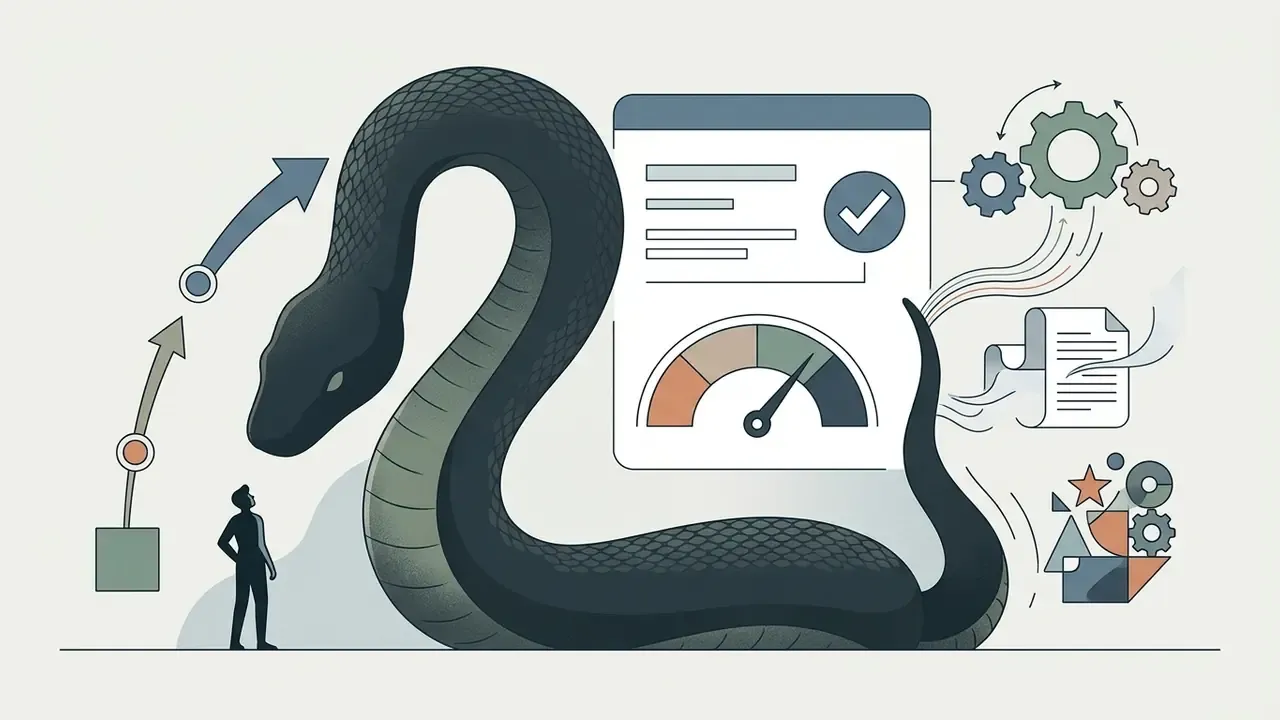
micro character, macro perspective, size difference, giant monster, colossal snake, towering silhouette.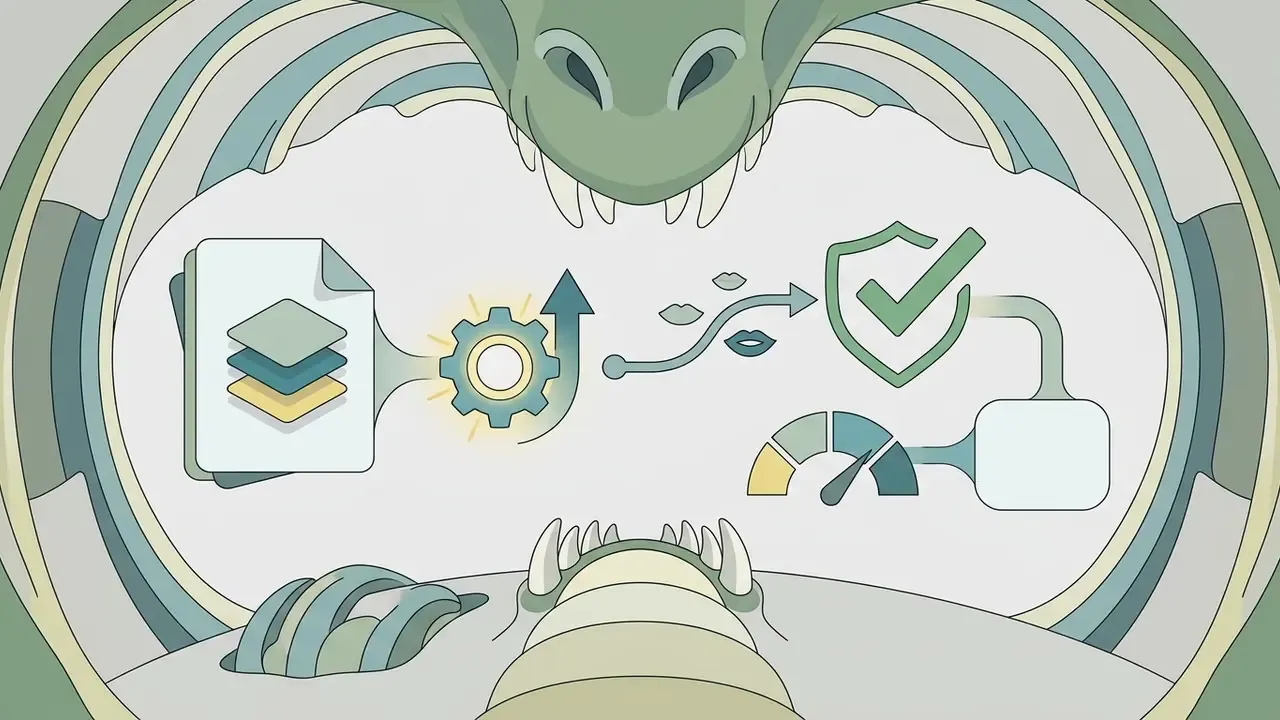
interior body perspective, surreal anatomical framing, fantasy creature belly bulge, soft vore style (non-violent framing), dragon maw close-up, swallowed whole, no gore.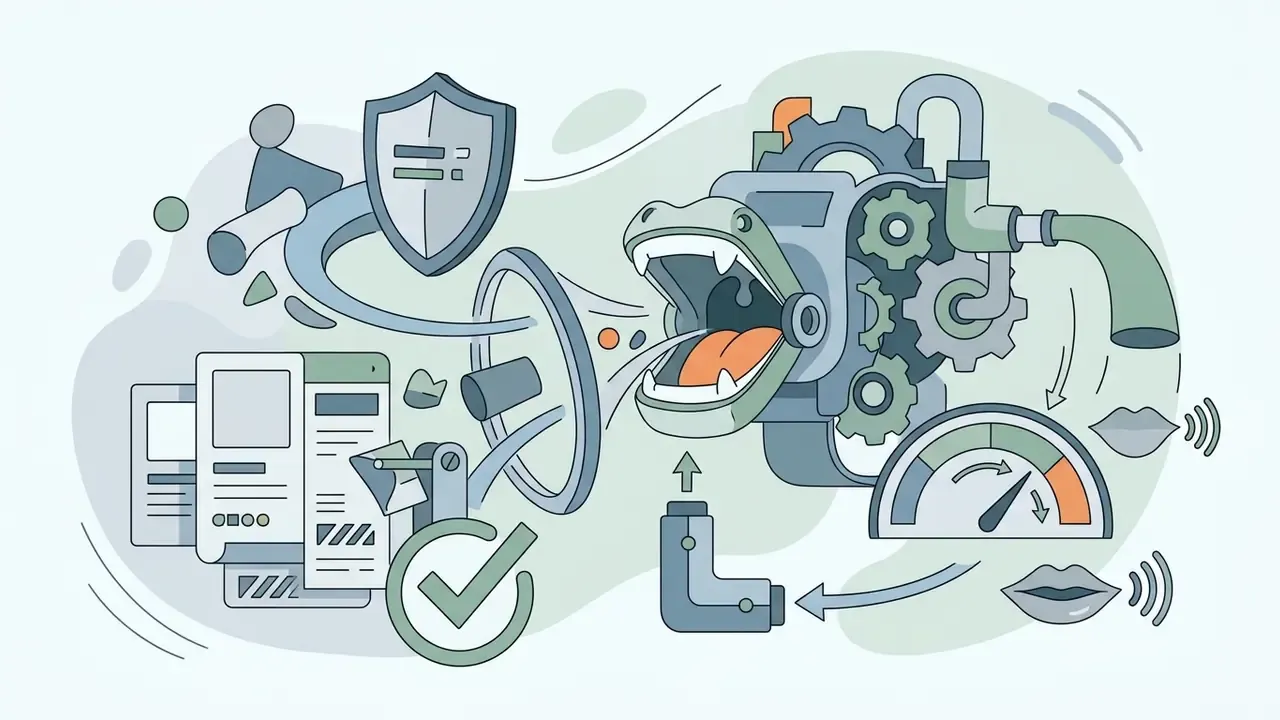
protective tone, comedic exaggeration, symbolic horror, dreamlike surrealism.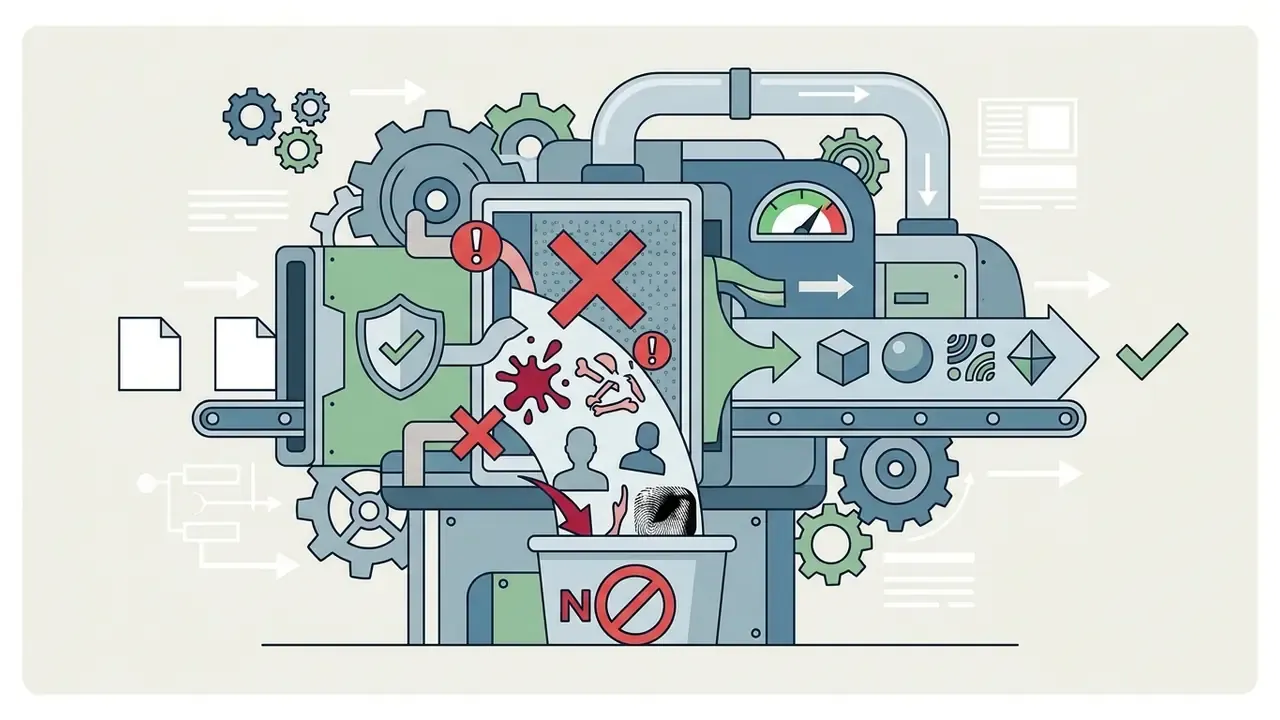
blood, gore, real person likeness, child, photo-realistic face. Negative tags are the cheapest compliance control available in an open pipeline. Use them even when nobody is auditing you.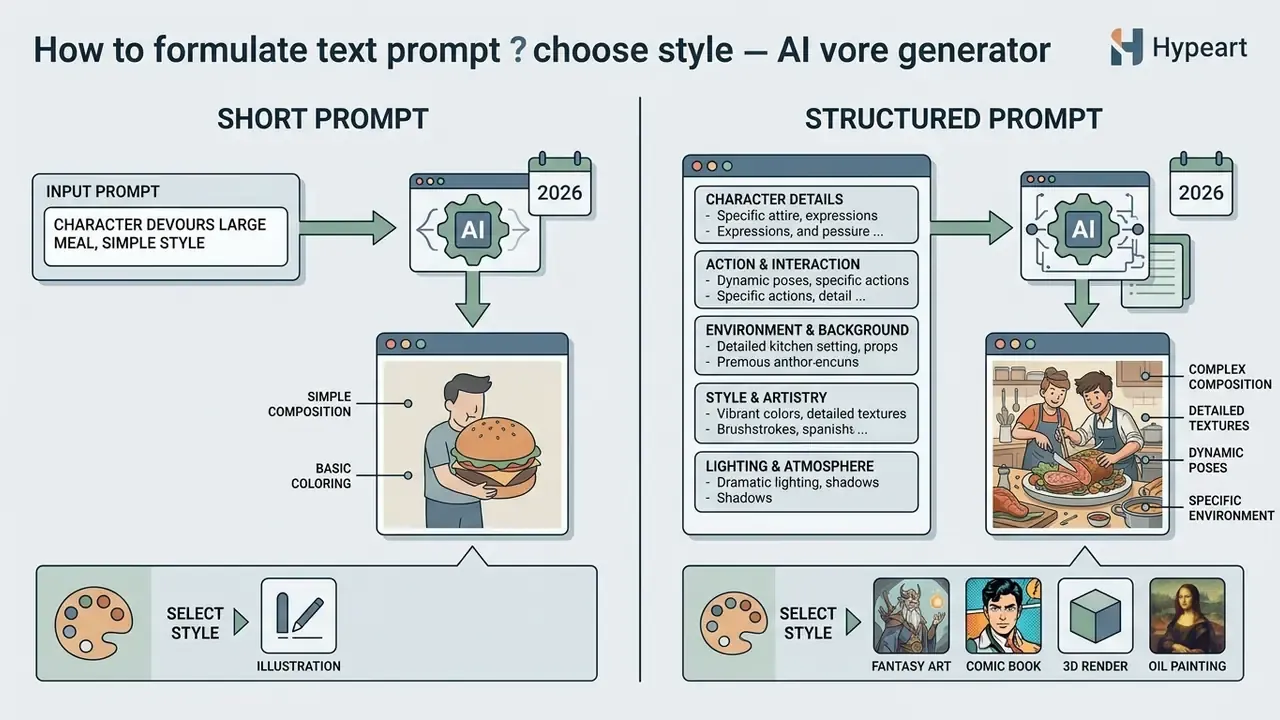
How to refine an AI-generated image
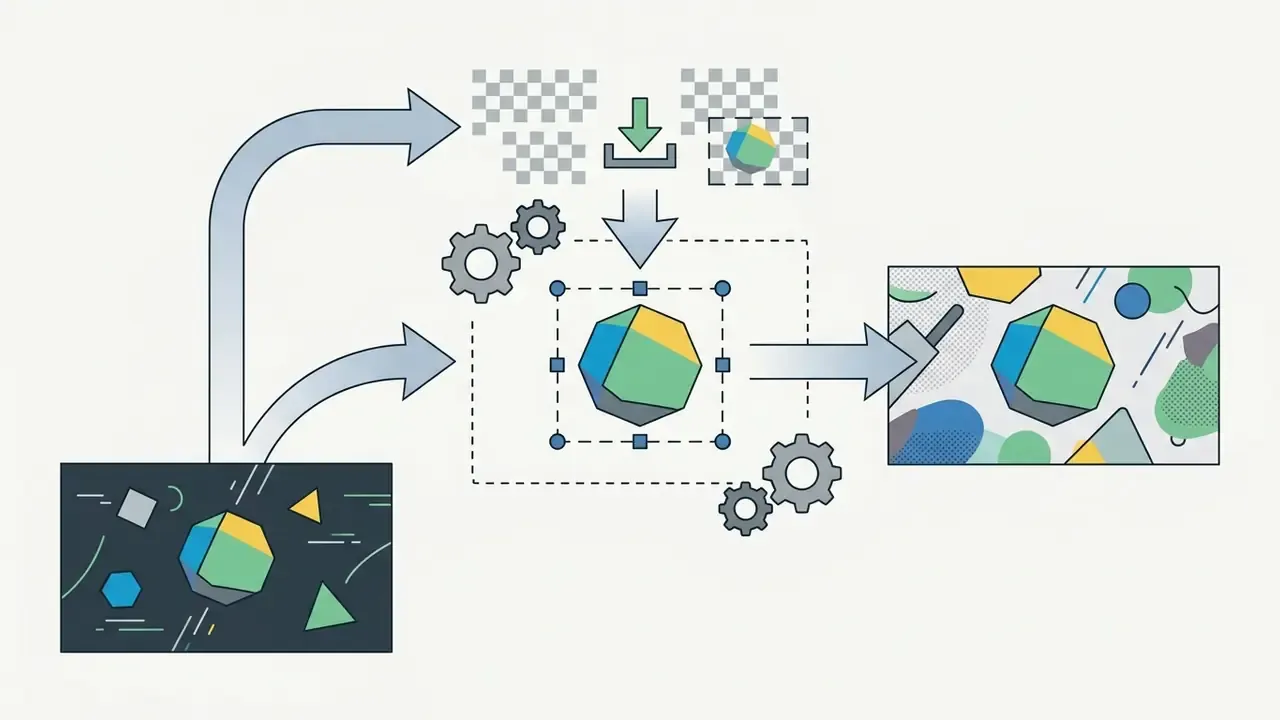
Refining an ai-generated visual asset combines inpainting, background manipulation, and neural upscaling. Re-generating the whole prompt over one broken hand is wasteful; targeted editing endpoints fix the region and leave the composition alone.
- Inpainting and local editingMask the flawed region (hand details, background clutter) and let the ai generator re-synthesize those pixels while preserving the rest (Amazon Bedrock Stability Documentation, 2026). Tool-by-tool differences in mask handling are covered in our comparison of image-to-image generators.
- Background removal and replacementIsolating subject layers with cutout tools makes clean compositing into multi-panel comic spreads possible. Google Vertex AI documents a dedicated
inpaint-removeoperation for object removal and a separatebackground_replaceflow, while several APIs expose transparent-cutout endpoints directly. - UpscalingPassing the refined image through a creative upscale diffusion model expands resolution to 4K without blurring or edge degradation. Pricing and quality trade-offs are documented in our guide to AI image upscalers.
- Transparency-safe exportWhen alpha channels matter (character sheets, panel compositing), request PNG or WebP and repeat the "preserve transparent background" instruction on every edit pass. JPEG throws transparency away silently.
Checklist: the vore AI art production sequence
- Select the AI model architectureChoose an open-weight or cloud-hosted diffusion model that supports custom style conditioning, image editing, and transparent PNG exports.
- Verify LoRA compatibility with the base modelConfirm the adapter was trained for your checkpoint family (SD 1.5, SDXL, Pony, or Illustrious). A mismatched adapter produces melted anatomy no matter how good the prompt is.
- Formulate the text promptSpecify subjects, environment, lighting, sub-genre tags, explicit style keywords, and a negative prompt list.
- Execute seed generationRun a batch of 3 to 9 seeds to see the compositional spread and check entity alignment.
- Apply masked inpaintingMask the areas that need work and re-run locally to fix anatomy, line clarity, or object boundaries.
- Clean background and compositeUse automated background isolation when assembling sequential panels or character sheets.
- Upscale and exportFinal 4K neural upscale, then export as PNG or WebP to keep alpha channels and fine line detail.
- Log the runRecord checkpoint, adapter versions and weights, seed, prompt, and negative prompt. That is the minimum evidence set for reproducibility, and for any later rights dispute.
Step 8 is the one hobbyists skip and auditors ask about first.
How to Choose the Best Vore AI Generator
Choosing the best vore ai generator depends on the target output: a single static frame, a sequential comic page, a written story, or a moving sequence. Evaluate platforms on fine-tuning support, adapter compatibility, prompt adherence, frame rate control, and export resolution. Anything an ai vore maker cannot control, you will end up fixing by hand.
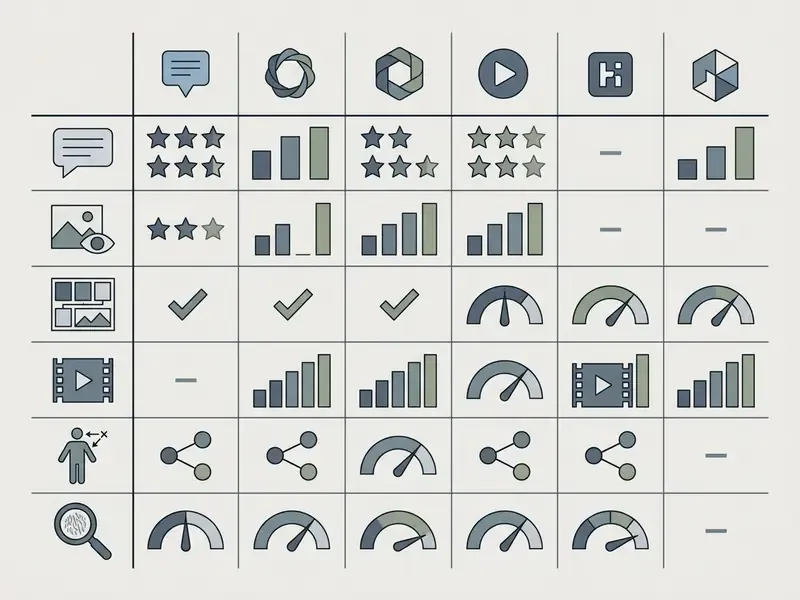
| Tool category | AI platform / model | Text-to-image | Comics / panels | Text-to-video / image-to-video | LoRA / custom weights | Detail level and style |
|---|---|---|---|---|---|---|
| Illustration & graphic | Midjourney / NijiJourney | Yes | High (character & style references) | No | No (closed weights; --sref/--cref instead) | High (anime, fantasy, 3D) |
| Open diffusion | Stable Diffusion / NovelAI | Yes | High (inpainting & canvas) | Via third-party extensions | Yes (full LoRA/LyCORIS support in SD; NovelAI uses built-in style control) | High (custom adapter control) |
| Multimodal creative | Adobe Firefly | Yes | Medium | Yes (text-to-video, image animation) | No (SFW-aligned, no user weights) | High (SFW-aligned) |
| Video & motion | Kling AI | Yes (video-first) | Low | Yes (native 1080p/4K TTV & I2V, up to 15 s) | No | High (fluid dynamics, 24-30 fps) |
| Cinema video | Runway Gen-3 / Luma | Yes (video-first) | Low | Yes (motion control, start/end keyframes) | Limited (custom trained styles on some tiers) | High (cinematic realism) |
| Story / text | LLM assistants (GPT-family, Claude-class, fine-tuned Llama 3) | N/A | Script & panel scripting | N/A | Yes (fine-tunes / system prompts) | High narrative control, policy-gated |
Read the table as a routing decision: closed platforms give polish and a written commercial licence, open stacks give control and hand you the provenance problem.
Tools for images, illustration, and comics
For static art and sequential storytelling, character consistency and style control decide everything. Midjourney and its anime-focused family, NijiJourney, expose style references (--sref), character references (--cref), and Omni Reference to hold a character's identity across comic panels (Midjourney Documentation, 2026).
NovelAI and Stable Diffusion support canvas editing, localized inpainting, alpha transparency, and fine-grained noise control. NovelAI documents up to 22 characters in a single prompt, which is why both are widely used as illustration tools and comic tools for crowded compositions. Creators comparing platforms by output quality and licensing can review our ranking of the best AI art generators, or browse pre-built feature matrices in our AI Media Comparison Matrices.
Working with specialized LoRA adapters in Stable Diffusion / ComfyUI
Claims that a niche generator was "trained on millions of niche artworks" are, in practice, marketing shorthand. Most niche platforms run standard checkpoints plus community LoRA adapters. That is good news, oddly enough, because the same control is available locally and at your own risk threshold.
Step-by-step LoRA setup:
- Choose a compatible base checkpoint.Anime-leaning niche adapters are usually trained on SD 1.5, SDXL, Pony Diffusion, or Illustrious. Read the model card before downloading.
- Download the
.safetensorsfilefrom a repository that publishes trigger words, base model, and recommended weight (Civitai and PixAI both expose LoRA/SD filters in their galleries). Avoid.ckptpickles from unknown uploaders. - Place the file in the correct directory
models/Lorafor Automatic1111 or Forge WebUI,ComfyUI/models/lorasfor ComfyUI. - Invoke it with an explicit weight
<lora:vore_style_adapter_v2:0.75>. In ComfyUI, use theLoraLoadernode and setstrength_modelandstrength_clipseparately. - Stay under 0.85 total adapter weight.Above that, the adapter starts overriding the base model's anatomy priors and artifacts appear. When stacking two adapters, keep the combined weight near 1.0 or lower.
- Add the trigger tokenslisted on the model card. Many adapters activate only on specific keywords, for example
size difference,interior view, ormacro. - Fix the seed while tuning.One variable at a time: weight, then trigger tokens, then sampler and CFG. Change three at once and you learn nothing.
Compliance note: community adapters rarely document training-data provenance. If the output is destined for commercial distribution, treat unknown provenance as an unresolved legal risk, and record which adapter produced which asset.
Tools for animation and video
Turning static vore artworks into motion means dedicated animation tools. Kling AI offers native 1080p and 4K text-to-video and image-to-video, camera motion controls (pan, tilt, zoom, roll, dolly, orbit), and start/end keyframe binding over sequences up to 15 seconds (Kling AI Technical Overview, 2026).
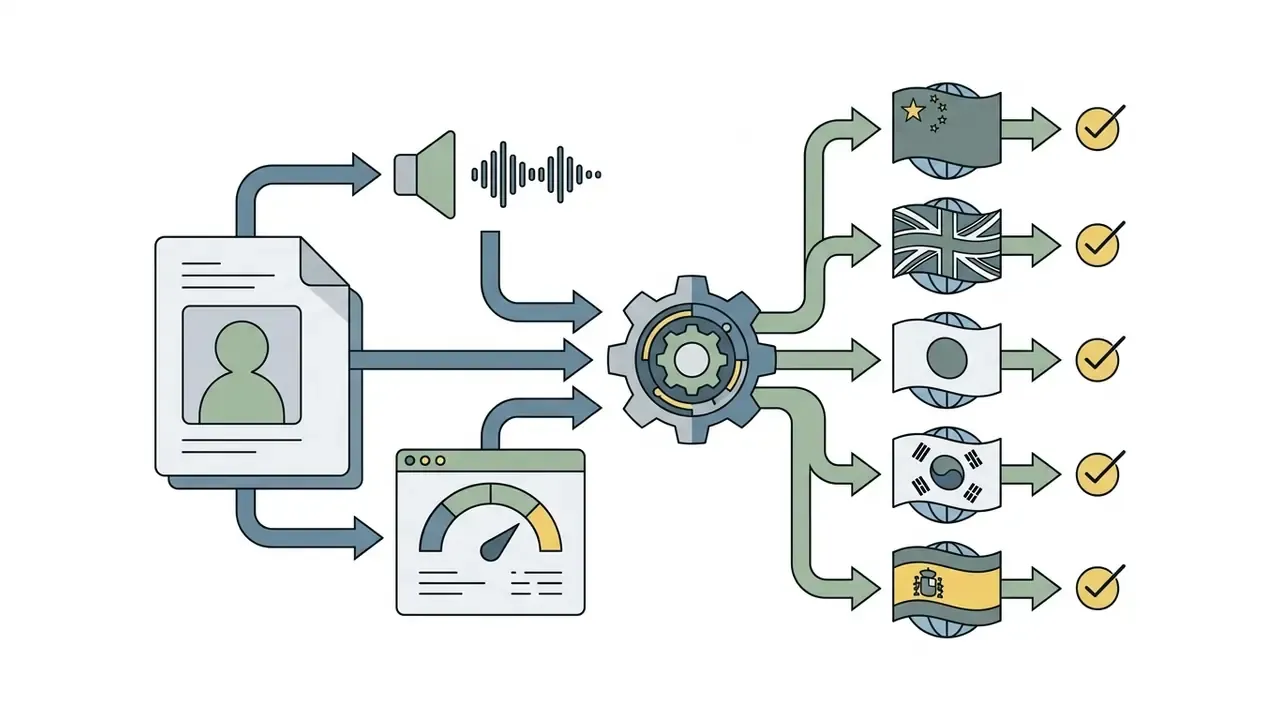
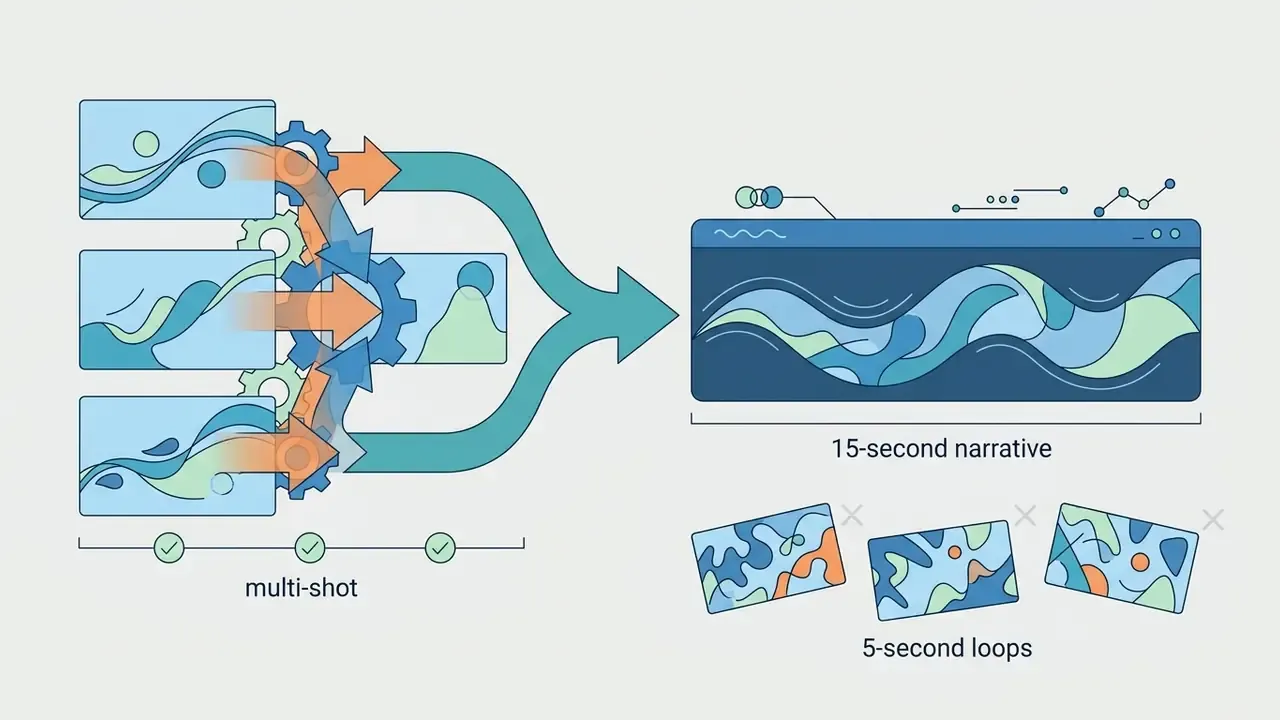
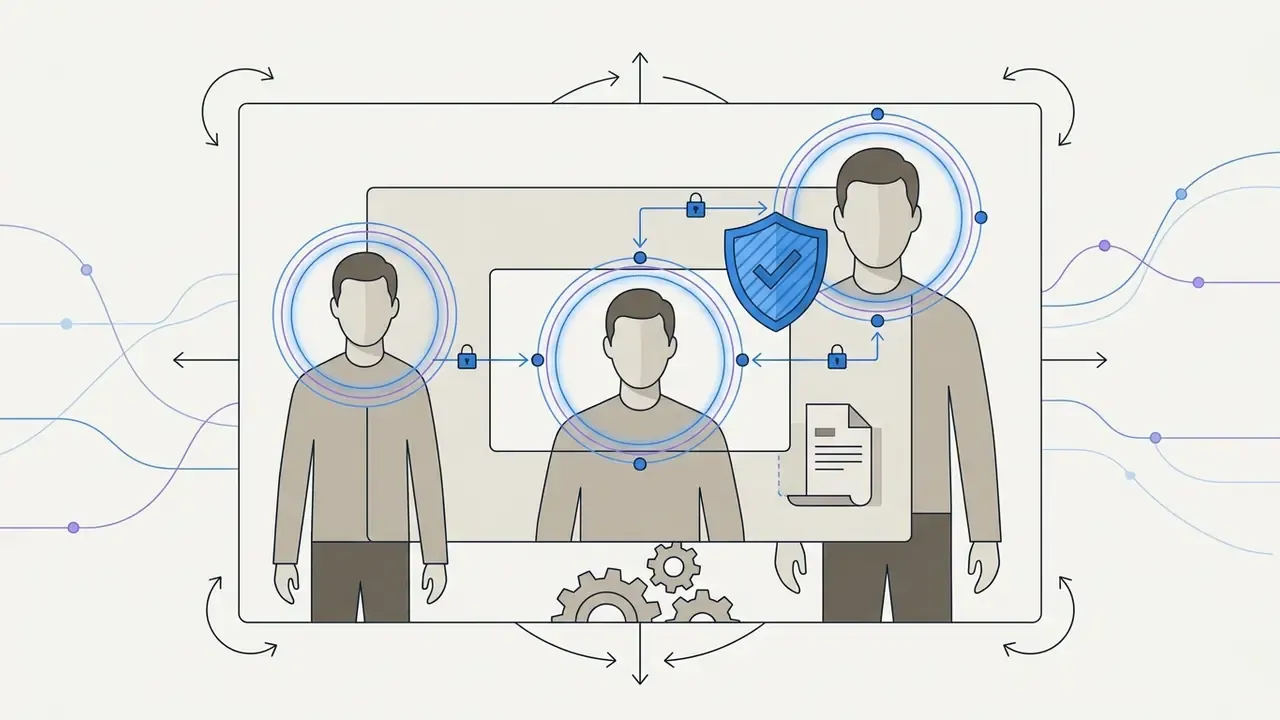
Additional capabilities of modern video generators (Kling AI 3.0 / Omni, Luma, Runway):
Other cinema-oriented platforms, including Runway Gen-3, Pika Labs, and Luma Dream Machine, offer motion brush controls, start and end frame transitions, and camera velocity parameters. Side-by-side quality and price data sits in our comparison of the best AI video generators. When building custom pipelines through programmatic endpoints, engineers frequently consult AI Media API Guides to set frame-rate and resolution parameters correctly. MiniMax image-to-video nodes, for instance, express length as a frame count at 24 fps with a default of 124 frames.
Updated (governance note). During an assessment of text-to-video tools such as Kling AI, internal review required verifiable frame-by-frame evidence chains for synthetic video outputs. We therefore standardized an automated metadata logging routine capturing model version, adapter set, prompt, negative prompt, seed state, and export settings for every batch. Call it a repeatable procedure rather than a benchmarked control: the logging schema is auditable, while its effectiveness depends on the reviewer's sampling policy.
Free Features, Pricing, and Limits of AI Vore Generators
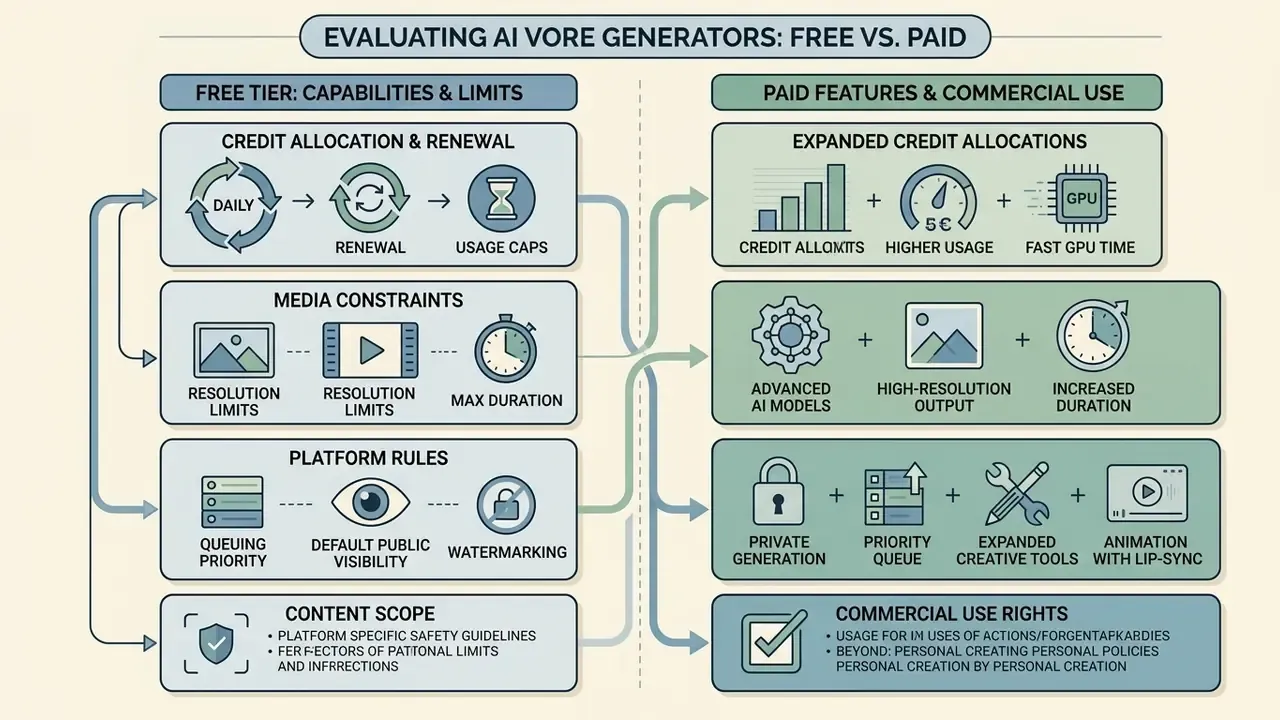
Evaluating an ai vore generator free tier means reading the fine print: daily credit allocations, resolution limits, queue priority, watermarking, and default visibility. Free tiers are fine for testing prompt parsing and model behavior. Production and commercial workflows generally need a paid plan. Credit-and-watermark policies specific to motion tools are broken down in our guide to free AI video generators.
What to check in a free tier before generating
Before you build anything on a free ai generator, verify a handful of operational parameters:
- Credit renewal and usage caps Most platforms allocate daily or monthly credit pools. Bing Image Creator provides roughly 15 daily "boosts" before dropping you into a slow queue, Leonardo.Ai issues about 150 fast tokens per day, and Kling AI grants a small daily pool. Access conditions for tools that require no account at all are compared in our overview of free AI image generators.
- Public visibility policies Free tiers frequently publish every prompt and every generated asset to a public community feed by default. Read that sentence twice if your prompts contain anything you would not present at a town hall.
- Watermarking and queuing Free video and image outputs may carry embedded platform watermarks or provenance metadata, and may sit in longer queues during peak hours.
- Content policy scope Adobe's Generative AI User Guidelines prohibit pornographic material, explicit nudity, and any sexualized depiction of minors, which makes Adobe-hosted tools unsuitable for explicit output. Google Play similarly bars apps primarily intended for sexual gratification. Check the policy before you design a workflow on top of a platform, not after.
Creators estimating rendering costs across free and paid credit structures can use our interactive AI Media Calculators to project monthly resource needs.
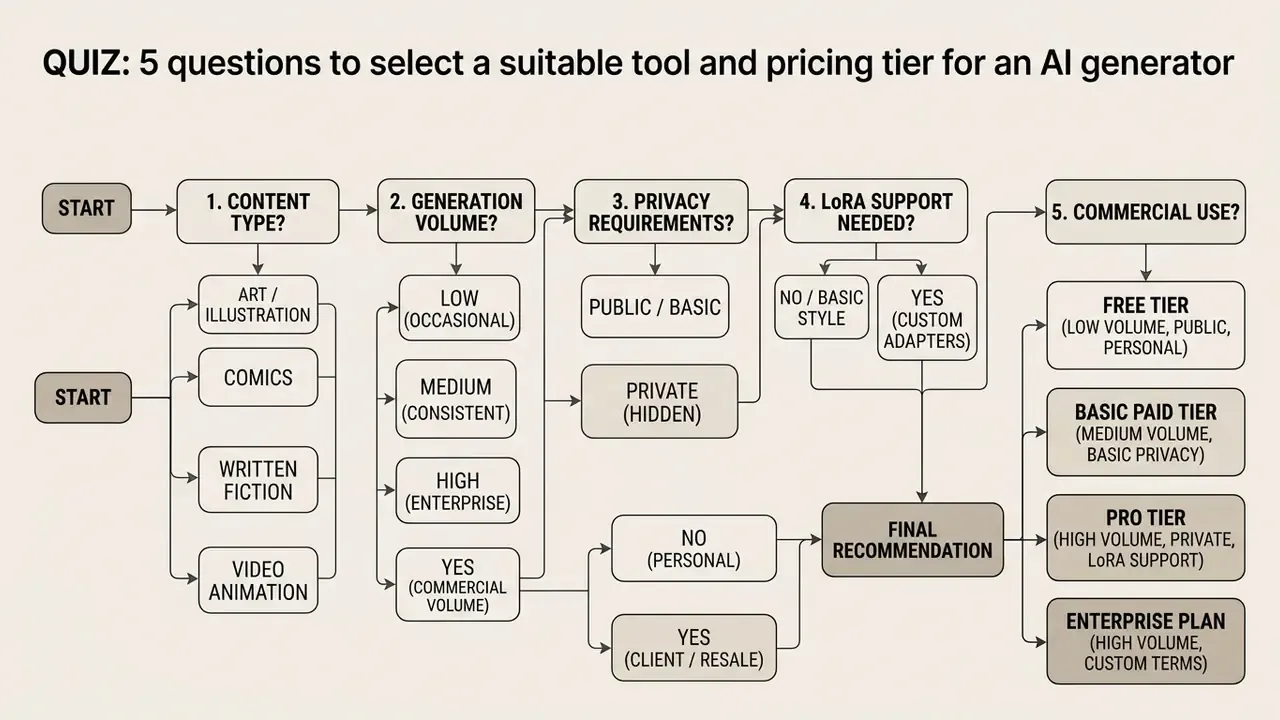
Which generator capabilities usually require payment
Paid tiers unlock the infrastructure that high-volume or commercial work actually depends on:
- Advanced AI models and fast GPU time priority access to high-parameter checkpoints and dedicated GPU hours, with the execution queue removed.
- Expanded video and animation tools high-resolution image-to-video, lip-sync, frame interpolation, and native 4K rendering sit behind active subscriptions (Veo AI Pricing Overview, 2026).
- Commercial licensing and privacy paid tiers grant explicit commercial usage rights and private generation modes that keep assets out of public galleries. For pricing breakdowns across major generative tools, see our AI Media Pricing Guides.
Demand for specialized and adult-adjacent generation is not marginal, which is precisely why privacy and licensing sit behind the paywall:
Verified service terms and commercial licenses (checked August 2026)
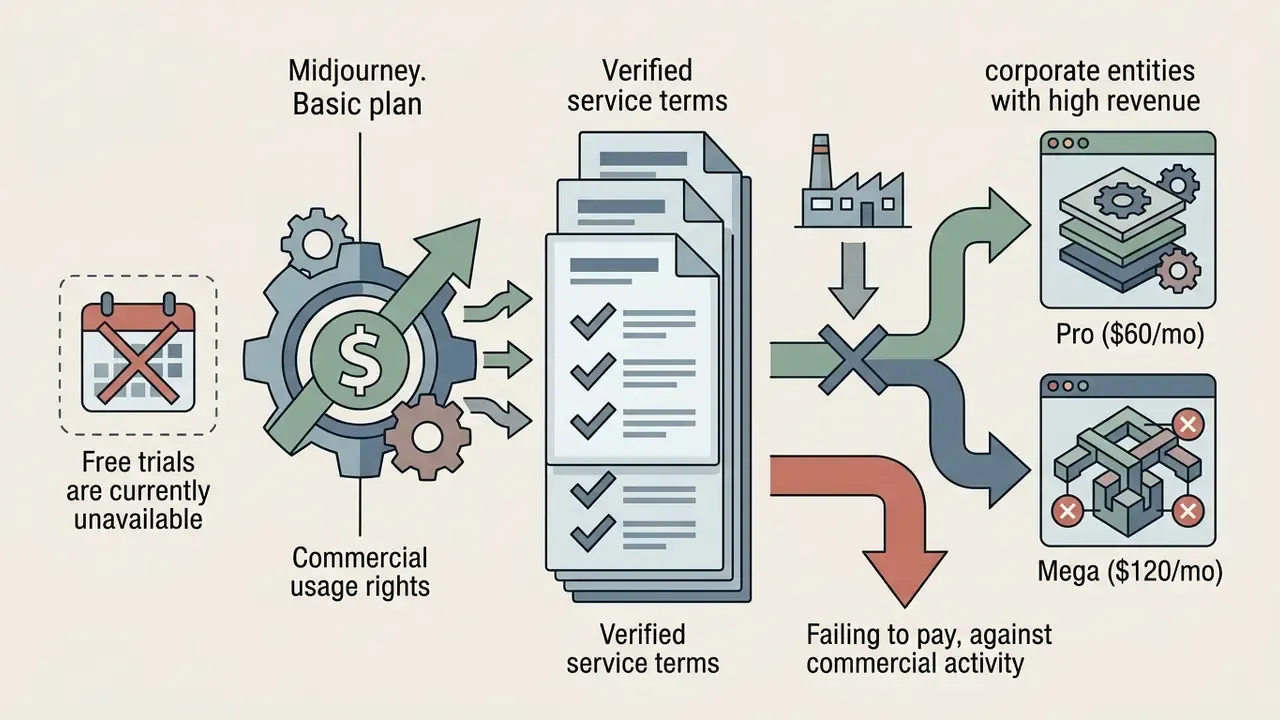
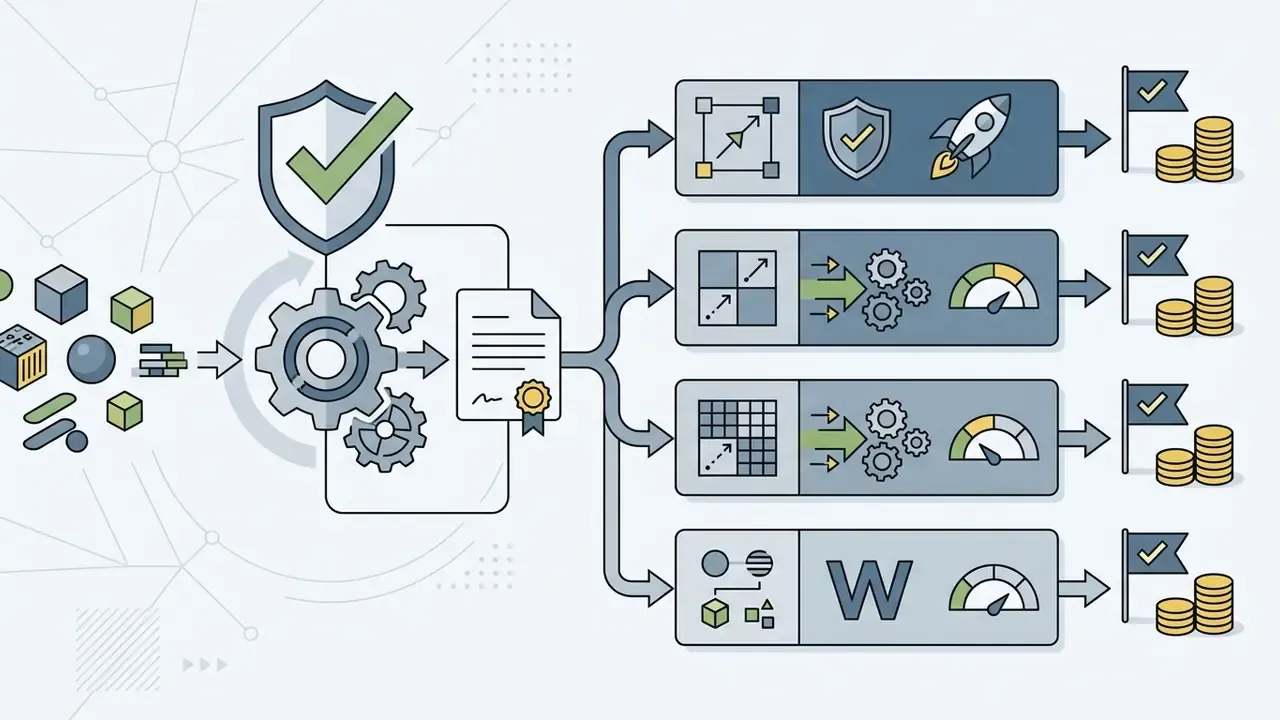

gpt-image-2 is billed separately per token or per image (OpenAI Pricing, 2026).
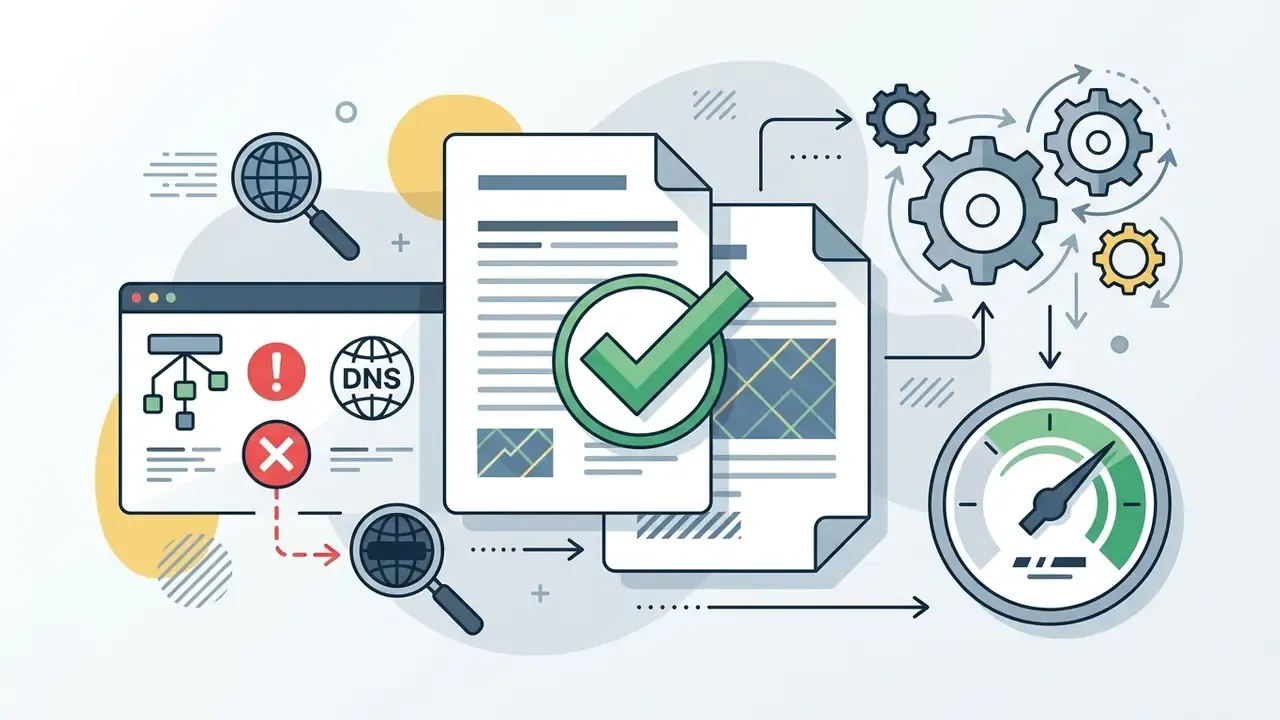
hypeart.ai does not resolve through DNS, and registry lookups return "Object not found." No verified information is available about its product catalog, pricing, or official positioning. We flag this explicitly because unresolvable vendors are a recurring pattern in niche generative tooling. An unreachable operator means no ToS, no data-handling commitment, and no licence you can rely on.Commercial Use of AI Vore Art: What to Verify Before Publishing
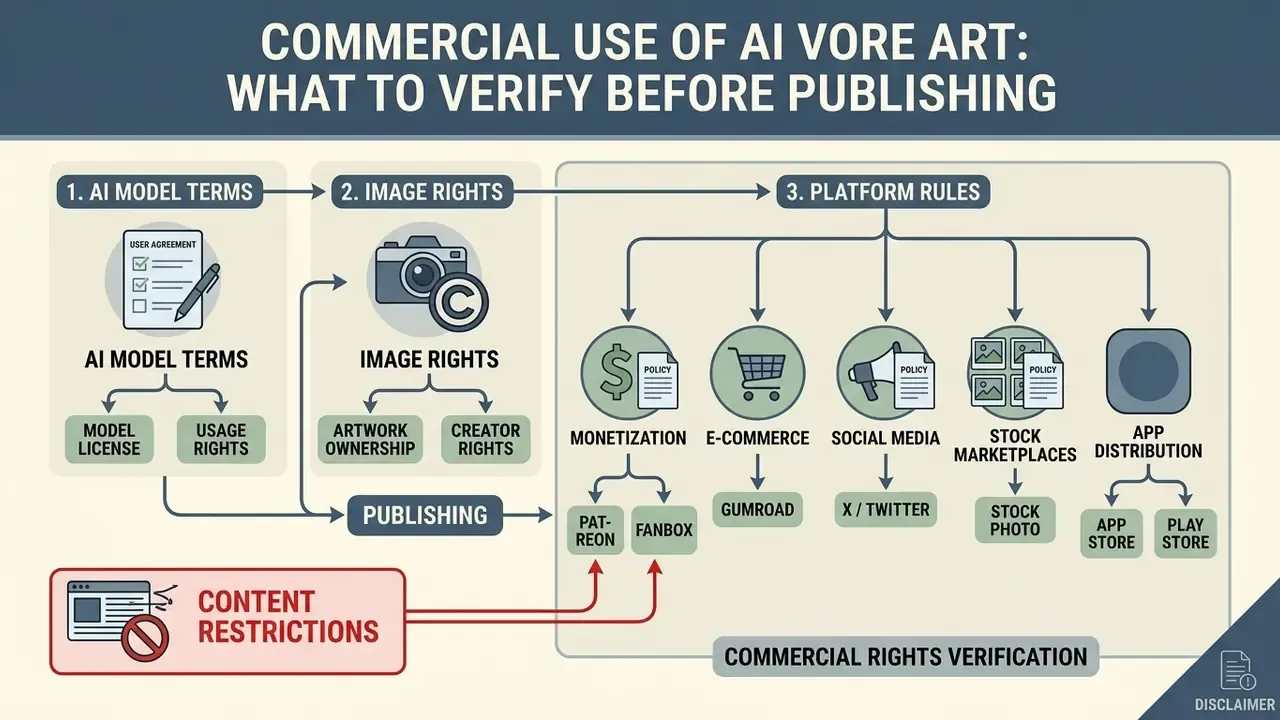
Commercializing ai vore art means navigating three separate layers: copyright doctrine, platform terms of service, and distribution channel policy. Because purely AI-generated assets lack traditional human authorship status in major jurisdictions, publishers must verify platform licences and content category rules before monetizing synthetic media. A broader breakdown of platform-by-platform rights is available in our guide to commercial use of AI image generators.
Model terms, image rights, and platform rules
Under United States precedent and Copyright Office guidance, purely ai-generated visual output created without substantial human creative intervention is not eligible for copyright protection and sits in the public domain (US Copyright Office Registration Guidance, 2025). Registration is possible only where a human determined sufficient expressive elements. Prompts alone do not establish authorship, and AI-generated portions must be disclosed when registering a mixed work.
Platforms including OpenAI, Adobe Firefly, and Midjourney grant users contractual ownership or broad commercial exploitation rights over outputs created under paid tiers (OpenAI Terms of Use, 2026). Free tiers may restrict commercial sales or require public attribution. Contractual rights are not the whole picture, though:
«The first court decision on generative AI established that a provider can be liable for copyright infringement when its system reproduces protected works.»
Additional exposure comes from likeness and persona rights. US policy recommendations explicitly address unauthorized commercial use of AI-generated digital replicas of a person's voice, likeness, or other identifiable attributes. For a detailed breakdown of commercial licensing across generative visual models, visit our AI Media Commercial-Use Hub.
Content restrictions when publishing vore artworks
Monetizing niche or speculative work like vore artworks requires strict adherence to distribution platform rules and age-rating categories:
- Monetization platforms (Patreon, Fanbox) Patreon permits adult and 18+ speculative visual art when it is gated behind a subscriber paywall and the creator completes age verification (Patreon Community Guidelines, 2026). Illustrated and animated AI depictions are allowed; hyperrealistic depictions of real people require documented explicit consent. Depicting real living individuals or unverified minors in explicit contexts is strictly prohibited.
- E-commerce gateways (Gumroad) Gumroad prohibits media created primarily for explicit sexual gratification or extreme fetish content (Gumroad Terms of Service, 2026). Permitted adult-adjacent products must carry NSFW metadata tags.
- Social media (X / Twitter) X permits adult content only when consensually produced, labeled with sensitive media warnings, and excluded from profile pictures, headers, live video, List banners, and Community cover photos (X Adult Content Policy, 2026).
- Stock marketplaces Adobe Stock accepts AI-generated submissions but requires generative-AI labeling plus releases for identifiable people and property, a combination that effectively excludes most niche fantasy content.
- App distribution Google Play bars AI apps primarily intended to be sexually gratifying and prohibits non-consensual deepfake sexual material, which limits Android distribution of explicit generators.
Platform restrictions are not arbitrary. They map onto a fairly stable risk taxonomy:
Creators tracking legal developments around synthetic media rights and platform litigation can review updated case analyses in our AI Litigation and Case Timelines.
Updated (governance note). When reviewing commercial rights for synthetic media assets, we found training-data provenance undocumented for a large share of open platforms and community adapters. In response we use an asset verification protocol requiring an explicit platform-terms and adapter-licence audit before any synthetic image is approved for distribution. We present this as an editorial procedure, not a measured control. The audit is documented and repeatable; we publish no effectiveness metric without a released methodology.
Governance Layer: Shadow AI, Guardrails, and Audit Evidence
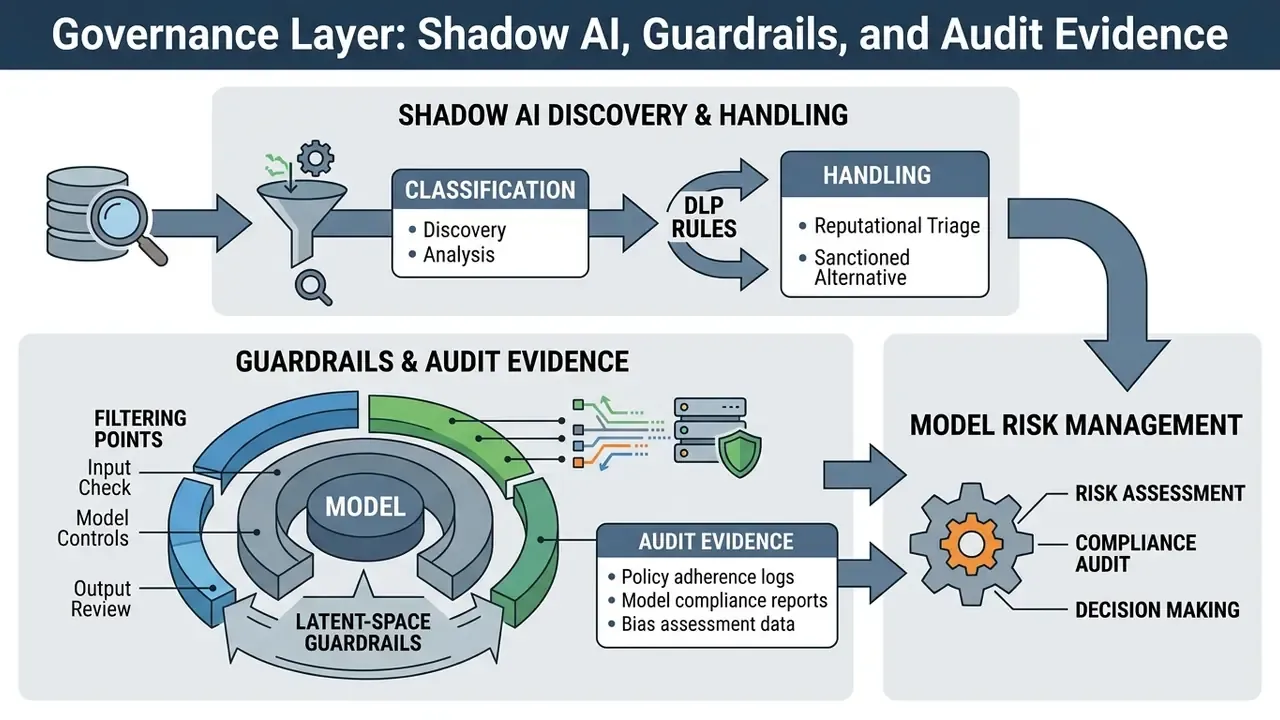
Shadow AI classification and DLP handling
- Discovery.Inventory generative endpoints visible in egress logs and browser telemetry: image and video generation domains, model repositories serving
.safetensorsfiles, and community galleries. - Classification.Tag each service by (a) data retention and public-gallery default, (b) content policy, (c) commercial licence availability, (d) operator jurisdiction, (e) whether the vendor resolves at all, per the Hypeart.ai note above.
- DLP rules.Block uploads of internal reference imagery and customer photographs to unsanctioned generation domains. Alert on bulk downloads of model weights to corporate endpoints.
- Reputational triage.Define an escalation path for NSFW or fetish-category generation from corporate infrastructure, and separate accidental exposure from intentional misuse before applying HR consequences.
- Sanctioned alternative.Shadow AI drops fastest when an approved, policy-filtered tool exists. Provide one. Prohibition alone just moves the traffic to personal devices.
Latent-space guardrails: where filtering actually happens
A guardrail can sit at four points in a diffusion pipeline, and the choice sets both cost and bypass resistance:
| Control point | Mechanism | Bypass resistance | Notes |
|---|---|---|---|
| Prompt ingress | Keyword/classifier screening of prompt and negative prompt | Low | Defeated by synonyms and encoded tokens |
| Text-encoder embeddings | Concept-vector detection before denoising | Medium | Catches paraphrase; needs per-checkpoint tuning |
| Latent / denoising loop | Concept erasure and latent-space steering | High | Highest compute cost; strongest control |
| Output egress | Image classifier before delivery, plus provenance metadata | Medium-high | Catches what earlier layers miss; enables logging |
Two design rules follow from the safety literature cited above. Never assume base open weights refuse anything. And remember that adapters can reintroduce filtered concepts even when the base checkpoint was cleaned.
Audit evidence and model risk management
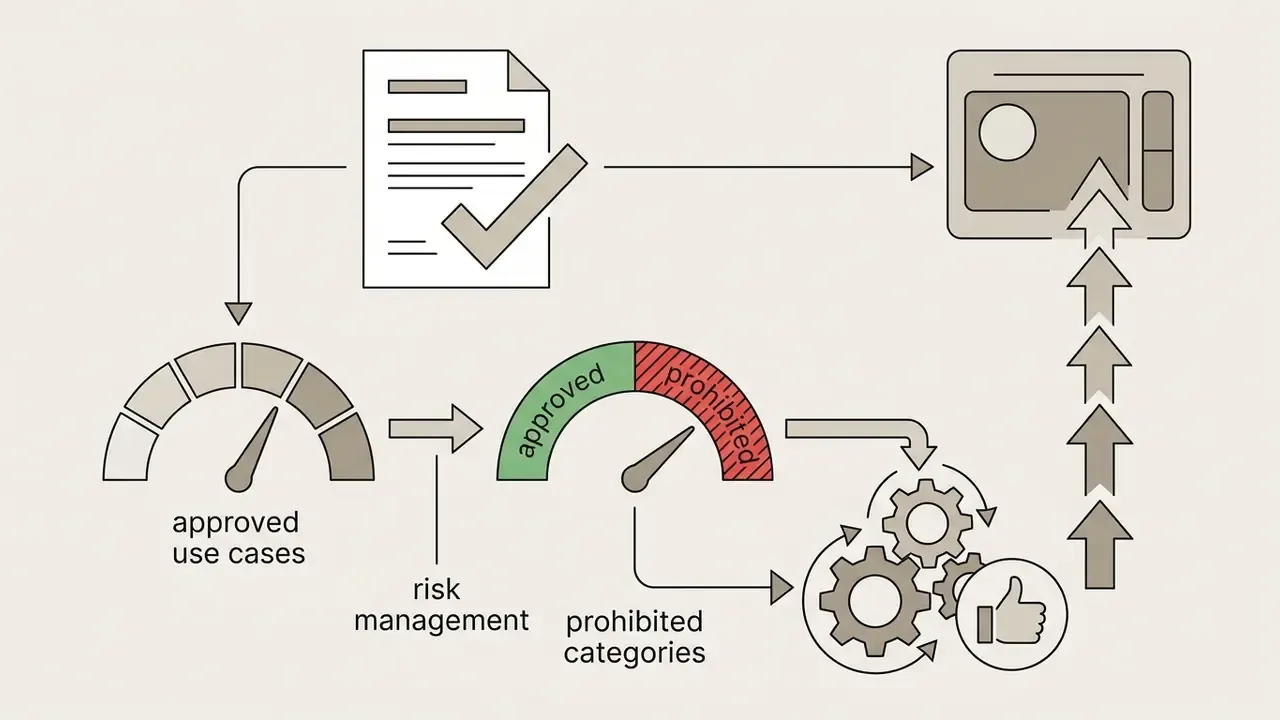
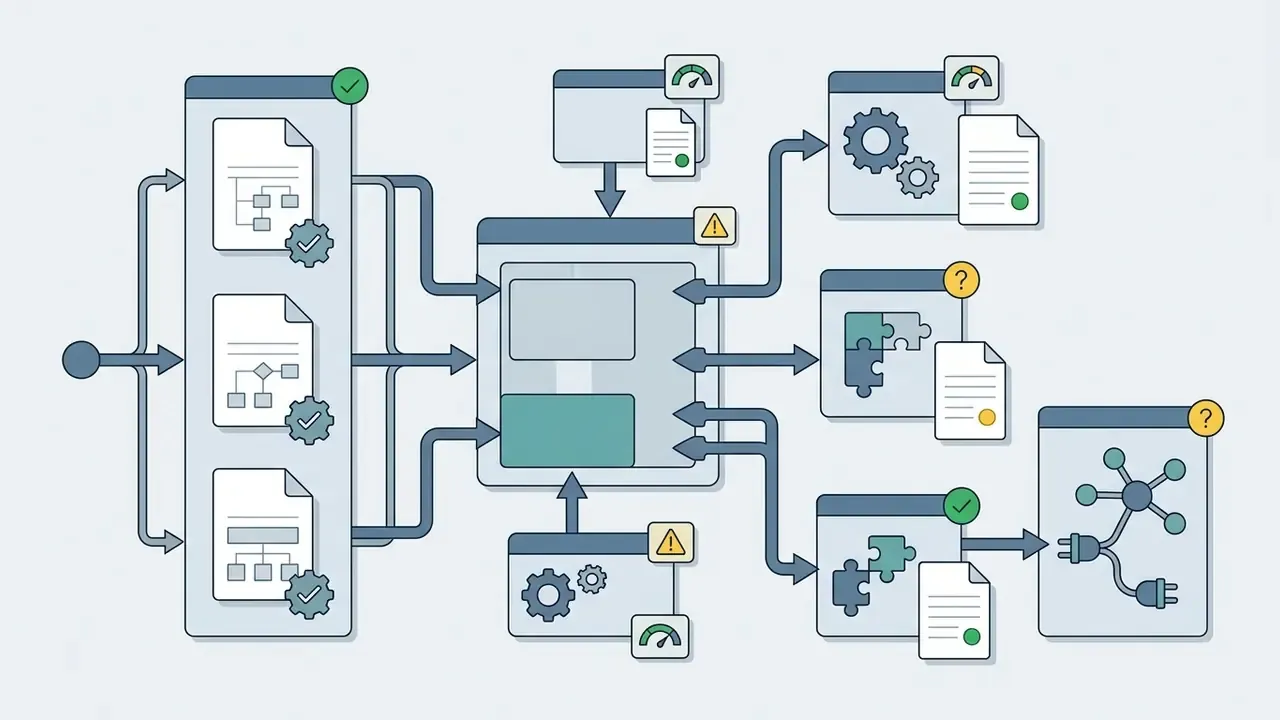
In regulated environments, generative media should leave the same evidence trail as any other model output. Align documentation with the model risk management expectations of SR 11-7 / OCC 2011-12 and the function structure of the NIST AI RMF (Govern, Map, Measure, Manage):
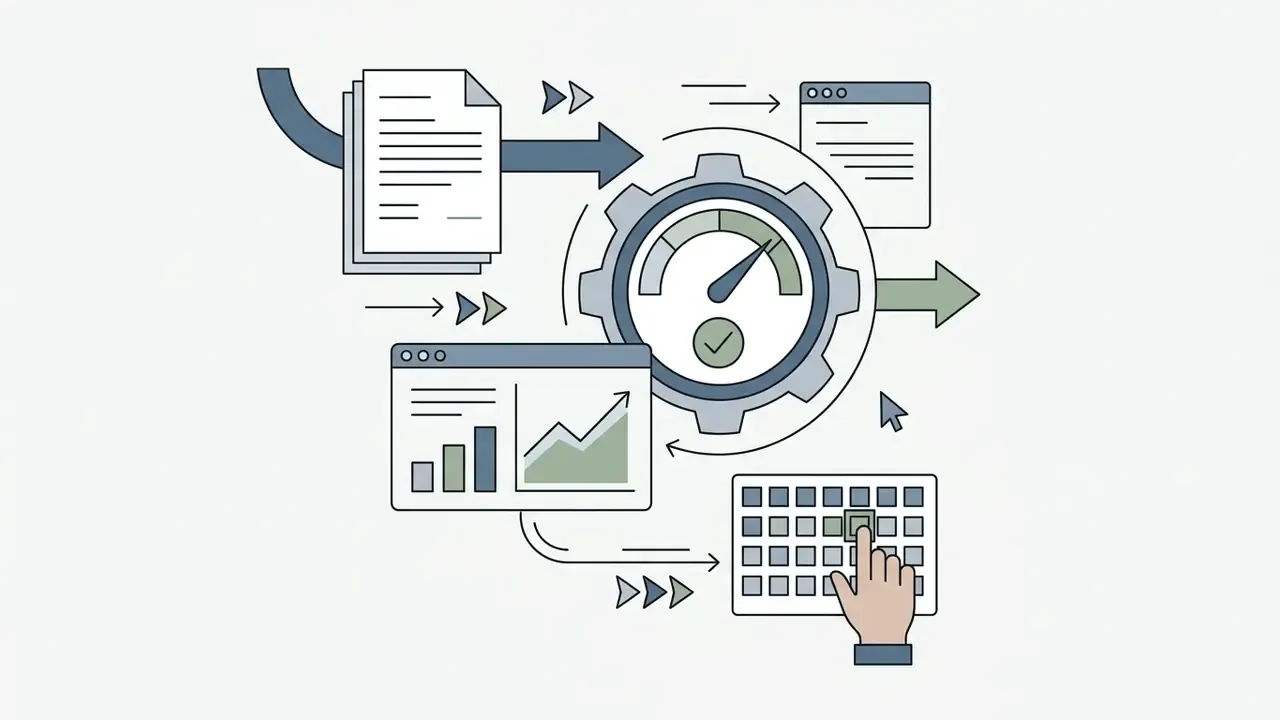
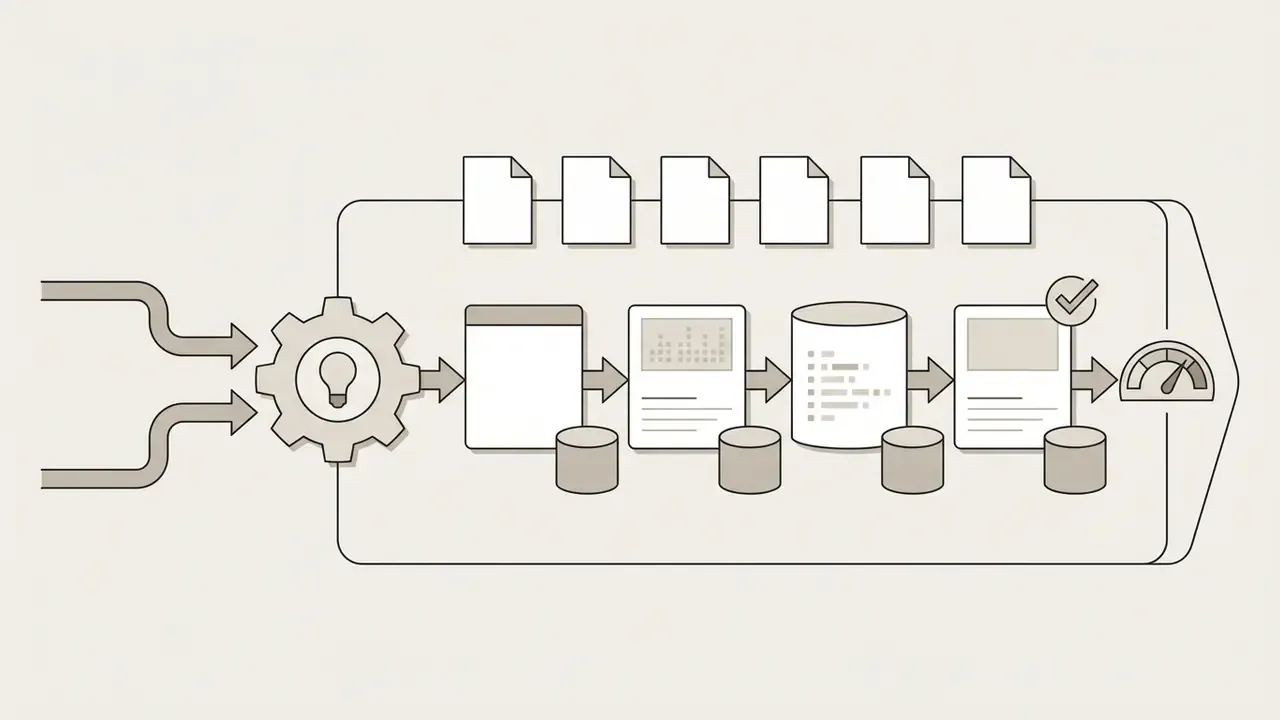
Vendor risk assessment checklist for generative tools
| Check | What to request | Red flag |
|---|---|---|
| Corporate existence | Registry record, resolvable domain, published ToS | DNS does not resolve; no legal entity named |
| Data handling | Prompt/asset retention period, training opt-out | Outputs public by default with no private mode |
| Security posture | SOC 2 or equivalent report, encryption in transit and at rest | No documentation provided |
| Content moderation | Documented prohibited categories and enforcement layer | "No restrictions" marketing |
| Training-data provenance | Dataset description, licensing basis | "Trained on millions of artworks," unspecified |
| Commercial licence | Written grant tied to plan tier, indemnity scope | Rights implied but not stated in ToS |
| Model transparency | Base checkpoint and adapter disclosure | Undisclosed weights, anonymous uploader |
Total cost of ownership: what the subscription price omits
A realistic monthly figure for a governed pipeline is: platform subscription or GPU compute plus guardrail and classifier compute plus human review hours plus logging and retention storage plus legal review of licences and adapters. For low-volume creative work, the subscription dominates. For regulated deployments, the review and evidence layers usually exceed generation cost, sometimes by a wide margin. Model both before approving a pipeline, and use our AI Media Calculators to project the generation component.
Ideas for AI-Generated Vore Art, Images, and Animation
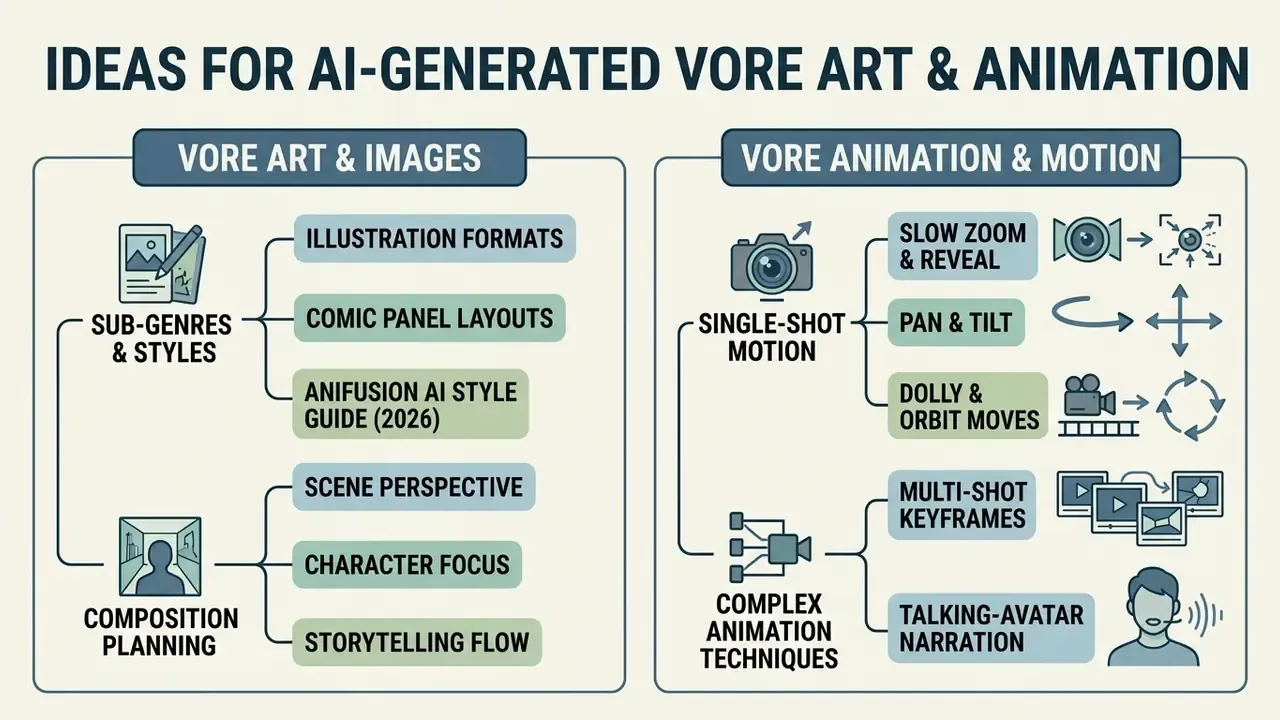
Building a coherent synthetic portfolio means picking sub-genres, compositions, and motion formats deliberately rather than generating at random. Structured prompts plus a fixed stylistic frame give you a series instead of a scatter of one-offs.
That trajectory explains two things at once: the abundance of community adapters for niche genres, and the tightening of moderation on mainstream platforms. Expect the tooling landscape to keep splitting between open and policy-restricted stacks.
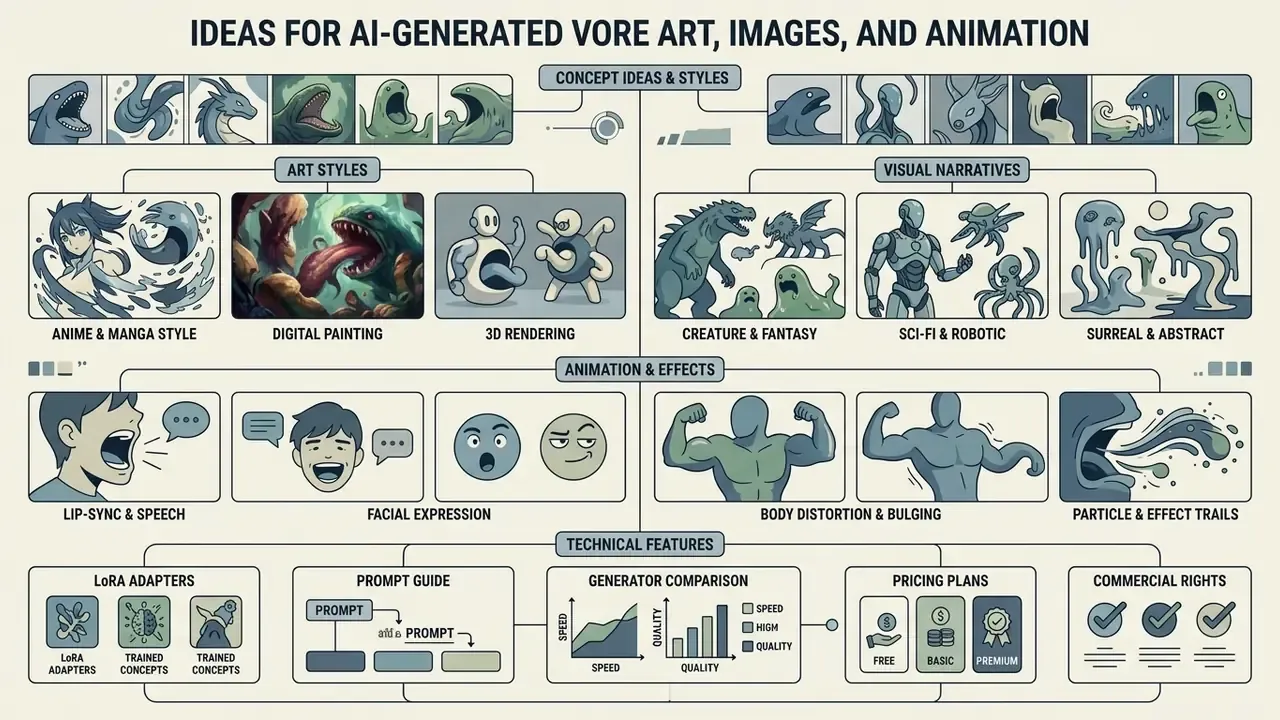
Vore AI images in illustration and comic format
Sequential comics and standalone ai vore images benefit from three well-defined creative lanes. Free tools suited to each lane are compared in our roundup of the best free AI art generators:
- Fantasy painterly style: rich colour blending, dramatic torchlit palettes, elven silhouettes, crumbling spire architecture, dense environments. Specify
painterly brushstrokes,elven architecture, anddramatic chiaroscuro lighting(Anifusion AI Style Guide, 2026). Scale contrast shines here: amacro perspectiveguardian creature framed against amicro charactertraveler. - Anime lineart and manga: clean lineart, vibrant cel-shading, expressive poses. Modifiers like
manga panel spread,bold linework, andofficial game CGproduce authentic layouts. For a three-panel sequence, keep one anchor character reference and change only camera distance between panels. - Cyberpunk and sci-fi realism: neon signage, rain-slicked streets, holographic displays, magenta and cyan palettes, high-density urban blocks. An effective backdrop for
giant monstersilhouettes rendered as city-scale entities. A vore art generator running this lane needs strong environment prompting, or the neon eats the subject. Creators building broader digital media projects can compare rendering engines and licensing terms in our review of the leading AI art generators.
AI-generated animation ideas for video format
For short-form animation through text-to-video or image-to-video pipelines, pair detailed character prompts with explicit camera commands. Motion controls and export parameters are documented in our guide to image-to-video AI:
- Slow zoom and reveal
camera slowly zooms in, dramatic atmospheric lighting, high motion continuitygives fantasy scenes a cinematic build. - Pan and tilt motion direction tags like
horizontal pan leftortilt up from ground leveladd pacing to short loops (Adobe Firefly Camera Control Guide, 2026). - Dolly and orbit moves
dolly in,dolly out,orbit, and360-degree rotationare documented camera enums across Kling, Firefly, and Hunyuan-class models. Orbit shots remain the most reliable way to convey scale difference. - Multi-shot keyframe animations linking an initial keyframe to a target end-frame in models like Kling AI produces smooth transitions across 5 to 15 second clips. A comparative overview sits in our guide to text-to-video AI.
- Talking-avatar narration animate a single character illustration with an audio track and lip-sync to deliver narrated fiction, then chain shots into a longer sequence with consistent references.
- Prompt formula for motion
Subject + Action + Scene + Camera Movement + Lighting/Style, the same order documented across Alibaba Cloud, Firefly, and Kling prompt guides.
Limitations, Open Questions, and a Safe Next Step
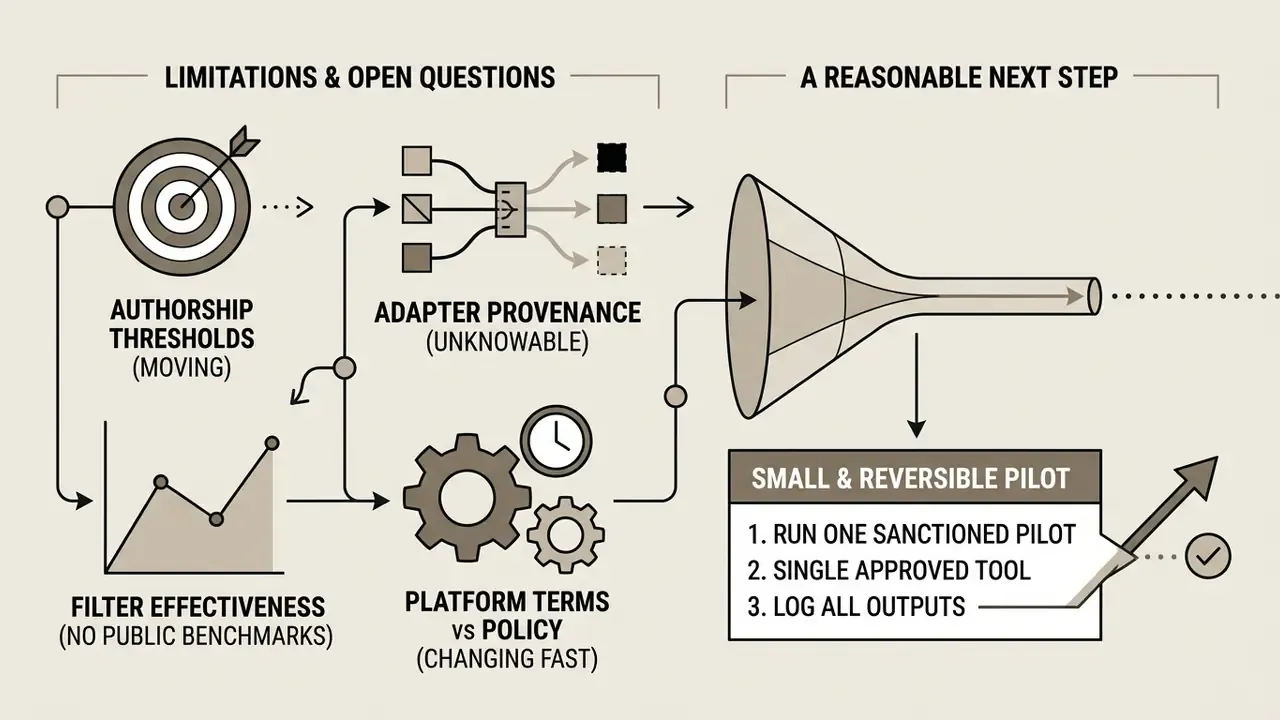
Some of this is unsettled, and pretending otherwise would be dishonest.
- Authorship thresholds are still moving. How much human editing converts an AI render into a protectable work is decided case by case. Document your editing passes; that record is your only argument.
- Adapter provenance is mostly unknowable. For community LoRA files, training data is undisclosed in the majority of cases we checked. Treat that as residual risk, not as an absence of risk.
- Filter effectiveness lacks public benchmarks for niche categories. Red-team prompt sets for fantasy and fetish sub-genres are not standardized, so vendor claims about moderation coverage are hard to verify independently.
- Platform terms change faster than internal policy. Pricing and content rules quoted here were checked in August 2026 and should be re-verified before any commercial launch.
A reasonable next step is small and reversible: run one sanctioned pilot on a single approved tool, log every generation with model, adapter, seed, and prompt, and review a sample of the output with a named human owner. Then decide. Scaling a pipeline you cannot evidence is the expensive mistake, not spending a month on the pilot.
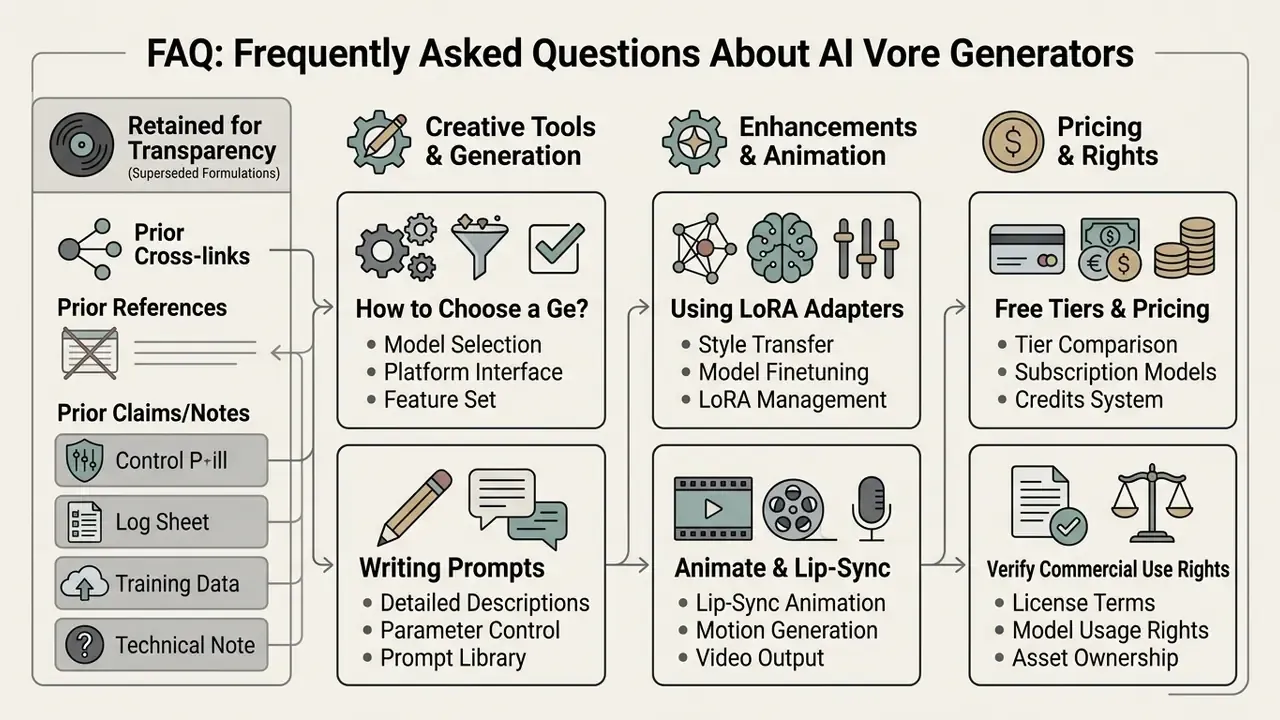
FAQ: Frequently Asked Questions About AI Vore Generators
What does an AI vore generator do?
An ai vore generator uses diffusion and text-to-video networks to convert natural language prompts into fantasy illustrations, comic panels, or animated clips featuring character-containment themes. LLM-based variants generate narrative text instead of images.
How do I generate a vore story or text with AI?
Use an LLM-based story generator and structure the request as [Role/Dynamic] + [Setting/Tone] + [Conflict/Transformation]. Pick one of four base dynamics, Human + Fantasy Creature, Micro + Macro Entity, Guardian + Guest (soft vore), or Abstract / Symbolic Entity, then iterate chapter by chapter. Provider usage policies still apply to text, including prohibitions on minors and on real-person depictions.
Can I use vore AI art commercially?
It depends on platform terms of service and local copyright law. Paid tiers of tools like Midjourney or OpenAI grant commercial exploitation rights, but purely AI-generated art lacks statutory copyright protection and must comply with distribution platform content policies, age-gating rules, and synthetic-content labeling requirements.
Which AI tools are best for animating vore art?
Dedicated video models such as Kling AI, Luma Dream Machine, and Runway Gen-3 provide motion control, start and end keyframe binding, background replacement, and high-resolution exports suitable for animating static art.
Can I animate an existing still image with lip sync?
Yes. Dedicated Lip Sync tools handle character video, while avatar workflows combine a character image, an audio track (uploaded or text-to-speech), and optional performance directions to make a still image speak. Native audio in current Kling models supports Chinese, English, Japanese, Korean, and Spanish, and lip-sync is billed as a paid feature by clip length.
Do I need a LoRA, or is prompting enough?
Prompting alone rarely resolves narrow sub-genre anatomy. A LoRA adapter trained for your base checkpoint (SD 1.5, SDXL, Pony, Illustrious) gives that control. Invoke it as and keep the weight at or below 0.85 to avoid artifacts.
How should an organization handle employees using these generators?
Treat unsanctioned generators as Shadow AI: discover the endpoints, classify each vendor by data retention and content policy, apply DLP rules to uploads of internal imagery, log usage, and offer a sanctioned filtered alternative.
Appendix A: Superseded formulations (editorial record)