«An online handle is a digital asset's public identifier; without deterministic rules, clear ownership, and verification, automated naming risks handle collision and brand dilution.»
Last updated: February 2026 · Reviewed for compliance by: AI Governance & Brand Risk desk
Executive Summary

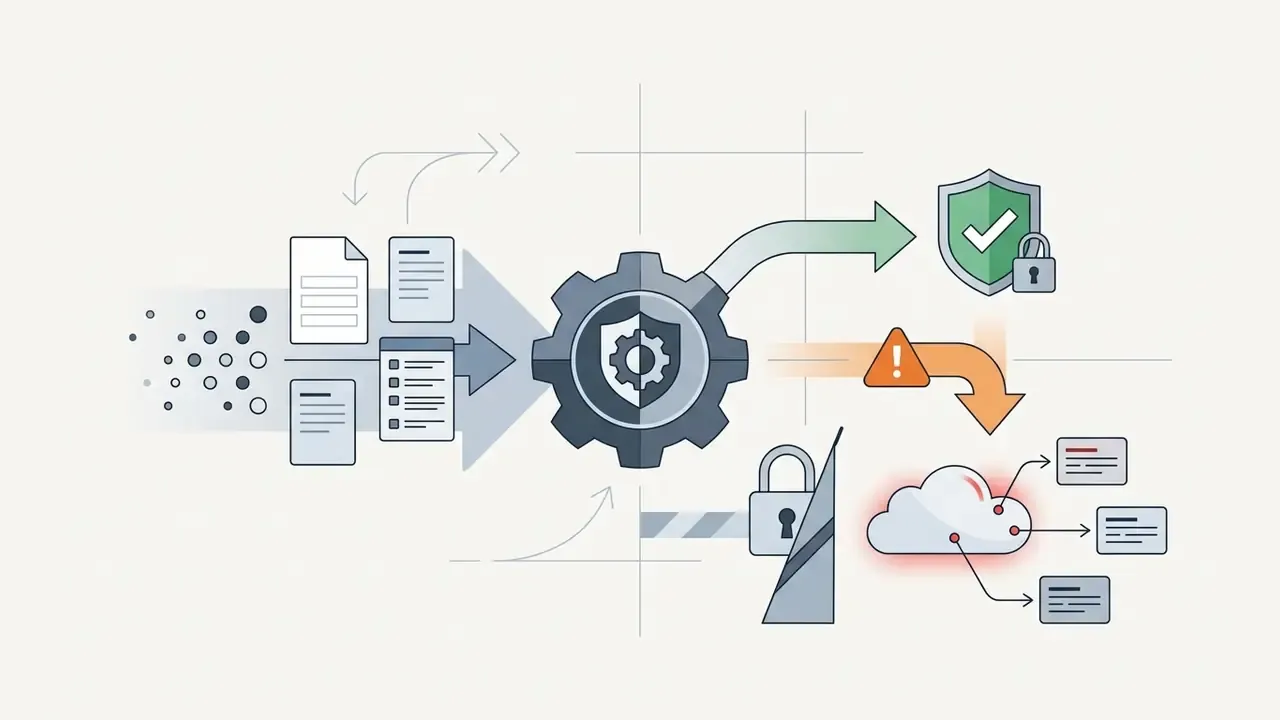
Who This Guide Serves and Which Decision It Supports
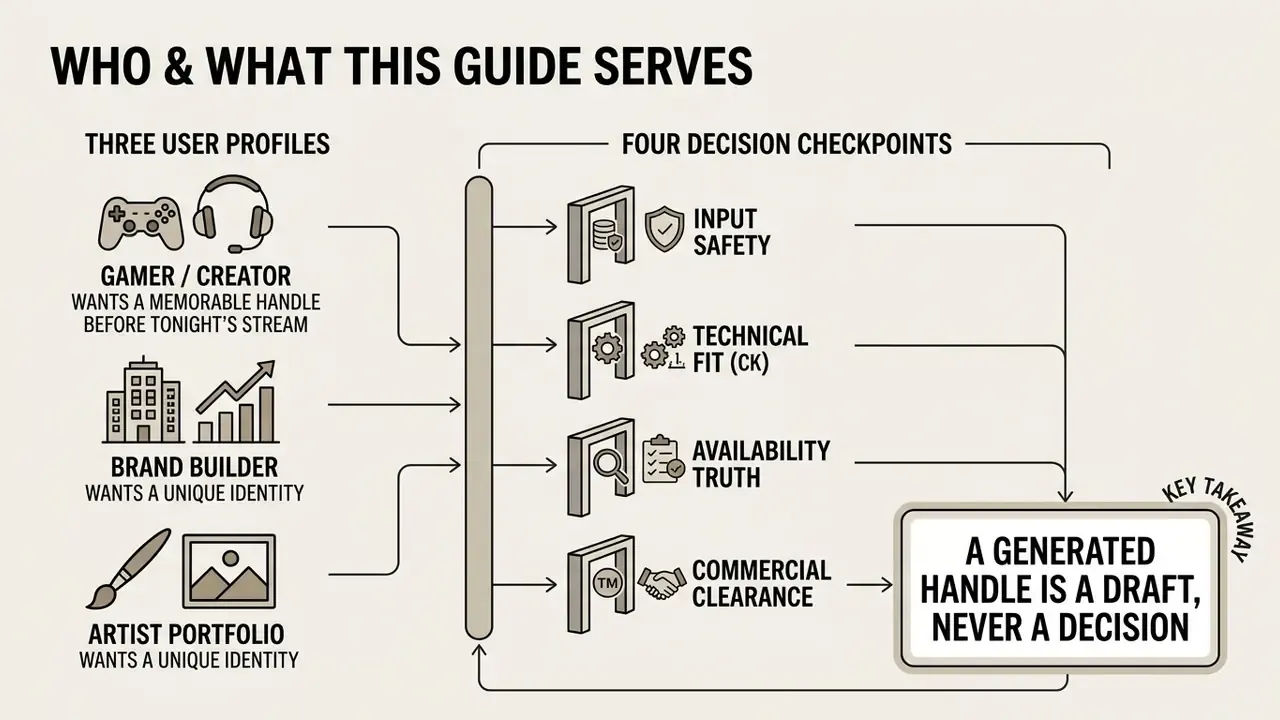
Three readers usually land here, and they want different things.
The first is a creator or gamer who needs a memorable handle before tonight's stream. The second is a brand or marketing lead consolidating a fragmented handle portfolio across five networks. The third, and the reason this guide carries a compliance review line, is a governance owner inside a bank or fintech who has just discovered that staff are pasting confidential naming inputs into a free web form. All three need the same three answers: what the tool actually does, which constraints are hard, and where the legal and data risk sits.
Four decision checkpoints run through the whole guide:
- Input safety. What may and may not be typed into a public generator.
- Technical fit. Character limits, permitted symbols, normalization rules.
- Availability truth. Live verification, not model memory.
- Commercial clearance. Trademark screening and documented human review.
If you only remember one line, remember this: a generated handle is a draft, never a decision.
What is an AI Username Generator and Who Needs It
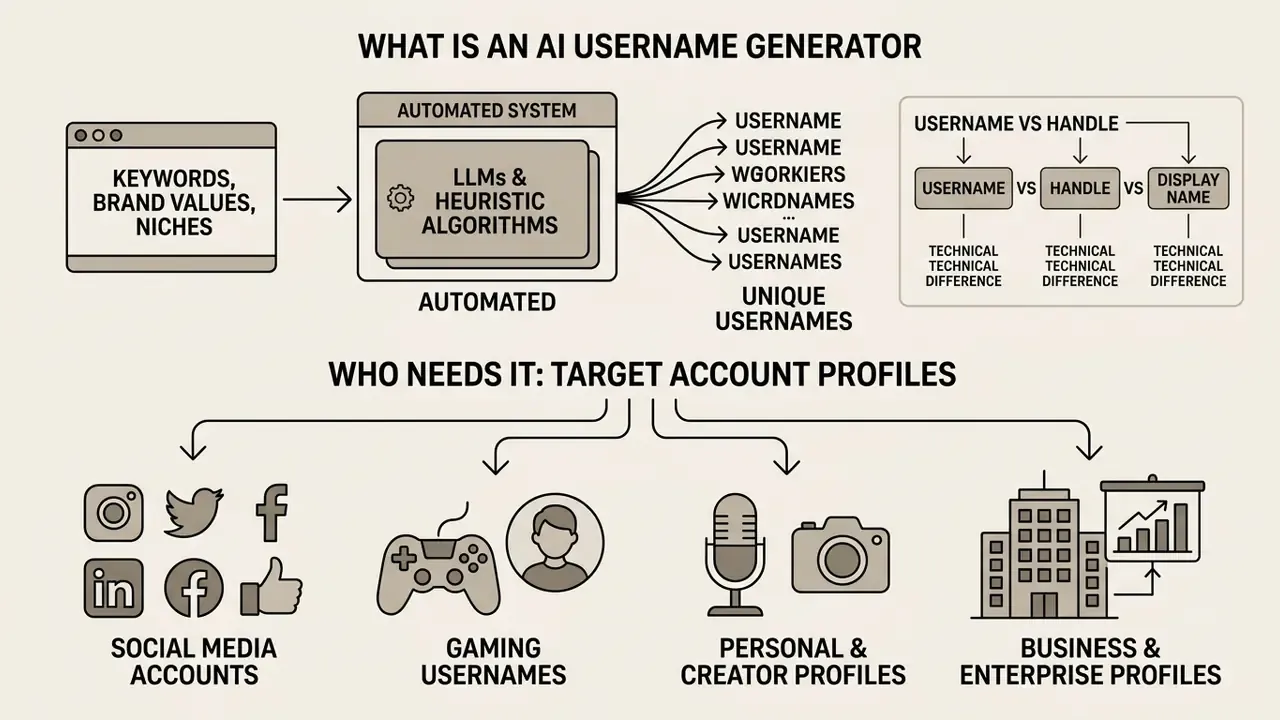
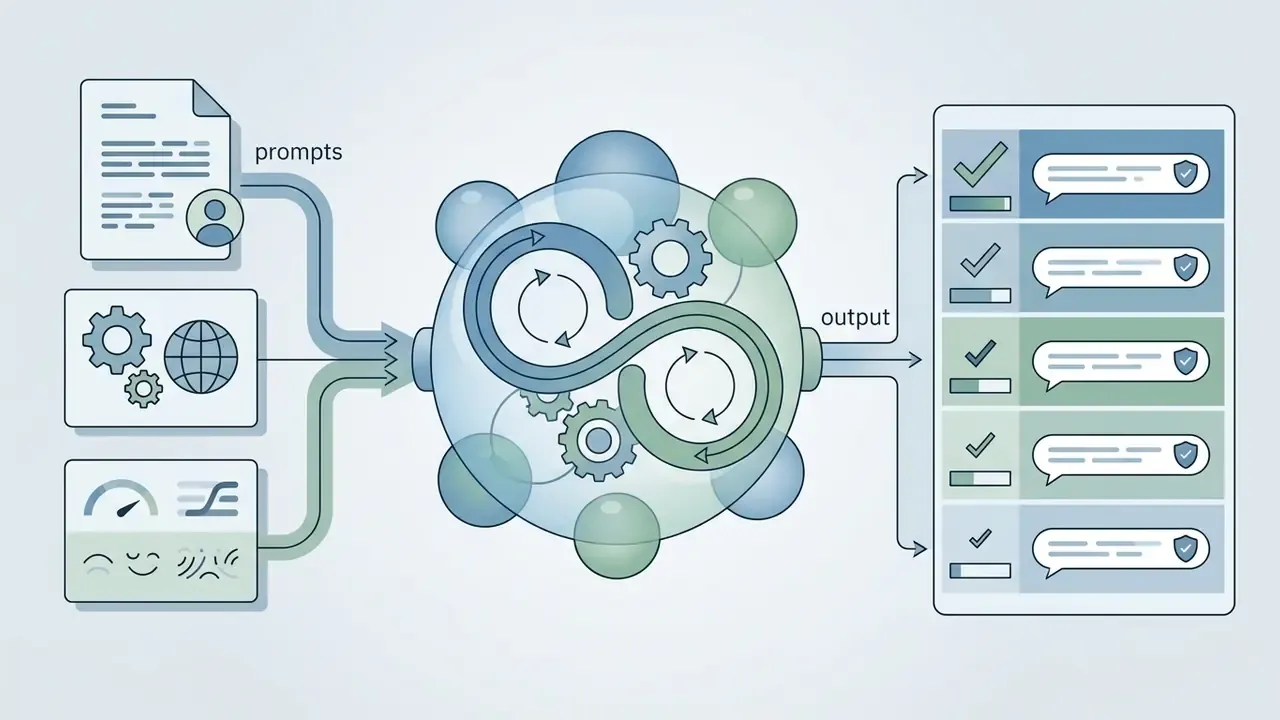
An AI Username Generator is an automated software tool that uses large language models (LLMs) and heuristic algorithms to convert user prompts, such as keywords, brand values, or target niches, into contextually relevant and available profile handles. It serves content creators, gamers, individual professionals, and enterprise digital marketing teams who require distinctive online identifiers across multiple digital platforms.
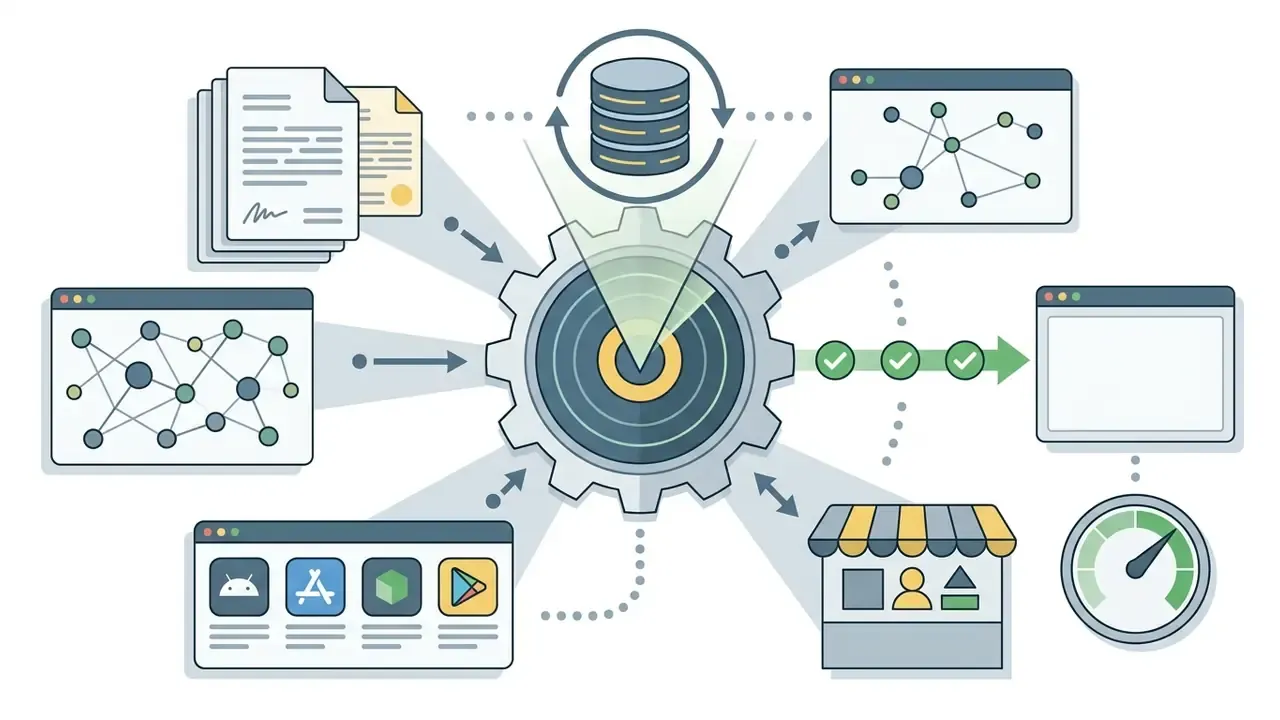
Modern AI username generators operate through prompt-based natural language processing rather than basic random character concatenation. Advanced frameworks deploy multi-agent architectures in which a creator agent generates candidate names from user inputs while a reviewer agent filters those candidates against uniqueness, platform validity, and desirability heuristics.
«Nominalist uses a multi-agent architecture: a creator agent generates candidates from user inputs, and a reviewer agent filters them for uniqueness, validity, and desirability.»
Unlike legacy random tools, an ai username generator processes context, phonetics, and brand positioning to deliver meaningful handles. This generate-review-validate sequence mirrors the risk lifecycle formalized in public AI governance frameworks, where outputs are mapped, measured, and managed before release. Familiar shape, different asset class.
«Organizations should track the provenance of generated content and document provenance limitations.»
Organizations and individual creators use an ai generator username to establish immediate digital identity across new channels. Enterprise brand managers rely on an ai handle generator to maintain consistent naming conventions across global social networks. Individual users, meanwhile, reach for an ai profile name generator to balance personal privacy with creative self-expression. Some readers search for an ai screen name generator or an ai name generator username tool and land on the same class of engine; the vocabulary differs, the mechanics do not.
When evaluating options, understanding how a username generator is constructed helps teams choose between generic word mixers and advanced neural engines. Utilizing a dedicated name generator ensures that proposed handles fit specified parameters before account registration. A username ai generator with a review stage will typically reject collisions and unpronounceable strings on its own; a plain word shuffler will not.
Username vs. Handle vs. Display Name: Technical Differences
A username serves as the primary system-level account identifier used for authentication and account URLs. A handle represents the public @-prefixed mention tag. A profile name (or display name) is the flexible label shown publicly on account surfaces. The generator produces candidate options tailored for both fixed handles and customizable display labels.
Platform documentation establishes clear functional distinctions among these terms. On platforms such as X (formerly Twitter), the username and handle are identical, globally unique, start with an @ symbol, and are limited to 15 characters.
«Your username, also known as your handle, begins with the @ symbol and is unique to your account.»
On X the handle is globally unique and acts as the routing key for mentions, replies, DMs, and search. A display name may be non-unique, stylized, and changed far more often. That asymmetry is what makes handles economically valuable, and squattable.
«On X, the handle is a globally unique mention key, while the profile name may be non-unique, stylized, and changed frequently.»
Conversely, display names or profile names on platforms like Disqus, Slack, or WhatsApp permit non-unique formatting, spaces, capitalization, and special characters (Disqus Docs, 2024). System standards define strict normalization and character mapping rules for usernames, enforcing lower-case mapping and NFKC normalization to prevent system conflicts.
Understanding these parameters allows an ai user name generator to format outputs correctly depending on whether the target output is an immutable account login handle or an adaptable public profile name. One practical consequence: if a tool hands you a candidate with spaces or emoji, it produced a display name, not a handle.
Target Account Profiles Supported by AI Generators
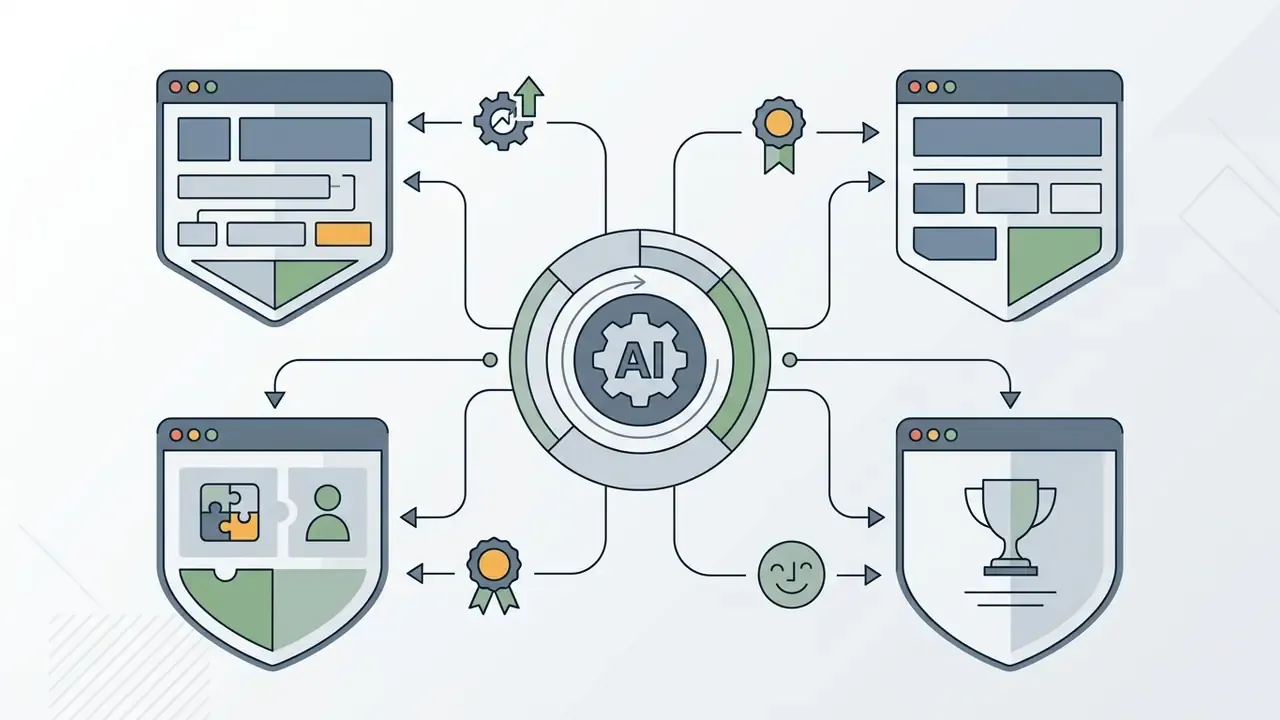
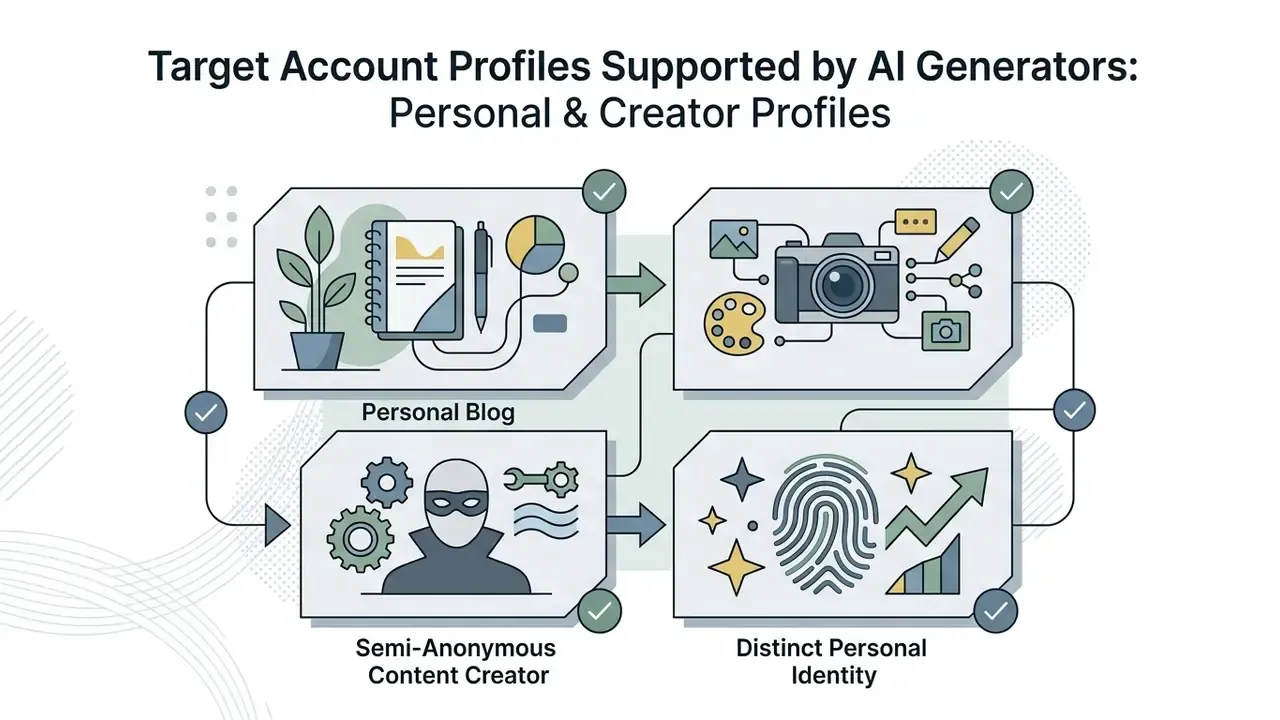
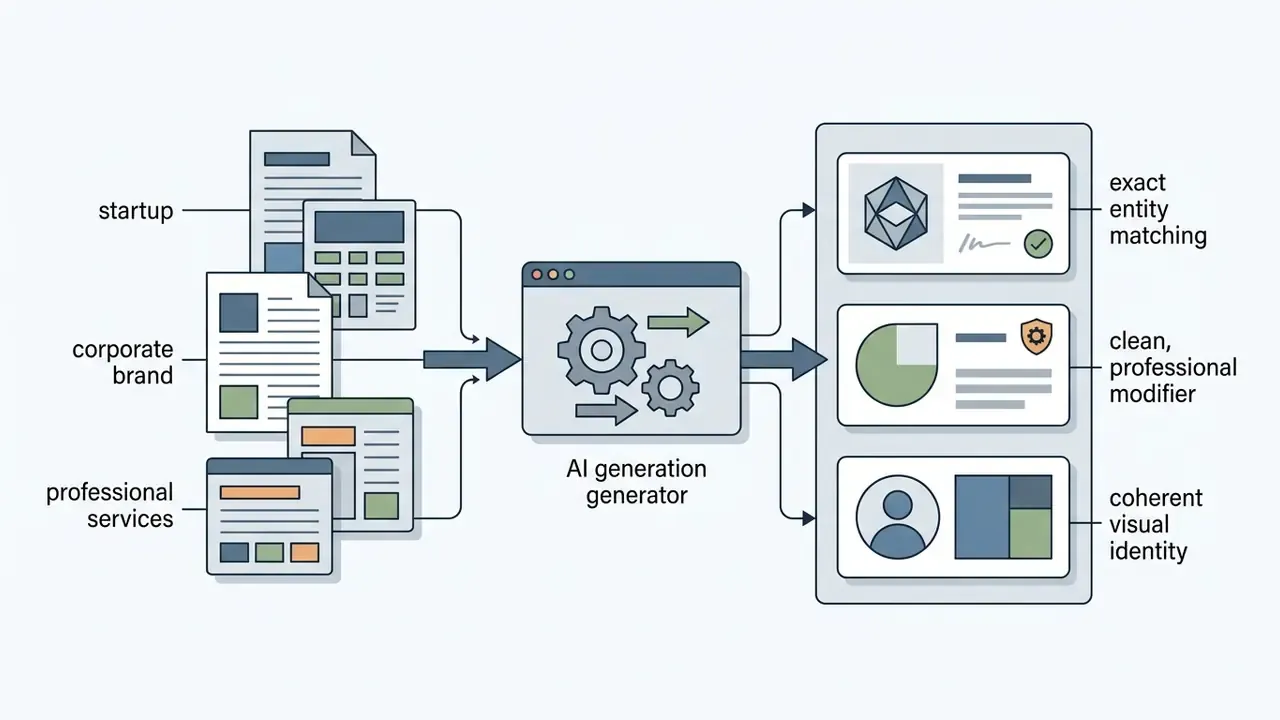
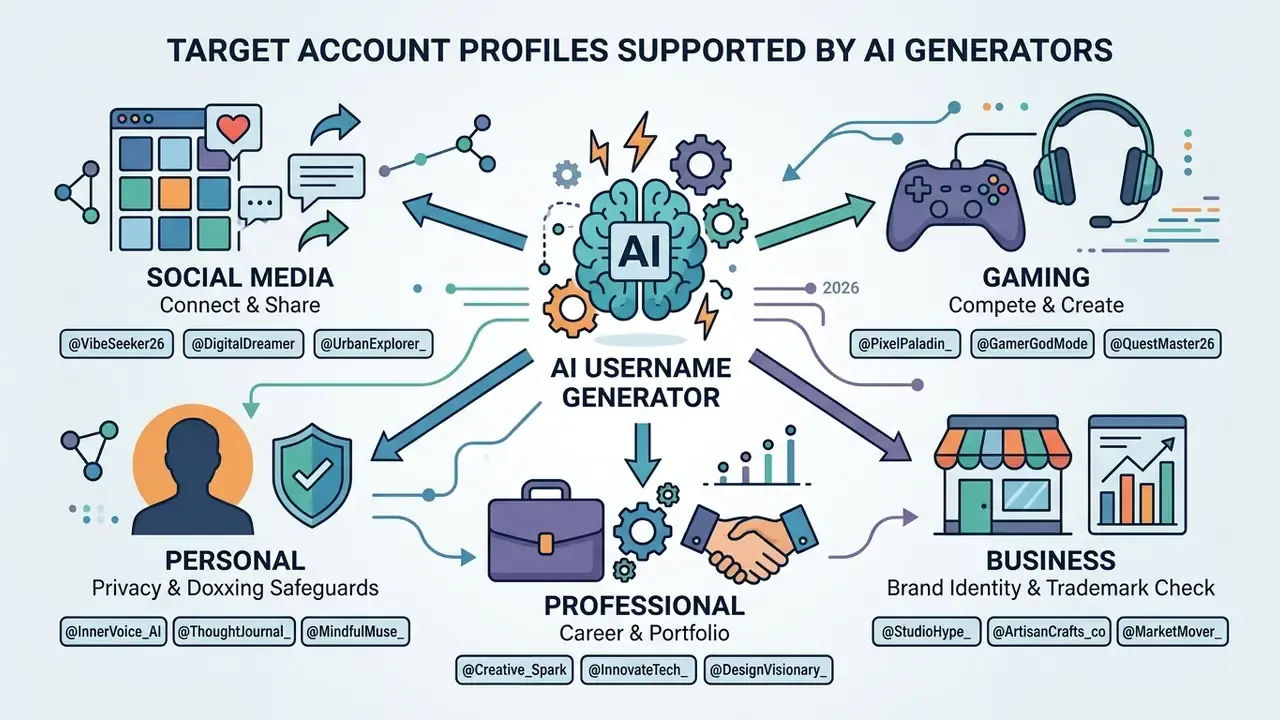
AI username tools generate candidate handles for personal social media accounts, high-visibility gaming gamertags, executive personal brands, and enterprise business profiles. Each profile category applies distinct constraints regarding character choice, tone, and brand alignment.
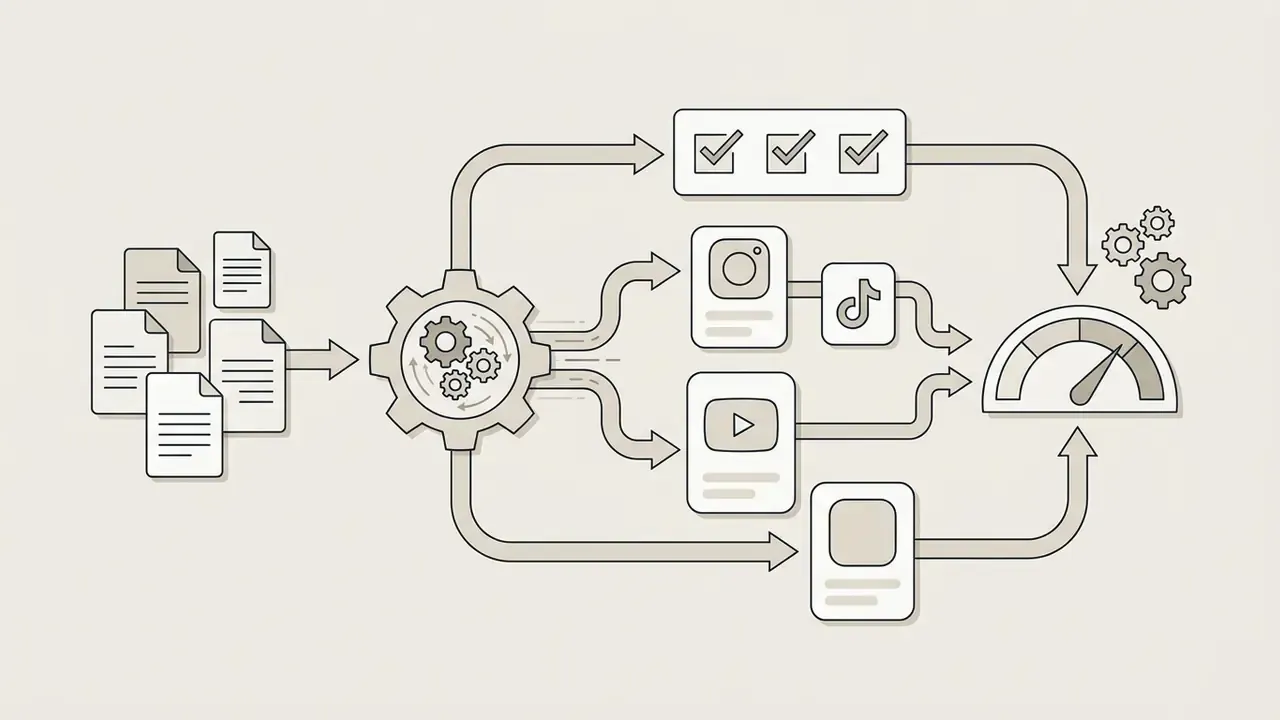
How to Use an AI Username Generator: Step-by-Step Workflow
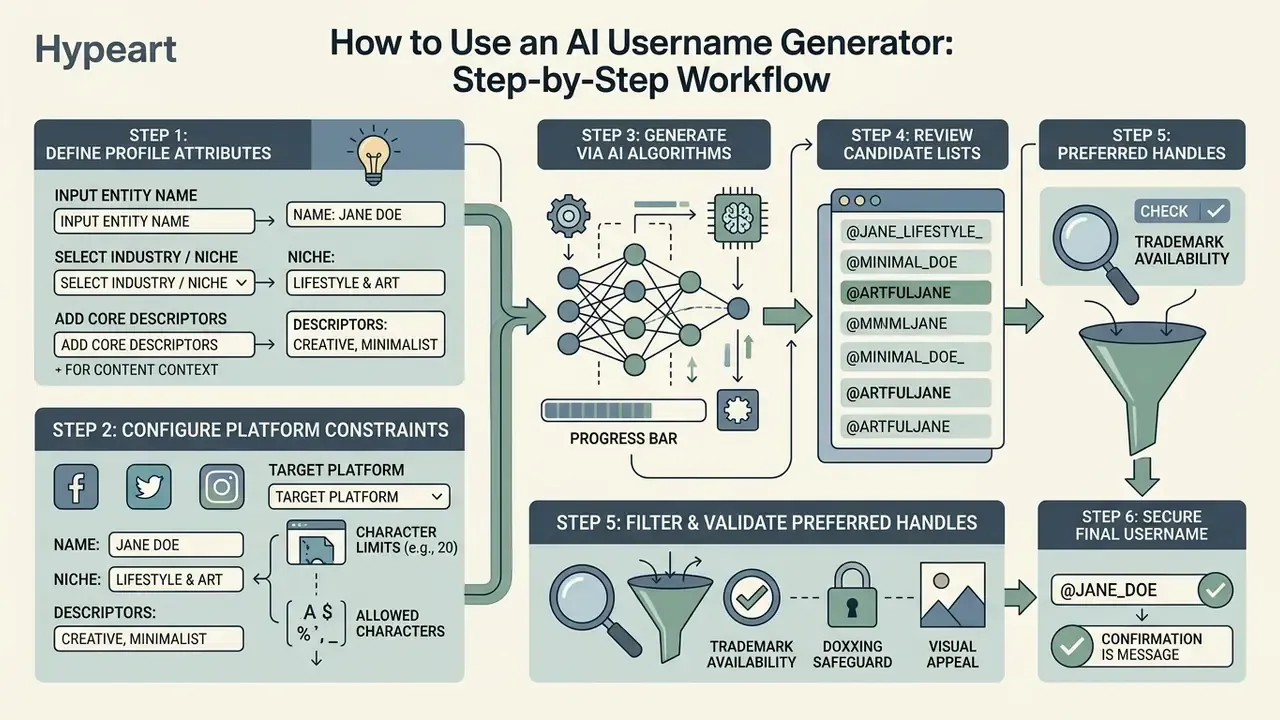
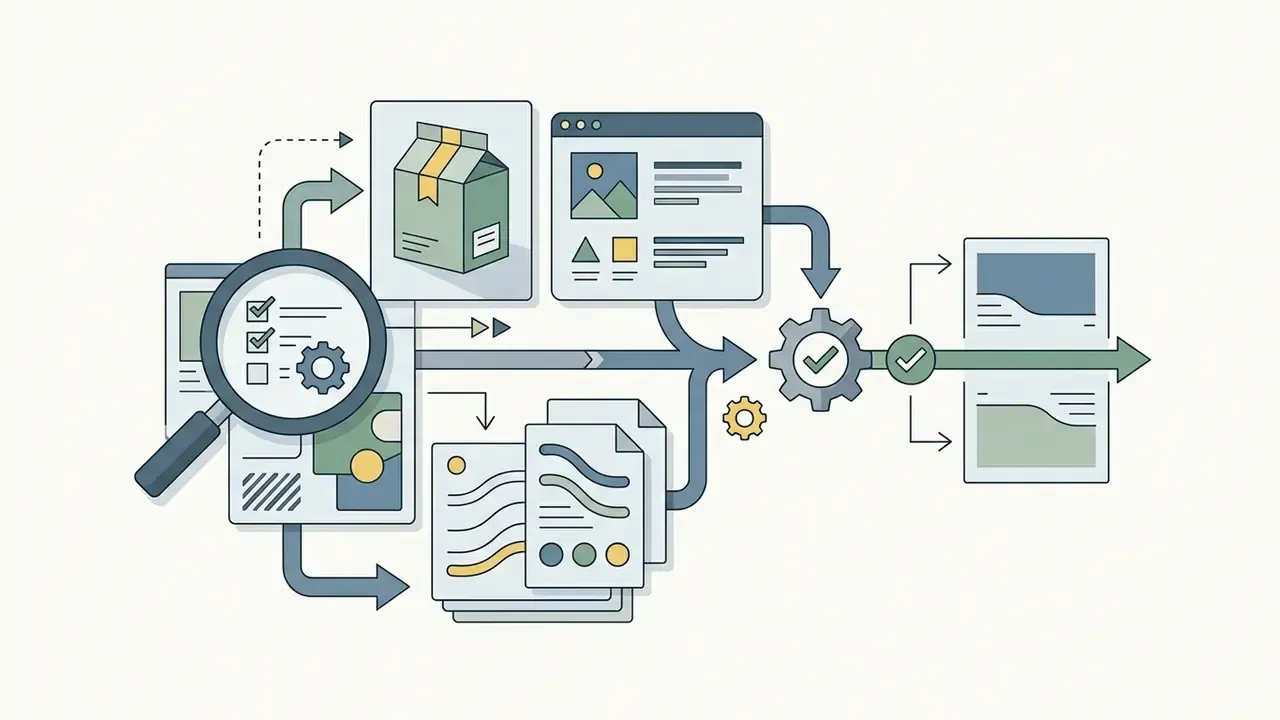
Using an AI username generator involves defining profile attributes, selecting target platform constraints, generating candidate lists via neural algorithms, filtering preferred options into a shortlist, and validating real-time handle availability before account registration. This structured workflow minimizes identity collisions and regulatory or brand risks.
To achieve solid results, users should follow a systematic workflow aligned with standard AI risk management principles.
«The AI RMF is intended to be practical, adaptable, and organized around the functions Govern, Map, Measure, and Manage.»
An ai username creator or ai username maker operates most effectively when provided with structured inputs rather than isolated keywords. Following a defined selection pipeline keeps generated candidates aligned with long-term branding goals, and, frankly, saves you from registering something you will quietly regret in six months.
Field case, illustrative only, regulated fintech rebrand (2025). When executing an enterprise naming initiative, teams should document each stage of candidate selection. In this hypothetical brand repositioning for an emerging fintech portal, the primary corporate handle was already claimed on two major networks. The governance team deployed a structured prefix-suffix strategy combining entity descriptors with real-time verification across five platforms simultaneously, securing a uniform 11-character cross-platform handle across all channels within 48 hours without incurring trademark conflicts. Every candidate was logged in a naming register with the checking timestamp, the screening analyst, the trademark class searched, and the sign-off owner: the same evidentiary discipline a model validation report requires.
Step 1: Input Entity Name, Niche, and Core Descriptors
Input parameters, including base entity names, target industry niches, descriptive seed words, and core brand attributes, directly steer the language model toward relevant candidate outputs. High-density contextual prompts reduce irrelevant suggestions and align handles with user positioning.
«The multi-agent NAMeGEn system extracts key information from a user's description and iteratively refines candidates against correctness, informativeness, and diversity metrics.»
When configuring an ai social media name generator, users should supply:
Research on generative-engine optimization is consistent on one point: entity clarity and explicit contextual components, not connective filler words, carry the semantic weight that steers output quality. Same lesson as prompt work in a ai story generator workflow, where a vague premise produces vague output.


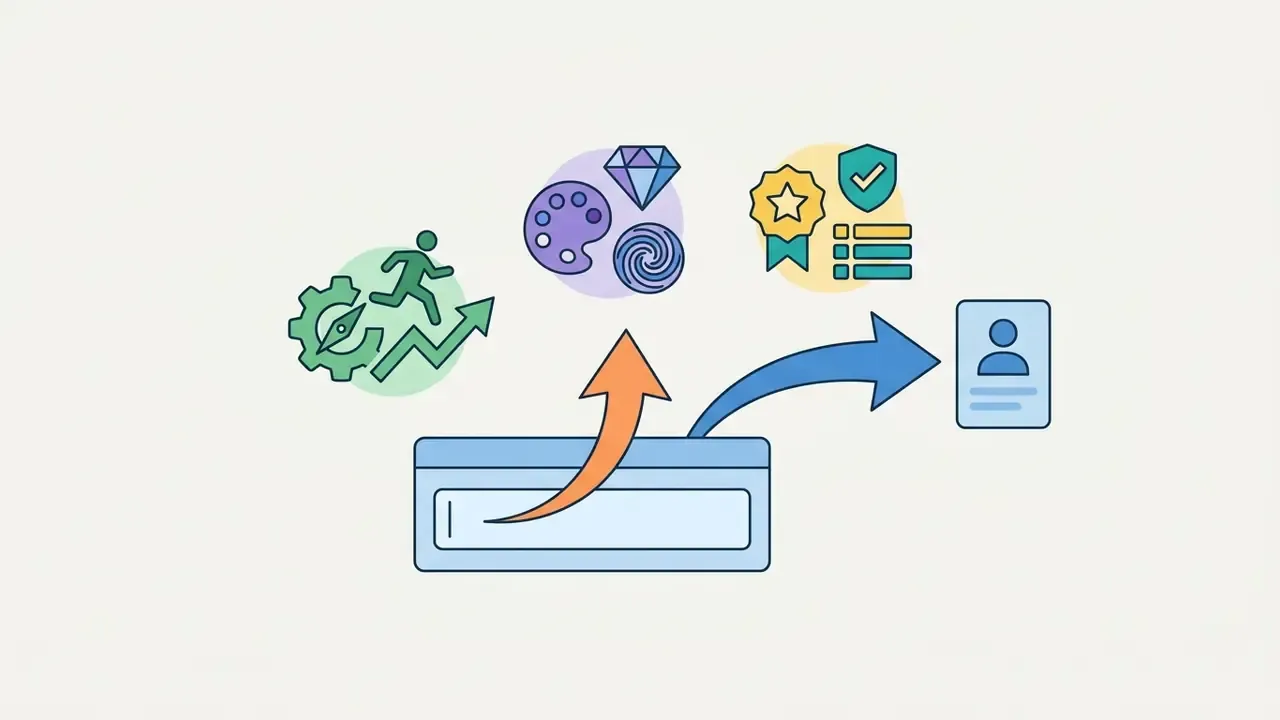
Prompt Engineering Examples for Optimal Generator Outputs
To maximize neural candidate quality, combine entity names, explicit domain niches, and stylistic attributes inside a single prompt string:
- Example 1 (Personal Brand):
- Input prompt: "Freelance UX designer focused on SaaS products, professional yet creative tone."
- Generated outputs:
UXWithSarah,SaaSDesignPro,StudioSoraUX,PixelSaaS
- Example 2 (E-commerce Business):
- Input prompt: "Eco-friendly handmade candle brand, minimalist aesthetic, natural vibes."
- Generated outputs:
LuminaWaxCo,EcoFlameStudio,PureWickHQ,TerraCandleCo
- Example 3 (Creator Niche):
- Input prompt: "I post about a freelance writing business on Instagram, friendly and confident tone."
- Generated outputs:
FreelanceWordsmith,WordHustler,WriteWithMara,CopyByMara
- Example 4 (Regulated B2B):
- Input prompt: "Model risk and AI governance advisory for banks, formal tone, exact entity match preferred."
- Generated outputs:
HaleRiskAI,ModelRiskHQ,GovernAI_Advisory,RiskDeskHale
Prompt hygiene rule: never paste confidential entity names, unreleased product codenames, client identifiers, or personal data into a public generator. Use a neutral placeholder ("regional retail bank", "Project Alpha") and substitute the real entity locally after generation.
Step 2: Define Target Platform, Style Presets, and Brand Tone
Selecting target platforms, stylistic presets, and brand tone enforces strict technical constraints such as character limits and permitted punctuation, while establishing the desired emotional posture of the handle. Tonal selection keeps the generated username in step with the audience it is meant to reach.
Different platforms enforce varying technical boundaries:
- X (Twitter) maximum 15 characters; alphanumeric plus underscores; no spaces or periods.
- Instagram maximum 30 characters; letters, numbers, periods, and underscores allowed (Instagram Help, 2025).
- TikTok 2 to 24 characters; alphanumeric, underscores, and non-consecutive periods.
- YouTube 3 to 30 characters; alphanumeric, hyphens, underscores, and periods.
- Google Workspace (corporate accounts) up to 64 characters, lowercase only, repeated periods disallowed, reserved words such as
abuseandpostmasterblocked.
«Usernames can be up to 64 characters, must be lowercase, and you should minimize the use of symbols.»
Setting the tone, whether professional, aesthetic, creative, or authoritative, keeps the username generator ai producing results that fit the target environment rather than a generic vibe.
Step 3: Shortlist Candidate Handles and Verify Real-Time Availability
Maintaining a saved shortlist of candidate handles allows systematic cross-platform availability testing against public profile endpoints and platform search APIs. Final selection depends on confirming zero collisions across all required target networks.
When an AI engine functions as a username creator ai, candidate output lists can be extensive. Users should select candidate handles and record them in a central log alongside checking dates, because a username generated by AI reflects a static training snapshot and must be re-verified against live platform registries. How a generator generate candidate options is only half the process; verification is the other half. Always check real-time registration status before committing to marketing collateral, and choose final handles based on multi-network availability.
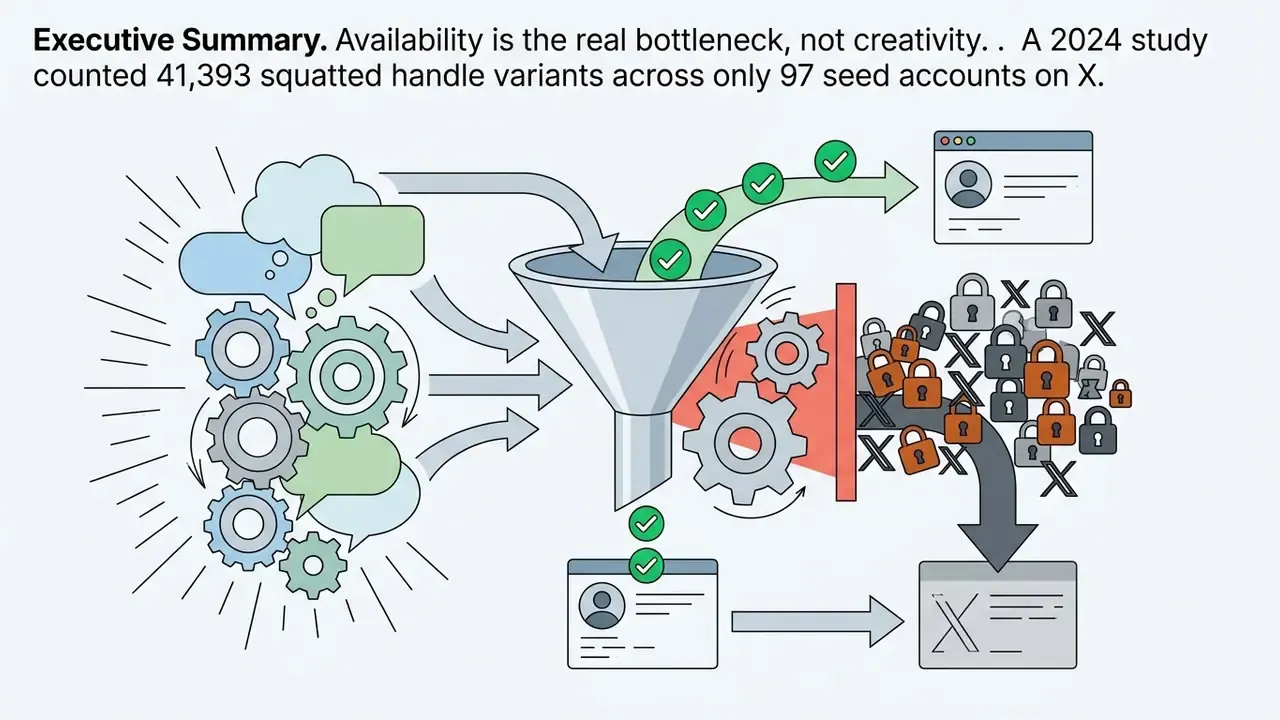
The scale of the collision problem is measurable:
«A 2024 study identified 41,393 active squatted handle variants targeting 97 seed X accounts, an average of 427 conflicting variants per original handle.»
Practical verification methods documented across tooling guidance fall into three tiers: (1) manual shortlist checks by loading platform.com/handle profile URLs; (2) parallel automated checks that query public profile pages or platform APIs and return available / taken / unknown; (3) enterprise registry monitoring that re-scans owned and near-miss handles on a schedule to detect new squatters. Teams building automated pipelines can review integration patterns in our API implementation guides for rate-limit and quota handling logic.
- Profile description
- platform and tone selection
- candidate generation
- shortlist
- availability check
- registration and rollout
Popular Username Style Archetypes: Aesthetic, Creative, Professional and Gaming
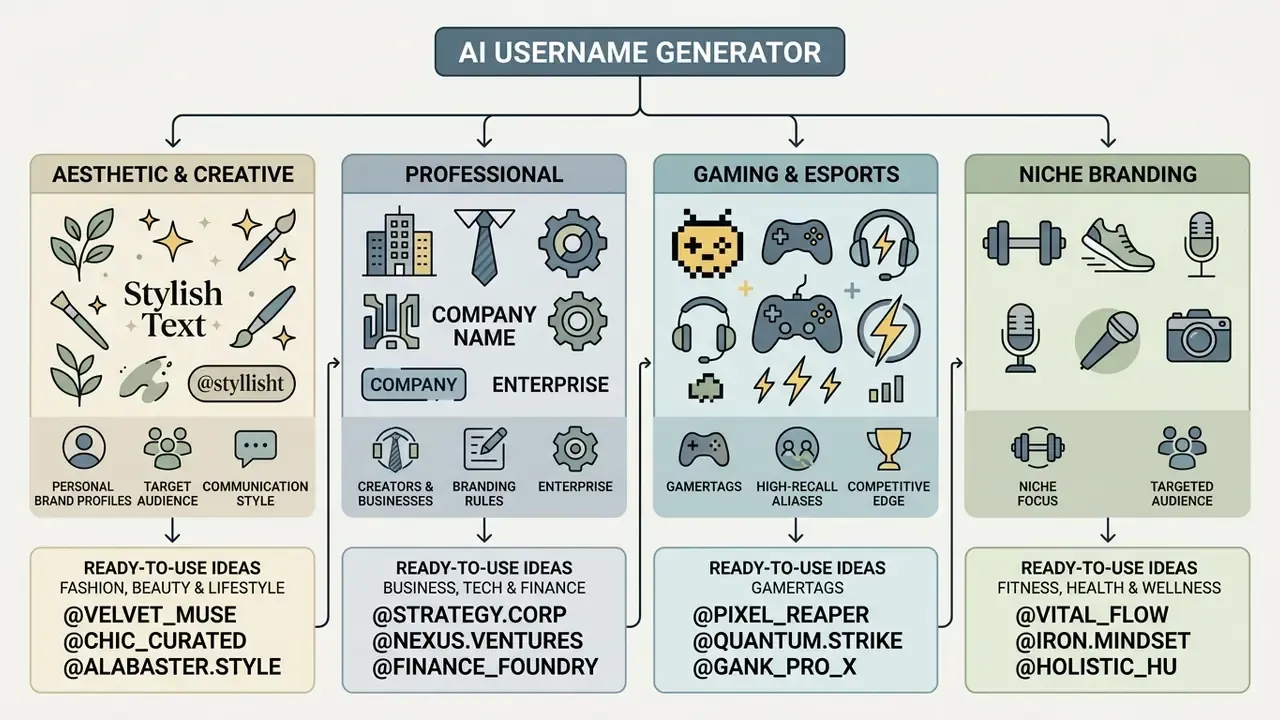
Username styles categorize handles into distinct aesthetic, creative, professional, brand, niche, and gaming archetypes based on target audience expectations and communication context. Selecting the appropriate style keeps online identity and content delivery consistent.
Different digital environments require distinct naming strategies. Running an ai username generator aesthetic mode produces evocative, mood-driven handles, whereas setting the username generator ai aesthetic filter generates visual, minimalist options suitable for lifestyle channels. A social media name generator ai preset, by contrast, tends to bias toward searchable, niche-tagged output. Evaluating stylistic options helps creators match handles with their visual content.
To explore complementary creative media tools, review our benchmark guides in the AI Media Comparison Matrices and calculate asset generation requirements using AI Media Calculators.
Aesthetic and Creative Handles for Personal Brand Profiles
Aesthetic and creative usernames combine mood-driven vocabulary, sound-symbolic word pairs, and minimalist formatting to establish evocative personal handles for lifestyle and artistic channels. These structures prioritize visual symmetry, lower-case styling, and atmospheric imagery.
Common structural patterns in aesthetic handle generation include two-word mood-plus-nature compounds (for example velvet.dusk, moonlit.fern), dot-separated lower-case compounds, single-word minimalist handles, and curated thematic keywords drawn from minimalist, ethereal, vintage, or dark-academia concepts.
These styles present a personal identity without requiring explicit real-name exposure, a meaningful advantage for creators who want recognizability without full self-identification. Worth noting: dot separators look elegant on Instagram and break outright on X.
Professional and Enterprise Branding Rules for Creators and Businesses
Professional and brand handles use real-name variations or exact business entity names with clean modifiers to maximize credibility, cross-platform consistency, and search discoverability. These formats minimize special characters and arbitrary digits to protect enterprise brand integrity.
For corporate entities and individual experts, institutional naming guidance recommends exact-match brand names or clean role descriptors (for example JohnCrowley_Consulting, JohnS_Crowley, AcmeHQ, or role-based government-style handles such as okgov and okattgen). Avoiding excessive numbers and random punctuation keeps readability and search indexation efficient, and, per brand-processing research, directly strengthens attachment.
«Brand names that are more fluent to process foster stronger self-brand connection and easier integration of the brand into consumers' personal narratives.»
Enterprise rule set for regulated brands:
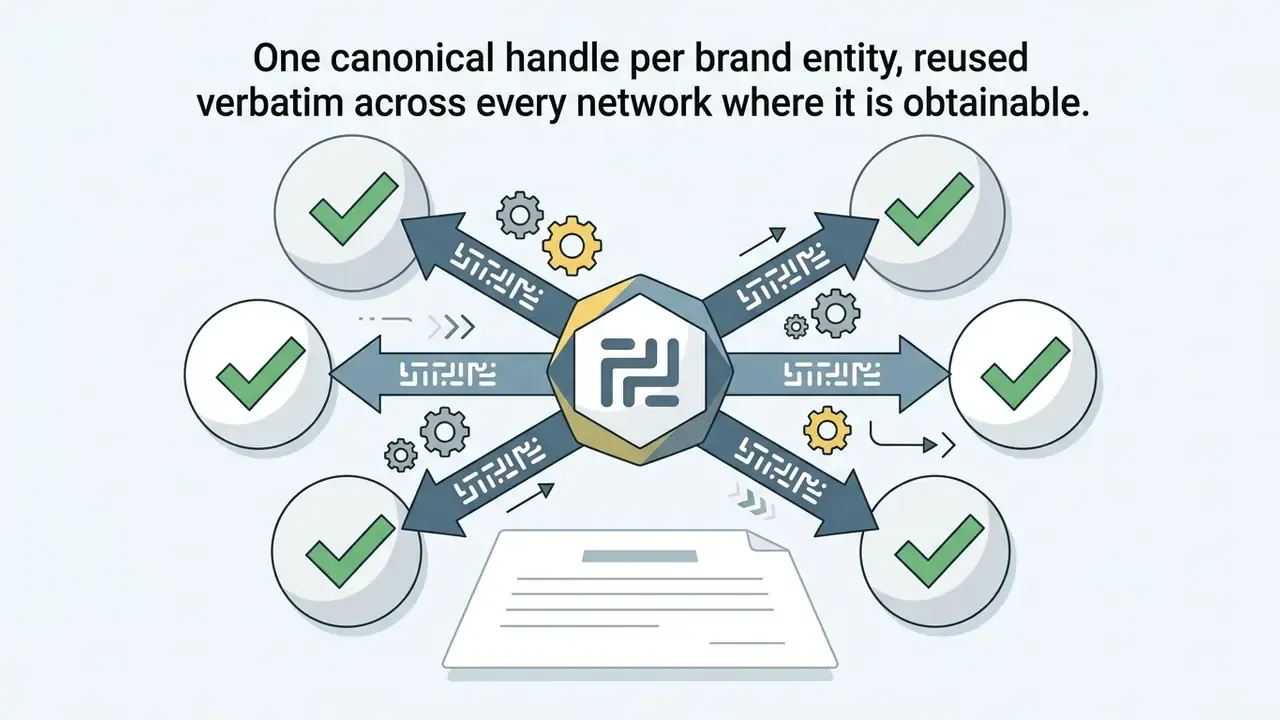
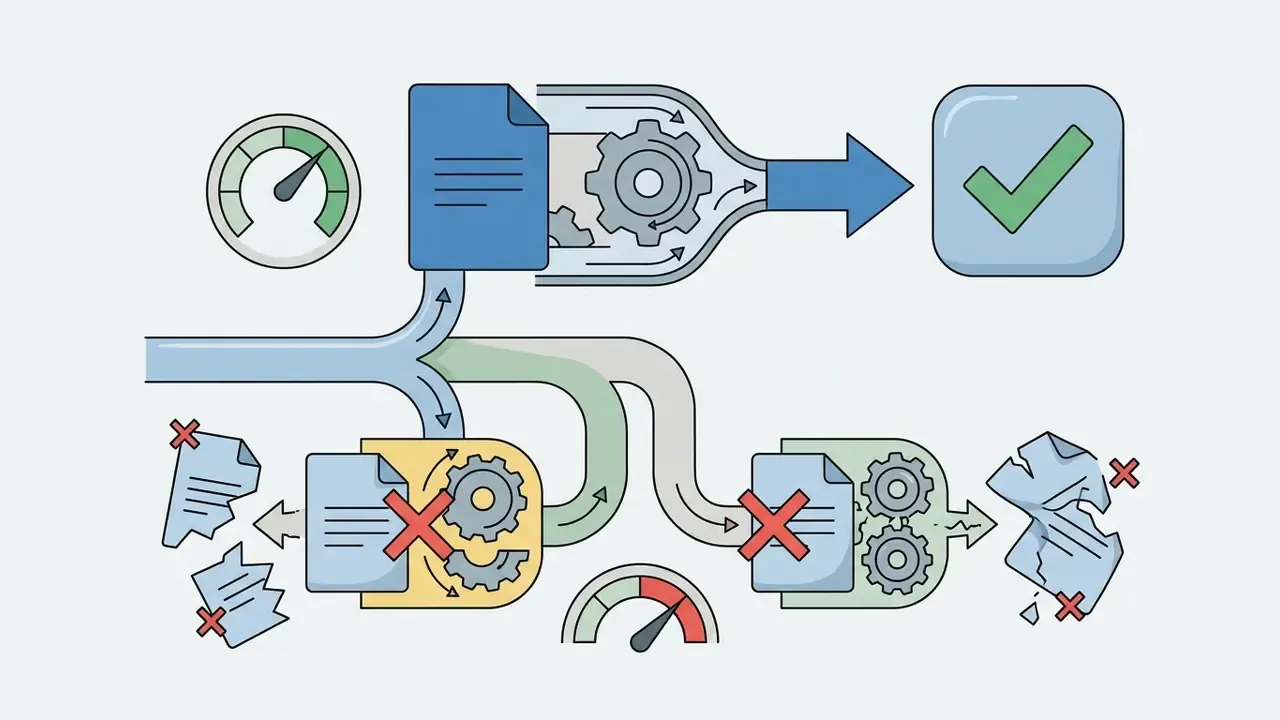
_insta, _yt) that fragment brand equity.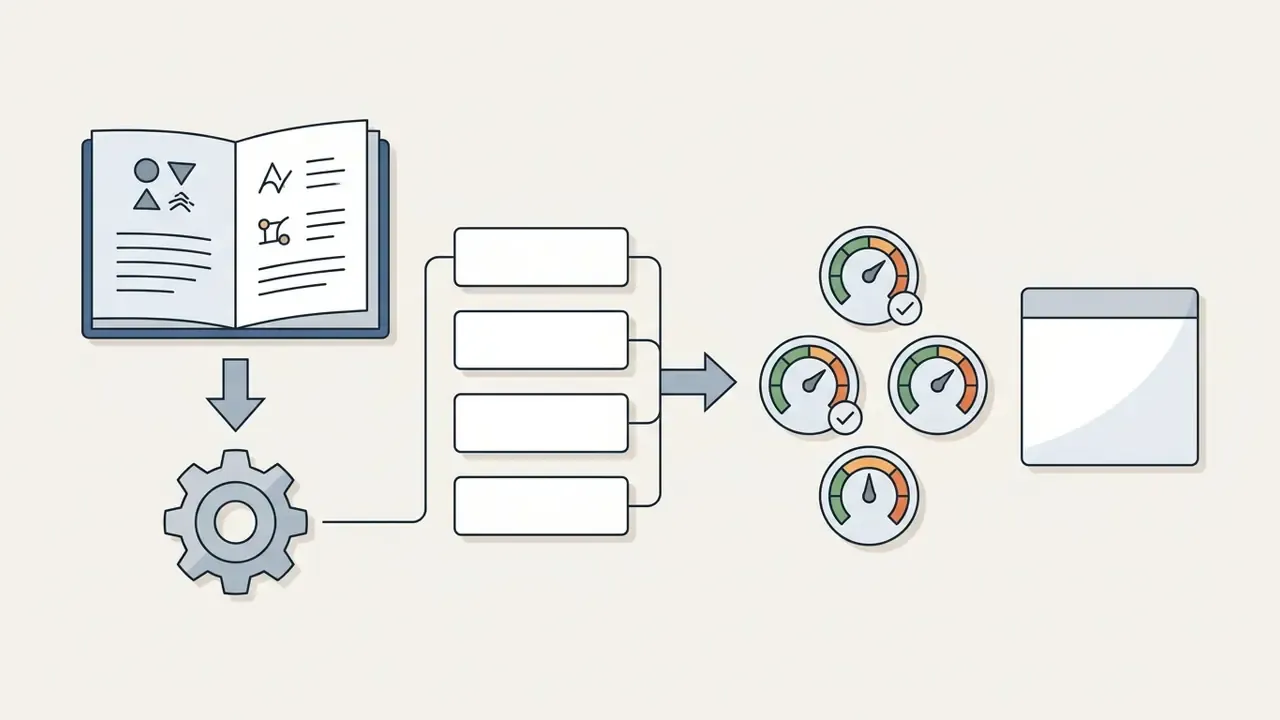
hq, co, official, _us) governed by the brand book.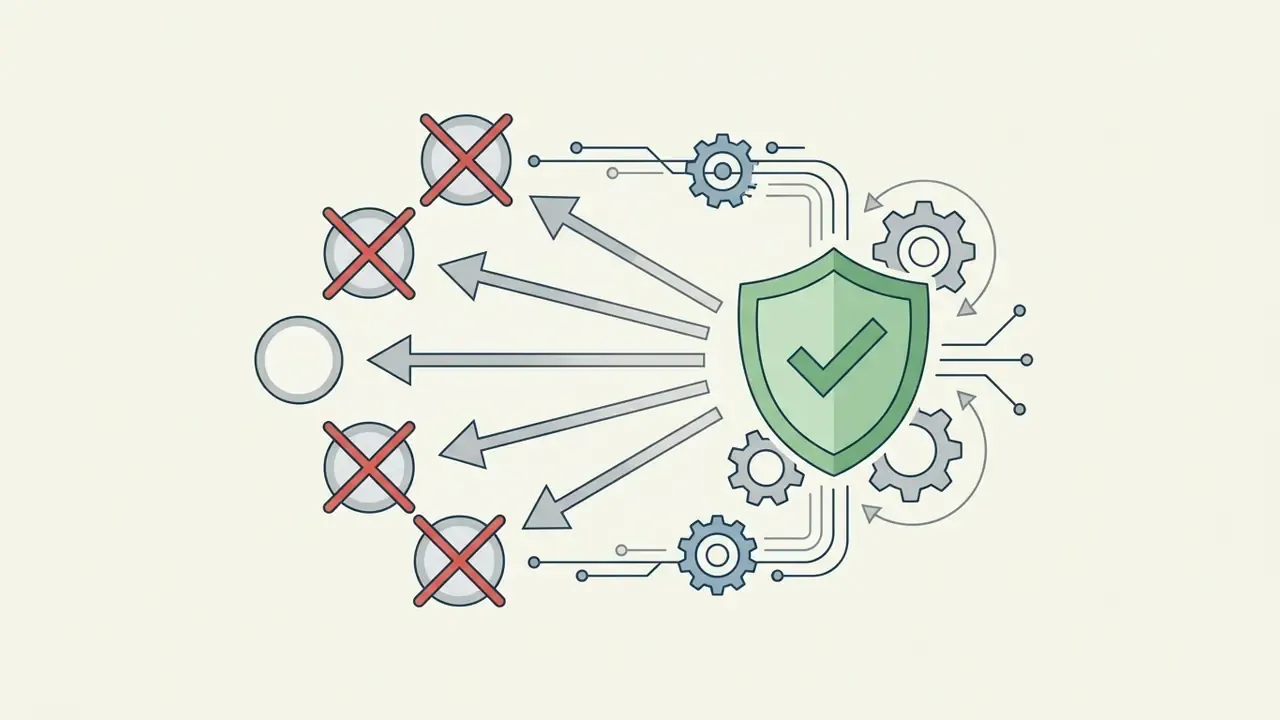
Core Attributes of a High-Converting Social Media Username
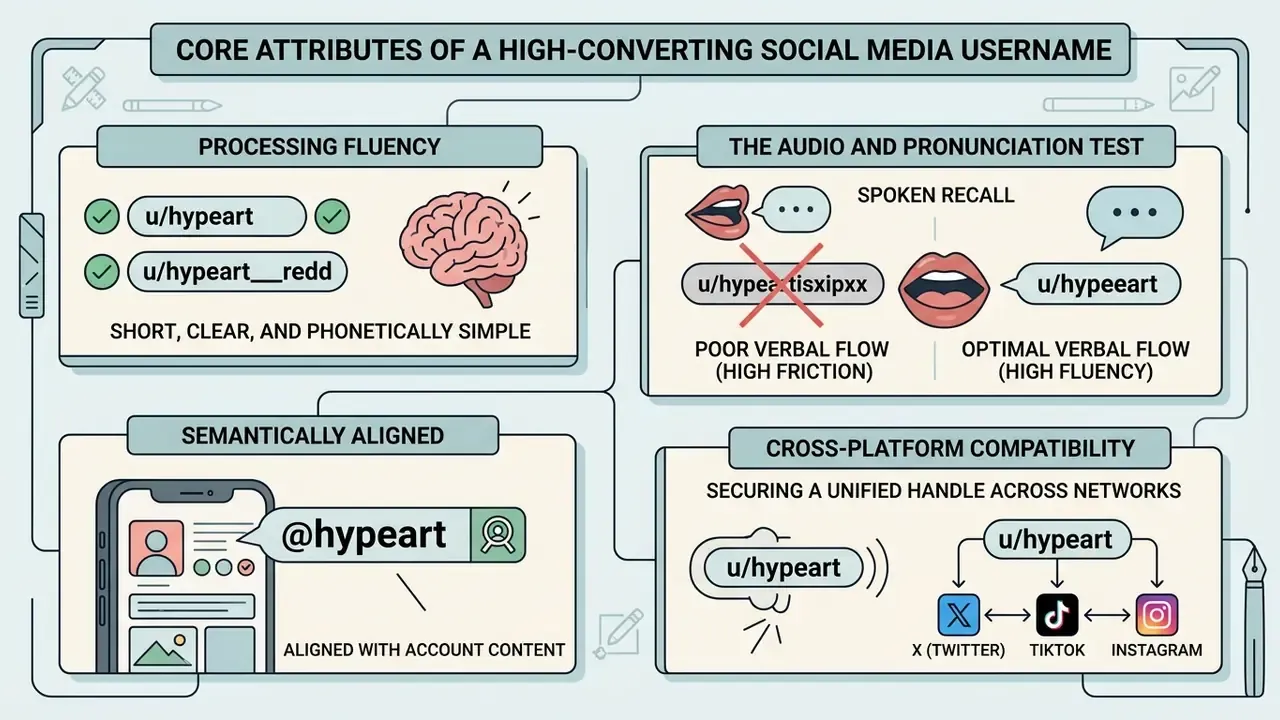
An effective social media username is short, easily pronounceable, semantically aligned with account content, and identical across all primary communication platforms. High processing fluency in handles directly improves recall, audience recognition, and self-brand connection.
Empirical research in brand name processing shows that higher processing fluency, achieved through shorter character length and phonological simplicity, fosters stronger self-brand connection and easier integration into personal narratives.
«Higher processing fluency, whether through repeated exposure or simpler names, is associated with stronger self-brand connection and narrative brand integration.»
A good username acts as a fluent brand asset that audiences can remember, spell, and share. Securing a unique username across social media networks protects online brand equity. Managing media usernames under a standardized framework prevents identity dilution. Because the handle is only one layer of profile identity, most brands pair it with consistent avatars produced via AI headshot generators and unified channel art.
For developers seeking automated handle processing, explore implementation details in our api overview.
Processing Fluency: Keeping Usernames Short, Clear, and Phonetically Simple
Usernames with high processing fluency feature concise character lengths, intuitive orthography, and simple phonetic structures that viewers can pronounce and transcribe without error. Minimizing character length reduces transcription mistakes and strengthens memory retention.
Keeping handles short and avoiding confusing character substitutions (such as replacing 'E' with '3' or 'O' with '0') keeps legibility high and prevents user confusion during manual searches. Public usability guidance reinforces the same point: confusable characters such as O and 0, or l and 1, should be avoided in any human-typed identifier.
The Audio and Pronunciation Test (Spoken Recall)
Before registering, test how easily the handle flows in verbal communication: podcast intros, Reels voiceovers, livestream shout-outs, conference stage mentions, word-of-mouth referrals.
- Poor verbal flow (high friction)
@x_chic_boutique_2024_x. The speaker must explain underscores, a prefix, a year, and a trailing letter. Listeners mistype it. - Optimal verbal flow (high fluency)
@ChicBoutiqueor@GetChicBoutique. Instantly readable, phonetically clean, reliably transcribed from speech to text.
Three-part spoken test: (1) say "Follow me at [handle]" out loud; (2) have another person type what they heard without seeing it; (3) if the transcription is wrong, the handle fails. Creators producing spoken-word formats should also audit their audio identity, see our guide to AI voice generators for narration workflows where the handle is read aloud in every intro.
Cross-Platform Compatibility: Securing a Unified Handle Across Networks
Deploying a single cross-platform handle establishes a unified digital identity that simplifies audience discovery across Instagram, TikTok, YouTube, and X. For universal availability, the chosen handle must satisfy the character limits of the most restrictive platform, specifically X's 15-character ceiling.
- X (Twitter) 15-character limit (most restrictive).
- TikTok 24-character limit (minimum 2).
- Instagram 30-character limit.
- YouTube 30-character limit (minimum 3).
Designing a cross-platform handle to fit within 15 alphanumeric characters guarantees seamless cross-network compatibility without truncation on tighter networks. Avoid periods in the canonical version: X does not accept them, so a dot-styled handle can never be truly universal. Visual consistency should travel with the handle, the same wordmark, palette, and avatar across channels, whether produced in a photo editor or an AI design suite.
Semantic Alignment: Matching Vocabulary to Account Niche
A strategic username incorporates subtle industry keywords or brand descriptors that immediately communicate the account's core value proposition to prospective followers. Semantic congruence between handle vocabulary and published content accelerates audience positioning.
Aligning username vocabulary with account focus helps algorithms and human visitors categorize the profile at a glance: FitnessWithAnna surfaces in fitness searches, NomadLens signals travel photography, and SarahStylesHair signals a hairstylist before a single post is read. Choose vocabulary that can survive growth. CollegeChef expires at graduation, whereas ChefMarcus remains accurate indefinitely.
Creators building multi-format media strategies can review adjacent workflow guides such as our YouTube video editor workflow, video compressor guide, the ai storyboard generator primer, and free photo editor comparison documentation, which cover the publishing assets attached to the handle you register.
Common Username Mistakes and Fallback Modification Strategies
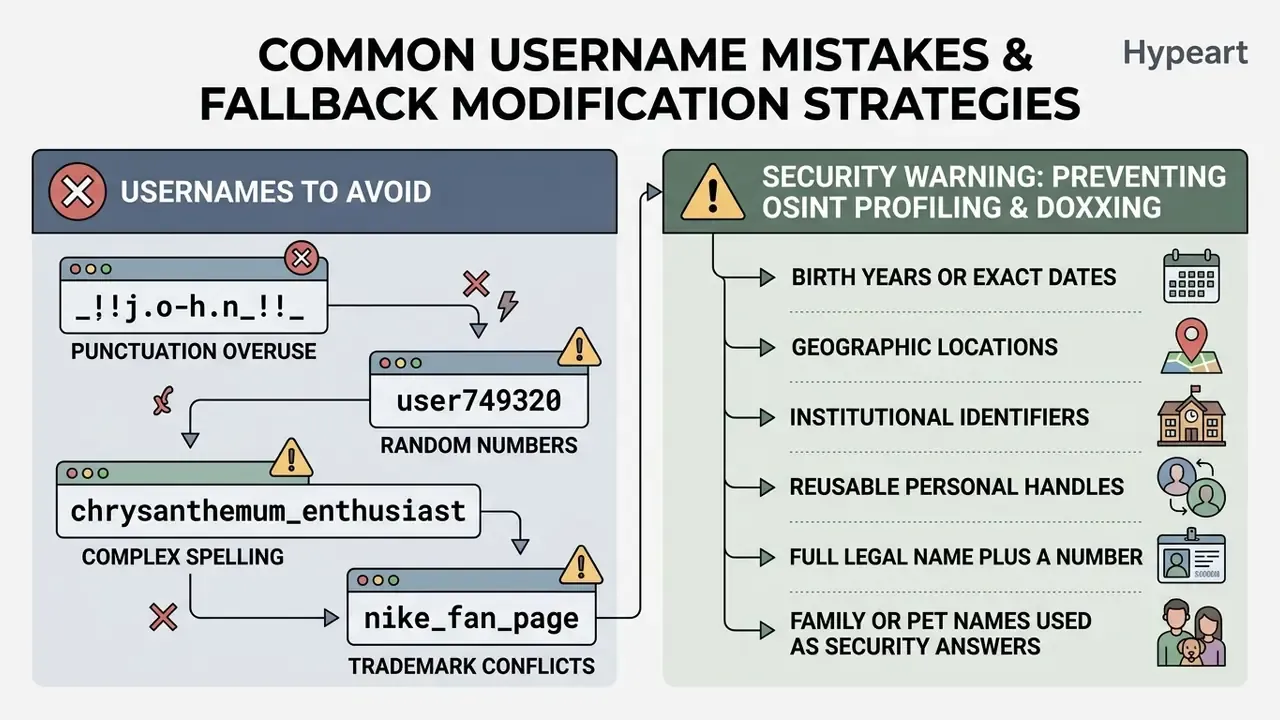
Selecting an effective username requires avoiding complex special characters, random number strings, hard-to-spell vocabulary, and trademark conflicts, while applying structured modification techniques when a primary choice is unavailable. Systematic validation prevents brand confusion and identity squatting risks.
Academic investigations into online handle landscapes reveal severe adversarial risks associated with derivative naming.
«The study recorded 41,393 active squatted variants for 97 X accounts, an average of 427 conflicting handles per original account.»
To avoid misidentification or automated platform flagging, creators must select handles that are distinct from established entities. Always verify available options and check database records before registering alternative words or characters.
If your team is managing video assets alongside brand handles, consult our contextual resources on ai subtitle generator free options, full ai subtitle generator tools, and the ai summary generator guide for condensing long naming research into a decision memo.
Anti-Patterns: Punctuation Overuse, Random Numbers, and Complex Spelling
Common handle mistakes include embedding excessive punctuation, inserting arbitrary trailing numbers, using confusing letter-number substitutions, and choosing terms that conflict with overall account positioning. These errors reduce processing speed and lower audience recall.
Trailing digit strings (for example JohnSmith83921) also increase the likelihood that security filters treat the account as automated spam, and administrative naming guidance consistently advises organizations to minimize symbol usage because symbols break third-party integrations.
Security Warning: Preventing OSINT Profiling and Doxxing
When creating handles for anonymous, personal, or secondary accounts, strictly avoid embedding identifiable personal markers:
- Birth years or exact dates
AlexSmith_98reveals approximate age and feeds password-recovery and credential-stuffing vectors. - Geographic locations
Sarah_NYCorJohn_Austinfacilitates physical location mapping and stalking risk. - Institutional identifiershigh school, university, employer, or department names allow rapid identity resolution.
- Reusable personal handlesnever reuse a handle tied to a personal email prefix, dating profile, or private identity account. Handle reuse is the single most reliable cross-platform correlation signal for OSINT tooling.
- Full legal name plus a numberthe combination is uniquely identifying while adding zero brand value.
- Family or pet names used as security answersthese often double as account-recovery secrets.
For truly anonymous accounts, generate an abstract two-word compound with no autobiographical content (ByteAlias, SilentOrbit) and keep it isolated from every identity-linked account.
Free AI Username Generators vs. Commercial Business Deployment
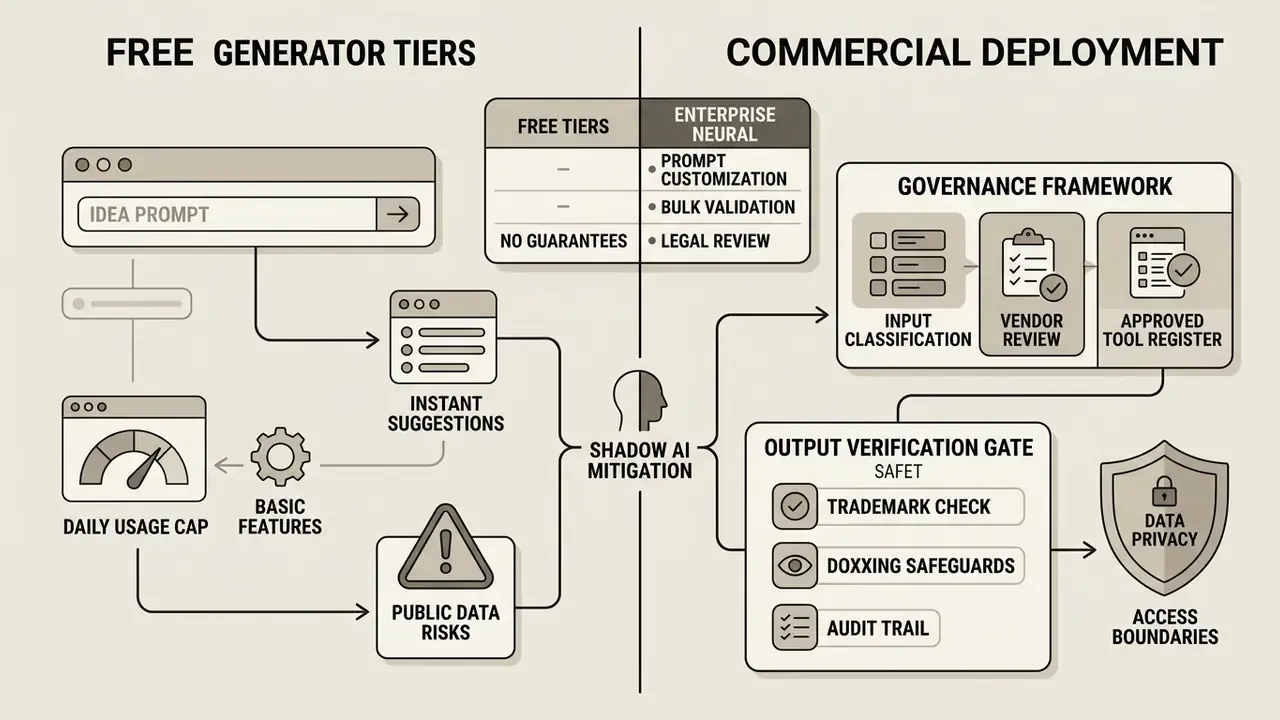
Free AI username generators provide instant handle suggestions under specific daily usage caps or feature tiers, while commercial deployment of generated names requires thorough trademark verification and human oversight under current IP regulatory frameworks. Organizations must independently verify availability and trademark rights prior to commercial rollout.
Selecting an ai username generator free tier allows users to test prompt combinations without upfront costs. While a free username generator provides immediate candidate lists, businesses using a free username tool must conduct legal and trademark due diligence. When evaluating software options where the generator free tier is limited, enterprise teams should audit tool terms of service line by line. Yes, including the retention clause nobody reads.
Shadow AI and Data Privacy: Governing Public Generators Inside an Organization
Free naming tools are the classic low-friction Shadow AI entry point: no login, no procurement, no logging. The exposure is not the output. It is the input.
Control checklist for regulated organizations:
Review pricing models and service terms across our AI Media Pricing Guides and explore commercial licensing standards in the AI Media Commercial-Use Hub, including our breakdown of commercial use of AI image generators for brand assets attached to the handle.
Feature Matrix: Free Generator Tiers vs. Enterprise Neural Tools
Free tiers of AI handle generators typically offer standard candidate generation, basic tone adjustments, and simple shortlist saving, whereas premium tiers provide unlimited batches, multi-agent model access, and API integrations. Understanding tier restrictions helps users select the appropriate tool for their project scale.
Platform offerings vary widely across the market. Some vendors advertise unlimited free generation without registration, while others cap free output per day:
«The username generator is free, requires no sign-up, and provides unlimited username ideas.»
«The free username generator provides up to five sets of suggestions per day.» Buffer Free Tools (2026). https://buffer.com/free-tools/username-generator
Basic tools generate standard candidate lists; advanced platforms support multi-agent evaluation, saved favorites lists, and programmatic access. Note that model transparency is inconsistent: some free services route requests across several models and disclose the model only after the response. For a regulated buyer, that alone can disqualify a vendor.
Table C. Capability and security comparison
| Dimension | Free / Public Tier | Enterprise / API Deployment |
|---|---|---|
| Generation volume | Unlimited to about five batches per day, vendor-dependent | Contracted quotas, batch and bulk generation |
| Model access | Undisclosed or rotating models | Pinned model version, disclosed in contract |
| Availability checking | Manual or absent | Automated multi-platform API checks |
| Shortlist management | Local favorites list at best | Central naming register with owners and timestamps |
| Prompt retention | Often retained; training use possible | Non-retention and no-training clauses negotiable |
| Access control | Anonymous web form | SSO, role-based access, egress and DLP inspection |
| Auditability | None | Full prompt and output logs for model-use audit |
| Trademark screening | Not included | Optional integrated or workflow-linked screening |
| Suitable for | Personal, creator, gaming handles | Regulated brands, corporate rebrands, portfolios |
Procurement questions to ask any vendor: Where are prompts stored and for how long? Is prompt data used for training? Is there a documented sub-processor list? Which model powers the output, and is the version pinned? Is there an SLA for API availability? Does the contract allow commercial use of generated names without attribution?
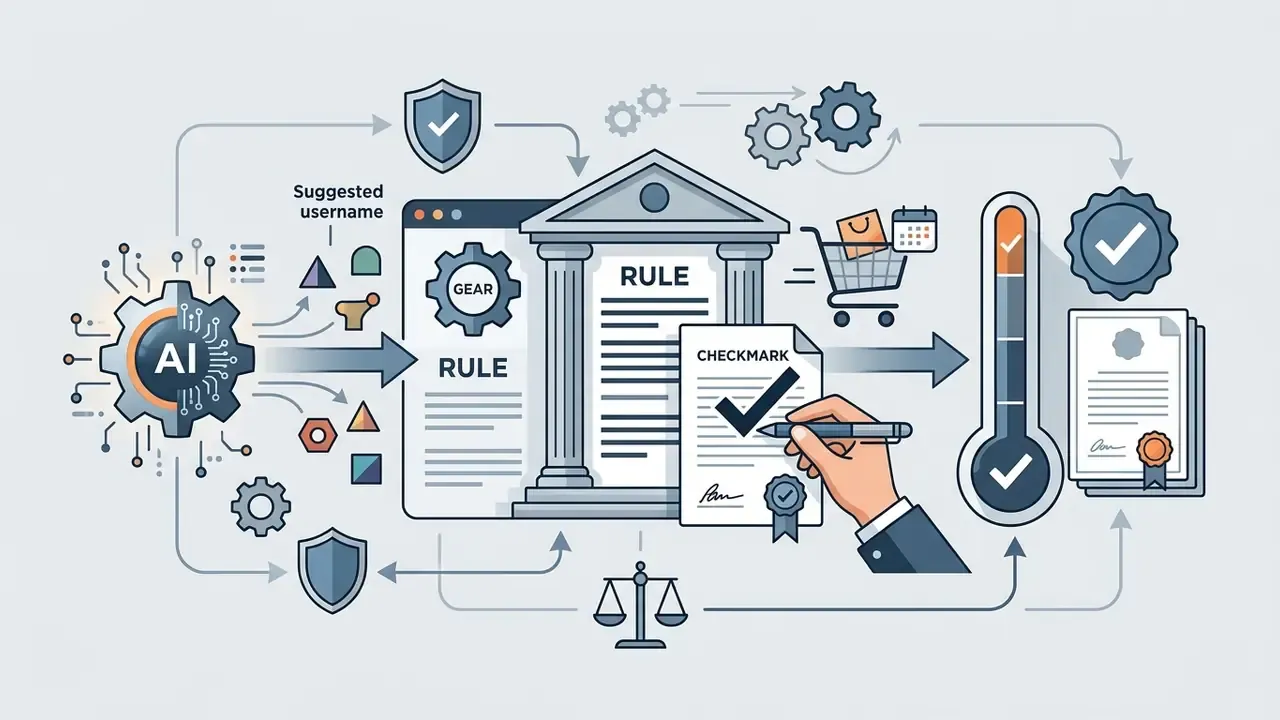
Commercial Rights and Trademark Compliance for AI-Generated Names
AI-generated handles can be used for commercial enterprise branding provided they undergo human legal verification, clear existing trademark databases, and demonstrate distinctiveness in commerce. IP regulatory authorities do not grant automatic trademark protections to unverified machine-generated outputs.
«AI-assisted trademark filings must be carefully reviewed before submission; AI-generated specimens that do not show actual marketplace use should not be filed.»
«Where generative AI is used to create content in a filing, the party must disclose it and declare that all AI-generated content and cited authorities were reviewed and verified.»
Comparative practice is consistent across jurisdictions. Commentary on French and EU practice (2025) holds that an AI-generated brand name is registrable if it is distinctive, lawful, non-deceptive, and available; AI origin alone is not a bar. WIPO's 2024 guidance on generative AI frames commercial adoption as an IP risk exercise requiring ownership checks and downstream branding risk management. Where disputes are heading is worth watching too, and we track that in AI Litigation and Case Timelines.
================================================================================
E-E-A-T VERIFICATION & LEGAL COMPLIANCE
================================================================================
- Trademark Standard: USPTO 2024 guidance dictates that AI-generated business names
  must satisfy standard requirements of distinctiveness and non-confusion in commerce.
- Verification Requirement: CIPO (2025) and USPTO mandate human verification of all
  AI-generated assets and trademark search records prior to legal registration.
- Usage Rights: AI generated outputs must be audited against existing registered
  trademarks and platform reserved lists before commercial deployment.
- Privacy Standard: Pseudonymization under GDPR and ISO/IEC 29100:2024 requires the
  systematic replacement of PII with pseudonyms, with mapping tables stored separately
  to permit controlled re-identification (see: Fill-in-the-Blanks: Generating
  Pseudonyms for English and Swedish, arXiv, 2026).
- Technical Standard: IETF RFC 8265 / RFC 8266 govern normalization, case mapping,
  and comparison of internationalized usernames and nicknames.
- Risk Framework: NIST AI RMF 1.0 (2023) and the NIST Generative AI Profile (2024)
  define the govern-map-measure-manage controls applied to generated outputs.
================================================================================



FAQ: Frequently Asked Questions About AI Username Generators
This FAQ covers technical capabilities, non-English script handling, multi-language support, and optimal shortlist sizing for AI username generators.
For additional platform assistance and regulatory compliance guides, visit AI Media Support and Troubleshooting.
Can AI Generators Create Non-English or Multi-Language Usernames?
Modern AI username generators can process non-English inputs and generate handles across diverse language scripts by using Unicode standards (RFC 8266) and character normalization protocols. Transliteration tooling further allows non-Latin names to be formatted for global platform compatibility.
«Nicknames are treated as Unicode strings, encoded in UTF-8, normalized with NFKC, and case-mapped to lower case.» RFC 8266, IETF (2017 to 2026). https://datatracker.ietf.org/doc/html/rfc8266 This lets AI engines handle non-Latin inputs (Cyrillic, Greek, Armenian, CJK, and JACKPHY scripts) and supply either native-script profile names or accurately transliterated Latin handles. Library of Congress guidance (2024) documents transliteration tooling such as ScriptShifter for exactly this input problem. Note that RFC 8266 governs comparison and enforcement, not automatic transliteration; that step is a tooling decision, not a standard. «Nominalist uses the PNGT-26K dataset of roughly 26,000 Persian names with English transliterations, demonstrating a practical multilingual username generation pipeline.» Nominalist / PNGT-26K, arXiv (2025). arxiv.org Practical caution: many platforms silently fold or reject non-Latin characters in handles while permitting them in display names. Register a Latin-script handle and express the native-script identity in the display name field.
What is the Optimal Shortlist Size for Availability Verification?
In practice, a working shortlist of roughly 8 to 12 high-quality candidates provides enough fallback depth for multi-platform screening without creating decision fatigue, then narrows to two or three finalists for legal and availability sign-off.
«No reliable English-language studies from 2023 to 2026 establishing an optimal shortlist size specifically for username selection, with transparent methodology, were identified.» Internal evidence review (2023 to 2026). The 8 to 12 figure is therefore an operational heuristic borrowed from candidate-selection practice, not a validated username-specific finding. Academic work on shortlisting (2025) frames size as a trade-off between covering desiderata and preserving cognitive efficiency, and declines to fix a single number. Field practice from availability-checking guidance suggests preparing two or three exact spellings of the finalist and logging the spelling, links, and check date, because availability can change between screening and registration. Recommended working model: generate 20 or more candidates → filter to 8 to 12 on brand fit and fluency → screen all 8 to 12 for cross-platform availability → advance two or three to trademark screening → register the winner plus defensive variants the same day.
What Is a Safe First Step for a Regulated Organization?
Start small and reversible. Pick one brand entity, run the handle candidates through a sanctioned tool, log every prompt and output, and route the finalists through trademark screening before anything reaches a marketing calendar. One documented cycle usually exposes more control gaps than a year of policy drafting. Then extend the same register to the rest of the portfolio.
Author and Review Note
This guide was compiled by the AI Governance & Brand Risk desk and reviewed against primary sources: IETF RFC 8265 and RFC 8266, NIST AI RMF 1.0 (2023) and the NIST Generative AI Profile (2024), USPTO AI practice guidance (2024), CIPO TMOB practice (2025), platform documentation from X, Instagram, TikTok, YouTube, and Google Workspace, plus peer-reviewed brand-processing and username-squatting research (2023 to 2025). Expert commentary contributed by Marcus Hale, author. Audience assumptions in this guide remain hypotheses until validated by analytics, interviews, or customer research. Claims without a verifiable primary source are explicitly labelled as unverified in the text.