Key Takeaways at a Glance
- A futa AI generator is a diffusion-based image or multimodal platform that renders futanari-style anime characters from text prompts or source images, sometimes bundled with chat, voice, and video roleplay.
- Technically nothing exotic happens here. The workflow is standard latent diffusion: a text encoder (CLIP or OpenCLIP) converts prompts into embeddings, and the model denoises Gaussian noise into an image. Image-to-image transformation is steered through denoising strength, CFG scale, and fixed seeds.
- For converting an existing 2D anime illustration into futa art, denoising strength around 0.3 to 0.5 (with
0.42as a reliable starting point) preserves face and outfit while adapting anatomy. - Mainstream infrastructure providers (Google, Adobe, Meta, Stability AI) explicitly prohibit pornographic generation. Niche platforms fill that gap, but they also shift compliance responsibility onto the operator.
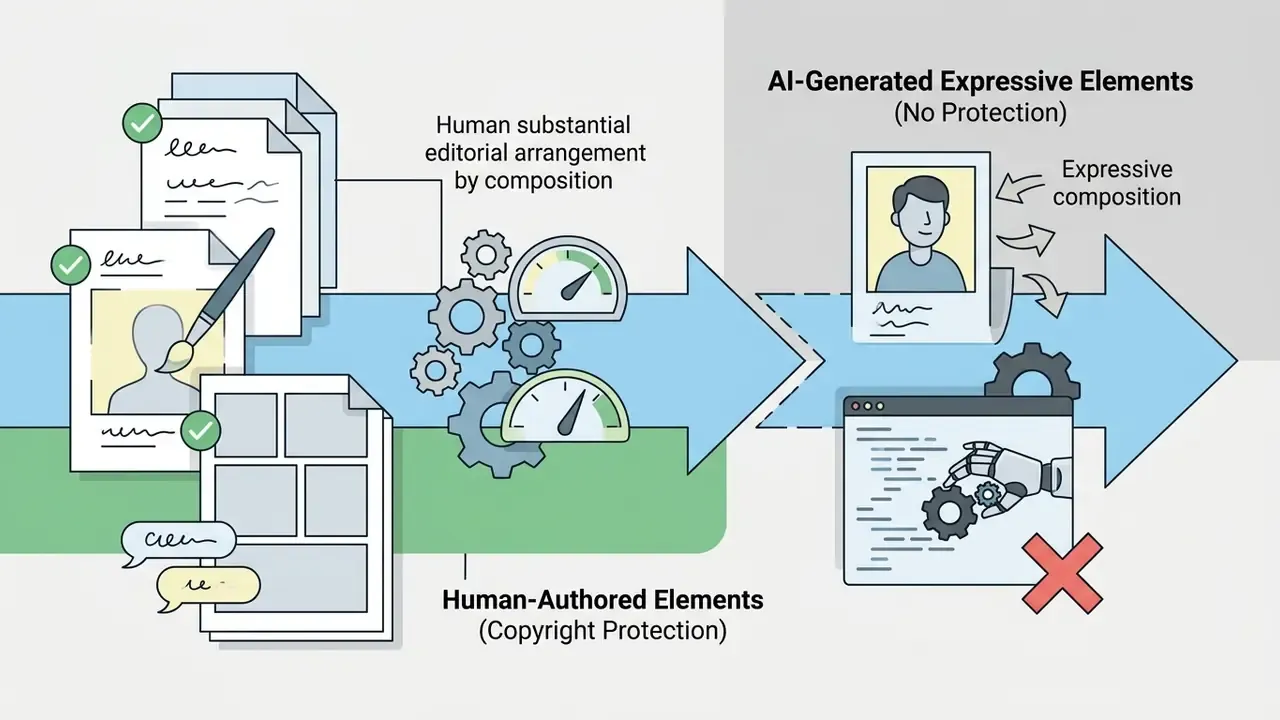
- Copyright protection extends only to human-authored contributions. Purely AI-generated output is not registrable, so commercial distribution depends on subscription terms plus local adult-content law.
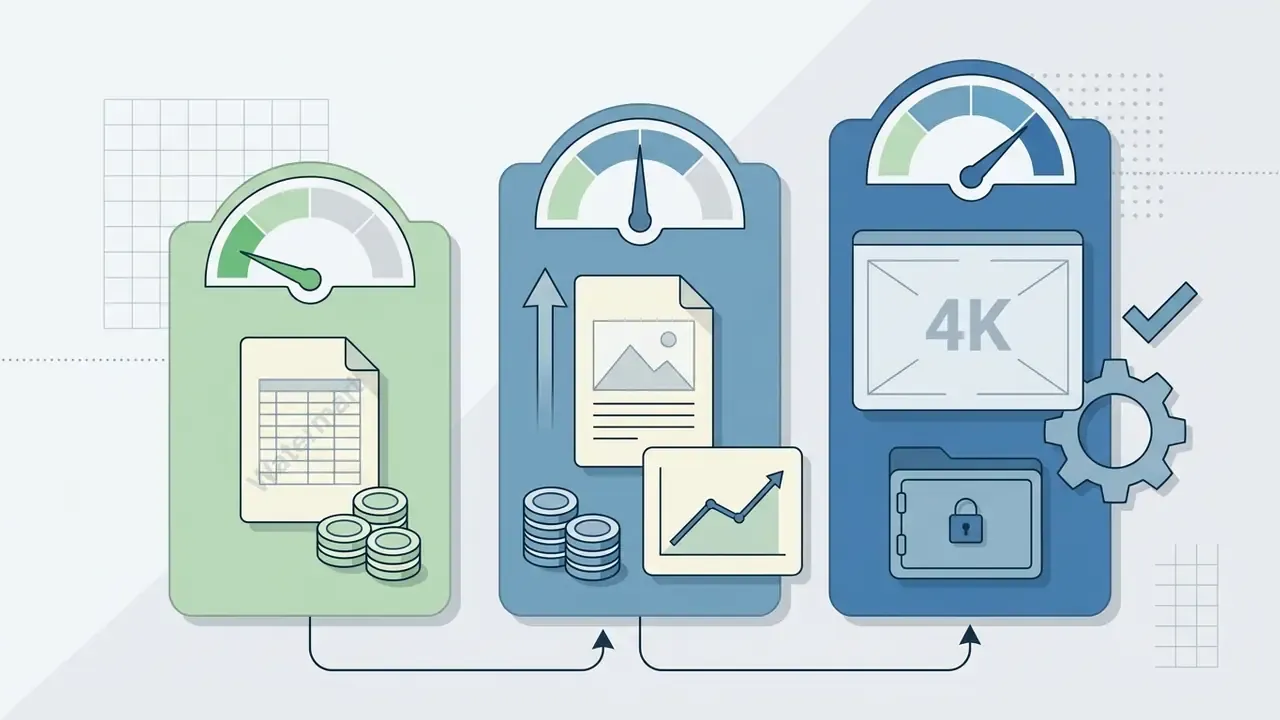
Who This Guide Is For, and What Changed in 2026
Three groups usually land on a page like this. Solo artists who want a fast stylized render. Writers and worldbuilders who need one character to stay recognizable across fifty images. And platform evaluators who have to decide whether a vendor's terms are safe to build a paid product on.
Four things shifted over the past year, and they matter more than any feature list:
- Age assurance moved from a checkbox to a documented, data-minimizing flow, driven by EU guidance and several US state statutes.
- Companion apps consolidated. Chat, image, short video, and voice now sit inside one character workflow rather than four separate tools.
- Provenance metadata became common even on free tiers, which changes what you can quietly republish.
- Copyright guidance hardened around human authorship, and the practical effect is that your documentation of manual work now carries real weight.
A futa AI generator is a software application or cloud platform that uses deep learning diffusion models and natural language processing to create synthetic images, characters, or interactive dialogue based on the futanari anime subgenre. These tools range from simple prompt-based image generators to complex multimodal systems with text chat, voice synthesis, and full character creation.
Understanding the technical boundaries, platform policies, data privacy protections, and commercial licensing around an ai futa generator is essential for creators, developers, and evaluators working in this corner of synthetic media. The sections below move from definitions and architecture to parameter-level configuration, platform selection, pricing, moderation, and legal exposure.
What a Futa AI Generator Is and What Problems It Solves
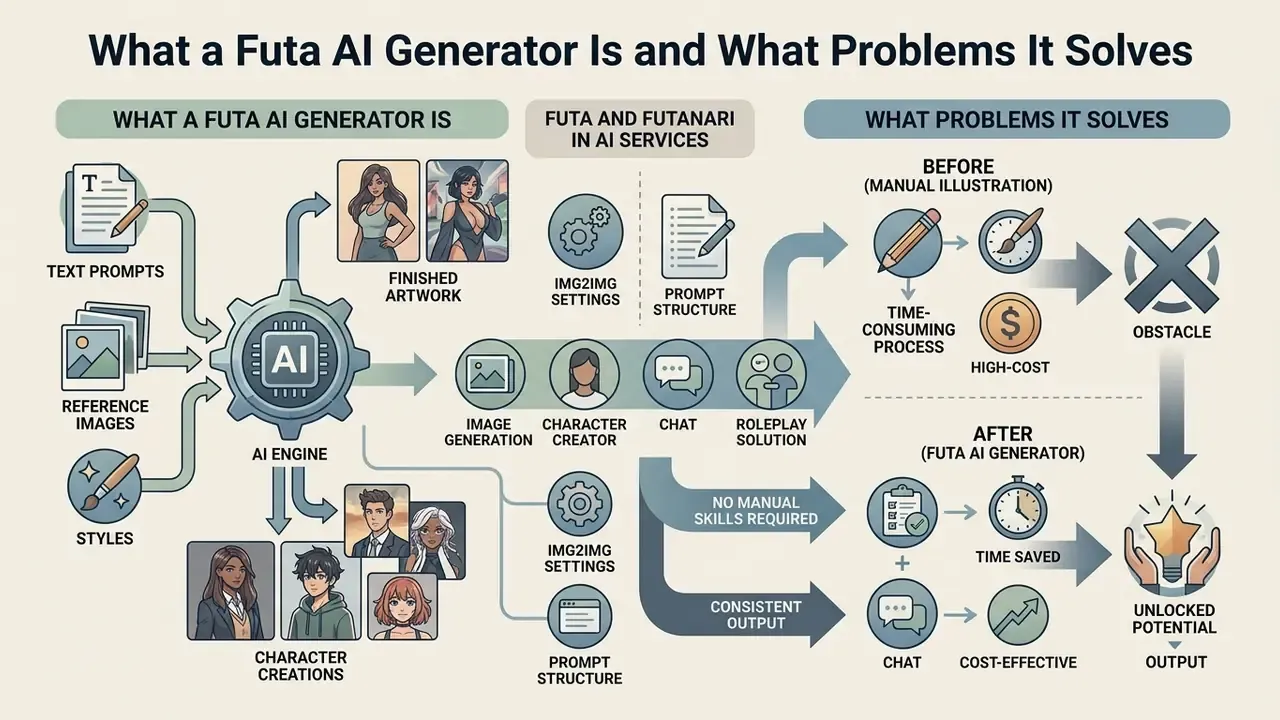
In two sentences: these tools convert text or reference images into finished stylized artwork without manual illustration skills, and they increasingly bundle persistent character identity with conversational features. The practical decision is whether you need single images, a reusable character, or an interactive companion.
An ai futa generator solves one narrow problem well: producing highly specific synthetic art and interactive character media without digital painting skills. By converting text prompts or source image inputs into high-resolution visual outputs, these tools let users generate specialized anime art quickly, define persistent character traits, and run simulated conversational roleplay. Readers comparing general-purpose tooling can review our overview of AI art generators for baseline quality and licensing context, or browse the wider set of AI Media Comparison Matrices if you prefer side-by-side data over prose.
Beyond visual rendering, modern platforms unite image generation, persona creation, and companion features into single workflows. Our guide to animation makers helps clarify how the same diffusion backbone behaves across different media types and export formats. If your pipeline ends in short looping clips rather than stills, the gif maker from video workflow covers the conversion step.
Terminology: Futa and Futanari in AI Services
In anime communities and generative software interfaces, futanari (Japanese: ふたなり, "dual form") is the established term for imaginary characters with combined male and female physical traits. Futa is the widely used informal shorthand. Inside generative AI products, labels such as ai futa creator, ai futanari generator, ai futanari maker, and ai futa maker function as commercial names for prompt-processing engines fine-tuned on stylized anime datasets.
Those labels are marketing categories, not formal technical classes. Feature scope therefore varies sharply between vendors, so read the terminology glossary in Appendix A for precise definitions, including adjacent search terms such as dickgirl and the shemale vs futanari distinction.
Distinguishing between an image generator and a character creator matters when you pick software:
- Image Generator single-pass visual rendering from prompts, for example standalone ai futa art or fantasy illustrations. This is also where most searches for ai art futa actually land.
- Character Creator builds persistent persona parameters, including visual consistency, backstory, vocal profiles, and behavioral logic across many sessions.
Images, Characters, Chat, and Roleplay in a Single Platform
Advanced platforms consolidate media modes into one interface. A user defines a customized character, generates matching images, then moves straight into interactive chat and roleplay. Some systems extend that with text-to-speech voice synthesis and short video generation, producing the digital companion experience usually filed alongside AI girlfriend software.
Vendor documentation from 2026 confirms the bundling pattern. Several companion platforms advertise text chat, image generation, short video, and real-time voice calls inside a single character workflow, with memory that persists across sessions. For broader context on multimodal feature sets and output control, our evaluation of Midjourney-class image generators is a useful benchmark, since the same guidance and seed mechanics apply regardless of subject matter.
How an AI Futanari Image Generator Works
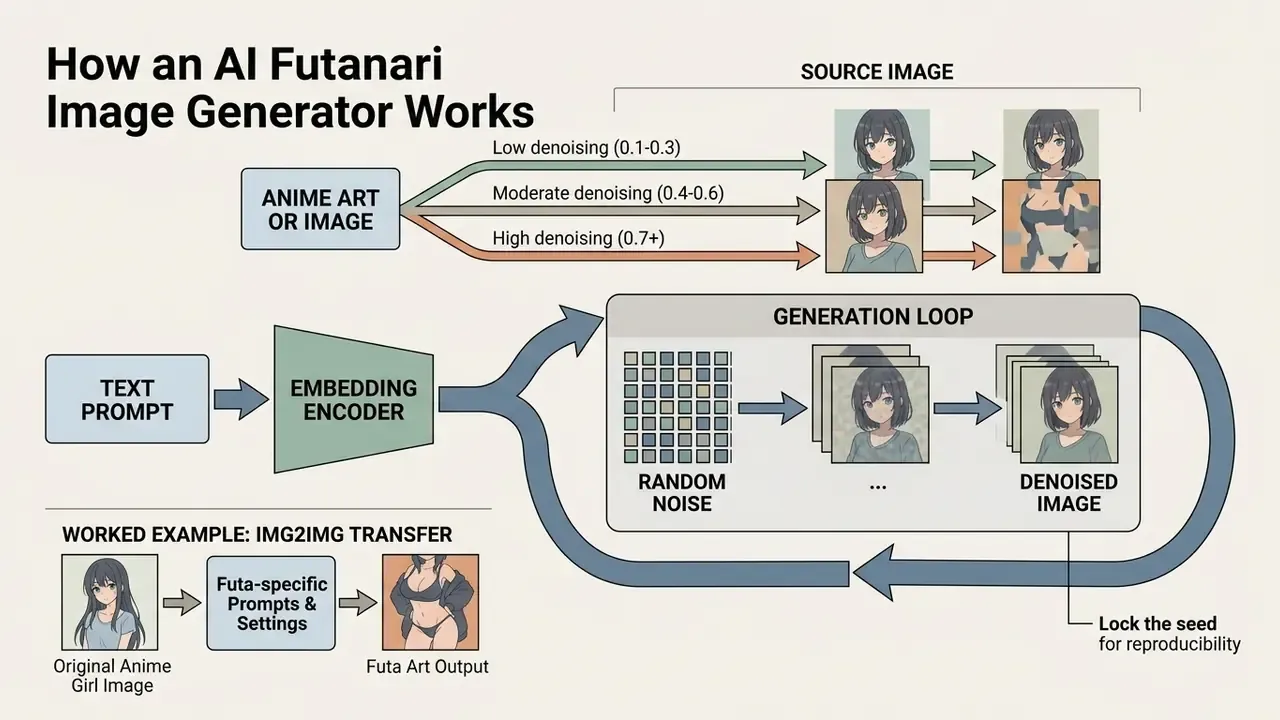
In two sentences: the pipeline encodes your prompt into embeddings, then iteratively denoises random noise into an image under guidance from those embeddings. Output fidelity is governed by three levers: guidance scale, seed, and denoising strength.
An ai futanari image generator passes user text through a text encoder (CLIP or OpenCLIP) to produce semantic embeddings. Those embeddings guide a latent diffusion model as it iteratively denoises random Gaussian noise into a coherent image. When transforming existing artwork, the system uses image-to-image (img2img) diffusion: controlled noise is added to the source, then the model reconstructs it according to your target parameters.
Whether you are producing fresh ai generated realistic futa visuals or converting old anime sketches, guidance scale (CFG), seed values, and denoising strength decide final quality and structural fidelity. Everything else is decoration.
«An audit of ten popular Stable Diffusion models found that more than half of the images produced from harmful prompts contained undesirable content, with the NSFW category dominating unsafe outputs.»
That finding is operationally blunt. Unfiltered open-weight checkpoints will readily produce explicit output, which is exactly why platform-level moderation and operator responsibility become the deciding factors later in this guide.
Creating AI Futa Art from a Text Description
To create ai futa artwork from natural language, structure prompts by combining subject descriptors, physical attributes, clothing, lighting, composition, and style keywords. Effective prompt engineering front-loads core subject attributes, then adds environment, then style modifiers such as anime fantasy, digital illustration, or cinematic lighting. The same discipline applies when you create ai futanari portraits or run a batch to create futa ai concept sheets.
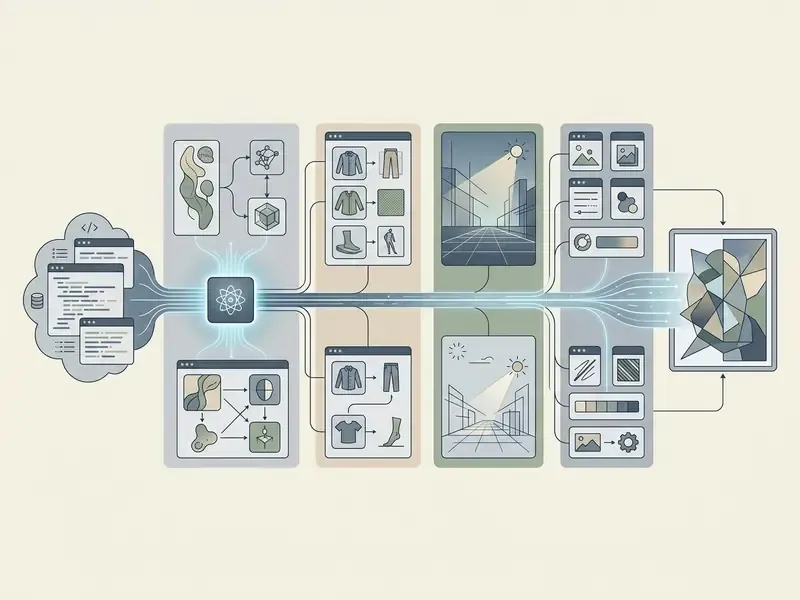
Large-scale prompt datasets show how directly prompt construction shapes the output distribution:
«DiffusionDB, covering 14 million images and 1.8 million unique prompts, shows how prompt engineering directly shapes the distribution of safe and unsafe generated content.»
Practical guidance in the ACM CHI paper Design Guidelines for Prompt Engineering Text-to-Image Generative Models (2022) lines up with this. Prompts should foreground subject and style keywords instead of grammatical filler. Style keywords that models routinely misread should be dropped. And users should test roughly 3 to 9 seed variations before judging a prompt, because otherwise you are grading stochastic noise.
One habit worth stealing from production teams: keep a plain text file of prompts that worked, with the seed next to each. It sounds tedious. It saves hours the first time a client asks for "the same girl, different pose."
Working with Anime Art and Source Images
Converting existing 2D anime graphics into ai futa art relies on image-to-image conditioning. The user uploads a source image, and the diffusion model uses a denoising parameter (K, typically 0.2 to 0.5) to balance content retention against structural modification.
Research on diffusion-based stylization (2025, Scientific Reports) recommends K between 0.2 and 0.5 specifically to balance style consistency against content fidelity. It also notes that quality degrades when the reference image is low-resolution, anatomically ambiguous, or drawn in a very niche style.
- Low denoising (0.1 to 0.3)
- preserves original layout, colors, and line art with minimal alteration.
- Moderate denoising (0.4 to 0.6)
- retains composition while letting the model adapt anatomy, lighting, and textures.
- High denoising (0.7 and above)
- significantly alters the input, risking semantic drift and loss of character identity.
A small correction to my own advice above: step 6 works cleanly only if you also keep CFG constant. Change two variables at once and you learn nothing.
For creators adapting static anime images into dynamic formats, pairing generation with a video-based GIF and animation workflow complements the image pipeline. Post-generation cleanup, especially hand fixes and line repair, is often faster in a raster editor such as gimp photo editor than in another generation pass.
Step-by-Step Generation Process
Customizing Appearance, Personality, and Realism
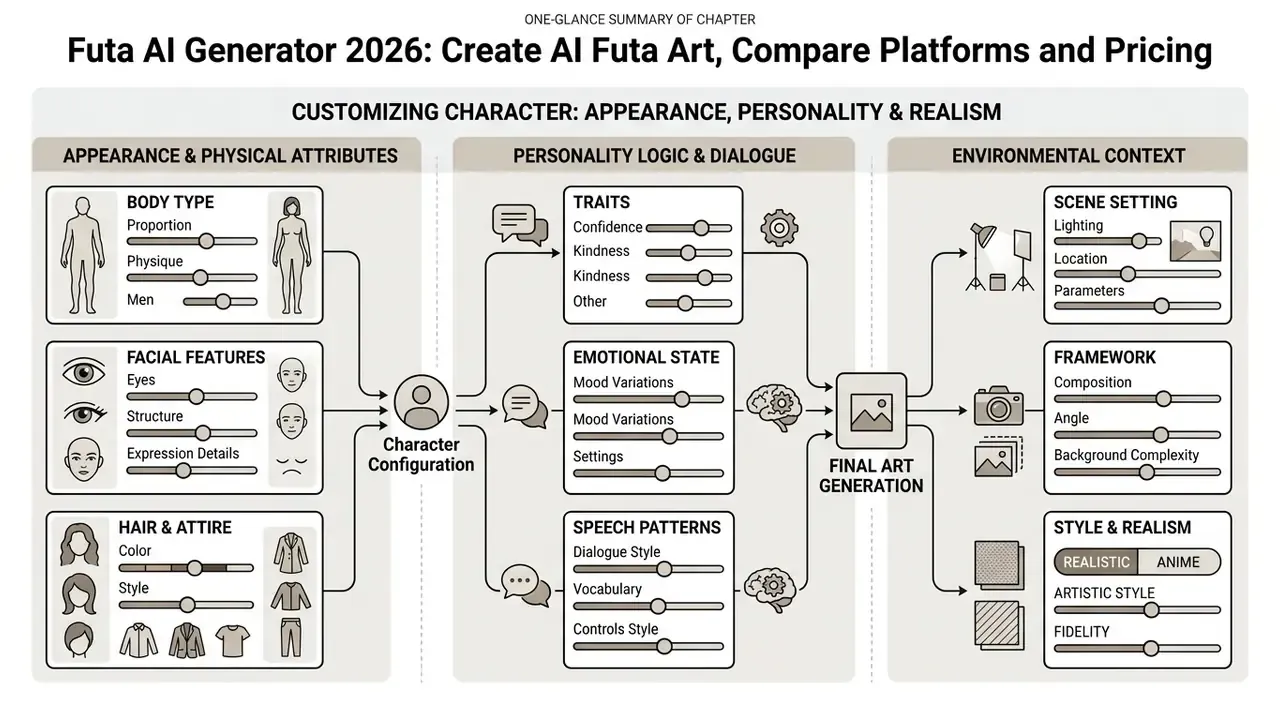
In two sentences: character configuration splits into physical attributes, personality logic, and environmental framing, each exposed as separate control fields. Realism modes need different parameter weighting than anime modes, and they fail differently.
Customizing an AI character means configuring appearance variables, personality traits, and a rendering style that runs anywhere from flat 2D anime to photorealistic 3D. Advanced platforms expose control panels for facial structure, hair color, body proportions, costume detail, tone of voice, and behavioral tendencies.
Reaching high realism in an ai generated realistic futanari model requires heavier weighting on skin texture, subsurface scattering, light diffusion, and plausible camera physics. Anime modes push the opposite way: clean line art, saturated palettes, controlled contrast.
Appearance and Character: What You Can Define
Modern character engines give granular control over physical and psychological dimensions:
- Physical appearance facial features, eye color, hair style and color, skin tone, height, body proportions, anatomical attributes, clothing, accessories.
- Personality and dialogue traits such as confident, playful, or analytical, plus communication style, emotional responses, backstory, and conversational interests.
- Environmental context background settings, atmospheric lighting (fantasy tavern, cyberpunk alley), and camera angles.
- Technical identity anchors seed numbers, LoRA weights, and reference-image uploads that hold a character visually consistent across separate sessions.
When building complex personas, test dialogue consistency before you commit to a subscription. Genre-specific tools usually expose finer presets, for instance distinct shonen, shoujo, chibi, and semi-realistic modes, while general-purpose engines lean on broad prompt fields for subject, action, place, mood, and style. If you want to see how far preset-driven generation can drift from a prompt, the low-stakes examples in our goofy ai images breakdown make the failure patterns obvious without any NSFW context.
Realistic or Anime: Choosing a Visual Style
Choosing between stylized anime rendering and ai realistic futanari output changes the model requirements and the standards you judge output by:
| Style Dimension | Anime / Fantasy Style | Realistic / Photorealistic Style |
|---|---|---|
| Primary model focus | Cel-shading, vibrant contrast, clean line art retention | Subsurface skin scattering, natural lighting, photographic depth of field |
| Model stability | High consistency, less prone to disturbing anatomical distortion | Moderate stability, highly sensitive to prompt artifacts and texture flaws |
| Perceived realism | Judged by artistic fidelity and genre authenticity | Judged by human likeness and absence of synthetic rendering cues |
| Prompt complexity | Needs style tags (studio trigger, manga illustration) | Needs camera and lighting tags (8k UHD, 35mm lens, soft natural light) |
| Typical failure mode | Line-art breakup, inconsistent eye placement | Uncanny skin texture, malformed hands, plastic-looking lighting |
Photorealism stays measurably harder than stylized rendering. Published 2026 assessments of state-of-the-art generative models report that outputs were mistaken for human-made in a minority of evaluation trials, under roughly 30% in the cited assessment. Evaluation protocols differ widely, so treat those figures as indicative rather than as settled benchmarks. Anime and fantasy models, by contrast, are consistently reported as holding style and detail with high consistency. That is why stylized modes remain the safer default when character consistency is the priority.
Style choice also interacts with documented model bias, which affects how often outputs get flagged downstream:
«With female-coded prompt subjects, images were classified as NSFW in 69.2% of cases versus 30.8% for male-coded subjects, a statistically significant difference (χ² = 591.36, p < 0.001).»
Operationally, feminine-presenting anime characters may trip moderation systems even on non-explicit prompts. Creators working under safe-for-work constraints should budget for false positives and phrase prompts accordingly. Slightly annoying, but predictable.
How to Choose the Best AI Futa Generator for Your Task
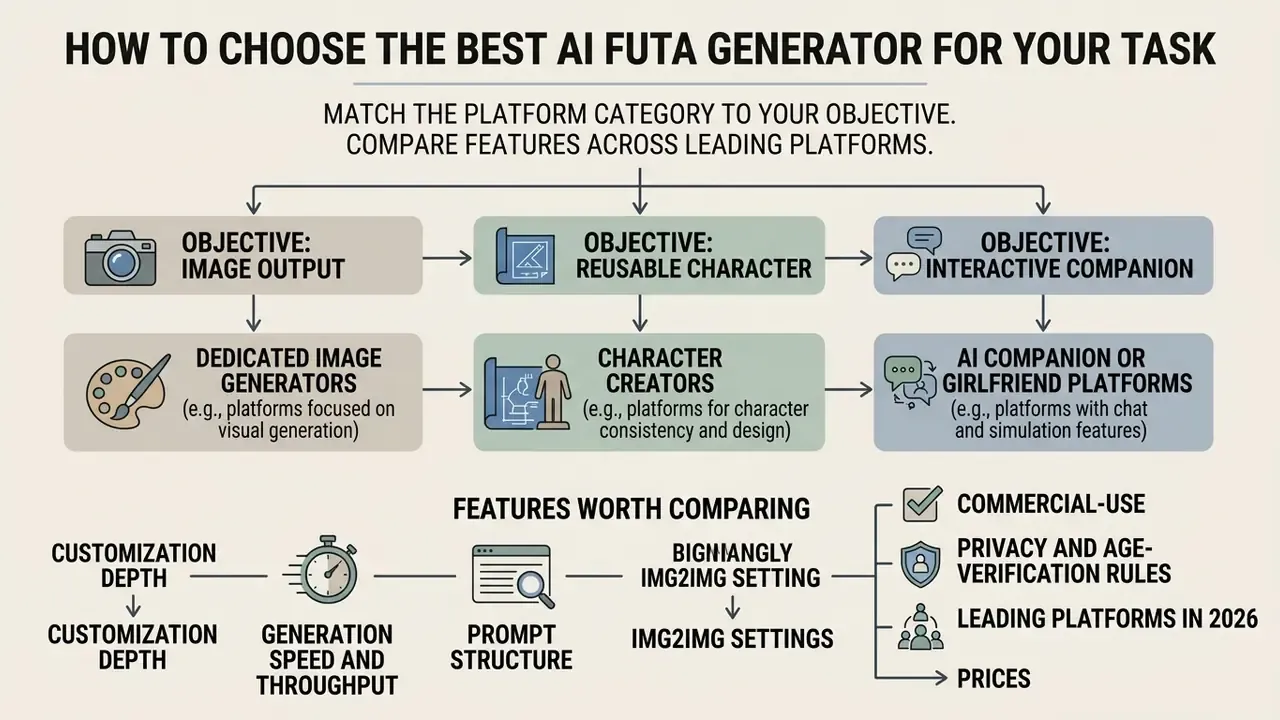
In two sentences: match the platform category to your objective, whether that is image output, a reusable character, or an interactive companion, before comparing features. Then evaluate customization depth, throughput, multimodality, and privacy as measurable criteria rather than marketing claims.
Selecting the best futa ai generator starts with your primary objective: single images, persistent character design, or conversational roleplay. Users chasing fast visual art need different tools than users who want deep multimodal companionship. Searches for best ai futa tools rarely distinguish these, which is precisely why so many subscriptions get cancelled in week two.
Evaluate technical capability, not homepage copy. Developers integrating image or video pipelines can reference our Google Veo implementation guide to size up API access, cost, and rate limits, or start from the broader AI Media API Guides index. If cost modelling is your blocker, the AI Media Calculators help translate credits per image into a monthly figure you can defend.
Image Generator, Character Creator, or AI Girlfriend Platform
Three distinct categories, three different buying decisions:
- Dedicated image generatorstools focused strictly on rendering high-resolution images from prompts, including ai image generator futa and ai image generator futanari services. Best for artists, designers, and concept illustrators.
- Character creatorssystems that build reusable character profiles, combining visual reference sheets with persistent personality data. This is where ai futanari creator and ai futa maker environments sit.
- AI companion or girlfriend platformsmultimodal services combining chat, voice calls, custom image generation, and dynamic roleplay. These face the strictest regulatory scrutiny in 2026, covering age assurance, AI-disclosure duties, and ongoing personal-data governance, because they process continuous intimate interaction data rather than one-off prompts.
«An integrative process model based on 73 interviews shows that anthropomorphism and perceived emotional reciprocity are key antecedents of romantic attachment to AI, and that relationship termination triggers grief-like responses.»
So when evaluating companion platforms, weigh stability, data-export options, and account-termination policy alongside feature depth. Abrupt shutdowns and silent model swaps have documented psychological impact, and they also destroy months of character work.
Leading Platforms in 2026
The table summarizes the services most frequently cited in this niche, based on published vendor pages and 2026 market roundups. Feature sets and prices move fast. Verify current terms before you subscribe.
| Platform | Specialization | Payment model | Key feature |
|---|---|---|---|
| Candy AI | High anatomical accuracy, photorealistic and stylized output | Freemium, paid tiers from ~$12.99/mo | Genre-aware generation (fantasy, sci-fi, contemporary) with balanced composition |
| Perchance | Free generation without registration | 100% free | 60+ art styles (anime, photorealistic, fantasy), no sign-up, privacy-oriented |
| DRT.fm (Futa World AI) | Immersive roleplay linked to chat continuity | From ~$13.99/mo, guest mode available | Long-term character memory, images driven by dialogue context |
| Promptchan | Uncensored generation with fixed seeds | Freemium | Locked seeds preserve face and body consistency across poses |
| Lovescape | Dedicated futanari categories plus creator monetization | Subscription, Creative Pro tier with monthly chip allowance | Creator referral earnings of up to 30% on referred revenue |
| Yume AI / LusyChat AI | Anime and hentai-oriented rendering | Free tier plus paid upgrades | Suggested prompt terms, high-detail anime stylization |
| GirlfriendGPT | Text-first, story-driven roleplay | Subscription | Narrative continuity and character arcs rather than static imagery |
| Seduced AI / Pornworks AI | Fast high-resolution NSFW output, limited video | Subscription | HD and 4K exports, text-to-video experiments |
Selection guidance: for anime-style stills, Yume AI or LusyChat AI. For realism, Candy AI or Perchance. For roleplay depth, DRT.fm or GirlfriendGPT. For zero-cost access, Perchance. For creator monetization, Lovescape.
Features Worth Comparing Before You Choose
Before committing, evaluate these dimensions:

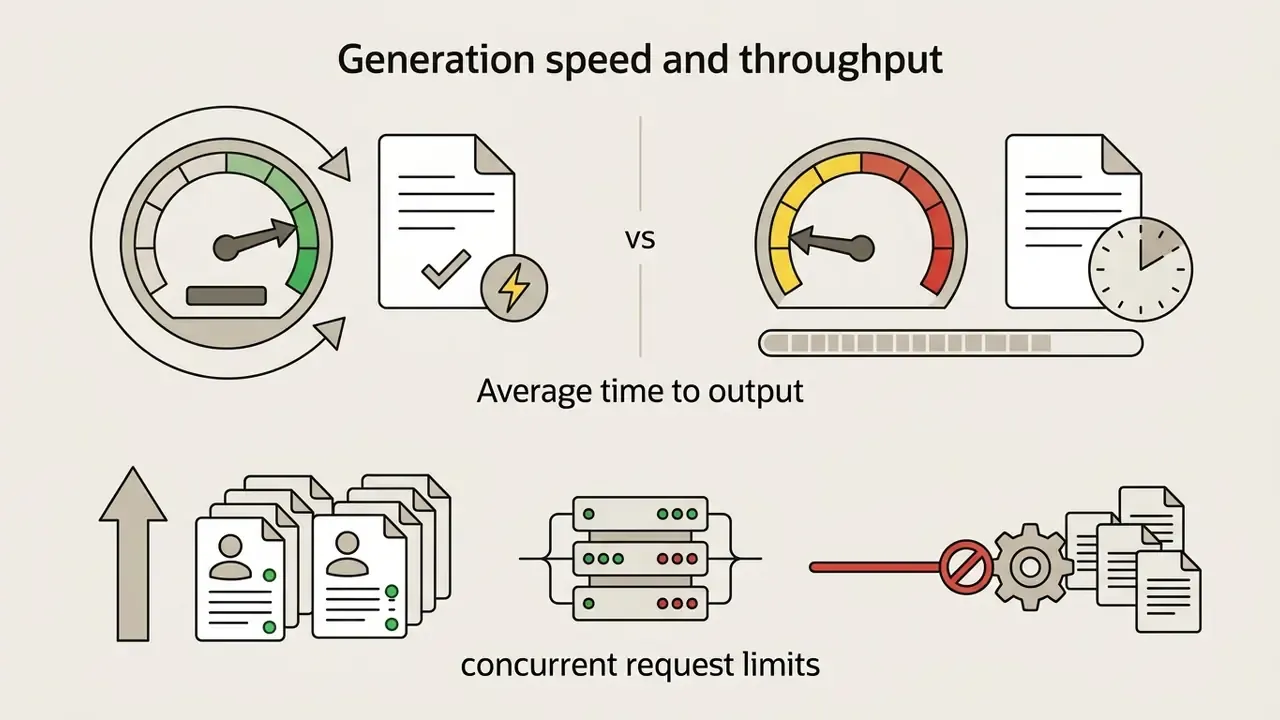
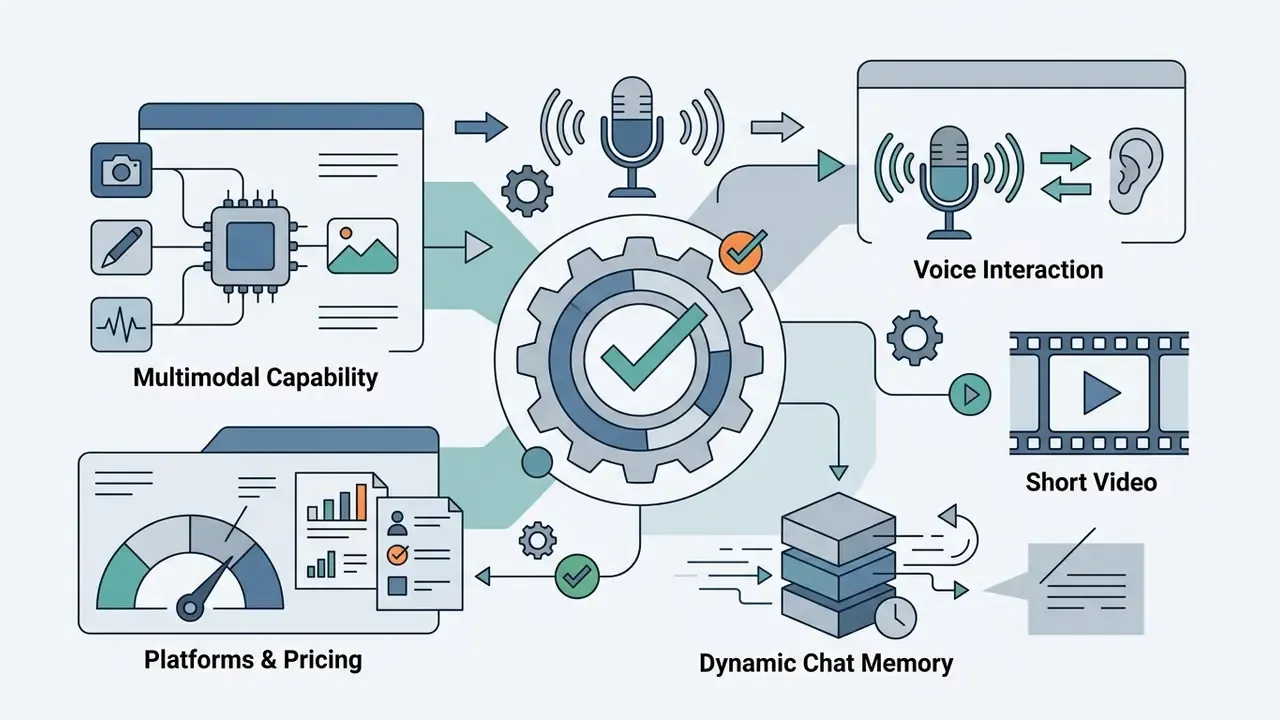


| Feature / Criteria | Dedicated Image Generator | Character Creator Platform | AI Companion / Girlfriend Platform |
|---|---|---|---|
| Primary output | Standalone visual images | Persistent character profile and assets | Conversational chat, voice, dynamic imagery |
| Chat and roleplay | None | Basic or scripted dialogue | Deep conversational AI with memory |
| Voice and video | Unsupported | Limited audio previews | Real-time voice calls, video generation |
| Customization level | High (prompts, seeds, CFG, LoRAs) | High (visuals, traits, backstory) | Moderate to high (persona, appearance) |
| Privacy and storage | Varies, gallery or private modes | Stored character sheets | Encrypted sessions, private custom profiles |
| Regulatory scrutiny | Moderate (provenance, filtering) | Moderate (asset licensing) | High (age assurance, AI disclosure, data retention) |
| Target user | Digital artists and concept creators | Writers, worldbuilders, game designers | Interactive companion and roleplay users |
Free AI Futa Generators and Paid Subscriptions
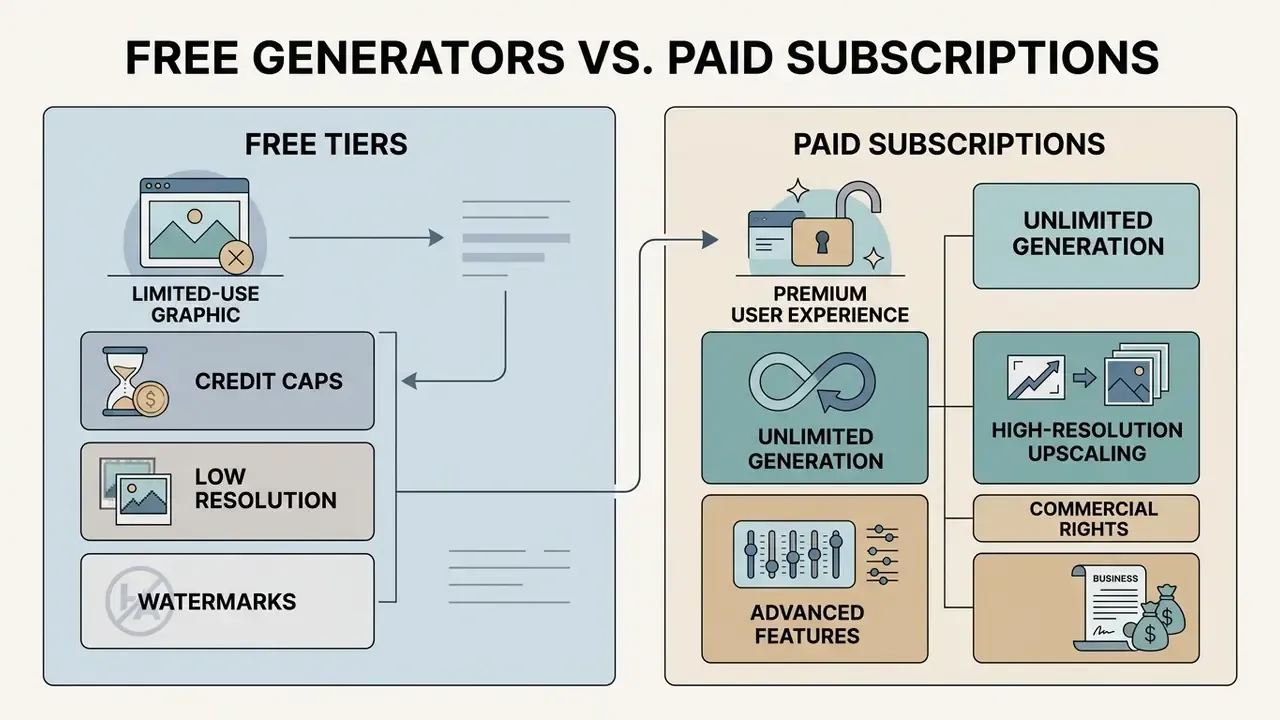
In two sentences: free tiers exist to demonstrate the model while rationing GPU time through credit caps, low resolution, and watermarks. Paid tiers monetize priority compute, resolution, multimodality, and, critically, commercial rights.
Running an ai futa generator free service costs real money in GPU hours. Providers therefore restrict free access through daily credit caps, lower resolutions, queue delays, or visible watermarks. Paid tiers sell priority GPU access, higher rendering resolution (2K and 4K), advanced customization, and expanded multimodal features.
There is a second meaning of "free" worth naming. Self-hosted open-weight models carry no per-image platform fee at all, but they move hardware cost, electricity, and full compliance responsibility onto you. For benchmark figures across comparable tools, our AI Media Pricing reference is a reasonable sanity check before you compare vendor claims.
What Free Tiers Typically Include
Free tiers and trials are built for evaluation, and they usually include:
- Generation quotas: commonly 5 to 15 free generations per day, or fixed bundles at sign-up (10 credits per day, 80 credits per month, or roughly 125 trial credits total across the market).
- Resolution restrictions: standard outputs such as 512×512, 640×640, or 480p to 720p equivalents.
- Processing speed: standard queue placement, noticeably slower at peak hours.
- Watermarks and privacy: free outputs may carry visible branding or be auto-published to public community galleries. Policy is inconsistent. Some vendors embed only invisible provenance metadata, others stamp every free render.
For a parallel view of how feature gating works in adjacent categories, see our analysis of free photo editors and their export restrictions. The same pattern appears in lightweight consumer tools too, right down to novelty categories like good morning ai images and goofy ahh ai generators, where resolution caps do most of the upsell work.
What Paid Subscriptions Actually Unlock
Paid plans, generally $8 to $30+ per month, unlock the operational features professionals need:
| Feature Dimension | Free Access / Trial Tier | Mid-Tier Paid ($8 to $15/mo) | Premium / Pro ($20 to $35+/mo) |
|---|---|---|---|
| Reference pricing (2026) | $0 (Perchance, free trials) | Candy AI ~$12.99, DRT.fm ~$13.99 | ~$20 to $35+, some vendors ~$29.99 |
| Generation quota | Capped daily or monthly credits (10 to 50) | 100 to 500 priority generations per month | Unlimited relaxed generation plus high priority quota |
| Max image resolution | Standard (480p to 768p) | High definition (1080p to 2K) | Ultra high definition (4K upscaling) |
| Queue priority | Standard or delayed | Fast processing queue | Top priority GPU allocation |
| Gallery privacy | Public by default | Private creation options | Private galleries, zero data retention |
| Multimodal access | Text and static images only | Basic voice synthesis and chat | Voice calls, video generation, API access |
| Commercial licence | Personal, non-commercial use only | Commercial licence included | Full commercial and enterprise rights |
Note: pricing reflects general market structure across generative media platforms in 2026, based on vendor pages and roundups current at the time of writing. Check vendor pricing pages for exact contractual terms. Billing questions are usually faster to resolve through AI Media Support than through community forums.
Privacy, Safety, and Usage Rules for AI Futa Art
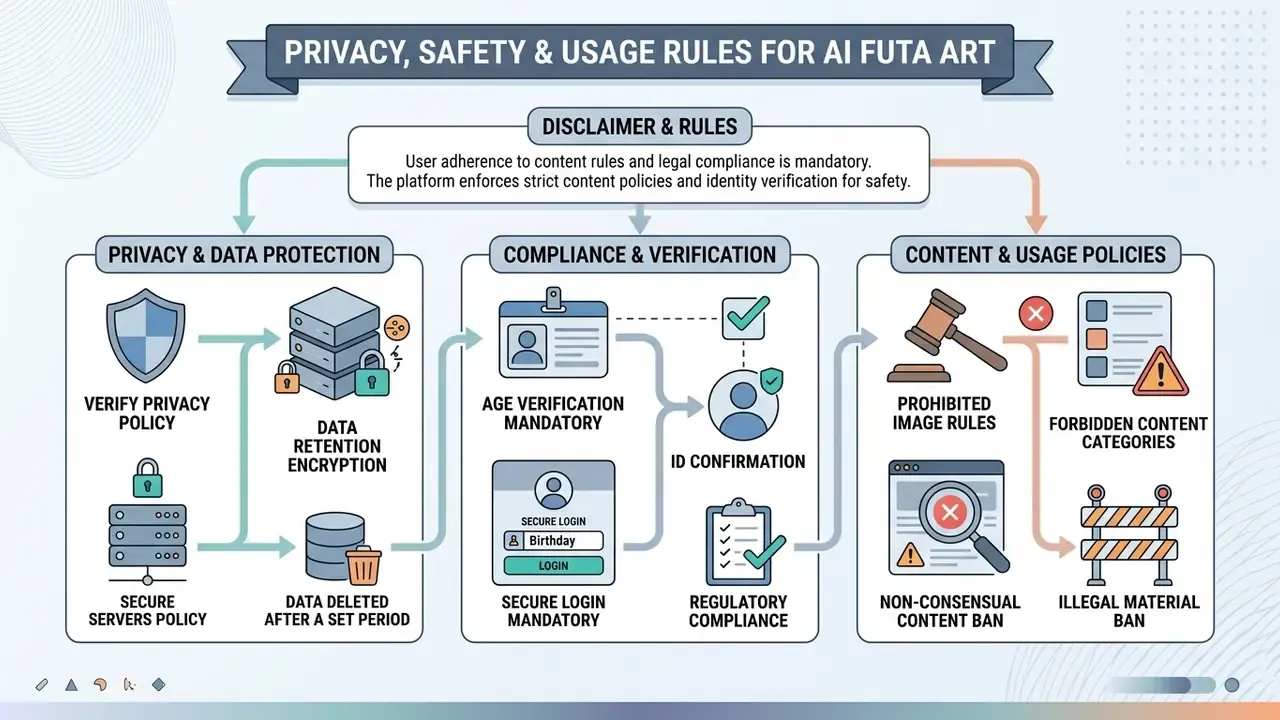
In two sentences: mainstream AI vendors ban explicit generation outright, so this niche runs on smaller platforms and self-hosted models. That shifts privacy verification, age assurance, and prohibited-content enforcement onto the user.
Generating adult-oriented synthetic media means living inside strict legal, ethical, and policy boundaries. Major cloud providers and mainstream infrastructure vendors, including Google, Adobe, Meta, and Stability AI, prohibit sexually explicit content, pornography, and non-consensual imagery. Google's Generative AI Prohibited Use Policy bans content created for pornography or sexual gratification. Adobe's generative AI guidelines prohibit pornographic material, explicit nudity, and any sexualized depiction of minors. NIST's generative AI profile flags synthetic CSAM and non-consensual intimate imagery as obscenity and degradation risks requiring mitigation.
Users on niche or self-hosted platforms therefore have to evaluate data security, age verification, and content restrictions themselves. Nobody else will.
Verifying Privacy Policy and Prohibited Image Rules
Check three policy areas before you upload anything or generate a single image:
- Data retention and privacyconfirm that prompt histories, uploaded references, and outputs are encrypted in transit and at rest, and not used to train public models without consent. Real terms of service differ sharply. Some platforms retain private creations only while a subscription is active, roughly seven days for non-subscribers. Others state that prompts and images are never stored unless explicitly saved, and that blocked outputs are discarded entirely.
- Age verification and compliancelegitimate adult platforms enforce 18+ age assurance while collecting minimal data, using secure zero-knowledge cryptographic verification where available. The 2025 EU Digital Services Act guidelines require age verification to be a separate process that stores no personal data beyond age-group information, permitting local processing, anonymized cryptographic tokens, or zero-knowledge proofs, and mandate transparent moderation combining automated and human review (European Commission, DSA guidelines on the protection of minors, 2025. https://digital-strategy.ec.europa.eu/). Comparable US legislative drafts require age-verification data to be minimally collected, encrypted to industry standards, retained only as long as necessary, and never sold or transferred.
- Forbidden content categoriesuniversal prohibition of imagery depicting minors, age-ambiguous subjects, non-consensual intimate imagery (NCII), violence, or hate speech.
«All forms of AI-generated CSAM are illegal and deeply harmful, regardless of whether a real child is depicted.»
This is a criminal-law boundary, not a policy preference. It applies equally to hosted platforms and to locally run open-weight models. No prompt-engineering trick, "fictional character" framing, or stylization defense changes that status.
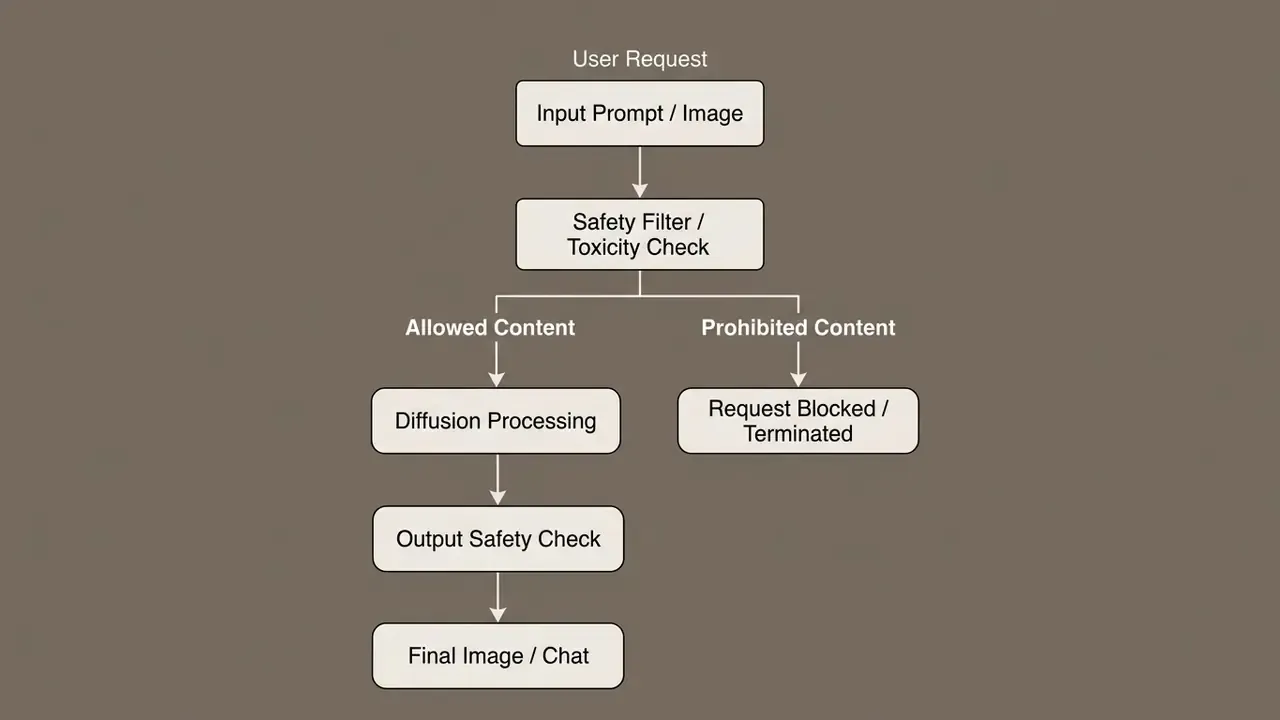
Operators and publishers who need to verify whether incoming media is synthetic before republishing it can pair this pipeline with reverse-image and provenance verification tooling.
Safety researchers stress that meaningful protection sits at the architecture layer, not the prompt layer:
«SafeGen removes explicit visual representations inside the diffusion model regardless of the text prompt, achieving 99.4% removal of sexual content while preserving the quality of benign images.»
Text-only filters, meanwhile, are demonstrably fragile:
Commercial Use of AI Generated Futanari: What to Check Before Publishing
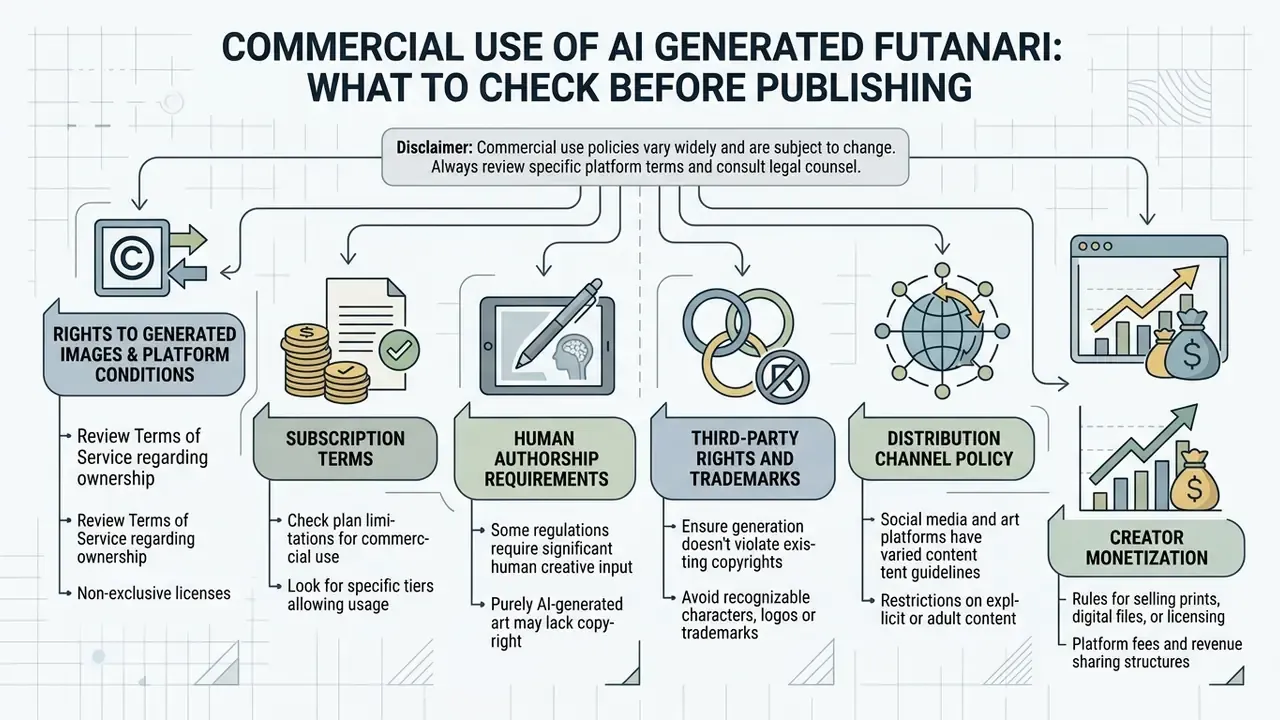
In two sentences: copyright and commercial permission are separate questions, since the platform contract governs whether you may sell while copyright law governs what you can own. Explicit content adds a third layer: distribution-channel policy and local obscenity law.
Publishing or commercializing ai generated futanari artwork requires verification across copyright law, platform licensing contracts, and distribution channel policy. Under current frameworks, including guidance from the U.S. Copyright Office, material generated purely by AI without sufficient human authorship is not registrable, and any registration must disclaim the AI-generated portions.
Commercial viability then depends on the rights your subscription actually grants, plus compliance with local obscenity and adult content distribution law. For a wider view of how licence terms differ between mainstream vendors, compare our breakdowns of commercial licensing frameworks for AI-generated images and Canva's AI generator terms, or start from the AI Media Commercial-Use Hub.
Rights to Generated Images and Platform Conditions
Before selling digital prints, game assets, or subscription media, verify these factors:
- Subscription terms: confirm that your plan explicitly grants commercial rights. Free and basic tiers frequently restrict output to personal use. Contract posture also differs fundamentally. Canva's AI product terms state that Canva makes no copyright ownership claim over your input or output, whereas other providers reserve broad service rights without transferring output copyright.
That matters for pipelines built on hosted APIs. Even where your output is lawful in your jurisdiction, generating it through a provider whose terms forbid it exposes you to account termination and the collapse of any commercial claim resting on that output.


Creator monetization. Some specialized services run payout schemes for character authors, including partner shares of up to 30% when created models are used from public catalogues. Lovescape's Creative Pro tier is the most frequently cited example. Before publishing, read the clause governing transfer of rights in generated LoRA models and character sheets. Several platforms claim a broad licence to reuse published characters inside their own catalogue, which can quietly conflict with exclusive commissions or client contracts.
Pre-Purchase Safety and Compliance Checklist
Run this before entering payment details on any adult-oriented generative platform:
Checklist0 / 13
FAQ: Legal, Technical, and Commercial Questions
What does "futa" mean?
"Futa" is the informal shorthand for futanari (ふたなり, "dual form"), a Japanese anime and manga term for imaginary characters with both male and female anatomical traits. It is a genre and character-type label, not a technical AI category.
Are AI futanari generators legal?
Generating fictional adult content is generally lawful where adult content itself is lawful, provided the output does not depict minors or age-ambiguous subjects, and does not place identifiable real people in intimate contexts without consent. Local obscenity and distribution law still applies, and requirements vary by jurisdiction. Consult qualified counsel for your specific situation.
Can I use generated images in commercial projects?
Sometimes. Commercial use requires an explicit commercial licence in your plan, a distribution channel whose policies permit adult content, and acceptance that purely AI-generated portions are not protected by copyright. Free tiers commonly restrict output to personal use.
Do I own the copyright to what I generate?
Only to your human-authored contributions. Under current U.S. Copyright Office guidance, output whose expressive elements were determined by the AI is not registrable and must be disclaimed in any registration.
Are there genuinely free options?
Yes. Perchance offers generation with no registration and no fee. LusyChat AI and several others provide free tiers with credit caps. Self-hosted open-weight models remove platform fees entirely but require your own GPU hardware and move all compliance responsibility to you.
How do I turn an existing anime image into futa art?
Use image-to-image conditioning. Upload the source PNG, set denoising strength near 0.42, add a modification prompt repeating the original character's retained traits, and lock the seed. The worked img2img example earlier in this guide lists the full parameter sequence.
How safe is my data on these platforms?
It depends entirely on the vendor. Verify retention windows, training opt-outs, encryption claims, and default gallery visibility using the checklist above. Policies in this niche range from "nothing stored unless you save it" to "public by default."
What content is universally forbidden?
Any depiction of minors or age-ambiguous subjects, non-consensual intimate imagery, real-person likenesses in sexual contexts, and content promoting violence or hate. These prohibitions are consistent across every reviewed platform policy and, for synthetic CSAM, are backed by criminal law.
What is the difference between futanari and shemale in AI generators?
Both are adult-content category labels. Futanari is used predominantly for 2D anime, manga, and hentai stylization with genre-specific aesthetics, while shemale appears mainly in live-action and photorealistic adult categories. See Appendix A.
Can voice and video be generated for the same character?
On companion platforms, yes. Vendor documentation from 2026 describes text chat, image generation, short video, and real-time voice calls bundled into one character workflow. Dedicated image generators do not support this.
Appendix A: Terminology Glossary
- Futa / Futanari a fan and adult-content term for fictional anime characters combining male and female anatomical features, categorized in technical research under specialized anime or adult synthetic media. Futanari (ふたなり, "dual form") is the fuller genre term, futa the community shorthand.
- Futanari vs Shemale (terminology) in generative AI contexts, futanari denotes anime and manga characters with combined sex characteristics, used predominantly within 2D, anime, and hentai stylization with its own established aesthetics. The shemale category applies mainly to photorealistic and live-action adult material. The distinction is usage-based rather than technical, and vendors apply the labels inconsistently.
- Dickgirl / Hentai AI slang search equivalents used to locate uncensored generators supporting high-detail anime graphics. They map to the same underlying model category as futanari prompts, but signal an expectation of minimal filtering and hentai-oriented output.
- AI Art visual media produced by artificial intelligence models, primarily diffusion architectures, that transform natural language prompts or reference images into digital artwork.
- Image Generator a generative model pipeline that synthesizes standalone images from text descriptions or source images, evaluated on aesthetics, composition, semantic accuracy, artifact control, and resolution.
- Character Creator a specialized interface for constructing persistent imaginary characters with defined visual attributes, personalities, and behavioral rules, reusable across multiple outputs and sessions.
- Chat a text-based conversational interface enabling real-time messaging between a user and an AI language model.
- Roleplay an interactive mode where an AI model adopts a specific imaginary character, scenario, or narrative posture during dialogue.
- Latent Diffusion the architecture behind most current image generators. Images are encoded into a compressed latent space where Gaussian noise is added, then iteratively removed under guidance from text embeddings.
- CLIP / OpenCLIP text-image encoder models that convert prompts into semantic embeddings used to steer denoising.
- CFG (Classifier-Free Guidance) Scale a parameter controlling how strictly the model follows the prompt. Low values yield loose, creative output. High values yield literal but often over-saturated, artifact-prone results.
- Denoising Strength (K) in image-to-image workflows, the share of the source image replaced with noise before reconstruction. Low values (0.1 to 0.3) preserve the original, moderate values (0.4 to 0.6) adapt anatomy and lighting, high values (0.7 and above) risk semantic drift.
- Seed the integer initializing the random noise field. Locking a seed makes output reproducible and isolates the effect of prompt changes.
- LoRA (Low-Rank Adaptation) a lightweight fine-tuning method that injects a specific style, character, or anatomical feature set into a base model without retraining it.
- ControlNet a conditioning framework that constrains generation using pose skeletons, depth maps, or edge maps, giving structural control beyond text prompts.
- Subsurface Scattering a rendering property simulating light diffusing beneath skin, central to photorealistic output and largely irrelevant to cel-shaded anime styles.
- NCII (Non-Consensual Intimate Imagery) intimate imagery of an identifiable real person created or distributed without consent, prohibited across platform policies and unlawful in many jurisdictions.
- Age Assurance a verification process confirming a user is 18+ while minimizing data collection, ideally through local processing, anonymized cryptographic tokens, or zero-knowledge proofs.
Further reading and definitions across generative media tooling are collected in our AI Media Glossary.