Executive Summary
- The role A film and video editor selects, arranges and synchronizes raw footage, dialogue, music, graphics and effects into a finished program. The U.S. Bureau of Labor Statistics classifies the occupation under code 27-4032 (Film and Video Editors).
- The money The U.S. mean annual wage for film and video editors sits at $83,470, with a national median of $75,420 (BLS OEWS and Occupational Outlook Handbook). Motion picture and video industry editors average $92,070. UK starting salaries run £21,000-£26,000, rising above £50,000 for senior editors.
- The market Employment is projected to grow 3-4% across the 2024-2034 horizon, and streaming/social-first sectors now pay more than traditional broadcast ($82,310 vs $73,220).
- The toolkit Adobe Premiere Pro (≈35% market share), Final Cut Pro (≈25%), DaVinci Resolve (≈15%) and Avid Media Composer (≈10%) dominate professional pipelines; Avid remains the studio standard for shared-storage, multi-editor feature and network television work.
- The governance layer Enterprise and regulated-industry buyers must evaluate NLE platforms on SSO/IAM support, on-premise vs cloud storage, audit trails, asset provenance and AI usage rights, not only on creative features. Use the sign-off gates and QC checklist in this guide before picture lock.
- For hiring managers A copy-ready job description template, interview questions and a portfolio evaluation framework are included below.
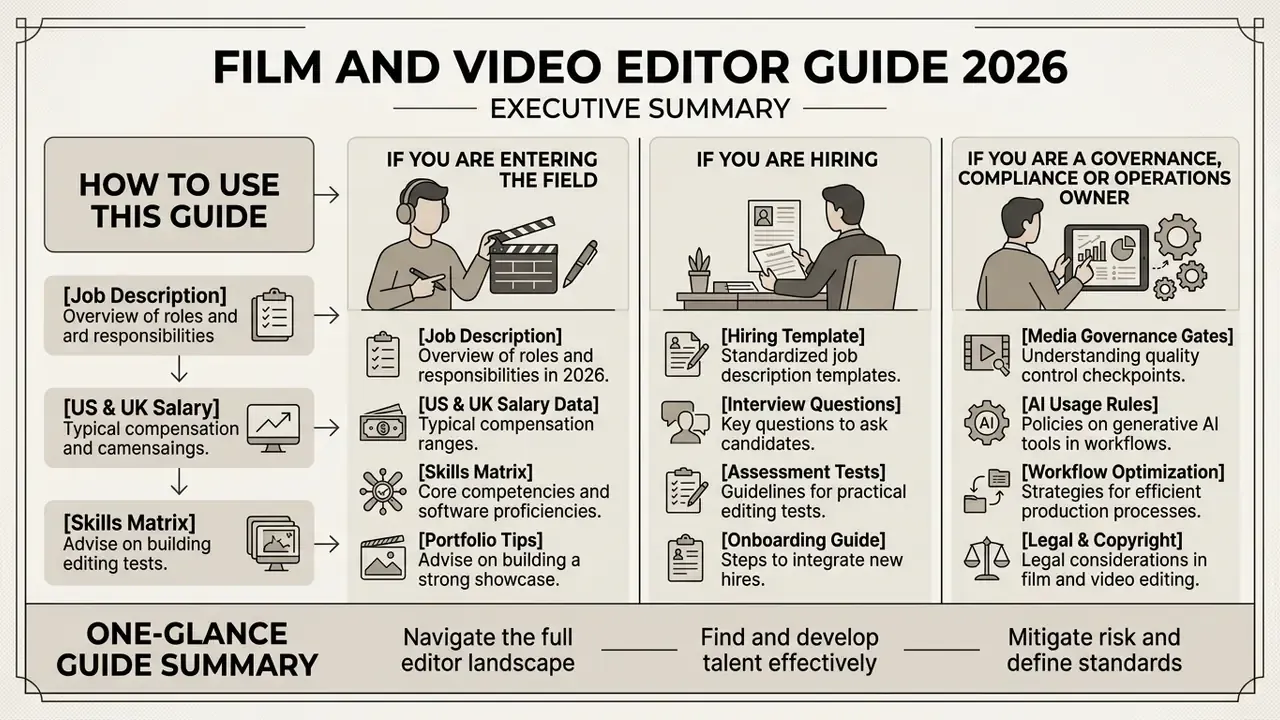
How to Use This Guide
This is one document serving three different readers, so read it selectively.
If you are entering the field, start with the role definition, the skills matrix and the section on education, portfolios and job search. The honest summary: you will spend roughly three to four years as a runner, trainee or assistant editor before anyone calls you an editor. That is normal, not a failure.
If you are hiring, jump to the job description template, the interview questions and the showreel evaluation method. One warning worth stating early: candidates rarely fail on creative taste. They fail on media management, and that failure surfaces at master export, two days before delivery.
If you are a governance, compliance or operations owner in a bank, insurer or mature fintech commissioning regulated video content, read the media governance gates, the enterprise evaluation addendum and the AI usage section. Those three parts treat post-production the way you already treat any other production process: named owners, evidence, approvals, retention.
And if you are simply choosing software? Skip to the comparison table, then come back for the trends and licensing detail.
What Is a Film and Video Editor?
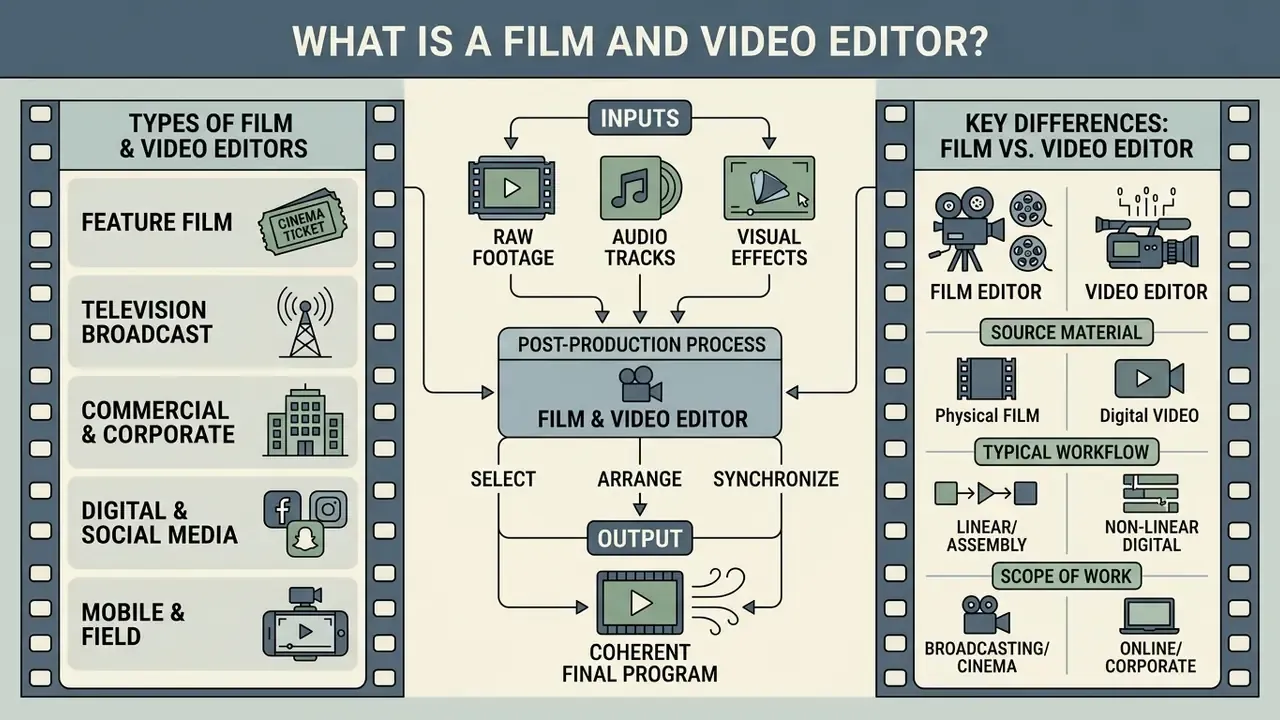
A film and video editor is a post-production professional who selects, arranges, and synchronizes raw footage, audio tracks, and visual effects into a coherent final program. According to occupational data from the U.S. Bureau of Labor Statistics (BLS 27-4032), these specialists collaborate with directors and producers to establish narrative structure, pacing, and visual tone across feature films, television, commercials, and digital platforms.
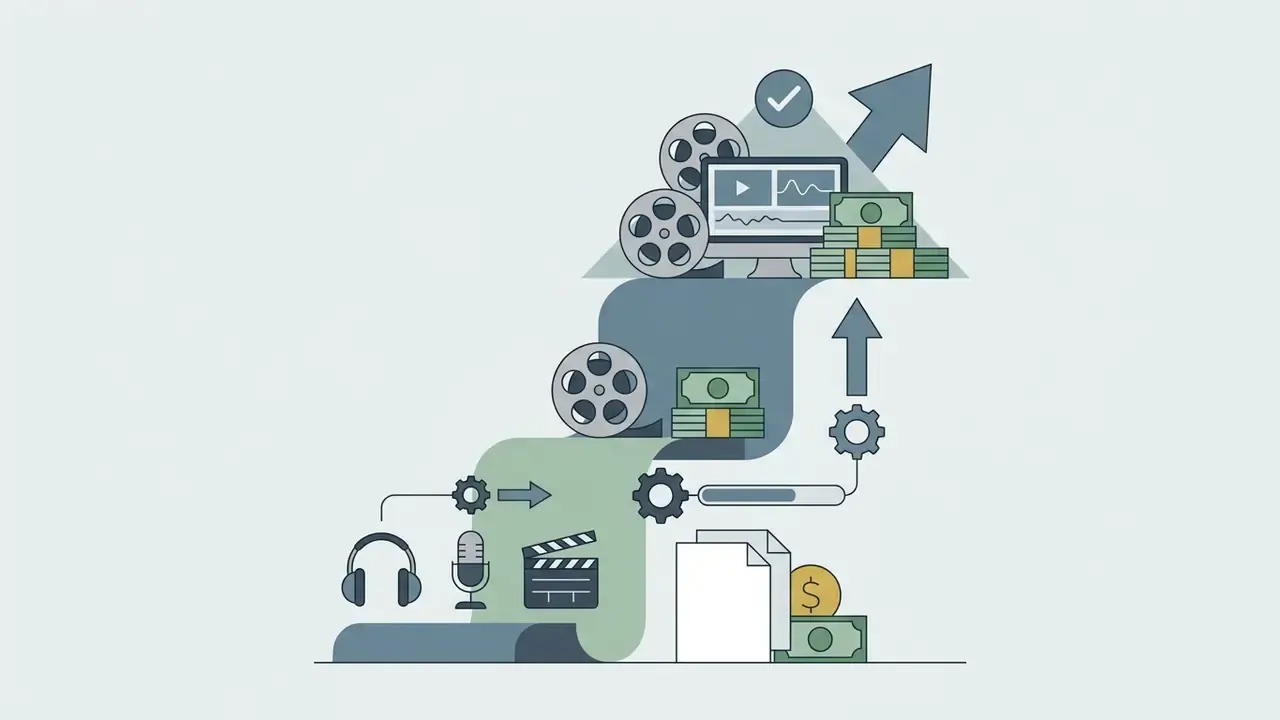
The occupation is also expanding, not contracting, despite automation pressure:
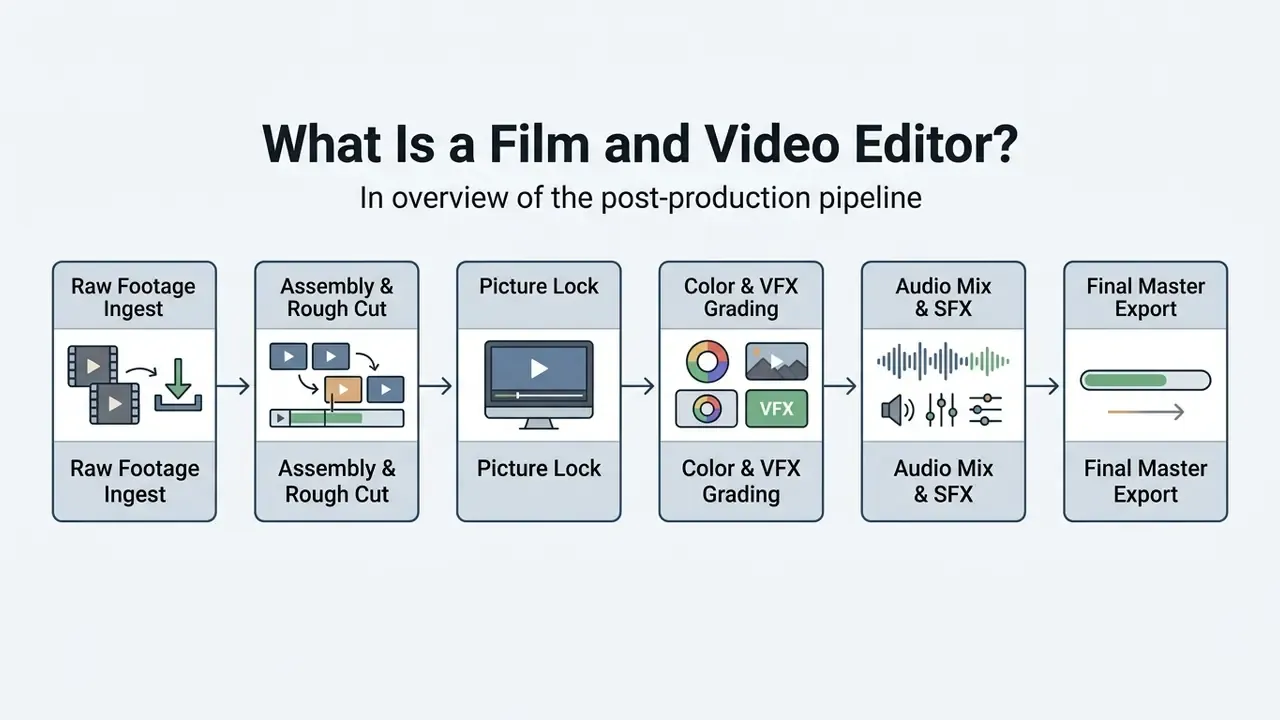
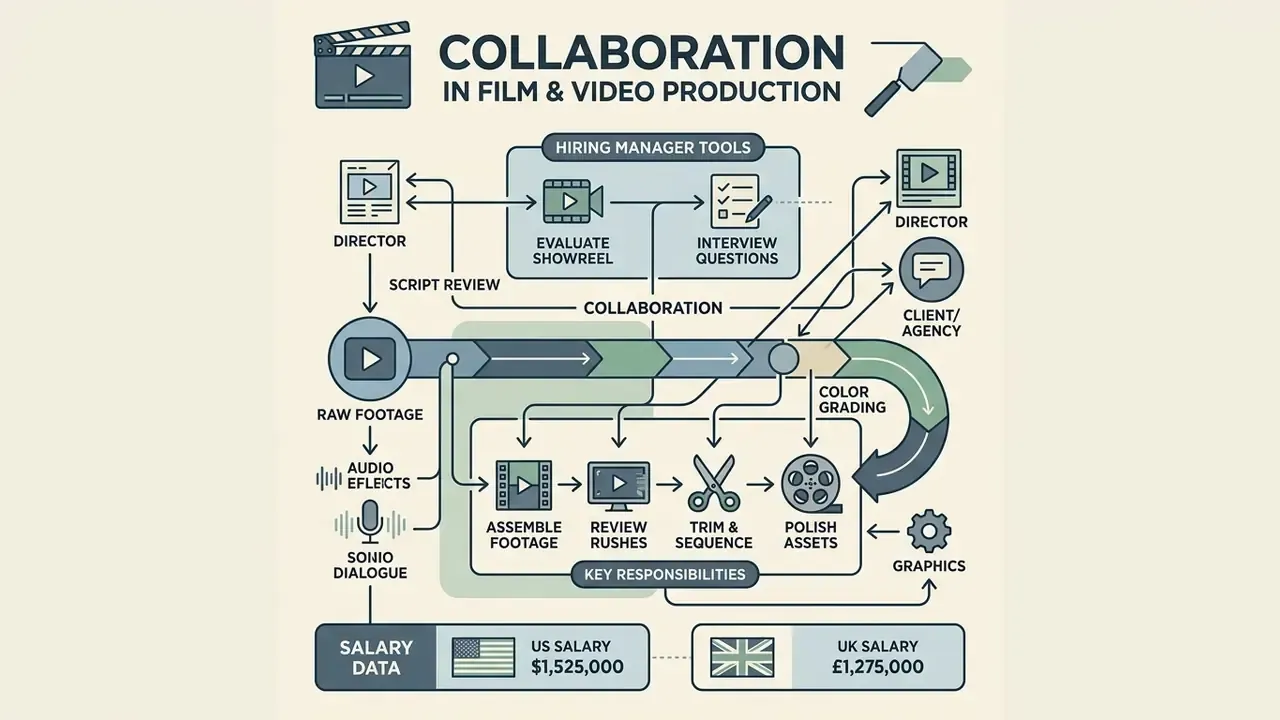
Each arrow in that diagram is also a handoff point, which means it is a control point. Media moves between departments (camera to editorial, editorial to sound, sound to color, color to mastering), and every transfer requires verified file integrity, a documented version number, and a named owner. Organizations that treat these arrows as informal courtesies rather than procedural gates accumulate rework, mismatched cuts, and delivery failures. I have seen a single unlogged version swap cost a week. One week, for a filename.
The editor operates at the intersection of creative storytelling and technical media management. Working within a specialized editing suite, the specialist converts unordered camera takes into a polished media asset ready for public distribution. Teams building out a broader production stack often evaluate adjacent capabilities such as video compression tools for final delivery, AI voice generation for narration scratch tracks, and animation makers for motion-graphic inserts. Cost modelling for those add-ons is easier with the AI Media Calculators than with vendor list pages.
Types of Film and Video Editors
Film and video editors specialize according to industry sector, project scale, and distribution channel. The primary categories include:
- Feature Film Editors Specialize in long-form narrative storytelling, character arcs, and dramatic pacing for theatrical and streaming releases. This sector also pays the most: 14,790 editors work in the Motion Picture and Video Industries with a mean annual wage of $92,070 (BLS OEWS, May 2023, https://www.bls.gov/oes/current/oes274032.htm).
- Television Broadcast Editors Focus on episodic television, news broadcasts, and unscripted documentary content with strict broadcast compliance standards. Turnaround here is measured in hours, sometimes minutes.
- Commercial and Corporate Video Editors Construct high-impact promotional videos, corporate communications, and advertisements designed for audience engagement. In regulated sectors such as banking and fintech, these editors also carry disclosure, legal-review and brand-compliance responsibilities. A single unchecked performance figure on screen becomes a compliance finding, not a creative note.
- Digital and Social Media Editors Build short-form, high-tempo video assets optimized for vertical mobile screens and algorithmic platform requirements. Editors in this lane frequently work inside YouTube video editing workflows and lean on lightweight generative tools, including free AI video generators and the best image to video AI free options, for concepting and filler assets.
- Mobile and Field Editors A smaller but growing group cuts on tablets and phones for news, sports and event coverage, where the deliverable ships before the crew leaves the venue. Teams outfitting this lane usually shortlist the best iPad video editor rather than a desktop suite.
Film Editor vs. Video Editor: Key Differences
The primary difference between a film editor and a video editor lies in project scale, workflow structure, and distribution requirements. A film editor typically handles long-form narrative media such as feature films and scripted television, following a director-led workflow from assembly edit to final picture lock.
In contrast, a video editor focuses on short-form commercial content, corporate communications, social media campaigns, and web series. These projects operate under tighter deadlines, require rapid turnaround times, and demand asset delivery across multiple aspect ratios and platform-specific video codecs.
That wage gap is a useful signal for career planning: multi-platform delivery fluency (vertical framing, captioning, codec variants, platform specs) is now compensated at least as well as traditional linear broadcast craft. The titles overlap in practice, though. Plenty of people who edit films describe themselves as video editors, and the distinction matters mostly on a rate card.
What Does a Film and Video Editor Do?
A film and video editor reviews raw footage, selects usable camera takes, constructs a logical sequence on a digital timeline, and integrates audio and visual elements into a finished product. The role requires managing media organization, trimming cut points for pacing, and coordinating technical handoffs with audio and visual effects departments.
Post-Production Process Workflow
- Media Ingest and LoggingRaw footage is offloaded, backed up with checksum verification, organized into project bins, and transcribed or tagged with metadata.
- Assembly and Rough CutThe editor selects usable takes and places them in story order according to the script, creating an initial continuous sequence.
- Fine Cut and Picture LockShot durations, cut points, and narrative pacing are refined until the director and producer approve the final visual sequence.
- Audio Enhancement and VFX IntegrationDialogue cleanup, sound effects (SFX), background scores, and visual effects (VFX) compositing are synchronized with locked picture.
- Color Correction and Master ExportExposure and color balance are normalized across shots before rendering final masters to required delivery specifications.
Each stage produces an artifact someone else depends on. That is the reason the order rarely bends, even when the schedule does.
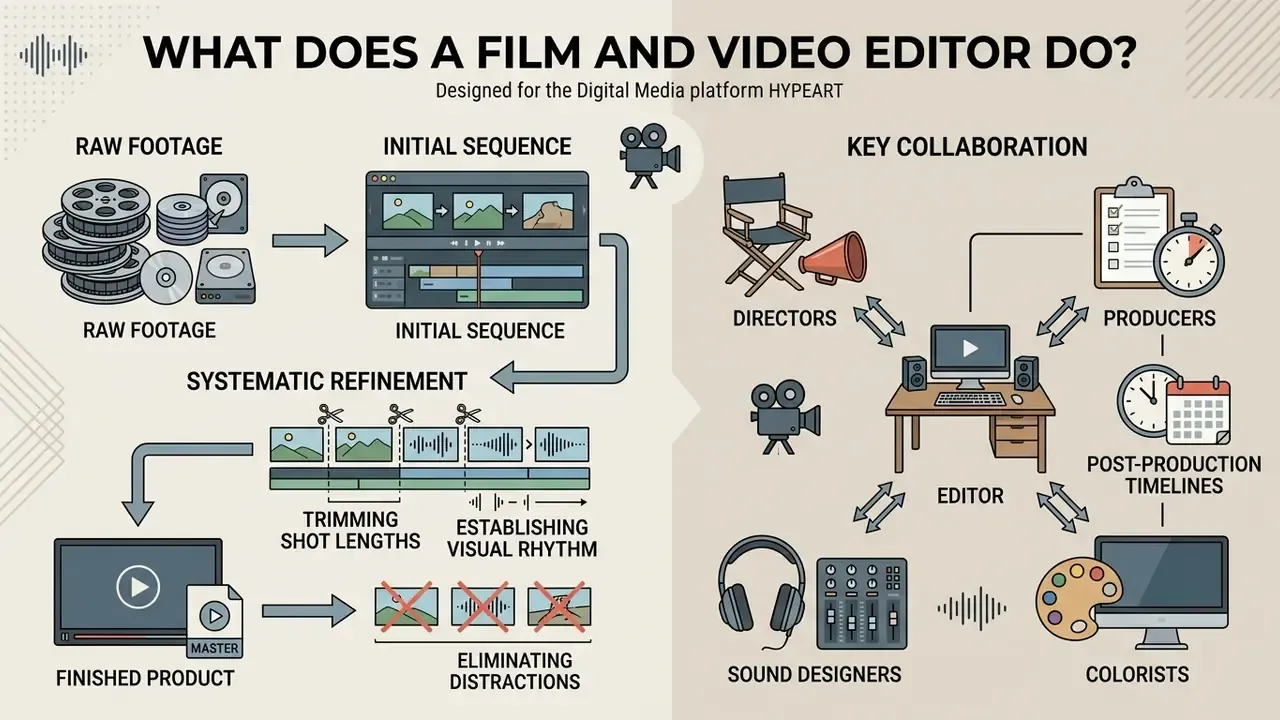
Editing Raw Footage Into a Finished Product
Transforming raw footage into a finished product requires systematically refining unedited camera files through established post-production stages. The editor begins by logging incoming media, creating proxy files for high-resolution footage, and building an assembly cut that reflects the underlying script or outline.
Once the initial sequence exists, the editor trims shot lengths to establish visual rhythm, eliminates continuity errors, and matches action across cuts. Final quality control ensures audio levels meet platform specifications and visual elements maintain consistent color balance prior to export. Where motion footage simply does not exist, editors now build it: archival stills, product renders and maps get animated, and the shortlist of best image to video AI generator tools has become a working part of the documentary and corporate toolkit.
Collaboration During Film and Video Production
Film and video editors work closely with directors, producers, sound designers, and colorists throughout post-production. The editor interprets director notes during cut revisions, provides feedback regarding coverage gaps during shooting, and coordinates asset delivery with external vendors.
Producers rely on the editor to keep post-production timelines aligned with broadcast or release deadlines. In practice the producer holds final authority over late-stage changes to scenes, music or sound, while the colorist liaises with the director, editor and VFX vendors on the final look. Clear communication ensures that feedback from test screenings or client review cycles is implemented without compromising narrative integrity or project budgets. The editors who last are the ones who say «that change costs two days» early, rather than absorbing it silently and missing delivery.
Video Editor Job Description Template (For Hiring Managers)
Top Interview Questions to Ask Candidates
- How do you approach media organization and proxy workflows on large-scale projects?
- Can you describe a situation where client feedback contradicted standard continuity rules, and how you resolved it?
- What is your protocol for backing up raw camera footage during multi-day shoots?
- Walk me through your one-page post workflow map: ingest, checksum, proxy strategy, bin structure, sync method, version naming, turnovers and archive location.
- A drive fails two days before delivery. What are your first three actions?
«A strong editor should be able to protect media first, then audit the project, standardize naming, create proxies, and rebuild a usable structure in Avid, Premiere, or Resolve». - OneTwo Resume, Film Editor Interview Guide (2026). https://www.onetworesume.com/interview-questions/film-editor
How to evaluate a showreel in five minutes: confirm authorship of each clip (especially on group projects), check whether the first 15 seconds show the strongest cut, verify the reel is relevant to your genre rather than a generic highlight package, and test playback on mobile and desktop browsers. ScreenSkills' portfolio guidance is explicit that reels should show only the best work, lead with the best material, be tailored to each role, and be device-tested before submission.
A small practical tell: if a candidate cannot say which parts of a reel they personally cut, the reel is not evidence. It is decoration.
Media Governance, Sign-Off Gates and QC Checklist
Post-production risk is rarely creative. It is procedural. The following gate structure assigns explicit ownership at each stage, which is what turns a pipeline into a controlled process.
| Gate | Stage | Approver | What is verified |
|---|---|---|---|
| G1 | Ingest complete | Media manager / assistant editor | Checksum verification, 3-2-1 backup confirmed, metadata and bin structure applied |
| G2 | Rough cut | Director / content owner | Story order, script coverage, missing-coverage flags, runtime |
| G3 | Picture lock | Producer + legal/brand reviewer | No further picture changes; claims, disclosures, on-screen text and talent releases cleared |
| G4 | Audio & VFX turnover | Post supervisor | Locked EDL/AAF, loudness target, ADR and SFX list, VFX shot list versioned |
| G5 | Master export | Post supervisor / delivery QC | Codec, frame rate, resolution, aspect ratios, captions, loudness compliance, filename convention |
| G6 | Archive | Media governance owner | LTO/cold-storage copy, project archive, license documentation retained |
Checklist0 / 9
Facilities handling pre-release or confidential material commonly align these controls with recognized content-security frameworks such as the Trusted Partner Network (TPN) assessment model and ISO/IEC 27001 information-security controls. For regulated industries, the governance owner, not the editor, should hold final accountability for the archive and license register. That separation is deliberate: the person creating the asset should not be the sole person attesting to its clearance.
One caveat worth naming. Gate models like this one are illustrative and composite; they reflect common post-production practice rather than a single published standard, and any institution should map them onto its existing approval and records-retention policy instead of adopting them verbatim.
Why Editing Quality Matters: Video Marketing ROI and Business Metrics
For commercial and corporate editors, editing quality is a measurable business variable, not a matter of taste. Industry survey data consistently shows video as a primary conversion and trust-building channel:
| Metric | Reported figure |
|---|---|
| Businesses using video as a marketing tool | 86% |
| Marketers reporting positive ROI from video | 87% |
| Marketers rating video ROI above search advertising | 68% |
| Businesses attributing a converted lead to an explainer video on social media | 93% |
Figures drawn from aggregated video-marketing survey data reported by agency benchmarks (Social Wave). Self-reported survey data overstates certainty, so treat these as directional rather than audited.
The practical implication for editors and hiring managers is straightforward: pacing decisions in the first three seconds, caption legibility on mobile, and audio clarity have direct revenue consequences. A poorly edited asset does not merely underperform. It actively erodes the trust the content was produced to build. This is why commercial pipelines increasingly track editorial quality metrics (average view duration, completion rate, click-through by cut variant) alongside creative approval, and why A/B-tested cut variants are now a standard deliverable rather than a luxury. Teams that want side-by-side tool economics before committing budget can browse the hub of current plan comparisons.
Skills and Requirements for a Video Editor Job
A video editor job requires a balance of narrative judgment, technical software mastery, media asset management, and interpersonal communication skills. The role demands operating under strict project deadlines while adapting complex creative feedback into refined visual sequences.
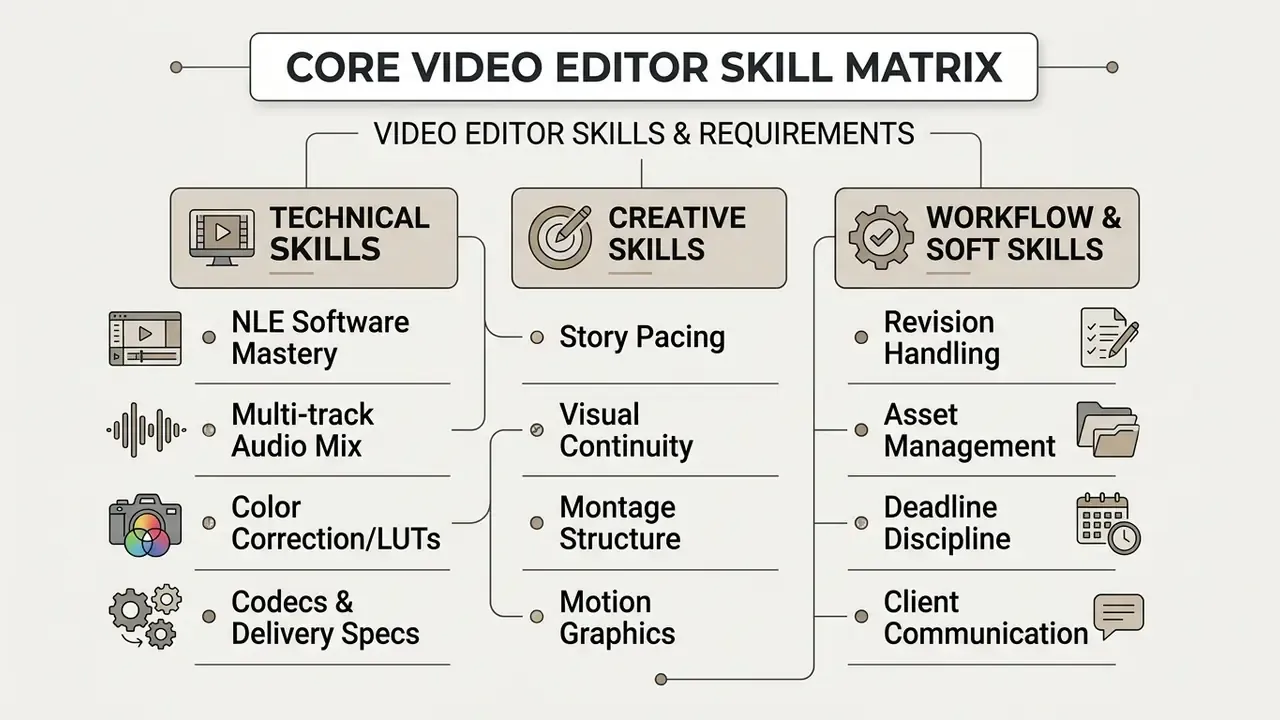
Read the matrix as a hiring rubric rather than a list: technical skills are testable with a timed assignment, creative skills are assessed through the showreel, and workflow skills are only visible through reference checks and scenario questions. Weak workflow discipline is the most expensive gap of the three, because it surfaces late, usually at master export.
Creative and Technical Video Editing Skills
Technical editing skills centre on operating non-linear editing (NLE) platforms, executing multi-camera edits, synchronizing secondary audio, and managing proxy workflows. Editors must understand video formats, frame rates, color spaces, and compression codecs required for multi-platform delivery.
Creative competencies involve story pacing, visual continuity, matching audio cues to picture cuts, and selecting appropriate transitions. Editors frequently perform basic motion graphics design, chroma key compositing, lower-third titling, and audio noise reduction to elevate production value. Color work itself divides into three distinct layers: primary correction (exposure and white balance), secondary correction and shot matching using scopes and waveforms, and creative grading with LUTs to establish a consistent look.
Still-image preparation is an underrated part of the same job. Thumbnails, title cards, social crops and end-frame layouts all pass through the editor's hands, which is why many practitioners keep an online photo editor open alongside the timeline, test mobile retouching in the best iPhone photo editor apps, and assemble multi-frame promo layouts in a best photo collage app when a campaign needs static variants of a video asset.
Communication, Problem Solving and Production Workflow
How to Choose Editing Software for Film and Video Work
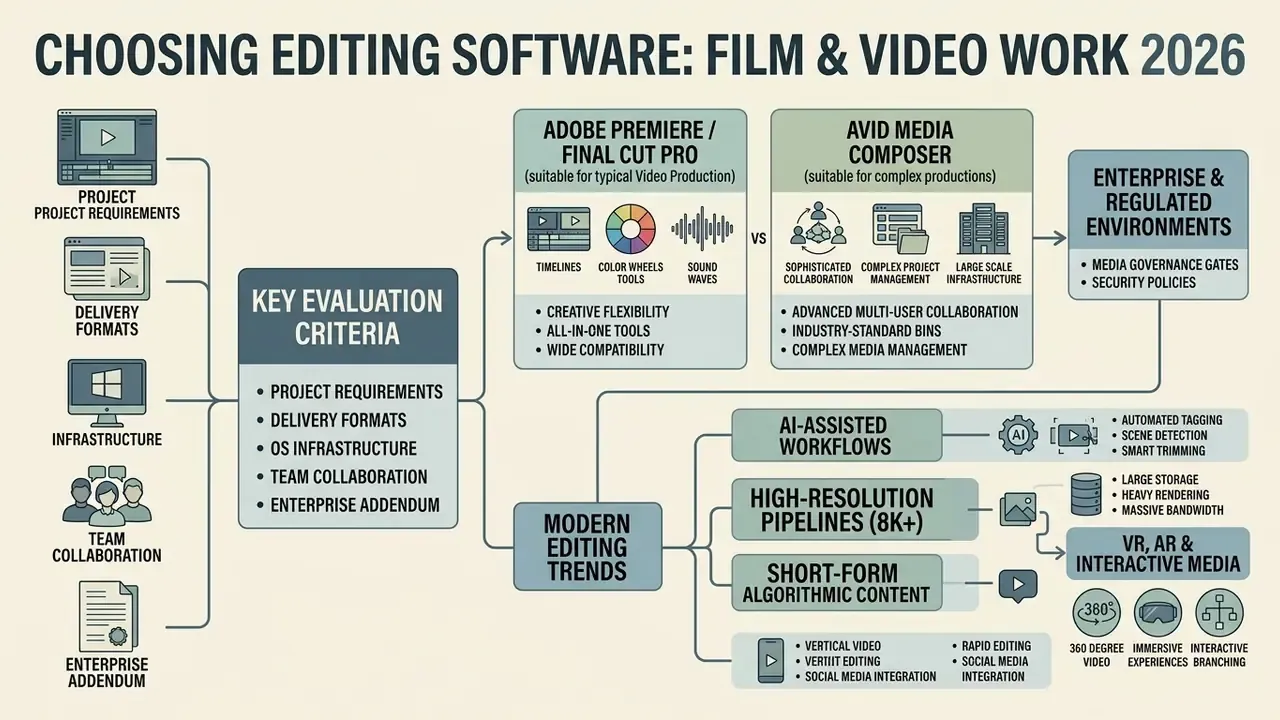
Selecting editing software depends on project requirements, delivery formats, operating system infrastructure, team collaboration needs, and, in enterprise and regulated environments, identity management, storage location and auditability.
| Editing Software | Target Platform | Primary Use Cases | Key Strengths | Collaboration & Media Management | Licensing Model (2026) |
|---|---|---|---|---|---|
| Adobe Premiere Pro | Windows, macOS | Commercials, social media, web video, indie film | Deep Creative Cloud integration, broad format support | Team Projects (cloud-hosted shared projects), Productions for long-form, Frame.io review with timestamped comments | Subscription: ~US$22.99/mo (annual, individual); ~US$37.99/license (teams) |
| Final Cut Pro | macOS, iPadOS | Independent film, documentary, digital media | Optimized performance on Apple silicon, magnetic timeline | Library/Event container model for portable editing, editor-to-editor handoff and archiving | One-time US$299.99 (Mac); US$2.99/mo or US$29.99/yr (iPad) |
| Avid Media Composer | Windows, macOS | Feature films, network TV, studio post-production | Advanced media management, multi-user bin locking | Shared projects, remote workflows, access control and media/project sharing via MediaCentral / Media Composer Enterprise | Subscription: ~US$259.99/yr Standard; ~US$539.99/yr Ultimate |
Pricing moves, so verify before procurement. Side-by-side platform breakdowns live in the AI Media Versus Comparisons set, and teams weighing a switch away from an incumbent suite can browse the hub of substitutes before renewal.
Enterprise evaluation addendum. Creative feature parity is not the deciding factor for banks, insurers and mature fintechs producing regulated communications. Before standardizing on a platform, request written answers on the following:
| Enterprise criterion | Why it matters |
|---|---|
| SSO / IAM integration (SAML, SCIM provisioning) | Prevents orphaned accounts and enables role-based access to non-public material |
| Storage locus: on-premise SAN/NAS vs vendor cloud | Determines whether pre-release financial material ever leaves your controlled perimeter |
| Audit trail and version history | Required to reconstruct who approved which cut and when |
| Encryption at rest and in transit | Baseline control for confidential earnings, product or customer footage |
| Content-security attestation (e.g. TPN assessment, ISO/IEC 27001) | Evidences vendor and facility-level control maturity |
| AI feature data handling | Confirms whether media is used for model training and whether processing is local or cloud |
| Contract terms: SLA, data residency, exit/export of projects | Prevents lock-in and supports continuity planning |
No matching rows Clear one or more filters to restore the matrix.
Ask for those answers in writing, from the vendor, before the pilot. Verbal assurance is not evidence.
Adobe Premiere and Final Cut Pro for Video Production
Adobe Premiere Pro and Final Cut Pro serve as primary tools across commercial video production, digital marketing, and independent filmmaking. Premiere Pro offers robust integration with Adobe After Effects and Photoshop, making it effective for workflows requiring frequent motion graphics and visual adjustments. Adobe's current documentation also exposes direct publishing destinations for platforms including YouTube, TikTok, Facebook and Vimeo, with captions, keywords and social-ready presets built into the export workflow.
Final Cut Pro offers exceptional rendering speed and system efficiency on macOS hardware. Its magnetic timeline structure allows rapid sequence assembly, making it a preferred choice for solo operators, documentary editors, and fast-turnaround digital content creation. Apple's Social Platforms destination transcodes a project or clip to MOV with H.264 video and AAC audio for direct upload, and Library-based media management supports portable editing, editor-to-editor collaboration and archiving inside a single container. Documentary editors animating stills, archival photographs or maps increasingly pair the NLE with image-to-video and animation tooling, or shortlist the best image to video AI options, to create movement where no motion footage exists.
When Avid Media Composer Is the Better Choice
Avid Media Composer is the industry standard for large-scale studio feature films, broadcast network television, and high-budget post-production facilities. Its database-driven media management architecture ensures rock-solid stability when handling massive volumes of high-resolution media assets.
Avid excels in multi-editor collaborative environments where shared storage access and bin-locking protocols are critical. It integrates directly with Pro Tools audio finishing pipelines, providing the security and asset tracking required by major Hollywood studios and broadcast networks. Its positioning tracks with the compensation data: editors in the motion picture and video industries average $92,070 per year, materially above broadcasting, where other platforms are more common (BLS OEWS, May 2023, https://www.bls.gov/oes/current/oes274032.htm).
Correction to a common assumption, including one I used to repeat: Avid is not slower because it is older. It is deliberately conservative about media handling, and that conservatism is precisely what protects a thousand-hour project.
Modern Editing Trends: AI Automation, 8K, and Interactive Media
The post-production landscape continues to evolve alongside hardware and software innovation:
- AI-Assisted Workflows Modern NLE tools integrate machine learning for automated text-based editing, speech-to-text transcription, dialogue isolation, filler-word removal and smart color matching, drastically cutting rough-cut assembly time.
- High-Resolution Pipelines (8K+) Editors increasingly process raw camera formats exceeding 8K resolution, requiring optimized proxy workflows, GPU acceleration and high-speed NVMe storage arrays.
- Short-Form Algorithmic Content Video editors must master dynamic pacing, native vertical framing (9:16), safe-zone titling and auto-captioning techniques optimized for YouTube Shorts, TikTok and Instagram Reels.
- VR, AR and Interactive Media Continuing development in virtual and augmented reality introduces spatial audio, 360° stitching and non-linear viewer-controlled narratives to the editor's remit.
- Remote and Cloud Review Timestamped browser review, cloud proxies and remote grading sessions are now default practice rather than pandemic-era improvisation.
UK career guidance identifies the same inflection points, citing the arrival of 8K resolution, AI-driven post-production automation, and continuing VR/AR and short-form social development as the technological shifts editors must track (Prospects, Film/Video Editor Job Profile, 2026). Independent throughput and render-time figures for these pipelines are collected in the benchmarks set; if you are sizing hardware, browse the hub rather than trusting marketing claims.
AI Governance, Shadow AI and Intellectual Property in Video Editing
Generative tooling entered post-production faster than most content policies did. For enterprise, financial-services and public-company content teams, the risk is concentrated in four areas:
Operationally, the controls are unglamorous and effective: an approved-tool register, a per-asset license log, human review before any generated element reaches G3 (picture lock), and a prohibition on sensitive-media upload to unapproved endpoints. Reproducibility matters too. Record the tool, version and prompt for any generated element so an output can be reconstructed or defended later.
What remains genuinely unresolved? Two things. Copyright status of purely generated footage still varies by jurisdiction, and disclosure expectations for synthetic elements in regulated marketing are still forming. Until those settle, the defensible position is documentation: know what was generated, by which tool, under which licence, approved by whom.
Film and Video Editor Salary and Compensation
Compensation for film and video editors varies significantly based on geographic region, industry sector, union status, and experience level. The national U.S. median annual wage for film and video editors was $75,420 in May 2025, against a mean of $83,470, with the top of the market concentrated in feature film and network television (U.S. Bureau of Labor Statistics, Occupational Outlook Handbook / OEWS).
| Experience Level / Role | US Average (BLS-aligned) | UK Average (Prospects) | Freelance Day Rate (Est.) |
|---|---|---|---|
| Entry-Level / Assistant Editor | $45,000 - $58,000 | £21,000 - £26,000 | $200 - $350 / day |
| Mid-Level Video Editor | $65,000 - $85,000 | £31,000 - £38,000 | $400 - $650 / day |
| Senior Film / Lead Picture Editor | $105,000 - $150,000+ | £50,000+ | $800 - $1,500+ / day |
Key Factors Influencing Earnings
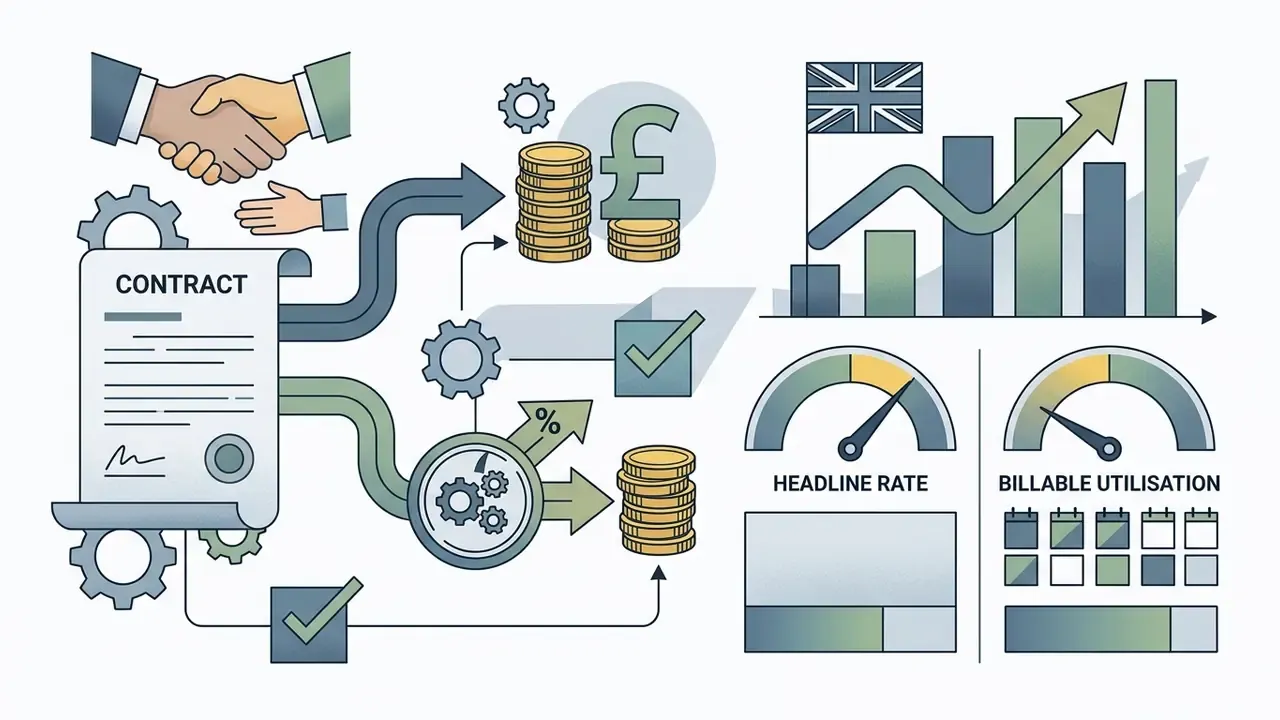
A quick sanity check on freelance maths: 150 billable days at $500 is $75,000 gross, before equipment, software subscriptions, insurance, accounting and unpaid pitching time. The day rate always looks better than the year.
Income figures are indicative guides, not offers, and vary by market, employer and contract type.



How to Become a Film and Video Editor
Becoming a film and video editor requires acquiring technical proficiency in non-linear editing systems, mastering narrative storytelling principles, and assembling a professional portfolio of completed work. Most practitioners combine formal education or technical certificates with hands-on project experience.
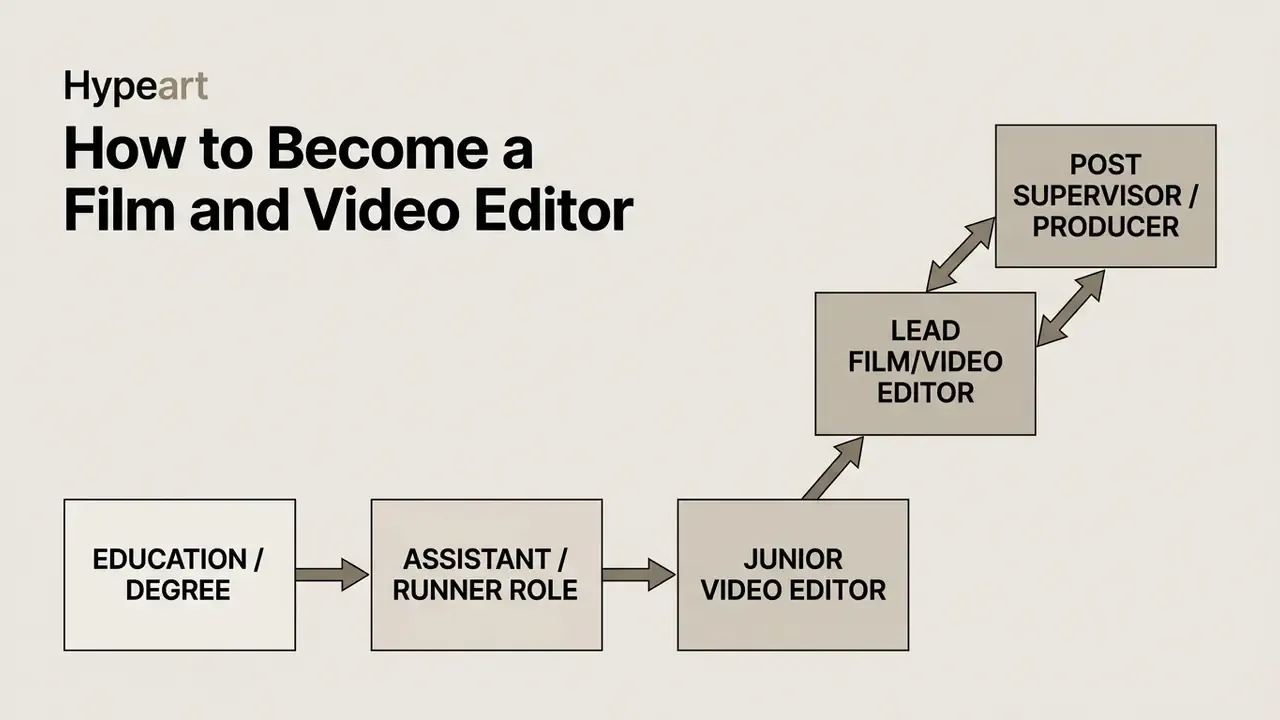
Expect roughly three to four years in runner, trainee and assistant-editor positions before qualifying as a full editor, according to UK career-service progression data. There is no single fixed route: ScreenSkills' post-production career mapping states explicitly that no set route exists, and lateral entry from sound, camera or media-management roles is common.
Education, Training and Practical Experience
Formal entry into the field often begins with a bachelor's degree in film production, media studies, or broadcasting. Technical colleges and community institutions also offer focused certificate programs, such as Wiregrass Georgia Technical College's TCC or Gavilan College's FTVE modules, focusing directly on NLE software, camera operation, and post-production audio.
«Most film and video editor positions require a bachelor's degree in a field related to film or broadcasting; the median annual wage was $75,420 in May 2025». - BLS Occupational Outlook Handbook, Film and Video Editors and Camera Operators (2026). https://www.bls.gov/ooh/media-and-communication/film-and-video-editors-and-camera-operators.htm
Building a Portfolio and Starting a Job Search
A professional showreel (portfolio) is the primary asset used to secure editing employment. An effective showreel runs between 60 and 90 seconds, presenting an editor's strongest cuts, pacing capabilities, and visual polish within the first 15 seconds. (Note on evidence: these durations reflect prevailing recruiter practice in post-production rather than a published standard; the underlying principles, brevity, strongest work first, role relevance, are documented in ScreenSkills portfolio guidance, which also requires clear attribution of individual contribution on group projects and cross-device testing.)
«Editors with a strong portfolio and proficiency in Premiere or Avid have the best advancement prospects in a competitive market». - UGuide, Film and Video Editors Career Profile (2025). https://www.uguide.com/
Job searches begin by applying for entry-level post-production roles, such as post-production runner, media manager, or assistant editor. These positions provide exposure to professional facility workflows, media archiving protocols, and valuable industry contacts. In the UK in particular, editor vacancies are rarely advertised: speculative applications to production companies and post houses, plus relationships with directors, producers and production managers who carry preferred editors onto new projects, generate a large share of work. Freelancers should also maintain a visible profile on dedicated industry directories and social channels.
Send the reel with a two-line note naming the genre you cut and the deadline pressure you have handled. Generic mass emails get ignored; specific ones occasionally get answered within the hour.
Working Conditions, Employers and Career Progression
Film and video editors operate primarily within editing suites equipped with specialized monitors, high-speed storage arrays, and ergonomic control surfaces. The work involves extended periods of workstation operation, tight project deadlines, and potential overtime during final delivery phases.
Hours vary sharply by sector. Corporate and agency editors may keep standard office hours; television and feature work commonly involves long and unsociable hours, night shifts when suites are booked overnight, and overtime around delivery. Travel between facilities and attendance at external edit suites or grading sessions is also routine.
Where Film and Video Editors Work
Film and video editors are employed across diverse sectors of the media industry. Major employment categories include:
- Motion Picture and Video Industries Studios and post-production houses producing feature films and streaming series.
- Broadcasting Networks Television stations and cable channels managing news, sports, and episodic programming.
- Advertising and Marketing Agencies Creative firms producing commercial advertisements and brand assets.
- Corporate Content Divisions In-house media departments creating internal communications and promotional media, including regulated financial communications requiring legal sign-off.
- Animation, Games and Independent Production Companies Teams producing animated content, game cinematics and independent programming.
- Independent Freelance Practice Self-employed contractors providing editing services to multiple production clients, sometimes from temporary home-based edit suites with remote client viewing.
Digital and social editors in this group frequently specialize around platform-native pipelines, including YouTube video editing workflows, where publishing cadence and thumbnail/still production sit inside the editor's remit.
Career Paths and Long-Term Development
Career progression in post-production generally follows a structured trajectory based on technical experience and industry reputation. Entry-level runners and edit assistants advance to junior editor roles as their speed and narrative judgment improve.
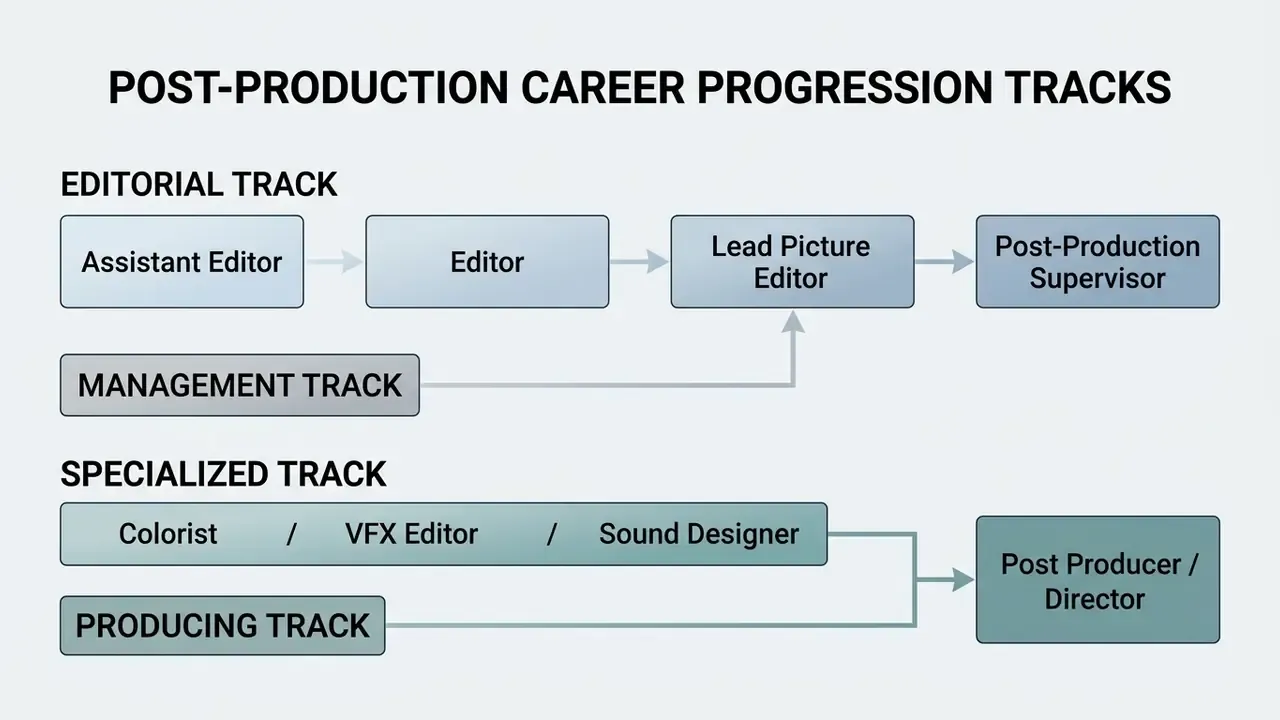
With demonstrated performance, editors progress to lead picture editor on major productions, supervise entire post-production departments, or transition into post-production producing and directing roles. Specialists who move into finishing and delivery also take on mastering responsibilities, where fluency with video compression tools and multi-platform delivery specifications becomes a core competency rather than an afterthought.
«The UK's digital content sectors, post-production, VFX, animation and games, could generate an additional £50bn GVA per year by 2030». - BFI / Olsberg SPI, Skills Scoping Study for the Digital Content Production Sectors (2023). https://www.bfi.org.uk/
Long-term development is driven less by additional qualifications than by accumulated credits, network strength and continuous technical updating. Short courses in post-production audio, visual effects, software packages and freelance finance are widely available through industry bodies such as BECTU, and cross-training into camera or sound work broadens both employability and contact networks.
A less obvious growth path has opened on the governance side. Large content operations now need someone who understands both timelines and controls: an editor who can own the license register, run the gate reviews and answer an internal audit question without panic. That role barely existed a decade ago. It pays.
Frequently Asked Questions (FAQ)
What degree do you need to be a video editor?
While a bachelor's degree in film studies, communications, media production or broadcasting is beneficial, and the BLS reports most positions require one, industry employers prioritise a strong portfolio/showreel demonstrating practical NLE software proficiency over formal diplomas. In the UK, apprenticeships, college courses and progression from a runner role are equally valid routes.
How much does a film and video editor earn?
The U.S. median annual wage was $75,420 in May 2025, with a mean of $83,470 and $92,070 in the motion picture and video industries. UK starting salaries run £21,000-£26,000, experienced editors £31,000-£38,000, and senior editors above £50,000. Freelance day rates typically span $200-$1,500+ depending on seniority and sector.
What is the difference between a rough cut and a final cut?
A rough cut is an initial assembly sequence where scene order and basic storytelling are established. A final cut is the fully refined, picture-locked sequence complete with color grading, visual effects, and mastered audio mixing, exported to the required delivery specification.
Is video editing a good freelance career?
Yes, with a caveat about cash flow. A significant portion of video editors work on a freelance basis, particularly in the UK television market. Success depends on maintaining industry networks, developing speed, and utilising timestamped client review tools to manage project revisions efficiently, plus disciplined rate-setting and utilisation planning to smooth variable income.
How do I hire a video editor?
Publish a job description specifying deliverable types, NLE platform, delivery specs and review cadence (see the template above), request a role-relevant showreel with clear attribution of individual contribution, and run a timed practical test on representative footage. Include at least one scenario question about backup and media-management protocol.
What makes a good video editor?
Good editors combine storytelling judgment with listening skills and problem-solving under deadline. The technical baseline is timeline mastery, audio competence and delivery-spec fluency; the differentiator is pacing instinct plus disciplined media management that keeps projects recoverable and auditable.
Can AI replace video editors?
No current evidence supports full replacement. AI accelerates transcription, rough-cut assembly, dialogue cleanup and colour matching, but editorial judgment, continuity, client negotiation and legal/brand accountability remain human responsibilities. Employment projections still show 3-4% growth through the 2024-2034 window. Organisations should, however, govern AI use explicitly to avoid confidentiality, licensing and provenance failures.
Which editing software should a beginner learn first?
Learn one NLE deeply rather than three superficially. Premiere Pro offers the widest commercial job coverage (≈35% market share), Final Cut Pro is the fastest route on Apple hardware, DaVinci Resolve provides a free professional entry point with industry-grade colour, and Avid Media Composer is the credential that opens studio feature and network television doors.
What should a regulated employer add to a standard editor contract?
Three clauses, at minimum: an approved-tool list for generative software with a prohibition on uploading non-public material elsewhere, a requirement to maintain per-asset license records, and a defined archive handover including project files, masters and consent documentation at project close. Further reading: compare editing platforms, generative tools and delivery services across the wider resource hub.