Executive Summary: Key Takeaways in 30 Seconds
- What free tiers actually deliver text-to-song, lyrics-to-vocals, instrumental-only rendering, background scoring, isolated stems on selected platforms, and short-form sound effects (SFX).
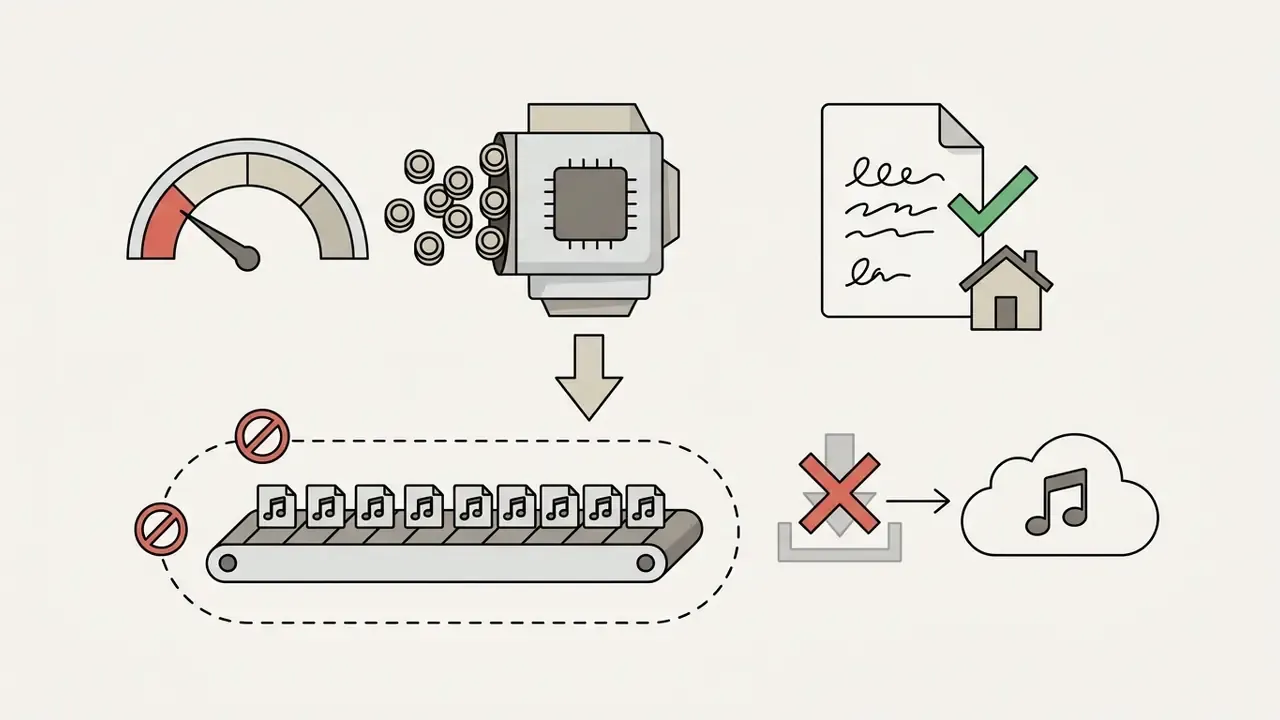
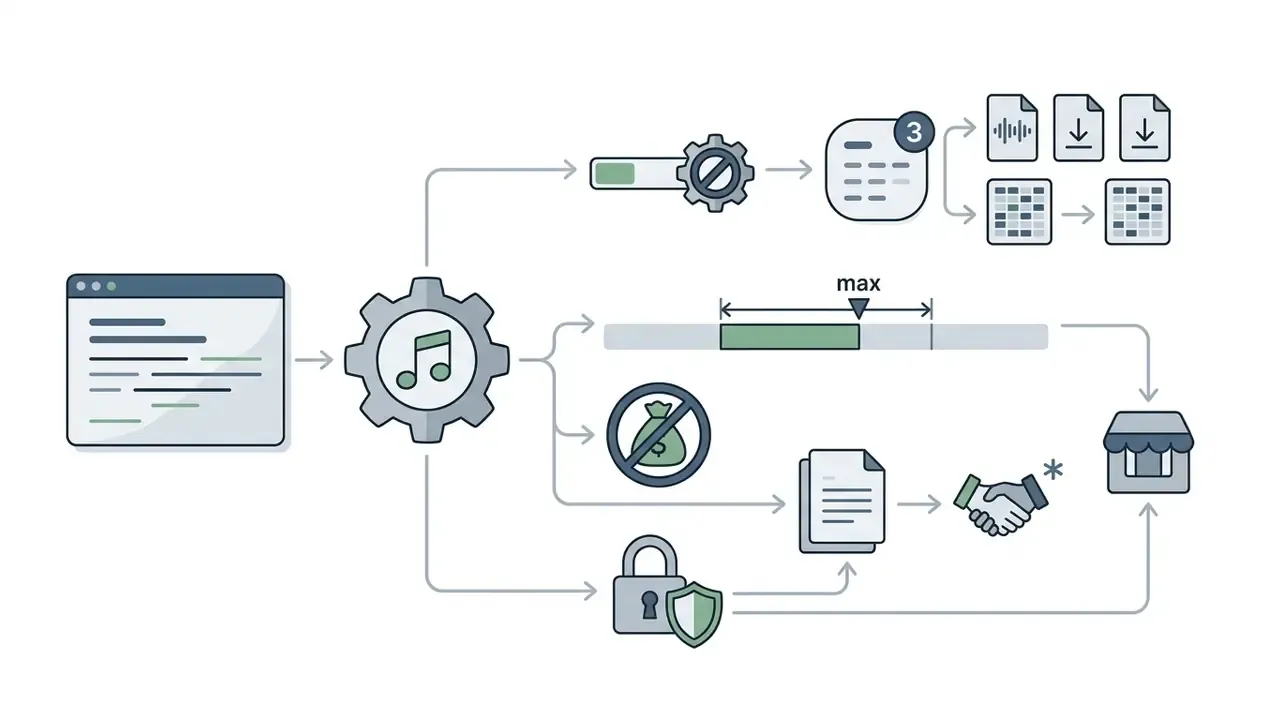
- Hard limits to expect daily or monthly credit caps (2 to 50 credits per day is the common range), MP3-only or download-blocked exports, older model versions, shared inference queues, and non-commercial end-user license agreements.
- Legal reality purely AI-generated music without meaningful human authorship is not protected by copyright in the United States and is ineligible for Section 115 mechanical royalties. "Royalty-free" is a contractual permission, not ownership.
- Commercial gate monetization rights typically require an active paid subscription at the moment of generation, plus an archived license certificate for each track.
- Governance angle free B2C audio generators are a classic Shadow AI vector. Employees adopt them outside procurement, paste prompts containing brand or campaign data, and publish outputs with no license evidence attached.
Scope and How to Use This Guide
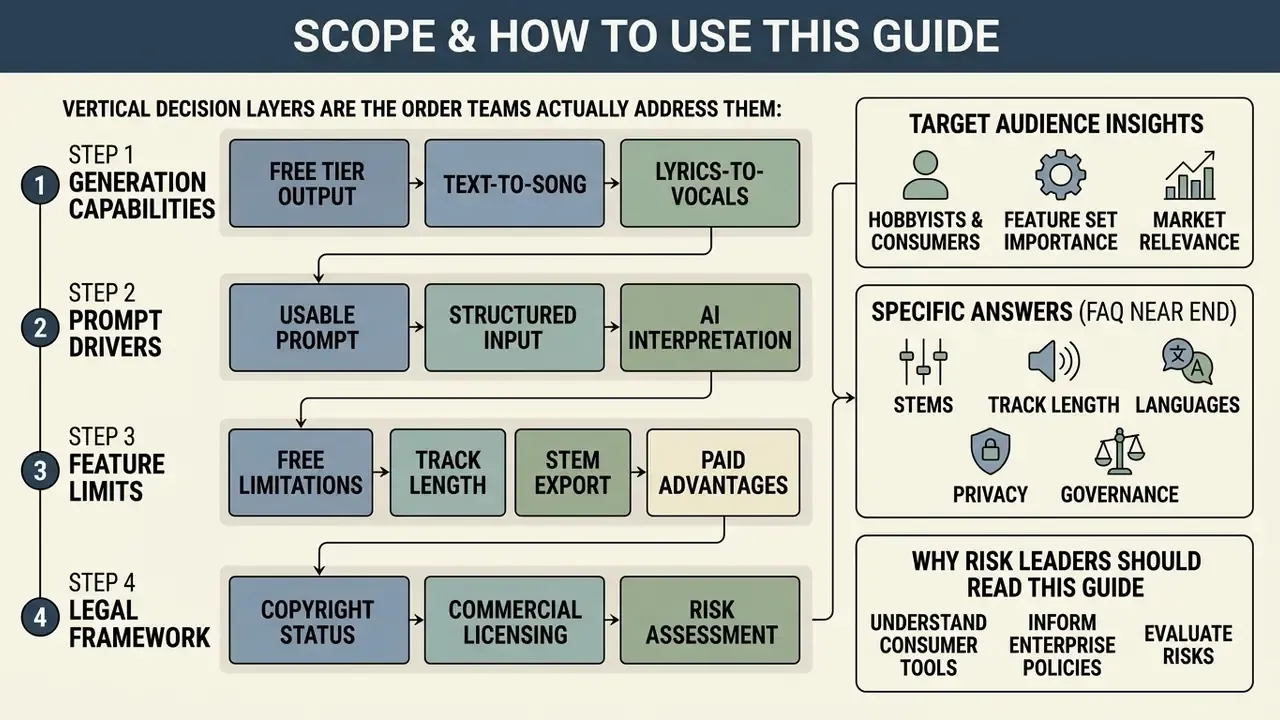
This guide covers four decision layers, in the order most teams actually hit them: what a free ai song creator free tier can generate, how to drive it with a usable prompt, where the free-to-paid boundary sits on downloads and stems, and what the licensing and copyright picture looks like once the track becomes a commercial asset. The final sections add the parts consumer reviews skip: dataset provenance questions for vendor due diligence, a publishing checklist, and a proportionate model-risk approach for tools that will never ship formal validation evidence.
If you are here for a specific answer, the FAQ near the end handles stems, track length, languages, privacy, and client work. If you are writing an internal standard, read the licensing section and the checklist first, then come back to the feature descriptions.
Why Risk and Governance Leaders Should Read a Consumer-Tool Guide
Free AI song creators are marketed to hobbyists. They enter organizations through marketing teams, internal communications, L&D video producers, and event staff. No procurement approval, no card details, no installation: that combination is precisely why these tools behave like Shadow AI, with unregistered models processing corporate prompts in third-party clouds and returning assets that get published under a brand name.
Understanding the consumer feature set matters for that reason alone. Credit caps, default public visibility of generations, non-commercial EULAs, stem export limits: these details decide whether an internal standard is workable or just an unenforceable ban. The sections below describe the tooling twice over, as a creator sees it and as an auditor must verify it.
What Can a Free AI Song Creator Generate?
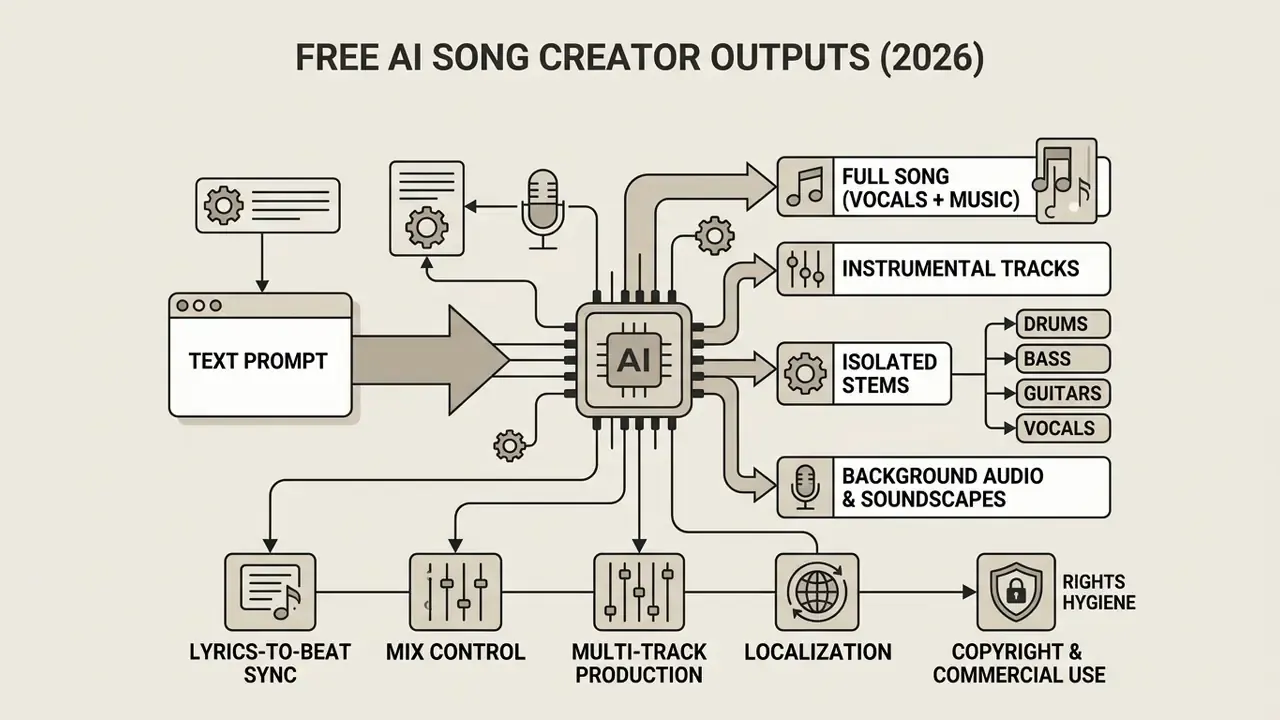
Modern free AI song creators generate complete audio compositions, including full vocal tracks, pure instrumentals, isolated stems, and specialized background audio, directly from natural language prompts or structured lyrics. These systems process text inputs to synthesize realistic vocals, multi-instrument arrangements, and style-specific rhythms across a wide genre range. Vendor documentation for current-generation engines describes four practical output types: full songs with vocals and timed lyrics, instrumental-only tracks, vocal-only or stem-style outputs, and ambient background beds for video, games, and podcasts.
Text Prompt to Song: Turn an Idea into Music
Text-to-song models transform textual descriptions of mood, genre, tempo, and instrumentation into fully arranged music tracks using advanced neural architectures. Contemporary systems rely on transformer-based flow-matching models and latent diffusion pipelines to convert natural language prompts into high-fidelity stereo audio.
For instance, the MelodyFlow architecture processes continuous latents from a 48 kHz stereo variational encoder, generating 30-second audio samples in under 10 seconds of inference time.
"MelodyFlow generates 48 kHz stereo audio up to 30 seconds long in under 10 seconds of inference, operating on continuous latent representations."
Similarly, the MusicEval dataset benchmark, which evaluated 2,748 audio clips generated across 31 text-to-music models, shows that neural models can reliably translate detailed text descriptions into musically coherent compositions.
"MusicEval contains 13,740 ratings from 14 conservatory-trained experts across 31 models, the largest professional benchmark for generative music."
Using an ai create a song from text tool lets creators prototype complex acoustic arrangements without physical instruments or a digital audio workstation (DAW). Commercial engines document comparable fidelity: Google's Lyria 3, exposed through the Gemini API and AI Studio, renders 44.1 kHz stereo audio from either text prompts or images, including timed lyrics and full-length arrangements of roughly two minutes. Search demand mirrors that capability, with users typing everything from ai create song from text to ai music generator free create song from text into the same query box.
Illustrative Scenario (hypothetical): In a risk-assessment walkthrough, a corporate media team needed custom acoustic scoring for internal training videos. By applying an ai song creator free workflow with strict parameters for tempo and style, the team produced draft audio in seconds, cutting initial production testing overhead while human audio engineers stayed focused on final mastering. Nothing here implies a documented client result.
Lyrics to Beat and Vocals Generation
Lyrics-to-beat technology combines lyric segmentation with singing voice synthesis (SVS) to map written verses to rhythmic beats and realistic synthetic vocals. End-to-end SVS architectures, such as Sifisinger, remove traditional multi-stage processing by translating lyric text and pitch scores directly into expressive vocal performances.
To align rhythm with vocal delivery, advanced frameworks employ forced alignment and self-supervised singing pre-training to match phonemes to musical bar beats. Research presented at ACL 2024 (SVPT) applied self-supervised singing pre-training specifically to solve rhythm alignment and zero-shot speech-to-singing conversion, while earlier lyric-to-rhythm models assigned explicit onset times and durations to each syllable before melody generation. In lyric-generation benchmarks, the Lyra framework reported a 24% relative quality improvement over baseline models by compiling input melodies into decoding constraints.
"Lyra achieved a 24% relative quality improvement over SongMASS by compiling melody into decoding constraints that enforce syllable alignment."
Platforms marketed as an ai music generator with vocals from text, an ai beat generator from lyrics, or an ai music generator lyrics to beat use these pipelines to produce synchronized vocal melodies over full rhythmic backing. Voice character itself is a controllable parameter: systems such as Mellotron demonstrated that text, rhythm, pitch, speaker identity, and a global style token can be steered independently, which is why modern interfaces expose male, female, duet, and timbre-reference options. Teams that also work with spoken narration frequently pair these engines with dedicated AI voice generators to keep speech and singing timbres consistent across a campaign.
Full Songs, Instrumentals and Background Music
Free AI song makers output three core formats: full vocal songs, isolated instrumental arrangements, and synchronized background tracks optimized for media projects. Full songs include structured intro, verse, chorus, and outro sections paired with synthetic vocals. Pure instrumentals isolate the accompaniment, which suits standalone scoring or background use.
Models such as Diff-A-Riff generate 48 kHz pseudo-stereo instrumental accompaniments conditioned on specific context tracks or text prompts.
"Diff-A-Riff uses a Consistency Autoencoder to cut inference time while generating 48 kHz pseudo-stereo accompaniment with high musical coherence."
The distinction between the three formats is functional rather than architectural. Full songs are voice- and lyric-centred, instrumental tracks suppress the vocal branch, and background music is constrained by synchronization, mood, and licensing requirements. Apple's 2026 Music Style Guide even requires "performance," "backing," and "split" tracks to be labelled distinctly in metadata, which is a useful discipline to copy internally when archiving generated assets.
For digital creators working in a video editor app or managing media pipelines, an ai music generator free background music feature supplies royalty-free atmospheric soundscapes that sit under visual content without masking voiceover narration. Editors comparing rendering and mixing environments can review options among free video editing software before locking an audio delivery format, and publishing teams can align exports with platform requirements described in the YouTube video editor workflow guide.
Multi-Track Production and Stem Isolation
Modern enterprise AI audio engines go beyond rendering a flat stereo master. Advanced models let creators export isolated stems, delivering separate high-resolution tracks for vocal leads, instrumental accompaniment, basslines, and percussion. Uncompressed multi-track files give audio engineers room to re-balance layers, apply custom equalization, or run a full studio remix inside a DAW.
Practically, stem delivery changes three things in a production pipeline:
- Mix control. A vocal stem can be ducked under narration without re-generating the track, which matters when one score is reused across multiple video cuts.
- Localization. Instrumental and percussion stems can be retained while the vocal stem is regenerated in another language, preserving the arrangement.
- Rights hygiene. Stems make the human contribution auditable. Documented re-balancing, editing, and arrangement decisions are exactly the "human-authored elements" that copyright examiners look for.
Stem access is one of the clearest paid-tier boundaries in this market. Free plans usually deliver a single mixed MP3, while multi-track WAV bundles, MIDI export, and stem separation sit behind subscription tiers alongside high-bitrate downloads.
How to Create a Song with AI for Free
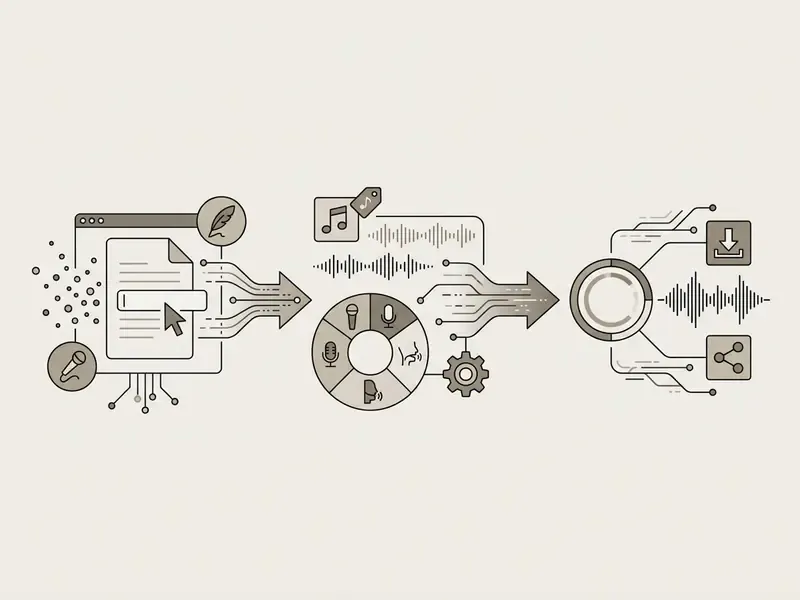
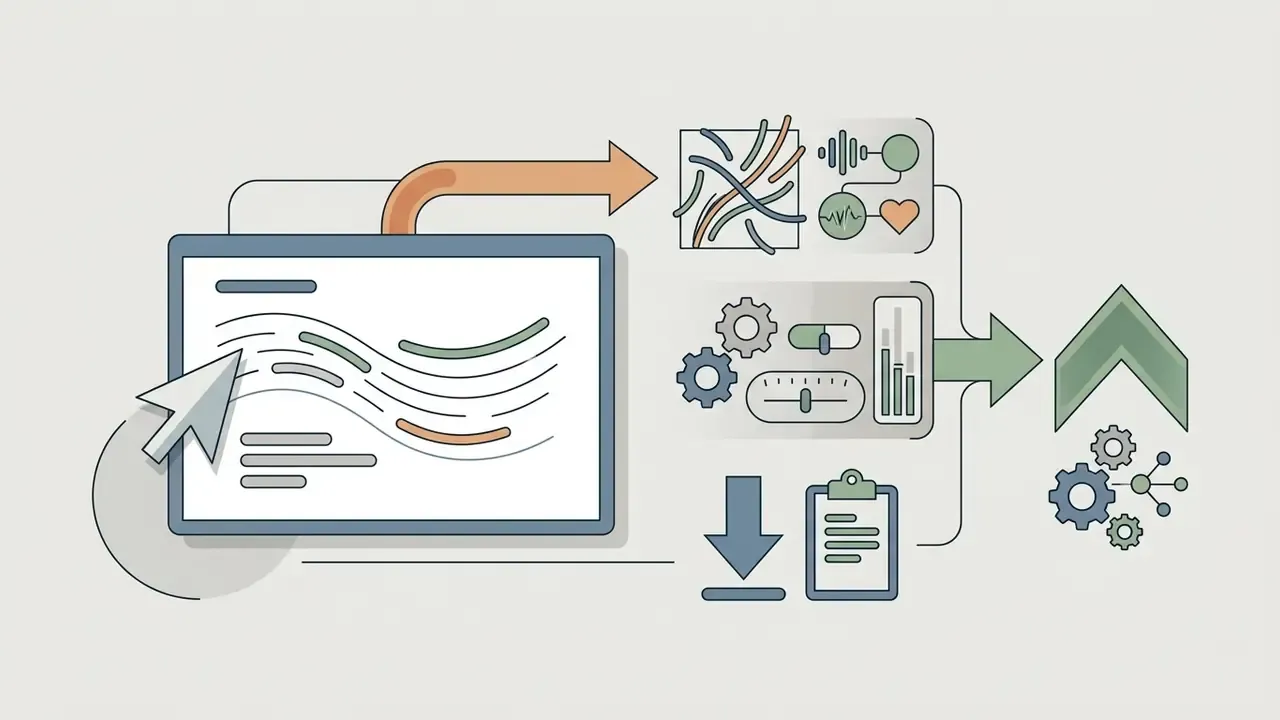
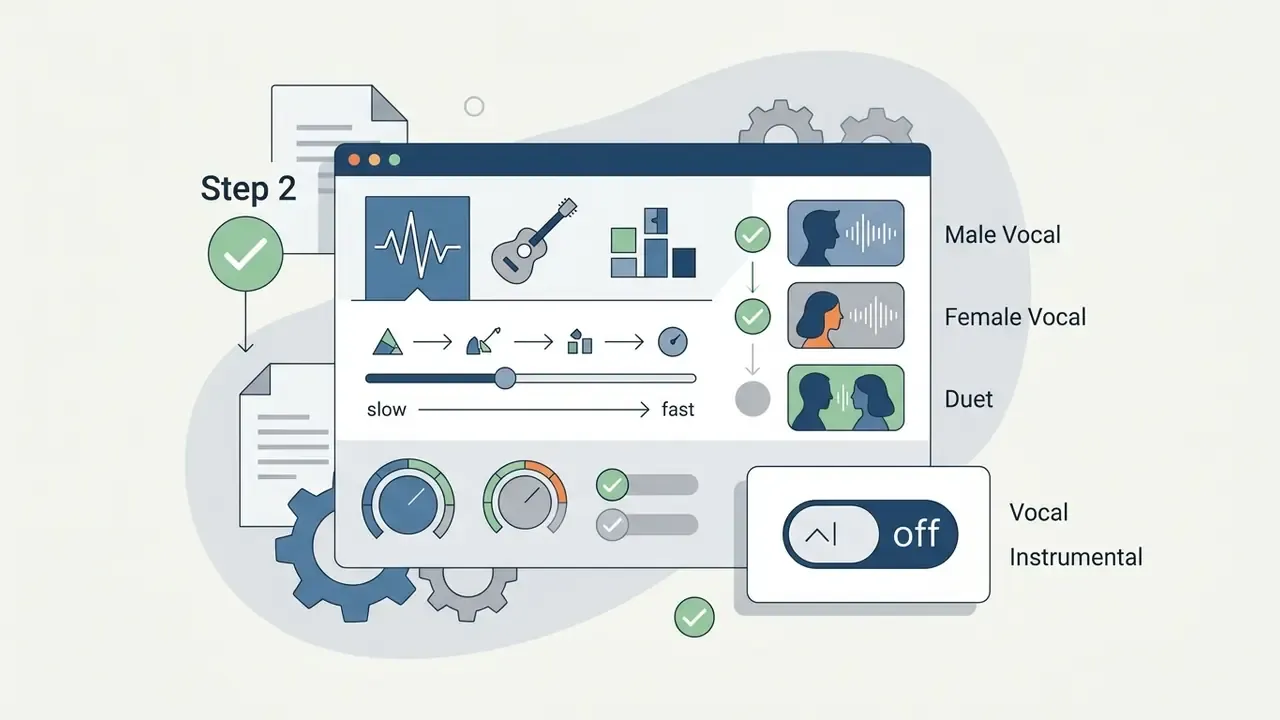
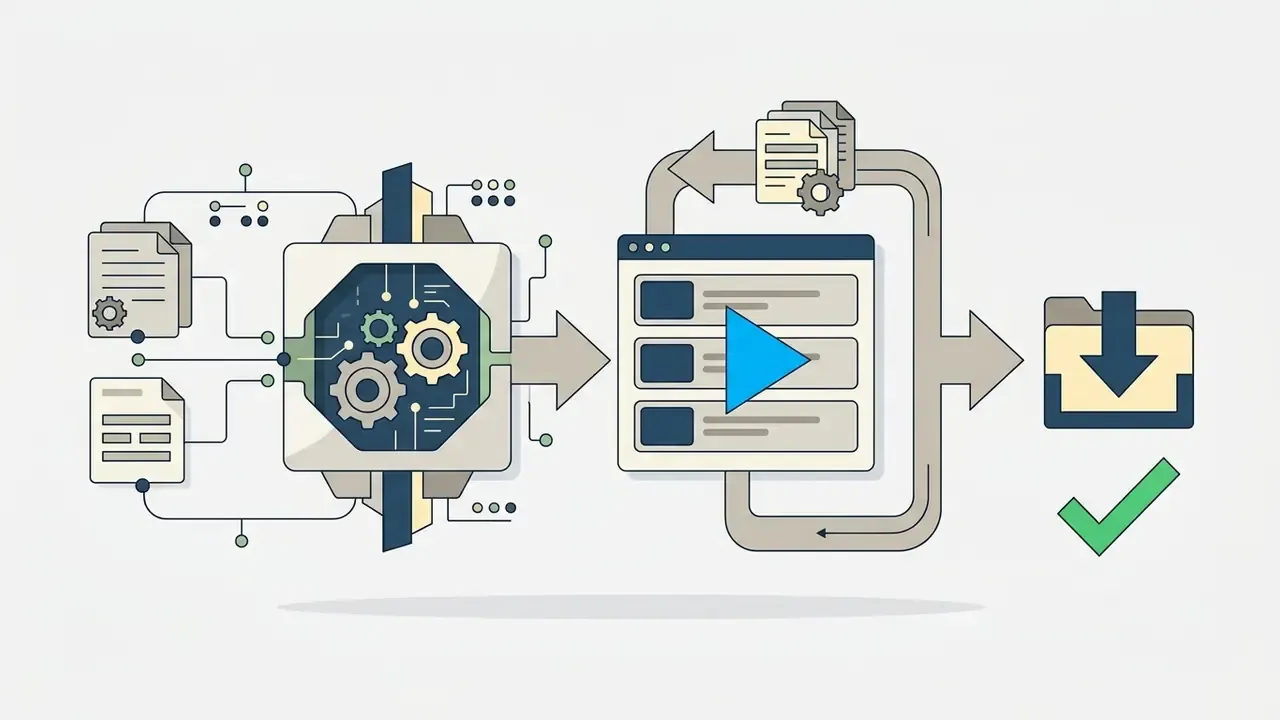
Creating a song with a free AI music platform follows a three-step sequence: enter descriptive text or lyrics, configure style and vocal parameters, then render the track for preview and audio download.
Enter a Music Description or Lyrics
The input stage means supplying a descriptive text prompt detailing sonic attributes, or pasting formatted lyrics into the editor. Effective prompts state genre, mood, instrumentation, and rhythmic cadence explicitly.
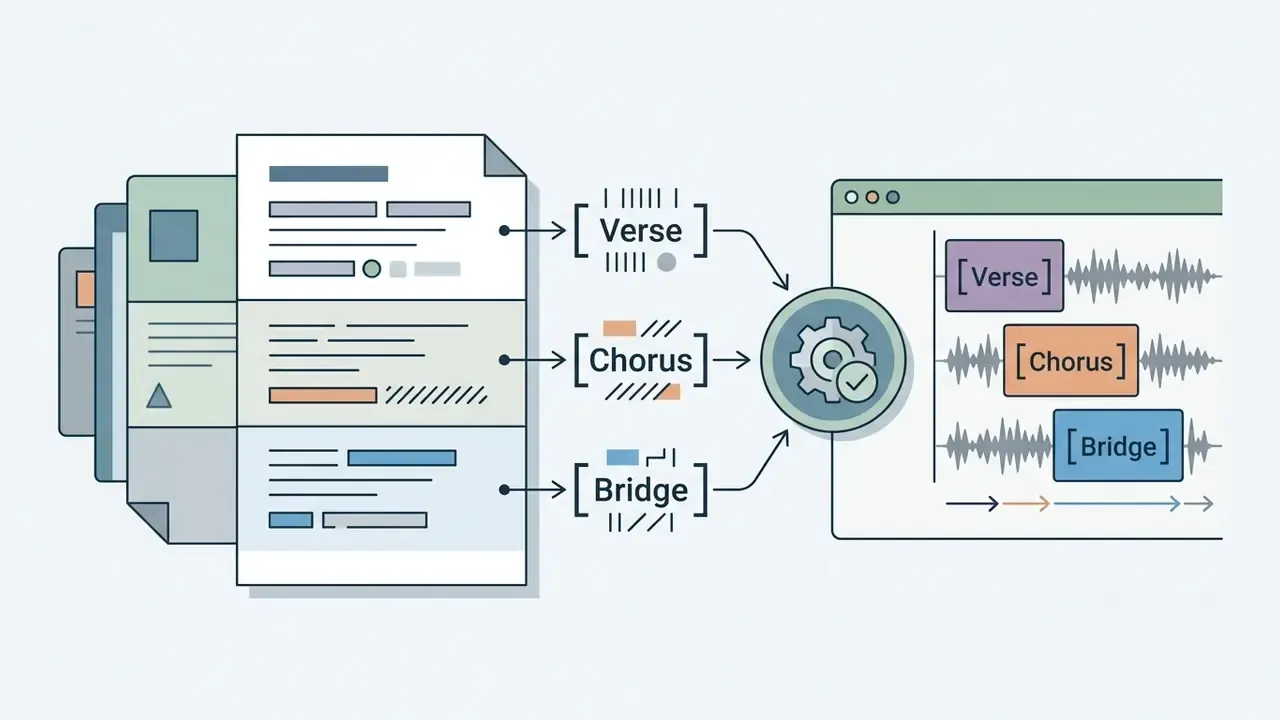
When entering lyrics into an ai music description generator or song builder, format the text into clear verses and choruses without non-lyrical annotations. Industry lyric-sheet guidance from BMI is blunt on this point: lyric sheets should be typed, error-free, and contain only lyric text, with no tempo, BPM, or key annotations mixed into the body. Where a platform supports arrangement markers, keep them in bracketed tags rather than prose.
A cross-cultural empirical study analyzing 200 real-world Udio prompts found that genre descriptors propagate most reliably from prompt to perceived audio output, while long narrative descriptions frequently produce semantic misalignment.
"Genre vocabulary propagates most reliably from prompt to perception; narrative-heavy descriptions are the strongest predictor of semantic misalignment."
Structured text, in short, helps the model read creative intent instead of guessing at it.
Choose Genre, Style, Voice and Song Format
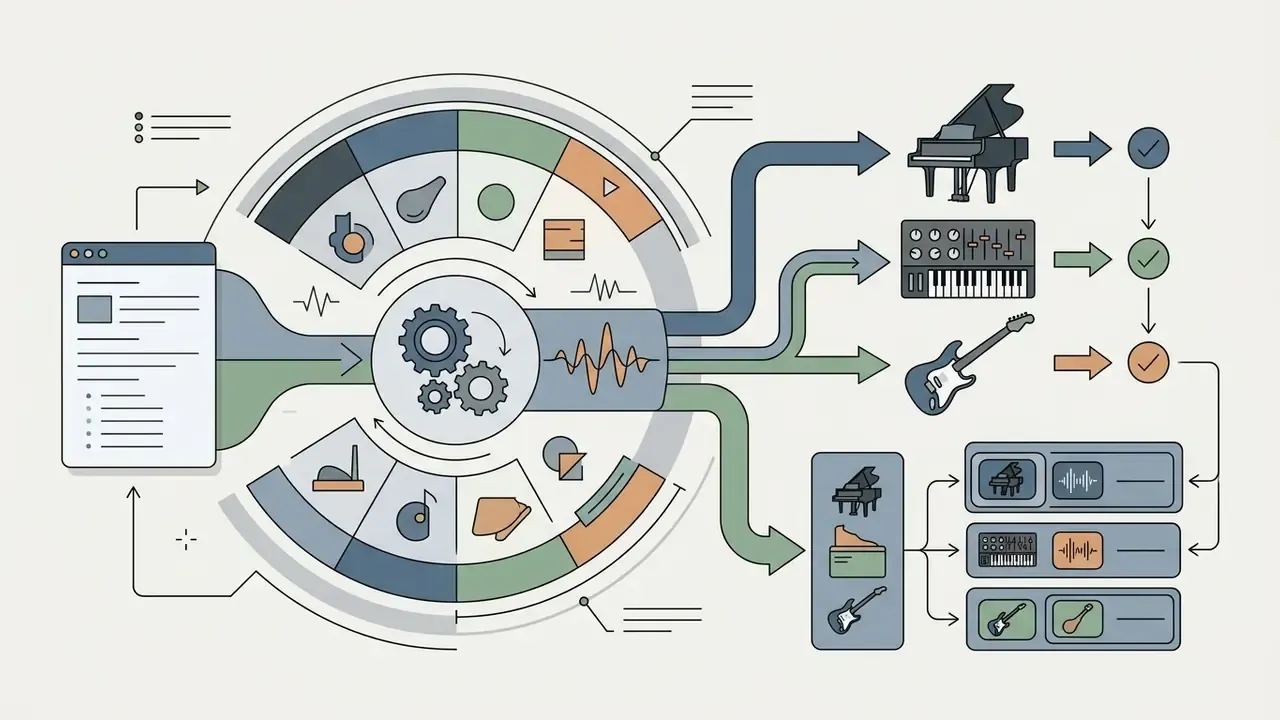
Format configuration lets users select musical genre, vocal timbre, instrumentation setup, and track length before generation. Options typically include acoustic piano, synthetic bass, rap drum patterns, or cinematic strings.
Vocal settings allow switching between male, female, or ensemble voices, or committing to instrumental-only output. Most tools combine drop-down menus with an open prompt box, keeping generation inside selected style guardrails. Music cataloguing practice offers a useful mental model here: genre/form/style, vocal type, ensemble structure, and instrumentation are four separate metadata dimensions, and treating them separately in the interface produces more predictable results than merging them into a single sentence.
Content teams integrating audio into video production often rely on structured format selection inside an ai free song maker or video editor software to keep audio consistent across brand assets. Increasingly they pair generated scores with AI video generators so that music, motion, and pacing are briefed from the same creative parameters.
Generate, Listen and Download Your Track
The generation phase uses neural inference to construct audio waveforms, with inline playback previews and file export on completion. Cloud generators process latents in seconds and return streamable previews directly in the browser.
During playback, evaluate prompt alignment and acoustic fidelity. If the track needs work, modify prompt parameters iteratively before committing to a final export. Once satisfied, download the finished audio, usually in MP3 or WAV depending on platform tier. On some free plans, downloads are disabled entirely and the track stays playable only inside the platform. Worth checking before you build a deadline around it.
For teams managing remote video workflows, reliable export options in an ai music generator free site smooth collaborative media production, especially where the audio feeds text-to-video AI pipelines that need locked-length music beds.
Advanced Post-Processing and Audio Editing Features
Complete generative audio platforms bundle post-production modules so assets can be refined without leaving the cloud workspace:
- AI Vocal Remover isolates or strips synthetic vocals from backing audio with studio precision for karaoke, sampling, or background scoring.
- AI Lyric and Genre Changer modifies lyric phrasing or transposes arrangement genres, turning a pop ballad into a lo-fi track for example, while preserving baseline melodic structure.
- Extended Length Generation extends initial 30-second clips into full compositions of up to eight minutes through continuous iterative latent prompting, so research-grade sample lengths are no longer a hard ceiling for finished deliverables.
- AI Song Covers re-synthesizes vocals using alternate synthetic timbres while holding the arrangement constant.
- Stem Export and Re-Mix sends vocals, bass, drums, and instrument layers into a DAW as separate files for professional mixing and mastering.
- Voice Reference and Cloning Inputs some engines accept a short reference clip (three seconds is a documented minimum in recent research) to condition vocal timbre. Treat this as high-risk under most corporate privacy policies unless the voice belongs to a consenting, contracted performer.
Editing capability is also the most reliable tell about whether a free plan is genuinely usable. Platforms that expose lyric replacement, cover generation, and vocal removal on the free tier are optimizing for evaluation. Platforms that lock every edit behind credits are optimizing for conversion.
How to Write a Better Prompt for an AI Music Generator
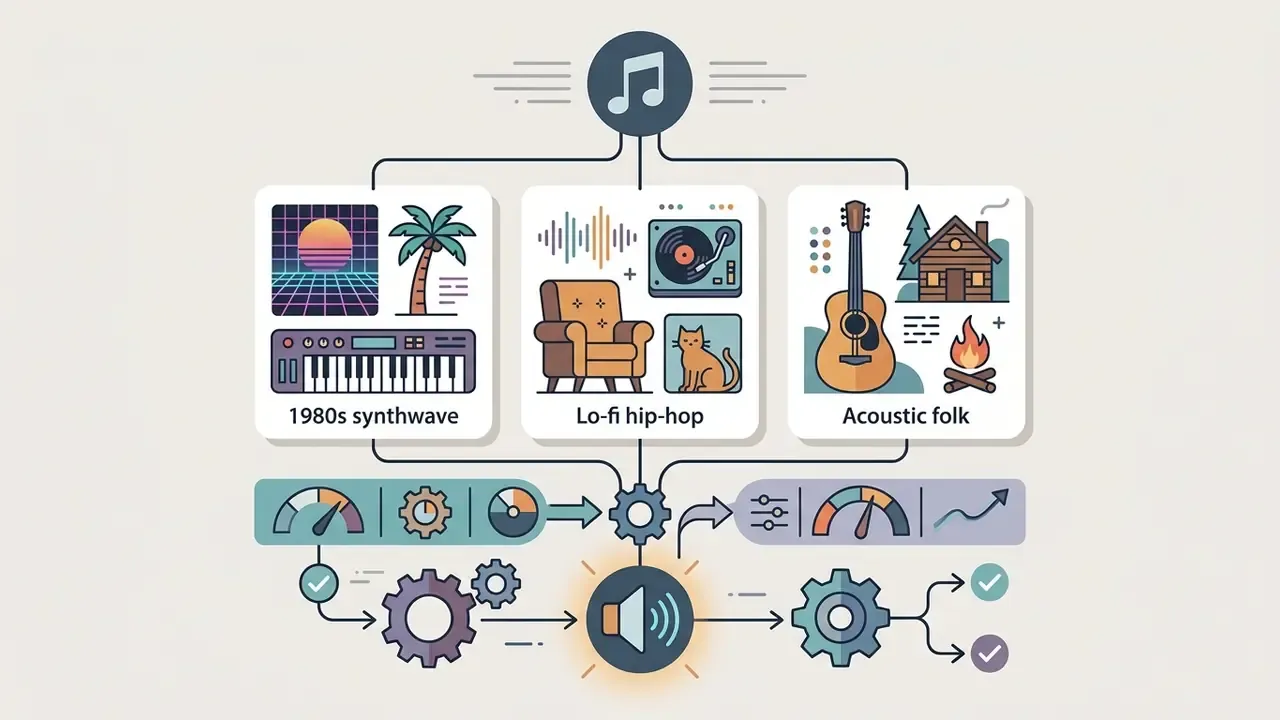
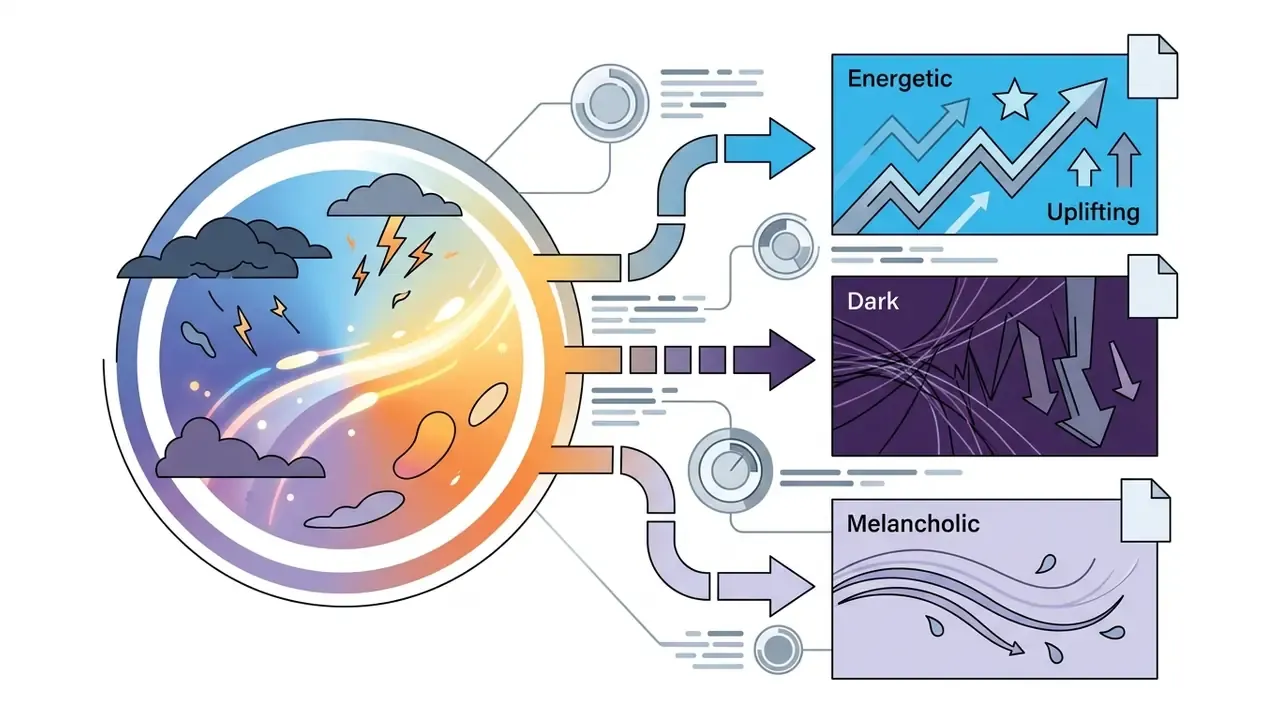
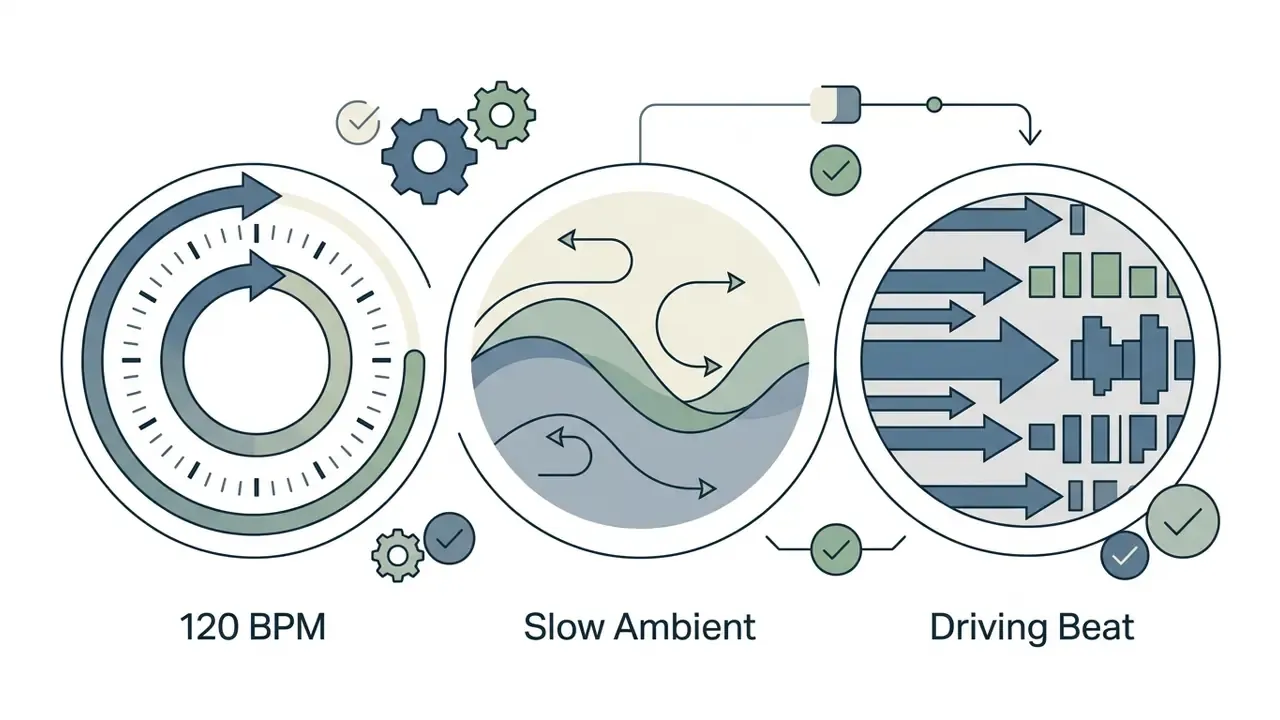
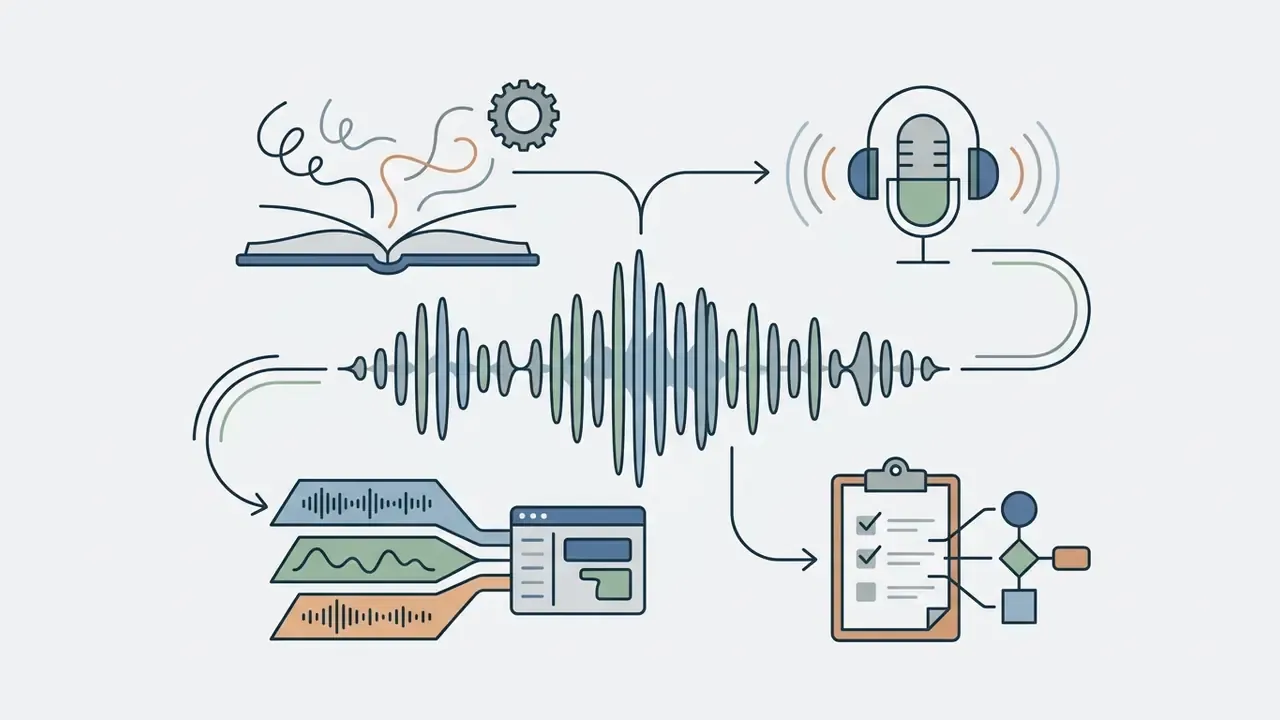
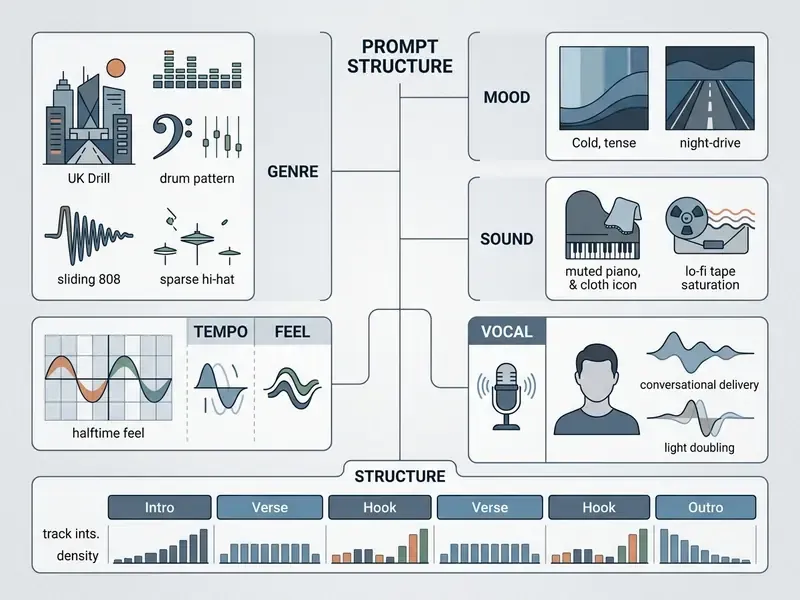
Effective musical prompts are built around specific genre tags, tempo indicators, instrumental detail, and explicit vocal direction rather than abstract narrative storylines.
Specify Genre, Mood and Sound
Precise prompts name foundational genre categories, emotional moods, and primary instruments, steering the model toward an accurate acoustic signature. Human-computer interaction research suggests the bottleneck usually sits on the human side of the interface, not in the model.
"Users struggled to express musical ideas in text, even though generative models outperformed retrieval when prompts were well formed."
Prompt-perception evidence points the same way: explicit acoustic descriptors beat narrative prose.
"Genre vocabulary transfers most reliably from prompt to listener perception; narrative description is the strongest predictor of semantic misalignment."
For example, asking an ai beat generator from text for a "dark, 90 BPM ai rap beat generator online free style track with heavy sub-bass and crisp snare hits" gives the model clear structural targets. Specifying "an upright piano with soft felt hammers in a minor key" in an ai piano music generator free prompt directs the synthesizer toward concrete timbral characteristics rather than a vague mood word.
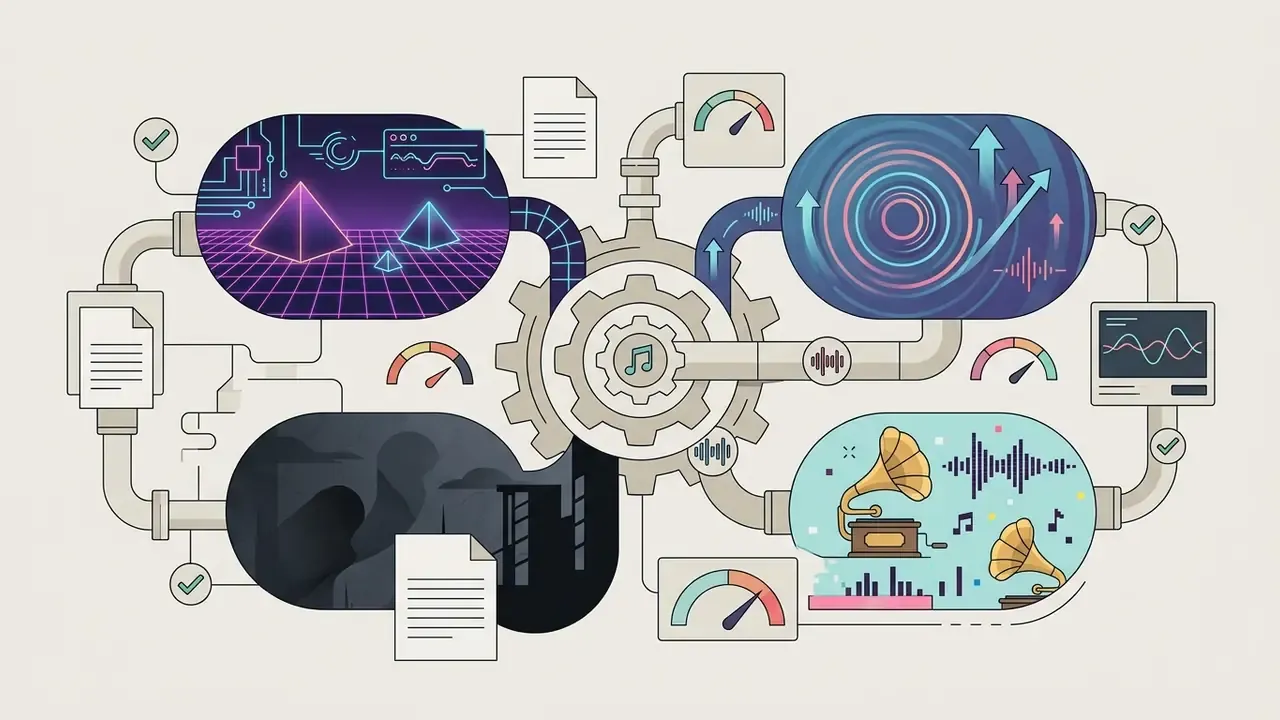
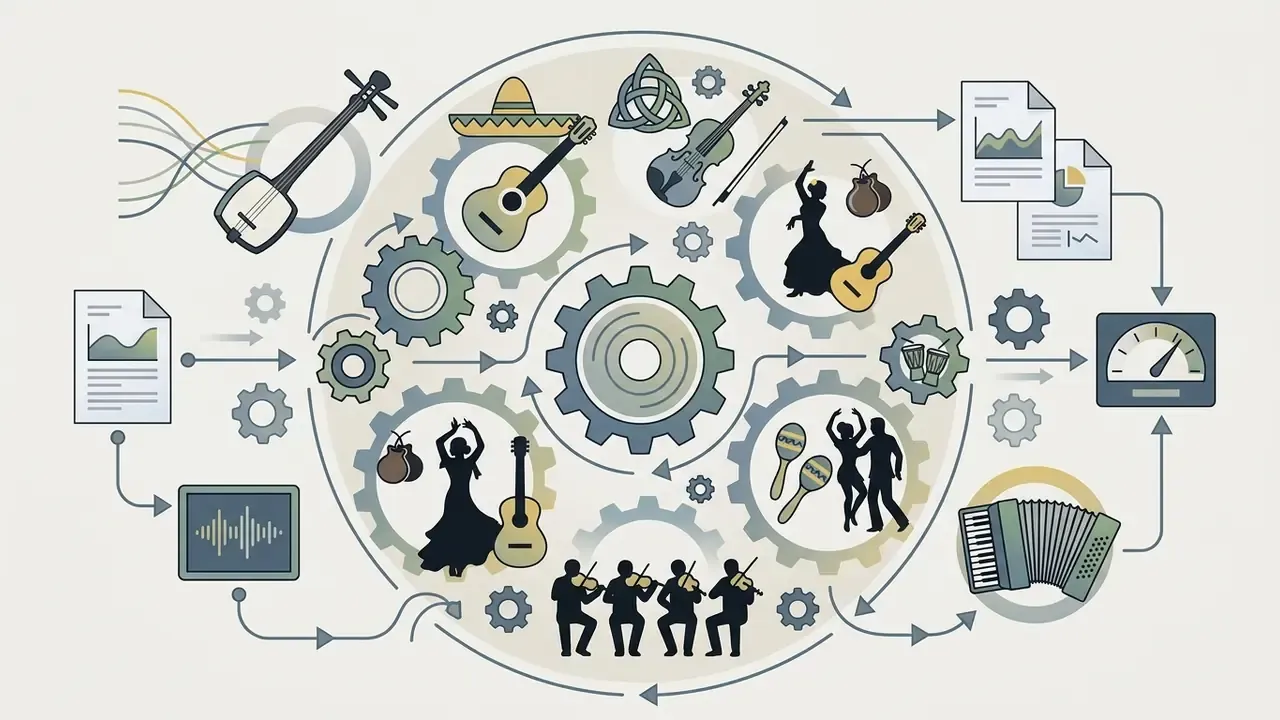
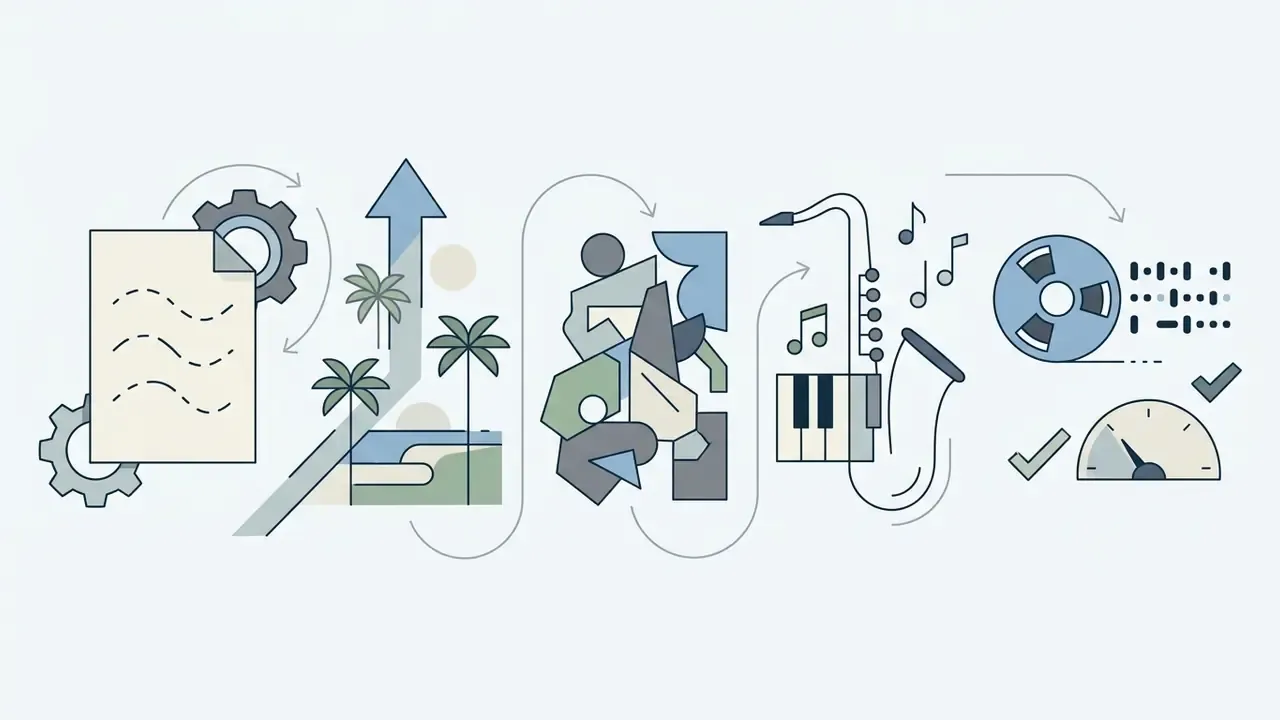
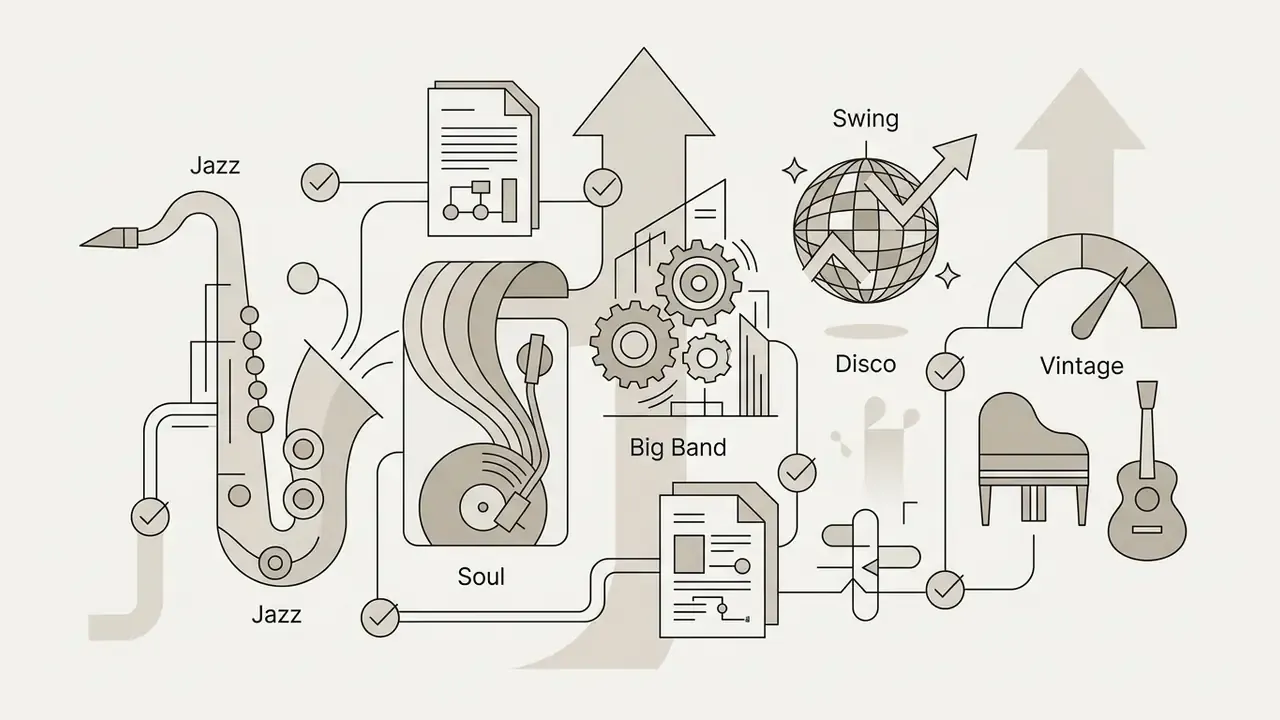
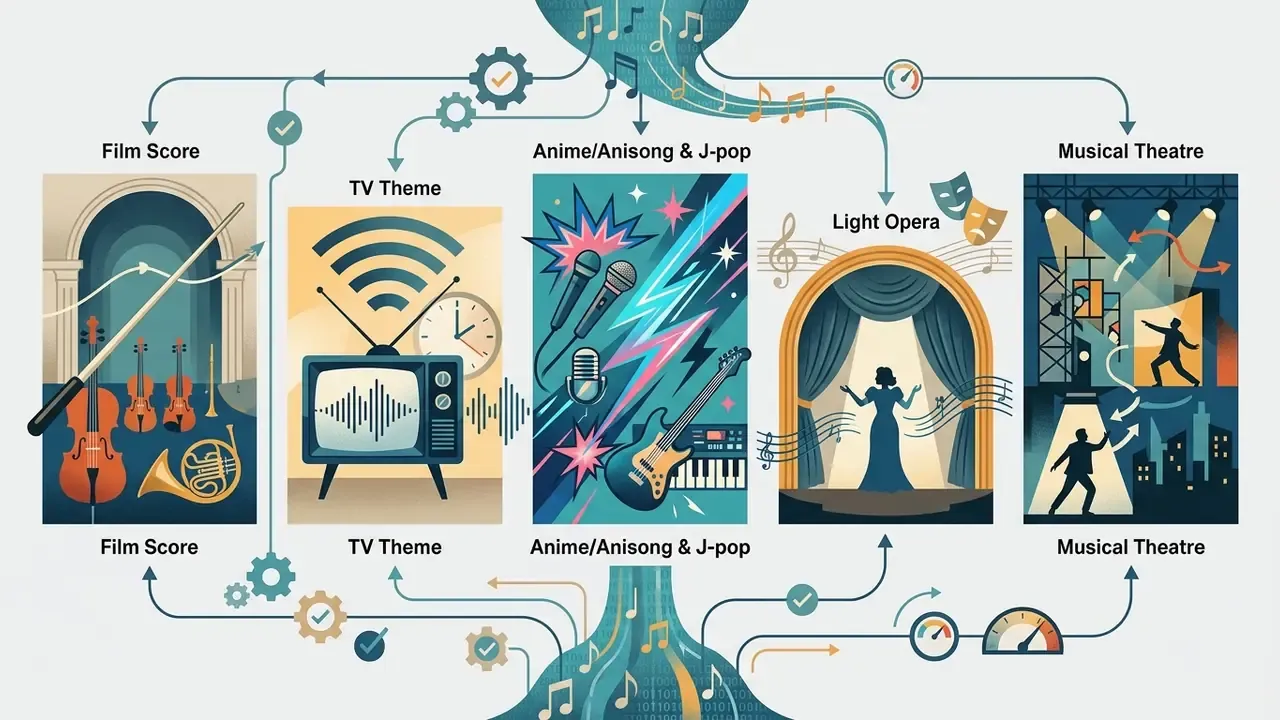
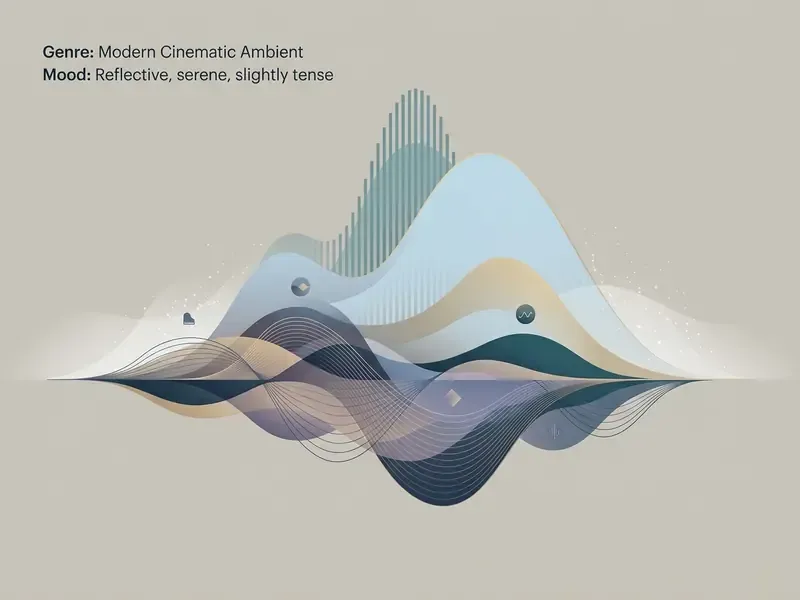
To sharpen accuracy further, use precise sub-genre taxonomies instead of broad buckets. Generative latent models respond with noticeably higher structural coherence when conditioned on specific micro-genres:
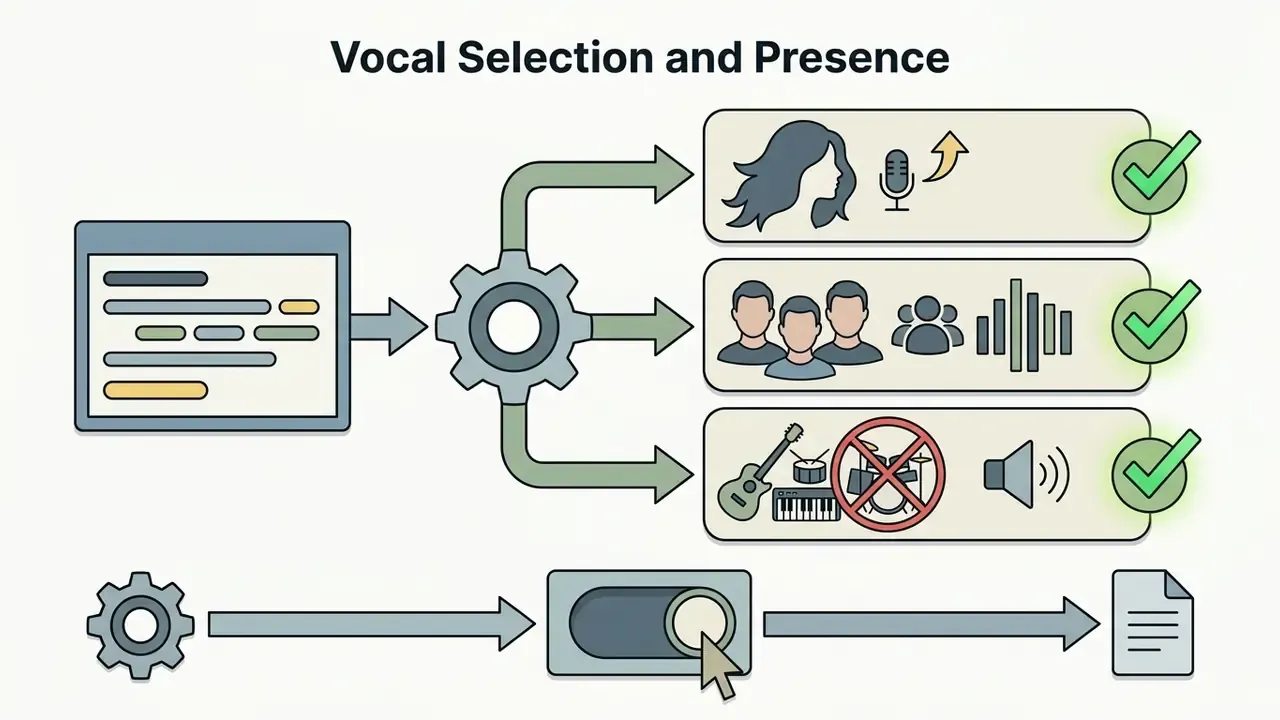
Tell the Generator Whether You Need Vocals or an Instrumental
State explicitly whether the output needs synthesized singing or an instrumental-only backing track. Skipping that line is how stray vocal artifacts end up under a corporate voiceover. According to Google AI's product documentation for the Lyria family, sung output requires clear vocal-style and language parameters, while an explicit "instrumental" directive suppresses vocal synthesis entirely (vendor documentation, not peer-reviewed research: https://ai.google.dev/).
API-driven systems often enforce boolean parameters. MiniMax's music endpoints separate a lyrics field for vocal content from is_instrumental=true for backing-only output, while other providers expose make_instrumental=true and vocal_only=true flags. When configuring an ai music generator create song from text prompt or ai music generator text to song tool, defining vocal presence up front saves both credits and review cycles.
Refine the Description and Generate New Variations
"Regularized latent inversion outperforms DDIM inversion for text-guided audio editing in both quality and prompt adherence."
Lyric-side defects respond better to targeted edits than to full rewrites. Melody-constrained lyric editing research (Reffly, arXiv 2024) applies syllable-count matching, consistency checks against preceding lines, and song-structure guidance to repair phrasing without destroying the arrangement. If a first generation lacks rhythmic balance, modify tempo keywords or edit lyric line lengths instead of scrapping the prompt. One more budgeting note: some vendors, Adobe Firefly among them, treat any prompt modification as a new generation rather than an in-place edit, which consumes credits and matters on a capped free plan.
Is an AI Song Creator Really Free?
Free AI song creators provide basic track generation at no upfront cost, then systematically restrict daily output, export resolution, commercial usage rights, and advanced feature access.
| Feature / Tier Parameter | Basic Free Access | Paid Subscription / Credit Tier |
|---|---|---|
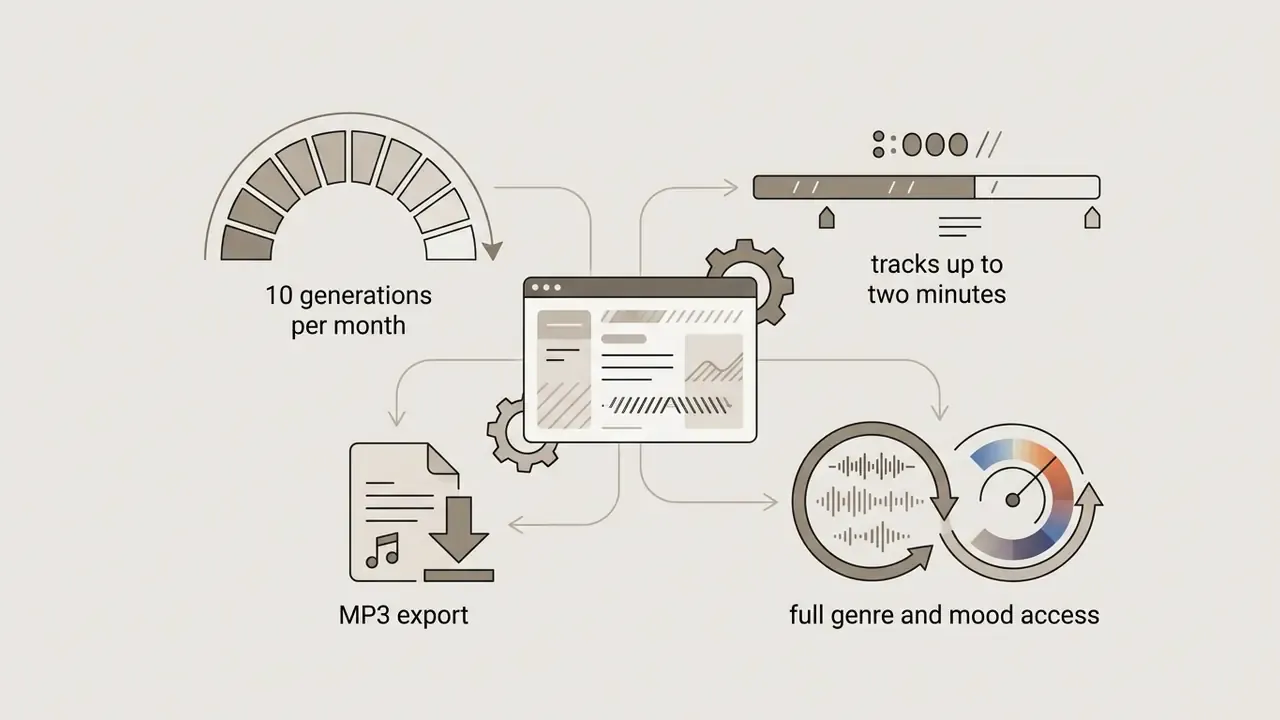
| Daily / Monthly Generations | Capped (for example 2 to 50 daily credits, roughly 4 to 10 songs) | High capacity (1,000+ monthly credits) |
| Vocal Synthesis Access | Standard vocal models included | Advanced vocal models and voice cloning |
| Download Audio Quality | Standard MP3 (128 to 192 kbps), 16 kHz on some voice engines, or no download at all | Lossless WAV (24-bit, 44.1 to 48 kHz), MP3, MIDI |
| Stem / Multi-Track Export | Usually unavailable (single mixed file) | Vocal, bass, drum and instrument stems |
| Track Length | Short clips or roughly 2-minute ceilings | Extended arrangements up to 8 minutes |
| Post-Processing Tools | Limited or credit-metered | Vocal remover, lyric changer, genre transfer, covers |
| Default Visibility | Often public by default on free plans | Private generation modes |
| Commercial Usage Rights | Strictly personal / non-commercial | Full commercial license included |
| Copyright and Ownership | Platform retains rights to machine-generated parts; some vendors state they own the output | Perpetual commercial grant during active subscription |
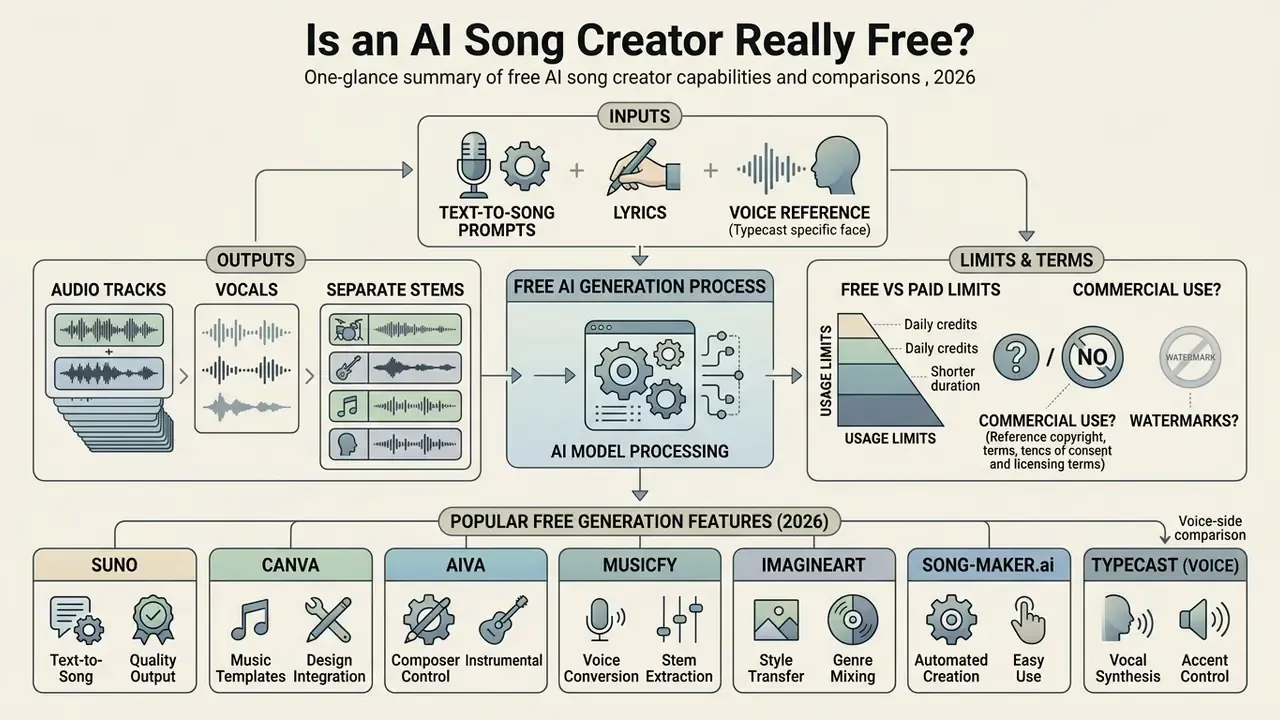
Read the table as a purchasing map rather than a feature list. The rows that decide most projects are stem export, download format, and the commercial rights line. Everything else is convenience. And note the ordering problem: the Commercial Deployment Compliance Checklist later in this guide defines when a free-tier track must be regenerated under a paid plan, which is information you want before choosing a tier, not after publishing.
What Free Generation Usually Includes
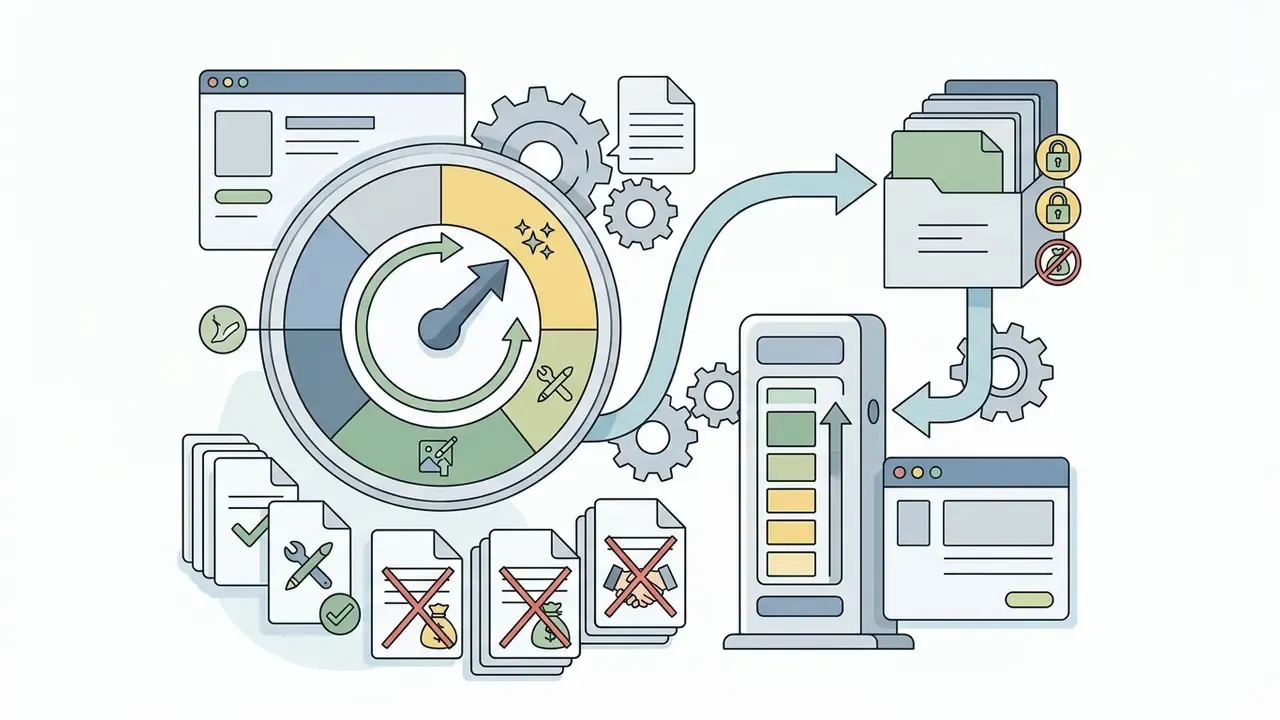
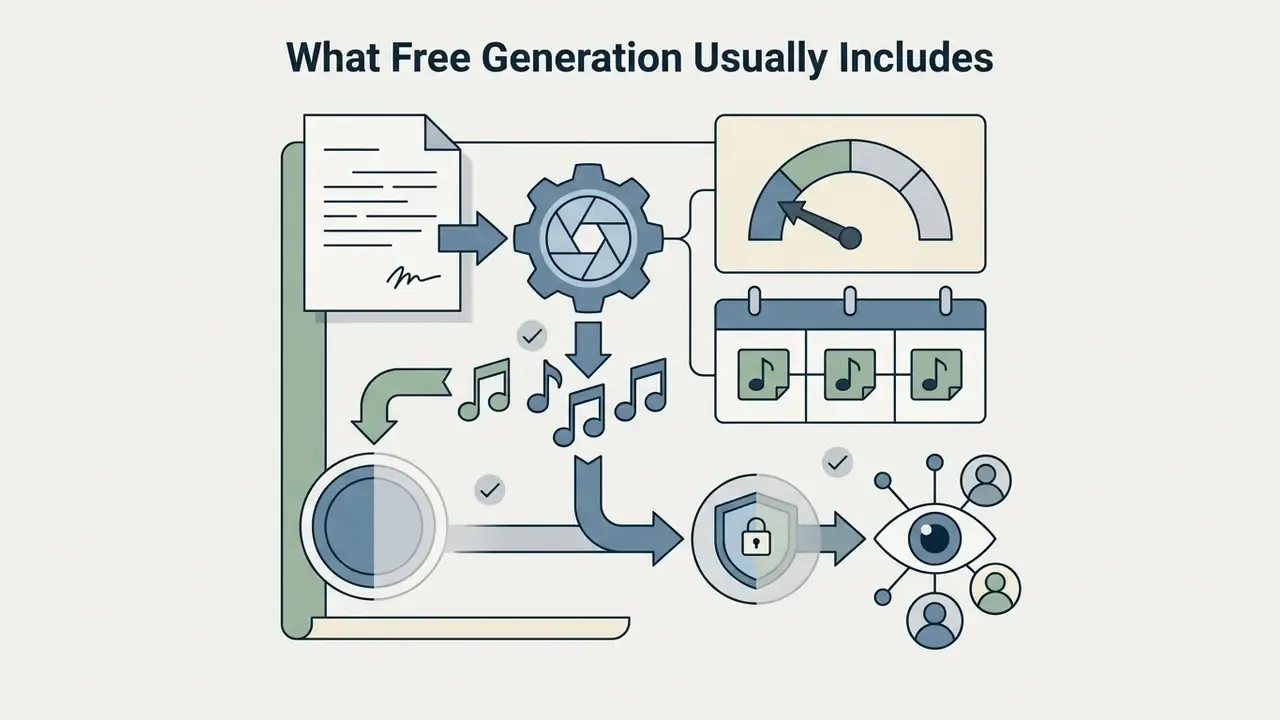
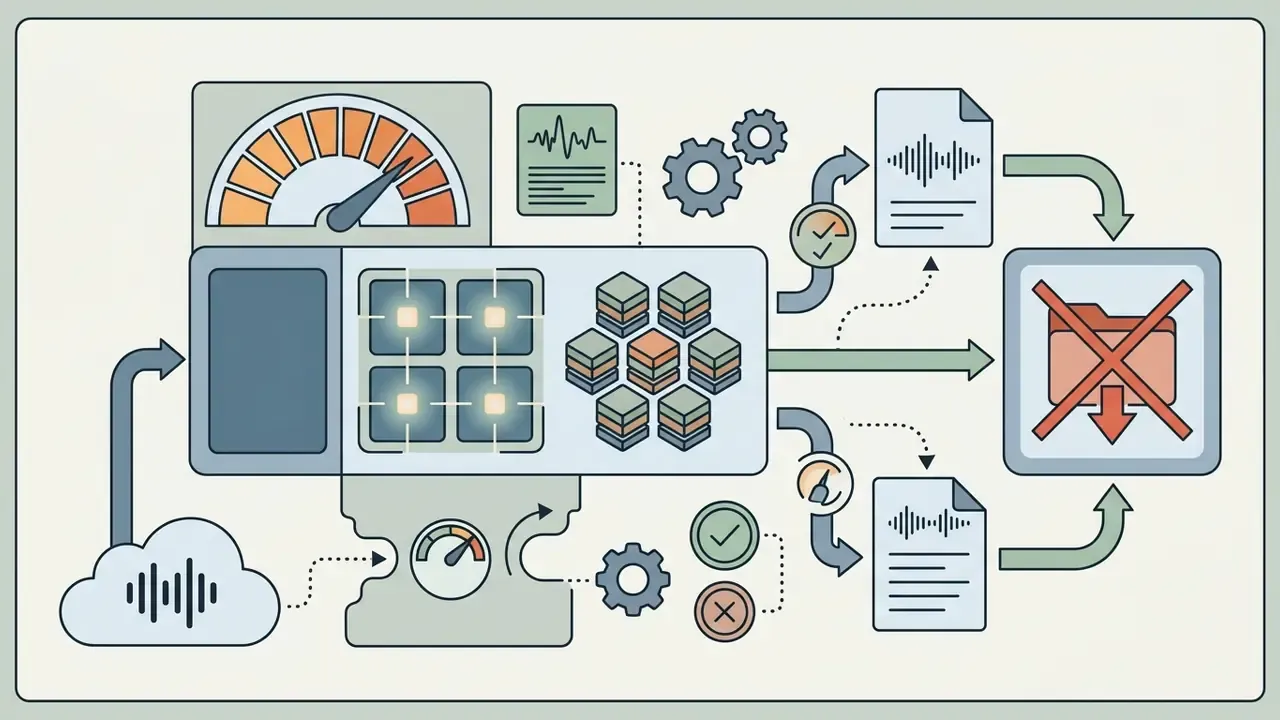
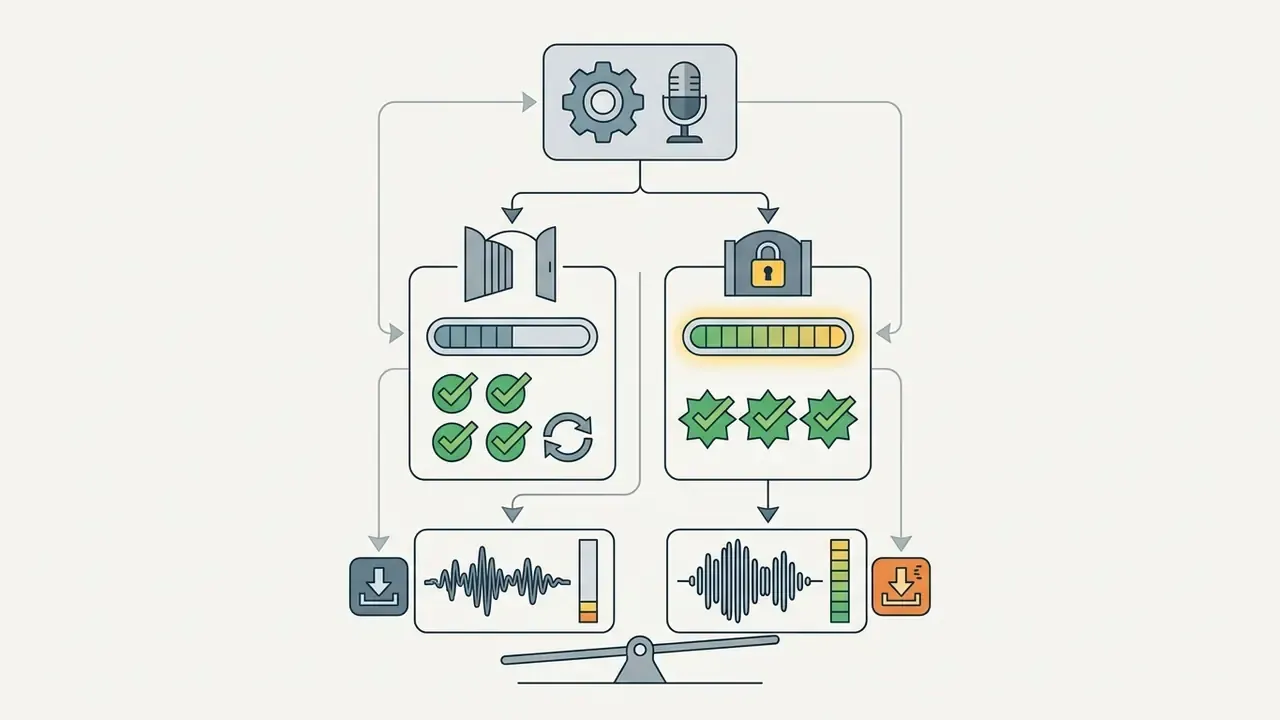
Standard free access typically covers daily credit quotas, basic text-to-song generation, browser preview playback, and personal non-commercial rights. Documented examples across vendor pricing pages show the spread, and it is wide:
Downloads, Credits and Pricing Plans
Platforms manage free usage through credit replenishment, cap high-resolution downloads, and price expanded quotas at roughly $8 to $24 per month; entry tiers as low as $6 per month appear on some vendor pages. Free tiers frequently impose hard download barriers, for instance limiting an account to a fixed number of lifetime audio downloads, or blocking export formats outright.
Paid plans unlock high-bitrate WAV exports, batch generation queues, stem isolation, extended track lengths, and commercial deployment rights. Teams evaluating software budgets can consult AI Media Pricing Guides to compare subscription costs across commercial creative platforms, or benchmark adjacent categories using the comparison of best free AI video generators when audio and video budgets are approved together.
A realistic total cost of ownership calculation should add four items to the sticker price: credits burned on failed generations, the cost of regenerating free-tier tracks under a paid plan once commercial intent is confirmed, storage and archiving of license certificates, and the review time needed to clear prompts of trademarked or third-party lyrical content. That last line item is usually the one nobody budgeted.
Free Access versus Commercial License
Free access grants personal, non-commercial evaluation rights. A commercial license grants contractual permission to monetize generated audio across public platforms. Legally, free access runs under restrictive end-user license agreements (EULAs) similar to Creative Commons Non-Commercial (CC BY-NC) frameworks, which prohibit integration into monetized YouTube videos, broadcast ads, or client deliverables.
The functional distinction is worth stating precisely. Free access is "free to obtain, restricted in use." A commercial license is "paid to obtain, contractually defined in use." A commercial agreement normally specifies the subscription period, authorized users, permitted uses, territory, and breach conditions. None of those exist in a free consumer tier, which is why "we used the free plan" is not a defensible answer during a rights review.
Converting generated audio into a commercial asset requires a paid tier that explicitly grants commercial usage rights, and in many EULAs that grant applies only to tracks generated during the paid term. Organizations navigating media tooling options can use the AI Media Commercial-Use Hub to review compliance frameworks across generative applications, or study a worked platform-level example in the Canva AI generator commercial-use overview.
Commercial Use, Copyright and Royalty-Free AI Music
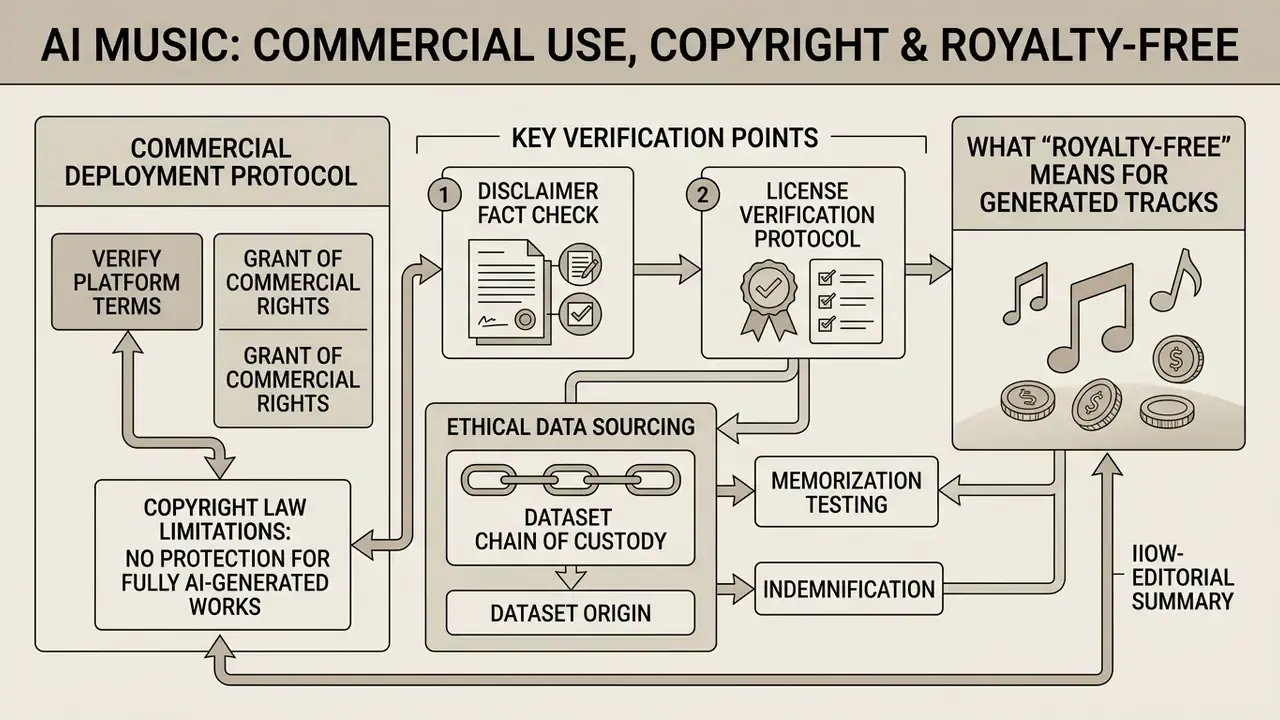
Commercial deployment of AI-generated music requires verifying that the platform's terms grant commercial rights, because copyright law generally denies protection to fully machine-generated audio.
Fact Check and License Verification Protocol
- Human authorship threshold: confirm whether human creative input (lyric composition, arrangement, stem mixing) is sufficient to claim copyright protection under local regulations.
- Platform TOS audit: verify that the track was generated during an active paid subscription explicitly granting commercial exploitation rights.
- License documentation: download and archive the official track license certificate alongside generated MP3 or WAV master files for audit compliance.
There is also a behavioural dimension that commercial teams underestimate when choosing between AI and human-composed music for brand assets.
"When listeners believed music was AI-generated, they imagined fewer narratives and rated them as less engaging, even when the music was human-composed."
The practical implication: disclosure strategy, not only licensing strategy, shapes audience response. Attribution decisions deserve a deliberate call rather than a default caption.
Ethical Data Sourcing and Dataset Chain of Custody
A critical and often skipped vector of enterprise compliance is model training provenance. Enterprise-grade AI audio platforms reduce third-party infringement risk by relying on ethically sourced training datasets, built from legally licensed audio libraries with verifiable chains of custody, so that generative models do not memorize or replicate protected proprietary recordings.
During vendor due diligence, request written answers to four questions:
- Dataset origin.Were training corpora purchased or licensed from platforms whose terms explicitly permit model training?
- Chain of custody.Can the vendor produce a documented trail linking each dataset to its licence?
- Memorization testing.Does the vendor test outputs for near-duplicate reproduction of training material?
- Indemnification.Does the commercial agreement include an infringement indemnity, and what is its cap?
Vendors that publish explicit "ethically sourced data" and "verifiable chain of custody" commitments give procurement something auditable. Vendors that publish only the phrase "100% copyright-free" give procurement nothing. That phrase, incidentally, is frequently imprecise in consumer marketing. See the ownership discussion below.
What "Royalty-Free" Means for Generated Tracks
Royalty-free AI music allows licensees to use generated audio without recurring per-play royalty fees, provided the usage stays inside the contractual licence scope. "Royalty-free" does not mean "copyright-free," and it does not mean exempt from contractual terms.
When a generator issues a royalty-free licence, it grants a non-exclusive right to synchronize audio into videos, podcasts, games, or marketing material without paying ongoing performance royalties.
"'Royalty-free' denotes a contractual permission to use, not a transfer of copyright; the platform generally retains rights in machine-generated components."
Restrictions on broadcast distribution, Content ID registration, resale, client transfer, and advertising use remain governed by the provider's specific EULA. Permitted scope also differs by licence tier inside the same platform, which is a common source of accidental breach when a project moves from pilot to campaign.
Who Owns AI-Generated Music?
Under current US Copyright Office guidance, purely AI-generated music without sufficient human authorship lacks copyright protection and cannot be owned in the traditional sense. Official rulings state that works generated solely from text prompts lack the human authorship required for registration (US Copyright Office policy guidance).
"The Copyright Office registers only human-authored elements; machine-generated works are not eligible for registration."
The Copyright Office also confirmed to the Mechanical Licensing Collective (MLC) that purely AI-generated compositions are ineligible for Section 115 statutory mechanical blanket royalties, since royalty distribution presupposes an owner of a copyrighted musical work. UK practice points the same direction: PRS for Music has stated that AI-generated lyrics and compositions lacking a human author or sufficient human intervention are not protected by UK copyright and cannot be registered. In the EU, the prevailing reading is stricter still, because only a natural person can be an author, so purely AI-generated works fall outside protection entirely.
"Human creativity is the sine qua non of copyrightability: documenting the authorial contribution is critical to defending rights against challenge."
License Checks Before Publishing Commercial Content
Before publishing generated music commercially, run a three-step licence verification: audit the platform TOS, confirm active subscription status at the time of creation, and download a written licence certificate.
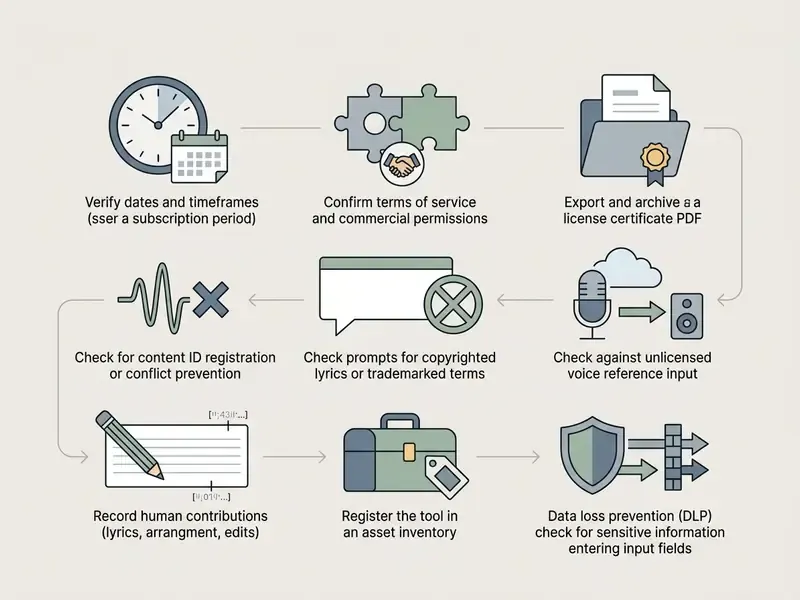
Documented audit trails are what protect an organization from retrospective copyright claims months after a campaign closes. Teams seeking developer-level audio integration guidance can consult the AI Media API documentation, and those benchmarking generative media API economics can review the Google Veo implementation and cost guide.
Applying Model Risk Discipline to Consumer Audio Tools
Skills, Roles and Who Actually Owns the Output
A governance standard needs a named owner, and in practice that owner is usually inside the video or content team rather than in risk. Worth mapping which role signs off on generated audio: a staff editor, a contractor, or a producer coordinating both. Teams building that map often review market context around a video editor job description, current video editor jobs requirements, distributed hiring patterns for video editor jobs remote, and benchmark ranges for video editor salary when deciding whether audio review stays in-house. The decision matters for evidence: an external freelancer's undocumented edits are much harder to reconstruct as proof of human authorship.
FAQ: Free AI Song Generators
Short answers to the operational questions that come up most: technical prerequisites, output formats, multilingual support, sound effects, and cloud data privacy.
Do I Need Musical Experience to Use an AI Song Maker?
No formal musical training or composition skill is required, since natural language prompts automate melody, harmony, and arrangement. Vendor documentation from Adobe, Suno and others states explicitly that no musical background, music theory, or DAW experience is needed to produce a first track. Human-computer interaction research at CHI 2024 supports the accessibility claim, with a nuance attached.
"CHI 2024 participants rated AI-generated and retrieved music equally, though generation took longer because prompt formulation was difficult." CHI Audio Study, ACM CHI Conference (2024). https://dl.acm.org/ Music theory is unnecessary. Basic vocabulary is not: knowing genre, tempo, instrumentation, and song structure produces clearer prompts and wastes fewer credits. Creators building adjacent production skills can review the YouTube video editor workflow guide for publishing-side requirements, or see how voice and music tooling combine in the AI voice generator guide.
Can a Free AI Song Generator Create Sound Effects (SFX)?
Yes. Contemporary diffusion-based audio models synthesize discrete atmospheric effects, environmental noise, and foley assets alongside musical tracks. Point the prompt at non-musical acoustic signatures, for example "heavy rain falling on a tin roof with distant thunder" or "high-speed roaring sports car engine pass-by", and the same canvas returns isolated royalty-free SFX clips. Typical use cases: game prototyping, podcast transitions, UI sounds, ambience beds under narration. Licensing logic is identical to music. Free-tier SFX are generally personal use only, and commercial deployment needs the paid grant plus an archived certificate.
Can I Export Separate Stems Instead of One Mixed File?
On platforms that support multi-track production, yes: vocal, instrumental, bass, and percussion layers export as individual files for mixing in a DAW. Stem export, MIDI export, and lossless WAV delivery are commonly reserved for paid tiers, while free plans return a single compressed stereo mix. If your workflow requires ducking music under voiceover, swapping a vocal for localization, or delivering a "backing" version next to a full performance version, treat stem availability as a hard selection criterion rather than a nice-to-have.
How Long Can an AI-Generated Song Be?
Research-grade models are usually demonstrated on 30-second samples, and commercial engines commonly render full arrangements of roughly two minutes in a single pass. Extended-length features push further by iteratively continuing the latent sequence, allowing compositions up to about eight minutes. Free tiers usually cap duration, with two-minute ceilings common, so long-form scoring for films, workouts, or game levels is effectively a paid-tier capability.
Can an AI Song Generator Create Songs in Different Languages?
Modern generators support multilingual text-to-song creation, synthesizing lyrics and vocal performances across more than 20 languages, including English, Spanish, Mandarin, French, Japanese, Korean, Portuguese, German, Italian, and Hindi. Platforms such as Supertone Play document cross-lingual vocal generation across 23 languages from a single training session.
"Techsinger delivers technique-controllable multilingual singing synthesis via flow matching, letting users specify vibrato or growl alongside language and style." Versatile Song Generation Framework (Techsinger), arXiv (2025). https://arxiv.org/ Advanced SVS engines like ACE Studio allow note-level language assignment, so multilingual lyrics can coexist in one composition, although lyrics usually have to be re-matched manually after a language change. When entering non-English lyrics, check spelling and preserve diacritics to keep phoneme pronunciation correct during vocal synthesis. Teams building multilingual campaigns often align these settings with their AI voice generator presets so narration and singing share a consistent accent profile.
Are My Generated Songs Private and Saved Online?
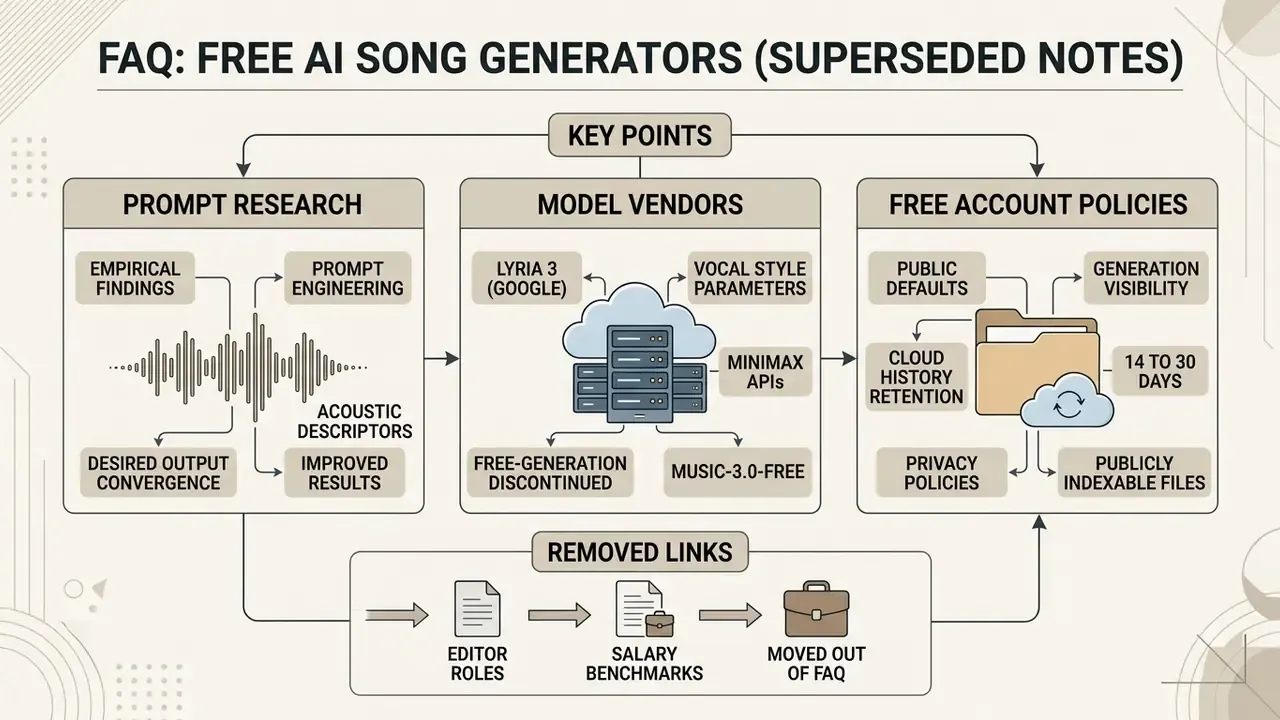
Updated: privacy and retention rules vary substantially by vendor and must be verified in the specific privacy policy rather than assumed. Documented policies in this market span a wide range. One vendor states that generated music is deleted from servers within 24 hours unless the user saves it. Another retains user-generated content for 14 days before permanent deletion. A third keeps generation results and uploaded source files in account history and may delete older files after roughly 30 days without notice. Several consumer platforms also make free-tier generations public by default, which is a material governance issue for corporate users. On training reuse, some vendor privacy policies reserve the right to use platform content to improve services. These are contractual terms rather than peer-reviewed findings, so treat any specific claim as vendor-dependent and confirm it in the current policy text before uploading sensitive material. Paid tiers typically offer private generation modes and persistent cloud storage. Practical guidance for organizations: never paste unreleased product names, embargoed campaign copy, or personally identifiable data into prompt fields; disable public sharing where the option exists; and record retention terms in the AI asset inventory. Users handling sensitive project audio should review vendor privacy documentation or contact platform support via AI Media Support and Troubleshooting to verify data retention and deletion policies.
Is Free AI-Generated Music Safe for Client Work?
Only when three conditions hold at once: the licence tier active at generation time grants commercial rights, the licence certificate is archived with the master file, and the human contribution is documented if you intend to claim any copyright in the result. If any condition fails, regenerate the asset under a paid plan rather than retro-fitting a licence to an existing free-tier file. Vendors differ on whether an upgrade retroactively covers earlier generations, and most do not.
Which Search Terms Point to the Same Tool Category?
Query wording varies more than the products do. Terms such as ai song and music generator free, ai music song generator free, ai music and song generator free, ai generator free music, ai create a song free, ai song creator for free, ai full song generator free, and the frequent misspelling ai song creater free all resolve to the same category: browser-based text-to-song and lyrics-to-vocals engines with a capped free tier. When comparing vendors, ignore the naming and compare four fields: credits per day, download format, stem availability, and the commercial rights clause.
Appendix A: Superseded Claims and Verification Notes
Additional Media and Analytical Resources
- Explore interactive cost calculators via AI Media Calculators.
- Compare top generative audio and video software models using the AI Media Comparison hub.
- Review export and compression trade-offs for finished media in the video compressor guide.
- Browse technical terminology and platform guides in the comprehensive site glossary.
Last updated in 2026, reviewed against current vendor documentation, US Copyright Office guidance, and 2023 to 2026 academic literature on text-to-music, singing voice synthesis, and prompt engineering.