Last updated: April 2026 | Reviewed by: Marcus Hale, Editorial Lead (media compensation and production economics)
Understanding compensation structures in media production means reading three things at once: verified labor statistics, market demand, and employment models. Evaluating a video editor salary starts with one distinction that most salary pages blur, the gap between payroll employment data and independent contracting rates across industries.
Miss that distinction and your offer letter is off by 20% in either direction.
Executive Summary
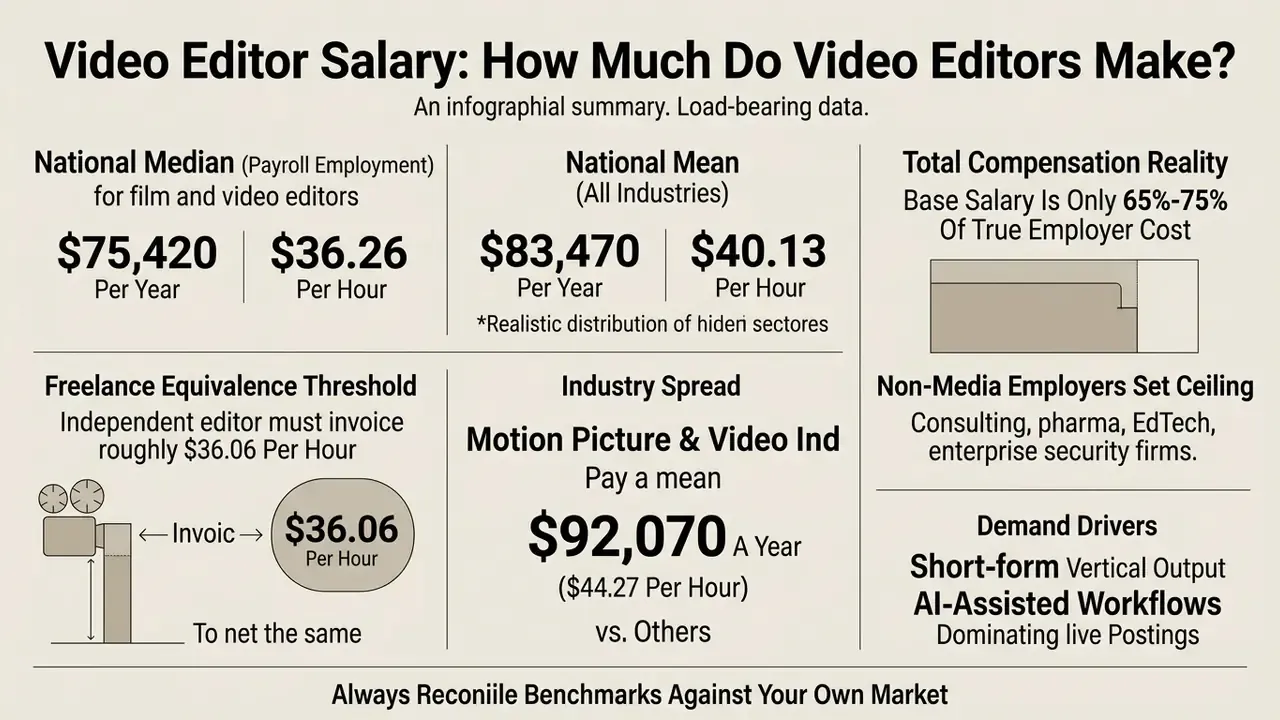
How to Read the Numbers on This Page
Two datasets dominate every salary conversation about video editing, and they are not interchangeable.
The first is federal payroll data. The BLS Occupational Employment and Wage Statistics program surveys employers, counts W‑2 wages, and excludes independent contractors entirely. It is conservative, slow to refresh, and highly defensible in a compensation committee.
The second is marketplace data. Indeed, Glassdoor, ZipRecruiter, and Payscale aggregate job postings and self-reported pay. Those numbers arrive faster, include bonuses and equity, and skew toward whoever bothered to submit a figure.
Which one should you use? Both, for different jobs. Use BLS percentiles to set base-pay bands and internal equity. Use marketplace data to price contractors and to sanity-check what a competitor is actually advertising this quarter. Mixing the two inside a single band is the most common budgeting error we see, and it inflates offers by roughly 15% to 25%.
How Much Does a Video Editor Make per Year and per Hour?
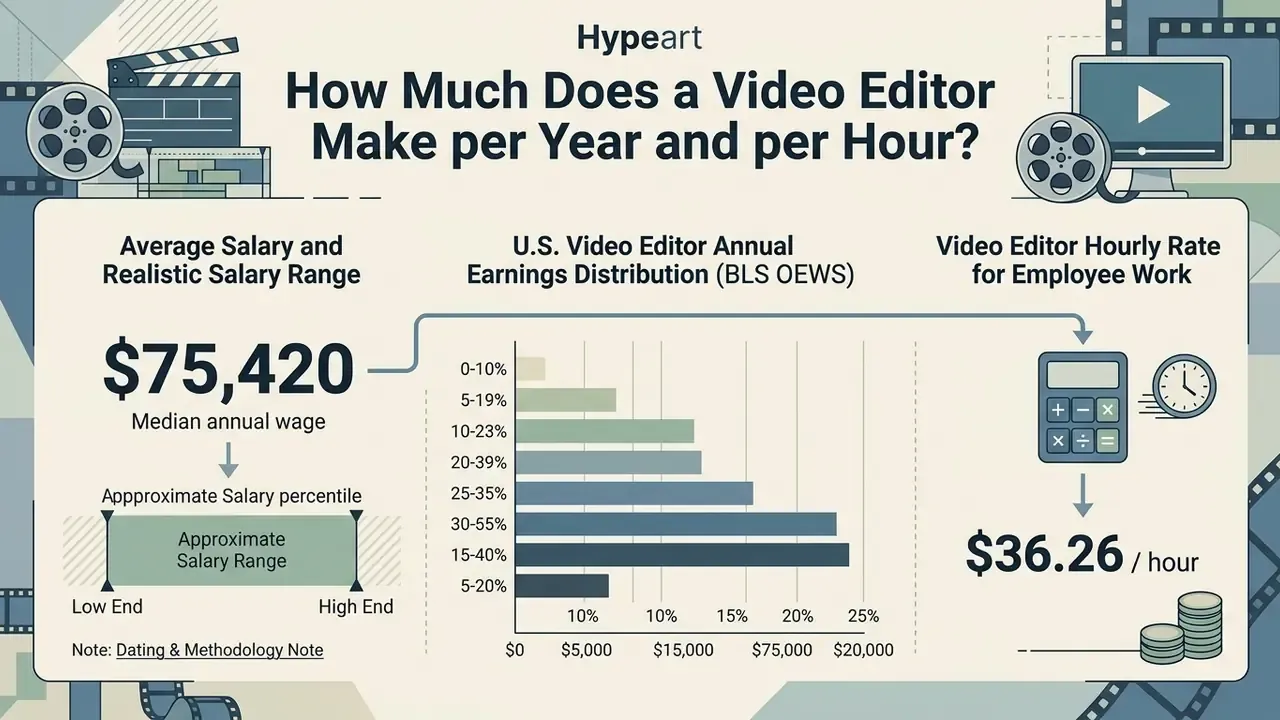
A video editor in the United States earns a median annual wage of $75,420, which translates to approximately $36.26 per hour for full-time payroll roles, according to the U.S. Bureau of Labor Statistics (BLS) Occupational Outlook Handbook (May 2025 update). Broader national market data shows a mean annual wage of $83,470 ($40.13 per hour) across all industries, reflecting higher compensation tiers in major production hubs and specialized sectors.
Video editor pay by employment context and sector
| Employment Context / Sector | Median Hourly Wage (USD) | Mean Hourly Wage (USD) | Median Annual Wage (USD) | Mean Annual Wage (USD) | Primary Data Source |
|---|---|---|---|---|---|
| All Industries (National) | $32.02 | $40.13 | $66,600 | $83,470 | U.S. BLS OEWS (May 2023) |
| All Industries (National, updated benchmark) | $36.26 | n/a | $75,420 | n/a | U.S. BLS OOH (May 2025) |
| Motion Picture & Video Industries | $36.33 | $44.27 | $75,566* | $92,070 | U.S. BLS OEWS (May 2023) |
| Sound Recording Industries | $29.83 | $38.95 | $61,046* | $81,020 | U.S. BLS OEWS (May 2023) |
| Educational Services (Private) | $31.14 | $32.46 | $64,771* | $67,510 | U.S. BLS OEWS (May 2023) |
| Burlington-South Burlington, VT Metro | $28.17 | $26.91 | $58,586* | $55,970 | U.S. BLS Area Estimates (May 2023) |
| High-Paying Metro Market (LA / NYC) | $36.82 | $38.06 | $76,586* | $79,170 | U.S. BLS Area Estimates (May 2023) |
| Freelance Video Editors | $25.00–$58.00 | $31.60 (ZipRecruiter) | $50,000–$65,728 | Variable | ZipRecruiter and marketplace surveys (Sept. 2026) |
*Calculated using the standard BLS full-time equivalent benchmark of 2,080 work hours per year (hourly rate × 2,080).
Dating and methodology note: rows labeled May 2023 come from the OEWS wage file, which is survey-based employer payroll data. The May 2025 median comes from the Occupational Outlook Handbook occupational page. Freelance rows are marketplace-derived (Indeed and ZipRecruiter, last refreshed September 2026) and are not payroll statistics at all.
Average Salary and Realistic Salary Range
The average salary for video editor professionals nationwide sits at $83,470 per year, but the realistic salary range spans from under $39,000 to over $154,000 annually. The 10th percentile of earners makes approximately $38,990 per year, while the 25th percentile earns $48,920. At the other end, the 75th percentile receives $101,910, and the 90th percentile reaches $154,480 annually.
That dispersion is the real answer to how much do video editors make a year: structure matters more than any single average. How much a video editor makes at the lower boundary (around $39,000 in base salary) generally reflects entry-level editing or local educational assembly work. At the upper boundary ($145,900 to $154,480), senior editors handle high-budget theatrical releases, national ad campaigns, or complex post-production pipelines with real financial exposure attached.
U.S. Video Editor Annual Earnings Distribution (BLS OEWS)
| Percentile | Annual Wage (USD) | Hourly Equivalent | Typical Profile at This Tier |
|---|---|---|---|
| 10th | $38,990 | $18.74 | Assistant editor, local or educational assembly, entry-level agency support |
| 25th | $48,920 | $23.52 | Junior in-house editor, regional broadcast, social content assembly |
| 50th (Median) | $66,600 – $75,420 | $32.02 – $36.26 | Staff editor with independent delivery ownership |
| 75th | $101,910 | $48.99 | Senior editor, motion-graphics capable, commercial and streaming pipelines |
| 90th | $154,480 | $74.27 | Lead or finishing editor, theatrical post, enterprise media architecture |
Annual income distribution for U.S. video editors. Source: U.S. Bureau of Labor Statistics, OEWS National Occupational Estimates (May 2023) and Occupational Outlook Handbook (May 2025). The 90th-percentile wage is 3.96 times the 10th-percentile wage, a $115,490 spread inside one occupational code.
Video Editor Hourly Rate for Employee Work
The standard per hour rate for salaried employee editors is derived by dividing annual compensation by 2,080 working hours. Under Fair Labor Standards Act (FLSA) nonexempt employee rules, regular hourly earnings average $32.02 at the median, with overtime compensated at 1.5 times the regular rate for hours worked beyond 40 in a workweek. The U.S. Department of Labor's conversion method is mechanical: divide the salary by the number of hours the salary is intended to compensate, then multiply that regular rate by 1.5 for qualifying overtime hours. For monthly or semi-monthly pay structures, the salary is first allocated across regular working days in the period before the hourly rate is derived.
When evaluating full time video editor salary structures, hourly conversions allow a direct comparison between payroll roles and contract positions. Knowing how much do video editors get paid per hour also helps creative directors allocate project budgets with some precision, and the same math underpins the video editing tools and workflows that decide how many billable hours a single deliverable actually consumes.
One example worth keeping in mind. A medium-scale corporate marketing team converted two contractor roles into internal positions at a base salary of $72,000 per year plus benefits. Turnaround times for internal assets stabilized within a quarter, and the team gained a predictable hourly baseline of $34.61, which removed the operational friction caused by variable contractor invoice structures. Not glamorous. Very useful at budget review.
To compare pricing structures across wider media formats, consult our AI Media Pricing Guides and the side-by-side AI Media Comparison Matrices.
Highest-Paying Companies and Cities for Video Editors
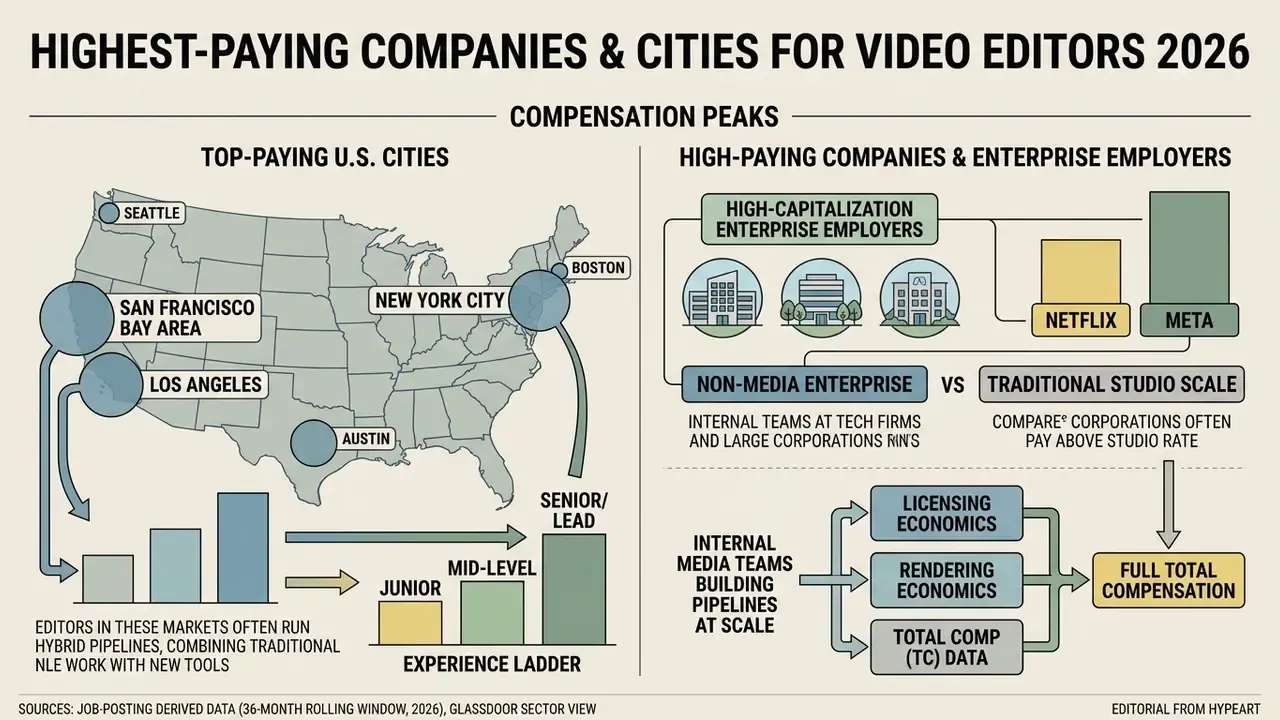
Compensation peaks in major media markets and among high-capitalization enterprise employers. Leading entertainment studios, streaming platforms, and tech corporations offer packages well above national averages. The surprise in the 2026 data is that the highest posted figures increasingly come from outside traditional media.
Top-Paying U.S. Metro Markets for Video Editors
| Rank | Metro Market | Reported Hourly Rate | Annualized Equivalent (2,080 hrs) | Primary Demand Driver |
|---|---|---|---|---|
| 1 | Austin, TX | $55.44 – $56.31 | $115,315 – $117,125 | Enterprise tech, SaaS product marketing, creator economy |
| 2 | Washington, DC | $42.00 – $48.50 | $87,360 – $100,880 | Government, public affairs, association media |
| 3 | New York, NY | $39.36 – $45.00 | $81,869 – $93,600 | Advertising, broadcast, finance and brand content |
| 4 | Los Angeles, CA | $38.50 – $50.00+ | $80,080 – $104,000+ | Motion picture and streaming post-production |
| 5 | San Francisco, CA | $38.50 – $50.00+ | $80,080 – $104,000+ | Platform tech, product launch, B2B campaigns |
| 6 | Chicago, IL | $36.00 – $38.99 | $74,880 – $81,099 | Agency work, CPG brand content |
Highest-paying U.S. cities for video editors, cross-referenced from BLS area estimates and Indeed metro salary pages (2026 refresh). The Austin figure represents the senior and tech-sector upper band, not an entry-level market median. Indeed's aggregated Austin average annualizes to roughly $135,412 for senior postings.
Editors in these markets are routinely expected to run hybrid pipelines that combine traditional NLE work with generative asset production, so benchmark your stack against the best AI video generators before you negotiate a senior rate. Capability claims land better when they map to tools the hiring manager already licenses.
Enterprise and Non-Media Employers Paying Above Studio Scale
Netflix and Meta remain visible high payers. But consulting firms, biotech, EdTech, utilities, and fintech now post competitive or higher figures for editors who can handle regulated, executive-facing, or product-critical content.
| Company / Enterprise Employer | Industry Sector | Reported Annual Salary Range (USD) | Primary Content Deliverables |
|---|---|---|---|
| Dahl Consulting | Enterprise consulting | $180,000 – $195,489 | Executive media and corporate communication |
| Alexion Pharmaceuticals | Healthcare and biotech | $101,000 – $185,000 | Scientific visualizations and internal comms |
| Concorde Education | EdTech and institutional | $150,000 – $167,802 | High-production curriculum video assets |
| MERCOR / Verkada | Tech and security | $145,000 – $161,600 | Product launches and B2B marketing campaigns |
| Netflix / Meta | Streaming and social media | $148,500 – $180,000+ | Premium entertainment and original platform content |
| Merck / Organon | Pharmaceuticals | $84,000 – $151,000 | Regulatory video assets and brand marketing |
| Pacific Gas & Electric / SoCalGas | Utilities | $80,000 – $133,000 | Safety, compliance, and field training media |
| Coinbase | Fintech and crypto | $79,000 – $134,000 | Platform education and motion design ads |
Sources: Indeed employer salary pages (job-posting derived, 36-month rolling window, 2026) and Glassdoor company ranges (self-reported total pay, February 2026). Ranges include additional pay such as bonuses and profit-sharing where reported, so they are not directly comparable to BLS base-wage medians.
Glassdoor's sector view reinforces the same pattern. Government and public administration ($80,558), information technology ($72,211), telecommunications ($70,802), personal consumer services ($68,741), and manufacturing ($67,118) all sit at or above the national median for editors. Why? Because those employers pay for compliance-safe output and predictable turnaround, not for auteur sensibility.
For internal media teams building these pipelines at scale, licensing and rendering economics matter as much as headcount. Enterprise render endpoints documented in our Google Veo implementation guide are now a standard line item in post-production budgets, alongside seat licenses and storage.
Full-Time Video Editor Salary vs. Freelance Video Editor Rates
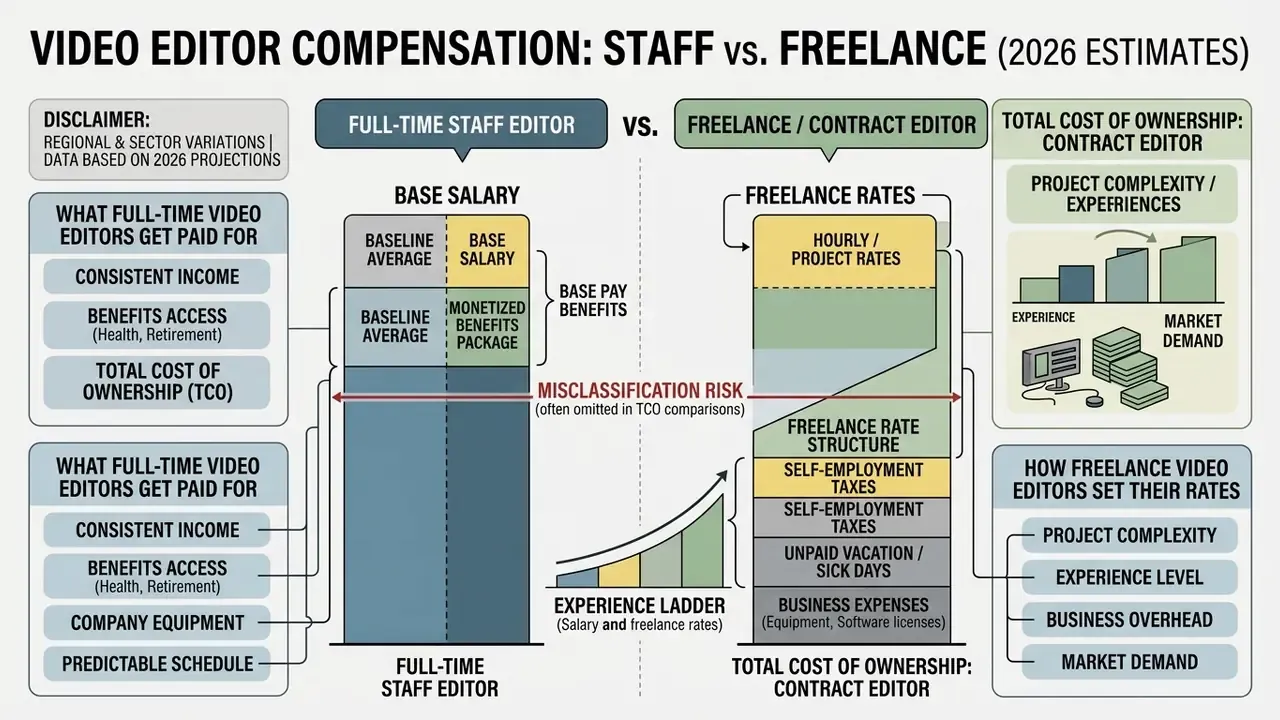
Choosing between internal payroll employment and independent contracting means trading income predictability against rate flexibility. Full-time positions deliver stable wages and healthcare benefits. Freelance video editors capture higher per-hour billing rates, then absorb uncompensated overhead and swings in project volume.
Comparison of full time, part time, and freelance video editing work
| Compensation & Working Attribute | Full-Time Employee (Staff) | Part-Time Employee | Freelance Video Editor |
|---|---|---|---|
| Base Salary / Pay Model | Fixed annual base salary ($66,600–$75,420 median) | Hourly wage (pro-rated hours) | Hourly, day rate, or per-project |
| Average Hourly Equivalent | $32.02–$40.13 per hour | $20.00–$35.00 per hour | $31.60–$85.00+ per hour |
| Hours Definition | 30+ hrs/week (ACA benchmark: 130 hrs/month) | Under 30 hrs/week | Variable; billable hours rarely reach 40/week |
| Workload Stability | High (guaranteed 30–40 hrs/week) | Moderate (under 30 hrs/week) | Variable, client-demand dependent |
| Benefits & Protections | Health insurance, PTO, 401(k), overtime | Limited or discretionary (retirement eligibility after 1,000 hrs/yr, or 500 hrs/yr for 3 years) | None, self-funded insurance and taxes |
| Tax Treatment | W‑2; employer pays half of FICA | W‑2; employer pays half of FICA | 1099; 15.3% self-employment tax on net earnings |
| Income Upside Potential | Tied to annual raises and promotions | Tied to scheduled hours | High, scaled via client volume and retainers |
Key takeaway from the table: part time is a scheduling decision, freelance is a business decision. They are not two flavors of the same thing.
The Total Compensation Factor
Total Cost of Ownership: Staff Editor vs. Contract Editor
Finance and operations leaders comparing hiring models need the fully loaded number, not the posted salary. The table below models one mid-level editor delivering a comparable annual output volume.
| TCO Line Item | Full-Time W‑2 Staff Editor | 1099 Freelancer (Retainer) | Agency / Managed Service |
|---|---|---|---|
| Base cash compensation | $68,000 base salary | $48,000 (retainer: $4,000/mo) | $48,000 ($4,000/mo full-day model) |
| Employer payroll taxes (about 7.65% FICA plus FUTA/SUTA) | $5,800 | $0, borne by contractor | $0 |
| Health, dental, retirement match, PTO accrual | $18,000 – $22,000 | $0 | $0 |
| Software licensing (Creative Cloud, Resolve Studio, plugins, storage) | $2,400 – $4,200 | Contractor-funded | Included |
| Hardware, refresh cycle, and asset storage | $2,000 – $3,500/yr amortized | Contractor-funded | Included |
| Recruiting, onboarding, and management overhead | $6,000 – $12,000 (first year) | $1,000 – $2,500 | Minimal |
| Effective annual TCO | $102,200 – $115,500 | $49,000 – $50,500 | $48,000 – $60,000 |
| Cost per billable editing hour (1,700 productive hrs) | $60 – $68 | Variable, rate-dependent | $25 – $31 per contracted hour |
| Key risk | Utilization risk if content velocity drops | Misclassification exposure; capacity ceiling | Less institutional knowledge; NDA and security review required |
Misclassification risk is the line item most often omitted. Treating a functionally supervised, full-time, single-client editor as a 1099 contractor exposes the organization to back taxes, unpaid overtime liability under FLSA nonexempt rules, penalties, and benefit reconstitution claims. If your team dictates hours, tools, and day-to-day methods, the role is very likely employment regardless of what the contract says. And the FLSA overtime math, 1.5 times the regular rate above 40 hours a week, applies retroactively.
What Full-Time Video Editors Get Paid For
A staff full time video editor salary compensates professionals for continuous narrative assembly, asset management, channel optimization, and cross-department collaboration. In-house editors at corporate enterprises handle steady internal comms, training modules, and social media brand campaign assets. BLS occupational descriptions center the role on editing raw footage into finished products, while employer data confirms that paid vacation and health insurance are the standard benefit floor for staff film and video editors at production companies.
Salaried roles pay regardless of client delivery cycles. That is the whole point. One digital marketing agency hired a full-time staff editor at $68,000 per year to handle routine corporate clips. By centralizing asset assembly internally, the company stabilized monthly content velocity, removed contractor onboarding friction, and locked in reliable post-production delivery windows. It also cut delivery delays caused by oversized master files, simply by standardizing on a documented video compression workflow for client review rounds.
Small fix. Measurable result.
How Freelance Video Editors Set Their Rates
Independent freelance video specialists price work with hourly rates, day rates, or fixed project fees. Standard market rates for freelance video editors break into distinct tiers:
- Hourly Rates Entry-level editors charge $25–$40 per hour; mid-level editors charge $50–$75; senior specialists charge $85–$150 and up. Beginners weighing startup costs often start with free video editing software before committing to a full subscription stack.
- Day Rates (8-hour standard) Intermediate editors bill $300–$600 per day; high-end commercial editors bill $800–$1,500 and above. International benchmarking places the global median freelance day rate near $427.
- Project Rates Short-form social media edits for Shorts and Reels range from $150 to $500 per video, while complex commercial campaigns command $1,500 to $5,000 and up per finished deliverable. A 10 to 15 minute youtube video edit typically prices at $200–$500; a Shorts, Reels, and TikTok package runs $500–$2,500.
- Retainers Marketplace survey data places average freelance monthly retainers at $1,206.60 and average per-project fees at $287.16 across all experience levels. Read that as evidence that most freelancers still under-price relative to the $1,500–$4,000 monthly professional retainer band.
Freelancers rarely bill 40 hours a week. Footage organization, revision cycles, client communication, admin, invoicing, and pipeline development all eat unpaid time, which is why annualizing a headline hourly rate overstates realistic income by 25% to 40%. Editors working high-volume channels offset this by systematizing repeatable tasks: batch voiceover through an AI voice generator, templated thumbnails via a photo editor, and reusable lower-thirds built once in an animation maker. Character-driven channels sometimes add stylized assets from an anime ai generator or dub temporary reference tracks with an anime ai voice generator before final talent recording. When commercial asset integration requires automated rendering, development teams lean on the documented endpoints in our AI Media API Guides.
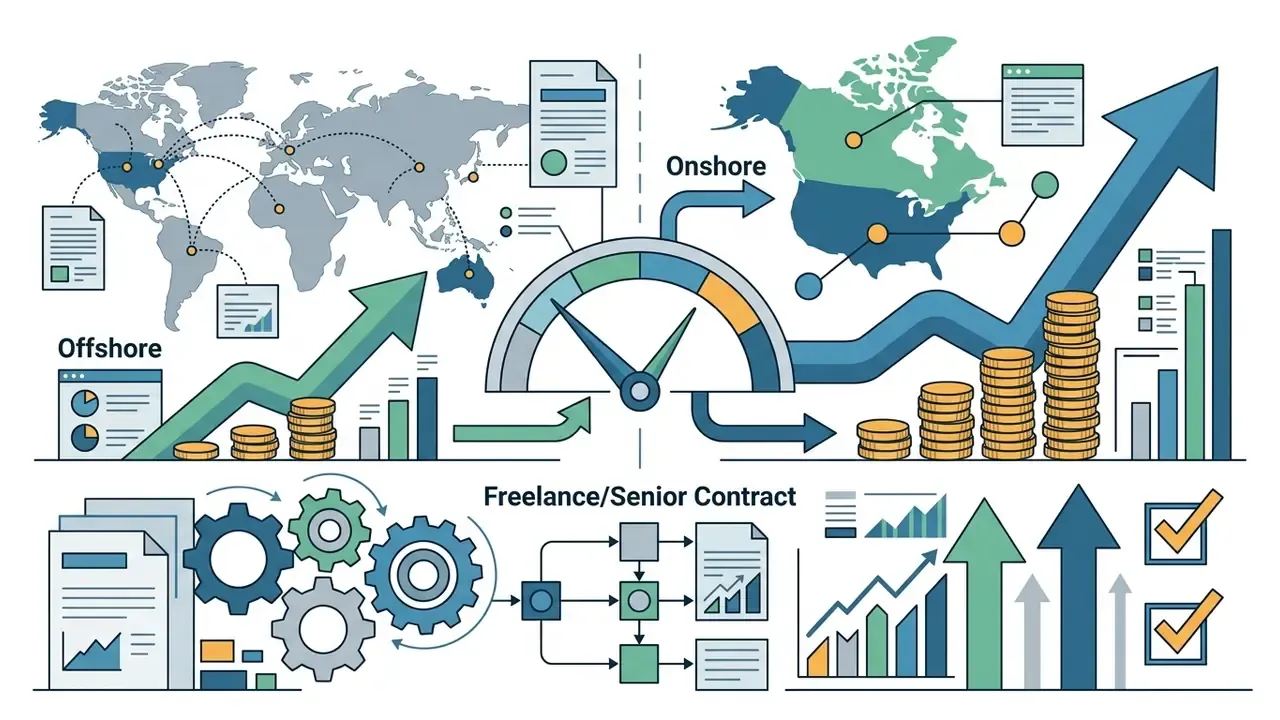
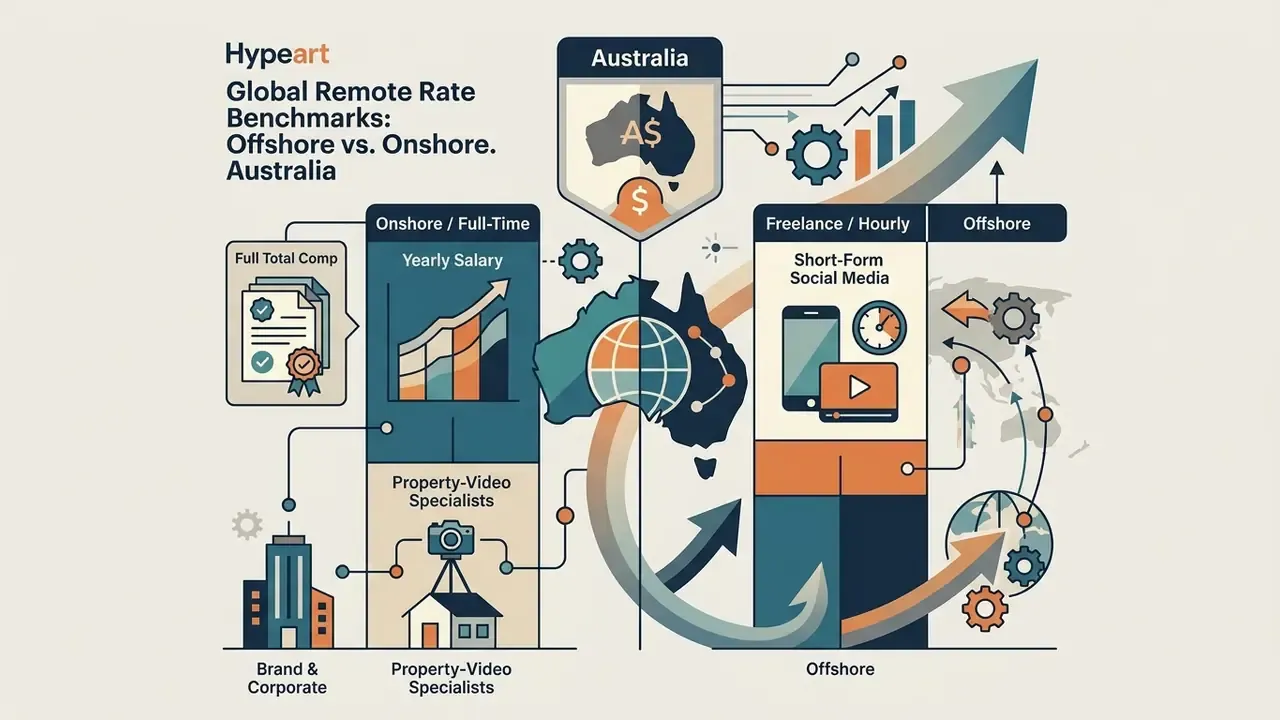
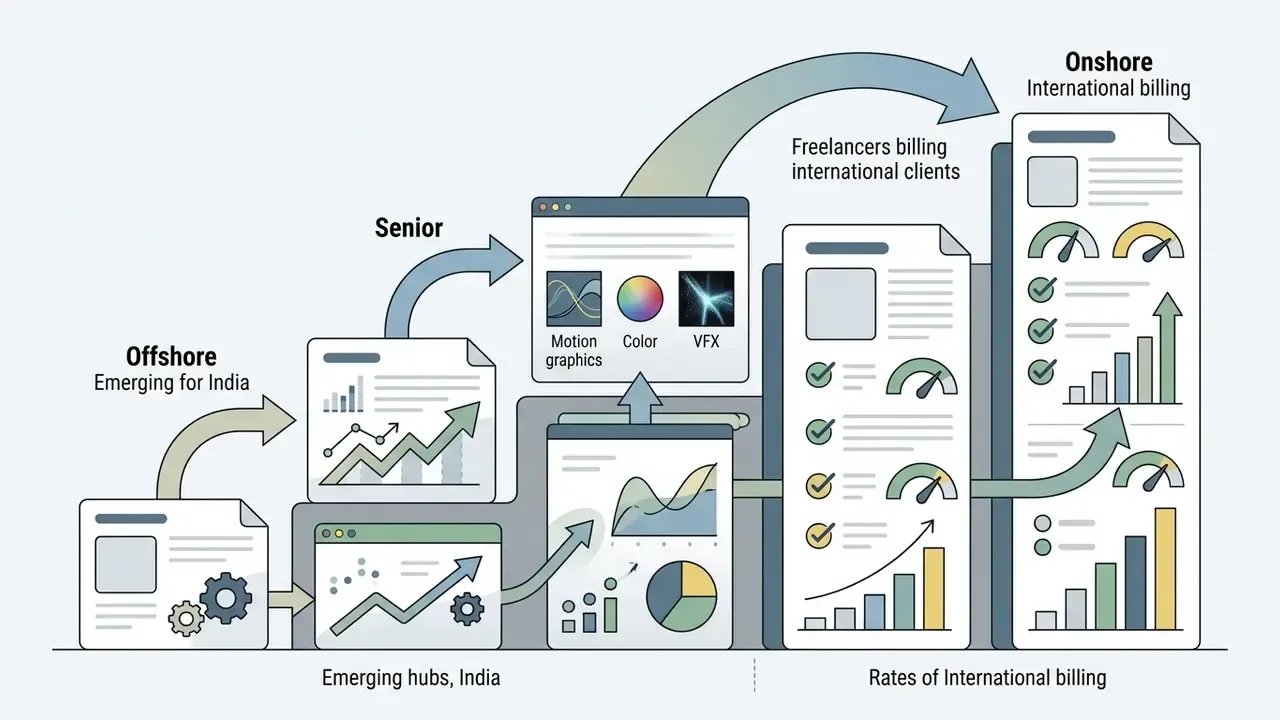
Global Remote Rate Benchmarks: Offshore vs. Onshore
For U.S. media teams hiring global talent, or international freelancers targeting U.S. clients, regional base pay varies sharply:
The arbitrage is real, but it is not free. Offshore engagements shift cost into review cycles, time-zone latency, security review, and brand-consistency QA. Model those hours explicitly before you assume savings.

What Affects a Video Editor Salary?
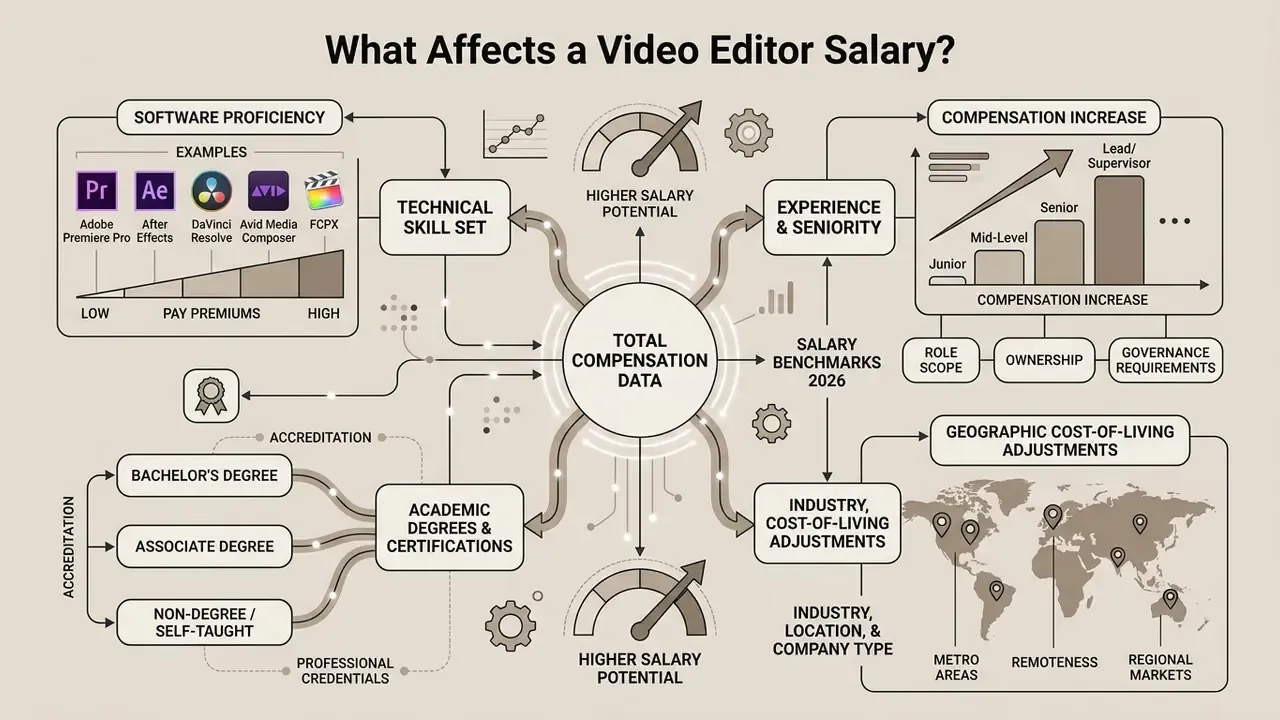
A video editor salary is set mainly by technical skill set, industry domain, geographic cost-of-living adjustments, and years of professional experience. High-complexity specializations such as 3D animation, visual effects, and color grading command substantial premiums over basic assembly editing.
Experience, Seniority, and Editing Skills
Salary progression accelerates as an editor earn profile shifts from junior timeline assembly to senior workflow architecture. Rather than inventing fixed junior and senior figures, the most defensible framing anchors seniority to the BLS percentile distribution. Entry and assistant-level work clusters near the 10th to 25th percentile ($38,990–$48,920). Independent staff editors sit around the median ($66,600–$75,420). A senior video editor with motion graphics, multi-cam sync, and audio mastering competence occupies the 75th to 90th percentile band ($101,910–$154,480). Marketplace rate guides broadly corroborate the same ladder: entry-level $20–$45 per hour, mid-level $45–$85, senior $85–$150 and up, with a motion and VFX specialist tier reaching $120–$200.
| Years of Professional Experience | Median Base Salary (USD) | Total Compensation Range (inc. Bonuses/Benefits) | Key Skill Milestones Required |
|---|---|---|---|
| Entry-Level (0–1 year) | $45,000 – $60,000 | $48,000 – $65,000 | Basic assembly, timeline organization, proxy workflows |
| Junior (1–3 years) | $60,000 – $65,000 | $68,000 – $75,000 | Multi-cam sync, basic audio leveling, L-cuts and J-cuts |
| Mid-Level (4–6 years) | $68,000 – $71,000 | $78,000 – $88,000 | Advanced color correction, dynamic lower thirds, pacing |
| Senior (7–9 years) | $77,000 – $84,000 | $92,000 – $105,000 | Motion graphics (After Effects), sound design and mastering |
| Lead / Specialist (10–14 years) | $84,000 – $98,000 | $110,000 – $130,000 | Workflow architecture, VFX compositing, team lead |
| Veteran / Director Tier (15+ yrs) | $100,000 – $154,000+ | $135,000 – $185,000+ | Finishing editing, theatrical mastering, agency lead |
Total Compensation columns reflect Glassdoor median total pay by tenure (February 2026): 0–1 yr $60,000; 1–3 yrs $65,000; 4–6 yrs $71,000; 7–9 yrs $77,000; 10–14 yrs $84,000; 15+ yrs $92,000, plus benefits monetization. Indeed's tenure data shows a comparable curve: $46,635 base at 1–2 years rising to $81,742 at 6–9 years.
Grading Matrix: Role Scope, Ownership, and Governance Requirements
Hiring managers writing requisitions need scope definitions, not just pay bands. Use this matrix to align titles, KPIs, and escalation authority.
| Grade | Title | Output Ownership | Technical Scope | Governance / Security Responsibility | Typical Total Comp |
|---|---|---|---|---|---|
| G1 | Assistant / Junior Editor | Executes assigned cuts under review | Assembly, sync, captions, exports | Follows asset-handling policy; no license decisions | $48,000 – $75,000 |
| G2 | Editor | Owns full deliverables for one channel | Color correction, audio mix, graphics templates | Confirms music and stock licensing per checklist | $78,000 – $88,000 |
| G3 | Senior Editor | Owns a content line end to end | Motion graphics, sound design, brand systems | Verifies commercial-use rights; flags rights risk | $92,000 – $105,000 |
| G4 | Lead Editor / Post Supervisor | Owns pipeline throughput and SLAs | Workflow architecture, VFX, MAM and DAM design | Access control, retention policy, vendor NDA review | $110,000 – $130,000 |
| G5 | AI Workflow Architect / Head of Post | Owns cost-per-asset and tooling roadmap | Automation, API rendering, model selection | AI provenance logging, training-data policy, audit trail | $135,000 – $185,000+ |
Grades G4 and G5 are where compensation decouples from editing speed and attaches to governance. Who approves a generative asset? Where is provenance logged? Which licenses permit commercial distribution, and who signs off? Teams formalizing that layer should review enterprise terms in the AI Media Commercial-Use Hub and the license conditions in our Canva AI Generator commercial-use analysis.
Academic Degrees and Professional Certifications
Data indicates that 73% of professional video editors hold a bachelor's degree in fields such as film production, digital media, journalism, or communications. A degree is rarely mandatory for freelance clients, yet corporate payroll systems often factor credentials into entry-level base pay offers:
- Bachelor's Degree Holders average annual earnings of $54,046 – $62,000.
- Associate Degree Holders average annual earnings of $49,756 – $53,000.
- Non-Degree or Self-Taught Editors earnings rest entirely on portfolio proof-of-work. Entry-level baseline averages $38,000 – $45,000, though experienced specialists reach the same senior caps above $100,000 as degree holders.
Certification effect: specialized software certifications (Avid Certified User, DaVinci Resolve Certified Colorist, Adobe Certified Professional) lift starting offer values by 8% to 15% in broadcast and enterprise production pipelines, where standardized toolchains cut onboarding cost.
Sources: Zippia education data and Glassdoor and Payscale credential comparisons (February 2026). BLS notes that film and video editors typically need a bachelor's degree in film, broadcasting, or a related field.
Industry, Location, and Company Type
Where video editor earn potential peaks depends heavily on employer sector and regional media concentration. According to BLS data, the Motion Picture and Video Industries sector pays a mean annual wage of $92,070 ($44.27 per hour), while privately owned Educational Services pay a mean of $67,510 ($32.46 per hour).
| Industry Sector | Mean Annual Wage | Mean Hourly Wage | Relative Index (Education = 100) |
|---|---|---|---|
| Motion Picture & Video Industries | $92,070 | $44.27 | 136 |
| Advertising & Public Relations | $83,230 | $40.01 | 123 |
| Sound Recording Industries | $81,020 | $38.95 | 120 |
| Educational Services (Private) | $67,510 | $32.46 | 100 |
Sector pay gap for U.S. video editors. Source: U.S. Bureau of Labor Statistics OEWS industry estimates (May 2023; advertising figure from an earlier BLS release). Relative standard error for NAICS 512100 is approximately 2.1%.
Geographic hub density creates dramatic variance:
Editors producing vertical social media content, high-end real estate listings, or direct-to-consumer brand campaigns face widely divergent budgets depending on corporate capitalization. A content creator hiring their first editor and a Fortune 500 brand team are, functionally, two different labor markets.
- Austin, TX
- average rates reach $55.44–$56.31 per hour on expanding tech and digital media demand. Again, this is the senior and tech-sector upper band from job-posting aggregation, not an entry-level market median.
- New York, NY and Los Angeles, CA
- median hourly rates average $36.82 to $40.00 and up, with top commercial production houses paying annual packages above $130,000.
- Smaller regional markets such as Burlington, VT
- mean annual pay sits near $55,970 ($26.91 per hour).
- State level
- California and New York remain the strongest-paying states, with the San Francisco Bay Area and New York City leading metro-level pay for film and video editors.
Specialized Niche Editing Rates: Real Estate, Weddings, and Short-Form
Not all video editing falls into corporate or film categories. Specialized B2C and local B2B niches run distinct pricing models:
- Real estate video editorsearn $80,000 – $90,000 per year in-house for luxury brokerages, or charge $250 – $600 per listing video (roughly $35 – $75 per hour).
- Wedding and event editorscharge $500 – $2,500 per highlight film, with hourly rates from $25 to $75 depending on turnaround speed and color grading requirements.
- Short-form specialists (Reels, TikTok, Shorts)CapCut Pro and Premiere short-form editors bill $32 – $35 per hour on hybrid or casual contracts, or charge flat rates of $50 – $150 per clip under 60 seconds. This is the band behind most "average wage video editor shorts salary" searches.
- Healthcare and clinical contentvideo editor and content creator hybrid roles for medical groups advertise $20 – $30 per hour, reflecting lower production complexity but strict compliance review.
- Broadcast, local versus nationalposted roles range from $33,258 at a local broadcast group to $75,000 at a national network, which shows that "broadcast" alone is not a pay signal.
Niche volume work rewards throughput systems. Creators serving high-cadence listing or event clients templatize titles, batch-export with preset ladders, and pre-build graphics packages using a free photo editor for stills and thumbnails instead of redesigning per project.
Video Editor Jobs and Career Outlook
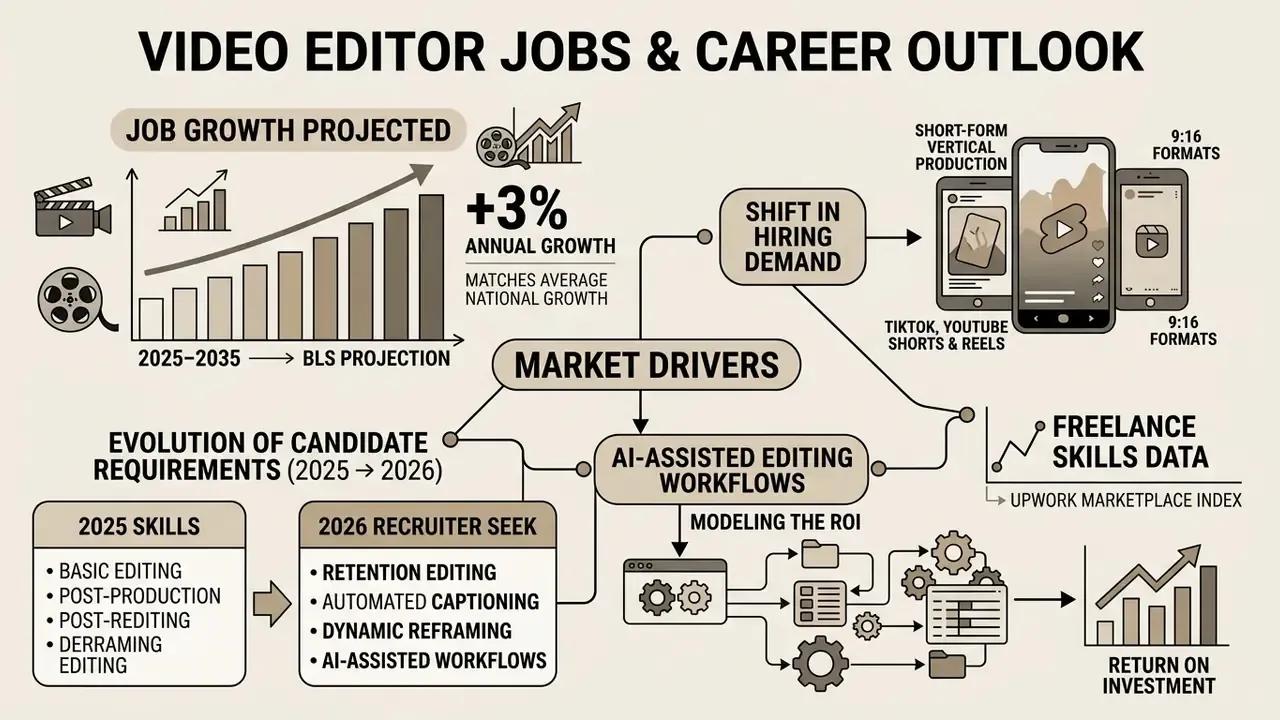
Employment opportunities for film and video editors are projected to grow 3 percent from 2025 to 2035, matching average national occupational growth according to the BLS. That expansion generates roughly 5,600 annual job openings across the United States, driven by retirement replacement and expanding digital video channels.
Earlier BLS release cycles projected 4 percent growth between 2024 and 2034 with about 6,400 annual openings. So the direction of travel is stable: modest, replacement-driven expansion, not a hiring boom. Any vendor claim of 29 percent growth for this occupation should be treated as unsupported by federal data.
Hiring demand concentrates in short-form vertical production (9:16 formats for TikTok, YouTube Shorts, and Instagram Reels), and increasingly in hybrid pipelines that pair traditional NLEs with AI video generators for b-roll, background extension, and variant production.
Upwork's freelance skills data, as reported in its marketplace skills index and cited across 2026 labor-market coverage, identified AI video generation and editing as the fastest-growing freelance skill category, with demand up 329% year over year. Live postings corroborate the shift. Requisitions now specify 30 to 45 second vertical edits, "AI Short-Form Video Editor" titles, retention-focused pacing, and automated captioning as baseline requirements rather than bonus skills.
Evolution of Video Editor Requirements (2025 to 2026)
| Dimension | Traditional Editing Profile | 2025–2026 Hybrid Profile |
|---|---|---|
| Primary output | Long-form 16:9 deliverables | Multi-aspect masters (16:9 plus 9:16 plus 1:1) |
| Core loop | Manual assembly, manual captions | Automated transcription, dynamic reframing, retention edits |
| Volume expectation | 2–8 deliverables per month | 20–60 variants per month per channel |
| Tooling | Single NLE plus plugins | NLE plus generative asset tools plus API render pipeline |
| Differentiator | Craft precision | Craft precision plus cost-per-asset accountability |
| Governance | Music and stock licensing | Licensing plus AI provenance, rights logging, model policy |
How candidate requirements for video editor jobs shifted between 2025 and 2026. Sources: live job-posting analysis and Upwork freelance skills demand data (2026).
Recruiters actively seek proficiency in retention editing, automated captioning, dynamic reframing, and asset generation. Editors adding digital art, custom stylization, or automated asset creation to their workflow can benchmark options in our comparison of the best AI art generators, while teams validating no-cost pilots before procurement can start with the best free AI video generators. Media teams producing commercial campaigns should check enterprise licensing rules inside the AI Media Commercial-Use Hub.
Modeling the ROI of AI-Assisted Editing Workflows
Automation does not simply cut headcount cost. It redistributes cost into review, QA, and governance. Model the net effect before you present a business case to finance.
| ROI Component | Manual Baseline | AI-Assisted Pipeline | Net Effect |
|---|---|---|---|
| Editing hours per 60-second vertical asset | 2.5 – 4.0 hrs | 0.8 – 1.5 hrs | 55% to 65% less production time |
| Fully loaded cost per asset (at $62/hr TCO) | $155 – $248 | $50 – $93 | $105 to $155 saved per asset |
| Added review and QA hours (brand plus factual check) | Included | +0.3 – 0.6 hrs | +$19 to +$37 per asset |
| Tooling and license cost | $200 – $350/mo | $450 – $1,200/mo | +$250 to +$850/mo |
| Governance overhead (provenance, rights logging) | Minimal | 4 – 10 hrs/month | +$250 to +$620/mo |
| Break-even volume | n/a | about 12 – 20 assets/month | Below this volume, manual is cheaper |
The practical conclusion for CFO-level review: AI-assisted pipelines pay back on volume, not on prestige projects. Teams producing fewer than roughly a dozen short-form assets per month rarely recover license plus governance cost. Teams producing 40 or more variants monthly commonly halve cost per asset. Interactive modeling against your own volume assumptions is available in the AI Media Calculators section.
How to Increase Your Earnings as a Video Editor
Raising income as a video editor means moving from low-margin assembly work toward specialized, high-impact commercial editing. The move into advanced technical domains is what lets editors double or triple a baseline rate.
- Master high-demand specializations.Build advanced skills in 3D animation, color grading, and motion graphics to reach high-budget advertising roles. After Effects capability alone maps to the $60,035 skill band and is the most common gateway into the 75th-percentile tier.
- Build a high-impact commercial portfolio.Curate 4 to 8 strong projects, or a tight 3 to 6 if each is substantial, showing clear client context, before-and-after footage transformations, and quantifiable engagement metrics. Lead with a 60 to 90 second reel, a one-line positioning statement, the client type you serve, and a contact button. Show raw versus final, motion-graphics pass versus plain footage, and first cut versus approved final where NDAs permit.
- Target high-margin industry sectors.Shift focus from low-budget social media edits toward corporate agency campaigns, broadcast commercials, regulated pharma content, and motion picture post-production. The sector delta between motion picture ($92,070) and educational services ($67,510) is larger than most individual promotions.
- Transition to retainer billing.Replace one-off project pricing with monthly retainer contracts of $1,500–$4,000 per client to stabilize recurring revenue. Marketplace averages still sit near $1,206.60 per month, so a professionally structured retainer captures immediate upside. Editors serving creators should productize the offer around documented YouTube video editing workflows instead of selling hourly labor.
- Implement automated workflow tools.Accelerate editing with modern rendering utilities, caption generators, and asset management platforms, then keep the margin automation creates rather than discounting it away.
- Price on outcome, not keystrokes.Where client permission allows, attach retention, watch-time, or conversion results to case studies. Outcome evidence is the fastest route from the mid-level band to the specialist band. Faster, honestly, than another certification.
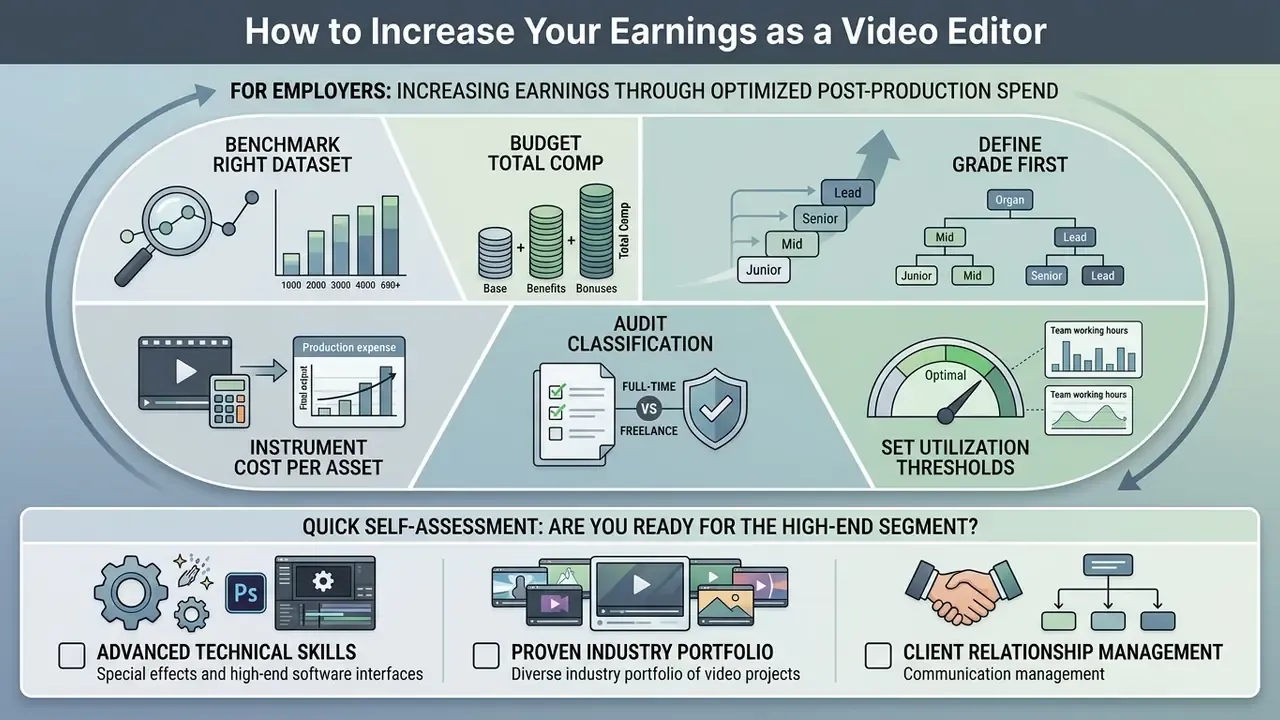
For Employers: Controlling Payroll and Post-Production Spend
The same dataset supports the other side of the negotiation. Leaders managing a content budget should:
- Benchmark against the right dataset. Use BLS medians for base-pay bands and marketplace data for contractor rates. Mixing them inflates offers by 15% to 25%.
- Budget Total Comp, not base. Approve requisitions at 1.30 to 1.45 times base to reflect true loaded cost.
- Define the grade before the salary. Use the G1 to G5 matrix above so one requisition does not quietly combine G2 execution with G4 governance responsibility.
- Set utilization thresholds. If projected output falls below roughly 15 to 20 deliverables per month, a managed service or retainer contractor usually beats a staff hire on cost per asset.
- Audit classification annually. Long-running, single-client, schedule-controlled contractors are the highest-risk line in any media budget.
- Instrument cost per finished asset. It is the only metric that makes editing spend comparable across staff, freelance, agency, and AI-assisted models.
Quick Self-Assessment: Are You Ready for the High-End Segment?
Three questions. Answer honestly.
1. What is your current effective rate?
A. Under $40 per hour, or under $55,000 a year.
B. $40–$75 per hour, or $55,000–$85,000 a year.
C. Above $75 per hour, or above $85,000 a year.
2. What is the profile of your typical project?
A. Social clips and simple assembly edits.
B. Brand videos with graded footage and graphics packages.
C. National campaigns, broadcast, or theatrical and streaming post.
3. What is your strongest differentiating skill?
A. Speed and reliable turnaround.
B. Motion graphics or color grading.
C. Pipeline architecture, VFX compositing, or AI workflow governance.
Mostly A, foundation tier (10th to 25th percentile: $38,990–$48,920). Next step: add After Effects motion graphics and standardize a repeatable delivery template. Target the median band within 12 months.
Mostly B, growth tier (median to 75th percentile: $66,600–$101,910). Next step: convert two clients to $1,500–$4,000 monthly retainers and publish two outcome-based case studies. This is the highest-leverage transition on the whole ladder.
Mostly C, specialist tier (75th to 90th percentile: $101,910–$154,480 and up). Next step: move from execution pricing to accountability pricing. Own cost per asset, rights governance, or pipeline throughput, because that is how G4 and G5 compensation gets justified internally.
For creators working in web-based suites, flexible platforms such as animation online tools streamline timeline production without a heavy local render box. When applying automated visual filters or custom stylized renders, verify protection mechanisms against unwanted style cloning with an anti ai filter. Legal questions about copyright, training data, and asset licensing shift quickly, and we track them in our coverage of AI Litigation and intellectual property frameworks.
To model projected production costs and freelancer ROI, use the interactive tools in the AI Media Calculators section, or reach the technical team through our support portal.
Frequently Asked Questions (FAQ)
What is the median video editor salary in the United States right now?
$75,420 per year, or $36.26 per hour, per the BLS Occupational Outlook Handbook (May 2025 update). The mean across all industries is higher at $83,470 because top-percentile studio and enterprise roles pull the average upward.
How much do beginner video editors earn?
Entry-level payroll roles cluster between $38,990 and $48,920 per year, the 10th to 25th percentile. Self-taught editors without a degree typically start at $38,000–$45,000, while bachelor's degree holders average $54,046.
Is freelancing more profitable than a staff job?
Only above a certain rate and utilization level. A freelancer must bill roughly $36.06 per hour to match the economics of a $55,000 base salary employee, because 15.3% self-employment tax, self-funded insurance, licensing, and non-billable hours all land on the contractor. Above $75–$85 per hour with consistent volume, freelancing generally wins on income. Below $50 per hour it usually loses on net.
What is the real cost of hiring a full-time video editor?
Plan for $102,200–$115,500 in first-year TCO for a $68,000 base salary role, once payroll taxes, benefits, software, hardware, and onboarding are counted. That works out to roughly $60–$68 per billable editing hour.
Do I need a degree to become a video editor?
Not legally, and not for most freelance clients. That said, 73% of working editors hold a bachelor's degree, BLS lists a bachelor's in film or broadcasting as the typical entry requirement, and corporate payroll bands frequently reference credentials for entry-level offers. Software certifications add an estimated 8% to 15% to starting offers in broadcast and enterprise pipelines.
Which skills raise pay the fastest?
After Effects motion graphics (the $60,035 skill band), DaVinci Resolve color grading, sound design, and AI-assisted workflow operation. The last of those grew 329% year over year in freelance demand.
Which cities and employers pay the most?
Austin, Washington DC, New York, Los Angeles, San Francisco, and Chicago lead U.S. metros. On the employer side, Dahl Consulting ($195,489), Concorde Education ($167,802), MERCOR ($161,600), Verkada ($155,000), Netflix ($154,000–$156,800), Meta ($148,500), and Alexion Pharmaceuticals (up to $185,000) currently top posted ranges.
Is AI reducing demand for video editors?
Current data shows redistribution rather than replacement. BLS still projects 3% growth to 2035, while postings increasingly require AI-assisted capability. The roles most exposed are low-differentiation assembly jobs. The roles gaining value are the ones owning pipeline design, rights governance, and cost per asset.
Will editing jobs shift offshore?
Partially. Offshore rates of $10–$60 per hour in emerging hubs, and $32–$35 AUD per hour for Australian short-form contracts, create genuine arbitrage. But time-zone latency, security review, and brand QA consume part of the savings. Onshore senior roles stay concentrated where approval cycles are fastest.
Appendix A: Data Notes and Superseded Estimates
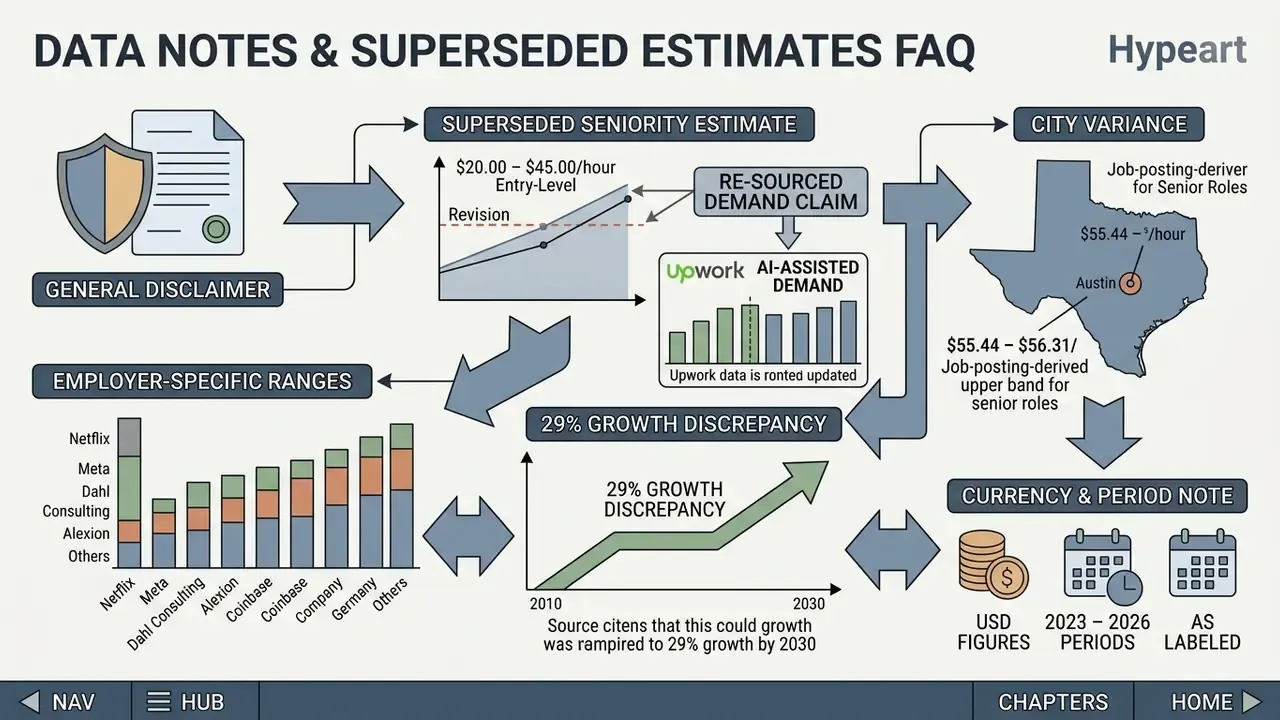
General disclaimer: this article provides general informational benchmarking on media production compensation. It is not legal, tax, accounting, or employment advice. Worker classification, overtime eligibility, benefits design, and cross-border contracting carry jurisdiction-specific obligations. Consult a qualified employment attorney and tax professional before acting on any figure in this analysis.