«No evidence, no autonomy. Generative AI tools must operate as governed digital assistants with structured inputs, explicit role boundaries, reproducible execution trails, and human oversight before deployment into production workflows.»
— Marcus Hale, author
If you run marketing, risk, or compliance at a US bank or a mature fintech, script generation looks harmless. It usually is not. The same tool that drafts a 30-second product ad can also invent an APR, skip a required disclosure, or quietly ship confidential product terms to a third-party model provider. That is why this guide treats scriptwriting as both a creative task and a controlled process.
An AI script generator is an automated software tool that uses large language models (LLMs) to convert user prompts, topic ideas, or product URLs into structured textual scripts for video production, advertising campaigns, and media creation. Modern content teams use an ai script generator to automate drafting, streamline scene breakdown, and generate tailored narrative frameworks across multiple formats.
Executive Summary
- What it does An AI script generator converts a prompt, document, or product URL into a structured script with scenes, spoken narration, visual cues, and timing, not flat prose.
- Where it wins Speed of first drafts, multi-variant testing for ads, platform-specific pacing for YouTube and short-form video, and multilingual output across 30+ languages.
- Where humans stay mandatory Factual verification, brand-tone calibration, bias screening, regulatory disclosures, and creative depth. Research shows LLM-generated stories score 3–10× lower on creativity tests than professional writers' texts.
- What governance teams need Prompt and output logging, model-version capture, an approval trail, a restricted-prompt policy, and a risk-adjusted ROI model that accounts for compliance review hours.
- Legal baseline Purely synthetic text without meaningful human authorship is not copyrightable in the U.S. or the EU; commercial safety depends on human editing, input-data hygiene, and platform terms.
- Practical takeaway Treat the generator as a governed drafting assistant with structured inputs (CO-STAR), a documented review checklist, and an auditable output registry. Never as an autonomous publisher.
Who This Guide Is For and What Decision It Supports
Two readers usually land here at the same time, with different questions.
The first is a content or marketing lead who wants faster drafts: YouTube explainers, ad variants, skits, news reads. The second is a risk owner (CRO, CCO, Head of Model Risk, or an AI governance lead) who has to answer a harder question. Can this tool operate inside our existing control environment without creating an unlogged, unowned decision path?
The guide answers both. Sections on formats, prompts, and retention structure serve the production side. Sections on audit trail, model inventory, restricted prompts, and risk-adjusted ROI serve the oversight side. The decision it supports is narrow and practical: whether to move script generation from personal accounts into a governed, evidenced workflow, and at what cost.
One caveat on audience. These reader profiles remain working hypotheses until they are validated against analytics, CRM data, and direct interviews. Treat them as such.
What Is an AI Script Generator and What Formats Does It Create?
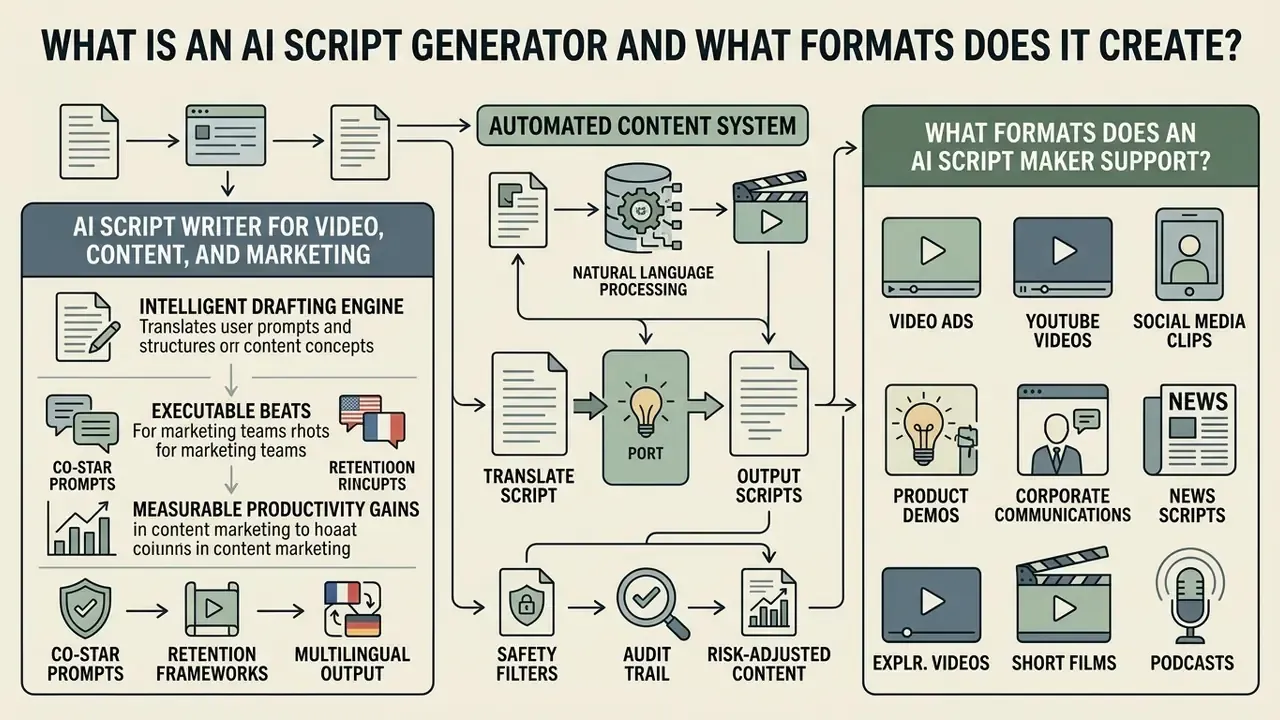
An AI script generator is an automated content system that leverages natural language processing to transform ideas, source documents, or URLs into structured text scripts. These platforms enable creators, copywriters, and marketers to generate scripts with defined visual cues, spoken narration, and scene timing. By deploying a dedicated ai script creator, teams accelerate early-stage content drafting while keeping precise control over tone, messaging, and structural flow.
«AI script generators produce structured representations of content, temporal flow, and multimodal instructions, not merely flat text.»
That distinction matters operationally. The output of a modern generator is a machine-readable production plan (scene objects, audio lines, on-screen text, timing hints), which is why the same draft can be routed into a teleprompter, an editing timeline, or a text-to-video renderer without rewriting it from scratch.
AI Script Writer for Video, Content, and Marketing
An ai script writer serves as an intelligent drafting engine designed to create targeted video script structures for digital marketing and commercial content production. For video creators and commercial teams, an automated writer processes brand parameters to output scene-by-scene directions, audio cues, and targeted dialog.
Research on generative workflows demonstrates that LLMs effectively translate descriptive user prompts into multi-scene production plans containing visual descriptions, camera instructions, and entity consistency controls.
«VideoStudio converts a text prompt into a multi-scene script, including event descriptions, characters, and camera movement for each scene.»
By structuring video concepts into executable beats, an ai video drafting system helps marketing teams reduce creative friction, scale production across channels, and keep messaging aligned with the target audience without sacrificing professional standards. Teams that plan to render those beats automatically usually pair the script layer with AI video generators and synthetic narration tools such as AI voice generators.
Independent research on automated writing also reports measurable productivity gains in content marketing, digital media, blogging, and social media workflows. The value is concentrated in faster iteration cycles rather than in fully autonomous authorship. Worth repeating, because procurement decks often blur the two.
What Formats Does an AI Script Maker Support?
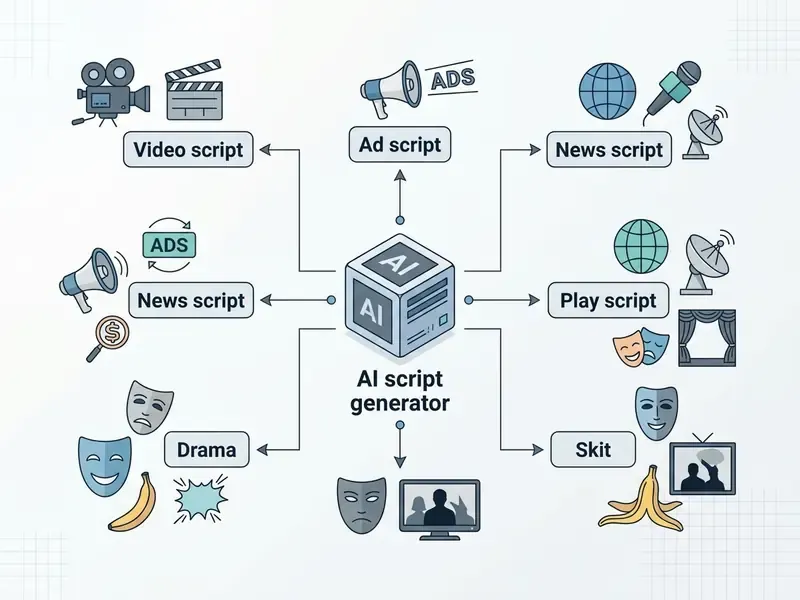
An ai script maker supports a broad spectrum of commercial and narrative formats, including video advertisements, short-form social clips, corporate explainers, long-form narratives, news bulletins, and theatrical dialogue. Depending on the operational objective, the system formats text into specialized structural layouts such as two-column audio/visual tables, timed broadcast rundowns, or standard screenplay layouts.
«ScreenWriter generates scripts with dialogue, character names, scene segmentation, and visual descriptions, operating from video input alone.»
Structural differences across formats are concrete, not cosmetic:
| Format | Core Structure | Typical Layout |
|---|---|---|
| Video / explainer | One row per scene: picture on one side, sound on the other, with running time | Two-column A/V table |
| Ad / commercial | Problem → solution/results → single CTA (testimonial, story, or "secret sauce" pattern) | Two-column A/V or beat list |
| News bulletin | Headline → lead matched to footage → body (5W+H) → ending | Two-column rundown: video/technical cues left, spoken copy right |
| Play / drama | Acts and scenes starting on new pages; dialogue-first with separated stage directions | Standard stage or screenplay layout |
| Skit / short-form | Compressed setup → escalation → twist → punchline | Vertical beat sheet, 30–60 s |
How an AI Script Generator Works: From Prompt to Finished Text
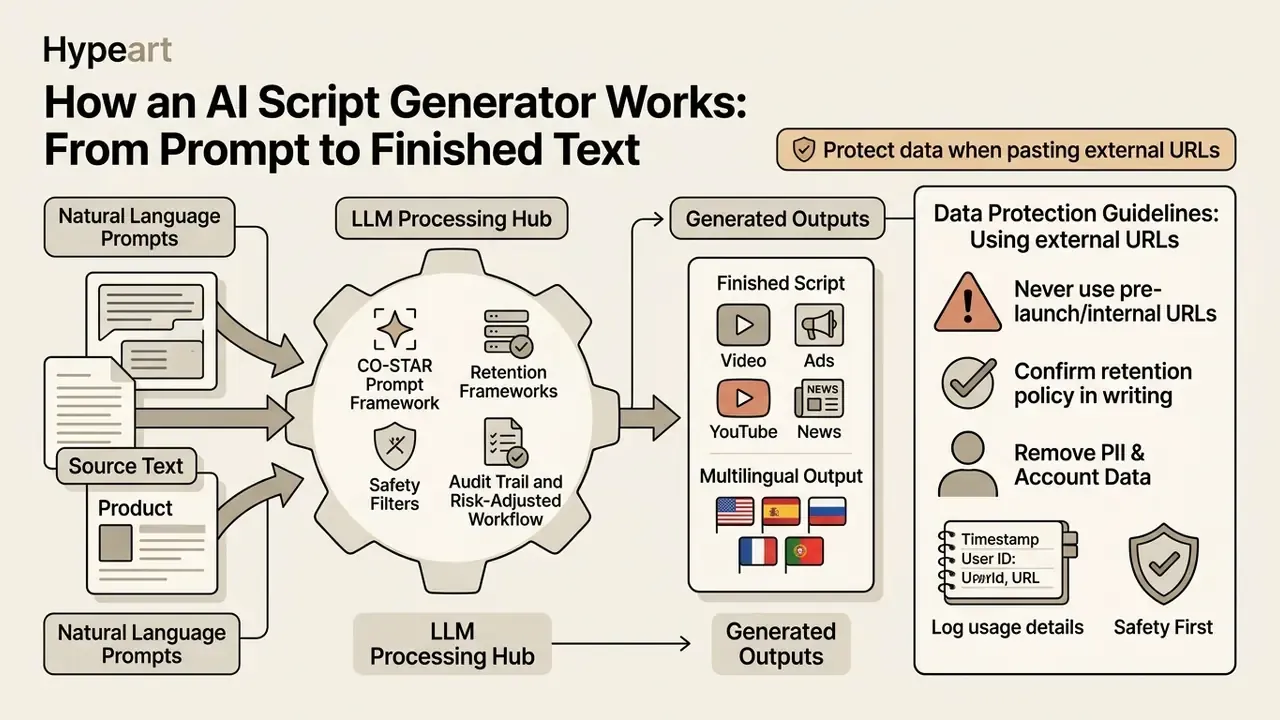
An ai generator script operates by receiving structured inputs, such as natural language prompts, source text, or product links, and processing them through an LLM to produce structured narrative beats. The core generation pipeline parses user constraints, retrieves context, formats output into scene-level components, and presents draft scripts for human review and refinement.
In technical implementations, the loop is explicit: prompt the model, extract the script, run syntax and evaluation checks, then refine the draft from model-generated feedback until it matches the task specification. Retrieval-augmented variants ground generation in project documents before the model writes anything, then constrain the output with explicit formatting rules. That is the same architectural pattern that keeps brand terminology and product facts stable in marketing scripts.
How to Write Effective Prompts for an AI Script Writer
Writing an effective prompt for an ai script creator requires explicit parameters covering the topic, primary target audience, intended tone, brand style, and spoken voice. According to the Singapore Government Developer Portal's Prompt Engineering Playbook (current edition), structured frameworks like CO-STAR (Context, Objective, Style, Tone, Audience, Response) help generated outputs meet exact technical specifications. The playbook explicitly separates tone (formal, casual, humorous, empathetic, authoritative, inspirational) from audience and brand style.
«Prompt engineering materially improves coverage and reduces errors: roughly one third of assertions generated without structured prompts proved incorrect.»
To produce compelling content and a clear script, user inputs should separate tonal requirements (authoritative, casual, urgent) from stylistic brand rules. Providing explicit character constraints and scene-length boundaries reduces hallucination and helps the generated text translate smoothly into spoken voiceovers or visual storyboards.
A simple starter formula works when you are stuck: [Topic] + [target audience] + [goal]. For example, "quick dinner recipes for working parents who want healthy meals on weeknights." For production work, use the full CO-STAR block below.
Store production prompts in application code or a shared prompt library rather than in chat history. OpenAI's prompt-engineering guidance recommends exactly this for reproducibility, and it is also the precondition for the audit trail described later in this guide.
Generating a Script from a Product URL
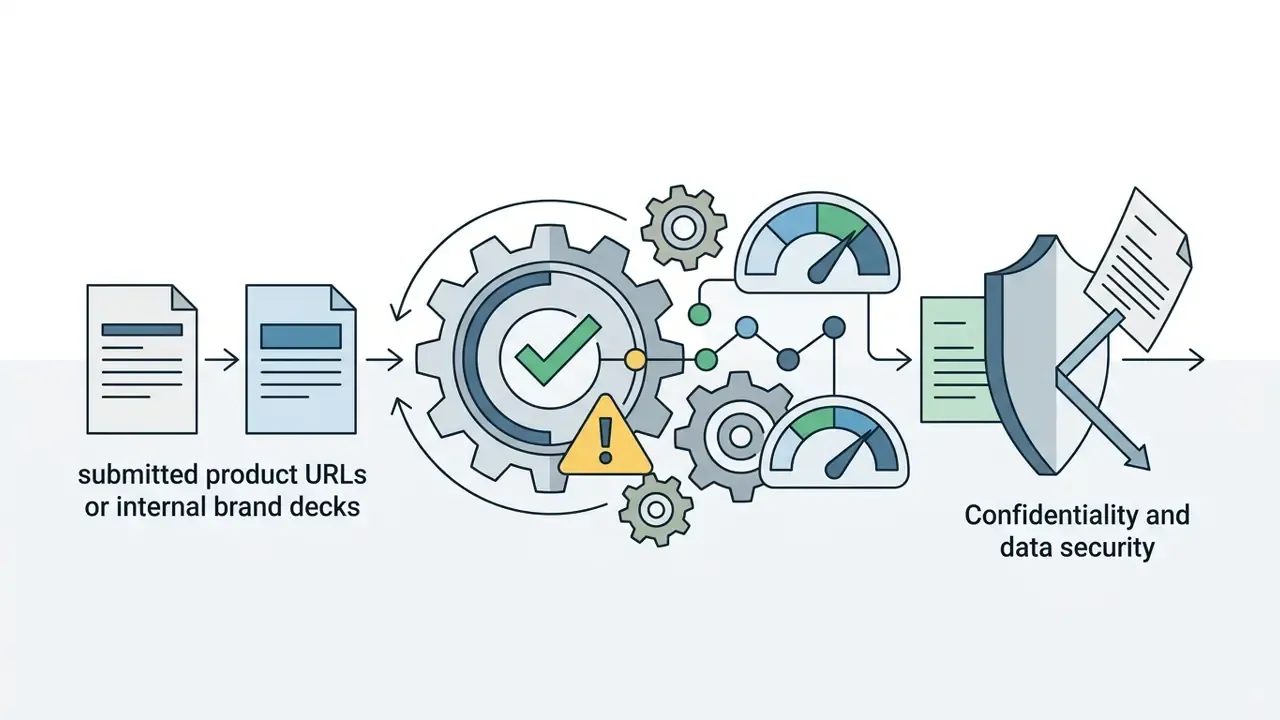
⚠️ Data Protection Warning: Read Before Pasting a URL
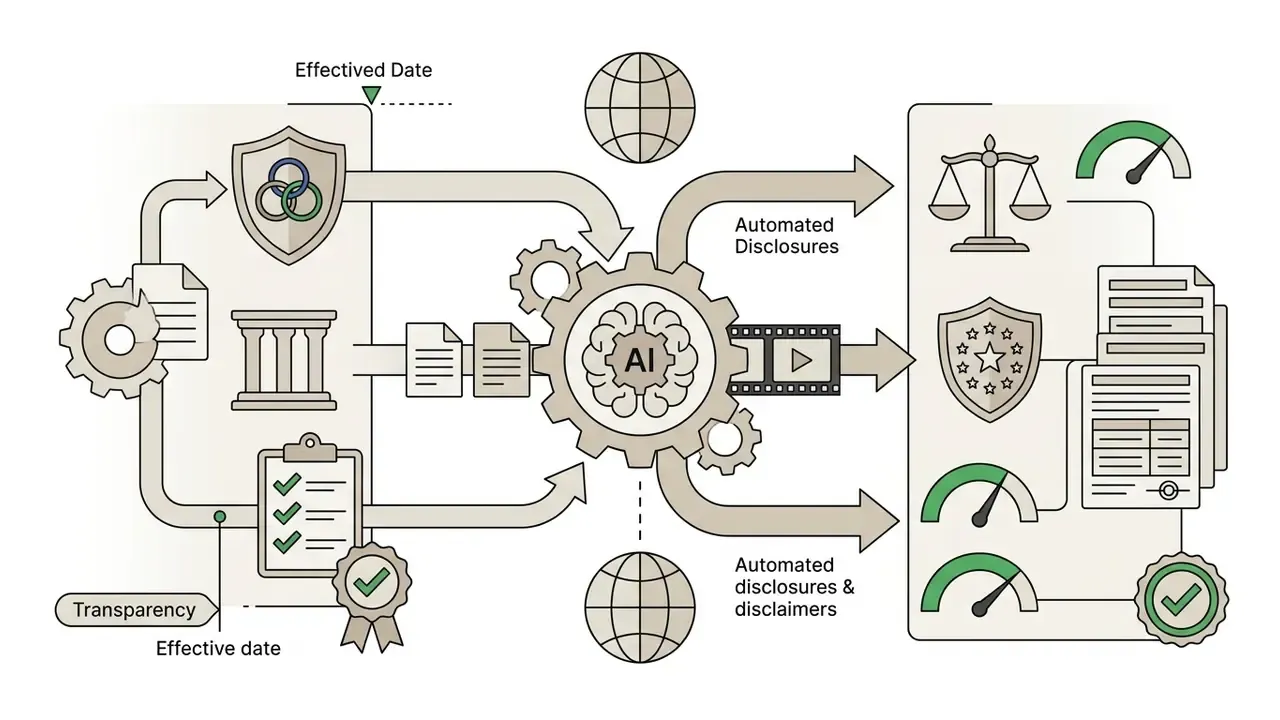
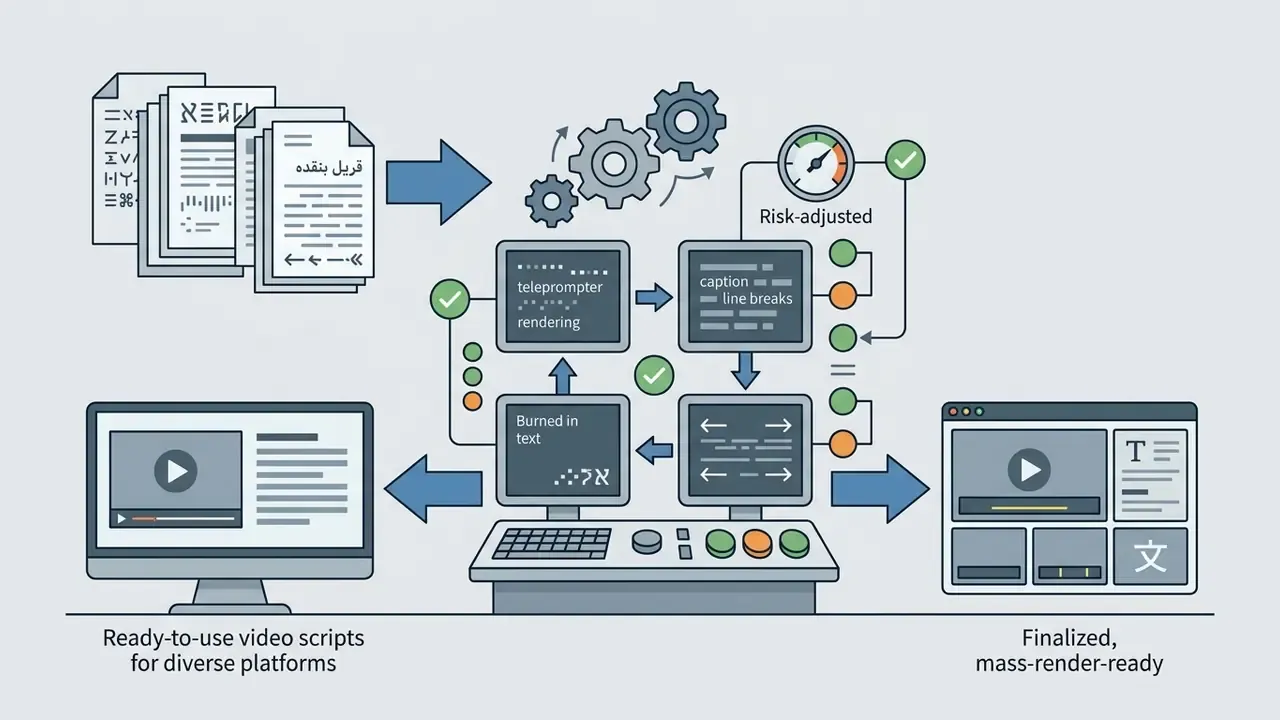
Multilingual Script Generation and Cultural Localization
Enterprise teams generating international campaigns use script AI models to output text natively in 30+ languages, including Spanish, German, Mandarin, Japanese, Portuguese, and Arabic. Commercial platforms already ship this as a headline capability. Creatify supports 29 languages, and script-to-video pipelines such as Fliki pair generated text with neural voices in 80+ languages.
Rather than applying literal translation, prompt the model to adapt cultural idioms, visual metaphors, humour registers, and localized hooks:

Editing, Versions, and Adapting a Finished Script
Iterative editing and multi-version generation allow teams to customize script elements, test alternate narrative directions, and refine scene-level dialogue before final approval. Modern script frameworks use hierarchical revision models to edit individual scenes without altering the broader narrative structure.
Research on narrative script refinement emphasizes a three-stage editing pass: structural adjustment, scene-level evaluation, and line-by-line polishing.
«OmniScript generates hierarchical scene-by-scene scripts with character actions, dialogue, expressions, and audio cues for long cinematic videos.»
The practical rule that follows from this literature: fix causal or structural problems at the outline and beat level before regenerating pages, and keep line edits strictly local. After any AI-assisted revision, re-verify paragraph roles, scene order, character identities, and derived locations. Coordinated rewrites are where continuity silently breaks.
Creators can request alternate hooks, adjust emotional beats, or split single scenes into multi-angle visual sequences. When adjusting media assets or integrating synthetic voice tracks, creators often cross-reference tool capabilities in our compare section to match script features with the right editing software.
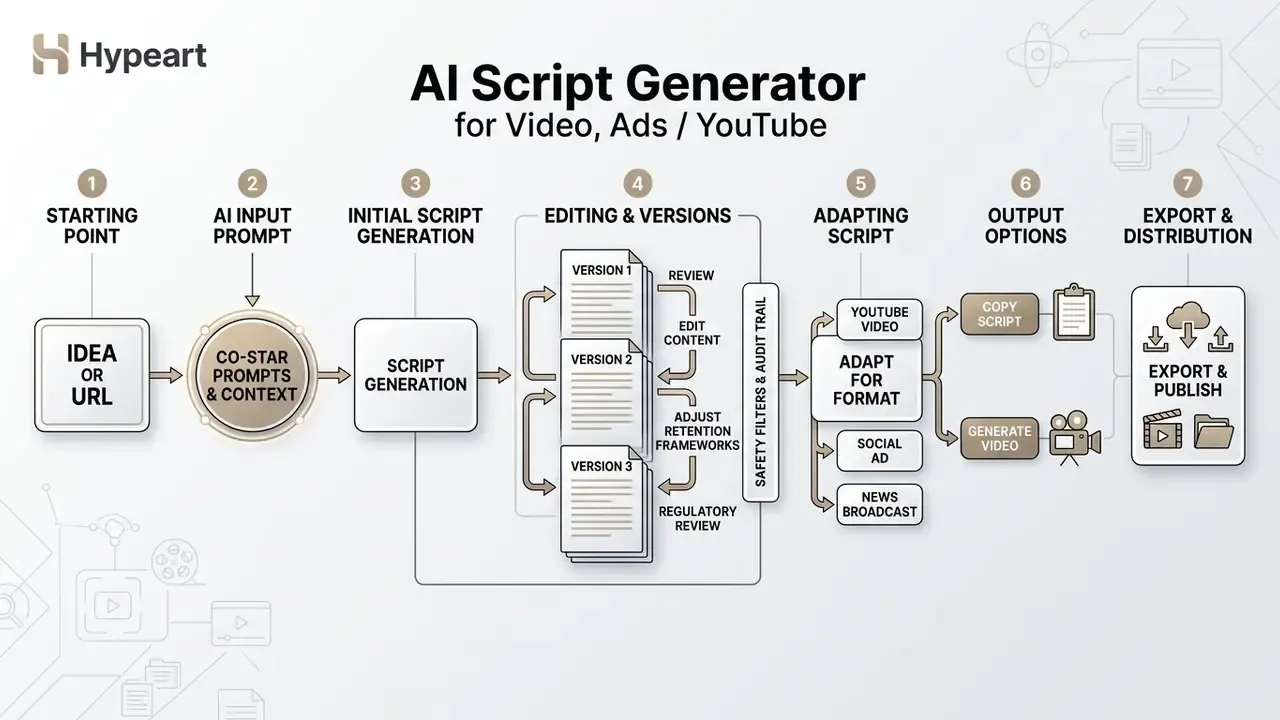
Text transcript of the workflow
- Source input
- supply a topic, product URL, PDF, Markdown file, recording, or deck.
- Prompt
- define audience, objective, tone, style, and response format (CO-STAR).
- Generation
- receive a draft with hook, scene order, visual direction, timing, and CTA.
- Review and edit
- revise directly or request regeneration of the affected scene only.
- Export
- render the video or export the script to PDF, DOCX,
.fdx, or JSON.
AI Video Script Generator for YouTube, Ads, and Short Videos
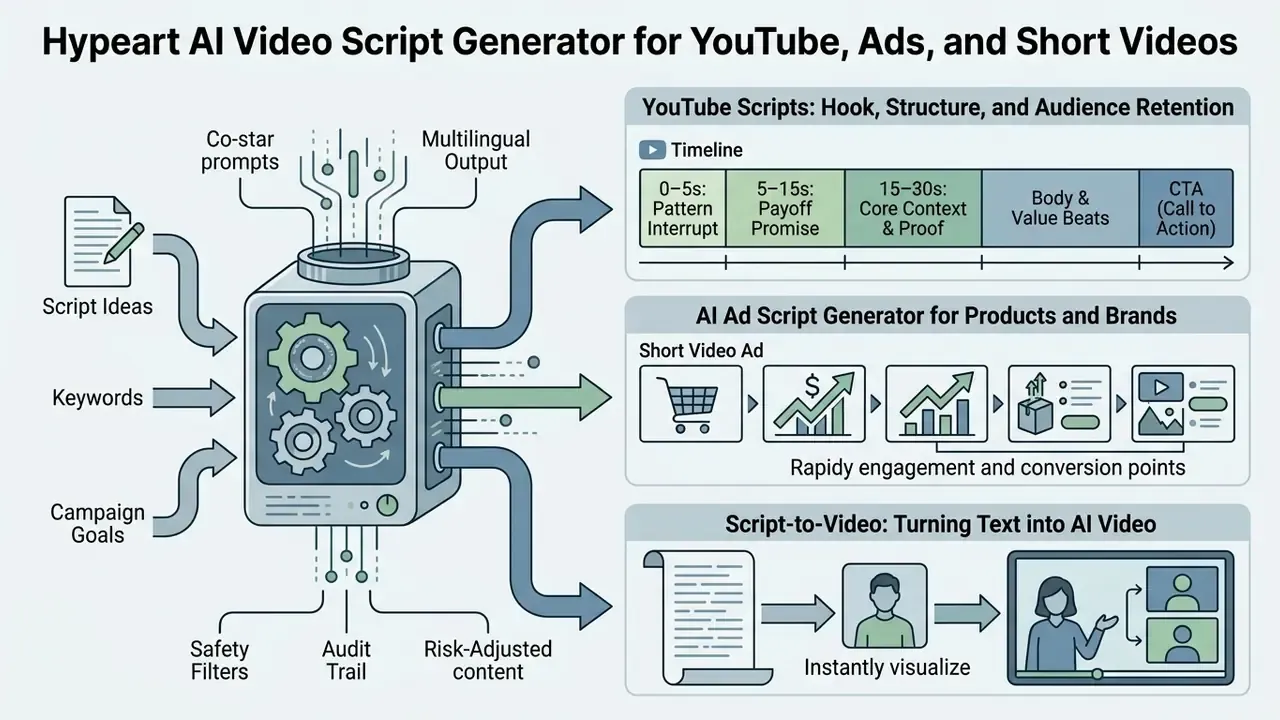
An ai video script generator builds platform-specific video scripts customized for algorithmic reach, viewer retention, and advertising conversion. Whether you are creating long-form educational videos or rapid vertical clips, automated script generators adapt formatting to match platform consumption patterns.
YouTube Scripts: Hook, Structure, and Audience Retention
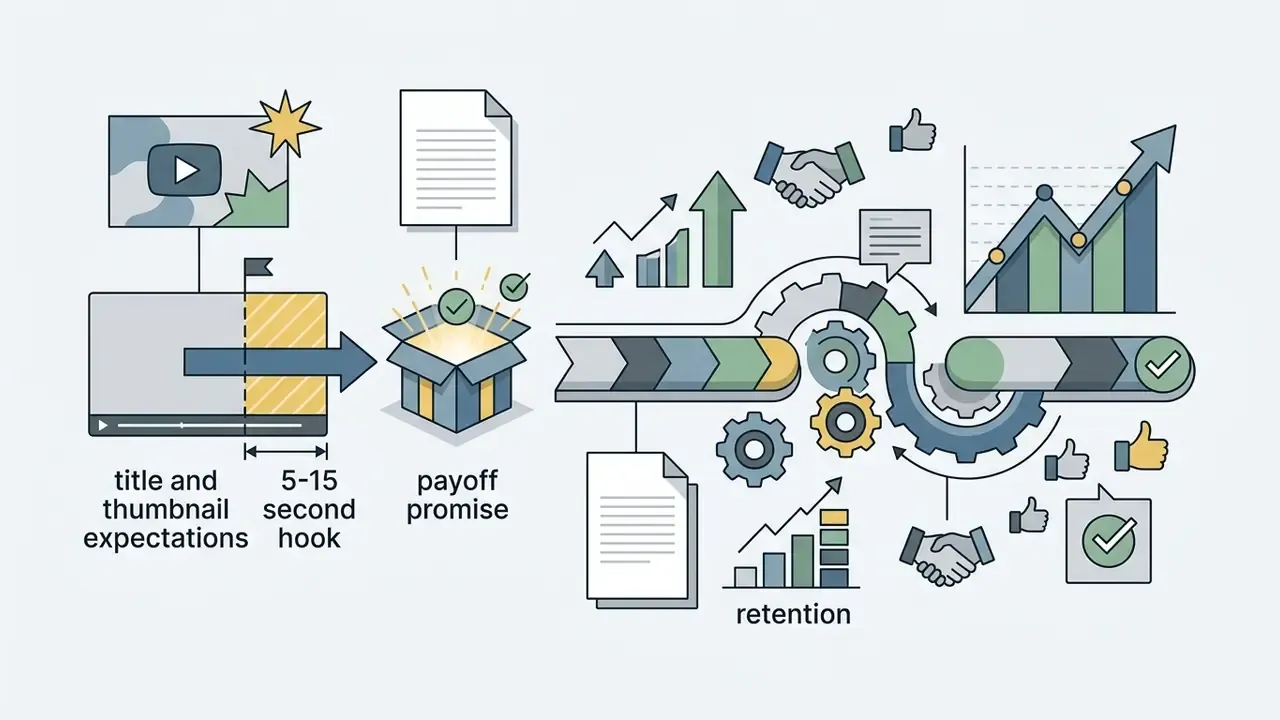
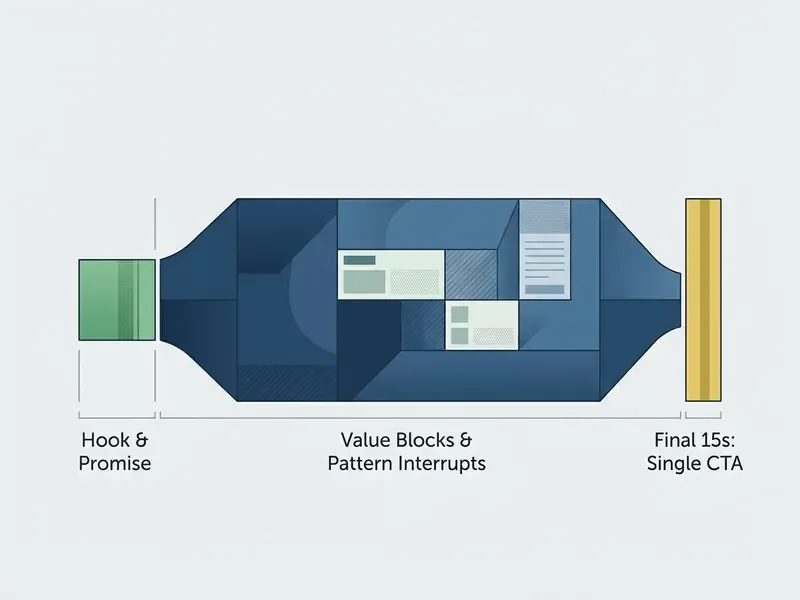
A high-performing YouTube video script relies on a clear narrative framework designed to capture viewer attention in the first 15 seconds and hold engagement through the runtime. A proven YouTube retention framework follows a strict structural cadence:
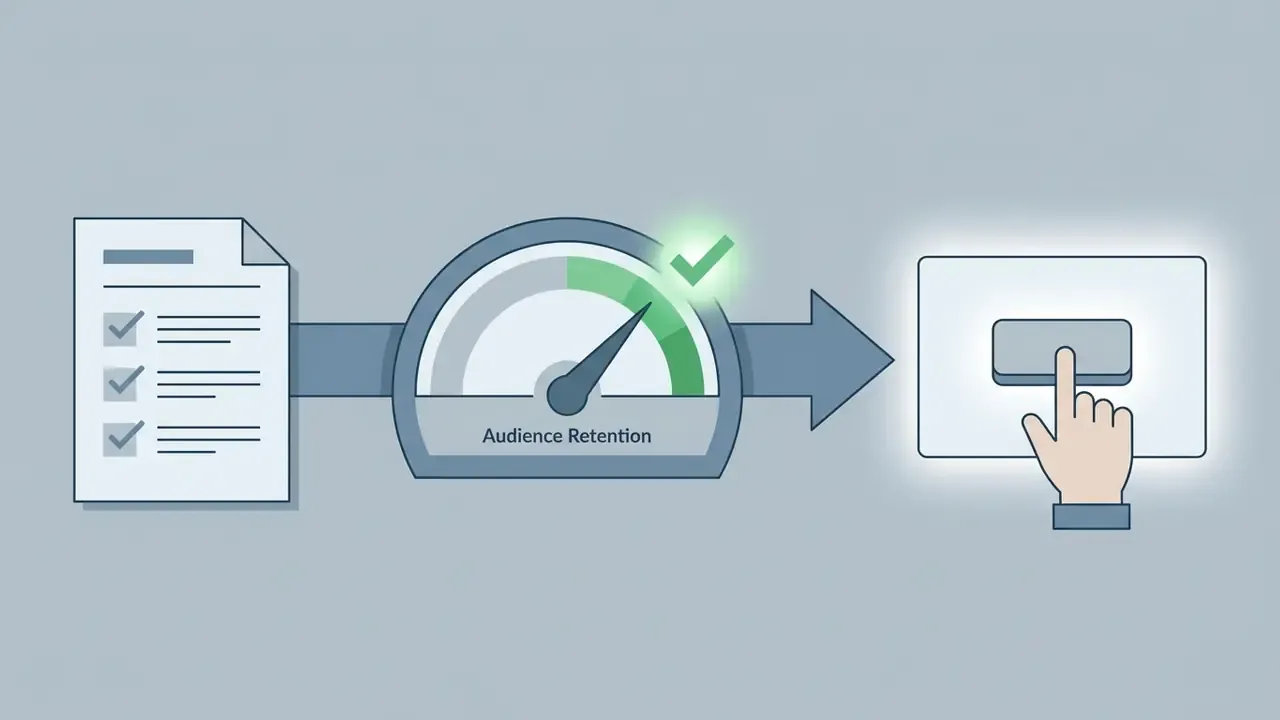
Retention diagnosis is equally mechanical. The first 15–30 seconds of the audience-retention graph is where "the cliff" appears. A steep early fall almost always means the hook under-delivered or the payoff was buried behind preamble.
Using a free ai script generator for youtube allows creators to outline these retention beats quickly, turning raw content ideas into structured engaging videos that protect channel watch-time metrics. Once the script is locked, most creators move straight into YouTube video editing workflows or compare free AI video generators for automated rendering.



«A study of 274 YouTube videos confirmed creators use GenAI to identify topics, write scripts, and produce visual and audio material.»
AI Ad Script Generator for Products and Brands
An ai ad script generator crafts conversion-focused commercial scripts by applying tested direct-response copywriting frameworks such as AIDA (Attention, Interest, Desire, Action), PAS (Problem, Agitate, Solve), and BAB (Before, After, Bridge). Marketers use an ai ad script generator to test multiple promotional hooks and value propositions rapidly.
«Generative AI on advertising platforms takes over ad-version creation and reporting on the best-performing combinations based on selected conversion actions.»
Script-to-Video: Turning Text into AI Video
The script-to-video workflow uses structured textual output to drive automated video creation tools, syncing text blocks with synthetic voiceovers, stock footage, and visual scene generation. Platforms like InVideo, Fliki, and Kapwing parse multi-scene scripts into individual visual beats, applying appropriate B-roll and automated captions.
In practice the pipeline is a repeatable six-step sequence: script input → scene split → visual generation or avatar rendering → voiceover → captions → export. Fliki pastes a script, splits it into scenes, pairs each with stock or AI visuals, adds neural voice, and exports MP4. LTX Studio produces an automatic shot breakdown with characters and objects before generation. InVideo exposes third-party models such as Runway inside its agent layer.
In modern generative pipelines, the generated text serves as the master orchestration layer. Visual generation engines interpret scene descriptions and camera directions to produce consistent video clips.
«AI video generation tools such as SORA require structured prompts, iterative refinement, and human oversight to reach maximum effectiveness.»
Creators seeking to automate post-production editing can review specialized tools such as an auto video editor, explore classic desktop editing suites covered in our guide to avs video editor, or reduce delivery weight with a video compressor before publishing.
Script Generators for Drama, Play, News, and Skit Formats
Generative script writing extends beyond commercial marketing into creative storytelling, broadcast journalism, and theatrical drama. Specialized models handle complex character dialogue, broadcast rundowns, and comedic pacing.
Drama, Play, and Dialogue: Working with Characters and Scenes
An ai drama generator or ai play script generator structures narrative fiction into standard screenplay layout, managing multi-speaker dialogue, character arcs, and stage directions. Academic research on screenplay generation, such as Dramatron (2022) and ScreenWriter (arXiv:2410.19809), illustrates how prompt chaining enables LLMs to maintain plot continuity across acts and scenes. The THEaiTRE project went further, staging a theatre play in February 2021 in which about 90% of the script was machine-generated using hierarchical generation with a human in the loop.
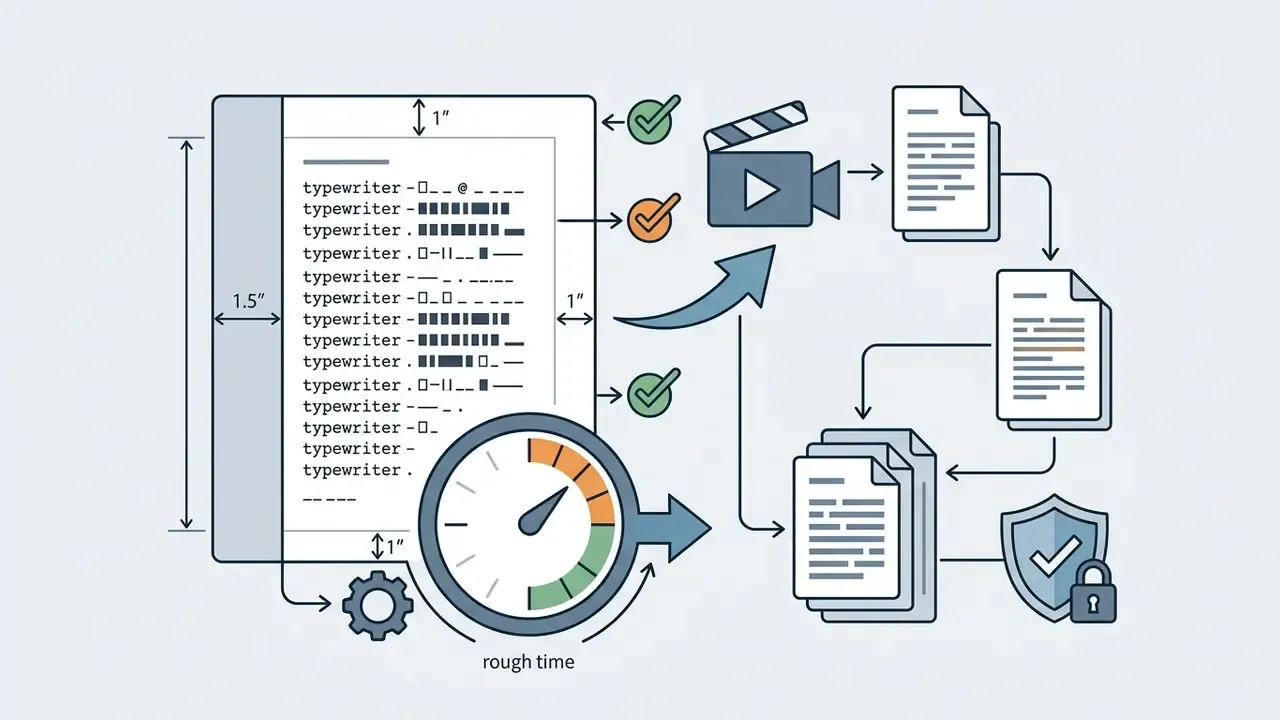
Standard screenplay format adheres to specific structural rules:
How to Maintain Character Consistency Across Scenes:
To prevent character memory drift in multi-scene screenplays, pass a persistent Character Bible system prompt before generating each individual scene, and re-send it on every regeneration:

INT. BANK VAULT - NIGHT).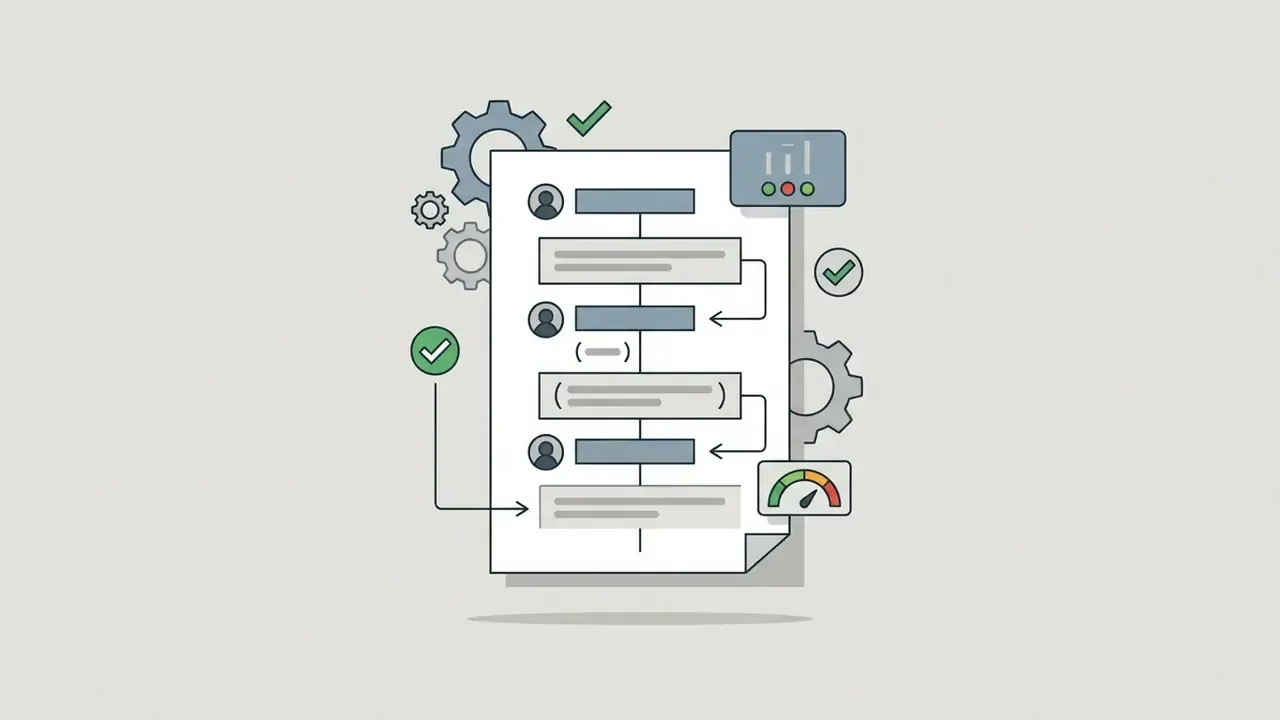

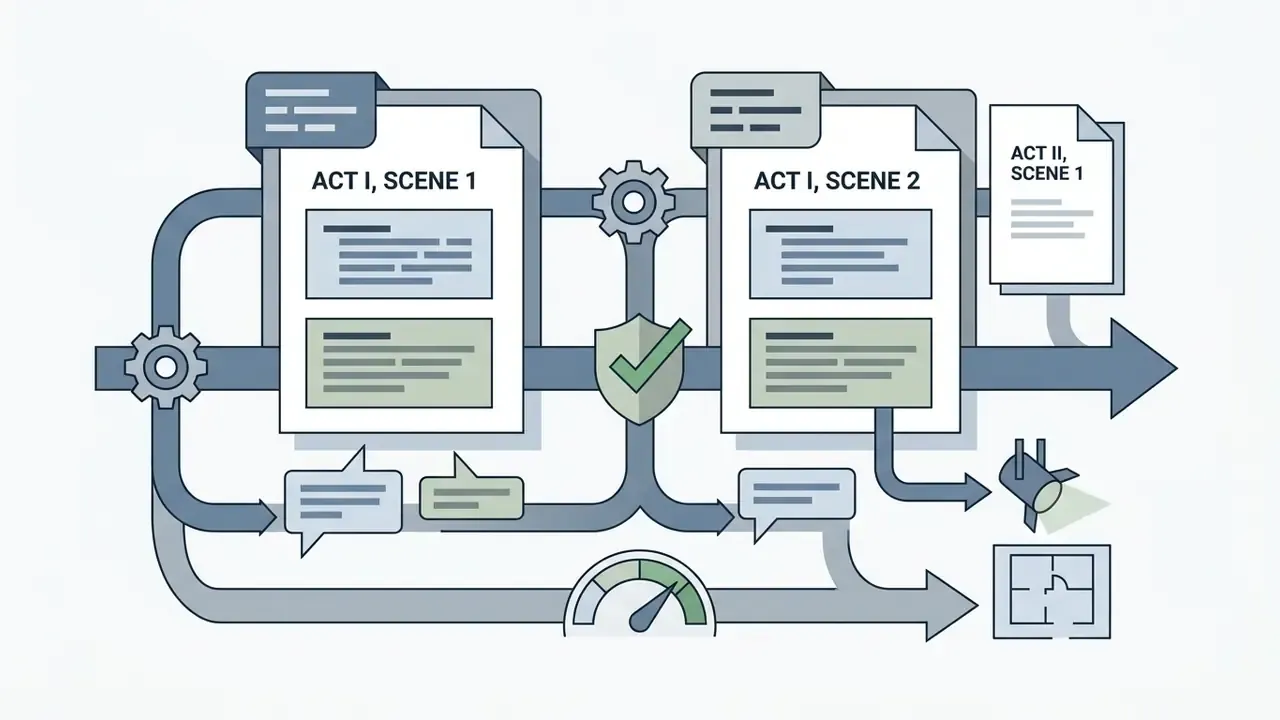
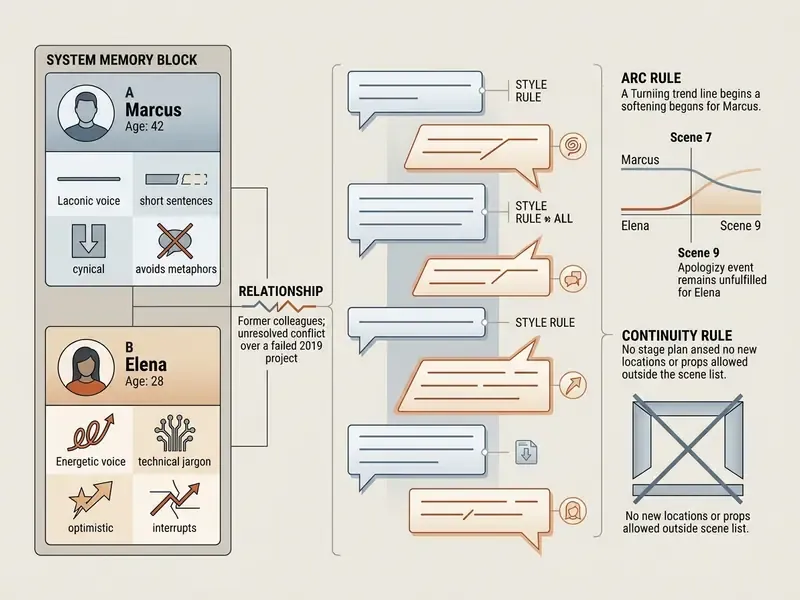
Combine this with a running scene ledger (scene number, location, props introduced, emotional state at exit) so each new generation inherits verified state instead of improvising it. Commercial tools market the same benefit. Squibler, for instance, positions consistent characters and cohesive storylines across a full screenplay as its differentiator. The persistence still has to be enforced by your prompt architecture, not assumed.
While an ai script writer efficiently handles structural formatting and scenario outlines, human creative direction remains necessary to inject deep emotional resonance and nuanced character motivations.
«LLM-generated stories pass 3–10× fewer creative-thinking tests than professional writers' texts across fluency, flexibility, originality, and elaboration.»
News Script Generator for Structured Information Delivery
An ai news script generator formats current events data into clear broadcast news scripts designed for teleprompter reading and audio-visual timing. News script frameworks pair spoken anchor text on the right side of a broadcast rundown table with visual and technical cues on the left. Broadcast writing convention requires a single clear focus, a lead that matches the pictures on screen, a body carrying the 5Ws and How, and a definite ending.
Teleprompter-ready scripts require short sentences (10 to 12 words per read line), clear phonetic spellings for complex names, and explicit pause markers [pause] every 6 to 8 words to guide natural anchor cadence. A structured ai news script generator helps keep broadcast copy objective, factual, and readable under live recording conditions.
«AI-Press uses a multi-agent system with LLMs and RAG to produce news material, including audience-feedback simulation based on demographic data.»
«Every tested LLM exhibits substantial gender and racial bias in generated news, including discrimination against women and Black individuals.» — Bias of AI-Generated Content (arXiv:2309.09825), 2024. https://arxiv.org/abs/2309.09825
Skits and Short Scripts for Engaging Content
An ai skit generator produces short, viral comedic scripts optimized for vertical social video platforms. The structural dynamics of a short skit rely on rapid setup and punchline execution:
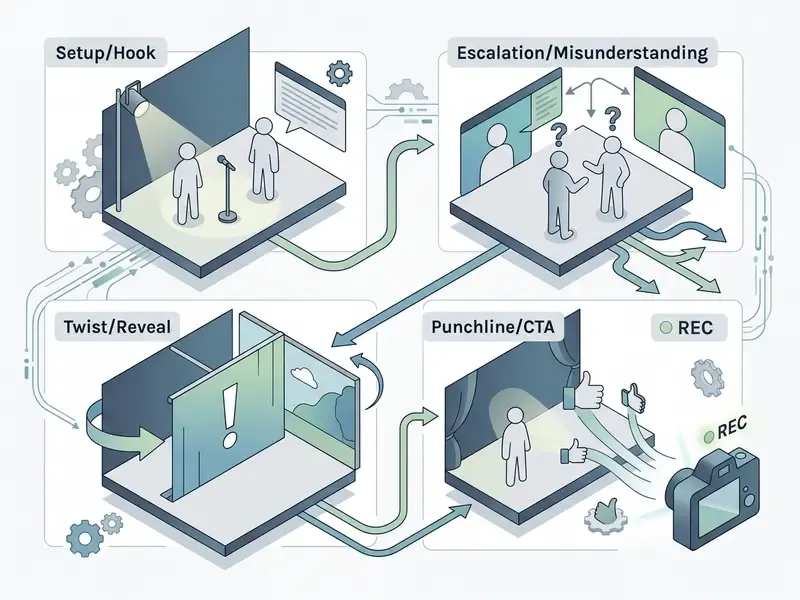
Commercial skit generators expose exactly this beat order (cold open, setup, escalation, reveal, reaction, punchline) and several package the twist as an explicitly separate beat alongside caption and hashtag suggestions. By compressing comedic beats into a 30- to 60-second window, an ai scenario generator free tool helps creators maintain fast pacing and deliver clear comedic timing that resonates with modern digital audiences.
Scripts for Regulated Industries and Corporate Communications
Marketing scripts are only one slice of the use case. In banking, insurance, and fintech, the same generation pipeline is applied to explanatory and educational video where accuracy carries regulatory weight:
- Product explainers Scripts that walk customers through loan terms, APR calculation, fee schedules, or account-opening requirements, where a hallucinated rate is a compliance incident, not a typo.
- Anti-fraud and security awareness Short-form scripts for phishing awareness, card-freeze instructions, and social-engineering red flags, distributed to both customers and staff.
- KYC and AML enablement Onboarding walkthroughs and internal training on identity verification, sanctions screening, and suspicious-activity escalation, where wording must match the approved procedure exactly.
- Financial literacy and onboarding Structured series scripts (budgeting, credit scores, first mortgage) where tone must stay neutral and non-advisory.
- Internal enablement Policy rollout videos, control-training modules, and audit-readiness briefings for distributed teams.
- Investor and B2B communications Earnings-summary narration, product-launch B2B explainers, and partner-enablement walkthroughs.
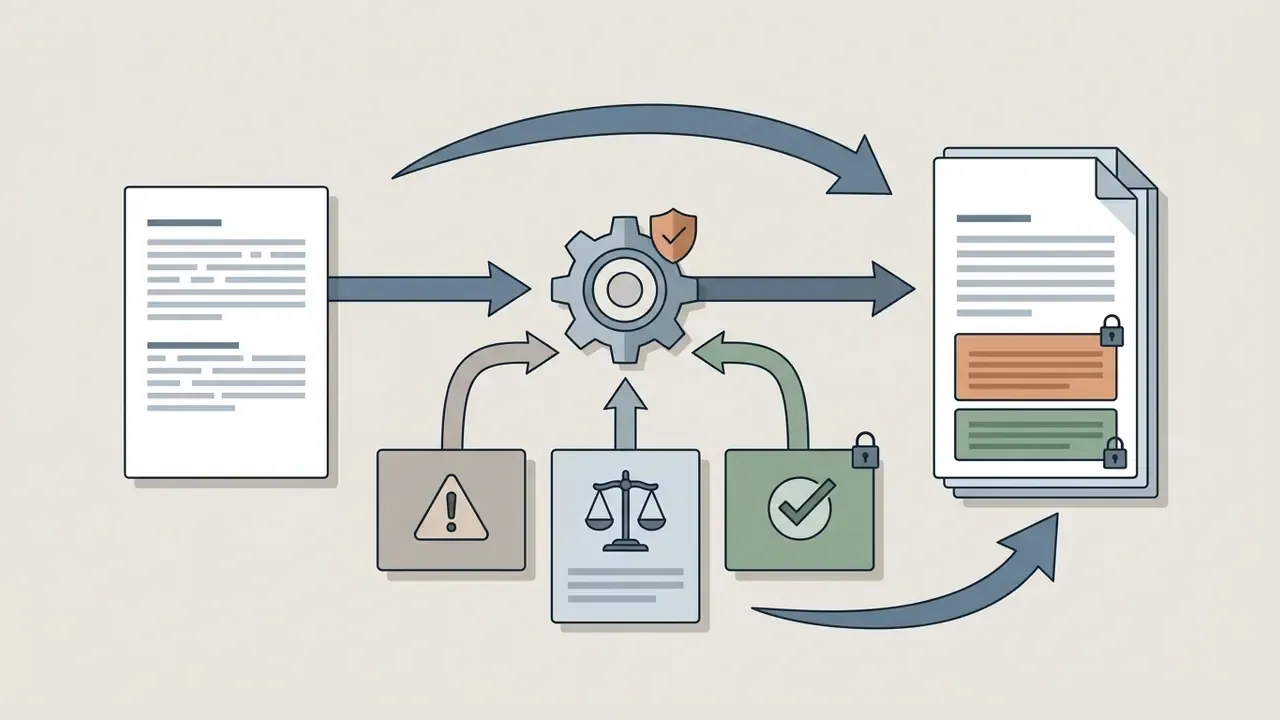
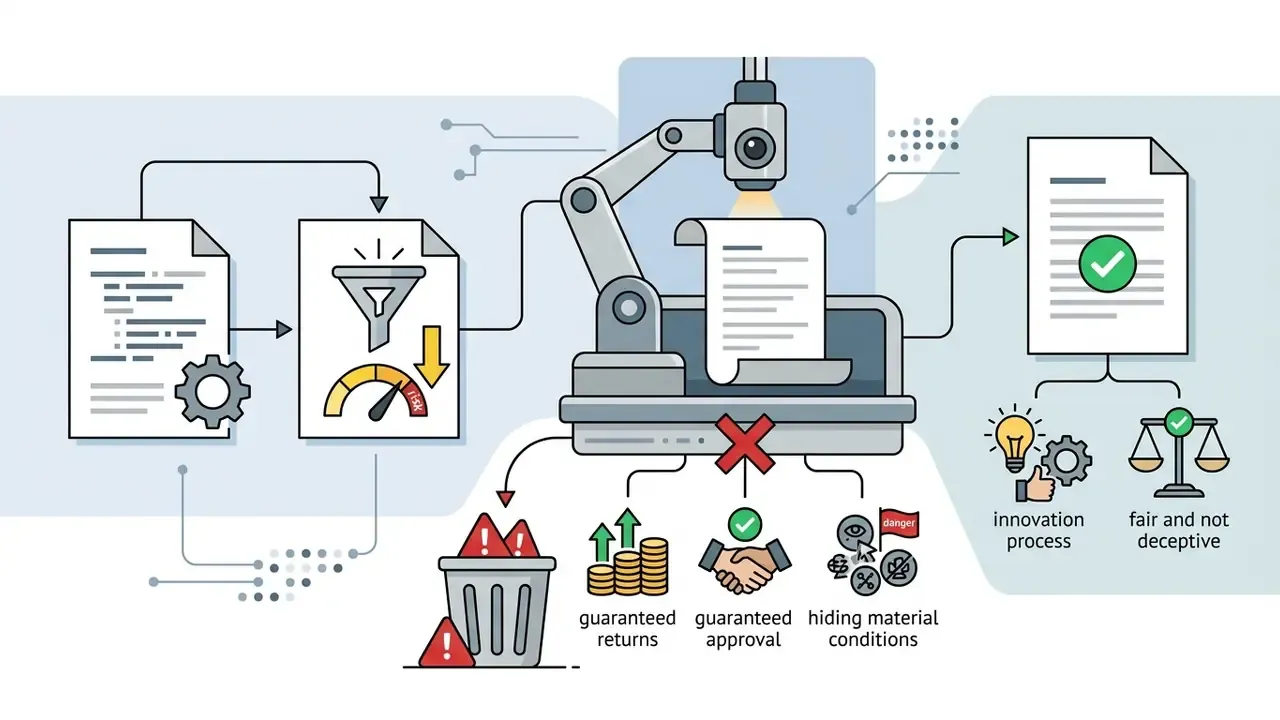
Three controls make this workable:
Disclaimer: This section is general information, not legal or compliance advice. Requirements for financial-services advertising differ by jurisdiction and product. Validate every script with your own legal, compliance, and marketing-review functions.
Model Risk Management, Audit Trail, and Risk-Adjusted ROI
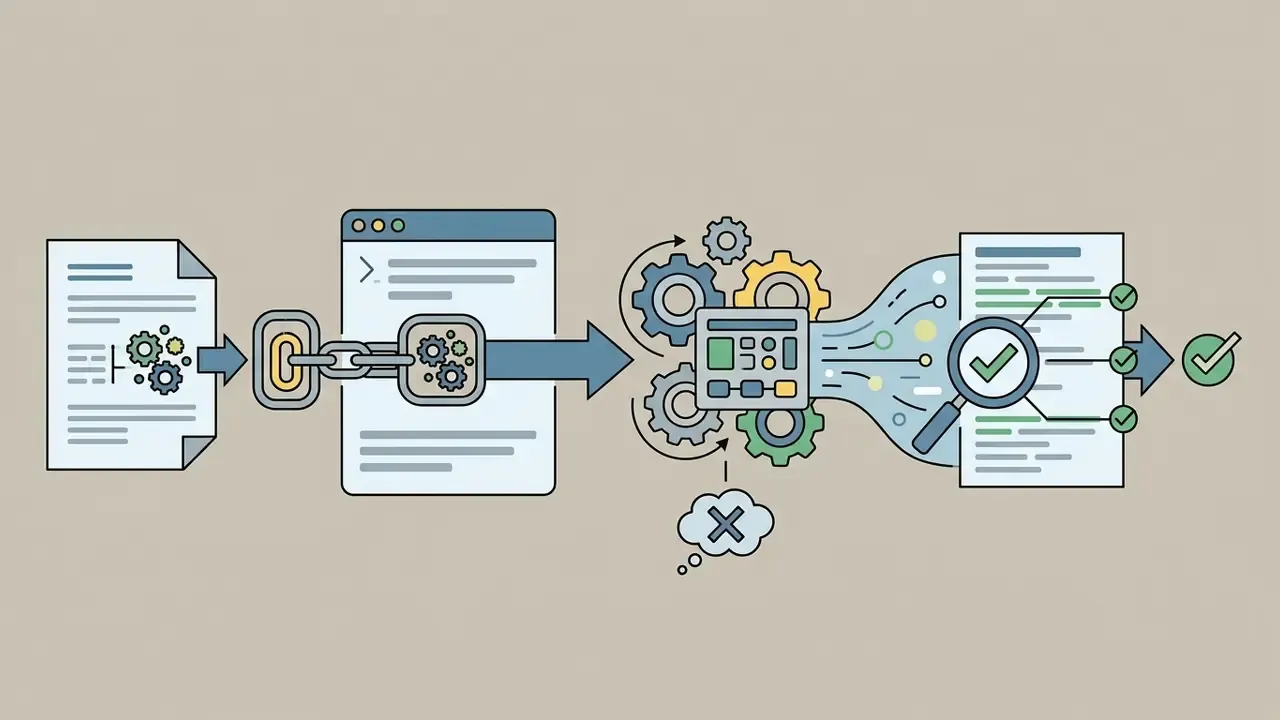
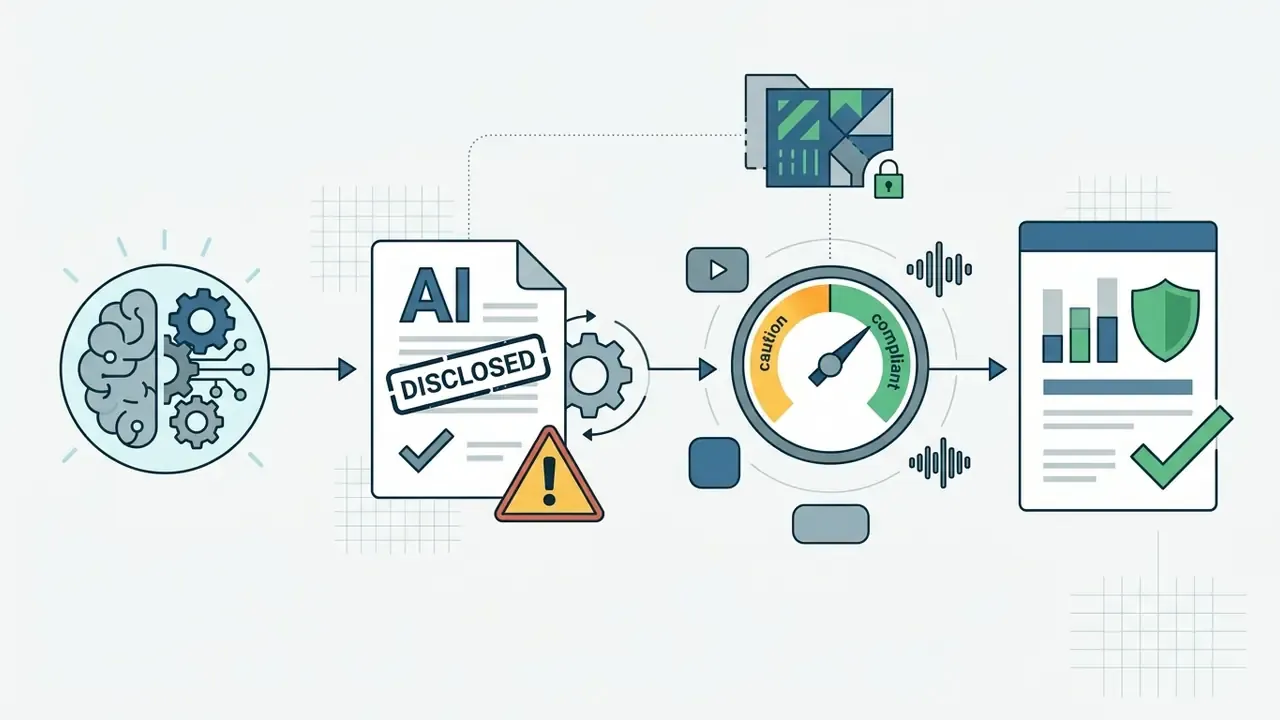
Governance is where most AI script deployments quietly fail. The draft is fast, but nobody can reconstruct how it was produced. NIST's AI Risk Management Framework (2024) requires generative systems to be demonstrably valid and reliable, with limitations documented beyond development conditions, and its Generative AI Profile flags provenance, privacy, security, and harmful-content handling as core risk areas.
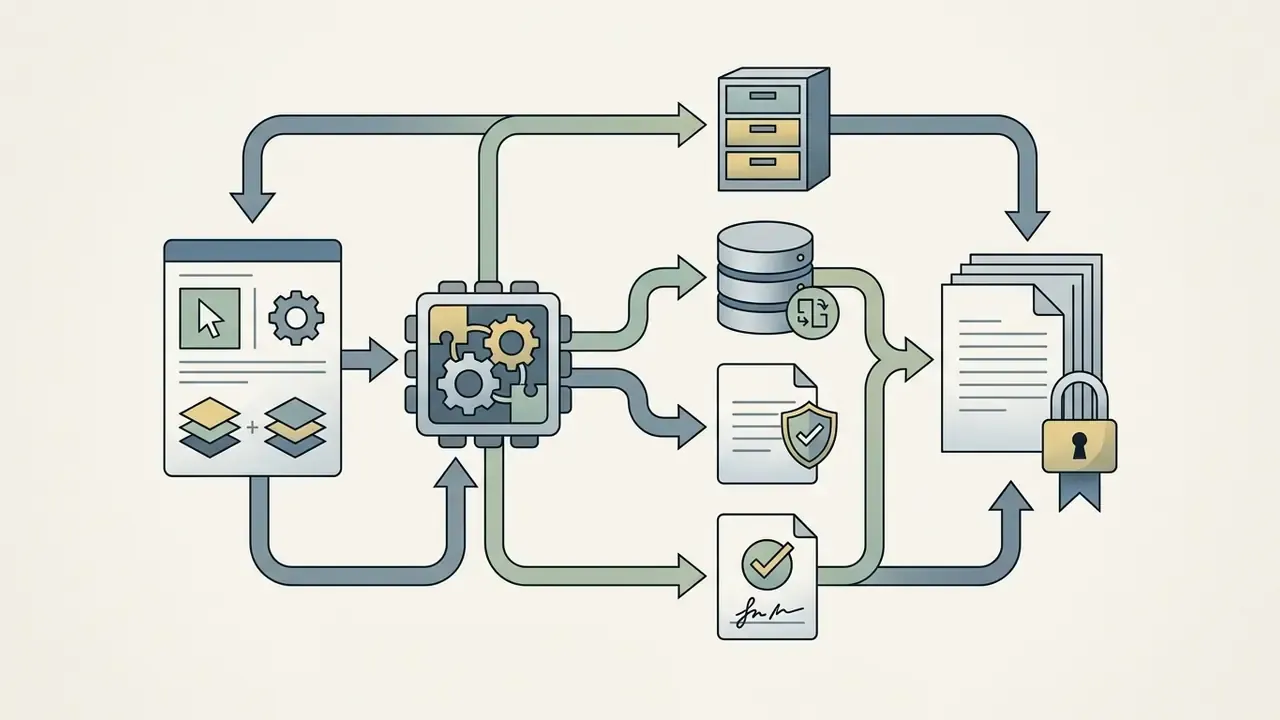
Minimum audit trail for script generation:
| Artifact to Log | Why It Matters | Retention Owner |
|---|---|---|
| Full prompt text (including system/CO-STAR block) | Reproducibility; proves what instruction produced the output | Content ops |
| Model name + version + temperature/parameters | Model-version drift changes output; needed for re-runs | Platform owner |
| Source inputs (URL, document hash, upload ID) | Confirms no confidential or PII source entered the model | Data protection |
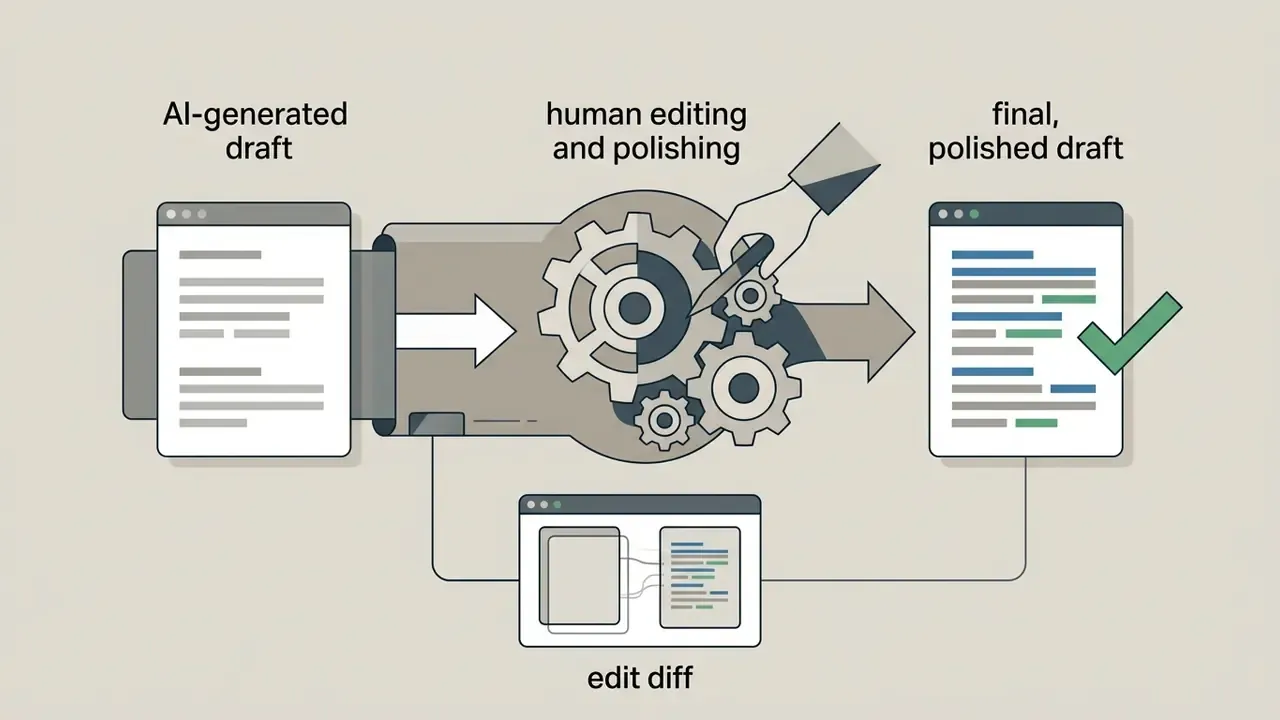
| Raw generated output before human edits | Separates machine contribution from human authorship (copyright) | Content ops |
| Human edit diff + editor identity | Evidences meaningful human authorship and review | Editorial lead |
| Approval chain (legal, compliance, brand) | Demonstrates control operation to internal audit | Compliance |
| Publication record (channel, date, disclosure applied) | Supports AI-transparency and labeling obligations | Marketing ops |
Integration checklist for MRM and GRC environments:
- Register recurring script-generation workflows in the model inventory with an owner, purpose statement, and materiality rating, consistent with supervisory model-risk expectations such as the Federal Reserve's SR 11-7 approach to model identification, validation, and ongoing monitoring. (Applicability depends on how your institution classifies non-decisioning content tools; confirm with your model risk function.)
- Define reproducibility tests: re-run a stored prompt against the pinned model version quarterly and diff the output to detect provider-side drift.
- Set residual-risk thresholds per content class (marketing versus product-terms versus news) with mandatory human sign-off above threshold.
- Prohibit Shadow AI: block unmanaged consumer accounts, route generation through SSO with role-based access control, and monitor for off-platform usage.
- Maintain content-provenance metadata and, where required, machine-readable AI labels. NIST AI 100-4 (2024) frames labeling, watermarking, and provenance metadata as the technical basis for synthetic-content risk management, while noting that effectiveness must be verified before deployment.
Risk-adjusted ROI: a workable formula
Naïve ROI models count only drafting hours saved. A defensible model prices the control layer:
Net Annual Benefit =
   (Hours saved on drafting × loaded creative rate)
 − (Editorial revision hours × loaded editor rate)
 − (Legal / compliance review hours × loaded reviewer rate)
 − (Platform + API licence cost)
 − (Governance overhead: logging, inventory, periodic validation)
 − (Expected residual-risk cost: probability of a correction/retraction × remediation cost)
Risk-Adjusted ROI = Net Annual Benefit ÷ (Licence + Governance + Review cost)
Two practical notes. First, review cost scales with content risk, not word count: a 60-second product-terms script can consume more compliance minutes than a ten-minute brand explainer. Second, throughput economics differ sharply between tiers. Free tools cap credits (for example, 50 credits per month on some free plans versus 300–800 on paid tiers), while API pricing is token-metered with tiered rate limits, so model your cost per approved script, never per generated draft.
If you want to sanity-check those numbers before a procurement conversation, our AI Media Calculators let you model per-script cost against volume, review hours, and licence tier.
Free AI Script Generator: What to Check Before You Use It
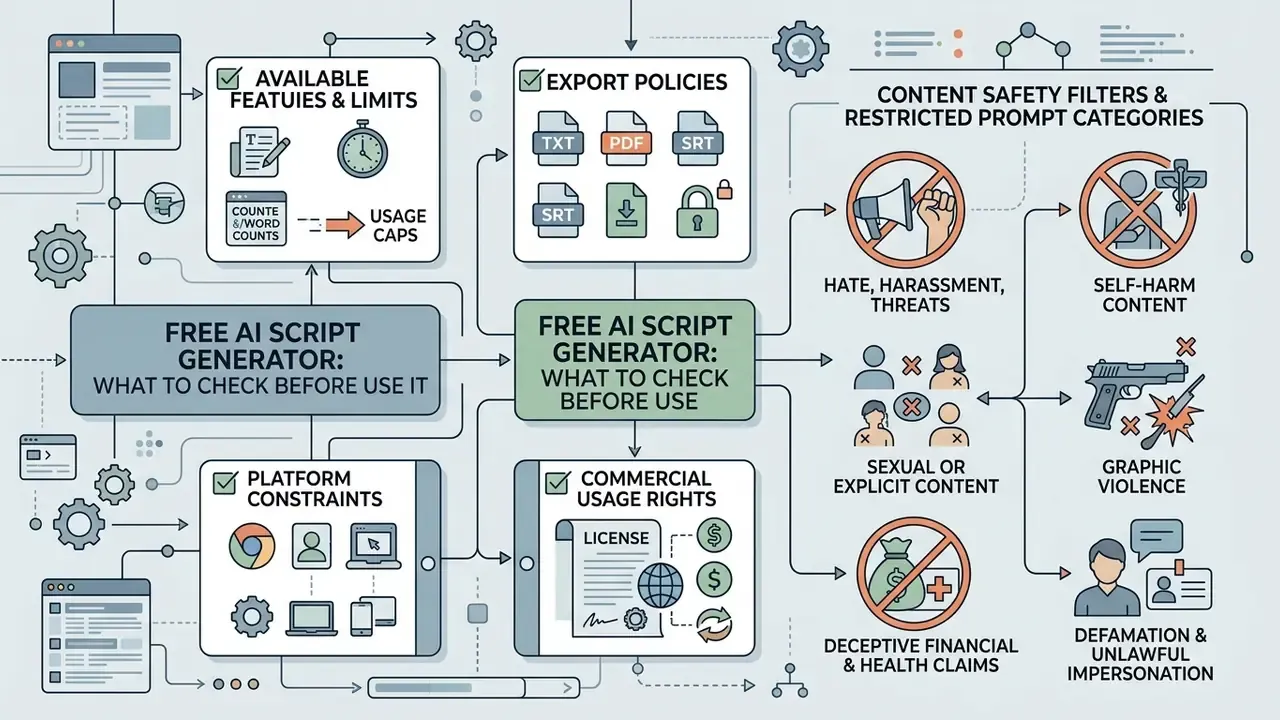
Selecting a best free ai script generator means evaluating functional capabilities, export policies, platform constraints, and commercial usage rights. Many platforms offer an ai script generator free online, but understanding service limits prevents operational bottlenecks later. Readers comparing full-cycle production stacks can also review our roundup of free AI video generators and free photo editors.
Free AI Script Generator Online: Available Features and Limits
Freemium script generation tools provide accessible entry points for content creators, but they typically impose operational limits:
| Feature Category | Free Plan Availability | Enterprise / Paid Tier Standard |
|---|---|---|
| Generation Volume | Limited daily credits or monthly token caps (for example, ~50 credits/month) | Unlimited script generation or metered API access with raised RPM/TPM ceilings |
| Export Options | Plain text copy/paste; watermarked video exports; weekly export caps | PDF, .fdx (Final Draft), DOCX, JSON exports; watermark-free rendering |
| Data Privacy | User inputs may be used for model training unless opted out | Strict zero-data-retention, private tenancy, isolated VPC |
| Customization | Standard templates and generic tone controls | Custom brand voice, URL scraping, custom LLM fine-tuning |
| Access Control | Single personal account, shared logins common | SSO, role-based access control (RBAC), workspace-level permissions |
| Security Attestations | Rarely published | SOC 2 Type II, ISO 27001, DPA and sub-processor list on request |
| Governance Integration | None | Audit logs, API webhooks into GRC/MRM systems, retention policy controls |
| Clip / Output Length | Hard caps common on video output (for example, 5-second clips, always watermarked) | Full-length rendering, batch generation, priority queues |
Users searching for a best ai script generator should test whether an ai script generator online free service allows unrestricted text exports before committing to a production pipeline. Note that "free" is rarely uniform. Some vendors advertise unlimited script generation while gating video export behind watermark removal, whereas others cap daily credits at the generation layer. A free ai script generator tool that blocks DOCX or .fdx export can stall a whole editorial handoff, and a script ai generator free tier with training-on-inputs enabled is simply not usable for regulated content. Run a five-minute export test before anything else.
Content Safety Filters and Restricted Prompt Categories
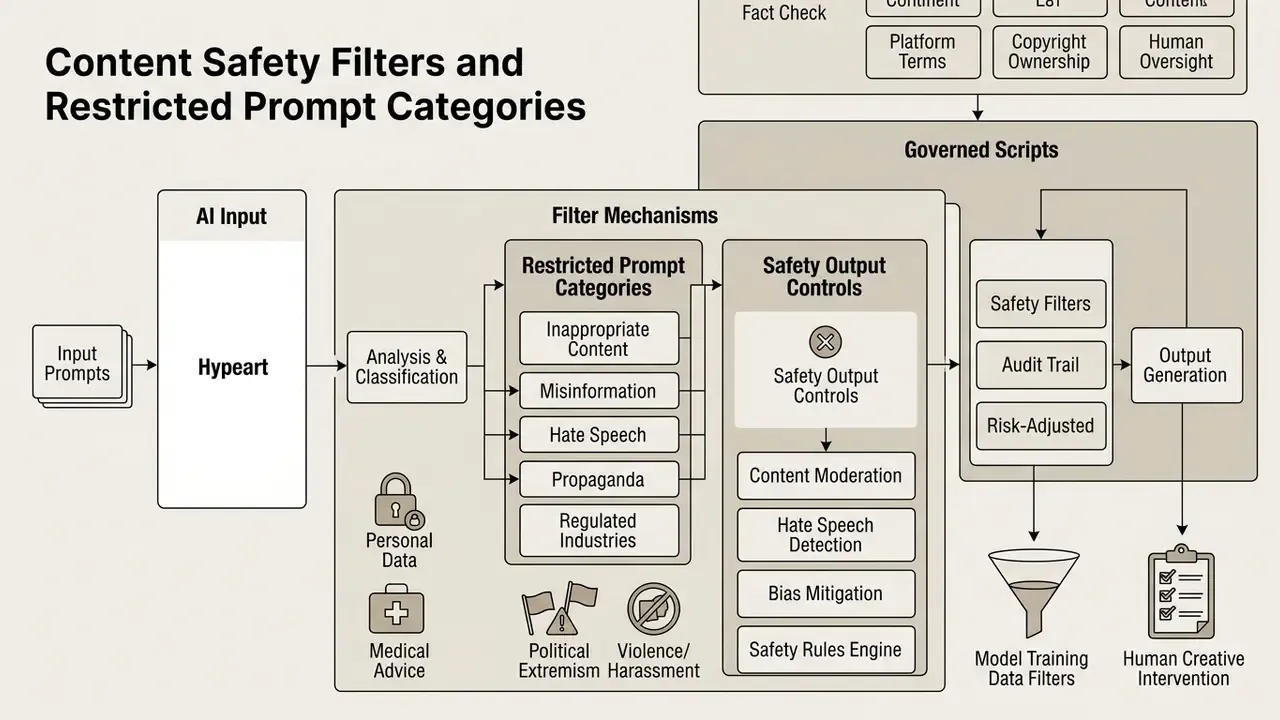
Commercial AI script generators implement automated moderation layers (provider safety APIs plus custom enterprise filters). Prompts containing the following categories are typically flagged or rejected outright:
- Hate, harassment, and threats, including targeted abuse of protected groups.
- Self-harm content: instructions, encouragement, or glorification.
- Sexual or explicit content, especially any material involving minors, which is blocked without exception.
- Graphic violence: scene directions depicting non-consensual violence or gore.
- Deceptive financial or health claims: unverified crypto returns, guaranteed investment gains, or guaranteed cures.
- Defamation and unlawful impersonation: news-style scripts putting fabricated statements in the mouths of real public figures without a clear satire label.
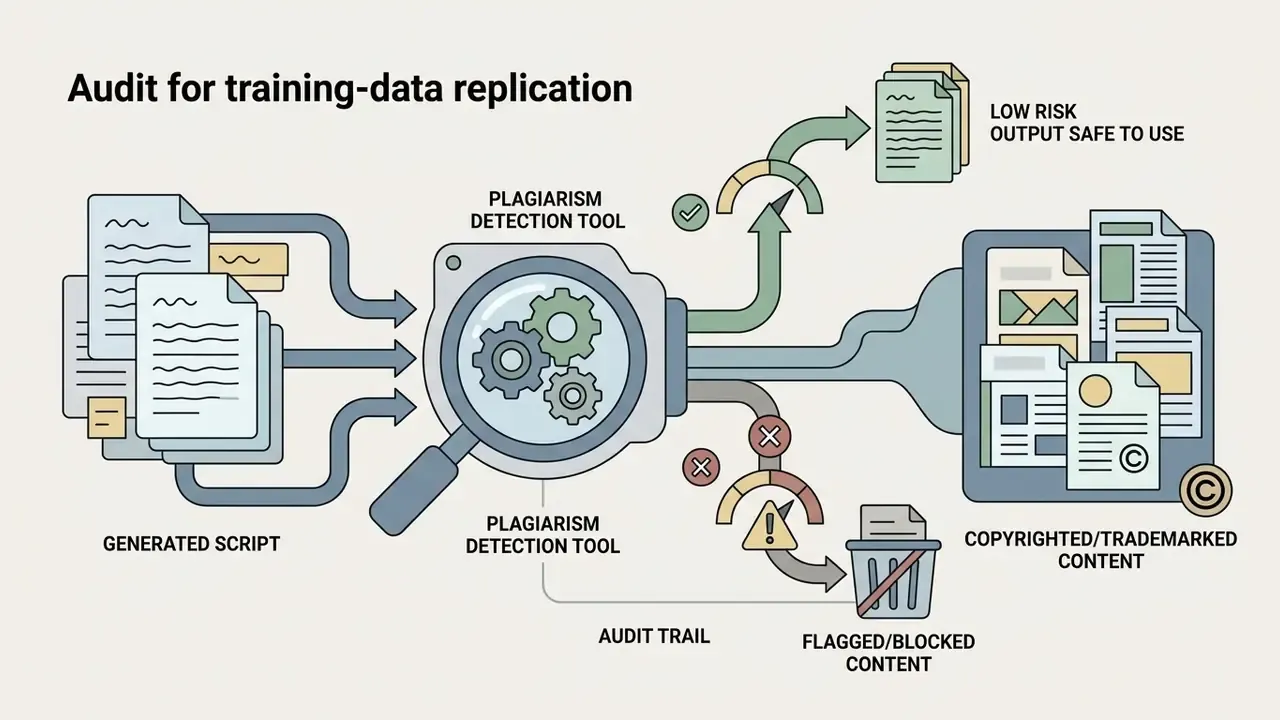
- Copyrighted IP replication: requests to reproduce verbatim dialogue from protected films or television series.
NIST guidance (AI 600-1, 2024) reinforces this operationally: generative AI use should align with applicable law and policy and include content filters against harmful, false, illegal, or violent output. For enterprise deployments, log every blocked prompt. Repeated rejections are a useful early signal of policy training gaps or Shadow AI attempts.
How to Choose the Best AI Script Generator for Your Task
Selecting the optimal script ai generator depends on your production requirements. Marketing teams generating video ads prioritize URL-scraping capabilities and direct ad-framework support. Narrative writers need multi-speaker dialogue handling and standard screenplay export formats. Regulated-industry teams weight security attestations, retention policy, and audit logging above creative features.
Evaluate candidates against the NIST AI RMF dimensions (validity and reliability, safety, security and resilience, transparency and explainability, privacy enhancement, and bias management) rather than feature checklists alone. Then add three commercial criteria: cost per approved script, export fidelity (PDF, .fdx, DOCX, JSON), and integration depth with your existing production stack. One more, easy to forget: independence from a single model vendor, so a pricing change or a deprecation notice does not freeze your pipeline.
When building a comprehensive digital media stack, creators often combine script tools with image processing and AI image generators. For detailed feature evaluations, check our guides on using an automatic photo editor online free, the fundamentals covered in our photo editor guide, or image query tools like ask ai with picture. Developers interested in programmatic script integration can review our AI Media API Guides for endpoint specifications and rate limits.
Commercial Use and Rights to AI-Generated Scripts
«The U.S. Copyright Office report examines the copyrightability of material produced with generative AI, stressing the central role of human authorship in determining rights.»
A European Parliament study on generative AI and copyright (2025) reaches a parallel conclusion: purely AI-generated outputs without meaningful human creative input are not protected in the EU and may be freely used, reproduced, or adapted, while still creating infringement exposure if the output reproduces protected works. WIPO's 2026 IP landscape notes that EU AI Act Article 53 obliges general-purpose AI developers to comply with copyright law and report training-data information, and that rightholders may reserve text-and-data-mining rights.
To secure commercial rights and brand safety:
Organizations tracking legal precedents and copyright policy updates can consult our curated timeline on AI Litigation and Case Timelines.
How to Get a Professional Script with AI
Turning a raw AI draft into a production-ready script requires systematic editing, voice alignment, and precise timing verification. Good scriptwriting blends automated generation speed with human editorial judgment.
Structure of a Strong Video Script: Hook, Body, and Call to Action
A professional video script maintains a balanced distribution of runtime, spoken word count, and engagement triggers.
When pacing spoken voiceovers, standard broadcast speaking speeds range between 130 and 150 words per minute (WPM). A 60-second explainer script should contain roughly 130 to 140 words to allow natural pauses, breathing room, and clear articulation; a 30-second spot lands near 65–75 words. Energetic social content can push 160–180 WPM, but teleprompter reads should stay in the 130–150 band.
CTA placement should follow runtime:
| Runtime | CTA Placement Rule |
|---|---|
| Under 2 minutes | Single CTA in the final 15 seconds |
| 2–10 minutes | CTA at roughly 75% of runtime, repeated at the end |
| Over 10 minutes | Add a mid-roll CTA at 40–50%, plus the closing CTA |
Mark dynamics explicitly in the script: pauses, beat notes, and pattern breaks every 3–8 seconds in short form or between sections in long form. Creators moving from script to timeline can follow our YouTube video editing workflows for the assembly stage.
Pre-Production Script Audit: Checks Before Publishing or Recording
«VideoStudio outperformed leading models on visual quality, content consistency, and user preference, thanks to the LLM script acting as the central orchestration layer.»
Creators working with diverse text formats, such as stylized text overlays or ASCII graphics for video captions, can reference specialized utilities like an ascii art generator or an ascii art text generator for creative visual styling.
Tool Selection Matrix by Task Type
| Task Requirement | Primary Parameter to Prompt | Recommended Output Format | Key Metric to Audit |
|---|---|---|---|
| YouTube explainer | Retention pacing, pattern breaks | Single-column script with visual cues | Retention rate at 0:15 |
| TikTok / UGC ad | Problem-Agitate-Solve (PAS) | Two-column A/V script (30–60 s) | Click-through rate (CTR) |
| Product URL ad batch | Value prop extraction, variant count | Two-column A/V, 3+ variants | Cost per approved script, CVR |
| Feature film / stage play | Character bible, scene sluglines | Standard screenplay (12 pt Courier) | Dialogue pacing and continuity |
| Broadcast news | Phonetic spelling, teleprompter cues | Two-column audio/video rundown | Readability at 140 WPM, bias screen |
| Regulated product explainer | Fact-locked figures, mandatory disclosures | Two-column A/V with locked legal block | Disclosure presence, UDAAP screen |
| Multilingual campaign | Locale, cultural idiom adaptation | Per-locale script with recalculated word budget | WPM per language, regional compliance |
| Comedy skit | Setup → escalation → twist → punchline | Vertical beat sheet (30–60 s) | Watch-through rate, share rate |
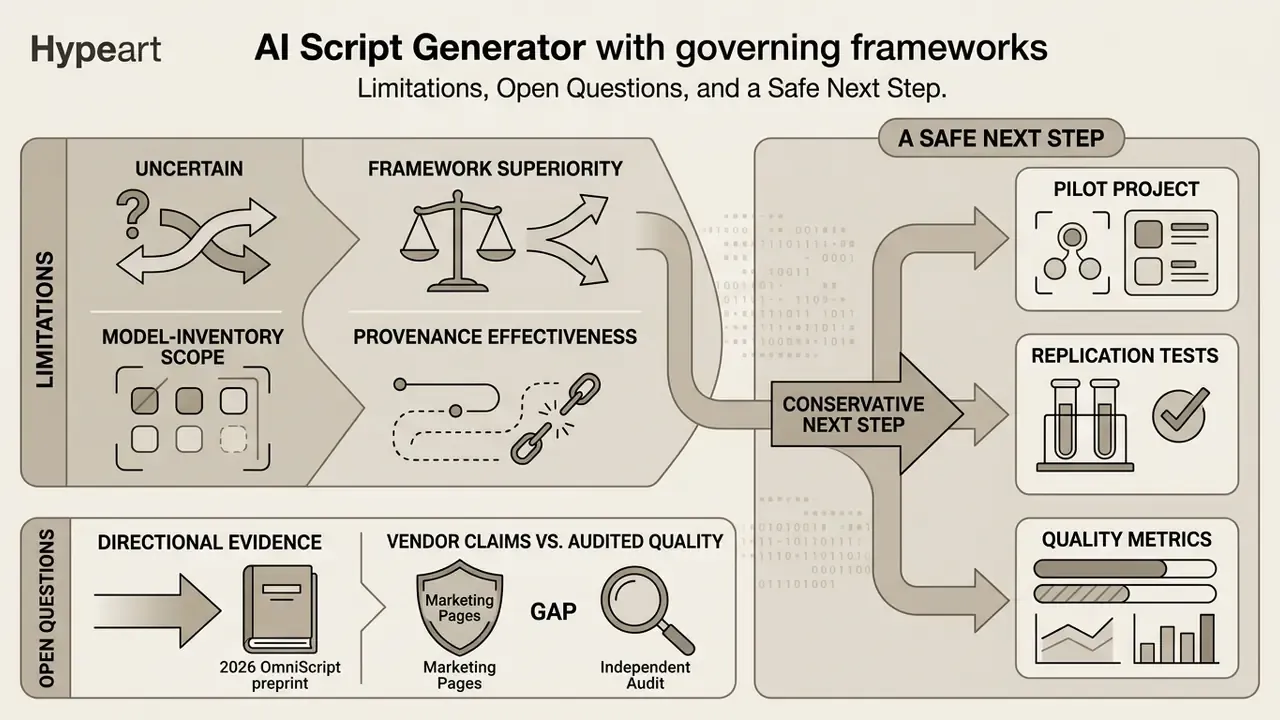
Limitations, Open Questions, and a Safe Next Step
Some things in this guide are settled. Others are not, and pretending otherwise would be dishonest.
What remains uncertain:
- Framework superiority. No independent evidence ranks AIDA above PAS or BAB for a given audience. Test, do not assume.
- Model-inventory scope. Whether a non-decisioning content generator belongs in your SR 11-7 inventory is an institutional judgment call, not a settled rule. Ask your model risk function in writing.
- Provenance effectiveness. Watermarking and labeling are recommended, yet NIST itself notes robustness must be verified per deployment.
- The 2026 OmniScript preprint cited earlier is directional evidence only, pending independent replication.
- Vendor claims on language coverage (29, 30, 80+ locales) reflect marketing pages, not audited quality benchmarks.
A conservative next step. Pick one low-risk content class, for example internal enablement or brand explainers, and run a four-week controlled pilot: pinned model version, stored prompts, full audit log, two-pass review, and a measured cost per approved script. Then compare that number against your current baseline before touching anything customer-facing or product-terms related. Slow start, cleaner evidence.
FAQ: Frequently Asked Questions About AI Script Generators
How reliable and safe are AI-generated scripts?
The structural quality of an ai script maker output is generally high, but factual accuracy, creative originality, and ethical safety require strict human oversight. Official guidance converges on the same conclusion. Japan's Digital Agency guidebook (2024) states that text-generation output quality cannot be fully guaranteed and recommends restricting use to pre-tested cases, while the NIST AI Risk Management Framework (2024) requires systems to be demonstrated valid and reliable with limitations documented beyond development conditions. The UK Department for Education's generative AI product safety standards add requirements for reliable harmful-content blocking and robustness under adversarial input.
«AI texts use more numbers, auxiliary verbs, and pronouns, projecting an "objective" style, yet sexist patterns from human text are reproduced and even amplified by most models.» — Contrasting Linguistic Patterns in Human and LLM-Generated News Text, Artificial Intelligence Review (2024). https://arxiv.org/abs/2308.09067 «The emergence of LLMs has significantly simplified the generation of high-quality fake news, making AI-content governance and detection critical tasks.» — MegaFake (arXiv:2408.11871), 2024. https://arxiv.org/abs/2408.11871 To keep an ai script writer generator safe and legitimate in production:
- Audit factual claims: Independently verify all statistics, product specs, and historical assertions.
- Eliminate bias: Screen scripts for unintentional demographic or cultural bias before recording.
- Refine voice and tone: Rewrite generic phrasing to reflect authentic brand personality.
- Preserve provenance: Keep prompt, model version, and raw output on file for audit and disclosure.
- Review platform terms: Verify pricing, usage rules, and commercial rights on our pricing page and AI Media Support and Troubleshooting hub. Disclaimer: This information is general in nature. AI-generated scripts covering news, political material, financial products, health, or other sensitive topics require mandatory fact-checking and editorial control before publication.
Can I edit an AI-generated script after generation?
Yes, and you should. Editing is not optional polish; it is the step that creates human authorship for copyright purposes and removes hallucinated detail. Expand scenes, rewrite dialogue, tighten pacing, and re-verify facts. Keep structural rewrites at the outline level and line edits local, then re-run the continuity check.
Does the platform own the scripts I generate?
Ownership terms vary by vendor. Several consumer platforms state that users retain rights to their generated works and may use them commercially under the applicable AI product terms. Separately, copyright protection itself depends on human authorship. A platform granting you usage rights does not automatically make purely machine-generated text copyrightable. Read both the ToS and the copyright position before building a commercial asset library on top of the output.
What are the real limitations of AI script writers?
Four recurring ones. First, factual hallucination: the model will produce confident, wrong specifics. Second, creative shallowness, quantified by creativity-test research showing large gaps against professional writers. Third, bias reproduction, documented across models in news-generation studies. Fourth, memory drift in long-form work, which requires an explicit character bible and scene ledger to control.
How many languages can an AI script generator handle?
Commercial platforms commonly advertise 29–30+ languages for script output, with script-to-video pipelines pairing that text with neural voices across 80+ locales. Quality is uneven. High-resource languages perform best, and every locale needs a recalculated word budget plus a native-speaker review for idiom and regulatory language.
Which prompts will be rejected?
Prompts involving hate or threats, self-harm, sexual content (particularly any involving minors), graphic violence, deceptive financial or health claims, unlawful impersonation of real people, and verbatim reproduction of copyrighted scripts. See the restricted-category list above for the full policy view.
How do I calculate ROI if compliance review is expensive?
Use the risk-adjusted formula in the governance section: subtract editorial hours, legal and compliance review hours, licence cost, governance overhead, and expected residual-risk remediation cost from gross drafting savings. Measure cost per approved script, not per generated draft.
Is a free AI script generator good enough for commercial work?
Sometimes, for low-risk content. A free ai script generator online is fine for ideation, internal drafts, and social experiments. For anything customer-facing in a regulated environment, check three gates first: training-on-inputs policy, export fidelity, and audit logging. Fail any one of them and the free tier becomes a compliance liability rather than a saving. For broader terminology definitions, technical frameworks, and tool categorizations across video and audio AI systems, visit our comprehensive AI Media Glossary.