Synthetic video generation moved out of the research lab years ago. In 2026 it is procurement-grade infrastructure. Enterprise teams and media creators use generative models to build digital avatars, automate talking-head production, and push localized video across a dozen channels at once. That is the easy part. Deploying synthetic celebrity media inside a regulated organization requires a harder review: visual fidelity, lip-sync precision, model risk classification, vendor security posture, and legal disclosure duties.
Executive Summary
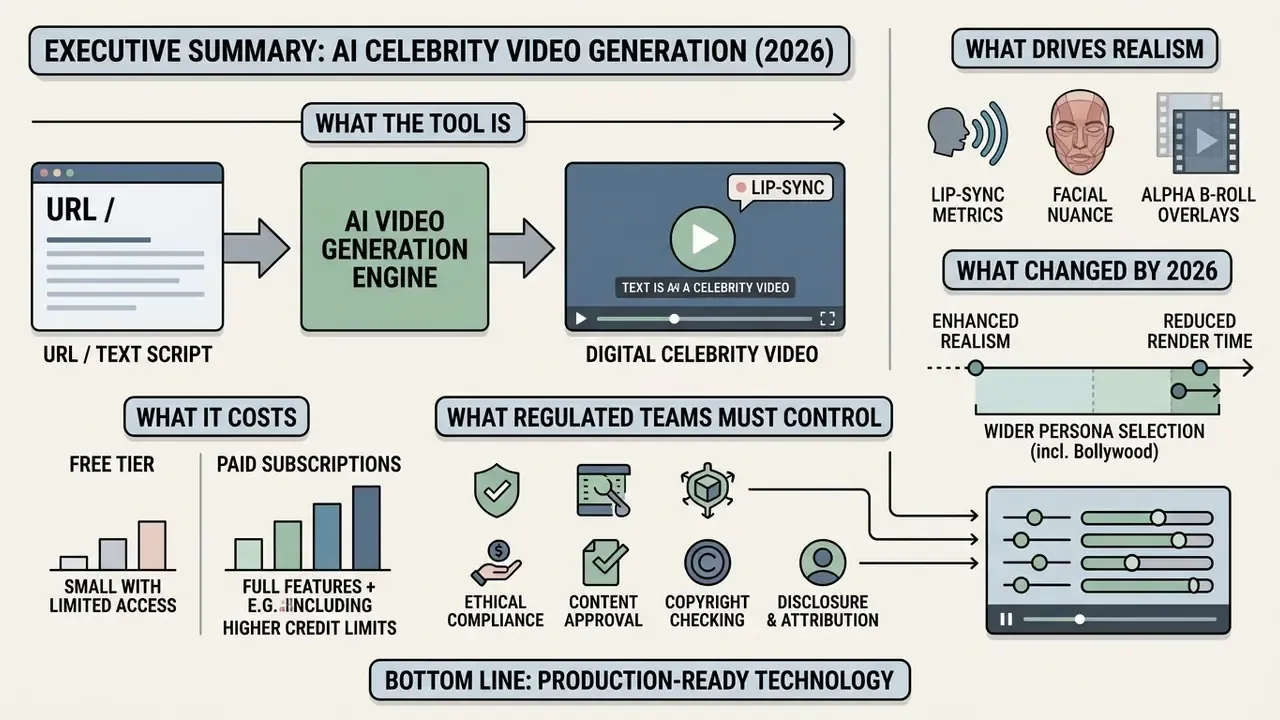
- What the tool is. An AI celebrity video generator converts a script, a pasted URL, an audio file, or a reference photo into a lip-synced talking-head clip, exported as MP4 in 9:16, 1:1, or 16:9.
- What drives realism. Five variables decide output quality: source image resolution, lip-sync alignment (), multilingual prosody, head-pose diversity, and identity consistency measured with ArcFace CSIM.
- What changed by 2026. URL-to-video ingestion, alpha-channel background matting for B-roll overlays, and regional persona libraries (Bollywood and other non-Western archetypes included) are now baseline features rather than differentiators.
- What it costs. Free tiers cluster around daily renewable credits (roughly 10 per day) or one-time pools of 80 to 125 credits worth 1 to 3 minutes, almost always watermarked. Commercial rights usually unlock only on paid plans.
- What regulated teams must control. EU AI Act Article 50 disclosure, GDPR lawful basis for biometric data, US right-of-publicity consent chains, internal model-risk validation mapped to SR 11-7 and OCC 2011-12, SOC 2 Type II vendor review, and Shadow-AI prevention through SSO plus DLP.
- Bottom line. The technology is production-ready. The residual risk is legal and reputational, so every published clip needs a documented consent chain, an on-screen AI label, and C2PA provenance.
Who Should Read This, and What Decision It Supports
This guide is written for three overlapping buyers. Marketing and content leaders who want cost per finished clip. Risk and compliance officers who own the disclosure and likeness exposure. Platform and API owners who must wire rendering jobs into an existing stack without creating an unmonitored data path.
The commercial question underneath all three roles is narrow: can we publish synthetic presenters at volume without inheriting a right-of-publicity claim or an audit finding? The answer depends less on model quality than on whether consent, labeling, and logging are automated before the first campaign ships. Everything below is ordered around that sequence: what the tool does, what makes it look real, what makes it legally defensible, how to build a clip, where it pays off, and how to compare vendors on more than a feature grid.
What an AI Celebrity Video Generator Is and What Videos It Creates
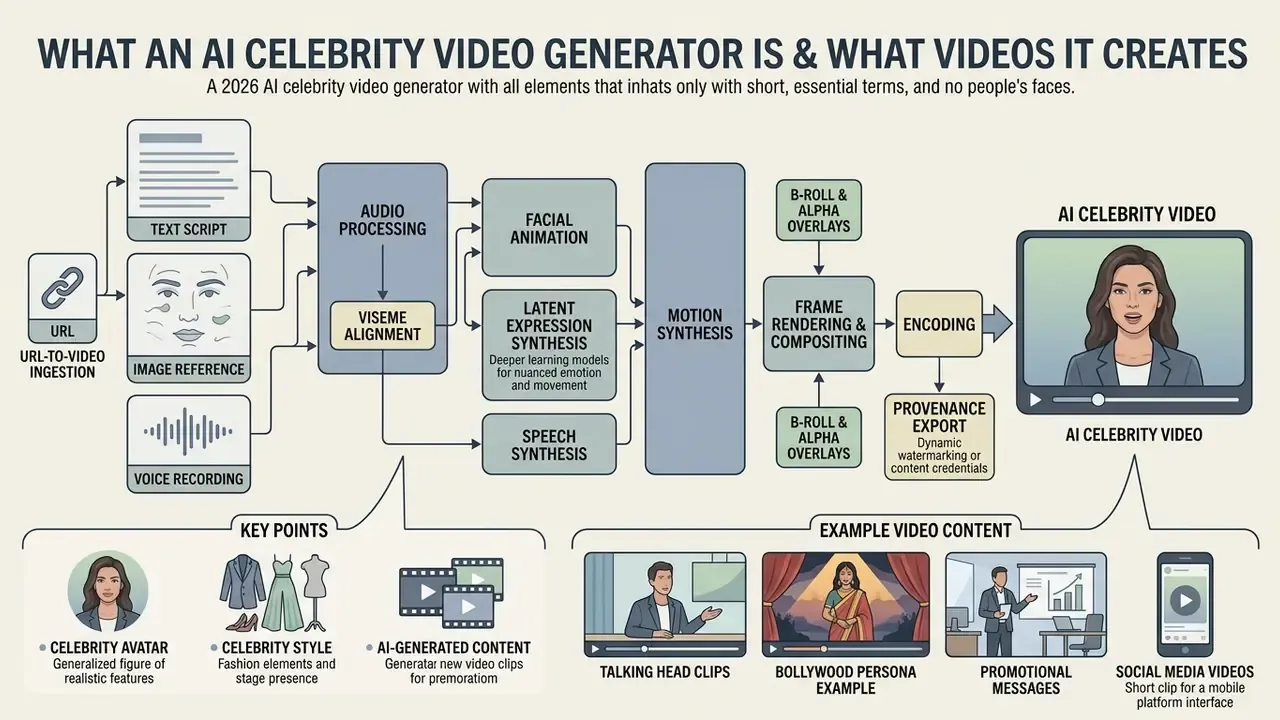
An AI celebrity video generator is a software platform that combines speech synthesis, facial animation, and deep learning models to produce talking-head clips from text scripts, static photos, or audio recordings. These systems automate the whole video creation pipeline. Phonemes are mapped onto a digital face, and synchronized lip movement plus facial expression is rendered without a camera in the room.
«Talking-head generation aims to synthesize realistic videos of a person speaking from a still image, audio signal, text, or combination of inputs.»
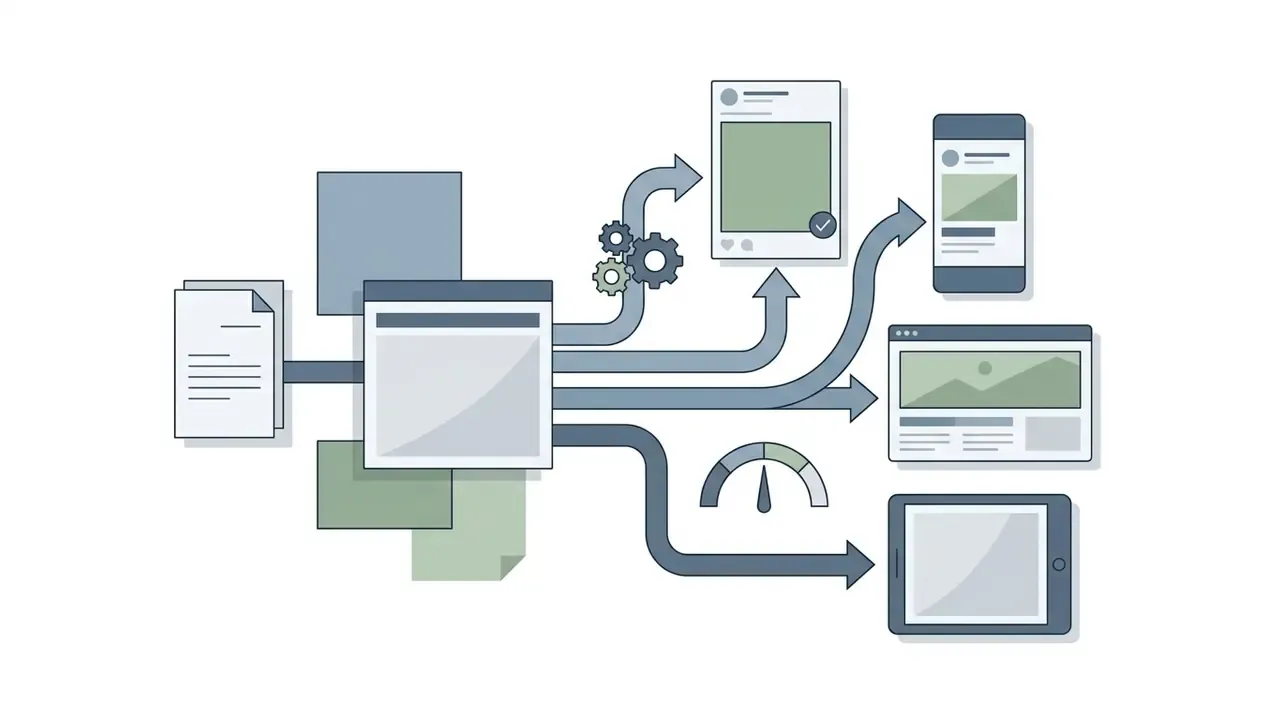
The underlying stack has three layers: script-to-video engines, neural rendering pipelines, and asynchronous job processing. Users submit text or pre-recorded driving audio, select a visual persona, and receive an encoded file (usually MP4) in vertical 9:16, square 1:1, or landscape 16:9 formats tuned for web and social distribution. Readers mapping the wider tool category can start from our overview of AI video generators and the adjacent AI voice generator guide, which covers voice quality, language coverage, and licensing terms.
One practical framing helps here. Think of the generator as an assembly line rather than a camera. Each station adds a specific asset, and each station also adds a specific risk.
Celebrity Avatar, Celebrity Style, and AI Generated Video of Celebrity
An AI generated video of celebrity means synthetic media that reproduces the face, voice, and recognizable likeness of a real public figure. Celebrity style means something narrower: a synthetic persona or aesthetic that evokes a generic archetype, such as a Hollywood actor or a broadcast host, without copying an identifiable individual.
A celebrity avatar is the visual digital asset used during generation. When building stylized characters, teams often use an ai character description generator to draft non-infringing visual prompts, or an ai character generator to build synthetic personas from scratch. The distinction is not cosmetic. Replicating a real person triggers right-of-publicity restrictions, while generic styling stays inside ordinary intellectual property rules.
«Systems may offer stylized characters resembling celebrity archetypes without copying a specific face, precisely in order to reduce legal exposure.»
The working legal test is identifiability. Under EU AI Act terminology, a deepfake is AI-generated or manipulated image, audio, or video content resembling an existing person that would falsely appear authentic. A stylized red-carpet host with no traceable identity cues sits outside that definition. A rendered face that viewers can name does not.
How AI Turns Script, Image, and Voice Into a Talking Video
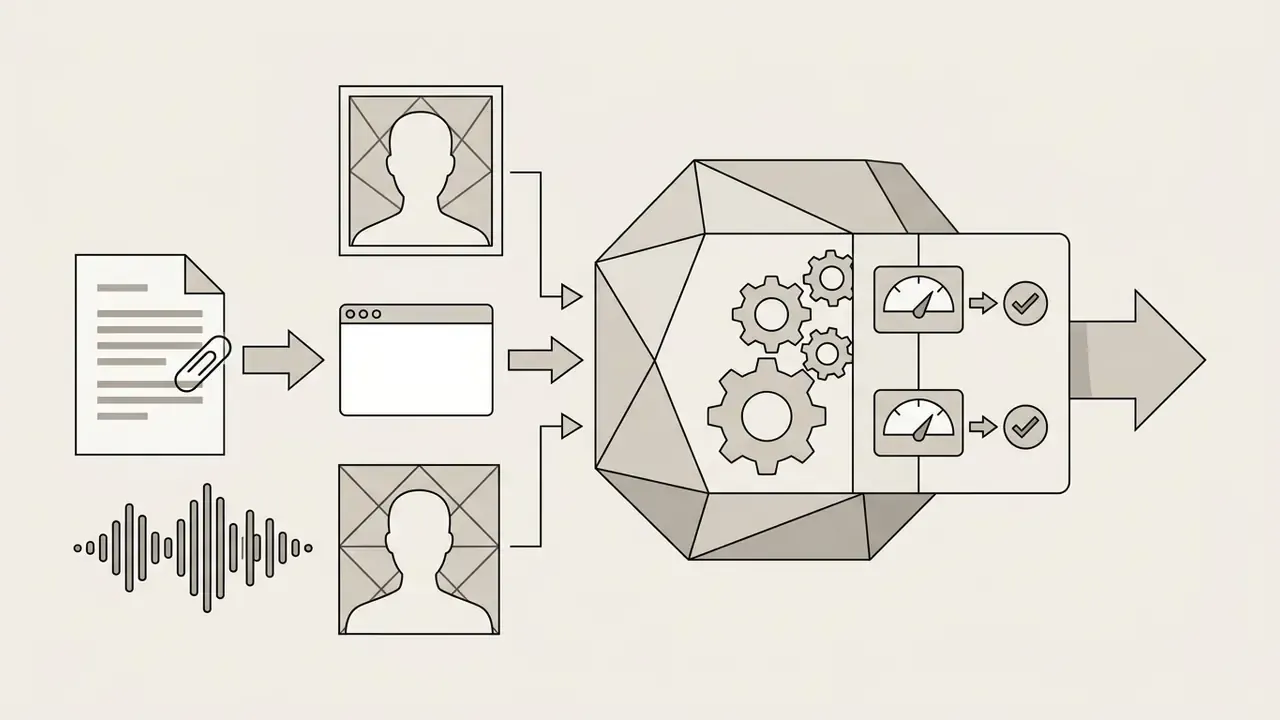
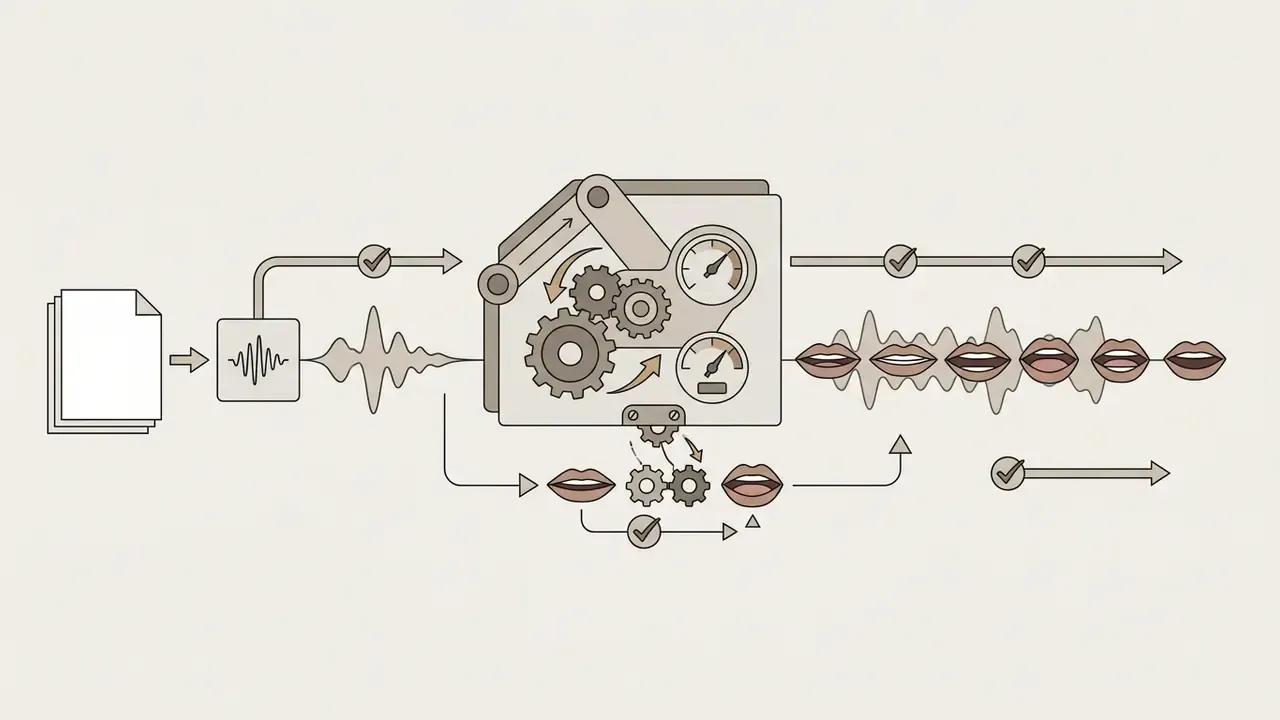
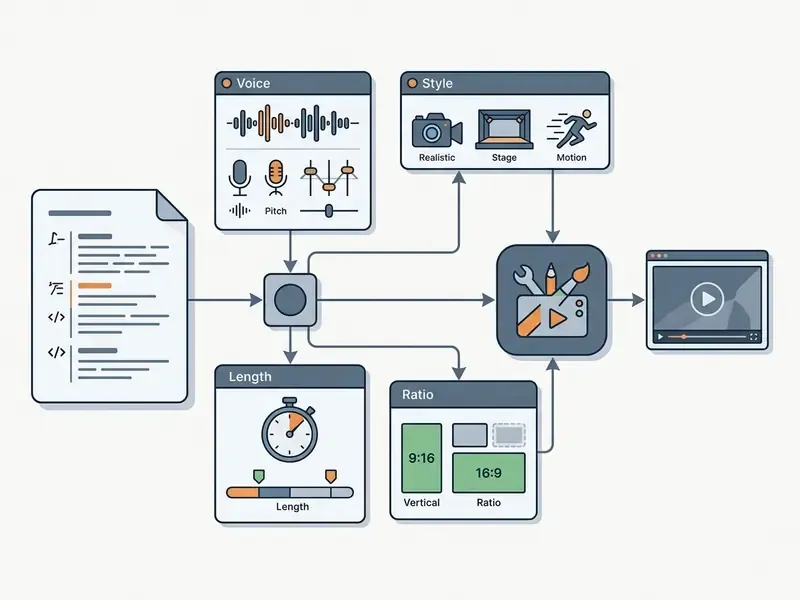
The transformation runs through a sequential neural pipeline. First, a text-to-speech engine converts the written script into synthesized audio and produces acoustic features plus phoneme timing. Alternatively, the operator uploads driving audio or plugs in an ai celebrity voice model. Teams comparing adjacent generation classes can review our reference material on text-to-video AI.
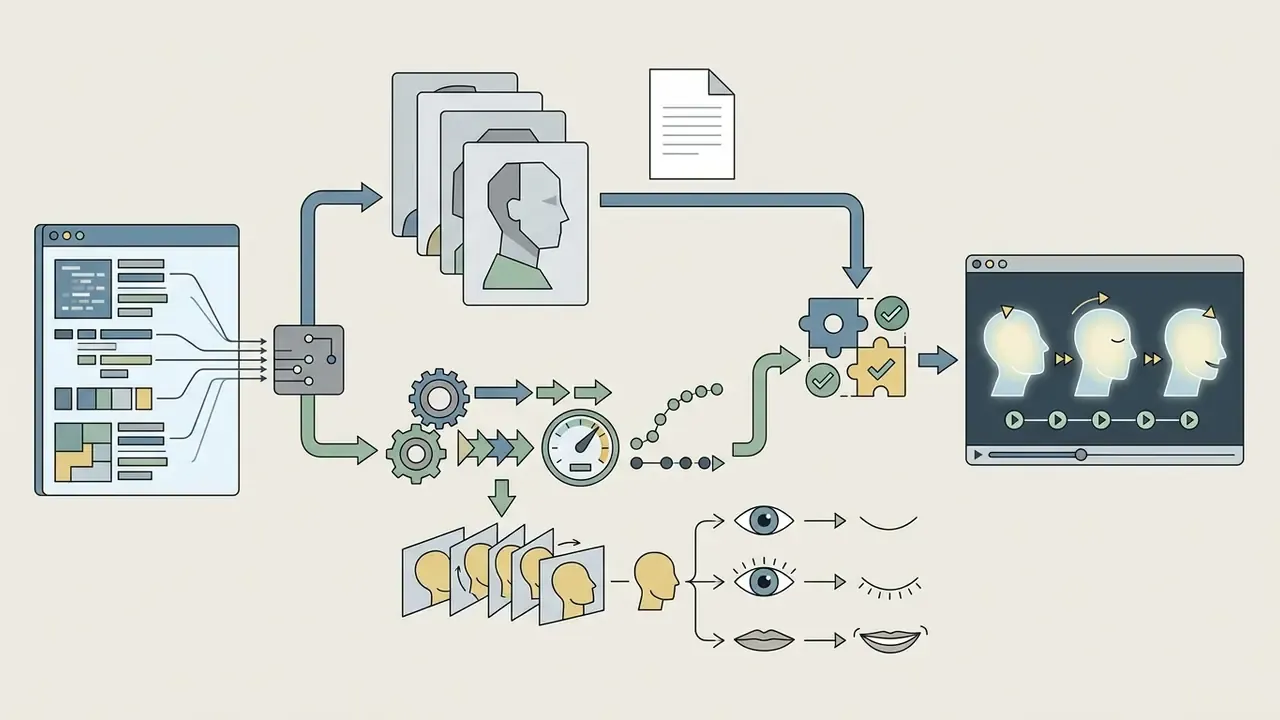
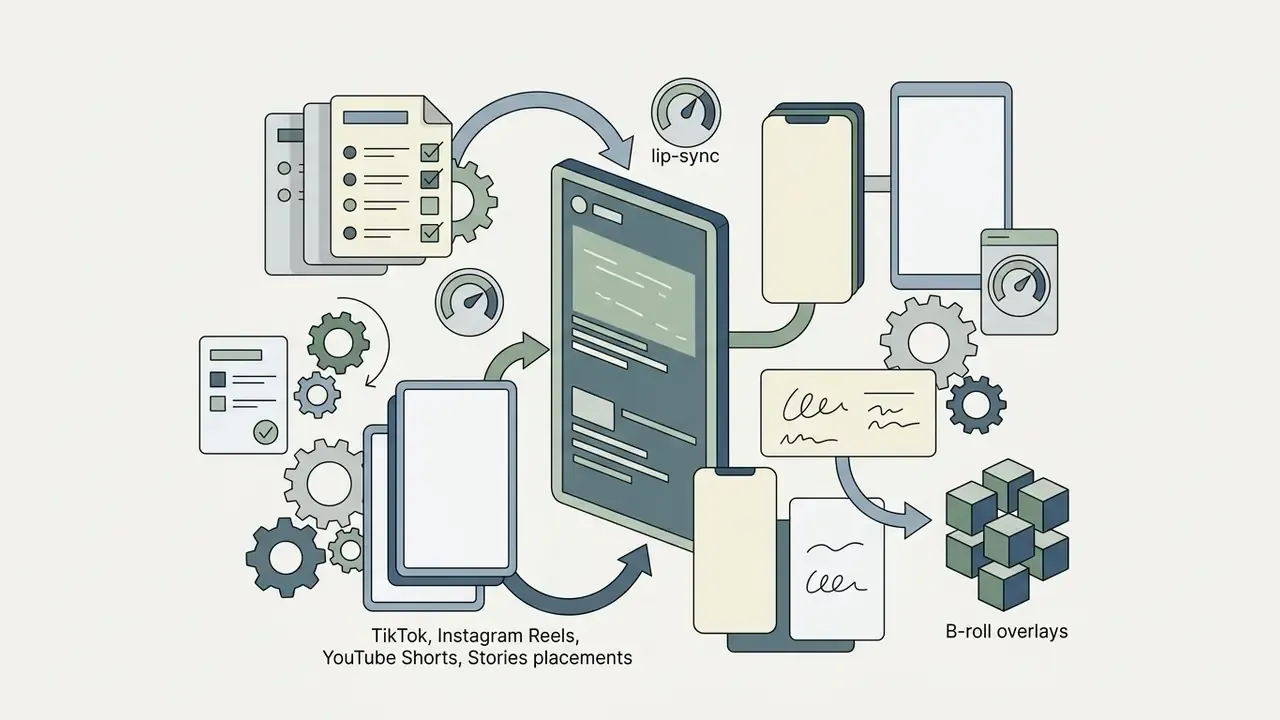
Three ingestion modes, including URL-to-video. Modern production engines accept raw text prompts, pre-recorded audio, or an external web URL. When a link is supplied, the ingestion pipeline scrapes the target page, extracts core text nodes, and hands the parsed text to a large language model that condenses it into a 15 to 60 second script tuned for spoken cadence. This is the fastest route for turning published articles, newsletters, quote collections, product pages, or social posts into vertical video with no manual rewriting. In practice the operator pastes the link, reads the auto-generated script for factual drift and awkward pronunciations, then commits credits to rendering. Skipping that read-through is where most embarrassing clips come from.
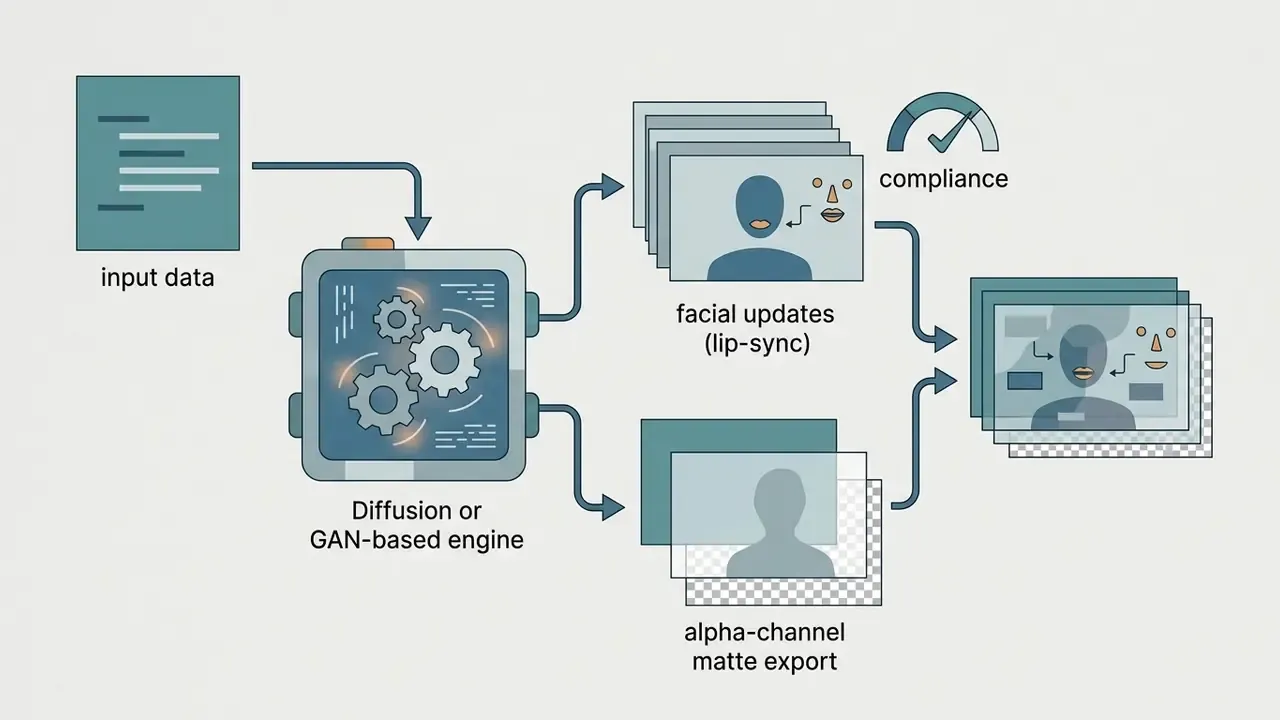
Next, a facial land-marking module or latent motion generator extracts geometry from the input photo. Advanced frameworks such as StyleTalker, and diffusion models like DreamTalk, separate motion parameters from visual identity tokens.
«StyleTalker uses a contrastive lip-sync discriminator and a disentangled latent motion space that is independent of speaker identity.»

What Determines the Realism of AI Celebrity Videos
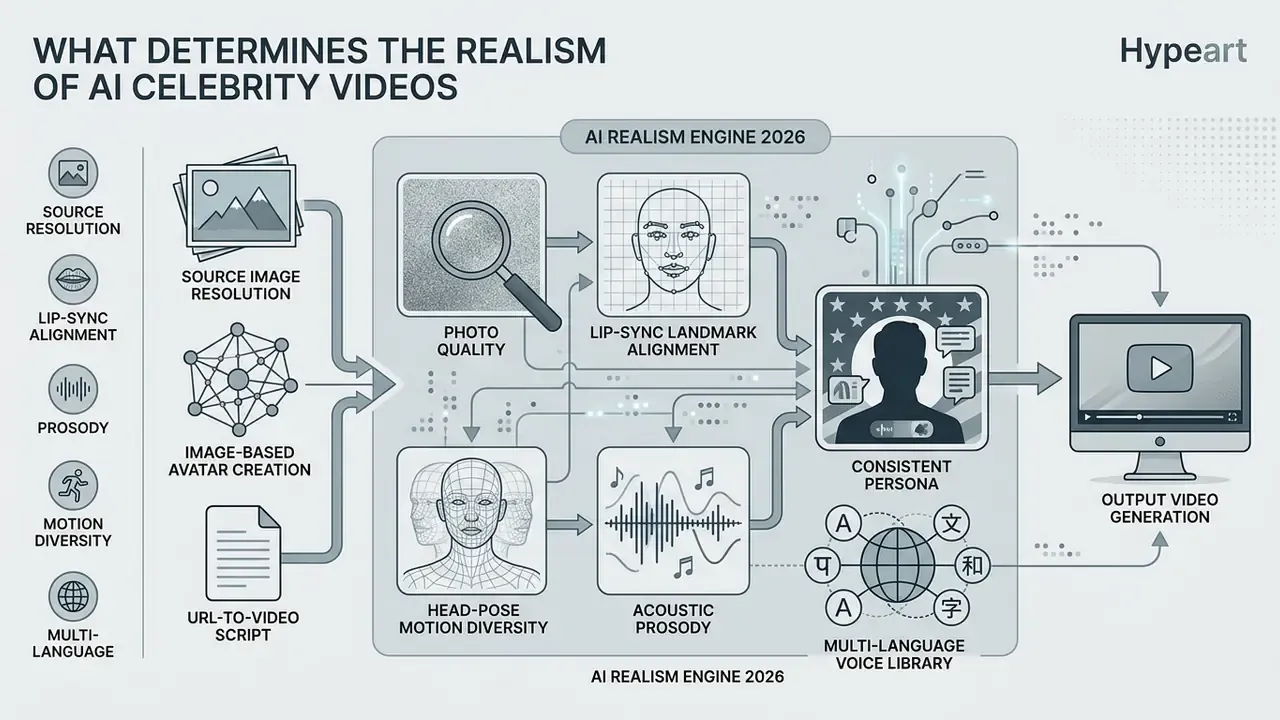
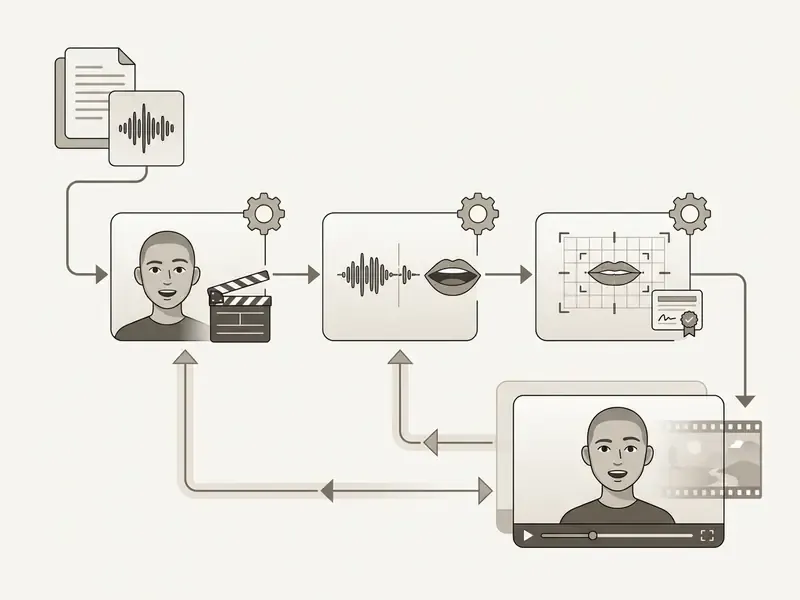
Realism in celebrity videos rests on five technical variables: source image resolution, lip-sync landmark alignment, multi-language acoustic prosody, head-pose motion diversity, and temporal identity consistency across frames. Weakness in any one of them produces artifacts that break viewer immersion or trip an automated deepfake detector.
Photo Quality and Image-Based Avatar Creation
Image-based avatar creation needs high-resolution portraits with balanced, shadow-free lighting, a neutral expression, and direct camera gaze. Official biometric capture guidance, such as ICAO Doc 9303 portrait specifications and NIST-aligned capture practice, points to minimum dimensions around 1200×1600 pixels for cropped portraits at a 3:4 ratio. Some vendor pipelines set a floor of 1152×1152 pixels with clear facial feature visibility. Note: those thresholds come from biometric capture practice rather than avatar-generation research, so treat them as a conservative input baseline and verify current vendor documentation before locking a capture SOP.
When working with an ai character generator from photo, low-resolution or heavily compressed images cause blurring, distorted teeth, and temporal flicker during animation. Neutral expressions with closed lips give the most stable baseline geometry for later viseme deformation.
«A landmark-based diffusion model achieved improved PSNR and SSIM and reduced LPIPS and FID on the VoxCeleb and HDTF datasets by warping reference-image features.»
The capture rules that follow are simple enough to hand to a junior producer. The face should fill roughly 70 to 80 percent of frame height. Both sides of the face must be visible. Background plain and monochromatic. No red-eye, no specular highlights, no glasses glare, no hair falling across eyebrows or the mouth line.
Lip-Sync, Voice, and Multi-Language Voice Library
Authentic lip-sync needs tight temporal alignment between audio energy and mouth opening dynamics. Empirical benchmarks such as the THEval framework (2026) score lip-sync using absolute distance between acoustic RMS energy and mouth landmark openness (), reporting a high Spearman correlation () with human realism ratings.
«THEval computes lip-sync as the mean absolute deviation between normalized mouth openness and audio-signal energy across 85,000 videos generated by 17 models.»
Multi-language voice libraries must handle cross-lingual viseme variation. Systems like MultiTalk apply language-specific style embeddings across more than 20 languages to prevent misalignment when animating non-English speech.
«MultiTalk is trained on 420+ hours of video across 20 languages and uses language-specific style embeddings to improve lip-sync accuracy in cross-lingual settings.»
Lip-sync alone is no longer the frontier. Contemporary systems couple three outputs in one generator: mouth articulation, facial expression, and head-pose motion. Research presented at CVPR-level venues, including SyncTalk and related work, shows that synchronizing those three signals jointly rather than in separate passes reduces the floating-head artifact and raises perceived naturalness. Evaluation practice now also includes beat-alignment scoring between audio rhythm and generated motion.
Consistent Celebrity Personas, Style, and Visual Settings
Holding a character stable across camera angles, lighting shifts, and longer clips demands real identity preservation, not luck. Work on landmark-based diffusion models (Zhong et al., 2024) shows that warping reference features through implicit cross-attention preserves identity embeddings, measured with ArcFace CSIM, better than plain frame-by-frame generation.
«Implicit cross-attention feature warping outperforms baseline models on every visual-quality metric evaluated on VoxCeleb and HDTF.»
Controls such as character reference weight, prompt locking, and multi-angle reference galleries let operators fine-tune output while holding facial proportions steady across scene ratios. Standard practice is a four-view character sheet (front, three-quarter, profile, back), a locked style token, and a fixed subject description block that stays unchanged when only the aspect ratio or composition varies.
Internal evaluation note. A model risk evaluation team compared single-image avatar generators against multi-reference diffusion models. Enforcing three-angle reference anchors together with fixed latent identity weights produced visibly lower frame-to-frame identity drift across 30-second clips than single-image initialization. How large that gain is remains workload-specific. Re-measure it per model version using CSIM deltas on your own footage, because no published benchmark generalizes a single percentage across vendors. This example is illustrative rather than a documented client result.
| Realism Factor | Technical Mechanism | Primary Metrics | Impact on Output |
|---|---|---|---|
| Source Image Quality | High-res feature extraction and warping | PSNR, SSIM, LPIPS, FID | High-resolution inputs remove facial blurring and texture artifacts. |
| Lip-Sync Precision | Acoustic-to-viseme temporal mapping | , LMD, LSE-D, LSE-C, sync confidence | Removes audio-visual delay and unnatural mouth shapes. |
| Voice and Prosody | Multilingual neural TTS, wav2vec embeddings | Subjective naturalness, cross-lingual viseme error | Keeps articulation natural across languages. |
| Motion Diversity | Disentangled pose and expression priors | Motion naturalness, FVD, Beat Align Score | Prevents robotic head movement and frozen expressions. |
| Persona Consistency | Latent identity vector locking (ArcFace) | CSIM (cosine similarity) | Maintains recognizable facial structure across frames. |
Teams whose main workflow is animating an existing still frame should also read our reference page on image-to-video AI, which covers motion controls and duration limits for photo-driven generation.
Responsible Use of Celebrity AI Videos
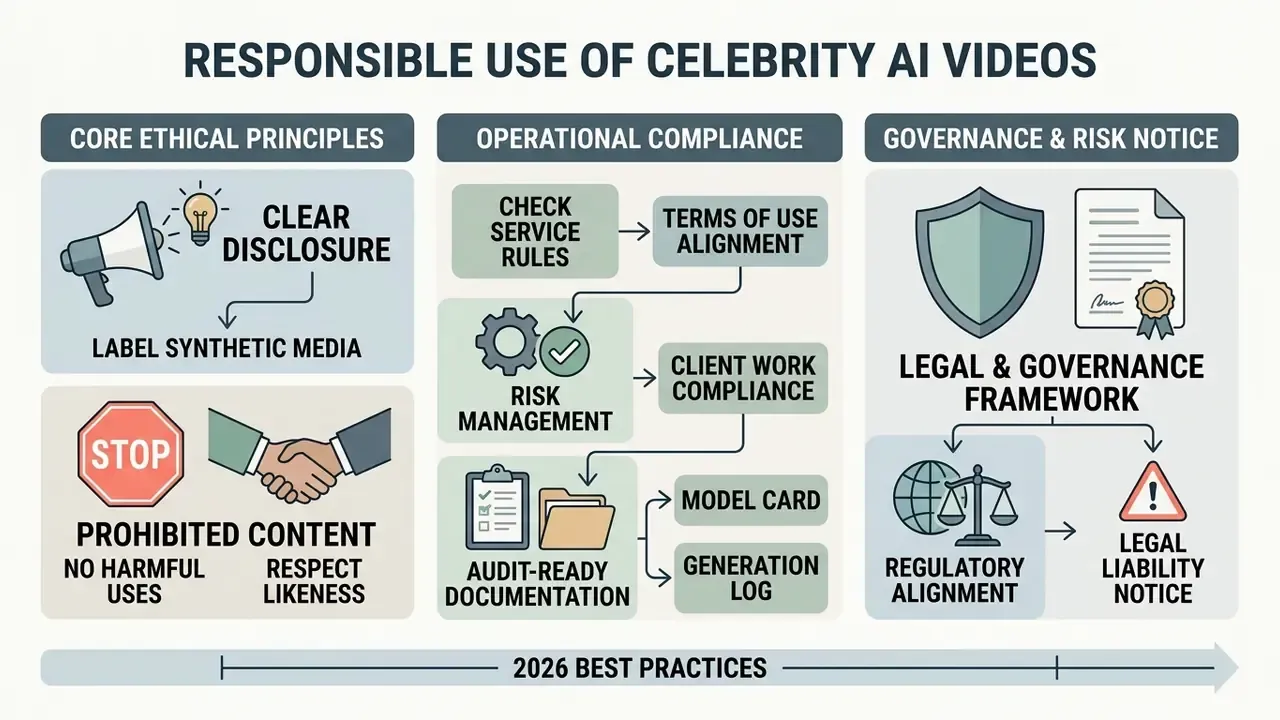
Publishing synthetic media that depicts real individuals, or even close stylized likenesses, carries ethical, regulatory, and legal duties. For regulated institutions the control framework must exist before vendor procurement, not after the first campaign. Organizations comparing rights frameworks across generative tooling can review our analysis of commercial use terms for AI tools, and buyers weighing licence scope across categories can compare options on the wider rights hub.
Disclosure, Prohibited Content, and Responsible Use
Regulators converge on one requirement: label synthetic media clearly. Article 50 of the EU AI Act obliges deployers to disclose artificially generated or manipulated deepfake content at first exposure, with narrow carve-outs for evidently artistic, satirical, or fictional works. European Commission guidance indicates that Article 50 transparency duties apply from 2 August 2026.
Prohibited content policies across major platforms consistently forbid:
- Non-consensual deepfake generation or explicit media.
- Unauthorized commercial impersonation of living individuals.
- Deceptive political manipulation and financial scam impersonation.
- Use of copyrighted characters or a real person's likeness in advertising without documented consent.
Empirical studies in PNAS Nexus (Wittenberg et al.) show that AI labels inform users and reduce false beliefs about video authenticity. They do not, however, do the heavy lifting some teams assume.
«All labels tested reduced belief in the claims, but AI-generation labels had almost no effect on sharing intentions.»
«AI-generated policy messages shifted participants' views by an average of 9.74 points out of 100; labeling the message as AI-authored did not significantly reduce its persuasiveness.» Labeling messages as AI-generated, PNAS Nexus (2024), N = 1,601 US respondents. https://academic.oup.com/pnasnexus/article/3/6/pgae247/7687050
The governance implication is direct. Labeling is a legal and trust requirement, not a mitigation for persuasive impact. Disclosure does not neutralize influence, so content policy must screen the message itself, not only the label attached to it.
Checking Service Rules Before Publication and Client Work
Before shipping client projects, legal and compliance teams should audit vendor Terms of Service and privacy documentation. Under GDPR, biometric face data and voiceprints derived from identifiable individuals count as protected personal data. That means a clear lawful basis for processing and a working mechanism for consent withdrawal. GDPR also reaches non-EU vendors that offer services to, or monitor, people in the EU, which covers most US-hosted avatar platforms serving European clients.
In the United States, unauthorized commercial use of a person's name, voice, photo, or likeness violates state right-of-publicity statutes and common law privacy rights, opening the door to civil litigation. Federal protection stays fragmented. The Congressional Research Service notes that coverage of name, image, likeness, and voice is not comprehensive at federal level, so exposure is decided state by state. Teams tracking active disputes and enforcement patterns can explore the hub for case-level context.
«A scoping review of 28 studies found that successful deepfake deception drives content spread, attitude change, false memories, and flawed financial decisions.»
Model risk management alignment. For banks, insurers, and fintechs, a generative video pipeline is a model in the supervisory sense. Mapping it to US Federal Reserve and OCC guidance (SR 11-7, OCC 2011-12) means a documented model inventory entry for each avatar engine and voice model. It means independent validation of output quality metrics such as CSIM and , plus documented failure modes. It means conceptual soundness review of vendor claims, ongoing monitoring with re-validation on every version change, and named owner accountability for third-party models where the vendor will not disclose internals. Shadow-AI prevention belongs to the same control set: SSO-only access to approved generators, DLP rules blocking uploads of customer imagery or voice recordings to unapproved endpoints, and a central AI asset register that logs every render job.
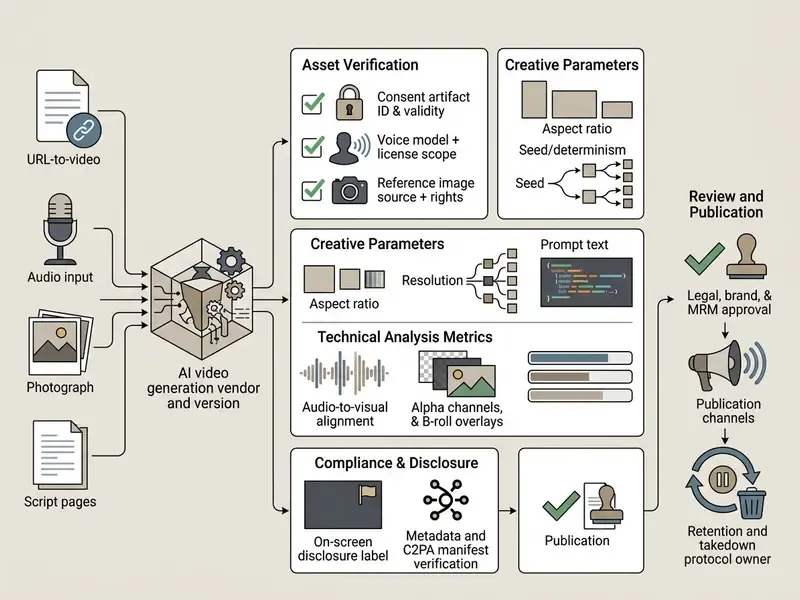
Audit-ready model card and generation log template. Store one record per published asset:
«Celeb-DF++ contains 590 real and 5,639 forged videos of 59 celebrities; most of the 24 detectors evaluated showed limited generalization on this dataset.»
Because automated detection generalizes poorly, provenance at creation time, visible labels plus C2PA manifests, is the only durable control an organization fully owns.
How to Create an AI Celebrity Video: From Prompt to Finished Clip
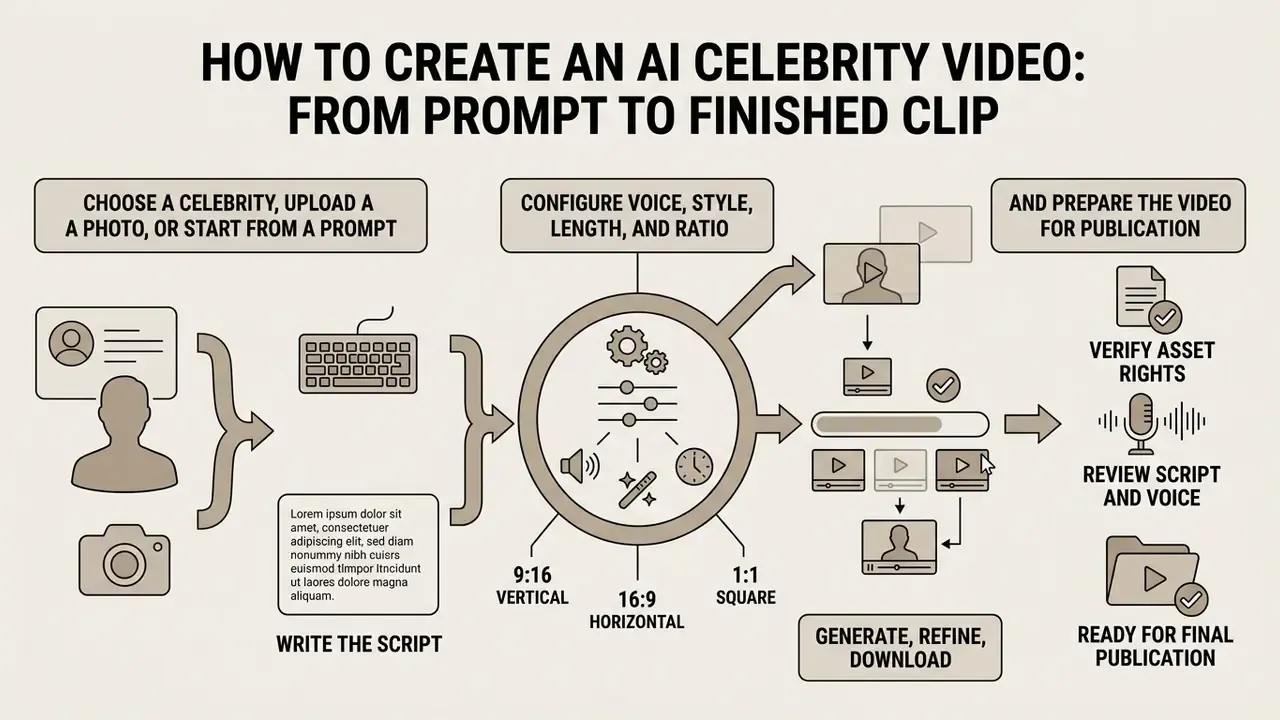
Creating a synthetic celebrity video is a repeatable workflow, not an art project. A standardized sequence keeps visual consistency, aspect ratio discipline, and platform compliance intact. Teams still shortlisting tooling should first read our comparison of the best AI video generators.
Choose a Celebrity, Upload a Photo, or Start From a Prompt
Avatar initialization runs down three paths: select a pre-built platform avatar, upload a custom reference photo, or generate a synthetic face from a descriptive prompt. Teams looking for a low-cost entry point often test an ai character generator free tool to prototype visual concepts before spending compute credits.
For uploads, keep the subject's face at 70 to 80 percent of frame height, with no occluding hair, glasses, or extreme head tilt. Vendor documentation across major platforms describes the same three initialization types, photo avatar, digital twin from recorded video, and prompt-generated persona, so the choice is driven by rights availability rather than technical capability.
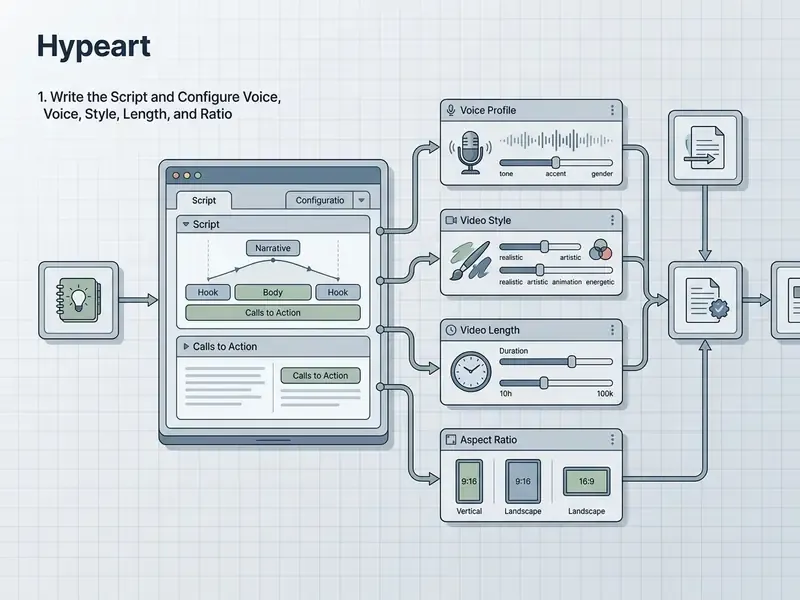
Write the Script and Configure Voice, Style, Length, and Ratio
Draft a tight script built for retention. Social media practice recommends holding the key message to 15 to 30 seconds, placing the hook in the first two seconds, and spelling complex brand names phonetically. Institutional social guidance pushes further for feed placements: stay under 15 seconds where possible, centre the subject for vertical crops, and always ship burned-in captions.
Pick the voice, then set the output format:
Ready-to-use script templates. These are written for avatar delivery, with timing marks matched to typical TTS cadence of 150 to 165 words per minute.

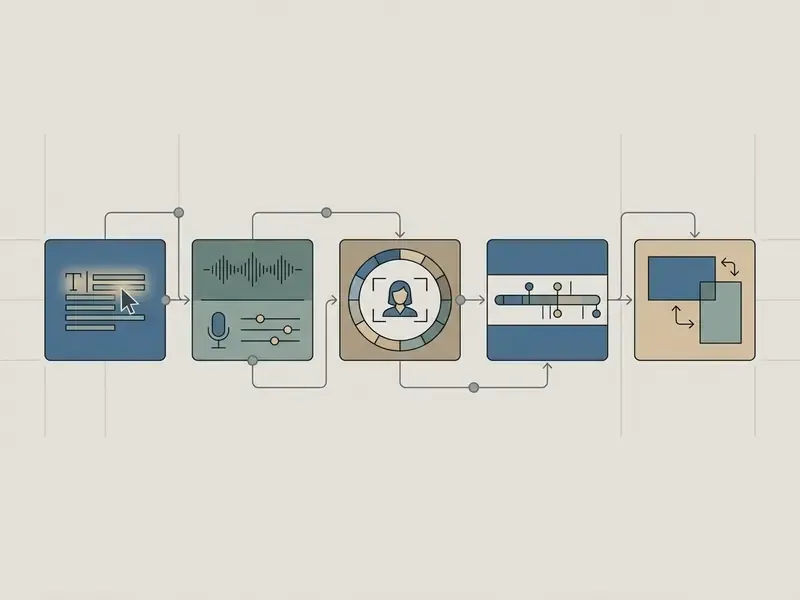
That closing line in Template 3 is not decoration. It is the disclosure duty expressed inside the script, which is the cheapest way to guarantee first-exposure labeling on every variant you render.
Generate, Refine, Download, and Prepare the Video for Publication
Trigger generation and let the server render asynchronously. When the job returns, review the draft for lip warping, unnatural blinking, or background tearing. Watch it twice, once muted. Artifacts hide behind good audio.
Refine by re-rendering specific scenes or adjusting pacing. Rendering settings govern frame rate, duration, resolution, and layer quality, while output-module settings govern container format and compression, which means most refinement happens after the render pass rather than inside it. Before final export in 1080p MP4, confirm that AI disclosure labels and provenance metadata are embedded in line with EU AI Act Article 50. Teams publishing to long-form channels can align the export step with our YouTube video editing workflow guide.
- Verify asset rights.Confirm explicit written consent for any identifiable real individual, or verify stock avatar licensing.
- Review script and voice.Check pronunciation, speech rate, and pauses that need to land with the visuals.
- Inspect frame artifacts.Examine mouth, teeth, eyes, and background borders for distortion.
- Confirm aspect ratio.Keep subject framing centred for the target format, 9:16 or 16:9.
- Apply AI disclosure.Embed a visible on-screen label plus C2PA metadata stating the clip is AI-generated.
- Export and archive.Download high-bitrate MP4 and log prompts, seed numbers, and software version history.
- File the asset record.Commit the model-card entry above to the central AI asset register so the render stays reproducible during audit.
What AI Celebrity Video Generators Are Used For
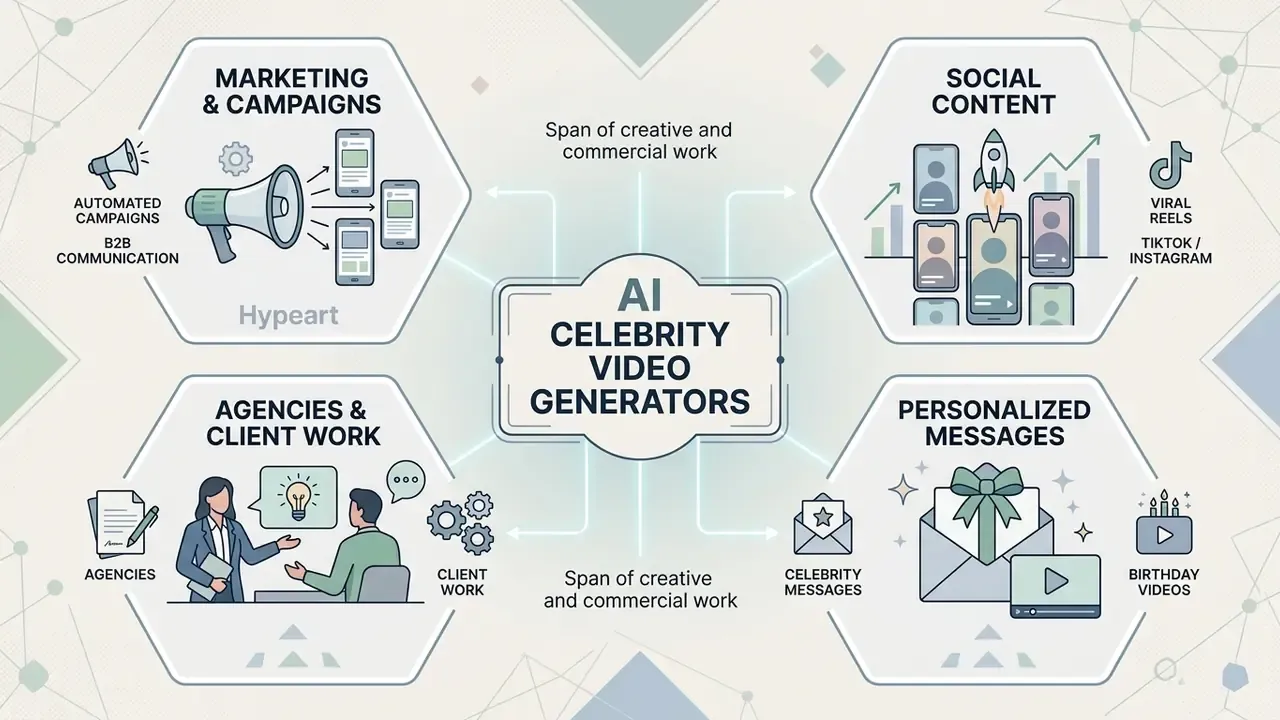
Synthetic celebrity video generators cover a wide span of creative and commercial work: automated marketing campaigns, B2B corporate communication, localized training, and personal messages that would never justify a studio booking.
Marketing, Personal Brands, Agencies, and Client Work
Agencies use digital avatars to produce multilingual video ads, UGC-style promotions, and localized corporate presentations at speed. Automating the presenter lets a campaign launch across several markets on the same day. Internal comms, onboarding, compliance training, and partner updates ride the same pipeline.
Demand is not only Western. AI Bollywood celebrity video generation tools are pulling serious volume. Regional agencies pair localized facial aesthetics with language-specific voice models, Hindi, Tamil, and Telugu acoustic embeddings among them, to run culturally resonant campaigns across South Asian markets and diaspora audiences. The same pipeline supports K-pop-adjacent formats, Latin American telenovela styling, and MENA broadcast aesthetics. The technical requirement is a voice library with native viseme mapping for the target language, not a different rendering engine.
Brand safety research adds a caveat. Virtual presenters hold up well on recall and execution speed, yet undisclosed synthetic media can cut consumer trust and purchase intent when viewers feel misled about authenticity.
«Participants in the Virbo user studies described the generated avatars as photorealistic with good lip synchronization, and considered them capable of replacing human presenters in marketing scenarios.»
Independent research is more cautious about persuasion than about production. Experimental work finds virtual influencers comparable to humans on credibility and competence, weaker on likeability. Survey work reports lower perceived authenticity and brand trust once AI status is disclosed, with the effect softened among audiences with higher digital literacy. The operational conclusion: use synthetic presenters for awareness, education, localization, and volume, and keep human faces on high-trust conversion assets.
Creators and agencies weighing enterprise platforms should compare feature matrices, consult the AI Media Pricing Guides, and check commercial rights across tools before committing budget. Teams modelling cost per finished clip can explore the hub of calculators, and support-side questions about workflow adoption are easier to compare options on directly. A parallel review of design-suite terms, such as our breakdown of Canva AI Generator licensing, clarifies which outputs may run in paid media.
Illustrative example, not a documented client result: a digital marketing agency tested localized AI avatar video ads for regional retail. Deploying multi-language synthetic presenters across five languages, instead of booking studio talent in each market, cut launch time by roughly four times while click-through rates stayed level.
Personalized Celebrity Messages and Birthday Videos
Personalized greetings remain the largest consumer use case, and an ai birthday video maker celebrity workflow is usually the first thing a new user tries. Platforms synthesize custom birthday messages, anniversary wishes, milestone congratulations, or motivational notes by dropping recipient names and personal details into pre-structured scripts. The script pattern across commercial services is remarkably consistent: greet by name, name the occasion, add one specific personal detail, deliver the wish, close warmly.
«Virtual influencers are able to form parasocial relationships and a sense of closeness with audiences, which strengthens brand loyalty and engagement.»
«Framing a digital agent as matched to the user on target attributes increases interaction enjoyment through perceived similarity and a sense of connection.» Matching digital companions with customers, Psychology & Marketing (2023). https://onlinelibrary.wiley.com/doi/10.1002/mar.21757
For enterprise deployments, the same personalization logic maps onto lifecycle messaging: renewal reminders, onboarding walkthroughs, and relationship-manager updates rendered per segment rather than per individual. Segment-level rendering keeps consent and disclosure manageable, which matters more than the marginal lift from full one-to-one personalization.
How to Choose the Best AI Celebrity Video Generator: Free Plans, Features, Cost, and Vendor Security
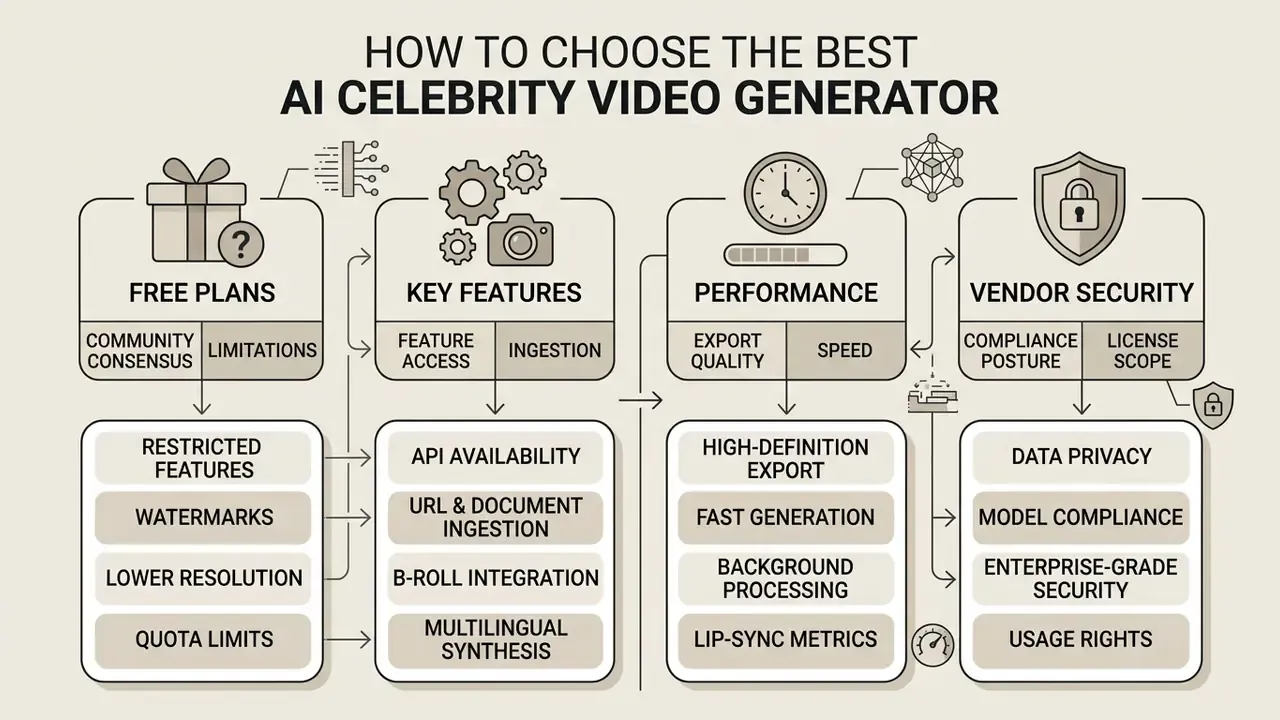
Picking an enterprise-grade celebrity ai video maker means balancing feature access, export quality, generation speed, API availability, vendor security posture, and licence scope. Most shortlists fail on the last two.
What a Free AI Celebrity Video Generator Actually Gives You
Free plans on platforms such as HeyGen, Runway, Pika, and Canva let users test core avatar workflows. Our overview of free AI video generators shows where the limits bite. Documented constraints fall into four patterns:
- Restricted volume, typically 1 to 3 minutes per month, or credit pools ranging from about 10 daily renewable credits to 80 to 125 one-time credits.
- Lower export resolution, 480p to 720p.
- Mandatory platform watermarks on rendered files.
- Strict non-commercial usage restrictions.
Free-tier design varies more than marketing pages suggest. Some platforms hand out daily renewable balances, roughly 10 credits per day, sometimes extendable by completing in-app tasks. Others offer watermark-free trial exports with tight feature caps. A third group grants a one-time pool that never refills. Documented examples of the volume pattern include monthly caps of three videos at up to three minutes each at 720p, one-time pools of about 125 credits equal to roughly 25 seconds of generation, and 80 monthly credits capped at 480p. Duration modes differ too: standard modes commonly stop at 30 seconds for greetings and social clips, while extended modes reach around two minutes for storytelling and product demos.
Community consensus. Evaluations on forums such as Reddit and review platforms like Trustpilot land on one practical rule. Daily-credit models suit testing short social clips and learning a tool's failure modes. Flat-rate monthly subscriptions are what remove the platform logo for paid client work. The recurring complaints are consistent: watermark placement that survives cropping, credit burn on failed renders, and upgrade billing that charges a full second subscription instead of prorating the difference. Recurring praise centres on render speed, project organization, and responsive support. Before committing budget, check our side-by-side comparison of free AI video generators for current caps and watermark policies.
Which Features to Compare Before Choosing a Video Generator
For commercial adoption, technical teams should compare backend API capability, rendering options, and editing flexibility:
- API access. Asynchronous video endpoints (
POST /videos, status webhooks, job status and progress objects) for programmatic batch rendering. Implementation economics for large-model pipelines are covered in our Google Veo API guide, and licence terms across providers are easier to compare options on the API hub. - URL and document ingestion. Script generation from pasted links, PDFs, or long documents, with an editable intermediate script before rendering.
- B-roll integration. Overlay of supporting footage, images, and captions, including timeline insert controls for cutaways.
- Background processing. Automatic green-screen removal and scene compositing.
- Multilingual synthesis. Multi-language voice cloning with native viseme mapping.
- Provenance tooling. Built-in C2PA manifests, visible label templates, exportable generation logs.
Background removal and B-roll overlay, in practice. Advanced platforms apply real-time background matting, alpha-channel extraction, during frame rendering. That lets creators export the avatar on a transparent or green plate and composite it over dynamic B-roll, product captures, screen recordings, or custom environments. The working sequence: render the avatar with background removal enabled, noting that this mode often carries an extra credit cost disclosed before generation; export as ProRes 4444, WebM with alpha, or a PNG sequence where supported, or as flat green-screen MP4 and key it in post; place the matte on an upper timeline track; time B-roll inserts to script beats so cutaways cover the weakest lip-sync moments; match colour temperature and add a subtle contact shadow so the avatar does not float against the plate; then re-check lip-sync after any speed or duration change, because retiming breaks viseme alignment. That last step gets skipped constantly, and it is the one viewers notice.
To benchmark team usage and track generation costs, many groups build performance dashboards with an ai chart generator rather than maintaining spreadsheets by hand.
When You Need a Paid Plan or Subscription for Commercial Use
A paid commercial subscription is mandatory for client deliverables, paid advertising, social monetization, or broadcast publishing. Standard free-tier terms prohibit commercial exploitation and offer no indemnification. Vendor practice splits into two camps. Some platforms grant a commercial licence on every plan and credit pack, client deliverables and paid ad uploads included. Others reserve commercial rights strictly for paid tiers. Since the difference sits in the terms of service rather than in the output file, procurement has to read the licence, not the feature list.
Vendor due diligence for regulated buyers. Before committing enterprise capital, run a documented assessment covering data residency and the sub-processor list; whether customer uploads train the vendor's models, and whether opt-out is contractual or discretionary; retention and deletion windows for reference images and voiceprints; currency of SOC 2 Type II and ISO 27001 attestations; DPA and GDPR Article 28 processor terms; SSO and SCIM support; audit log export; and indemnification scope for third-party likeness claims. Cost planning should model price per rendered minute next to subscription tiers, because credit-based pricing makes iteration, not output length, the dominant cost driver. Observed pricing in this category ranges from entry tiers near 20 to 30 dollars per month for 1080p and limited minutes, up to enterprise agreements in the hundreds per month for 4K, high concurrency, and full API access.
| Feature / Metric | Free Evaluation Tier | Paid Commercial Subscription | Enterprise API Tier |
|---|---|---|---|
| Monthly generation limits | ~10 daily credits or 80 to 125 one-time credits, 1 to 3 minutes | 15 to 180 minutes, monthly refill | Custom credit packs, high concurrency |
| Clip duration modes | Standard mode, often 30 seconds or less | Standard plus extended mode to ~2 minutes | Configurable long-form |
| Export resolution | 480p to 720p maximum | 1080p Full HD | Up to 4K uncompressed |
| Watermark removal | Usually no, platform logo enforced | Yes, clean export | Yes, clean export |
| URL / document-to-script | Limited or unavailable | Included | Included, batch-enabled |
| Alpha / green-screen export | Rarely available | Available, may cost extra credits | Available, pipeline-integrated |
| Commercial usage rights | Restricted, personal use only | Included for marketing and ads | Full commercial and client rights |
| API and batch processing | Not available | Web interface standard | Full REST API access and webhooks |
| Security and data handling | Public terms only, training opt-out often unavailable | DPA available, retention controls | SOC 2 and ISO 27001 review, no-training clause, data residency options |
| Access governance | Individual login, Shadow-AI risk | Team seats, shared workspace | SSO and SCIM, role-based access, audit log export |
| Support and SLA | Community support | Priority email support | Dedicated account team and SLA |
Risk-Adjusted ROI and the Audit Trail
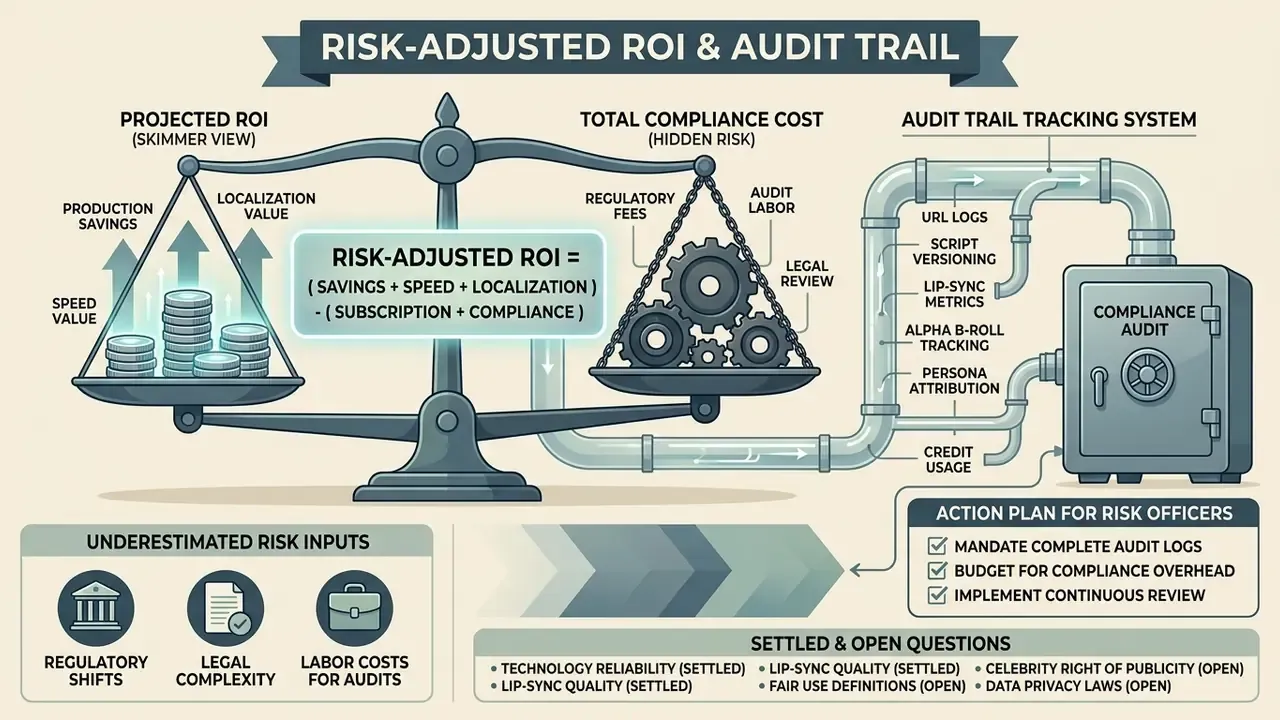
Synthetic video economics look trivially favourable until compliance cost enters the model. A defensible business case uses a risk-adjusted formula, not raw production savings:
Risk-Adjusted ROI =
  ( Production_Savings + Speed_Value + Localization_Value
    - Subscription_Cost - Credit_Burn_on_Iterations
    - Legal_Review_Hours x Blended_Rate
    - Provenance_and_Logging_Overhead
    - Expected_Residual_Risk )
  / ( Subscription_Cost + Credit_Burn + Compliance_Cost )
Expected_Residual_Risk =
  P(likeness / disclosure incident) x ( remediation + takedown
  + brand impact + potential statutory exposure )
Three inputs are routinely underestimated. First, credit burn on iterations: teams typically discard three to six renders per published asset, so effective cost per finished clip runs several times the nominal per-minute price. Second, legal review hours: any asset featuring an identifiable person needs consent verification, and that is human time which does not scale with render speed. Third, residual risk: even a low incident probability carries a heavy tail when the subject is a public figure. The fourfold localization speed gain described earlier is real, though it only becomes bankable once the consent chain and disclosure controls are automated. Which is exactly why governance sits before procurement in the decision sequence.
Action plan for risk officers. Add each avatar engine and voice model to the model inventory with a named owner. Require SSO-only access and DLP rules blocking customer imagery uploads. Mandate the asset record template for every published clip. Set a validation cadence tied to vendor version releases, measuring CSIM and on internal footage. Pre-approve a disclosure label template per channel. Define a takedown owner and a 24-hour response path for likeness complaints. Six controls. None of them exotic.
Limitations and Open Questions
Several things remain unsettled, and pretending otherwise would be dishonest. Benchmark realism scores correlate with human ratings but do not predict legal risk at all. Cross-lingual lip-sync quality varies sharply by language pair, and vendor language counts rarely disclose per-language accuracy. Detection tooling generalizes poorly, so provenance carries more weight than it probably should. Audience trust research is mostly survey-based and short-horizon, which tells us little about repeated exposure over a year of campaigns. Treat every audience statement in this guide as a hypothesis until your own analytics, interviews, or CRM data confirm it.
FAQ
What exactly is an AI celebrity video, and how does it work?
It is a digitally generated clip in which an avatar, built from an uploaded photo, a library persona, or a text prompt, delivers a script. The system extracts facial geometry, synthesizes or ingests audio, aligns visemes to phoneme timing, renders frames, and encodes an MP4.
Can I generate a script from a URL instead of typing it?
Yes, on platforms with URL ingestion. The pipeline scrapes the page, extracts the main text, and summarizes it into a 15 to 60 second spoken script. Always review the draft. Summarizers drop qualifiers and mangle proper nouns, both of which matter in regulated messaging.
Can I overlay the avatar on my own footage?
Yes, where alpha-channel or green-screen export exists. Render with background removal, export with alpha or key the green plate in post, then composite over B-roll. Advanced matting modes often consume extra credits, which platforms disclose before generation.
How many languages are supported, and does lip-sync hold up?
Leading platforms advertise dozens to well over a hundred languages and dialects. Cross-lingual accuracy depends on language-specific style embeddings. Research systems trained across 20 languages and 420+ hours of video show measurable lip-sync gains over monolingual baselines.
Can I really create AI celebrity videos for free?
You can test them. Free tiers typically give around 10 daily renewable credits or an 80 to 125 credit one-time pool, cap resolution at 480p to 720p, apply a watermark, and forbid commercial use. A minority of tools allow watermark-free trial exports with tight feature caps.
How long does generation take?
Standard short clips finish in seconds to a few minutes, depending on length, resolution, and queue depth. Rendering is asynchronous, so API consumers should use webhooks or job-status polling rather than blocking calls.
Do I have to disclose that the video is AI-generated?
For realistic synthetic content depicting people, yes. EU AI Act Article 50 requires clear, distinguishable disclosure at first exposure, and several advertising codes want an on-screen label from the first frame. Remember that labeling reduces false belief without meaningfully reducing persuasive impact, so content screening still matters.
What can I not create?
Non-consensual or explicit deepfakes, unauthorized commercial impersonation of living individuals, political deception, financial scam impersonation, and use of copyrighted characters or a real person's likeness in advertising without documented consent.
Is a paid plan enough to make client work legal?
No. A commercial licence resolves the platform's terms, not third-party rights. You still need written consent from any identifiable individual, plus disclosure and provenance on the published asset.
Are AI presenters as persuasive as human ones?
Not uniformly. Experimental work finds comparable credibility and competence but lower likeability. Survey work finds reduced perceived authenticity and brand trust once AI status is disclosed. Use synthetic presenters for awareness, education, and localization volume, and human talent for high-consideration conversion assets.
Can deepfake detectors protect us if something goes wrong?
Only partially. On the Celeb-DF++ benchmark of 590 real and 5,639 forged celebrity videos, most of 24 evaluated detectors generalized poorly. Creation-time provenance is the stronger control.
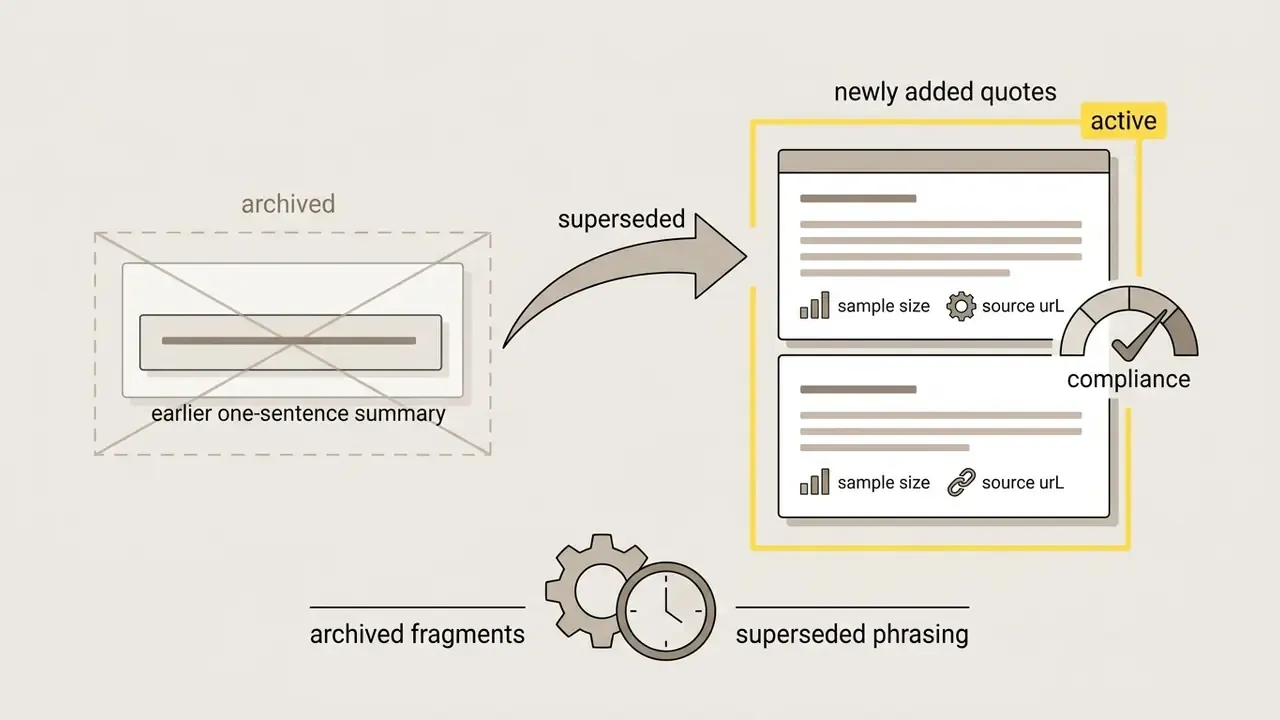
Appendix A: Archived and Superseded Fragments
Retained for editorial traceability. The main text above carries the current, sourced versions.