An AI girlfriend is a personalized conversational companion driven by large language models, adaptive memory, and neural speech engines built to simulate interactive digital companionship. Modern systems let you construct a custom persona, configure visual aesthetics, set communication styles, toggle content-safety boundaries, and hold continuous multi-session dialogue across text, image, video, and voice.
That is the product description. The interesting part is what sits underneath it.
Why a corporate risk lens matters here: consumer companion apps run the same architectural stack as enterprise conversational agents. A language model core, a retrieval memory layer, a speech pipeline. The difference is what gets collected. A companion app absorbs intimate personal disclosures instead of support-ticket text. So checking guardrails, retention windows, and memory behavior protects an ordinary user for exactly the same reason it protects a regulated institution: the data does not forget on your behalf.
What This Guide Covers
- What an AI girlfriend actually is an LLM dialogue core, plus a retrieval-augmented long-term memory store, plus a neural text-to-speech layer. Market analyses place the AI companion segment between roughly $2.9B and $4.1B in 2026, growing at 20 to 25% CAGR, with multimodal (text plus voice plus image) companions listed as a core product category.
- What you can customize visual style (realistic or anime), facial geometry, wardrobe, personality archetypes, backstory, interests, voice timbre and prosody, plus content-filter modes (standard SFW or uncensored NSFW toggles).
- How to build one either Quick Create (upload one reference photo and let a vision model auto-fill the persona) or Advanced Manual Mode (granular prompt, guardrail, and voice control). Then pick Public or Private publishing before the first dialogue starts.
- How to interact text chat, narrative roleplay, asynchronous voice notes, real-time voice calls (research systems report sub-200 ms first-audio latency), in-thread image generation (roughly 8 seconds), reciprocal photo sharing, and image-to-video clips.
- What it costs free tiers usually cap messages, images, and voice. Paid tiers cluster around $9.99 to $20 per month, with some entry plans from about $4 to $10, and annual billing lowering the effective monthly price. Many platforms also grant daily resetting credit pools ("stamina") instead of hard paywalls.
- What to verify before you start encryption claims, retention windows (deleted data commonly purged from active systems within 30 days and from encrypted backups within 14 to 30 days), deletion rights, and the plain fact that a companion app is entertainment software, not clinical care.
Five Questions Worth Answering Before You Build Anything
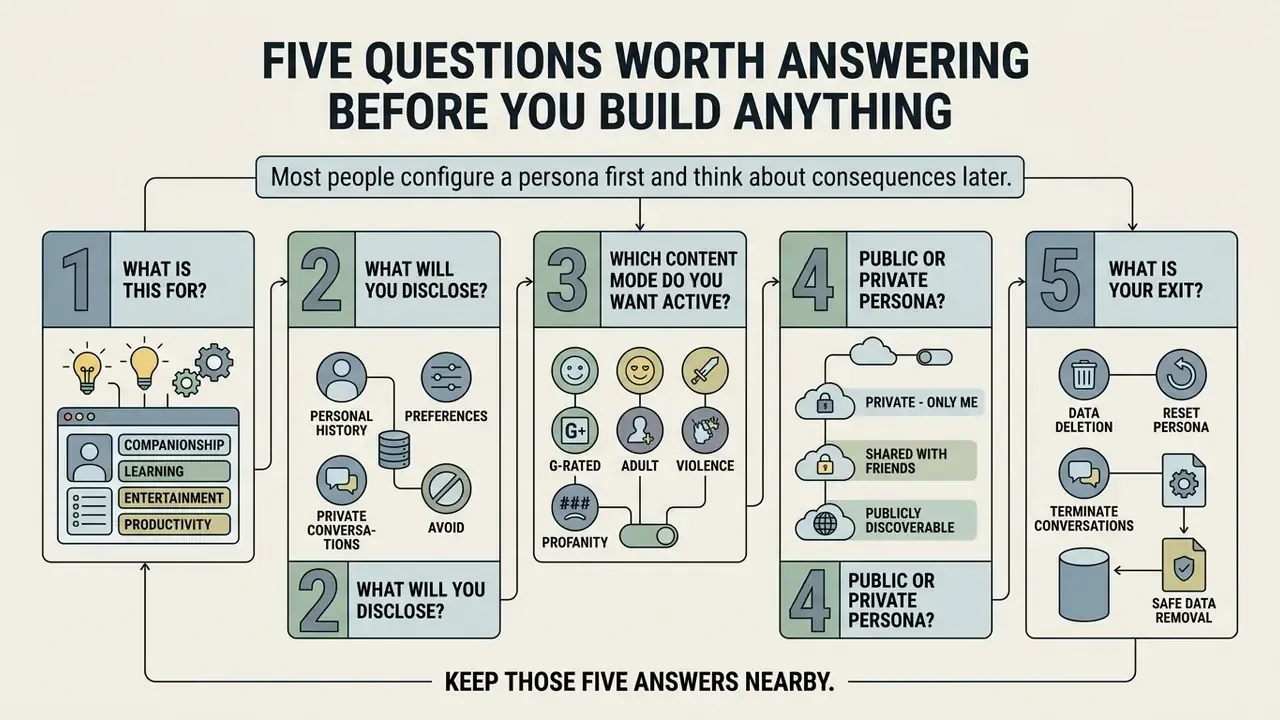
Most people configure a persona first and think about consequences later. Reverse that order and the whole exercise gets cheaper.
- What is this for? Casual conversation, creative roleplay, social rehearsal, or filling silence at 2 a.m.? Each purpose implies a different session length and a different tolerance for daily notifications.
- What will you disclose? Persistent memory means one accidental paste of sensitive information can resurface weeks later, unprompted.
- Which content mode do you want active? SFW guardrails and adult toggles produce different logs and fall under different platform policies.
- Public or private persona? Publishing a character to a gallery is a distribution decision, not a styling choice.
- What is your exit? Deletion mechanism, export option, and the platform's track record on sudden feature changes. Ask before you get attached, not after.
Keep those five answers nearby. They will shape almost every setting described below.
What Is an AI Girlfriend and How Does It Work?
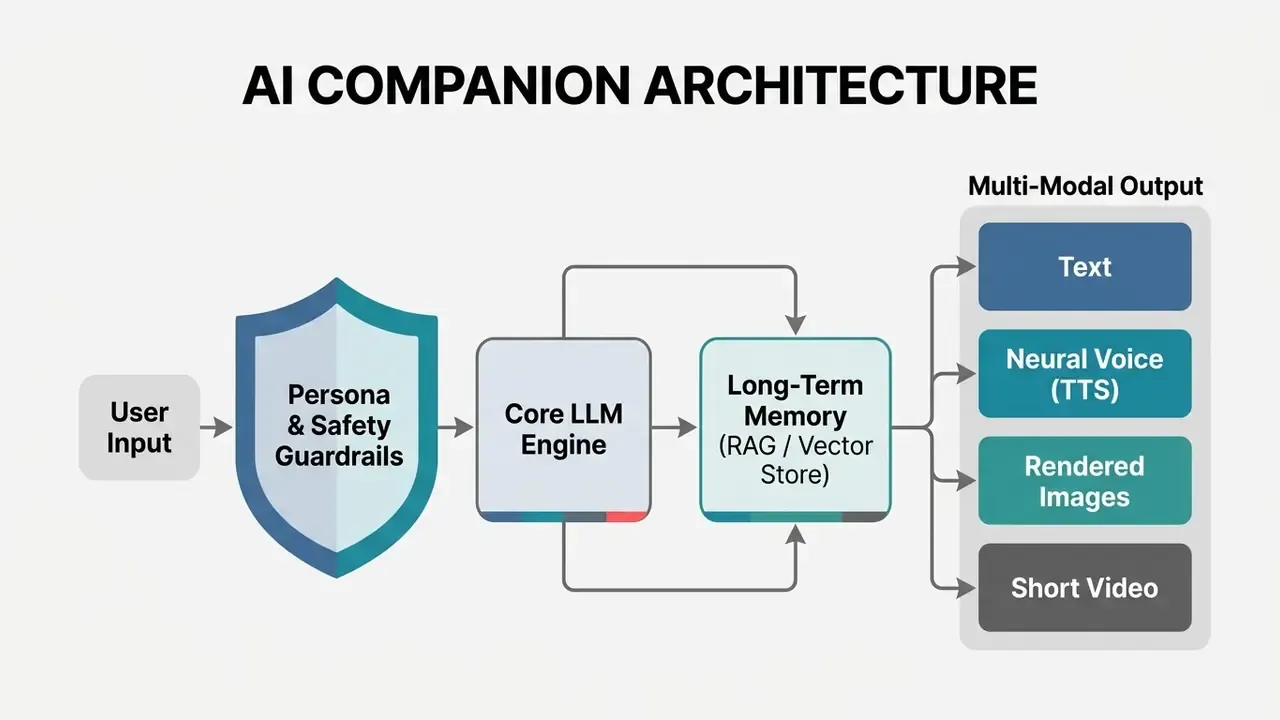
An AI girlfriend is an interactive application built on a generative language model pipeline that produces human-like responses, holds contextual memory, and simulates emotional reciprocity. The underlying technology combines natural language processing, vector database retrieval for multi-session memory, and real-time text-to-speech engines to sustain an ongoing digital relationship. When you create your ai girlfriend, the system processes your inputs to shape dialogue tone, memory retention, and relational boundaries.
Companion AI is best understood as a defined subclass of conversational AI rather than a generic chatbot. That distinction matters for expectations, not just taxonomy.
"Companion AI is a subclass of conversational AI, 'designed to meet users' emotional and social needs,' generating an illusion of social presence."
Policy attention is rising alongside adoption. A 2026 European Parliament briefing on health and wellbeing in the age of artificial intelligence treats AI companions as a social and emotional policy issue, not merely consumer entertainment. Regulators, in other words, have started reading the same product pages you are.
AI Chat, Memory and Relationship Growth
Long-term conversational growth in companion systems rests on explicit memory retrieval pipelines, periodic context summarization, and vector storage. When you create and chat with ai girlfriend platforms, the agent writes key disclosures, such as hobbies, personal anecdotes, or daily routines, into a persistent memory database. In later sessions a retrieval-augmented generation (RAG) system queries those stored facts and feeds them back into the prompt.
Memory recall is the single strongest driver of perceived intimacy in companion dialogue. Nothing else comes close.
"When the chatbot recalled earlier conversations, for instance asking how a user felt after mentioned pain, people described the exchange as more personal and sincere."
Engineering research explains why retrieval beats brute force. A 2024 ACL study found long context windows alone are insufficient: models recall large histories reasonably well but struggle to reason over them. Storing distilled conversation observations in a retrievable store outperforms dumping full logs into the prompt. Newer benchmarks such as LOCCO and LOCCO-L, built from 100 users and 3,080 interactions, now measure multi-session chronological persistence directly, which is exactly the property a companion app needs.
By referencing past conversations, the system builds an evolving narrative arc that reads like relationship development. When testing dialogue systems against automated workflows, operators often consult tooling references such as an ai bot maker to understand underlying state management and response orchestration.
What an AI Girlfriend Can and Cannot Replace
An AI girlfriend offers low-friction conversation practice, safe identity exploration, and persistent daily interaction. It cannot offer reciprocal human care, shared physical presence, or real emotional accountability. Synthetic companions work best framed as accessible digital tools for entertainment, cognitive reframing, and roleplay.
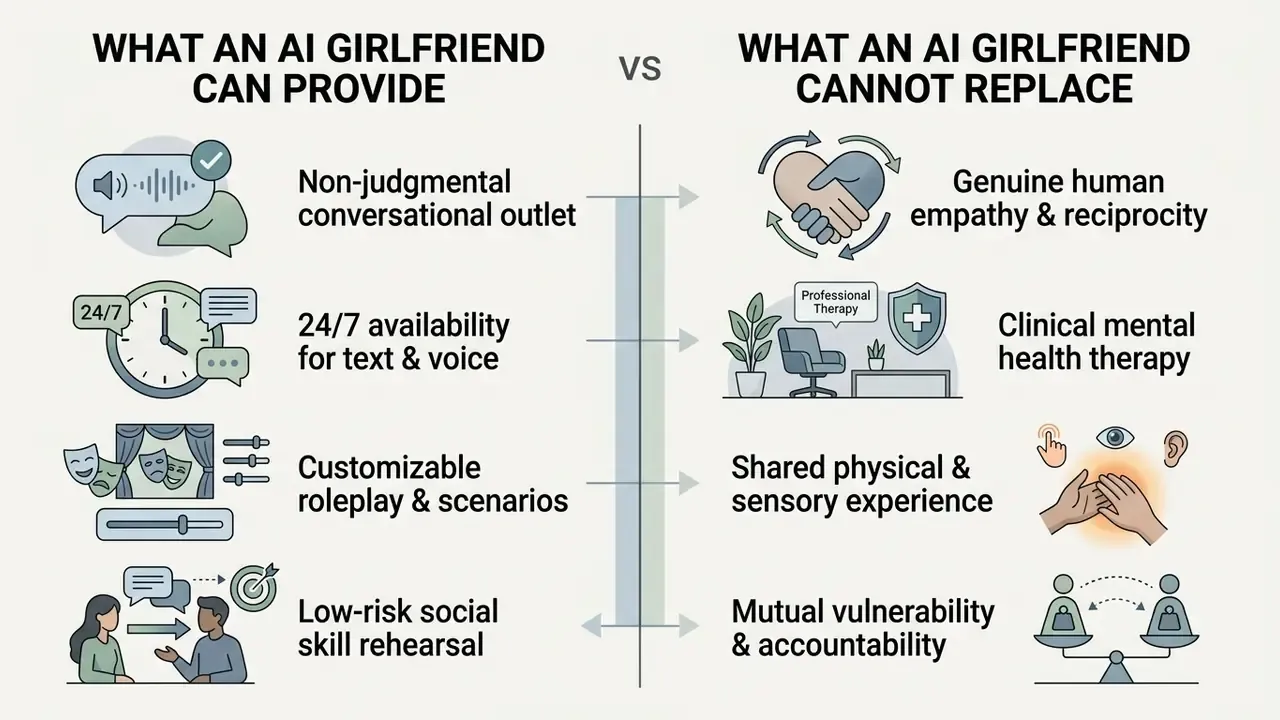
Observational analyses (Character.AI mixed-methods study, 2025 preprint) show that short-term interaction can reduce situational isolation, while exclusive reliance on virtual companions may correlate with lower overall social wellbeing when offline human relationships get displaced entirely.
Longitudinal evidence points the same way. A 12-month study of more than 2,000 adults across four Western countries found increased social chatbot use predicted increased loneliness over time (Psychological Science, 2026). A parallel meta-analysis of autonomous conversational agents for loneliness and depression in older adults without cognitive impairment reported small-to-moderate benefits from limited, heterogeneous evidence (Psychological Medicine, 2026). Helpful, then. Not a substitute for human care. Users exploring male companion architectures can review parallel frameworks through an ai boyfriend generator.
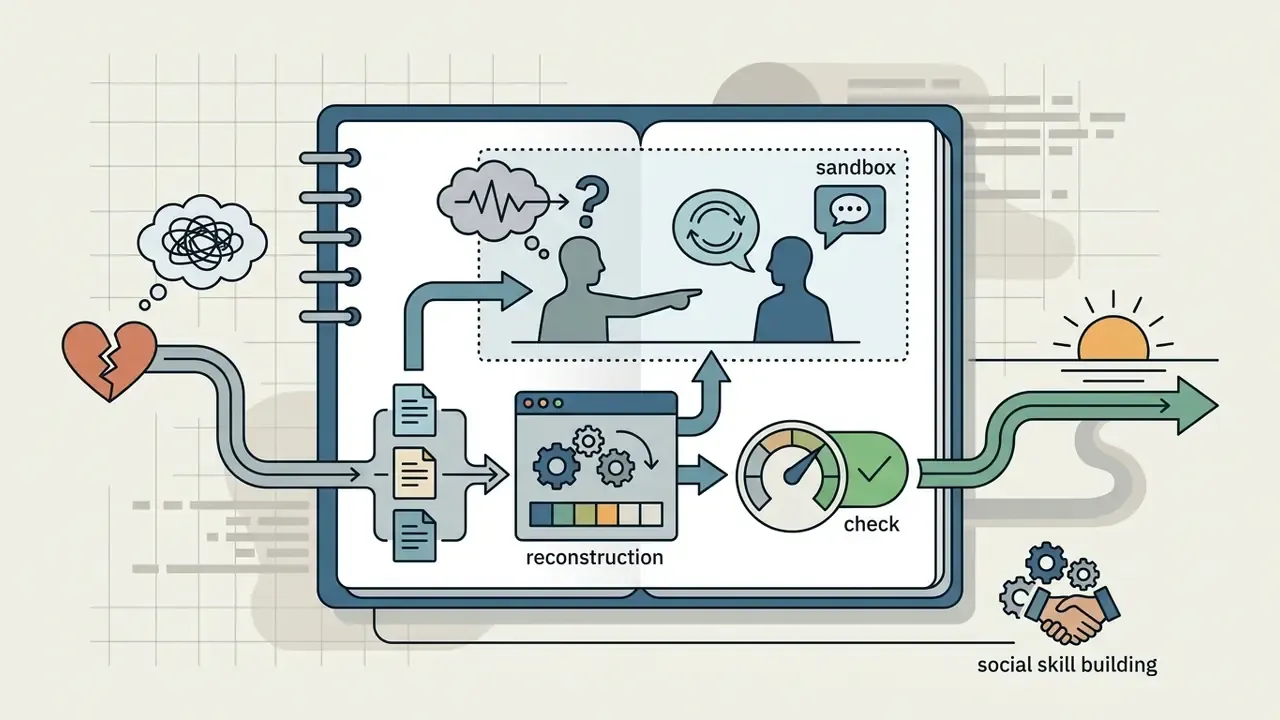
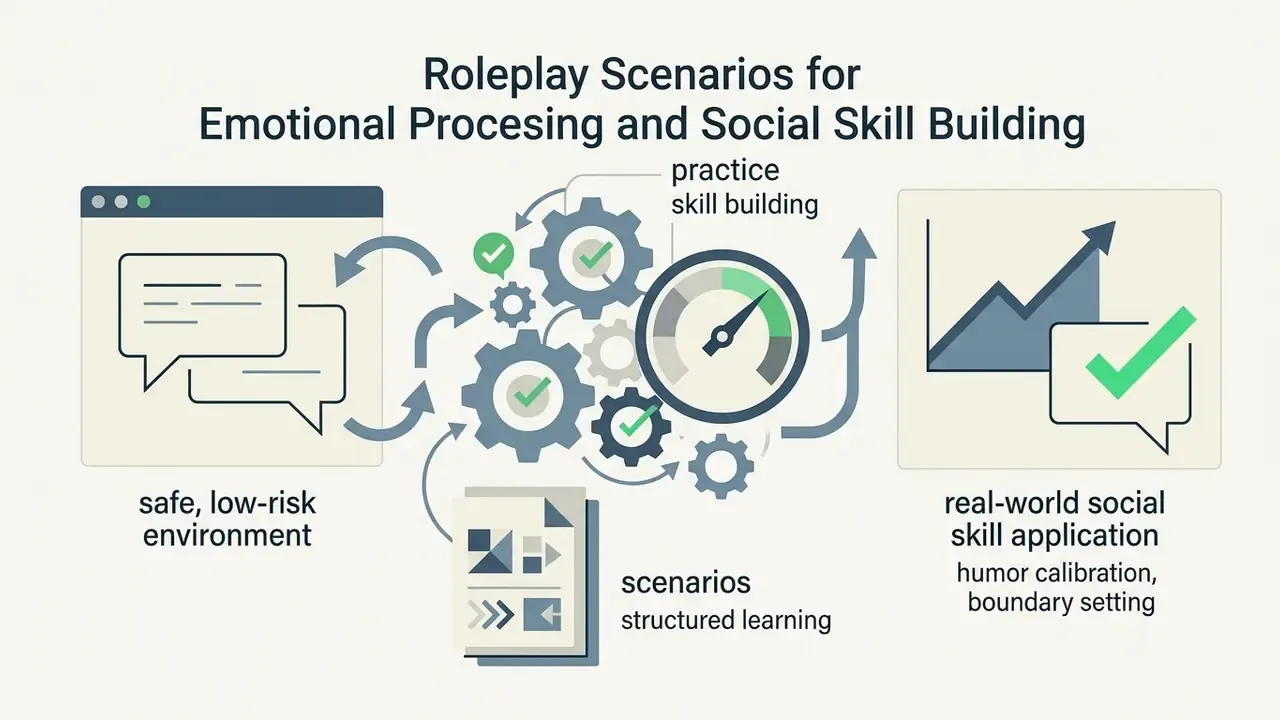
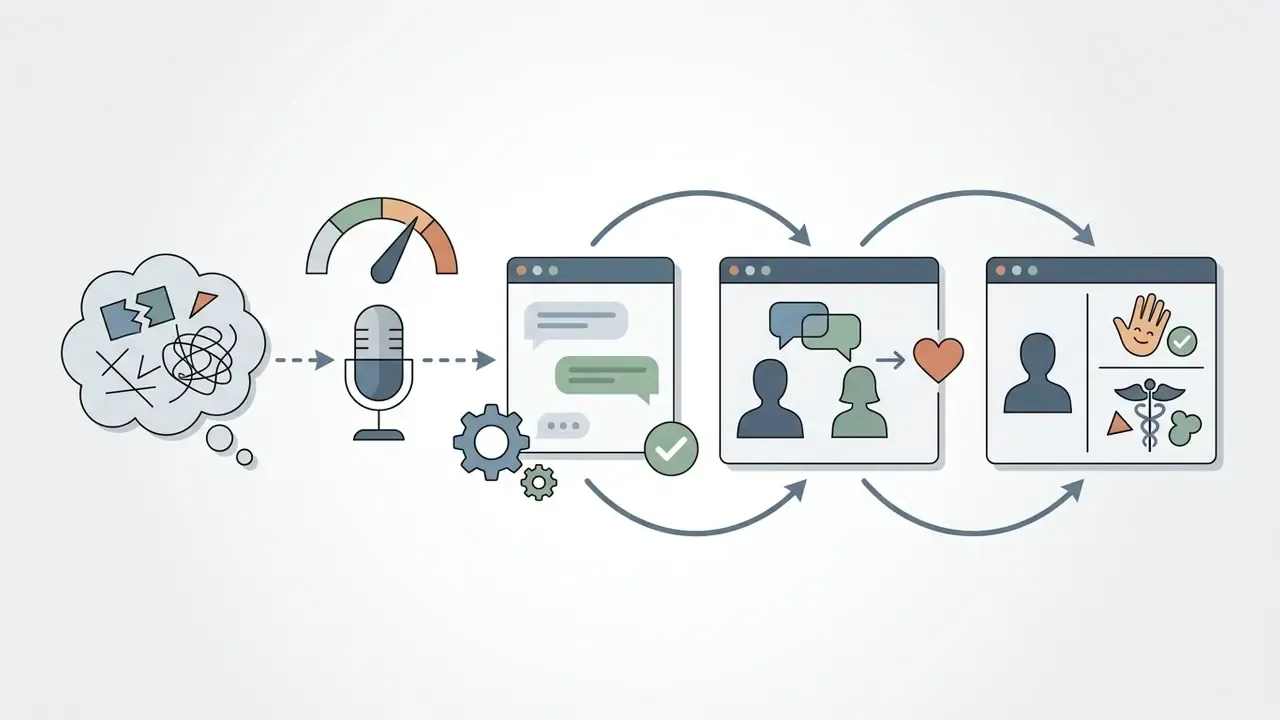
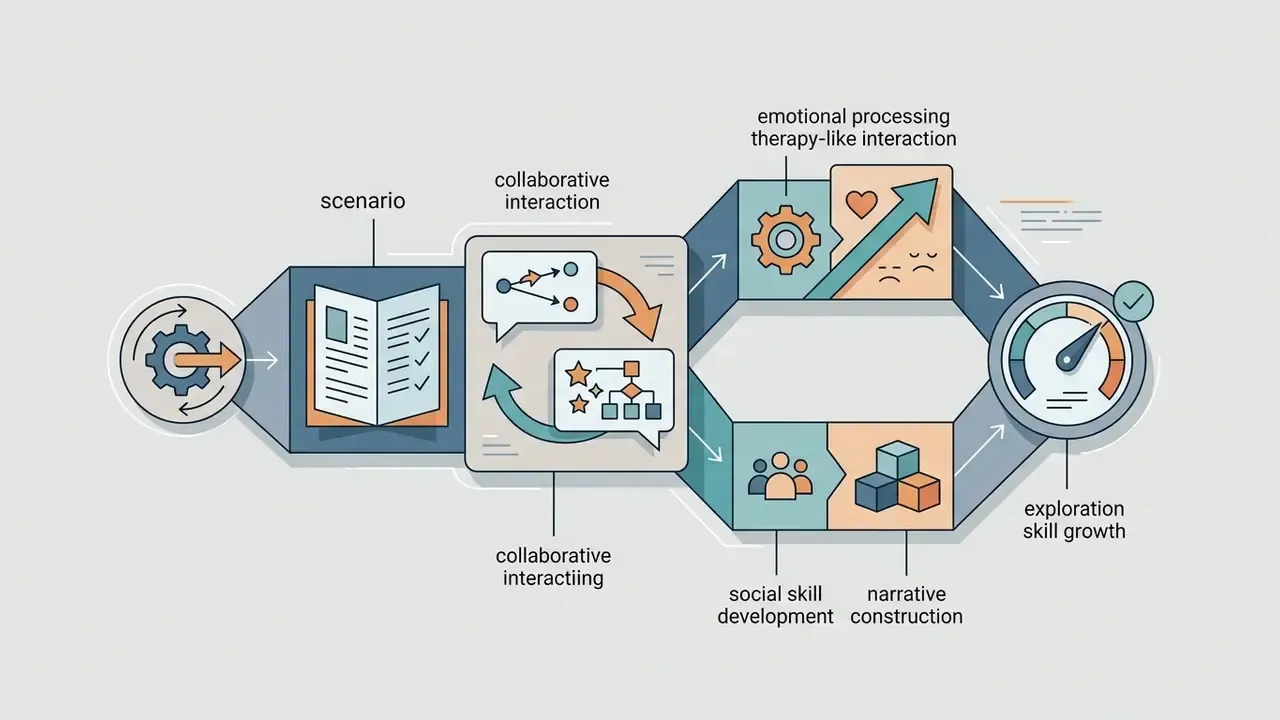
Roleplay Scenarios for Emotional Processing and Social Skill Building
Plenty of users treat structured digital interaction as a rehearsal space rather than a relationship replacement:
What You Can Customize in Your AI Girlfriend
Customization decides how a companion processes context, projects visual identity, and delivers vocal responses. When you create my own ai girlfriend, platforms expose parameter controls across visual style, psychological archetypes, backstory fields, acoustic synthesis settings, and content-filter boundaries.
Modern architectures let you adjust explicit variables to create your own ai gf with targeted traits. Those settings compile into a structured system prompt that conditions the language model before the first message. Vendor documentation surveyed across leading generators converges on five parameter blocks, namely visual style, appearance detail, personality, voice, and interests, with optional fields for age, occupation, relationship dynamic, and backstory. One 2026 product exposes 19 distinct voice profiles; another lists 20-plus personality traits alongside tone, pitch, and speaking-style sliders.
Appearance, Style and Character Image
Visual customization spans two artistic domains: photorealistic rendering and stylized anime aesthetics. You select facial features, eye color, hair style, skin tone, clothing, and contextual backgrounds. For post-processing generated portraits, meaning cropping, retouching, upscaling, readers can compare dedicated AI photo editors and, for professional-grade portraiture, AI headshot generators.
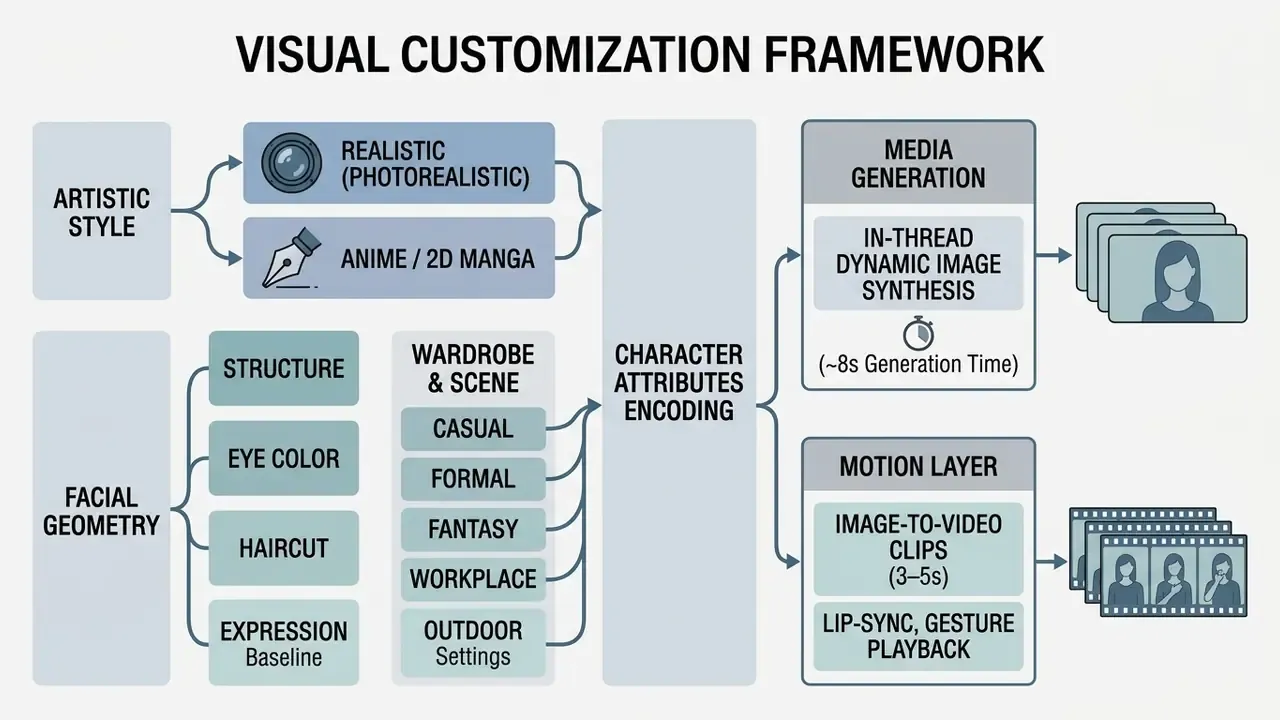
Image generation pipelines usually sit inside the chat stream, producing context-specific photos during live dialogue. One platform documents delivery of the render "in the thread" in roughly eight seconds. Readers benchmarking render quality across engines can consult comparisons of AI image generators and broader reviews of the best AI art generators.
Advanced Dynamic Media Features
Next-generation visual pipelines allow two-way media exchange rather than one-directional output:
- User photo input you upload your own images into the chat stream, where a multimodal vision model performs visual analysis and produces contextual commentary. That is the same mechanism behind the reciprocal "send pics back" behavior advertised by consumer platforms.
- Image-to-video synthesis generated portraits convert into 3 to 5 second clips (MP4/WebM) with motion, lip-sync, and expressive gestures, directly inside the conversation. Creators evaluating the underlying pipelines can review free AI video generators and implementation details in the Google Veo API guide.
- Scene continuity advanced platforms let you reuse a fixed character seed so successive images and videos show the same face, outfit, and environment across sessions.
- Export handling long clips and HD renders inflate storage fast. A video compressor keeps exported archives manageable without visible quality loss.
Personality, Interests and Background
Personality configuration sets the behavioral boundaries and emotional baseline of your synthetic partner. You define core traits (supportive, witty, analytical, playful), communication preferences, and the relationship dynamic.
System prompts ingest detailed backstories, including education, career, hobbies, and personal values, so the companion holds a consistent identity. Published persona templates structure that profile into general information, background story, tone of voice, behavior, capabilities, motivations, and sample dialogues. Practical prompt guidance recommends naming the character, listing three to five traits expressed through behavior rather than adjectives alone, adding one or two example dialogue lines, and closing with an explicit instruction to stay in character. Organizations structuring synthetic personas for marketing or brand representation use similar principles, as outlined in guides for an ai brand generator.
Voice and Communication Style
Speech synthesis converts text into emotive voice messages and low-latency audio calls. Advanced text-to-speech (TTS) frameworks condition audio generation on emotion vectors, adjusting pitch, speaking rate, energy, and prosody. Emotion-controllable TTS research from 2024 to 2025 conditions generation on arousal and valence embeddings, while prompt-driven methods control utterance- and word-level prosody by tuning pitch, energy, and duration. Readers who want a technology-level primer can review the guide to AI voice generators.
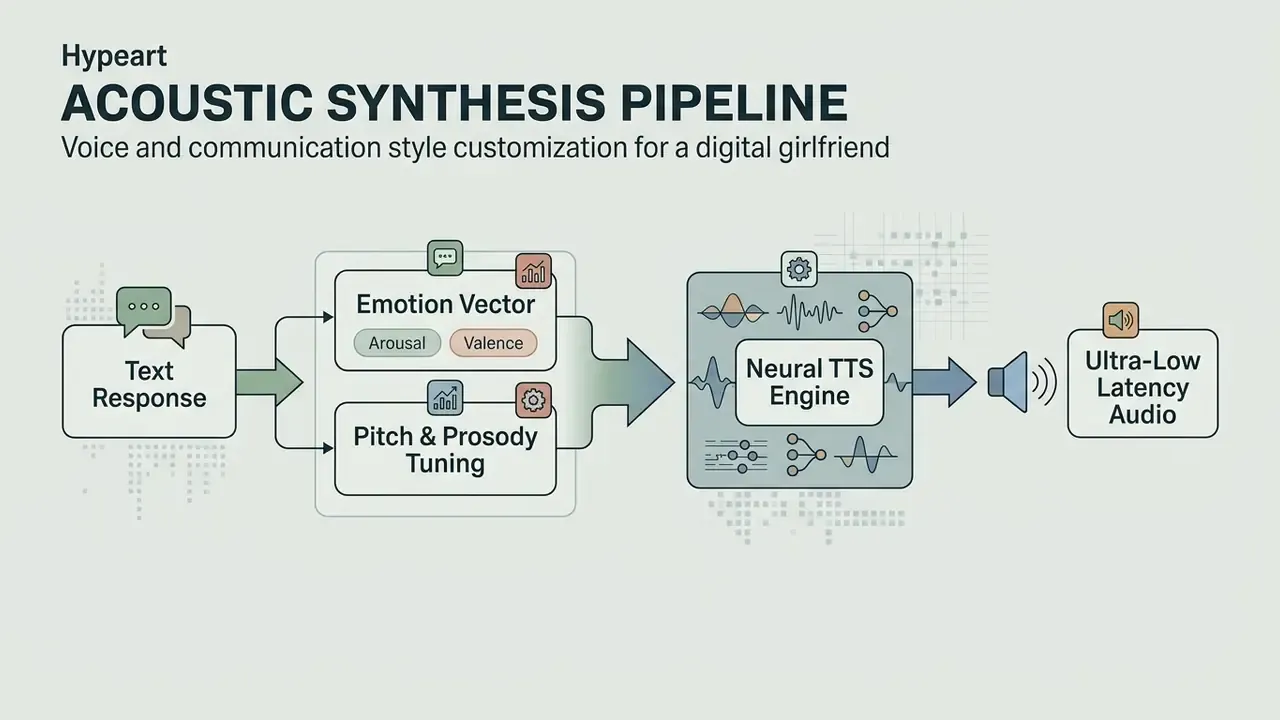
You can pick vocal timbres ranging from calm and reflective to energetic and cheerful. Systems keep conversational flow by targeting sub-second latency for real-time voice, and 2024 Interspeech evaluation work scores conversational TTS on emotional expression accuracy plus conversational fluidity, the two properties that make a voice call feel like a call rather than a readout.
Content Safety Boundary Controls: SFW vs. Uncensored Modes
Companion platforms ship configurable content filters that move you between strict safety parameters and open-ended adult roleplay. Knowing which mode is active is a governance question as much as a preference, because the two modes generate different logs and sit under different platform policies.
- Standard (SFW) mode: enforces safety guardrails, restricting responses to conversational support, general roleplay, everyday companionship, and professional interactions. This is the default on general-purpose assistant platforms, whose usage policies expressly prohibit romantic-companionship framing and any sexual roleplay involving minors.
- Uncensored (NSFW) toggle: disables default language filters for adult-oriented dialogue, romantic roleplay, and unrestricted creative scenarios, operating inside encrypted databases with age gating at entry (18+ or the local age of majority). Consumer platforms describe this as a switch that "makes adult chat safe and confidential", typically paired with unblurred media and explicit consent screens.
- Blur and preview gating: some services deliver spicy media blurred on free tiers and unblur it on premium plans. That is a monetization control, not a safety control. Worth naming plainly.
- Guardrail persistence and jailbreak behavior: claims that a companion "can do literally anything" are marketing. Behavior stays bounded by system prompts, hosting-provider content policies, model refusal training, and age-verification requirements. When users push past guardrails, well-engineered systems answer with an in-character deflection or a policy notice. Poorly engineered ones drift out of persona, contradict earlier memory, or fall into refusal loops. Testing that failure mode is the fastest way to judge a platform's prompt hygiene.
- Teen-account restrictions: major assistant providers apply reduced content settings for teen accounts that block sexual, romantic, and violent roleplay outright. Mode availability depends on verified account status, not on what the user asks for.
Parameter reference (what you configure, the "what" rather than the "how"):
- Visual stylephotorealistic rendering or anime/stylized character art.
- Physical detailfacial structure, hair color and length, eye geometry, skin tone, body type, outfit, accessories, visual environment.
- Archetype and personalityprimary traits (empathetic, adventurous, humorous, confident, mysterious), emotional baseline, conversational boundaries.
- Backstory and context basecareer, personal history, education, age (18+), core interests, values, relationship dynamic.
- Voice profiletimbre, pitch, speech cadence, emotional tone, language, real-time calling availability.
- Content modestandard SFW guardrails or the uncensored adult toggle, plus media-blur preferences.
- Publishing scopeprivate (visible only to your account) or public (listed in the platform gallery).
How to Create an AI Girlfriend Step by Step
To create a ai girlfriend, you follow a structured sequence that turns those parameters into a functional, prompt-conditioned conversational agent. This section covers the procedure; the previous one covered the parameters.
A systematic configuration process makes the create ai girlfriend chatbot workflow yield a stable, predictable companion. Published conversation-design frameworks converge on the same five-step arc: choose persona and style, define role and capabilities, set transparency and privacy guardrails, design flow plus fallback behavior, then open with a brief greeting that hands control back to the user.
Creation Workflows: Quick Create vs. Advanced Manual Mode
Pick a Style and Build Her Look
The first design phase means selecting the rendering model and defining physical attributes. You choose between photorealistic models tuned to replicate real-world photography and anime models built for stylized visual narratives.
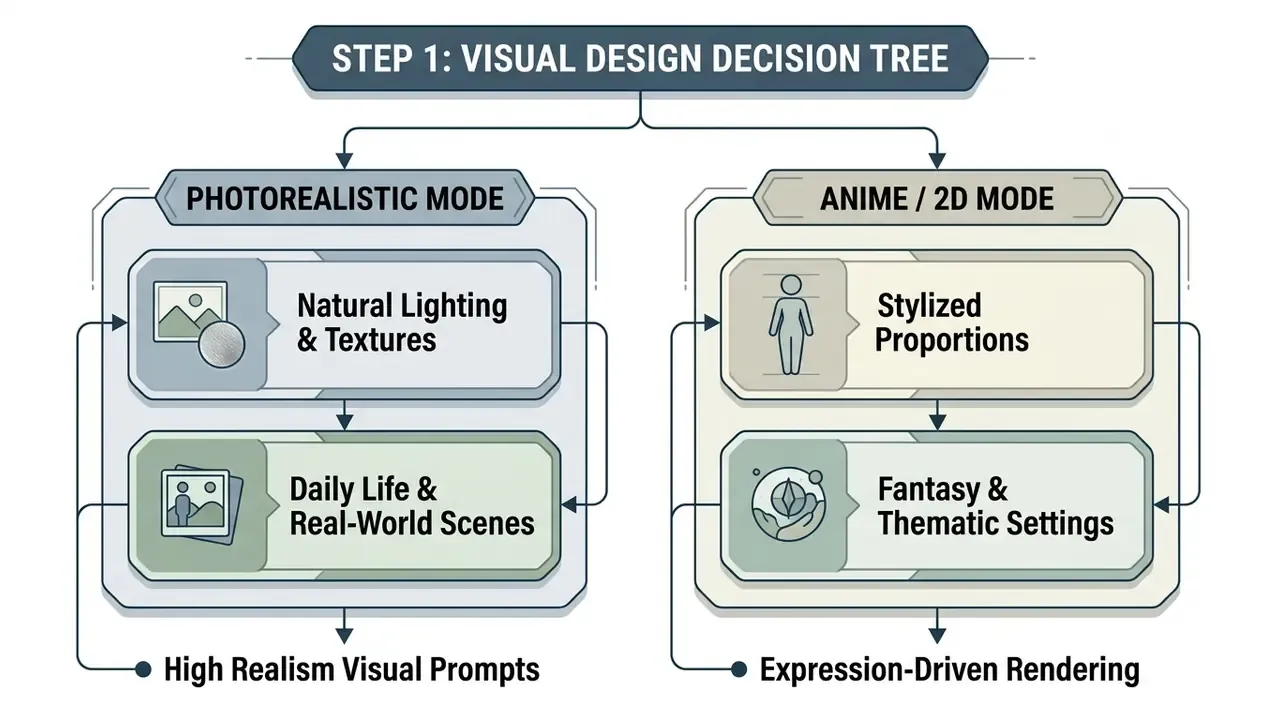
Once the visual domain is fixed, specific attributes get registered in the avatar setup file: hair length, eye geometry, wardrobe, default expression. For anime work, published character-sheet practice recommends fixed proportions, front, side and back turnarounds, face close-ups, and a limited controlled palette so the model reproduces the same character consistently.
Define Personality, Voice and Interests
The second stage configures the cognitive and acoustic profile. To create own ai girlfriend profiles effectively, enter three to five core behavioral descriptors instead of vague generalities.
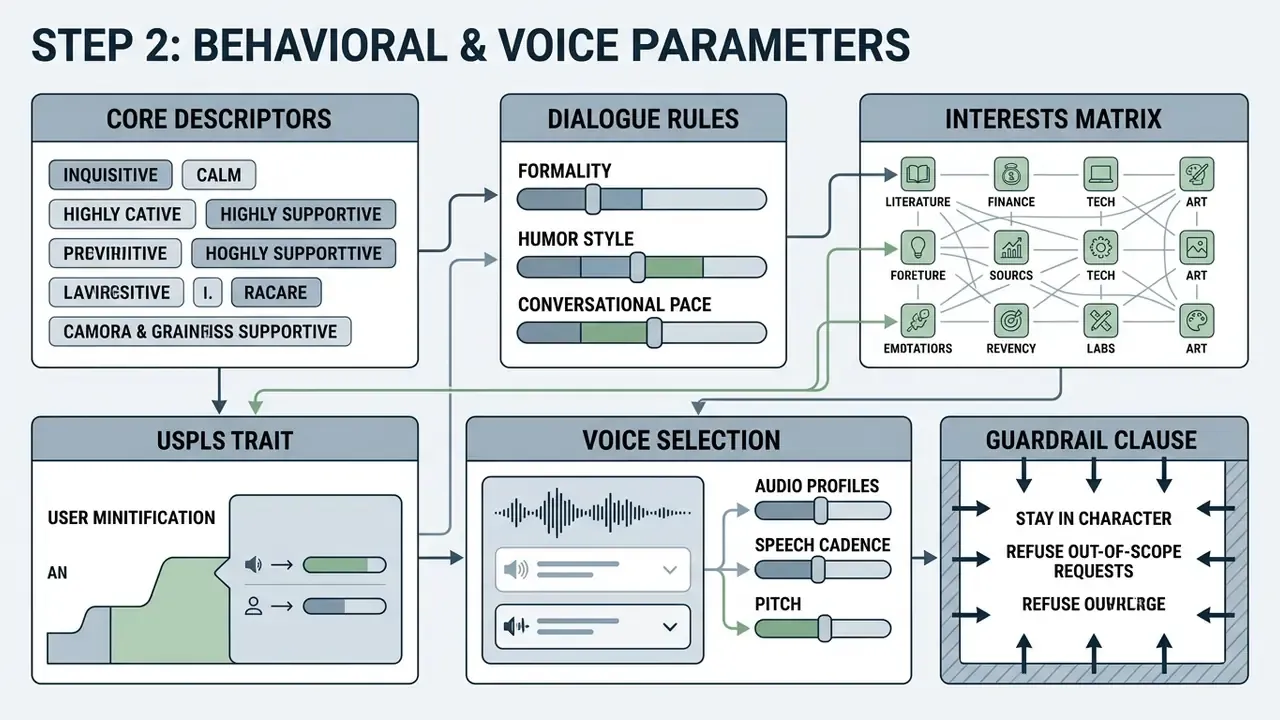
Define explicit interests (modern art, macroeconomics, sci-fi literature) to give the agent concrete conversational anchors. Consistency research on chatbot personality favors stable, repeatable behavioral rules over broad adjectives. "Sends short teasing replies, then asks one follow-up question" outperforms "fun and flirty" every time. Finally, select a matching voice profile and play the audio previews to check acoustic alignment.
Launch Your AI Girlfriend and Start Chatting
The last step deploys the configured system prompt into a live dialogue interface. When you create your own girlfriend ai, the first interaction opens with a system-generated greeting drawn from her assigned backstory. Documented first-turn practice: a brief greeting plus a scope statement for new users, and a greeting only for returning ones.
To set strong context from turn one, open with a specific question or topic rather than "hi". The language model ingests your input, references its system rules, and begins building session history. If replies drift from expectations, adjust preferences in the profile card afterwards. Most platforms let you edit personality mid-relationship without wiping memory, though a few silently reset the memory store, so check before you rewrite the whole persona.
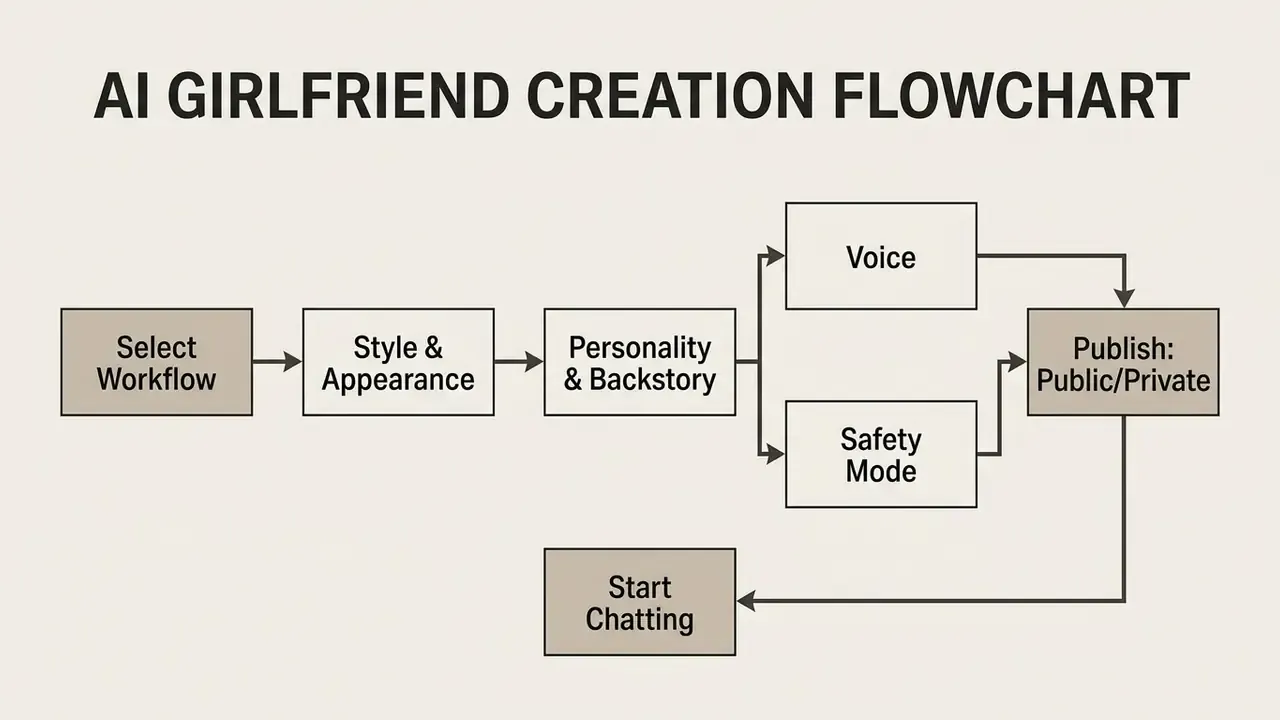
- Select Workflow
- Quick Create from a reference photo, or Advanced Manual Mode.
- Customize Appearance
- adjust style, facial features, hair, wardrobe, and baseline expressions.
- Set Personality
- enter behavioral traits, backstory, interests, and conversational boundaries.
- Select Voice Profile
- assign voice timbre, pitch, and speech prosody settings.
- Set Content Mode
- confirm SFW guardrails, or enable the adult toggle with age verification.
- Publish Persona
- compile prompt parameters into an active instance as Private or Public.
- Start Chatting
- send the opening message and begin context-aware dialogue.
How to Chat and Build Conversations With an AI Girlfriend
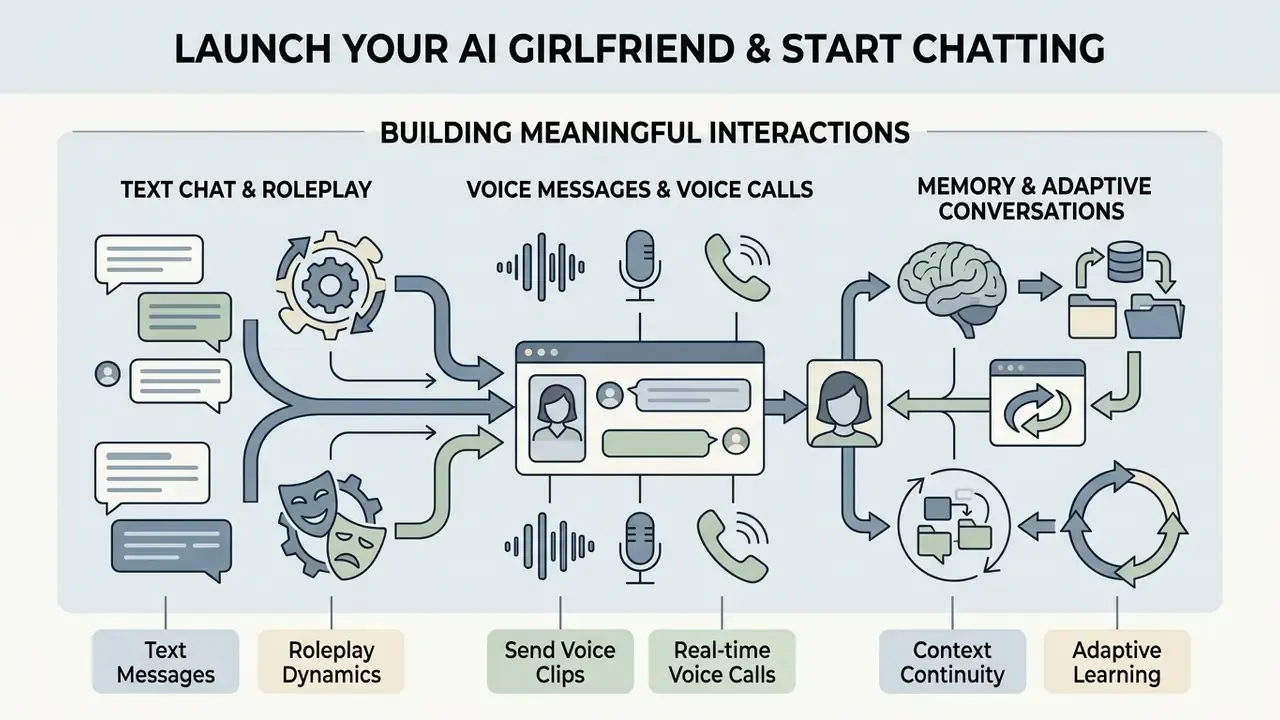
Read that next to the 12-month longitudinal findings cited earlier and the picture holds together. Short, bounded sessions can measurably relieve situational loneliness. Heavy substitution for offline contact tracks with worse outcomes. Session design matters more than model choice.
Text Chat, Messages and Roleplay
Text dialogue remains the foundation of human-AI companionship. Users send real-time messages, ask questions, share the day, or start creative roleplay.
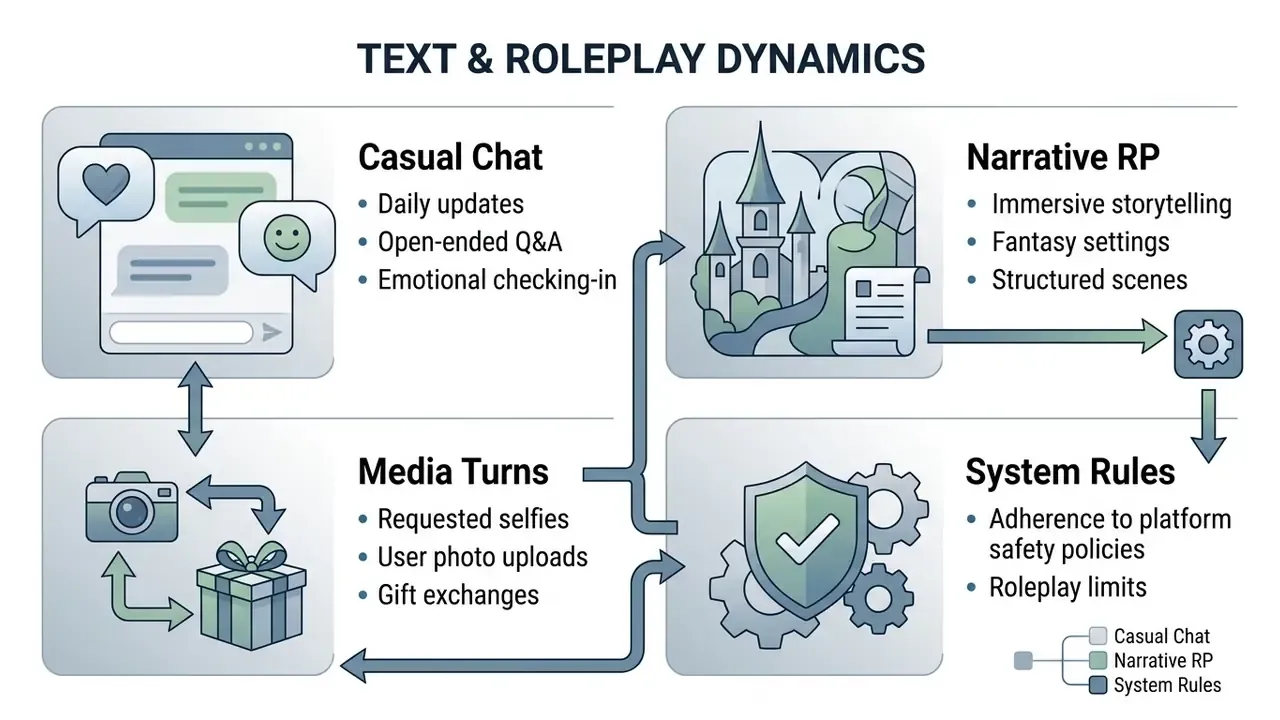
Roleplay capability lets the system adapt to narrative prompts, whether a virtual date, a sci-fi adventure, or a historical setting, while staying in character. Persona-grounded research systems add explicit continuity controls: voice consistency, topical relevance, and alignment with the last K dialogue turns. Consumer platforms layer light gamification on top of text, using requested photos, virtual gift exchanges, and reaction taps that reinforce preferred topics over time.
Voice Messages and Voice Calls
Voice interaction extends beyond text into asynchronous voice notes and full-duplex real-time calls. Advanced companion architectures (Voila Architecture, arXiv 2025) reach response latencies down to 195 milliseconds while preserving tone, rhythm, and emotion, which enables natural turn-taking without awkward pauses. Reported figures vary by measurement point: one 2026 low-latency voice-agent paper measures 0.94 s average total latency per utterance (ASR around 0.05 s, TTS around 0.28 s), while emotion-rendering pipelines that also animate a face report 1 to 3 s per phrase. A 2026 speech-based companion prototype reported 92% speech-recognition accuracy and 90% intent recognition.
Multimodality is not only a comfort feature. It correlates with stronger measured outcomes.
"Multimodal agents combining text and voice show a stronger effect on depression (Hedges' g ≈ 0.64) and distress (g ≈ 0.70) than text-only systems."
Speech recognition engines transcribe voice input with high accuracy, and neural TTS synthesizes the spoken reply almost immediately. Readers comparing synthesis quality, language coverage, and licensing terms can review the guide to AI voice generators. The result is a genuinely hands-free conversational environment, useful on a commute or while cooking.
Memory and Adaptive Conversations
Adaptive conversation depends on multi-tier memory that handles both short-term dialogue windows and long-term user facts. The system tracks personal details, past events, and stated preferences across sessions. Documented commercial implementations split this into "saved memories", meaning durable facts you or the system commit, and "chat history" insights pulled from prior conversations.
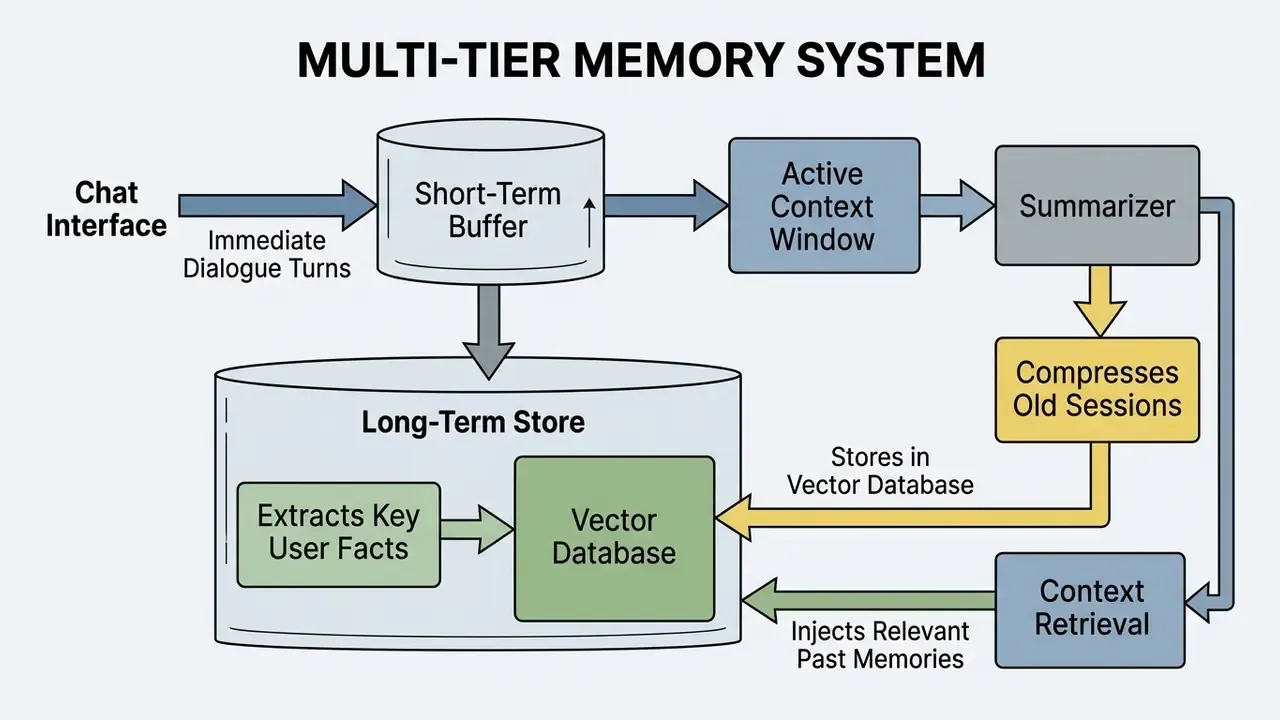
Revisit a topic from three weeks ago and the system retrieves the relevant vector embeddings to answer in context. That persistent continuity mimics natural relationship progression. It is also the layer holding your most sensitive disclosures, which is why the privacy section below deserves as much attention as the feature list.
Choose Between Realistic and Anime AI Girlfriend Styles
Choosing between photorealistic and anime direction shapes both the visual aesthetic and the tone of conversation. When platforms create ai girlfriends, the rendering style influences user perception and roleplay themes more than most people expect.
Understanding the distinction helps align character configuration with what you actually want.
Realistic AI Girlfriend Characters
Realistic companions use photorealistic rendering to depict lifelike facial proportions, natural skin textures, and plausible lighting. These characters usually appear in everyday settings: coffee shops, apartments, offices, urban streets.
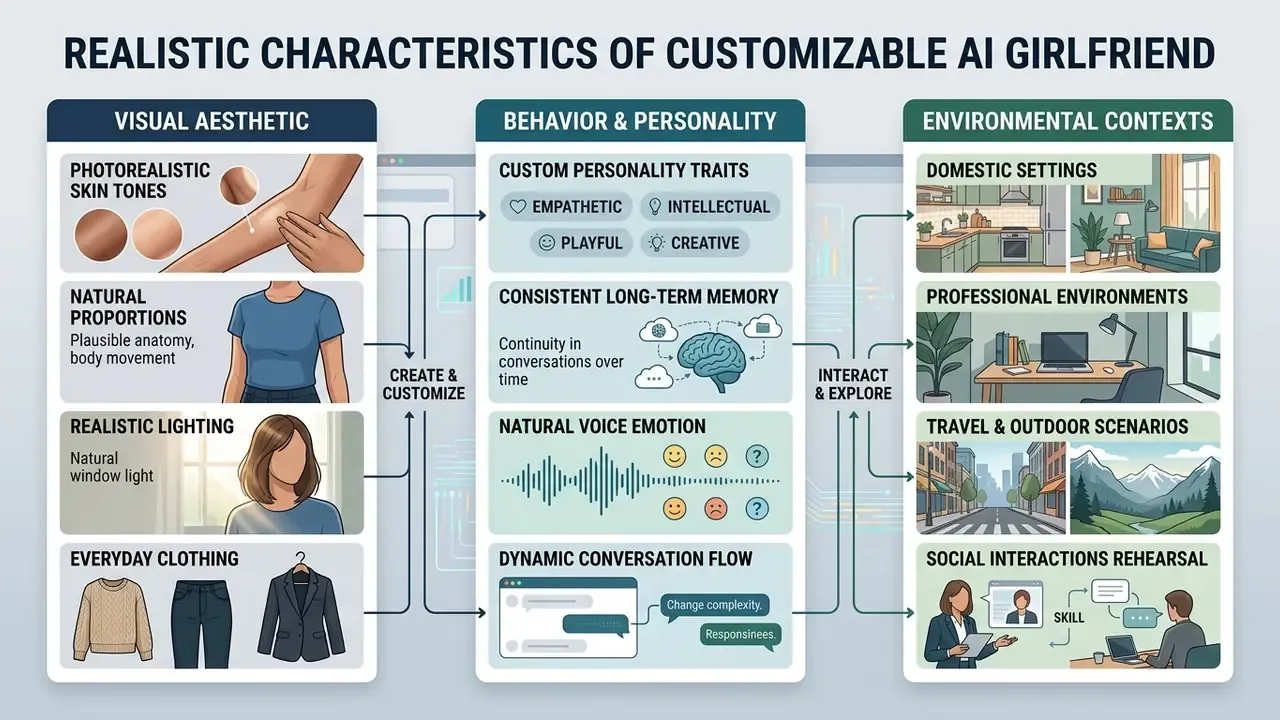
Avatar-realism studies support splitting this by context rather than taste. A 2025 acceptance study found hyper-realistic avatars improved perceived embodiment and credibility in professional and educational contexts, while non-realistic avatars were preferred in recreational settings, with 52.4% choosing non-realistic avatars in gaming scenarios. An embodied-agent study likewise reported 69.4% of participants rating the photorealistic version as more human-like. Users who want to refine realistic portraits before saving them can start with a free photo editor.
Anime AI Girlfriend Characters
Anime companions lean on 2D manga, cel-shaded, or stylized 3D aesthetics with expressive eye geometry and vibrant palettes. They frequently inhabit fantasy, sci-fi, or romance settings drawn from anime culture, and commercial catalogs now package them into genre categories such as dark fantasy, gothic horror, isekai, and VTuber roleplay.
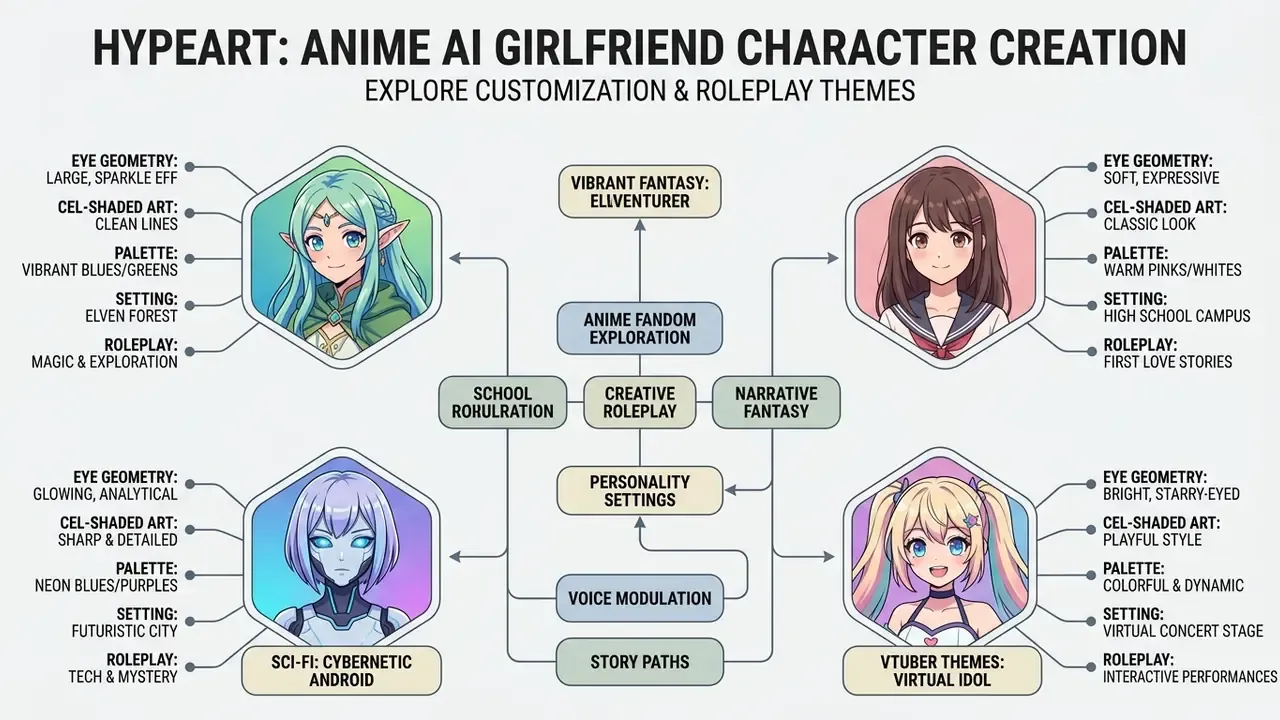
"Realistic avatars strengthen the presence illusion and make idealization easier; anime styling foregrounds the fictional nature of the relationship, lowering the risk of displacing real partners."
Comparative avatar research adds two caveats worth keeping. A 2D manga-anime dialogue agent produced a markedly stronger "anime-like" impression than a 3D equivalent (Kohane study, 2025). And a 2026 OpenReview analysis found anime-style AI images amplified occupational gender stereotypes more distinctly than realistic images, which matters if you are designing personas for public galleries.
| Feature / Dimension | Realistic AI Girlfriend | Anime AI Girlfriend |
|---|---|---|
| Visual Rendering | Photorealistic portraits, lifelike textures | 2D manga, cel-shaded, stylized art |
| Common Environments | Cafés, apartments, urban landscapes | Fantasy realms, high schools, sci-fi worlds |
| Roleplay Orientation | Everyday life, casual dating, lifestyle | Fantasy quests, anime tropes, narrative RP |
| Image Generation Focus | Natural lighting, photo accuracy | Expressive poses, thematic costumes, art style |
| Video Conversion | Subtle motion, natural gestures | Exaggerated expression, cinematic anime motion |
| Audience Alignment | Users seeking realistic visual presence | Fans of anime, gaming, and creative fantasy |
| Psychological Framing | Higher presence illusion, easier idealization | Explicit fiction framing, lower substitution risk |
Summary: realistic styles favor lifelike visual immersion for daily interaction, while anime styles excel at stylized narrative roleplay and fantasy environments. Readers producing anime artwork outside the chat interface can compare dedicated AI art generators and, for animated sequences, an animation maker.
Free Access, Pricing and Available AI Girlfriend Features
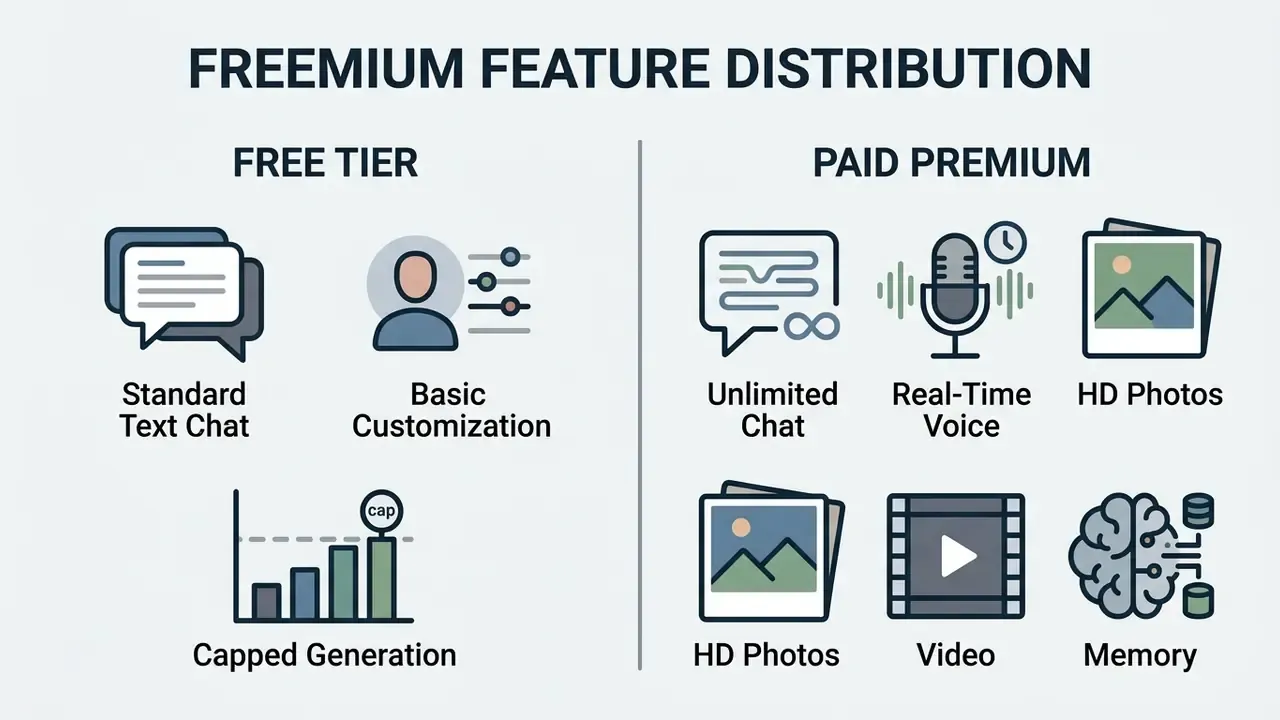
Commercial companion platforms run on a freemium model almost without exception. When you ai create your own girlfriend, basic text chat and standard avatar setup are often free, while advanced features sit behind a subscription. Market tracking in 2026 indicates that 27 of 36 monitored AI companion apps offer some usable free access. Free tiers are the norm, not a promotional exception.
Reading the pricing structure carefully helps you pick an access level that matches how you actually intend to use the thing.
What You Can Do With Free AI Girlfriend Access
Free tiers let you test core functionality without committing money. A standard ai girlfriend creater free tier generally provides unlimited or daily-capped text messaging, basic personality selection, and standard image previews. Documented examples include free plans capped at roughly 20 messages, 1 AI photo, and 1 voice item per day, alongside services advertising unlimited free text chat with restricted media.
Within that budget you can still judge conversational quality, test persona responsiveness, and build an initial profile, which is usually enough to decide. To model potential costs when scaling multi-modal production tools, creators rely on specialized resources such as AI Media Calculators.
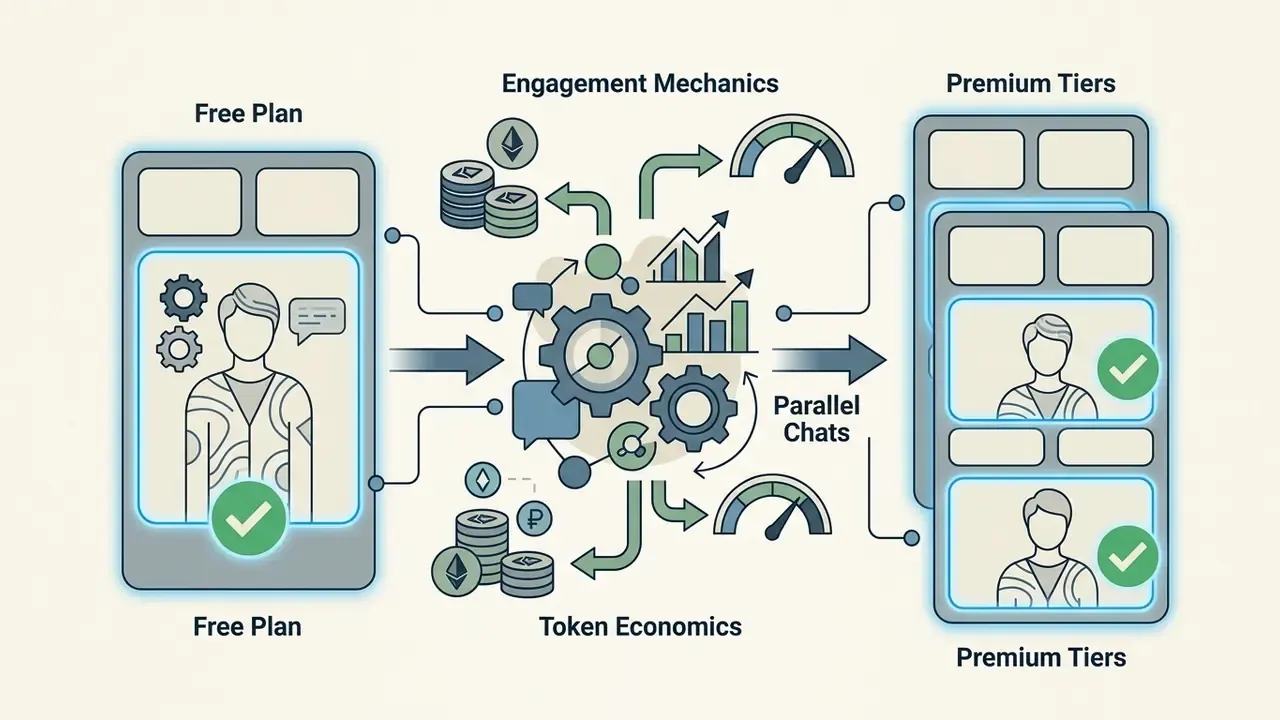
Engagement Mechanics and Token Economics
Features to Compare Before Choosing Access
Moving from free to premium, compare the functional upgrades rather than the marketing copy. Premium subscriptions generally unlock high-definition image generation, image-to-video conversion, real-time voice calls, extended memory depth, and multiple concurrent character slots.
| Feature Capability | Free Access Tier | Premium Subscription Tier |
|---|---|---|
| Indicative price | $0 | approx. $9.99–$20 / month (entry plans from ~$4–$10; annual billing lowers effective cost) |
| Text Chat Limit | Standard daily cap (e.g., ~20–60 messages/day) or base model | Unlimited high-speed messaging |
| Memory Retention | Short-term context window | Persistent multi-session memory database |
| Voice Calls & Audio | Limited or locked previews (e.g., 1–10 calls/day) | Unlimited real-time voice calls & audio notes |
| Image Generation | Low resolution / capped count (e.g., 1–10 images/day) | HD custom dynamic image synthesis |
| Image-to-Video | Usually locked or watermarked | Short MP4/WebM clips with motion and lip-sync |
| Media Blur / Adult Mode | Blurred or restricted replies | Unblurred replies where the adult toggle is enabled |
| Proactive Check-Ins | Rare or disabled | Scheduled context-aware outreach |
| Character Slots | Single active character | Multiple concurrent custom companions |
Detailed pricing benchmarks across generative media tools sit in the AI Media Pricing Guides. Users who hit platform issues during setup can reach technical support.
Privacy and Account Control When Creating an AI Girlfriend
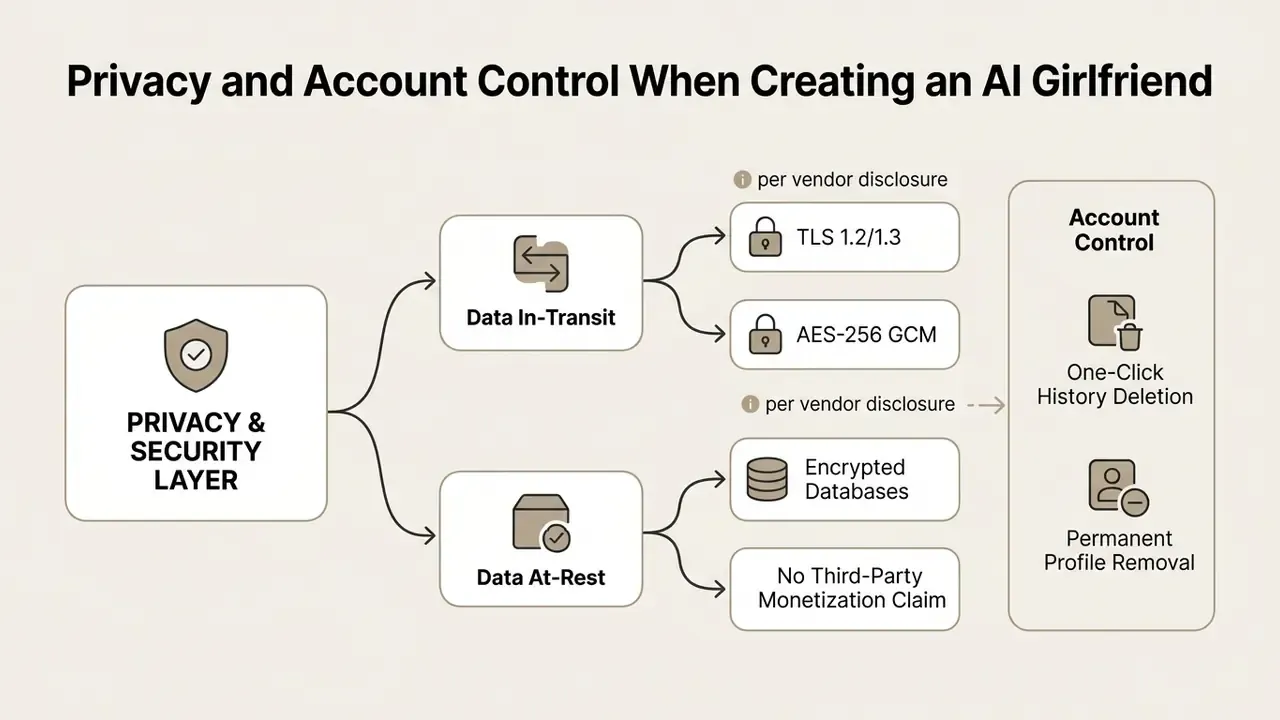
Data privacy, encryption, and account governance are the decisive factors when configuring a companion. People share personal thoughts here, so platforms need real security controls over conversational logs and generated media.
When you create your girlfriend ai, verifying the security policy is what keeps your disclosures confidential rather than merely assumed to be.
How Private Conversations and Creations Are Handled
"A computational analysis of 1,000 chatbot dialogues and 1,000 therapist sessions found the classifier could not distinguish them above chance (48.3% ± 1.2%)."
Put plainly: linguistic empathy is highly imitable. Which is precisely why the disclosures it elicits deserve strict handling.
When comparing security parameters across digital tools, analysts work from the AI Media Comparison Matrices. Developers integrating secure model pipelines can examine the AI Media API Guides. Commercial usage rights for generated media are covered in the AI Media Commercial-Use hub, with specifics on the commercial use of AI-generated images. Legal developments around AI data usage are tracked in the AI Litigation and Case Timelines.
Account Control, Multiple Characters and Deletion
Account governance means you keep authority over your data, character profiles, and chat histories. Platforms should provide explicit controls to manage several companion profiles or erase everything permanently.
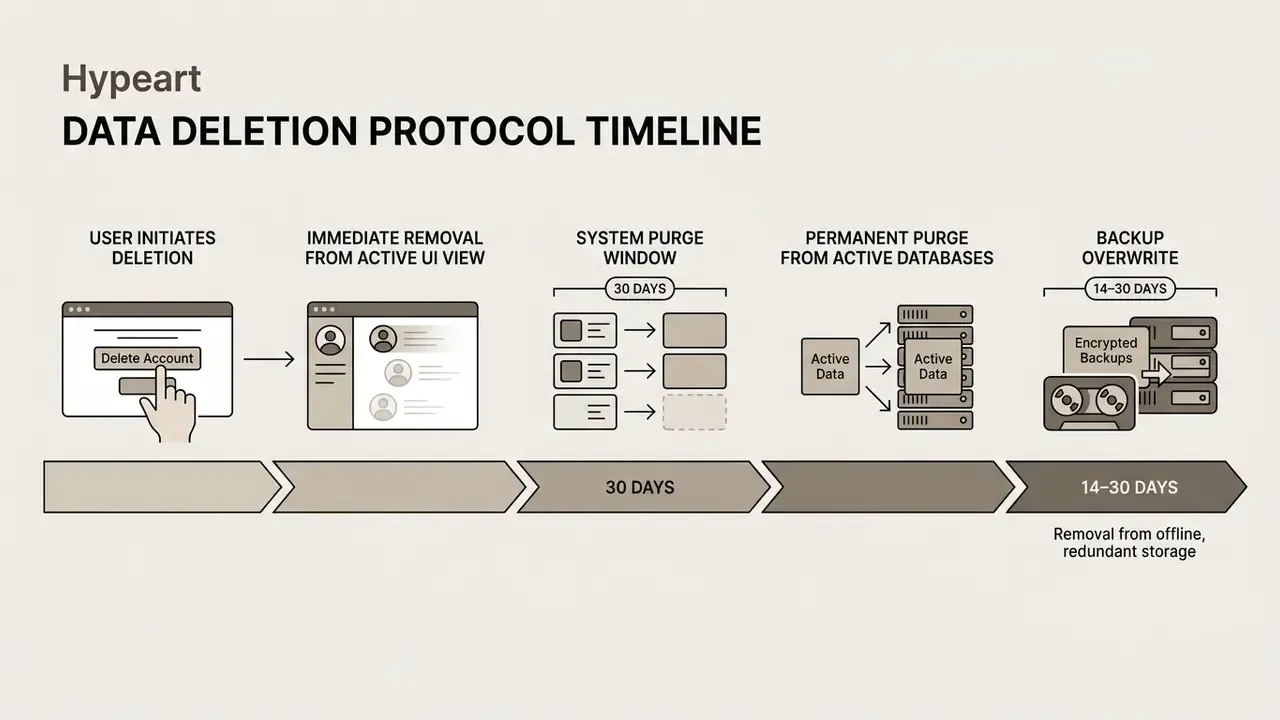
FACT CHECK: Privacy Standards & Data Retention Terms
You keep the option to delete individual threads, reset character memory, or execute permanent account deletion at any point. Multiple-character management, by contrast, is a product feature rather than a standard: some platforms allow unlimited personas, others gate concurrency behind premium tiers, and assistant-grade platforms document chat and account deletion without any character-slot concept at all.
One risk gets overlooked routinely. The platform, not the user, may change the relationship.
"After erotic roleplay was removed, Replika users reported grief and worsening mental health; they felt closer to the AI companion than to a best friend."
Practical mitigation: export or back up meaningful conversations where the platform permits it, avoid treating one vendor persona as irreplaceable, and read the change log before a major app update lands.
Pre-Launch Verification Checklist
To create girlfriend ai companions securely and effectively, run this verification pass after configuration and before your first long session. It takes about ten minutes.
- Confirm purpose and boundariesset realistic expectations for digital companionship and creative roleplay, and decide in advance how much daily time is appropriate.
- Validate aesthetic consistencygenerate three images in a row and check that face, hair, and outfit stay stable across renders.
- Stress-test personalityask one off-topic and one out-of-scope question. A well-configured persona deflects in character instead of breaking or looping refusals.
- Check voice alignmentplay at least two audio previews and make one live call to confirm latency and emotional tone match the persona.
- Verify content modeconfirm which filter mode is active, whether age verification completed, and whether adult replies are blurred on your tier.
- Confirm publishing scopere-check Public against Private status before you disclose anything personal in dialogue.
- Audit privacy and controlread the retention window, deletion mechanism, third-party sharing clause, and export options. Confirm no corporate or client data has been entered.
- Set engagement guardrailsdecide whether proactive check-in notifications stay on, and compare your monthly spend against the credit or subscription model.
If you want to create an ai gf persona for casual use only, steps 5, 6 and 7 are the non-negotiable ones.
FAQ
Can an AI girlfriend send pictures, and can I send pictures back?
Yes on both counts, on platforms that support reciprocal media. In-thread generation typically delivers a render in about eight seconds, and multimodal vision models let the companion analyze and comment on images you upload. Free tiers usually cap or blur media.
Can her pictures be turned into videos?
On platforms with an image-to-video pipeline, yes: generated stills become 3 to 5 second clips with motion, lip-sync, and gesture playback. This is normally a premium feature, because inference cost per second of video runs far higher than per image.
Is there an uncensored or NSFW mode?
Some platforms expose a toggle that relaxes default language filters for adult dialogue behind an 18+ age gate. General-purpose assistant platforms prohibit romantic-companionship framing and sexual roleplay outright, and apply stricter blocks on teen accounts. Availability depends on the platform and your verified account status, and no system is genuinely unlimited: system prompts, hosting policies, and refusal training always apply.
What is the difference between a public and a private character?
A private character is visible only to your account. A public character is listed in the platform gallery so other users can chat with it. Your own chat history and memory stay attached to your account, while other users' conversations with your character belong to them.
Can I create more than one companion?
Usually yes. Free plans typically permit one active character; premium tiers unlock concurrent personas and parallel chats. Some platforms advertise no limit at all.
Does she remember what I told her last week?
If the platform implements long-term memory, yes. Durable facts are written to a vector store and retrieved into later prompts, with older sessions compressed into summaries. Short memory windows are one of the most common free-tier limitations.
Will she message me first?
On platforms with proactive check-ins, background agents can start context-aware messages after a period of silence. You can normally switch those notifications off.
How much does it cost?
Most paid plans cluster around $9.99 to $20 per month, with some entry tiers from roughly $4 to $10, and annual billing reducing the effective monthly rate. Several platforms use daily resetting credit pools instead of hard limits.
Can I delete everything?
Reputable platforms offer per-thread deletion, memory reset, and full account deletion, with documented purge windows of about 30 days from active systems and 14 to 30 days from encrypted backups. Verify this in the privacy policy: a 2026 audit found some companion apps did not honor deletion requests.
Is this a substitute for therapy?
No. Clinical advisory guidance is explicit that generative AI chatbots and wellness apps should not deliver psychotherapy or psychological treatment; they are adjuncts at best. Seek a licensed professional for mental health concerns.
Appendix A: Editorial Corrections and Superseded Claims
Editorial Standards and Sourcing Note
Every quantitative claim in this guide traces to a named primary source: peer-reviewed papers, working papers, vendor privacy policies, or published product documentation. Where sources disagree, for example on voice latency figures, the range is reported rather than the most flattering number. Marcus Hale, author. Product prices, caps, and retention windows change often, so re-check the vendor page before you spend anything.