Generative artificial intelligence pushed the marginal cost of a finished image close to zero. Commercial creators and digital operators can now produce high-volume visual assets across wildly different aesthetic domains, from botanical line art to architectural renders. Monetizing that output is the harder part. It requires reading platform policies properly, respecting statutory copyright boundaries, and tracking licensing structures that keep shifting. Deciding where to sell AI generated artwork comes down to one practical question: which product format belongs in which distribution channel, and what compliance evidence does that channel demand? The answer differs for an independent creator, a small studio, and a corporate brand team governed by an internal AI policy.
Executive Summary for Fast Decisions
- Legality Selling AI generated art is legal in the U.S., the EU and most jurisdictions. Ownership is the part that is not automatic. Purely prompt-generated output receives no federal copyright protection, so competitors can legally copy raw files.
- Protection mechanism Copyright attaches to demonstrable human contribution: compositing, digital painting, color grading, vector overlays, selection and arrangement. Document that work while you do it, not six months later.
- Channel selection Six viable channel types exist. Digital download marketplaces, print-on-demand, stock agencies, self-hosted stores, fine-art galleries, and Web3 or NFT platforms. Margins range from roughly 32% (stock royalties) to about 77% (digital downloads).
- Policy split on stock Adobe Stock, Freepik, Dreamstime, 123RF and Vecteezy accept labeled AI uploads. Shutterstock, Getty Images/iStock, Alamy and Pond5 reject contributor AI submissions.
- Disclosure is mandatory Etsy requires a disclosed seller creative role and bans prompt bundles. Adobe Stock requires the generative-AI checkbox. The EU AI Act (Article 50) requires machine-readable marking of synthetic content from 2 August 2026.
- Pricing reality Unit prices across digital creative services have compressed sharply while order volume expanded. Portfolio scale, niche specificity and brand retention decide revenue, not the price of one image.
- Enterprise caveat Organizations that monetize or publish AI visuals must also control Shadow AI, prompt-log retention, provenance chains and data-leakage exposure. The dedicated governance section below covers that control layer.
Can You Legally Sell AI Generated Art?
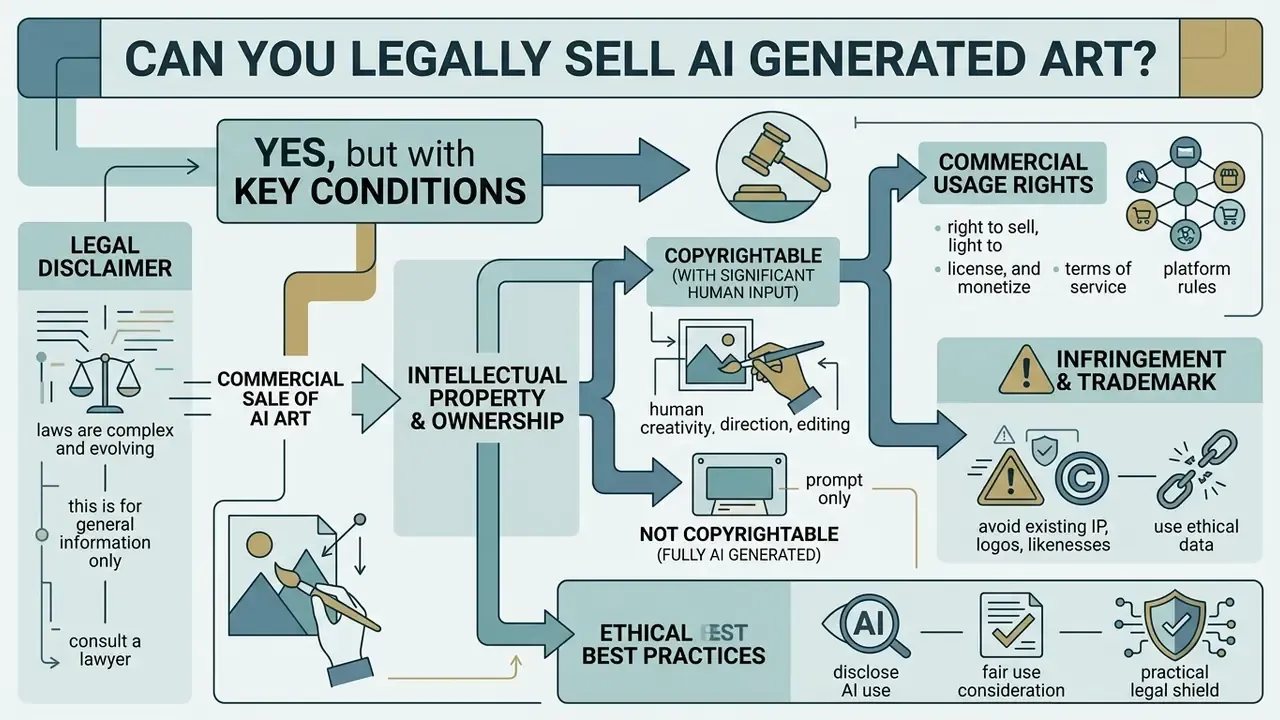
Commercial sale of AI generated artwork is legally permissible in the United States and in most international jurisdictions, provided the work does not infringe existing trademarks, copyrights or publicity rights. Statutory protection, though, looks very different for human-authored art and for synthetic outputs. You can sell AI pictures. You often cannot stop anyone from copying the raw file you sold.
Copyright and ownership: why significant human input matters
Under current U.S. Copyright Office (USCO) guidance and rulings such as Thaler v. Perlmutter (2023), works generated solely from text prompts are not eligible for federal copyright protection. The threshold for ownership rests on whether a human author exercised enough creative control over the final expression.
"Copyright protects only material that is the product of human creativity; where AI determines the expressive elements, the generated material is not the result of human authorship."
The Thaler holding is worth quoting rather than merely citing, because the phrasing is what examiners and opposing counsel lean on:
"On August 18, 2023, a federal court affirmed that human creativity is the sine qua non at the core of copyrightability; works without human authorship are unprotected."
Situation: A digital design group created 500 standalone AI images using standard text prompts, only to find competitors copying and reselling the exact files on low-cost marketplaces.
Action: The group integrated manual Photoshop editing, custom vector overlays, and multi-layered compositional adjustments to establish original human authorship.
Result: The modified collections qualified for U.S. Copyright registration under 2025 USCO guidelines, allowing formal enforcement against unauthorized copycats.
The USCO's 2025 report Copyright and Artificial Intelligence, Part 2: Copyrightability confirms that human contributions such as original selection, arrangement or substantive digital modification remain protectable. Registration filings must also disclose AI generated material above a de minimis level and disclaim it from the claim. Qualifying human input recognized in practice includes:
- Compositing: combining several generations into one cohesive image with deliberate layout decisions.
- Digital painting: treating an AI output as an underpainting, then repainting details, edges and color in Photoshop or Procreate.
- Substantial editing: complex retouching, color grading and geometric manipulation that fundamentally alters the raw output.
- Selection and arrangement: curating a sequence or collection where the editorial structure itself is expressive.
Jurisdictional nuance matters if you sell to a global audience. The United Kingdom takes a materially different route from the United States:
"Section 9(3) of the CDPA treats the person who made the arrangements necessary for creating a computer-generated work as its author, with 50 years of protection."
Separately, automatically generated output can still infringe third-party rights if it reproduces protected expression, recognizable imaginary characters or registered logos. That risk climbs once the work is sold commercially, because commerciality weighs against fair use. When creators use the tools evaluated in our compare section to assess model control, proving significant human authorship stays essential for defensible digital assets. Reviewing legal developments through our tracked AI Litigation and Case Timelines helps align workflows with current judicial precedents.
Commercial usage rights and platform disclosure rules
Commercial licensing rights are governed contractually by each AI tool provider, so picking AI image generators with commercial usage rights is the first operational gate before any listing goes live. Midjourney requires a paid subscription for commercial monetization, restricting free-tier outputs to non-commercial evaluation, and its commercial-use terms require the Pro or Mega plan once a business exceeds USD 1,000,000 in revenue (Midjourney Terms of Service, 2026: https://docs.midjourney.com/hc/en-us/articles/32083055291277-Terms-of-Service). OpenAI grants full commercial usage rights for outputs generated on paid ChatGPT Plus or DALL-E 3 tiers, assigning to the user any rights OpenAI may hold in the output. Microsoft's product terms classify output content as customer data, and Anthropic's commercial terms likewise assign output rights to the customer. Adobe Firefly offers commercially safer models trained on licensed Adobe Stock, openly licensed and public-domain assets, and embeds Content Credentials metadata automatically to certify licensing provenance (Adobe, Content Credentials overview, 2026: https://helpx.adobe.com/firefly/web/get-started/learn-the-basics/content-credentials-overview.html). Stable Diffusion rights depend on the specific model weights and license rather than any single subscription; self-hosted open weights give the widest latitude.
Sales platforms mandate explicit disclosure of generative origin. Marketplace rules prohibit presenting unedited synthetic outputs as hand-crafted items. Teams wiring generation into automated pipelines should also review tooling through an established api framework so data handling stays compliant. Disclosing synthetic origin keeps you aligned with transparency regimes such as the EU AI Act (Article 50), which requires machine-readable marking of synthetic image, audio, video and text plus clear human-facing disclosure at first exposure. It also prevents listing suppression on major marketplaces, which is the more immediate commercial risk.
One category deserves a blunt warning. Adult and explicit niches sit outside mainstream policy: Etsy, Adobe Stock and the large print-on-demand vendors prohibit such content, so output from an ai hentai generator cannot be listed there and carries real payment-processor and account-termination risk.
Where to Sell AI Generated Artwork: Best Platform Types
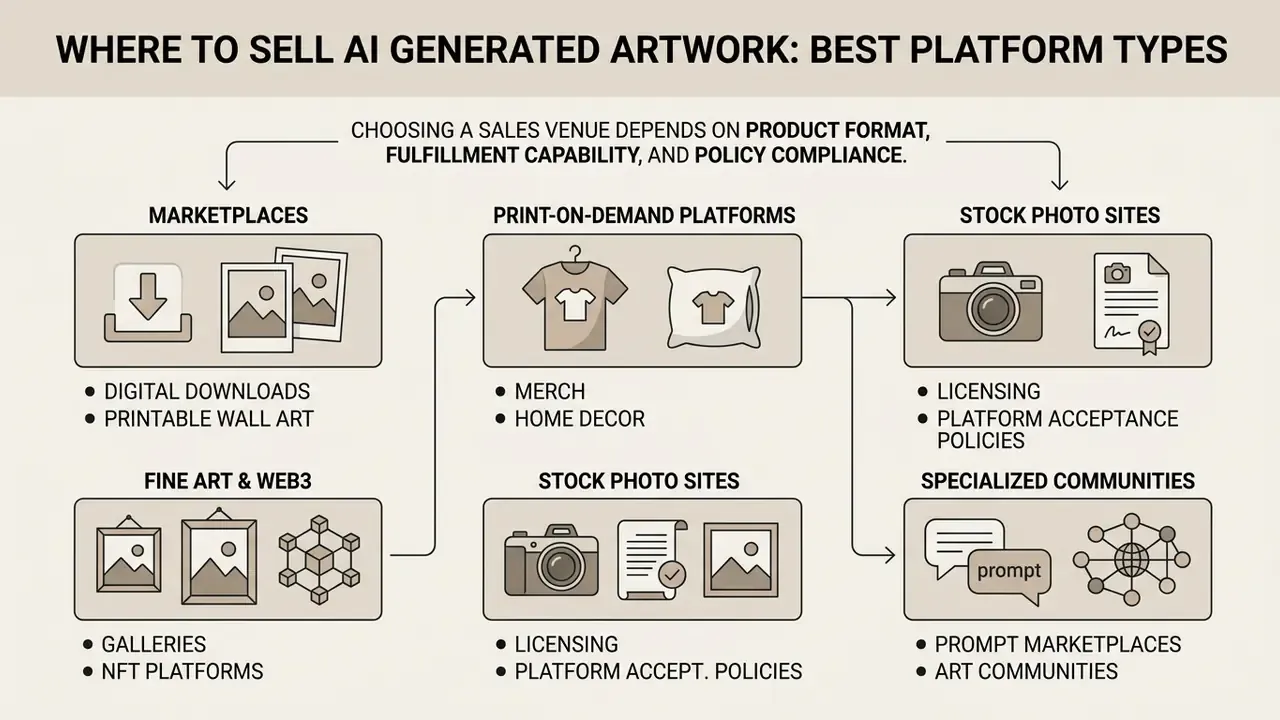
Choosing a sales venue depends on product format, fulfillment capability and policy compliance. Most sellers end up operating across six primary channels: digital product marketplaces, print-on-demand services, stock photo repositories, their own website, curated fine-art galleries, and blockchain-based collectible platforms. Prompt marketplaces sit alongside as a seventh, narrower option.
| Platform Type | Primary Product Formats | Audience Reach | Standard Fees & Costs | Fulfillment Model | AI Content Policy | Seller Control |
|---|---|---|---|---|---|---|
| Digital Marketplaces (e.g., Etsy, AI Art Shop, Artsi) | Printable wall art, digital downloads, stock asset packs | Global consumer traffic | Etsy: $0.20 listing + 6.5% transaction + processing; AI Art Shop: 25% commission; Artsi: 9.4% + $0.30, no listing fee | Automated digital download delivery | Permitted under "Designed by Seller" with mandatory disclosure; prompt bundles prohibited on Etsy | High pricing & catalog control |
| Print-on-Demand (POD) (e.g., Redbubble, Printify, Gelato, Society6) | Apparel, phone cases, home decor, physical posters | Platform marketplace & organic search | Base production cost deducted from retail price; Redbubble markup defaults to 10% and is user-adjustable | Vendor handles production, shipping & returns | Permitted subject to standard IP & trademark policies | Moderate pricing control over retail markups |
| Stock Photo Agencies (e.g., Adobe Stock, Freepik, Wirestock) | Commercial visual assets, background vectors, templates | Business buyers, agency designers | Revenue share model (about 33% to contributor); no listing fees | Platform handles digital licensing & delivery | Adobe Stock, Freepik, Dreamstime, 123RF, Vecteezy accept tagged AI; Shutterstock, Getty/iStock, Alamy, Pond5 reject | Low control over asset pricing |
| Self-Hosted Stores (e.g., Shopify, WooCommerce, Sellfy) | All digital, physical, or subscription product types | Proprietary traffic via SEO & marketing | Monthly subscription + credit card processing (Stripe: 2.9% + $0.30) | Seller manages tokenized download links or POD integrations | Unrestricted, governed by legal standards | Complete brand & operational control |
| Fine Art Galleries (e.g., Saatchi Art) | Limited-edition prints, curated originals | Collectors, interior designers, dealers | Gallery commission on sale price; no shelf rent | Seller or gallery-managed physical proofing & shipping | AI-assisted work accepted with human-in-the-loop proofing and disclosure | Medium; curation gates catalog entry |
| Web3 / NFT Platforms (e.g., SuperRare, OpenSea) | 1-of-1 digital collectibles, generative series | Crypto-native collectors, DAOs | Blockchain gas fees + platform commission; creator royalty typically 5%-10% on secondary sales | Smart-contract minting; buyer self-custody | Dedicated to digital-native assets; provenance recorded on-chain | High control over supply, editions and royalties |
| Prompt Marketplaces (e.g., PromptBase) | Textual prompts, parameter style guides | AI creators, prompt engineers | Platform commission per transaction (sellers typically retain about 80%) | Automated text string or file download | Dedicated to AI assets; prompt inferencing risks exist | Low defense against reverse engineering |
Key takeaway from the matrix: control and margin move in opposite directions to traffic. Marketplaces hand you buyers and take your pricing power; your own website hands you pricing power and makes you buy traffic. Most durable operators run both.
Prompt assets deserve a specific risk warning before you build a business on them:
"Humans and human-AI teams can reconstruct prompts from sample images with high fidelity, which questions whether prompts can function as defensible intellectual property." Source: Promptly Yours? A Human Subject Study on Prompt Inference in AI-Generated Art, preprint (2024). https://arxiv.org/
"Humans and human-AI teams can reconstruct prompts from sample images with high fidelity, which questions whether prompts can function as defensible intellectual property." Source: Promptly Yours? A Human Subject Study on Prompt Inference in AI-Generated Art, preprint (2024). https://arxiv.org/
Marketplaces for digital downloads and printable wall art
Digital download marketplaces such as Etsy, AI Art Shop and Artsi let you sell high-resolution files straight to consumers, with no inventory and no shipping. Etsy classifies compliant work under its "Designed by a Seller" policy, provided the listing discloses synthetic tool usage and reflects an original design vision. Comparing the best AI image generators before you commit to a catalog style saves expensive re-generation later. Etsy listing fees are predictable ($0.20 per unit) alongside a 6.5% transaction fee on completed sales, with payment processing charged separately and varying by country, frequently around 3% + $0.25. Niche marketplaces trade traffic volume for lower competition: AI Art Shop retains 25% commission, while Artsi charges 9.4% + $0.30 per sale with no listing or sign-up fee.
On demand structure, treat category rankings as a hypothesis rather than gospel. Creator guides and marketplace search data cluster around printable wall art, customizable templates and seasonal decor bundles, and those categories do attract steady interest from art enthusiasts furnishing rooms on a budget. Still, confirm current demand with keyword volume and competition data before generating a collection. Where reliable demand data is missing, run a pilot of 10 to 20 listings and measure impressions-to-favorites conversion before scaling.
Creators targeting tight aesthetic categories can ship scalable asset collections without touching physical inventory. For anyone expanding into architectural rendering or interior visualization, studying dedicated platforms such as an AI home design generator reveals which room-mockup formats actually convert, and which read as generic stock.
Print-on-demand platforms for merch and home decor
Print-on-demand turns digital artwork into physical goods without upfront inventory capital. Redbubble, Printify, Gelato and Society6 manufacture and ship items automatically when a customer orders, and connect to storefronts through native or third-party integrations. Printify and Gelato both support Etsy, Shopify and Order Desk-style connectors, so one design library can feed several shops. Technical skills required here are modest: correct file dimensions and a color-managed export matter far more than software wizardry.
Skip flat rules of thumb on markup. Price from full landed cost instead. Redbubble applies an artist markup on top of a platform-set base price, defaults it to 10%, and lets you adjust it on the Product Pricing page. Printify lets sellers configure a default profit margin in store settings. Published POD pricing methodology recommends solving for margin rather than guessing it:
Retail Price = (Base Cost + Shipping + Variable Fees) / (1 - Target Margin)

Worked example: ($18.50 + $4.54 variable fees) / (1 - 0.47) = $43.47 -> round to $45.00
Practitioner pricing guides commonly cite roughly 20% as a conservative floor margin after total costs, with 30% to 55% gross margin treated as the sustainable band for print products (Dynamic Mockups and MyDesigns POD pricing guides, 2024-2026). Picking durable product categories, such as canvas prints, ceramic mugs and custom phone cases, protects profitability and insulates margins against variable shipping rates. Mockup generators accept high-quality PNG, JPG or SVG artwork and output product images for the exact SKU you are listing.
Stock photo sites, licensing and platform acceptance policies
Stock agencies present split policy environments for generative assets. Adobe Stock and Freepik accept contributor uploads subject to strict labeling, and expanding your pipeline with image-to-image AI generators for commercial use helps produce consistent variant sets from one approved base frame. Adobe Stock requires creators to check the "Created using generative AI tools" box, certify that depicted persons or properties are fictional, and meet high technical quality thresholds.
"Verify that the AI tool permits commercial stock submissions; prompts, titles and keywords must not reference artists, real people, imaginary characters or third-party intellectual property."
Adobe also routes photorealistic AI images into the Photos category and stylized outputs into Illustrations, excludes AI content from the Illustrative Editorial collection, and requires model or property releases wherever identifiable people or real property appear. Freepik requires every AI asset to carry the _ai_generated tag, applied either in the contributor dashboard or through CSV bulk upload.
Adobe Stock Submission Checklist for AI Assets:
1. Confirm tool commercial usage rights (paid plan verified).
2. Apply mandatory metadata tag: "Created using generative AI tools".
3. Check "People and Property are fictional" box.
4. Verify asset resolution exceeds 4MP without artifacting.
5. Exclude third-party brand names, logos, or copyrighted characters from prompts.
6. Attach model or property releases where identifiable subjects appear.
Shutterstock, Getty Images/iStock, Alamy and Pond5 move the other way and prohibit contributor AI submissions to limit legal exposure. The practical consequence of the Adobe Stock and Shutterstock split: your stock strategy concentrates on Adobe Stock, Freepik, Dreamstime, 123RF, Vecteezy and Wirestock, with accurate technical metadata carrying most of the approval burden. For submission standards and rejection triage, our AI Media Support and Troubleshooting resource collects the recurring failure modes, artifacting and keyword violations mostly.
Fine art galleries and Web3/NFT platforms
Economics differ sharply from marketplace retail. Creators pay blockchain gas fees at mint (variable by network congestion and chain, with Polygon materially cheaper than Ethereum mainnet), set creator royalties commonly in the 5% to 10% range on secondary sales, and absorb platform commission on the primary sale. Institutional appetite has precedent: the Obvious collective's Portrait of Edmond de Belamy sold at Christie's New York for $432,500. Auction-level AI art remains narrow, though. One 2024 market report recorded only about $2M in traditional auction sales for AI and generative work. Treat NFTs and galleries as a prestige and provenance channel that lifts pricing power elsewhere in your catalog, not as a guaranteed revenue base.
Prompt marketplaces and specialized art communities
Two adjacent ecosystems monetize the method and the reputation behind your images rather than the images themselves.
- PromptBase: the main commercial exchange for Midjourney, DALL-E, Stable Diffusion and video-model prompt strings. Sellers typically retain about 80% per transaction, with average listing prices between $1.99 and $4.99.
- PromptHero: a large searchable library of prompts and results, useful as free research input and as a discovery surface for prompt engineers building an audience.
- Krea: generates and curates creative prompts across artistic domains, handy for ideation and style exploration before production runs.
- DeviantArt: the largest community platform for digital artists, AI artists included, with subscription tiers, badge economies and direct commission requests.
- Behance: a B2B-oriented portfolio network where agencies and brands source design contractors. Better for retainers and campaign work than one-off print sales.
Two policy cautions apply. Etsy prohibits selling AI prompt bundles, so prompt monetization must route through dedicated prompt platforms or your own website. And, as the prompt-inference research above shows, prompts are weakly defensible assets. Price them as accessible, high-volume products, then pair them with tutorials, parameter sheets or model presets that resist reverse engineering.
Shadow AI, IP Leakage and Enterprise Data Protection
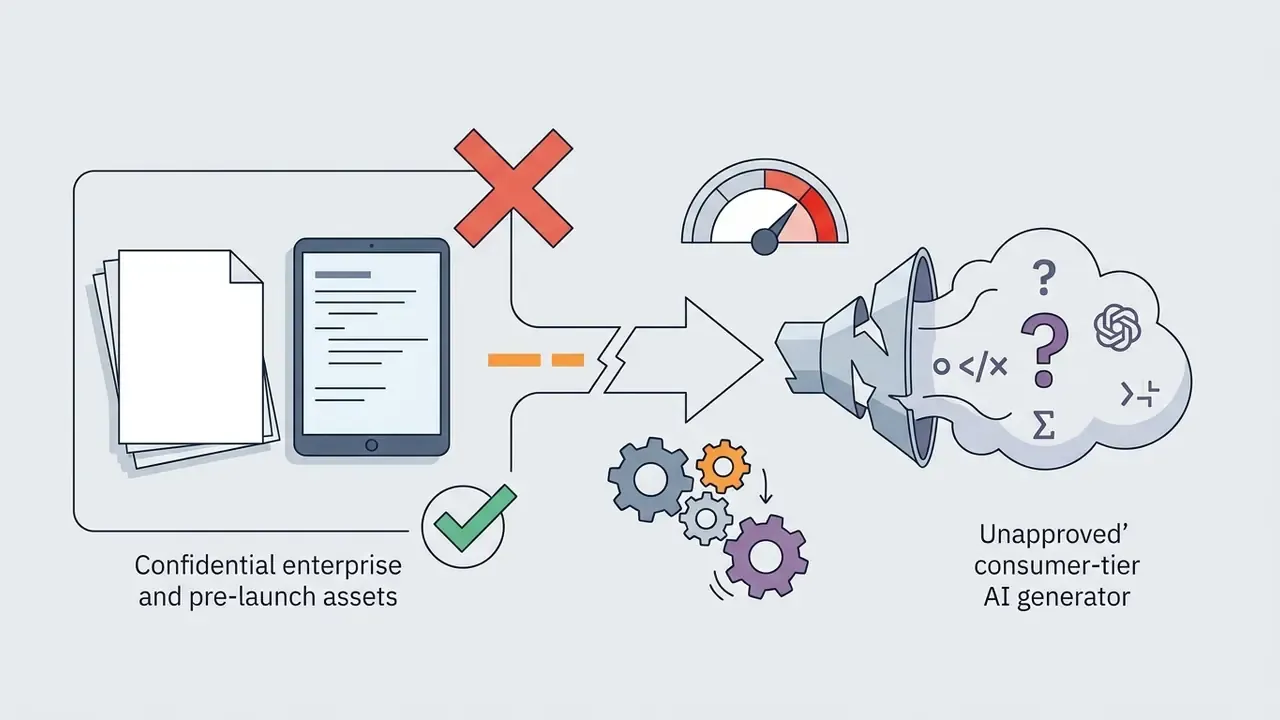
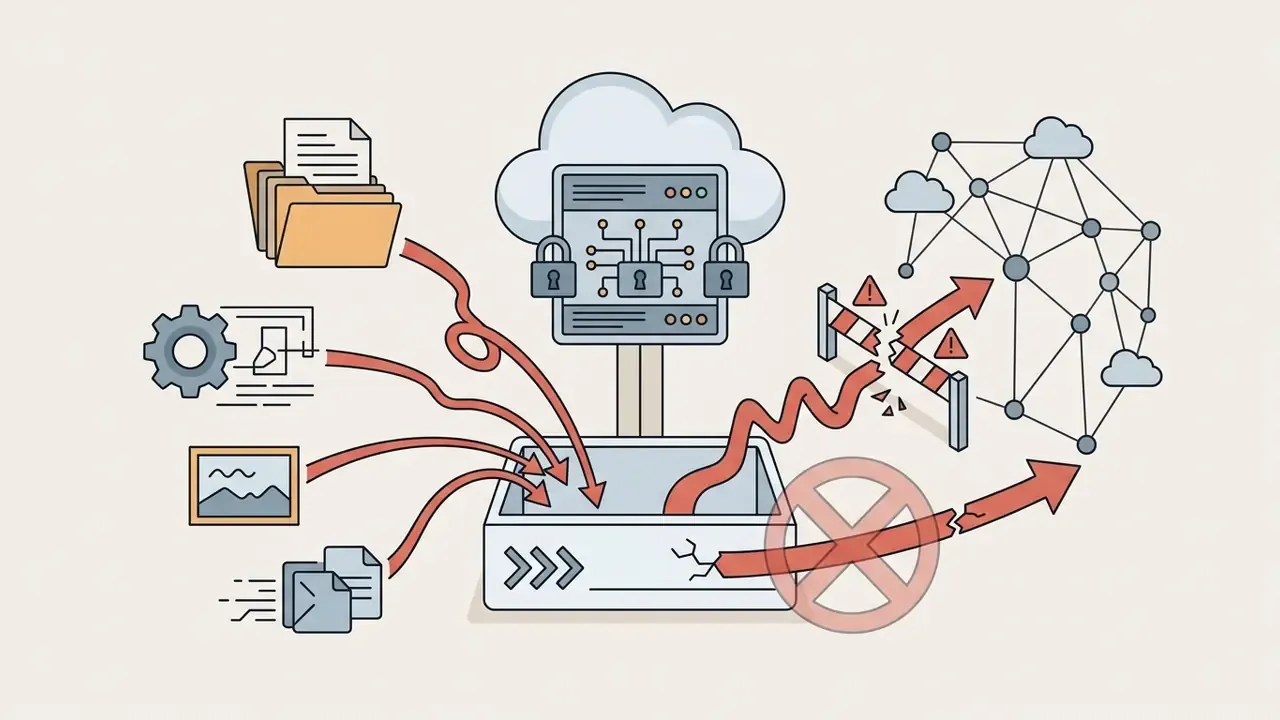
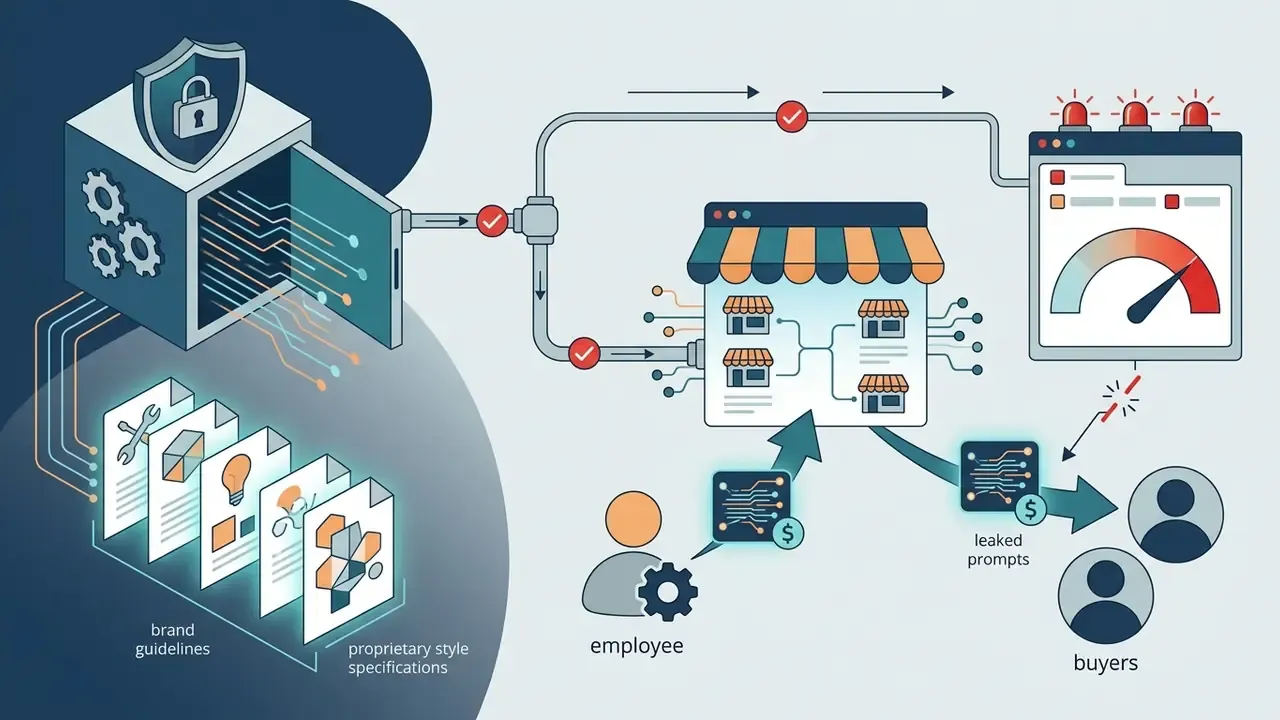
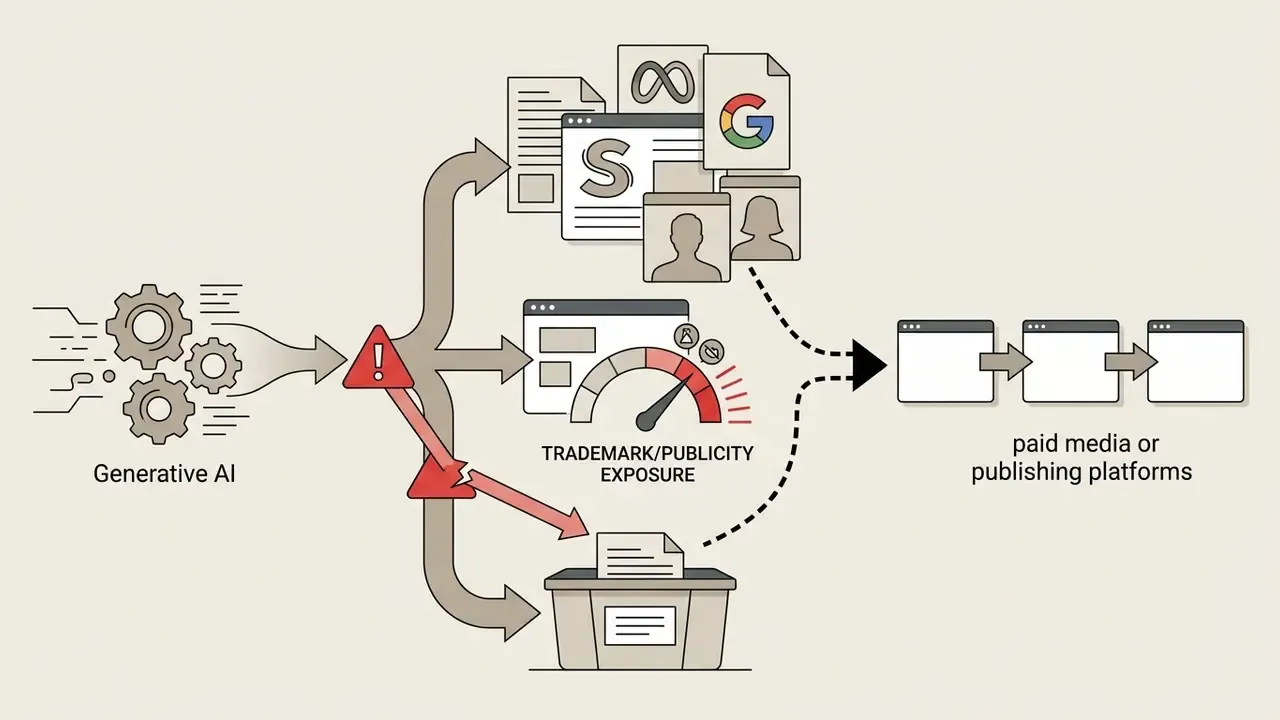
Individual creators face copyright risk. Organizations face an additional control problem. When employees generate and publish, or personally monetize, AI visuals built on company briefs, unreleased product renders or customer imagery, the exposure shifts from copyright into data protection, trademark and disclosure territory. This is the layer consumer-focused guides skip.
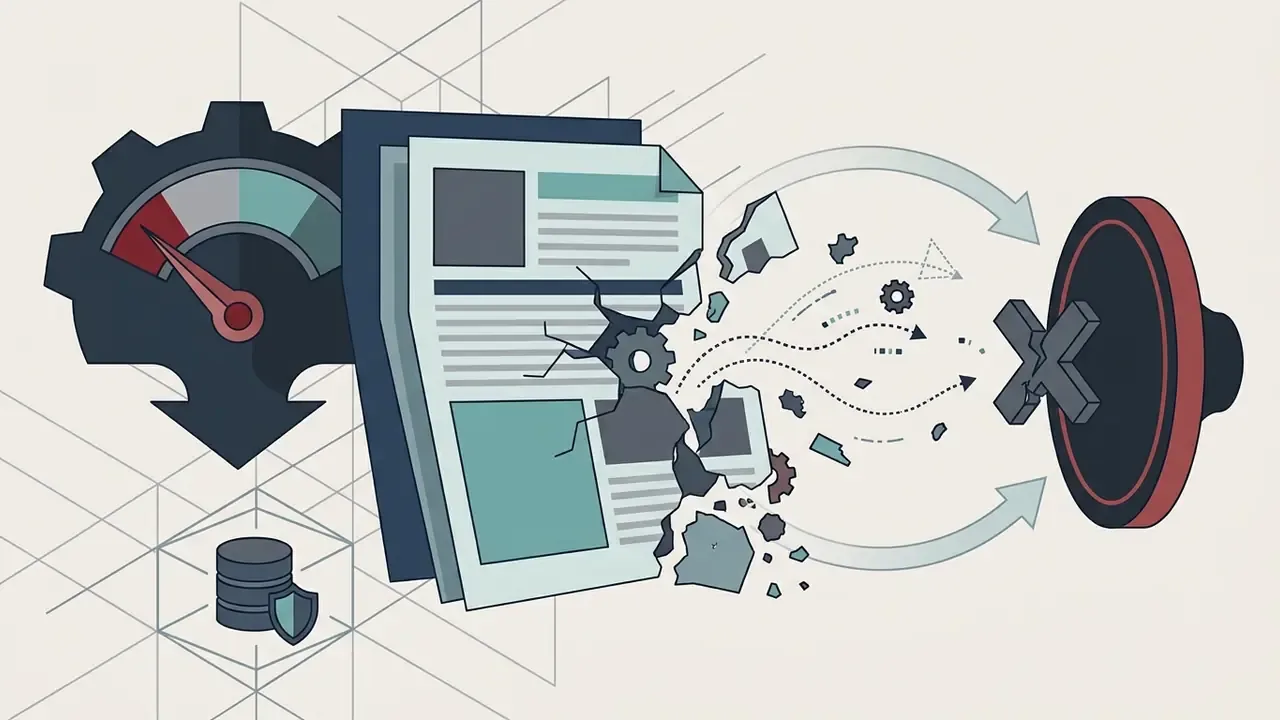
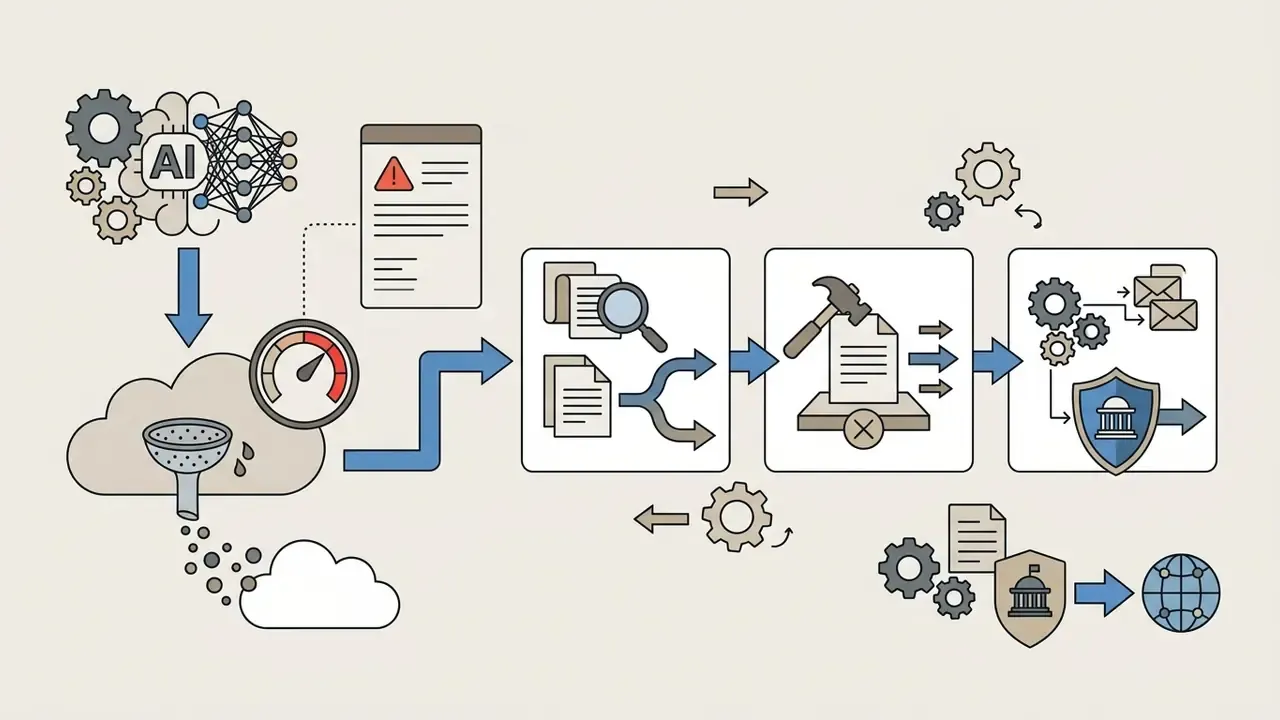
Primary enterprise risk vectors
Minimum control set
- Maintain an approved-tool register keyed to license class (free tier, paid commercial, enterprise) and record who may use which tier for which asset class.
- Route generation through enterprise accounts with contractual output assignment (OpenAI, Microsoft and Anthropic commercial terms all assign or disclaim output ownership to the customer) rather than personal consumer subscriptions.
- Log prompts, seeds, model versions and post-processing steps for every published asset. That log doubles as the evidentiary record of human authorship and provenance.
- Apply DLP rules to generator endpoints to block upload of classified source files and customer imagery.
- Preserve Content Credentials and C2PA metadata end to end. Verify that export and CMS pipelines do not strip provenance on resize.
Cost-of-control accounting. Programs should price control cost into the business case rather than letting it vanish into overhead:
Risk-Adjusted Contribution = Gross Margin - Cost of Control - (Probability of Claim x Expected Claim Cost)
Cost of Control components: legal review hours, provenance tooling licenses,
metadata QA, contributor training, policy audit cycles, disclosure tagging labor.
Residual Risk: retained exposure after controls, capped by contractual
indemnity limits in the vendor agreement (verify caps before scaling volume).
Sole proprietors can run a simplified version of the same logic. A reserve of 3% to 5% of net revenue against takedowns, refunds and listing suspensions keeps one policy strike from becoming an insolvency event.
What Can You Sell with AI Art?
Monetization goes well beyond image files. The sellers who last build diversified lines: digital downloads, physical merchandise, commercial asset licensing, and specialized on-demand service work.
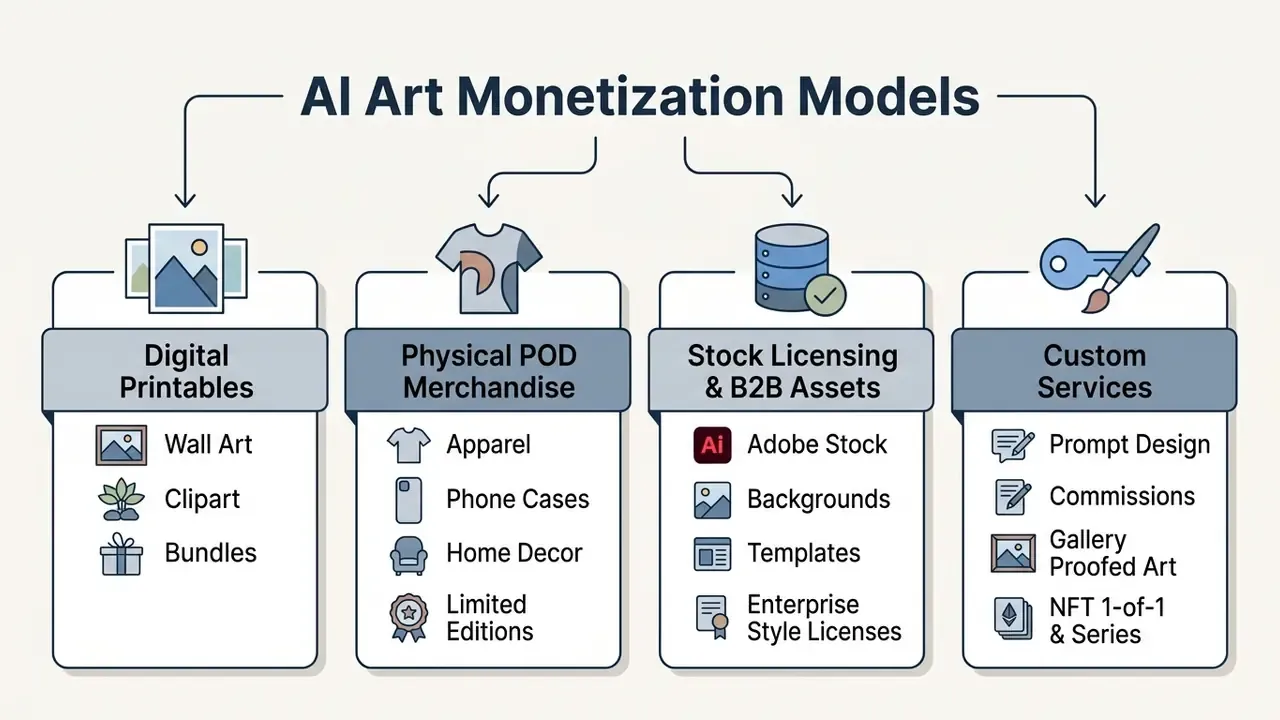
Digital art files, printables and themed collections
Digital assets are the highest-margin category, because incremental distribution costs are effectively zero. Package high-resolution files into standardized aspect ratios (2:3, 3:4, 4:5, ISO) so buyers can use commercial frames, and deliver either print-ready PDF, which preserves exact dimensions, or high-quality JPEG, which maximizes device compatibility.
Common printable categories include:
- Printable Wall Art 300 DPI files tailored for home decor, offered in 8x10, 11x14, 16x20 and 18x24 variants.
- Digital Clipart and Textures theme-specific asset sets for graphic designers.
- Social Media Asset Bundles cohesive background sets for marketing creators.
- Educational Visuals illustrative graphics for learning materials and course decks, where clarity and legibility outrank stylistic complexity. The preparation discipline resembles assets produced through a study-support ai homework helper workflow: legible at small sizes, unambiguous, no decorative noise.
Bundle packaging is itself a pricing lever. Ship a ZIP with subfolders organized by aspect ratio, a README carrying license terms and printing instructions, and a consistent palette across every item. Themed collections raise perceived value, which lets you charge more per transaction without touching the per-file price.
Merchandise through print-on-demand
Putting AI designs on physical merchandise converts digital visuals into tangible goods. Popular categories: stretched canvas wall prints, phone cases, ceramic mugs, apparel, tote bags, stickers and wall tapestries.
When preparing artwork for merchandise, format assets to the aspect ratios and pixel dimensions each print supplier specifies. High-resolution source files are what keep large items like graphic tees or tapestries sharp rather than mushy. Merchandise compounds brand value too: fans who wear your work become distribution, and that lowers paid-acquisition dependency over time.
Licensing, stock images and custom AI art services
Business-to-business licensing gives technical prompt engineers a steadier income stream. Companies license specialized visual assets for advertising campaigns, web design and editorial publishing. Note that merchandise rights and licensing rights are frequently sold as separate packages, and some vendors expressly exclude AI generated resources from merchandise licenses or cap licensed units per asset. Read the rights matrix before you quote a client.
Custom client services add bespoke monetization:
- Targeted Prompt Design crafting specific aesthetic styles for corporate brand assets, delivered as reusable parameter sheets.
- Commercial Image Generation executing visual campaigns, with tool choice informed by our detailed versus analyses and by benchmarking Midjourney versus alternative image generators for style fidelity and licensing fit.
- Headshot and Portrait Services producing professional avatar sets using tools detailed in our guide to the ai headshot generator.
- Style-System Retainers maintaining a brand's generative style guide, seed library and provenance log for a monthly fee.
Define deliverables, resolution parameters, term, territory, exclusivity and usage rights in writing, and charge premium fees for specialized outputs. Because AI outputs may be only partially protectable, contracts should describe what is actually licensed, meaning files, human-authored modifications and style documentation, rather than implying an unqualified copyright assignment.
How to Sell AI Art Online: Step-by-Step Process
Building a business around selling AI art requires a disciplined workflow: demand analysis, asset generation, technical preparation, listing creation, automated fulfillment.
- Conduct Niche and Market Researchidentify buyer segments using keyword analytics to isolate search terms with high purchase intent and low competition.
- Execute AI Asset Generationcreate visual assets with tools such as Midjourney or Adobe Firefly, applying structured prompt engineering to establish a distinct aesthetic. Compare capabilities across AI art generators before locking a production pipeline.
- Verify IP and Commercial Usage Rightsreview subscription terms to confirm commercial rights, then audit outputs for trademark or character infringement. This is the single legal gate in the workflow.
- Upscale and Technical Prepraise output files to 300 DPI print-ready specifications with AI upscalers; set RGB profiles for digital delivery or CMYK for physical print.
- Select Sales Platformsopen storefronts across digital marketplaces (Etsy), print-on-demand vendors (Printify), stock agencies (Adobe Stock), galleries (Saatchi Art) or Web3 venues, matched to product format and price tier.
- Construct Optimized Listingswrite descriptive titles, search-indexed metadata and explicit AI disclosure tags; set prices that already account for platform fees.
- Automate Delivery and Marketingconfigure instant post-payment file delivery with unique tokenized links, then run scheduled social content that showcases curated collections.
Research niches and prompts before you generate
Profitable image creation starts with what buyers actually search for, not with whatever the model produced last night. Use search analytics to find commercial demand in specific niches: mid-century modern wall art, botanical line art, surrealist portraiture. Published research on prompt practice supports a three-stage loop: niche and trend analysis, prompt-set generation, then iterative refinement against an explicit rubric. One 2026 study scored candidate prompts on a 10-point rubric across five dimensions (color, style, composition, lighting, characteristics) and refined until a quality threshold was met. Adobe Express analyzed prompt length, sentence count and keyword frequency across 1,041 respondents to map how practitioners actually write prompts.
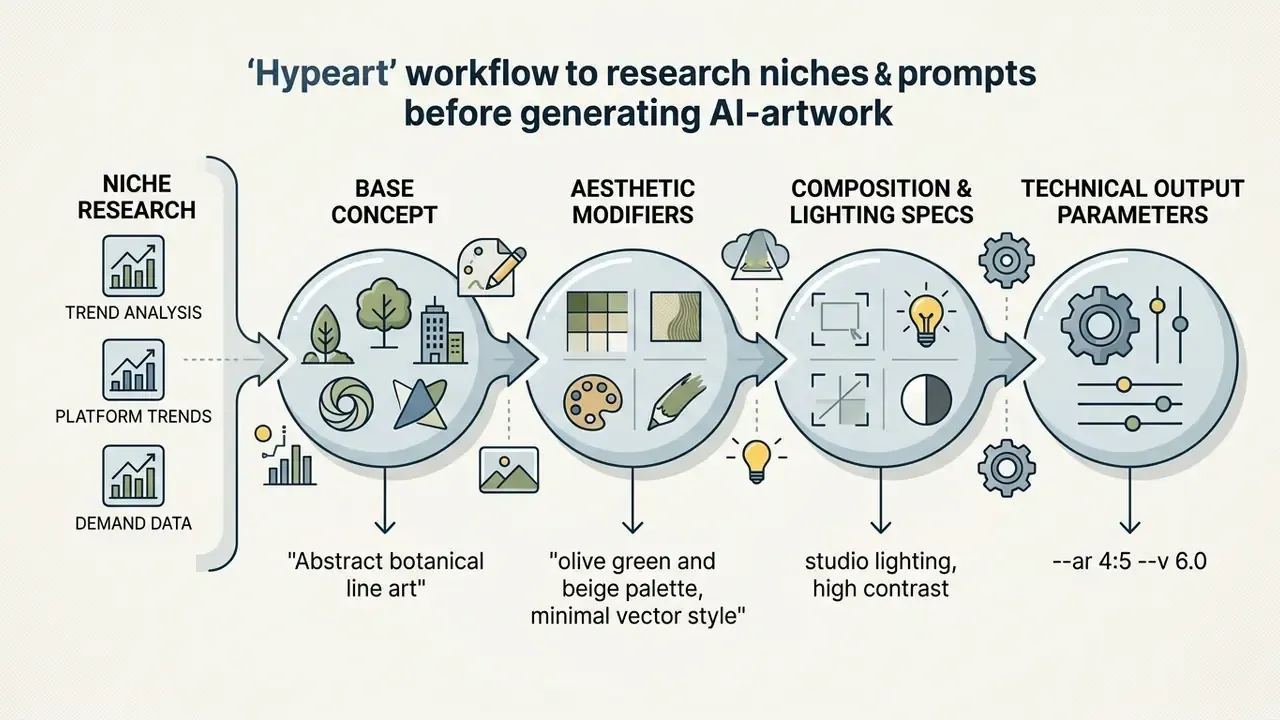
Base prompt strings alone rarely produce a sellable, repeatable house style. Document full technical recipes so collections stay coherent across dozens of listings:
Advanced Technical Generation Recipe (Midjourney & Stable Diffusion):
Model: Midjourney v6.0 / SDXL 1.0
Prompt: Architectural vector line-art, Japanese Zen minimal building, olive green
tones, isometric view, 8k resolution --ar 16:9 --style raw --stylize 250 --v 6.0
Negative (SDXL): text, watermark, signature, jpeg artifacts, extra limbs, blurry edges
SDXL Settings: Steps 40 | Sampler DPM++ 2M SDE Karras | CFG scale 7.0 |
Denoising strength 0.35 (img2img upscaling pass) | Seed locked for series consistency
ControlNet: Canny edge (weight 0.6) to hold architectural geometry across variants
Refiner: 0.2 ratio, then tiled upscale x4
Variant Recipes for Collection Building:
- Fantasy architecture: "rococo architecture, art nouveau, ethereal, ornamental,
  castle, tower" | style refs: matte painting, Flemish baroque | runtime 200-600
- Gothic monochrome: "greyscale, romanesque, cathedral, ornament" | high contrast,
  --stylize 100 | runtime 250-600
- Celestial / astronomy: "solar flares, planetary, lunar, spirals" | documentary
  photographic lighting | --ar 2:3 for portrait wall art
- Japanese aesthetic: "nihon kenchiku, zen, ukiyo-e brushwork" | soft bold strokes,
  limited 4-color palette | --ar 3:4
Iterative refining is how a recognizable style emerges. Generic output invites price competition; a distinct signature does not. Lock seeds and record parameters for every published asset, since the record doubles as your human-authorship and provenance documentation.
Prepare high-resolution files and product-ready designs
Raw outputs from AI image generators often fall short of commercial print resolution. A 1024x1024 pixel file translates to roughly 3.4 inches at 300 DPI. Small.
Resolution Requirements for Physical Prints (at 300 DPI):
- 8x10 inches: 2400 x 3000 pixels
- 11x14 inches: 3300 x 4200 pixels
- 16x20 inches: 4800 x 6000 pixels
- 24x36 inches: 7200 x 10800 pixels
Creators use specialized AI image upscalers for print-ready files to enlarge dimensions without visible softening. Upscaling reconstructs plausible detail; it does not recover information that was never there, so generate at the largest native resolution your model supports before enlarging. Also note that scaling a 300 DPI file to 200% yields an effective 150 DPI, which is fine for large-format work viewed at distance and inadequate for framed gallery prints inspected at arm's length.
Color management requirements before handoff to a printer or POD vendor:
Digital delivery: sRGB IEC61966-2.1, 8-bit, embedded profile, PDF or high-quality JPEG
Physical print: convert to CMYK with the vendor's specified profile
  - US sheetfed/commercial: U.S. Web Coated (SWOP) v2
  - EU coated stock: FOGRA39 / Coated FOGRA39
  - Rendering intent: Relative Colorimetric with black point compensation
  - Soft-proof before export; saturated RGB blues, neons and pure oranges shift most
Files: hi-res PDF (PDF/X-1a or PDF/X-4), fonts embedded or outlined, 3 mm bleed
  on all edges, clean descriptive file naming, no layer transparency where prohibited
For physical print workflows, convert to CMYK to hold color accuracy during production. Running source images through an advanced photo editor tightens contrast and sharpens print boundaries, while a dedicated AI photo editor speeds up batch color grading and artifact cleanup across large collections.
Create listings, metadata and payment setup
Listings have to serve search algorithms and human buyers at once. Titles should carry target search terms naturally, describe the aesthetic theme clearly, match the landing page exactly, and avoid promotional text. That last requirement is stated explicitly in Google's product-title guidance.
Digital delivery runs on automated tokenized links. Once a customer pays through an integrated processor such as Stripe or PayPal, the platform issues a unique download link or presigned URL granting instant access to compressed asset folders. Capping download attempts, commonly five per purchase, limits casual link sharing. Reviewing established financial models in our AI Media Pricing Guides helps keep your pricing aligned with current market benchmarks rather than last year's.
How to Price AI Art and Estimate Profitability
Profitable price points come from cost-plus accounting, not intuition. Aggregate software subscriptions, marketplace transaction fees, payment processing charges and base manufacturing expenses before you set retail pricing.
| Sales Channel / Product Format | Retail Price | Production Cost | Platform Fees & Processing | Fixed Overhead (Monthly Subscription) | Estimated Net Margin ($) | Target Gross Margin (%) |
|---|---|---|---|---|---|---|
| Digital Download (Etsy) | $7.00 | $0.00 | $0.20 listing + $0.46 transaction + $0.45 processing = $1.11 | Pro-rated AI tool sub (about $0.50/unit) | $5.39 | 77% |
| Print-on-Demand Canvas (16x20) | $45.00 | $18.50 (supplier base print + ship) | $2.93 marketplace transaction + $1.61 processing = $4.54 | Pro-rated AI tool sub (about $0.50/unit) | $21.46 | 47% |
| Stock Commercial License (Adobe Stock) | $9.99 (standard license) | $0.00 | Platform share ($6.69 royalty retention) | Pro-rated AI tool sub (about $0.10/unit) | $3.20 (contributor share) | 32% |
| Limited-Edition Gallery Print (Saatchi Art) | $450.00 | $62.00 (archival print, frame, packing, insured ship) | Gallery commission + processing, about $155.00 | Pro-rated tooling + proofing labor (about $25.00/unit) | $208.00 | 46% |
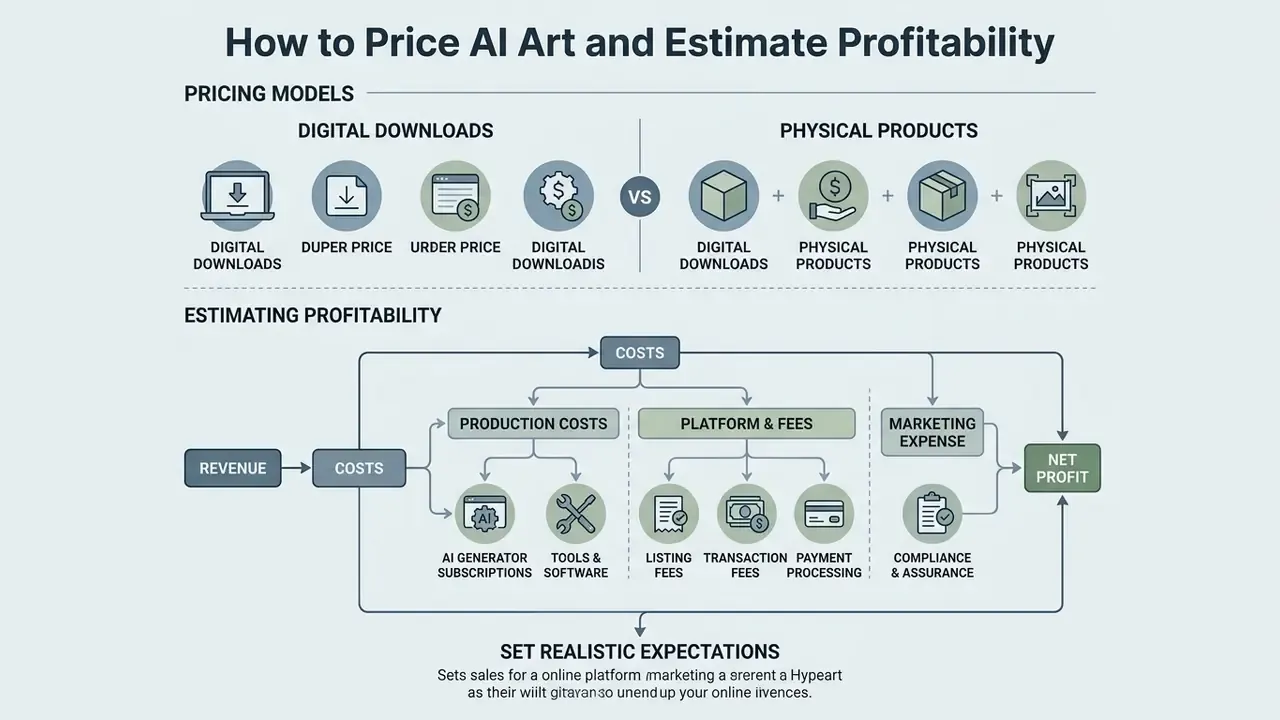
Price digital downloads versus physical products
Include fees, tools and commercial costs in the margin
Accurate net profitability means auditing every recurring cost:
- AI Generator Subscriptions Midjourney Pro ($60/mo), ChatGPT Plus ($20/mo), Adobe Creative Cloud ($55/mo). API-metered image generation is billed separately; OpenAI image models list $8.00 input and $30.00 output per 1M tokens. Post-processing tools such as AI image enhancers add to this line.
- Listing and Transaction Fees Etsy $0.20 listing plus 6.5% transaction; niche marketplaces range from 9.4% + $0.30 to 25% commission.
- Payment Processing standard credit card charges, 2.9% + $0.30 per transaction via Stripe or PayPal.
- Paid Marketing Expense social promotion or marketplace ad spend.
- Compliance and Assurance legal review of high-exposure assets, provenance tooling, disclosure tagging labor, and a takedown or refund reserve of 3% to 5% of net revenue.
Net Profit Formula for AI Artwork Sales:
Net Profit = Retail Price - (Base Manufacturing + Shipping + Platform Listing Fee
             + Marketplace Transaction Fee + Payment Processing Fee
             + Allocable Tool Overhead + Compliance Reserve)
Counting every operational charge is what keeps unit economics honest after ad spend and platform deductions. Plenty of "profitable" catalogs are not, once ads are in the model.
Set realistic expectations for AI art sales
So, can you make money selling AI art? Yes, with caveats that the data makes fairly specific.
"The arrival of generative AI reduced average prices for creative services by 64% while increasing order volume by 121% and total revenue."
Market-size forecasts support the volume story without promising anyone an income. Generative AI in art is projected to grow from roughly $298.3M in 2023 toward $8.63B by 2033, with the broader AI-in-art market forecast near $40.4B by 2033. Those are total-market figures, not creator earnings, and the distinction matters. Revenue concentration is severe: a narrow set of winners captures most of the income. A sustainable stream therefore depends on portfolio scale, niche positioning and audience retention, not on any single viral listing.
The creators who generate passive income consistently treat AI generation as an efficiency multiplier inside a wider design, marketing and distribution system. The generator is not the business.
How to Attract Buyers and Build an AI Art Brand
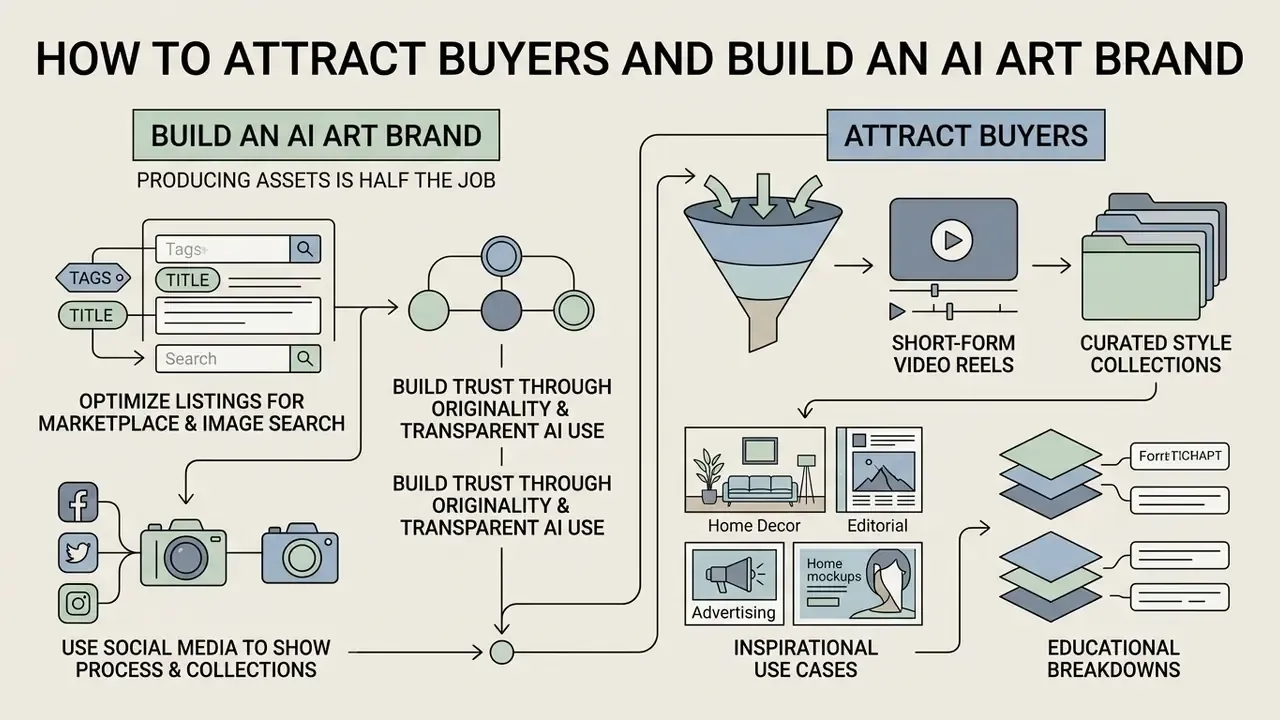
Producing assets is half the job. Driving traffic and converting buyers needs marketplace search optimization, active social proof and operational transparency. Across major marketplaces, ranking inputs converge on the same triad: keyword relevance, listing content quality, and engagement or performance signals.
Optimize listings for marketplace and image search
Visibility follows the alignment between your metadata and buyer search intent. Titles, tags and descriptions should carry primary and related keywords naturally, and read like a human wrote them.
SEO Metadata Optimization Checklist:
1. Title: primary subject + aesthetic style + product format
   (e.g., "Minimalist Line Art Poster | Abstract Botanical Print").
2. Description: file dimensions, 300 DPI resolution specs, frame compatibility, licensing terms.
3. Image Alt Text: describe the composition accurately and concisely for accessibility
   and indexing; leave purely decorative images with empty alt text.
4. Tags/Keywords: use every available slot with specific long-tail phrases.
5. Proof Assets: screenshots, room mockups, scale references and short video;
   engagement signals feed ranking.
6. Reviews: request ratings post-delivery; review velocity is an explicit ranking
   input on several marketplaces.
Do not stuff keywords. Structured metadata helps both internal marketplace search and external image indexing, and Google's image SEO guidance specifically asks for useful, information-rich alt text that matches page context.
Use social media to show process and collections
Visual social media platforms such as Pinterest, Instagram and TikTok carry most organic discovery for digital artwork. Pinterest behaves as a discovery engine for printable wall art, home decor inspiration and mood boards, rewarding vertical, keyword-rich, idea-driven visuals. Instagram favors short video under 60 seconds plus user-generated and live content. TikTok demands the hook inside three seconds, no exceptions.
| Platform | Target Content Format | Primary Monetization Route | Key Hashtags / Tactics |
|---|---|---|---|
| Room mockups, printable pins, vertical infographics, mood boards | Direct link to Etsy / Shopify store | #printablewallart, #homedecor; keyword-rich pin titles and board descriptions | |
| Instagram / TikTok | Process time-lapses (prompt to edit to print), before/after reels | Link-in-bio to POD store or custom commissions | #aiartcommunity, #midjourneyart; 3-second hook, face-to-camera narration |
| X (Twitter) | Web3 drops, prompt breakdowns, parameter threads | NFT sales, PromptBase storefronts | #AIArtist, #NFTCommunity; quote-reply engagement with collector accounts |
| DeviantArt / Behance | Full-resolution portfolio sets, project case studies | Subscriptions and badges (DeviantArt); agency and B2B contracts (Behance) | Complete project metadata, tool disclosure, series grouping |
| Tumblr / Reddit niches | Aesthetic series, community critique posts | Traffic to storefront; audience research | Tag-based discovery; respect subreddit self-promotion rules |
Content formats that consistently earn attention:
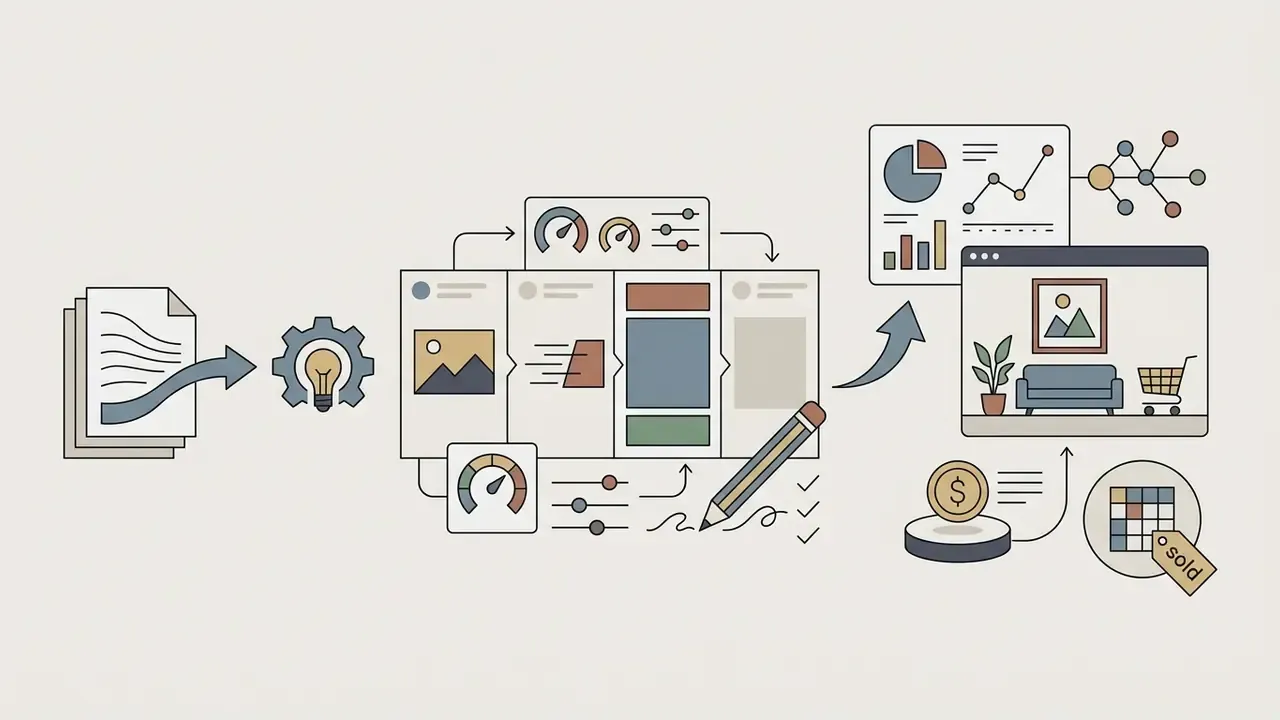
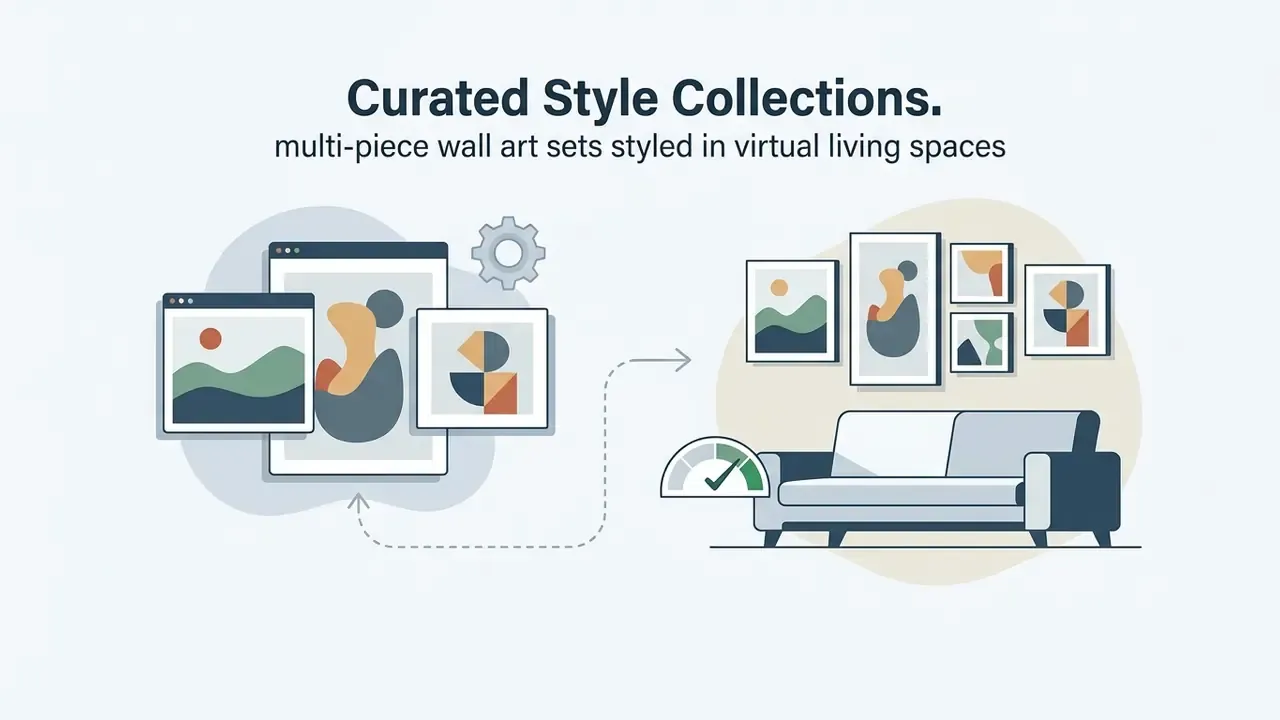

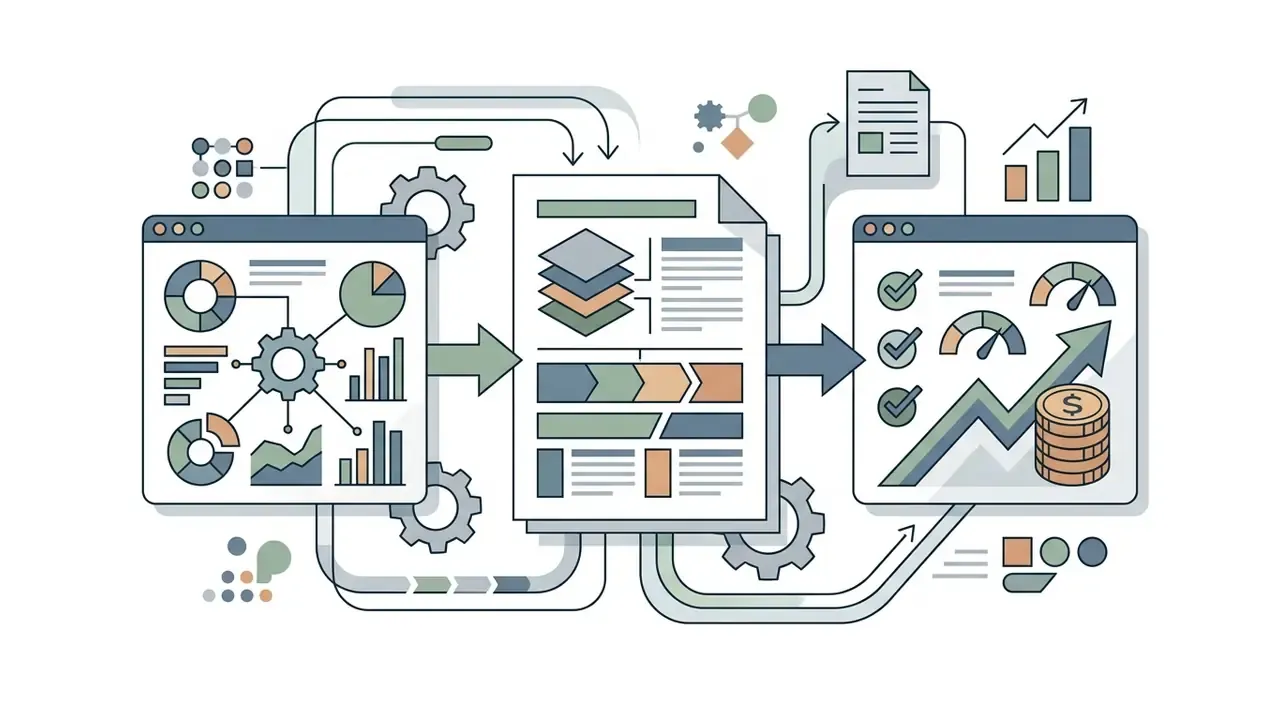
Curated, style-focused publishing builds brand awareness and steers qualified traffic to your storefronts. Tightly focused niches prove the point: campaign copy produced with an ai headline generator or sentiment-driven formats such as an ai hug generator capture organic interest faster than broad, unthemed catalogs, because the audience knows immediately whether it is for them.
Build trust through originality and transparent AI use
Trust is operational, not decorative. Disclosing synthetic tool usage satisfies ethical expectations and emerging labeling mandates, and creator sentiment supports it:
"A survey of 459 artists found most believe creators should disclose which works trained an AI, and reject model developers owning AI outputs."
Handle disclosure with some care, though. Experimental research in 2025 found that disclosure can reduce perceived trust when it arrives without context. So pair it with evidence of craft: name the tools, then show the editing, proofing and curation you performed. Professional communications guidance (PRSA, 2026) and the European Commission's ethics framework both require transparency, traceability and explainability of material AI use.
Foregrounding human oversight, meaning manual editing, color grading and custom composition, separates a professional design brand from an automated spam listing. Consistent visual identity across collections reassures buyers about quality, which shows up later as repeat orders and better store reviews.
FAQ About Selling AI Generated Art
These are the frequently asked questions that come up after the strategy is clear and the practical details are not.
Can I sell AI generated art online without having my own website?
Yes. You can sell my ai art style catalogs immediately on third-party marketplaces like Etsy, stock platforms like Adobe Stock and Freepik, or print-on-demand services like Redbubble. These platforms supply built-in buyer traffic, secure payment processing and automated fulfillment, so no self-hosted site is needed at the start. The trade-off is commission, limited branding control, and exposure to unilateral policy changes you cannot appeal.
Which AI art generator offers the best commercial usage rights?
Paid tiers of Midjourney, Adobe Firefly and OpenAI (DALL-E 3 or ChatGPT Plus) provide explicit commercial usage rights. Adobe Firefly offers stronger enterprise safety because its models train on licensed Adobe Stock assets, openly licensed content and public-domain imagery, and it attaches Content Credentials metadata automatically to certify provenance. Midjourney requires the Pro or Mega plan for businesses above USD 1,000,000 in revenue. Stable Diffusion rights depend on the individual model license rather than a subscription.
Is it possible to start selling AI art with zero upfront capital?
Yes, within limits. You can launch without significant investment by using free AI art generators and free-tier trials, uploading to zero-cost listing platforms such as Redbubble or Freepik, or running print-on-demand where manufacturing fees are deducted from customer payments at sale. Confirm before launch that the free tier grants commercial rights, because several, including Midjourney's trial, do not.
Is the AI art market too saturated to make money in 2026?
Generic supply has ballooned, true, but saturation hits unedited visual content hardest. Sellers who target highly specific search niches, upscale properly to 300 DPI, apply custom human editing, and build cohesive collections continue to generate sustainable revenue. Expect per-unit price compression and plan for volume, bundling, and higher-tier channels such as galleries or licensing.
Do I own the copyright to images generated by artificial intelligence?
Under U.S. Copyright Office guidance, purely machine-generated outputs created from text prompts cannot be copyrighted. Protection does apply to original human contributions such as digital manipulation, composition assembly, vector modifications, or custom arrangement within a larger work. When registering, you must disclose AI generated material above a de minimis level and disclaim it from the claim. The United Kingdom applies a different rule: CDPA section 9(3) recognizes the person who made the arrangements for a computer-generated work as its author.
What do NFT gas fees and minting cost when selling AI art on-chain?
Minting writes data to a blockchain and requires a network transaction fee (gas), paid by the creator or, under lazy-minting models, by the buyer at first transfer. Gas is variable and depends on network congestion and chain choice; Ethereum mainnet costs materially more than Polygon or other layer-2 networks. Budget also for platform commission on the primary sale, and set a creator royalty, commonly 5% to 10%, on secondary sales. Royalty enforcement varies by marketplace, so verify whether your platform honors on-chain royalties before pricing a drop.
Can companies sell or publish AI generated visuals under enterprise licensing?
Yes, though the controlling documents are the vendor's commercial or enterprise terms rather than consumer plan pages. OpenAI assigns output rights to the user, Microsoft classifies output as customer data, and Anthropic assigns output rights to the customer under commercial terms. Enterprise buyers should additionally confirm indemnity scope and caps, data-retention and training-exclusion commitments, provenance metadata support, and whether merchandise rights are licensed separately from general commercial use.
Which stock agencies reject AI generated submissions?
As of early 2026, Shutterstock, Getty Images/iStock, Alamy and Pond5 do not accept contributor AI submissions. Adobe Stock, Freepik, Dreamstime, 123RF and Vecteezy accept them with mandatory labeling: Adobe requires the "Created using generative AI tools" checkbox plus a fictional-people-and-property declaration, while Freepik requires the _ai_generated tag. Policies change quarterly, so verify contributor terms on the submission date.
Technical Summary and Action Plan
Selling AI generated artwork well means holding creative execution and operational compliance in the same hand. Choose commercial-safe generators, verify licensing terms, prepare files properly at 300 DPI with correct CMYK conversion, and disclose synthetic origin on every listing.
Match formats to channels, whether that is digital download marketplaces, print-on-demand merchandise, stock licensing libraries, curated galleries or blockchain collectible venues, and the business becomes scalable and defensible at the same time. Organizations operating at scale should layer prompt logging, provenance retention and Shadow AI controls on top of the same workflow. Anyone reviewing broader commercial usage frameworks can work through our AI Media Commercial-Use hub for operational guides.
Appendix A: Provenance and Compliance Audit Checklist
Use this as a per-asset record. Retain it for the commercial life of the listing plus any applicable limitation period.
| Field | Required Entry | Verified By | Evidence Location |
|---|---|---|---|
| Asset ID / SKU | Unique internal identifier | Operator | Asset register |
| Model & version | e.g., Midjourney v6.0, SDXL 1.0 | Operator | Prompt log |
| Full prompt + negative prompt | Verbatim string | Operator | Prompt log |
| Parameters | Steps, sampler, CFG, seed, aspect ratio, ControlNet weights | Operator | Prompt log |
| Commercial rights basis | Plan tier + terms clause + date checked | Reviewer | Vendor terms snapshot |
| Human contribution | Compositing / repainting / grading / arrangement, with time log | Reviewer | Layered source file |
| Third-party IP screen | No logos, characters, living-artist names, identifiable persons | Reviewer | Screening note |
| Releases | Model / property release where applicable | Reviewer | Release file |
| Disclosure applied | Marketplace AI disclosure + machine-readable marking (C2PA) | Operator | Live listing URL |
| Color/print spec | DPI at final size, ICC profile, bleed, PDF standard | Operator | Print-ready export |
| Registration status | Filed / disclaimed AI portions / not filed | Reviewer | Filing receipt |
Appendix B: 90-Day Launch and Policy Monitoring Plan
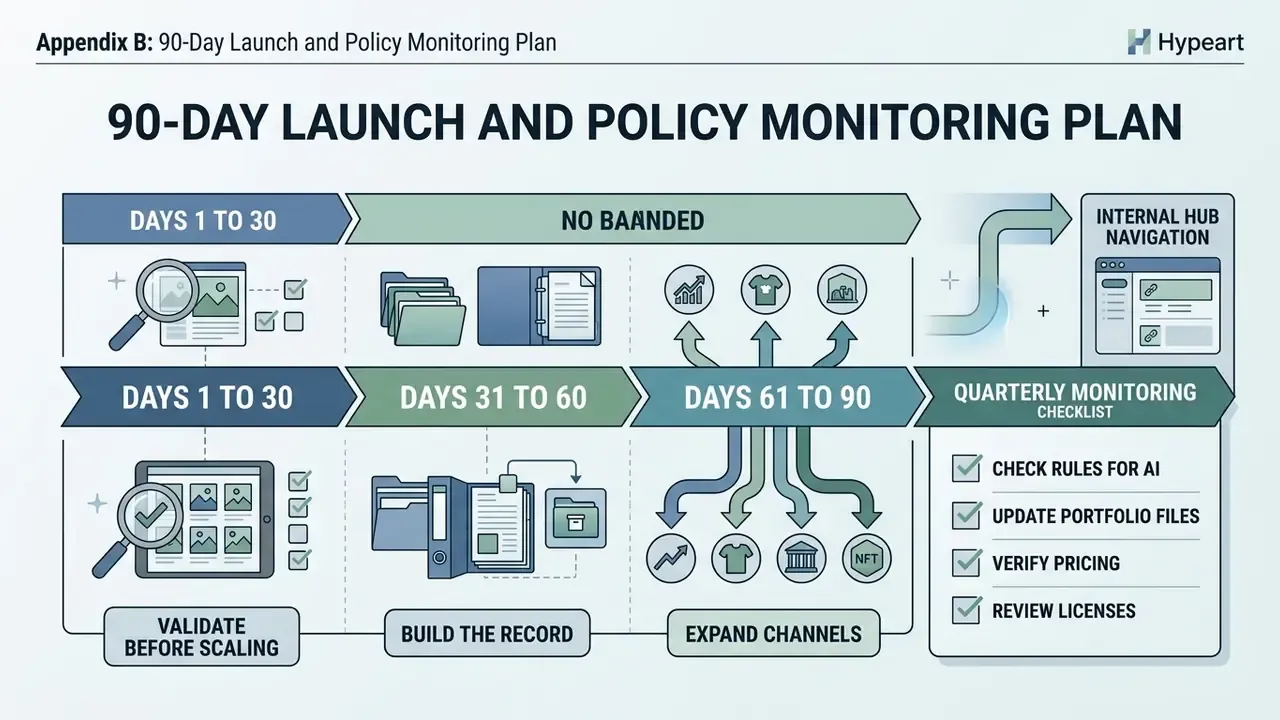
Platform rules shift faster than most catalogs get updated, so treat monitoring as a scheduled task rather than a reaction to a suspension email.
Days 1 to 30, validate before you scale. Pick two niches, generate 20 pilot listings per niche, and publish them on one marketplace plus one POD store. Track impressions, favorites-to-view ratio and first-sale latency. Kill the weaker niche at day 30 instead of nursing it.
Days 31 to 60, build the record. Backfill Appendix A entries for every published asset, snapshot vendor terms with dates, and register your first collection where human authorship is substantial enough to claim. Set the compliance reserve at 3% to 5% of net revenue.
Days 61 to 90, expand channels. Add a stock agency that accepts labeled AI, test one gallery or limited-edition product at a higher price tier, and start a prompt or preset product line to monetize the method. Measure contribution margin per channel, not gross revenue.
Quarterly monitoring checklist.
| Item | Frequency | Trigger to Act |
|---|---|---|
| Generator terms of service (commercial rights, revenue thresholds) | Quarterly | Any change to output ownership or plan gating |
| Marketplace AI disclosure rules | Quarterly | New labeling field or prohibited category |
| Stock agency acceptance policy | Quarterly | Agency opens or closes AI submissions |
| EU AI Act Article 50 readiness | Quarterly until 2 August 2026 | Missing machine-readable marking in export pipeline |
| C2PA metadata survival through CMS and resize | Monthly | Provenance stripped on any published asset |
| Payment processor content policy | Quarterly | Category reclassified as restricted |