Editorial review: Marcus Hale, the author focused on AI governance and model risk in US financial services. His views, examples, and frameworks are illustrative, not the record of a real executive, employer, or client engagement.
An ai hashtag generator analyzes your captions, visual context, and target-platform patterns to produce high-performing, niche-specific tags in seconds. Instead of guessing which tags still work, you describe the post, pick the platform, and receive a structured set grouped by reach tier (broad, mid-range, and micro-niche) that you then edit before publishing.
Sounds harmless. For a bank or a mature fintech, it usually is not, because the same free text box that drafts a tag list also accepts an unreleased product name.
Executive Summary
- Relevance beats volume.Instagram allows up to 30 hashtags, but 5 to 10 highly relevant tags outperform maxed-out blocks; YouTube allows 15 but rewards 3 to 5. Platform help pages updated in 2025 and 2026 emphasize content match, not tag count.
- Automated tag sets are probabilistic, not guaranteed reach.Every generated list needs a human review pass for banned or shadowbanned tags, trademark conflicts, and off-topic drift, with the approval logged for internal audit.
- Free tiers are for individuals; regulated teams need enterprise controls.Free generators cap output (5 sets per day, 50 lifetime uses, or token budgets) and rarely offer zero-data-retention, SSO, audit logging, or IP indemnification. Those are the exact controls a bank, fintech, or healthcare marketing team must verify before any product description is pasted into a public tool.
Why This Matters to a Regulated Marketing Function
A hashtag looks like a formatting choice. In a supervised institution it is a public statement attached to a promoted asset, and it inherits every obligation the caption carries.
Three practical consequences follow. First, a generated tag can create an implied claim ("#guaranteedreturns" is the extreme case, "#bestrates" the common one). Second, tag choices can attach your brand to a political or coordinated narrative you never reviewed. Third, if nobody can reconstruct who approved a set, your advertising-review process has a hole in it that an internal auditor will find before you do.
So treat this article as two documents in one. The first half is a creator playbook: inputs, tiers, platform ceilings, formatting. The second half is a control framework: input policy, vendor due diligence, model-risk validation, and measurement that survives a review. Marketing teams tend to read only the first half. Model-risk teams tend to read only the second. The failure modes live between them.
An ai hashtag generator serves as an automated discovery tool designed to evaluate content context and output structured social metadata. Modern social media platforms rely heavily on semantic indexing to categorize posts, video streams, and user interactions. Selecting appropriate tags helps systems parse post context while connecting content to targeted audience segments.
What Is an AI Hashtag Generator and How Does It Work?
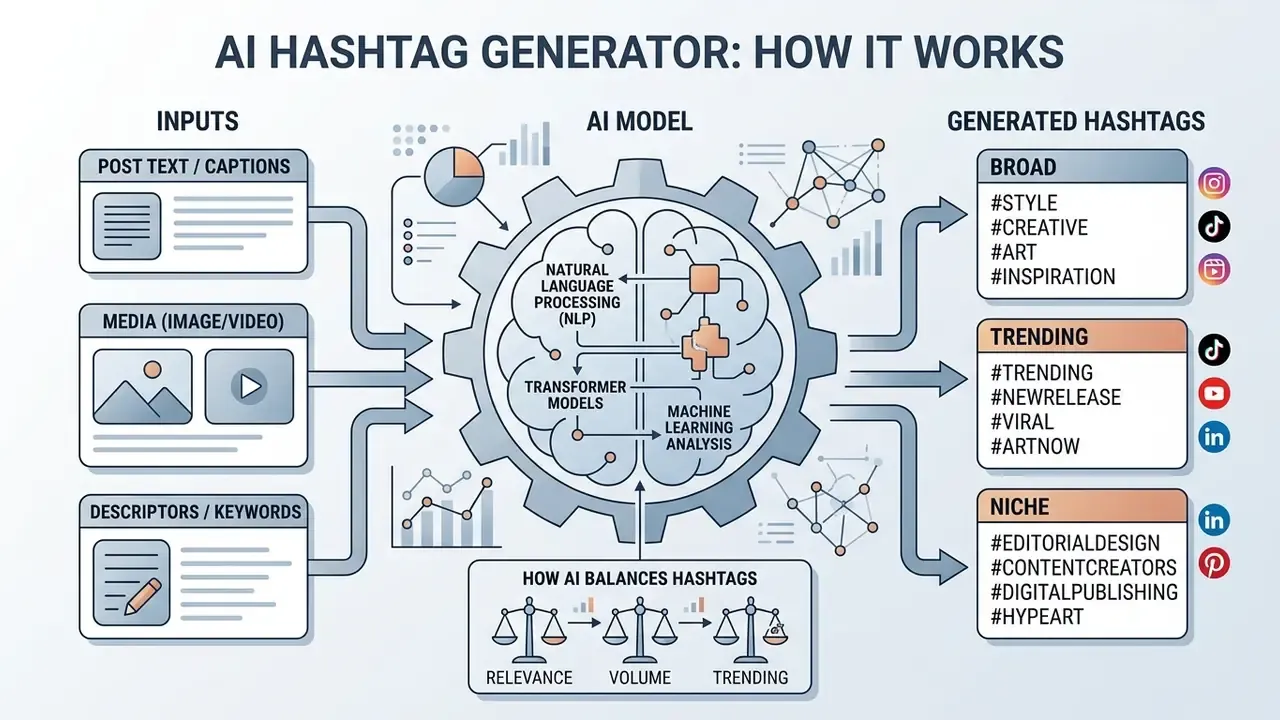
An ai hashtag generator is a software tool powered by natural language processing (NLP) and transformer-based machine learning models that analyzes post text, captions, or media metadata to suggest relevant social media tags. Instead of relying on static lists, a hashtag generator ai calculates how closely your input matches tags that historically performed well in similar content categories across social networks.
In plain terms: the tool converts your caption into a numeric "meaning fingerprint," compares that fingerprint against millions of previously tagged posts, and returns the tags whose fingerprints sit closest to yours. Academic implementations use sentence-level embedding models (Sentence-BERT is the most commonly cited) plus cosine-similarity ranking to do exactly this, while earlier systems used BiLSTM and sequence-to-sequence decoders to write new tags rather than only retrieve existing ones.
«RIGHT uses a three-stage pipeline: a retriever, a mainstream-tag selector, and a generator that produces the final hashtag set.»
That three-stage architecture matters practically. Retrieval keeps suggestions anchored to tags that actually exist and carry traffic, the selector filters for mainstream usage, and generation refines phrasing for your specific post. This is why a well-built hashtags ai generator returns usable tags instead of invented strings nobody searches.
A 2025 review of hashtag recommendation systems (preprint, 2025) summarizes the same evolution: transformer encoders for context, self-attention for term weighting, sequence generation for novel tags, and cross-entropy training against real-world tag distributions.
One governance note before the mechanics. Retrieval-based systems inherit the biases and the safety problems of the corpus they retrieve from. If the training pool contains hijacked or policy-violating tags, the model will happily surface them. Retrieval quality is not a safety control.
How to Use an AI Hashtag Generator for a Post
To use a hashtag generator effectively, operators must follow a systematic workflow that aligns machine recommendations with brand compliance. Inputting clear text, selecting target platform constraints, and executing a manual validation check ensures that generated tags enhance discoverability without introducing non-relevant metadata.
Three-step hashtag generation process
- Enter idea or description.Input the core post caption, primary subject keywords, or visual context into the generator prompt.
- Generate hashtags using AI.Execute the tool to algorithmically produce candidate tags grouped by reach tier and relevance.
- Review, copy and add to post.Audit the output for brand fit, copy the approved tags, and insert them into the publication text.
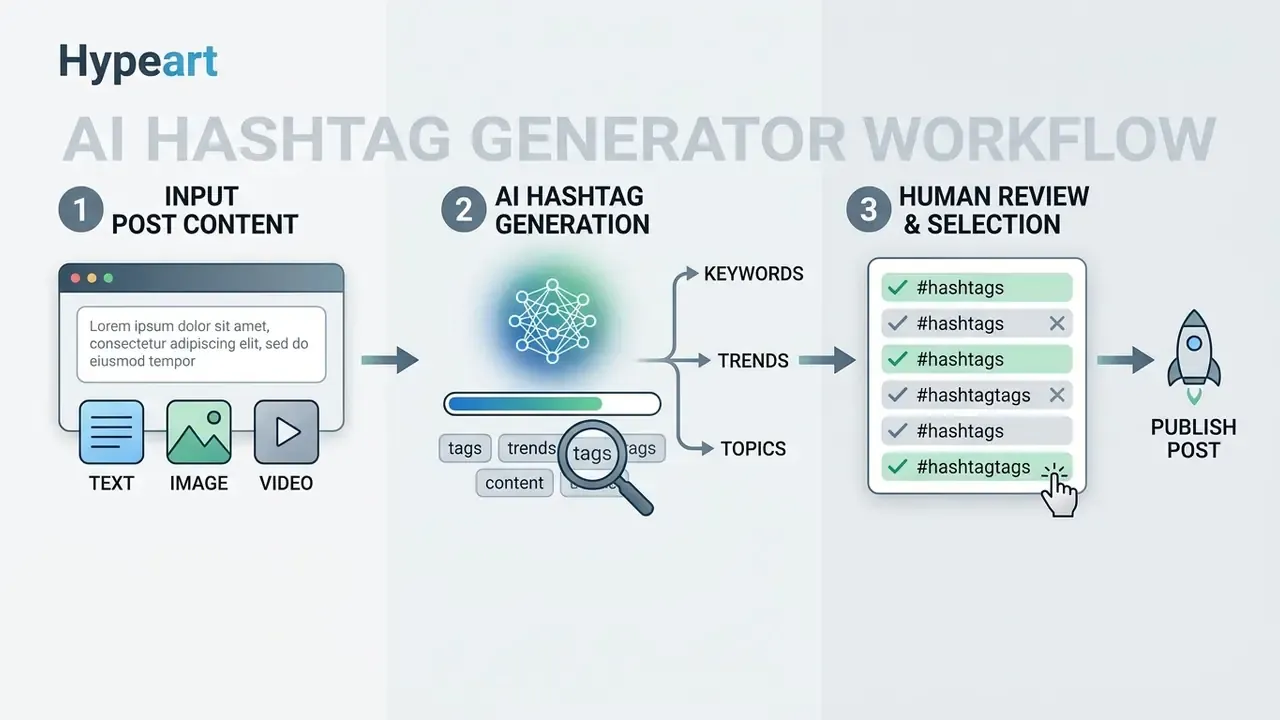
For teams operating under marketing-review obligations, add a fourth, non-negotiable control step: human-in-the-loop (HITL) approval with a logged decision. Record who generated the set, who approved it, which tags were rejected, and against which stop-list the set was screened. That log is your audit trail if a regulator, legal team, or internal auditor asks why a specific tag appeared on a promoted post.
Four steps, not three. The fourth one is the only one anybody will ask you about later.
Describe the Content and Add a Keyword
When preparing inputs for an ai instagram hashtag generator, start with a concise summary of the core visual or written content. Enter primary keyword strings alongside post description text. Structured, keyword-first prompts consistently outperform conversational free text. AWS Prescriptive Guidance defines prompt engineering as the deliberate selection of words, phrases, punctuation, and separators to shape model output, and a 2024 survey of prompting methods classifies keyword, context, and template patterns as distinct formal techniques.
Recommended generation prompts by industry:
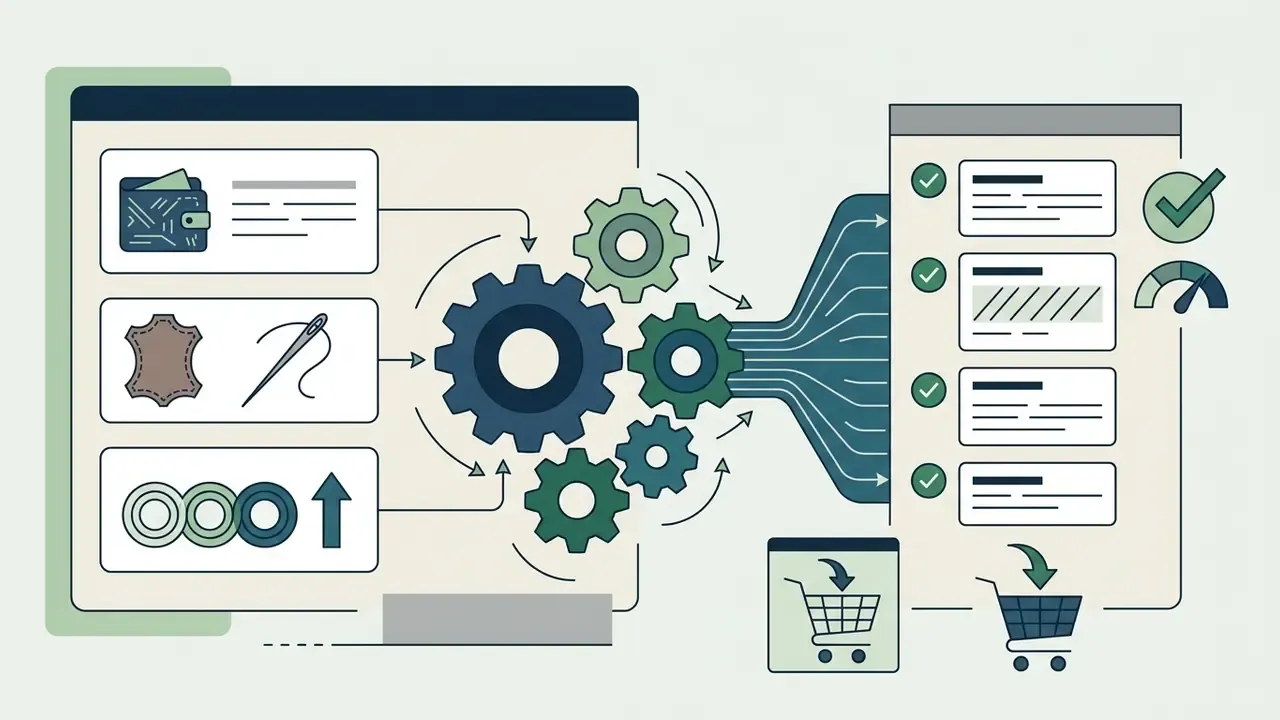
[Product name] + [Material or style] + [Target audience] → "Handmade leather wallet minimal gift for men"
[Core topic] + [Industry sector] + [Problem solved] → "SaaS marketing strategies pipeline growth B2B"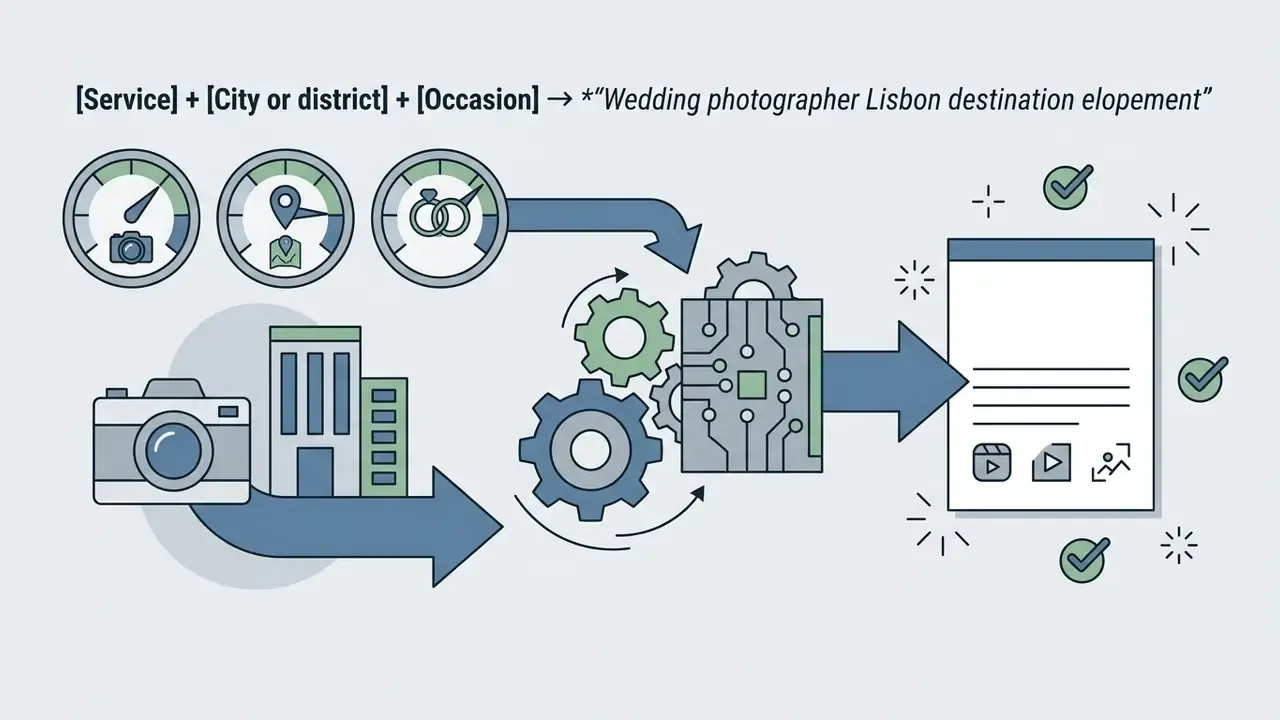
[Service] + [City or district] + [Occasion] → "Wedding photographer Lisbon destination elopement"
[Format] + [Niche] + [Emotion or outcome] → "Day in the life junior developer remote work"
[Educational topic] + [Audience segment] + [Disclosure required: yes] → "Compound interest basics for first-time savers" (never paste unreleased product names or internal terms)Geo-heavy campaigns behave differently: location tags saturate fast and decay slowly, so pair them with a visual asset that carries the place itself. Teams building location-led series often prototype with an ai map generator before locking the tag set. Hospitality accounts have a parallel trick, generating dish-level tags from the menu text itself, which is where an ai menu generator fits the same workflow. Study-adjacent education accounts get their strongest niche pull from problem-type tags, the kind an ai math solver surfaces from a single worksheet photo.
AI Hashtag Generator for Instagram, Reels, TikTok, and YouTube
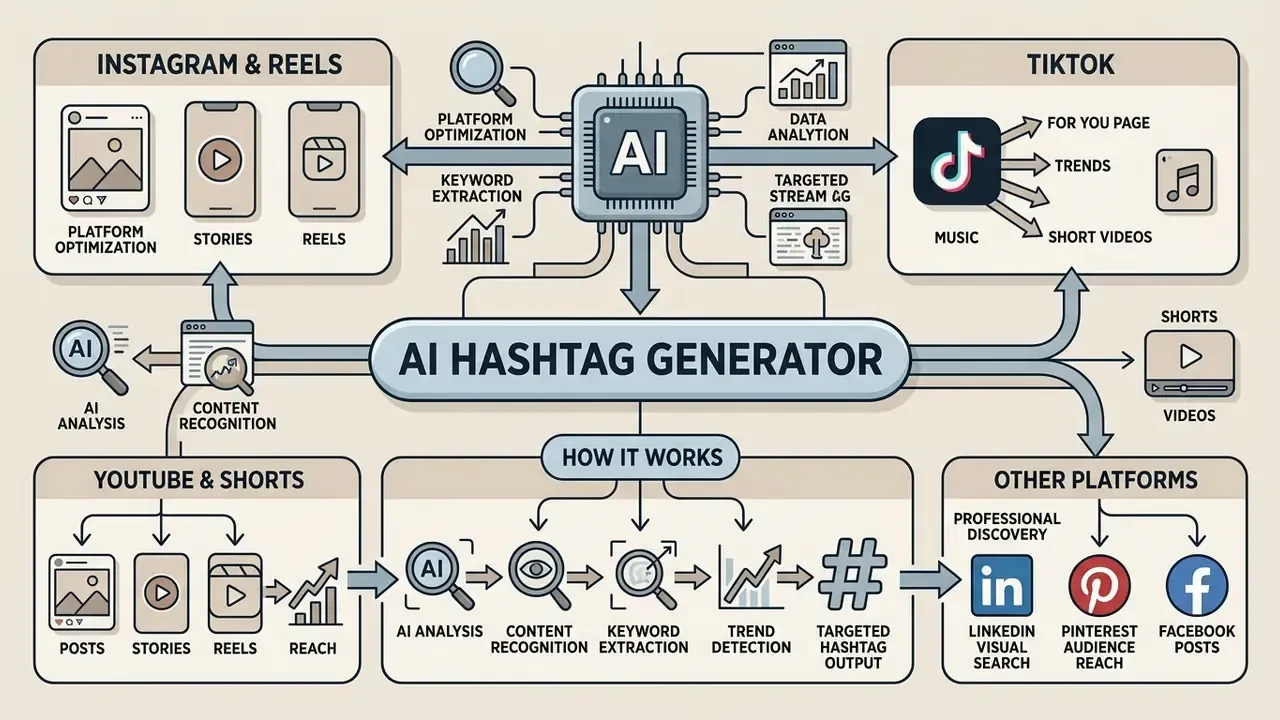
Different social networks employ distinct indexing rules, making platform-specific optimization essential when deploying an instagram ai hashtag generator. While image platforms focus on topical categorization, short-form video algorithms prioritize watch time and caption keywords alongside tagged metadata.
The single most useful reference for creators is the split between what a platform allows and what actually performs. Hard caps are enforced by the product; optimal ranges come from platform help documentation and current creator practice.
| Platform | Maximum allowed limit | Recommended optimal count | Key placement strategy |
|---|---|---|---|
| Instagram Feed and Reels | 30 hashtags | 5 to 10 highly relevant tags | Caption or first comment |
| Instagram Stories | 10 tags (practical sticker limit) | 1 to 3 sticker or text tags | Hashtag sticker, optionally layered |
| YouTube and Shorts | 15 hashtags | 3 to 5 focused tags | First 3 lines of description (top 3 render above the title) |
| TikTok | 4,000-character caption limit | 3 to 6 trending plus niche tags | End of caption text |
| No strict limit | 3 to 5 professional topic tags | Bottom of post body | |
| 20 hashtags | 2 to 5 category tags | Pin description | |
| No strict limit | 1 to 2 campaign or event tags | End of post text |
Character budgets constrain tags as much as tag caps do. Instagram bios are limited to 150 characters and YouTube video titles to 100 characters, so every tag you place in those fields competes directly with your messaging.
AI Instagram Hashtag Generator for Posts, Stories, and Reels
An ai hashtag generator for instagram tailors outputs specifically for Feed publications, Stories, and Reels. Using an ai hashtag generator for reels helps creators capitalize on short-form video recommendation feeds, the same feeds served by TikTok and Shorts, where caption keywords, on-screen text, and tags are read together. Instagram's hard ceiling is 30 tags per post, yet published research summaries and 2025 to 2026 operator guides converge on 5 to 10 highly relevant tags as the better-performing range, with some practitioners narrowing to 3 to 5 for tightly themed accounts. Stories rely on 1 to 3 targeted sticker tags to preserve visual clarity.
If Reels are your primary format, pair tag research with production choices. Compare output quality and limits in our reviews of free AI video generators and, for longer companion content, the YouTube video editor workflow guide. Audio-led Reels behave differently again, since sound tags carry discovery weight; creators testing original audio often start from an ai melody generator rather than a trending track. To compare multimodal creative tools across media types, view our AI Media Comparison analysis.
How to Build a Hashtag Strategy That Reaches the Right Audience
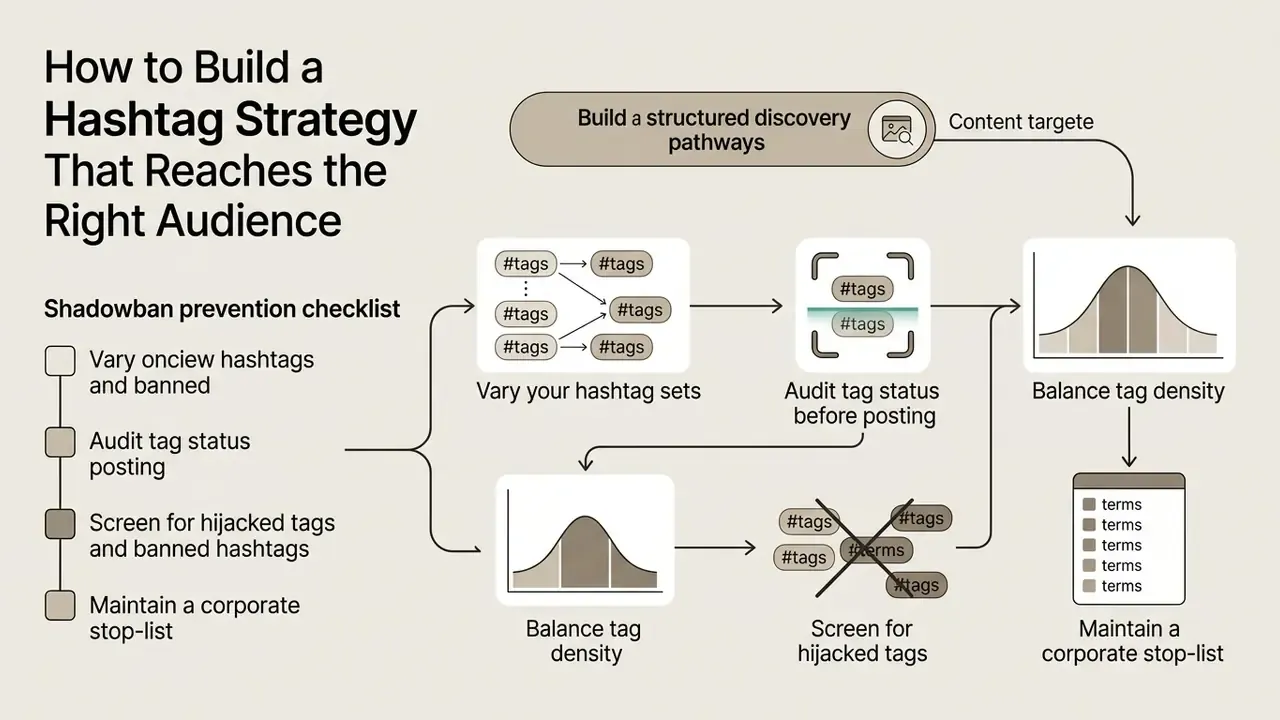
A structured hashtag strategy moves beyond random tag selection to build systematic content discovery pathways. Aligning metadata with audience intent increases meaningful engagement and expands organic reach without triggering platform spam detection.
Peer-reviewed work supports the "function mix" idea rather than the "more tags" idea. A study of 1,406 Instagram posts (Proceedings of the European Marketing Academy, 2019) found that hashtag characteristics affect likes, comments, and new-follower acquisition differently, meaning careful selection changes which outcome you optimize. An AAAI conference paper (2020) analyzing Twitter found that engagement varies by hashtag class, with periodically recurring hashtags the most engaging type on average. A 2022 meta-synthesis in Frontiers in Sociology adds that hashtags are used to gauge interest in an event or theme, which is why pairing topical tags with event-based tags outperforms a single flat block.
Practical translation: decide the outcome first. Follower growth, saves, and comments respond to different tag classes, so a set optimized for reach will underperform on retention and nobody will understand why.
Formatting Captions and Tag Text for High Readability
Clean formatting keeps hashtags from cluttering your message. When using custom Unicode fonts (bold, italic, script, or the twenty-plus copy-paste styles offered by font generators), keep these technical rules in mind:
- Never style the
#symbol or the tag itself.Screen readers and platform indexers cannot parse hashtags rendered in non-standard Unicode. Unicode's UAX #31 defines hashtag syntax as<Start><Continue>*and recognizes#,﹟, and#; stylized substitutes fall outside that syntax and become plain decorative text with zero discovery value. - Character limits shrink faster than you expect.Styled glyphs consume more bytes and often more visible width. Against Instagram's 150-character bio limit or YouTube's 100-character title limit, decorative text truncates your positioning statement before it truncates your tags.
- Rendering is device-dependent.Several Unicode style ranges fail to render on older Android builds and some desktop browsers, appearing as empty boxes. Preview on at least one iOS and one Android device before publishing.
- Protect accessibility and OCR.Maintain standard typography and clear contrast in primary on-screen text so OCR engines can index your post alongside its hashtags. Stylized text is frequently misread or skipped entirely.
- Use line breaks, not symbols, to separate tag blocks.Placing tags after several blank lines, or in the first comment, keeps the caption readable without breaking indexation.
Free AI Hashtag Generator, Plans, and Commercial-Use Checks
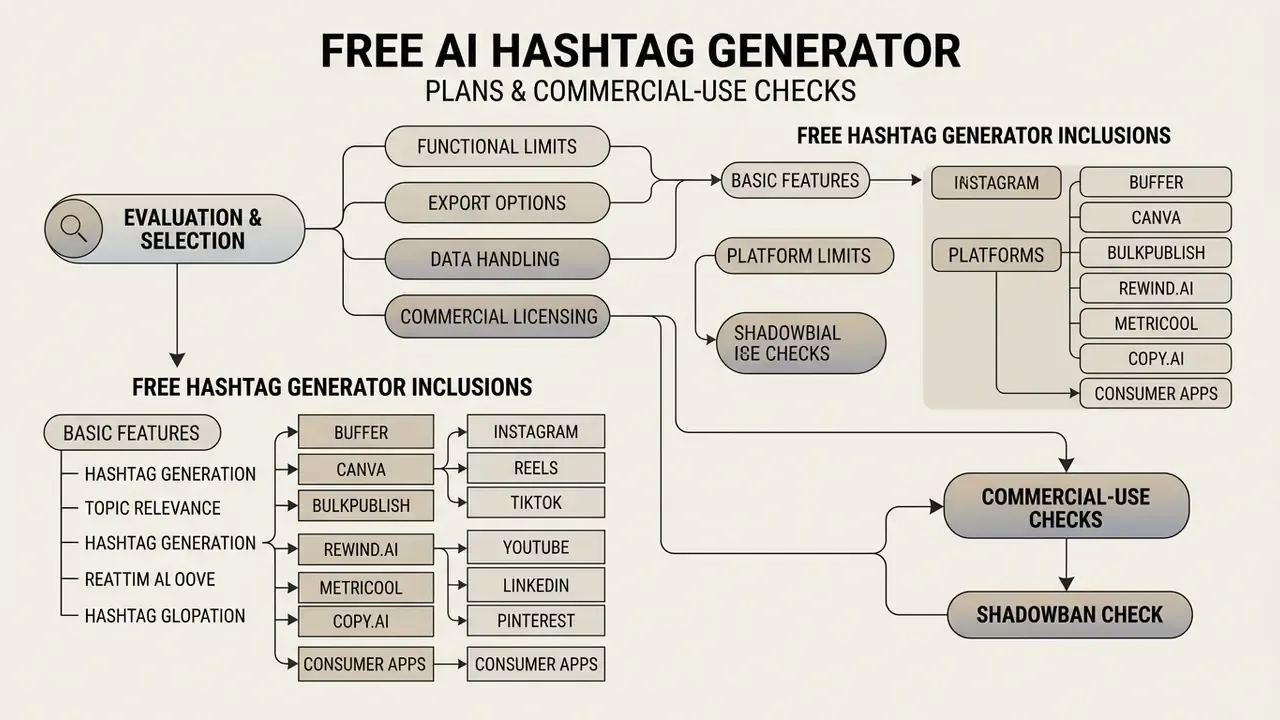
Selecting a free ai hashtag generator requires evaluating functional limits, export options, data handling, and commercial licensing terms. Many basic tools offer standard generation at no cost, but enterprise deployments require paid tiers with contractual security and retention guarantees.
What a Free Hashtag Generator Usually Includes
An ai hashtag generator free tier typically provides fundamental text parsing and standard tag recommendations, with limits counted in four different ways: daily sets, daily generations, lifetime uses, or token budgets.
- Buffer no account required, up to 5 hashtag sets per day; further use requires a free login. Buffer Support (2026). https://support.buffer.com/en-us/articles/using-buffers-ai-hashtag-generator-Fy5xi7FMsP
- Canva free users receive 50 lifetime uses; paid plans extend to up to 500 Magic Write uses per user per month. Canva (2026). https://www.canva.com/instagram-hashtag-generator/
- BulkPublish 3 free generations per day without signup; a free account raises this to 50 AI generations per month. BulkPublish (2026). https://www.bulkpublish.com/tools/ai-hashtag-generator-free
- Rewind.ai anonymous users get 2,500 free tokens per day, free accounts 5,000 per day with saved history. Rewind.ai (2026). https://rewind.ai/social/hashtag/
- Metricool the Free plan includes 5 AI text-generator credits per month and no hashtag finder for Instagram or TikTok; hashtag finding is a premium feature. Metricool Help Center (2026). https://help.metricool.com/main-differences-between-free-and-paid-plans-bl0v9
- Copy.ai the free copy ai hashtag generator returns 5 to 10 hashtags from an image description or pasted social copy; paid access is bundled into workflow-credit plans. Copy.ai (2026). https://www.copy.ai/tools and https://www.copy.ai/prices
- Consumer apps Hashtag Expert on the App Store lists a free tier plus in-app purchases spanning $2.99 to $249.99 per year, a reminder that "free" tools frequently sit in front of steep annual upsells.
Free users can copy generated sets, but bulk export, saved history, scheduler sync, and analytics are usually reserved for premium accounts. To evaluate tool tiers, explore the hub covering subscription options, and compare how free limits behave in adjacent categories such as free photo editors and AI voice generators.
Worth naming the pattern plainly: a hashtag generator ai free tier is a lead-generation surface. The product it sells is not tags, it is a paid seat. That is fine for a solo creator. It is a problem when the free tier's terms allow prompt retention and your prompt describes an unlaunched savings product.
Shadow AI, Data Leakage, and Vendor Due Diligence
The most common enterprise failure with hashtag tools is not a bad tag. It is a marketer pasting an unreleased product description into a free public generator. That is textbook shadow AI: unsanctioned tool use outside logging, DLP, and procurement controls.
Baseline input policy for regulated teams:
- Never enter unannounced product names, pricing not yet public, embargoed campaign dates, customer names, PII, account data, or internal codenames into a consumer-tier generator.
- Assume free-tier prompts may be retained and used for model improvement unless the contract states otherwise. Only zero-data-retention agreements make that assumption safe to drop.
- Route generation through an approved tool inventory with SSO, so usage is attributable and revocable.
- Describe content at the level of a public press release, not an internal brief. Generators need topic and audience, not confidential specifics.
Vendor due-diligence questions before approval. Who is the legal entity behind the tool, and is it verifiable? Where is data processed and stored? Is there a SOC 2 Type II report? Is there a documented non-training clause? Does the contract include IP indemnification for generated output? Are audit logs exportable? Is there a documented incident-response and breach-notification commitment? A tool with no verifiable corporate registration, no resolvable ownership information, and no published terms should fail procurement outright, regardless of output quality.
Risk matrix for unsanctioned generator use:
| Risk | Likelihood | Impact | Primary control |
|---|---|---|---|
| Confidential product info entered into public tool | High | High | Input policy plus DLP rules plus approved tool list |
| Prompt data retained for model training | Medium | High | Zero-retention contract, enterprise tier |
| Banned or hijacked tag published on brand account | Medium | Medium | Stop-list screening plus in-app tag verification |
| Trademark collision in generated tag | Low to medium | High | Legal screening of new branded tags |
| Missing AI-content disclosure where required | Medium | Medium to high | Disclosure checklist per jurisdiction |
| No audit trail for approved metadata | High | Medium | Logged HITL approval workflow |
One more control that costs nothing: give the marketing team a sanctioned tool before you write the prohibition. Bans without an approved alternative simply move the behavior somewhere you cannot see it.
Validating Probabilistic Tagging Models (Model Risk View)
Automated tag recommenders are probabilistic tools, not guaranteed reach mechanisms, and that is exactly how model-risk functions should treat them. Marketing NLP tools frequently escape model inventories because they look like productivity software. A hashtag recommender that shapes what a regulated brand publicly says about its products belongs in scope for review.
Practical validation controls:
- Scope and tiering.Classify the tool by consequence: internal ideation (low), organic brand publishing (medium), paid promotion of regulated products (high). Validation depth follows the tier.
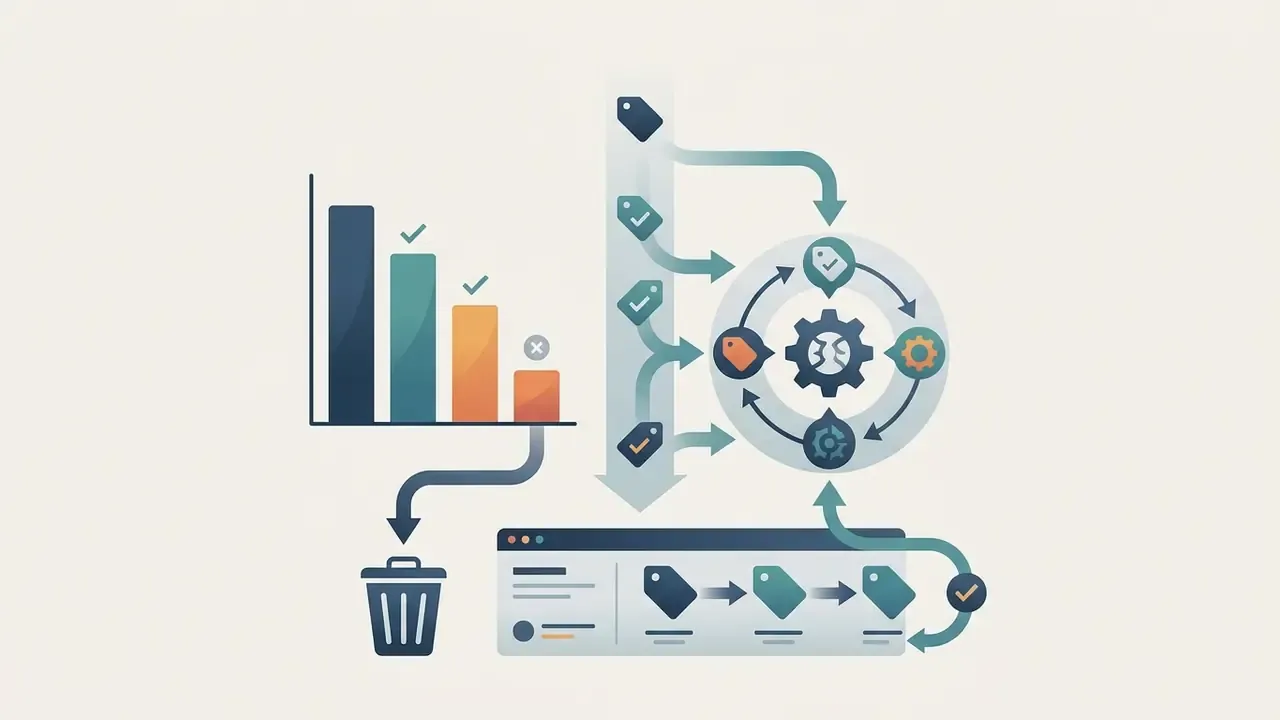
- Benchmark set.Maintain 50 to 100 representative posts with expert-approved tag sets, and score vendor output against them on precision, recall, and ranking quality.
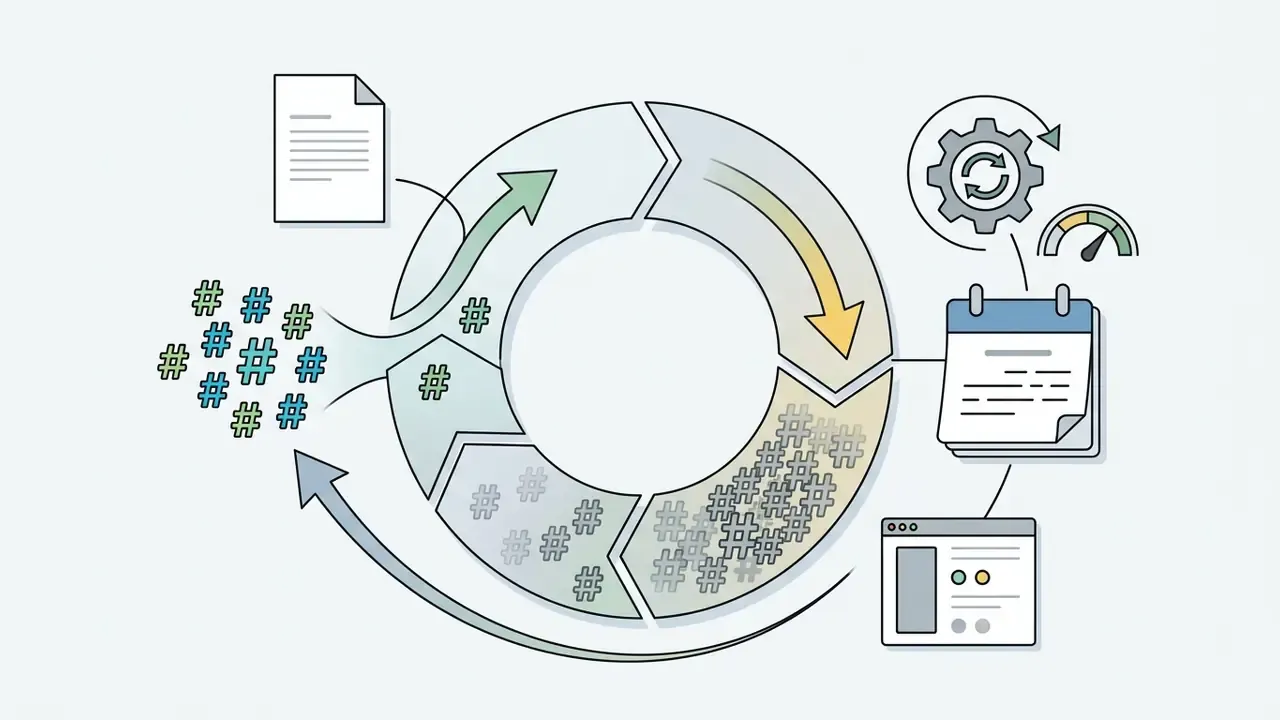
- Drift monitoring.Re-run the benchmark quarterly. Tag semantics shift as communities co-opt terms, so yesterday's safe tag can become tomorrow's flagged tag with no change to the model.
- Failure-mode testing.Deliberately probe for invented tags, tags with zero search volume, competitor-brand tags, and politically loaded tags.
- Human-in-the-loop gate.Require named approval before publication for medium and high tiers. No auto-publish path from generator to live account.
- Audit trail.Persist the prompt, model or tool version, raw output, rejected tags, stop-list version, approver identity, and timestamp.
- RACI clarity.Marketing is Responsible for generation and initial screening; Brand and Legal are Accountable for approval on regulated content; Compliance and Model Risk are Consulted on tool onboarding and periodic revalidation; Analytics is Informed for performance reporting.
Financial-services, insurance, and healthcare marketers should note that advertising and communications review obligations (for example FINRA-style pre-use review of retail communications, SEC guidance on social media usage, and FTC disclosure expectations for endorsements and material connections) apply to the whole post: caption, on-screen text, and hashtags alike. A generated tag that implies performance, guarantees, or comparative claims is a compliance issue, not a creative one.
No evidence, no autonomy. A tagging tool earns a lighter review only after its benchmark results, drift history, and approval logs exist in a form somebody outside marketing can read.
How to Evaluate Hashtag Results After Publishing
Post-publication analysis allows operators to refine metadata selection based on empirical performance results.
«Academic hashtag recommenders are evaluated on precision, recall, and NDCG, metrics borrowed from information retrieval and recommender systems.»
Borrowing that discipline is what separates measurement from guesswork. Define what a "correct" tag is (relevance to content and audience), then score sets rather than individual posts.
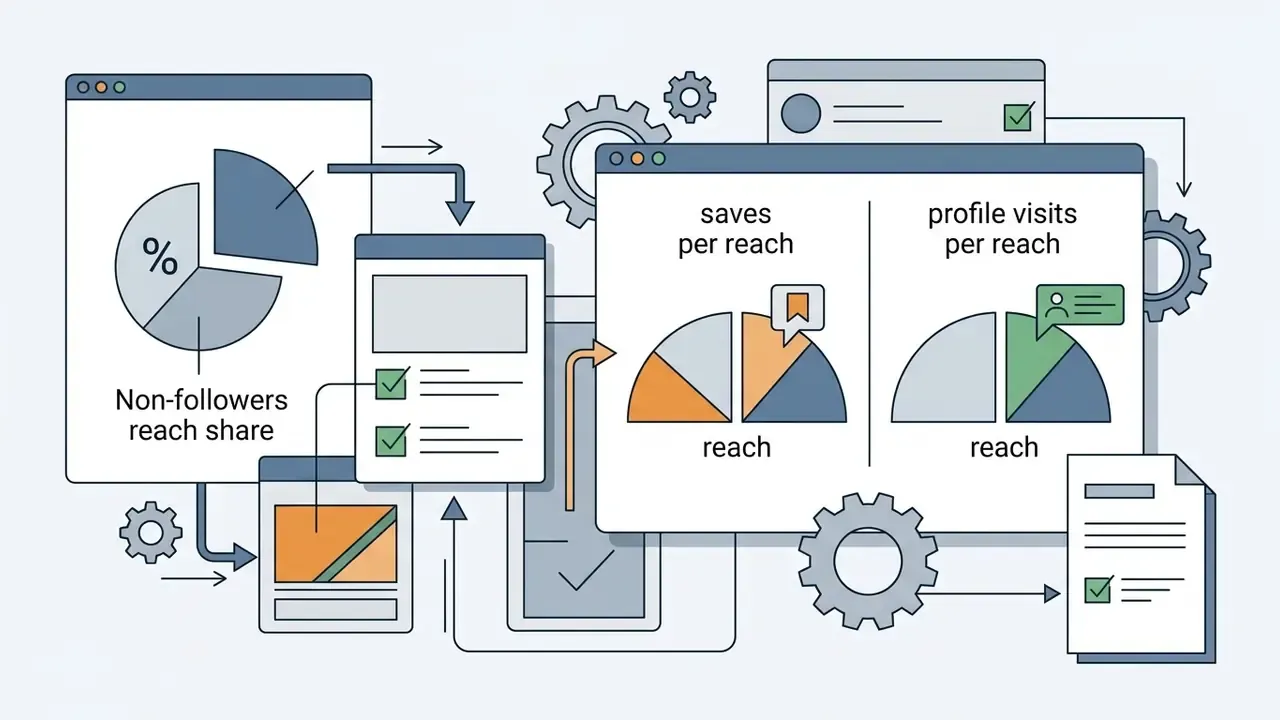
Measuring unique reach, total impressions, and overall engagement across account posts isolates tag performance from baseline audience growth. Instagram analytics separates reach (unique accounts) from impressions (total views), so a rising impression count with flat reach means repeated exposure to the same people, not discovery. Post-level comparison generally uses engagement rate (likes, comments, shares, and saves divided by reach or followers), and dedicated hashtag dashboards report hashtag impressions, hashtag reach, saves, clicks, and non-follower engagement, which is the single most diagnostic metric for tag performance. On X-style analytics, potential reach and potential impressions from mentions and replies indicate whether tag-linked exposure extended beyond existing followers.
Risk-adjusted ROI, for teams that must justify tool spend: (Incremental attributable value − Tool cost − Review labour cost − Expected compliance/remediation cost) ÷ (Tool cost + Review labour cost). Review labour is the line item most teams omit, and in regulated environments it usually exceeds the subscription fee by a wide margin. A $39 monthly seat with two hours of weekly compliance review is not a $39 decision. To compute potential ROI metrics for media workflows, see the overview of calculation tools, and benchmark adjacent AI spend using our best AI art generator and video compressor guides.
AI Hashtag Generator FAQ
Do AI Hashtag Generators Work for New Content Ideas?
Yes, an ai hashtags generator can process broad industry themes to surface adjacent topics and creative angles. By analyzing co-occurrence patterns across large text datasets, a free hashtag tool helps creators identify emerging sub-genres and niche communities before planning new campaigns. Research supports this ideation use: a 2023 ACL paper proposed a guided generative model that retrieves related hashtags and combines video frames with descriptions to generate tags for short-form video; another 2023 study trained GPT-2 to produce popular hashtags; and the RIGHT retrieval-augmented recommender outperformed prior methods on benchmark tests. Content teams building visual campaign concepts can pair tag discovery with tools reviewed in our AI headshot generator and image-expansion guides to identify which formats a trend actually rewards.
Can Using the Wrong Hashtags Hurt Reach?
Yes. Applying non-relevant or repetitive tag blocks can suppress content distribution. Platform spam detection ignores misleading metadata and may penalize accounts that continuously reuse identical tag blocks across every publication. Practitioner analyses report that repeated identical sets can be flagged as potential spam and that excessive or irrelevant tags may simply be discounted as signals. Note the mechanism differs by source: some describe ignored signals, others soft caps, others spam flags. The consistent outcome is lower distribution. Manual review ensures generated tags remain directly relevant to the specific post context.
How Many Hashtags Are Safe to Use?
Stay inside the hard cap and well below it in practice: 5 to 10 on Instagram Feed and Reels (max 30), 1 to 3 on Stories, 3 to 5 on YouTube and Shorts (max 15), 3 to 6 on TikTok, 3 to 5 on LinkedIn, 2 to 5 on Pinterest (max 20), and 1 to 2 on Facebook. Relevance, not volume, is what current platform documentation rewards.
How Do I Avoid a Shadowban When Using Generated Tags?
Rotate sets on every post, verify each tag in-app before use (a hidden or restricted "Recent" tab means the tag is blocked), screen against an internal deny-list, avoid tags whose current top posts contradict your brand context, and never mix unrelated high-volume tags into a post just to inflate exposure. Generated sets should be treated as candidates for review, not as final output.
Do I Need to Disclose AI Involvement in Hashtags?
Plain AI-assisted text such as a hashtag list is treated differently from realistic synthetic media. The European Commission's 2026 transparency code targets artificially generated or manipulated content that may qualify as deepfakes, and Meta labels detected or self-disclosed AI content with an "AI info" marker. Practically: disclose AI-generated media per platform and jurisdiction rules, apply sponsorship and endorsement disclosures independently, and check regional requirements before relying on a single global policy.
Can an AI Hashtag Generator Create Tags for Different Languages?
Yes, modern models process natural language text in dozens of global languages. Standards defined by Unicode (UAX #31) outline proper hashtag syntax across character sets, recommending CamelCase for English compound tags and underscore separators for multi-word Arabic or regional-language tags. The UAE Government Social Media Guidelines codify exactly this split.
«Graph neural networks for low-resource Indian languages show that personalized hashtag recommendation is feasible even with limited training data.» — Multilingual personalized hashtag recommendation for Indian languages (2023) Institutional practice also matters. Campaign tags are usually standardized rather than translated (ICANN's guides use fixed tags such as
#newgtlds), while EU Grants' social media guidance treats hashtags as searchable labels with locally readable keywords like#OpenScience. For international rollouts, keep one canonical campaign tag plus locally readable topical tags per market, and have a native speaker screen each market set for unintended meanings.
Limitations, Open Questions, and a Safe Next Step
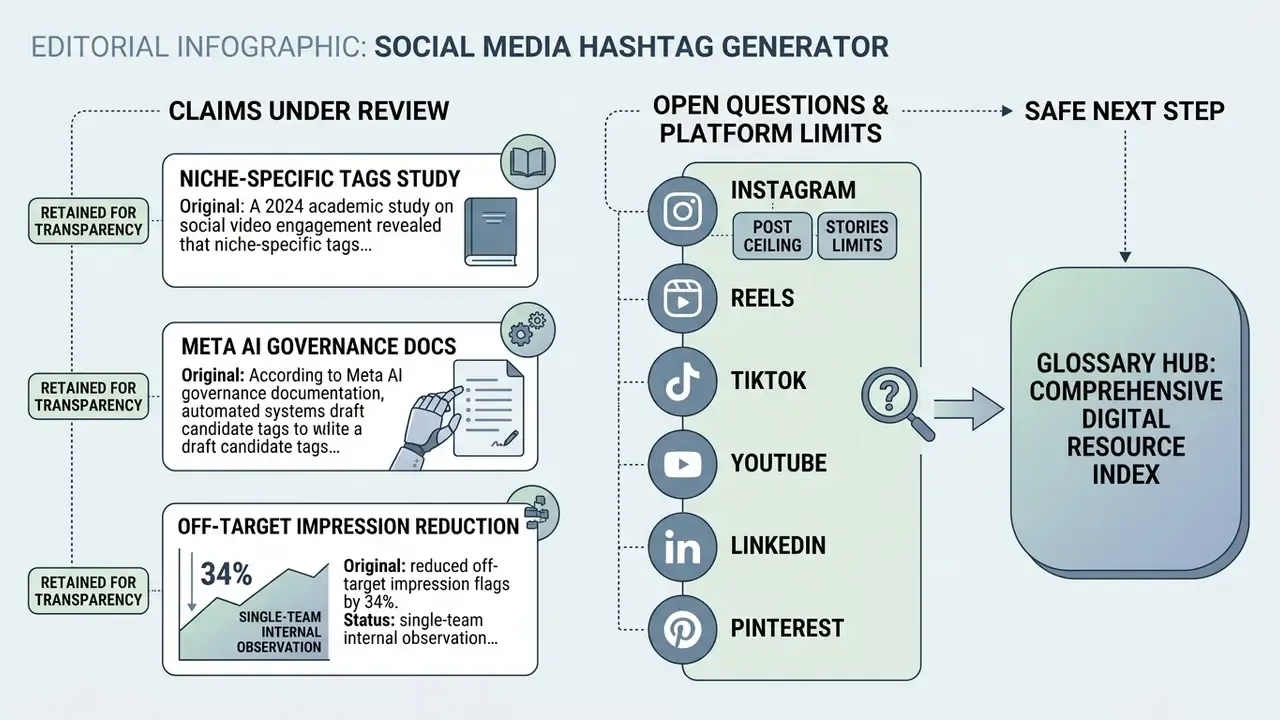
Three things in this article remain genuinely uncertain, and pretending otherwise would be dishonest.
First, Instagram's numeric ceiling and optimal range rest on platform behaviour and creator research, not a current primary help page. Second, the 3× niche advantage is a vendor claim, useful as a hypothesis and unusable as a planning input. Third, nobody outside the platforms knows how much weight tags carry relative to watch time, caption semantics, and on-screen text; the ranking systems are not published and they change without notice.
A reasonable next step for a regulated team is small and reversible. Pick one sanctioned generator, define the input policy in a single page, log approvals for thirty days on one brand account, and measure non-follower reach against your existing baseline. If the numbers move and the log holds up under review, widen the scope. If they do not, you have lost a month and learned something cheap.
Modest ambition, defensible evidence. That combination is what usually survives an audit.
Appendix A: Claims Under Review