A meme generator looks harmless. It is still an AI system that touches brand voice, third-party imagery and, sometimes, internal screenshots. For a risk or compliance leader in US financial services, that combination is familiar: low perceived stakes, no owner, no inventory entry. This guide covers both sides. How the tooling actually works, and what has to be true before a regulated brand publishes the output.
The 30-Second Summary
- An ai meme generator is a multimodal service (LLM plus VLM plus diffusion models). It takes a text idea, a photo or a template and returns a finished meme in 5 to 15 seconds.
- The template format outperforms pure AI art. Meme structure raises engagement, while AI visuals without meme context do not raise it on their own (Generative Memesis, 2024).
- Free tiers give 3 to 25 generations, a watermark and export capped at 720p to 1K. Commercial rights, 4K, batch generation and API access sit behind paid plans (from roughly $4.95 to $6.49 per month; API from about $0.009 per image).
Decision Snapshot: Who This Guide Is For
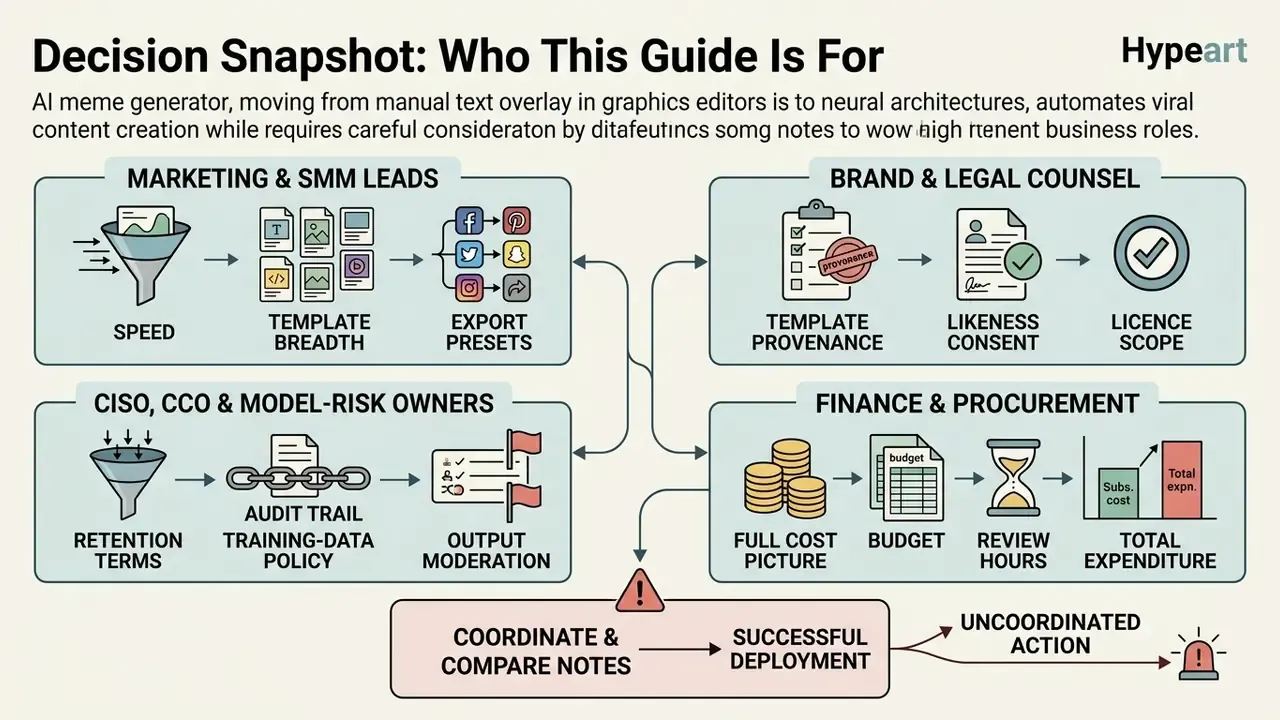
Different buyers read this page for different reasons, so it helps to name them up front.
- Marketing and SMM leads need speed, template breadth and export presets per platform.
- Brand and legal counsel need clarity on template provenance, likeness consent and licence scope.
- CISO, CCO and model-risk owners need retention terms, training-data policy, output moderation and an audit trail.
- Finance and procurement need the full cost picture, including review hours, not just the subscription line.
If those four groups never compare notes, the meme ships fast and the incident arrives later. Ask each of them one question before purchase: what would make you say no?
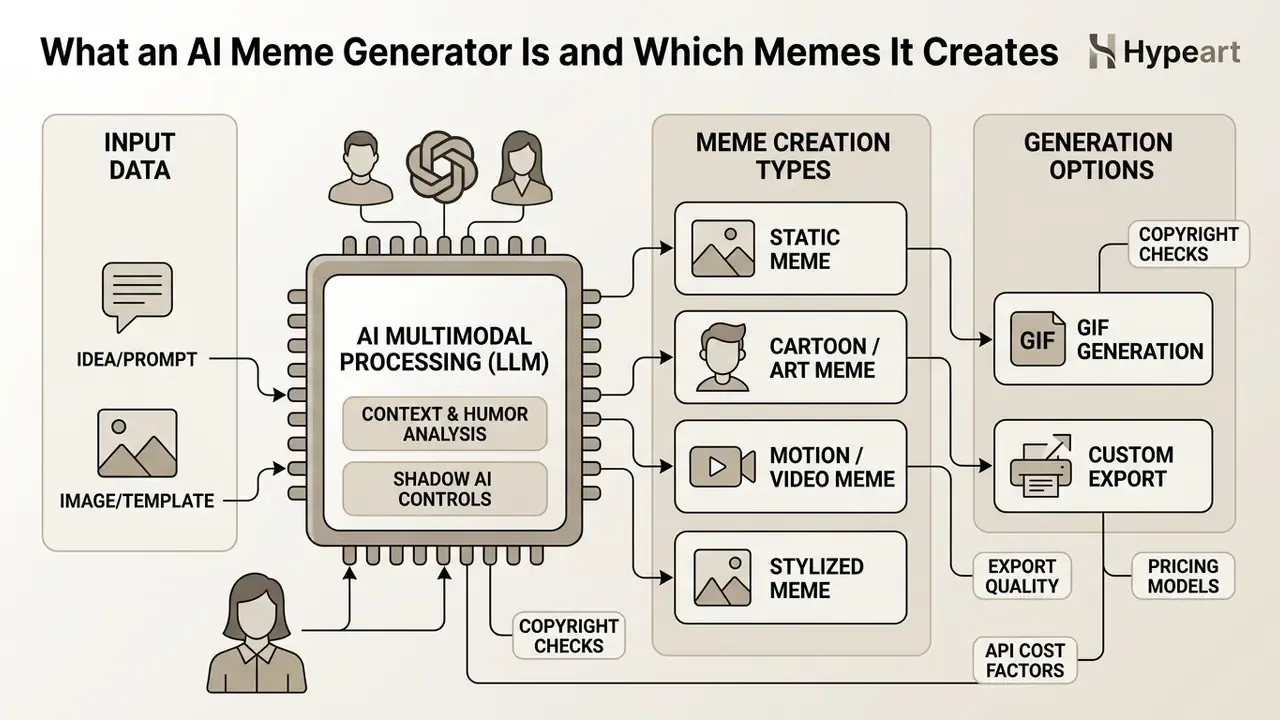
Automating viral content has moved from manual text overlay in graphics editors to neural architectures. A modern ai meme generator combines large language models with computer vision to write humorous captions, match a relevant visual format and render a finished media file in seconds.
What an AI Meme Generator Is and Which Memes It Creates
In short: an ai meme generator is a multimodal engine that picks the visual and writes the caption from your idea. It covers four formats: static meme, AI art, comic strip and short video.
An ai meme generator is software built on multimodal neural networks. It produces humorous content from text prompts, existing images or classic meme templates. Traditional editors demand manual layer alignment. ai meme services instead read the context of an idea, choose a fitting visual metaphor and generate captions that land near the joke.
The architecture is documented even by large vendors. Google's Gemma guide (2025) shows a function-calling pattern where the model invokes generate_meme(image, top_text, middle_text, bottom_text). That single example makes the point clearly: meme generation is orchestration of a model over a render engine, not magic behind one button.
Systems in the ai generator meme class now produce static images, stylised AI art, comics and short animated clips. Academic work from 2024 and 2025 describes multimodal meme generation as a chain of NLP or LLM reasoning, vision-language grounding, image synthesis and a mandatory harmful-content filter.
Quality is scored on five dimensions: authenticity, hilarity, message conveyance, persuasiveness and hatefulness.
«MemeCraft reached 48% authenticity in generated memes, significantly outperforming the Dank Learning baseline and approaching human-made meme quality.»
Put plainly, almost half of machine-made memes read as genuine to a human viewer. That is the bar commercial ai generated meme images services are working against.
Memes From a Text Prompt, an Existing Image or a Template
In short: there are three entry points, namely text, template and your own photo. The entry point drives both legal risk and caption quality.
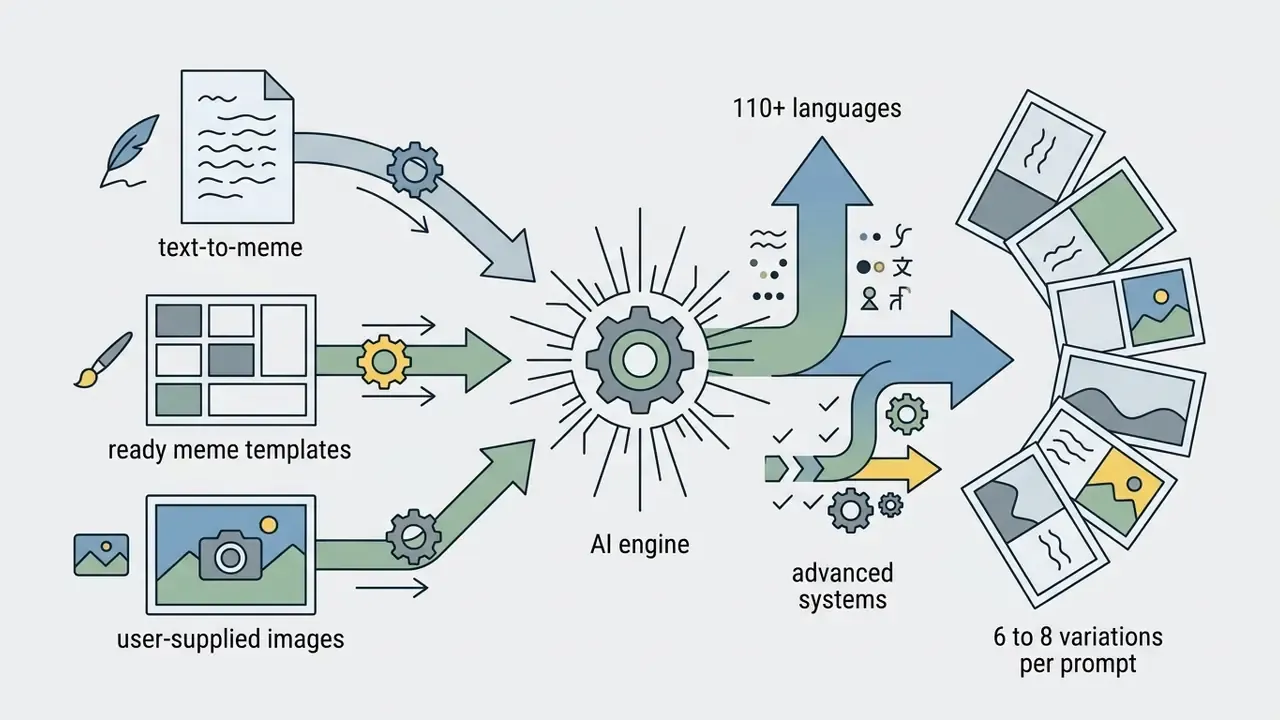
The mechanics split into three scenarios: text-to-meme, template-based editing and custom-photo processing. In text-to-meme mode a user types a situation, for example "when the code worked on the first run", and the algorithm selects a relevant template from its library and writes the headline.
The language models inside these generators handle natural language in 110+ languages, including automatic translation and adaptation of local humour. Send one prompt and an advanced system returns not a single file but a set of 6 to 8 meme variations with different captions and templates. You pick the sharpest punchline instead of rewriting the prompt from scratch.
When you work from the library, the network shapes the caption to the canonical structure of the chosen meme set, whether that is "Distracted Boyfriend" or "Two Buttons".
«The CM50 dataset includes 33,172 memes based on 50 popular ImgFlip templates, providing a structured base for training template-generation models.»
One methodological detail in CM50 matters here. Annotation covered not only caption text but labels for literary devices, including irony, sarcasm and metaphor, tagged through a VLM pipeline. That is why models trained on such data feel the difference between a joke and a literal description of a picture.
In the third scenario, when you upload your own file, ai create meme services scan facial expressions and objects to propose a caption that fits the frame. Need transformation rather than a caption? Then review image-to-image generators, which change style and composition before any text overlay. To wire these functions into third-party products, developers rely on AI Media API Guides for batch visual generation.
AI Cartoon, Image Art and Video Memes
In short: stylisation runs on diffusion models, animation on image-to-video and tracking. AI art alone does not guarantee engagement; the meme structure does.
Generative networks moved past pasting text onto stock photos, which produced the ai cartoon meme generator and ai art meme generator categories. These tools use diffusion and style-transfer models to turn ordinary shots into cartoon scenes or art pieces in anime, impressionist and comic styles. The academic foundation is public: StylerDALLE (ICCV 2023) frames language-guided style transfer as token translation in the discrete latent space of a pretrained generative model, while AniSora (2024) uses more than 10 million training samples and a spatiotemporal mask module for image-to-video, frame interpolation and local animation of selected regions. For a closer look at stylisation tooling, see the overview of AI art generators and the comparison of the best AI art generators. Search demand for an ai meme art generator overlaps heavily with those two pages.
The marketing takeaway is blunt. A beautiful neural picture without recognisable meme logic barely moves reactions. What works is the pairing of a familiar format with an unexpected punchline.
Dynamic content is developing in parallel. Frame animation and vector tracking turn a static ai image generator meme into an animated GIF or a short clip. In our own editorial practice, when we prepared assets for marketing teams, the shift from static banners to animated meme creatives usually lifted click-through, largely because motion stops the scroll. Actual CTR numbers always depend on platform, audience and offer, so treat this as a hypothesis to A/B test, not an industry benchmark. If your project needs local video creation without cloud dependency, review a local ai video generator, and for looped animation assembly an animation maker.
How AI Meme Generation Actually Works
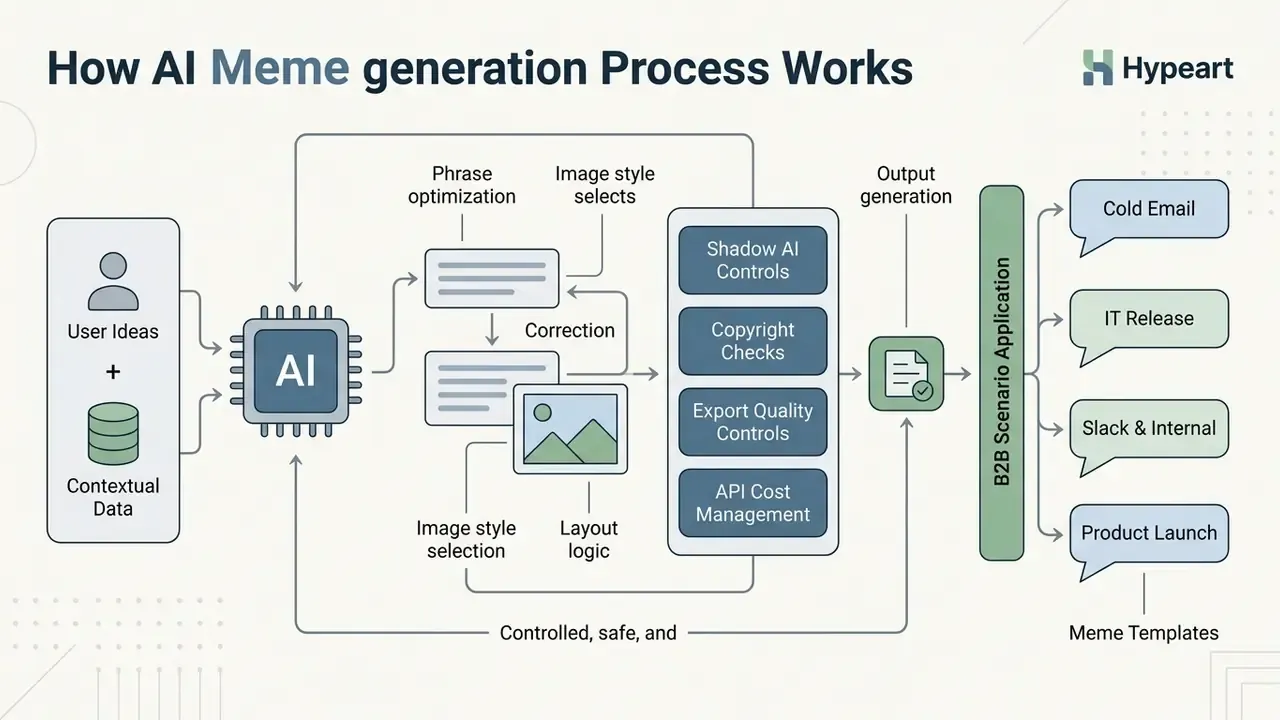
In short: the user path is five steps and 5 to 15 seconds. Inside the pipeline sit safety checking, face detection and automatic format fitting for social platforms.
The user-facing process is designed to remove technical barriers, and it takes between 5 and 15 seconds. The algorithm handles semantic analysis, background selection and font layout.
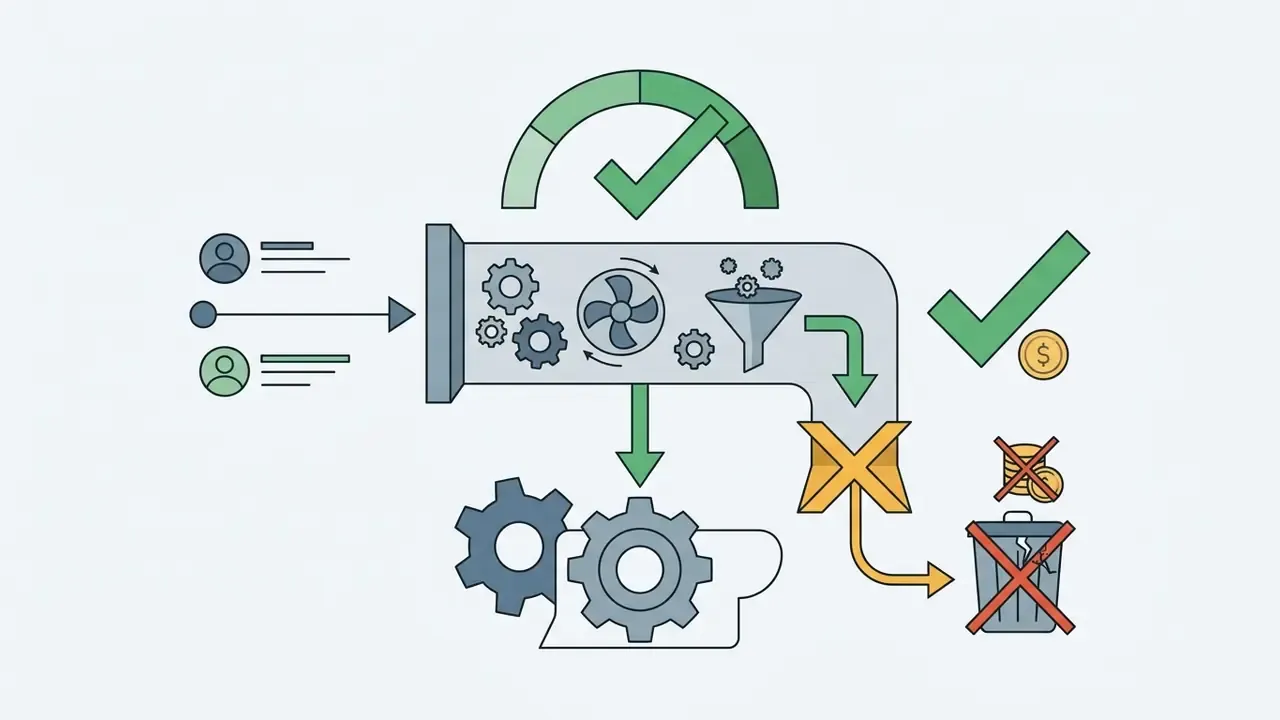
To let AI create a meme without errors, the system runs a sequential data pipeline: unsafe-content filtering (safety checking), face recognition, and automatic resizing to social-network standards. Moderation is two-layered. Following the ShieldGemma classification (Google DeepMind, 2024), user input is filtered separately from model output. That separation matters for audit: you can show which layer caught what.
AI meme generation flow, from idea to publication:
- Concept input.The user types a text idea or uploads a photo through the interface (upload).
- Format matching.The AI maps the prompt to the base of templates s meme or generates unique art through ai generate meme image.
- Semantic generation.The language model writes 3 to 8 caption options (top and bottom text).
- Layout and styling.Text is placed automatically with respect to safe zones and font contrast.
- Export and publication.The user makes a final edit and downloads the result (PNG, MP4 or GIF) to share on social platforms.
How to Phrase the Idea or Text for an AI Meme
In short: a good prompt equals situation plus roles plus tone plus format. A caption runs 5 to 10 words with the hook up front.
Meme quality depends directly on prompt structure. Standard prompt-engineering practice, including OpenAI's guidance for image models (2026, https://developers.openai.com/cookbook/examples/multimodal/image-gen-models-prompting-guide), suggests an effective request contains the task, role context, constraints and the desired tone (satire, absurdity, corporate humour). It should also state explicitly what must change and what must stay untouched.
An example of an effective meme prompt:
Brevity does most of the work.
«The most viral captions consist of 5 to 10 words and rely on strong hooks, according to studies of meme text structure.»
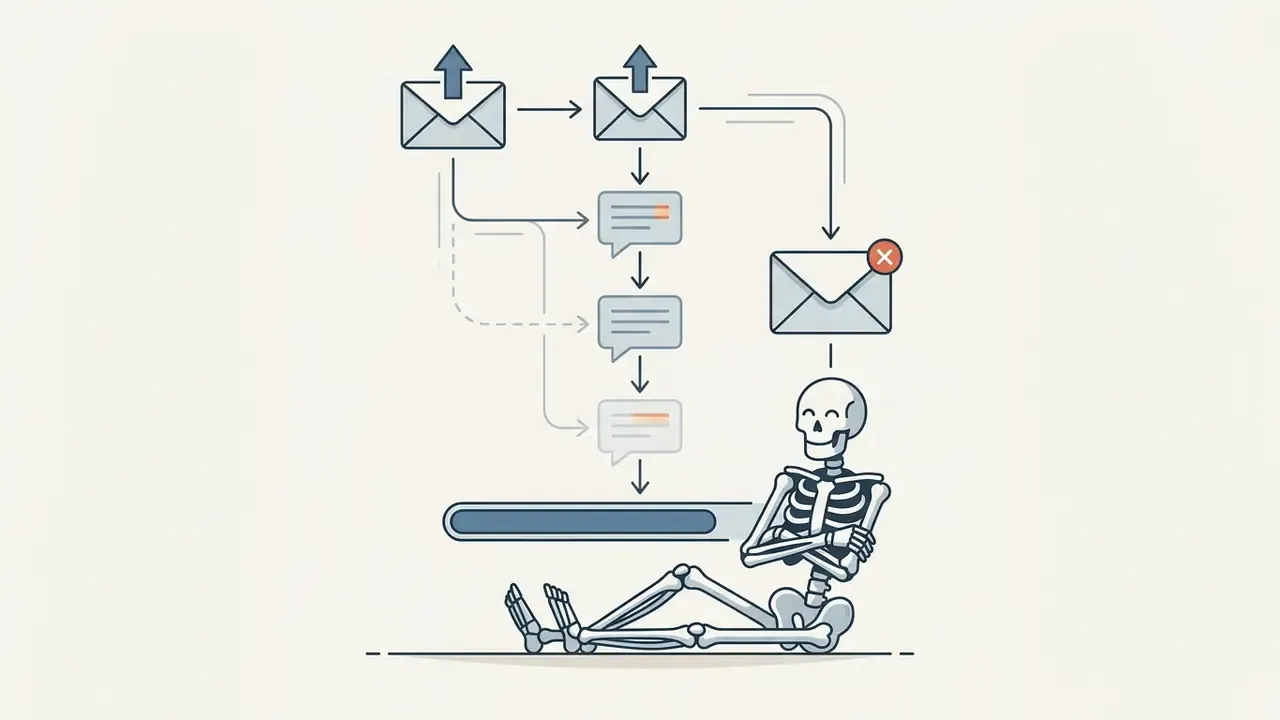
Situation: a lead ignores the third follow-up. Tone: polite irony. Format: Waiting Skeleton.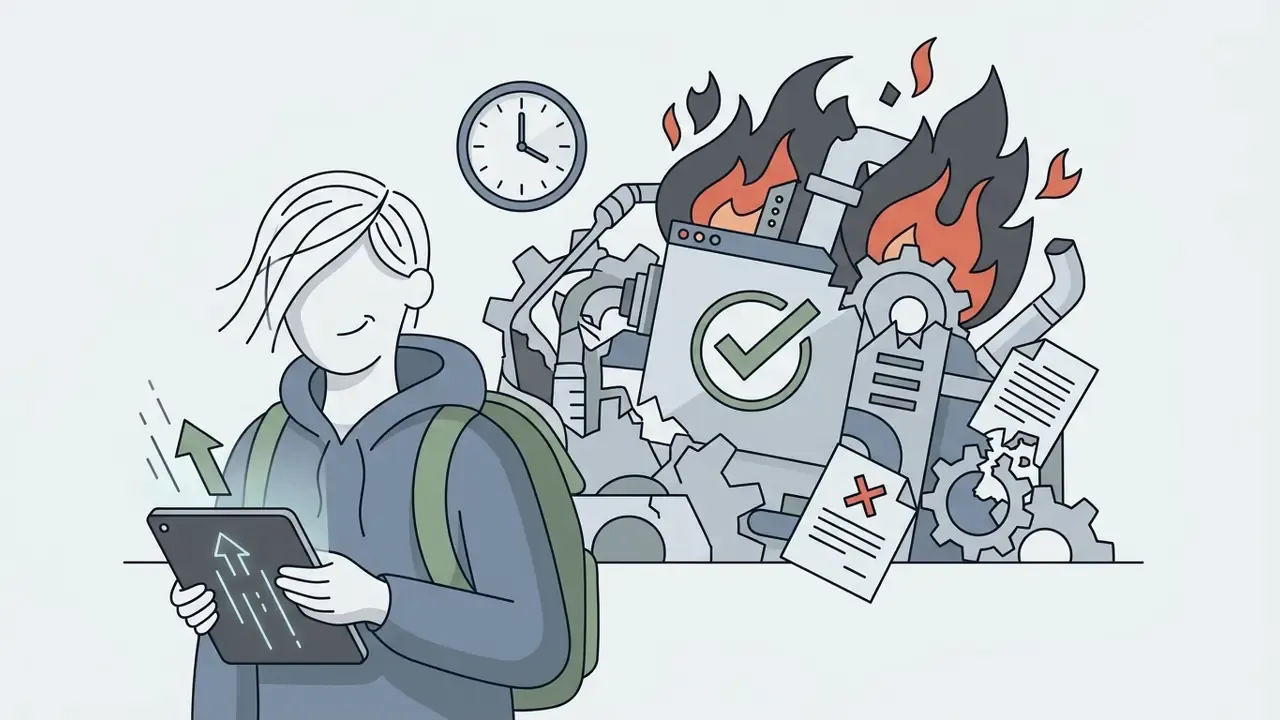
Situation: a feature shipped on Friday evening with no tests. Tone: dark humour. Format: Disaster Girl.
Situation: a meeting ends by scheduling another meeting. Tone: dry self-irony. Format: Two Buttons.
Situation: a client compares a manual process with automation through our service. Tone: comparative, not aggressive. Format: Drake Hotline Bling.
Situation: the audience pain is six hours to approve one creative. Tone: exaggeration. Format: Panik Kalm Panik. Return 8 caption options.How to Pick a Template or Upload Your Own Image
In short: a template should feel fresh yet recognisable. Your own photo should be contrastive, with room for text and readable facial expressions.
When choosing a ready visual format from the library, judge how recognisable the template is inside your target environment. Classic templates read instantly, but they need a fresh textual context or they look dated. Before publishing, check the original meaning of the template. A misapplied format reads to the audience as a brand mistake, and those are expensive to unsay.
Register of top meme templates and their applied context:
| Template name | Original meaning | Optimal marketing use |
|---|---|---|
| Drake Hotline Bling | Comparison: rejecting option one, approving option two. | Showing your product's advantage over the legacy method. |
| Galaxy Brain | Thought evolving from primitive to absurdly genius. | Escalating process complexity or ironic user "progress". |
| Two Buttons | A hard choice between two equally awkward options. | Illustrating the audience dilemma your service resolves. |
| Gru's Plan | A step-by-step plan whose final step backfires. | Self-irony about product failures or planning errors. |
| Panik Kalm Panik | Sudden alarm, brief calm, then renewed panic. | Reactions to bugs, deadlines or regulatory changes. |
| Change My Mind | A provocative statement inviting rebuttal. | Starting discussion around a contested industry claim. |
| Tuxedo Winnie the Pooh | The same thing phrased plainly and then lavishly. | Positioning a Pro tier or enterprise functionality. |
| Is This a Pigeon | Comic misidentification of the obvious. | Irony about misread metrics or briefs. |
| Disappointed Guy | Disappointment when reality misses expectation. | Reaction to "integration takes an hour" promises. |
| Waiting Skeleton | Endless waiting for a reply or an event. | Cold outreach, waiting on approver feedback. |
| Bike Fall | A character creates their own problem. | Self-irony about tech debt and untested "optimisations". |
| Side Eyeing Chloe | Scepticism and distrust toward an offer. | Audience reaction to another "revolutionary" AI tool. |
| Distracted Boyfriend | Abandoning the current solution for a new temptation. | Migration from a legacy tool to your service. |
If the user uploads a custom image, the file should meet basic technical requirements:
- High contrast between background and subject.
- High resolution, no third-party watermarks and no compression artefacts.
- Free space in the top or bottom third of the frame for text overlay.
- Clearly expressed emotion on faces, which visual-alignment algorithms such as XMeCap depend on.
Simply put, the model reads geometry as well as pixels: where the face sits, where the object sits, where the text line runs. A clean composition with a predictable layout therefore produces a sharper caption than a dense collage.
For low-quality or heavily compressed sources, consider AI image enhancement tools and specialised options such as a low quality video workflow to prepare the visual before generation. For basic frame prep, meaning crop, exposure and object removal, an ordinary online photo editor is enough.
Editing, Downloading and Publishing the Finished Meme
In short: the final pass is font, text position, branding and the export format for a specific platform.
Once the algorithm has produced an ai generated picture meme, the user moves into the finishing module. Modern editors (Canva, Kapwing, Adobe Express) expose the following controls:
- Typeface and size changes, where meme culture still defaults to Impact with white fill and a black stroke. Kapwing offers 100+ text styles, Canva places no cap on text blocks.
- Moving text blocks and adding stickers, emoji or brand logos, plus text animation.
- Direct publishing to Instagram, TikTok, Facebook and X from inside the editor (Adobe Express, Kapwing).
After editing, the file goes to social channels or to local storage. To weigh different editing tools and settle on a stack, you can compare options. For YouTube versions of a meme, review the video editor workflow.
How to Choose an AI Meme Generator: Templates, Images and Tooling
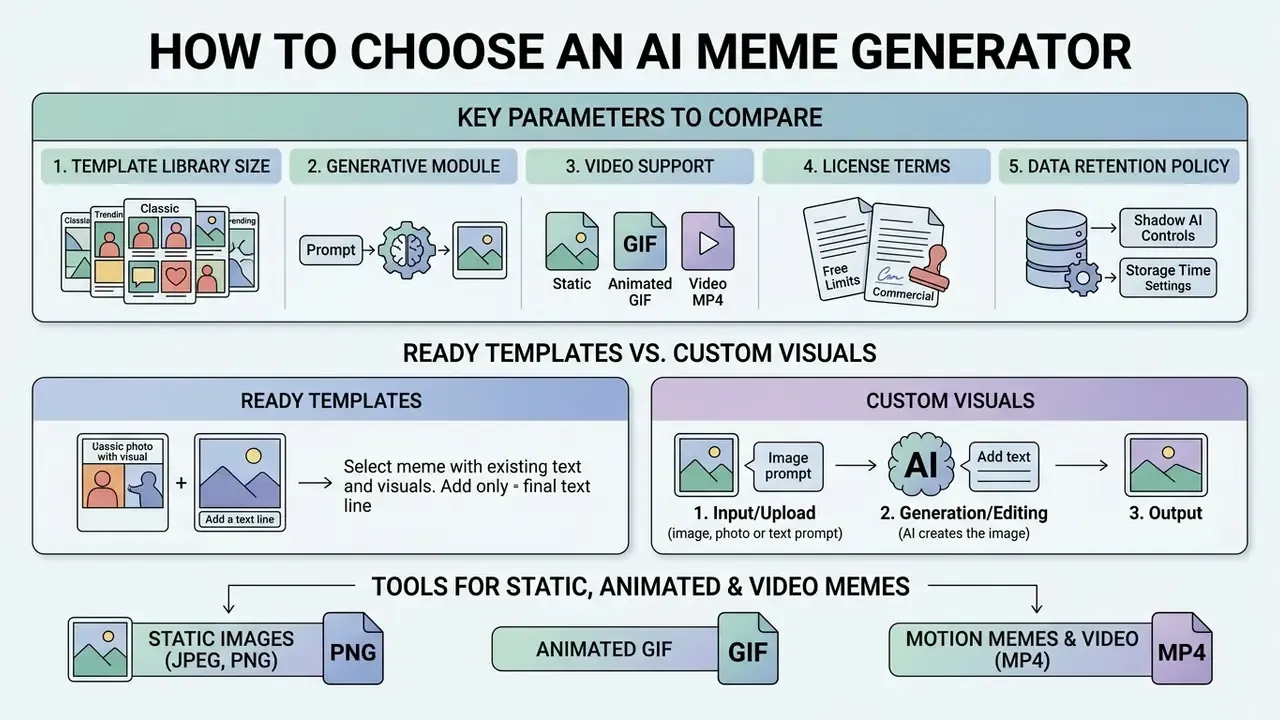
In short: compare five parameters, namely library size, presence of a generative module, video support, licence terms and data-retention policy.
The market ranges from simple web services with a set of static pictures to multimodal platforms with video generation and API integration. To choose the right ai image generator for memes, match platform capability against the business task. For visual quality context, the review of the best AI image generators is useful.
The selection criteria are straightforward: template catalogue volume, a generative module for building pictures from scratch, video and GIF support, licensing terms for the output, and the retention policy for uploaded data.
Ready Meme Templates Versus Custom Visuals
In short: a template carries a ready cultural association. That is its main advantage over unique AI art.
Trending ready templates show higher engagement than static AI art without a clear context. Research from 2024 finds that the meme format predicts engagement more strongly than the fact of AI generation, with the gain estimated at roughly 0.25 to 0.35 standard deviations, while purely neural visuals without meme structure do not lift engagement at all. This estimate comes from preprints and is sensitive to platform and metric, so read it as direction, not as a guaranteed coefficient.
«The CM50 dataset confirms that template memes carry culturally fixed associations, which models must account for when generating captions for specific formats.»
A separate research line shows the opposite effect too. In 2025 experiments, fully AI-generated memes scored higher on average for funniness, yet the single best memes still came from humans, and the human-plus-AI hybrid led on creativity and willingness to share. The divergence is a measurement artefact: perceived humour and actual virality are not the same variable.
For brands building a unique mascot or a proprietary style, the ai image meme generator path lets you create ai generated images memes without risking rights in celebrity photos or film stills. In regulated industries that argument often decides the purchase on its own. Note also that many teams search for ai image generation meme templates, expecting a hybrid: generated art rendered into a canonical layout.
Generating a Meme From an Image and Adding Text
In short: text binds to objects through face detection and region metadata. The quality of that binding is a measurable metric.
Handling unique user images requires precise anchoring of text layers to objects in the frame. Technically this runs through face detection and metadata markup (XMP:RegionInfo), which stores bounding boxes and the names or roles tied to them.
When a user uploads a file, an ai generated image meme system locates key points and places the text so it does not cover faces. The same logic applies to any ai generated photos meme workflow built on real staff photography.
The gap between single-image and multi-panel results explains a practical rule. The more panels, the higher the chance the caption drifts semantically, and the more a human check before publication matters.
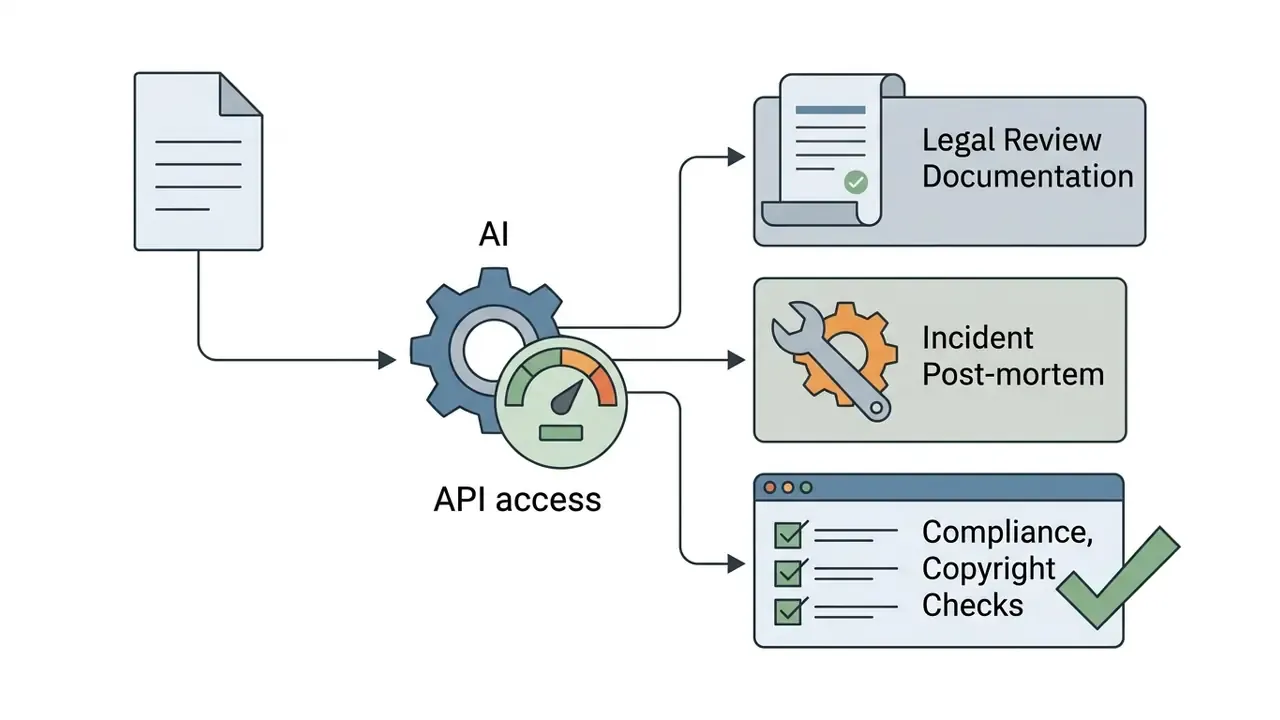
That check is non-negotiable for corporate memes and presentation assets. If the source came from an external channel and its origin is unclear, run the file through AI image detectors and AI reverse image search before publishing. It lowers the odds of using someone else's protected content.
Tools for Static, Animated and Video Memes
In short: three export formats solve three different jobs, namely speed, emotion and reach.
Social platforms demand varied formatting, so export flexibility matters:
For advanced animated work, professionals plug in specialised networks. High-quality video sequences often go through a luma ai video generator, cinematic scenes through luma dream machine, and platform duration and quality can be compared in the review of AI video generators. Camera-motion control in prompts (pan, tilt, dolly, rhythm) is documented in Google's official Gemini guides, and the same controls apply to motion memes. If a meme needs voice-over, the reference on AI voice generators helps, and to squeeze the final MP4 under platform limits, use a video compressor.
| Platform type | Text-to-meme | Template library | Custom uploads | Image from scratch | Video / GIF | API access | Data security and retention |
|---|---|---|---|---|---|---|---|
| Template services (e.g. Imgflip, Memegen) | Partial | Extensive (30k+) | Yes | No | Basic (GIF) | Yes | Public image hosting by default; verify privacy |
| LLM/VLM generators (e.g. Supermeme.ai) | Yes (full) | Medium (1000+) | Yes | Yes | No | Yes | Text moderation via external APIs; clarify data handling |
| Multimodal editors (e.g. Kapwing, Canva) | Yes | Extensive (2k to 5k+) | Yes | Yes | Extended | Limited | Project storage in cloud, deletion on request |
| Video meme generators (e.g. Meme Motion, Viggle) | Yes | Specific | Yes | Yes | Full (MP4, GIF) | Yes | Confirm retention period for uploaded video |
| API-first services (e.g. Magic Hour) | Yes | Fixed set (13) | Yes | Yes | Via image-to-video | Yes | Stated no-training, retention around 1 day, encryption |
Reading the table: for mass production of text memes on classic templates, Supermeme and Imgflip with API access are the practical picks. Complex video composition and branded content need multimodal editors with motion features. To embed generation inside your own product, choose API-first platforms with a transparent retention policy. If none of the three fits, that is usually a sign the underlying task is not a meme task.
Where AI-Generated Memes Belong: Social Media, Marketing and Communities
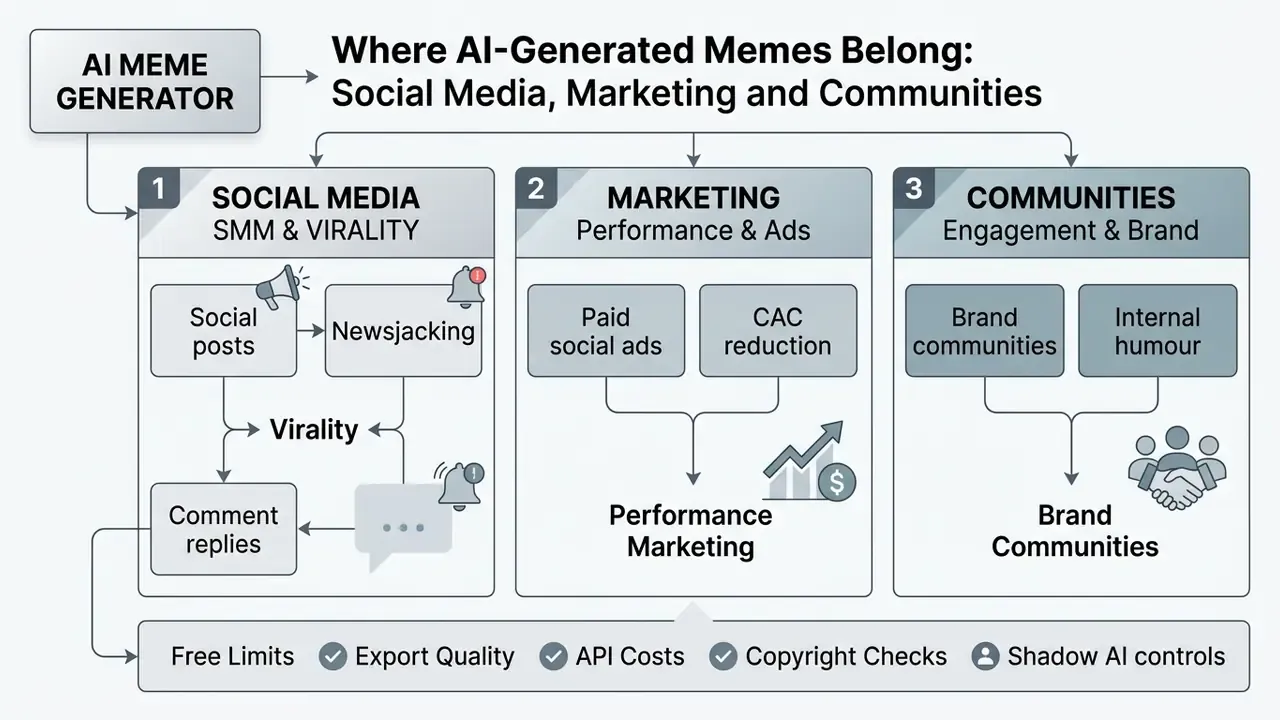
AI Memes for Brand and Marketing Content
In short: a meme compresses a complex product claim into one frame, which is exactly why it breaks banner blindness.
In B2B and B2C marketing, brand social memes help overcome banner blindness. Memes translate complex product claims into a legible joke: the audience pain appears visually, and the product arrives as the resolution of a conflict rather than as an ad unit.
B2B teams do run meme series about "sysadmin pain" inside cold email and LinkedIn outreach to lift open and reply rates. However, publicly verifiable figures for those gains do not exist in open sources; vendor pages state marketing claims without methodology. The correct approach is to test the meme creative in your own sequence on a sample of at least 500 to 1,000 addresses and compare it against a text control. Small samples will tell you a story either way, and the story will be wrong.
Community is a separate scenario. A dissertation study at Brunel University London (2026) argues that a meme succeeds inside a brand community when the author understands that community's expectations and engages consistently. In other words, the meme works as a format of participation, not only as an advertising carrier.
Free AI Meme Generator, Pricing and Commercial Use
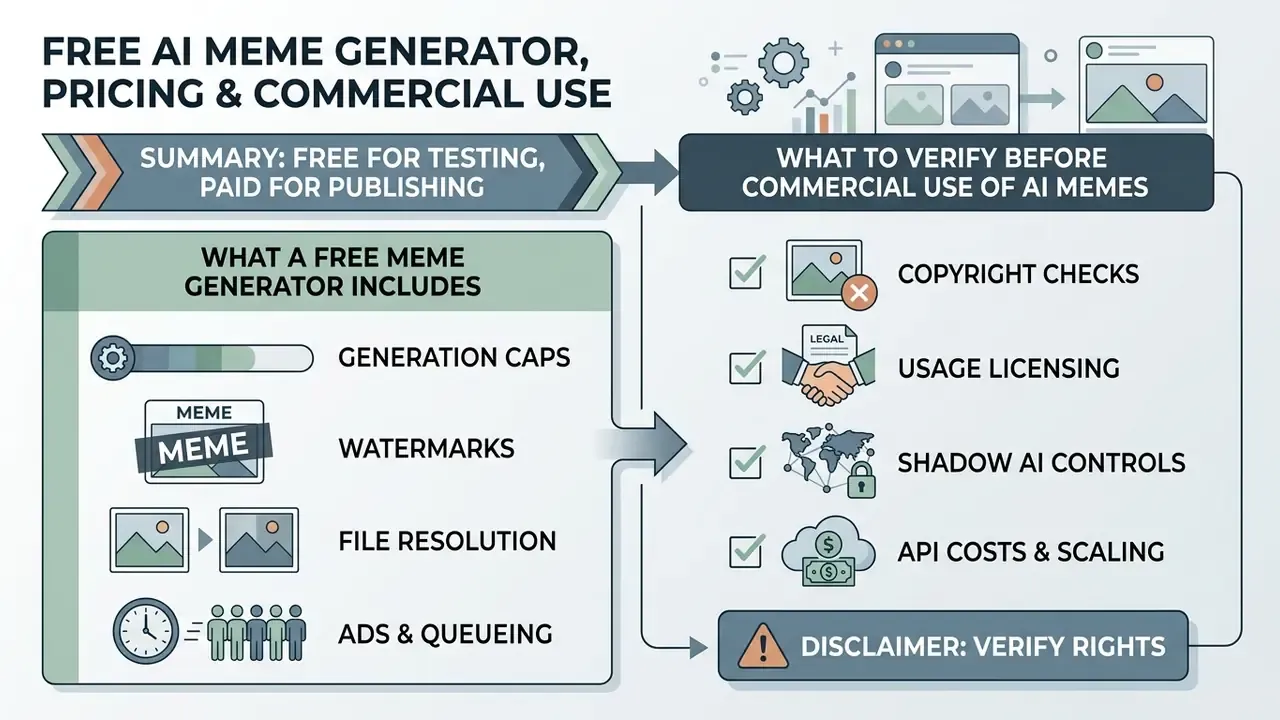
In short: the free tier is for testing, the paid tier is for publishing. The real difference is not speed but rights and resolution.
Cost and legal rights decide most commercial platform choices. Most services in the ai free meme generator category grant basic access with caps on generation volume, plus watermarks and reduced download resolution.
Moving to a paid plan or the API unlocks mass content automation, removal of platform watermarks and licensed commercial rights.
What a Free Meme Generator Usually Includes
In short: expect 3 to 25 generations, a watermark and a ceiling around 720p to 1K.
The free ai meme tier exists for personal use and functional testing. A review of popular platform terms in 2026 shows these standard limits:
- Generation caps from 3 memes per day (Magic Hour, no registration) and 5 per day (Viggle AI) to 10 per month (Supermeme) and 25 per month (Imgflip AI on GPT models).
- Watermarks most services stamp a logo into the corner automatically. Some platforms, including Imgflip AI and Magic Hour, claim no watermark even on the free tier, which you should verify against the current offer.
- File resolution export capped at 720p or 1K.
- Ads and queueing free users get low processing priority and promo blocks in the interface.
Export parameters compared:
| Export parameter | Free AI meme generator | Pro / API access |
|---|---|---|
| Maximum resolution | 360p to 720p (up to 1K) | Ultra HD (4K and above) |
| Watermark | Mandatory platform logo | None, or custom brand mark |
| GIF frame limit | Up to 160 frames (about 3 to 5 sec) | 1,600+ frames (smooth animation) |
| Maximum frame size | 360x360 (not HD) | Unrestricted (UHD) |
| Total resolution (frames x W x H) | About 12M | About 240M |
| Video segment length | Up to 24 seconds | Up to 240 seconds |
| Generation depth | 3 to 25 memes (single output) | Unlimited, batch output (6 to 8 variants per call) |
| Audio support | No (silent GIF only) | Yes (MP4 with voice and effects) |
| Commercial rights | Usually prohibited | Granted under paid-plan ToS |
If your organisation needs to model subscription and infrastructure spend, review the pricing section. To find tools that work without an account, see the overview of free AI image generators with no sign-up and the selection of free photo editors.
What to Verify Before Commercial Use of AI Memes
In short: three layers of rights need checking, namely the source template, the service licence and the API terms.
Using memes in ad campaigns, commercial brand SMM and product packaging carries legal exposure.
«Under U.S. Copyright Office guidance (2025), AI content without substantial human creative contribution is not protected by copyright, which directly affects commercial use of memes.»
Data Security, Privacy and Trade-Secret Protection
| Question for the vendor | What counts as an acceptable answer |
|---|---|
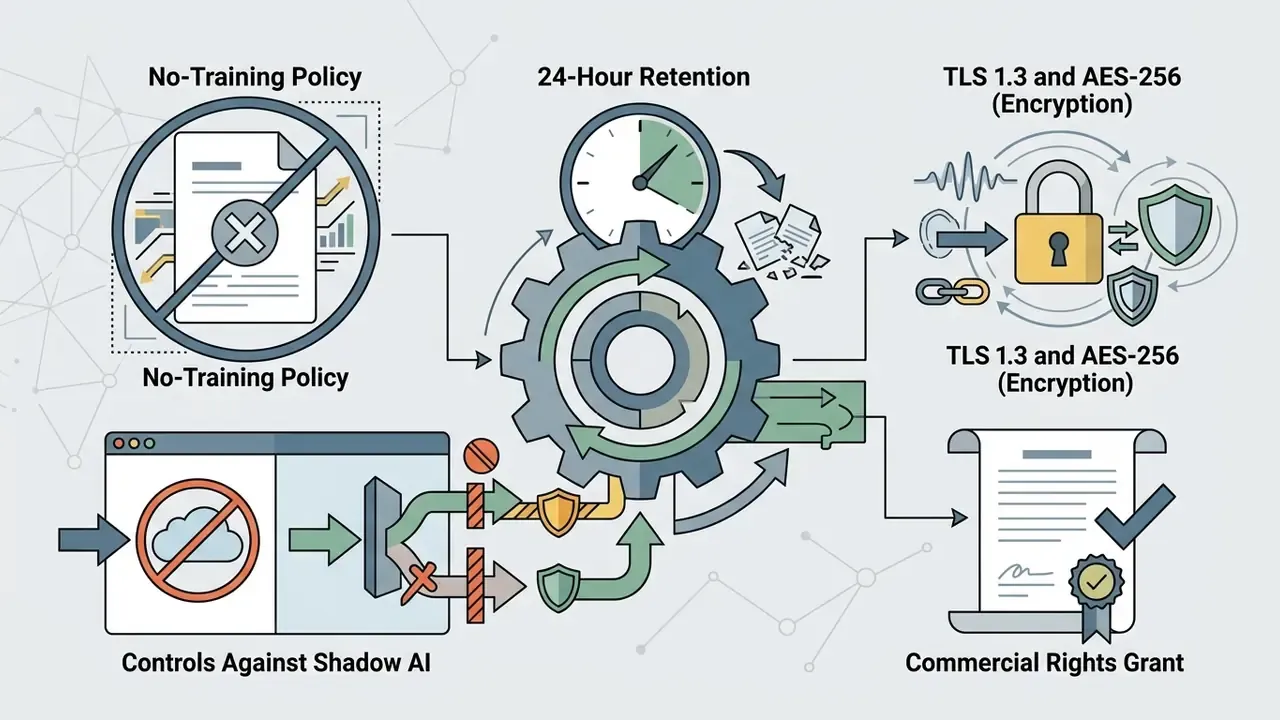
| Are uploads and outputs used for model training? | An explicit "no" in the ToS or DPA, not in an FAQ |
| What is the retention period for uploaded files? | 0 to 24 hours, or configurable retention |
| Is there a DPA, with GDPR and CCPA alignment? | A signable DPA plus a subprocessor list |
| Is there SOC 2 Type II or ISO 27001? | Report available on request under NDA |
| Where is data physically stored? | Named region, with a choice available |
| Are commercial rights in outputs transferred? | A distinct Commercial Rights Grant clause |
| Are SSO, SCIM and audit logs supported? | Mandatory for any enterprise perimeter |
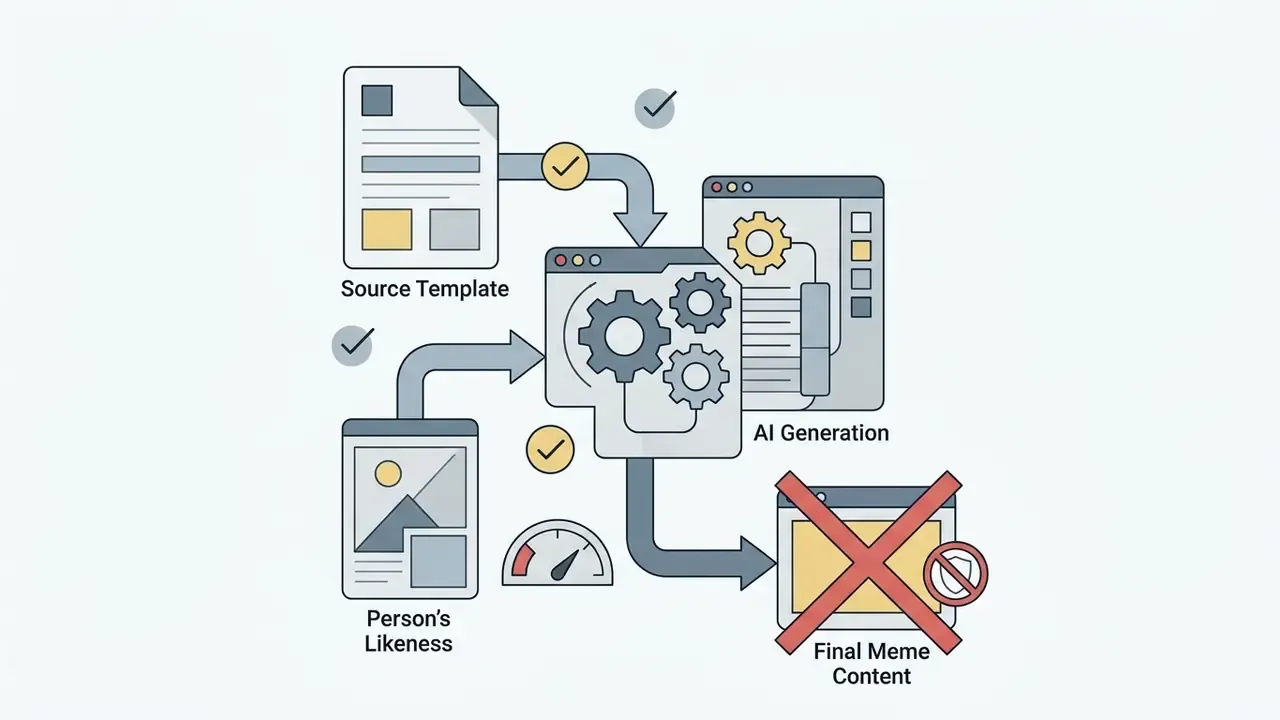
| How are images of people handled? | A documented consent and moderation policy |
Hidden total cost of ownership. Beyond the subscription, the model should include control costs: compliance review time before publication, legal checks on templates, moderation effort and rework of rejected variants. A workable formula is TCO = subscription or API + (review hours x rate) + rework cost + vendor audit. For many teams the review hours exceed the licence fee, which is usually the moment the conversation stops being about price.
When You Need Paid Access or an AI Meme Generator API
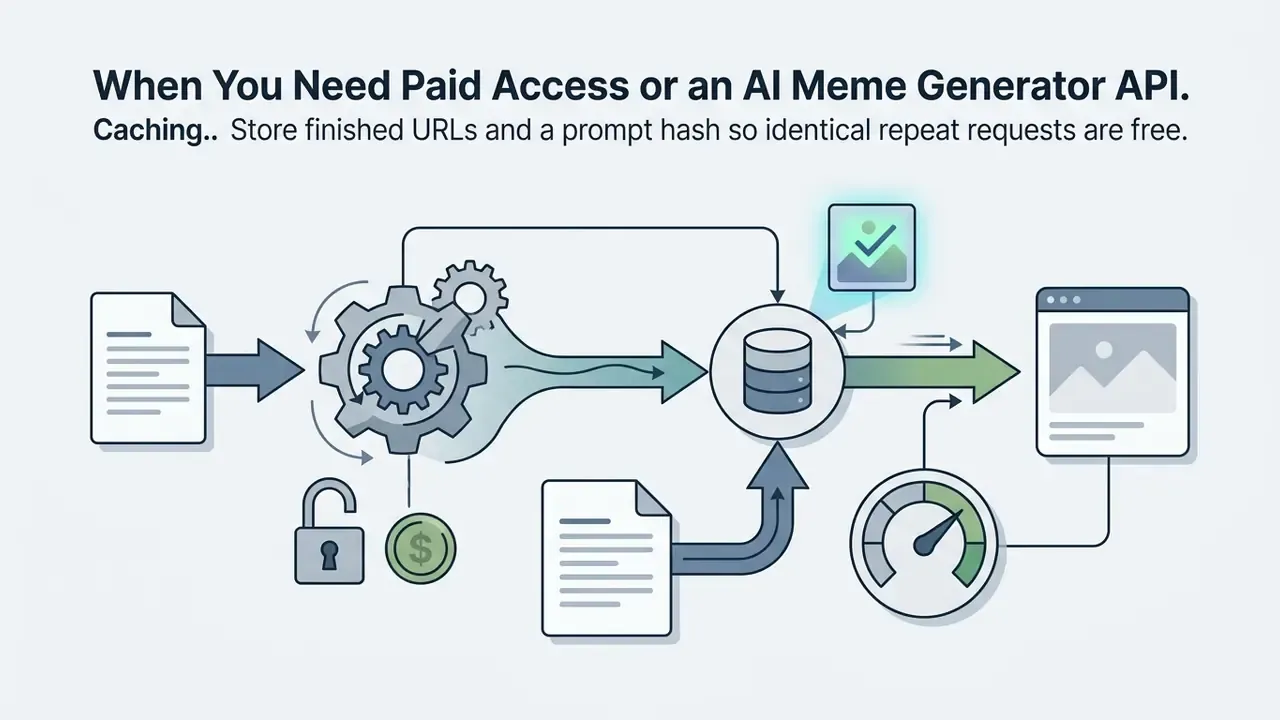
In short: the API matters when memes become part of a product or a flow, meaning autoposting, bots and creative A/B tests.
A paid subscription or API integration becomes necessary in these scenarios:
- SMM automation. Scheduled autoposting of memes to Telegram, X and LinkedIn through Make or Zapier.
- Corporate bots. Internal Slack or Teams bots that lift employee engagement.
- Performance marketing. Mass generation of 100+ meme ad variations for A/B testing in paid social.
- Content pipelines. Embedding meme generation into a CMS or editorial workflow as a discrete publication step.
An example API pricing structure (based on Supermeme):
- Solo plan: $6.49 per month for 100 API requests.
- Pro plan: 1,000 API requests per month for marketing departments.
- Startup plan: 2,000 requests per month.
- Enterprise: from 5,000+ requests with a dedicated server and custom-model support.
An alternative model is pay per result. API-first platforms price generation from roughly $0.009 per image, which suits irregular load. To compare provider economics, the breakdown of Google Veo video generation API costs is a useful reference point.
from meme_generator_sdk import Client
import os
client = Client(api_key=os.getenv("MEME_API_KEY"))
response = client.memes.generate(
    template="Drake Hotline Bling",       # or "Random" for a random template
    prompt="When you write manual CSS vs When you use AI tailwind generator",
    language="en",                        # 110+ languages supported
    variations=8,                         # 6-8 caption options per call
    search_web=False,                     # tie to fresh news hooks
    watermark=False,
    resolution="1080x1080"
)
print(f"Generated Meme URL: {response.url}")
# Response time: ~400 ms | Status: 200 OK | Cost: ~$0.009 / image
Typical response fields include id (task identifier), status (queued, processing, completed), url (link to the finished file), template (the template used) and credits_charged. For long-running jobs such as video memes, use either wait_for_completion=True or a webhook on render completion.
Practical integration guidance:
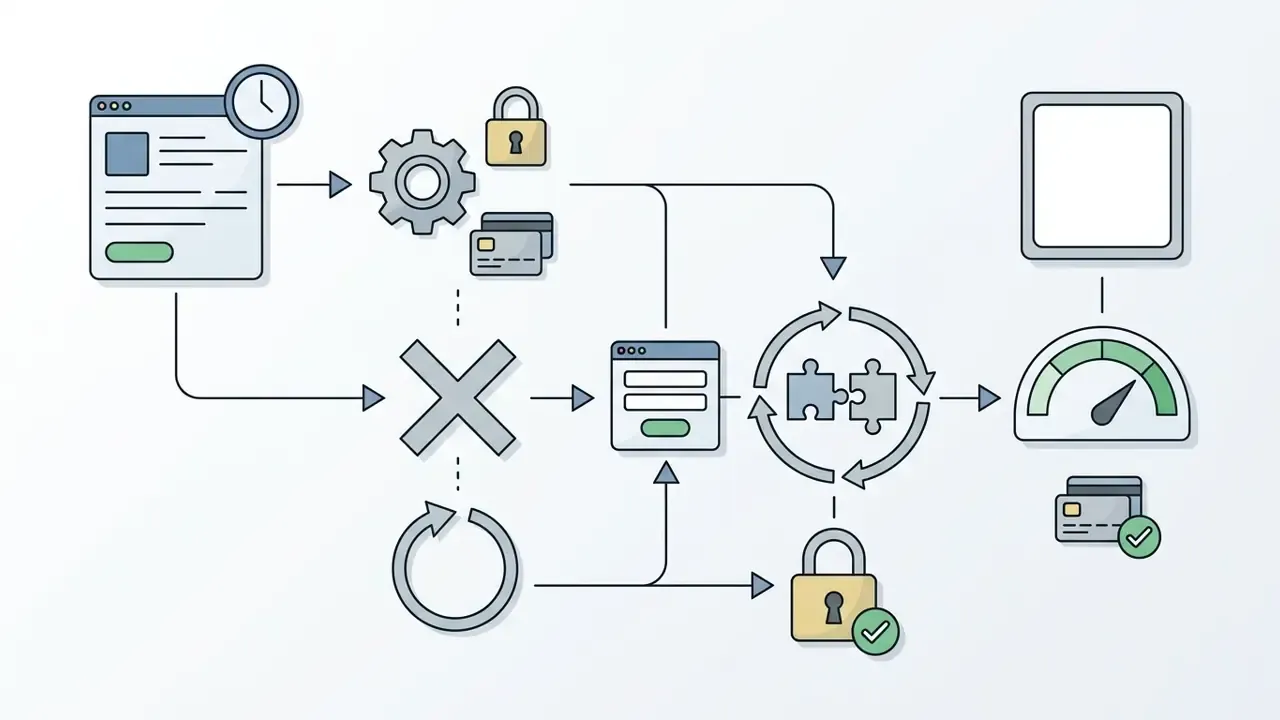
request_id so a retry after a timeout does not charge credits twice.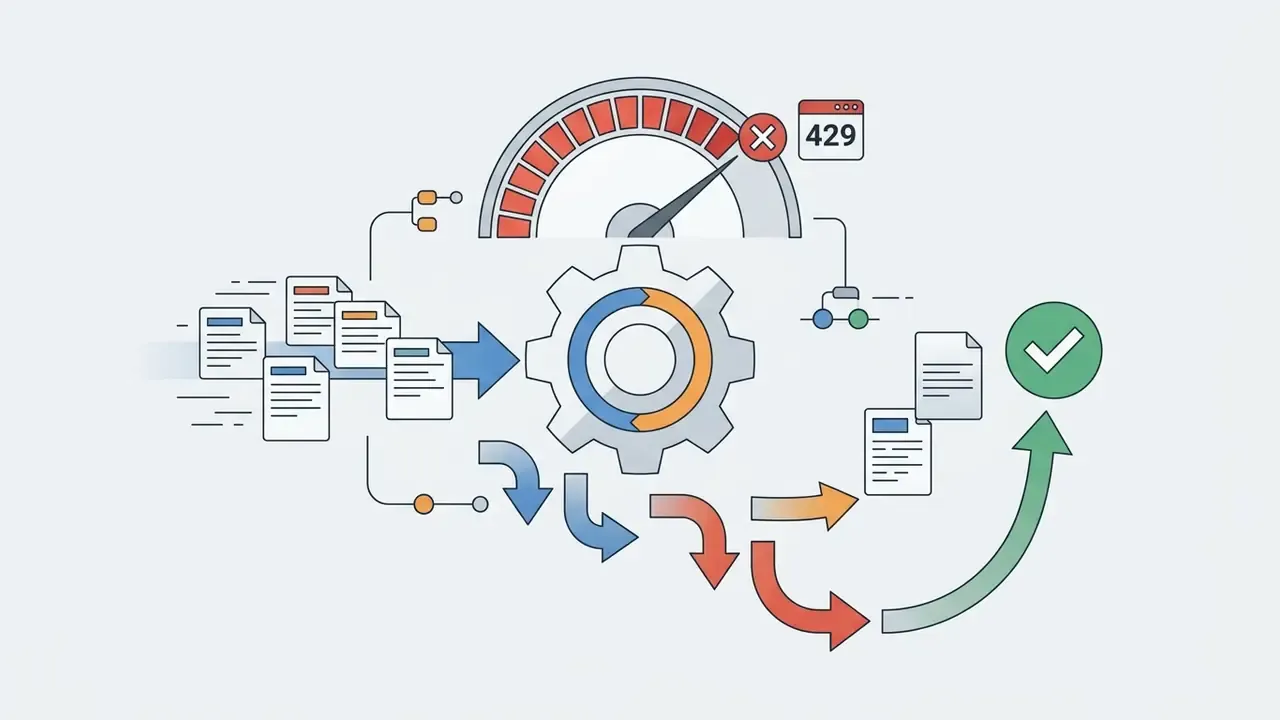
How to Make an AI Meme Funny, Clear and Publication-Ready
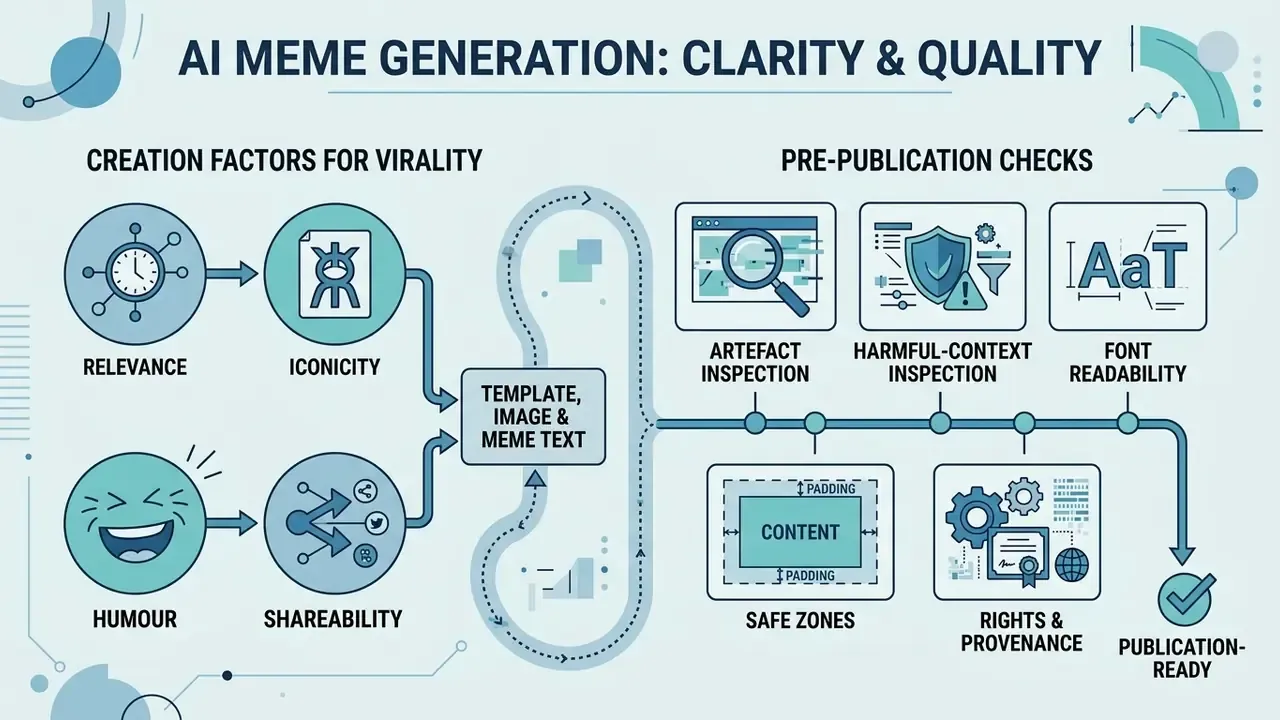
In short: virality rests on four factors, namely relevance, iconicity, humour and shareability. Readability is the hygiene minimum.
Even the strongest ai funny meme generator returns a weak result if the user ignores basic meme design. A viral meme needs a precise balance between visual, textual punchline and audience context.
Laboratory studies from 2022 found that intent to share a branded meme post rises significantly with four characteristics: relevance, iconicity (format recognisability), humour and spreadability. Virality analysis records the inverse factors too. Excess text and an unclear semantic centre reduce sharing, while close-ups, recognisable characters and expressive faces increase it.
Typography discipline, absence of neural artefacts and mobile adaptation are non-negotiable before publication.
Combining Template, Image and Meme Text
In short: the picture sets the emotion, the text delivers the turn. Literal duplication kills the joke.
The founding principle of meme construction is image-caption congruity. The character's expression or the mood of the frame sets emotional context, while the caption reveals an unexpected resolution, the punchline.
«According to the MEMECAP study (ACM/EMNLP, 2023), a meme performs better when the text creates mild semantic dissonance with the image rather than duplicating its content.»
A separate research line formalises this as measurable image-caption incongruity. Across 7,500 annotations, the degree of mismatch between expectation and statement predicted the "funny" rating better than any other feature. The practical rule follows: choose the template first, then write the caption to its logic, never the reverse.
Checking an AI-Generated Meme Before Download and Share
In short: three checks are mandatory, namely artefacts, mobile readability and platform format compliance.
Before publishing a meme in official channels, run this checklist:
- Artefact inspection. No distortion on faces, fingers or background lettering. Artefacts are easiest to find across five implausibility categories: anatomical, stylistic, functional, physical and sociocultural.
- Harmful-context inspection. Confirm that neither visual nor caption reproduces an offensive trope. Automated detectors are already accurate here:
- Square (1080x1080) for social feeds.
- Portrait (1080x1350) for organic Instagram posts.
- Vertical (1080x1920) for Stories, Reels and Shorts.
- Horizontal (1200x630) for messenger and blog previews.
If technical parameters raise questions, the support section is the place to start.
FAQ on AI Meme Generators
Below are answers to the questions users raise most often when working with neural meme generators.
Do I Need to Register to Create a Meme?
Most basic online tools let you generate and download memes without an account. Services such as Perchance AI, Memebuilder and Magic Hour offer quick no sign-up access. Magic Hour states 3 free memes per day without registration, and Memebuilder allows generation, editing and download with no account and no card. To compare such tools by quality and limits, see the review of free AI image generators.
Registration becomes necessary when you need to:
- Keep a cloud history of generated memes.
- Download high-resolution files without watermarks.
- Access the API or advanced stylisation settings.
- Work inside a team perimeter with SSO, roles and an audit log.
That last point is where most enterprise buyers land. Anonymous access is convenient right up to the first incident review.
Can I Create Animated and Video Memes?
Yes. Modern maker meme platforms support video meme generation. It runs either through a text prompt in text-to-video networks such as Kling, Runway and Veo, or through animated text and effects layered onto uploaded GIF and MP4 files. To understand this model class, use the reference on text-to-video AI tools and the selection of free AI video generators.
«The T2V-CompBench benchmark (CVPR 2025) confirms that physical modelling of complex interactions in video AI remains unsolved, although basic scenarios already reproduce reliably.» T2V-CompBench: Compositional Text-to-Video Generation Benchmark, CVPR (2025). https://arxiv.org/abs/2407.14505
Current weak spots are attribute binding, spatial relations, object counting and cause-and-effect. Even so, today's models are entirely sufficient for viral 5-second reactions and motion memes. You can also browse the hub for a structural catalogue of related solutions.
Are AI Memes Funny, and Are They Safe to Publish?
Randomness often helps here, since the funniest memes also depend on surprise. Research from 2025 suggests that fully AI-generated memes score, on average, no worse than human ones for humour, yet the top examples still come from people, and the best combined result on creativity and shareability comes from human-plus-AI collaboration. On safety, most services filter NSFW templates and moderate text. Final responsibility for anything published under the brand still sits with the company, so manual review before posting remains a required step, not a nice-to-have.
Are Memes Protected by Copyright, and Can I Use Them in Advertising?
Memes are often discussed under the fair-use doctrine, and many companies use them actively in marketing. That is not a blanket indulgence. The underlying still, photograph or character may be protected, and a real person's image requires consent for commercial use. The practical sequence is unchanged: check three layers of rights (template, then service licence, then API terms), record the creative's provenance, and obtain counsel's opinion for your jurisdiction and industry.
How Should a Bank or Fintech Classify a Meme Generator Internally?
Treat it as a low-materiality generative AI system with brand and data-leakage exposure. Give it one register entry, a named business owner, an approved use case list and a documented escalation path. The principle is simple: no evidence, no autonomy. If a tool cannot produce logs of prompts, templates and approvals, it should not run unattended in a regulated brand channel.
Disclaimer: This material is educational and informational only, and it is not legal advice. Before using AI output in commercial or advertising contexts, consult an intellectual-property lawyer. Before rolling public generators into corporate processes, agree the data-handling policy with your information-security and compliance owners. To browse the full knowledge base and terminology, open the hub.