An AI story generator app is a software application powered by large language models that transforms text prompts, genre parameters, and character profiles into structured narrative prose. Modern institutions and creative teams evaluate these digital tools to accelerate ideation, automate drafting workflows, and explore controlled interactive storytelling. Deploying AI for narrative creation requires strict governance, explicit human oversight, and verifiable risk management.
Enterprise governance perspective (read this if you buy, not just write)
"Controlled automation in creative workflows requires the same rigor as model risk management in financial services. Without explicit human review, structured audit trails, and clear decision boundaries, automated text generation introduces residual compliance risks." Marcus Hale, AI Governance Specialist. Marcus Hale, author.
What is an AI story generator app and what can it create?
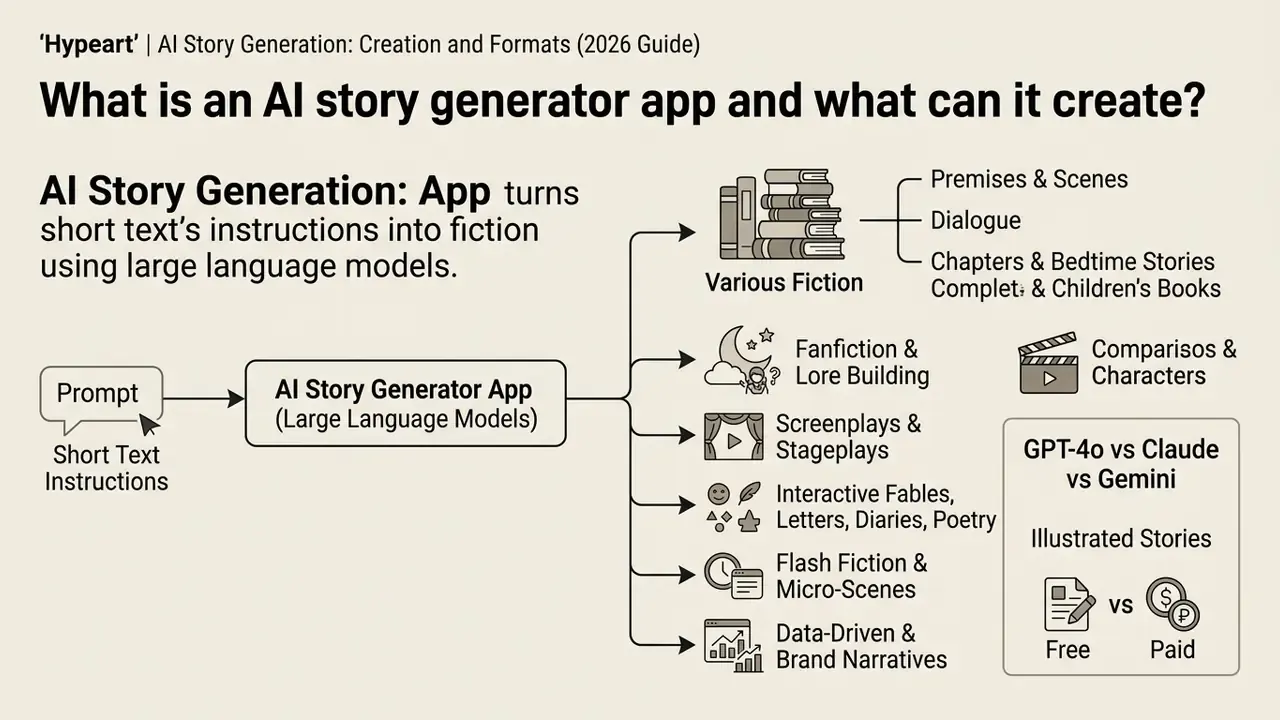
In two sentences: an AI story generator app turns short text instructions into fiction (premises, scenes, dialogue, chapters or complete manuscripts) using large language models constrained by user-set parameters. The category splits into idea generators, co-writers, and full story makers that draft end to end.
An ai story generator app is a digital platform that leverages generative neural networks to process user inputs and produce written fiction, narrative outlines, and creative scripts. The story generator is designed to streamline narrative construction across diverse media formats. Users can leverage an ai creative story generator to produce short fiction, character backstories, scene descriptions, and complete plot structures. Understanding the operational distinction between an idea generator, an ai short story writer, and a collaborative story maker is essential for selecting the appropriate tool.
An ai story creation pipeline typically separates ideation from text synthesis. An idea generator produces high-level premises, themes, and narrative hooks without expanding full prose. An ai short story maker generates complete scene drafts and dialogue sequences based on explicit prompt parameters. An AI co-writer acts as an interactive assistant, expanding user-submitted text and offering real-time stylistic suggestions. Selecting the right architecture depends on whether the goal is rapid brainstorming or end-to-end draft synthesis.
From a prompt to a finished story
The transformation of a raw text prompt into a finished narrative follows a structured multi-stage processing pipeline. First, the underlying language model interprets the input prompt to identify core themes, characters, genre constraints, and stylistic preferences. In simple systems, zero-shot generation produces text immediately from the initial query. Advanced platforms use hierarchical planning, where one module writes an explicit plot outline before a second module expands each scene.
In a controlled narrative system, prompt specificity directly dictates narrative coherence and structural integrity. Research by Teleki et al. (2025) in LLMs for Story Generation (ACL Anthology) demonstrates that multi-step pipelines built on structured outlines consistently outperform single-pass generation in maintaining long-term plot consistency.
"Systems with explicit plot planning and multi-agent decomposition consistently outperform single-pass generation on narrative coherence and reader preference."
The model evaluates candidate plot actions against the established premise to prevent logical contradictions. Once the draft exists, human editors refine the phrasing, adjust character dialogue, and correct pacing errors prior to publication. Practically, this means the correct request for a novel is never "write me a book." It is "write a beat sheet, then expand beat 3 into a 1,200-word scene."
Specialized narrative formats: from bedtime stories to screenplays
An advanced ai creative story generator supports highly specific narrative formats far beyond generic prose. Format selection changes vocabulary, paragraph rhythm and structural markup, so choosing it before generation saves an entire editing pass:
- Bedtime stories and children's books age-appropriate tales with an embedded moral, 300 to 800 words, simple vocabulary, repetitive rhythmic phrasing and a calm resolution designed for reading aloud.
- Fanfiction and lore building expansion of existing imagined universes through custom character backstories, alternate-universe timelines, ship dynamics, faction histories and canon-compliance notes.
- Screenplays and stageplays industry-standard script layout with scene headings (INT./EXT.), character cues, parentheticals, action lines and act breaks, ideal for rapid dialogue iteration.
- Interactive fables, letters, diaries and poetry epistolary narratives, diary-voice confessionals, verse stanzas with fixed meter, myths and fairy tales, plus branching adventure choices for interactive media and game dialogue trees.
- Flash fiction and micro-scenes 100 to 300 word pieces used as writing practice, newsletter content or social storytelling hooks.
- Data-driven and brand narratives case-style stories built around a factual outline, useful for marketing teams that need a human-readable arc around metrics.
Who benefits from an AI story creator?
- Novelists and fiction writers break through writer's block, generate chapter outlines, and expand multi-volume lorebooks without losing continuity between books.
- Parents and educators create custom bedtime stories, classroom reading material and comprehension exercises tuned to a specific age band and learning goal.
- Game designers and worldbuilders draft quest dialogue, item descriptions, faction histories, NPC barks and branching conversation trees at scale.
- Screenwriters and playwrights iterate scenes quickly and stress-test dialogue dynamics between conflicting characters before committing to a full draft.
- Hobbyists, students and new writers learn structure by comparing three generated variants of the same scene, then rewriting them by hand.
- Content, marketing and brand teams produce narrative-led campaign scripts and story-format posts that still require documented human editing before publication.
Short stories, fiction, plots and story endings
AI story generators support a wide variety of narrative formats, including flash fiction, multi-scene short stories, and episodic book chapters. Authors who also need visual companions for their scenes commonly pair drafting tools with AI art generators for cover concepts and character sheets. An ai fiction story generator lets authors experiment with complex story arcs by auto-completing scene transitions and testing alternative character choices. Specific modular components, such as an ai story ending generator, focus exclusively on resolving climactic conflicts and tying up loose plot threads.
While AI tools accelerate drafting, empirical evidence highlights clear boundaries between individual text quality and narrative diversity. A 2024 study published in Science Advances by Doshi and Hauser found that access to AI story ideas improved judged creativity and writing quality for less experienced writers, yet reduced overall narrative diversity across generated stories.
"AI-assisted stories were rated 26.6% better written and 15.2% less boring, while the collective diversity of content declined."
To maintain unique output, human authors must actively guide the system by injecting original subtext, unconventional plot twists, and distinct character motivations. A practical countermeasure: generate five candidate directions, discard the first two (they are usually the statistically obvious tropes), and hybridise the remaining three. Crude, yes. It works surprisingly often.
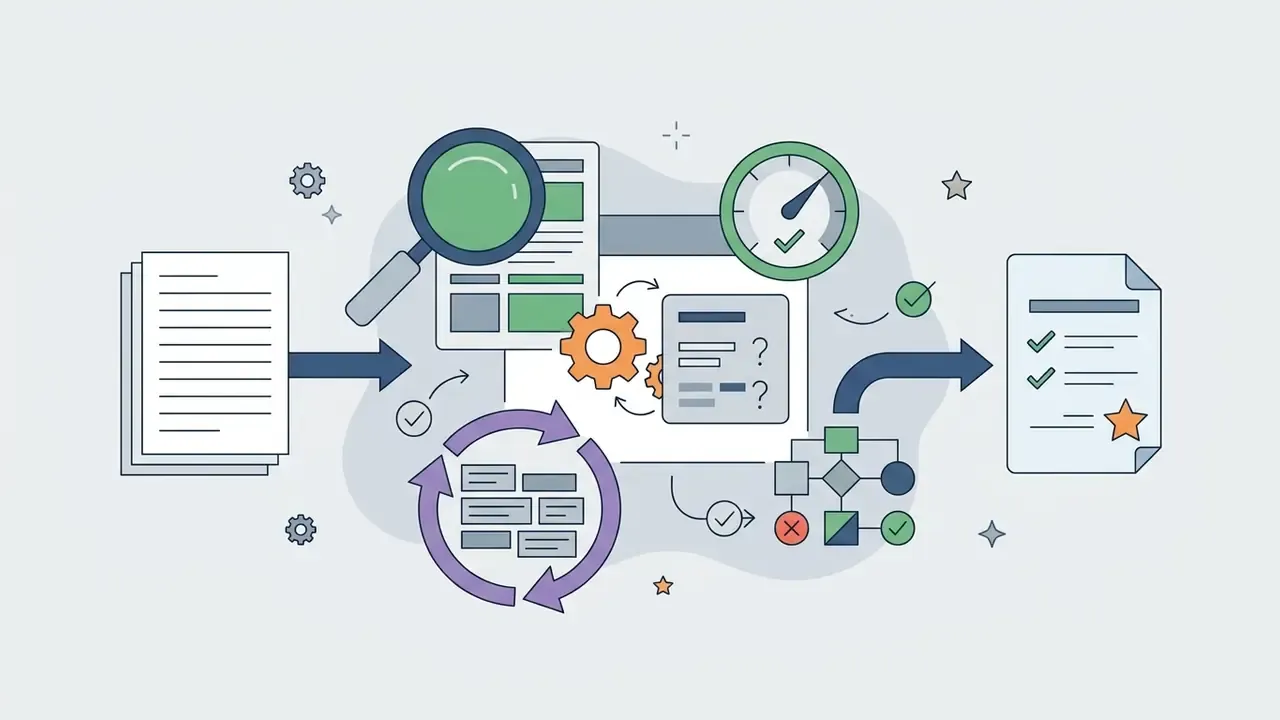
Figure 1 caption: the operational lifecycle of an ai story generator app, progressing from initial prompt definition to iterative human editing and final story export. Steps 3 and 4 form a loop: in production workflows the generate, review and edit cycle repeats per scene until the chapter is accepted.
How to choose the best AI story generator app
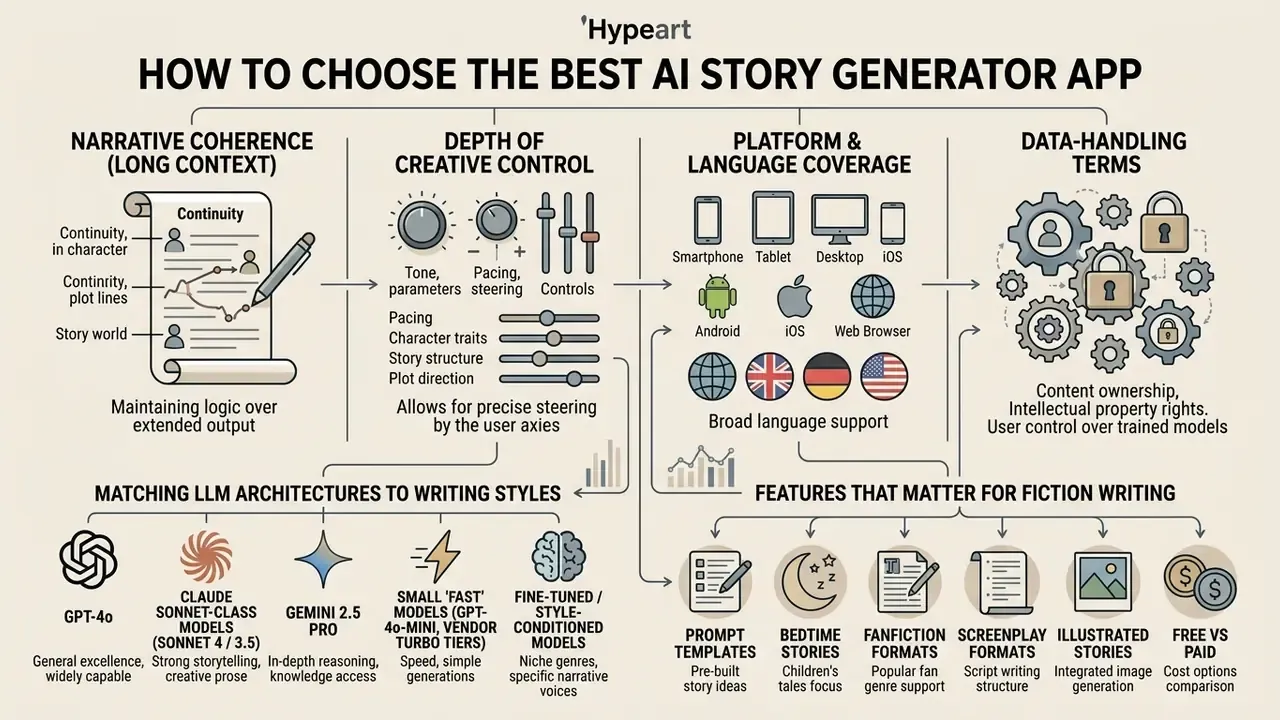
In two sentences: the decision rests on four axes, namely narrative coherence over long context, depth of creative control, platform and language coverage, and data-handling terms. Feature marketing is easy to fake, so run the same 300-word benchmark prompt through every candidate and compare outputs side by side.
Selecting the best ai story generator 2025 shortlist, and carrying that comparison into 2026, requires evaluating narrative coherence, user control depth, device accessibility, and data safety terms. A robust ai story maker app must balance automated text generation with granular editorial controls. Organizations and individual creators should assess whether a platform supports structural planning, custom character memory, and multi-format export capabilities before committing to an architecture.
Evaluation criteria must focus on how effectively the system maintains long-form context and logical consistency. That means testing performance across diverse genres, dialogue complexity, and scene transitions rather than reading a feature grid. Writers should prioritize tools with inline editing suites, so human intervention happens inside the draft instead of in a separate document.
Mobile app, Android app or online story generator
Choosing between an ai story generator android app, an iOS application, or a browser-based online platform depends on your workflow requirements. An ai story generator app android build offers mobile convenience, touch-optimized prompt interfaces, and offline drafting. Native mobile applications excel at rapid idea capture and short story generation on the move.
Online web-based story generators offer greater processing flexibility, cross-device synchronization, and advanced desktop editing interfaces. Web applications typically integrate complex multi-agent planning frameworks that benefit from larger screen layouts and side-by-side outline views. Updated framing: platform choice is a usability and reach trade-off, not a narrative-quality factor. The same model produces the same prose on a phone and on a laptop. W3C accessibility guidance for mobile is relevant only to interface usability: WCAG applies equally to mobile web content, web apps, native apps and hybrid apps, while W3C Mobile Web Best Practices asks for thematic consistency across devices and testing on real hardware (W3C Mobile Accessibility, https://www.w3.org/WAI/standards-guidelines/mobile/). In practice, web builds win on breadth of device support and side-by-side outline editing, while native builds win on quick capture, notifications and offline drafting.
Matching LLM architectures to writing styles
Different underlying language models excel at distinct creative tasks, and the better apps let you switch per step instead of locking you into one engine:
- GPT-4o fast plot drafting, high-speed ideation, snappy conversational dialogue and structural rewrites.
- Claude Sonnet-class models (Sonnet 4 / 3.5) richest atmospheric description, complex emotional subtext and nuanced character voices, the usual choice for literary passages.
- Gemini 2.5 Pro ultra-long context processing, retaining memory across multi-chapter book structures and large lorebooks.
- Small "fast" models (for example GPT-4o-mini or vendor turbo tiers) cheap brainstorming, title lists, twenty premise variants in seconds. Not final prose.
- Fine-tuned or style-conditioned models available on enterprise tiers, trained on your own sample chapters to imitate an established authorial voice.
A pragmatic workflow: brainstorm with a fast model, outline with a long-context model, write scenes with a description-strong model, then run a final consistency pass with the model that holds the whole manuscript in context.
Features that matter for fiction writing
Professional fiction writing requires AI features that extend beyond simple word prediction. Key capabilities include explicit character profiling, plot outline generation, world-building rule engines, and chapter-by-chapter scene development. High-quality tools let writers define character motivations, moral alignments, and backstories that persist throughout the narrative.
Effective dialogue generation is another critical benchmark. Weak models produce formulaic, emotionally flat lines with no subtext. Advanced platforms use specialized prompt controls or dedicated dialogue agents to keep character voices distinct. Integrated world-building controls also maintain environmental rules, historical timelines, and geographical consistency across chapters. Look for a "continue writing" function that appends rather than restarts, an inline "edit with AI" bubble for selected passages, and per-chapter version history. That last one sounds boring until you delete a good paragraph at 1 a.m.
Visual storytelling and AI image integration
Modern platforms increasingly function as an ai story generator with pictures, automatically producing scene illustrations, character concept art and book covers alongside the narrative text. By converting prose passages into diffusion-model style tags (watercolour, cinematic, ink-line graphic novel, storybook gouache), authors can self-publish fully illustrated children's books and visual novels from a single editor. Three practical checks before you rely on this feature: whether character appearance stays consistent across images through reference or seed locking, whether cover-size and print-resolution exports exist, and whether the image licence matches the text licence on your plan. Teams building complete media packages often combine story drafting with an AI voice generator for audiobook narration, an ai lip sync tool for talking-character promos, and an animation maker for motion versions of key scenes.
How to evaluate generated story quality
Evaluating generated story quality requires a structured rubric covering four dimensions: narrative uniqueness, tone consistency, dialogue naturalness, and plot coherence. Updated sourcing: published evaluation datasets now formalise exactly these axes rather than relying on gut feeling.
| Evaluation parameter | Basic AI generator | Advanced AI story maker | Enterprise co-writing platform |
|---|---|---|---|
| Platform availability | Web or Android app | Android, iOS and web | Cross-platform web and API |
| Model selection | Single hidden default model | Choice of GPT-4o, Claude Sonnet, Gemini 2.5 Pro | Model routing plus custom fine-tunes |
| Prompt granularity | Single-text query box | Structured fields (genre, tone, roles) | Multi-agent hierarchical prompts |
| Character memory | Limited to current scene | Persistent character profiles | Global lorebooks and state tracking |
| Narrative formats | Prose only | Prose, screenplay, poetry, fable, diary | All formats plus custom templates and house style |
| Audience and language targeting | None or English only | Age bands plus 20+ output languages | Locale packs, glossaries, tone-of-voice rules |
| Illustration support | Text only | Scene images and cover generation | Consistent character refs plus print-ready exports |
| Long-form support | Short scenes (under 1,000 words) | Chapter-by-chapter outlines | Multi-chapter book generation |
| Editing tools | Basic text overwrite | Inline rewrite and node branching | Version control and structural audit |
| Commercial rights | Restricted or unverified | Standard user ownership | Explicit commercial licence |
The practical takeaway from the matrix: the jump that changes output quality is persistent character memory plus long context, not the number of listed genres. If a tool advertises 200 genres and a 4,000-token window, expect a competent scene and an incoherent chapter three.
How to create a story with AI step by step
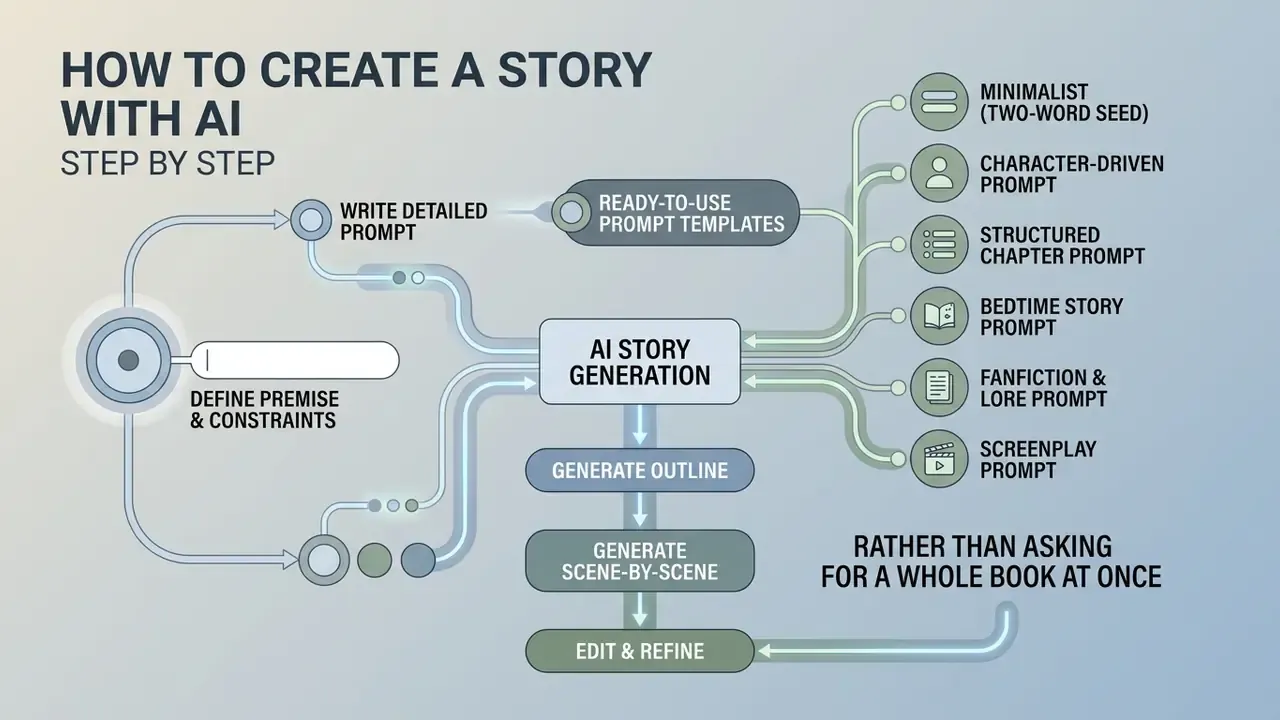
In two sentences: define the premise and constraints before you generate a single word, then work outline, scene, edit, rather than asking for a whole book at once. Every published workflow, academic or vendor, reduces to the same generate, review, edit loop.
Learning how to create stories with ai requires a systematic approach to prompt construction, parameter setting, and iterative editing. Users who want to ai create a story or create an ai story get better results by structuring inputs logically instead of relying on unconstrained generation. Whether your goal is to create a story ai draft or create stories ai scripts, a standardized process keeps narrative control with you.
The workflow begins with concept definition and parameter calibration. Authors who use ai to create story drafts should define the primary conflict, main characters, and setting before requesting long-form prose. An iterative generate-and-edit sequence limits hallucination and keeps thematic alignment across scenes.
Write a detailed prompt or start with two words
Prompts can range from an ai story generator two words input to detailed multi-paragraph instructions. Ultra-short prompts such as "desert mystery" rely on the model's default training weights to fill in plot details, genre conventions, and character arcs. Fast, yes. Also generic, because the model reaches for the median of everything it has read.
Detailed prompts provide explicit constraints that steer the AI toward a specific vision. A comprehensive prompt should specify the protagonist, core goal, primary obstacle, narrative tone, and structural format. Updated sourcing: rather than a generic prompt-engineering claim, the measurable benefit of richer inputs is documented experimentally.
"Participants who used up to five AI ideas produced stories 8 to 9% higher in novelty and up to 26.6% better written than unaided work."
Ready-to-use prompt templates
- Minimalist (two-word seed) "Desert mystery" yields a basic atmospheric premise you can refine.
- Character-driven prompt "A cynical detective with the ability to hear memories investigates a disappearance in a rain-slicked steampunk city."
- Structured chapter prompt "Write Chapter 1 of a sci-fi thriller. Protagonist: Dr. Elena Vance. Setting: sub-ice station on Europa. Conflict: main power fails, revealing anomalous heat signatures outside the airlock. Tone: tense, claustrophobic. POV: third-person limited, present tense. Length: 1,400 words. End on an unresolved threat."
- Bedtime story prompt "A 500-word bedtime story for ages 5 to 7 about a shy lantern-fish who guides lost travellers home. Gentle tone, repeated refrain, moral about courage, calm ending suitable for reading aloud."
- Fanfiction and lore prompt "Write an alternate-universe scene where two rival mages from the same academy are forced to share a research post. Keep canon magic rules: spells cost memory. 900 words, dialogue-heavy, slow-burn tension."
- Screenplay prompt "Format as a screenplay. INT. NIGHT BUS, 3 a.m. Two strangers realise they are attending the same funeral. 2 pages, subtext-driven, no exposition dumps."
- Ending generator prompt "Give me three distinct endings for the story above: one tragic, one ironic, one quietly hopeful. Each 150 words, each must reuse the lighthouse motif."
Set genre, tone, characters and story world
Calibrating narrative parameters before generation establishes clear boundary conditions for the language model. Selecting a genre such as science fiction, historical romance, or psychological thriller directs the AI toward the matching stylistic conventions and vocabulary. Defining the emotional tone, whether dark, whimsical, tense, or comedic, keeps atmospheric delivery consistent. A workable order of operations: premise and hook, then genre and style calibration, then a tone preset (dark and gritty, epic and heroic, whimsical and light, mysterious and atmospheric), then world and setting, then characters, then themes, then plot structure.
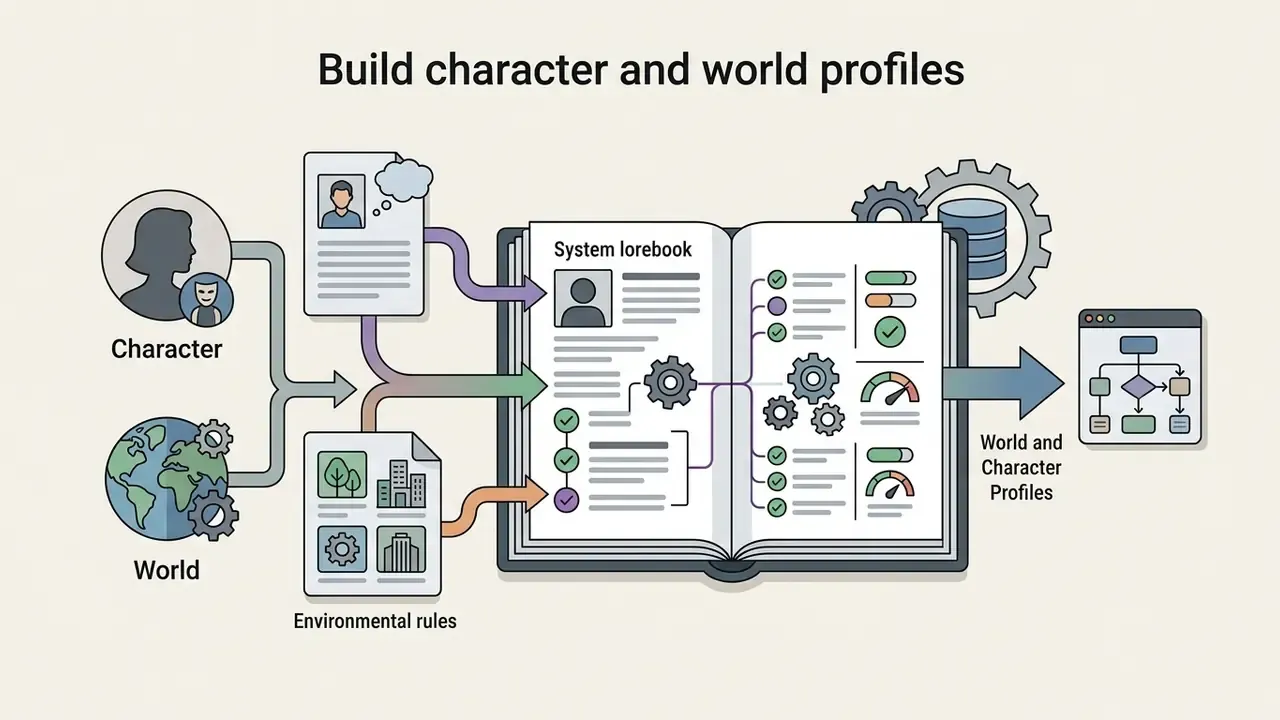
Character and world-building parameters anchor the narrative state. Authors should document character names, primary motivations, physical traits, and interpersonal relationships inside the tool's control interface. For complex fantasy or sci-fi settings, specifying environmental rules and societal structures prevents contradictory elements from appearing in later chapters.
Demographic and multilingual controls
To ensure output suitability, calibrate targeting controls before generation:
- Target audience age specify bands such as children (ages 5 to 8), middle grade (9 to 12), young adult (13 to 18), adult (18+) or mature audiences (40+) to tune vocabulary complexity, sentence length and thematic boundaries automatically.
- Narrative perspective first person ("I"), third-person limited, or third-person omniscient, plus tense (past or present), which changes pacing more than most writers expect.
- Story length band 100 to 200 words for a micro-scene, 200 to 500 for flash fiction, 500 to 1,000 for a complete short story, 3,000 to 4,000 for a novella chapter.
- Multilingual output generate or translate full manuscripts across 20+ languages (English, Spanish, Portuguese, French, Italian, German, Russian, Japanese, Mandarin, Filipino and more) while preserving localised idioms. Always have a native speaker review published translations.
- Content boundaries explicitly exclude themes you do not want, such as violence, romance or religious references. Negative constraints work better than hoping the model infers them.
Generate, edit and develop the next chapter
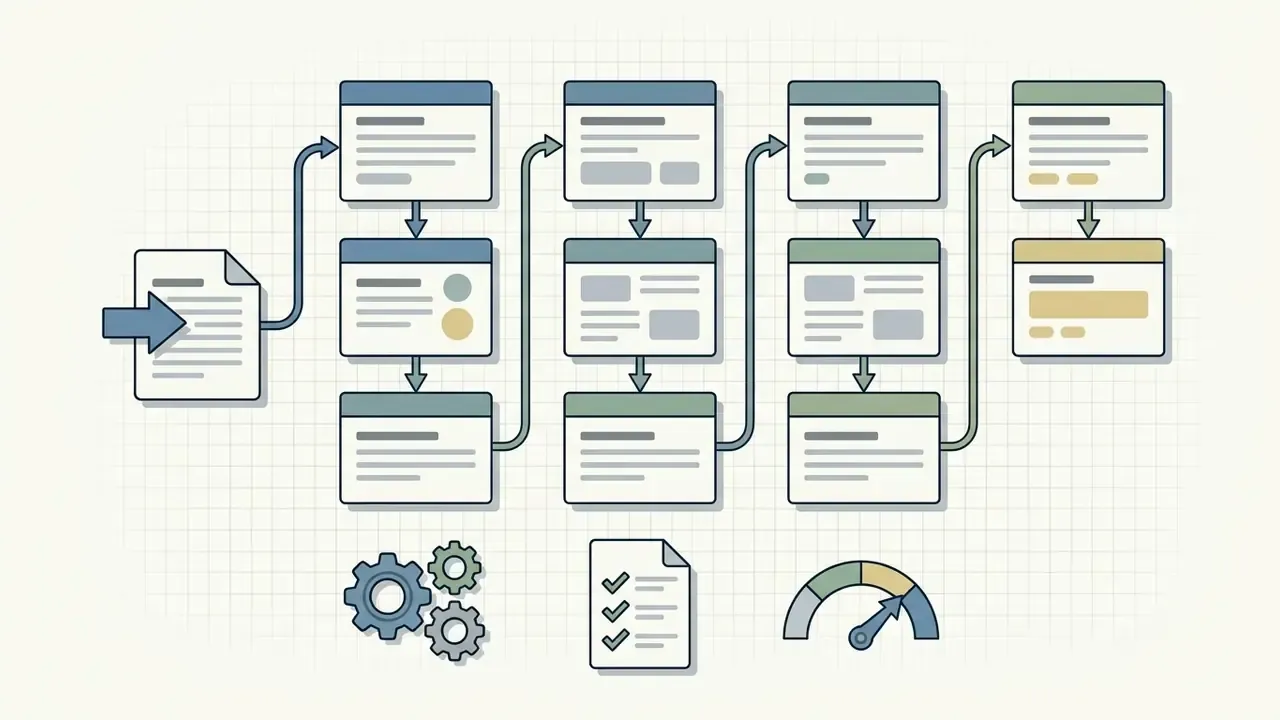
Generating long-form fiction requires incremental, chapter-by-chapter expansion instead of single-pass book generation. The author requests a detailed chapter outline based on the core premise, reviews the proposed story beats, then generates one scene at a time. This modular approach allows editorial corrections before plot errors cascade into later sections.
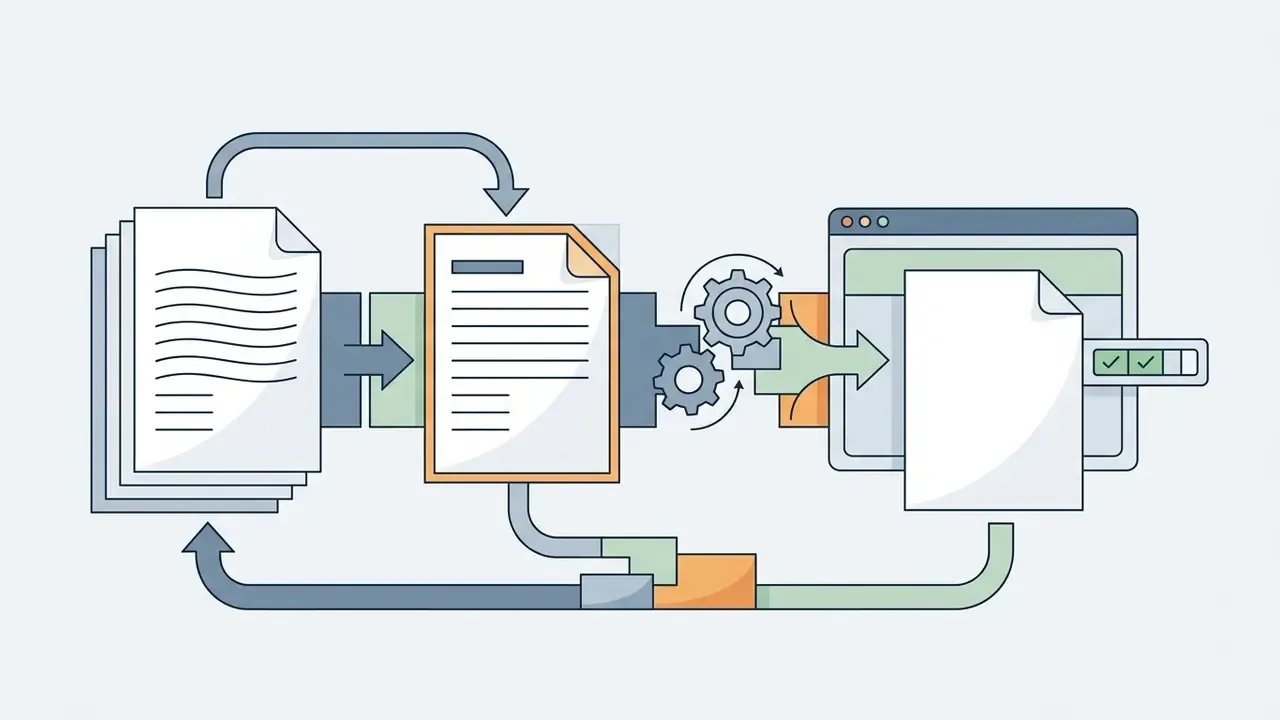
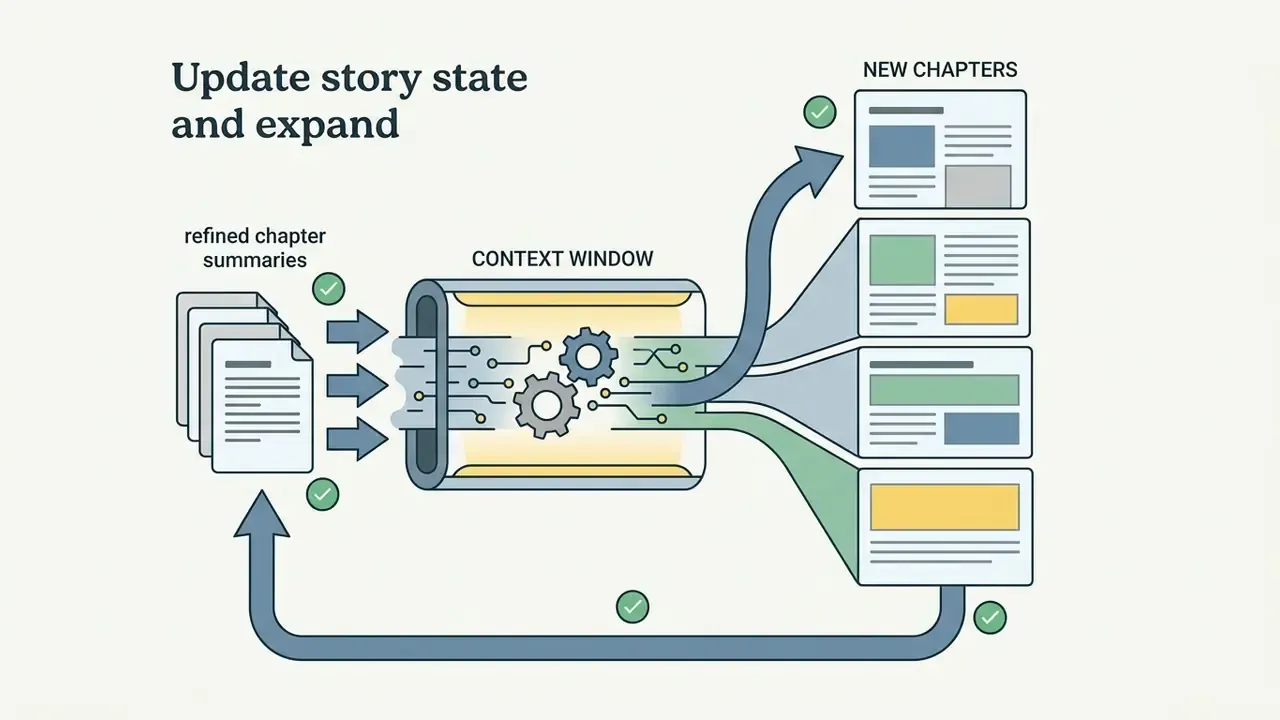
Editing generated text is not optional cleanup, it is the production step that decides quality. Authors should tighten pacing, deepen emotional subtext, and delete repetitive phrasing. Once Chapter 1 is refined, the updated narrative state passes into the prompt context for Chapter 2, which keeps continuity across an expanding manuscript.
Practical discipline for book-length work: keep a running story bible (characters, unresolved threads, timeline, established world rules) and paste its summary into every new chapter prompt. Then run a cross-chapter consistency pass at the end, when the whole manuscript can be checked against that bible.
Creative controls for characters, plot and storytelling
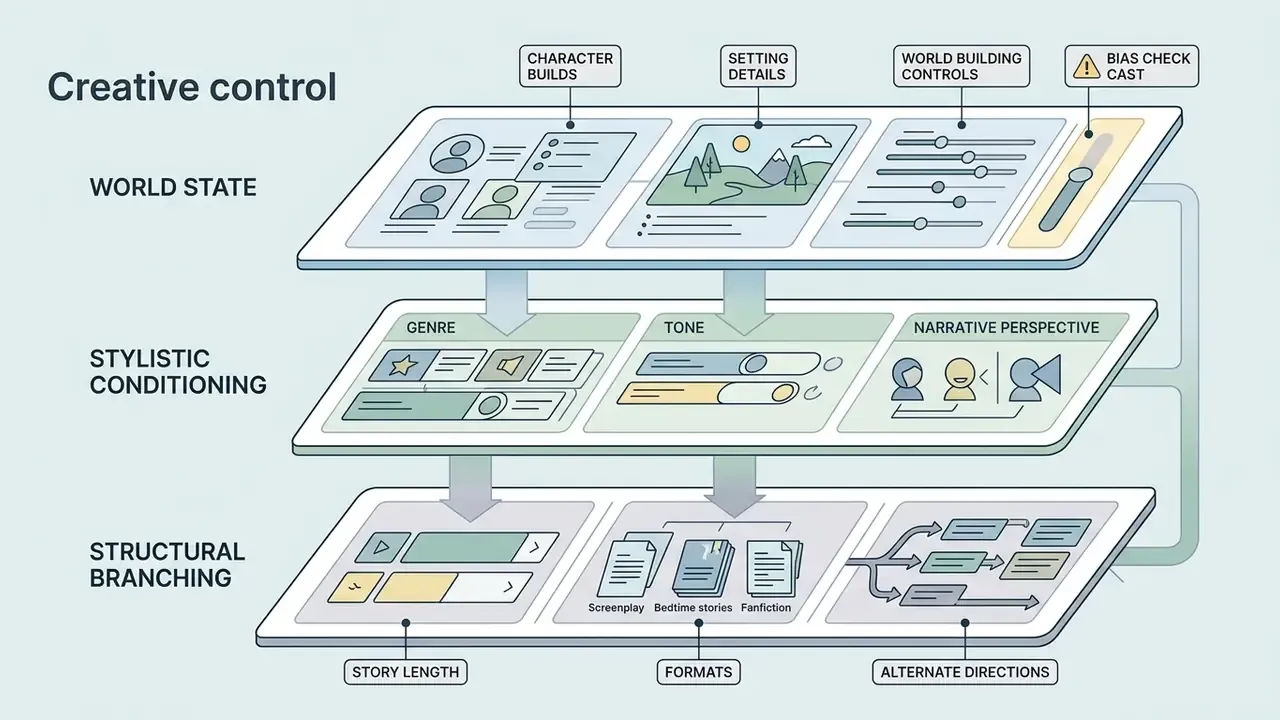
In two sentences: creative control operates on three layers, namely world state, stylistic conditioning and structural branching. Mastering those layers is what separates a usable draft from a formulaic one.
Maintaining creative authority over an ai fiction story generator means using the advanced control mechanisms built into modern narrative platforms. An ai story telling generator exposes distinct settings for character behaviour, plot pacing, and authorial style. Handled well, those controls produce nuanced fiction instead of predictable trope chains.
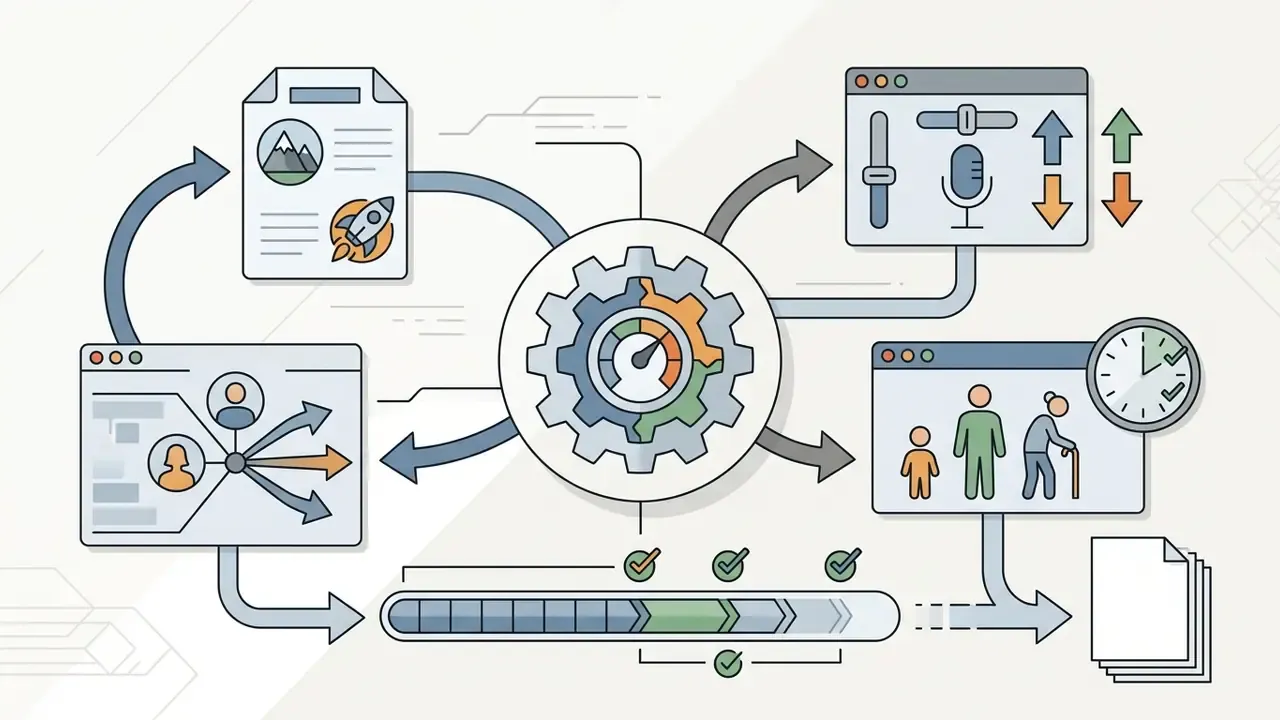
System controls generally operate across three layers: world state tracking, stylistic conditioning, and structural plot branching. By adjusting these variables, authors steer generated drafts toward their actual creative vision. That control becomes essential when managing multi-character arcs or writing dense genre fiction.
Character, setting and world building controls
Character continuity mechanisms stop the AI from rewriting established backstories or behavioural traits between scenes. Advanced platforms use persistent memory banks or logic-based state tracking to record character assets, relationships, and inventory items. Updated attribution: formalising story worlds as persistent facts, initial configurations and state changes is a documented approach in narrative-logic research, reflected in the planning-based systems surveyed by Teleki et al. (LLMs for Story Generation, ACL Anthology, 2025, https://aclanthology.org/). The effect is that character choices stay consistent with prior narrative events.
Setting and world-building controls enforce environmental constraints across generated chapters. Authors can choose top-down world-building, defining global historical timelines and societal laws, or bottom-up world-building, expanding outward from a single focal location. Explicit world rules prevent the model from inventing contradictory magic systems or technological capabilities halfway through Act Two.
Bias warning, check your cast before you publish. Default character generation is not neutral, and representation gaps appear at scale:
"Across 23,800 AI-generated stories, female characters appeared in only 2.2% of cases versus 40.6% for male characters. When models chose gender explicitly, they selected male roughly 95% of the time."
The operational fix is simple and costs nothing. Specify names, genders, ages, cultural context and relationships explicitly in the lorebook instead of leaving them to model defaults. Then audit the finished manuscript for who speaks, who acts, and who is merely described.
Genre, tone and narrative perspective
Genre controls adjust vocabulary, sentence structure, and trope selection to fit specific literary markets. Configuring a romance setting prioritises emotional dynamics and dialogue subtext, whereas a thriller configuration favours action verbs and suspenseful pacing. Authors can also blend genres into hybrids such as cyberpunk noir or historical horror.
Tone and narrative perspective define the authorial voice of the manuscript. Writers who plan to adapt a finished scene into a trailer or short film usually move the polished text into text-to-video AI pipelines, where tone tags translate into shot mood. Platforms allow explicit perspective selection, including first-person ("I"), third-person limited, or third-person omniscient narration. Setting the tone parameter, for example melancholic, heroic, or cynical, keeps word choice aligned with the intended emotional atmosphere across scenes.
Story length, formats and alternate directions
Managing story length means configuring token limits and structural generation targets. For short stories, a 1,000 to 2,000 word target keeps pacing tight and resolution clean. For novel-length projects, the system relies on recursive chapter expansion, holding summaries of past scenes to stay inside the active context window.
Branching narrative controls let authors explore alternate plot directions at critical junctions. If a scene outcome feels predictable, ask the AI for three alternative character decisions and compare them. Updated sourcing: action-guided generation is the better-documented mechanism for controlled branching.
Useful branching hygiene, borrowed from graph-based narrative research: one node per story beat, no more than three identical consecutive beats shared between storylines, the original story must remain traceable as one path, and no loose ends left unresolved at the merge point.
Can you use AI-generated stories for commercial content?
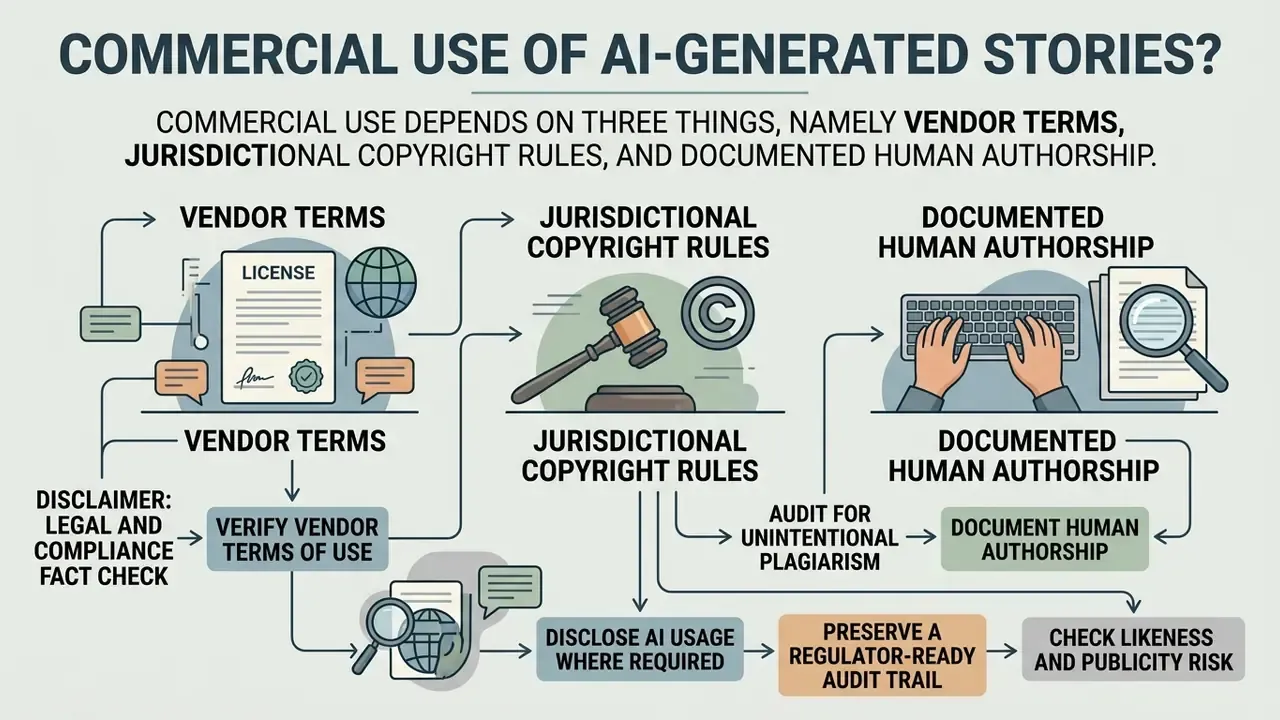
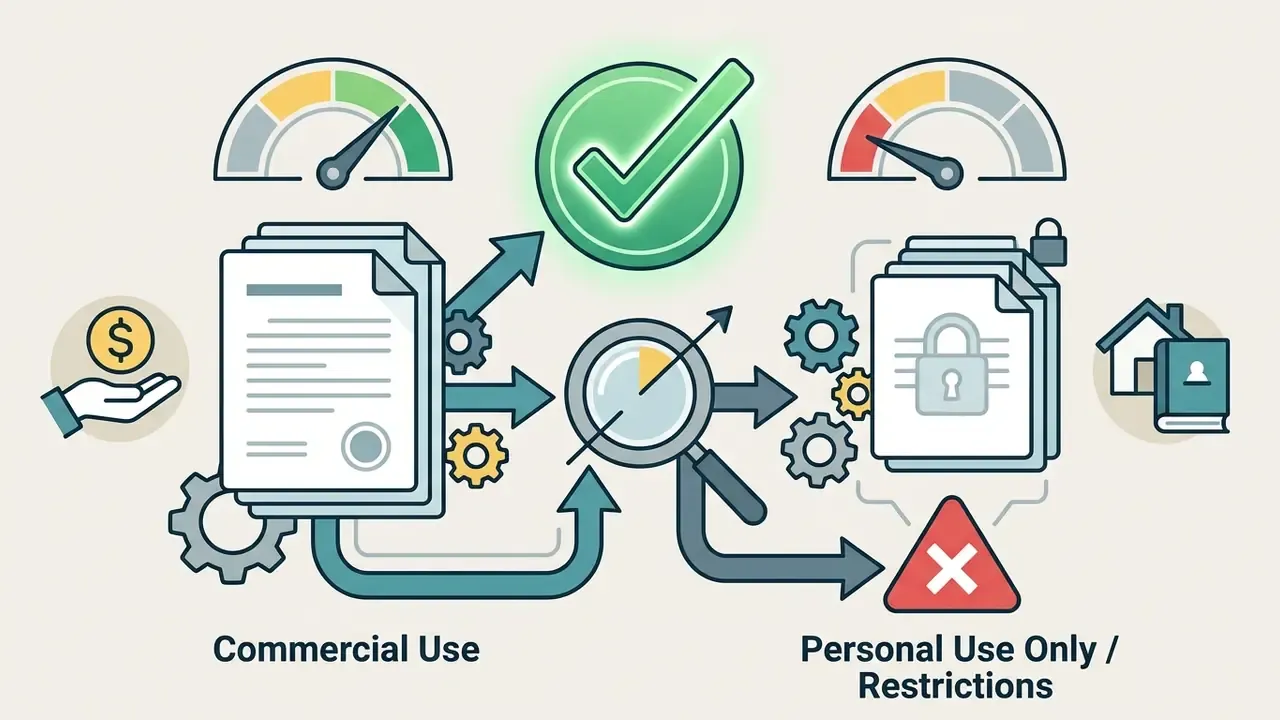
In two sentences: commercial use depends on three things, namely vendor terms, jurisdictional copyright rules, and documented human authorship. A vendor can grant you contractual rights, but it cannot grant you statutory protection.
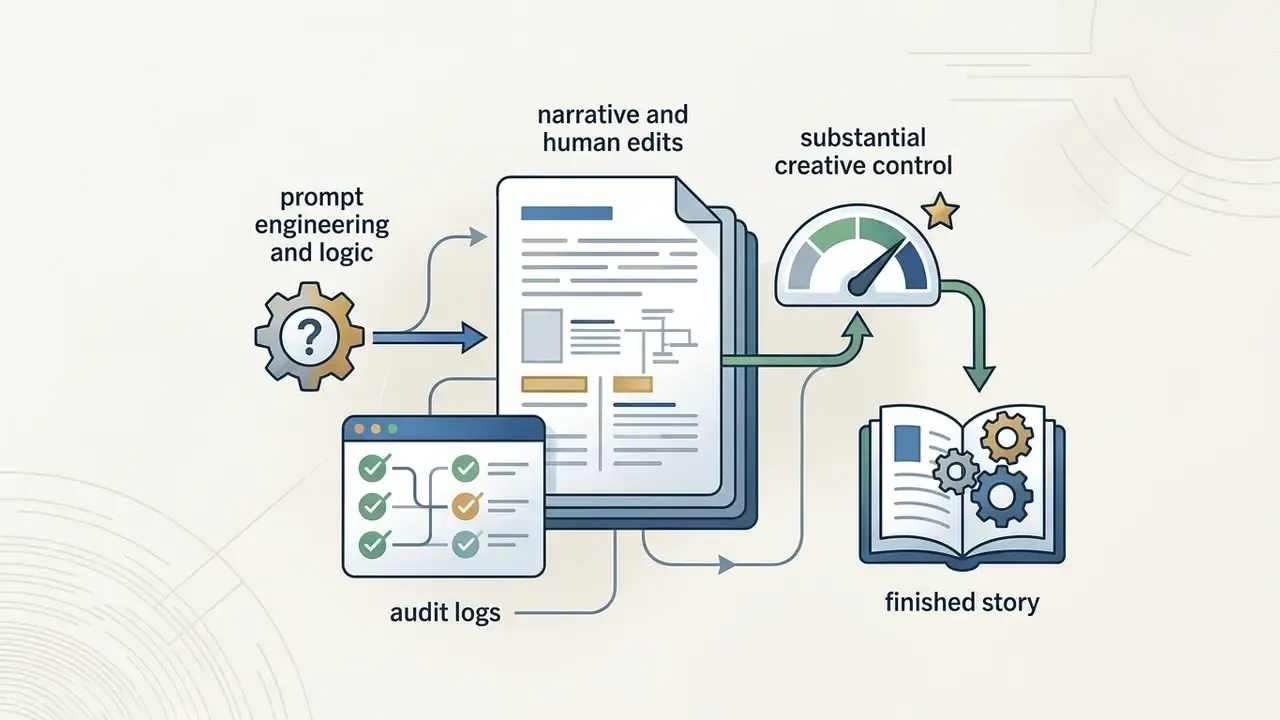
Deciding whether AI-generated stories can be published commercially requires evaluating copyright law, platform Terms of Use, and the extent of human editorial contribution. Readers weighing rights across formats can compare the analogous rules for commercial use of AI images, where the same human-authorship logic applies to visual assets. In the United States, the legal status of AI content depends heavily on how much human creative input shaped the final manuscript.
Legal and compliance fact check:
Authors planning to sell AI-assisted books, publish monetisable ebooks, or use AI narratives in commercial marketing campaigns should implement a strict verification protocol:
A short illustrative case, composite and hypothetical rather than a named client. A corporate publisher evaluated an AI generation tool for high-volume genre fiction drafts. During compliance review, the legal team identified that raw AI outputs could not be copyrighted, which exposed the catalogue to unauthorised scraping. The company then required human writers to rewrite at least 35% of each text, restructure plot points, and sign off as primary authors. That policy secured copyright eligibility for the revised publications and, incidentally, improved reviewer scores.
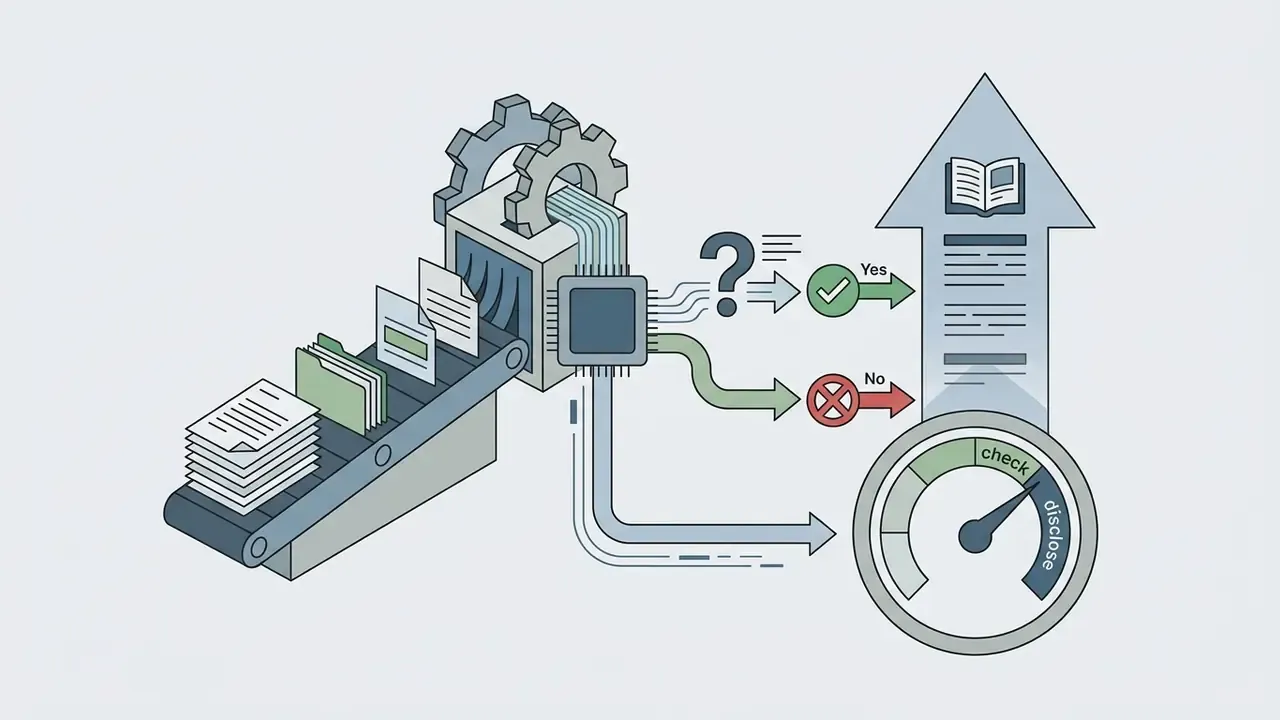
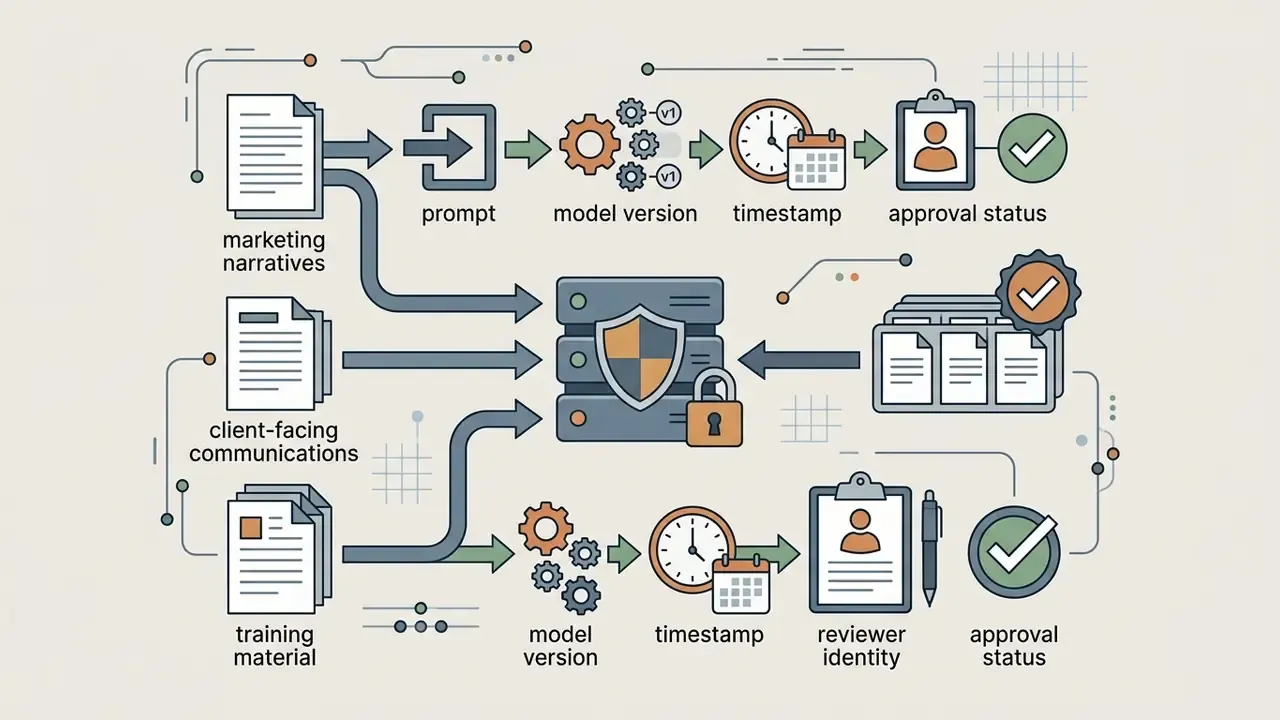
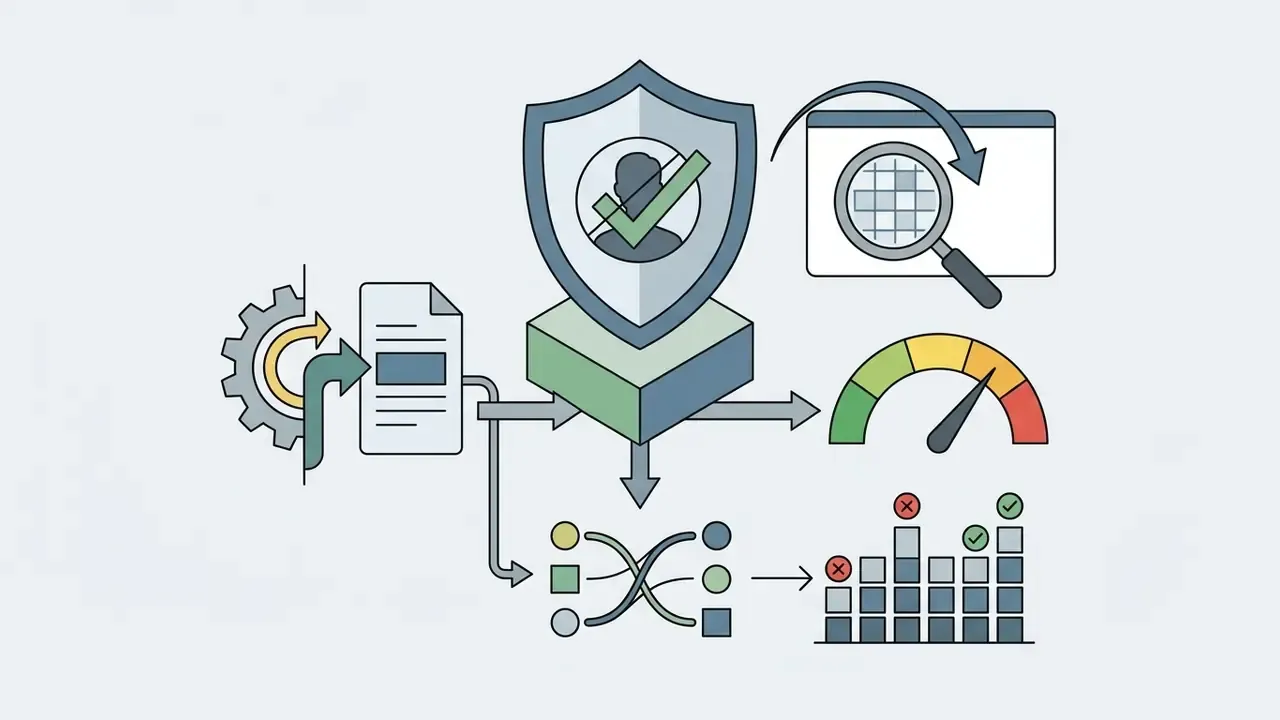
Shadow AI: the risk of consumer story generators inside organisations
Free, no-login story generators are frictionless by design, which is exactly why they become Shadow AI. Employees paste internal material into a narrative tool to draft an internal newsletter, a customer case study, a training scenario or a board-deck story. That text leaves the perimeter with no logging, no retention control and no contractual protection.
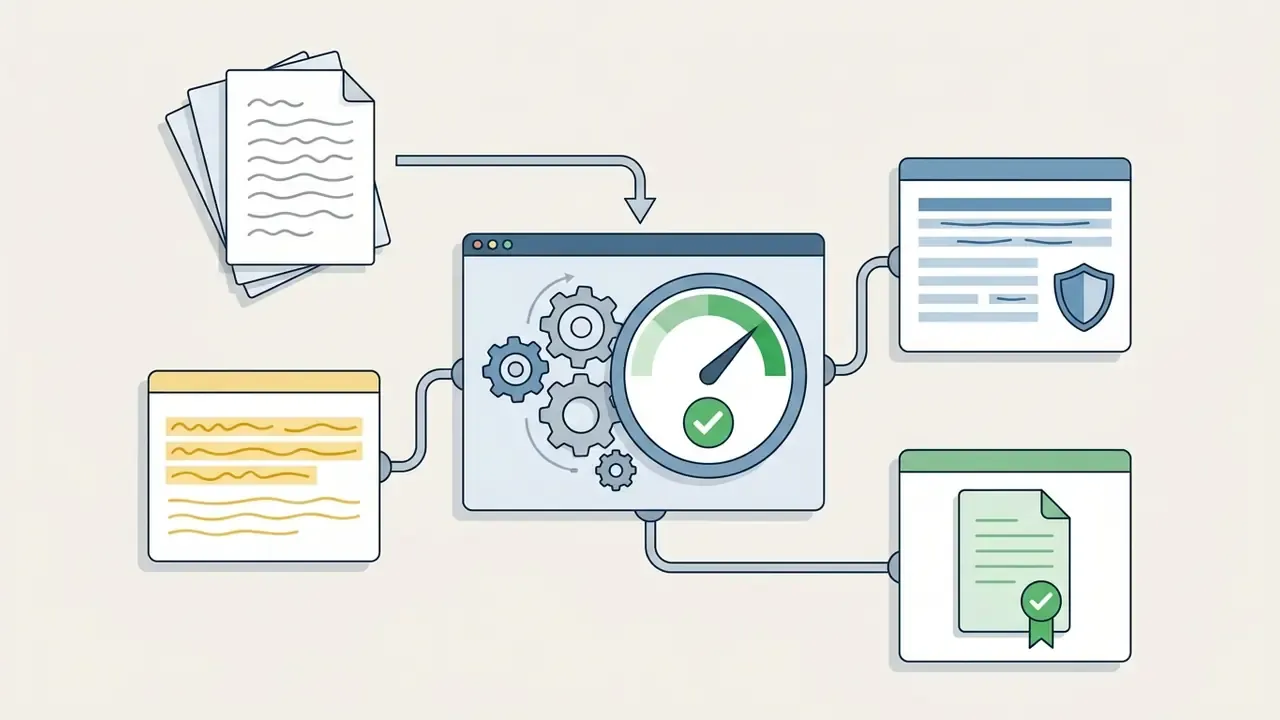
Minimum screening checklist before any story generator touches business content:
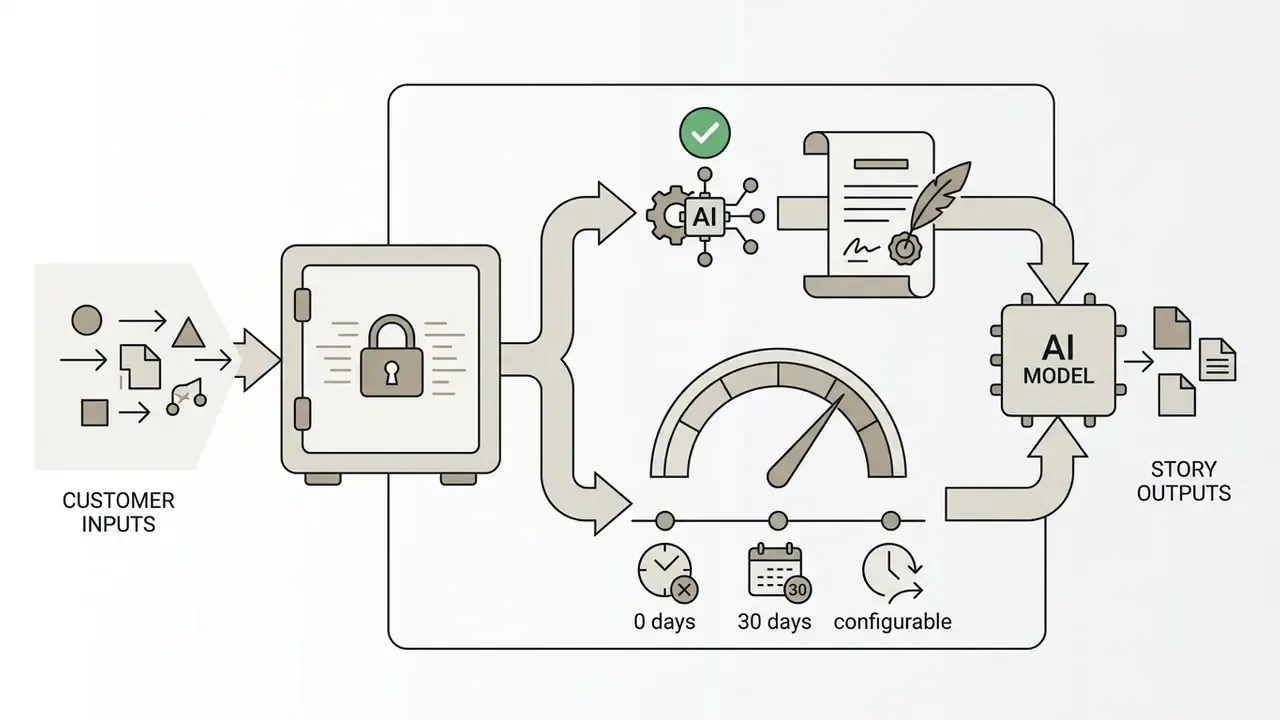
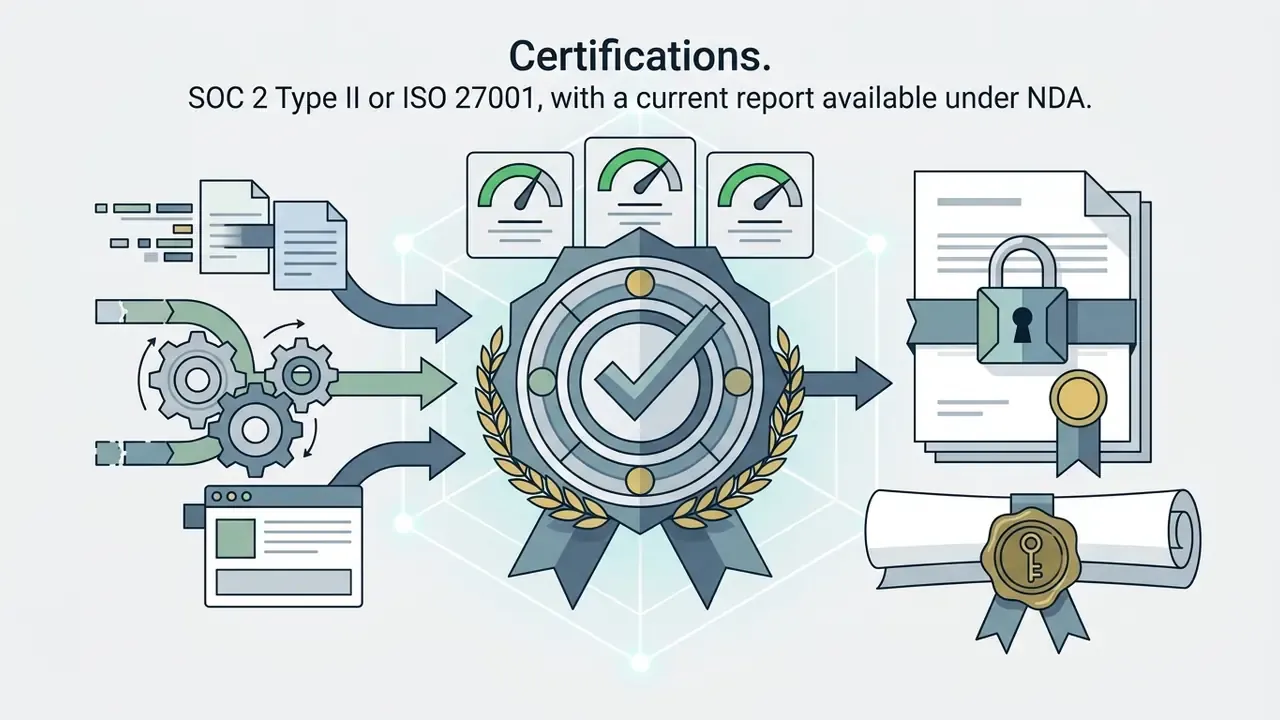
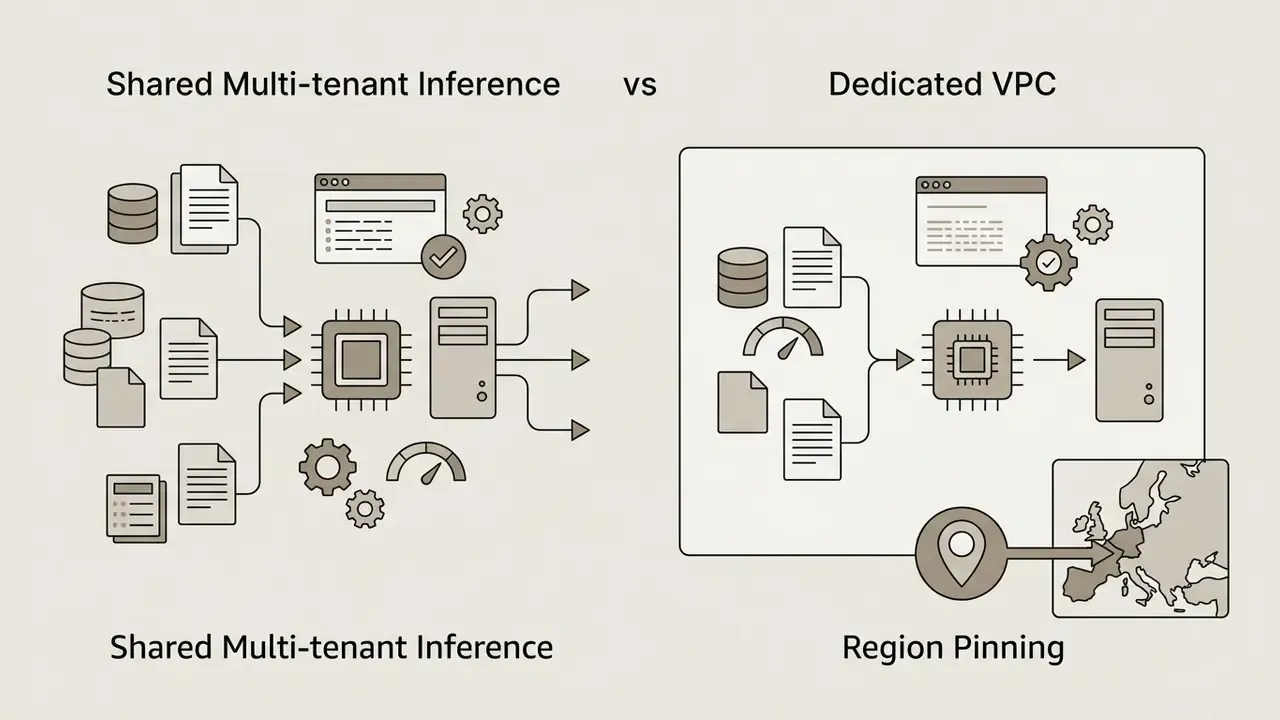
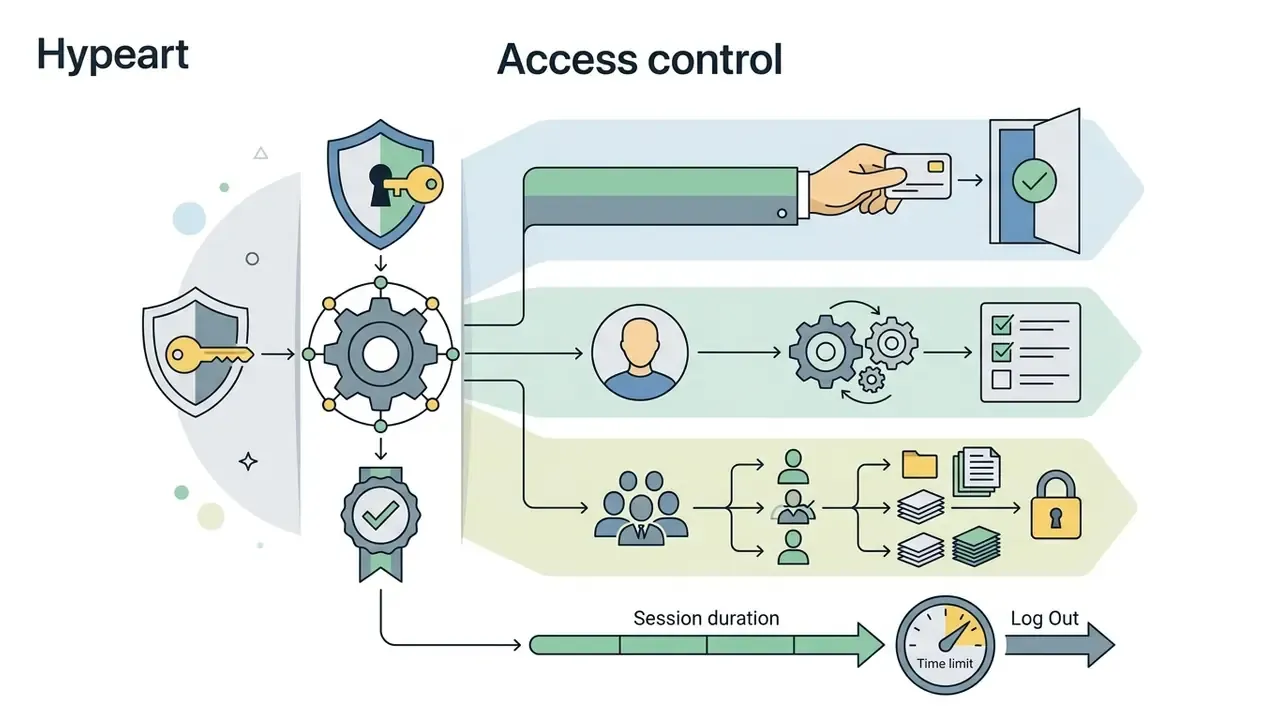
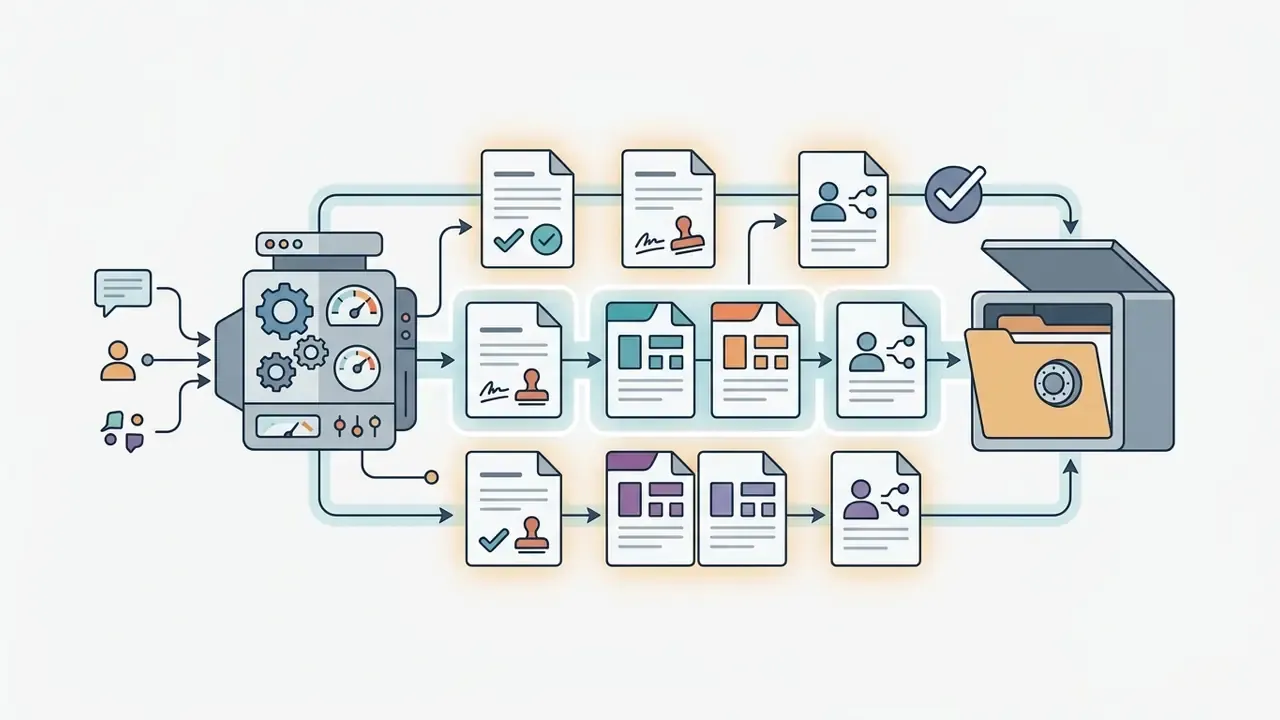
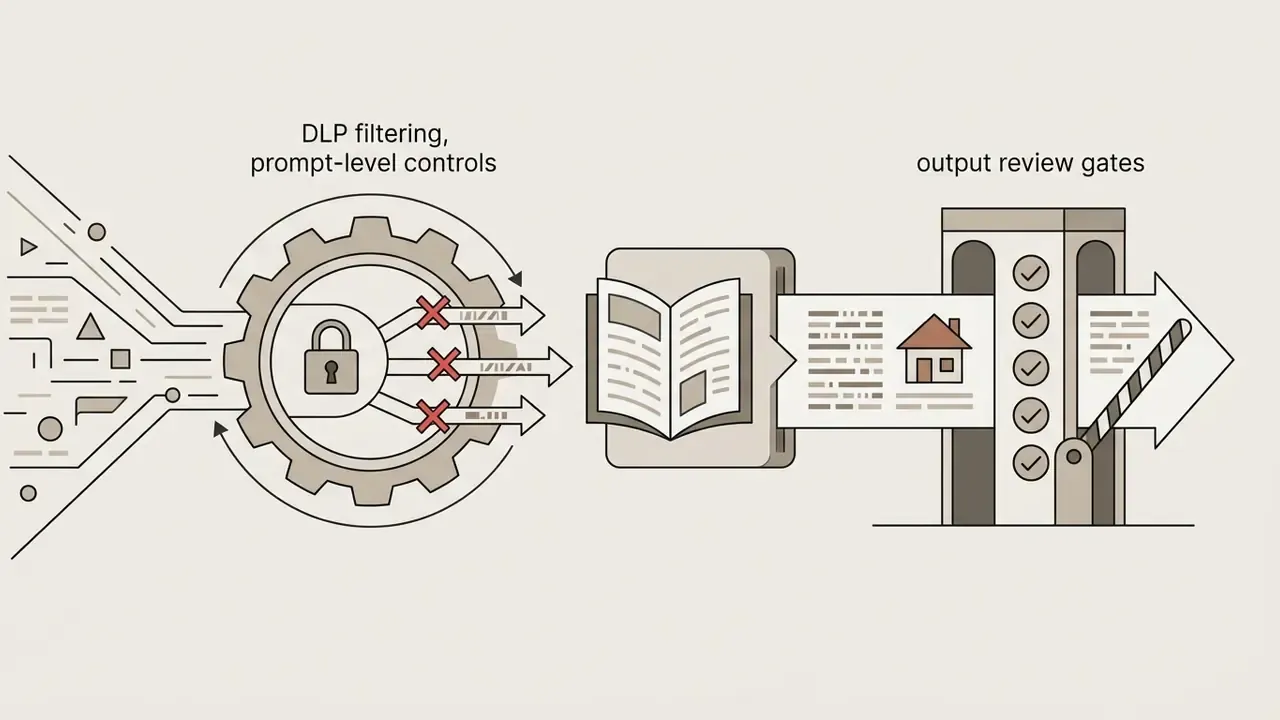
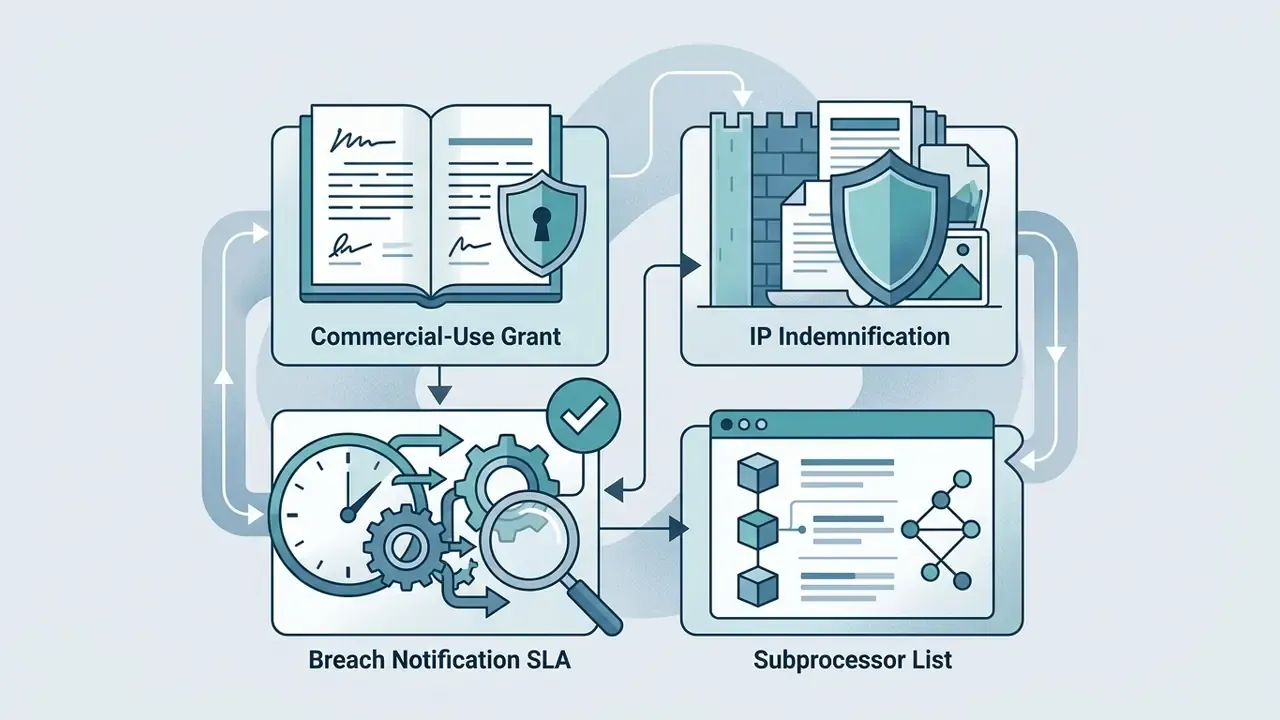
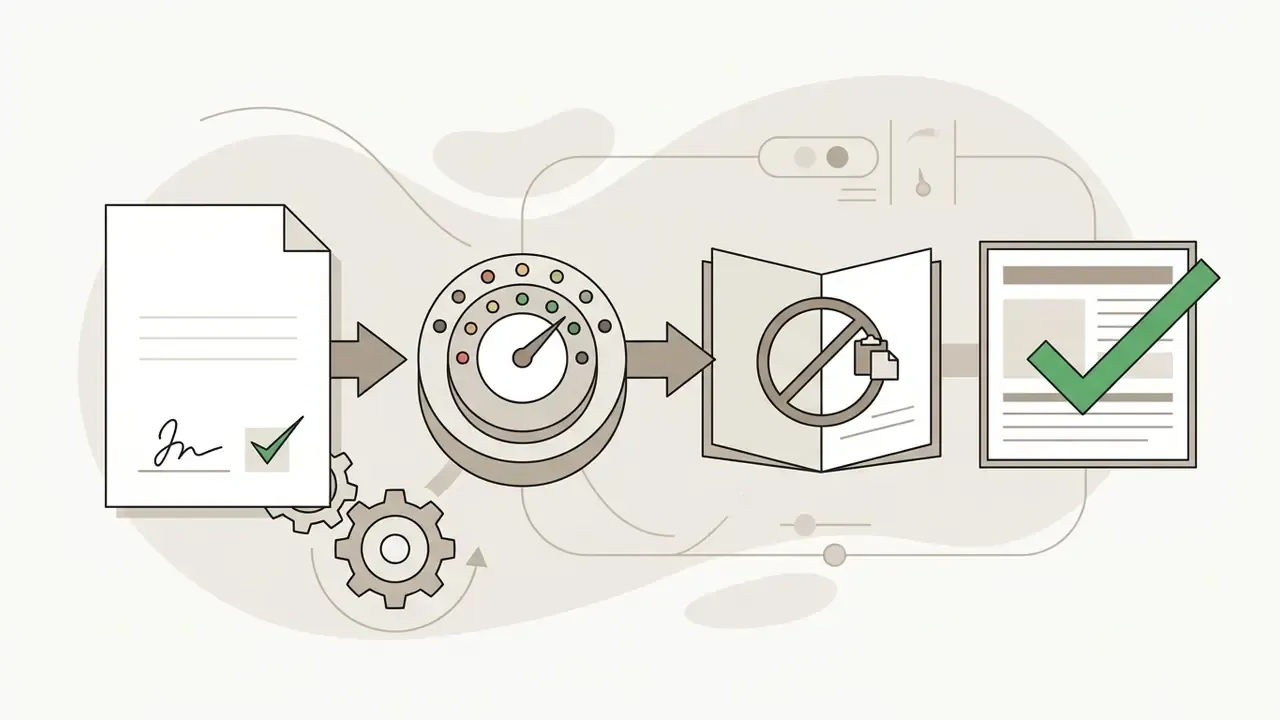
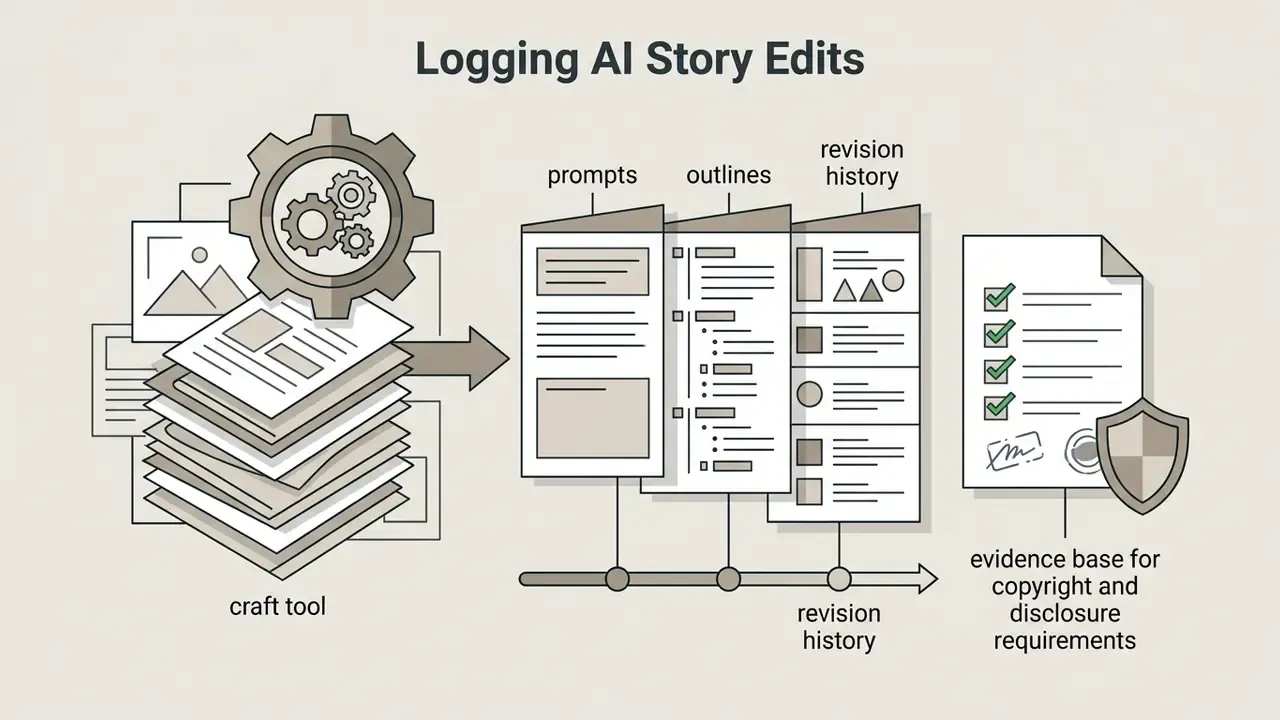
Mapped to model-risk language: prompt templates and lorebooks are inputs under change control. Outline planners and branching agents are model components requiring documented purpose and limitations. The editorial review gate is the effective challenge, and the audit log is the evidence file. Framing narrative generation this way, consistent with the Govern, Map, Measure and Manage structure of the NIST AI RMF and with SR 11-7-style validation habits, turns a creative toy into an auditable process. Teams formalising these clauses often start from the AI Media Commercial-Use guide and escalate open questions through AI Media Support and Troubleshooting.
Limits of the current evidence
Free AI story generator app: limits, pricing and upgrades
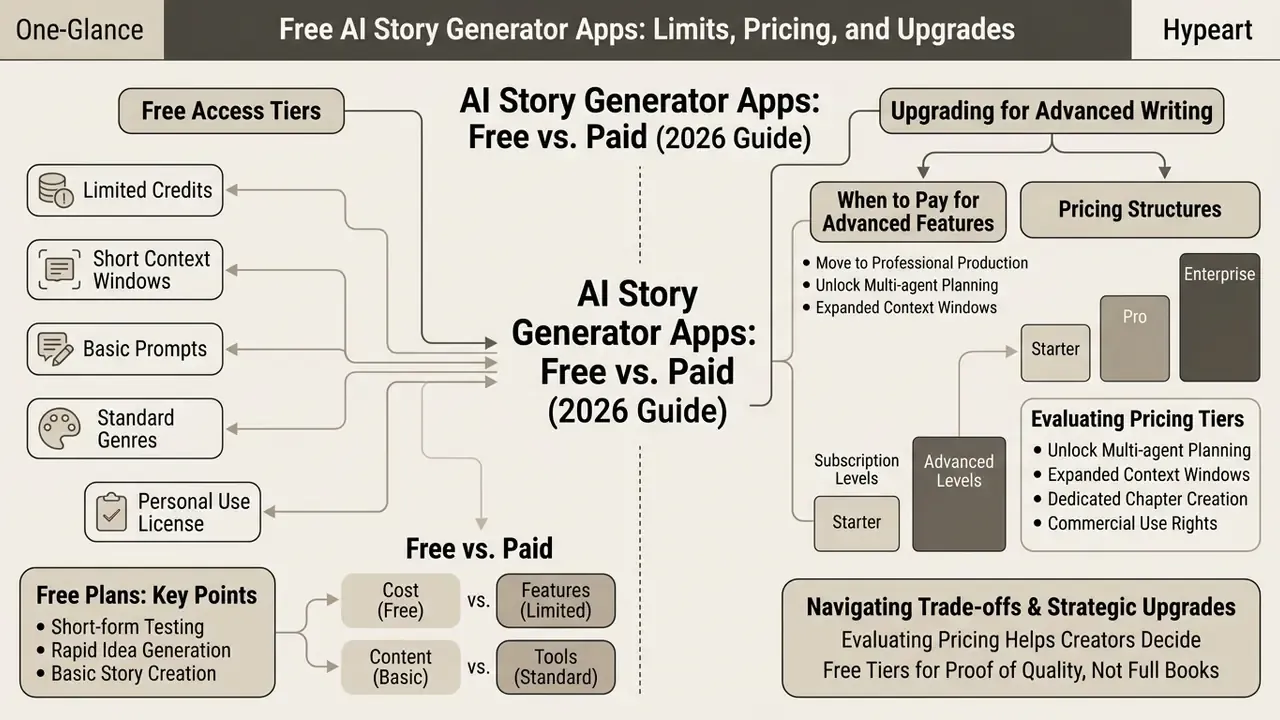
In two sentences: free tiers exist to prove output quality, not to produce books, so expect credit caps, short context and personal-use licences. Paid tiers buy context length, memory, export formats and legal clarity.
Navigating the cost structure of an ai story generator free app means understanding the trade-offs between free access tiers and paid subscriptions. Most providers offer a free ai story generator mode so users can evaluate basic capabilities before upgrading. Reliance on a story generator free plan, however, usually comes with hard constraints on text length, generation volume, and feature access.
Evaluating pricing tiers helps creators decide when an upgrade to an advanced subscription is economically justified. Users seeking unlimited story creation or multi-chapter book generation almost always need a paid plan. Knowing the standard limitations in advance prevents workflow interruptions during intensive writing sessions, and cost modelling gets easier with the AI Media Calculators and the AI Media Pricing Guides.
What a free plan usually includes
Free access tiers are designed for short-form testing, rapid idea generation, and basic story creation. A typical free plan grants a limited allocation of daily or monthly generation credits, often capping output at 1,000 to 2,000 words per story. Published caps vary widely by vendor: some allow 50 free text generations per verified account, others 20 credits per 30 days with a hard 1,000-word story limit, others 2 to 5 stories per month restricted to short formats of 5 to 7 chapters, and API-based free tiers publish request-per-day quotas per model instead of word limits. Model access on free tiers is frequently restricted to lighter standard LLMs with smaller context windows.
Free plans generally cover basic prompt inputs, standard genre selections, and simple inline text editing. Readers comparing free-tier economics across media types will find the same pattern in our guide to free AI video generators: generous trials, restrictive licences. Advanced features such as multi-character lorebooks, custom style training, and long-form chapter export usually sit behind a paywall. Free plans may also impose slower queue processing at peak hours, watermarked or TXT-only exports, and personal-use-only licensing.
When advanced writing features are worth paying for
Upgrading becomes necessary when you move from casual short story generation to professional book production. The technical reason is measurable: long narratives are where current models degrade.
"The Long Story Generation Challenge showed models can produce structured text but lose global coherence, repeat plot elements and fail at complex dynamics."
Advanced plans unlock multi-agent planning frameworks, expanded context windows, and dedicated chapter generation engines. Those features let authors build long-form manuscripts without losing character consistency or plot focus. Typical entry points for paid creator plans sit between roughly $5 and $20 per month, with limits expressed as credits, chapters or stories per month. Those units are not directly comparable between vendors, so normalise them to finished words per month before deciding.
Paid tiers also open access to stronger language models capable of richer dialogue, nuanced emotional subtext, and less predictable plot twists. Premium subscriptions frequently include flexible export formats such as EPUB, DOCX and PDF, priority generation processing, and explicit commercial-use licensing. Authors preparing a full publishing package often add adjacent tooling for cover art, series branding and promotional assets, using guides such as our Canva AI generator overview and the ai logo generator walkthrough for imprint marks. For professional authors and content teams, the editorial time saved usually covers the subscription fee within a chapter or two.
Table 2: Typical feature comparison between free, premium and enterprise AI story generator tiers
| Feature category | Free access plan | Pro / creator subscription | Enterprise / unlimited tier |
|---|---|---|---|
| Generation quota | 20 to 50 credits per month (or 2 to 5 stories) | 1,000 to 3,000 credits per month | Unlimited generation credits |
| Max context window | 4,000 to 8,000 tokens | 32,000 to 128,000 tokens | 200,000+ tokens, full book |
| Model quality | Standard lightweight model | Advanced reasoning model (GPT-4o, Claude Sonnet, Gemini 2.5 Pro) | Custom fine-tuned models and routing |
| Character memory | 1 to 2 basic profiles | Unlimited character lorebooks | Global entity graph database |
| Illustrations | None or watermarked | Scene images and covers included | Brand-consistent art pipeline plus print exports |
| Export formats | Plain text (.txt), sometimes PDF | TXT, PDF, DOCX, EPUB | All formats plus direct API export |
| Data retention / no-train guarantee | Inputs may be retained or used for training | Opt-out available, limited retention window | Contractual no-train, zero or short retention, region pinning |
| Security certifications | Not published | Vendor security page, no report access | SOC 2 Type II or ISO 27001 report under NDA |
| Access control and audit logging | Email login only, no logs | Team seats, basic history | SSO/SAML, SCIM, exportable prompt and approval logs |
| Commercial licensing | Personal use only | Commercial rights included | Full commercial rights plus IP indemnification |
| Support and SLA | Community and FAQ | Email support, best effort | Contractual SLA, named CSM, incident notification |
Note that plan names, quotas and prices change often. Verify the current terms on the vendor's own pricing page before purchase, and re-check the licence clause after every plan migration, since rights sometimes shift with the tier.
FAQ about AI story generator apps
Do you need writing skills to use an AI story maker?
No prior professional writing experience is required to start using an ai short story maker or story maker application. Beginners can produce coherent narrative drafts by entering basic prompts and selecting preset genre parameters. Prompting is a learnable skill that improves within a few sessions, and the measurable benefit is largest exactly for less experienced writers.
"AI assistance made stories more enjoyable, more likely to contain plot twists and less boring, with the largest gains for less experienced writers." Doshi & Hauser, Science Advances (2024). https://www.science.org/doi/10.1126/sciadv.adn5290 Editing and narrative judgment still matter for high-quality fiction. While the AI handles grammar, sentence structure, and surface mechanics, human writers must judge emotional resonance, dialogue authenticity, and overall pacing. Those skills are what turn a generic draft into something a reader finishes.
How fast can an AI story generator create a story?
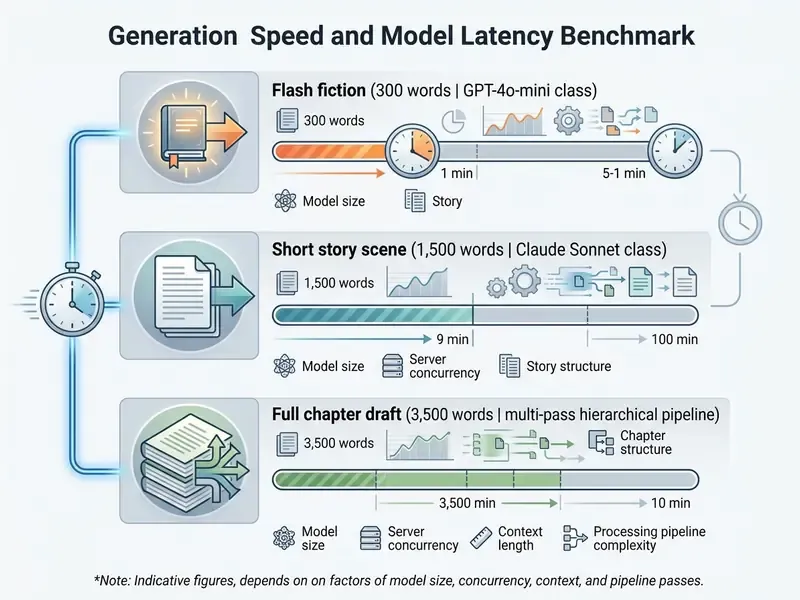
Generation speed varies by model size, hardware and concurrency rather than following one universal figure. Published vendor benchmarks report roughly 90 to 93 tokens per second at concurrency 1 for large hosted models on cloud infrastructure, while quantised models on small edge hardware without GPU acceleration have been measured under 4 tokens per second. At cloud-class rates, a 1,000-word draft arrives in roughly 10 to 15 seconds. Initial drafting is nearly instantaneous. Finishing a story is not.
"Most of the time in AI writing sessions is consumed by human actions, composing prompts, editing, re-requesting, not by waiting for generation." GPT-3.5 creativity-support user study (2024 to 2025). https://arxiv.org/ Reviewing generated text, refining dialogue, correcting logical errors, and deepening character motivation typically takes 30 to 60 minutes per chapter. Human review, then, is the primary time component in the production pipeline.
Can AI help overcome writer's block and generate new ideas?
AI story generators are effective tools for breaking creative stagnation and widening the pool of narrative ideas. When faced with a plot bottleneck, writers can ask for alternative scene continuations, character dialogue options, or unexpected twists.
"In experiments with GPT-3, participants used AI most heavily during ideation, for themes, characters and plot suggestions, alternating between broad and specific prompts." Human-AI co-creativity with GPT-3 (2023 to 2024). https://arxiv.org/ To maximise ideation value, ask for multiple options rather than accepting the first continuation. Prompting the tool to "provide five distinct conflict choices for the protagonist in this scene" yields a diverse set of paths. The author then selects, blends, or rewrites those ideas to advance the manuscript. A three-stage habit works well: ideate, outline, then refine prompts iteratively, using AI for discovery and revision diagnostics rather than as final authority on prose.
Can I write fanfiction with an AI story generator?
Yes. Fanfiction is one of the most common uses: you define the source universe's rules, the characters and the alternate-universe premise, and the tool drafts scenes inside those constraints. Two cautions. First, canon fidelity is your job, since models routinely invent traits and events, so keep a canon-compliance note in the lorebook. Second, publishing rules differ from writing rules: fan works occupy a tolerated but legally fragile space, and monetising them raises derivative-work and trademark questions that no vendor licence resolves for you.
Can an AI story generator create pictures for my story?
Many platforms now generate illustrations, character art and covers alongside the text, functioning as an ai story generator with pictures. For illustrated children's books, check three things before committing: character consistency across pages through reference images or locked seeds, export resolution suitable for print, and whether the image licence on your tier permits commercial sale. Where a platform's built-in art is too limited, authors typically draft text in the story tool and generate visuals separately with a dedicated free AI art generator.
Which languages and audiences are supported?
Mainstream tools generate in 20+ languages. English, Spanish, Portuguese, French, Italian, German, Russian, Japanese, Mandarin and Filipino are the most commonly listed, and audience presets run from kids (5 to 8) through middle grade, young adult and adult to mature (40+). Setting the audience band automatically changes vocabulary difficulty, sentence length and permissible themes. For any language you do not read fluently, budget a native-speaker review pass, because idiom and register errors are the most common failure mode in machine-translated fiction.
Is it safe to put my ideas, or my company's data, into a free story generator?
Treat every free tool as public unless its terms say otherwise. Check whether inputs are used for model training, how long they are retained, and whether outputs are stored on shared infrastructure. For personal fiction the practical risk is low. For business content it is not, so never paste client data, personal data, unpublished financials or other confidential material into a consumer-grade generator. Use the Shadow AI screening checklist in the commercial-use section above as the minimum control set before organisational use.
What is the best model for creative writing?
There is no single winner, and anyone who claims otherwise is selling something. Use a fast, cheap model for brainstorming and title lists. Use a description-strong Claude Sonnet-class model for atmospheric prose and emotional subtext. Use GPT-4o for dialogue-heavy scenes and rapid restructuring, and a long-context model such as Gemini 2.5 Pro when the prompt must carry an entire manuscript's memory. Benchmark them against your own 300-word test prompt rather than trusting a leaderboard.
Appendix A: source revisions and superseded attributions
For transparency, the following attributions appeared in earlier revisions of this guide and have been superseded by verifiable primary sources. They are retained as a change record rather than as evidence.
| Superseded attribution (earlier revision) | Status | Replacement used in this version |
|---|---|---|
| WRAVAL, WRiting Assist eVALuation (arXiv, 2026) as the evaluation framework for logical completeness and thematic alignment | Unverified at time of publication, treated as a prospective framework | Story-evaluation-LLM dataset (15 metrics, 15 models) plus the evaluation dimensions surveyed by Teleki et al., ACL Anthology (2025) |
| Carnegie Mellon Narrative Logic Study, 2025 as the source for persistent logic-state world modelling | Attribution not verifiable | Narrative-logic formalisation as reflected in planning-based systems surveyed by Teleki et al., ACL Anthology (2025) |
| Stanford GenAI Prompt Engineering Guide, 2026 as the source for constraint-based prompting gains | Unverified specific claim | Doshi & Hauser, Science Advances (2024), with measured novelty and quality deltas |
| GENEVA Study, Microsoft Research, 2024 as the source for graph-based branching superiority | Retained only as a structural convention (one node per beat, no loose ends), not cited for performance claims | SWAG: Storytelling With Action Guidance for evaluated branching performance |
| Main Manuscript for Designing Human and Generative AI Collaboration, 2026 as the writer's-block source | Attribution without publication venue or URL | Human-AI co-creativity with GPT-3 study |
| Northern Illinois University AI Guidance, 2025 as the source on required writing skills | Generic guidance, not a measurement | Doshi & Hauser, Science Advances (2024) |
| Oracle LLM Benchmark Report, 2025/2026 cited as a universal "90 to 100 tokens per second" rate | Reframed as a vendor benchmark at concurrency 1, not a universal figure | Range presented with an edge-hardware counterexample and explicit dependency on concurrency and context length |
| W3C Mobile Accessibility Guidelines, 2025 cited as evidence about narrative tooling quality | Reframed as relevant to interface accessibility only | W3C Mobile Accessibility overview, used strictly for UI and device scope |
Resource directory and related guides
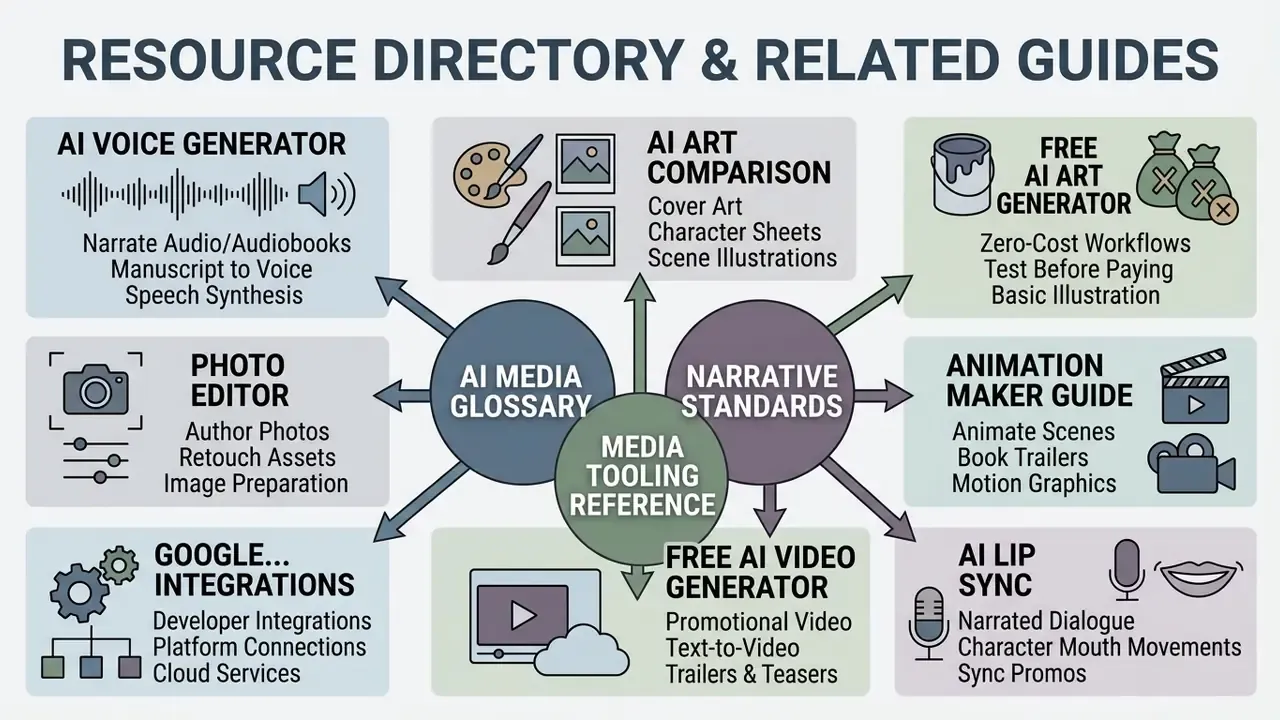
For comprehensive information on narrative and media tooling, platform pricing, commercial licensing, and developer integrations, refer to our specialized reference guides:
- For foundational definitions, media standards, and terminology, visit the AI Media Glossary.
- To turn a finished manuscript into narrated audio or an audiobook, review the AI voice generator guide.
- To generate cover art, character sheets and scene illustrations, compare options in the best AI art generator roundup.
- To test zero-cost illustration workflows before paying for a plan, see the free AI art generator comparison.
- To animate key scenes or build book trailers, consult the animation maker guide.
- To sync narrated dialogue to a character's mouth movements in promo clips, see the ai lip sync guide.
- To produce promotional video from story text, review the free AI video generator comparison and the Google Veo implementation guide.
- To prepare and retouch author photos and illustration assets, use the photo editor guide or the free photo editor guide.
- To build a professional author presence for pitches and interviews, see the ai linkedin photo guide.
- To design a series mark or imprint identity, work through the ai logo generator guide.
- To create automated asset tags, meta summaries, and taxonomy labels for a published catalogue, use the ai label generator.
- To build optimized sales pages for ebooks and serialised fiction, explore the ai landing page guide.
- To streamline query letters, agent outreach and publisher correspondence, leverage the ai letter generator.
- To design series branding for self-published work, see the Canva AI generator overview.
- To publish story-based video content on YouTube, follow the YouTube video editor workflow.
- To compress large media files for distribution alongside ebooks, see the video compressor guide.
- To model computational costs, token budgets, and API resource requirements, access the AI Media Calculators.
- To evaluate commercial pricing structures, plan tiers, and subscription models, review the AI Media Pricing Guides.
- To resolve integration issues and technical workflows, visit AI Media Support and Troubleshooting.
- To review detailed feature evaluations across leading software tools, browse our compare directory.
- To access developer documentation, endpoint specifications, and SDK references, visit the AI Media API Guides.
- To review legal usage frameworks, copyright compliance, and licensing terms, read the AI Media Commercial-Use guide.
- To track intellectual property legal developments and court case schedules, review AI Litigation and Case Timelines.