Using neural networks to generate graphics in the style of a famous franchise opens wide possibilities for designers, developers, marketing teams, and the fan community. Pokemon AI art covers an entire spectrum of visual outputs: original creatures (Fakemon), trading-card layouts, stylized portraits, and 3D models. This guide covers generation methods, tool selection, prompt construction, technical file requirements, and the rules for safe use of the results, including the governance controls that risk, compliance, and audit teams ask for before such tools enter a corporate workflow.
Two readers are served here. One wants a good Fakemon by lunchtime. The other has to sign off on the tool.
Executive summary
- Generation is easy; ownership is not. Purely AI-generated output is not protected by copyright without meaningful human authorship, and Pokémon names, characters, and designs remain the registered IP of Nintendo and The Pokémon Company. Original Fakemon are materially safer than recognizable copies.
- Reproducibility is a control, not a nicety. Fixing
Seed, recording the model or checkpoint, prompt, negative prompt,CFG Scale, sampler, and steps produces an auditable generation log. That log is the minimum evidence a model-risk or audit function needs. - Shadow AI is the main enterprise exposure. Employees uploading brand assets, customer photos, or unreleased creative to consumer image services is a data-leakage and IP event, not just a design shortcut. A vendor checklist and an approved-tool list are cheaper than remediation.
- No tool offers genuinely unlimited free generation. Every commercial service meters output through credits, daily caps, queues, or resolution limits. Treat "unlimited and free" marketing claims as unverified.
Who this guide is written for. Hobbyists and indie creators will use the prompt sections and the upscaling parameters. Marketing, brand, and product teams inside regulated companies will care more about the rights matrix, the vendor checklist, and the audit-log template, because those are the artifacts that survive a review meeting. Both groups run into the same wall eventually: a beautiful render that nobody can legally publish.
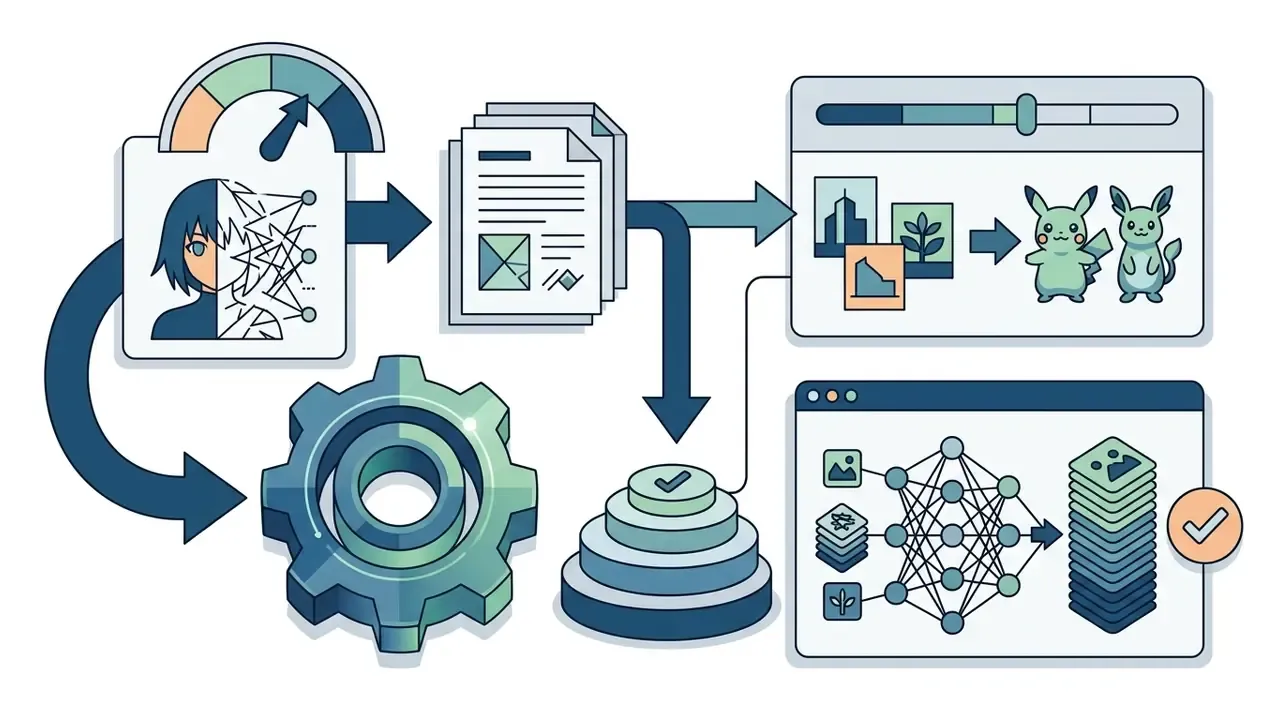
CFG 5-7 for model-card-tuned anime checkpoints (up to 7-10 for general prompt adherence), Denoising Strength 0.35-0.45 for photo-to-Pokémon identity retention, PNG output, neural upscaling up to 8X for print.What Pokemon AI Art Is and What Images AI Creates
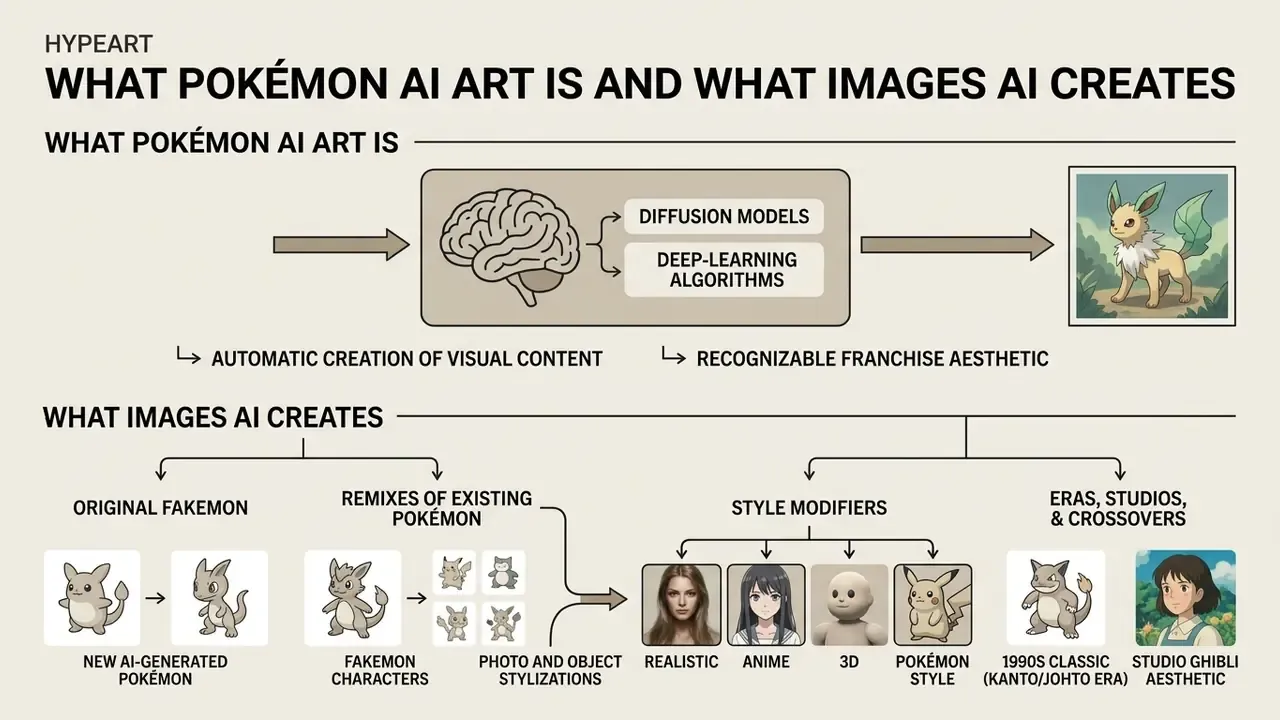
AI Pokémon image generation is the automatic creation of visual content in the recognizable aesthetic of the franchise using diffusion models and deep-learning algorithms. Neural networks can generate original characters, transform photographs of real objects, or create variations of existing creatures. Fine-tuning on a narrow, well-captioned dataset is what makes the characteristic proportions, palettes, and silhouettes reproducible with high fidelity.
"Fine-tuning Stable Diffusion on a Pokémon dataset with BLIP-generated captions (via KerasCV) enables synthetic Pokémon-style images from text prompts."
Practically, the output falls into three formats, all of which are actively shared across DeviantArt, Instagram, TikTok, Reddit, YouTube, and dedicated fan forums:
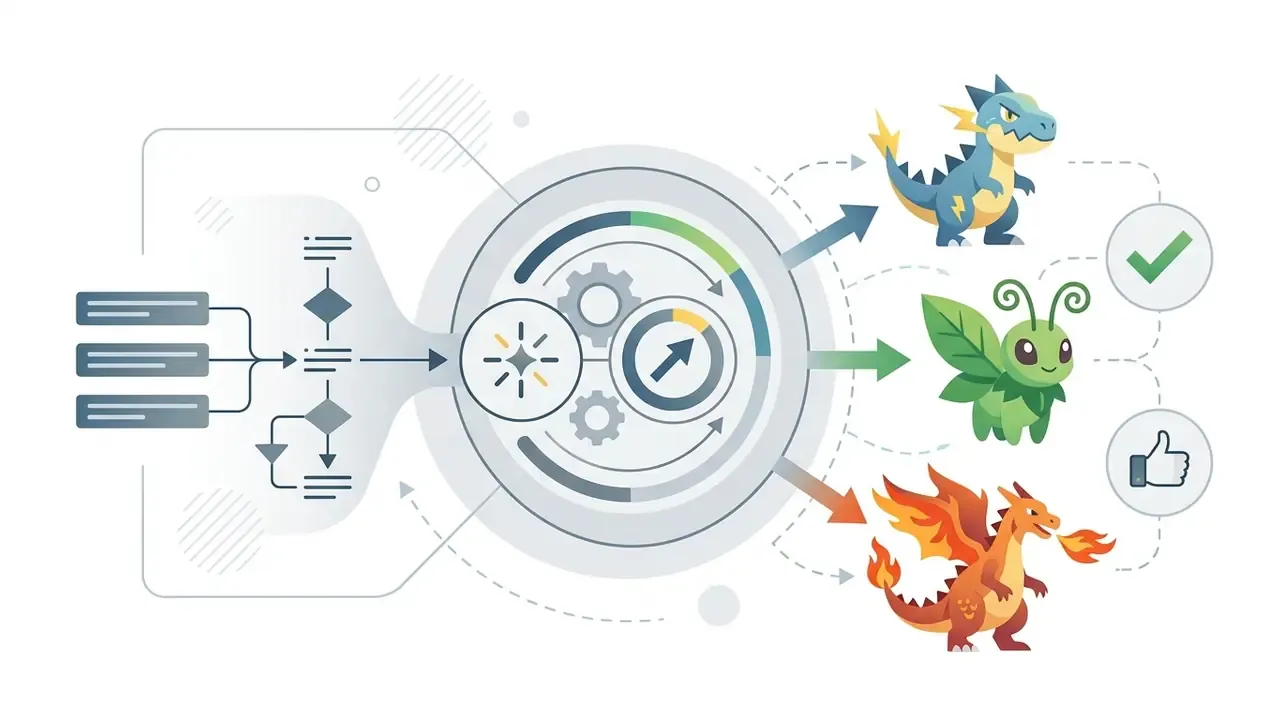
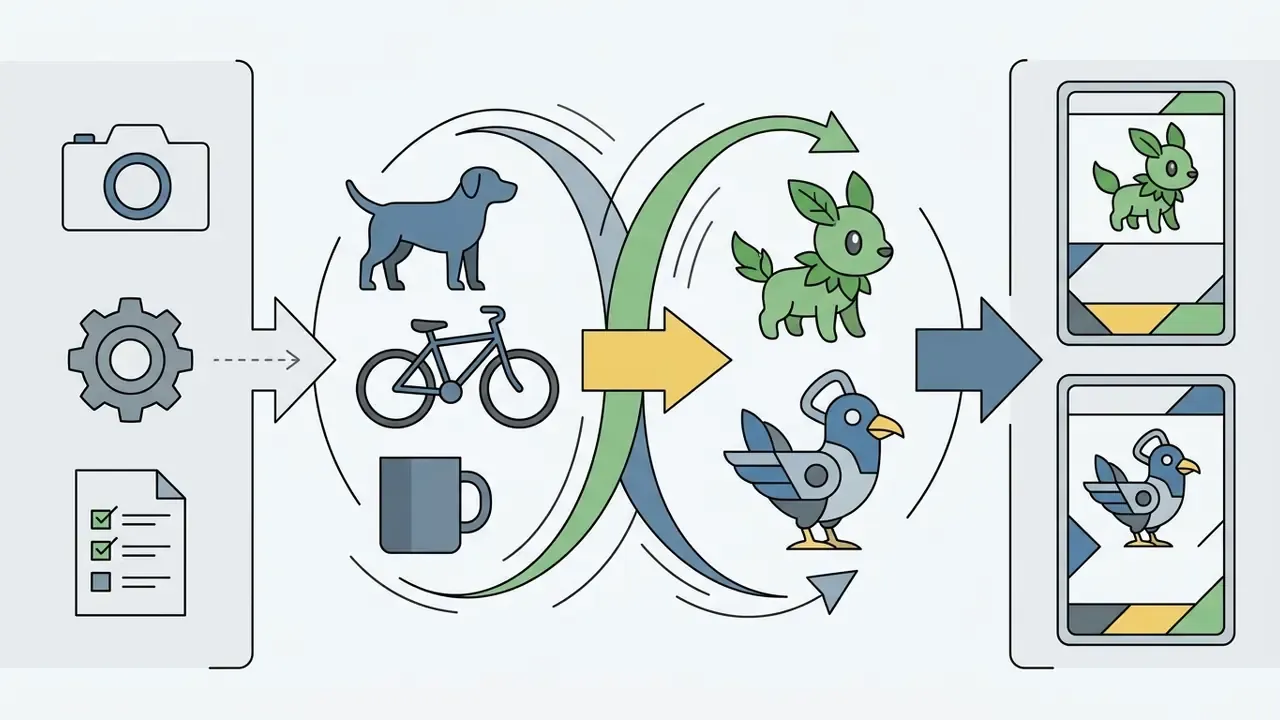
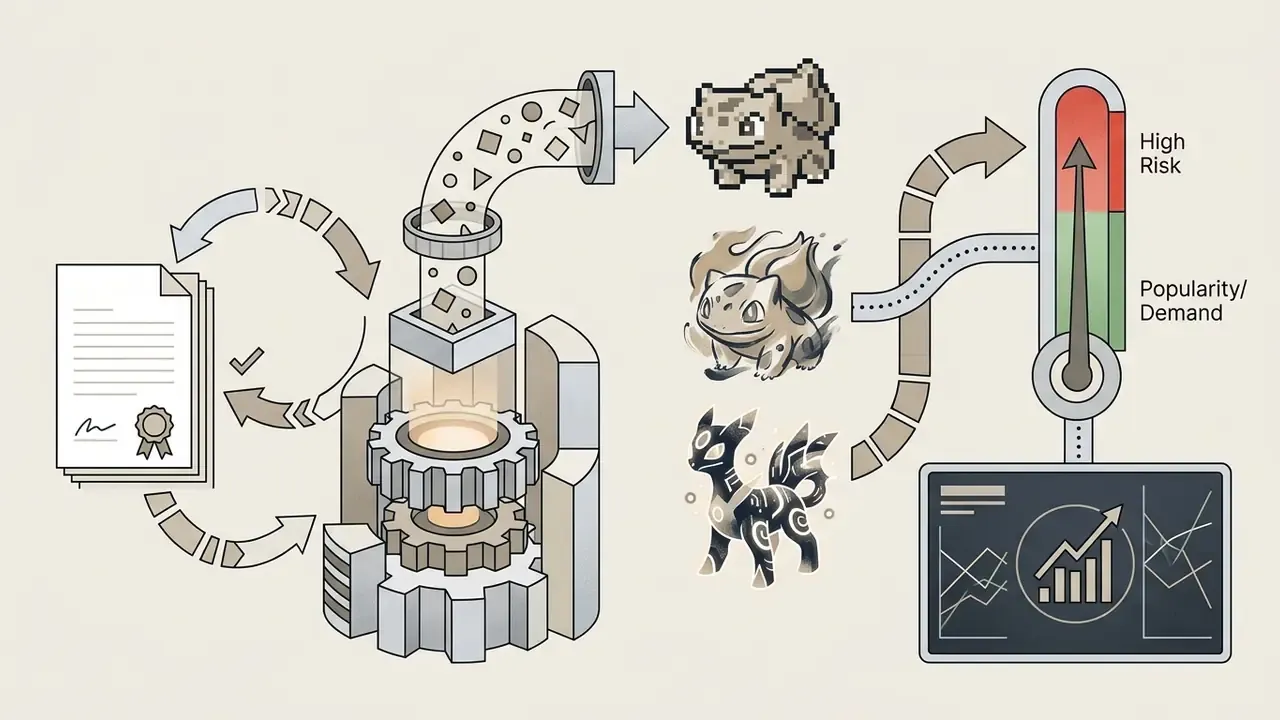
New AI-generated Pokémon and Fakemon Characters
To create entirely new characters, so-called Fakemon, neural networks use textual descriptions to form a unique appearance, elemental features, and anatomical details. Models pick up the key attributes of canonical design: bright saturated colors, sharp contrasting outlines, and expressive readable forms. The result is unique ai generated pokemon art with characters that preserve the style of the original while carrying an original concept.
Community-documented Fakemon workflows converge on the same two-stage logic that works well as a prompt scaffold: first the concept, silhouette, and type; then per-frame refinement of the sprite and palette. Classic sprite guidance (an 80×80 canvas, 1-px outlines, three shades per color, a light source from the top-left, and frequent zoom-out readability checks) translates directly into prompt vocabulary: compact silhouette, bold outline, three-tone shading, readable at small scale. Academic work has automated part of this pipeline: line art was extracted from Fakemon images and colorized with Pix2Pix and CycleGAN models.
"Line art and color hints were extracted from Fakemon images and used to train Pix2Pix and CycleGAN models for colorizing anime-styled creatures."
One small observation from testing: the silhouette check does more work than any style tag. If a creature is unreadable as a 64-pixel thumbnail, no amount of rim lighting saves it.
Realistic, Anime, 3D, and Pokémon Style
Generation is possible across different visual domains, including the classic anime style (in the spirit of early Ken Sugimori illustrations), 3D renders, chibi, and cinematic realism. Using advanced illustration networks such as Illustrious, trained on millions of tagged images, makes it easy to switch between styles with simple tags in the request. This allows both ai generated pokemon realistic creatures with detailed texture and stylized 2D sprites from the same pokemon art ai generator setup.
"Illustrious, trained on roughly 12 to 20 million anime images at resolutions up to 2048×2048, uses multi-level tags for characters, scenes, and artist styles."
The canonical Sugimori look is worth describing precisely, because it is the reference most prompts are implicitly chasing: official character artwork for the original games, early watercolor work followed by later digital drawing, clean lines, expressive features, rounded corners, heavier shading, and natural poses. A design rule frequently cited alongside it is "keep the balance": add an uncool element to an overly cool design, or a cheerful element to a serious one.
Style modifiers for eras, studios, and crossovers
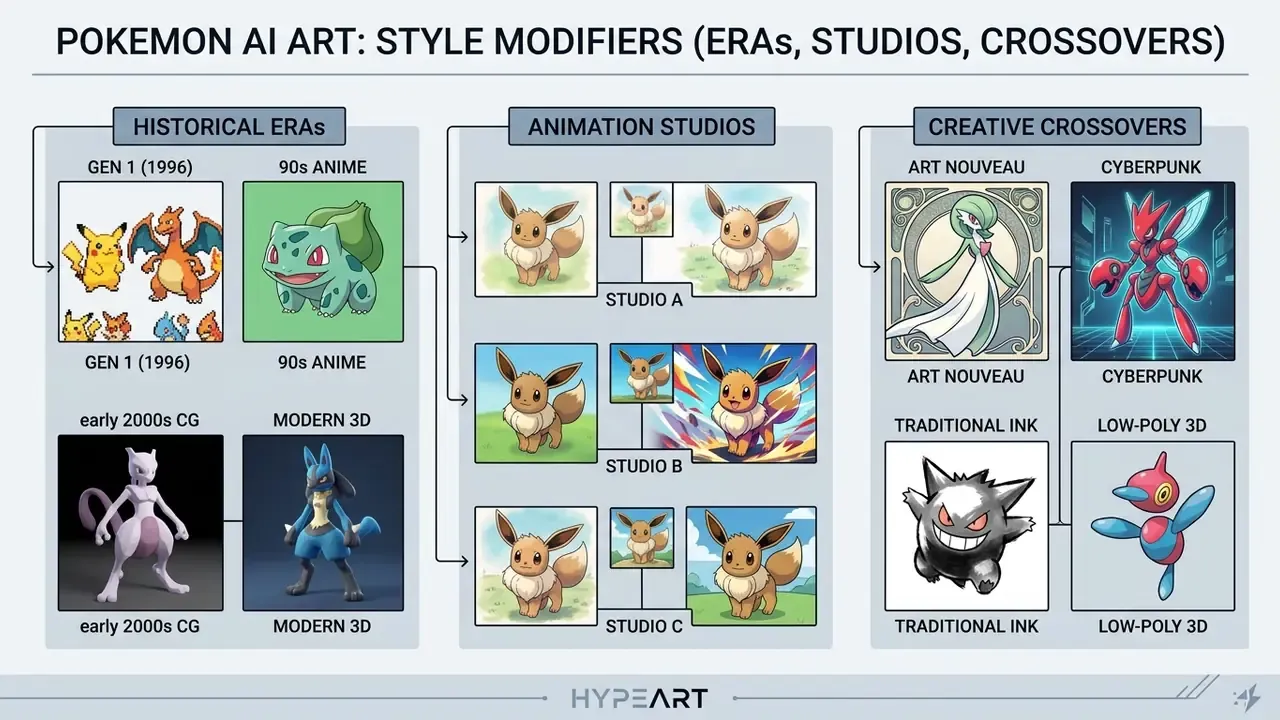
To reproduce specific eras of the franchise or authorial crossovers precisely, use the following style modifiers in the prompt:
- 1990s classic (Kanto and Johto era)
1990s anime style, Ken Sugimori vintage watercolor illustration, soft muted pastel colors, classic Pokédex art, black ink outline, aged paper texture - Studio Ghibli aesthetic
Studio Ghibli aesthetic, hand-drawn anime background, soft natural lighting, Miyazaki style creature design, painterly clouds - Noir and Tim Burton
Tim Burton style, dark fantasy creature, exaggerated spooky proportions, gothic line art, muted desaturated palette - Modern 3D render (Gen 9 or Detective Pikachu look)
Unreal Engine 5 render, cinematic lighting, 3D fur texture, realistic subsurface scattering (SSS), Octane Render, shallow depth of field - Chibi and sticker
super-deformed chibi proportions, oversized head, head-to-body ratio 1:1.5, large expressive eyes, stubby limbs, pastel palette, clean flat background - Pixel art and sprite
16-bit pixel art sprite, limited palette, 1px outline, three shades per color, front-facing battle pose, readable at 80x80
A practical note on scope: the "same Pokémon, different studio" experiment (Studio Ghibli Snorlax, Tim Burton Gengar) is a popular aesthetic exercise, but it targets a named, protected character. Keep those outputs personal and non-commercial, and reserve original Fakemon for anything monetized. For a broader view of style-accurate tooling, see the comparison of Ghibli-style AI image generators.
Can Pokemon AI Art Be Used in Commercial Projects
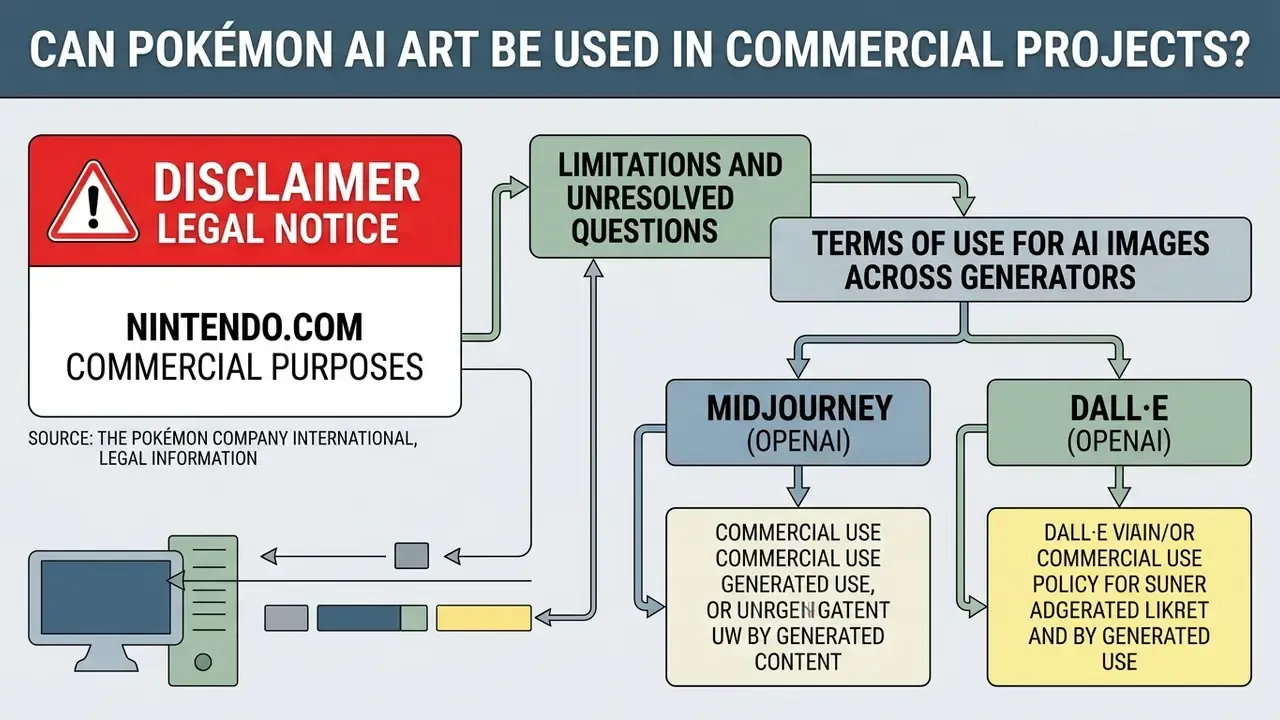
This section sits before tool selection deliberately: for most teams, legal constraints are the first filter, not the last.
Legal notice (alert box):
Official positions are explicit on both sides:
- Nintendo's copyright notice states its content may not be used "in connection with any product or service that is not Nintendo's" or "for any commercial purpose" that is exploitative or infringes its IP rights. Source: Nintendo, Copyright (2026). https://www.nintendo.com
- The Pokémon Company's legal information page states that Pokémon names and related marks are Nintendo trademarks, and that fan art is licensed to Pokémon for use, modification, and display, while the creator's own use remains limited to personal, non-commercial purposes. Source: The Pokémon Company International, Legal Information (2026). https://www.pokemon.com
- nintendo.com
- - Nintendo's copyright notice states its content may not be used "in connection with any product or service that is not Nintendo's" or "for any commercial purpose" that is exploitative or infringes its IP rights. Source: Nintendo, Copyright (2026).
- commercial purposes. Source: The Pokémon Company International, Legal Information (2026).
- - The Pokémon Company's legal information page states that Pokémon names and related marks are Nintendo trademarks, and that fan art is licensed to Pokémon for use, modification, and display, while the creator's own use remains limited to personal, non-commercial purposes. Source: The Pokémon Company International, Legal Information (2026).
"The U.S. Copyright Office applies a stricter authorship test to AI works than to traditional works, requiring the human author's control over the expressive result."
"Purely AI-generated works are currently not protected by copyright, and using the likeness of real people in AI art may trigger right-of-publicity claims." Source: Generative AI and Intellectual Property under U.S. Law (2024).
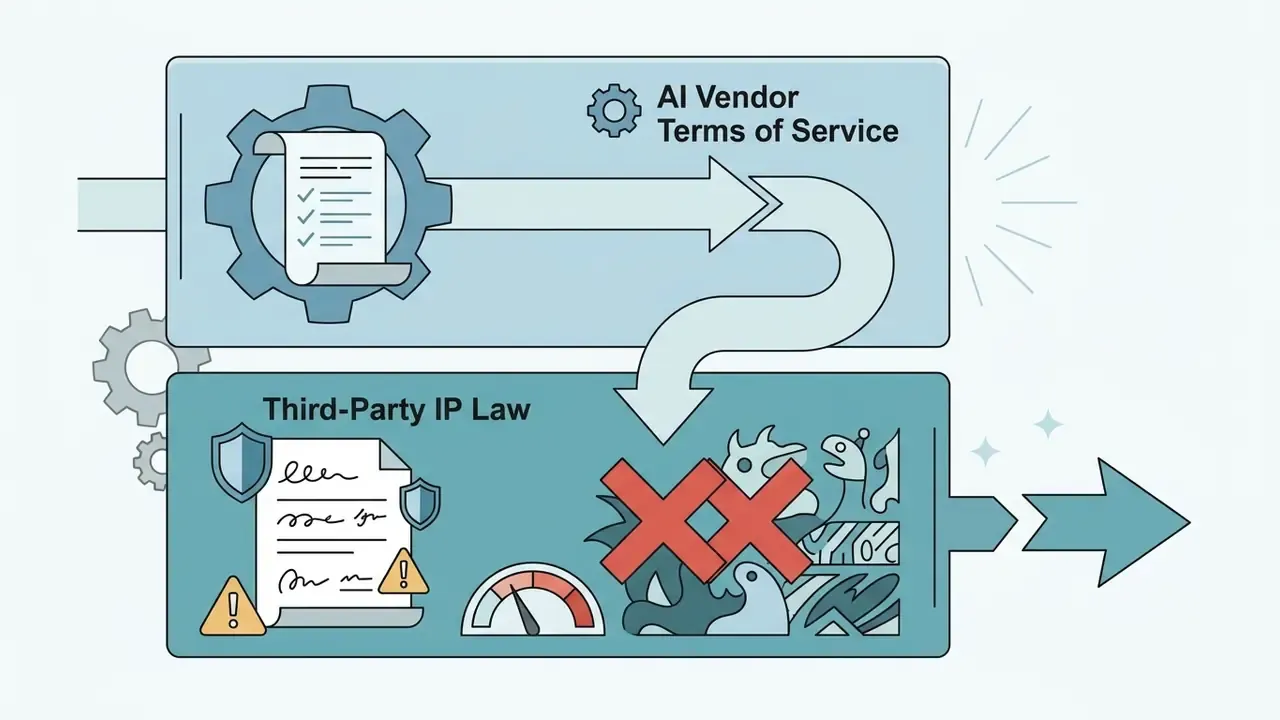
Jurisdiction matters. Japan's 2025 AI copyright guidance states that commercial use of generative-AI output requires prior rights checks where third-party works may be implicated, including public and for-profit use. EU parliamentary research on the AI Act notes that synthetic-content transparency obligations apply to generative outputs, while copyright protection still depends on meaningful human creative input.
On precedent: there is no direct court ruling specifically on Pokémon trademarks or characters inside AI-generated content. The available cases concern unauthorized imitation, modding, and game mechanics, including the 2024 Japanese patent suit filed by Nintendo and The Pokémon Company against Pocketpair over Palworld, and a 2024 Shenzhen court finding of infringement in a Pokémon-related mobile-game case that ended in a mediated settlement after appeal. Nintendo's 2025 public statement said it had "not had any contact" with the Japanese government about generative AI and would "continue to take necessary actions against infringement" of its IP.
Limitations and unresolved questions. Three things remain genuinely open, and pretending otherwise would be dishonest. First, no U.S. court has ruled on whether a Fakemon that merely evokes franchise style crosses into infringement, so the "style is not protected, expression is" line stays untested for this specific case. Second, vendor indemnification language is young and varies wildly in scope, with carve-outs for prompts that name third-party IP. Third, synthetic-content labelling duties are still settling across markets, so a disclosure that satisfies one regulator may not satisfy the next. Treat the guidance below as risk reduction, not immunity. In disputed situations, consult the material in AI Litigation and Case Timelines.
Terms of Use for AI Images Across Generators
Each service sets its own rules, and they differ in kind, not just in degree:
Acceptable-use rules deserve a second look too. Vendors that also host restricted categories, an ai adult video generator being the obvious example, tend to carry broader content policies and different moderation logging. For an approval file, that changes the review questions, not just the risk rating.
Why an Original Character Is Safer Than an Exact Copy of a Pokémon
Creating an original Fakemon on the basis of a general anime style is safer than directly copying protected characters. If the generated creature does not reproduce the unique, recognizable features of registered trademarks, the risk of claims from rights holders drops significantly.
The legal mechanics behind that: the U.S. Copyright Office recognizes that a character's original visual features can be copyright-protected, so copying those specific features differs from using a generic creature concept. Trademark exposure is separate. Commercial use of protected marks without consent can constitute infringement independently of copyright, as national IP offices note. WIPO likewise treats character merchandising as triggering copyright and related rights when protected character imagery is used commercially.
IP risk matrix by output type
| Output type | Copyright exposure | Trademark exposure | Right of publicity | Commercially advisable? |
|---|---|---|---|---|
| Original Fakemon, generic anime style | Low (output itself may be unprotectable) | Low if no marks, names, or logos | None | Yes, with human authorship documented |
| Original Fakemon plus Pokémon-specific naming, typing, or TCG frame | Low to medium | Medium to high (marks, trade dress) | None | Internal or fan use only |
| Named canonical character (Pikachu, Charizard) | High | High | None | No |
| Named character plus a real person's likeness | High | High | High | No |
| Employee photo or customer image uploaded to a consumer service | Contractual and privacy exposure | Not applicable | High | No, without vendor approval |
Vendor and Shadow AI control checklist
Before an image generator enters a regulated workflow, confirm in writing:
Checklist0 / 9
Generation audit log template (for model-risk and audit evidence)
| Field | Example value |
|---|---|
| Asset ID | FKM-2026-0417 |
| Business purpose | Concept art, internal pitch deck |
| Model or checkpoint plus hash | SDXL-anime-checkpoint v3.1 / a91f… |
| Prompt | electric lizard creature, vivid yellow and crimson… |
| Negative prompt | extra digits, extra limbs, bad anatomy, blurry, watermark, text |
| Seed / CFG / steps / sampler | 2481093 / 7.5 / 28 / DPM++ 2M Karras |
| Denoising strength (img2img) | 0.40 |
| Source image provenance and consent | Internal stock, licence ID …, model release on file |
| Human contribution | Composition brief, 3 manual redraw passes, final color grade |
| Upscaler plus final resolution and format | RealESRGAN_x4plus_anime6B to 8192×8192 PNG |
| Rights status, reviewer, date | Approved for internal use, reviewer name, 2026-xx-xx |
Provenance discipline is not theoretical. Current production guidance for game art records brief, model, date, prompt, edits, and rights status for every AI-assisted asset, and treats raw outputs as candidates to be redrawn rather than shipped.
How to Choose an AI Pokemon Art Generator
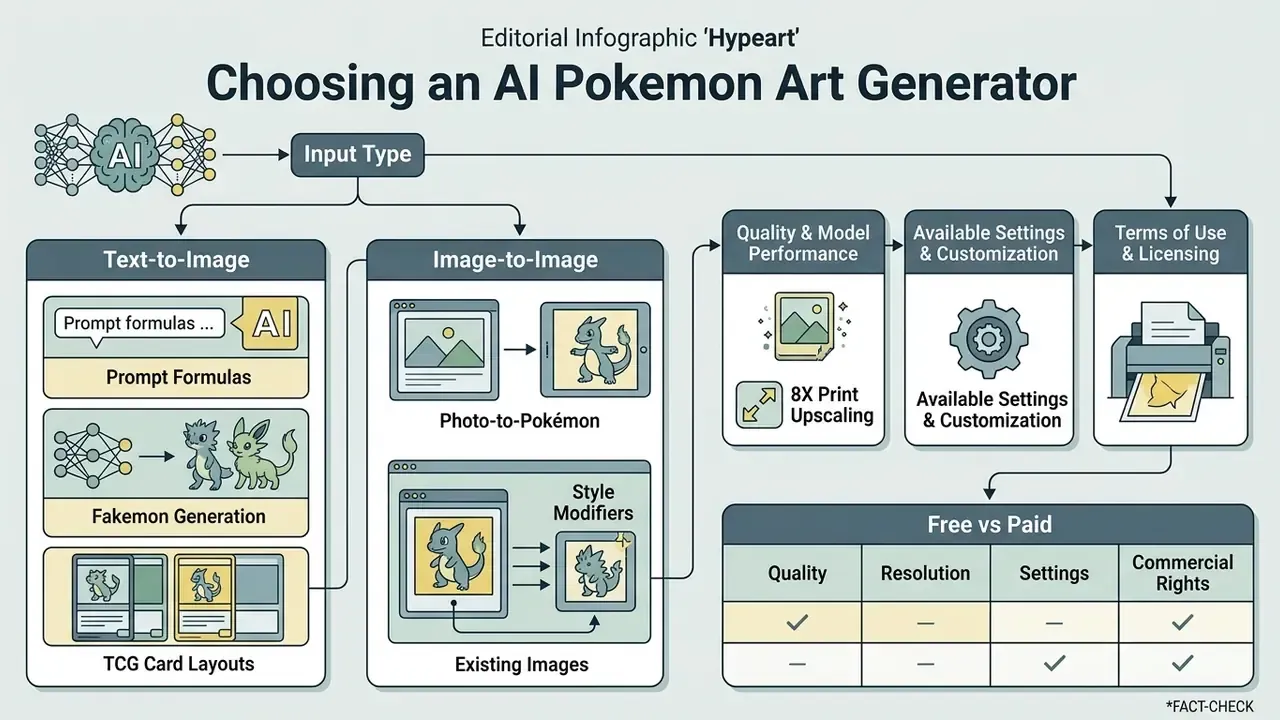
The choice of generator depends on the required operating mode (Text-to-Image or Image-to-Image), the necessary quality, the available settings, and the terms of use. The market offers both specialized web services and universal AI art generator platforms built on Stable Diffusion, Midjourney, or DALL·E 3. For convenient tool selection, use the comparison of leading AI image generators, the AI Media Comparison Matrices, and the broader ranking of the best AI art generators. If cost per asset matters more than features, model it first with the AI Media Calculators.
Note the pattern in both cases. The speed gain came from parameter discipline, not from a better prompt.
Generators of Pokémon from Text, Photos, and Existing Images
Text mode (Text-to-Image) suits generating characters from scratch on the basis of a text prompt, while the image-to-image mode lets you upload a source photo or sketch for subsequent stylization. Using a reference image makes it possible to preserve the base structure of the object while overlaying a recognizable pokemon art style generator effect.
The distinction is documented by the major platform vendors:
- OpenAI documents "Generations" from text prompts and "Edits" that modify an existing image with a new prompt; input images can be supplied by URL, base64, or file ID. Source: OpenAI (2026). https://developers.openai.com/api/docs/guides/image-generation
- Google's MediaPipe Image Generator supports text-to-image plus "condition images," so a reference image can guide the output. Source: Google (2026). https://developers.google.com/edge/mediapipe/solutions/vision/image_generator
- Microsoft documents text-to-image as prompt-driven creation and image-to-image as transforming an existing image "while preserving structure." Source: Microsoft (2025). https://learn.microsoft.com/en-us/windows/ai/apis/image-generation
For programmatic pipelines and batch jobs, the practical entry point is the vendor API rather than the web UI; the setup patterns are covered in the AI Media API Guides.
Fotor AI Pokemon Generator and Alternative Tools
The fotor ai pokemon generator provides a specialized interface for quickly creating 2D and 3D creatures on neural engines, and Fotor's own feature page advertises 10+ Pokémon AI art styles. Source: Fotor (2026). https://www.fotor.com/features/ai-pokemon-generator/ Fotor states its image tools are powered by models including Nano Banana, GPT Image, and Seedream, and its character generator advertises 4K-resolution output; the free Fotor Basic tier is described as "free forever" with limited credits and one concurrent generation, without a published fixed credit count. Source: Fotor Pricing (2026). https://www.fotor.com/pricing/
Alternatives include SeaArt, OpenArt, NightCafe, Pixelbin, Magic Hour, Adobe Firefly, and CGDream, offering different free-credit limits, upscaling functions, and model settings. Note that Adobe Firefly's published plan data lists free daily generations, 4,000 monthly generative credits on Pro, and a maximum download resolution of 2000×2000 px in JPG or PNG.
| Generator | Modes | Free credits and limits | Supported styles | Usage rights | Input used for training? | Parameter logging and reproducibility | IP risk profile |
|---|---|---|---|---|---|---|---|
| Fotor AI | Text-to-Image, Image-to-Image | Limited credits (Fotor Basic), 1 concurrent job | 2D, 3D, anime, illustration | Personal use by default; check Terms for commercial | Verify in Terms | Limited UI-level parameter export | Consumer-grade; verify before business use |
| OpenArt | Text-to-Pokemon Trainer, Text-to-Image | 50 trial credits | Anime, concept art | Commercial with attribution and back link | Verify in Terms | Model choice exposed (4 basic plus premium) | Medium |
| NightCafe | Text-to-Image | Daily free credits | Fantasy, Pokémon-inspired | Depends on subscription | Verify in Terms | Partial | Medium |
| Magic Hour | Text-to-Image | 10 images per day, no sign-up | Varied | Personal and commercial; no copyright claimed by vendor | Verify in Terms | Minimal | Medium |
| SeaArt | Text-to-Image, Image-to-Image | Daily free limit (metered) | HD, anime, 3D | User ownership claimed by vendor | Verify in Terms | Style and model selection exposed | Medium |
| Pixelbin | Text-to-Image, upscaling | Free trials, then pay-as-you-go | Fakemon, card layouts | Commercial requires subscription | Vendor states secure processing | Preview and export controls | Medium |
| Stable Diffusion (self-hosted) | Text and Image-to-Image, ControlNet, IP-Adapter | Compute cost only | Any, via checkpoints and LoRA | Depends on model licence | No, if run in your own environment | Full (seed, sampler, hash, config) | Lowest data risk; licence review required |
How to Create a Pokémon with AI from a Text Description
Creating a character from text requires building the prompt sequentially: from the base concept and elemental type through to lighting and environment details. A structured order, meaning subject and style first, then context, pose, identity traits, lighting, and camera, is what current prompt-design guidance recommends.
"In an experiment with 1,891 participants and roughly 18,000 prompts, DALL·E 3 users wrote longer prompts; about half of the improvement came from the model and about half from users adapting their prompts."
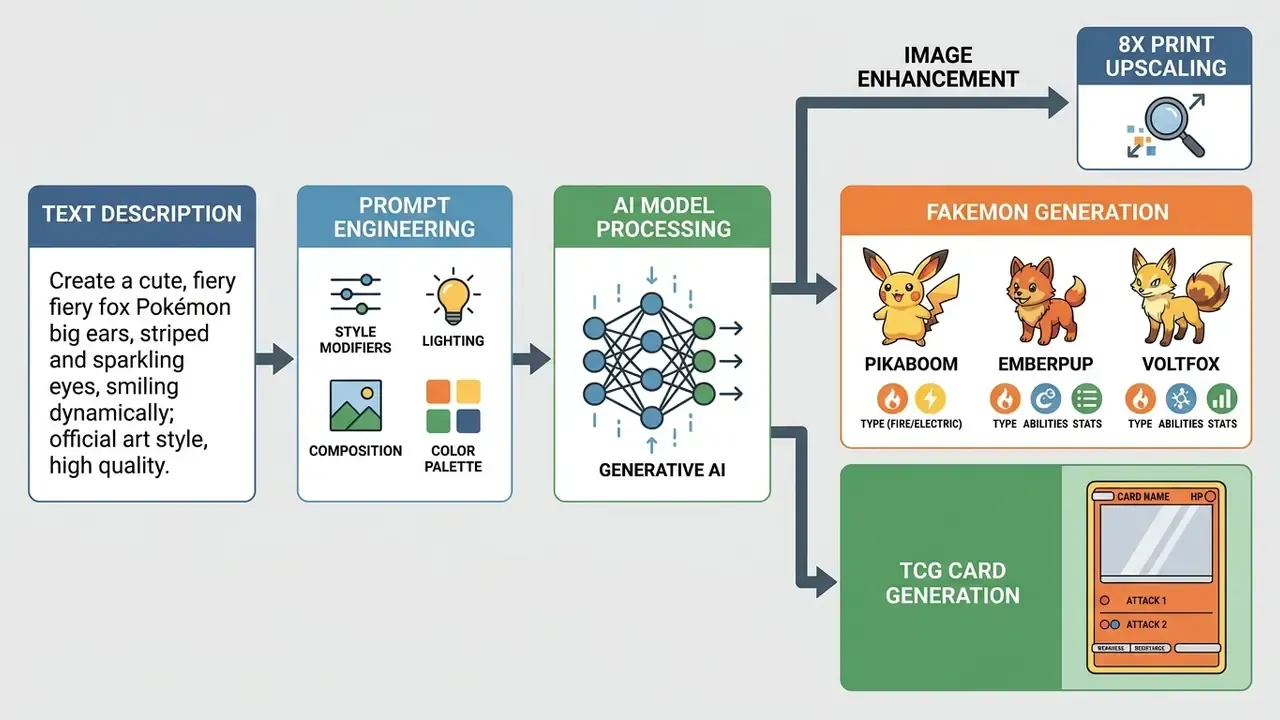
What Details to Add to the Prompt for a Unique Character
An effective prompt formula includes: main subject and elemental type, plus anatomical features, color palette, pose, style, and lighting. To shape a unique character through an ai pokemon picture generator, specify its prototype (for example, "electric lizard"), the primary colors ("vivid saturated yellow and crimson"), and the rendering style ("bright cel-shaded anime style, clean outline").
Useful token banks drawn from published prompt-structure guidance:
high-contrast cinematic lighting, soft rim lighting, golden hour glow, neon-lit scene, shallow depth of field, macro-photography style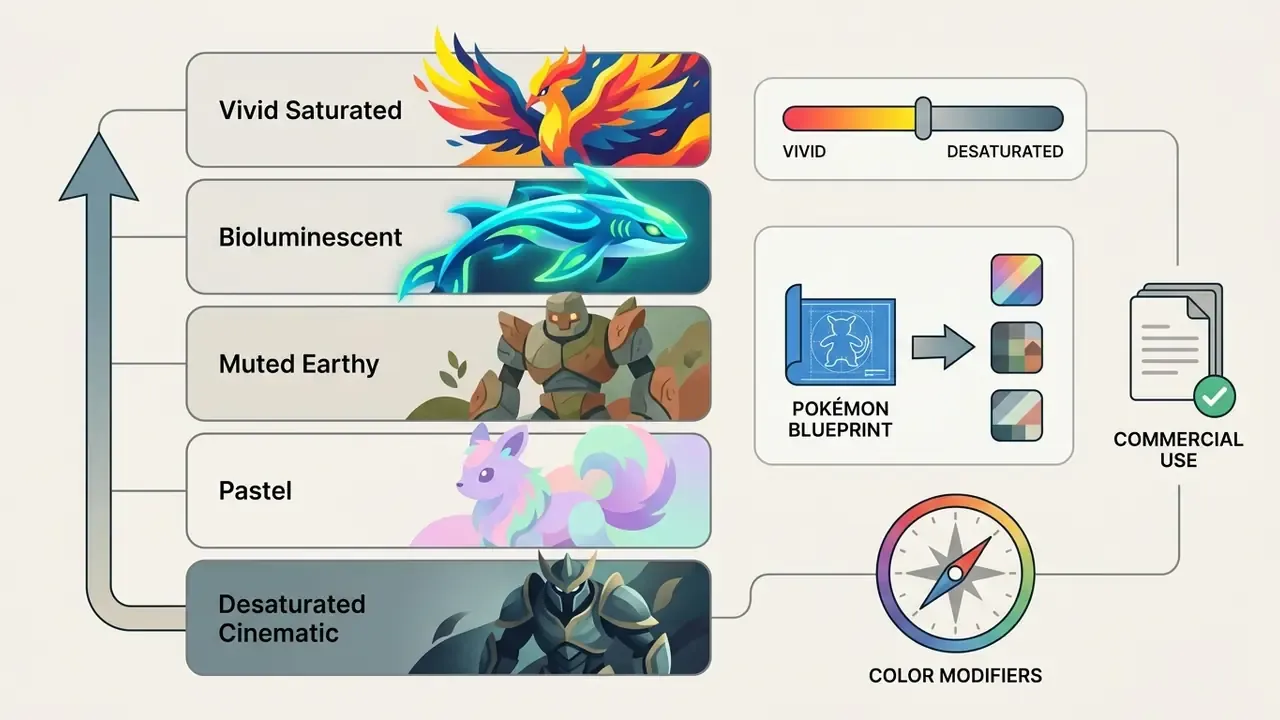
muted earthy, bioluminescent, pastel, vivid saturated, desaturated cinematic, gold/amber/crimson/coral, teal/violet/blue-gray/cyan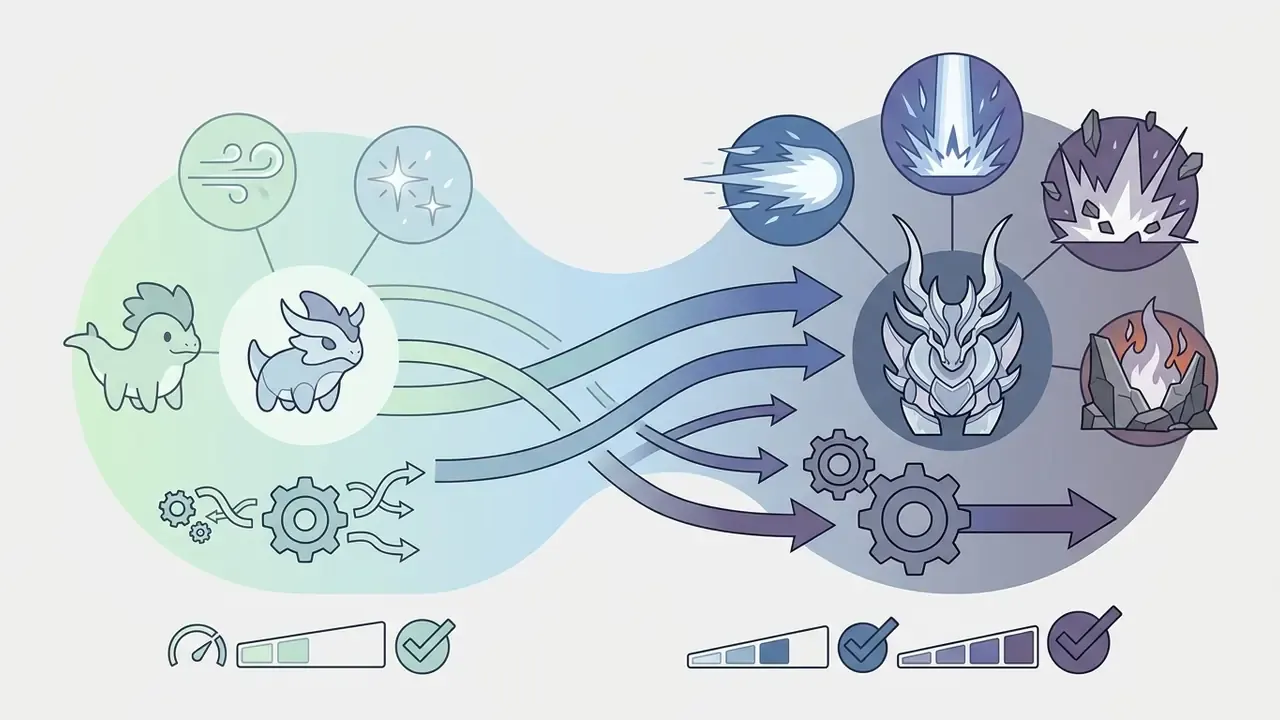
pre-evolution form, smaller crest, softer palette versus final evolution, elongated horns, armored platingQuick random Fakemon generator matrix
If you need a new-creature concept "in one click," combine one element from each column:
| Base animal or object | Elemental type | Anatomical trait | Color palette |
|---|---|---|---|
| Fennec fox | Electric / Ghost | Crystal horns | Neon turquoise and black |
| Axolotl | Grass / Poison | Bioluminescent gills | Emerald green and violet |
| Mechanical owl | Steel / Flying | Razor-sharp wings | Chrome and crimson |
| Pangolin | Rock / Fire | Overlapping ember plates | Basalt gray and molten orange |
| Jellyfish | Water / Psychic | Translucent floating crown | Pearl white and deep indigo |
| Moth | Fairy / Dark | Powdered dust wings, twin tails | Dusty rose and charcoal |
Assembled example: pangolin-inspired creature, Rock/Fire type, overlapping ember plates, basalt gray and molten orange palette, compact silhouette, bold outline, cel-shaded anime style, soft rim lighting.
Adjacent tooling helps when the concept drifts toward real fauna or merch mockups: an ai animal generator handles believable anatomy, while an ai action figure mockup shows how the silhouette reads in three dimensions.
Creating Collectible Pokémon Cards (Pokémon Card Generator)
To generate a finished collectible-card layout in Pokémon TCG style, extend the prompt structure with game attributes: base type, hit points (HP), and attack descriptions. Note that the TCG frame and layout are themselves brand trade dress, so keep card outputs to personal and fan use unless you hold a licence.
Card prompt template:
[Character name], [Elemental] type Pokemon card, trading card game layout, HP [number], attack: [attack name], illustrated frame, full-art card design, official TCG aesthetic, clean text box, 8k resolution
Example: Pyroclaw, Fire/Dragon type Pokemon card, trading card game layout, HP 120, attack: Flame Slash, full-art illustration, official TCG frame, clean text box
Practical notes:
- Diffusion models render text unreliably. Generate the illustration and the frame separately, then set the name, HP, attack names, and rules text as real type in a layout tool. That also keeps the text editable and legible at print size.
- Keep the character portrait inside a central safe area so the frame border and rounded corners do not crop key features.
- For a full card sheet, generate at 1:1 or 5:7 and upscale afterwards rather than generating oversized in one pass.
How to Refine the Request and Improve Generated Results
If the first result contains defects, use iterative refinement:
- Fix the
Seedparameter for reproducibility so only one variable changes per iteration. - Add a negative prompt to exclude artifacts:
extra limbs, extra digits, bad anatomy, blurry, distorted anatomy, low quality, watermark, text, jpeg artifacts. - Adjust the text-adherence scale (CFG Scale) within 7 to 10 for general prompt fidelity. Sweep in small increments, because very high CFG can increase oversaturation and artifacts.
- Supplement the description with specific background, environment, or pose details.
- Generate several variants across different seeds. Outputs are stochastic, and variant sampling is cheaper than over-engineering one prompt.
"Users start with simple requests, evaluate the images, and iteratively add constraints or stylistic instructions, gradually converging on the intended result."
For solving technical problems and configuring generators, use the material in AI Media Support and Troubleshooting.
How to Turn a Photo into Pokémon Style with AI
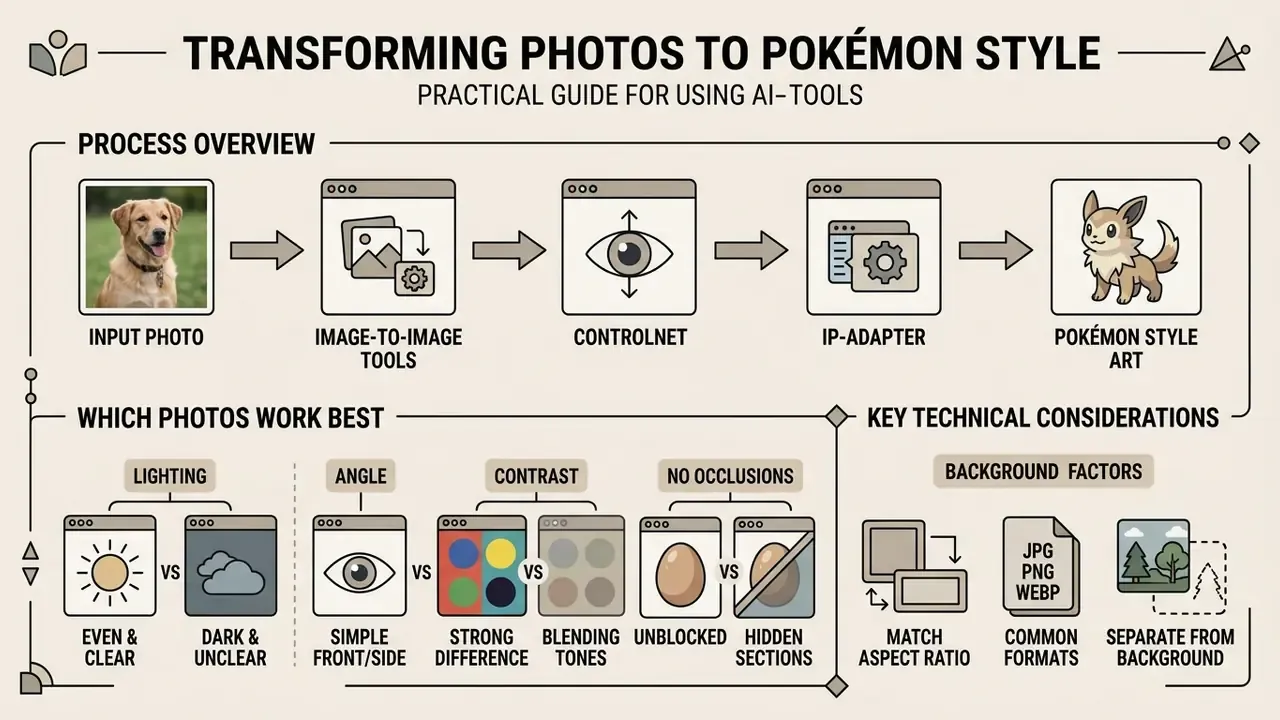
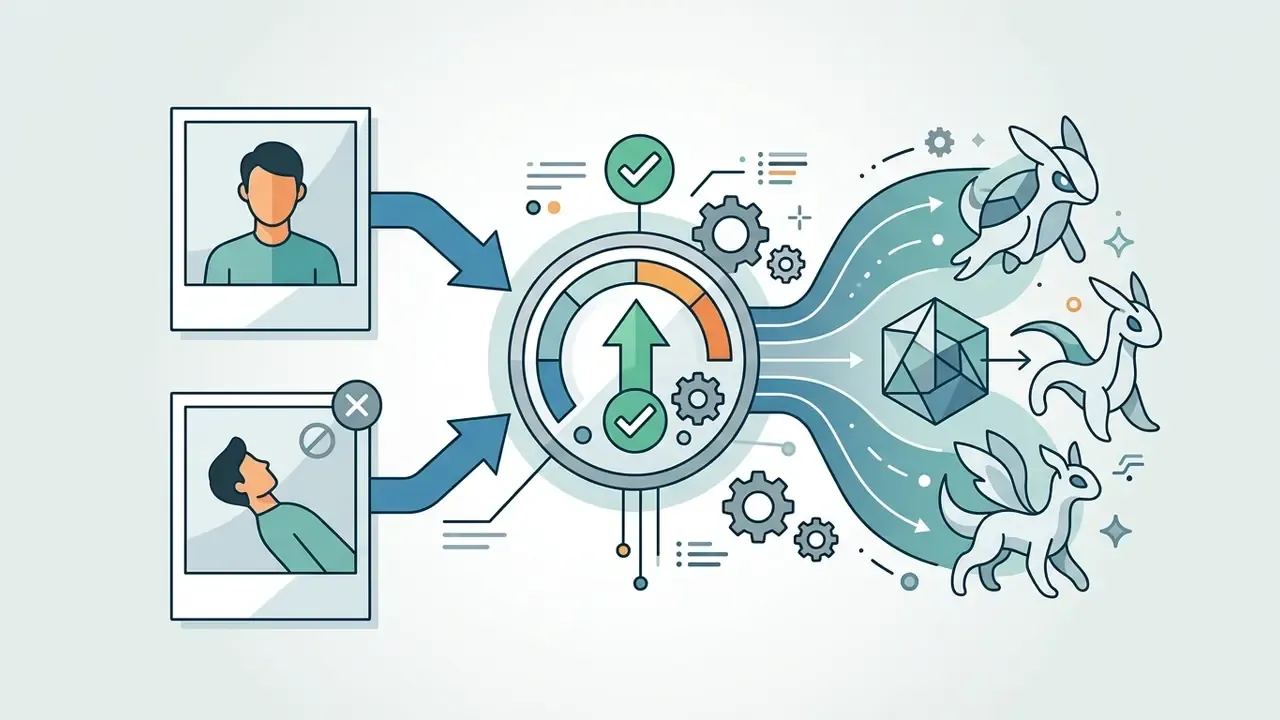
Transforming real photographs of people, pets, or objects into Pokémon styling is done with Image-to-Image tools, ControlNet, and IP-Adapter. This preserves the key features of the source object, carrying its proportions and expression into the new anime format. A decent pokemon ai photo generator workflow is mostly parameter control, not magic.
The two conditioning mechanisms serve different roles: ControlNet conditions pose, depth, edges, and composition, while IP-Adapter carries visual reference content, style, and identity. IP-Adapter is a lightweight 22M-parameter adapter for pretrained text-to-image diffusion models, and its documentation includes InstantStyle-based style transfer. Work published in 2025 (ICAS) combines both into a controllable framework for multi-subject style transfer, which is exactly the people-and-pets stylization case.
"A dual-denoising method with cross-attention reweighting performs zero-shot style transfer, preserving local content features while aligning the global color distribution."
Which Photos Are Suitable for Pokémon AI Transformation
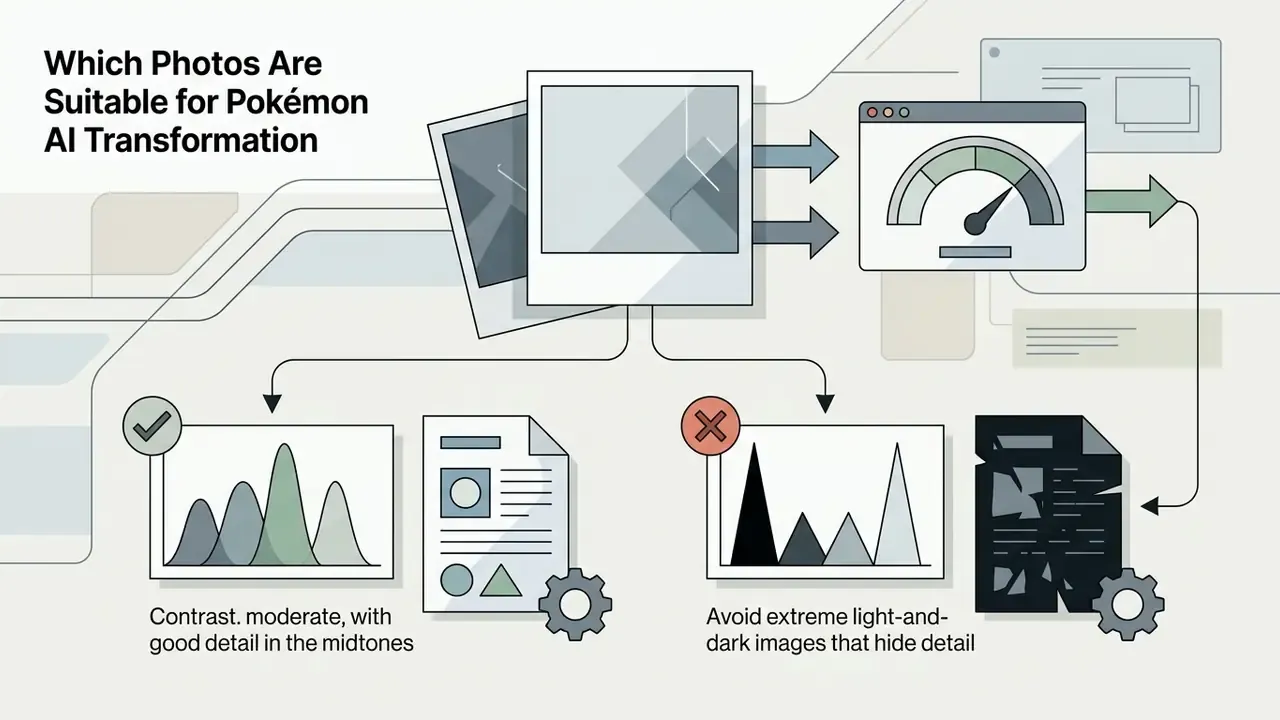
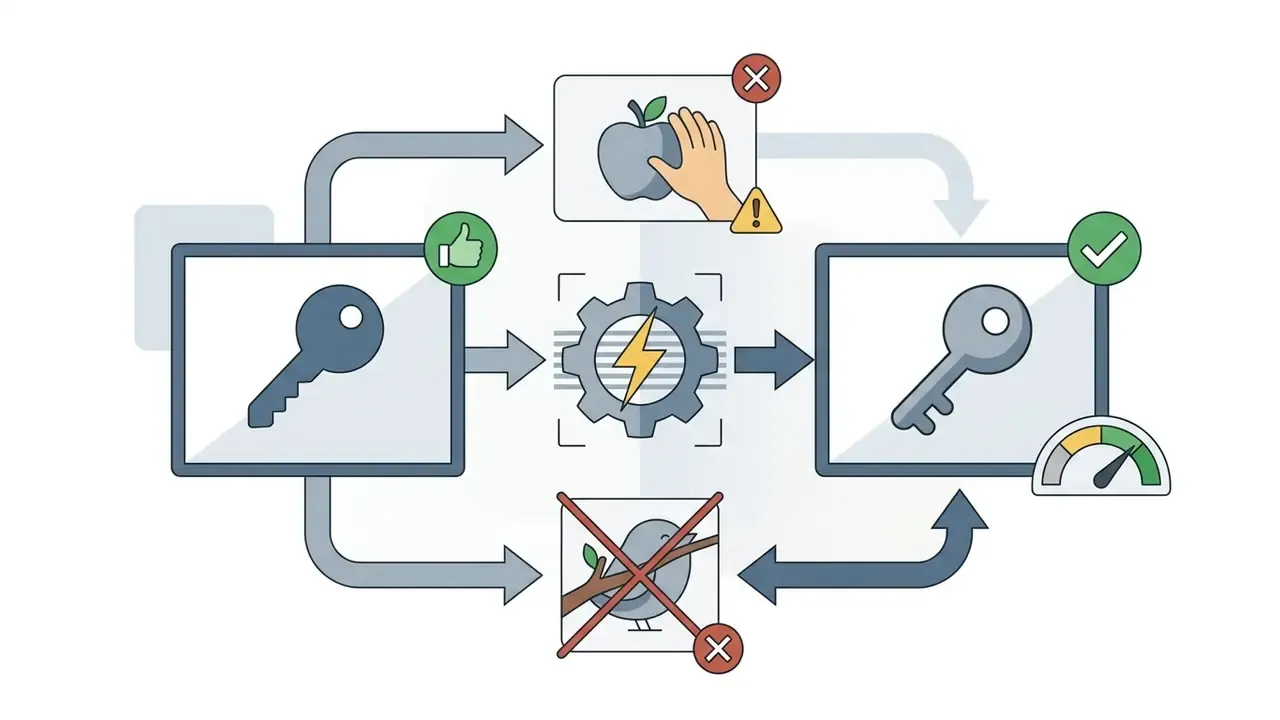
To obtain a quality result, the source image should meet several technical criteria:
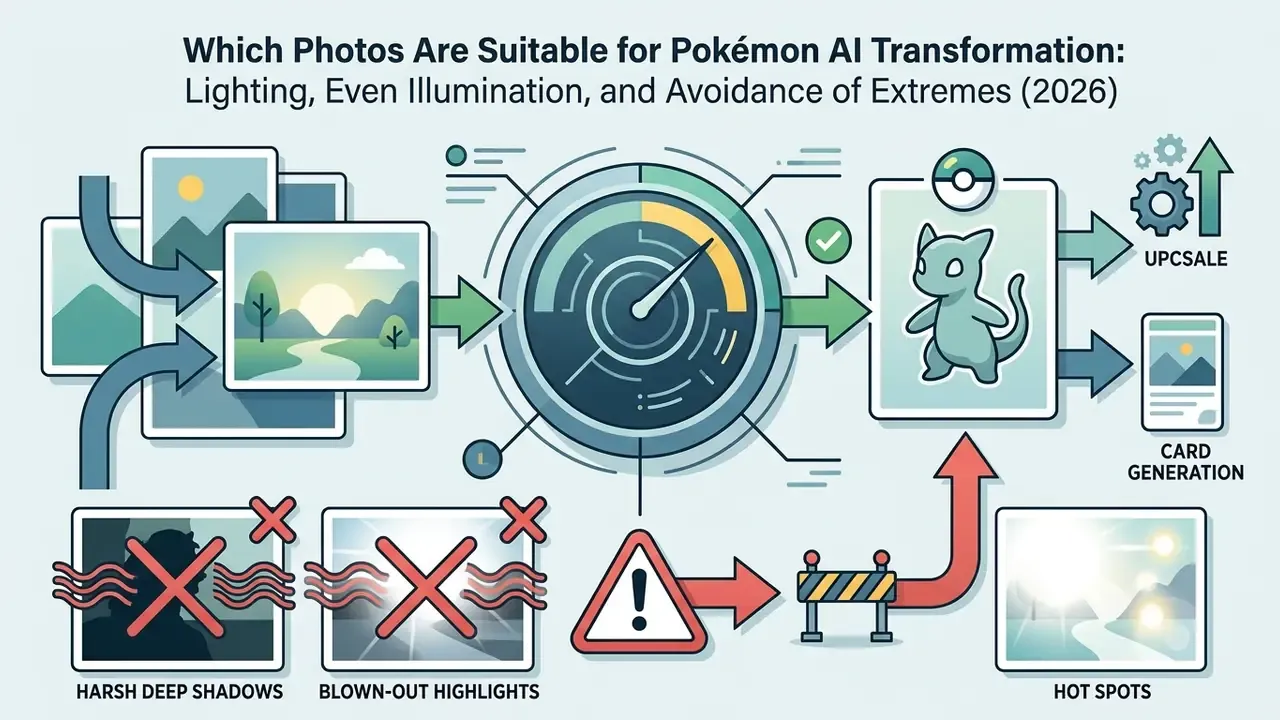
Checklist0 / 5
Style and Image Guidance Settings for Photo Conversion
Free Pokemon AI Generator, Credits, and Paid Capabilities
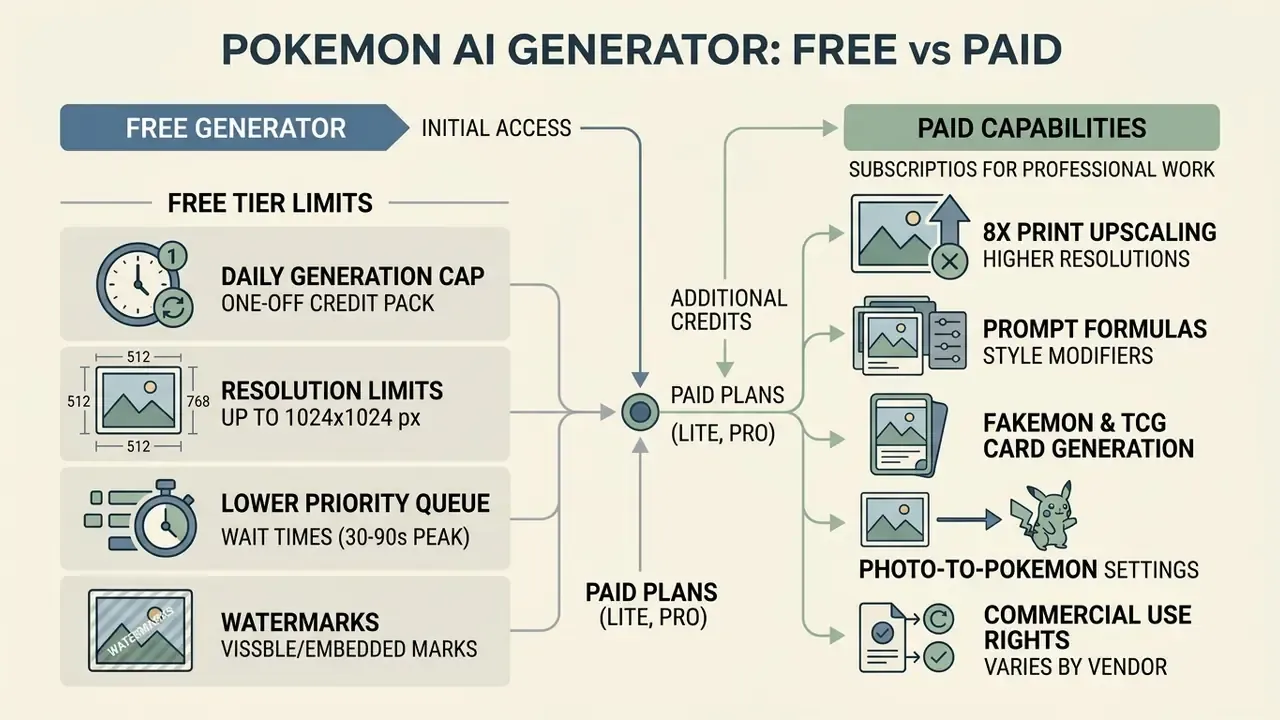
Most AI platforms offer a hybrid monetization model: free introductory access with a credit limit, and paid subscriptions (Lite, Pro) for professional work. For a broader view, see the comparison of free AI image generators and free AI art generators; a detailed breakdown of subscription options is presented in AI Media Pricing.
What Is Available in a Free AI Pokemon Generator
Free tiers usually carry the following limits:
- A limited number of generations per day, or a one-off welcome credit pack.
- Maximum output resolution capped, commonly up to 1024×1024 px; some cheaper tiers cap at 512×512 or 768×768.
- Low-priority generation queue, with reported waits around 30 to 90 seconds under peak load.
- Watermarks, either visible or embedded as invisible provenance marks in metadata, or restrictions on commercial use of the resulting images.
Rights differ by vendor rather than by tier alone. OpenAI states DALL·E users own their outputs and may reprint, sell, and merchandise them, including on free credits, whereas many other free tiers prohibit commercial use outright. So "pokemon ai generator free" almost always means free to look at, not free to sell.
When Paid Plans and Additional Credits Are Needed
Paid plans become necessary if you need commercial use of results, access to premium models (for example Flux or high-detail SDXL variants), generation without queueing, batch upscaling, and no watermarks. Published paid-tier feature sets typically bundle commercial rights, priority or highest-priority queue, batch upscaling to 4K, 8K, or 16K, wider model access, and parallel task slots. Credit economics vary sharply by model: lightweight models can cost a handful of credits per image while premium models run into the hundreds, so per-image cost, not the headline plan price, is the number to model.
| Plan | Typical generation limit | Available models | Output resolution | Commercial rights |
|---|---|---|---|---|
| Free / Basic | 10 to 50 credits per day or in total | Base models | Up to 1024×1024 px | Personal use only (vendor-dependent) |
| Lite (monthly) | 300 to 500 credits per month | Extended set | Up to about 2000×2000 px | Limited; attribution may be required |
| Pro (monthly) | 1,000+ credits, or "unlimited" on selected models | All models plus upscalers | 4K or 8K | Full commercial licence under vendor terms |
Terms and pricing shift often, so check them on the page of the specific AI tool before committing a production budget.
How to Get High-Quality AI-generated Pokémon Images
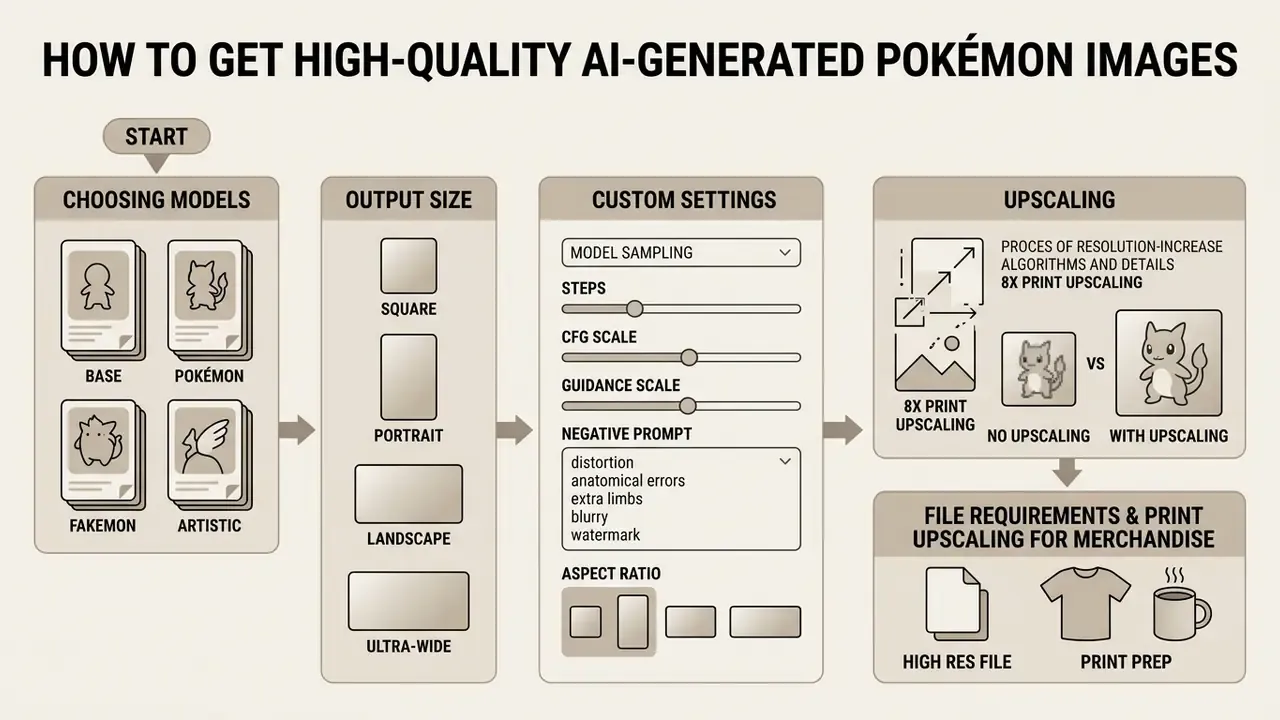
To obtain crisp ai generated pokemon images without anatomical distortion, you need advanced generation settings and specialized resolution-increase algorithms (upscalers).
"The ARIA dataset of 140,000+ images, including anime, shows AI generation produces content that is hard for users to distinguish without a reference image."
A counterweight worth keeping in mind: a 2026 review concluded that current generative models still have substantial limits in producing anatomically accurate illustrations, so outputs require expert verification rather than blind acceptance. If you need to check whether an asset reads as synthetic, or to screen inbound material, see the comparison of AI image detectors and AI reverse-image-search tools.
Choosing Models, Output Size, and Custom Settings
Optimal parameters for a quality illustration:
- Model one trained on anime datasets, for example SDXL-based anime checkpoints.
- Sampling steps 20 to 35.
- CFG or Guidance Scale 5.0 to 7.0 for model-card-tuned anime checkpoints; 7 to 10 where stricter prompt adherence matters. Higher guidance can increase artifacts, lower guidance increases creative drift.
- Negative prompt (model-card style)
extra digits, missing, error, low quality, watermark, artistic error. - Aspect ratio base pixel dimensions change with ratio. In Midjourney v7, default generation starts at 1024×1024 and a 1:1 upscale becomes 2048×2048; 4:3 becomes 1232×928 then 2464×1856; 16:9 becomes 1456×816 then 2912×1632. Some ratios may be slightly altered during upscaling.
- Upscaling use Subtle or Creative upscalers to raise resolution to 2048×2048 px and above without losing line clarity. Creative may add new detail; Subtle minimizes change and preserves the original look. See also the comparison of AI image upscalers and AI image enhancers.
File requirements and print upscaling for merchandise
When generating source images and preparing them for import into graphics engines or for print, use the following parameters:
- Supported input formats (Image-to-Image) JPG, PNG, WEBP, with a contrasting background, up to roughly 20 MB depending on vendor.
- Output formats uncompressed PNG, which preserves crisp contours and background transparency, or WEBP for web publication. Some platforms cap download resolution. Adobe Firefly, for example, exports JPG or PNG at a maximum of 2000×2000 px, so plan upscaling accordingly.
- Upscaling depth for typographic print such as t-shirts, cards, and posters, use dedicated neural upscalers like
RealESRGAN_x4plus_anime6BorSwinIR, which raise resolution up to 8X (up to 8192×8192 px) without blurring line art. Marketing claims of "8X with no quality loss" should be read narrowly: naive interpolation at 8X blurs, whereas anime-tuned neural upscalers reconstruct edges. The sampler choice, not the multiplier, determines the result. - Batch generation where available, batch mode plus a fixed seed is the cheapest way to produce a consistent asset family (idle, attack, evolved form) rather than three unrelated images.
Common Causes of Failed AI Generation Results
The main errors during generation are:
- Extra limbs and fingers.Treat by adding
extra digits, extra limbs, bad anatomyto the negative prompt and lowering CFG slightly. - Blending several concepts.This occurs when the names of different Pokémon appear in one prompt. Describe the properties of the object rather than character names.
- Blurred contours.These arise from low resolution, an unsuitable sampler, or excessive denoising. Raise steps and use a line-art-aware upscaler.
- Prompt conflicts.Competing style or composition terms (
pixel artpluscinematic 3D render) produce unstable output. Make subject, style, and constraints specific and non-contradictory; prompt engineering guidance frames this as the core control point for output quality. - Unreadable card or label text.Expected behavior. Set text in a layout tool instead of asking the model to render it.
Where to Use AI Pokémon Art: Avatars, Concepts, and Publications
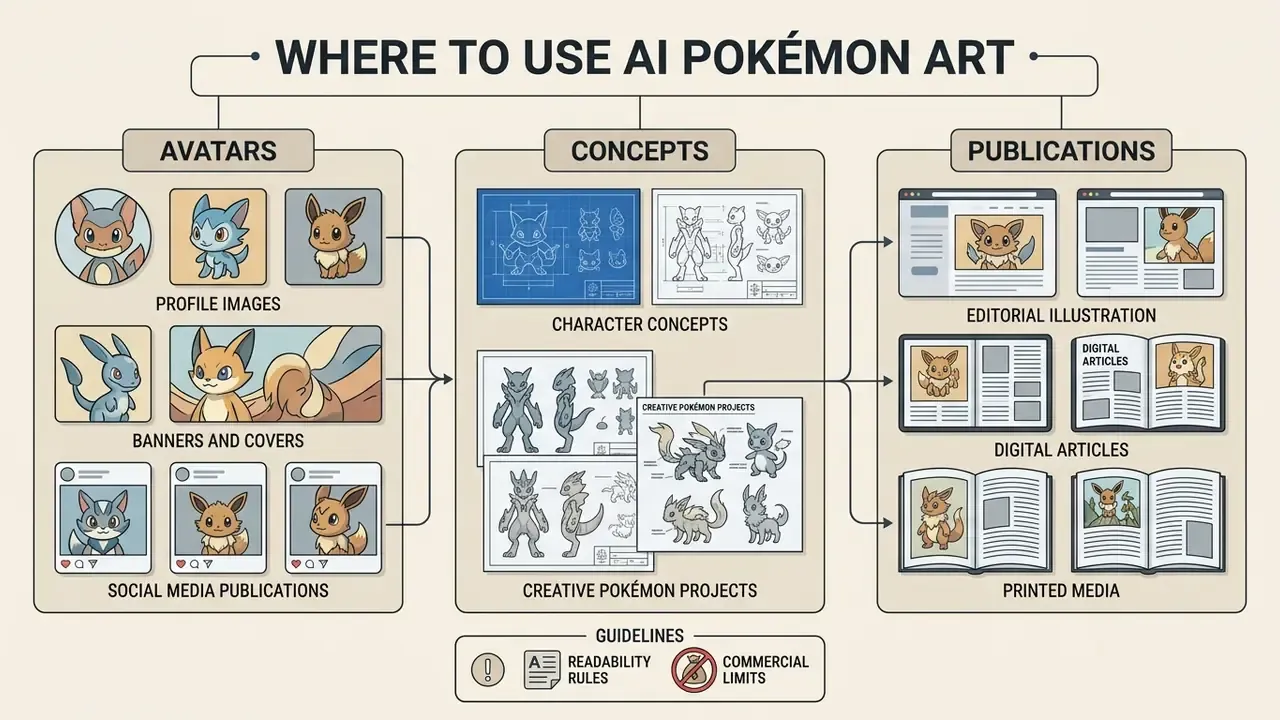
Images created with AI find application in a wide range of personal and creative scenarios that do not infringe commercial rights.
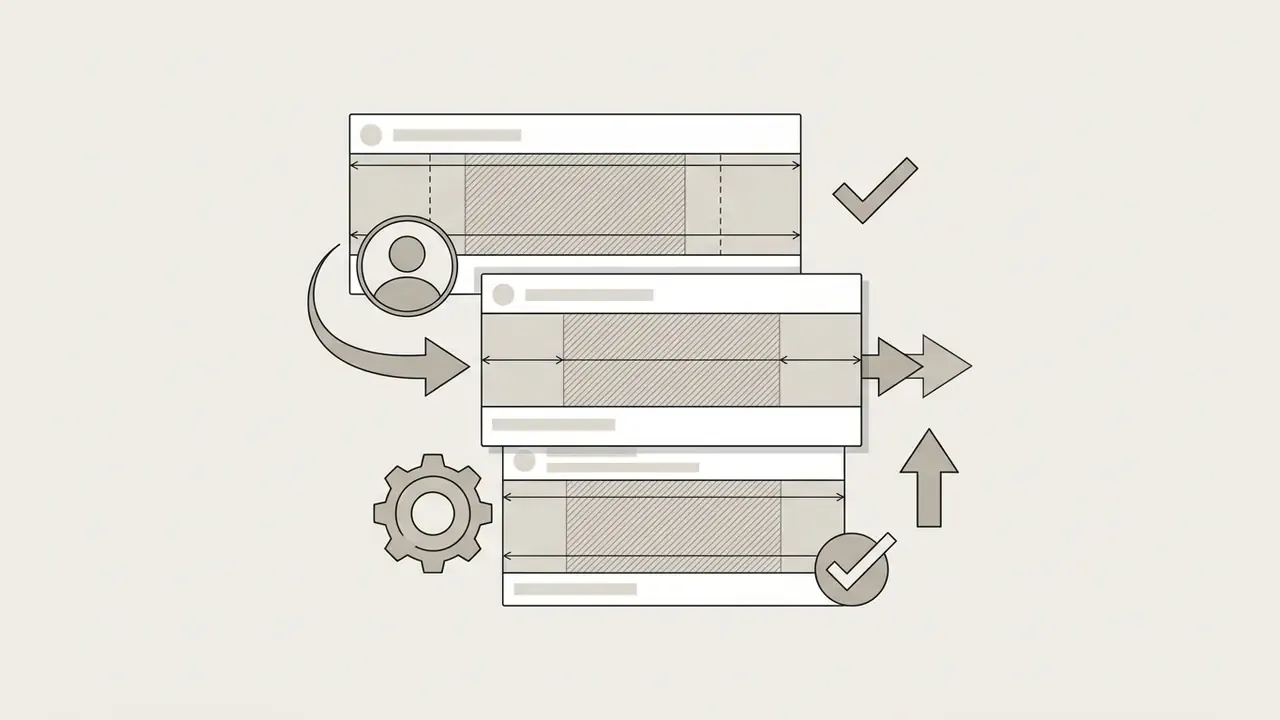
Profile Images, Banners, and Social Media Publications
Pokémon-style images work well for personal accounts, channels, and communities:

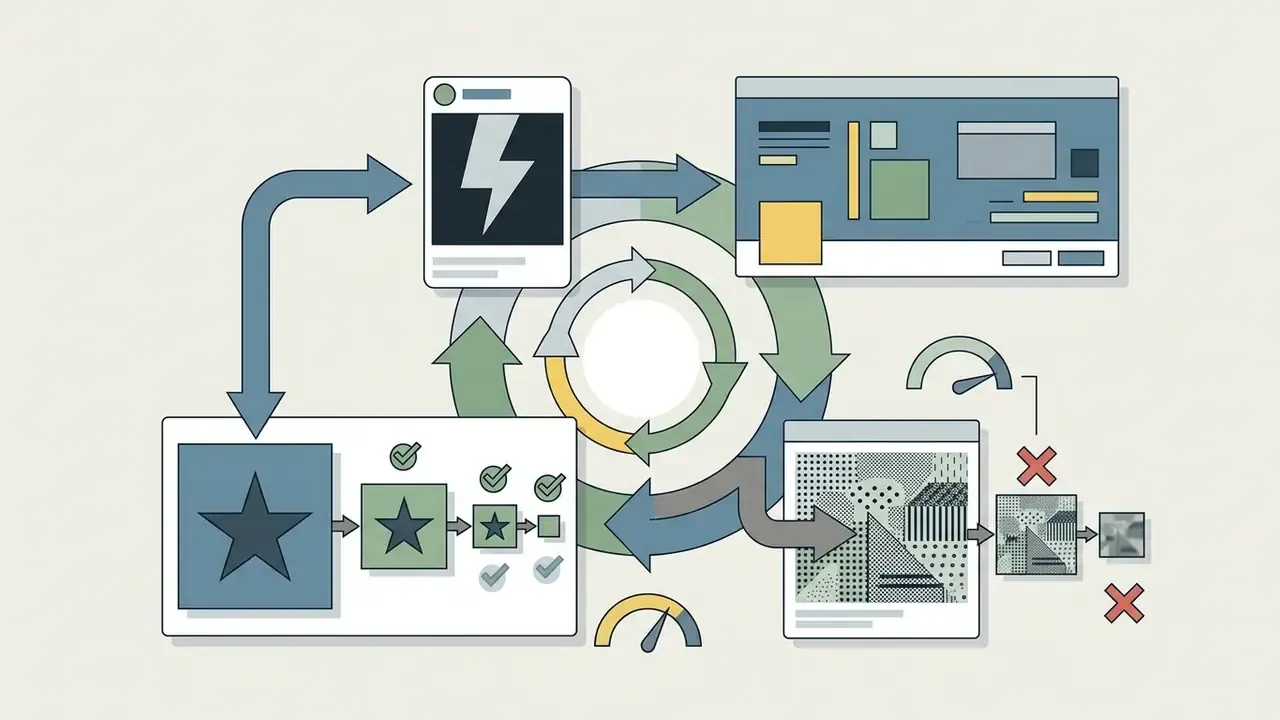
"AI-generated banners achieved roughly 50% higher click-through rates in a field study of more than 173,000 impressions and outperformed human-made images on quality, realism, and aesthetics."
"Detailed labels increase perceived transparency and trust in AI images without significantly reducing user engagement." Source: Examining the Impact of Label Detail and Content Stakes on User Engagement with AI-generated Images (2024).
In other words, disclosure is not an engagement tax. And in markets covered by synthetic-content transparency rules, it is an obligation rather than a courtesy.
Character Concepts and Creative Pokémon Projects
Neural networks are actively used by independent authors for initial idea exploration, creating concept art for indie games, fan comics, and personal portfolios. Recent studies report that generative AI can merge designers' ideas with existing rules and produce complete tabletop designs quickly, and that indie teams use text-to-image models inside production workflows, including pixel-art generation. Portfolio guidance is stricter: show controlled iterations, consistent identity across views, and human-authored selection rather than raw outputs.
Additional tools for working with media content, such as an ai album cover generator, an ai ad generator, an ai headshot generator, or an ai aging filter, let you extend the creative stack when building complex multimedia projects. One caution: the more tools in the chain, the harder the provenance record becomes, so log the model and version at every hop.
FAQ
Can I generate Fakemon from text?
Yes. Describe the invented creature clearly, covering type, silhouette, colors, powers, and personality, and the model will render a new character. Avoid naming canonical Pokémon if the output is intended for anything beyond personal use.
Can I make Pokémon cards with an AI card generator?
You can generate the artwork and a card-style frame by adding the character name, type, HP, attacks, and special abilities to the prompt, and the model will arrange them in a card format. Because on-image text is unreliable and the TCG frame is protected trade dress, set the text in a layout tool and keep the result to fan and personal use.
Which details matter most in a prompt?
Type, body shape, colors, size, expression, powers, and distinctive features such as wings, flames, horns, or armor, followed by style, lighting, and composition. Subject and style keywords carry more weight than connective wording.
How do I make the creature look more realistic or more cartoon-like?
For realism, describe real animal features, textures, natural colors, and physical lighting. For a cartoon look, use cute, bright colors, big eyes, soft shading, simple shapes and a chibi head-to-body ratio around 1:1.5.
Is any AI Pokémon generator truly free and unlimited?
No. Free access always carries limits: daily caps, one-off credits, queue deprioritization, resolution ceilings, watermarks, or non-commercial-only rights. Read the plan page and the Terms together.
Which input formats are supported?
JPG, PNG, and WEBP are the common accepted types for image-to-image work. Export in PNG when line clarity or transparency matters, and in WEBP for web delivery.
How large can I upscale for print?
Anime-tuned neural upscalers such as RealESRGAN_x4plus_anime6B or SwinIR support increases up to 8X (up to 8192×8192 px) with preserved line art. Plain interpolation at that multiplier will blur.
Can I sell merchandise with my AI Pokémon art?
Not if it depicts recognizable Pokémon characters, names, logos, or the TCG frame. Original Fakemon with documented human authorship, generated on a vendor plan that grants commercial rights, is the only defensible path. Even then, confirm the terms in your jurisdiction.
What should a risk or audit team ask for before approving a generator?
Training-on-input policy, retention and deletion terms, commercial-rights scope and revenue thresholds, IP indemnification, exportable generation parameters, enterprise access controls, and where processing physically occurs.
What is a safe first step for a regulated team?
Pick one low-stakes use case, one approved vendor, and one named owner. Log every asset with the template above for 30 days, then review what the evidence actually shows before widening access.
Appendix A: Revision notes (updated statements)