If you sign off on marketing assets inside a bank, an insurer, or a mature fintech, AI art stopped being a design topic a while ago. It became a control question. Who generated the image, with which model version, under whose license, and can you prove it eighteen months later during an audit? That is the frame of this guide.
AI-generated art covers visual assets created through generative machine learning models that synthesize new images from text prompts, style reference datasets, or noise distributions. Across commercial design, media, and digital publishing, modern artificial intelligence models let organizations explore visual concepts, produce production-ready assets, and shorten creative pipelines under documented human direction.
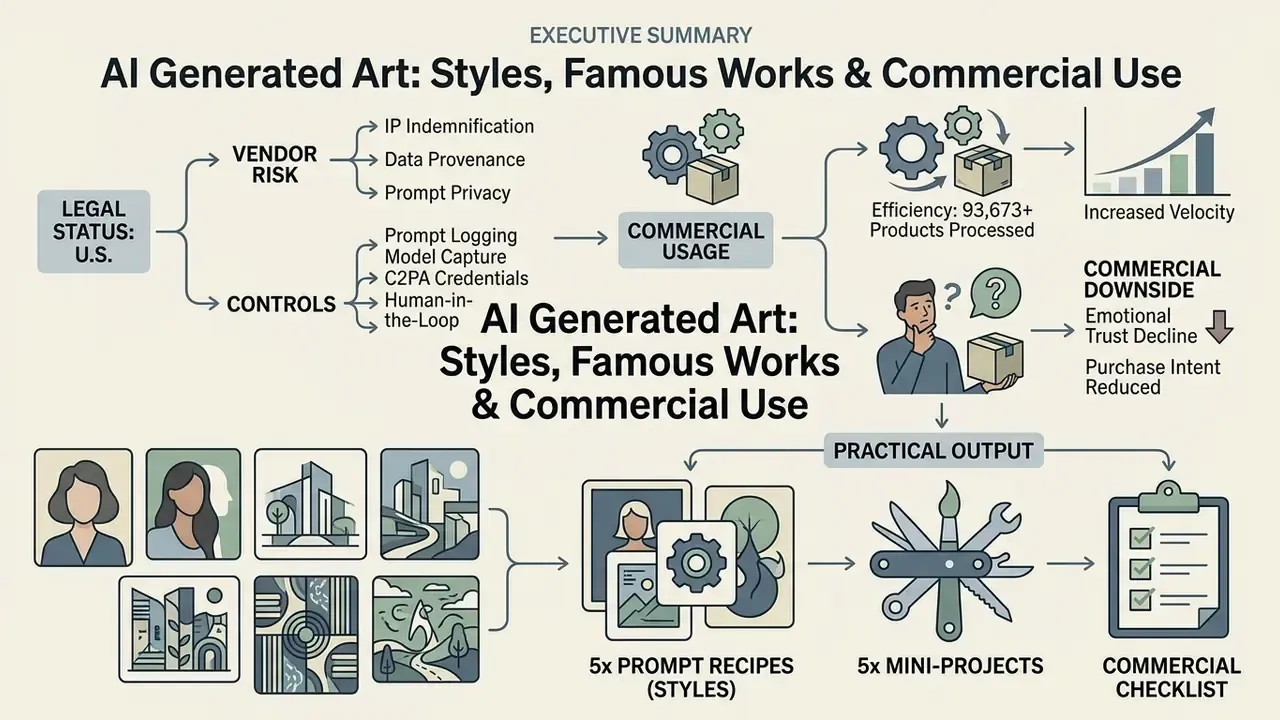
Executive Summary
How to Use This Guide
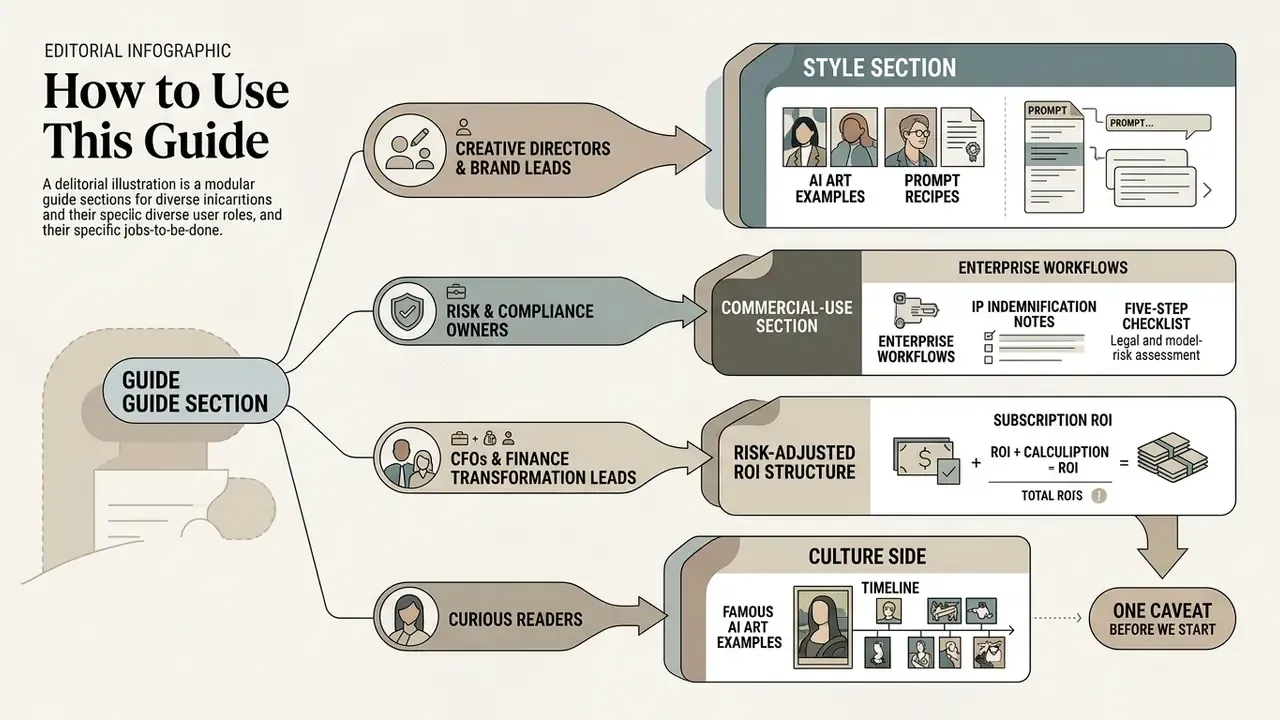
Different readers arrive here with different jobs to be done, so the sections are deliberately modular.
- Creative directors and brand leads should start with the style section: it holds the ai art examples, the prompt recipes, and the vocabulary that actually moves output.
- Risk, model-risk and compliance owners should start with the commercial-use section and the five-step validation cycle, then read the vendor risk matrix before signing anything.
- CFOs and finance transformation leads should look at the risk-adjusted ROI structure, because subscription price is the smallest line in the real cost stack.
- Anyone curious about the culture side can read the famous AI art examples and the timeline; that history explains why auction houses and museums now shape procurement language.
One caveat before we start. Audience assumptions in this guide remain hypotheses until backed by analytics, interviews, or verified customer research. We flag uncertainty rather than paper over it.
What Is AI-Generated Art and How Is It Created?
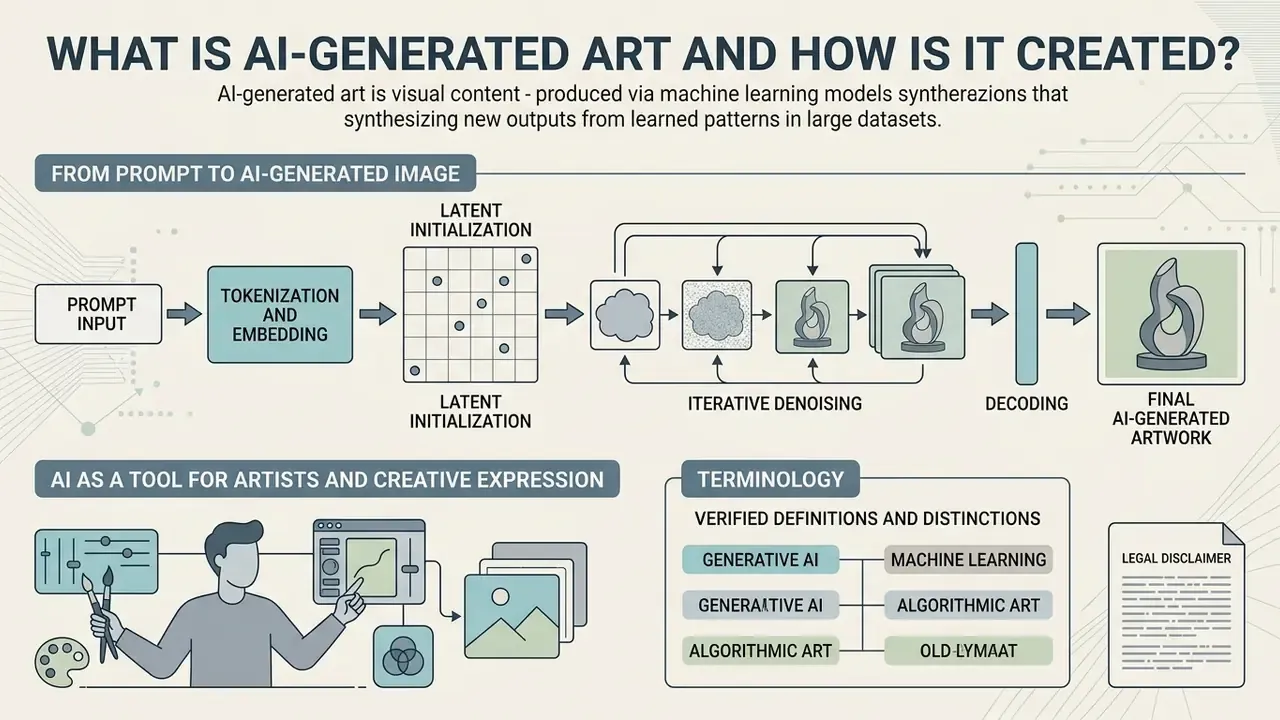
AI-generated art is visual content produced through machine learning models that learn statistical patterns from large image-text datasets, then synthesize new visual outputs from user prompts. The creation process relies on neural networks, specifically diffusion architectures and transformers, where human artists set inputs, refine parameters, and curate generated images against defined creative criteria.
Modern image generation systems process high-dimensional visual data by mapping language onto graphical structures. Scale matters here more than intuition suggests.
«YaART passed multi-stage filtering of 110 billion image–text pairs, selecting 330 million for training with automated quality scoring.»
Production-grade platforms curate massive corpora before training. The YaART pipeline pretrained its system on a filtered subset of 330 million image-text pairs drawn from an initial pool of 110 billion candidates, using automated aesthetic and content quality scoring (YaART Technical Report, 2024). Researchers building the Blank Canvas Diffusion framework took a different route: they assembled a clean baseline of 9.11 million camera-captured images to isolate photographic patterns before introducing targeted style adapters (Blank Canvas Diffusion Study, 2024).
A small illustrative case, hypothetical but typical. An asset management firm needed automated visual generation for internal portfolio reporting. The governance team implemented input prompt filtering and C2PA metadata tagging across all model endpoints. That gave them an auditable evidence chain without slowing the production calendar. Not glamorous work. It does survive an audit sample request.
From Prompt to AI-Generated Image
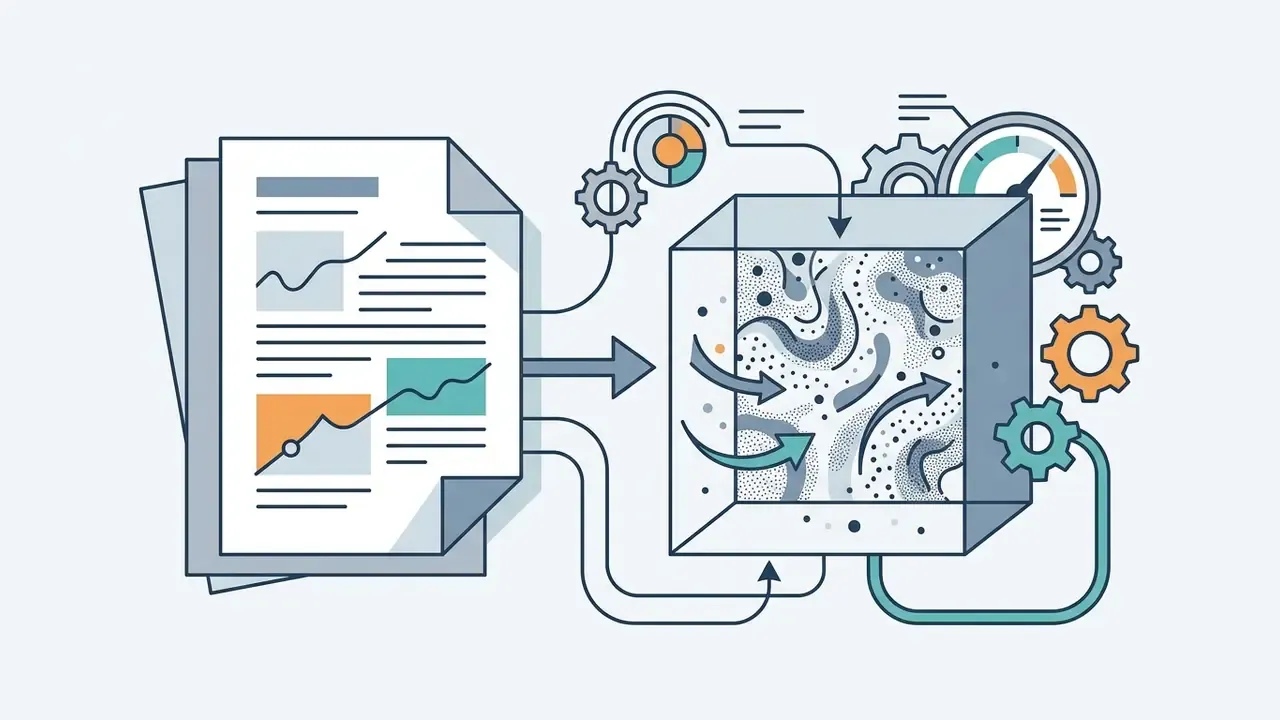
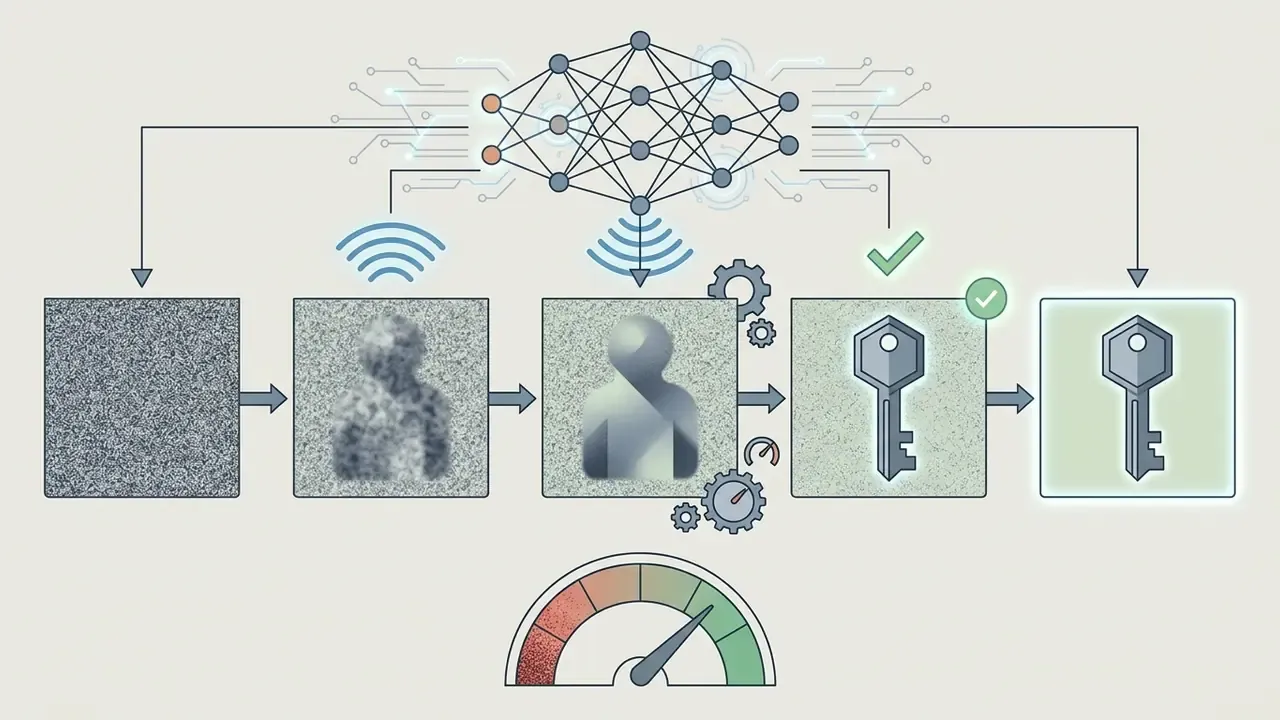
A text prompt becomes an image when a text encoder converts natural language into dense mathematical embeddings, which then guide a reverse diffusion model to iteratively strip noise from a latent tensor until a resolved image is decoded into pixels. Cross-attention mechanisms map specific textual concepts (lighting, camera angle, subject detail) directly onto latent visual features.
In empirical benchmark testing, text-to-image architectures show very different levels of prompt alignment and text-rendering precision. The DEsignBench benchmark evaluated leading generative models across word-level accuracy tasks.
«DALL·E 3 reached 83.3% accuracy on short words and 65.2% overall, while Midjourney recorded only 1.1% word-level accuracy.»
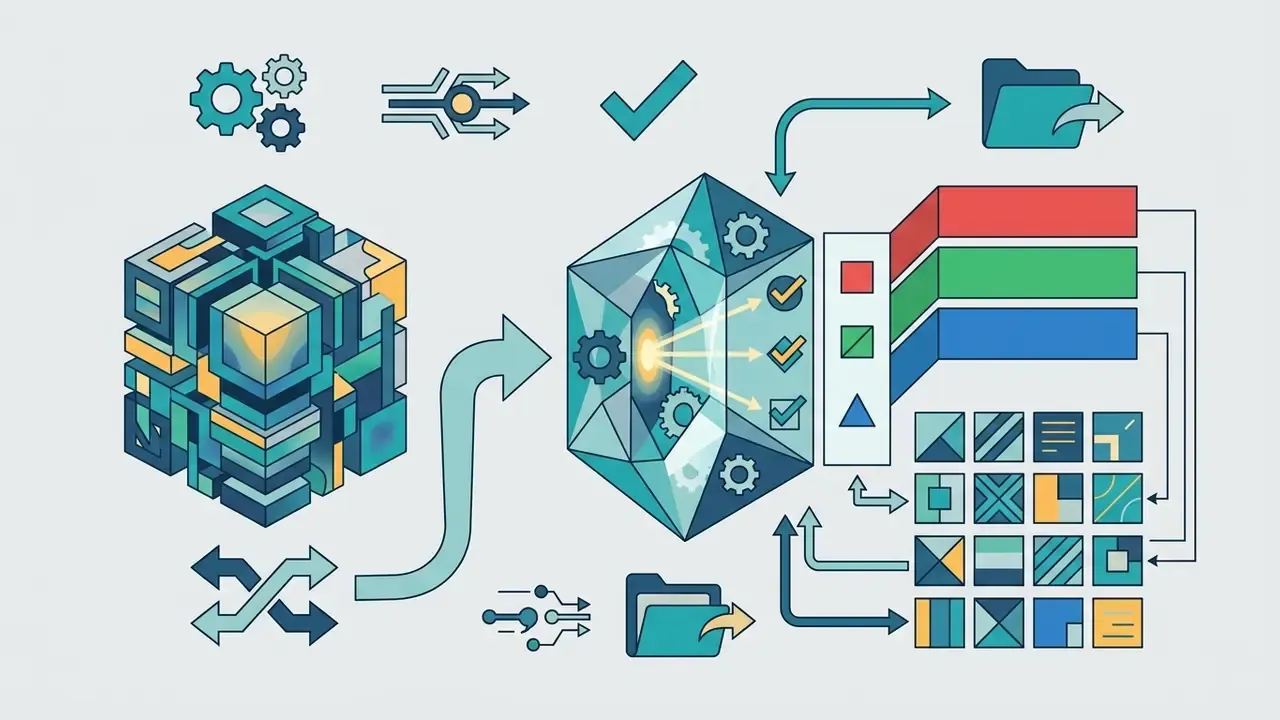
That spread matters operationally. Layout work containing legible copy (banners, packaging comps, UI mockups) behaves very differently across engines than purely pictorial work. The prompt-to-image pipeline runs through four discrete technical stages:
AI as a Tool for Artists and Creative Expression
AI systems work as interactive creative media. They accelerate ideation and asset generation while shifting human effort toward prompt curation, style composition, and post-processing refinement. Rather than displacing human oversight, generative tools sit as an interaction layer between artistic intent and model execution.
Research published in PNAS Nexus found that text-to-image tools raised creator output productivity by 25% across a sample of 4 million artworks, while lifting per-view engagement by 50% (PNAS Nexus Study on Generative Productivity, 2024).
«Generative tools raised creator productivity by 25% and per-view engagement by 50% across a sample of 4 million artworks.»
Measured creative quality, though, does not shift automatically with tool access:
«Expert evaluators rated AI-assisted designs as more creative and less conventional, yet overall creative-thinking scores did not rise significantly.»
Peer-reviewed systematic reviews of generative interaction design (2025) frame AI as a co-creative workflow layer in which human authors keep final decision authority over composition, color balance, and commercial deployment. To be precise about sourcing: the specific ACM 2025 study cited in an earlier version of this article is not identified in our verified source set, so the claim is stated at review level rather than as a single-study finding. Traditional art techniques supply the aesthetic standards, digital design platforms handle compositing, and generative algorithms produce multi-variant options for rapid evaluation, a workflow readers can trace through concrete AI art generators and their parameter controls.
Terminology: Verified Definitions and Distinctions
| Term | Verified definition | Primary documentation |
|---|---|---|
| AI-generated art | Visual content created using generative AI systems conditioned on human textual or visual prompts | OpenAI image-generation documentation (2025–2026), platform.openai.com |
| Generative art | Broader umbrella covering rule-based, algorithmic and statistical systems producing non-deterministic outputs | Harold Cohen / AARON archives; Whitney Museum retrospective (2024) |
| Machine learning | Field of computer science on statistical algorithms that improve task performance through data training | OpenAI "Generative models" (2016, updated 2026), openai.com |
| Neural network | Layered computational architecture (U-Nets, transformers) processing latent representations in deep learning | Adobe Firefly developer documentation (2026), developer.adobe.com |
| Generative AI (vendor framing) | Family of models integrated into creative workflows for image, vector, video and audio synthesis | Adobe Firefly product documentation (2026) |
Note on scope: OpenAI and Adobe publish formal definitions of generation methods and products, while Midjourney's public documentation describes a prompt-based usage flow without a formal glossary covering all four terms.
Can You Use AI-Generated Artwork for Commercial Projects?
Under guidance updated by the U.S. Copyright Office, purely machine-generated visual outputs created without human creative control are ineligible for copyright protection (U.S. Copyright Office Report on AI Copyrightability, 2025, https://www.copyright.gov/ai/). Protection extends only to human-authored creative elements: manual arrangement, digital editing, composite modification, or substantial selection.
Jurisdictional divergence is material for multinational campaigns. The EU generally denies protection to outputs without substantial human intervention. The UK preserves a narrow 50-year computer-generated-works regime. Japan's cultural-affairs guidance grants protection only where a human user contributes creative intent and creative input. In every case, third-party rights can still be infringed even when the output itself is unprotectable. That asymmetry catches teams off guard.
A retail marketing team evaluated AI-generated background renders for 5,000 online product listings. By validating outputs against vendor licensing criteria and running a 30-day A/B test, they cut background staging costs by 40% while holding brand trust steady.
What to Check Before Using AI Art in Design or Product Materials
Enterprise Model Risk: Five-Step Validation Before Production
For organizations working under model risk management (MRM) or internal audit frameworks, visual generative AI deserves the same documented validation cycle as any credit or AML model.
- Inventory and classification.Register each generator (vendor, model family, exact version) in the model inventory; classify by use-case criticality, internal ideation versus customer-facing product imagery.
- Data and IP due diligence.Capture the training-data disclosure, license text, permitted commercial scope, and whether the vendor offers IP indemnification and under which contractual cap.
- Control implementation.Enable prompt logging, output hashing, C2PA manifest embedding, and role-based access. Disable public-gallery defaults and vendor training on submitted prompts.
- Human-in-the-loop sign-off.Require a named reviewer per published asset, with documented edits (compositing, retouching, layout) that evidence human authorship.
- Ongoing monitoring.Track version changes, deprecations (retirement of legacy image endpoints, for example), incident logs, false-positive rates on brand and trademark screening, plus Shadow AI usage.
Shadow AI risk. The most common uncontrolled exposure is rarely the licensed enterprise tool. It is an employee pasting a confidential product sketch, unreleased packaging, or customer photography into a public generator whose free tier stores outputs in a public gallery and may reuse inputs for retraining. Controls worth having: network-level blocking of unapproved endpoints, DLP rules for image uploads, an approved-tools register, and a documented exception path with an owner's name attached.
Risk-Adjusted ROI Structure for Visual GenAI
A defensible business case nets governance cost against production savings, rather than comparing a subscription price to studio invoices.
Risk-Adjusted ROI =
  (Production savings + Speed-to-market value)
  − (License & API cost + Validation & MRM effort + Legal review
     + Provenance/metadata tooling + Residual IP & disclosure risk)
  ÷ Total invested cost
Cost lines teams routinely omit: model validation hours, legal clearance per campaign, C2PA tooling and metadata QA, brand-screening review, Shadow AI monitoring, and the expected value of residual risk (probability of an IP claim multiplied by expected exposure, adjusted for vendor indemnification coverage). Teams can compare options across plans and open the hub of credit calculators before locking a per-asset cost model.
Free AI Generated Artwork Examples and Their Limitations
Free AI image generators give low-barrier access for personal experimentation. They also tend to enforce hard operational restrictions on commercial use, export quality, and privacy. Anyone hunting for ai generated artwork examples free of charge should read the tier terms first. Readers narrowing a shortlist can compare free AI image generators and, for quick tests, no-sign-up AI image generators whose limits are documented up front.
| Parameter / Tier | Free tiers (Midjourney trial, Playground, Canvas-class tools) | Paid & enterprise tiers (Firefly Pro, Midjourney Pro, enterprise APIs) |
|---|---|---|
| Commercial rights | Frequently non-commercial personal use only; attribution may be mandatory | Full commercial rights; some vendors add contractual IP protection |
| Max resolution | Capped web quality (commonly 1024×1024 px) | 4K/8K rasters, vectors (SVG), printable PDF/DXF dielines |
| Data privacy | Generations often public by default; inputs may feed vendor retraining | Private mode; contractual exclusion of prompts and outputs from training |
| Watermarks & metadata | Vendor watermarks or forced metadata tagging | Clean export plus embedded C2PA Content Credentials |
| Audit & access controls | None (individual accounts) | SSO, seat management, admin audit logs, retention policies |
Commercial limitations on free tiers generally fall into three operational categories (Magnific AI Terms Overview, 2026, flagged as requiring verification; the platform's public documentation states that free plans are limited to personal use with attribution, while paid plans include a commercial license):
- Licensing restrictions
- free accounts are often confined to non-commercial personal use and require public attribution.
- Export restrictions
- output resolution is frequently capped (1024×1024 pixels is typical) and may carry a visible vendor watermark.
- Privacy and training rights
- free generations are usually stored in public galleries and may be folded into vendor dataset re-training pipelines.
AI Generated Art Examples by Visual Style
Visual styles in AI art span photorealism, vector illustration, 3D concept renders, fine art, and abstract composition. Each is defined by distinct model parameters and prompt structures. Choosing a direction depends on project goals, distribution channels, and how much audience trust the channel demands.
«STYLEBREEDER contains 6,818,217 images and 1.8 million prompts from 95,479 users, spanning photorealism through abstract hybrids.»
Style Reference Matrix
| Style | Defining visual signals | Primary commercial use | Prompt vocabulary that drives it |
|---|---|---|---|
| Photorealistic | Lens optics, depth of field, natural specular highlights, physically plausible shadow geometry | Product photography, e-commerce, lifestyle campaigns | Focal length, aperture, lighting direction, skin and fabric texture cues |
| Illustration | Line weight, flat or textured color fields, medium-specific grain | Editorial graphics, publishing, packaging, UI decoration | "vector line art", "gouache", "watercolor", "matte painting" |
| 3D render | Volumetric lighting, defined geometry, material response (metal, glass, subsurface) | Product mockups, architectural concepts, game and film pre-vis | "3D render", material names, "studio HDRI", "ambient occlusion" |
| Fine art | Brushstroke relief, impasto, historical style references | Gallery series, brand art direction, print collections | "impasto", "oil on canvas", "cubism", "expressionism" |
| Abstract / experimental | Non-representational shape, color field interaction, pattern systems | Backgrounds, graphic layouts, motion loops, visual exploration | "color field", "geometric abstraction", "generative pattern" |
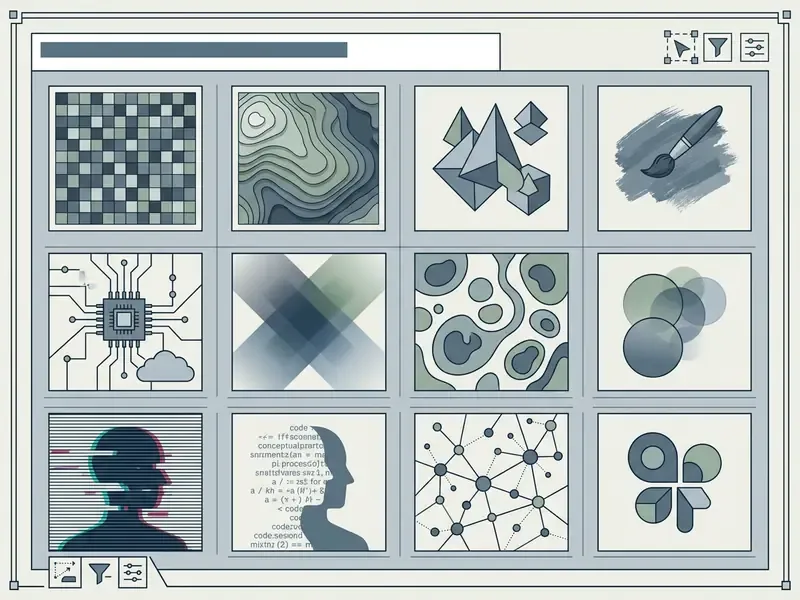
Alt-text pattern for published galleries: ai generated art examples - [style] - [subject] - [model/version].
Photorealistic AI Image Examples
Photorealistic AI images mirror real-world camera optics, depth of field, lens character, and natural lighting distribution to produce lifelike portraits, environments, and product shots. Getting there requires camera controls stated inside the prompt: focal length, aperture value, lighting angle.
NIST guidelines for synthetic imagery evaluate photographic quality against ISO/IEC 29794-5 standards, focusing on exposure uniformity, structural sharpness, color fidelity, and absence of rendering artifacts (NIST AI Image Quality Assessment, 2025, https://www.nist.gov/). Teams verifying whether a delivered asset is synthetic can route files through AI image detectors during intake QA.
High-quality photorealistic renders depend on balanced skin texture, natural specular highlights, and geometrically consistent shadow placement across complex environments.
«DRAGON includes 2.6 million synthetic images from 25 diffusion models for benchmarking AI-content detection and attribution.»
For portrait-like output, NIST face-image guidance emphasizes frontal pose, a single visible face, open eyes, even facial illumination, no hot spots, and focus retained from nose to ears. That reads like a bureaucratic list. In practice it is the fastest accept-or-reject checklist for a synthetic headshot. Practitioners choosing an engine for realism-critical work can consult our comparison of the best AI image generators.
AI-Generated Illustration and Digital Art Examples
AI digital art examples in the illustration bracket rely on medium-specific prompt cues: vector line art, gouache, digital matte painting, watercolor. These generate stylized assets for editorial media, publishing, and interface design. Consumer-facing creators also play with thematic generators such as a disney ai generator for stylized family content, or a dnd ai art generator for tabletop character development. Both belong to the hobbyist tier rather than regulated brand production, and neither should be used for trademark-adjacent commercial assets.
Reporting from Columbia Business School documented editorial workflows where digital publishers used diffusion tools to build custom magazine graphics from text prompts, shortening campaign turnaround (Columbia Business School Case Study, 2025, source requires verification; the underlying claim is corroborated by published editorial workflows using Stable Diffusion, Midjourney and DALL·E for magazine illustration). Style-transfer refinement is usually handled through image-to-image AI generators once a base composition gets approved.
Stylized assets let creative teams hold a cohesive visual identity across web and print without booking a physical shoot.
«A study of 6 million AI images on Pixiv found creators combine several specialized models and embed generation parameters directly into file metadata.»
Copy-paste prompt recipe (illustration):
Editorial magazine illustration of a woman reading on a night train, limited four-color palette of deep teal, ochre, cream and black, visible gouache grain, flat perspective, screen-print texture, generous negative space for headline --ar 4:5
Model: Firefly Image Model 4/5 or DALL·E 3 | Key parameters: explicit medium term, constrained palette, reserved copy area for layout.
3D AI Art and Concept Art Examples
3D AI art produces imagery with volumetric lighting, explicit surface geometry, and material depth. It has become a primary visual development tool for game studios and film pre-visualization. Concept artists use it for environment thumbnails, hard-surface vehicles, and character models drafted before sculpting begins.
In game production pipelines, systems like CharNeRF reconstruct 3D character assets directly from multi-view turnaround drawings generated by text-to-image models (CharNeRF Technical Review, 2024). Earlier research on environment concept design used GAN variants to auto-generate black-and-white thumbnails as visual stimuli during ideation.
Studios iterate fast on asset variations, from sci-fi environments to playful transformations like a dog to human visual concept, before moving refined 2D renders into Blender or Unreal Engine 5.
«Blank Canvas Diffusion showed that a model trained exclusively on 9.1 million photographs reproduces artistic styles after minimal fine-tuning.»
Copy-paste prompt recipe (3D / concept):
3D render of a modular deep-space cargo hauler, hard-surface panel lining, brushed titanium and matte ceramic materials, volumetric rim light from a distant blue star, orthographic three-quarter view, studio HDRI, ambient occlusion, production concept sheet --ar 16:9
Model: Firefly Image Model 5 / Midjourney v6 / SDXL with hard-surface LoRA | Key parameters: material naming, orthographic framing, single key light plus rim.
Abstract and Fine Art Created by AI
Abstract and fine art created by AI explores non-representational form, color field interaction, and experimental algorithmic expression through fine-art descriptors: impasto brushstrokes, cubism, expressionism. These outputs let artists produce large generative series that push against conventional composition rules.
The ArtBulb evaluation framework measures independent copyright viability in AI fine art by applying multimodal clustering to check whether a generated work sits at a distinct visual distance from its training data (ArtBulb Framework & AICD Dataset, 2024).
«Of 1,786 AI works in the AICD dataset, expert panels judged 542 pieces stylistically independent with scores above 4.0 of 5.»
«CPDM contains 2,100 protected images and 18,900 generated copies for evaluating copyright-protection methods against diffusion models.» CPDM Dataset & Benchmark (2024).
In that AICD dataset of 1,786 AI artworks, expert panels identified 542 abstract and fine art pieces as showing enough stylistic independence to justify separate copyright consideration under human-curated conditions. Roughly three in ten. Fewer than the marketing narrative suggests.
Famous AI Art Examples and Influential Works
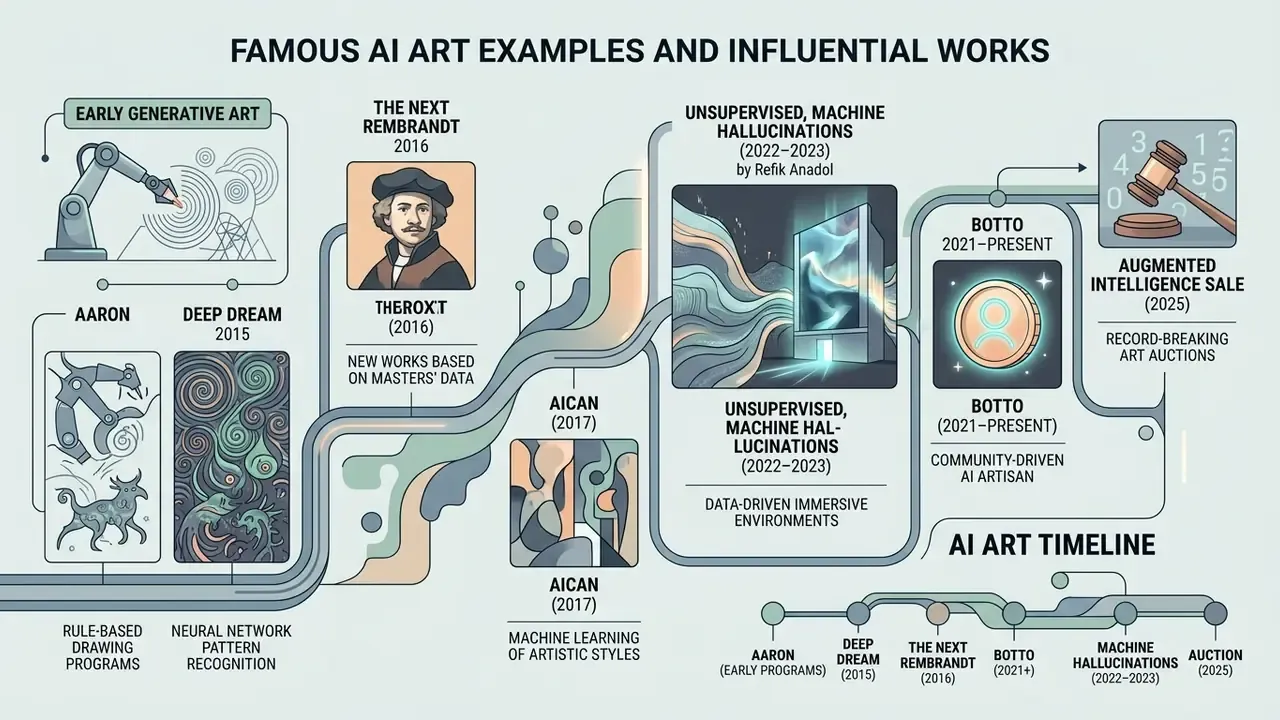
Famous AI artworks mark technical and cultural milestones, tracing machine creativity from early rule-based drawing programs to seven-figure auction results for neural network outputs. These reference points show how computer-generated imagery entered recognized contemporary art history. Readers who want to move from history to production can compare the best AI art generators currently used by studios.
Early Generative Art: AARON and Deep Dream
Generative art began with symbolic, rule-based software long before deep-learning synthesis. Harold Cohen developed AARON at UC San Diego and the Stanford AI Lab from 1973 onward, building an autonomous system programmed with explicit rules for figure drawing and spatial composition (Whitney Museum Retrospective, 2024). AARON executed physical drawings on paper and canvas, an early case of symbolic machine creativity. Cohen's own framing in "What is an Image" (1980) described AARON as a program modeling aspects of human art-making behavior rather than a mere image producer. He also pressed the question that still frames the debate: if what AARON makes is not art, what exactly is it doing?
Earlier still, in February 1965, Georg Nees staged "Generative Computergrafik" in Stuttgart, widely cited as the first public exhibition of computer art and the institutional starting point for algorithmic aesthetics.
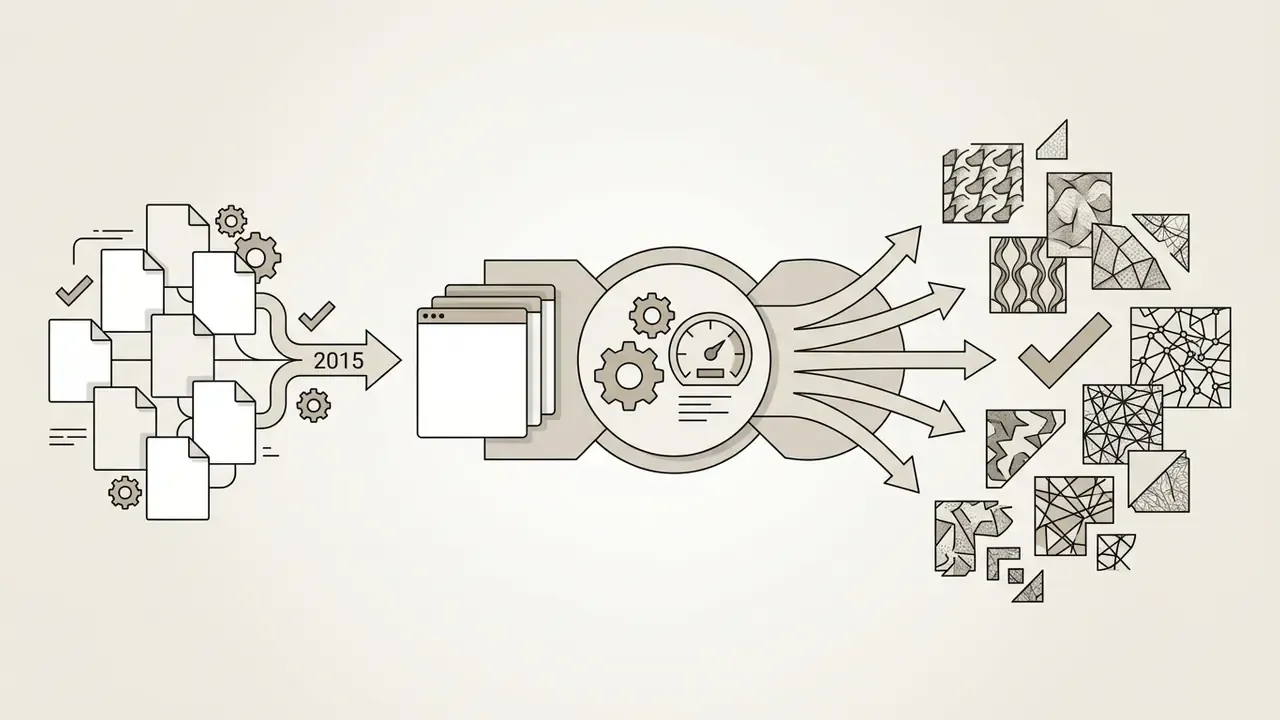
In 2015, Google researchers released DeepDream, a neural network visualization method built on gradient ascent over convolutional networks (Google Research, 2015). By amplifying features detected within image layers through algorithmic pareidolia, DeepDream produced hallucinatory, pattern-dense imagery that pushed deep learning artifacts into mainstream culture. The 2014 introduction of Generative Adversarial Networks by Ian Goodfellow and colleagues supplied the technical pivot that made the later auction-era works possible.
Contemporary AI Artworks in Galleries and Public Culture
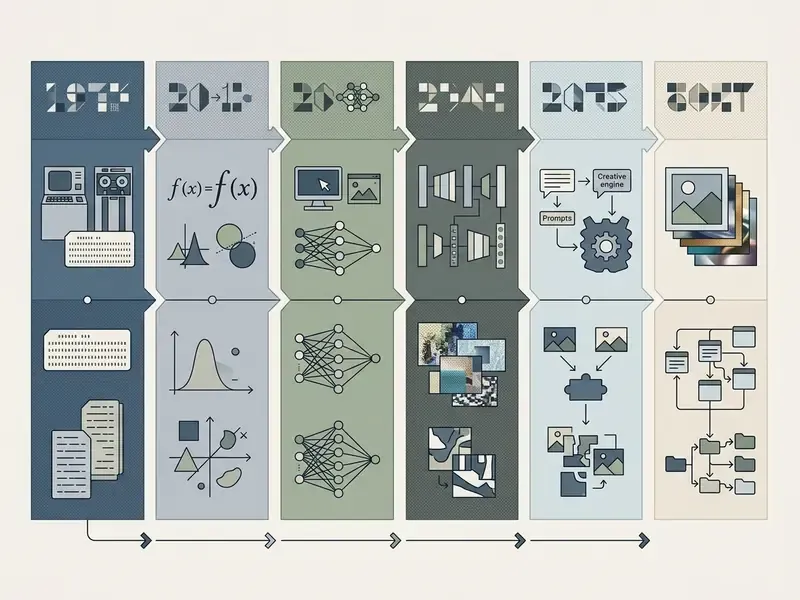
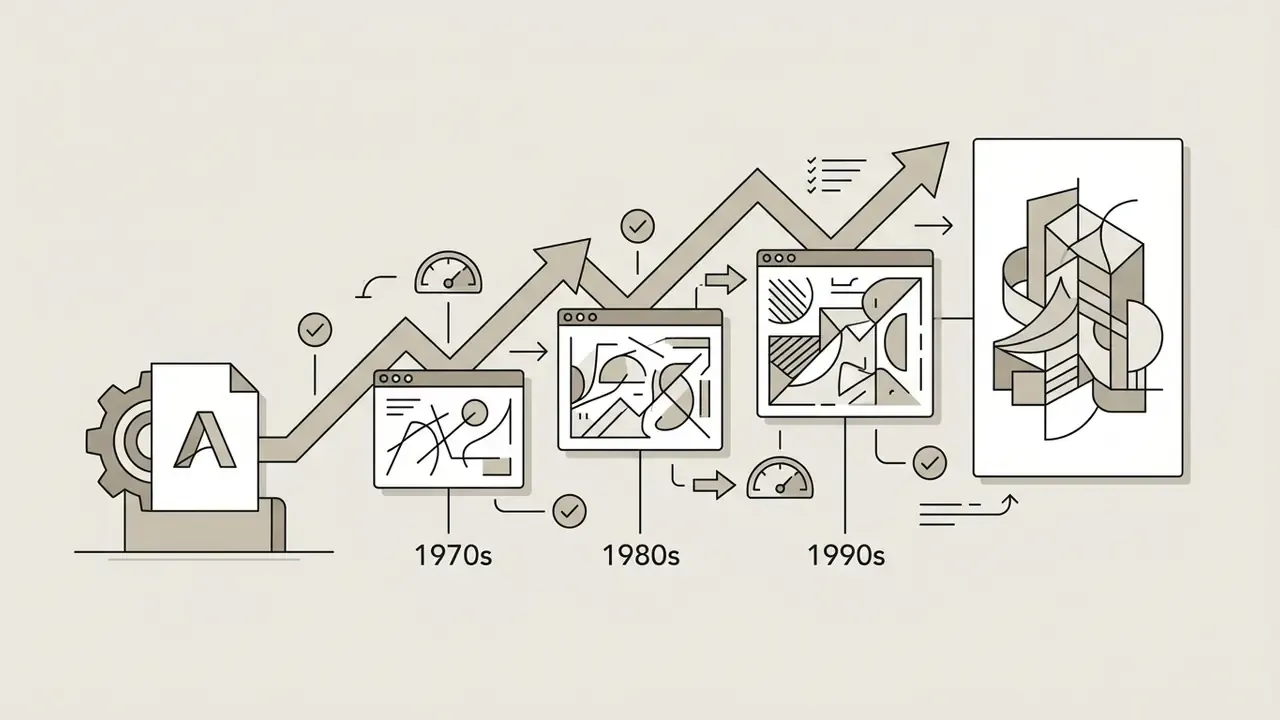
AI Art Timeline
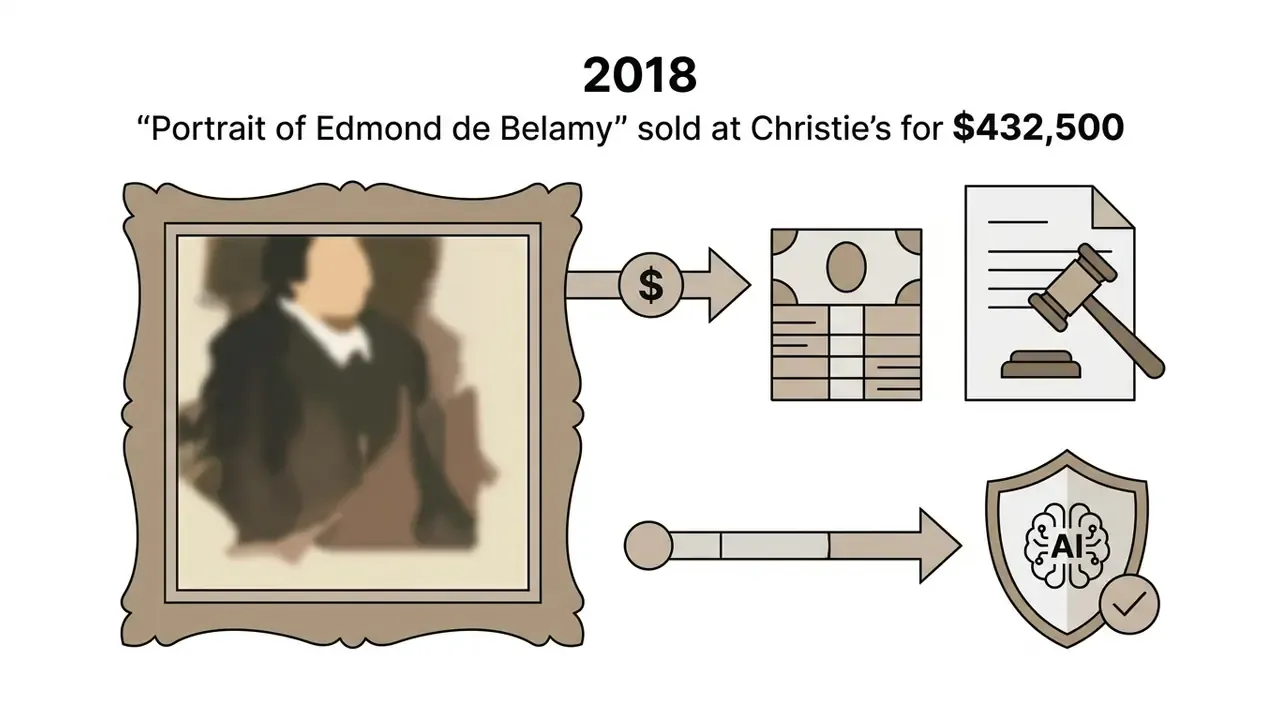
AI Art Projects: How Creatives Use Generated Images
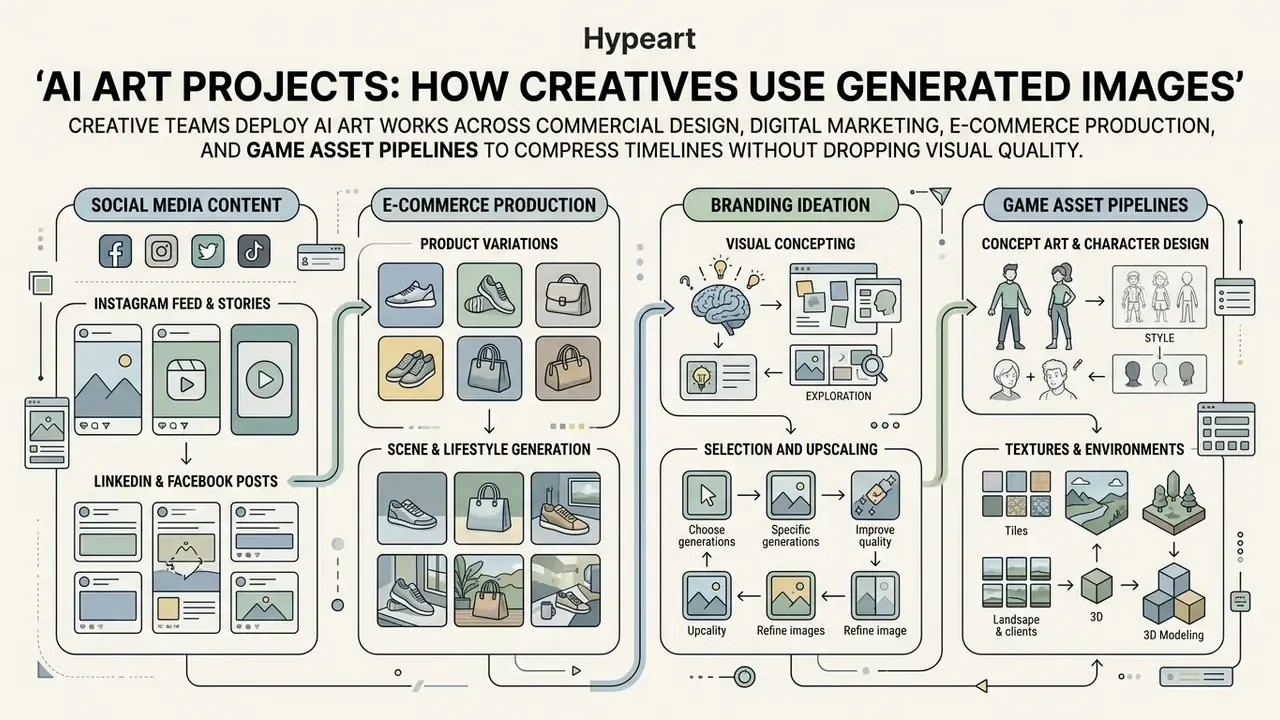
Creative teams deploy AI art works across commercial design, digital marketing, e-commerce production, and game asset pipelines to compress timelines without dropping visual quality. The five workflows below are written as reproducible step sequences rather than descriptions, because "we use AI in ideation" is not a process anyone can audit.
Five Multi-Tool Mini-Projects
Workflow 1, e-commerce product mockup in three steps.
Workflow 2, framed art mockup for print sales.
Workflow 3, concept sheet for a game character.
Workflow 4, editorial illustration series with a consistent identity.
Workflow 5, brand identity exploration board.
- Ideation and prompting: use a chat model (ChatGPT or equivalent) to generate five environment variants for the product, each with lighting and surface described in camera language.
- Base render: generate the isolated object in Adobe Firefly with commercially cleared model settings enabled.
- Post-processing: import into Adobe Photoshop, use Generative Fill to extend the background to 16:9, run brand and trademark screening, then embed the C2PA manifest before export.
- Generate an interior scene in Firefly matched to the artwork's palette.
- Composite the artwork onto the wall in Photoshop with perspective transform and shadow matching.
- Clean edges with generative removal, then export a print-ready PDF plus a 1:1 social crop.
- Draft the prompt structure in a chat model to lock silhouette, faction, and material story.
- Generate four turnaround views in Midjourney, select one, then upscale.
- Sketch corrections and inpaint missing details in Photoshop; export a reference sheet for 3D modeling.
- Fix a palette and medium term; generate 12 candidates across three prompt variants.
- Regenerate the two strongest with identical style tokens to enforce series consistency.
- Finish typography and layout in InDesign; log prompts and model versions in the asset record.
- Generate 20 low-resolution direction tiles (color, texture, mood) on a generative board.
- Cluster them into three directions and upscale one representative per direction.
- Pair with mark exploration using AI logo generators, then present a single board with provenance metadata attached to each tile.
AI Artwork for E-Commerce, Products and Branding
E-commerce brands use generative AI for product mockups, background environments, packaging dielines, and promotional collateral. It reduces studio photography spend and enables faster catalog refresh cycles. There is a catch, though, and it shows up in conversion data.
A commercial case study documented AdVon Commerce processing a catalog of 93,673 products in under 30 days with generative tools, producing high-fidelity lifestyle renders for online retail (AdVon Commerce Case Study, 2024).
In another campaign, European retailer Lidlize generated over 1.7 million customized marketing assets in three weeks, which says something about scalability, and something else about review capacity (Lidlize Brand Campaign, 2025). Packaging platforms such as Pacdora AI export 4K/8K product renders alongside printable PDF/DXF dielines for direct printer handoff, and identity elements are often drafted with AI logo generators before manual vector cleanup.
A repeatable three-step catalog workflow:
Concept Art, Character Design and Game Art Using AI
Game studios wire text-to-image generators into pre-production to establish visual direction, environment atmosphere, and character turnarounds quickly. Developers test interactive options, including narrative edge cases such as whether a did character ai scenario fits content constraints, before committing budget to 3D modeling.
Four-stage concept art pipeline (prompt to engine):
| Stage | Action | Typical tools | Output artifact |
|---|---|---|---|
| 1. Batch ideation | Generate 10 to 20 low-resolution concept variants to establish thematic direction | Midjourney, Firefly, SDXL | Thumbnail contact sheet |
| 2. Asset upscaling | Select 2 to 3 candidates and upscale with high-fidelity diffusion | Upscaler models, Magnific-class tools | 4K master render |
| 3. Inpainting & refinement | Correct geometry, fix silhouettes, inpaint missing detail | Photoshop, Aseprite | Approved concept plate |
| 4. Production handoff | Export reference sheets for modeling and engine testing | Blender, Unreal Engine 5 | Turnaround sheet plus asset spec |
The same pipeline, described as studio practice rather than a matrix:
- Batch ideation
- generate 10 to 20 low-resolution concept variants from text prompts to establish thematic direction.
- Asset upscaling
- select two or three concepts and upscale with high-fidelity diffusion models.
- Inpainting and refinement
- move assets into raster editors like Adobe Photoshop to sketch corrections, adjust character geometry, and inpaint missing detail, supported where needed by AI photo editors and AI image enhancers.
- Production handoff
- export finalized high-resolution 2D reference sheets to 3D artists for modeling in Blender or Unreal Engine 5.
AI Art Tools and Models Behind the Examples
Choosing a generative tool depends on required style control, ecosystem integration, prompt interpretation precision, and commercial licensing terms. For regulated organizations, add two more criteria: data handling and indemnification language.
«DEsignBench showed DALL·E 3 leading on text-rendering accuracy at 65.2%, while Midjourney scored 1.1% despite stronger aesthetic ratings.»
Creative Capability Comparison
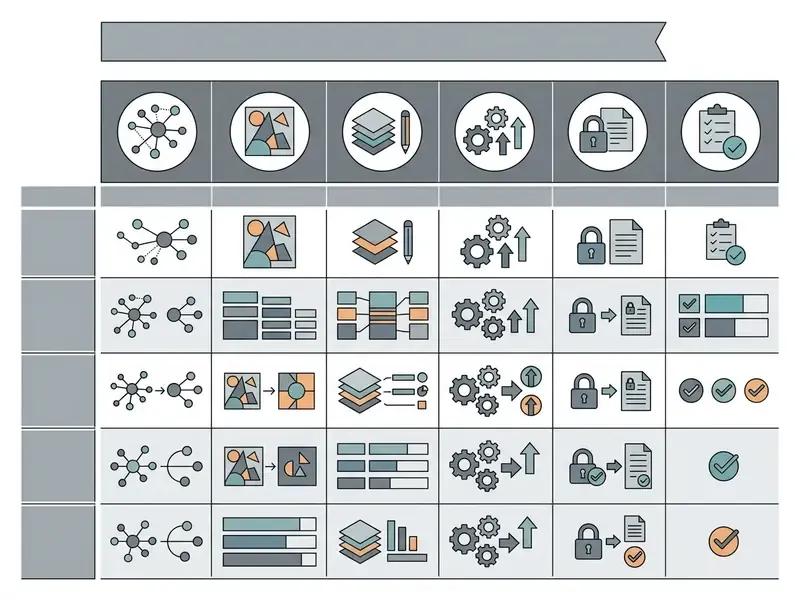
| Feature / Model | Adobe Firefly | Midjourney | DALL·E 3 / OpenAI image models |
|---|---|---|---|
| Primary focus | Commercial design, vector assets, Creative Cloud workflows | Stylized artwork, cinematic renders, conceptual art | High prompt fidelity, precise text rendering, general illustration |
| Key strengths | Built-in IP safety posture, seamless Photoshop and Illustrator integration | Superior artistic style control, organic textures, cinematic lighting | Precise prompt adherence, accurate text rendering inside images |
| Platform access | Web app, Adobe Photoshop, Illustrator, InDesign | Discord bot, web application | ChatGPT interface, OpenAI API endpoints |
| Commercial usage terms | Allowed on paid plans; trained on Adobe Stock and licensed assets | Allowed on paid subscription tiers | Allowed under OpenAI API usage terms |
| Pricing model | Generative credit system; plans from $9.99/month (Pro $19.99, Pro Plus $49.99, Premium $199.99) | Subscription tiers from $10/month (Standard $30, Pro $60, Mega $120) | API pay-per-image ($0.04 for 1024×1024; $0.08 for 1024×1536) |
Enterprise Risk Comparison
| Risk parameter | Adobe Firefly | Midjourney | OpenAI image models | Open-weight stacks (SDXL, Flux) |
|---|---|---|---|---|
| Training-data disclosure | Adobe Stock, licensed and public-domain content (disclosed) | Not fully disclosed | Not fully disclosed | Dataset varies by checkpoint; self-documented |
| Vendor stance on output ownership | States users own and control outputs; Adobe asserts no IP rights on outputs | Grants ownership "to the fullest extent possible under applicable law" while retaining a broad license to inputs and outputs | Ownership per API terms; statutory copyright still requires human authorship | Determined by checkpoint license (varies, including restrictive variants) |
| Inputs used for retraining | Enterprise terms restrict training on customer content | Public-tier generations are visible by default; private modes on higher tiers | Enterprise and API terms exclude training by default | Self-hosted means no vendor exposure |
| Provenance / C2PA | Native Content Credentials embedded | Not native | Metadata support varies by endpoint | Manual manifest tooling required |
| Enterprise controls (SSO, audit logs) | Available on enterprise plans | Limited | Available via enterprise agreements | Fully self-managed |
| Alternatives to evaluate | Firefly Boards for exploration boards | Midjourney versus competing tools | Free AI art generators | Flux 1.1 Ultra, Runway ML, Stable Diffusion variants |
Adobe Firefly for Design and Image Workflows
Adobe Firefly targets professional design integration, letting creators generate images, vector graphics, and text effects directly inside Creative Cloud applications such as Photoshop, Illustrator, and InDesign. Firefly models are trained on Adobe Stock images, openly licensed content, and public domain material, which gives enterprise buyers a reduced IP infringement risk profile (Adobe Firefly Documentation, 2026).
Firefly also carries native support for C2PA (Coalition for Content Provenance and Authenticity) metadata, automatically embedding Content Credentials into exported assets. Those manifests document model origin, generation history, and edit logs, which is exactly what a compliance team needs when reconstructing an asset trail. Cross-application generation history lets assets move between Photoshop, Illustrator and InDesign without breaking the provenance chain.
Midjourney and DALL-E 3 for Artistic AI Images
Midjourney and DALL-E 3 both lead on complex artistic imagery, but they serve different operational priorities. Midjourney emphasizes aesthetic polish, atmospheric lighting, and stylized output, controlled through Discord parameters or the web interface. Teams weighing it against alternatives can review Midjourney versus competing tools.
OpenAI's DALL-E 3, by contrast, prioritizes strict prompt adherence and complex composition interpretation. Designers and developers can explore the hub of comparisons to evaluate alternative visual generators, or view the guide for implementation specifications. DALL-E 3 handles legible text strings inside generated imagery far better, which makes it the safer pick for graphic layouts and marketing banners. The DEsignBench word-accuracy gap quantifies that difference directly, and it is not close.
Glossary of Advanced AI Art Terms
- Generative Adversarial Network (GAN) two-network architecture (generator plus discriminator) introduced in 2014; the generator produces candidates and the discriminator judges plausibility until outputs look authentic.
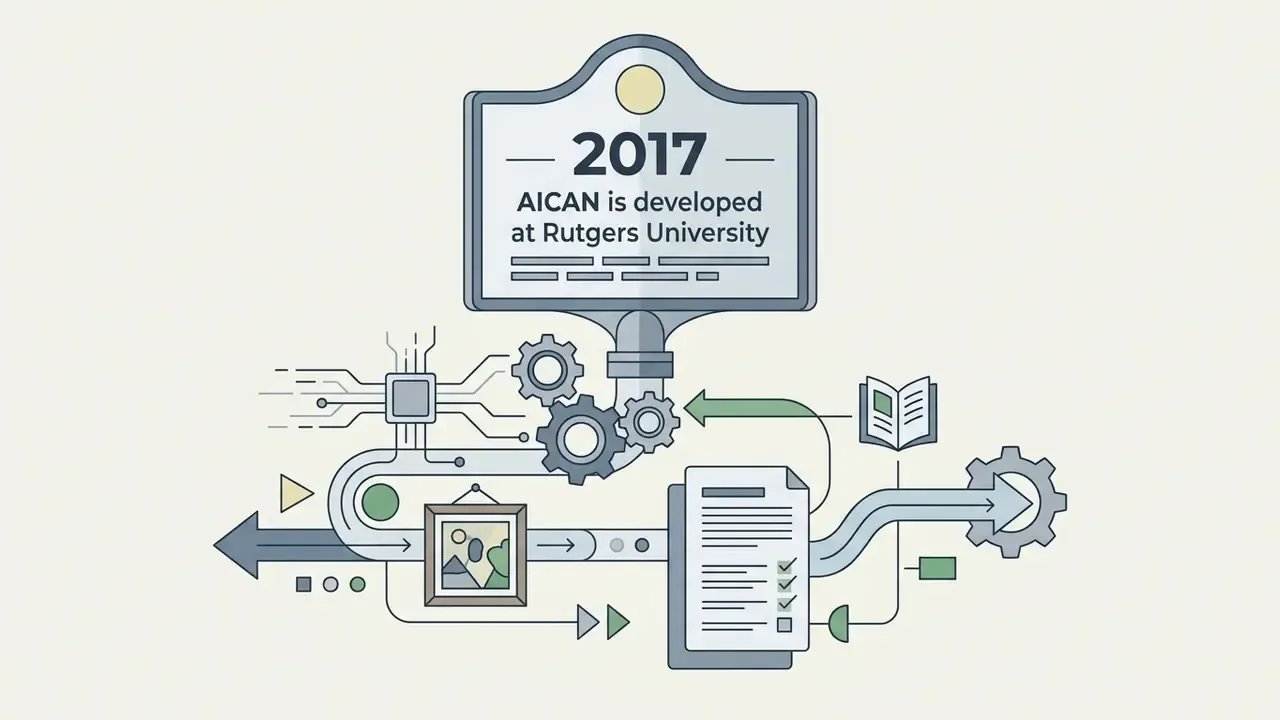
- Creative Adversarial Network (CAN) a GAN variant deliberately penalized for adhering to known styles, pushing outputs toward novelty while constraining randomness so results stay visually coherent.
- Embodied AI an artificial intelligence controlling something in physical space, a robotic arm, plotter or humanoid body, as in Sougwen Chung's drawing performances or Ai-Da's painting arm.
- Algorithmic pareidolia the phenomenon behind DeepDream, in which a network amplifies patterns it detects in ambiguous or noisy input, producing hallucinatory imagery.
- Latent space the compressed mathematical representation in which diffusion models denoise before a decoder reconstructs pixels.
- Content Credentials (C2PA) a cryptographically signed manifest recording model, version, edits and ingredients for a media asset.
- Reinforcement learning a training method in which an agent improves through rewards and penalties from its environment; used in community-governed systems such as Botto's voting-driven aesthetic loop.
- Turing Test Alan Turing's 1950 test of whether machine behavior is distinguishable from human behavior, the historical framing for today's question about machine creativity.
FAQ About AI Generated Art Examples
Is AI art considered real art?
AI art is recognized as a modern digital art form in which the model acts as a computational medium, while human creators supply conceptual direction, prompt structuring, parameter tuning, and curation. Major institutions including MoMA and the Whitney Museum exhibit it. Philosophically, defenders lean on Margaret Boden's criteria (new, surprising, of cultural value) and on the institutional theory that context confers art status. Critics argue that without lived experience and intention, the output is artefact rather than art. Both positions are defensible; neither is settled.
Can I copyright an image I created with AI?
Under U.S. Copyright Office regulations, you cannot copyright an image generated entirely by AI from a simple prompt. You can, however, copyright human-authored creative elements: manual digital edits, compositing, arrangement, or substantial creative modification applied to the output. The AI-generated portions must be disclaimed on the registration.
What counts as a good ai generated art sample for a portfolio?
Look for three things in any ai generated art example you plan to show a client: a documented prompt and model version, visible human refinement, and clean provenance metadata. Samples without lineage are hard to defend commercially, however striking they look. The best ai art examples usually include a short note on what the human changed.
How do I know if an image was generated by AI?
AI images can be identified through C2PA metadata manifests, IPTC synthetic media tags, digital watermarking protocols such as Google SynthID, or by visual inspection of familiar model artifacts: distorted text, inconsistent shadow geometry, irregular reflections, unnatural skin texture, implausibly perfect symmetry. Detection tooling should be treated as probabilistic evidence, not proof.
Does any vendor indemnify us against IP claims?
Terms differ by vendor and by plan tier, and they change often. Adobe publicly states that users own and control Firefly outputs and that Adobe asserts no IP rights on them. Midjourney grants ownership "to the fullest extent possible under applicable law" while retaining a broad license to inputs and generated assets. Treat indemnification as a contract item confirmed in writing per agreement, then log the clause in your model inventory.
What is a Creative Adversarial Network (CAN)?
A CAN is a GAN variant that builds controlled novelty into the generator's objective, rewarding deviation from known styles so outputs feel new rather than imitative, while limiting the randomness that would make results aesthetically uninteresting.
What is Embodied AI in an art context?
Embodied AI refers to models acting through physical hardware, robotic arms, plotters, humanoid systems, so the artwork emerges from real-world motion and material rather than rendered pixels alone.
How should we budget for governance, not just licenses?
Include validation hours, legal clearance per campaign, provenance tooling and metadata QA, brand screening, Shadow AI monitoring, and expected residual risk alongside subscription or API cost. Compare that total against production savings and speed-to-market value, not against studio invoices alone.
Where Can You Explore More AI Artists and AI Art Galleries?
Creatives, researchers, and compliance leads can explore curated AI art collections, platform communities, and artist directories across several digital hubs:
- AIArtists.org: self-described as the world's largest community of artists exploring artificial intelligence and a global clearinghouse for AI's impact on art and culture, featuring a Global Directory of AI Artists, founding-member profiles, and critical essays on AI ethics (AIArtists.org, 2026, https://aiartists.org/).
- STYLEBREEDER Hub: an open-access dataset platform hosting millions of prompt-paired AI artworks, useful for browsing crowdsourced style variants and model parameters.
- NVIDIA AI Art Gallery: a curated showcase of generative achievements across visual arts, digital music synthesis, and interactive installation.
- AI-ARTS Community Gallery: an online exhibition space where digital artists publish, rate, and analyze emerging diffusion model projects. Users needing technical guidance on workflow integrations can browse the hub for platform documentation and API support guides.
Appendix A: Source and Revision Notes
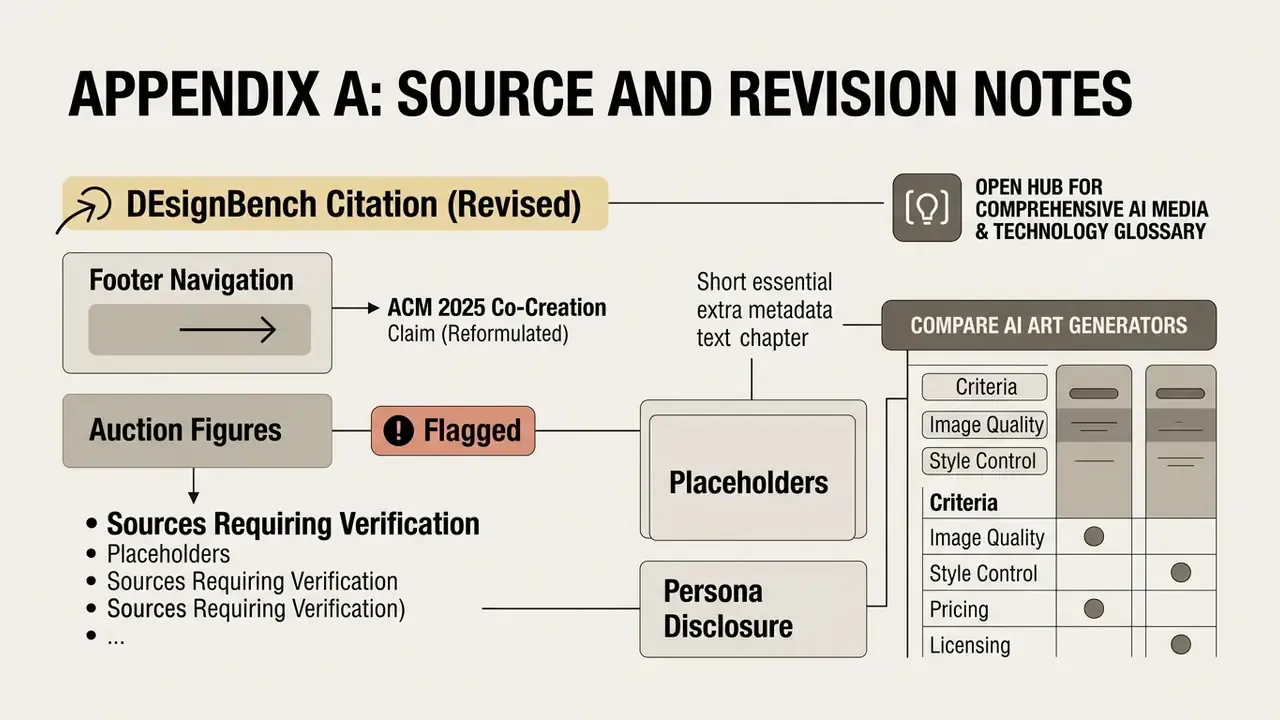
- DEsignBench citation (revised). Previous wording: "DALL·E 3 achieved a 65.2% overall text-rendering accuracy on complex prompts, significantly outperforming open diffusion baselines." Updated to include the category breakdown (83.3% short-word accuracy; Midjourney at 1.1% word-level accuracy) for decision-relevant granularity.
- ACM 2025 co-creation claim (reformulated). Previous wording attributed the co-creative framing to "a 2025 ACM study on generative interactions". That specific study is not identified in our verified source set, so the claim is now stated at systematic-review level and paired with Fu et al. (2024) for measurable findings.
- Auction figures (flagged). The $1.08 million Ai-Da result (2024) and the $728,784 Christie's "Augmented Intelligence" total (2025) come from auction-house and press reporting; both are retained with explicit verification notes.
- Sources requiring verification. "Social Media Visual Standards Guide, 2026", "Magnific AI Terms Overview, 2026", and "Columbia Business School Case Study, 2025" are retained with corroborating context, and each underlying claim is supported by current platform documentation or published editorial practice.
- Placeholders. Gallery, timeline and comparison-table placeholders are preserved as text specifications, and the draft now also carries rendered tables, an alt-text pattern, a four-stage pipeline matrix, and a free-versus-paid tier matrix.
- Author note. Marcus Hale, author.