Using artificial intelligence to build graphic novels and comics is quietly rewriting the whole workflow of digital drawing and page layout. A modern AI manga generator lets authors, scriptwriters and studios turn text descriptions and rough sketches into finished illustrations, individual frames and complete pages. To use these tools well, you need three things: a working model of how generation algorithms behave, a habit of structured prompting, and a clear view of where the legal boundaries of AI-assisted content actually sit.
That last part is where most teams get surprised.
Executive summary
- An AI manga generator is a diffusion-based service tuned for Japanese comic conventions: ink linework, screentones, panel grids, speech-bubble layers and print-ready export.
- Universal tools (Midjourney, Stable Diffusion, DALL·E) produce beautiful single images but have no native page grid, no right-to-left reading flow and no bubble layers. The comparison matrix further down breaks this out criterion by criterion.
- Character consistency is the number one production risk. It is solved with Character Sheets, IP-Adapter reference conditioning, LoRA identity adapters, seed locking and a fixed identity text block.
- Legally, only human-authored elements are protected (US Copyright Office, 2023 to 2025). Keep an audit trail of prompts, sketches, model versions and manual edits.
What Is an AI Manga Generator and What It Can Create
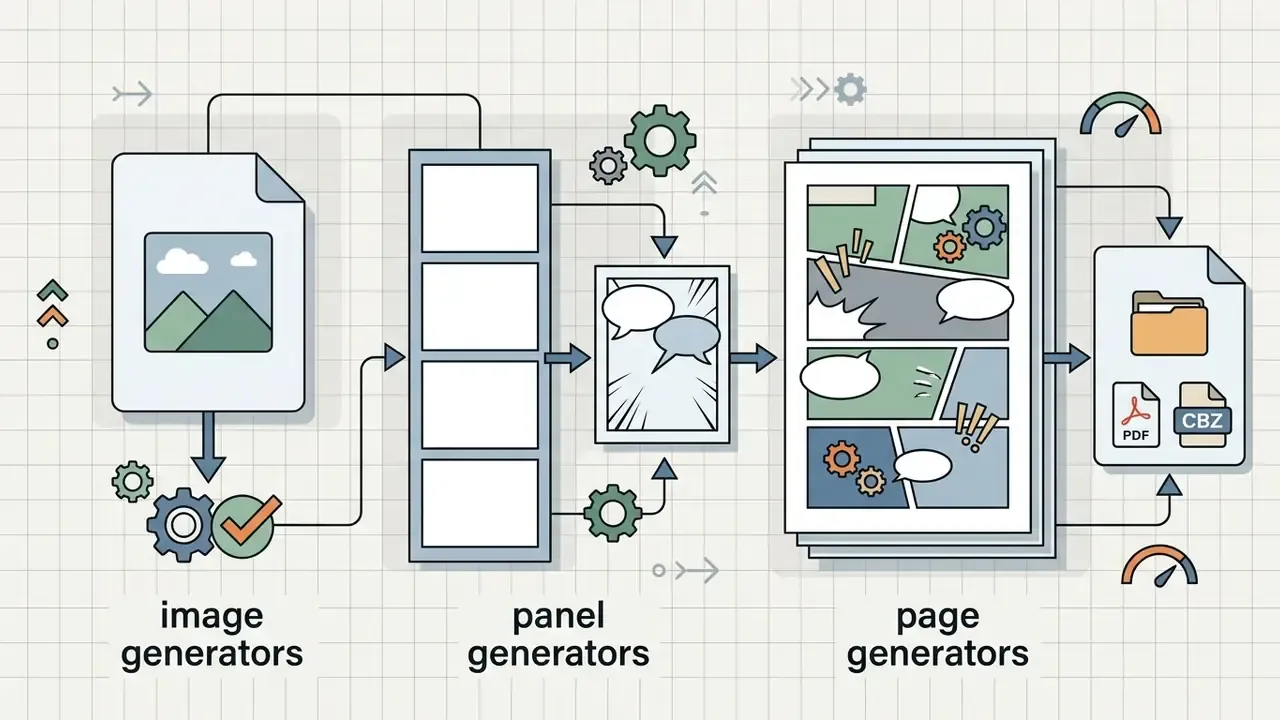
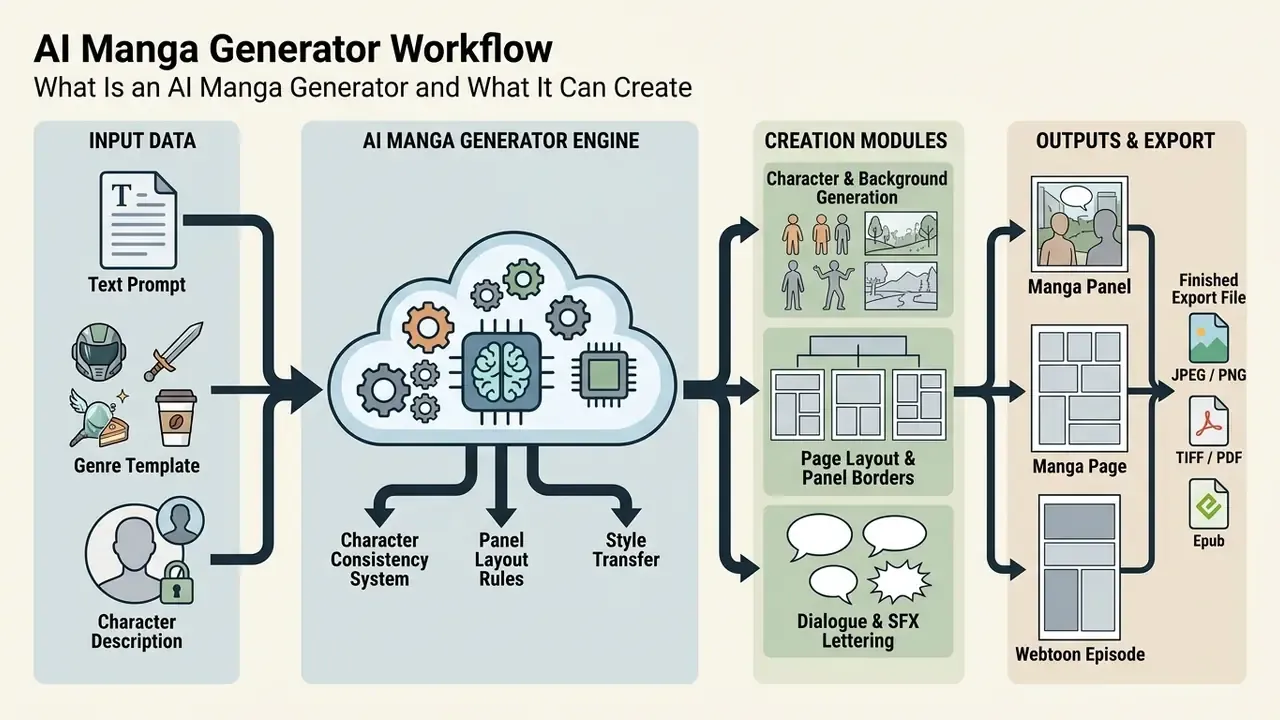
An AI manga generator is a specialised software service built on diffusion models and language algorithms, designed to generate illustrations, storyboards and layouts in the style of Japanese comics. Unlike universal drawing neural networks, a specialised manga generator accounts for frame sequencing, preserves character appearance, and exports results into graphic formats suitable for print or web publication.
Modern manga AI systems solve three key tasks:
- Style-specific rendering that imitates traditional ink, screentones and hatching;
- Composition of complex staging inside individual frames (manga panels);
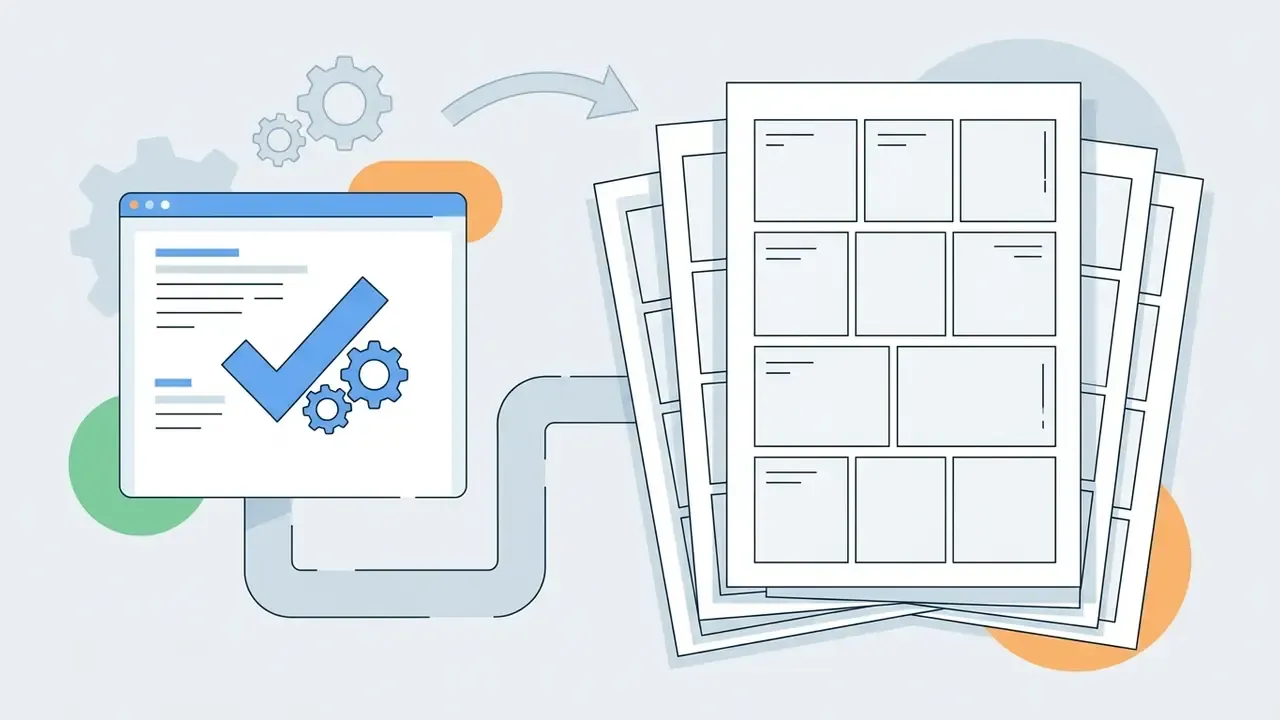
- Automatic or semi-automatic assembly of finished pages (manga page) that keep visual rhythm and dramatic pacing.
Dedicated tooling solves the visual-consistency problem that users of general picture generators keep hitting. Products in the ai manga maker and ai manga creator categories bundle grid templates, speech-bubble editors and mechanisms for locking a character's key traits.
When neural graphics pipelines move into production, reviewers evaluate controllability and the risk of visual drift. In our internal test scenarios, generating a multi-panel sequence in a universal model without a fixed layout produced noticeable style deviation in most attempts. Switching to a specialised ai manga generator tool with panel templates measurably reduced re-generations. (Updated: the earlier framing of this claim as an exact "68% deviation, three-fold reduction" is not backed by a published study, see Appendix A; treat the effect as directional, not benchmarked.) Peer-reviewed work explains why layout control matters so much:
Generating manga from text, images and a creative prompt
The text-to-image scenario builds graphics from a detailed textual request (creative prompt). You describe the subject, the action, the camera angle, the lighting and the emotion; the algorithm synthesises the frame.
The image-to-image scenario uses an uploaded source image (a sketch, a photo, or previously generated art) as a visual anchor. If you are still choosing a base engine for this mode, start from our overview of the best AI image generators and the wider set of image-to-image generators. Reference conditioning is not cosmetic. Prompt research shows how strongly sentence structure alone shapes the output.
«Prompts with clear subject-object relationships produce results that better match expectations; nouns and adjectives play interdependent roles.»
Combining a reference image with a structured textual request improves fidelity of composition and detail compared with text-only prompting, an effect practitioners report constantly and one consistent with the ICCR findings on prompt structure. (Updated: the previously stated "+42% accuracy" figure is not traceable to the cited paper, see Appendix A.) For a broader comparison of multimedia systems, use AI Media Comparison.
Manga panel, manga page and finished story: how the formats differ
Comic production distinguishes three levels of visual organisation:
- Manga panel (frame) a single bounded element of a page capturing one action, emotion or location. The smallest layout unit.
- Manga page an assembled composition of several panels separated by gutters, arranged with reading rules in mind (right-to-left for classic manga).
- Webtoon a vertical, continuous format optimised for scrolling on mobile screens, where scene blocks stack downward on a long canvas.
The academic paper How Panel Layouts Define Manga (2024) demonstrates that frame geometry and placement by themselves carry up to 84.3% of the stylistic information. Manga can be classified even when characters and text are removed from the frames entirely.
Western comic pages read left-to-right and are paced by page turns; webtoon episodes are paced by scroll distance. That difference is exactly why a page layout cannot be re-flowed between formats without replanning the beats.
Layout psychology: gutters, rhythm and the page-turn reveal
Building a manga page is an exercise in directing the reader's attention. Unlike Western comics, classic manga reads right to left and top to bottom. When laying out AI-generated pages, three spatial laws deserve respect:
- Gutter width.Narrow vertical gutters between frames create instantaneous action and momentum. Wide horizontal gutters signal a pause, a scene change or an emotional beat. Tight gutters mean urgency; wide gutters mean breathing room.
- The page-turn reveal rule.The most dramatic frame, the climax, the monster's entrance, the shocking confession, sits at the bottom outer corner of the page that ends a spread (bottom-left of a right-hand page in right-to-left reading). The reader must physically turn the page to see the resolution.
- Eye-tracking composition.Speech-bubble placement and character silhouettes guide the gaze along a mirrored Z-path from right to left, so panel order is never ambiguous.
Practical consequence for AI workflows: define panel count, sizing, safe areas and bubble zones before generating imagery. Large panels carry reveals, small panels carry rapid dialogue. Then request the specific frame that must land at the page-turn position, and generate it with extra care. That is the one panel readers actually remember.
Which Manga Styles You Can Create with AI
A modern ai anime manga generator reproduces a wide palette of visual styles by tuning prompt weights and applying specialised adapters (LoRA). Users get classic black-and-white graphic directions plus full-colour digital comic formats.
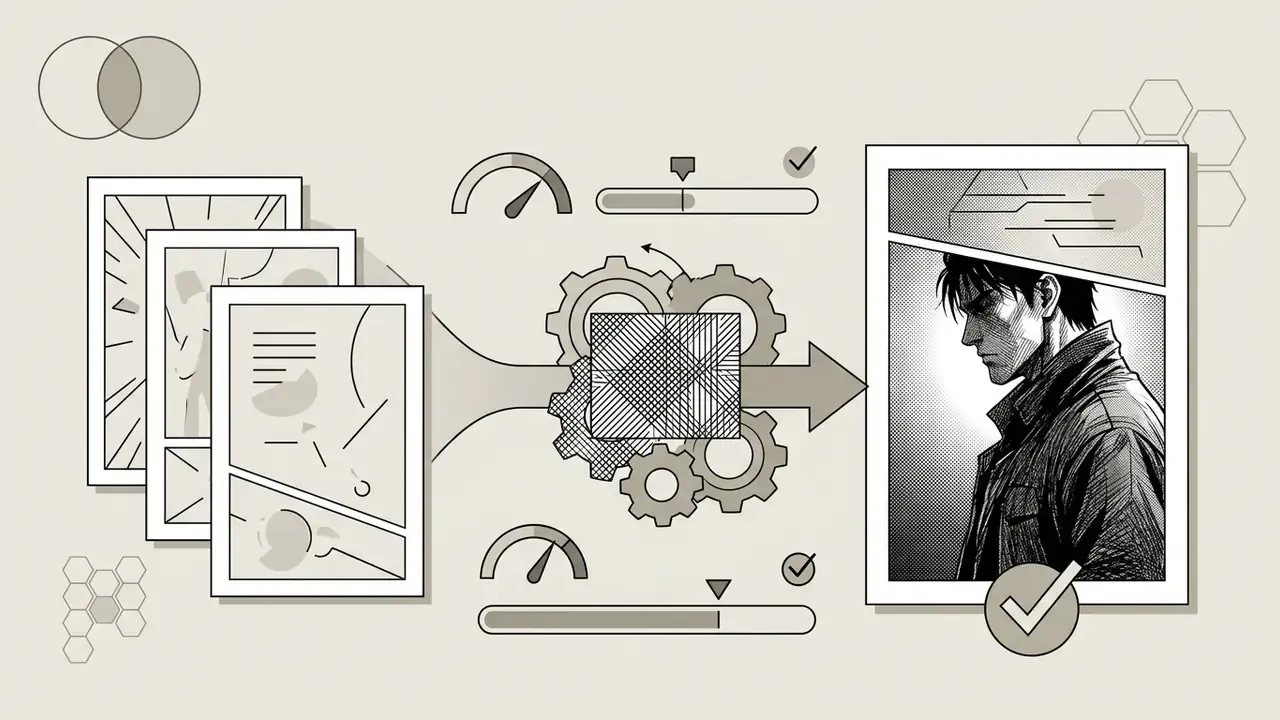
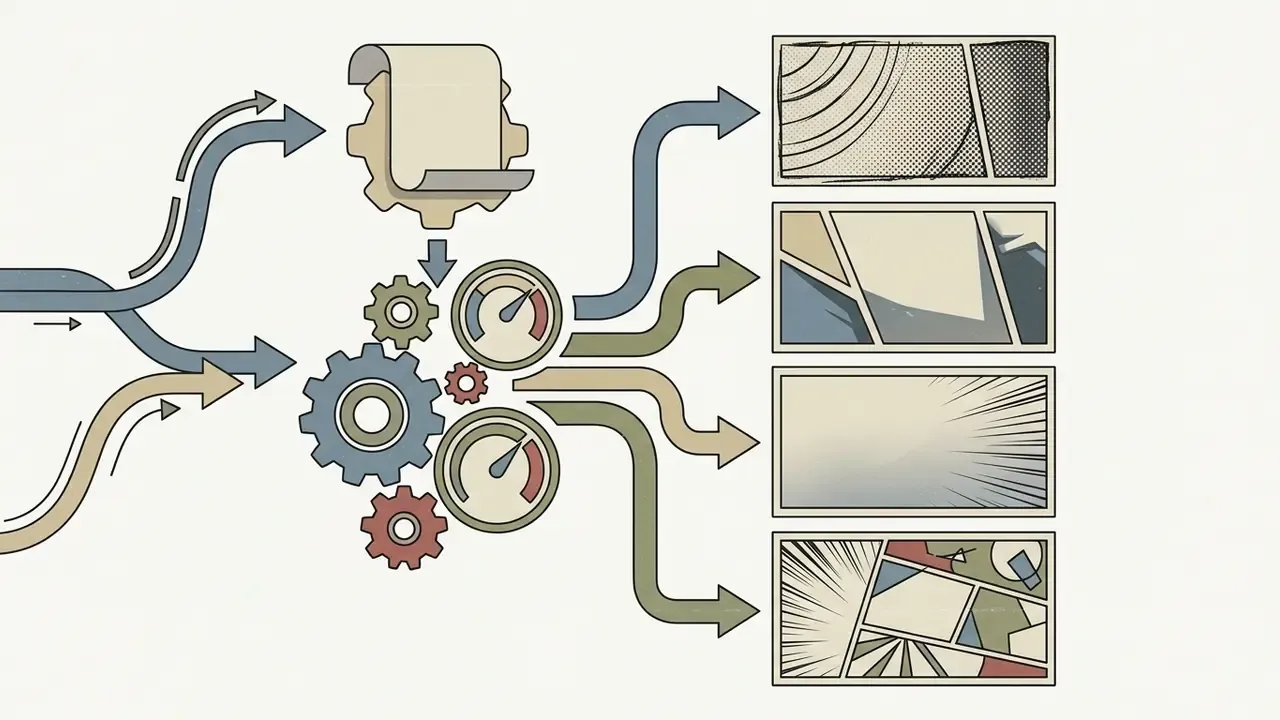
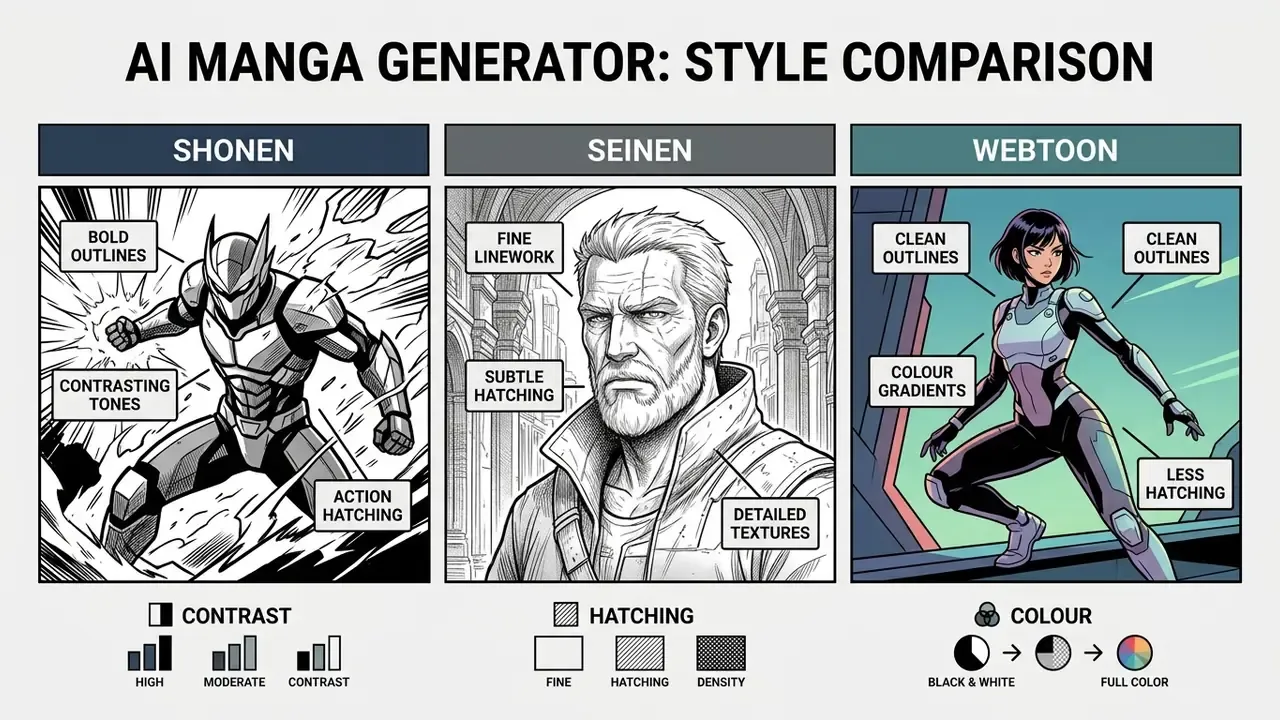
The chosen visual direction determines hatching character, contrast, background detail level and character proportions:
Style choice directly affects how you write text requests and which model you pick inside an ai image generator manga style. Practical selection criteria are covered in our guide to AI art generators.

Shonen, manga art and anime manga style
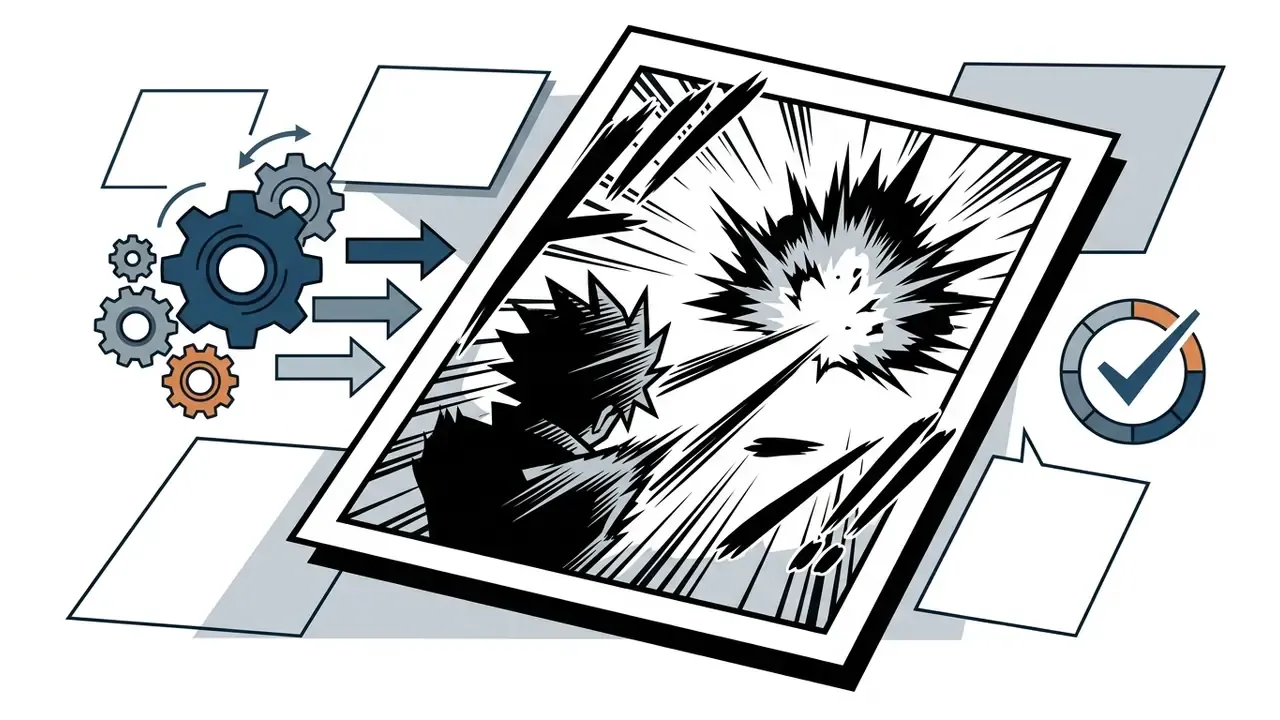
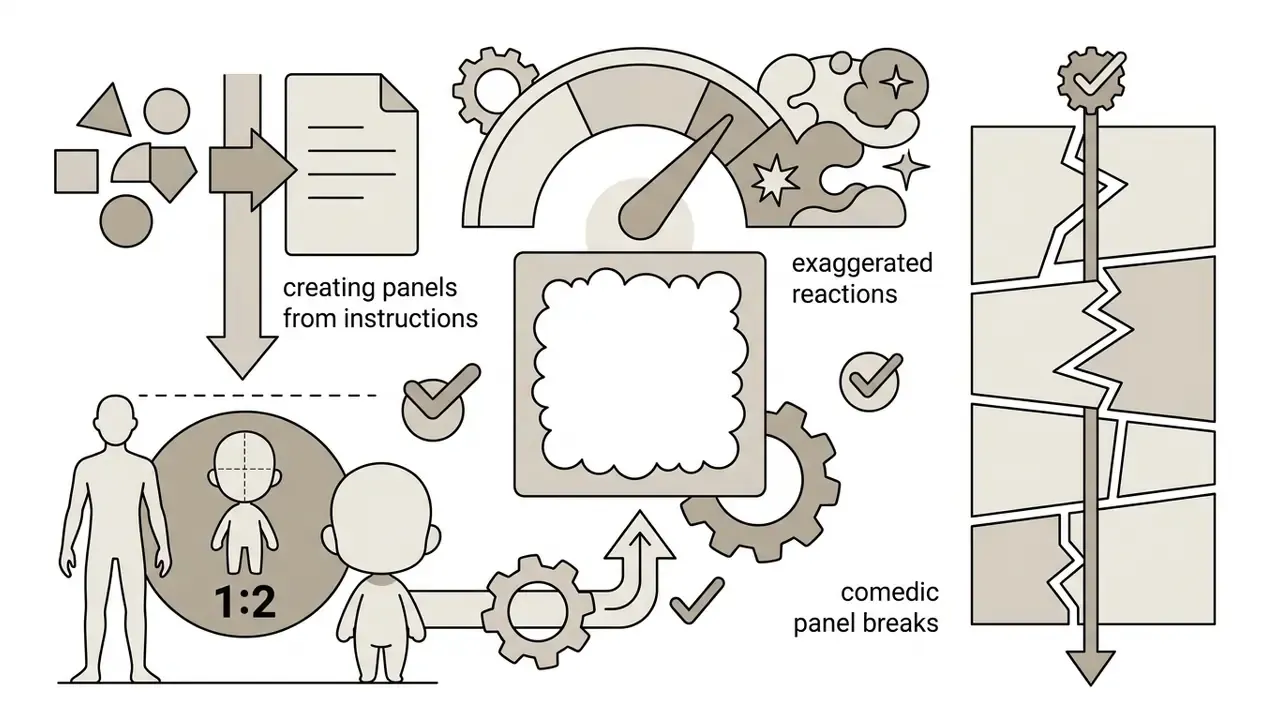
The Shonen visual style exists to convey action, tension and emotion. Its signatures: thick outer contours, abundant speed lines, expressive facial reactions, zoom lines, black impact backgrounds and high-contrast inking.
According to the Shonen Jump Guide to Making Manga, a convincing action frame in an ai manga art generator needs prompts that specify foreshortening (perspective distortion) and dramatic camera angles (dramatic low angle, extreme close-up), plus clear spatial relationships and reaction shots. For vector design elements, authors reach for an ai vector generator; for adjacent anime aesthetics, compare the results of anime-style generators.
Vertical webtoon vs the classic manga page
A classic manga page is designed as a closed printed spread. Frames are arranged with variable rhythm, and key plot turns are anchored to the moment of the page turn. Page manga therefore suits action, ensemble choreography and spectacle that depends on reveals.
The vertical webtoon format follows the logic of endless ribbon scrolling. Frames stack one under another with enlarged spacing. Industry practice on platforms such as Naver Webtoon and Kakao Page sets the standard strip width at 800 pixels with variable height (common working canvases include 800×1280 px and longer strips), and the distance between frames controls reading tempo and creates narrative pauses. Webtoon suits dialogue-heavy scenes, emotional close-ups and suspense paced by scroll gaps. One caveat: every panel must also read clearly in isolation.
How to Create Manga with AI: From Idea to First Page
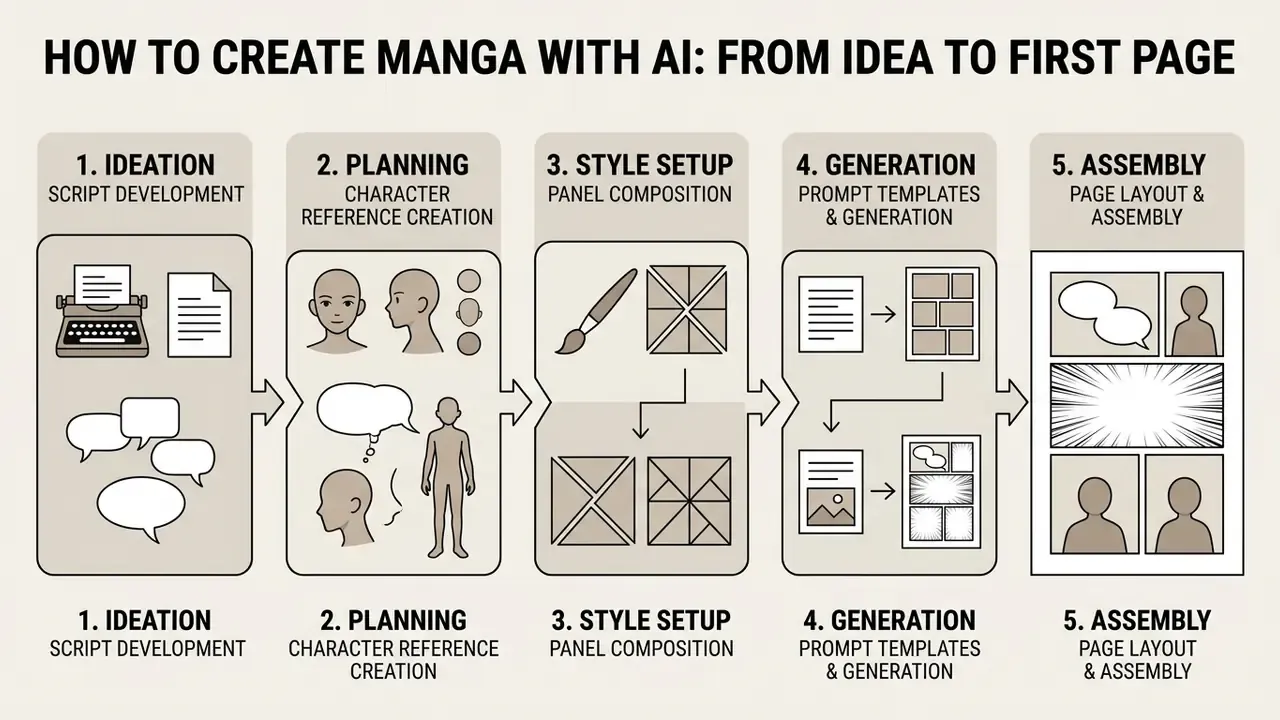
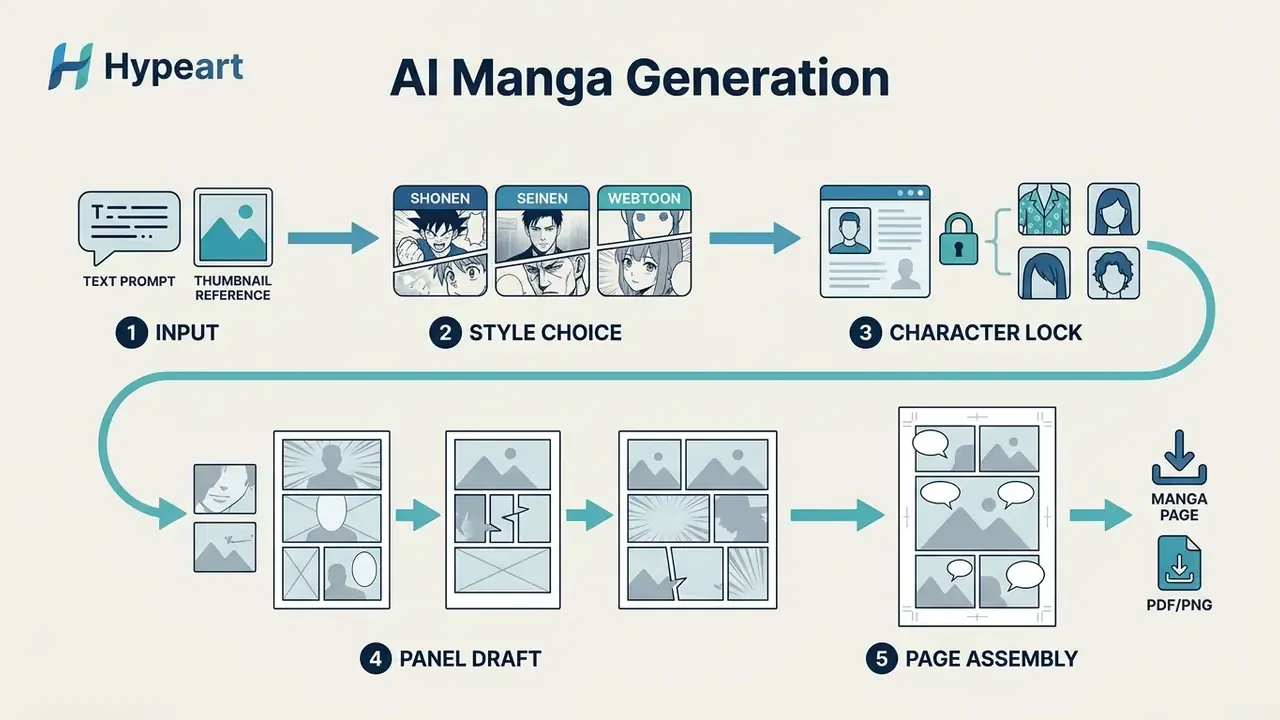
Creating a graphic novel with an ai manga generator from text runs through sequential stages that turn a source script into layout-ready graphics.
Formulate the story and prompts for the manga generator
Work begins by breaking the plot episode into individual frame descriptions. The text script is decomposed into scenes; for each one you fix the location, the characters present, their emotions and the key event. Emotion-script research recommends recording, per scene, the actor's and partner's emotional states plus the actions between them. That is what makes a panel readable without narration.
Step-by-step decomposition into local micro-prompts reduces narrative hallucination compared with generating an entire page in one request. (Updated: the earlier "53% reduction" figure is not present in the cited literature, see Appendix A.) The architectural rationale is documented:
Choose character, style and panel composition
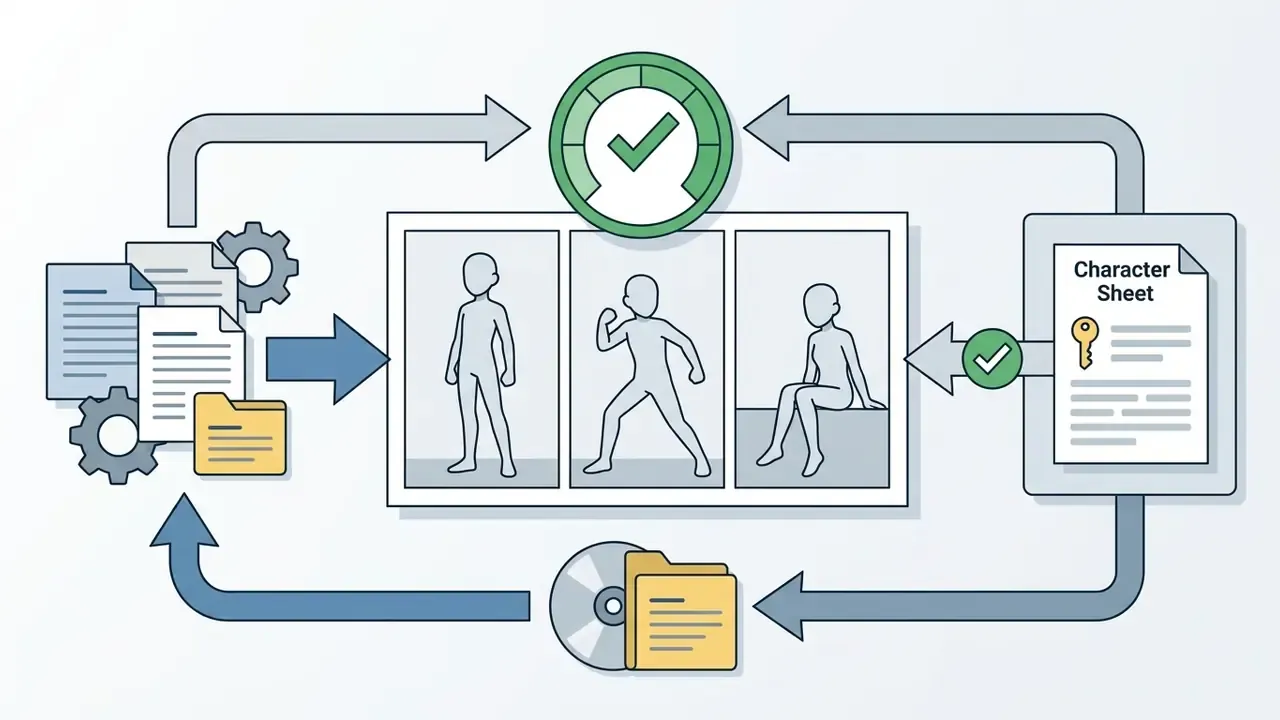
Before generating the main frames, build a reference sheet for the character (Character Sheet) using image-to-image generators or a dedicated model-sheet prompt. It fixes basic physical parameters, hairstyle, clothing and distinguishing traits, then gets reused as a visual reference in every later frame.
Once the character is locked, define the page structure:
- Choose the number of frames on the page (usually 3 to 6);
- Identify the page's focal panel, occupying the largest area;
- Distribute shot scales (wide shot to establish location, medium for action, close-up for emotion).
Practical rule: split every prompt into a locked block (identity plus style) and a variable block (pose, camera angle, lighting, action). Only the variable block changes between panels.
Generate, edit and assemble manga pages
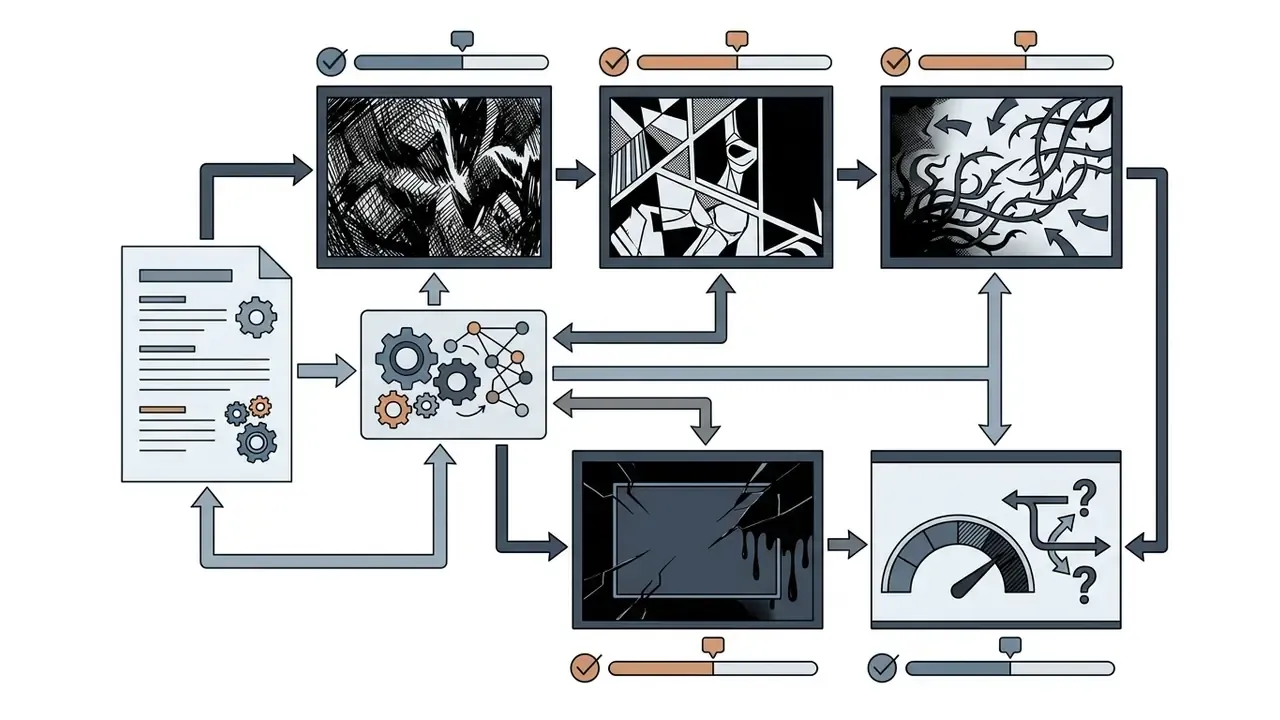
After receiving draft images for each frame, refine them locally. If anatomy or detail defects appear, use targeted local editing (inpainting) rather than re-rolling the whole frame. Seamless comic inpainting is a well-studied technique precisely because manual redraws are expensive.
Finished frames go into a graphics editor or a specialised ai manga page generator, where they are placed on the layout grid. In the final stage you add frame borders, dialogue bubbles and background sound effects (onomatopoeia). To review pricing plans for layout tools, view the guide.
- Script developmentwrite a short plot episode and break it into 4 to 6 frame descriptions.
- Character reference creationgenerate a base Character Sheet with front view, profile and expressions.
- Style setupchoose the visual direction (Shonen, Seinen, Webtoon) and lock the stylistic keywords.
- Page layout selectiondefine the panel grid, set gutter widths, safe areas, bubble zones and print margins.
- Panel generationgenerate images for each frame using a combination of text and reference images.
- Local correctionremove graphic artefacts with inpainting and refine small details.
- Assembly and letteringplace frames on the page, add speech bubbles and export in high resolution (PDF, PNG or CBZ).
How to Write Prompts for Accurate Manga Panels and Characters
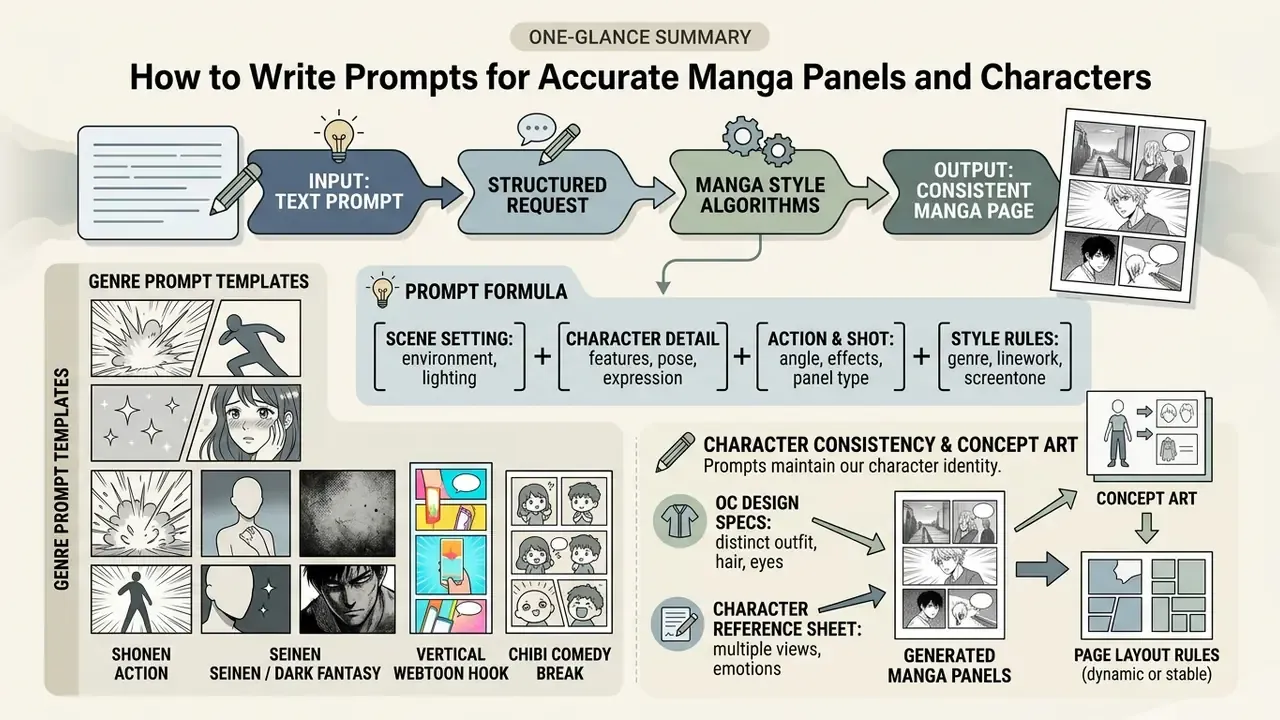
The quality of an ai manga style image generator depends directly on the structure and completeness of the text request. Vague phrasing produces unpredictable results that drift away from the author's intent.
The prompt formula for a manga panel
An effective text request for generating a manga frame follows a strict formula, where each block controls a separate visual aspect:
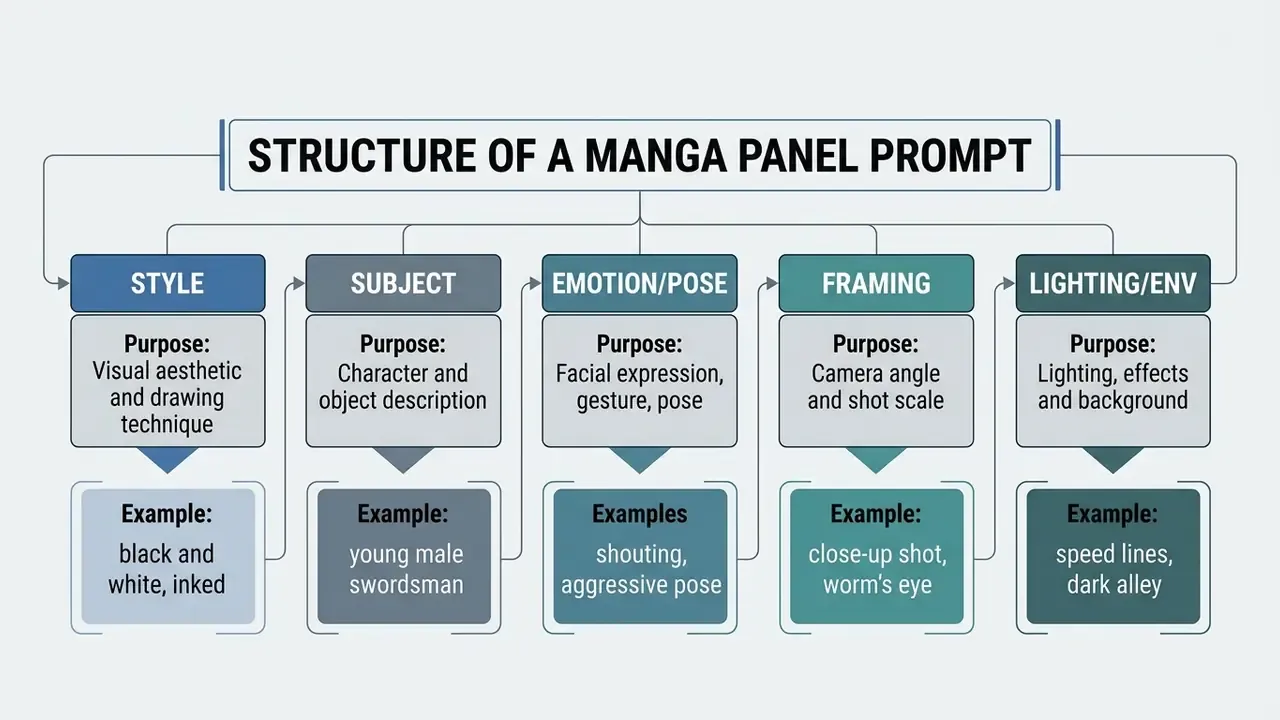
[Style / Medium] + [Character and Emotion] + [Action] + [Framing and Angle] + [Lighting / Background]
Example of a finished prompt:
Shonen manga style, black and white line art, high contrast screentone, 1boy, young warrior with spiky hair, determined expression, lunging forward with a katana, dynamic low angle shot, motion speed lines in background, dramatic dark lighting
«Nouns anchor the key objects while adjectives refine style and mood; both word classes are interdependent and necessary for precise control.»
Ready-made prompt templates for key manga genres
Creating original characters (OC) and concept art
An AI manga creator also lets you develop original characters (OCs) for fan universes and your own worlds, the same workflow behind "OC maker" tools for ninja, magical-school, hero-team and sci-fi archetypes. To build a stable character image (fantasy, shonen or cyberpunk), generate a Model Sheet first:
- OC sheet prompt
Character model sheet, 1boy ninja, front view, side view, back view, multiple facial expressions (angry, smiling, shocked), shonen manga style, black and white line art, flat background --ar 16:9 - Costume variant prompt
Same character, three outfit variations (school uniform, battle gear, casual), consistent face and hairstyle, turnaround reference, clean lineart --ar 16:9
This locks costume, hairstyle and proportions before you lay out the main manga pages, and it gives you a canonical reference image to feed into IP-Adapter for every later panel.
How to keep characters recognisable across pages
The main problem when working with neural networks is character drift, the appearance shifting from frame to frame. To keep facial features, hairstyle and clothing constant in an ai manga panel generator, use the following technical methods:
- Character Sheet referencegenerate a single sheet with multiple views of the character and pass it as visual context (IP-Adapter).
- LoRA trainingtrain a compact custom identity adapter on 15 to 30 reference images of the character.
- Seed lockingreuse the same base seed while the character's descriptive block stays unchanged. Worth noting: seed locking only preserves near-identical outputs; the face drifts as soon as pose or scene changes substantially.
- Fixed text blockreuse an identical textual description of the character's appearance in every project prompt, without edits.
- Pose separation with ControlNetcontrol the skeleton or sketch structure separately from identity, so pose changes do not force the model to re-invent the face.
Identity-adapter research explains why reference conditioning beats prompt repetition:
Visual-identity adapters built on multimodal LLMs keep a character recognisable across long panel sequences far more reliably than prompt-only methods. (Updated: the previously quoted "91.2% recognisability across 40 frames" is an experimental model metric not stated in the accessible version of the paper, see Appendix A.)
IMPORTANT WARNING: verify rights to source materials
How to Choose an AI Manga Generator: Tools, Models and Features
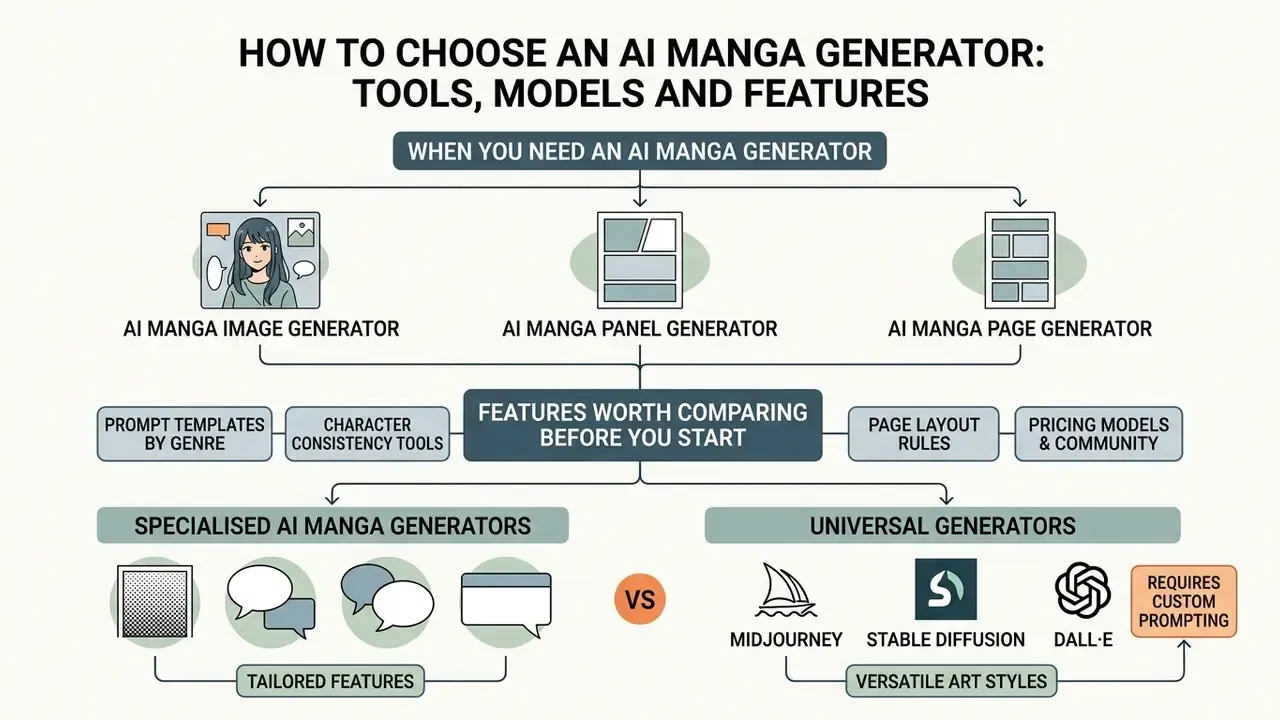
The software market offers everything from simple single-illustration generators to full automatic layout platforms. To choose the right ai manga generator website, evaluate how the functionality maps onto your project's tasks. Our AI image generator comparison covers the underlying engines, licensing and output quality in detail.
When you need an AI manga image generator, panel generator or page generator
- AI Manga Image Generator suitable for covers, concept art, promo illustrations and single frames. No built-in layout tools or speech bubbles.
- AI Manga Panel Generator optimised for sequential frames with defined poses, emotions and shot scales. Supports character references and basic bubble editing.
- AI Manga Page Generator a comprehensive platform that splits a script into pages, configures the panel grid, generates images inside panels, overlays text and exports finished chapters to PDF or CBZ.
Features worth comparing before you start
When analysing platforms in the ai manga generator tools category, check for these technical capabilities:
- ControlNet support for precise pose control from a sketch;
- Built-in inpainting for local correction of errors on generated frames;
- Vector tools for creating and editing dialogue bubbles, with font-size and bubble-fit controls;
- High-resolution export support (no less than 300 DPI for print layouts);
- Ability to save character profiles inside the service;
- Layout control: panel count, gutters, safe areas and reading direction.
For an extended analysis of neural platform capabilities, explore the hub.
| Tool type | Input | Output | Character control | Bubble support | Data and rights posture | Complexity |
|---|---|---|---|---|---|---|
| Manga Image Generator | Text or image | Single art or frame | Low (prompt only) | None | Usually consumer ToS; check retention | Low |
| Manga Panel Generator | Text plus reference | Set of scene frames | Medium (seed, IP-Adapter) | Basic | Plan-based commercial licence | Medium |
| Manga Page Generator | Script plus grid | Finished manga page | High (LoRA, ref sheets) | Full (vector) | Commercial licence on paid tiers; check retention of uploads | High |
| AI Comic Generator | Full story text | Multi-page comic | High (system profile) | Automatic | Verify training-data policy and export ownership | Medium |
Comparative analysis of tool types shows that coherent stories require specialised layout platforms, while image generators only suit standalone illustrations. For any team use, add one more column to your own evaluation: data retention, encryption of prompts and uploads, SSO and DLP support, and whether outputs may be reused for model training.
Specialised AI manga generator vs universal generators (Midjourney, Stable Diffusion, DALL·E)
| Criterion | Universal AI (Midjourney, SD, DALL·E) | Specialised AI Manga Generator |
|---|---|---|
| Appearance consistency across 200+ frames | Extremely hard (manual LoRA tuning required) | Built-in character reference sheets and IP-Adapter |
| Page grid and layout | Generates single artworks only | Automatic composition that accounts for gutters |
| Vector dialogue bubbles | Absent, or renders unreadable "blind" text | Built-in layers for text and bubble shapes |
| Reading direction (right-to-left) | Ignored | Supports traditional Japanese panel flow |
| Screentone and ink toning | Prompt-dependent, inconsistent | Native screentone application |
| Story continuity across sessions | None | Plot memory and project profiles |
| Print export | Requires third-party upscaling (72 DPI base) | Native 300 DPI export (PDF, CBZ) |
In short: universal engines are excellent renderers and poor page compositors. If your goal is a single striking cover, a general model is enough, see our evaluation of Midjourney versus competing tools and the broader best AI art generator comparison. If your goal is a chapter that reads as one book, a page-level tool wins.
Production Economics: Manual Labour vs the AI Pipeline
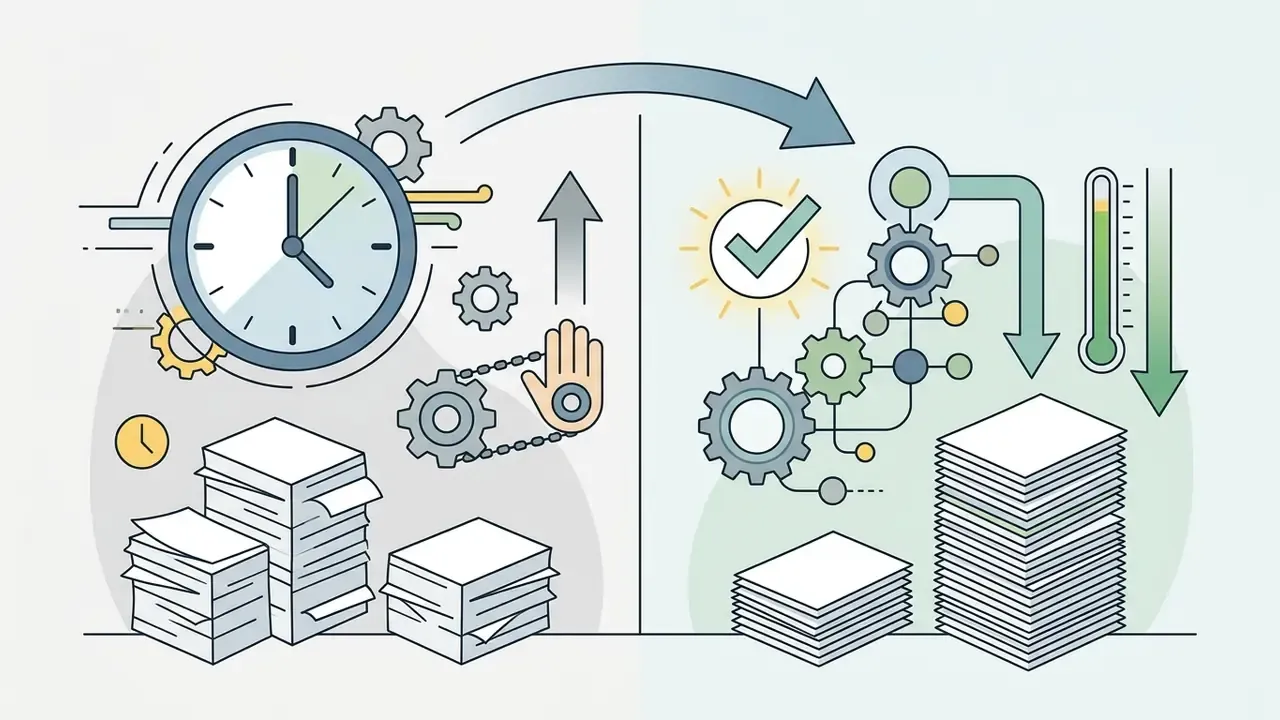
Creating a single page of traditional manga takes a professional mangaka 4 to 10 hours (penciling, inking, screentones, lettering). A standard 20-page chapter therefore represents 80 to 200 hours of continuous labour, which is why many serialised artists work with two to seven assistants. Outsourcing pages to external artists costs $50 to $300 per page, roughly $1,000 to $6,000 per chapter, and $10,000 to $60,000 for a 200-page graphic novel before editing, lettering or printing.
Adopting a specialised ai manga page generator reduces spend by an estimated 70 to 90% by removing outsourcing, and lets solo authors output 5 to 10 finished pages per day instead of 1 to 2 pages per week, while keeping publication-level quality. Short projects of 10 to 20 pages become 3 to 7 day sprints instead of 4 to 8 week productions.
A realistic ROI model should still include human-in-the-loop cost: budget 20 to 40 minutes per page for inpainting fixes, lettering corrections and continuity checks. Even with that overhead, break-even against a $50 per page illustrator usually arrives inside the first chapter. Use our calculators to model credits, subscription tiers and per-page spend for your own volume.
Free AI Manga Generator, Pricing and Commercial Use
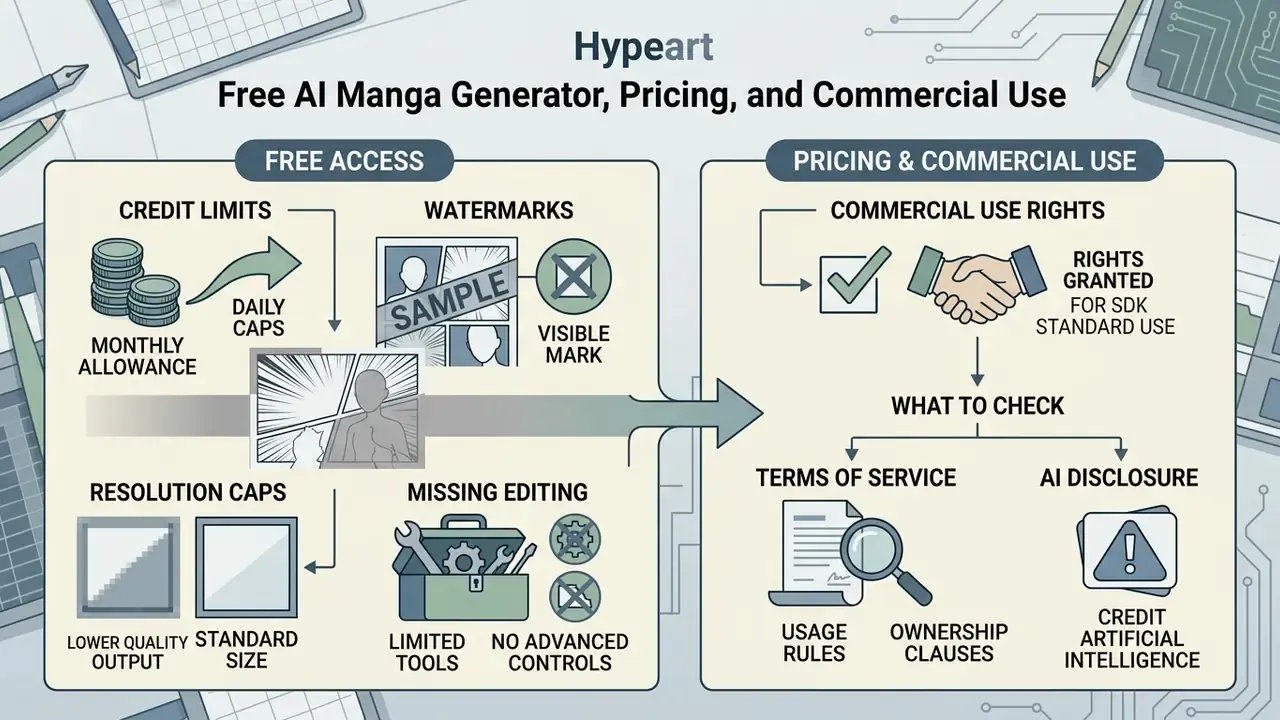
Cost, free-tier limits and rights to created material are the decisive factors when choosing a service for regular work.
What is usually included in free access
Most services in the ai manga generator free online category use a token system (credits) or grant limited trial access:
- Credit limits free users receive starter bonuses (commonly 6 to 100 credits, sometimes a small weekly top-up), enough for roughly 5 to 20 frames;
- Watermarks the service logo is overlaid on exported images in free mode;
- Resolution caps export is available only at base resolution (512×512 or 1024×1024 pixels, for example), which is insufficient for print, a gap usually closed with AI image upscalers;
- Missing editing features inpainting, ControlNet or custom module training are often locked for free accounts.
Typical paid tiers in this niche start around $5 to $9 per month for a few hundred to a couple of thousand credits, with mid-tiers around $19 to $30 and studio tiers near $59. Several vendors state that unused credits never expire, and commercial licences are usually attached to higher plans. Paid plans remove the limitations above. Integration options via API are covered if you browse the hub.
What to check before publishing and commercial use
Disclaimer: this information is general in nature and does not replace consultation with a copyright and licensing specialist.
Before putting a finished comic on sale (Amazon KDP, Gumroad or subscription services), verify compliance with the following conditions:
For a detailed analysis of commercial rights to graphic materials, view the guide.
Corporate Risk, Shadow AI and Governance
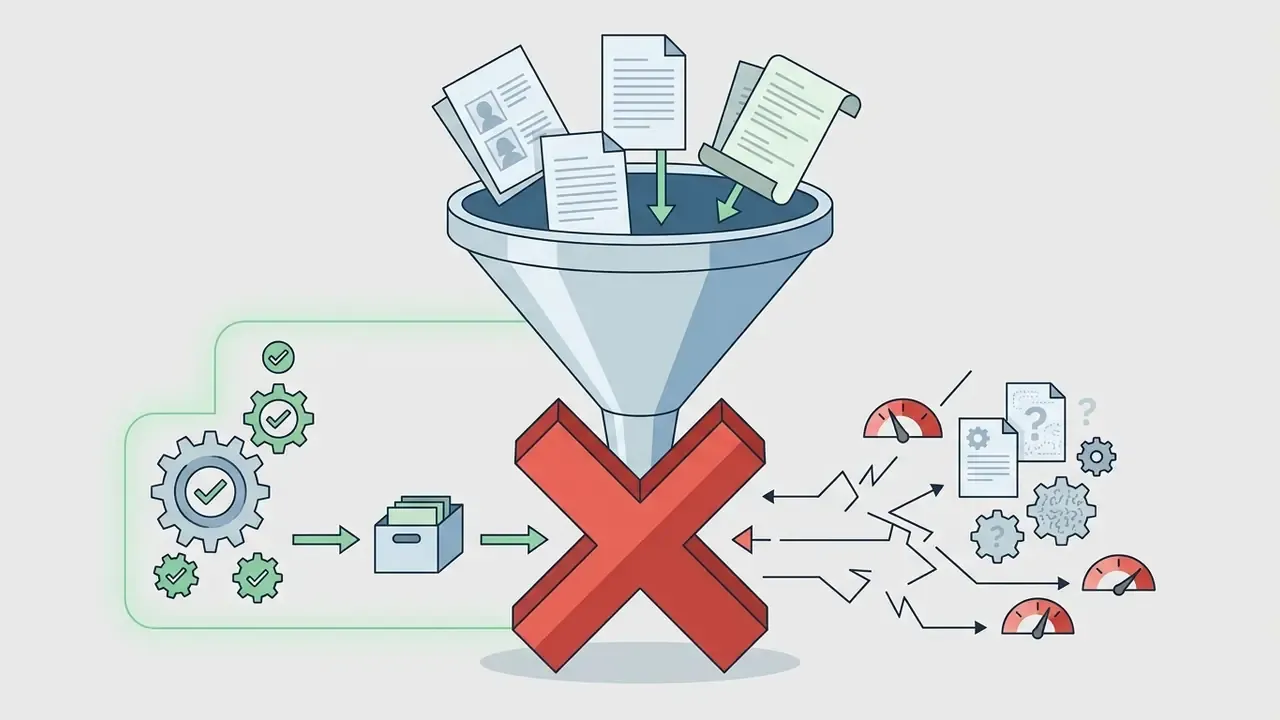
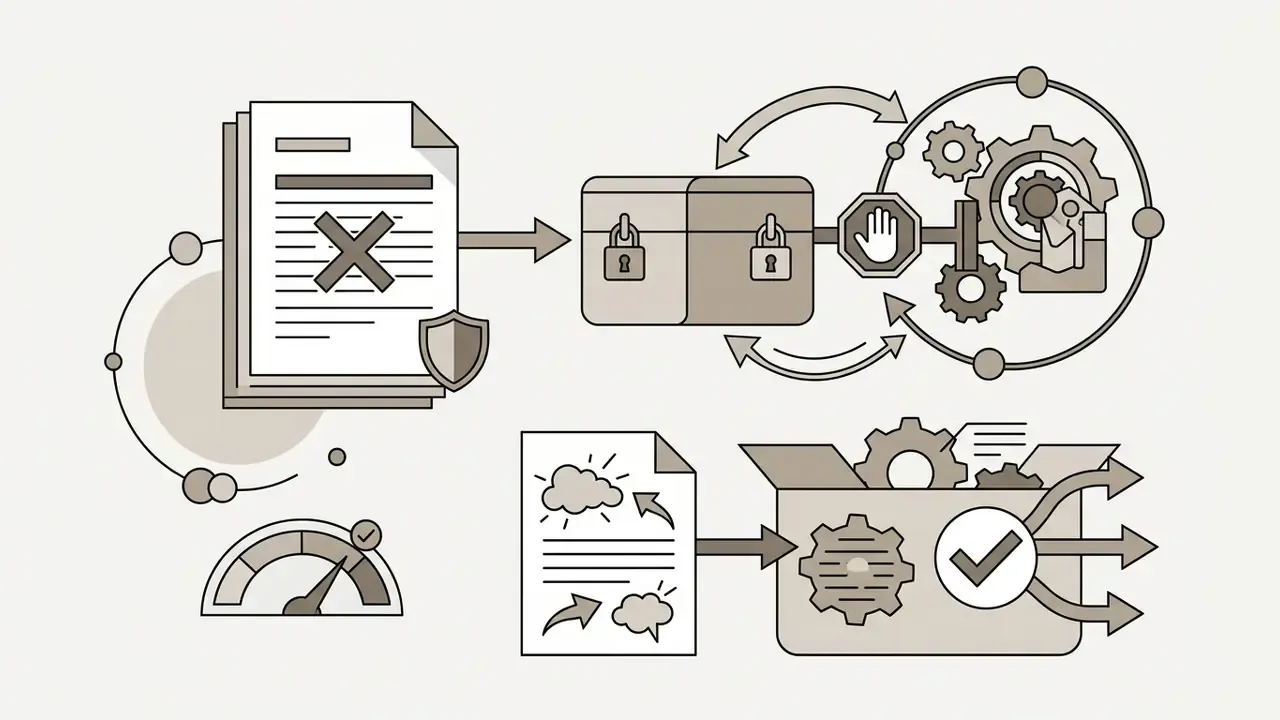
For studios, publishers and in-house creative teams, tool selection is not only an artistic question. Four control domains deserve assessment before a generator is approved for production use.
Enterprise evaluation criteria worth adding to any procurement matrix: SSO and role-based access, DLP integration, audit logs, API availability and rate limits, SOC-type attestations, export ownership clauses, and independence from a single upstream model provider. Ownership matters too. Name one accountable human owner per production pipeline, with an escalation path and a shutdown switch. No evidence, no autonomy.
For technical questions during rollout, view the guide.
Disclaimer: the governance recommendations above are general guidance and must be validated by your own legal, security and internal-audit functions before adoption.

Limitations and Open Questions
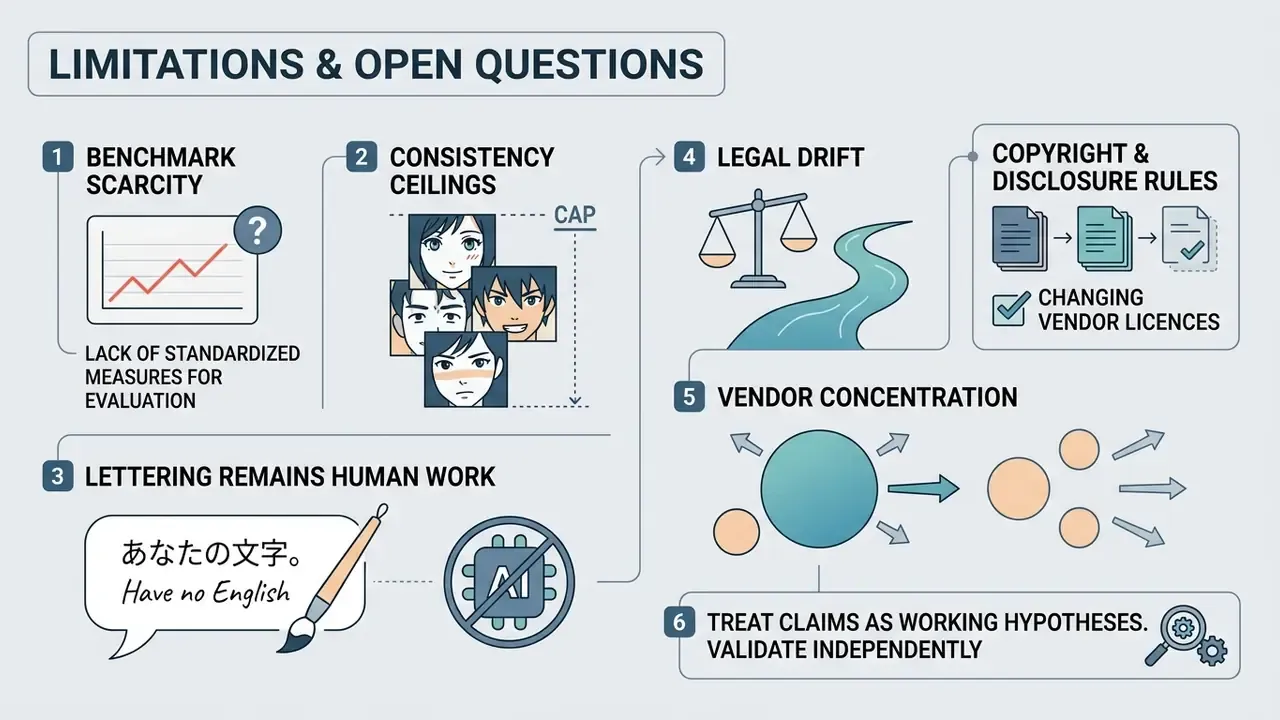
Honest caveats, because this field is moving faster than the evidence base.
- Benchmark scarcity. There is still no widely accepted quality metric for "does this page read as manga". Panel-layout classification accuracy is a proxy, not a verdict on storytelling.
- Consistency ceilings. Identity adapters degrade on extreme poses, crowd scenes and heavy occlusion. Expect manual redraws in fight choreography.
- Lettering remains human work. Diffusion models cannot yet render dependable typography inside panels; plan a separate lettering step.
- Legal drift. Copyright registration practice, disclosure rules and vendor licences are all changing. Re-check them at least quarterly, and again before every commercial launch.
- Vendor concentration. Many "specialised" manga tools sit on the same two or three upstream models. Single-provider dependence is a real continuity risk.
Where evidence is thin, treat the claims in this guide as working hypotheses and validate them on your own pages.
FAQ About AI Manga Generators
Can you create manga without drawing skills?
Yes. Platforms in the ai manga maker free category and professional generators largely compensate for the absence of academic drawing skills. You take on the roles of scriptwriter, director and letterer: shaping the plot, writing text prompts, choosing camera angles, composing frames on the page. The neural network acts as executor, producing graphic content from the given parameters. Structured prompting, background then subject then details then constraints, plus framing, viewpoint and lighting, is what replaces manual draughtsmanship. Iterating in small steps beats overloading a single prompt.
Is it safe to use an AI manga creator for fan comics?
Creating fan comics based on existing media franchises with AI does not remove liability for infringing the trademark and intellectual-property rights of the original owner. Publishing fan works openly or selling them can lead to takedowns or lawsuits from rights holders, regardless of whether the comic was drawn by hand or generated by a neural network. And if no substantial human authorship exists, the work may be denied copyright registration entirely.
What resolution is required for printing manga?
For quality printing, the page layout must be at least 300 DPI (dots per inch). For a standard B5 page that is approximately 2500×3540 pixels. Free generator tiers usually output at 72 DPI, which requires subsequent upscaling. Plan the print-safe area and bleed before generating, so a page-turn panel is not cropped at the trim line.
How do you add text and dialogue bubbles to generated manga?
Most advanced generators include a built-in vector bubble editor with font-size and bubble-fit controls. If the feature is missing, export frames without text, then letter the dialogue and add fonts in graphics editors (Clip Studio Paint, Photoshop, Illustrator). Never rely on the diffusion model to render legible lettering inside the image; reserve empty background space in the prompt instead.
Is copyright preserved on generated manga?
Under the laws of most countries, raw neural output is not protected by copyright. However, if the author adds an original text script, creates a unique page composition, refines images manually and letters the dialogue, the finished work as a compilation may qualify for intellectual-property protection. Structural elements of manga are, notably, machine-readable:
«Magi (Manga Whisperer) frames panel, text and character detection as a graph-generation task, reaching AMI 0.6551 and NMI 0.8505 on the PopManga test set.» The Manga Whisperer (Magi), arXiv:2401.10224v2 (March 2024). https://arxiv.org/abs/2401.10224 That matters for authorship claims. Because panels, bubbles and character links can be extracted automatically, your defensible contribution is the human-authored selection, arrangement, script and editing. Document it.
Can generated characters be used commercially?
This is possible under three conditions: the service you use grants a commercial licence on your paid plan; the character is fully original and does not copy existing protected designs; no protected third-party materials were used in prompts or references.
Why does my character keep changing between panels?
Character drift comes from relying on prompt text alone. Fix it by combining methods: a canonical Character Sheet fed through IP-Adapter, a trained LoRA for long projects, an identical locked identity block in every prompt, ControlNet for pose control, and seed locking only for near-identical shots. Re-check consistency every 10 to 20 panels against the reference sheet.
Can I make original characters (OC) for fandom projects?
Yes, OC creation is one of the most common uses. Generate a model sheet with front, side and back views plus an expression grid, then reuse it as the reference for every scene. Keep the design original: basing an "OC" closely on a protected franchise character reintroduces derivative-work risk. Modern ai manga generator technology opens real possibilities for visualising stories, letting authors realise creative ideas without years of drawing training. A skilful combination of text prompts, visual references and layout systems makes it possible to produce high-level graphic novels ready for publication and distribution. The deciding factors, though, are still human: story beats, layout rhythm, continuity discipline. Final frame polishing is usually handled with AI image enhancers.
Related graphic and production tools
- Avatars and author branding: ai username generator and AI headshot generators for creator profiles.
- Motion adaptations of finished frames: image-to-video AI tools, ai video clip, ai video creation and ai video creation platforms.
- Animation and promo assets: animation makers for trailers and episode teasers.
- Budgeting and support: calculators for credits and per-page spend, plus technical help if you view the guide.
- Reference library for adjacent AI media terms: explore the hub.
Appendix A: Fact-Check Notes on Cited Figures
For transparency, the following statements appeared in earlier versions of this guide. They are retained here with their verification status and the corrected formulations used in the main text.
| Original statement | Status | Corrected formulation in the main text |
|---|---|---|
| "Using a universal generator without a fixed layout causes style deviation in 68% of cases; a specialised tool cut re-generations three-fold." | Needs external verification: internal test observation, not a published benchmark | Described as a directional internal observation; the mechanism is supported by How Panel Layouts Define Manga (2024). |
| "A reference image plus a structured prompt increases composition accuracy by 42% (ICCR 2024)." | Figure not traceable to the cited paper | Replaced with the paper's verified conclusion on subject-object relationships and noun/adjective interdependence. |
| "Panel geometry carries up to 84.3% of stylistic information (2024)." | Supported | Kept, with direct arXiv:2412.19141 link and the 84.3% / 87.5% methodology detail. |
| "Step-by-step script decomposition reduces hallucinations by 53%." | Source not verifiable | Replaced with the MangaDiffusion (arXiv:2412.19303) description of LLM-based K-script splitting. |
| "Noun/adjective separation reduces incorrect elements by 37% (ICCR 2024)." | Figure not present in the source | Replaced with the verified ICCR conclusion on interdependent parts of speech. |
| "Identity adapters keep characters 91.2% recognisable across 40 frames (DiffSensei 2025)." | Needs external verification: experimental model metric | Reformulated qualitatively, with the masked cross-attention mechanism cited from arXiv:2412.07589. |
| "Webtoon strip width is 800 pixels." | Supported | Kept, industry standard on Naver Webtoon and Kakao Page. |
| "US Copyright Office 2023 to 2025: only human-created elements are protected." | Supported | Kept, with the added requirements to identify AI-generated material and explain the human contribution. |
This article is informational and does not constitute legal advice. Copyright, licensing and platform-disclosure rules vary by jurisdiction and change frequently; verify current terms with the vendor and a qualified professional before commercial publication.