Rule 34 AI art refers to the synthetic generation of explicit, erotic, or niche adult imagery using text-to-image diffusion models fine-tuned on custom datasets. Understanding how an ai rule 34 image generator operates means looking past the interface: at the underlying architecture, the data-retention policy, the licence attached to each weight file, and the regulatory controls that now apply.
Last updated: 2026. This material is an analytical, compliance-oriented review of generative AI risk. It is not promotional content for any adult platform and does not host, link to, or distribute explicit media.
Executive Summary for Risk, Compliance, and Security Leaders
Rule 34 AI art is produced by the same latent diffusion stack used in mainstream image generation (SDXL, SD 1.5, Flux, Qwen-Image), extended by LoRA adapters, ControlNet, IP-Adapter, and inpainting. Because that stack is open-source and runs on consumer GPUs, the exposure inside a bank or fintech is rarely "a website". It is Shadow AI: unsanctioned local model stacks, unlogged prompt histories, and untracked model weights sitting on corporate hardware.
| Dimension | Key takeaway | Primary control |
|---|---|---|
| Technology | 20 to 50 denoising steps over latent noise, conditioned by text embeddings; LoRA weights inject specific characters or styles | Model allow-listing, weight-file inventory (.safetensors, .ckpt) |
| Legal | Hard bans on CSAM/CSAE and non-consensual intimate imagery (NCII); EU AI Act prohibition on intimate images of identifiable persons enforceable from 2 December 2026 | AUP update, mandatory reporting workflow (NCMEC) |
| Privacy | Cloud generators log prompts and cache outputs; only local execution guarantees zero external egress | Data-retention review, DLP, egress monitoring |
| Copyright | Fully machine-generated output without meaningful human authorship is not registrable (U.S. Copyright Office) | Documented human-authorship trail |
| Detection | Query variants (rule 34, r34, rule34) work as reliable log signatures at the web security gateway | Signature-based monitoring, quarterly Shadow AI audit |
Bottom line: the technical barrier to producing explicit synthetic media has collapsed to seconds and a text box. The remaining controls are legal, contractual, and infrastructural.
Why a Regulated Institution Should Care About an Adult Image Generator
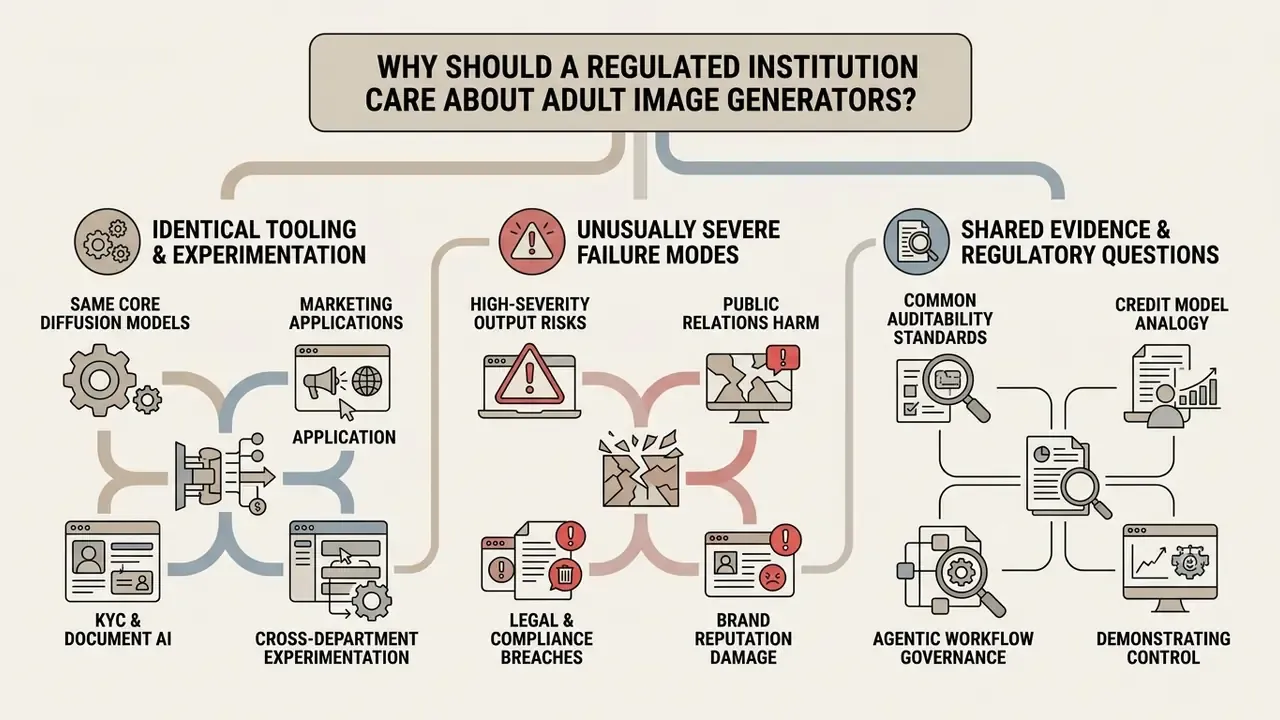
A fair objection: why would a Head of Model Risk read an analysis of rule 34 ai art at all? Because this category is the stress test for every generative AI control a bank has written down.
Three reasons, briefly.
First, the tooling is identical to the tooling your marketing, KYC, and document teams already experiment with. Same checkpoints, same samplers, same download endpoints. A control that fails here fails everywhere.
Second, the failure modes are unusually severe. Most Shadow AI incidents end in a data-leakage finding. This one can end in a criminal referral, a mandatory NCMEC report, and an HR investigation running in parallel with the security one. Few playbooks are written for that combination.
Third, the evidence question is the same one your regulators ask about credit models and agentic workflows. Can you reproduce the output? Do you know which weights produced it? Who owned the decision to run it? If the answer is "the workstation had no logging", the institution has no defensible position at all. That is the whole argument in one line.
What Rule 34 AI Art Means and Why AI Generators Are Used
Rule 34 AI art is the application of text-to-image diffusion models to explicit, erotic, or fan-art-derived adult imagery. The category matters analytically because it is the fastest-growing use of open-weight models, and therefore the clearest early indicator of moderation, licensing, and privacy failures.
It represents the convergence of the old internet axiom "if it exists, there is porn of it" with modern generative technology. An online ai generator uses text-to-image diffusion pipelines to generate adult visual content from user-submitted text prompts, usually within a few seconds.
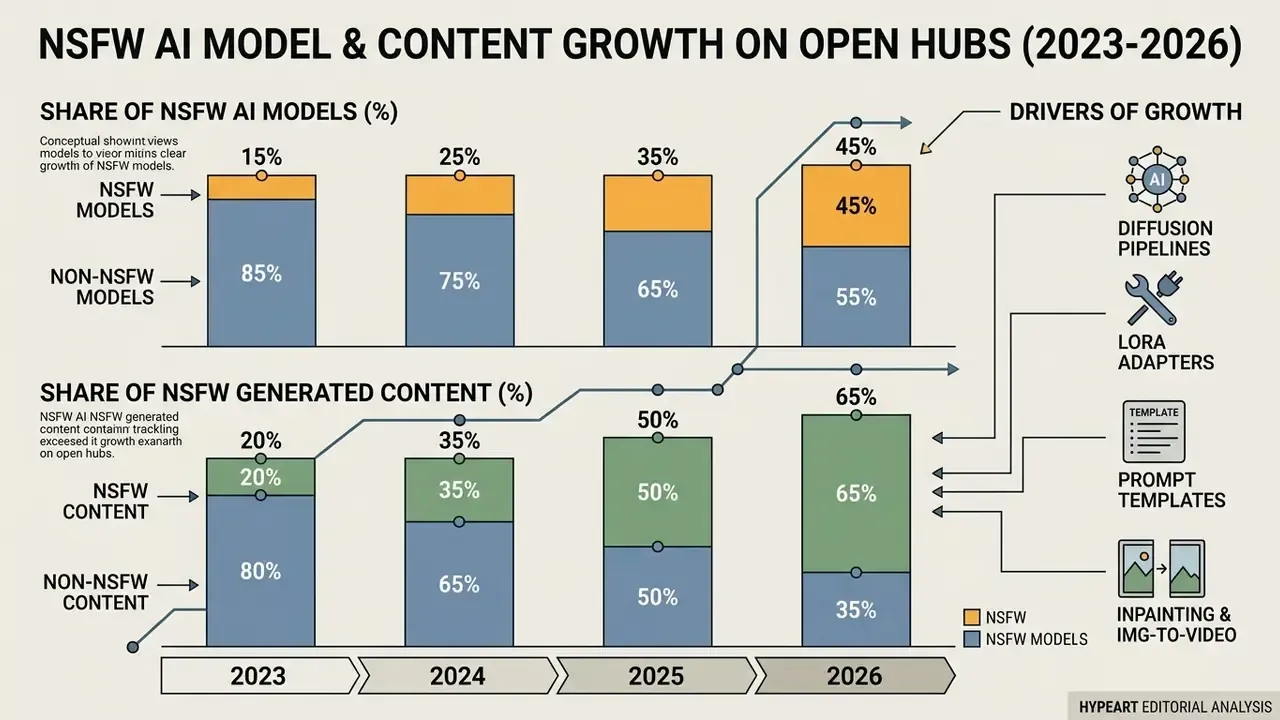
The Origin of Rule 34 and the Adjacent Rule 35
The concept dates to 13 August 2003, when a webcomic attributed to Peter Morley-Souter carried the caption "Rule #34: There is porn of it. No exceptions." The strip documented the author's shock at finding explicit fan art of childhood cartoon characters, and the line was absorbed into the informal "Rules of the Internet" that circulated across early-2000s message boards, chatrooms, and imageboards. Since then, Rule 34 has worked simultaneously as a meme, a cultural diagnosis, and a hashtag attached to pornographic fan art.
A companion axiom, Rule 35, states: "If there is no pornographic depiction of something yet, it will eventually appear." Rule 35 was originally a joke about the inevitability of human effort. In the generative era it has effectively become obsolete as a prediction: modern model stacks (SDXL, Flux, Qwen-Image) can materialize almost any described intent in 2 to 5 seconds from a single text prompt, collapsing the "eventually" into "on demand". That shift, from scarce and labour-intensive fan art to unlimited on-request synthesis, is precisely what turns a cultural meme into a governance problem.
Worth noting is the safeguarding dimension, which predates AI entirely. Explicit depictions of familiar cartoon characters can be extreme, violent, or degrading, and they are especially distressing for younger children who encounter characters they admire. Safeguarding practitioners recommend a calm, non-judgemental conversation: pause, fact-check the topic, ask what the child already knows, and reassure them that fan art does not change the character they love.
Rule 34, R34, and Rule34: Query Variants and Log-Detection Notes
How AI-Generated R34 Art Differs From Conventional Digital Art
The difference is procedural, not aesthetic. Traditional art accumulates human decisions; diffusion output samples a probability distribution. This single distinction drives both the speed advantage and the copyright weakness of synthetic imagery.
AI-generated R34 art relies on probabilistic diffusion models to synthesize images in seconds, while traditional 2D and 3D digital art requires manual asset creation, manual lighting setup, and specialized software proficiency. Research on 3D production pipelines describes preproduction, production, rendering, and review cycles, a structure that adds time but grants creators iterative, human-authored control over geometry, texturing, and every final pixel (ACM, 2025, DOI 10.1145/3641235.3664438).
"Across generated images, 14.56% were unsafe; for Stable Diffusion the share reached 18.92%."
By contrast, an ai image generator produces images probabilistically from latent noise conditioned on text prompts. Production time drops sharply, yes. But creators trade away direct pixel-level control and struggle with character consistency across multiple renders, a point raised in studies of generative AI in the applied arts (ERIC, 2026, https://files.eric.ed.gov/fulltext/EJ1494365.pdf). Co-creation research adds a second cost: users report diminished control, ownership uncertainty, and a need for progressive refinement and selective appropriation to steer output toward intent (Taylor & Francis, 2025, https://www.tandfonline.com/doi/full/10.1080/10400419.2025.2587803).
Uniqueness also differs by mechanism. Traditional uniqueness emerges from direct human choices across composition, lighting, texture, and rendering. AI uniqueness depends on prompt and model interaction, and it tends to repeat subjects or styles unless actively varied through seeds, adapters, and scene control (ICCC 2024, https://computationalcreativity.net/iccc24/papers/ICCC24_paper_199.pdf). For a broader survey of output quality across engines, see our comparison of the best AI art generators.
How an AI Rule 34 Image Generator Works
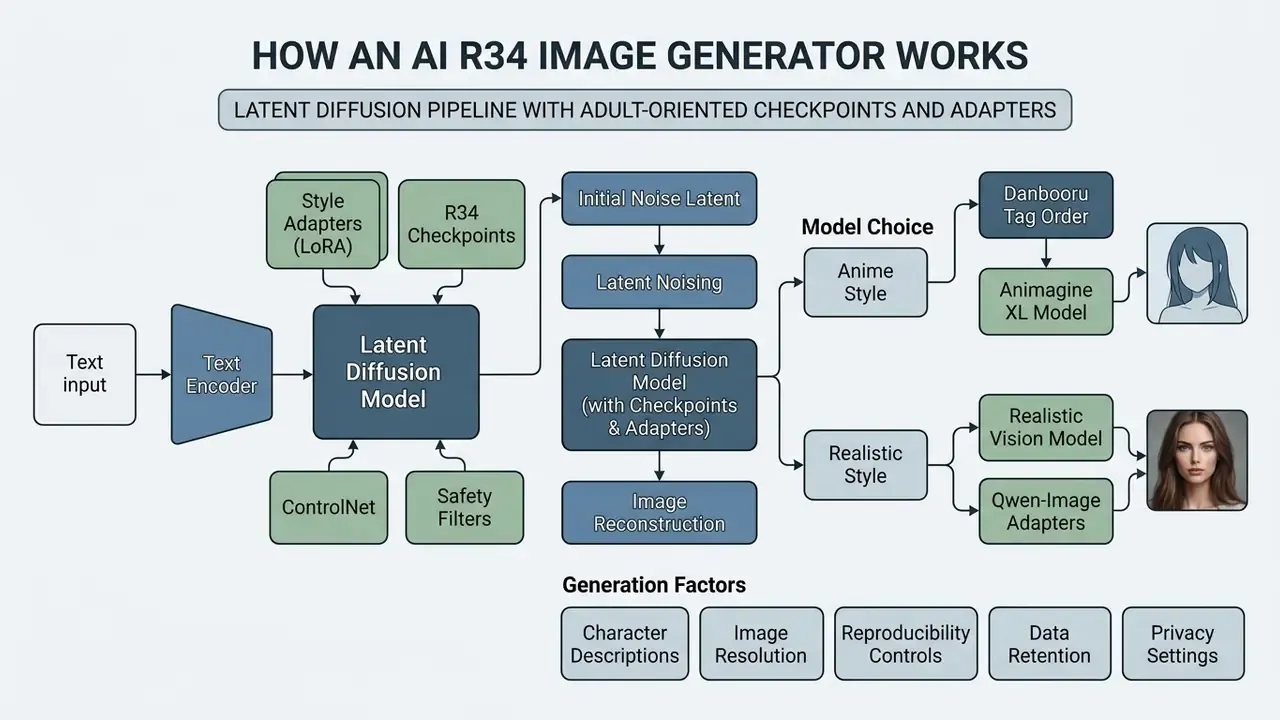
An R34 generator is a standard latent diffusion pipeline with adult-oriented checkpoints and adapters. The user-visible steps are model selection, prompting, parameter configuration, sampling, and decoding. Every one of them is a control point for audit and filtering.
An ai rule 34 image generator turns natural language prompts into synthetic images through a multi-stage denoising process. The system converts text tokens into mathematical embeddings, and those embeddings guide the model as it refines random Gaussian noise into a structured visual composition.
- Select base model and LoRA. The user chooses a base checkpoint (SDXL or SD 1.5, for example) and optionally attaches a Low-Rank Adaptation (LoRA) weight to enforce a specific character, pose, or aesthetic. In most interfaces the adapter is invoked inline as
<lora:filename:multiplier>, where the multiplier sets adapter strength. LoRA tags cannot be placed in the negative prompt field. - Input positive and negative prompts. Text triggers specify subjects, actions, lighting, and composition, while negative prompts filter out unwanted visual artifacts.
- Set generation parameters. Sampling steps, classifier-free guidance (CFG) scale, seed values, and target image dimensions are configured here.
- Run the latent denoising pipeline. The diffusion algorithm processes latent noise over 20 to 50 iterations, guided by text embeddings through cross-attention layers.
- Decode and upscale. The latent representation is decoded into pixel space by a Variational Autoencoder (VAE), then passed to an upscaler, where denoising strength governs how far the upscaled image drifts from the original.
- Review, then retain or purge. Output is checked against policy. In a governed environment this step also records the prompt, seed, model hash, and disposition decision to an audit log.
The Role of Prompts, Text, and Style in AI Image Generation
Prompt structure is the primary conditioning mechanism and, awkwardly, the primary abuse vector. Keyword-weighted prompts outperform conversational prose, which is exactly why prompt-level filtering is mandatory rather than optional.
Text prompts direct an ai image generator toward specific visual outcomes, and prompt structure dictates output fidelity. Peer-reviewed prompt-engineering work reports that quality depends far more on subject and style keywords than on connecting words, and recommends sampling 3 to 9 seeds to account for stochastic variation (Columbia University, CHI 2022). Vendor guidance converges on a consistent field order (background or scene, subject, key details, constraints) plus explicit composition, viewpoint, angle, lighting, and mood fields (OpenAI image prompting guide, 2026; Stanford GenAI Prompt Guide).
"Explicit unsafe prompts reliably produce unsafe images; Stable Diffusion proved most vulnerable among the tested models."
When users feed explicit descriptors into an ai rule 34 maker, the text encoder matches those tokens against its training distribution. Specifying artistic styles (illustrative, vector, cinematic lighting) steers the model's cross-attention layers, which is what allows precise control over mood and visual structure.
Ready-to-Use Prompt Templates as a Structure Reference
Choosing a Model for Anime and Realistic R34 Art
Checkpoint choice decides whether output reads as stylized illustration or photographic capture. Anime-tuned SDXL derivatives dominate line-art fidelity; photographic checkpoints demand more VRAM and stricter prompt discipline.
The base checkpoint determines whether the resulting ai art presents stylized anime visuals or photorealistic textures. Anime-oriented generation frequently relies on fine-tuned architectures such as Animagine XL or specialized SDXL derivatives, which excel at clean linework, cel-shading, and Danbooru-style tagging. Documented examples include Pastel Anime LoRA for SDXL (fine-tuned from Animagine XL at a learning rate of 1e-5, 1300 global steps, batch size 24) and Anime Detailer XL LoRA. Readers unfamiliar with adapter terminology can start with our reference entry on AI art generators.
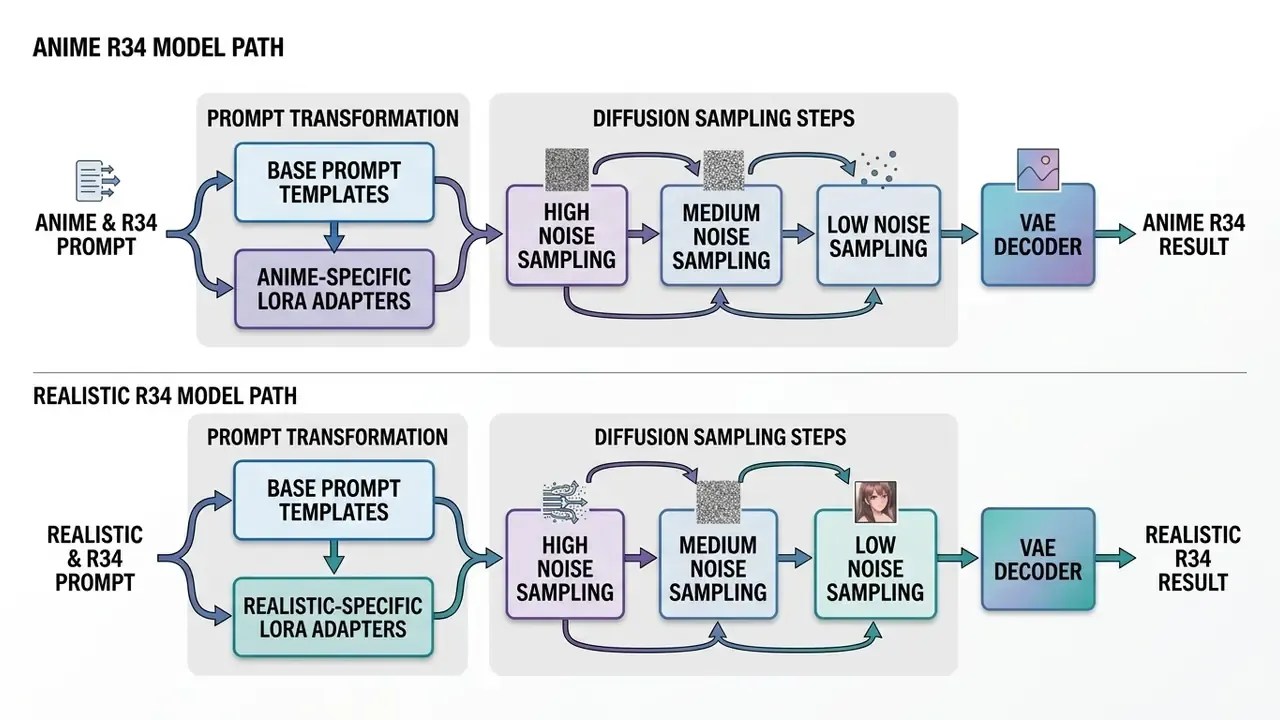
Photorealistic adult image generation requires checkpoints fine-tuned on photographic datasets, such as Realistic Vision or Qwen-Image adapters.
"Stable Diffusion variants account for 42.4% of synthetic scenes and Flux for 15.3%; open models dominate SNEACI content production."
These realistic models prioritize micro-textures, skin subsurface scattering, and natural lighting, but they need higher VRAM and precise prompt construction to avoid visual distortion. The flymy-ai/qwen-image-anime-irl-lora adapter illustrates a hybrid path: it converts anime-style prompts into photorealistic renders on the Qwen-Image base. Stylized, non-explicit variants of the same technique appear in lighter tools too, from ai dog pictures to ai doll generator styling and ai dnd map design.
Characters, Image Sizes, and Reproducibility
Character consistency cannot be achieved with text alone. Identity locking requires adapters; reproducibility requires fixed seeds plus fixed canvas dimensions.
Maintaining consistency across generated images means using dedicated control mechanisms rather than trusting prompts. Tools such as IP-Adapter FaceID and ControlNet OpenPose let creators lock facial features and body poses across different scene renders. Per the official IP-Adapter repository, a lower scale value increases diversity but reduces prompt adherence, and square inputs perform best because the default CLIP processor center-crops non-square images. In ControlNet workflows, canvas width and height are set in the txt2img panel rather than inside the ControlNet unit, and resize mode decides whether the control image is scaled or cropped to the canvas.
| Technical parameter | Standard aspect ratio or range | Impact on output quality and consistency |
|---|---|---|
| Square canvas | 1:1 (1024x1024 / 512x512) | Optimal for IP-Adapter processing due to default CLIP center-cropping |
| Portrait canvas | 2:3 or 9:16 (832x1216) | Standard framing for full-body adult character portraits and mobile viewports |
| Widescreen canvas | 16:9 (1216x832) | Suited to multi-subject scenes, background environments, cinematic composition |
| CFG scale | 4.0 to 8.0 | Balances prompt adherence with naturalness; extreme values cause over-saturation |
| Sampling steps | 20 to 40 steps | Reaches convergence for most Euler/DPM++ samplers; higher steps yield diminishing returns |
| Seed | Fixed integer | Required for reproducible series and for reconstructing an image during an audit |
| LoRA multiplier | 0.4 to 0.8 | Higher values enforce likeness but suppress prompt flexibility and induce artifacts |
Reproducible seed values combined with fixed image dimensions prevent random variance when generating sequential series. From a model-risk perspective, the triple of seed, model hash, and prompt is the minimum evidence set needed to reproduce and investigate any disputed output. Anything less is testimony, not evidence.
What Features R34 AI Generators Offer
Feature sets cluster into four blocks: text-to-image, image-to-video animation, mask-based inpainting, and interactive character or chat layers. Each block widens creative range and, at the same time, widens the attack surface for policy violations.
Modern R34 AI generators integrate multi-modal creation tools that run from static text-to-image rendering to video animation and conversational agents. Users evaluating an ai rule34 generator or ai rule34 maker typically look for flexible visual customization plus fast workflow execution.
Generating Images From Text and Configuring R34 Styles
Text-to-image synthesis with granular style control is the core capability. Stacked LoRA adapters and weighted negative prompts are what separate configurable platforms from single-button toys.
The core function of any adult r34 ai generator is text-to-image synthesis backed by style customization. Advanced platforms allow creators to combine multiple LoRA adapters at once, adjusting weight multipliers (say, 0.6 for character likeness and 0.4 for lighting style) to reach a customized result. Commercial APIs expose the same levers under different names: Amazon Titan Image Generator G1 documents cfgScale, quality, numberOfImages (1 to 5), width/height, and seed; Together AI documents prompt, negative_prompt, steps, seed, and aspect_ratio; Hugging Face Diffusers exposes num_inference_steps and guidance_rescale.
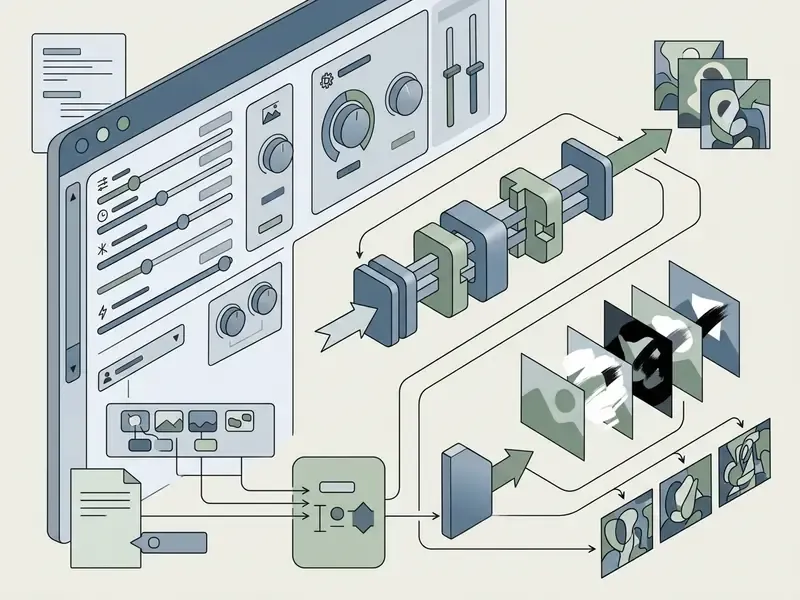
Runtime adjustments such as negative prompt weighting let creators suppress anatomical errors or unwanted backgrounds on the fly. These controls are what make generate ai tools produce structured outputs aligned with a specific creative requirement. Style-control research adds a training-time counterpart: StyleDrop balances adaptation to a target style against text alignment through weighted loss terms (NeurIPS, 2023).
Step-by-Step Scenarios: Inpainting and Video Generation
Two workflows account for most practical usage beyond plain text-to-image: masked regeneration of a specific region, and animating a still frame into a short clip. Both are parameter-sensitive. Both fail loudly if denoising or motion values are set too aggressively.
Scenario A: Masked Editing and Element Replacement
Related tooling and pricing are covered in our overview of image-to-image generators.
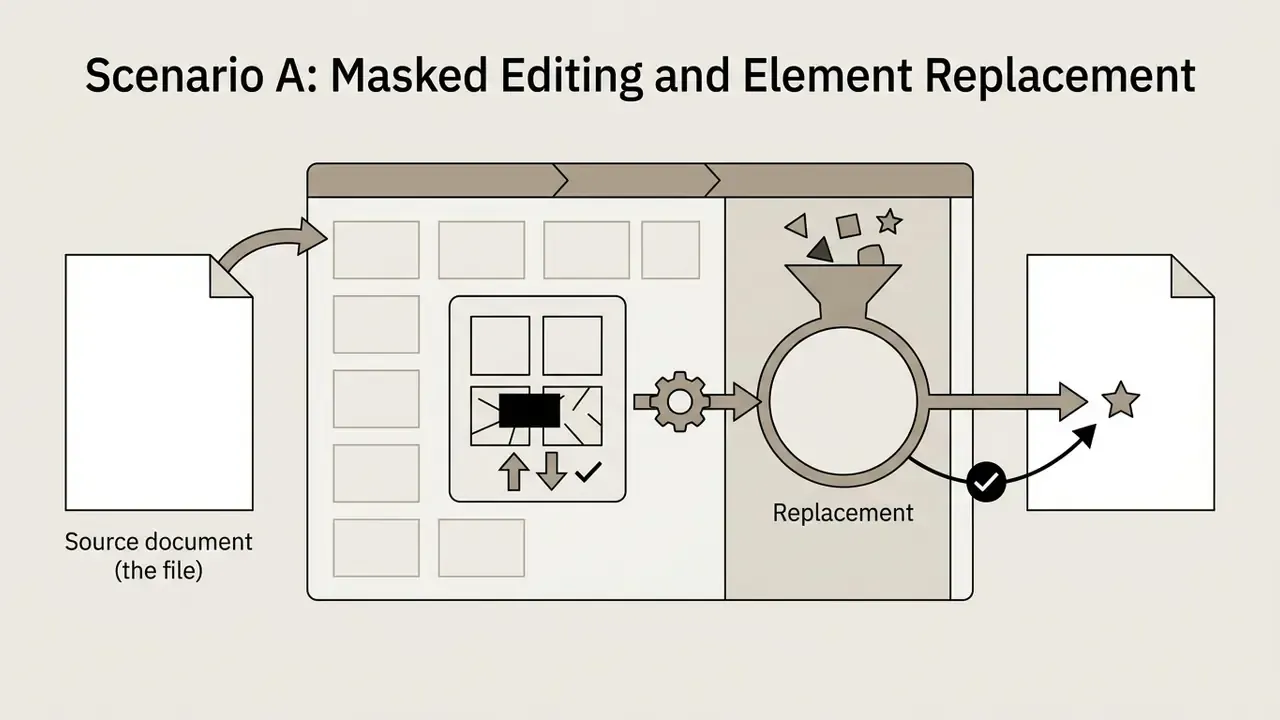
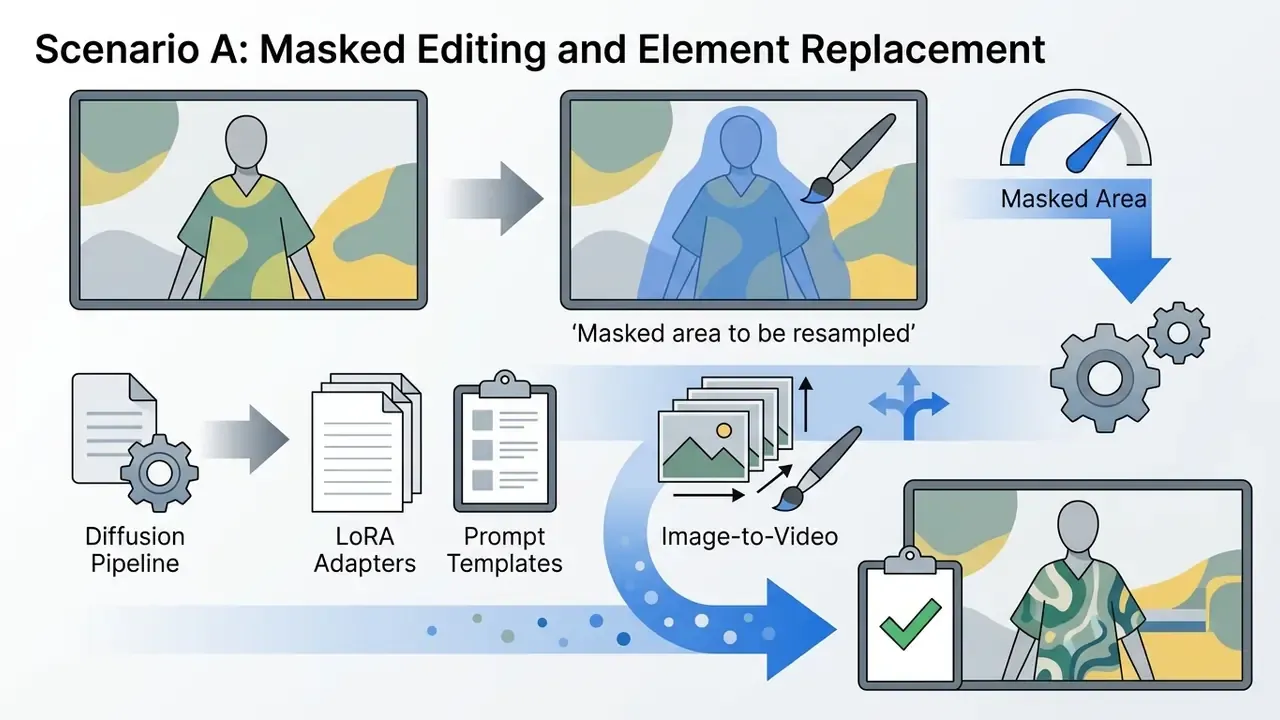
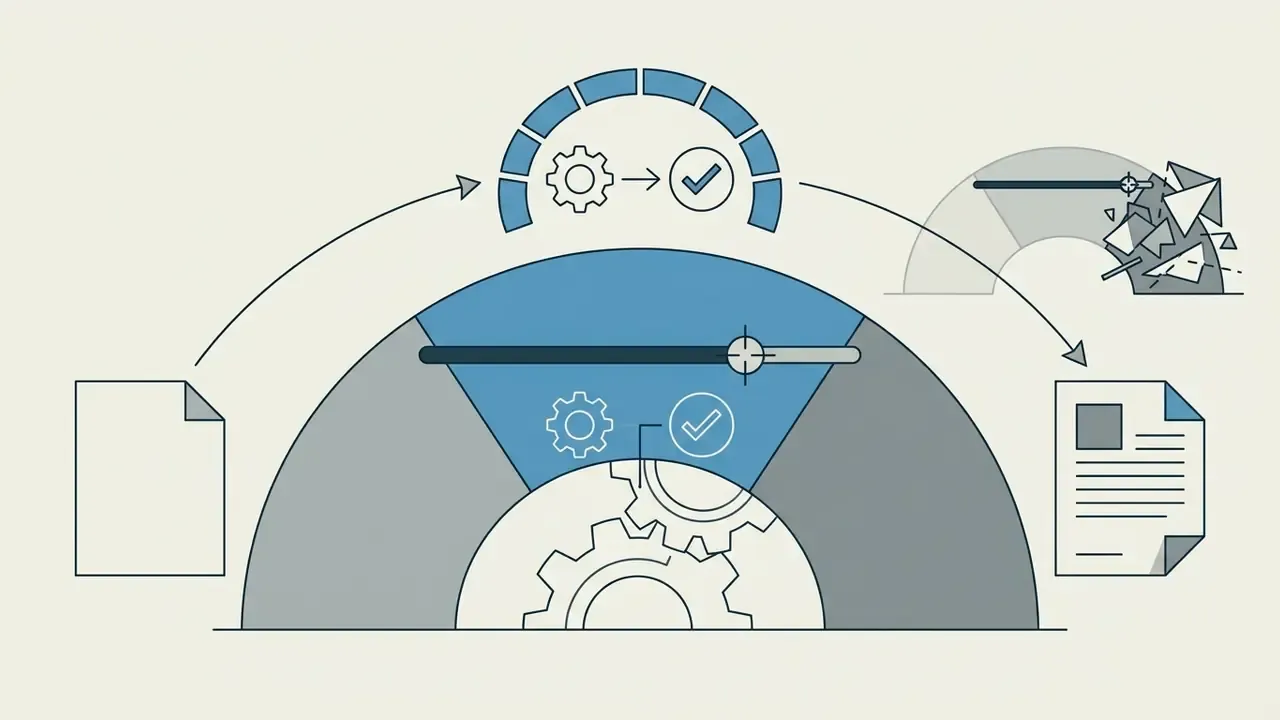
0.65 to 0.85. Values below 0.5 will not change underlying structure; values above 0.9 break edge continuity and produce artifacts.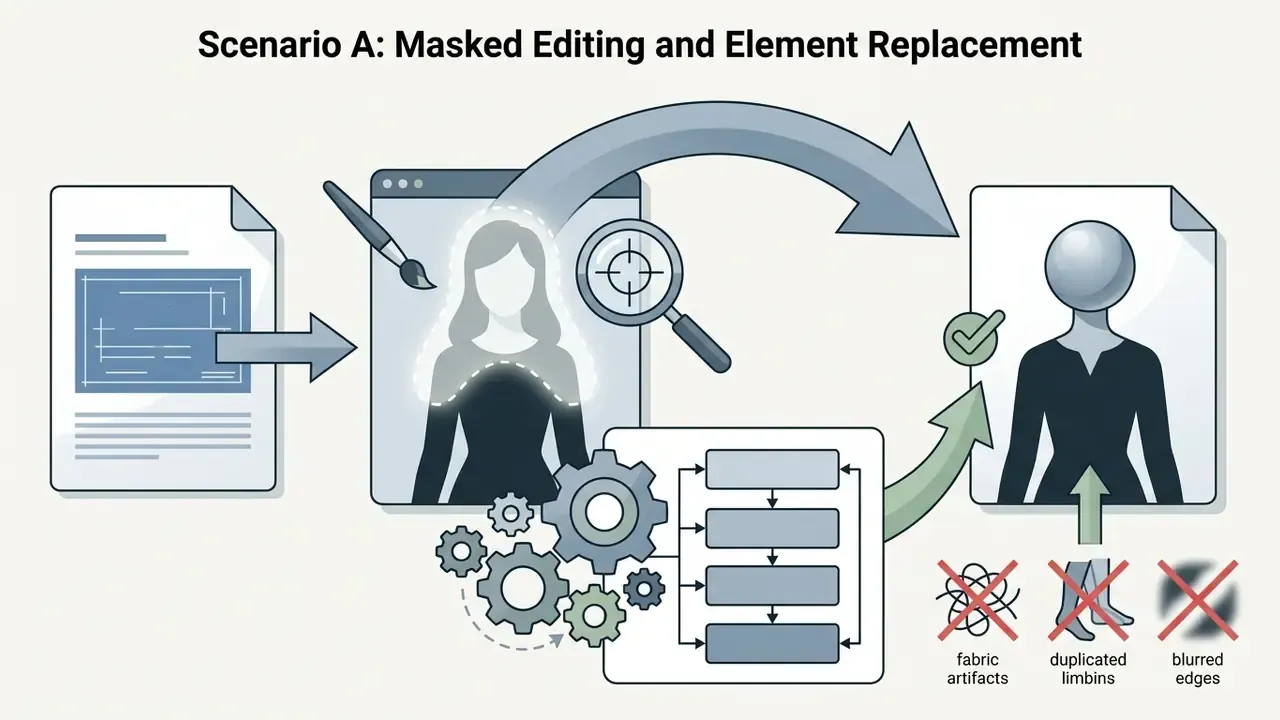
clothing seams, fabric artifacts, duplicated limbs, blurred edges in the negative prompt.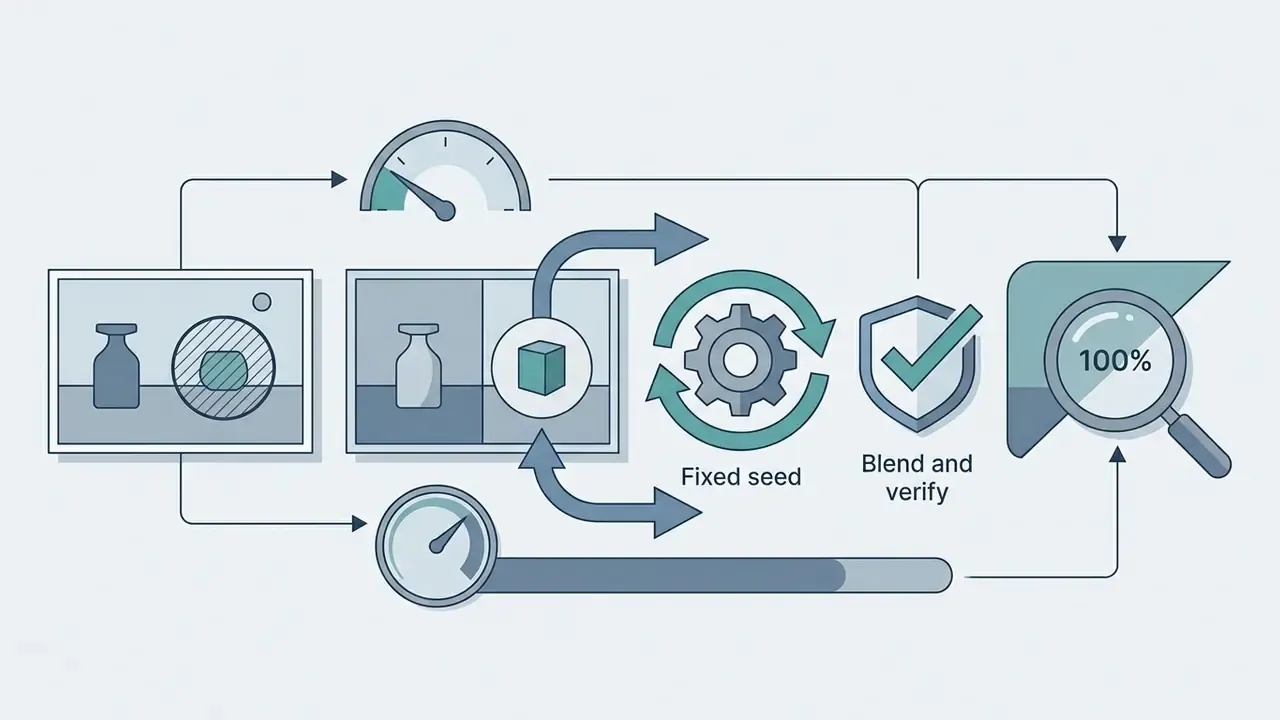
0.45 to 0.55) to smooth the mask boundary, then inspect at 100% zoom for lighting mismatch.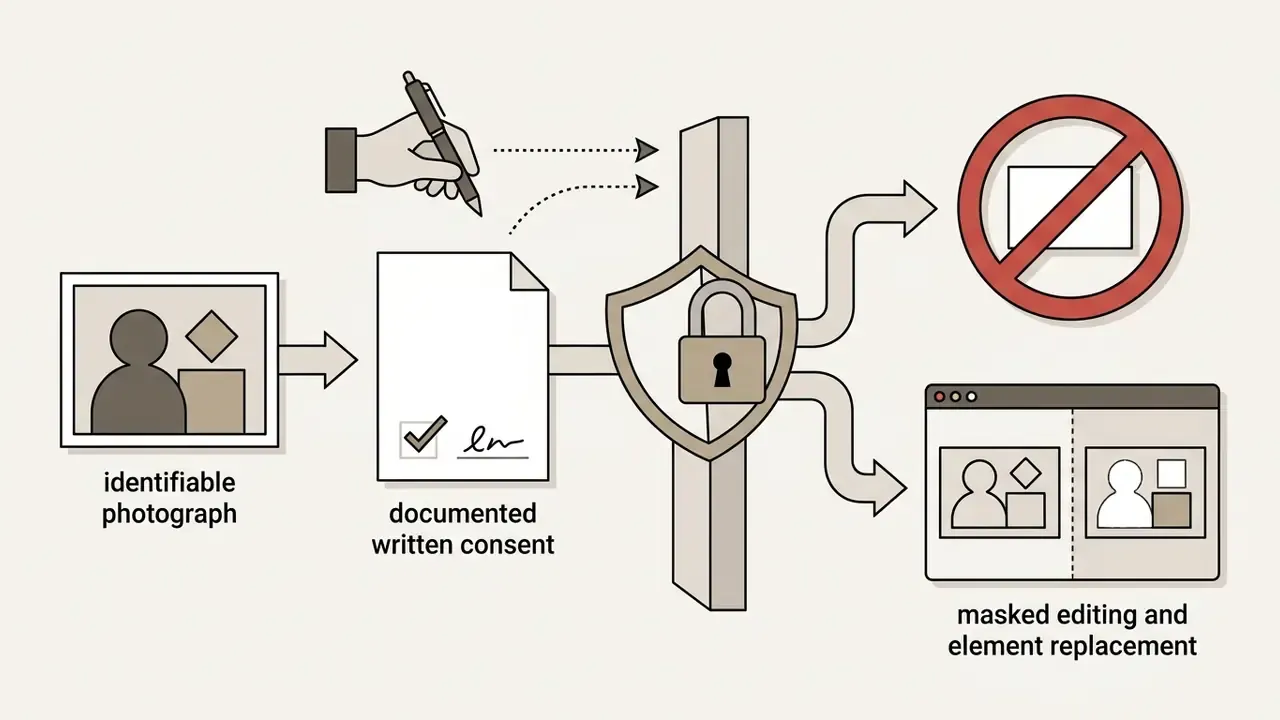
Scenario B: Animating a Still Into a 2 to 4 Second Clip
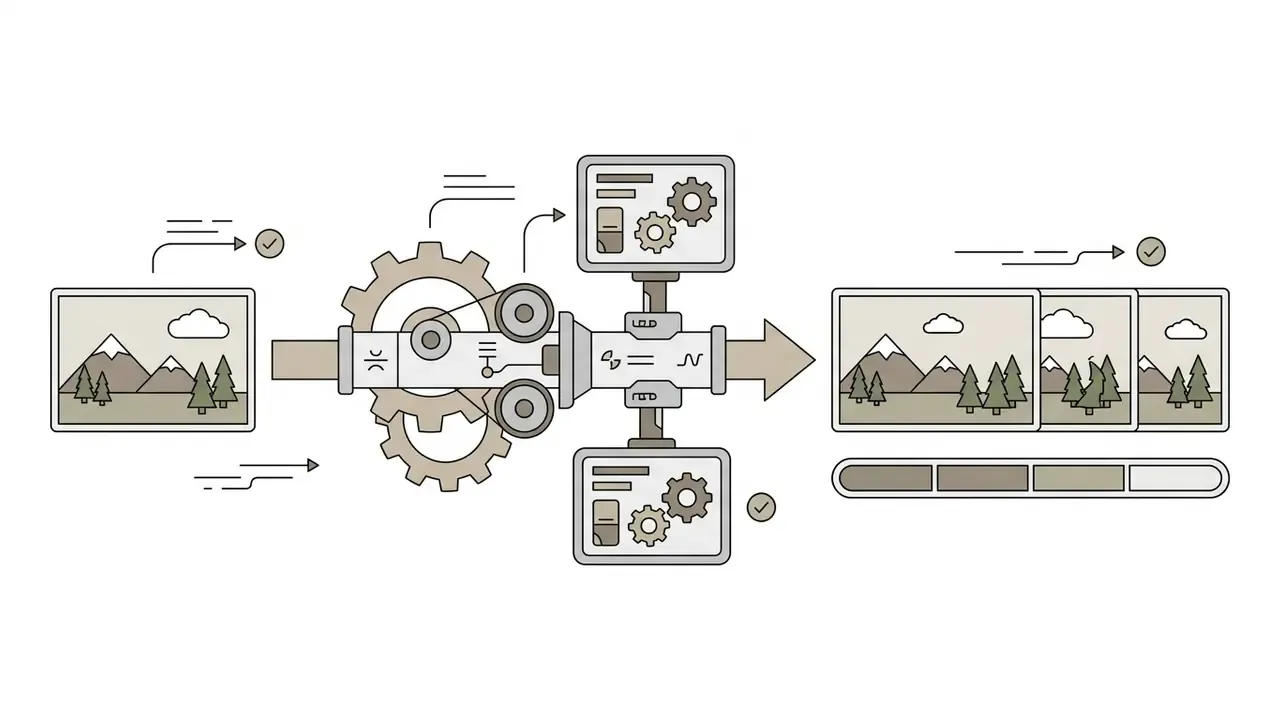
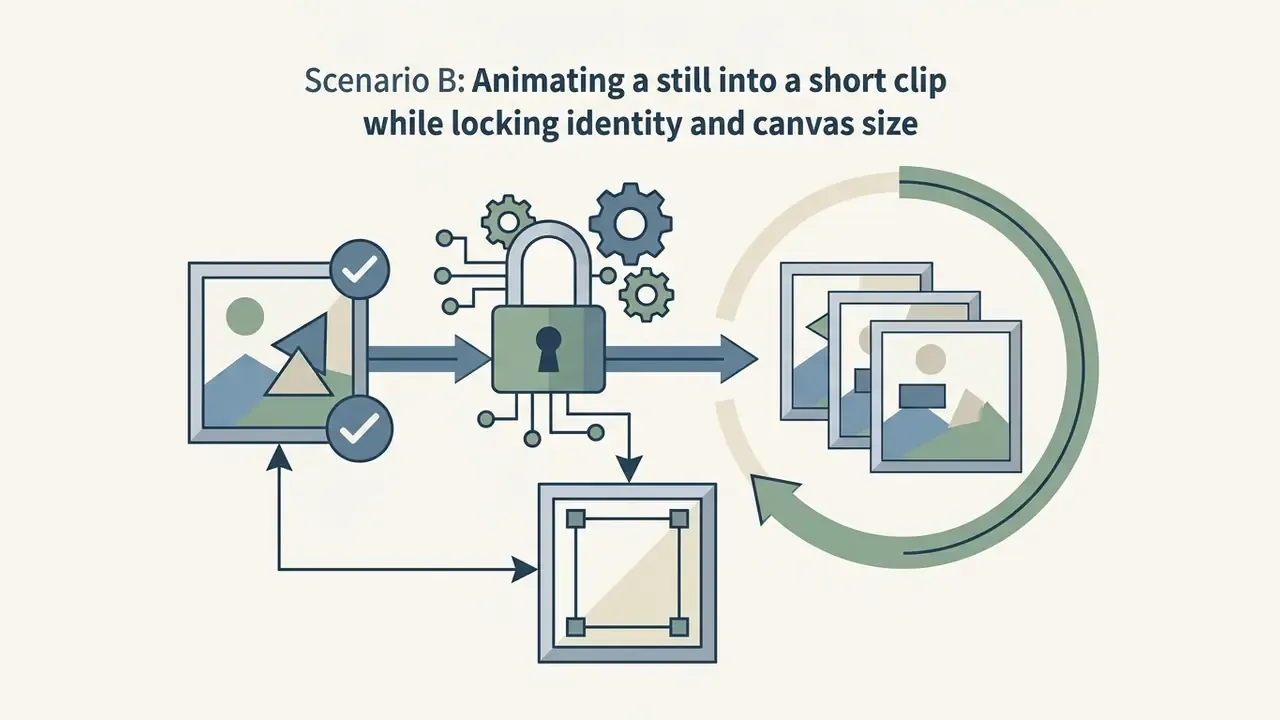
Seed and canvas size (1024x1024 or 832x1216) so identity does not drift between the base frame and the animation.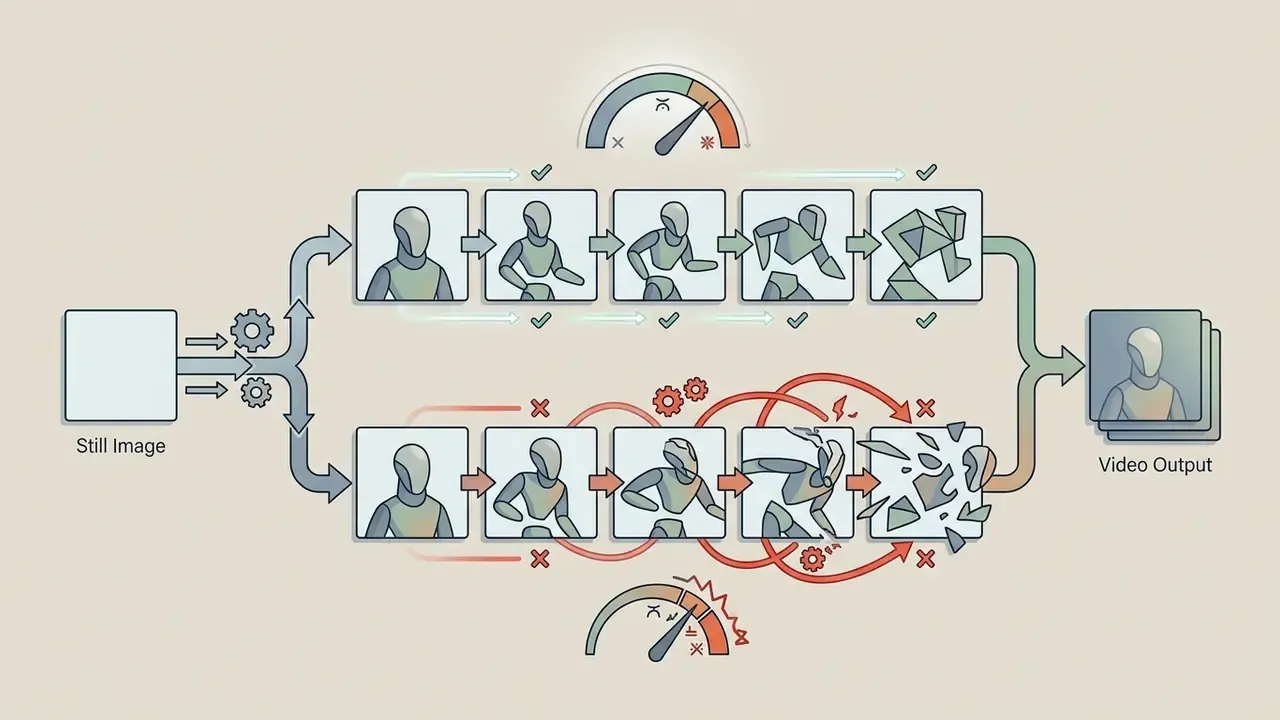
Motion Scale around 68 to 80. Higher values increase movement but tear anatomy across frames.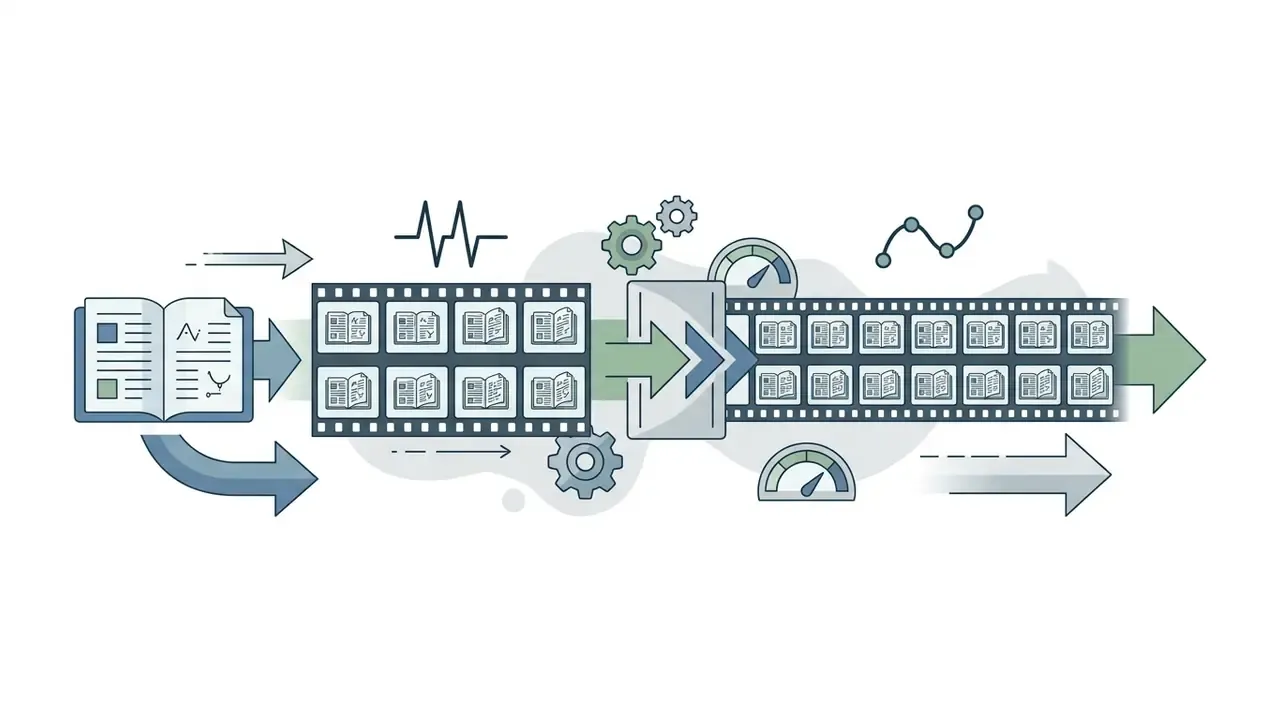
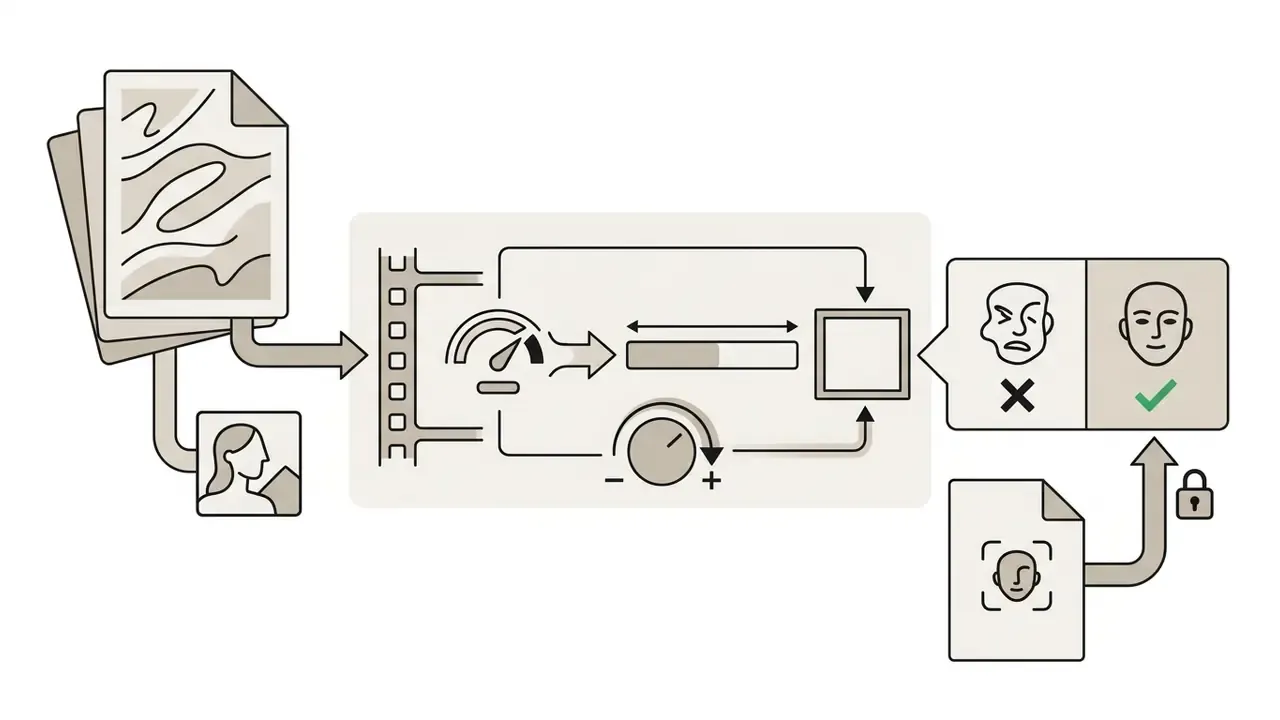
AI-Generated Images and Short AI Videos
Video extension is now standard on specialized platforms, yet duration stays capped by memory and attention scaling. Temporal consistency, not resolution, is the binding constraint.
Extending static images into short clips is increasingly common. Tools like AnimateDiff insert temporal motion modules into latent diffusion pipelines, enabling 2 to 4 second animated output from a single base image. Practical consumer workflows follow the pattern competitors advertise: generate a batch of images, pick the strongest frame, then convert it into a clip with an action prompt, all without switching tools or rebuilding the concept. A deeper feature and cost breakdown sits in our guide to image-to-video AI tools.
Research on image-to-video generation highlights hard technical constraints around temporal consistency and identity drift: single-view input makes occluded regions ill-posed during motion, and diffusion-based generation is less efficient than non-diffusion alternatives (CVPR 2024). A 2025 review of image-to-video diffusion names four open problems, namely long-term consistency, controllability, efficient deployment, and security, and identifies O(N²) attention scaling as the dominant cost driver.
"Wan generates 66.5% of videos in the SNEACI dataset; open models dominate NSFW video production."
As motion modules extrapolate unseen frames, high VRAM costs cap the duration of artifact-free video output. Cheap for a hobbyist. Expensive at scale.
Character Tools, Chat, and Additional AI Features
Beyond rendering, platforms bundle character studios, roleplay chat, pose editors, and mask-based editing. These layers make iteration cheaper, and they make prompt-history retention a much larger privacy liability.
Integrated character studios support 3D pose manipulation with editable OpenPose controls that feed directly into ControlNet units; vendor documentation describes this as setting "a precise character pose with editable 3D controls" (Llamagen AI, 2026). Companion hubs add persistent character management, so users create, edit, and resume conversations, while character-studio projects expose model selection across local and cloud providers. Some platforms also generate imagery in-line during chat, producing a scene image that matches the current turn of a roleplay session. That real-time pattern multiplies the number of stored prompts and cached assets per session, sometimes by an order of magnitude. Inpainting rounds out the set: draw a visual mask over specific canvas areas, such as clothing or expressions, then regenerate only the selected region with a targeted prompt, without destroying the original composition. Creators exploring adjacent generative formats sometimes come to these tools from playful projects like an ai diss track generator, which shares the same prompt-conditioning logic in audio.
Safe and Responsible Use of R34 AI Art
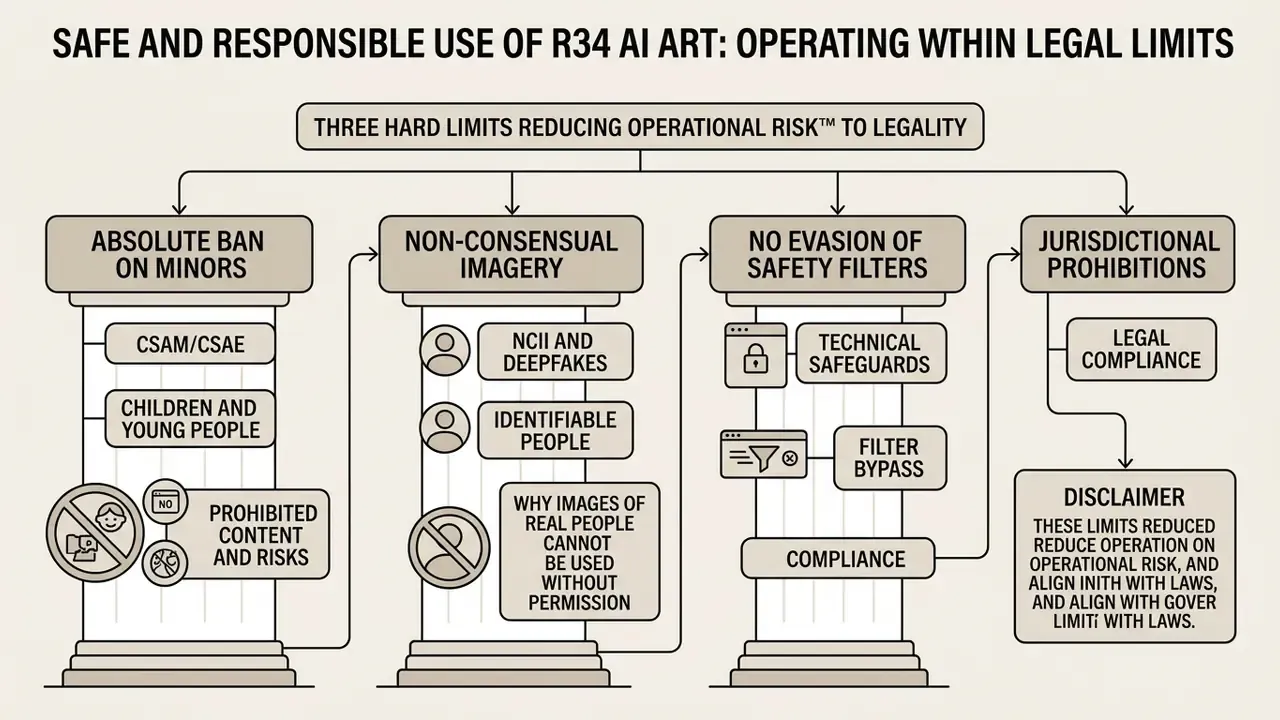
Operating these tools legally reduces to three hard limits: no minors, no non-consensual depictions of identifiable people, and no evasion of safety filters. Everything else is jurisdiction-dependent detail.
Compliance enforcement across major jurisdictions now mandates absolute zero-tolerance policies on illegal content generation. Not "risk-based". Zero tolerance.
- Account termination and legal liability. Systematically attempting to bypass safety filters triggers immediate account termination, platform blacklisting, and mandatory reporting to law enforcement agencies such as NCMEC.
Why Images of Real People Cannot Be Used Without Permission
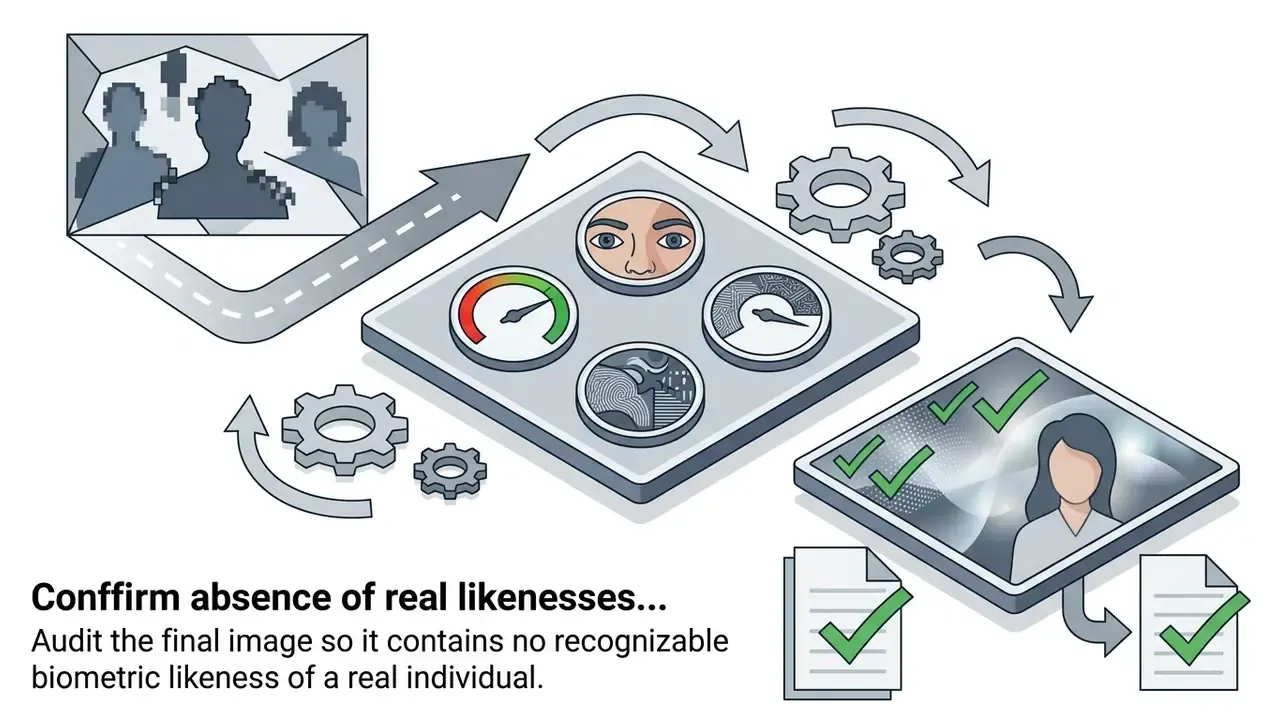
Using an identifiable person's likeness in explicit synthetic media triggers criminal, civil, and data-protection exposure at the same time. Consent has to be explicit, documented, and specific to the use.
Using photographs or biometric likenesses without consent violates fundamental privacy rights and statutory publicity laws. The U.S. TAKE IT DOWN Act (2025) explicitly criminalizes the knowing publication or creation of non-consensual digital forgeries depicting identifiable individuals in explicit contexts.
"2.2% of respondents across 10 countries reported victimization through deepfake pornography; 1.8% reported perpetration."
State publicity laws add another layer. New York's right-of-publicity statutes protect an individual's name, image, and likeness from unauthorized exploitation, and the state separately bans non-consensual computer-generated pornography and postmortem likeness exploitation. In European jurisdictions, processing an identifiable person's biometric features into synthetic adult media is a severe violation of GDPR Article 6 and, for biometric data, Article 9, which exposes creators to substantial penalties and civil litigation. The UK ICO restates the same principle plainly: AI systems handling personal data must satisfy UK GDPR principles in full.
Teams that need to verify whether a suspicious asset is synthetic can compare detection tooling in our review of AI image detectors, and organizations analyzing legal exposure should review current regulatory analyses in our overview of synthetic-media litigation trends.
Prohibited Content and Risks to Children and Young People
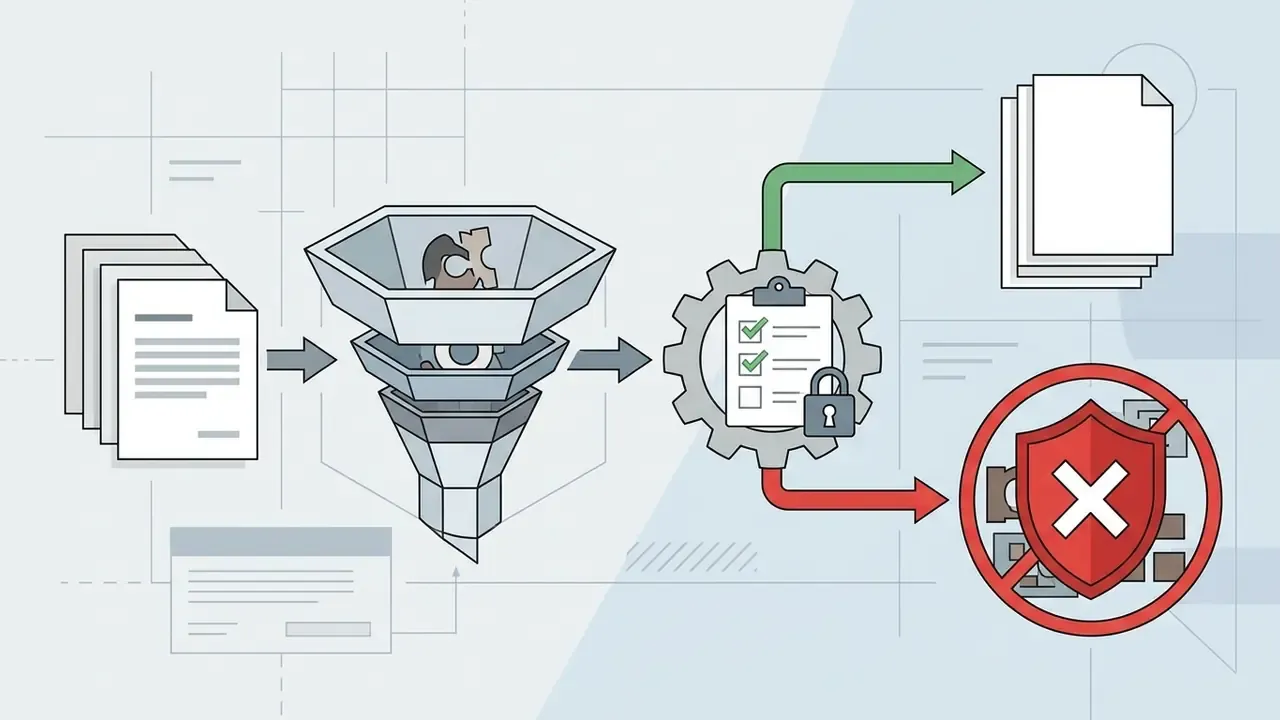
Filtering must operate on both the input prompt and the decoded output. Single-stage filtering is trivially bypassed by paraphrase, and by image-conditioned attacks.
Enterprise AI providers and open-source hosting platforms run automated safety hubs to detect and suppress harmful categories. Guidance from NIST (AI RMF GenAI Profile 2024) and Google Cloud safety documentation mandates dual-layer filtering, at input prompt submission and again at output image decoding. NIST specifies rule-based or ML-based content filters covering harmful, toxic, illegal, and violent content, explicitly including CSAM and NCII. Google Vertex AI documents a non-configurable filter that blocks prompts flagged as prohibited content, usually CSAM, alongside configurable harm-category thresholds.
"Automated content safety mechanisms must execute deterministic blocks on non-consensual intimate deepfakes and minor sexual exploitation before diffusion sampling occurs."
"Roughly 5.6% of images on CivitAI carry the tags 'loli' or 'shota', which denote sexualized depictions of minors." Wagner & Cetinic, CivitAI Sociotechnical Analysis (2025, preprint)
Automated safety layers screen incoming prompts for prohibited keywords and reject non-compliant inputs with error codes such as IMAGE_PROHIBITED_CONTENT, IMAGE_SAFETY, and PromptFeedback.BlockedReason. Repeated attempts to bypass prompt filters through adversarial phrasing lead to automated bans, IP blocks, and possible referral to regulatory authorities. Safety research confirms that output-stage checks are equally necessary: adversarial image-to-image inputs can induce NSFW output even where the text prompt looks benign (2024 adversarial I2I study).
Commercial Use of AI-Generated Images: What to Verify Before Publishing
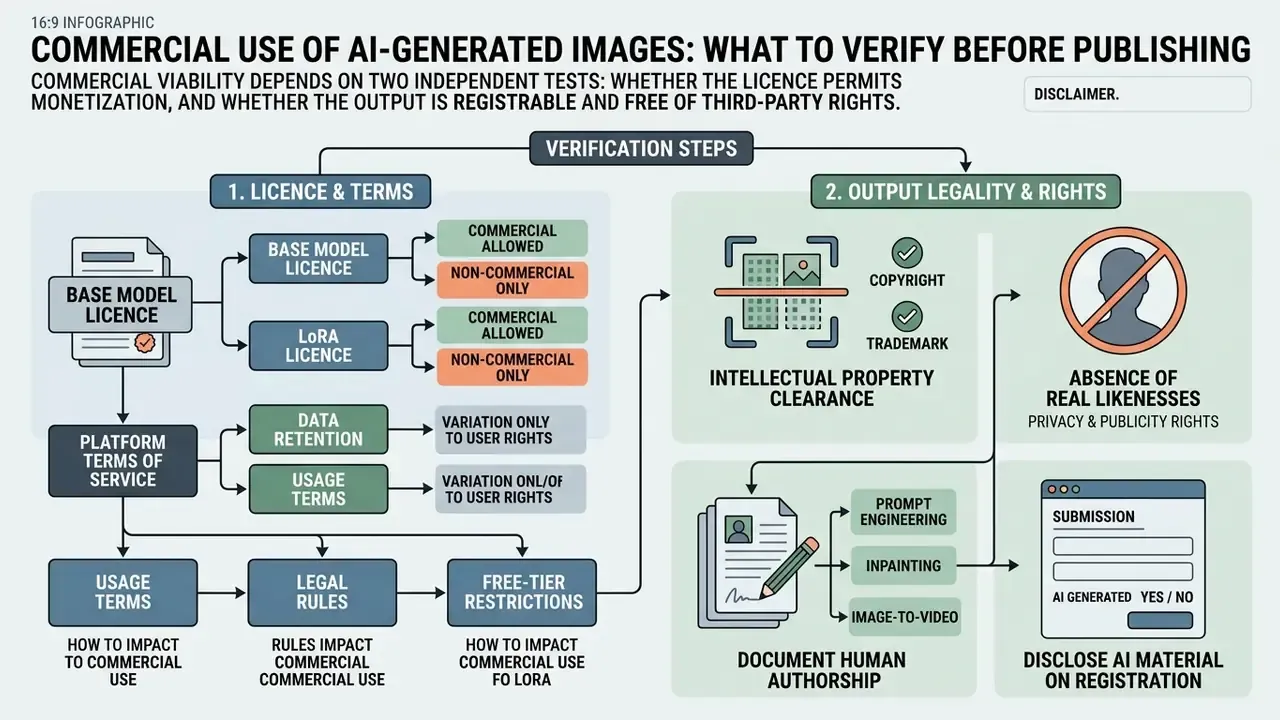
Commercial viability depends on two independent tests: whether the licence permits monetization, and whether the output is registrable and free of third-party rights. Passing one does not imply passing the other. People conflate them constantly.
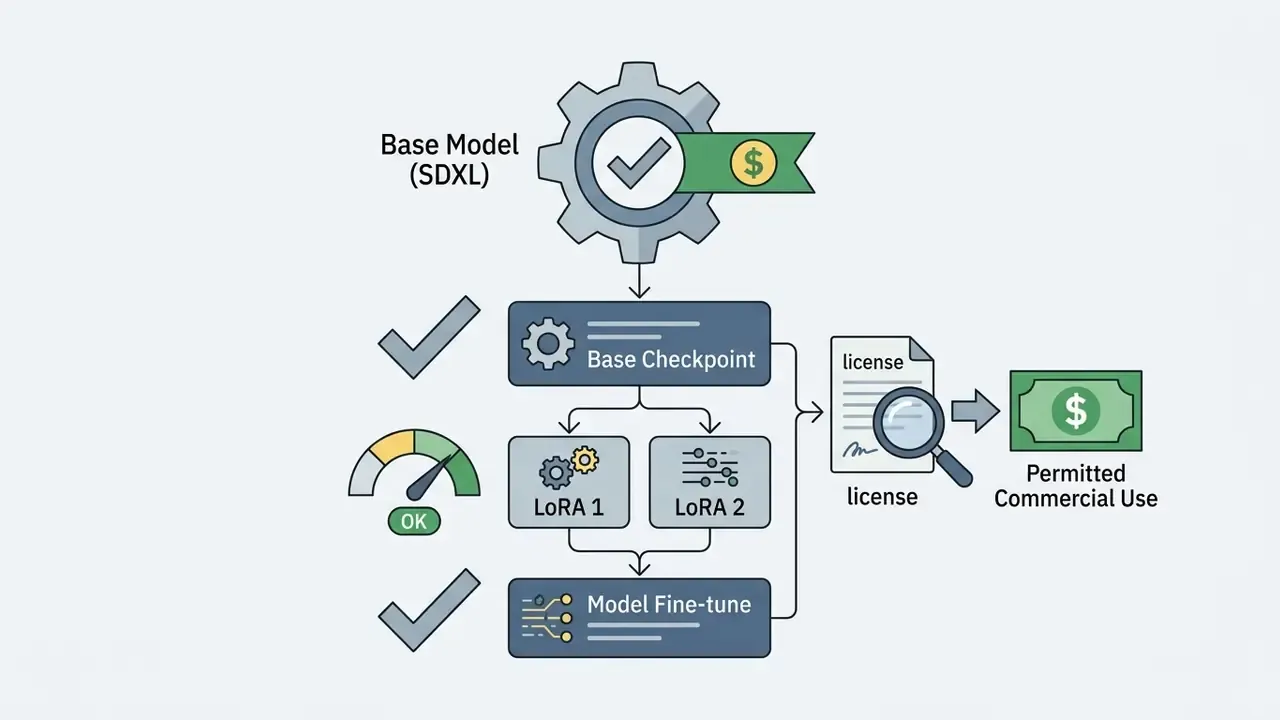
Deciding whether synthetic images can be used commercially means reviewing copyright statutes, model licensing agreements, and platform terms of service. Copyright registrability and commercial usage rights operate under distinct legal frameworks. For a broader treatment of rights and pricing across engines, see our guide to commercial use of AI image generators.
Usage Terms, Legal Rules, and Free-Tier Restrictions
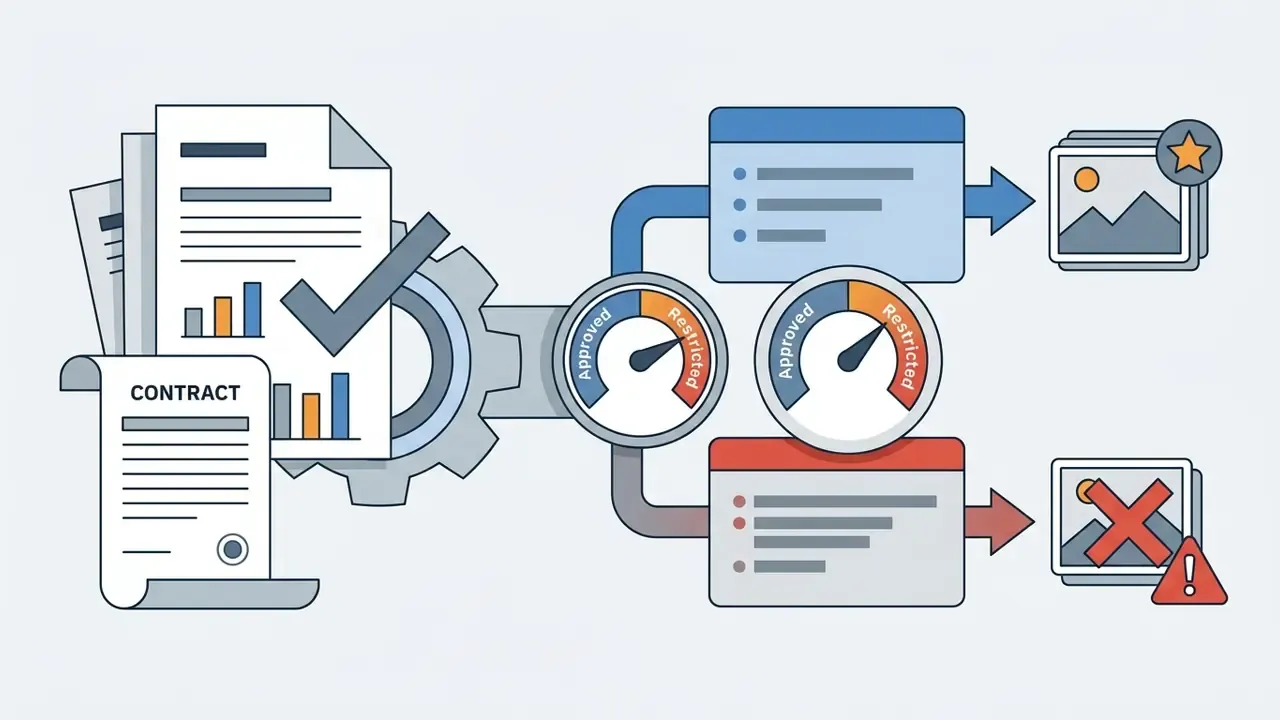
Ownership language differs sharply between vendors and between tiers. Producing commercial assets on a free tier is the most common contractual breach in this whole category.
Terms of service vary significantly across generative AI providers on asset ownership between free and paid modes. Policy updates from OpenAI (2026) assign output ownership rights to users regardless of tier, whereas Midjourney restricts commercial utilization strictly to paid subscribers, with ownership provisions tied to higher Pro and Mega plans for high-revenue users. Adobe's Generative AI User Guidelines take a third position: commercial licensing exists, but prompts, uploads, or shares that violate copyright, trademark, privacy, or publicity rights are prohibited outright. Some smaller vendors state the split bluntly, with paid plans carrying a commercial licence and free plans limited to personal use with attribution.
"NSFW models receive 3.32 times more downloads and views than SFW equivalents, indicating strong commercial demand."
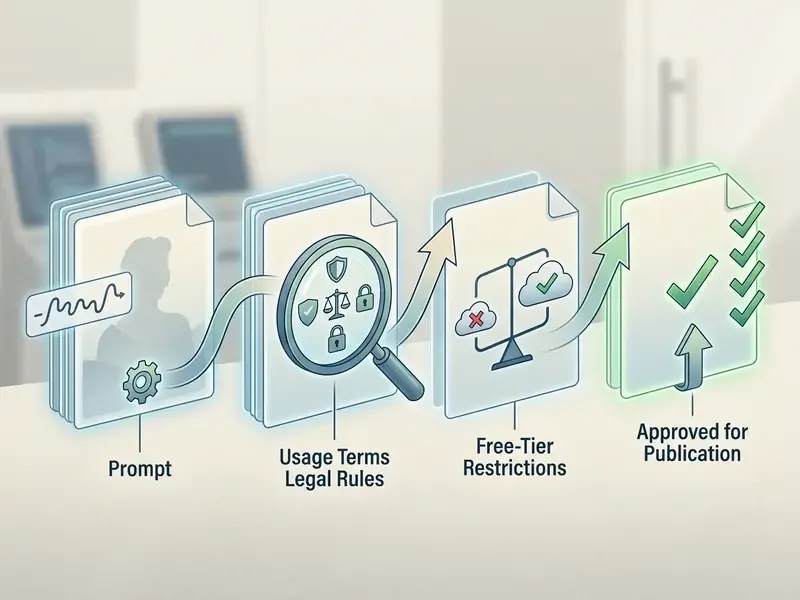
Free access tiers on commercial platforms frequently carry clauses restricting output usage to personal, non-commercial investigation. Creating commercial assets on a free account can therefore constitute a contractual breach that invalidates the usage rights you thought you had. Creators comparing licensing across platforms can consult our detailed AI Media Pricing Guides and our commercial use licensing documentation.
Verifying Privacy and Publication Rules for AI-Generated Content
Marketplace and app-store rules are frequently stricter than statute. Age-gating, synthetic-content labelling, and NCII exclusion are the baseline conditions for distribution.
Publishing adult AI art on third-party commercial platforms or stock marketplaces requires strict compliance with distribution guidelines. Major hubs require content age-gating, mandatory synthetic content labelling, and complete exclusion of non-consensual deepfakes (Google Play AI Policy 2026). Adobe Stock's generative AI guidelines additionally require the contributor to hold all necessary rights before submitting AI imagery for commercial licensing, and OpenAI's usage policies state that attempts to generate or upload CSAM are reported to NCMEC with immediate account termination.
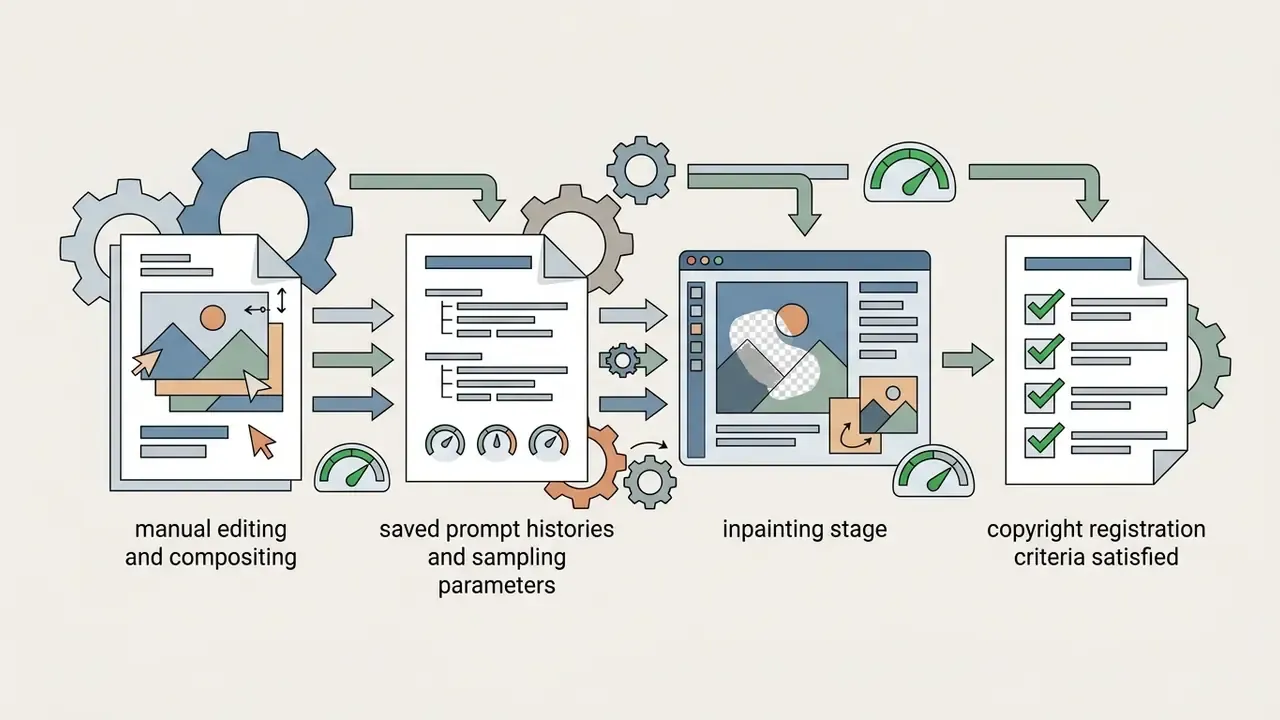
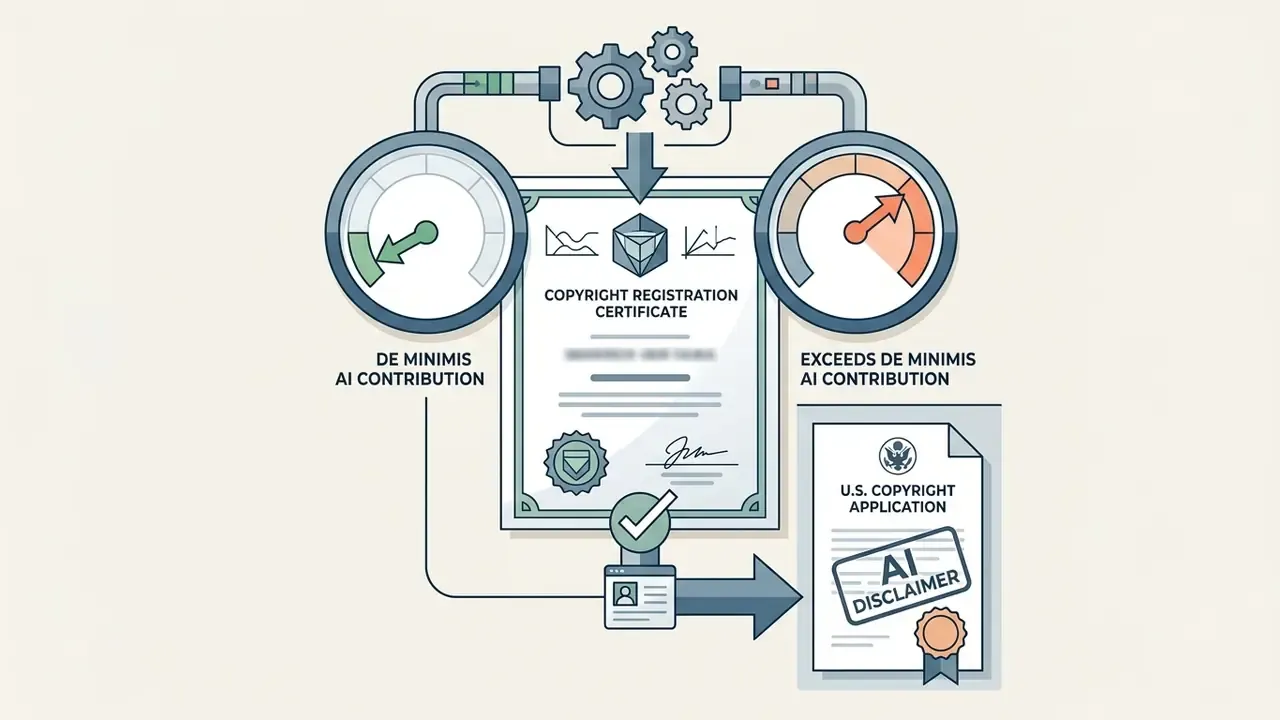
Regulatory guidance from the U.S. Copyright Office (2026) specifies that fully machine-generated imagery lacking sufficient human authorship cannot claim copyright protection. Authorship must reflect meaningful human creative expression, such as post-processing, manual canvas compositing, or complex multi-stage inpainting, before registration can be granted. The Office's 2026 report on digital replicas goes further and recommends licensing rather than assigning image and voice rights, with duration limits and additional safeguards where minors are involved.
Privacy, Data Retention, and Enterprise Risk
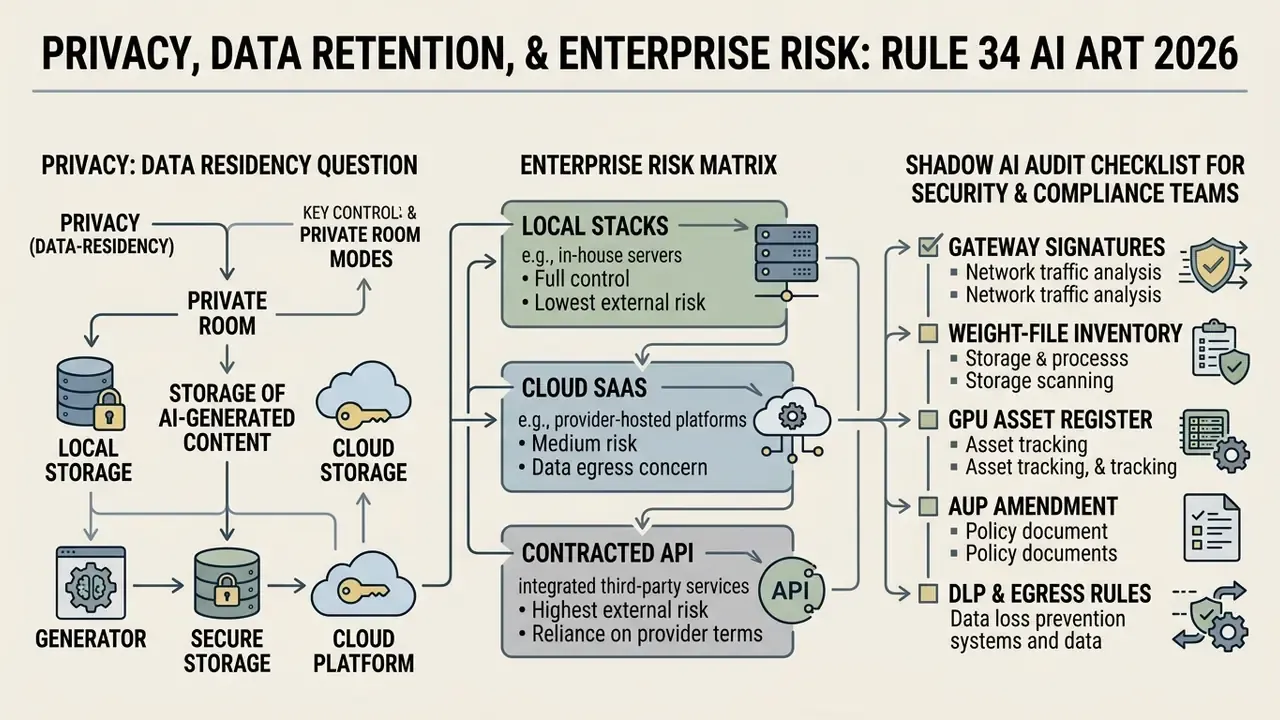
Privacy in this category is a data-residency question, not a UI toggle. "Private" usually means "unlisted", while the asset and prompt sit on the vendor's infrastructure until a retention policy purges them. Assuming it purges them.
Privacy, Private Room Modes, and Storage of AI-Generated Content
Data protection mechanisms differ substantially between public cloud services and dedicated private environments. Platforms offering "Private Room" functionality isolate generated assets from public discovery feeds, so created images are not listed in community search indexes.
Web-based private galleries still store assets on cloud servers unless explicit auto-purge policies are enforced. The distinction is visible in mature software: in Matrix/Synapse, private room visibility only excludes the room from the published directory, while genuine removal requires an administrative shutdown, block, and purge so the record is deleted from the server database. Gallery products behave the same way, marking uploads as private and blocking later re-publication while the files persist until deleted. Users who need real privacy guarantees should verify whether a service supports complete automatic server deletion at session end, and whether any "no storage" claim is audited or simply marketing language. Most are the latter.
Enterprise Risk Matrix: Local Stacks, Cloud SaaS, and Contracted API
| Risk dimension | Local stack (ComfyUI / A1111) | Consumer cloud SaaS | Enterprise API (contracted) |
|---|---|---|---|
| Data egress | None, offline capable | High, prompts and images leave the perimeter | Controlled, contractually bounded |
| Prompt and log retention | Local only, often unlogged | Vendor-defined, rarely disclosed | Documented retention window, deletion SLA |
| Audit trail | Absent unless deliberately instrumented | Vendor-side only, not exportable | Exportable logs, request IDs |
| Model provenance | Unverified community weights | Opaque checkpoint mix | Vendor-attested models |
| Compliance evidence (SOC 2 / ISO 27001) | None | Usually none | Available on request |
| Content filtering | User-removable | Vendor filter, bypass attempts logged | Non-configurable CSAM block plus configurable thresholds |
| Net corporate risk | High (Shadow AI, no evidence trail) | High (data egress plus reputational) | Medium (contract-bounded) |
Local execution maximizes privacy for an individual and simultaneously maximizes risk for an organization. On corporate hardware it produces unlogged generation on unvetted weights, with nothing exportable for a model-risk review. That inversion, private for the person, indefensible for the firm, is the part most policies still miss.
Shadow AI Audit Checklist for Security and Compliance Teams
- Gateway signatures.Add the normalized query dictionary (
rule 34,rule34,r34, plus the proximity-error variants) and known model-hub download endpoints to web security gateway and DNS filter categories. - Weight-file inventory.Scan endpoints and shared storage for
.safetensors,.ckpt, and LoRA files; flag directories matching known checkpoint naming conventions. - GPU asset register.Correlate high-VRAM workstations against approved workloads. Unexplained sustained GPU utilisation is a primary Shadow AI indicator.
- AUP amendment.Update the Acceptable Use Policy to name prohibited categories explicitly (CSAM/CSAE, NCII, likeness use without documented consent) and to bar installation of unsanctioned generative stacks on corporate hardware.
- DLP and egress rules.Block uploads of employee, customer, or third-party photographs to image-generation endpoints, and treat facial images as biometric data under GDPR Articles 6 and 9.
- Incident response path.Define one escalation route for suspected CSAM, with mandatory external reporting (NCMEC or the local equivalent), evidence preservation, and no independent employee review of the material.
- Evidence retention for disputes.Where generation is sanctioned for legitimate creative work, retain prompt, seed, model hash, and adapter list so any output can be reproduced during an audit.
- Quarterly re-review.Re-run steps 1 to 3 each quarter. The model and platform landscape shifts faster than annual review cycles, and it is not close.
Limitations and Open Questions
Two honest caveats. First, much of the quantitative evidence in this field comes from preprints and single-platform datasets, so prevalence figures should be read as directional rather than settled. Second, detection at the gateway catches downloads and known domains, not air-gapped laptops or personal devices used off-network. Any programme built purely on network signatures will under-report. Interview-based internal research, plus a clear amnesty path for employees who self-report an unsanctioned install, tends to surface more than scanning alone. That claim, to be fair, remains a hypothesis until your own incident data confirms it.
How to Choose a Rule 34 AI Generator: Features, Free Access, and Quality
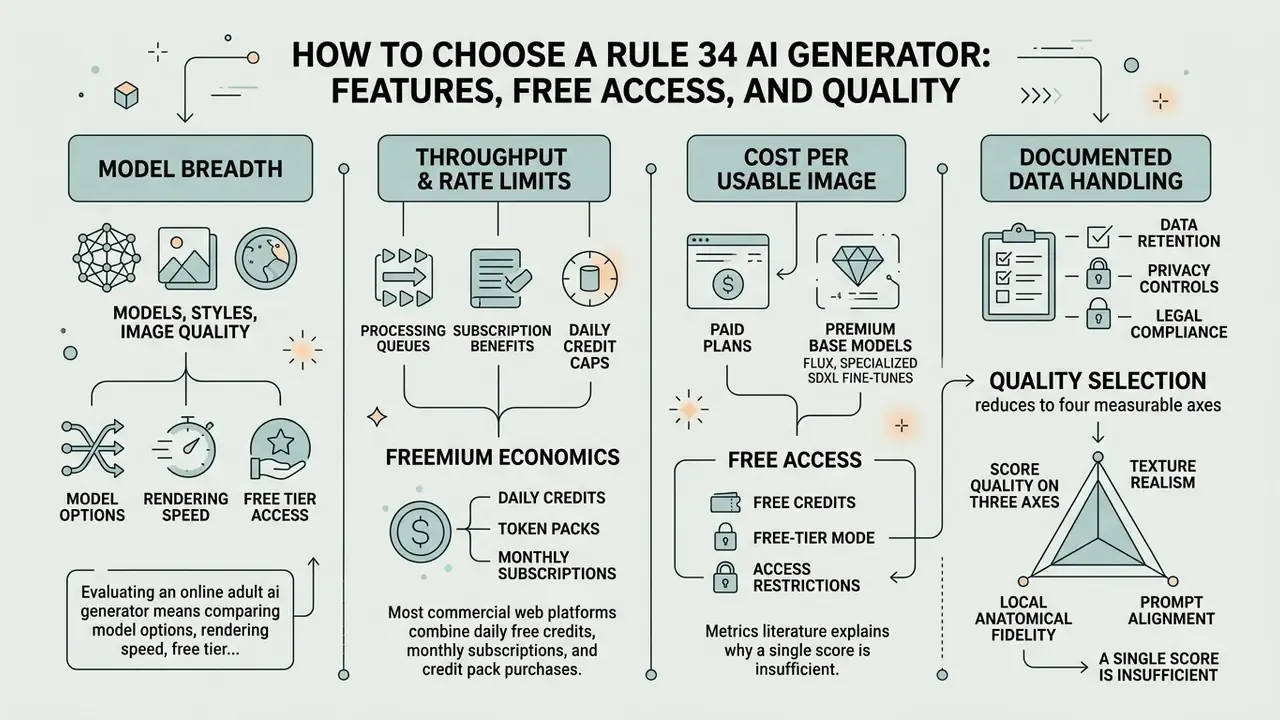
Selection reduces to four measurable axes: model breadth, throughput and rate limits, cost per usable image, and documented data handling. Individual creators optimize the first three. Organizations must weight the fourth first.
Evaluating an online adult ai generator means comparing model options, rendering speed, free tier restrictions, and platform security standards. The right choice depends on whether a project needs public web execution or complete data isolation. For structured cross-engine benchmarks, see our comparison of the best AI image generators.
| Platform type | Available models and styles | Text-to-image and video support | Free access limits | Data retention and privacy controls | Corporate risk level |
|---|---|---|---|---|---|
| Open-source local stacks (ComfyUI / AUTOMATIC1111) | Unlimited (SD 1.5, SDXL, Flux, custom LoRAs) | Full text-to-image, image-to-video, inpainting, ControlNet | 100% free, requires local GPU hardware | No external egress; retention entirely user-controlled; no audit trail by default | High, Shadow AI and unverified weights |
| AINSFWTools and multi-model hubs | 40+ AI models and LoRAs (anime and realistic) | Text-to-image, pose-to-image, image-to-image | 50 free daily credits, no card required | Standard web cloud storage; session-based logs; retention window undisclosed | High |
| Mage.space | SDXL, SD 1.5, custom fine-tunes | Unlimited text-to-image plus video rendering | Free start tier with queuing limits | Creations private by default; server-side storage persists | High |
| Flave.ai | Curated anime and photorealistic styles | Image and short AI video generation | Credit-based trial system | Privacy toggle keeps creations unlisted, not deleted | High |
| SeaArt.ai | Multi-style checkpoint library | Text-to-image, image upload workflows | Daily task-based free energy points | Claims privacy isolation for prompt history; claim not externally audited | High |
| Contracted enterprise API (general-purpose, filtered) | Vendor-attested image models | Text-to-image and editing; explicit content blocked | Not applicable, usage-based billing | Documented retention window, deletion SLA, SOC 2 / ISO 27001 evidence available | Medium |
Vendor pricing and throughput are the practical differentiators on the commercial side. OpenAI publishes separate image-model input and output prices and notes that image rate limits vary by model and usage tier, while Google exposes different image-output token prices by resolution. So higher-cost tiers generally map to higher-capability output rather than merely faster queues.
Free Credits, Free-Tier Mode, and Access Restrictions
Freemium economics dominate this category: daily credit caps, subscriptions, token packs. Free tiers restrict resolution, queue priority, and, critically, commercial rights.
Most commercial web platforms combine daily free credits, monthly subscriptions, and credit pack purchases. Free tiers typically provide 30 to 50 daily generation credits that reset every 24 hours, with lower processing priority and no access to high-resolution upscalers. Readers comparing minimal-friction options can review generators without registration.
Paid plans remove processing queues, grant premium base models such as Flux or specialized SDXL fine-tunes, and unlock advanced features including video generation and custom LoRA training. Subscription-plus-token hybrids are common: the subscription supplies a fixed monthly credit pool, and extra tokens are bought separately as consumption grows. Before committing budget, model your expected volume with our creative calculators; a side-by-side view of limits and watermarking rules sits in our comparison of free AI image generators and free AI art generators.
What to Assess in Models, Styles, and Image Quality
Score quality on three axes rather than one aggregate number: local anatomical fidelity, texture realism, and stability under upscaling. Global metrics rank models well, then hide localized failures.
Metrics literature explains why a single score is insufficient. Many no-reference measures are "profoundly insensitive" to localized anatomical distortion, structural similarity work relies on SSIM, PSNR, and VIF for texture and distortion, and CVPR 2024 evaluation of arbitrary-scale generation introduces SelfSSIM specifically for scale consistency.
"NSFW concept-erasure methods reduce unsafe output but degrade image quality or distort benign prompts."
When you evaluate a platform, test how clean the output stays during 2x or 4x upscaling; readers comparing enhancement tools can consult our review of AI image upscalers. Advanced setups maintain scale consistency via SelfSSIM-style checks, which prevents blurred textures and visual noise during canvas expansion. For teams building broader media libraries, our AI Media Comparison Matrices provide structured performance evaluations across leading platforms.
Frequently Asked Questions (FAQ)
Can R34 AI generators be used for free?
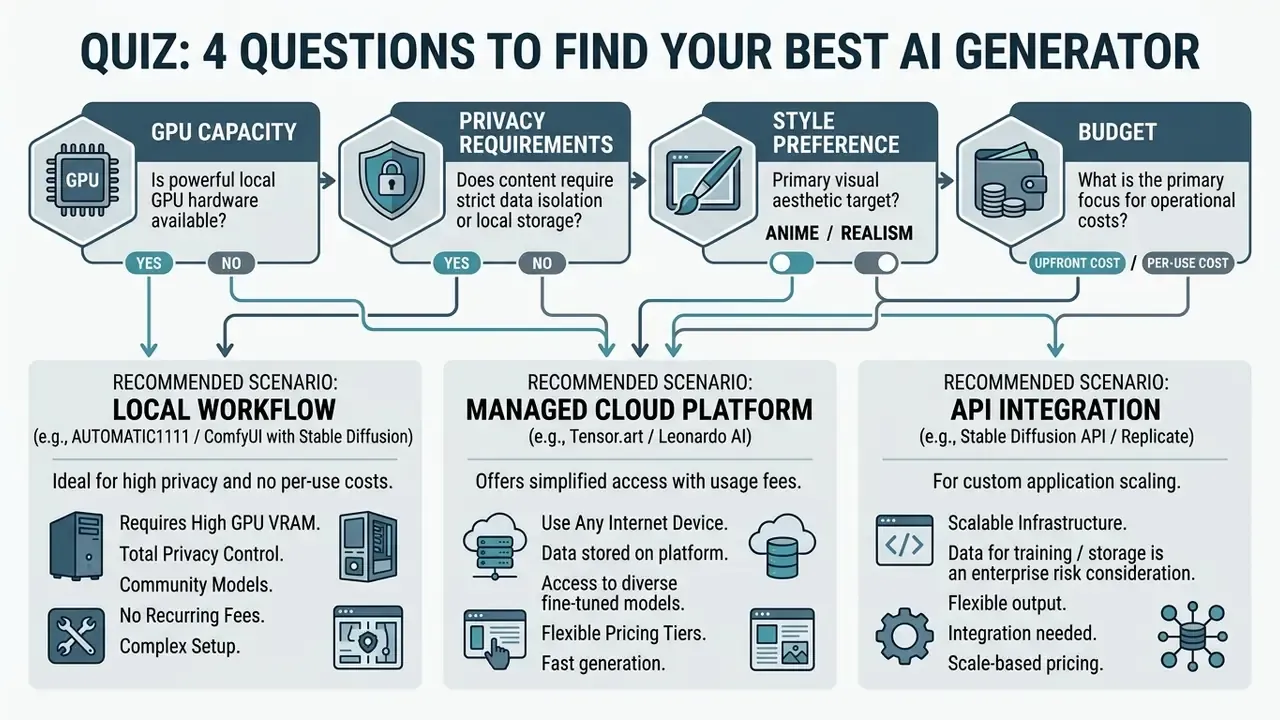
Yes. Local stacks (ComfyUI, AUTOMATIC1111) are entirely free given a GPU with 8 GB VRAM or more. Cloud services typically grant 30 to 50 free credits per day, resetting every 24 hours, with lower queue priority and restricted upscaling.
Is generation private?
Only local execution guarantees privacy. Cloud platforms store prompts and cached outputs on their servers, and "private" toggles usually mean "unlisted" rather than "deleted". Verify that a service supports automatic server-side purge, not just gallery hiding.
Who owns the copyright to generated R34 images?
Per U.S. Copyright Office guidance, purely machine-generated imagery lacking meaningful human authorship is not registrable. Human contributions such as inpainting, compositing, and manual editing can be registered, and AI material beyond a de minimis level must be disclaimed.
What content is absolutely prohibited?
Any sexual depiction of minors, real or fictional (CSAM/CSAE), and any explicit imagery of an identifiable real person without documented consent (NCII). Both carry criminal liability; platforms report attempts to NCMEC and terminate accounts.
How fast is generation, and does speed affect quality?
Typical single-image latency runs from 1 to 2 seconds on optimized hosted pipelines to 10 to 40 seconds locally, depending on steps, resolution, and adapters. Fewer sampling steps cut latency but reduce convergence; 20 to 40 steps is the practical quality plateau for most Euler and DPM++ samplers.
What does Rule 35 mean today?
Rule 35 held that if pornography of something does not exist yet, it eventually will. With on-demand diffusion generation, the prediction has been overtaken by capability, which is why controls have shifted from scarcity to consent, labelling, and filtering.
What should a bank do first if it suspects unsanctioned generation on its network?
Preserve evidence, do not let staff review suspect material, and route the case through a single predefined escalation path. Then check the weight-file inventory and GPU register before touching the endpoint, because remediation destroys the artefacts an audit will later ask for.
Appendix A: Source Revisions
| Original reference | Location | Replacement or status |
|---|---|---|
| ACM (2025) generic reference on 3D pipelines | "How AI-generated R34 art differs" | Retained with DOI 10.1145/3641235.3664438; supplemented by Qu et al., Unsafe Diffusion (2023) for quantified unsafe-output rates |
| Columbia University (CHI 2022) | "Role of prompts, text, and style" | Retained for keyword-weighting and seed-sampling findings; supplemented by Qu et al. (2023) for NSFW prompt behaviour |
| Flymy-ai (2026) | "Choosing a model" | Reframed as the documented flymy-ai/qwen-image-anime-irl-lora model card; statistical claim replaced by From Celebrities to Anyone (2026) |
| CVPR 2024 generic image-quality reference | "What to assess in models, styles, quality" | Retained for the SelfSSIM scale-consistency metric; supplemented by Comprehensive Assessment for NSFW Content Erasure (2025) |
| Google Cloud Safety Frameworks (2026) | "Prohibited content" | Narrowed to specific Vertex AI and Gemini image safety documentation (non-configurable CSAM filter, configurable harm thresholds, IMAGE_SAFETY finish reasons) |
| Llamagen AI (2026) | "Character tools, chat" | Retained as a vendor product claim, explicitly labelled as vendor documentation rather than research |
Official Sources and Legal Guidelines
- U.S. Copyright Office: Copyright Registration Guidance for Works Containing Material Generated by Artificial Intelligence (2026), USCO AI Guidelines
- U.S. Department of Justice: TAKE IT DOWN Act and Non-Consensual Intimate Imagery Legal Framework (2025), U.S. DOJ Cyber Crime
- EU European Parliament
- Directive on AI Systems and Synthetic Intimate Image Prohibition (enforcement from 2 December 2026), EU AI Act Portal
- National Institute of Standards and Technology
- Artificial Intelligence Risk Management Framework: Generative AI Profile (NIST AI 600-1), NIST AI RMF
- OpenAI Terms and Usage Policies
- Commercial Output Ownership and Safety Restrictions (updated August 2026), OpenAI Policies
- Anthropic
- Privacy Policy (effective 8 July 2026); Consumer Terms of Service (8 October 2025), Anthropic Legal
- Google Cloud Vertex AI Documentation
- Safety Filtering and Prohibited Content Categories (2026), Google Cloud Safety
- UK Information Commissioner's Office
- AI and Data Protection Guidance, ICO AI Guidance