Executive Summary: Funny AI in Two Sentences
Funny AI tools now cover four production modes: text-to-image memes, photo-to-video animation, stylized AI art, and short comedic video with synthetic voiceover and sound effects. The winning workflow combines structured prompts, low stochasticity, human review and documented licensing evidence before anything gets published.
| Question | Short answer |
|---|---|
| What can I actually make? | Static memes, reaction graphics, caricatures, animated photo clips (3-5 s), and 15-60 s comedic sketches with voiceover. |
| Which tool type do I need? | Image generators for single-frame jokes; image-to-video tools for animating personal photos; video generators for timing-dependent comedy. |
| What prompt structure works? | Background context → main subject → absurd detail → explicit emotion → visual style → aspect ratio. |
| What settings matter? | Low temperature or low stochasticity (≤ 0.5); motion strength 3-5 out of 10 for face animation. |
| What is free? | Prompt-to-meme generation, template overlays and limited video credits, usually watermarked, web-resolution and non-commercial by default. |
| What is the main corporate risk? | Shadow AI data leakage through free consumer generators, plus unverified commercial rights and missing synthetic-media disclosure. |
| What must be logged? | Prompt, seed, model version, tool tier, license type, reviewer, and the disclosure label applied at publish time. |
On this page: what funny AI is, the corporate and brand risk window, how to choose a tool (with a comparison matrix), voiceovers and SFX, prompt engineering plus a swipe file, photo-to-video animation, free tiers and Shadow AI, social media ideas, quality evaluation and audit trail, FAQ, and a pre-publication checklist.
What Is Funny AI and What Content Can You Create?
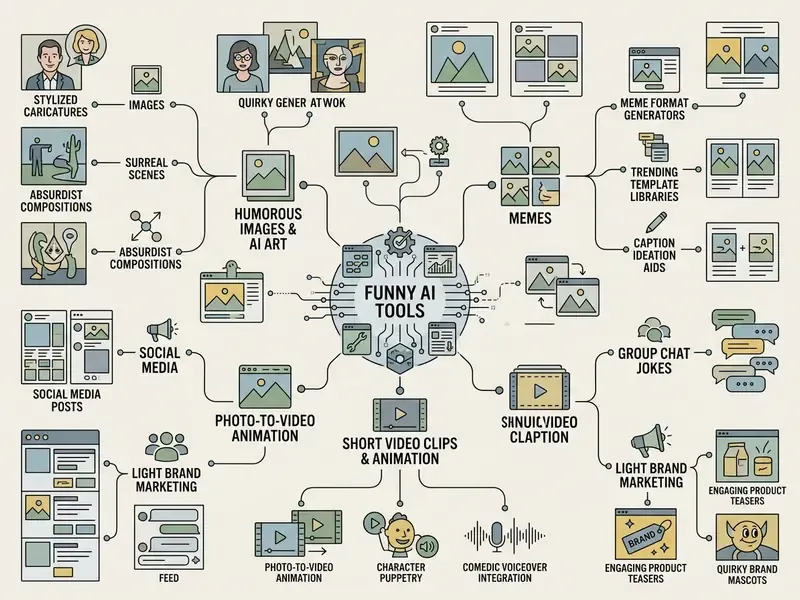
Funny AI Images, Memes, and AI Art
AI image generators produce static funny image outputs by mapping absurd textual descriptions onto visual scenes. An AI art generator uses deep neural networks to synthesize satirical character portraits, cartoon sketches, caricatures and surreal visual punchlines from user prompts.
«Models create effective humor when visual cues violate social expectations in a non-threatening context; pairing unexpected juxtapositions with clear text captions increases user-rated funniness.»
Corporate and Brand Risk Window: Why Governance Teams Search "Funny AI"
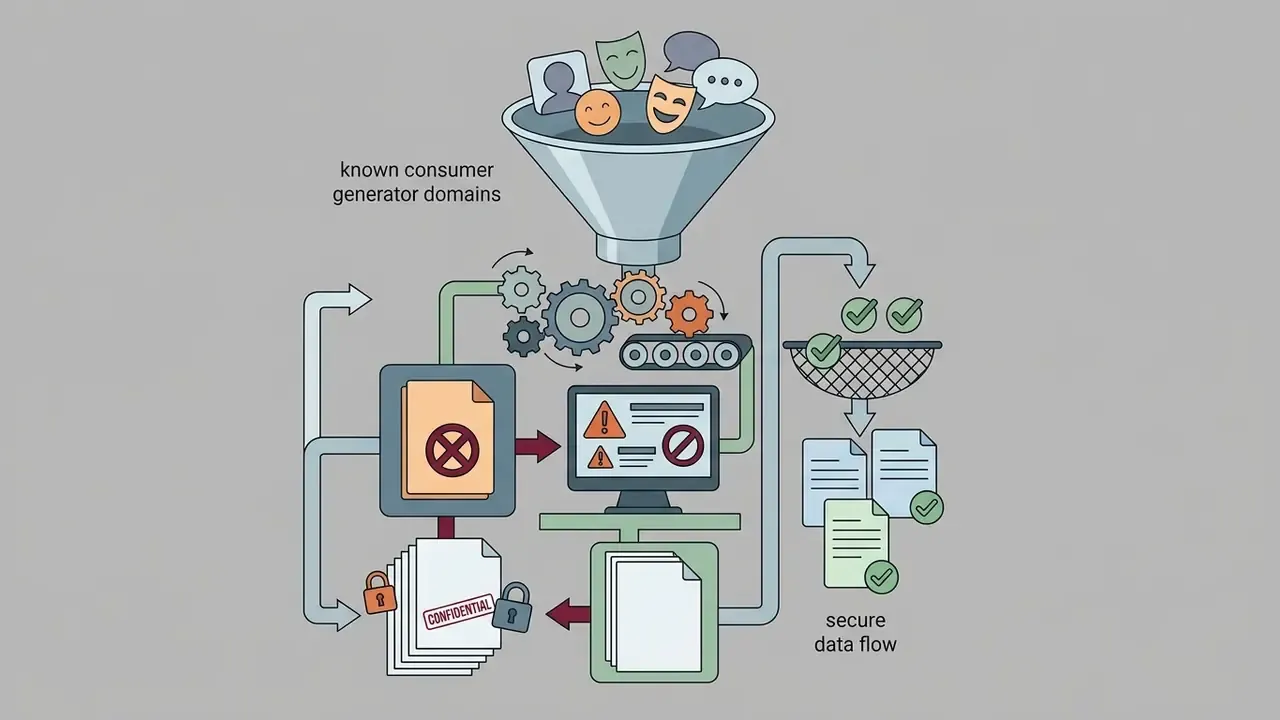
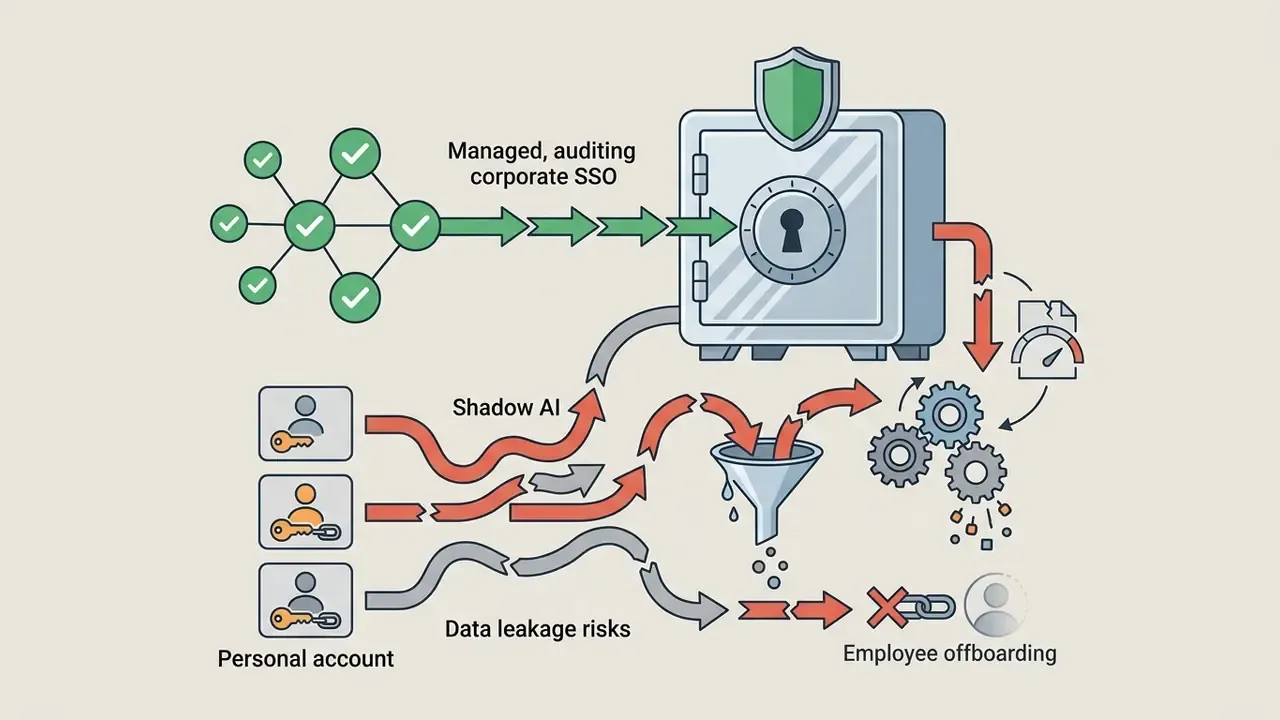
Not everyone who searches for funny AI wants a penguin meme. Risk, compliance and model-governance leaders search this term because comedic generators are the most common entry point for unmanaged AI use inside organizations. They are free, fun, need no procurement, and they actively invite employees to upload real photos, customer screenshots and internal documents into consumer endpoints.
Three exposure vectors deserve attention before any marketing team scales comedic AI content.
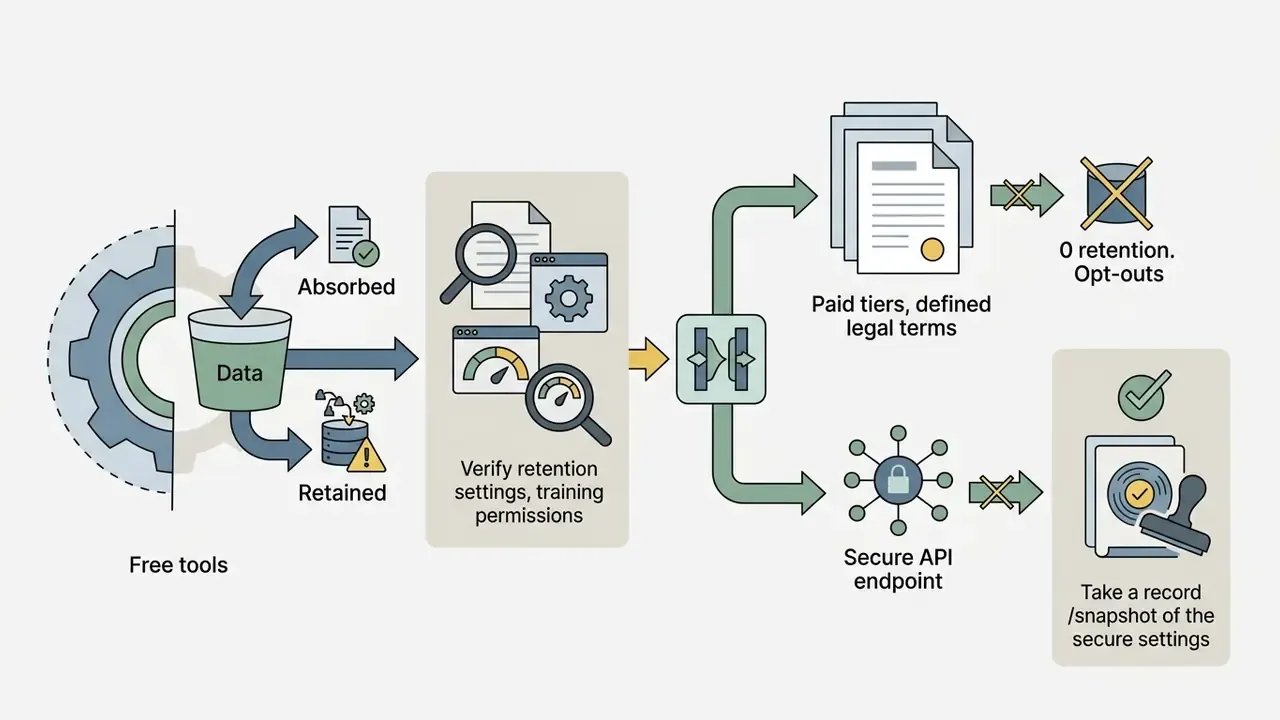
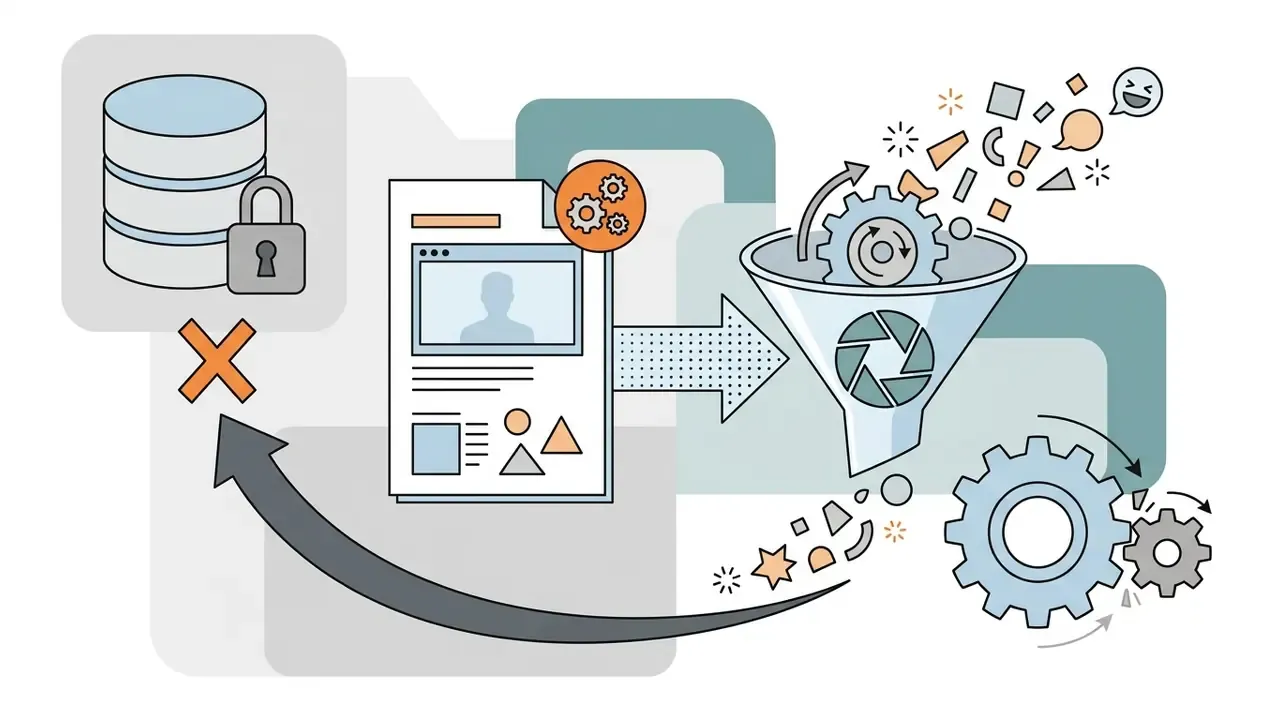
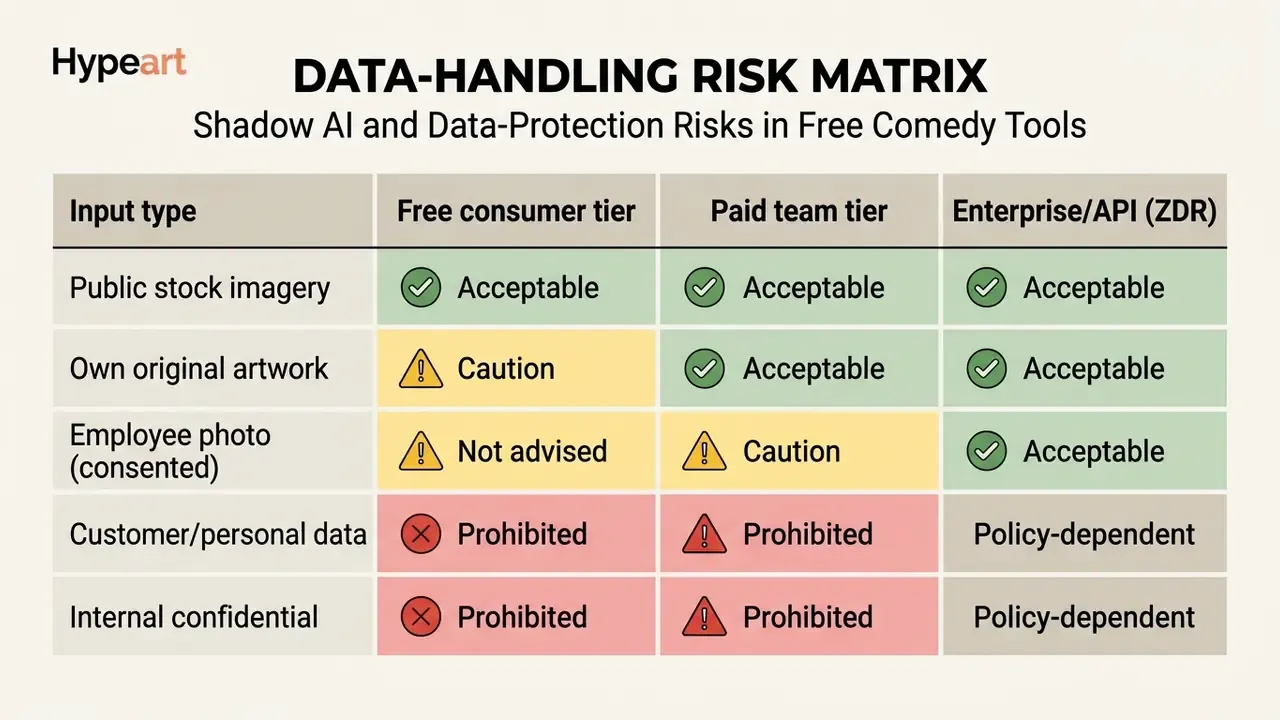
- Data exposure (Shadow AI).Free consumer tiers frequently reserve the right to use inputs for model improvement unless the user opts out. A "funny" upload of an internal dashboard, a customer's photo or an unreleased product render becomes an uncontrolled disclosure.
- Rights and licensing exposure.Free-tier outputs are typically licensed for personal use only, and AI-generated material lacking substantial human creative input may not be registrable as a copyrighted work.
- Disclosure and brand-suitability exposure.Realistic synthetic media requires labeling on major platforms, and humor that targets a specific person or group moves from "benign violation" into reputational risk.
So the rest of this guide pairs each creative workflow with its matching control: tool selection includes security attributes, prompting includes stochasticity limits, and publication includes an audit trail with sign-off.
This section describes general risk practice and is not legal advice. Requirements differ by jurisdiction, sector and internal policy, and regulated institutions should validate workflows with counsel and their model-risk function.
How to Create Hilarious AI Images from Text Prompts
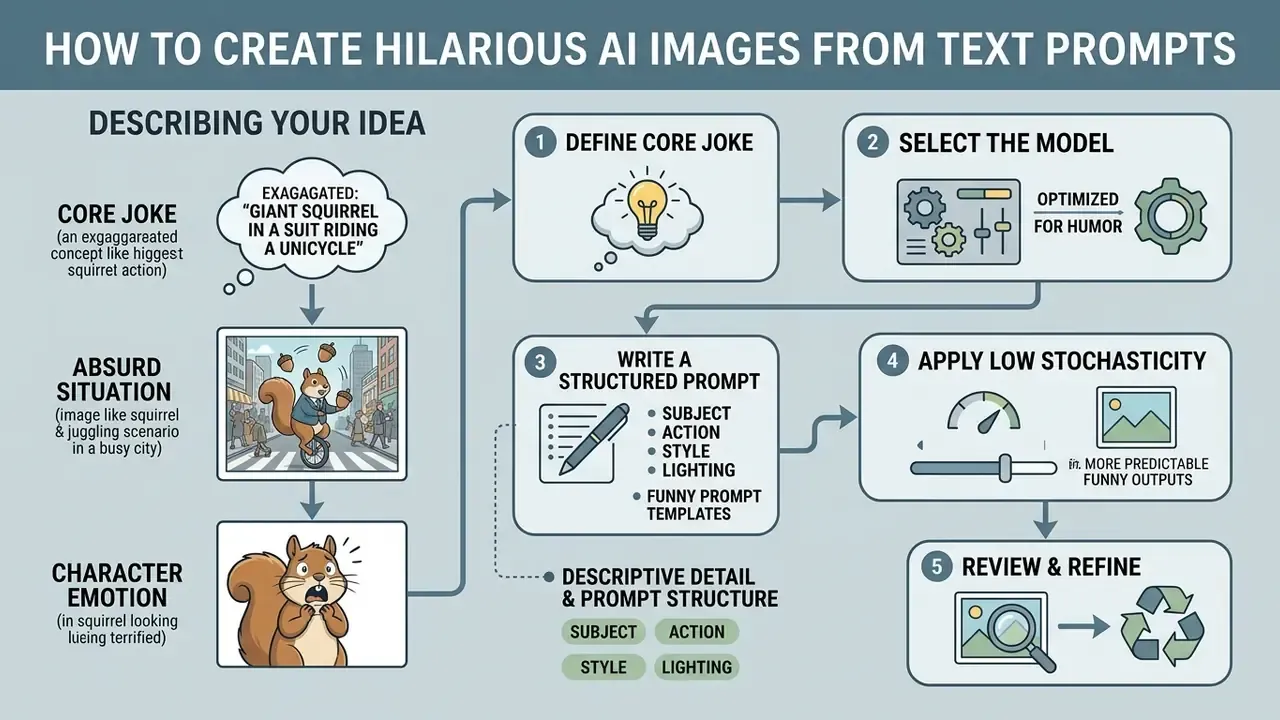
Creating high-impact funny images requires a structured prompt engineering method that separates the central subject, the absurd situation, character emotion, the desired artistic style and the output ratio. Structured text prompts reduce generic output and force the model to render explicit comedic contrast.
Step-by-step creation flow for funny AI images
Checklist0 / 6
Describing Your Idea in Text Prompts
An effective text prompt for comedic images follows a four-part formula: main character plus ridiculous action plus explicit emotion plus visual style, with an optional fifth slot for caption space. Concrete emotional cues matter more than people expect. "Tired eyes and a slight smirk" produces far better facial expressions than "sad".
Two additional evidence-based habits improve hit rate. First, focus on subject and style keywords rather than connective, essay-style wording; a CHI 2022 study of more than 5,000 generations found that sampling 3-9 seeds per concept is the practical way to explore variation. Second, specify font treatment and leave negative space when the meme needs overlaid text. Otherwise the model fills the frame and your caption has nowhere to land.
Ready-to-Use Funny AI Prompt Templates (Swipe File)
Choosing Styles and Improving Generated Images
The right visual style carries the joke. Photorealistic rendering amplifies surreal humor, while cartoon and sketch styles soften an absurd scenario. Preset families worth testing include Pixar/3D render, anime, whimsical illustration, caricature, comic book, oil painting, vector graphic and cinematic photoreal. Each one shifts how aggressive the joke reads.
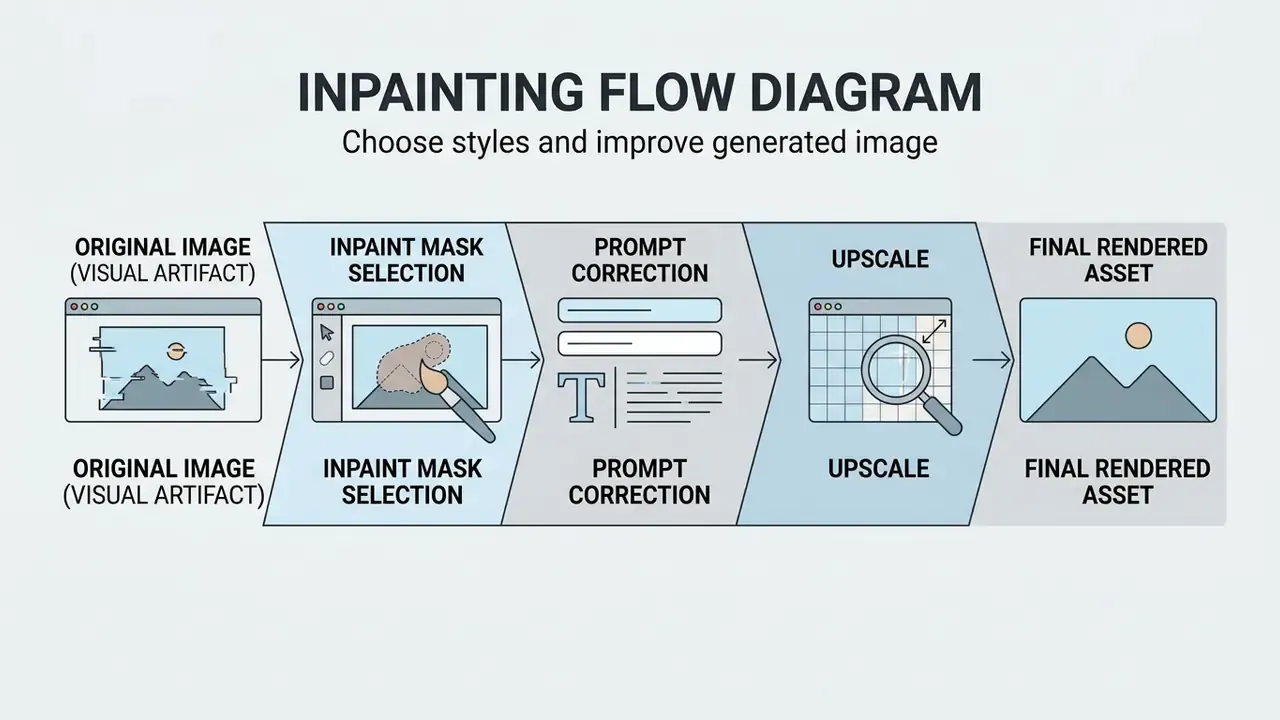
When initial outputs show visual flaws, creators fall back on iterative refinement: re-rolling with new seeds, adjusting style settings, or applying localized inpainting.
«Localized editing improves visual coherence substantially more than full prompt regeneration, correcting defective elements without changing the core composition.»
Inpainting lets creators fix defective hands, swap background elements or insert text captions without altering the primary subject composition. Google's Imagen documentation formalizes the same principle by exposing inpaint operations for inserting or removing objects, and WACV 2025 high-resolution inpainting research shows that upscaling belongs at the end of the loop, after defects are fixed. For style transfer and reference-driven edits, review image-to-image and outpainting workflows and general-purpose photo editing tools used for final cleanup.
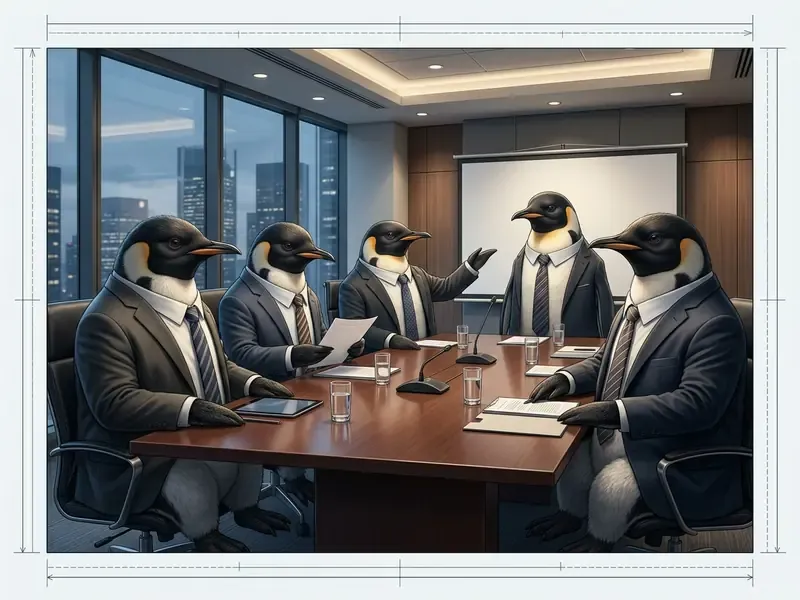
Counter-example worth internalizing. The same penguin boardroom prompt, run at temperature above 0.8 with high style randomness, typically returns fused bodies, six-fingered hands, melted tie geometry and unreadable text. Those artifacts pull viewer attention from the joke to the defect. Lower stochasticity first; raise variation only once composition is stable.
When building custom workflows that wire generative APIs into external software, developers can explore the hub for documentation and cost structure guidelines.
How to Choose the Best Funny AI Tool for Your Needs
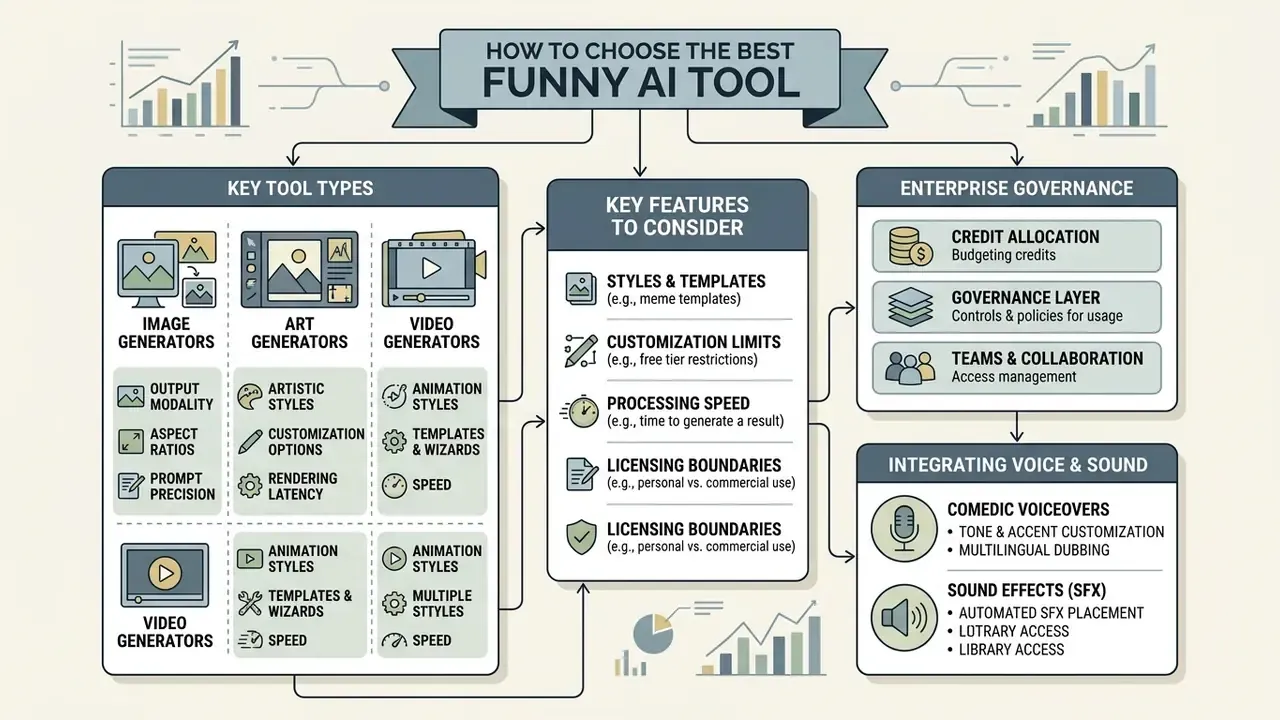
Selecting the best funny AI tool means weighing output modality, aspect-ratio support, prompt precision, rendering latency, licensing boundaries and, for organizations, data-handling guarantees. Match tool capabilities directly against your intended content pipeline and governance constraints.
Choosing Between Image Generators, Art Generators, and Video Generators
Key Features to Consider: Styles, Customization, and Speed
Core functional criteria for funny AI platforms include preset visual style libraries, aspect-ratio control, direct element editing (inpainting), low generation latency, and accurate parsing of simple text prompts. Models that support granular customization let users adjust fonts, background elements and character expressions after generation.
Lower stochasticity keeps models from producing incoherent visual artifacts while preserving concept originality. Speed, meanwhile, should be assessed end-to-end rather than as raw latency. Enterprise evaluation frameworks measure time from intent to finished outcome, which includes queue waits, revision loops and export steps.
| Tool / Platform | Primary Output Modality | Supported Aspect Ratios | Key Visual Styles | Avg. Speed | Free Tier Quota / Watermark |
|---|---|---|---|---|---|
| Runway Gen-3 | Video and Photo | 16:9, 9:16, 1:1 | Cinematic, hyper-real, anime, illustrated | ~15-30 s | Free trial credits; watermarked exports; free Gen-1 clips capped at 4 s |
| Kling AI | Video and Photo | 16:9, 9:16, 1:1 | 3D render, realism, sci-fi, camera-motion presets | ~20-40 s | Daily free credits; visible watermark on free generations |
| Canva AI Meme Generator | Image and Short Clips | 1:1, 4:5, 16:9, 9:16 | Graphic vector, template overlays, watercolor, neon, retrowave | ~3-5 s | ~50 lifetime text-to-image uses, ~5 lifetime text-to-video; clean export options |
| OpenAI DALL·E 3 | High-Res Photo | 1:1, 16:9, 17:9, 9:16 | Photoreal, oil painting, comics, illustration | ~5-10 s | Tier-dependent access via ChatGPT or API |
| Pixara AI | Image and Meme | 1:1, 2:3, 4:5 | Whimsical, cartoon, comic book, cinematic, animated | ~4-8 s | Free daily allocations; web-resolution downloads |
| Pollo AI | Image-to-Video | 16:9, 9:16, 1:1 | Disney-Pixar style, anime, cinematic | ~15-25 s | Limited trial credits; commercial license on paid plans |
| Midjourney | High-Res Photo and Art | 1:1, 16:9, 9:16, 2:3, 3:2 | Stylized art, painterly, caricature, photoreal | ~20-60 s | No free tier; Basic $10/mo, Standard $30, Pro $60, Mega $120 (Relax Mode on Standard and above) |
Enterprise Governance Layer for the Same Tools
Creative parity is easy. Data governance is where platforms actually diverge. Score candidates on the attributes below before authorizing them for team use.
| Governance Criterion | What to verify | Why it matters for comedy workflows |
|---|---|---|
| Training / data-use policy | Documented opt-out or "no training on customer inputs" on the paid tier; zero-data-retention API option | Comedic uploads are frequently personal photos and internal screenshots |
| Retention window | How long prompts, uploads and outputs persist; deletion SLA | Determines exposure if an employee uploads confidential material |
| Security attestations | SOC 2 Type II, ISO 27001, penetration-test summaries | Baseline for vendor onboarding in regulated sectors |
| Access management | Enterprise SSO/SAML, SCIM provisioning, role-based seats | Prevents personal-account Shadow AI use |
| Commercial rights level | Explicit commercial license on the tier you pay for; indemnification scope | Free tiers commonly grant personal use only |
| Provenance features | C2PA metadata tagging, invisible watermarking, machine-readable AI markers | Required to satisfy synthetic-media disclosure duties |
| Audit exports | Ability to export prompt history, generation logs, model version | Evidence for post-hoc review and incident response |
| Regional hosting | Data residency options and subprocessor list | Relevant for EU and UK data-transfer constraints |
Before committing to subscriptions, enterprise teams should look hard at pricing mechanics. You can explore the hub to evaluate credit consumption rates, check the best ai text to-image benchmark guide for detailed quality comparisons, compare Canva AI licensing and export options, or review Microsoft's image generation terms and Google's image generation usage rights side by side.
Budgeting Credits Before You Commit
Comedy burns credits faster than most creative work, because the hit rate is low by design: you generate twelve variants and publish one. Build the budget from revision volume, not from list price.
A rough planning model that holds up in practice: assume 6-10 image generations per published meme, 3-5 video renders per published clip, and one or two voiceover re-takes per script. Multiply by monthly publishing volume, then add seat costs for reviewers who never generate anything but must sign off. Control cost, not just credit cost. To model plan tiers, credit packs and per-asset spend against your own volumes, see the overview of cost calculators before signing an annual contract.
Integrating Comedic Voiceovers and Sound Effects (SFX)
Visual humor is only half the equation in short-form comedy. Timing, delivery and audio punctuation carry the rest. Top-tier funny AI video platforms fold synthetic voiceover engines and automated sound design directly into the generation flow:
- Tone and accent customization. Pick a comedic delivery style: dry sarcasm, dramatic movie-trailer baritone, hyperactive video-game announcer, deadpan documentary narrator, or over-caffeinated infomercial host. The same script reads completely differently across these voices, which makes voice selection a comedy variable rather than a formatting step.
- Multilingual dubbing. Translate punchlines into 50+ languages and accents while preserving localized slang and joke rhythm. Literal translation kills timing, so prefer engines that allow per-line editing after translation.
- Automated SFX placement. Insert classic comedy cues (laugh tracks, record scratches, cartoon slip whistles, boings, air-horn stings) synchronized with the exact punchline frame. One well-placed cue usually outperforms three.
- Music bed and ducking. Upbeat retro synth, lo-fi, or trailer-tension beds change the read of identical visuals; automatic ducking keeps the voiceover intelligible under music.
- Silence as a tool. A 0.4-0.8 second beat of silence before the reveal is the cheapest comedic upgrade available in any editor.
For a deeper breakdown of voice quality, language coverage, pricing and commercial licensing across synthetic-speech platforms, see the guide to AI voice generators. Note that voice cloning of a real person requires documented consent and, in many jurisdictions, explicit disclosure.
Free Funny AI Generators: What Is Available Without Payment
Free AI generators cover basic image generation and template editing, but they restrict commercial usage rights, resolution and daily processing volume. Users looking for funny AI free solutions can handle foundational content creation tasks with no upfront spend, and should treat those tiers as sandboxes rather than production infrastructure. Comparisons of free AI video generators and free photo editors map the specific export and privacy limits that apply.
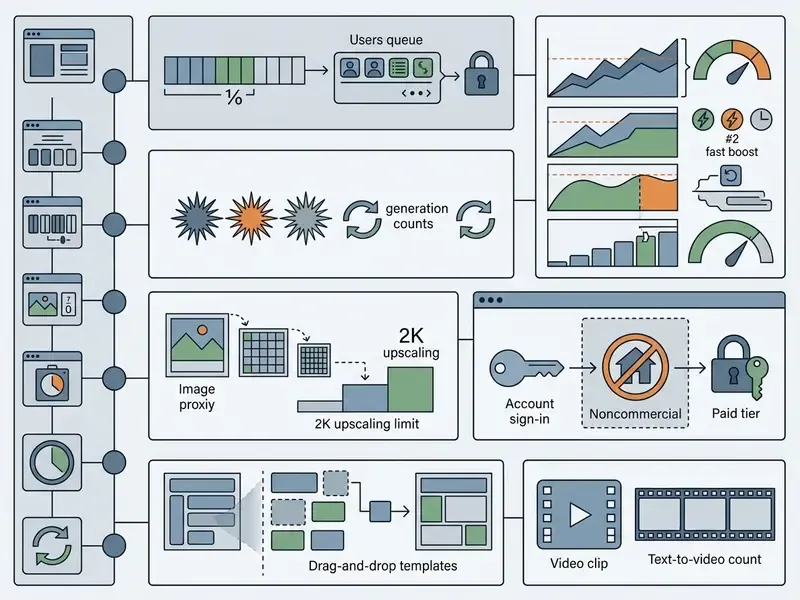
Tasks You Can Solve with Free Generators
Free tiers handle simple text-to-image meme generation, static social media reactions, template caption overlays and basic style testing perfectly well. Canva, for instance, offers a generator free tool where you type a prompt, apply text captions and export a standard-resolution meme image; the same free tier also covers short prompt-to-video memes within its lifetime cap.
Three tasks are fully solvable at zero cost: prompt-to-funny-image generation, prompt-to-meme with template and text overlay, and style exploration before you spend credits on a paid platform. What free tiers do not reliably cover: print-resolution output, watermark-free commercial assets, long-form video, and consistent character identity across a series.
According to the ICCC 2023 Stonkinator Meme Study, automated template-based generators successfully blend user-provided topic inputs with established internet meme structures. These free workflows let non-technical creators produce contextually relevant visuals almost instantly.
«Participants working with an LLM assistant generated significantly more ideas without added perceived workload; AI-only memes averaged higher humor and shareability scores than collaborative ones.»
There is a practical reading of that finding: use AI for volume and humans for selection, because the bottleneck in comedic output is curation, not ideation.
Creators building broad presentations or educational decks alongside standalone visuals can explore the best ai powerpoint generator or test the best ai presentation maker 2024 to speed up content assembly.
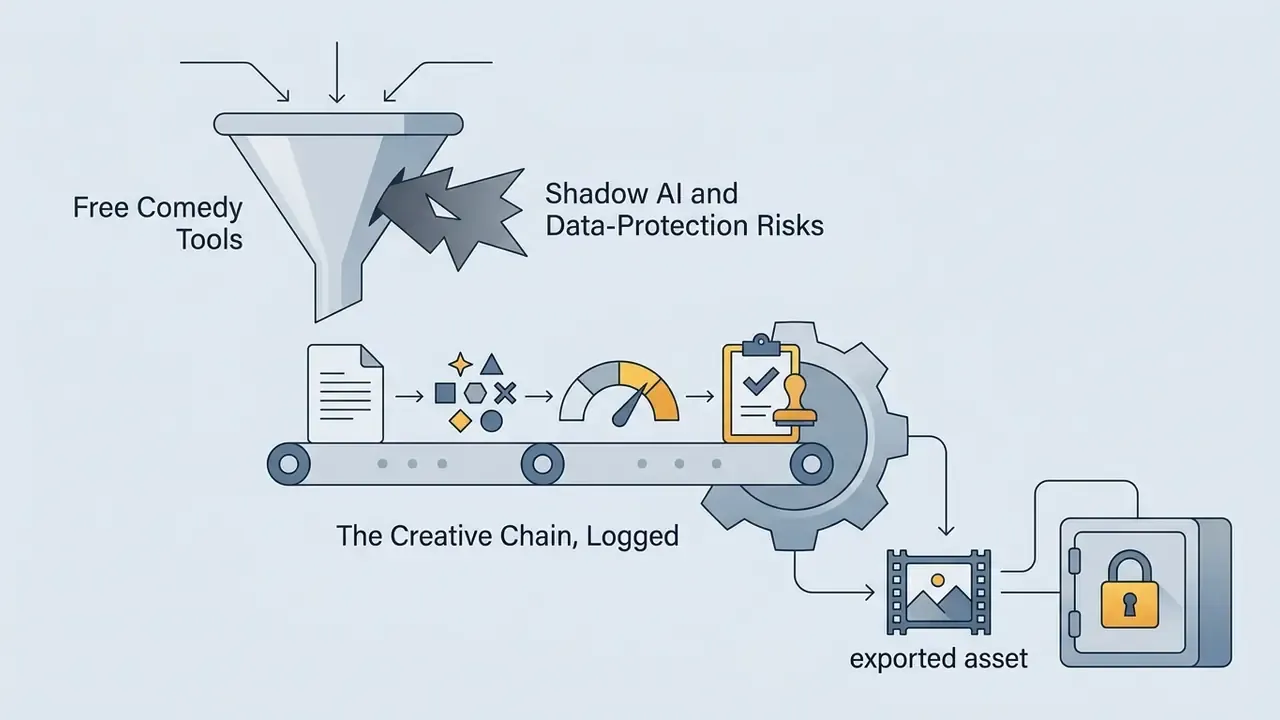
Shadow AI and Data-Protection Risks in Free Comedy Tools
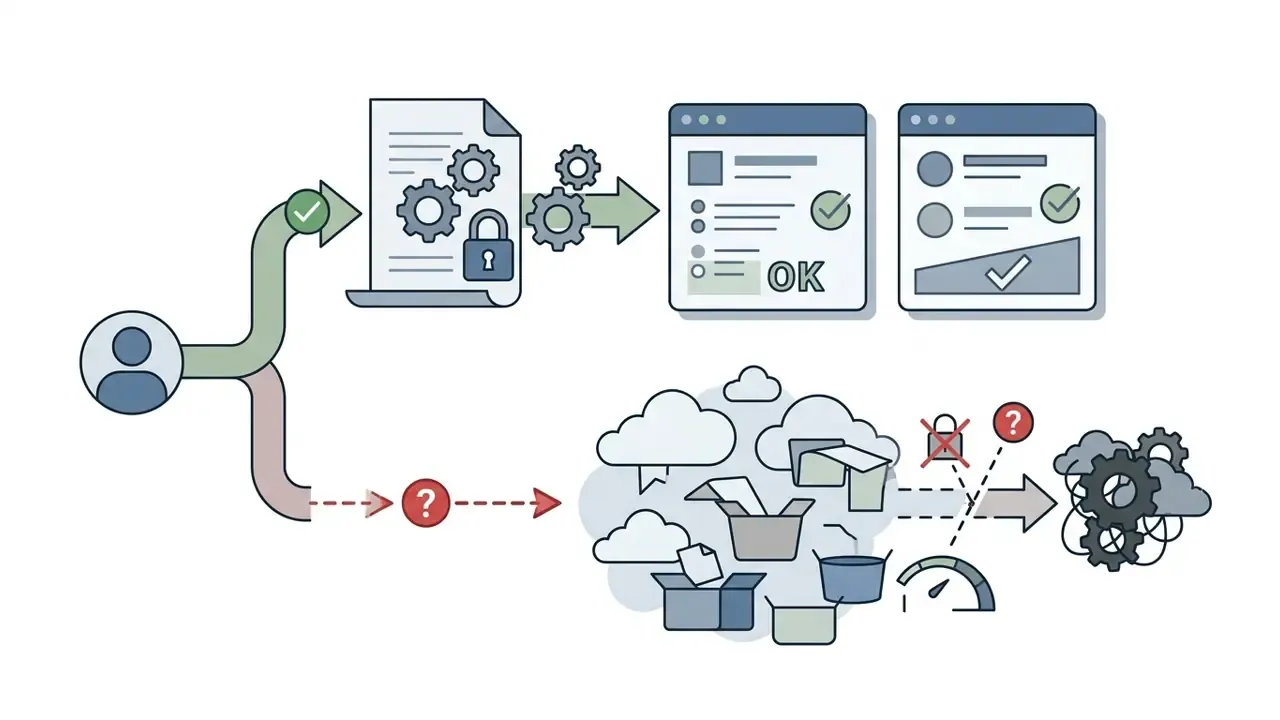
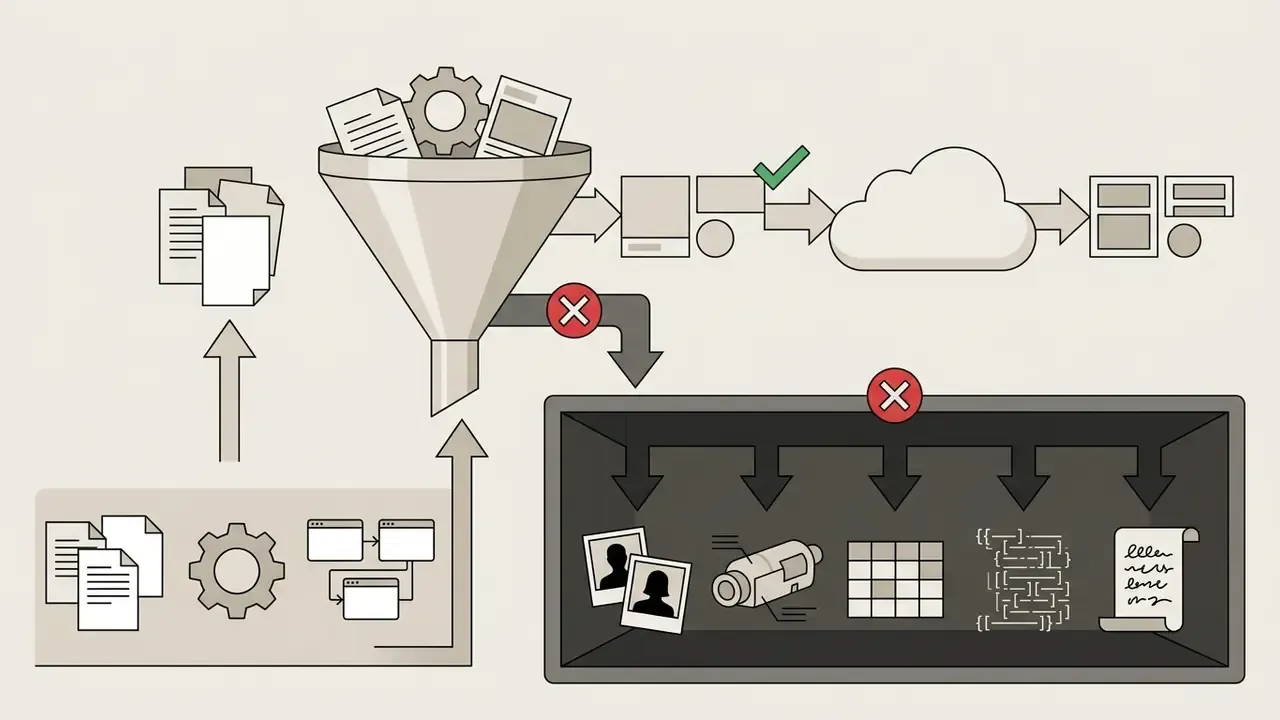
Free meme generators are the most common on-ramp for Shadow AI, because they need no procurement approval and actively invite photo uploads. Controls that materially reduce exposure:
Limitations of Free AI Tools
Free AI software imposes clear operational bottlenecks: queue delays of 30 to 120 seconds for images and 2 to 10 minutes for video, mandatory watermarks, reduced resolution (1024 x 1024 instead of 2048 x 2048), daily caps of roughly 3-25 images or 3-10 videos, and short maximum clip lengths. On top of that, platform terms typically restrict free tier outputs to non-commercial personal use.
So assets generated on free public tiers carry legal and commercial risk if they end up in unverified advertising campaigns. Vendor terms add a second layer: some platforms grant only a limited personal or internal-business license and require that you own the rights to every input you upload, while major creative suites explicitly prohibit prompts, reference images or outputs that infringe copyright or trademark.
Commercial Rights Matrix: What You Can Legally Monetize
| Scenario | Free tier | Paid individual tier | Enterprise / API |
|---|---|---|---|
| Personal group-chat joke | Generally allowed | Allowed | Allowed |
| Organic social post, no monetization | Usually allowed, watermark may remain | Allowed | Allowed |
| Monetized YouTube or TikTok content | Typically not permitted | Usually permitted, verify tier terms | Permitted with documented license |
| Paid advertising creative | Not advised | Permitted on most commercial tiers | Permitted, often with indemnification |
| Merchandise and print resale | Not permitted on most free tiers | Tier-dependent, check resale clauses | Contractual |
| Third-party trademarks or celebrity likeness | Prohibited | Prohibited | Prohibited without rights clearance |
| Copyright registration of the output | Not available for wholly AI-generated material | Only for human-authored expressive additions | Same standard applies |
This information is general in nature and does not replace consultation with a qualified attorney on copyright, likeness rights and licensing. Terms change frequently and vary by tier and jurisdiction.
To decide whether paid commercial licensing is necessary for your distribution goals, teams can compare options for enterprise licensing, review Bing AI image commercial terms, examine style-specific licensing constraints, or see the overview of platform feature trade-offs.
Ideas for Funny AI Content in Social Media and Marketing
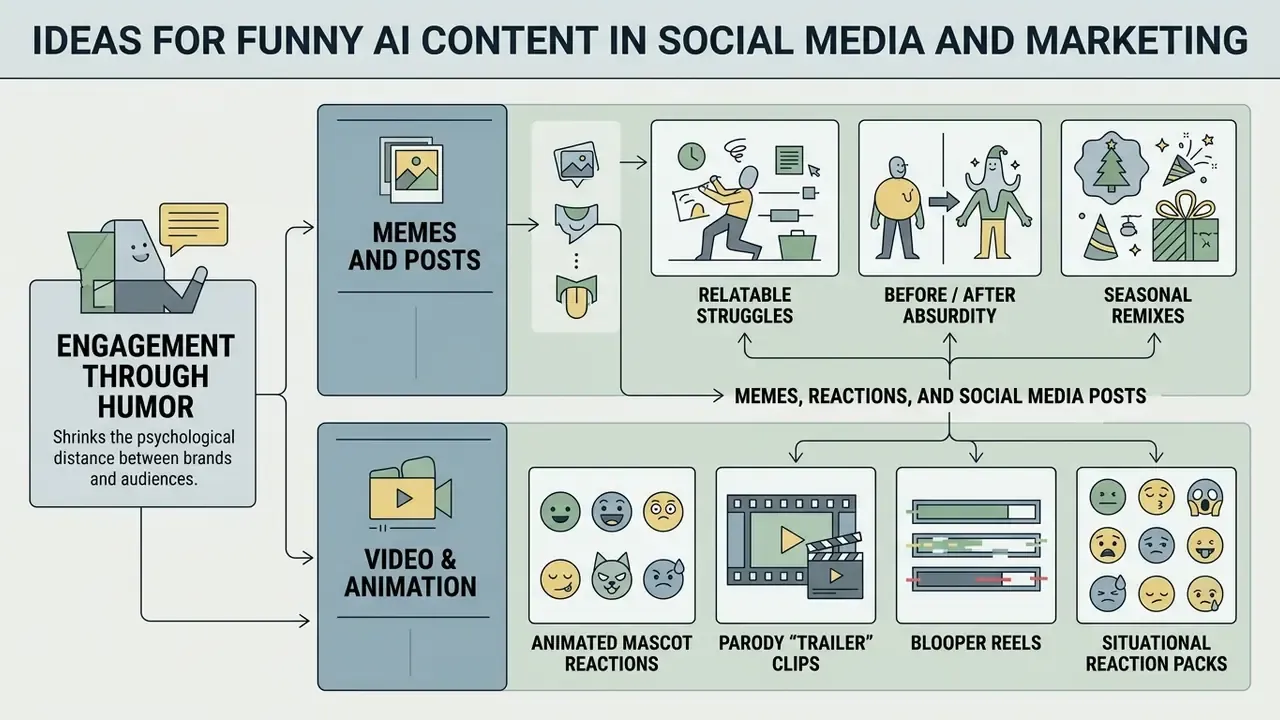
Humorous AI content lifts social media engagement by shrinking the psychological distance between brands and audiences. Building structured comedy into a social calendar humanizes brand messaging and holds attention, provided every asset passes the same disclosure and suitability gate described later in this guide.
Personal Clips and Brand-Friendly Comedy
Brand-friendly comedy demands strict guardrails: no targeted harassment, no offensive stereotypes, no political deepfakes. Short video clips built around original synthetic characters give you personal, entertaining narratives that still fit corporate brand suitability standards, and text-to-video AI tooling now makes a full sketch achievable in one afternoon.
Industry effectiveness research reinforces the boundary. Humor backfires most often when it is highly threatening, attacks a specific person or group, or pushes viewers toward avoidance. Mild benign-violation humor carries materially lower risk while keeping the engagement upside. Responsible-media guidance sets the outer limit plainly: no hate speech, illegal content or adjacency to violent material, regardless of comedic intent.
Personal-use scenarios deserve a separate mention: birthday and anniversary clips built from family photos, pet "documentary" narrations, inside-joke gifts, reunion montages. These are the highest-satisfaction use cases, and also the ones most likely to involve other people's likenesses. Here, consent rather than compliance paperwork is the operative control.
Beyond Visuals: Interactive AI Comedy Tools
Visual generators dominate media production, but text and conversational AI platforms add interactive humor to a content strategy:
- AI roast generators. Tools and custom GPTs designed to deliver lighthearted, non-abusive roasts of user-submitted profiles, product categories or topics. Effective for comment-section engagement and live streams.
- Comedic character chatbots. Platforms such as Character.AI let creators script virtual comedic personalities for interactive social events, launch-week Q&A stunts and automated banter with followers.
- Lookalike and novelty analyzers. Face-comparison utilities that match uploaded photos to celebrity lookalikes create shareable, low-effort hooks, with the caveat that biometric-style uploads deserve the same data scrutiny as any other photo.
- Themed persona bots. imaginary-universe conversational agents (literary or film-inspired characters, for example) show how prompt-defined personality can carry humor with no visual asset at all.
- AI-assisted caption and punchline tools. Text models used purely for caption variants on a human-selected image, which is the highest-ROI combination identified in 2025 engagement research.
For teams producing personality-driven content at scale, AI headshot generators provide consistent character portraits that can anchor a recurring comedic persona across posts.
How to Evaluate Funny AI Output Quality Before Publishing
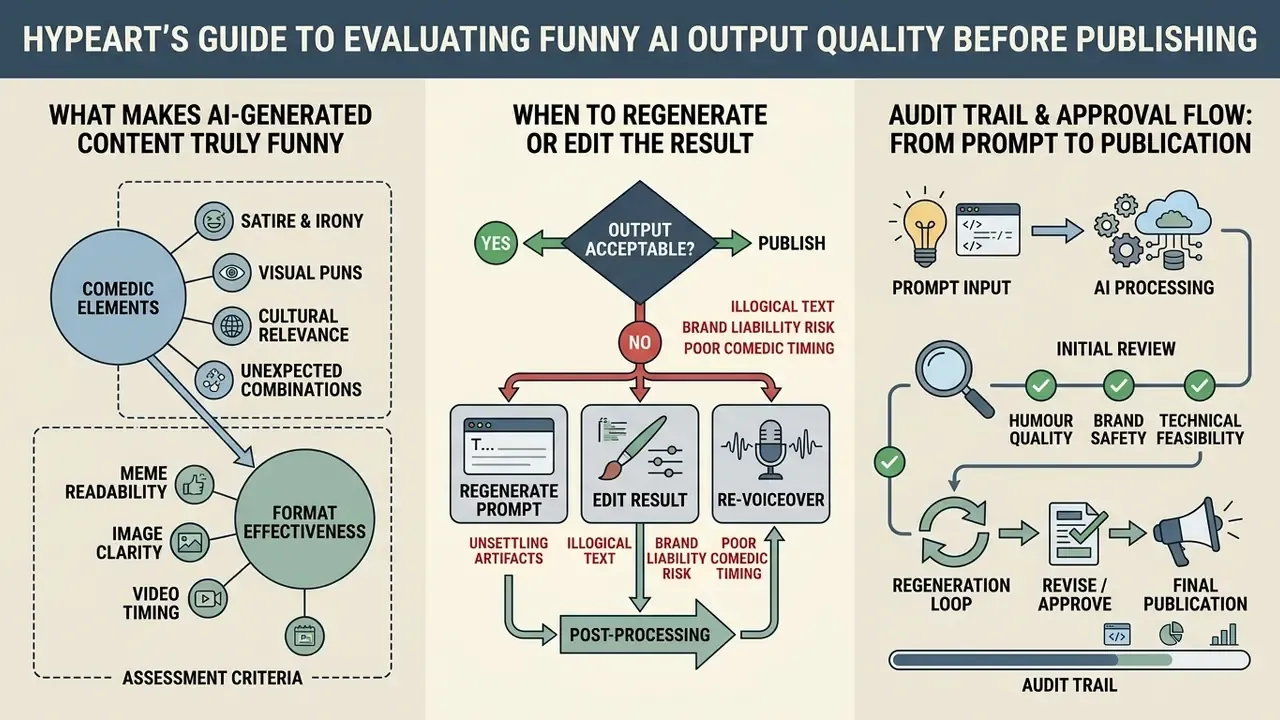
Pre-publication evaluation keeps funny AI content readable and free of unsettling artifacts or brand liability. Systematic quality control filters out weak generations before assets reach public channels, and it produces the evidence trail auditors ask for months later.
What Makes AI-Generated Content Truly Funny
Successful AI humor rests on a clear premise, absence of uncanny-valley distortion, accurate audience targeting and intentional style execution.
Visual clarity is what lets the punchline land. If an image carries cluttered background detail or distorted facial features, viewer attention shifts from joke resolution to artifact detection, and the comedic effect dies right there. Research on uncanny-valley imagery found that near-real distortion produces discomfort rather than amusement, while studies of AI humor note that laughter often arises from recognizably failed imitation. The error has to read as deliberate style, not accidental decay. Viewer studies of AI-generated comedic short videos identify the same markers: distinctive "AI style", visible generation errors, grotesqueness and disrupted expectation.
A workable five-point rubric before publishing: is the premise readable in two seconds; is the style intentional; is the audience fit right for this channel; are artifacts absent or clearly stylistic; does it pass brand-suitability and disclosure checks.
When to Regenerate or Edit the Result
Regenerate or edit immediately when the model ignores prompt constraints, shows severe anatomical distortion, or falls back on clichéd humor patterns.
«Over 90% of 1,008 generated jokes were variants of the same 25 templates; the model sometimes invented explanations for incorrect jokes.»
Unguided models repeat a narrow set of stock jokes, which makes human intervention a quality requirement rather than a preference. When a model fails to render a complex concept after three iterations, switch from full generation to targeted editing: tighten specific prompt constraints, change the base model, pin reasoning or style settings, or apply manual graphic overlays. Migration guidance from model vendors suggests an ordered approach. Swap the model first without changing prompts, pin settings, run evaluations, and only then tune prompts if regressions remain.
Audit Trail and Approval Flow: From Prompt to Publication
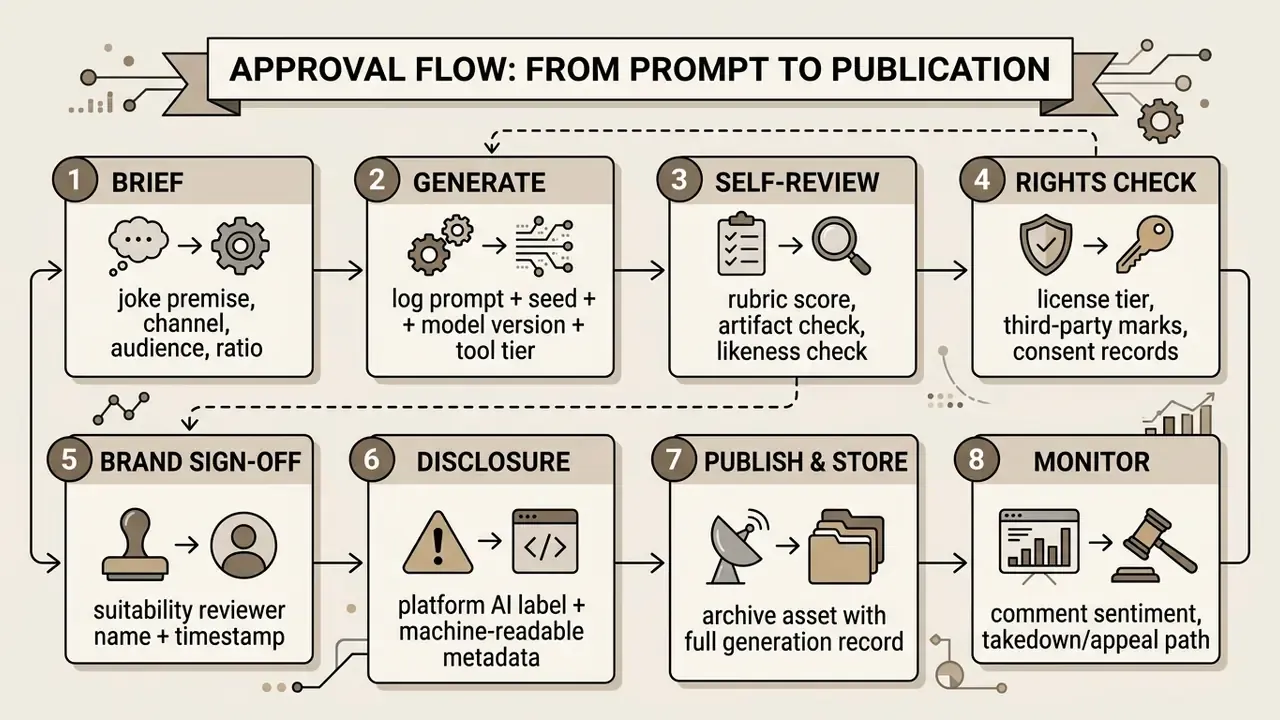
Risk-management guidance across jurisdictions converges on the same requirement. Generated content must be reviewed against pre-defined organizational risk tolerance, checked for harmful content and factual misrepresentation, and released through a documented approval step. NIST's generative-AI profile frames failures as lifecycle events to be detected and corrected through evaluation; national guidance builds testing around accountability, content provenance and assurance for public-facing applications. In practice, your archive should be able to answer three questions long after publication: who approved this, which model produced it, and under which license.
Funny AI FAQ: Frequently Asked Questions
Do I Need Design Skills to Use AI for Funny Images?
Quick answer: No. Text-to-image tools accept plain-language descriptions, so prompt clarity matters more than drawing ability. Describe subject, absurd action, emotion, style and aspect ratio. Modern AI platforms process natural-language inputs, so users generate polished visual content without manual drawing or complex photo editing skills. What replaces illustration skill is specification skill. Prompt-engineering research on text-to-image models shows output coherence improves measurably with structured keywords and tuned parameters, and current surveys treat prompt design as its own discipline inside image generation.
«Non-designers produced 7x more memes with an AI tool than with a traditional generator, averaging 7.1 versus 5.5 on quality ratings.» - Creative Collaborator case study, ICCC (2023). https://arxiv.org/abs/2309.12345 Describe the subject, the action and the desired visual style in plain English, then refine one variable at a time.
What to Do If the AI Misunderstands Your Funny Idea?
Quick answer: Rewrite the prompt subject-first, state the visual contrast explicitly, and change one variable per attempt. After two or three failed iterations, move from full regeneration to inpainting or a different model. If the model misses your comedic concept, break the request into clear, subject-first instructions and spell out the contrast you want. If prompt edits do not resolve it, adjust temperature or switch to an alternate VLM architecture.
«Adjust one variable at a time, background context or emotion descriptor, rather than rewriting the entire prompt.» - Google Gemini image generation guidance (2025). https://ai.google.dev/gemini-api/docs/image-generation Small, targeted changes isolate why the model misread the original idea. Iterative-refinement research describes the same loop formally: compare the generated image against the target, fix one mismatch, regenerate, and stop at a defined iteration limit instead of burning credits indefinitely. Comparative overviews such as ChatGPT image generation versus alternatives and Midjourney versus competing generators help decide when a model swap is the faster fix.
Can You Share Funny AI-Generated Content on Social Media?
Quick answer: Yes, if you label realistic synthetic media, avoid third-party trademarks and non-consensual likenesses, and confirm your tier grants the rights you need for monetized or advertising use. Major networks, including TikTok, YouTube and Meta, require explicit labels on synthetic media depicting realistic people or events, and content can still be removed for violating community guidelines even when labeled correctly.
«Synthetic media must carry machine-readable metadata and visible disclosures indicating artificial generation.» - European Union AI Act, transparency duties under the phased rollout (2024-2026), applicable from 2 August 2026. https://eur-lex.europa.eu/legal-content/EN/TXT/?uri=CELEX:32024R1689 Platform-level guidance for very large online platforms points the same way: watermarks, metadata identifiers, cryptographic provenance and logging. Several U.S. state rules add explicit, conspicuous disclosure duties for political deepfakes, usually with satire and parody exemptions that should not be assumed to cover commercial advertising. Verify that generated content does not infringe third-party trademarks or proprietary visual assets before publishing commercial posts. AI image detectors and reverse-image search tools help confirm originality and trace lookalike assets before release. This information is general in nature and does not replace legal advice on platform compliance, AI regulation or likeness rights in your jurisdiction.
Can I Use Funny AI Videos Commercially on YouTube or TikTok?
Quick answer: Only if your plan explicitly grants commercial rights. Most free trials license personal use, while paid tiers on several video platforms permit monetization. Verify the current terms for your exact tier before a campaign launch. Some vendors advertise copyright-free outputs usable for personal and commercial purposes, including social monetization. Others restrict free exports to non-commercial use and add watermarks. The distinction is tier-specific and changes often, so keep a dated screenshot of the terms alongside the asset in your audit archive.
What Images Should I Upload for a Funny AI Video?
Quick answer: Use a sharp, well-lit photo of a single clear subject (person, pet or object) at 1:1 or 4:5 ratio, with the face unobstructed and minimal background clutter. Then describe only the motion you want. Low-resolution, heavily filtered or group photos increase distortion risk. If you must animate a group shot, crop to one subject first, then composite.
How Fast Is Funny AI Generation?
Quick answer: Images typically render in 3-10 seconds on fast tiers, stylized art in 20-60 seconds, and short video clips in 15-40 seconds, plus queue time of 30-120 seconds on free plans and 2-10 minutes for free video. Measure end-to-end time including revisions, not single-request latency. The revision loop is where most production time actually goes.
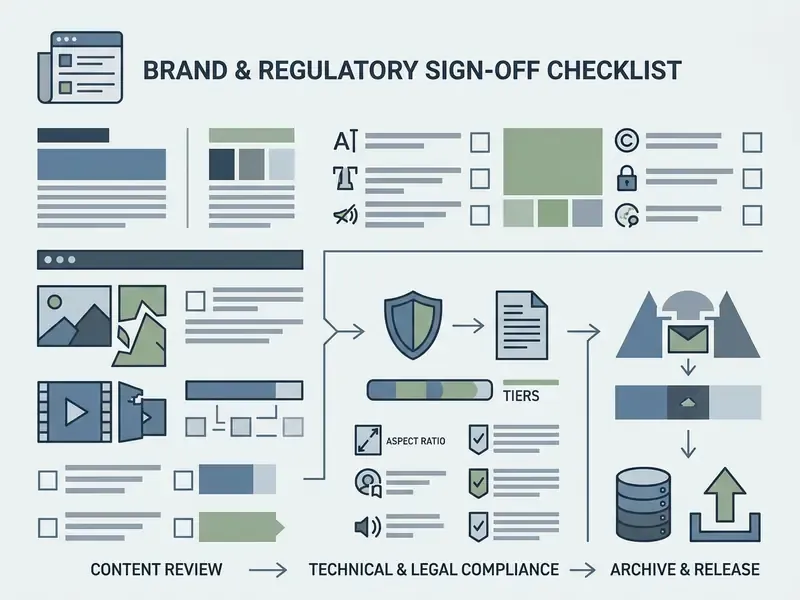
Pre-Publication Sign-Off Checklist (Copy Into Your Workflow)
Summary and Key Takeaways
Funny AI tools have changed digital content creation by making high-impact images, memes, animated photo clips and short video sketches with synthetic voice available in minutes. To maximize engagement while keeping brand risk bounded, follow evidence-based selection, prompting and governance practice:
To explore additional tool comparisons, framework reviews and creative media guides, visitors can browse the hub for comprehensive platform assessments.
General disclaimer: this guide summarizes publicly available research, vendor documentation and regulatory guidance for educational purposes. It is not legal, compliance or financial advice, and platform terms, free-tier limits and regulatory deadlines change frequently. Verify current documentation before making commercial or compliance decisions.
Summary and Key Takeaways
Match modality to goal.
Static image generators for single-panel reaction graphics, image-to-video tools for animating personal photos, video generators for time-dependent comedic narrative.
Apply structured prompting.
Scene context first, core subject second, absurd detail third, emotion fourth, artistic style fifth, aspect ratio last, then reuse the scaffolding from the swipe file.
Control stochasticity.
Temperature at or below 0.5, facial motion strength 3-5 out of 10, to prevent artifacts and preserve identity coherence.
Design the audio, not just the frame.
Choose a comedic voice, place one SFX cue on the punchline, and hold a short silence before the reveal.
Close the governance loop.
Allow-list tools with documented data policies, block confidential uploads, log prompt-seed-model evidence, and route every asset through named brand sign-off.
Enforce human-in-the-loop review.
Screen every AI-generated output for brand safety, visual clarity, likeness consent, licensing and platform disclosure before distribution.