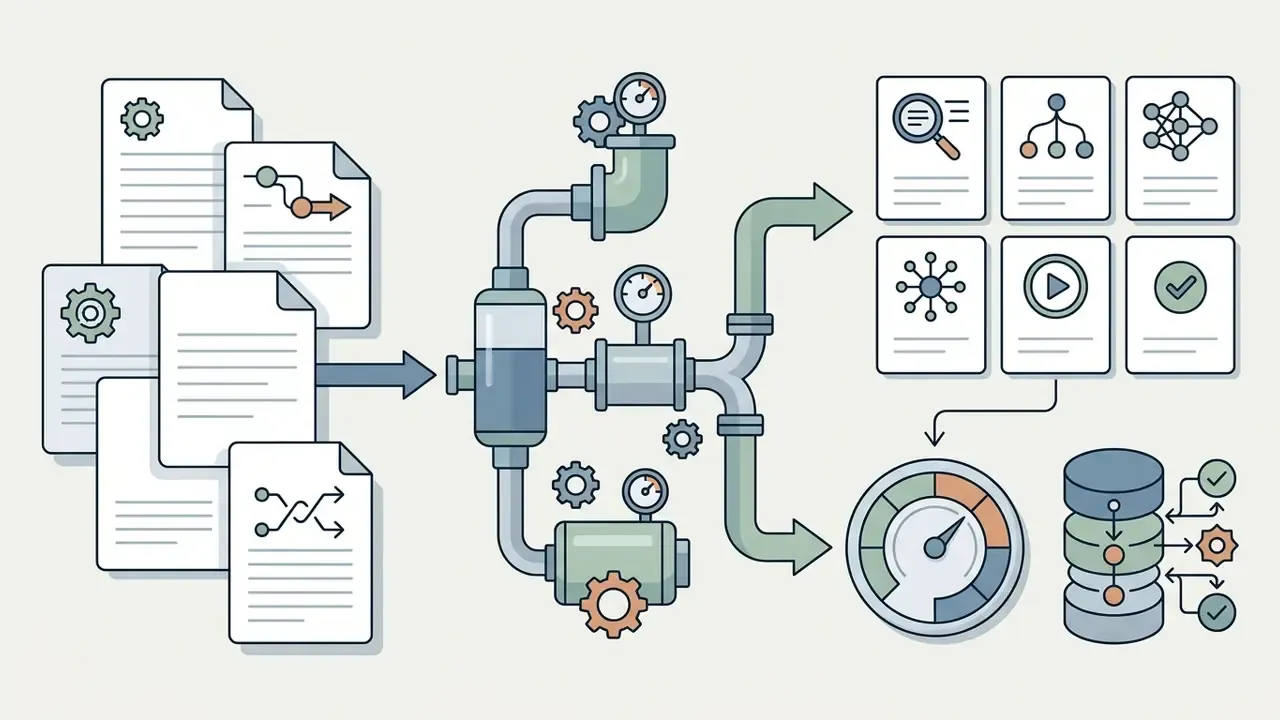
«An automated AI video tool must be evaluated like any digital worker: with clear operating limits, verified asset licensing, measurable workflow efficiency, and human oversight before publication.»
Key takeaways
- Monetization length matters. The TikTok Creator Reward Program requires original qualified videos longer than 60 seconds, while standard YouTube Shorts placement stays under 60 seconds.
- Fully synthetic voices measurably reduce engagement (−5.4% likes, −5.2% comments across 21,541 videos), so human editorial review remains a performance variable, not a formality.
- Purely AI-generated output is not copyrightable in the United States. Human selection, arrangement, and editing create the protectable layer.
- Free tiers usually watermark exports, cap resolution at 480p to 720p, and restrict commercial use. Paid tiers ($8 to $60 per month typical) remove watermarks and grant commercial rights.
What an AI TikTok video generator does
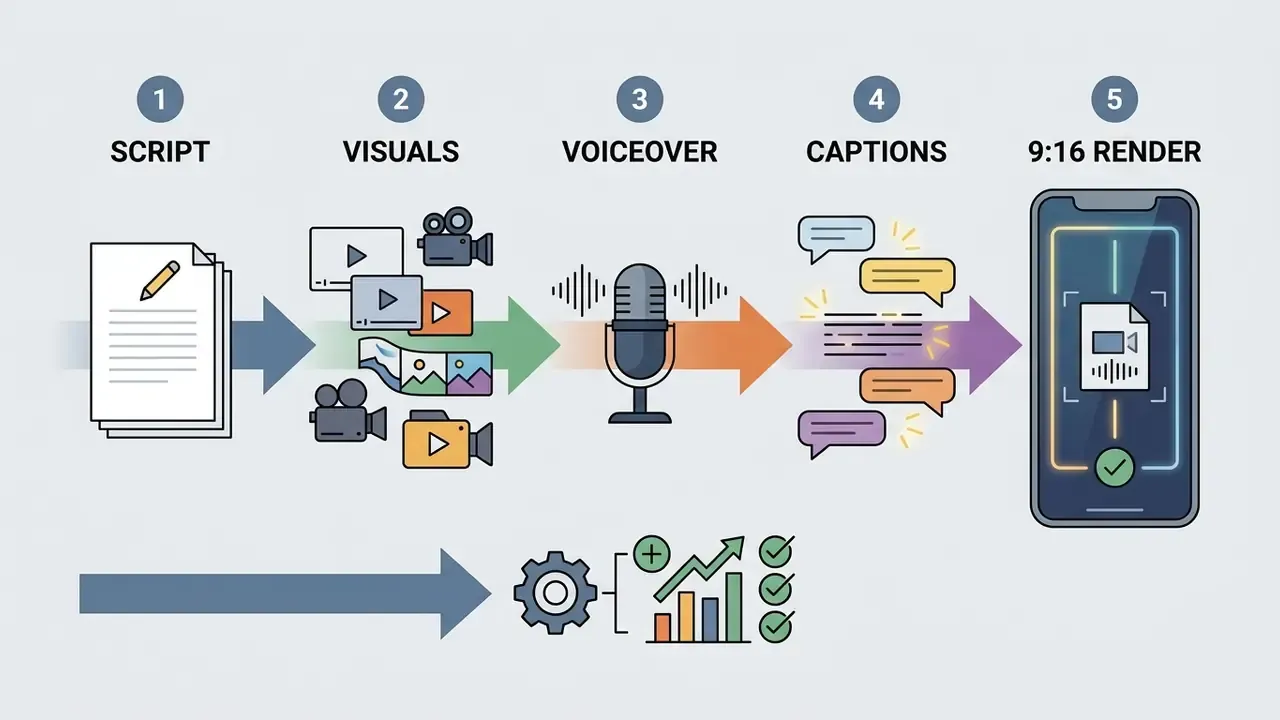
An ai tiktok video generator converts conceptual inputs, such as topic outlines, URLs, or text prompts, into finished 9:16 vertical clips. No production crew, no physical camera. Modern automated software handles scripting, scene composition, voice synthesis, subtitle alignment, and format rendering inside one workspace.
Marketing teams and content operations use an ai generator for tiktok to scale vertical media production, test creative variations, and publish consistent short-form assets. By removing manual filming bottlenecks, organizations compress production calendars: instead of scheduling shoots, talent, and edit passes across several days, operators run a rendering job and review a draft in minutes.
Vendor documentation supports the direction of this shift rather than a universal ratio. Canva states that a TikTok video can be generated "in seconds" from a text prompt or uploaded clips, while Synthesys claims AI ad generation at roughly "90% lower cost" than commissioning creators (Canva Help Center, 2026; Synthesys product documentation, 2026). Treat such figures as vendor-reported benchmarks. Validate them against your own render, review, and approval times before repeating them in a business case.
From an idea or text prompt to a ready TikTok video
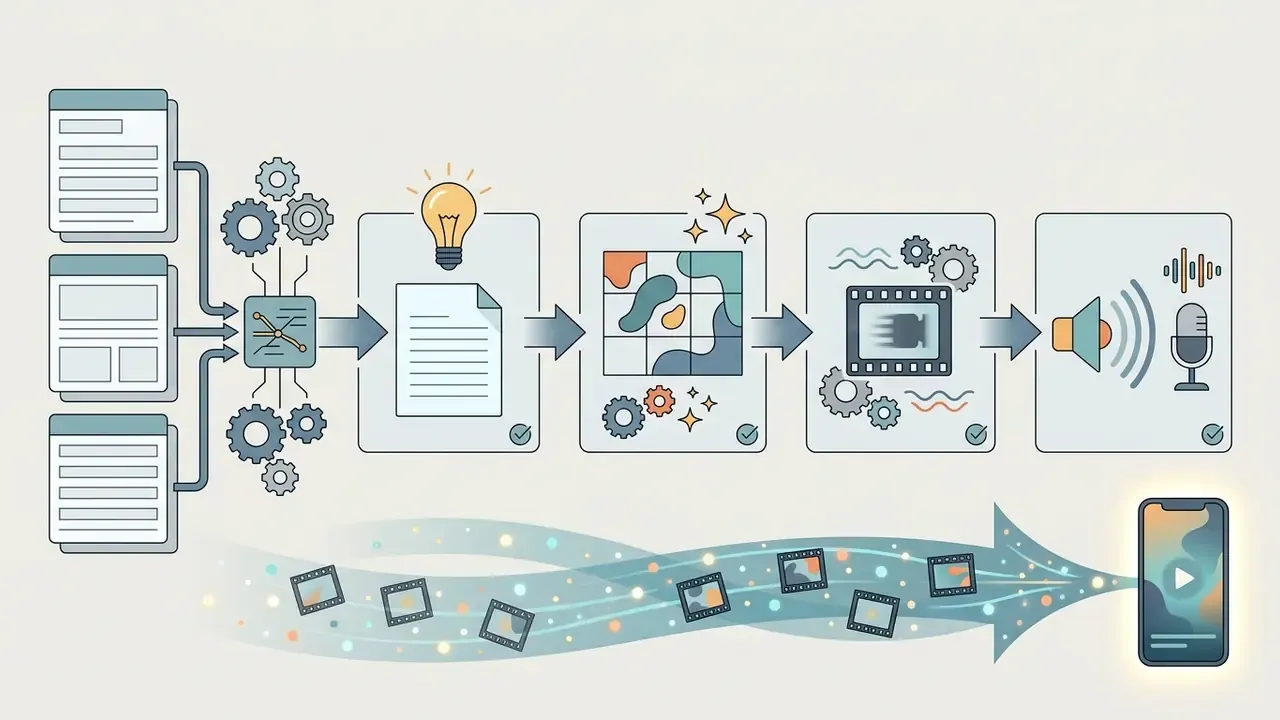
An ai content generator for tiktok transforms text prompts into formatted short-form videos through a multi-stage generation sequence. The input prompt is analyzed by a language model, which constructs a structured script, a scene plan, a shot list, and visual rendering parameters.
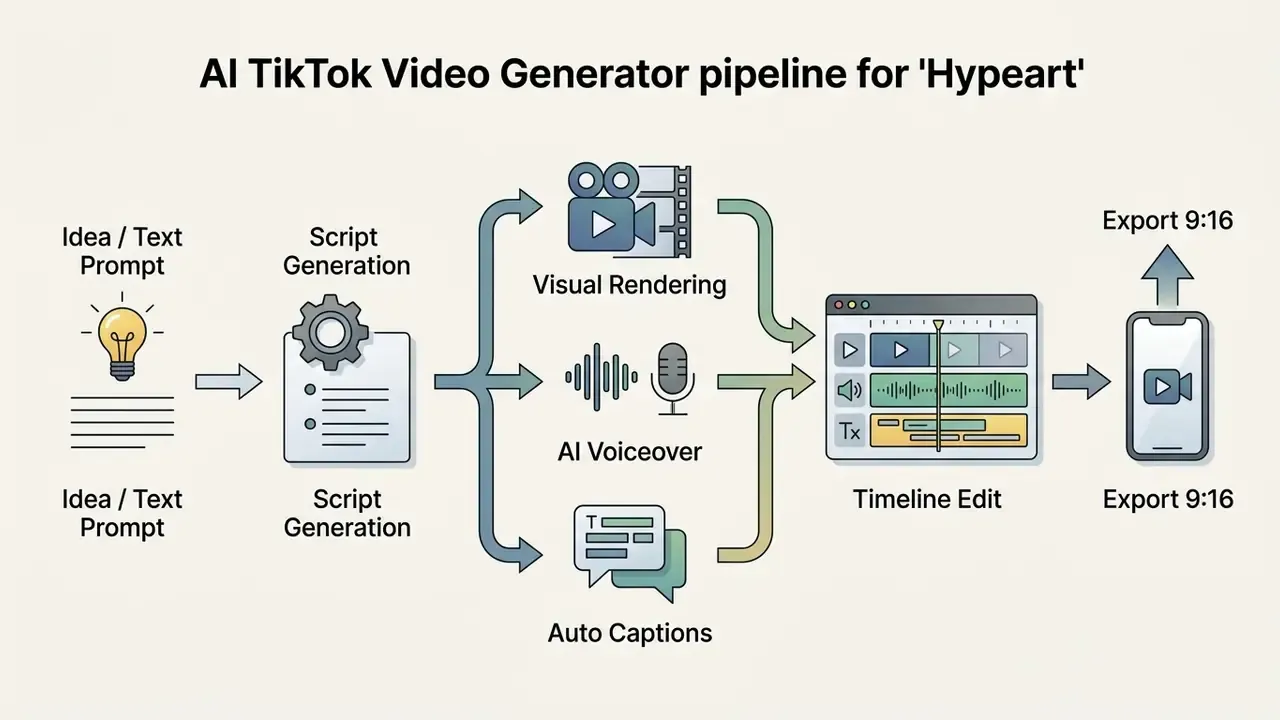
The system then generates matching B-roll visuals or synthetic frames, renders automated text-to-speech narration, overlays synchronized subtitles, and arranges timing along a vertical timeline. A creator reviews the draft, adjusts individual scenes, and exports a 1080×1920 MP4 ready for upload. Readers who want the underlying mechanics of prompt-conditioned synthesis can study the fundamentals in our reference on text-to-video AI tools.
Research in multimodal video search pipelines at NIST TREC 2025 shows how automated keyframe extraction and spatial-temporal captioning aggregate visual attributes to match semantic prompts (NIST TREC Video Evaluation, 2025). Current platforms apply similar principles in reverse, translating textual directives into discrete visual keyframes and matched audio layers.
Prompt quality is an engineering variable, not a stylistic preference:
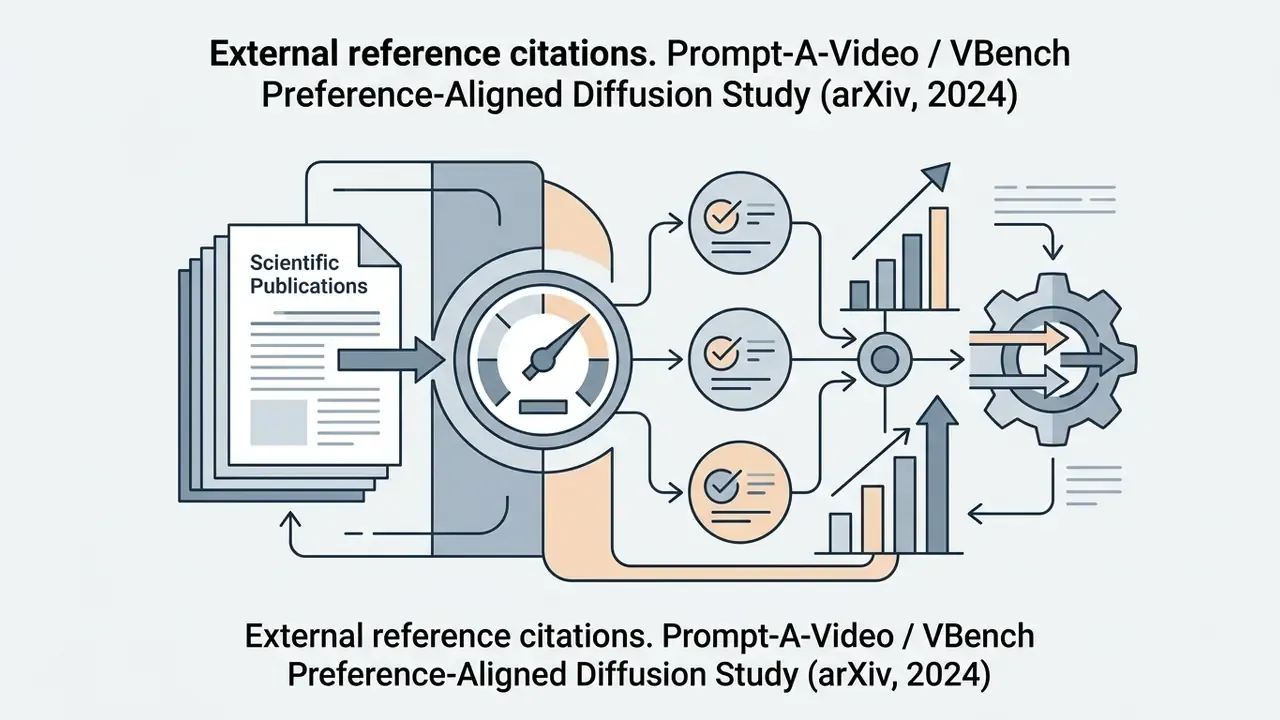
«LLM-refined prompts aligned to user preferences consistently win pairwise video comparisons over raw or GPT-only prompts.»
That is why production platforms increasingly insert an automated "prompt rewriting" layer between the user's brief and the video model. The language model expands a short idea into subject, action, environment, lighting, style, and camera-motion descriptors before any frame is rendered. Official prompt guidance reinforces the same pattern: Amazon Nova Reel recommends writing prompts as an image caption or video summary, with camera motion placed early or late in the string, while Google Veo guidance advises avoiding negative instructions such as "no" or "don't" and keeping directives simple and direct.
A small practical note from editing dozens of these drafts: lighting words do more work than adjectives about mood. "Backlit, single key light, dusk" produces a cleaner frame than "dramatic." Teams that maintain a shared prompt library, and treat it like a style guide, get more repeatable output than teams that improvise per clip. Similar controls apply when you need video lighting editor adjustments after the render, since generated footage often needs exposure balancing before captions go on top.
Faceless stories, product clips and short-form content
An ai generator tiktok video solution enables faceless content creation, letting operators run channels without appearing on camera. Creators build narrative stories, history recaps, educational content, and niche visual series using synthetic voice narration and automated B-roll assembly.
E-commerce brands use an ai that creates tiktok videos to build user-generated content (UGC) ad variations and product demonstration clips. Product URLs or supplied media assets are converted into short showcases with dynamic cuts and text overlays. Some teams reuse the same asset pipeline for event and campaign content, much like a video invitation maker turns a template plus text into a shareable vertical clip.
«"AI slop" producers use generative tools to benchmark viral content and manage matrix accounts, turning virality into a controllable object of experimentation.»
High-retention TikTok content formats and production parameters
Different TikTok content niches require specialized prompt structures, visual pacing, and sound design to optimize for algorithmic retention:
- Reddit and storytelling threads. Converts viral text posts into continuous voiceover narratives layered over background gameplay or hypnotic loops. Uses automated ASR text syncing, subtle ambient music, and part-based cliffhangers. Footage sourced from video games online sessions is the standard filler layer here, and licensing for that footage deserves the same scrutiny as stock B-roll.
- Historical and biographical explainers. Uses diffusion models (Flux, Wan-2.6) to generate dramatic keyframes of historical events, with slow cinematic zooms, aged color grading, and atmospheric sound design. Typical subjects: battles, biographies, and "what actually happened" recaps.
- Absurdist and trend media (Italian brainrot, meme narratives). Relies on high-velocity cuts (0.8s to 1.5s scene switches), bouncing text captions, recurring character mascots, and exaggerated synthetic audio to maximize immediate re-watch rates.
- Horror and suspense serialized stories. Low-key lighting prompts, long audio pauses, whisper-register narration, and multi-part cliffhangers engineered to drive "Part 2" comments.
- Kids and life-lesson animation. Cartoon-style presets with warm palettes, slower pacing, and moral-payoff endings for family channels.
- Animal and nature micro-stories. Emotional or educational animal narratives with high shareability and low moderation risk.
- Fantasy and world-building series. Epic-style keyframes with consistent character seeds, so recurring protagonists stay recognizable across episodes.
Core features for AI content creation on TikTok
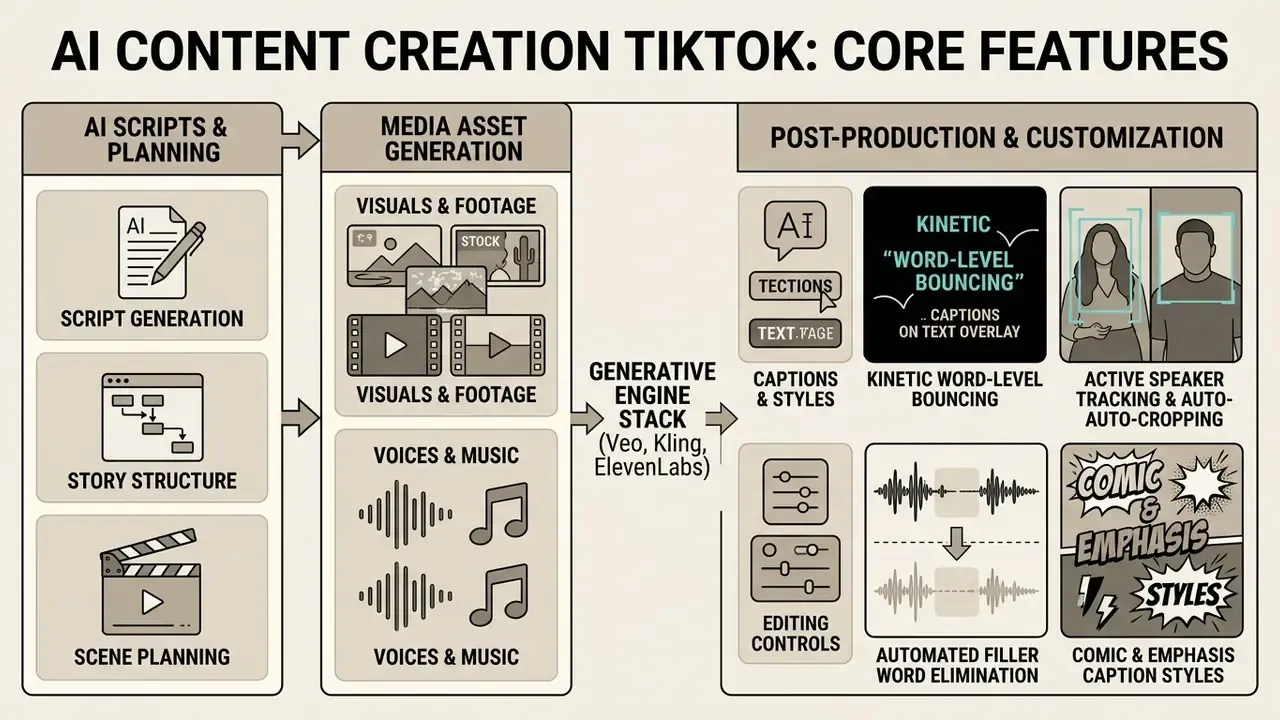
Full-cycle ai content creation tiktok platforms rely on modular engines that handle scripting, media asset generation, text-to-speech synthesis, and post-production customization. Combining these components lets operators hold brand compliance while accelerating publishing cadence. Readers comparing vendors head-to-head can consult our overview of AI video generators.
AI scripts, story generation and scene planning
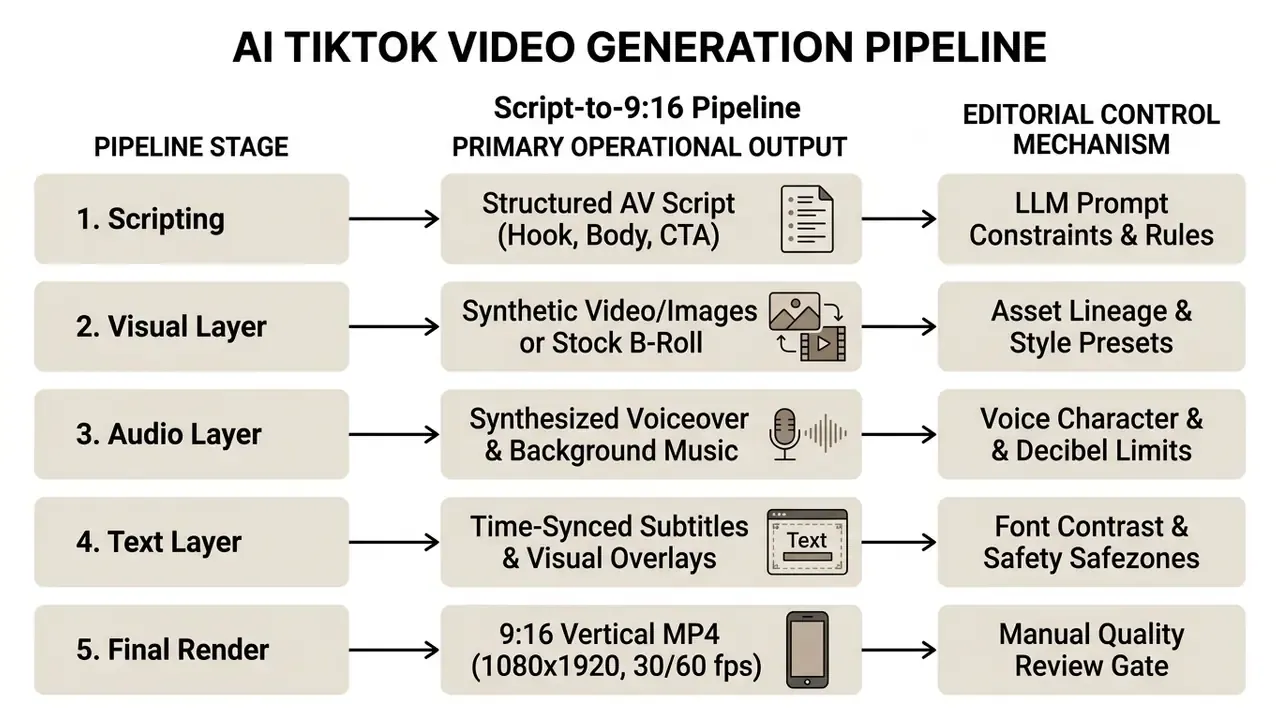
An ai story generator tiktok module builds narrative frameworks tuned for short-form retention. The engine processes prompt inputs and returns an AV script containing visual cues, narrator lines, estimated clip durations, and a call-to-action.
Synthesia's script-to-video guidelines describe a workable structural pattern: an immediate visual hook, a clear value message, illustrative proof, and one closing call-to-action (Synthesia Video Scripting Guidelines, 2026). Volcengine's script planner automates this cadence by tagging each scene as synthetic video, static frame, or composite B-roll, with defined duration limits. Storyboarding tools such as Boords formalize the same logic in a two-column AV script, then convert each scene into frames with matching audio direction. That structure transfers cleanly into automated vertical pipelines.
Visuals, stock footage, voices and music
An ai that makes tiktok videos for you generates original synthetic media or queries curated stock libraries to populate each storyboard segment. Diffusion-based visual generators create custom images and clips, while stock integration engines retrieve licensed B-roll based on script key phrases.
Voice generation systems synthesize narration using neural text-to-speech models. Synthetic audio engines produce royalty-free background tracks aligned with video emotion and pacing parameters.
NIST's synthetic media risk management guidance stresses that commercial platforms should embed provenance metadata into generated audio and video layers to preserve traceability (NIST SP 800-218 AI Risk Management, 2024). NIST's companion 2024 report on reducing risks posed by synthetic content adds detection, authentication, and labeling as the primary technical controls for synthetic images, video, and voice. Detailed information on voice licensing standards sits in our guide to AI voice generators.
Core generative engine stack for vertical video pipelines
Modern TikTok video generation platforms orchestrate specialized foundation models across the synthesis pipeline:
| Pipeline stage | Primary AI foundation models | Operational specialty |
|---|---|---|
| Script and prompt engineering | OpenAI GPT-5, Google Gemini 3, Grok 4 | Automated scene splitting, visual prompt optimization, hook drafting |
| Visual keyframe generation | Flux, Nano Banana, Midjourney v6 | High-consistency character continuity, custom visual style compliance |
| Video motion synthesis | Wan-2.6, Kling AI, Seedance, Runway Gen-3, Google Veo 3 | Spatial-temporal motion, camera pan and zoom control, frame interpolation |
| Neural voice synthesis | ElevenLabs, OpenAI Voice Engine | Expressive emotion tagging, dynamic cadence pacing, multi-speaker voiceovers |
| Music and sound design | Generative royalty-free audio engines | Mood-matched beds, tempo alignment to cut rhythm, ducking under narration |
Documented duration ceilings differ per model and must be planned into the storyboard. Google Veo generates 4-, 6-, or 8-second clips, with 8 seconds available only when a reference image is supplied, while several commercial APIs expose durationSeconds ranges of roughly 1 to 30 seconds per generation. Longer TikTok videos are therefore assembled from multiple model calls stitched on a timeline, not produced in a single pass. Model behavior shifts fast, so it helps to track video generation model updates before locking a storyboard standard.
Captions, styles and editing controls
An ai edit maker for tiktok provides dynamic subtitling and timeline control. Automatic speech recognition engines transcribe narration into word-level timestamps, producing animated captions that highlight words as they are spoken.
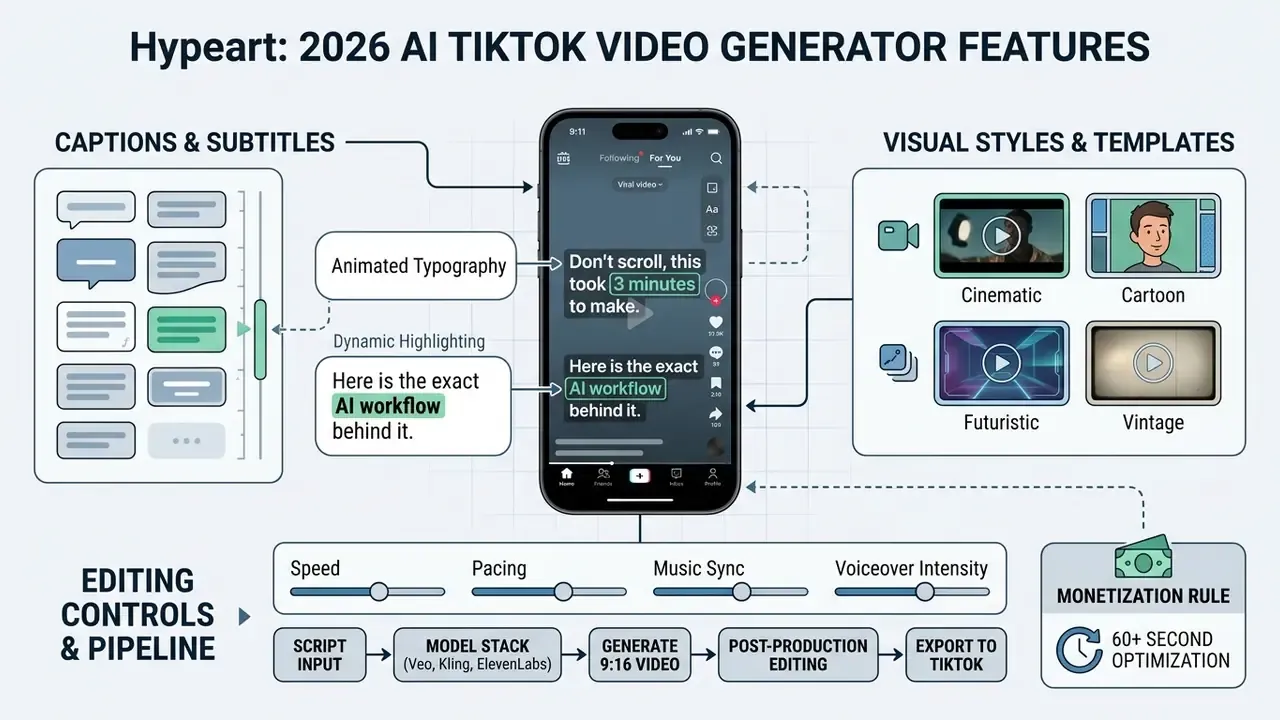
Advanced subtitle engines go beyond basic text sync by implementing retention-focused typography:
- Kinetic word-level bouncing. Animates individual words with slight scale-up effects matching audio speech bursts, instead of static block text.
- Active speaker tracking and auto-cropping. Detects facial boundaries in repurposed 16:9 media to keep primary speakers centered in the vertical 9:16 viewport.
- Automated filler word elimination. Scans ASR transcripts to remove hesitations ("um", "uh") and silent gaps longer than roughly 1.2 seconds, preserving audio density.
- Comic and emphasis caption styles. Preset packs (bold outline, karaoke fill, comic-style lettering) with configurable words-per-screen counts for silent-first feeds.
- Punctuation hygiene. Strips stray punctuation artifacts introduced by ASR before captions are burned into the render.
Integrated browser editors let users modify script text, replace stock footage, re-time transitions, and apply custom font palettes. Microsoft Clipchamp documentation confirms that transcript-level caption editing and .SRT export matter for accessibility compliance across mobile feeds (Microsoft Support, 2026). Vertical subtitle guidance adds concrete legibility limits: a maximum of three lines, roughly 17 characters per second for adult audiences, bottom-center placement (switching to top-center when on-screen graphics occupy the lower third), and cue starts within about three frames of the corresponding audio.
How to create a TikTok video with AI
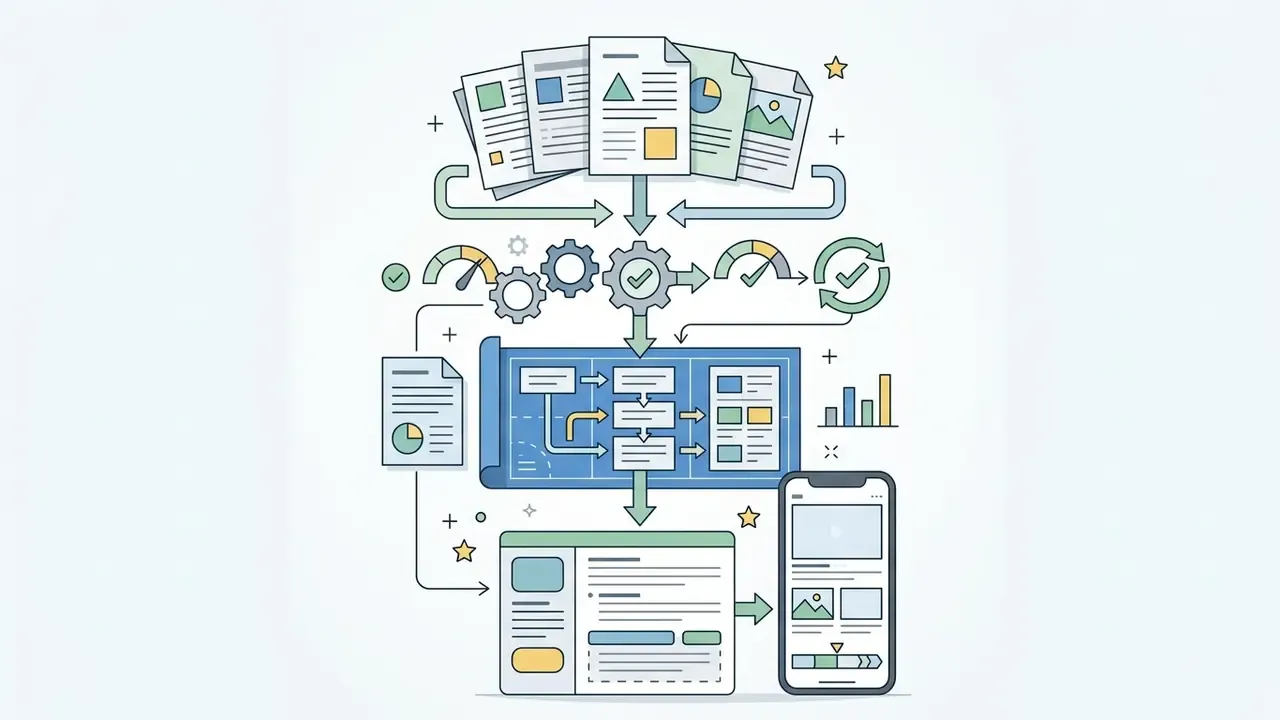
Creating a vertical video with an ai for creating tiktok videos follows a structured workflow: input creative parameters, generate the multi-track draft, customize visual elements, export the final 9:16 render.
Write a prompt or upload existing content
To create tiktok video assets using AI, the operator supplies either a text prompt or source media files. Text prompts specify subject matter, tone, target audience, visual environment, and desired lighting or camera motion.
When repurposing long-form webinars or podcasts into vertical clips, operators upload raw MP4 files. The platform's segmentation engine scans the audio transcript and visual cues to identify standalone highlights. TikTok's Content Posting API supports direct local file processing (FILE_UPLOAD) and remote URL ingestion (PULL_FROM_URL), which enables automated programmatic workflows (TikTok Developer Documentation, 2026). Initializing a FILE_UPLOAD request returns an upload_url for the binary transfer, while PULL_FROM_URL lets a rendering service hand off a finished asset without local storage. Teams distributing drafts for internal approval often pair this with a video link generator so reviewers can watch without downloading files.
Inside the TikTok app, the native flow mirrors the same logic: tap Add post +, upload or record media, open Edit, choose AI Create, select AI Video, enter the prompt, tap Generate. TikTok Studio's Smart Split additionally auto-clips videos longer than one minute, reframes them vertically, and generates transcripts and captions, while AI Outline drafts titles, hashtags, hooks, and a six-part content outline.
Generate the first version and customize the result
When you run an ai generate tiktok video task, the tool renders an initial draft combining script text, synthetic or stock visuals, voiceover audio, and timed captions.
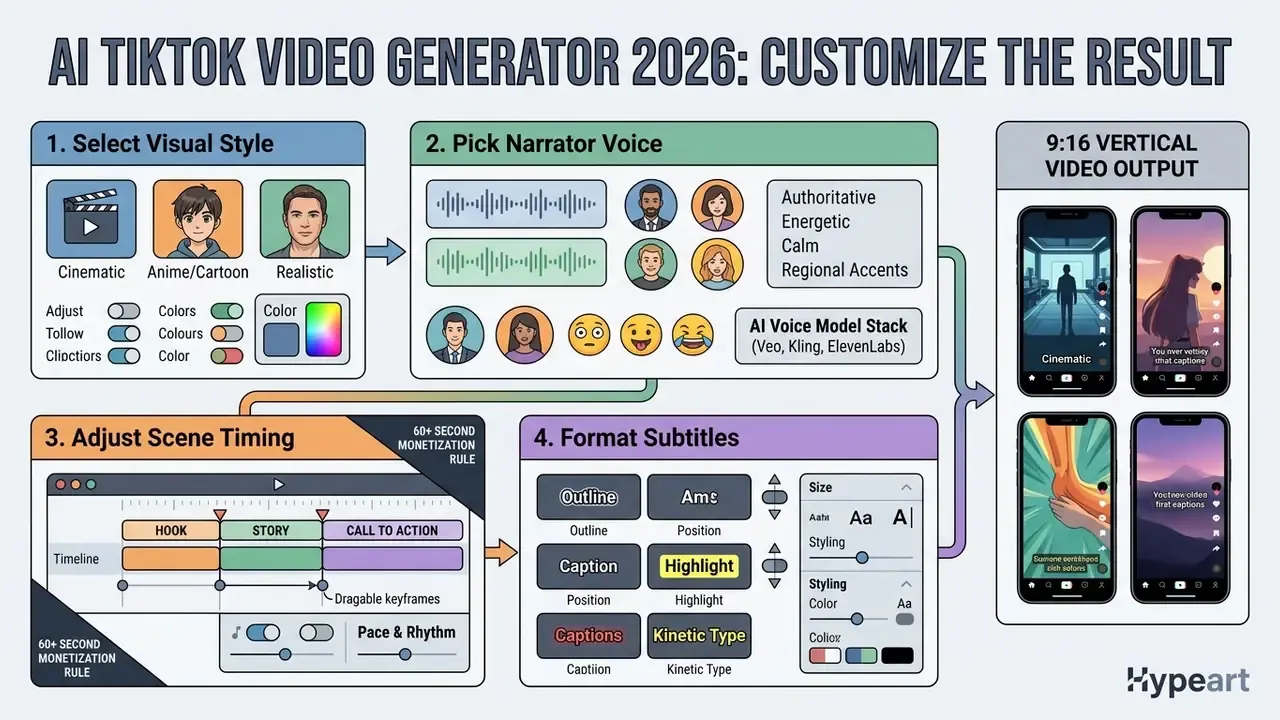
The operator then customizes the draft inside the editor:
- Adjust visual style parameters or swap irrelevant B-roll clips.
- Change synthetic narrator voice pitch, speed, or accent attributes.
- Modify clip boundaries to preserve fast visual pacing.
- Customize caption font styles, colors, alignment, and safe-zone placement.
As an illustrative regulated-industry scenario: a financial services publisher uses automated clip generation to reformat quarterly market briefing videos into short social clips. By locking script templates, pre-approving narrator voices, and inserting a mandatory compliance review gate before export, such a team can sustain a predictable weekly cadence, roughly a dozen-plus compliant clips per week in the modeled example. Treat the figure as a planning heuristic, not an audited result. Actual throughput depends on review queue depth and legal sign-off latency. Teams evaluating editor tools can review functional comparisons across our video editor workflows.
Preview, export and share the final video
Before publishing an ai generated video for tiktok, preview playback to confirm audio synchronization, caption legibility, and visual composition. Export parameters must match TikTok's mobile delivery specifications: vertical 9:16 aspect ratio, 1080×1920 pixel resolution, MP4 or MOV container, H.264 video codec at 30 or 60 fps. Guidance also cites 720×1280 px as a practical minimum for acceptable uploads, with some third-party summaries quoting 540×960 px as an absolute floor. Those differences usually trace back to whether a source references TikTok upload guidance or ad-spec documentation.
Algorithmic duration targets for monetization
When configuring video length in your generation settings, align duration with the destination platform's monetization threshold:
- TikTok Creator Reward Program. Requires videos to strictly exceed 60 seconds of original, qualified content to be eligible for RPM-based revenue sharing. Faceless pipelines therefore often target 70 to 110 seconds, which usually means an 8 to 14 scene storyboard.
- YouTube Shorts standard placement. Capped under 60 seconds for classic Shorts feed treatment, with extended formats up to 3 minutes supported for long-form Shorts indexing.
- Cross-posting practice. Produce one 70-second master, then trim a sub-60-second variant. Both thresholds satisfied, one render pass saved.
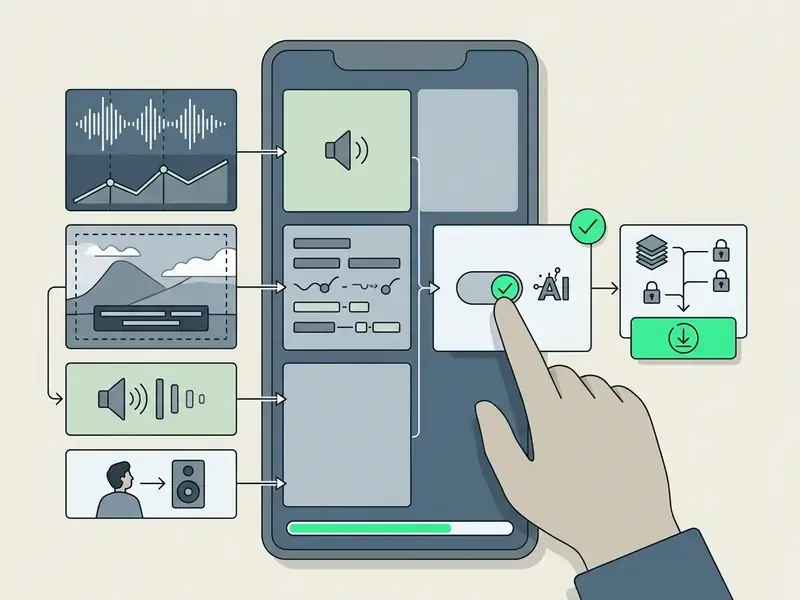
TikTok's platform policy requires creators to enable the official "AI-generated content" disclosure toggle before publishing synthetic media (TikTok Safety Center, 2026). In TikTok's own flow: tap Add post +, upload or record the video, open Next, then switch on AI-generated content under More options before publishing. Teams managing deployment costs across editing tools can reference our AI Media Pricing Guides, and anyone stuck on export errors can start with AI Media Support and Troubleshooting.
AI tools for creating, editing and repurposing TikTok videos
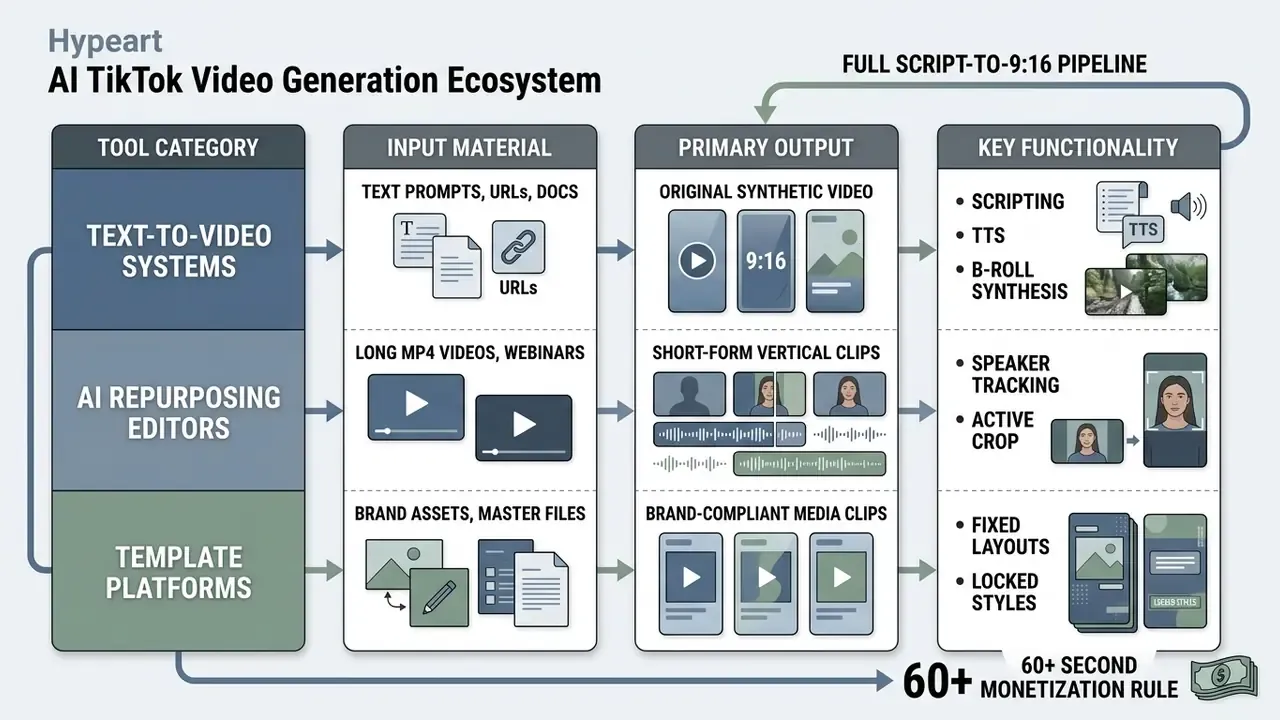
Selecting the right ai app to make tiktok videos depends on the operational goal: generating videos from text prompts, repurposing existing long-form content, or maintaining strict corporate brand templates. Readers who want the category definitions can start from our AI video generator guide.
| Category | Representative platforms (2026) | Typical entry price | Buyer-side evaluation criteria |
|---|---|---|---|
| Text-to-video and story generators | Google Vids with Veo, Synthesia, Fliki, HeyGen, Kapwing, Runway, Pika, Kling, Luma | ~$8 to $29/month | Model transparency, output resolution, per-clip duration ceiling, commercial license tier |
| Repurposing clip editors | Opus Clip, Descript, Captions.ai, CapCut, TikTok Studio Smart Split | Free tier to ~$30/month | Speaker detection accuracy, filler-word removal quality, caption export (.SRT), batch throughput |
| Brand template platforms | Canva, Shotstack, Remotion, Visme, Microsoft Clipchamp | Free tier to enterprise | Locked brand kits, role permissions, template versioning, audit logs |
| Voice and audio layers | ElevenLabs, OpenAI Voice Engine, generative music libraries | Usage-based credits | Language count, voice-cloning consent controls, licensing scope |
For regulated organizations, functional comparison is only half the decision. Add a security and compliance column to any shortlist: SOC 2 Type II attestation, GDPR data-processing agreement, data-residency options, model-training opt-out for uploaded assets, retention windows for rendered files, SSO and SCIM support, documented deletion workflows. A tool that ranks first on caption animation but trains on customer uploads is not a viable enterprise choice. That is a procurement question, not a creative one. You can compare feature sets separately from the security review, then merge both scores at the end.
Text-to-video and AI story generators
An ai story generator tiktok platform builds complete video sequences from text prompts or document links. Tools like Google Vids with Veo 3 convert textual descriptions into multi-scene drafts complete with generated B-roll, narrated audio, and dynamic subtitle overlays (Google Workspace Updates, 2026). Google's documentation notes that Gemini can create an initial storyboard from a prompt plus a Drive document, then propose scenes, scripts, and AI voiceovers. That pattern mirrors how text-to-video generation is productized across the category. Synthesia similarly accepts a prompt, script, link, or existing document as the starting point, while OpenAI's Sora was retired as a standalone product as of April 26, 2026, which illustrates how quickly this vendor layer rotates.
These applications suit creators who need rapid turnarounds without managing camera gear or recording environments. For deeper technical evaluation of the underlying foundation models, consult our analysis of Google Veo video capabilities and keep an eye on video generation ai releases, because per-clip duration limits and pricing shift almost quarterly.
AI editors for clips from long videos
An ai edit maker for tiktok specializing in repurposing turns existing 16:9 horizontal videos into vertical short clips. The system uses speaker detection models and audio diarization to track active speakers, then crops frames to 9:16 automatically. Those capabilities are examined in more depth in our reference on video editing tools.
Feature parity across this category now includes AI curation of candidate moments, virality scoring per candidate clip, AI B-roll insertion, dynamic layout switching, trim-and-extend controls, and caption animation. Research context matters here: speaker-following subtitle placement was formalized as early as 2014, and 2024 to 2026 work on audio-visual speaker identification and multimodal speaker-turn detection still treats highlight selection and speaker tracking as separate, unsolved pipeline stages rather than one end-to-end standard.
«On assembly tasks the best AI stack reaches 0.38 of expert level on shot selection and 0.30 on defect localization.»
Automated tools identify key highlights well enough. Human oversight is still what fixes pacing and narrative structure before release.
Templates and manual customization for brand control
Template-based platforms combine automated asset placement with locked brand guidelines. Organizations upload official font packages, color palettes, logo marks, and standard layout frames to preserve visual identity across campaigns. That same asset base powers image-to-video AI tools when static brand imagery needs motion.
Creators use these structures to swap text overlays, visual clips, and audio tracks while preventing unintentional brand divergence.
«Consumers show measurable differences in visual attention and emotional response to AI-generated versus human-made advertising, depending on their attitudes toward AI.»
That variance is the practical argument for template governance. Locked layouts, approved voice profiles, and a human review gate keep AI-assisted output inside a brand's trust envelope even when audiences react differently to synthetic creative. Teams evaluating baseline creation tools can compare capabilities in our roundup of the best AI art generators.
How to make AI-generated TikTok videos engaging
Making ai generated tiktok videos engaging means structuring visual and auditory elements for silent-first mobile feeds. Sound off is the default assumption, not the exception.
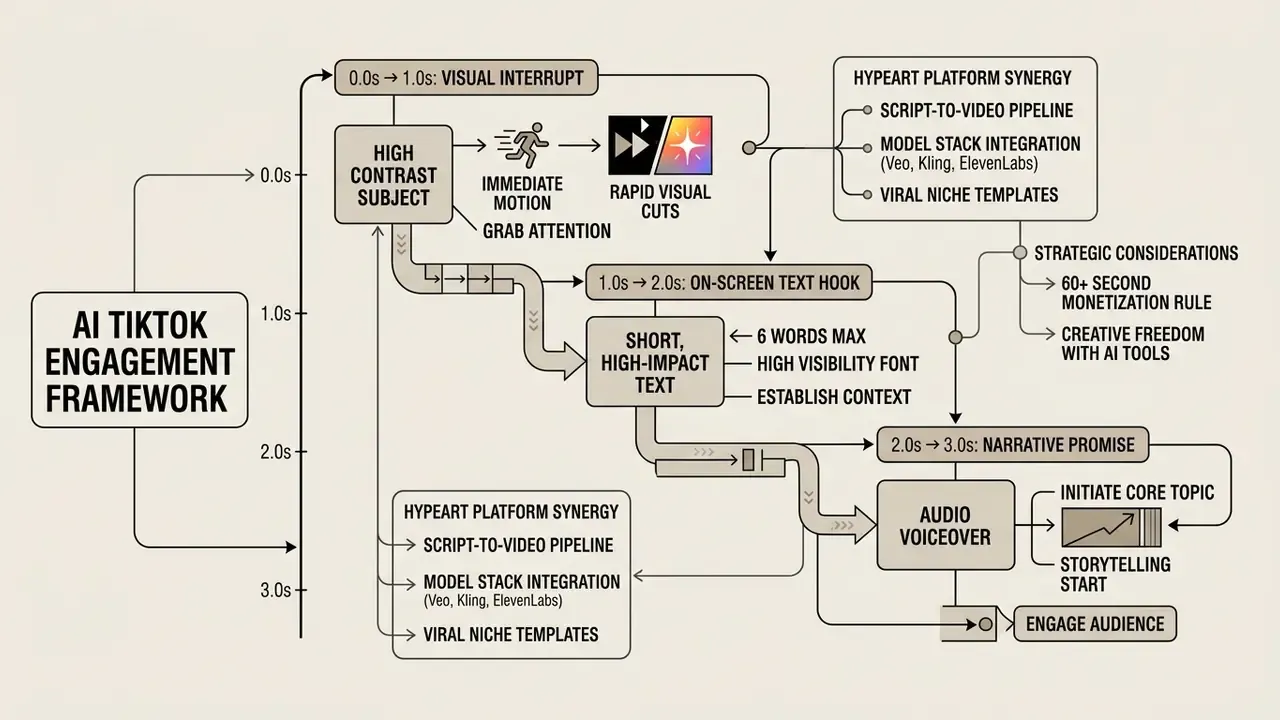
Choose a story, style and hook for the first seconds
The opening three seconds decide whether a user scrolls past or stays. An effective visual hook uses high contrast, deliberate camera movement, or an intriguing scene frame within the first second. Practical hook engineering splits the window further: frame one carries a face, strong motion, or a high-contrast anchor; 1 to 2 seconds introduce tension or the core information; 2 to 3 seconds deliver the payoff promise.
Text overlays during the hook phase must be concise, ideally six words or fewer, and state the video's primary value clearly. Pattern interrupts common in 2026 vertical pipelines include immediate motion, saturated color contrast, tight close-ups, face reveals, split screens, and kinetic typography. Trending TikTok formats rotate quickly, so treat any hook library as perishable inventory.
«Amplification of interest-aligned content begins on average after the first 200 videos, and gaming content is amplified fastest.»
In operational terms: a new faceless channel should be planned as a volume experiment. The recommendation system needs a substantial watch history before interest-based amplification stabilizes, so consistency of niche and posting cadence matters more than perfecting one upload. Slightly uncomfortable conclusion, but that is what the data suggests.
Use captions, voiceover and music to retain attention
Clear captions, synthesized speech, and background music together increase view time.
«An analysis of 880 TikTok ads found high auditory complexity and visual texture complexity correlate positively with engagement, while object clutter reduces it.»
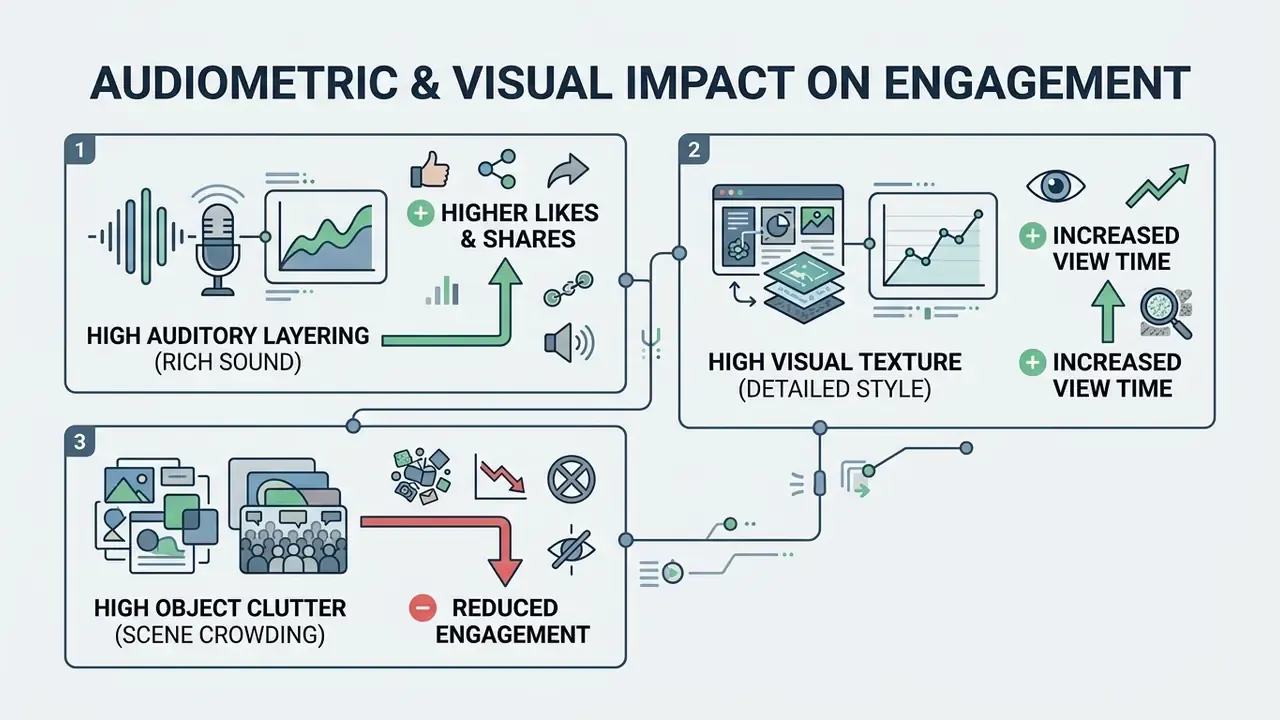
Synthetic voices, however, need thoughtful deployment.
«A panel study of 21,541 TikTok videos recorded 5.4% fewer likes and 5.2% fewer comments when fully synthetic voices replaced human narration.»
Related work points the same way from different angles. A mixed-methods TikTok advertising study found human and AI collaboration produced the highest engagement, with AI-only ads underperforming human-only ads on completion rate and six-second view rate. A 2026 study of 787 TikTok videos found that perceived inauthenticity depressed liking and sharing, an effect moderated, not worsened, by transparent AI labeling.
Pairing synthetic voiceover with human editorial review balances production speed against audience trust. Creators seeking royalty-free visual assets can review options in our evaluation of free AI image tools.
Free plans, pricing and commercial-use rights
Evaluating an ai tiktok video generator free plan requires auditing export limits, watermark requirements, audio licensing, and the underlying commercial usage terms.
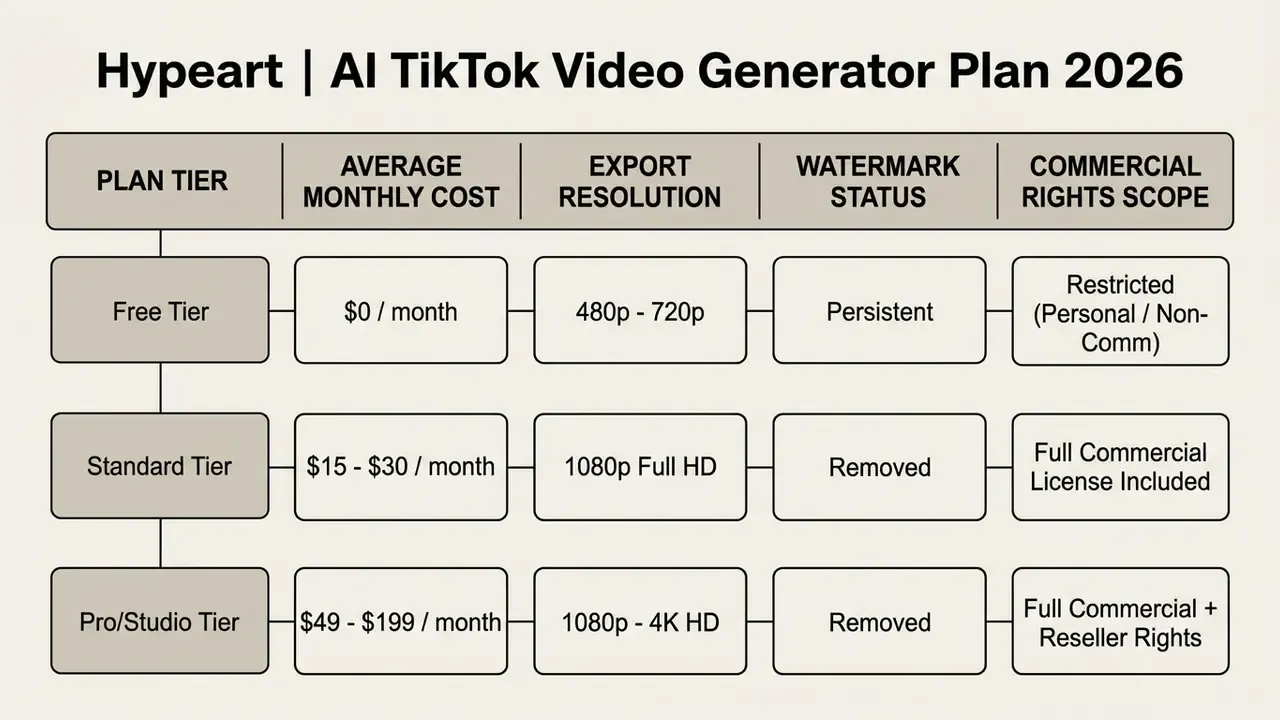
Vendor-specific 2026 data points illustrate the spread. HeyGen's free tier allows three videos per month at up to three minutes and 720p with a watermark. InVideo AI's free tier allows about ten AI minutes and four exports per week at 720p with a visible watermark. VEED.io's free plan caps total monthly export around ten minutes at 720p with a persistent watermark. Pika's entry tier issues monthly video credits at 480p generation. Commercial-rights gating also varies: Runway documents commercial rights across plans including free, whereas Kling's free and standard tiers are marked personal-use-only, with commercial rights beginning at Pro. Readers can widen the comparison set with our roundup of free AI video generator options.
What to compare in free and paid AI video plans
Free tiers give you basic testing capability, usually with operational limits:
- Mandatory vendor watermarks on exported MP4 files.
- Export resolutions capped at 720p instead of full 1080p.
- Restricted monthly rendering credits, typically 3 to 10 minutes total.
- Exclusion of commercial asset libraries and premium neural voices.
Paid plans, roughly $15 to $60 per month, remove watermarks, raise credit limits, unlock 1080p export, and grant explicit commercial usage rights. Creators testing free tools can review our detailed evaluation of free AI video generators.
Modeling total cost of ownership, including human review
Subscription price is rarely the dominant cost line in regulated environments. A workable TCO formula for a monthly publishing plan:
Monthly TCO = Subscription + (Credits_overage)
            + (Videos × Review_minutes × Reviewer_hourly / 60)
            + (Videos × Rejection_rate × Rerender_cost)
            + Legal_review_hours × Counsel_rate
            + Asset_licensing_fees
Worked illustration for a 40-clip month: a $30 subscription, plus 40 clips × 12 review minutes × $60 per hour, equals $480 in editorial labor. A 15% rejection rate adds six re-renders. Two hours of compliance counsel review at a professional rate can exceed the entire software line by itself.
The operational lesson: reducing rejection rate, through locked templates, approved voice lists, and pre-export checklists, usually saves more money than switching to a cheaper generator. Storage and delivery costs deserve a line too, and a video compressor step often trims bandwidth spend on large archives.
Commercial use of AI-generated videos and media
Using ai generated videos for tiktok in commercial advertising or corporate marketing requires verifying ownership rights across script text, images, synthesized voices, and background audio.
Official rulings from the U.S. Copyright Office state that material generated purely by artificial intelligence, without human creative authorship, cannot be copyrighted (U.S. Copyright Office Report on AI & Copyright, 2025). Human selection, structural arrangement, and manual editorial adjustments establish copyrightable ownership. Congressional Research Service analysis reinforces the point that prompts alone do not create authorship, while sufficiently creative human arrangement or modification may qualify.
Federal publicity rights also restrict using synthetic voice clones of real individuals for commercial promotion without permission (Congressional Research Service Report, 2026). Disclosure duties extend beyond the United States: Hong Kong's Generative Artificial Intelligence Technical and Application Guideline requires providers to disclose when generative AI participates in content generation or decision-making. Organizations scaling digital marketing media should review the guidance inside our AI Media Commercial-Use Hub and the parallel breakdown of commercial-use rights for AI-generated images, then monitor active disputes through our AI Litigation and Case Timelines.
Data governance, Shadow AI and DLP controls
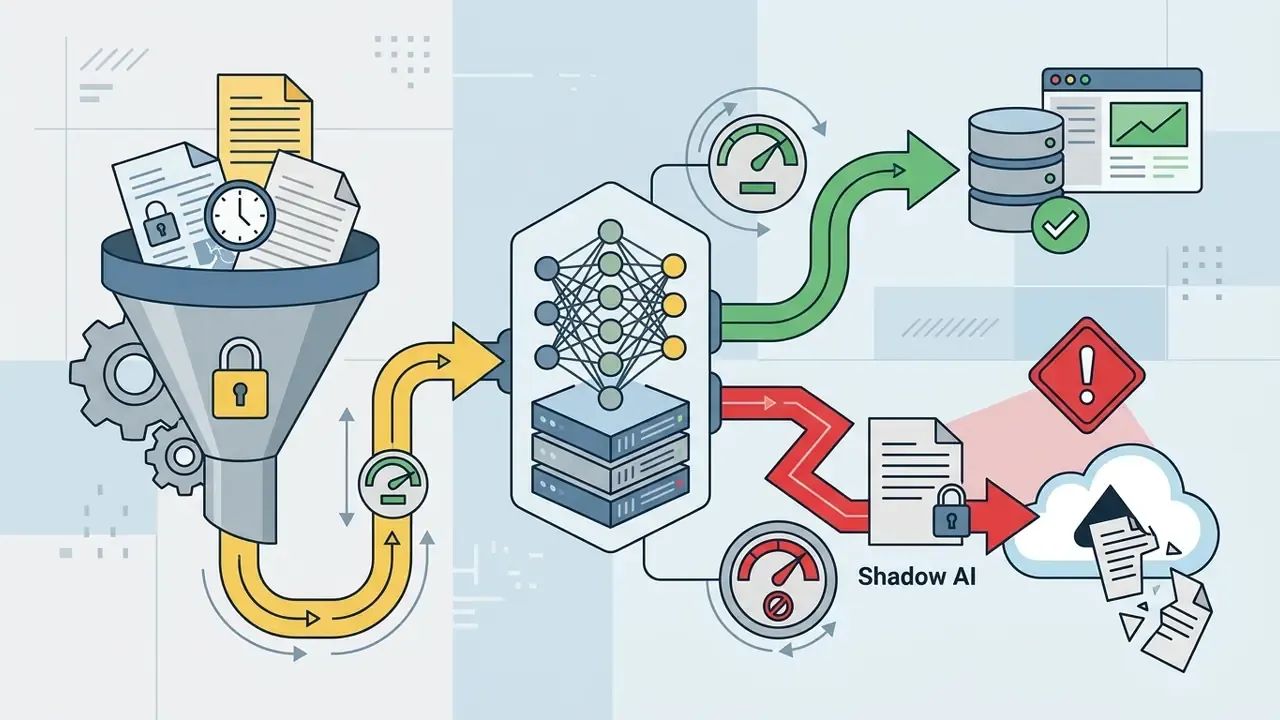
The largest unmanaged risk in enterprise short-form pipelines is not copyright. It is Shadow AI: marketing staff pasting unreleased product specifications, embargoed pricing, internal roadmaps, or customer footage into consumer-grade generators that were never contracted, reviewed, or logged.
A practical control set:
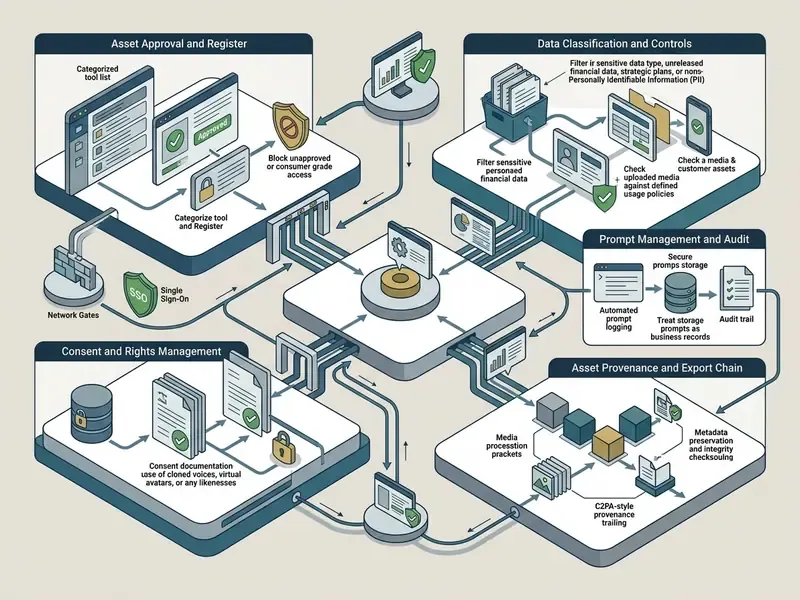
NIST AI 600-1 calls for provenance tracking in generative systems, including training-data and metadata provenance. In practice that means audit records tied to each generated asset, not just to the platform account. Treat the AI generator as a data processor: if it cannot be drawn into a data-flow diagram, it should not be in the publishing workflow.
One more control worth naming, because teams forget it: ownership. Every approved generator needs a named owner, a defined role, access limits, an escalation path, and a documented shutdown mechanism. No evidence, no autonomy. That principle applies to a caption engine as much as to a credit model.
Who benefits from an AI TikTok video generator
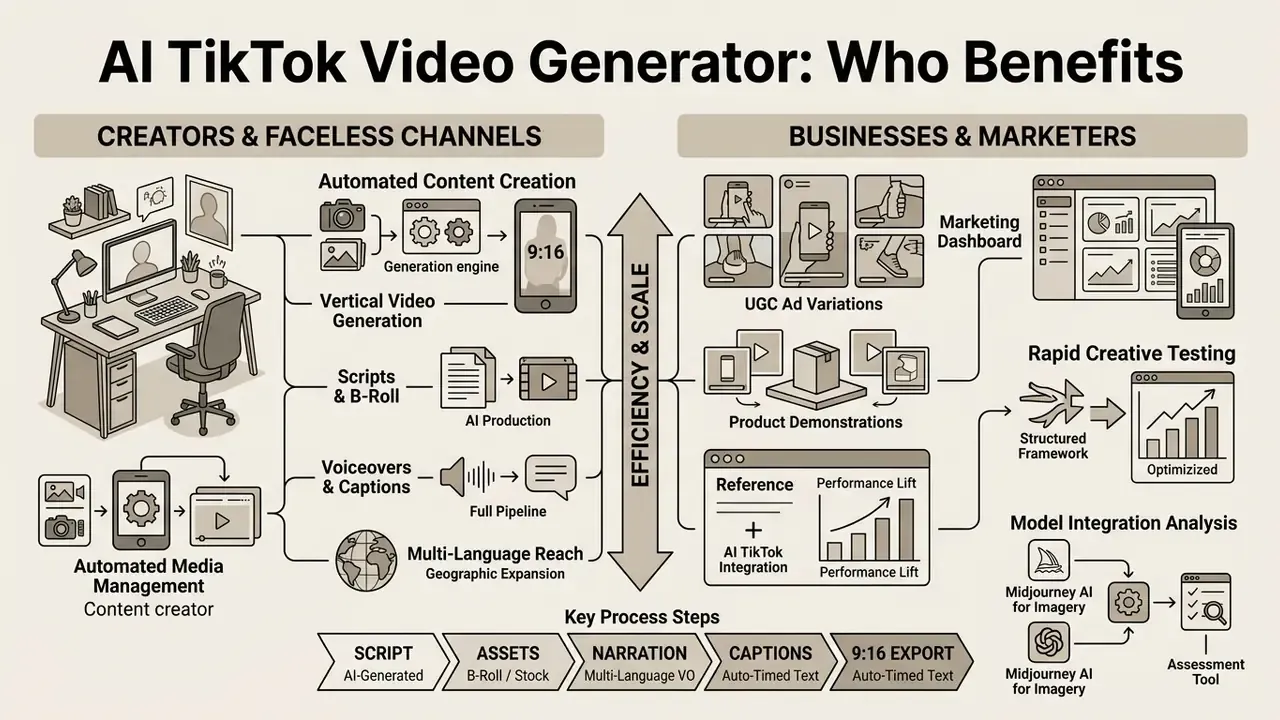
Deploying ai for tiktok videos offers distinct advantages for independent creators running automated media channels and for enterprise marketing teams managing ad creative testing.
Creators and faceless content channels
Independent creators use an ai content creator tiktok workflow to publish vertical videos without maintaining expensive camera setups or lighting rigs. Faceless content operators manage multi-channel networks across genres like history, finance recaps, storytelling, and tech summaries.
Automated pipelines generate scripts, select matching B-roll, render voiceovers, and produce captions within minutes. That efficiency lets one operator hold a consistent multi-daily posting schedule across platforms.
«Creators treat AI tools as the backbone of monetization strategies: blogs, ebooks, AI influencers and newsletters all appear among ten core GenAI use cases.»
Multi-language voice synthesis extends the same economics geographically. Content operations can localize top-performing short-form scripts into 30+ languages, including Spanish, German, Arabic, Japanese, Mandarin, Hindi, Portuguese, Turkish, Vietnamese, and Ukrainian, without re-filming. One validated script becomes a portfolio of localized uploads, each judged separately by regional recommendation systems.
Businesses, marketers and product-focused videos
Digital marketers use an ai tik tok generator to produce UGC ad variations, product demonstrations, and social commerce assets at scale.
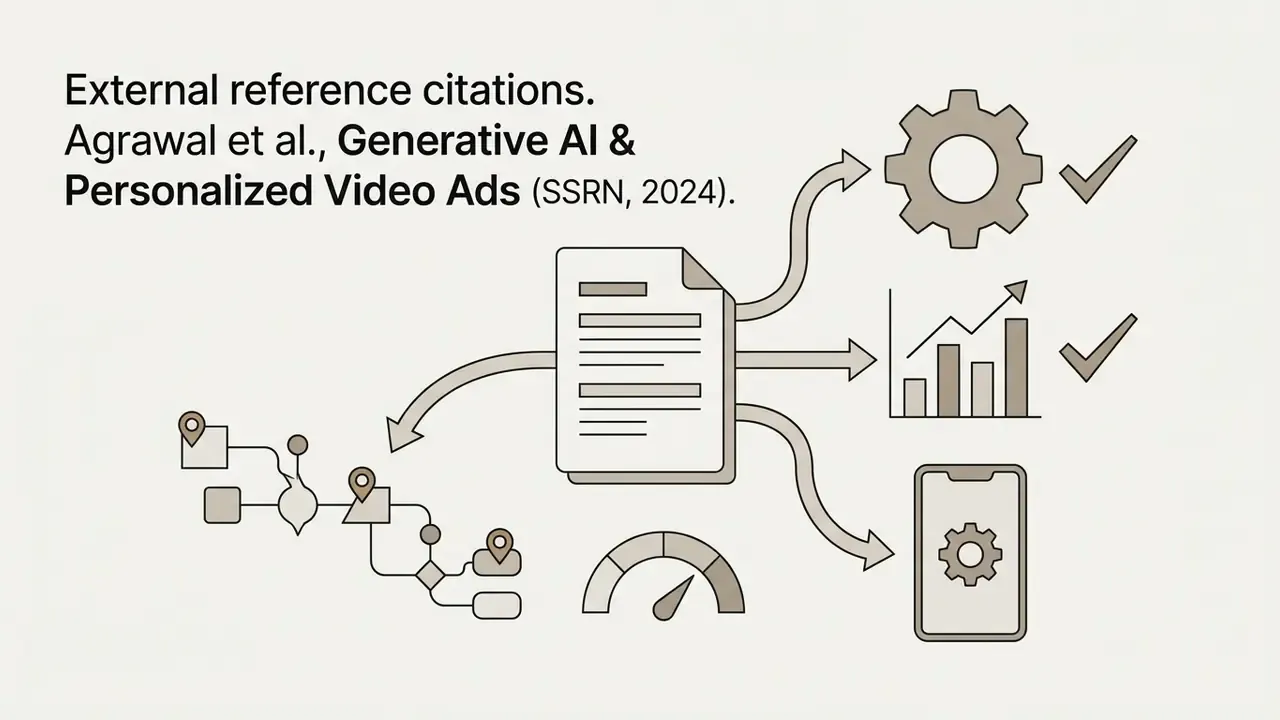
«A field experiment on AI-generated personalized video ads in WhatsApp showed 6 to 9 percentage points higher engagement than personalized image and standard video ads.»
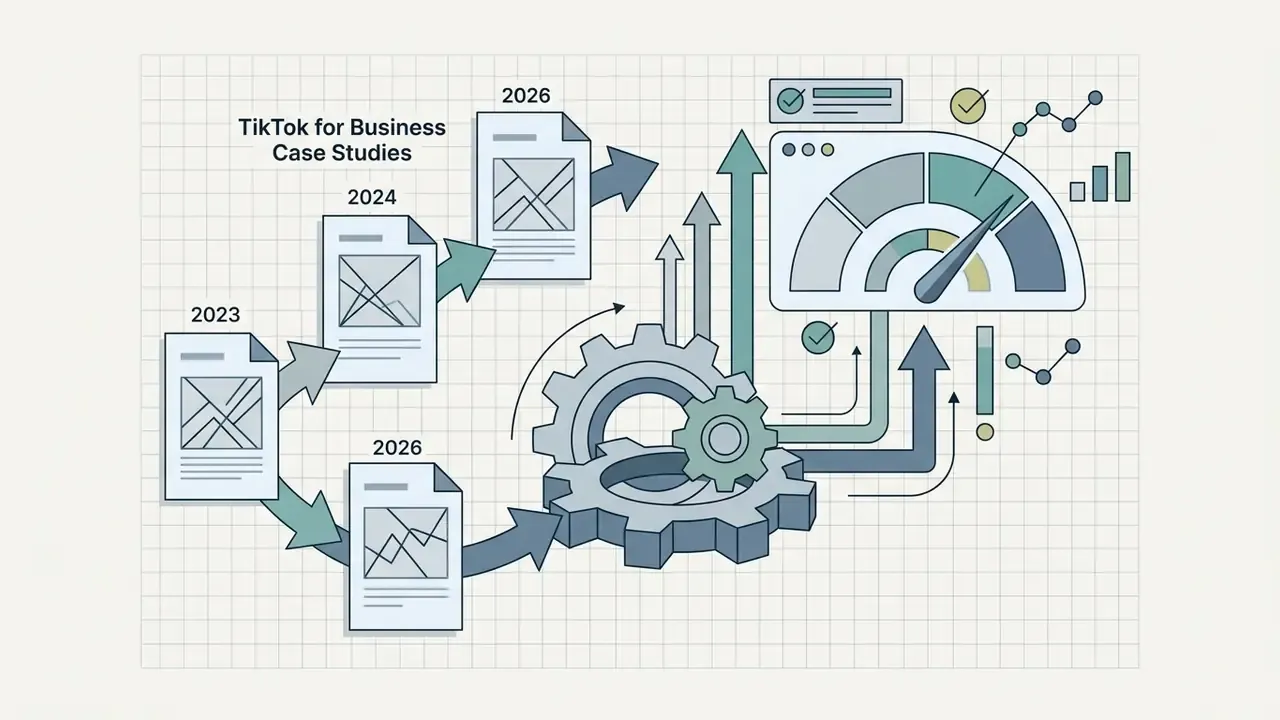
A TikTok case study of the digital platform Goodcall reported that rapid creative testing with structured video variants reduced customer acquisition cost from $185 to $7 per sign-up (TikTok for Business Case Studies, 2023). A second TikTok For Business case study, for hubx, reports a 250% increase in active campaigns alongside a 15% CPA reduction and 11% ROAS improvement through high-volume creative management. Vendor case studies are self-selected wins, so read them as directional evidence, not as forecasts for your account.
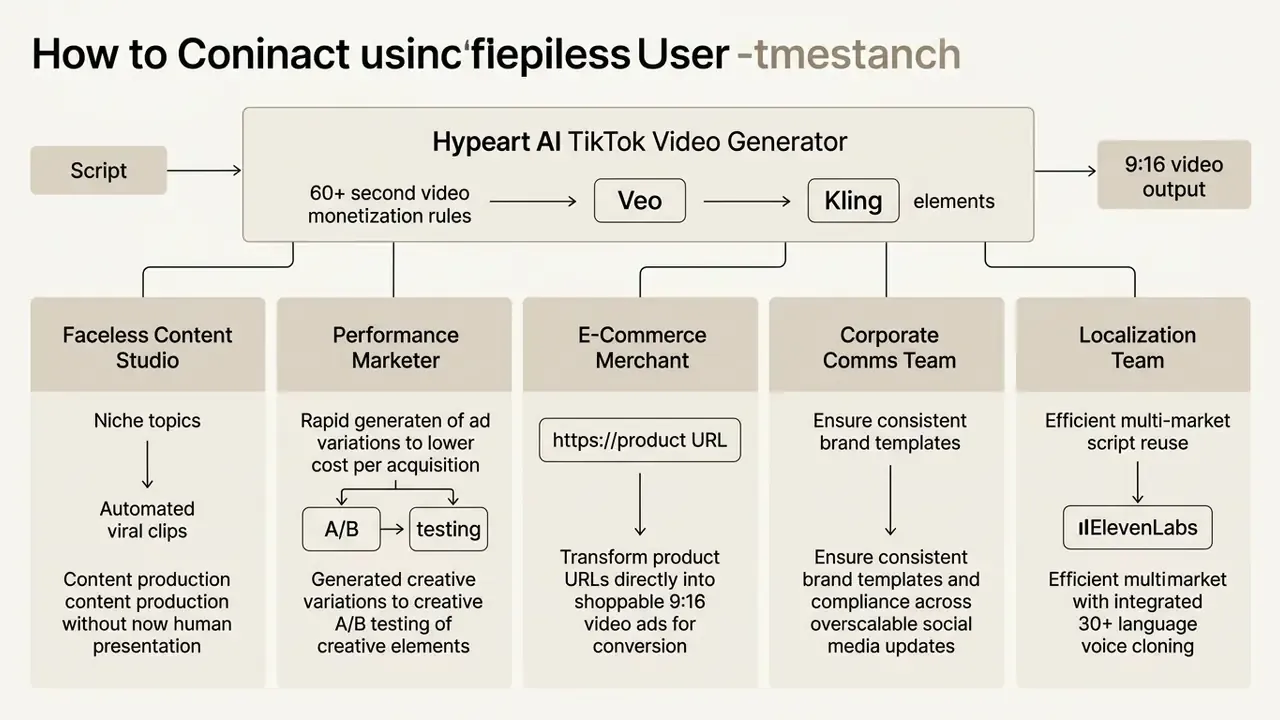
Organizations evaluating model integration choices can consult our comparative review of Midjourney AI generation workflows alongside our AI video generator comparison.
FAQ
Does TikTok suppress AI-generated videos?
TikTok does not ban synthetic media outright. It requires disclosure through the "AI-generated content" toggle and applies its general community guidelines. Research on disclosure effects is mixed: one 2026 analysis of AIGC disclosures found roughly 7 to 8% fewer likes on disclosed posts, while another study found labeling reduced the penalty associated with perceived inauthenticity. Undisclosed synthetic content carries the higher risk, because it can trigger enforcement rather than only softer engagement.
How long should an AI TikTok video be to earn money?
For the TikTok Creator Reward Program, original qualified videos must exceed 60 seconds. Most faceless operators target 70 to 110 seconds, then export a sub-60-second trim for YouTube Shorts feed placement.
Can I use AI-generated TikTok videos in paid ads?
Yes, provided your vendor tier grants commercial rights, all stock and music licenses cover advertising use, no real person's voice or likeness is cloned without consent, and required AI disclosures are applied. Free tiers frequently prohibit commercial use.
Do I own the copyright to an AI-generated video?
Not for the purely machine-generated portions. Under U.S. Copyright Office guidance, protection attaches to human contributions such as script writing, scene selection, arrangement, and editing. Registrations must disclose AI-generated material.
Which is better: text-to-video generation or repurposing long videos?
They solve different problems. Text-to-video suits net-new faceless content, storytelling niches, and product concepts with no existing footage. Repurposing editors suit organizations that already own webinars, podcasts, or interviews and need volume without new production.
How many languages can an AI voiceover cover?
Leading neural TTS stacks support roughly 30+ languages, which allows one validated script to be localized across multiple regional feeds without re-recording.
Why do my AI captions look unreadable on mobile?
Usually density and placement. Limit captions to three lines and roughly 17 characters per second, keep them bottom-center (or top-center when graphics occupy the lower third), and clear shot changes by at least two frames.
What is the biggest compliance mistake teams make?
Uploading confidential or unreleased material into an unapproved consumer generator. Establish an approved-tool register, confirm training opt-outs contractually, and log prompts as business records. Summary and next steps An ai tiktok video generator gives teams a practical, scalable way to convert text ideas, documents, and source videos into vertical short-form content. Automated tools accelerate scripting, visual synthesis, voiceover generation, and captioning. Audience engagement and regulatory compliance still depend on human oversight, quality review, and asset license verification. To build a compliant automated production pipeline:
- Audit video tools for 9:16 export support, voice quality, security attestations, and explicit commercial usage rights.
- Structure short-form scripts around a 3-second visual hook, concise text overlays, and clear audio narration.
- Match duration to the monetization threshold of each destination platform: 60+ seconds for TikTok Creator Rewards, under 60 seconds for standard Shorts.
- Verify compliance with platform disclosure policies by enabling AI content tags before publishing.
- Establish editorial review gates to refine pacing, correct transcription errors, and protect brand identity.
- Register approved tools, block Shadow AI uploads, and retain provenance metadata for every generated asset. Start small. One niche, one locked template, one reviewer, thirty days of measured output. Then decide what to scale.
External reference citations





Related guides on this site
- Explore AI video generator fundamentals
- Study text-to-video AI models
- Review image-to-video AI tools
- Compare free AI video generators
- Understand video editor workflows
- Assess AI voice generators and licensing
- Reduce delivery size with a video compressor
- Build motion assets with an animation maker
- Share drafts through a video link generator
- Fix exposure with a video lighting editor
- Produce event clips with a video invitation maker
- Source gameplay backdrops via video games online
- Track video generation ai developments
- Read video generation model updates
- Calculate costs with AI Media Calculators
- Review plans via AI Media Pricing Guides
- Find help at AI Media Support and Troubleshooting
- Evaluate tools to compare feature options
- Inspect developer endpoints in AI Media API Guides
- Verify license compliance in the AI Media Commercial-Use Hub
- Monitor legal updates at AI Litigation and Case Timelines