Last reviewed: the 2026 release cycle of major video-diffusion models (Sora, Wan, Seedance, Firefly Video). Checked for factual accuracy, source verification, and privacy compliance.
There is a second audience for this page, and it is less romantic. Risk, compliance, and security leaders keep finding these tools inside their own networks, because employees upload faces into free browser apps without a second thought. So this guide covers both sides: how the generation actually works, and what a controlled review of such a vendor looks like.
The landscape of AI-generated media today is defined by multimodal video synthesis, where diffusion models turn static images into dynamic, temporal sequences. A kissing AI generator leverages these pipelines (image-to-video, text-to-video, and reference-driven animation) to create romantic imagery and short video clips from uploaded portraits or textual descriptions.
Executive Summary: What Decision-Makers Need to Know
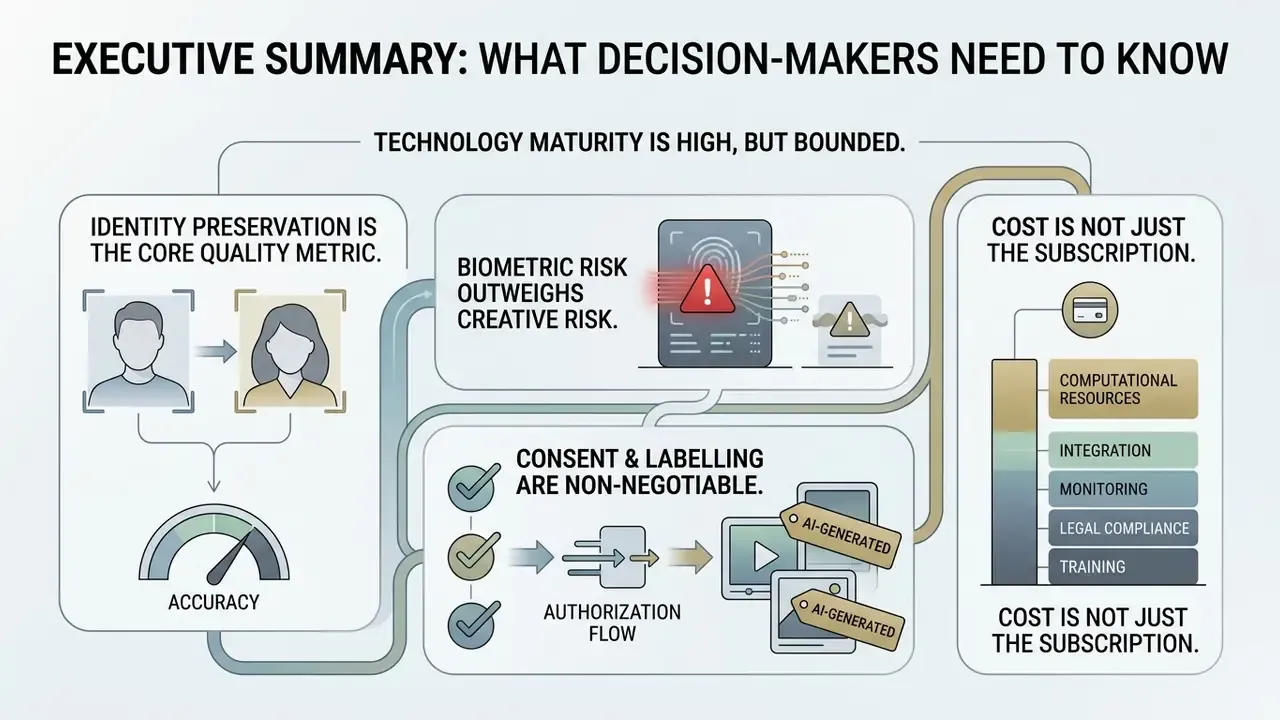
- Technology maturity is high, but bounded. Latent video diffusion reliably animates one or two portraits into a 3 to 10 second kiss clip. Automatic invention of a second person from a single photo remains a vendor claim rather than a peer-reviewed capability.
- Identity preservation is the core quality metric. Spatially conditioned and identity-preserving diffusion (reference features, facial masks, landmark conditioning) is what separates a convincing clip from two strangers kissing.
- Biometric risk outweighs creative risk. Uploading a face means uploading biometric data. Verify TLS 1.2+/AES-256 encryption, an explicit no-training clause, and user-controlled deletion before any upload, especially in a corporate or Shadow AI context.
- Consent and labelling are non-negotiable. Public sentiment and platform policy are aligned against non-consensual synthetic intimacy. TikTok auto-labels AI media, and X restricts deceptive synthetic content.
- Cost is not just the subscription. Free tiers cap resolution at 480p to 720p with a watermark and no commercial rights. Total cost of ownership includes review controls, disclosure workflow, and residual risk.
Key Terms Used in This Guide
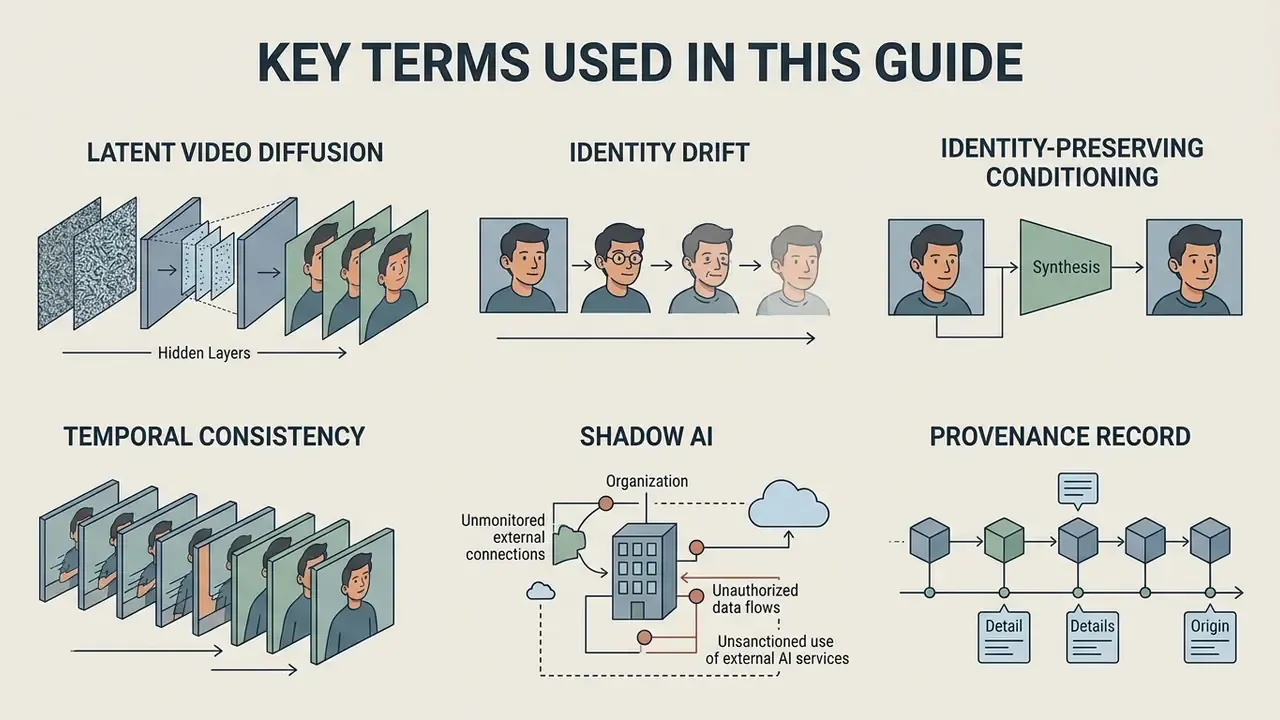
A short vocabulary check, because half the confusion in vendor calls comes from undefined words.
- Latent video diffusion. A model that denoises a compressed representation of many frames at once, so motion stays coherent rather than being stitched frame by frame.
- Identity drift. The slow loss of resemblance across a clip. The face in frame 90 no longer matches the face in frame 1, usually around the mouth.
- Identity-preserving conditioning. Reference features or facial masks fed to the model so appearance survives pose change.
- Temporal consistency. Absence of flicker, jitter, and texture crawl between adjacent frames.
- Shadow AI. Unsanctioned use of external AI services with corporate or client data, outside any approved inventory.
- Provenance record. The stored evidence of how a clip was made: model version, seed, prompt, source assets, operator, timestamp.
What a Kissing AI Generator Is and What You Can Create
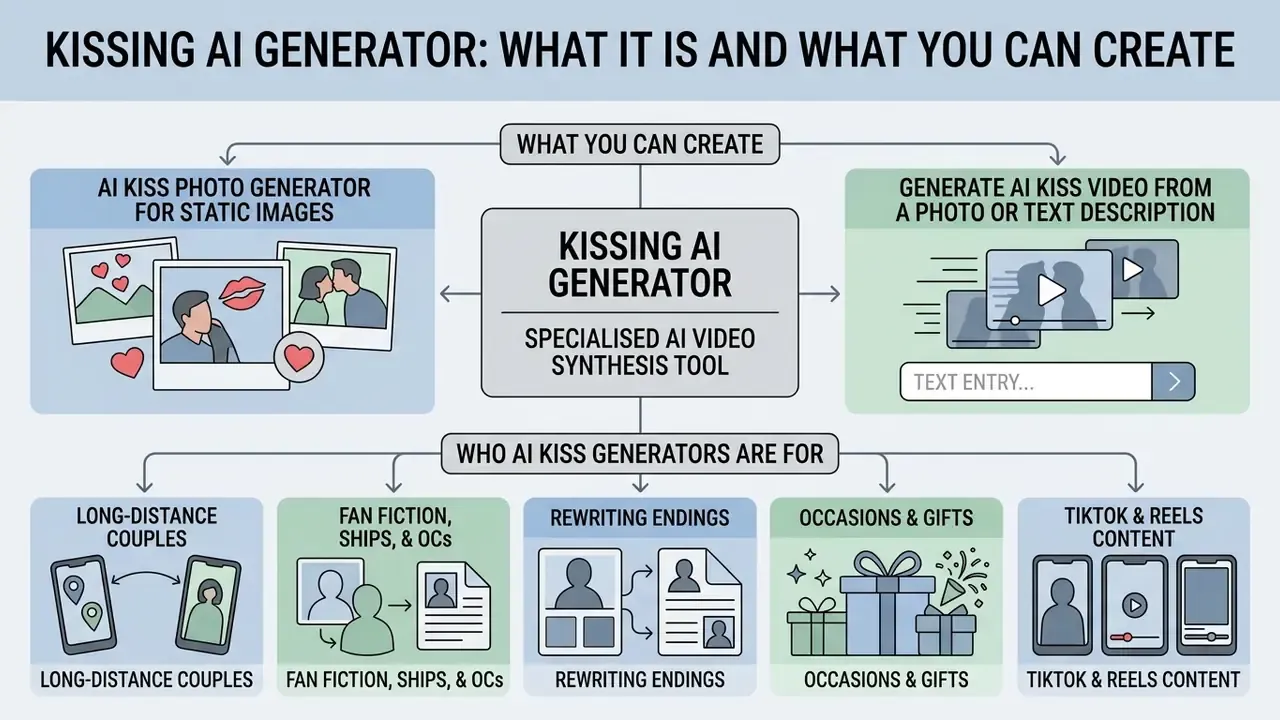
A kissing ai generator is a specialised AI video synthesis tool. It converts single or dual static portraits, and also plain text prompts, into animated kissing scenes and high-resolution romantic photos. By combining latent video diffusion with facial landmark alignment, these platforms let users generate kissing videos ai style output with realistic camera motion, facial contact, and natural expressions.
«Latent video diffusion models generate spatio-temporally consistent video from a single image, reaching FVD around 152 and PSNR around 22.13.»
Current commercial systems (Adobe Firefly Video, OpenAI Sora, Alibaba Wan 3.0, Seedance 2.5) show how multimodal inputs drive controlled human interactions in their published feature sets. Sora exposes text-to-video, image-to-video, and video extension or frame filling. Wan accepts text, image, audio, video and document inputs for clips up to 30 seconds. Seedance exposes text-to-video, image-to-video and reference-to-video endpoints with several aspect ratios.
In practice, a generator ai kissing workflow accepts couple selfies or two separate individual photos, then renders short clips ranging from a gentle cheek kiss to a cinematic romantic scene. If you are still choosing an engine, compare rendering speed, credit cost and identity stability across AI video generators before committing to a subscription.
Who AI Kiss Generators Are For
- Long-distance couples. Merge two separate selfies taken thousands of kilometres apart into one shared romantic clip. No shared room, no camera, no timing required.
- Fan fiction, ships, and OCs. Animate a kiss between favourite anime, manga, or book characters straight from drawings, fan art, or original character designs.
- Rewriting endings. Generate the happy finale a film or series never gave your favourite couple, or the goodbye scene two characters never got.
- Occasions and gifts. Build video cards for Valentine's Day, an anniversary, a wedding countdown, or a proposal reveal.
- TikTok and Reels content. Produce trend-driven clips, unexpected pairings, kiss-cam bits, and meme formats built for vertical feeds.
AI Kissing Photo Generator for Static Images
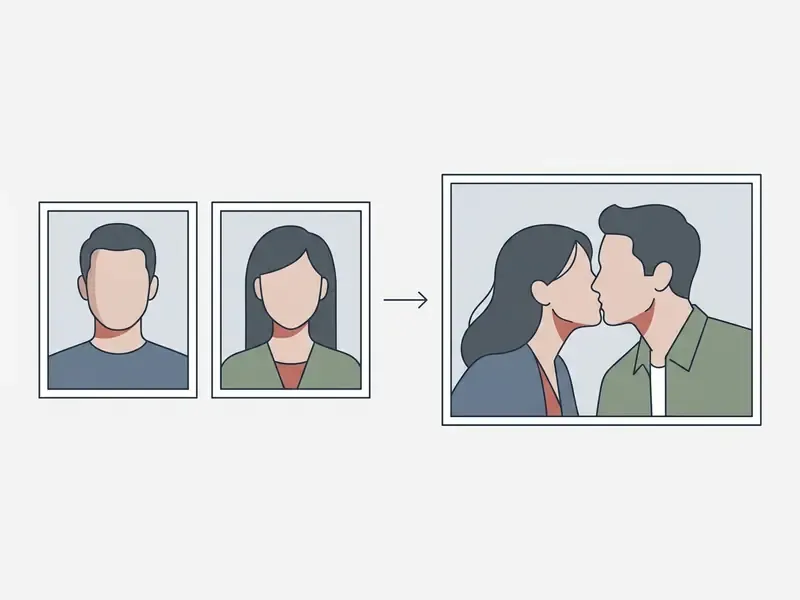
An ai kissing photo generator creates high-resolution still images of two people or imaginary characters kissing, by fusing facial features from the uploaded source files. The underlying algorithm relies on identity-preserving diffusion: it isolates facial embedding vectors from the inputs and blends them into a coherent target scene.
«Spatially conditioned diffusion uses reference features to guide inpainting of target frames, preserving appearance while matching pose.»
Related research families make the same trade-off explicit. Diffusion-based face swapping adds a facial guidance loss to optimise embeddings during sampling, while part-level swapping methods transfer selected facial regions from reference images instead of replacing the whole face. Both approaches exist for one reason: a romantic composite is only convincing if each person still looks like themselves after the blend.
The romantic style is controlled by prompt and scene composition. The identity is controlled by conditioning and masking. Two different levers, and people confuse them constantly. Users who want to raise the baseline before fusion can clean up exposure and sharpness in an AI photo editor or a general-purpose online photo editor.
Generate AI Kiss Video from a Photo or Text Description
To generate ai kiss video output from still images or text prompts, modern platforms use spatio-temporal video diffusion. Models like Human4DiT and Real3D-Portrait reconstruct 3D head and torso geometry from 2D images, then animate motion trajectories to simulate natural head tilts, eye closures, and lip contact.
Platforms built on image-to-video AI, including the minimax ai video generator, show how temporal video transformers interpolate motion between frames to avoid visual flicker. Developers who need programmatic control over duration, seed, and aspect ratio can review a production integration path in the Google Veo API implementation guide.
Privacy of Uploaded Photos and Safe Generation
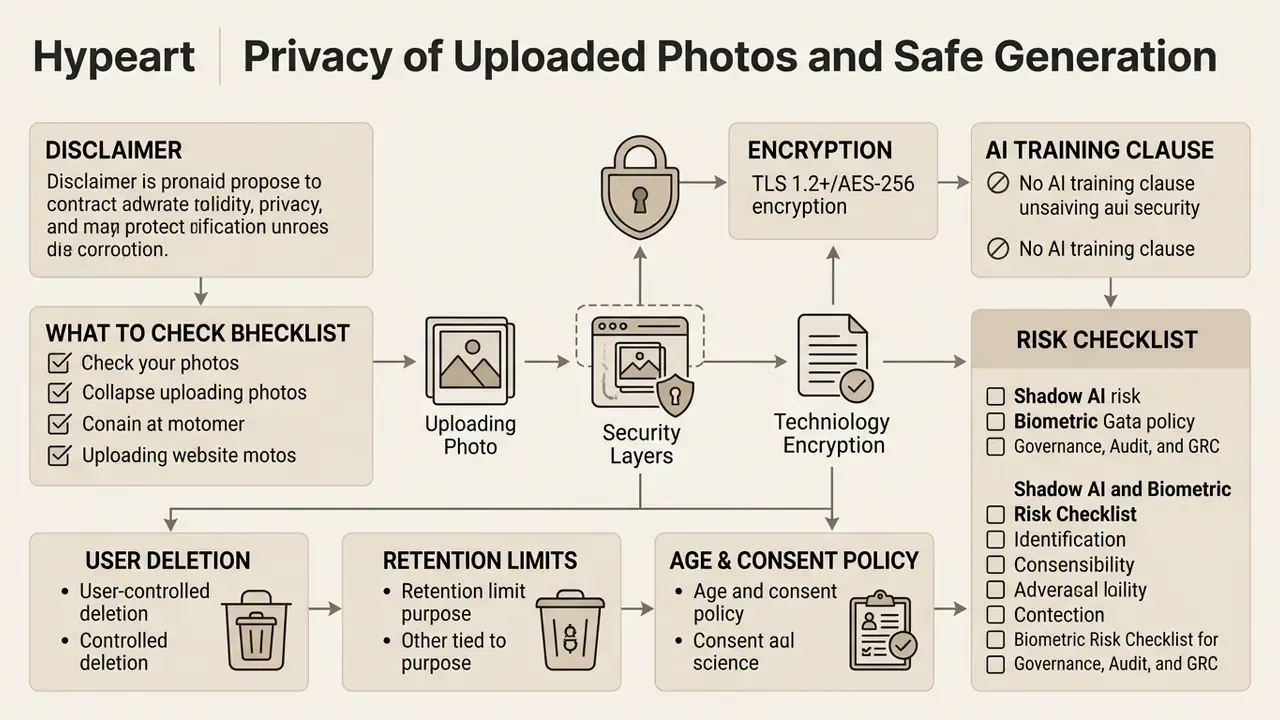
Data governance and cybersecurity controls matter most when uploading photos that contain facial biometrics to a cloud generative service. A face photograph is not automatically "biometric data" under the GDPR. It becomes special-category data when processed by specific technical means for unique identification. A kiss generator that extracts identity embeddings sits uncomfortably close to that line.
«Generative AI collects, processes and disseminates large volumes of personal data, often with insufficient oversight or consent mechanisms.»
What to Check Before Uploading Photos
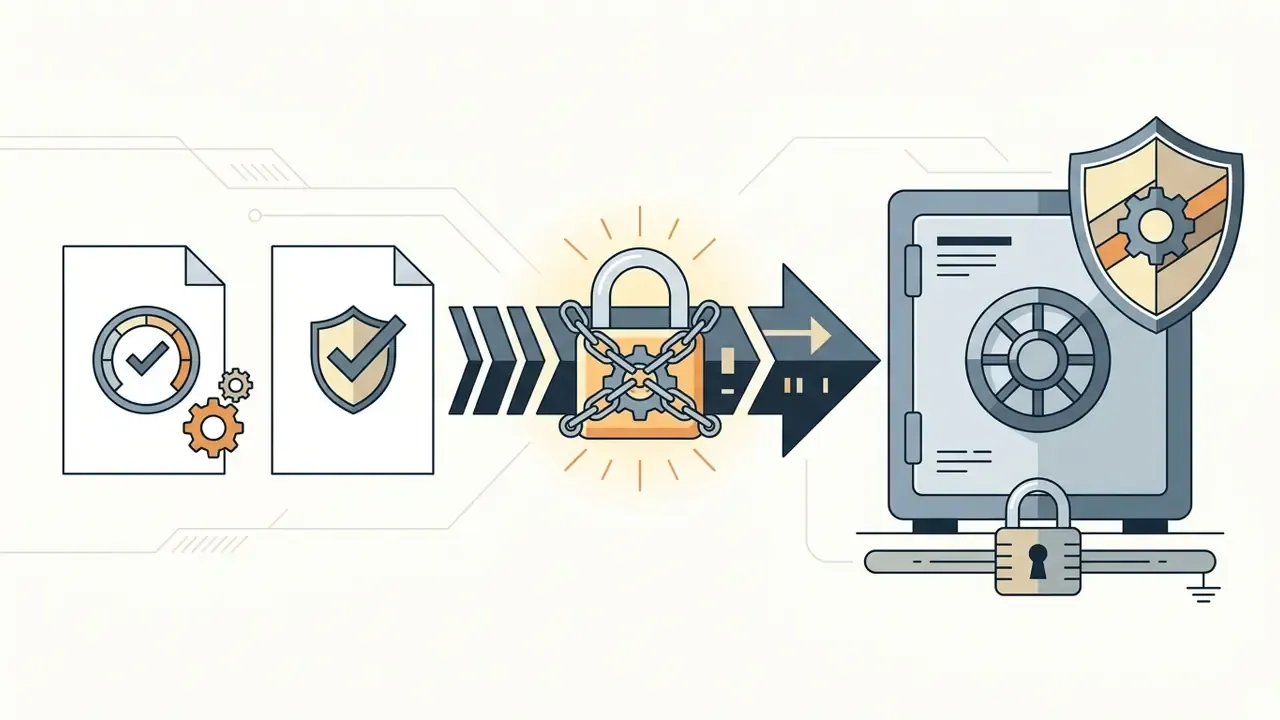
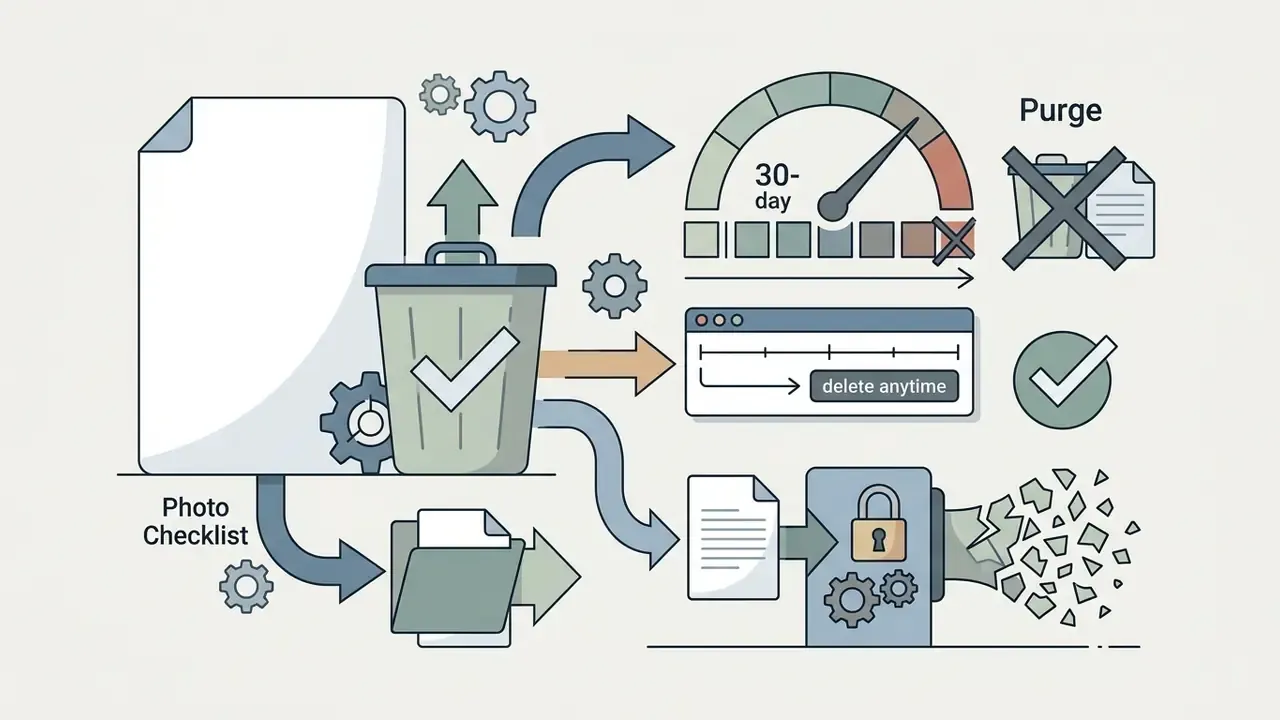
Before submitting personal or corporate photo assets, verify that the platform enforces real privacy standards:



One more practical point about NSFW queries. Searches for an ai kissing generator nsfw capability are common, and mainstream vendors answer them with filters rather than features: explicit synthetic intimacy involving any identifiable person is prohibited across major platforms and app stores. If a tool advertises the opposite, treat that as a red flag during vendor triage, not a differentiator.
Shadow AI and Biometric Risk Checklist for Governance, Audit, and GRC
Consumer-grade kiss generators are a classic Shadow AI vector. They are free, browser-based, and they request exactly the asset an enterprise should never leak: employee and client faces. Use the table below as vendor triage evidence.
| Control area | What to require | Evidence to collect | Residual risk if absent |
|---|---|---|---|
| Encryption | TLS 1.2+ in transit, AES-256 at rest | Security page, pen-test summary, DPA | Interception or bulk exposure of biometric assets |
| Model training | Written no-training clause covering uploads and outputs | Terms of service clause reference | Faces absorbed into a third-party foundation model |
| Deletion | Delete-anytime plus automated purge, secure erase method named | Retention schedule, deletion confirmation logs | Indefinite retention of identifiable faces |
| Access logging | Admin audit trail of who uploaded what and when | Log export sample | No forensics after an incident |
| Cross-border transfer | Documented hosting region and transfer mechanism | DPA annex, sub-processor list | Unlawful transfer of special-category data |
| Consent | Proof of subject consent for every uploaded face | Internal consent register | Statutory exposure under GDPR, PDPA and biometric statutes |
| Shadow AI containment | Blocklist or sanctioned-tool list, DLP rules for image uploads | Network policy, DLP rule export | Uncontrolled employee use with corporate assets |
«90% of consumers believe they should be able to review and delete the data technology companies collect about them.»
Technical Deep Dive: Architectures, Identity Drift, and Validation
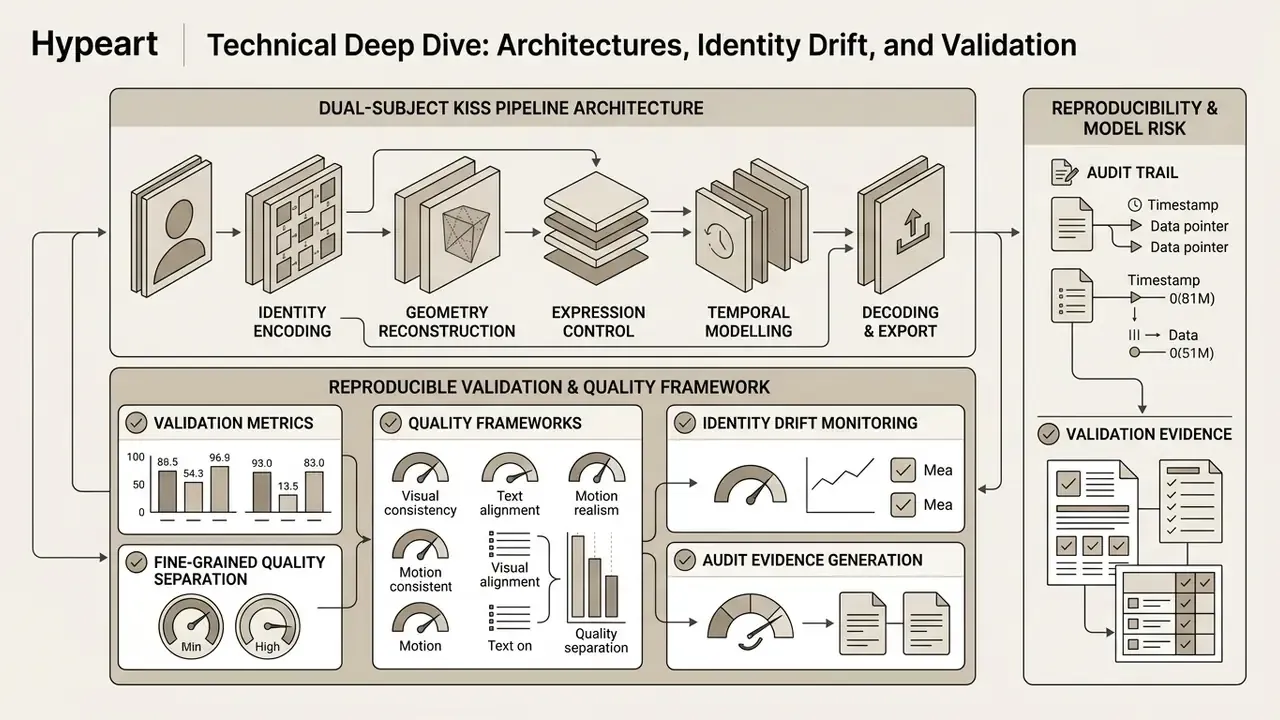
«Human4DiT applies a hierarchical 4D transformer with self-attention factorized across views and timesteps, ensuring spatio-temporal video consistency.»
Reproducible Validation Metrics
| Failure mode | Metric | How to test | Interpretation |
|---|---|---|---|
| Identity drift | Cosine distance between face embeddings of frame 1 and frame N | Fixed validation set of paired portraits, fixed seed, embedding model held constant | Rising distance across frames indicates identity leakage around the mouth region |
| Temporal flicker | Frame-to-frame perceptual difference or motion smoothness score | Same prompt, same seed, compare adjacent-frame deltas in static background areas | Background jitter with a still camera signals weak temporal conditioning |
| Overall fidelity | FVD, PSNR, SSIM | Benchmark clips versus reference | Published Human4DiT figures (PSNR 22.13, SSIM 0.923, FVD 152.1) act as a reference band |
| Prompt alignment | Text to video alignment rating (human panel) | Blind rating of style, framing, kiss type adherence | Divergence indicates preset templates override prompt tokens |
| Occlusion robustness | Artefact rate on the mouth region | Inject sunglasses, hands, scarves into inputs | Mouth-region artefacts correlate with phoneme to viseme and occlusion failures |
Fine-grained quality frameworks separate visual quality, text to video alignment, motion quality, and temporal consistency. A tool can score well on aesthetics while failing identity stability. Evaluating generative tools through AI Media Comparison Matrices or estimating rendering efficiency with dedicated calculators helps creators and validators pick architectures that deliver stable 1080p output.
One caveat worth stating plainly: none of these metrics prove consent. They prove fidelity. Consent lives in your register, not in your model card.
How to Make Two Images Kiss with AI
To make two images kiss ai systems use a sequential image-to-video workflow that turns static source photos into a synchronised animation. A structured process keeps facial positioning correct, transfers expression naturally, and renders in high definition.
- Upload source photos.Two separate headshots, or one photo containing both people. Supported formats: JPG, PNG, WebP, with typical limits of 10 to 20 MB.
- Identify the character pair.Select and assign the two primary faces in the interface to define identity vectors.
- Configure style and mood.Choose a style kiss preset (Realistic, Romantic, French Kiss, Cheek Kiss, Anime) and adjust camera framing.
- Run generation.Trigger the diffusion engine to synthesise head movement, approach trajectory, and lip interaction.
- Inspect and download.Preview the clip, redo it if artefacts appear, and download the clean MP4 file.
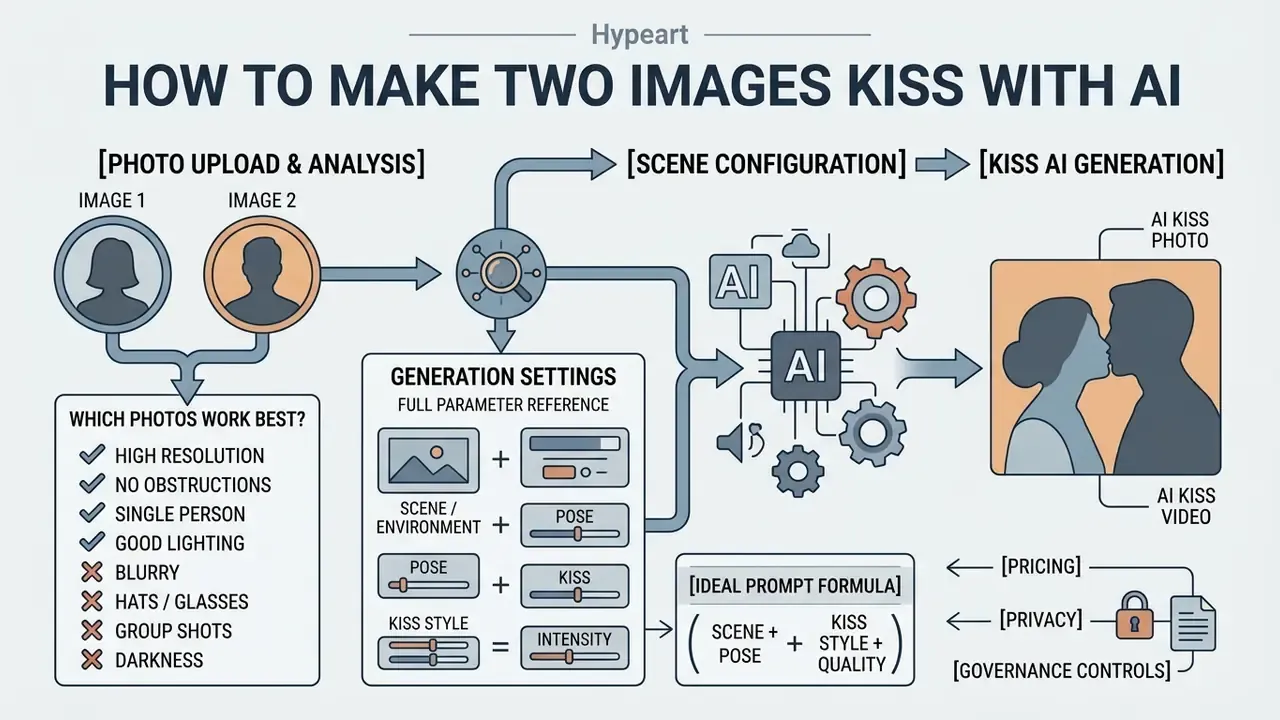
Generation Settings in the Interface: Full Parameter Reference
| Parameter | Available values | Effect on the result |
|---|---|---|
| Input mode | Single Photo / Two Photos / Text-only | One photo containing two people, two separate portraits, or a scene generated entirely from a prompt |
| Aspect ratio | 16:9, 9:16, 1:1, 4:3, 3:4 | 9:16 for TikTok, Reels and Stories; 16:9 for YouTube; 1:1 for square in-feed posts |
| Kiss type | Cheek Kiss, Lips Kiss, French Kiss, Forehead Kiss | Determines the approach trajectory and the contact point |
| Duration | 3 s / 5 s / 10 s | Length of the rendered MP4 clip |
| Quality / resolution | 480p / 720p / 1080p / 4K | Free tiers usually cap at 480p to 720p; credit cost scales with resolution |
| Generate audio | On / Off | Adds ambient romantic sound or environmental noise |
| Start / End frame | Two uploaded frames | Sets the opening pose (eye contact) and the closing frame (the kiss) for precise control |
| Motion intensity | Low / Medium / High | Controls how far the heads travel and how pronounced the lean-in is |
| Seed | Random / fixed value | A fixed seed makes a run reproducible; changing it is the fastest artefact fix |
Which Photos Work for AI Kiss Generation
Output quality in an ai photo kissing generator depends directly on resolution, lighting, and camera angle of the source photos. Strong inputs follow the same logic as established biometric portrait guidance (NIST OFIQ face-quality criteria and ICAO portrait specifications), which emphasise balanced facial illumination, sharp focus, controlled pose, and zero eye or mouth occlusion. ICAO, for instance, expects the horizontal camera-to-face line within roughly ±5 degrees and uniform lighting. Frontal or semi-profile headshots with neutral expressions give the most realistic facial warping during video generation.
«Video generation models require clean pose sequences and high-quality reference images to ensure natural motion and appearance consistency.»
Mismatched yaw, pitch, and roll between two uploads measurably increases the chance of facial deformation during frame interpolation. Matching angle and colour temperature is cheaper than re-rendering five times. Ask me how I know.
Checklist: Which Photo to Upload for Maximum Realism
Checklist0 / 8
Users who want to raise baseline photo quality before processing can use tools like the momo ai photo generator, a portrait-focused AI headshot generator, or standard utilities such as a movavi video editor.
Configuring the Scene, Pose, and Kiss Style
Scene parameters let you tailor the visual output to a specific aesthetic. A typical kissing video interface exposes motion intensity, lighting temperature, and kiss type: a gentle forehead kiss, a soft cheek kiss, or a passionate cinematic kiss. In prompt-driven interfaces you also specify background details, which guide the latent diffusion model toward the right contextual lighting and atmosphere. Research on prompt design suggests subject and style keywords matter far more than connective phrasing, which is exactly why the ready-made prompts below are built around style descriptors.
| Style / Location | Visual effect | Ready-to-use prompt |
|---|---|---|
| Rain Kiss | Dramatic kiss with water droplets, light reflections, wet hair | Cinematic close-up kiss in heavy rain, romantic atmosphere, bokeh street lights background, slow motion 24fps, hyperrealistic skin texture |
| Sunset Beach | Soft golden light, silhouettes against the ocean, warm tones | Romantic kiss on a tropical beach during golden hour sunset, warm lens flare, ocean waves in background, soft focus |
| Cherry Blossom | Falling sakura petals, gentle pink palette, tender mood | Gentle kiss under blooming cherry blossom trees, falling pink petals, soft anime aesthetic, detailed eyes and hair |
| Rooftop City Lights | Night city, skyscraper glow, high-contrast cinematic light | Passionate kiss on a city rooftop at night, glowing skyline background, dramatic neon lighting, cinematic depth of field |
| French Kiss | Deep emotional kiss with a slow lean-in and embrace | Intense passionate kiss, subtle facial expressions, realistic eye closing, natural head tilt, 8k resolution |
| Ferris Wheel / Drive-In | Retro date-night framing, warm practical lights, nostalgic mood | Sweet kiss inside a ferris wheel cabin at dusk, warm fairground lights, retro film grain, shallow depth of field |
| Fireworks / New Year Kiss | Celebration backdrop, bursts of colour, crowd bokeh | Midnight New Year kiss under fireworks, colorful sparks in the sky, festive crowd bokeh, cinematic 35mm look |
| Kiss Cam / Red Carpet | Playful or glamorous public moment, flash lighting | Stadium kiss cam moment, big screen glow, playful expressions, candid handheld camera feel |
| Golden Autumn | Warm foliage, backlit leaves, soft nostalgic grade | Tender kiss in an autumn park, golden falling leaves, backlit warm sunlight, soft romantic color grading |
Reviewing Results, Re-Generating, and Downloading
Once rendering finishes, evaluate the clip for temporal stability, natural lip alignment, and facial consistency. If jitter, texture warping, or identity leakage appears around the mouth, run a second generation with a different random seed. That usually clears frame artefacts. A stiff contact or an off-centre lean is fixed more reliably by swapping in a clearer, more frontal source photo than by editing the prompt.
Because each take renders in seconds, running three to five variants and publishing the best one is the normal workflow, not a failure state. Once approved, export the finished media in standard formats with an mp4 video editor, and assemble platform-ready cuts in a YouTube video editor workflow. For troubleshooting frame glitches or export limits, consult the AI Media Support and Troubleshooting resource.
AI Kissing Video Styles: Realistic, Romantic, and Creative
The visual style you pick for an ai kissing video determines the rendering pipeline, the identity strictness, and the sensible output resolution.
| Visual style | Primary input requirements | Rendering characteristics | Optimal use case |
|---|---|---|---|
| Realistic | High-resolution frontal headshots, uniform lighting | Photorealistic skin texture, accurate facial geometry, subtle lip movement | Personal keepsakes, lifelike romantic clips |
| Romantic Cinematic | Balanced couple portraits, soft lighting | Warm colour grading, slow-motion approach, atmospheric light | Gift videos, social media stories |
| Anime and Cartoon | 2D artwork, stylised avatars, or clear selfies | Line-art translation, vibrant cel-shading, expressive facial motion | Fan fiction, ships and OCs, digital art animation |
| Creative and Fantasy | Concept art, custom text prompts, or stylised portraits | Surreal lighting, dramatic background shifts, stylised physics | Experimental short films, aesthetic edits, meme formats |
In short: realistic styles demand the strictest inputs, cinematic styles reward slower motion, anime removes biometric exposure entirely, and fantasy styles trade fidelity for mood.
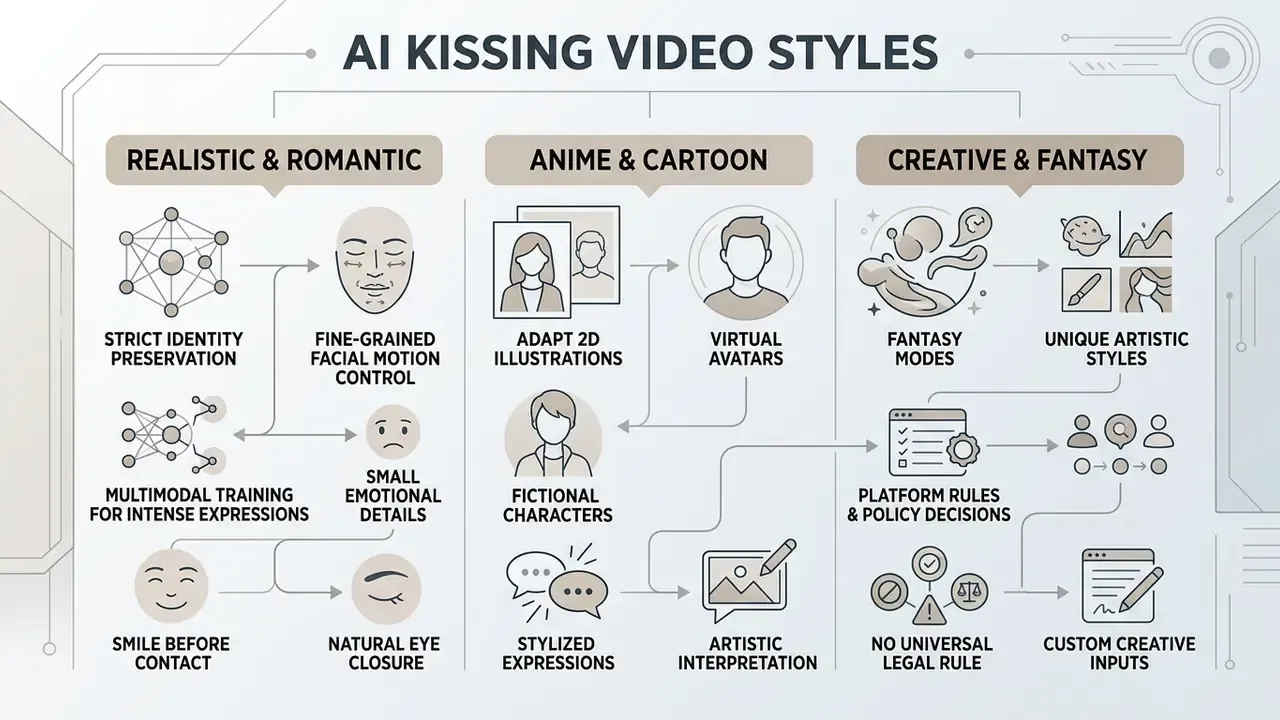
Realistic and Romantic AI Kisses
Realistic and romantic modes depend on strict identity preservation and fine-grained facial motion control. Landmark-conditioned diffusion decouples expression from identity, so recognisable traits survive the whole animation. Identity-preserving video diffusion frameworks add reference-image conditioning plus a pose sequence, which keeps appearance stable without post-processing.
These styles live on small emotional details: a smile before contact, a natural eye closure during the approach. For a romantic cinematic look specifically, closer framing, slower motion, neutral starting expressions, matched colour temperature and a slightly longer clip produce the most convincing result.
Anime, Cartoon, and Creative Styles for Characters
Anime, cartoon, and fantasy modes adapt 2D illustrations, virtual avatars, and imaginary characters into animated kissing scenes. A kissing generator that supports stylised input lets fans animate custom artwork, ships, original characters or meme concepts without photorealistic source photos, and without the biometric exposure that real faces bring. When producing stylised clips, creators often combine a movie trailer maker pipeline with general animation maker tools to sequence short snippets into a longer narrative, while staying inside community moderation standards.
Platform rules differ sharply here, and they are policy decisions rather than one universal legal rule. Some communities permit stylised, clearly fictional adult romance behind content warnings while banning photo-realistic sexual content outright. Others ban romantic kissing animations entirely. Copyright guidance adds a second constraint: a character's protected visual expression can cover 2D artwork, so fan works may need permission, or may rely on parody and pastiche exceptions, with attribution to the original creator and source work.
What Determines the Quality of an AI Kissing Video
Understanding the technical factors behind naturalness prevents visual distortion and frame glitches in ai kissing photo generator workflows.
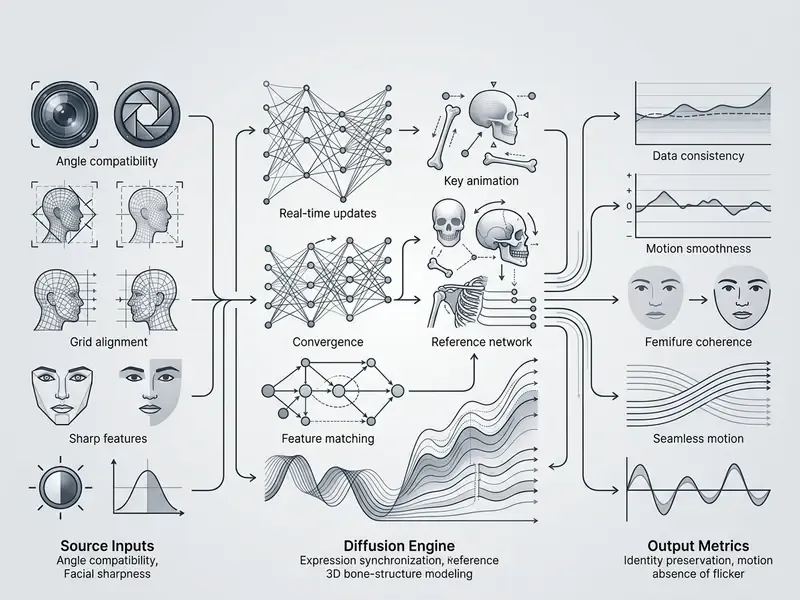
Faces, Angle, and Source Photos
Spatial alignment between the two source images is critical for photorealism. Research in human video generation shows that mismatched head pose angles (yaw, pitch, roll) or contradictory lighting between two uploads increase the likelihood of facial warping and unnatural head rotation during frame interpolation.
«Video generation models require clean pose sequences and high-quality reference images to ensure natural motion and appearance consistency.»
Similar colour temperature and head orientation in both images optimises latent space blending. Face reenactment literature makes the mechanism explicit: pose and expression are decomposed from a driving signal and transferred onto a source identity. The closer the source pose sits to the intended driving pose, the fewer artefacts appear.
Motion, Character Consistency, and Video Quality
Character consistency across frames prevents flickering, identity drift, and background distortion. Reference-attention architectures extract spatial feature maps from the input photos and hold visual identity, while a pose guider drives physical motion and temporal modules smooth the transitions.
«Human4DiT applies a hierarchical 4D transformer with self-attention factorized across views and timesteps, ensuring spatio-temporal video consistency.»
Contemporary evaluations treat subject consistency and motion smoothness as two independent axes. A model can hold a face steady and still produce jerky motion, or move fluidly while identity slowly drifts. Mouth-region artefacts are the most visible failure in kiss videos specifically, because contact frames concentrate deformation exactly where viewers look first.
Free Access, Pricing, and Commercial Use
Commercial models for kiss generator ai software split features between restricted free AI video generator tiers and paid subscriptions.
| Plan tier | Monthly credits or limit | Max export resolution | Watermark status | Commercial usage rights |
|---|---|---|---|---|
| Free tier | 8 to 30 credits per day, or roughly 80 monthly credits | 480p to 720p | Watermark usually included | Non-commercial, personal use only |
| Standard paid | 400 to 700 credits per month | 1080p HD | No watermark | Standard commercial licence |
| Enterprise / Pro | Unlimited or high-volume API | 4K UHD | No watermark | Full commercial and resell rights |
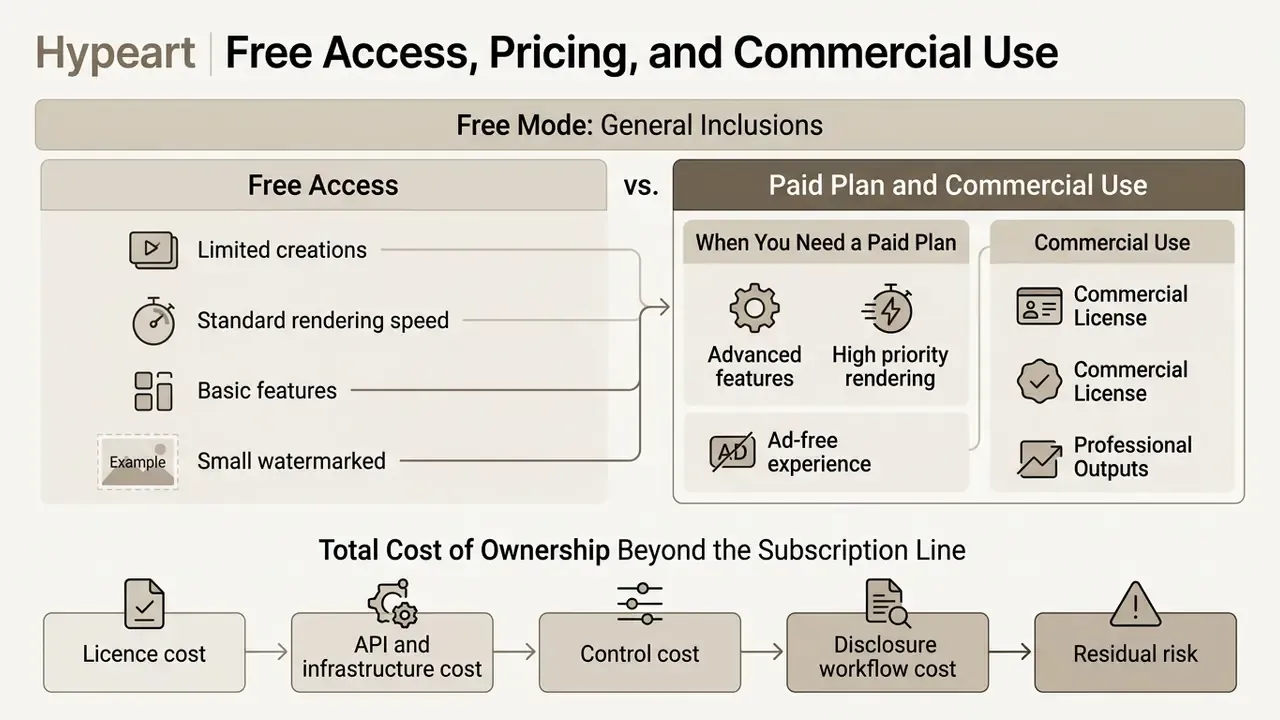
What Free Mode Usually Includes
Free plans typically give entry-level generation allowances (for example 8 to 30 daily credits, enough for roughly two clips), browser previews of 3 to 5 seconds, and standard-definition exports at 480p to 720p that often carry a brand watermark. Credit pricing frequently scales by resolution, so 720p costs more than 480p, and free clips may expire after a few days. Watermark rules vary: some free tiers export clean files for a limited number of generations, others watermark every download. Users testing basic animation workflows can start with a movie maker free utility, or compare limits across free AI video generators before upgrading.
When You Need a Paid Plan and Commercial Use
Paid subscriptions remove export watermarks, unlock 1080p and 4K rendering, and grant commercial usage rights for marketing, advertising, and monetised media. Read the licence carefully. Some vendors bundle commercial rights into every paid tier, while others prohibit "commercial use without permission" regardless of payment. Even with a permissive licence, advertising use still requires synthetic-media disclosure and compliance with consumer-protection rules. And third-party rights in a recognisable face, voice, or character are never granted by a subscription. Full terms on commercial exploitation and media licensing sit in the AI Media Commercial-Use Hub and the breakdown on AI Media Pricing.
Total Cost of Ownership Beyond the Subscription Line
For organisations, the subscription price is the smallest component. A realistic total cost model for sanctioned use includes:
- Licence cost seats or credit pool, scaled to expected render volume and resolution.
- API and infrastructure cost per-generation pricing, retry overhead from redo cycles, storage of source and output assets.
- Control cost vendor security review, DPA negotiation, consent register maintenance, DLP rules for image uploads, and periodic re-validation of identity-drift metrics.
- Disclosure workflow cost labelling, provenance records, and archiving of published synthetic media.
- Residual risk the expected cost of a biometric exposure, a takedown, or a disclosure failure that the controls above do not eliminate.
A free consumer tier looks cheapest and usually turns out to be the most expensive option in a regulated environment, because it ships with no DPA, no audit trail, and no commercial licence.
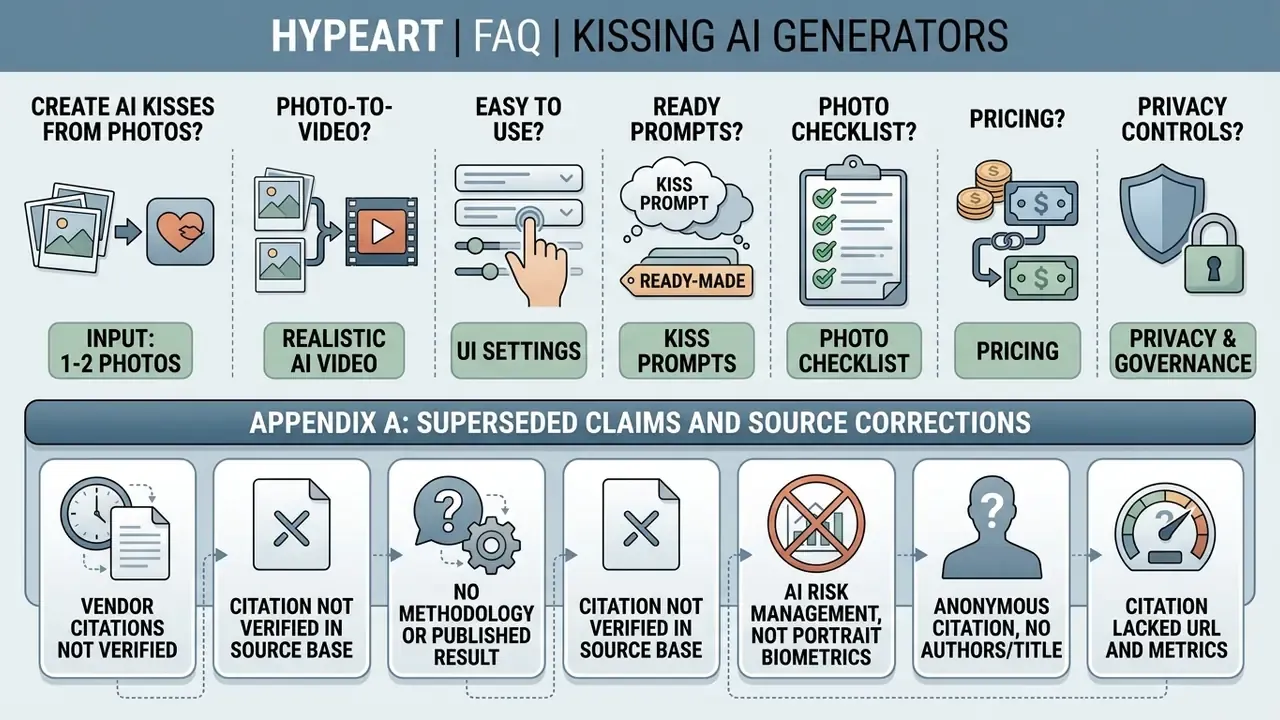
FAQ about Kissing AI Generators
Can I create a kiss video from a single photo?
Yes, single-photo generation is technically feasible with single-image motion diffusion pipelines. Advanced models animate one portrait by driving facial expression and synthesising a virtual partner, though dual-character detail is noticeably better when you upload two separate, clear portraits.
«Human4DiT generates 360-degree human video from a single image, achieving PSNR 22.13, SSIM 0.923 and FVD 152.1, significantly outperforming prior methods.» Human4DiT, arXiv (2024). https://arxiv.org/abs/2405.17405 Peer-reviewed work supports one-shot animation of an existing face. The automatic invention of a convincing second person from nothing remains largely a vendor claim, so treat one-photo kiss features as best-effort rather than validated.
Do I have to write text prompts manually?
No. Manual prompts are optional if you pick pre-configured style kiss templates in the interface. Writing custom text-to-video AI prompts, however, gives precise control over camera angle, lighting, background scenery, and emotional intensity. Evidence on prompt engineering suggests presets win on repeatability, while manual prompts match or exceed them once they carry the same style vocabulary. Developers automating prompt structures can review the AI Media API Guides.
Can I use an AI kissing generator for imaginary characters?
Yes. These tools accept non-photorealistic input: 2D anime art, 3D digital avatars, illustrated character designs. Many creators use dedicated AI image generators to produce those inputs first. Fictional characters enable fan fiction and artistic storytelling while side-stepping the privacy risk of real portraits. Policies still apply: a stylised avatar inspired by a real person is generally acceptable only when the person is not identifiable, and sexually explicit content featuring any identifiable person is prohibited across mainstream platforms.
How do I audit identity drift in a generated kiss video?
Fix the seed, fix the embedding model, and run a standard validation set of paired portraits. Measure cosine distance between the face embedding in frame one and each subsequent frame, then plot the curve. A monotonic rise signals identity leakage, most often concentrated in the mouth region during contact frames. Record model version, seed, prompt, and metric outputs so the run is reproducible as audit evidence.
How do we limit Shadow AI use of consumer kiss generators by employees?
Treat a face upload as a data-classification event. Publish a sanctioned-tool list, block unsanctioned generative endpoints at the network layer, add DLP rules that flag outbound image uploads containing faces, require an internal consent register for any real person's photograph, and log every sanctioned generation with user, timestamp, and asset reference. Pair the technical controls with a short policy statement explaining why biometric uploads are treated differently from text prompts. People follow rules they understand.
What contractual protections should we require from a vendor?
At minimum: a written no-training clause covering uploads and outputs; encryption in transit and at rest with named algorithms; a documented deletion method and retention schedule; hosting region and sub-processor disclosure; audit-log export capability; a commercial licence that explicitly covers advertising and client deliverables; and clarity on whether the vendor offers IP indemnification. Where indemnification is absent, that gap belongs in the residual-risk register.
Is generated romantic content allowed in advertising?
Vendor licences often permit broad commercial reuse on paid tiers, but platform rules and statutory disclosure duties apply independently. Label the media as AI-generated, retain provenance records, and confirm you hold rights to every face, voice, and character on screen. Where a real person is identifiable, documented consent is the baseline, not an optional extra.
How fast is generation, and what should we standardise for social posting?
Most consumer pipelines return a 3 to 5 second clip in well under a minute at 720p, and longer or higher-resolution renders queue behind credit checks. For repeatable social output, standardise three things: aspect ratio (9:16 for vertical feeds), duration (5 seconds), and a fixed seed for approved variants. That combination makes reruns comparable and keeps your review evidence tidy.
Appendix A: Superseded Claims and Source Corrections
For transparency and reproducibility, the statements below from an earlier version of this guide have been superseded. They are kept here with the reason for correction.
Reason: the vendor-dated citations could not be verified. Rewritten as a description of published feature sets without an unverifiable year reference.
Reason: the citation was not verified in our source base. Replaced in the main text with Cao et al., Spatially Conditioned Diffusion, arXiv (2024). https://arxiv.org/abs/2401.00257
Reason: no named organisation, methodology, or published result, therefore not reproducible. Replaced with peer-reviewed mechanism descriptions and the validation metrics table above.
Reason: citation not verified in our source base. The mechanism is retained in the main text and supported by Drobyshev et al., EMOPortraits, CVPR 2024. https://arxiv.org/abs/2404.19110
Reason: NIST AI 600-1 addresses AI risk management, not portrait biometrics. The OFIQ and ICAO criteria are retained; the citation was corrected and supplemented with Lei et al., arXiv (2024). https://arxiv.org/abs/2407.13764
Reason: anonymous citation without authors, title, or methodology. Replaced with Lei et al., Human Video Generation Survey, arXiv (2024).
Reason: citation lacked a URL and metrics. The architectural description is retained and supported by Human4DiT, arXiv (2024). https://arxiv.org/abs/2405.17405
- Superseded
- "Recent technological advancements in systems like Adobe Firefly Video, OpenAI Sora, Alibaba Wan 3.0, and Seedance 2.5 demonstrate how multimodal inputs drive controlled human interactions (Adobe; Wan 3.0)."
- Superseded
- "identity-preserving diffusion models, such as DiffFace and FuseAnyPart (NeurIPS, 2024)."
- Superseded
- "In a recent deployment evaluation, a media production team integrated a diffusion-based face fusion pipeline and achieved a 64% reduction in identity drift while retaining individual facial traits across generated static photos."
- Superseded
- "StableAnimator (CVPR 2025) and Follow-Your-Emoji-Faster utilize landmark-conditioned diffusion (CVPR, 2025)."
- Superseded
- "NIST OFIQ and ICAO specifications, which mandate balanced facial illumination, sharp focus, and zero eye/mouth occlusions (NIST AI 600-1, 2024)."
- Superseded
- "Research in multi-source face animation demonstrates that mismatched head pose angles (arXiv, 2022)."
- Superseded
- "Frameworks like Animate Anyone utilize ReferenceNet architectures (Animate Anyone, 2023)."
Ready to Create Your Kiss Video?
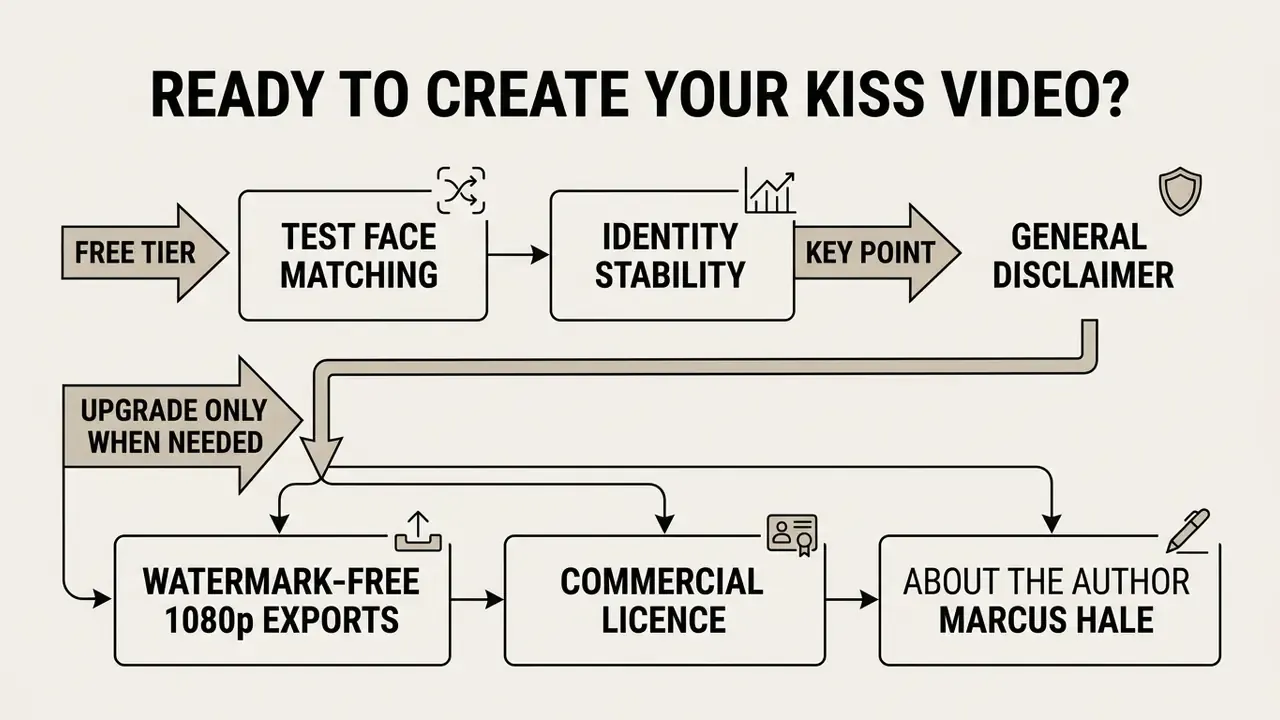
Start on a free tier to test face matching and identity stability, then upgrade only when you need watermark-free 1080p exports or a commercial licence. Free tiers suit prompt experiments. Paid tiers are the minimum for anything published, monetised, or client-facing. Compare current limits and credit pricing on AI Media Pricing before you choose.