Last updated: 2026. Reviewed for governance, privacy, and commercial-licensing accuracy.
Executive Summary for Decision-Makers
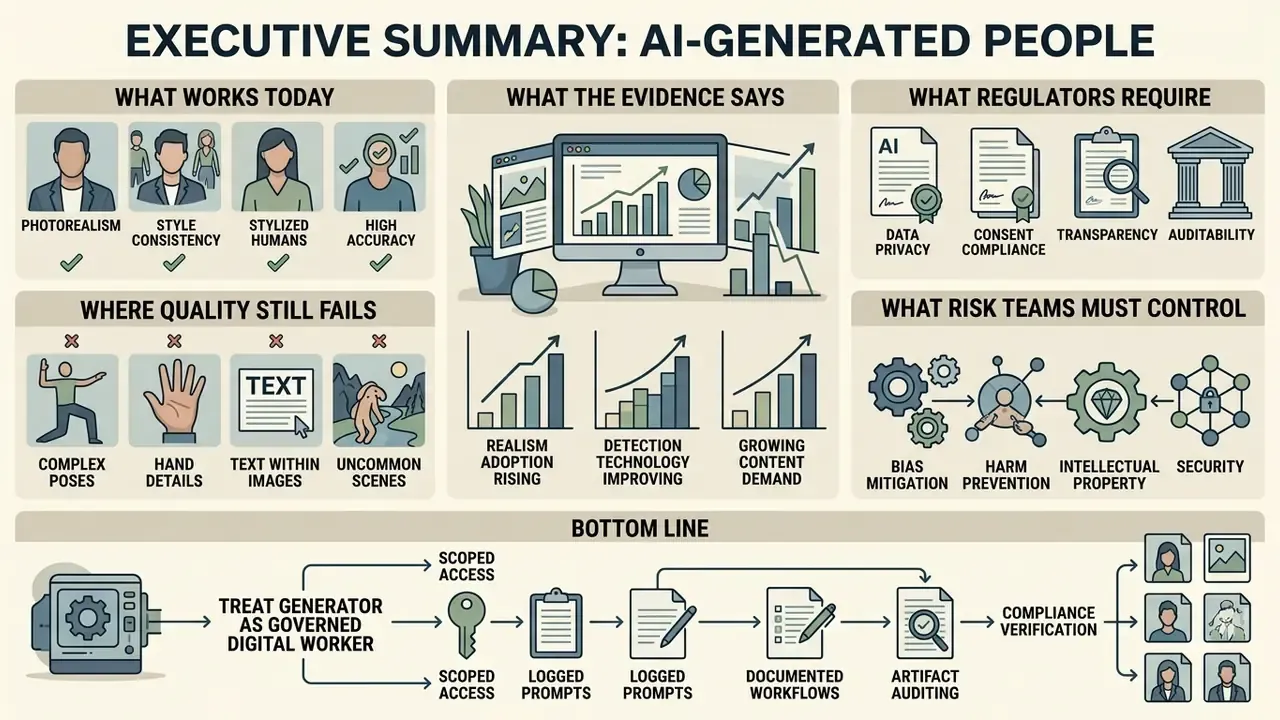
- What works today. Diffusion pipelines reliably produce studio portraits, lifestyle scenes, and multi-person compositions. Reference-conditioned methods (IP-Adapter, FaceID embeddings, ControlNet, character LoRA) preserve one identity across dozens of shots. Prompts alone do not. Not reliably, anyway.
- Where quality still fails. Anatomy (hands, pupils, teeth), physics (shadow direction, fabric stiffness), functional interactions (backpack straps, garment text), style over-perfection, and sociocultural mismatches remain the five recurring defect families.
- What the evidence says. Human observers identify AI-generated people at roughly 75% accuracy in large-scale perceptual testing. Controlled advertising research finds no statistically significant effectiveness gap between synthetic and real models, until synthetic origin is disclosed.
- What regulators require. The EU AI Act transparency obligations (applicable 2 August 2026) demand machine-readable marking of AI-generated or manipulated images resembling real persons. India's 2025 rules add a visible label occupying roughly 10% of the visual surface. US copyright registration remains limited to demonstrable human authorship.
- What risk teams must control. Biometric and PII ingress into SaaS generators, consent documentation for uploaded faces, immutable prompt-level audit trails, model lineage records, deepfake anti-fraud policy, and a hard prohibition on using synthetic faces in KYC or liveness verification.
- Bottom line. Treat the generator as a governed digital worker: scoped access, logged prompts, documented consent, versioned models, and pre-publication similarity screening against real individuals.
What Are AI Images of People and How Does a Human Generator Work?
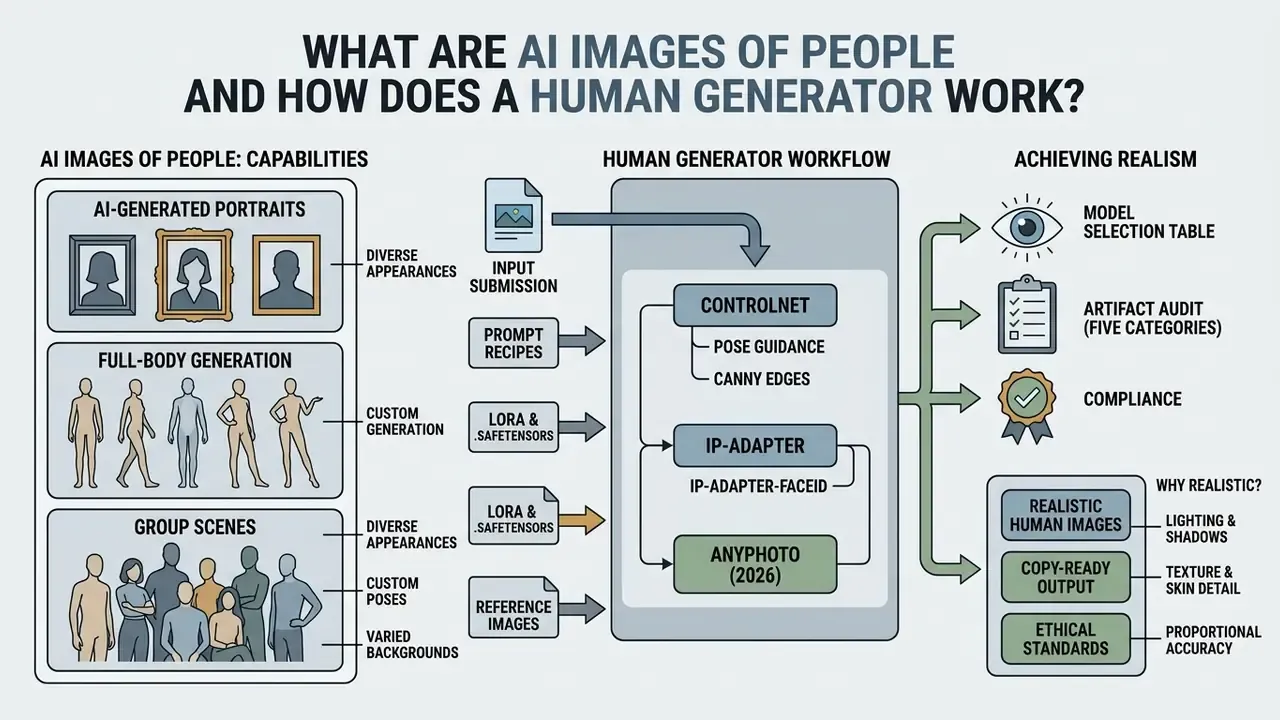
AI images of people are computer-generated visual representations of human faces, full bodies, or group scenes. They are synthesized by deep learning models rather than captured through a camera lens. A human generator converts structured inputs, such as a textual prompt, a skeleton pose map, or a reference photograph, into a detailed image by sampling pixels from a learned generative distribution.
Two architectural families dominate. Diffusion models iteratively denoise a latent tensor toward a distribution consistent with the conditioning signal. GAN-based systems such as StyleGAN2 invert a reference face into latent space and produce controlled variants that retain structural similarity to the input.
Recent work extends both directions. Streaming Diffusion Models for Real-Time Interactive Human Avatars (CVPR 2026) combines a human-video diffusion backbone with autoregressive distillation and adversarial refinement, synthesizing people from learned latent noise. HumanRef (CVPR 2024) demonstrates reference-guided single-image-to-3D human generation, where the reference supplies appearance and identity cues.
A note on vocabulary, because procurement conversations stall on it: "AI generated" describes the origin of the pixels, not the rights position of the asset. Those are separate questions, handled in section [17].
AI-Generated People, Photos, and Portraits: What Images Can You Create?
A modern synthetic generator can synthesize a wide range of human media: single-subject professional portraits, multi-person lifestyle photography, and wide editorial group scenes. Using advanced latent diffusion pipelines, teams produce AI-generated human photos and AI-generated human pictures tailored to specific digital environments. Outputs range from isolated facial headshots for corporate directories to complex situational images showing multi-person interaction. Teams assessing platform capability across these categories can review a structured comparison of AI art and image generators before committing to a stack, or compare tool families at hub level first.
Three format clusters behave differently in production:
| Format cluster | Visual characteristics | Where defects concentrate |
|---|---|---|
| Studio portrait | Close framing, controlled key and rim lighting, shallow depth of field, face centrality | Eyes, teeth, skin micro-texture, hairline, hands entering frame |
| Group / multi-person | Higher scene complexity, cross-subject gaze, overlapping bodies | Merged or duplicated limbs, inconsistent proportions, mismatched gaze direction |
| Reportage / documentary style | Event context, candid framing, environmental cues | Staged composition, over-cinematic polish, illegible signage and background text |
Generating People from Scratch vs. Working with Real Faces
«Fine-tuning Stable Diffusion with human-centric priors reduced FID from 33.31 to 28.71 and raised CLIP-score from 31.85 to 32.72.»
Why AI People Images Can Look Realistic
The visual fidelity of an AI image depends on precise optical, geometric, and lighting alignment. Research on portrait relighting (SynthLight, CVPR 2025, Yale) shows that explicit modeling of specular highlights, cast shadows, and skin albedo sharply improves perceived realism. 3DFaceShop (IEEE TVCG, 2024) reports that explicit control over pose, identity, expression, and illumination yields realistic portraits. MOST-GAN (AAAI 2022) decomposes shape, albedo, pose, and lighting, confirming that geometry and light are the load-bearing variables of believability.
When an AI-generated human images model computes light reflection and facial micro-texture correctly, observers read the face as realistic and real:
«Across a large-scale perceptual study with 50,444 participants, average accuracy at identifying AI-generated images of people was approximately 75%.»
«On the GLIPS photorealism scale (350 participants, Prolific panel), DALL·E 2 portraits scored 3.63 of 5.00 versus 4.06 for real photographs.» Source: GLIPS metric study, 2023–2025.
Achieving a professional and creative result means eliminating subtle physical contradictions between the subject's faces, posture, and ambient lighting. The reason those contradictions appear is structural, not accidental:
«These models learn to reverse noise in images and generate pixel patterns that match text descriptions. But these models are never trained to learn concepts like spelling or the laws of physics or human anatomy.»
That single sentence explains most of the artifact taxonomy in section [16]. The model never learned anatomy. It learned what anatomy tends to look like.
Process Overview:
- Input SubmissionEnter a descriptive text prompt or upload a reference face image.
- Latent InferenceThe diffusion model processes noise vectors aligned with human-centric structural priors.
- Variant ReviewEvaluate candidate images for anatomical and lighting coherence.
- Refinement & ExportPerform localized inpainting and download high-resolution output files.
Governance First: PII, Biometrics, and Model Risk Controls
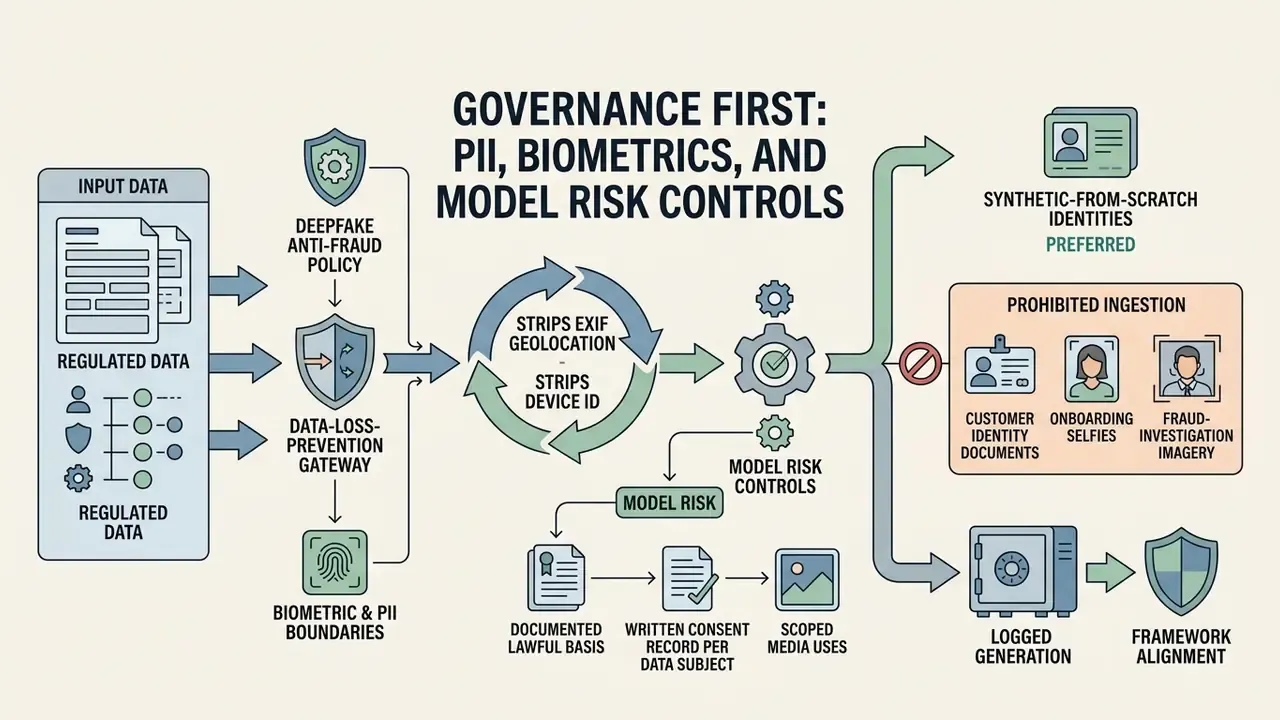
Before creative workflows scale, a regulated organization must decide what data may enter the generator, and how each generation is logged. Marketing-oriented guides usually skip this part. Risk teams cannot.
Biometric and PII boundaries. A face photograph is biometric-adjacent personal data in most jurisdictions. Uploading employee or customer portraits to a third-party generator is a cross-border processing event under GDPR and CCPA-style regimes. Practical controls:
- Route all reference uploads through a data-loss-prevention gateway that strips EXIF geolocation and device identifiers.
- Maintain a documented lawful basis and a written consent record per data subject, scoped to named media uses and retention periods.
- Prefer synthetic-from-scratch identities for any asset that does not strictly require a real likeness.
- Prohibit ingestion of customer identity documents, onboarding selfies, or fraud-investigation imagery into any generative tool.
Framework alignment. NIST AI 600-1: AI RMF Generative AI Profile (2025) links synthetic-content risk to visual plausibility and flags highly realistic deepfakes of real individuals as a distinct risk class. It also requires documenting training-data policy and verifying consent for the likeness or image of individuals. NIST AI 100-4 (2024–2025) notes that outputs can be labeled at generation time with provenance data, metadata, or watermarks.
For banking supervision, treat the generator as a vendor-supplied tool inside your model inventory. Define intended use. Document limitations. Assign an owner. Require periodic effectiveness review consistent with supervisory model-risk expectations (SR 11-7 style validation, adapted for non-quantitative generative tools).
«Model outputs can be labeled at the point of generation using provenance data, metadata, or watermarks.»
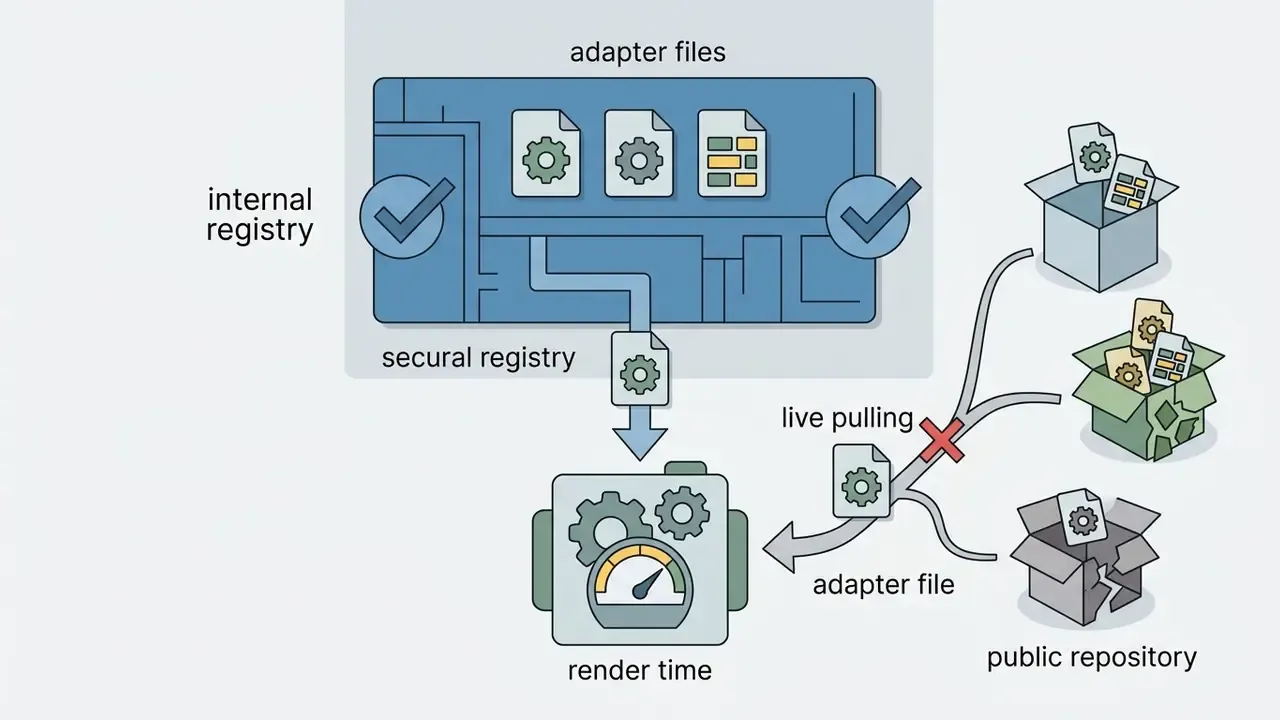
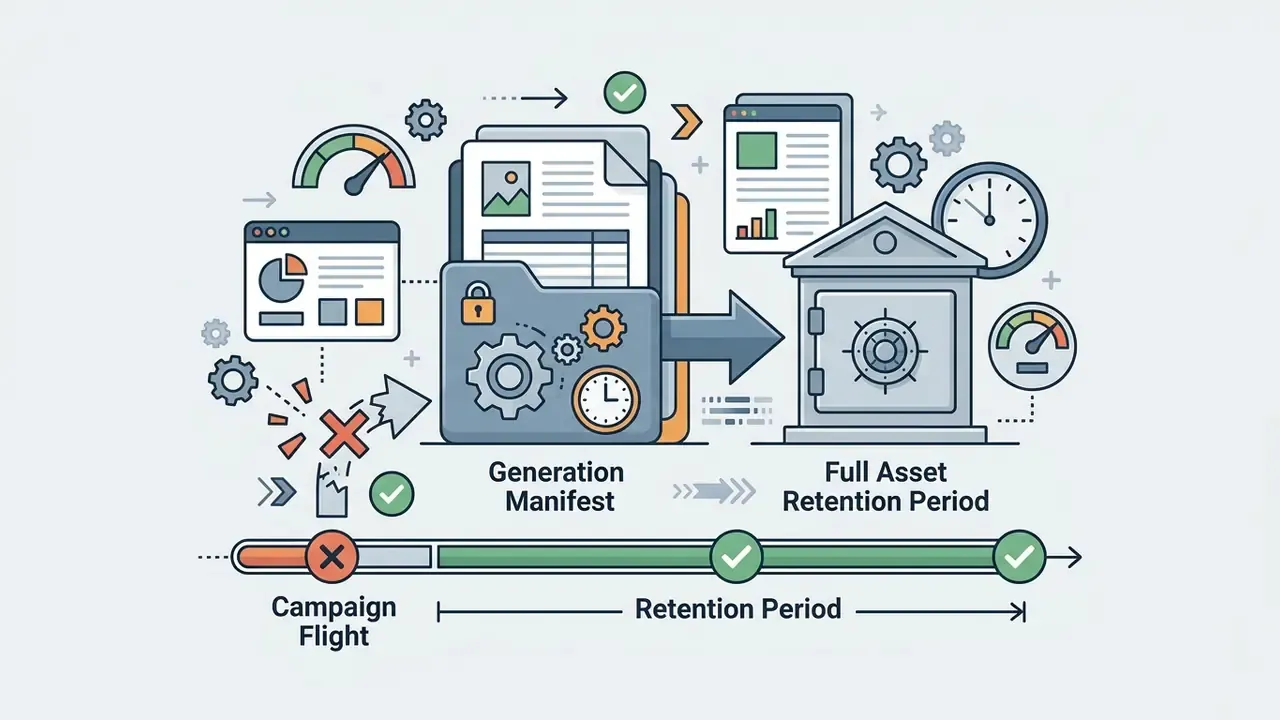
Audit trail requirements. Every generation event should record: requester identity, timestamp, prompt and negative prompt text, base model and checkpoint hash, LoRA or adapter files and weights, seed, reference image hash, approver, publication destination, and the disclosure label applied. Without prompt-level logs, post-incident investigation of a likeness complaint is effectively impossible.
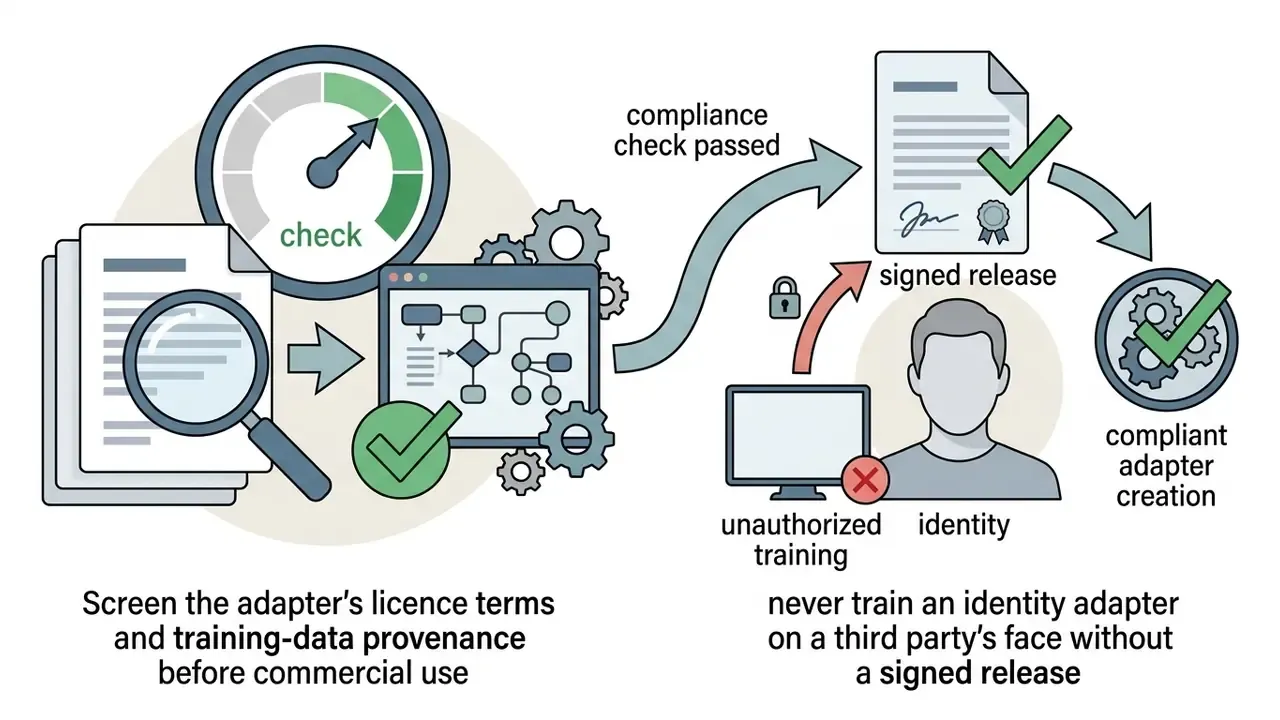
Model lineage checklist.
Content-moderation drift. Vendor safety filters change without notice, and teams that assumed a stable policy surface get surprised. The recurring community question "did character ai remove the filter" is a useful reminder: moderation settings are vendor-controlled variables, so your internal policy must sit above them, not depend on them.
Enterprise vendor audit checklist.

| Control area | Minimum requirement | Evidence to request |
|---|---|---|
| Data retention | Zero-data-retention or contractual deletion SLA | Signed DPA with retention clause |
| Training on customer data | Explicit opt-out or contractual prohibition | Vendor policy text, not a marketing page |
| Tenant isolation | Logical separation of prompts, uploads, and outputs | Architecture attestation |
| Security certification | SOC 2 Type II or ISO/IEC 27001 | Current report with bridge letter |
| Provenance | C2PA-style metadata or machine-readable marking | Sample export with metadata intact |
| Sub-processors | Full list, including model providers | Sub-processor register |
| Incident response | Notification window and takedown mechanism | Contractual SLA |
| Exportability | Non-proprietary export formats and asset portability | Sample export package |
Deepfake anti-fraud policy. Synthetic-face capability is dual-use. Internal policy should state plainly that AI-generated or AI-modified human imagery must never satisfy identity verification, liveness checks, or KYC and AML onboarding requirements. Inbound imagery in fraud workflows must be screened with detection tooling and reverse-image research. See this overview of AI reverse-image-search tools.
Which AI Images of People Can Be Created for Different Tasks?
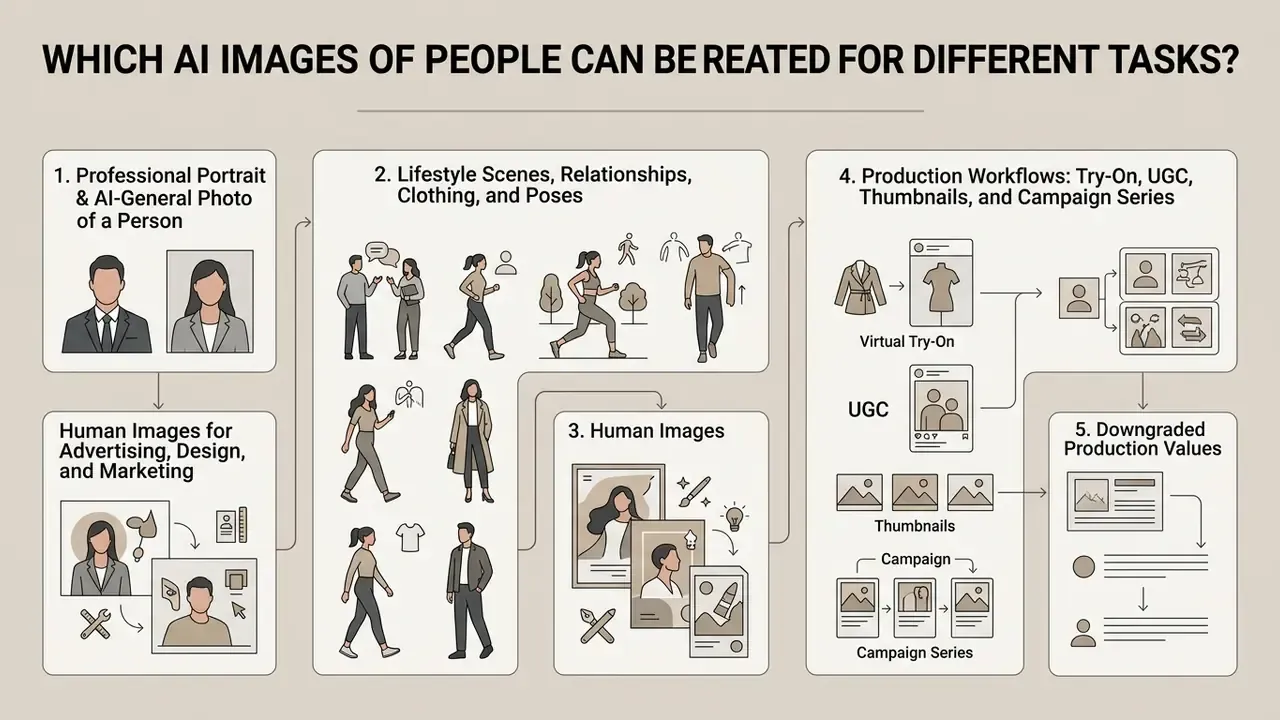
Commercial organizations deploy synthetic human media across marketing campaigns, interface mockups, product packaging, and corporate communications. Choosing an image style means aligning generation settings with a specific operational or brand objective.
Professional Portraits and AI-Generated Photo of a Person
Corporate headshots need tight framing, balanced studio lighting, neutral backgrounds, and direct eye contact. Generating a high-quality AI-generated photo of a person for business profiles removes studio cost while keeping visual branding consistent across a directory. For a deeper look at automated portrait tooling, teams can review the ai headshot generator guide.
Documented headshot practice converges on a repeatable specification: recent source photos, head-and-shoulders framing, camera-facing posture, even lighting, neutral expression, plain background, and clothing without busy patterns or unauthorized logos. Corporate image guidance recommends the face occupy roughly 60–70% of the frame. Avatar-first placements push toward maximum face fill, because the final render may display at 48 to 96 px. Export two files: a square crop for profile circles, and a high-resolution master for bio pages and press kits.
Lifestyle Scenes, Relationships, Clothing, and Poses
«Stable-Pose reaches AP 57.1 on the LAION-Human dataset, roughly 13% above ControlNet, when generating poses with difficult viewpoints.»
For group compositions, GroupDiff (ECCV 2024) generates paired training data from group photographs, then applies an appearance-preservation diffusion model with inter-person and intra-person guidance. That mechanism is what stops five faces in one frame from collapsing into a single averaged identity.
Practical prompt scaffolding for lifestyle work: contextual environment (kitchen counter, street crossing, café, gym, park), an interaction verb, garment fabric, natural light direction, and one asymmetric detail per subject. Maximum diversity comes from explicit parameters, never from defaults.
Human Images for Advertising, Design, and Marketing
Commercial teams use AI people images and AI people pictures to build flexible promotional assets. Consumer response research from Oxford Saïd Business School (2024) found that ad effectiveness metrics, including brand attitude and perceived intrusiveness, show no statistically significant difference between campaigns using synthetic models and those featuring real human models, provided visual quality stays high.
«Attitude toward the ad, brand attitude, and perceived intrusiveness did not differ statistically between synthetic and real models.»
«However, explicit disclosure of the models' synthetic nature slightly reduced participants' evaluation of the advertisement compared with the non-disclosure condition.» Source: Oxford Saïd Business School (2024).
«Among 406 surveyed consumers, trust and perceived authenticity of virtual influencers predicted engagement more strongly than their physical attractiveness.» Source: International Journal of Consumer Studies, PLS-SEM virtual-influencer study (2025).
The operational implication is fairly precise. Synthetic models are commercially viable. Disclosure is legally required in a growing list of jurisdictions. And the small disclosure penalty is best offset by authenticity signals, not by higher gloss. Creative teams often compare tool performance using a comprehensive best AI image generator comparison, plus free-tier constraints in this comparison of free AI art generators.
Two adjacent creative niches deserve a mention, because they leak into brand work. Stylized franchise looks, of the sort promised by a disney ai generator, carry trademark and character-IP exposure that no model licence resolves. Tabletop and game-adjacent character art, the domain of a dnd ai art generator, is lower risk commercially but still needs consistent identity control if a character becomes a recurring brand asset.
Production Workflows: Try-On, UGC, Thumbnails, and Campaign Series
Generic use-case labels do not survive contact with a delivery deadline. The four pipelines below map inputs, controls, and acceptance criteria.
1. Virtual try-on (apparel and accessories).
2. UGC-style creator content.
Community-facing creator assets often ship as a set. If the campaign includes a server or community launch, standardized visual furniture such as a discord intro template keeps the synthetic character consistent across channels.
3. YouTube and social thumbnails.
4. Cohesive campaign series.
How to Create an AI Generated Image of a Person: Step-by-Step Process
Producing an AI-generated image of a person takes a structured workflow, from prompt engineering through post-generation retouching.
- Formulate Prompt or ReferenceDefine subject characteristics, or upload a clear source portrait.
- Configure Model ParametersSelect the target model checkpoint, aspect ratio, and inference steps.
- Generate Initial CandidatesRun the batch pipeline across 3–9 seeds, since outputs vary materially between runs.
- Refine and ExportApply localized inpainting to correct minor artifacts before final download.
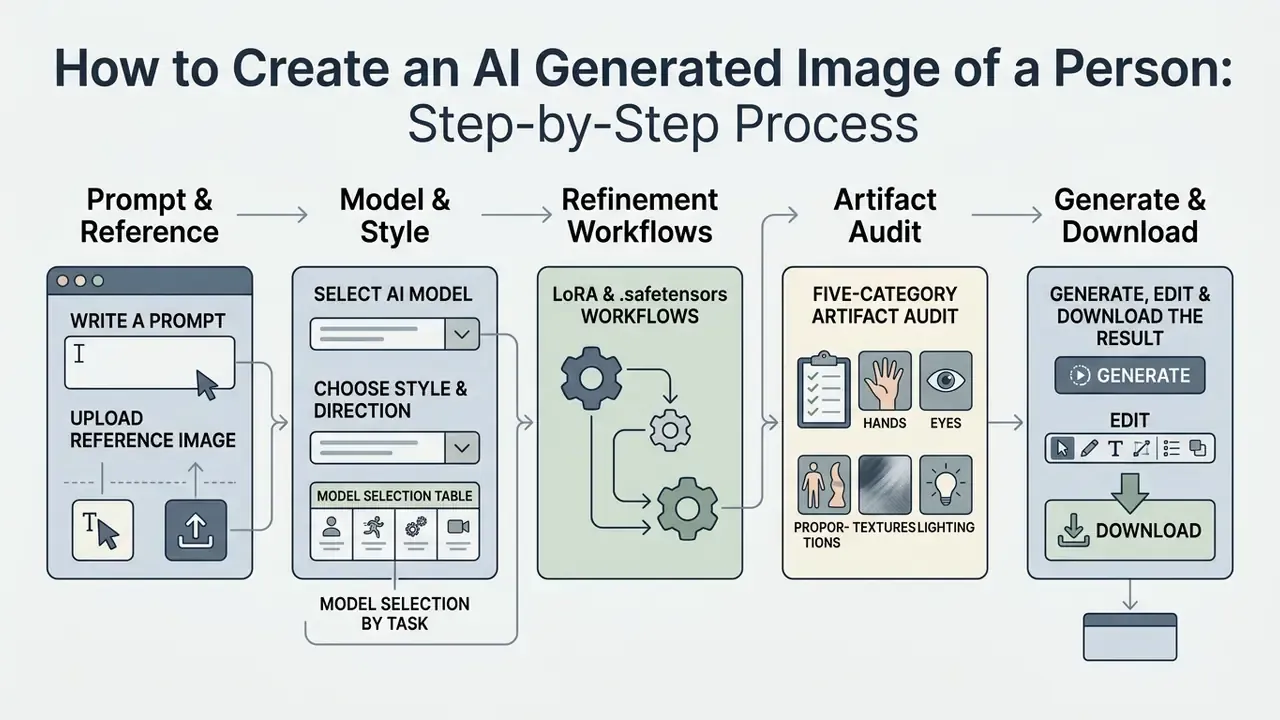
Write a Prompt or Upload a Reference Image
Generation starts by defining parameters in the text prompt, or by supplying a source photograph. A workable prompt order is: subject identity, facial features, attire, pose, lighting, lens choice, background. Evidence from text-to-image prompt studies indicates that subject and style keywords carry far more weight than connecting words, so compress grammar and expand descriptors.
When using a reference photograph, make sure the face is clearly lit and isolated from busy background noise. Practical reference hygiene: isolate the subject, remove the background, place plain black or white behind the subject, avoid transparency, and start with a 1:1 crop if results warp. Some evaluation protocols cap reference inputs at two images per prompt, while partner-model workflows may accept more.
Select the AI Model, Style, and Direction
The base model shapes aesthetic and visual quality more than any single prompt token. Midjourney's documentation states that Version 7 was released 3 April 2025 and became the default on 17 June 2025, with quality improvements "especially in bodies, hands, and objects". Note that model personalization is enabled by default in V7, which materially affects reproducibility in enterprise workflows. Capability differences are covered in this Midjourney versus competing generators evaluation.
Model selection by task:
| Model / stack | Strength | Best-fit task | Governance note |
|---|---|---|---|
| FLUX.1 (dev / schnell) | Anatomy, hands, garment text fidelity | Product-adjacent people, apparel, signage-heavy scenes | Open weights allow on-prem deployment and hash pinning |
| Midjourney v7 | Aesthetic lighting, dramatic editorial portraits | Brand campaigns, character concepts | Personalization on by default, so disable it for reproducible runs |
| Krea 2 Turbo | Real-time render and iterative direction | Live art direction, rapid concept exploration | Verify retention terms before uploading references |
| Stable Diffusion 3 / XL | General purpose, wide adapter ecosystem | Internal mockups, LoRA-driven character work | Largest community adapter surface; validate provenance |
| Adobe Firefly + partner models | Licensed and public-domain training claim, Creative Cloud handoff | Regulated brand work needing a rights posture | Reference images still require your own rights clearance |
| Google / Luma / video partners | Motion extension from stills | Image-to-video campaign assets | See implementation notes in the Google Veo implementation guide |
To explore creative choices at implementation level, engineering teams can inspect integration standards, rate limits, and cost structures through the AI Media API documentation set.
Generate, Edit, and Download the Result
After the first batch, review candidates for small structural defects. Use localized inpainting, masking specific regions, to edit, correct, and retouch details such as eye highlights or stray hair strands, then run the final upscale and download. Vendor documentation converges on a four-step loop: generate variants, mask and inpaint, upscale to 1K, 2K, or 4K, then refine fine detail in the upscaled output. Inpainting implementations typically crop the masked region, edit it at higher effective resolution, then blend it back. That is why patch-level repair outperforms full-image re-generation, almost every time.
Keep the generation history. It is the cheapest audit artifact you will ever produce.
How to Achieve Consistent and High-Quality AI Generated Photos of People
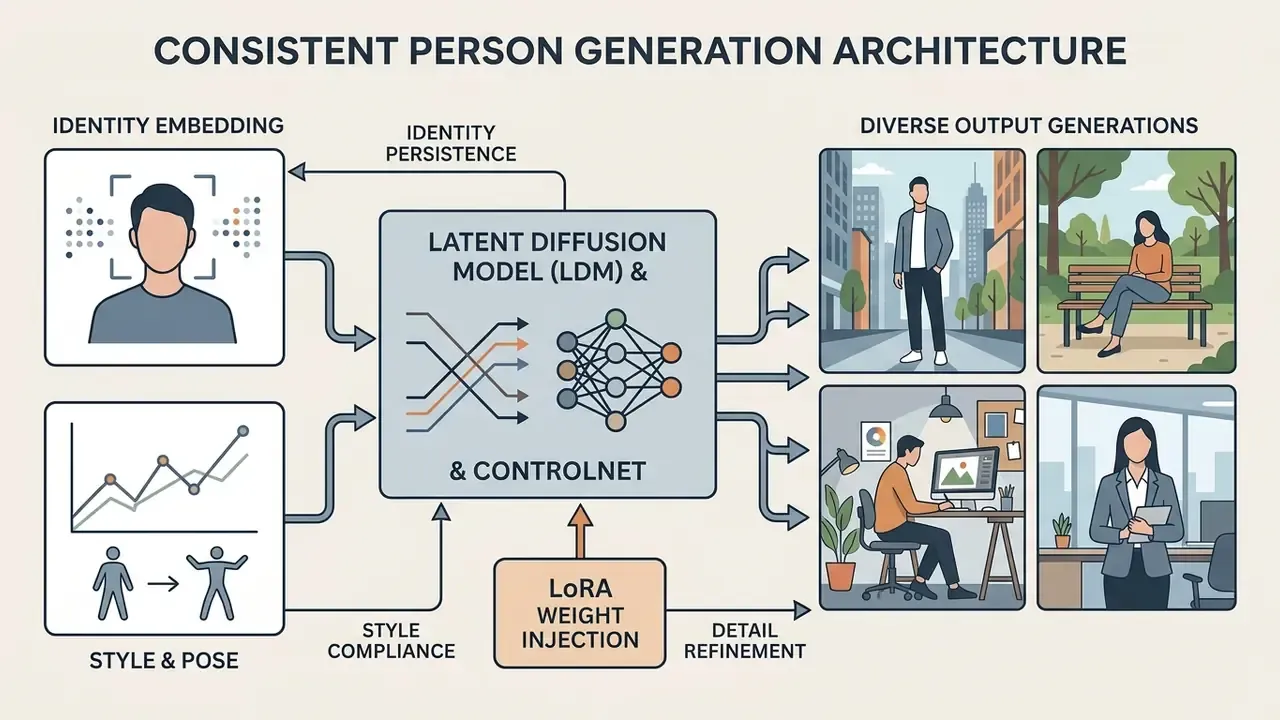
Holding visual identity across many generated photos requires conditioning mechanisms beyond a static seed number.
Key Details to Include in the Human Prompt
To produce high-quality AI-generated photos of people, prompts must specify precise physical parameters. Give age ranges rather than single numbers. Describe clothing fabric textures, such as matte wool or woven linen. Define optical settings like 85mm focal length, f/1.8 aperture, shallow depth of field.
The ordering that survives across prompt guides is: identity and age range, facial structure and skin texture, micro-expression, garment type and fit and fabric and finish, camera and depth of field, background and light direction. Then add one or two asymmetric features (a scar, an uneven eyebrow, a slightly crooked tooth) to break the model's default beauty prior.
Copy-ready prompt recipes
Recipe 1, commercial headshot:
Editorial studio portrait of a woman in her mid-thirties, corporate executive, natural skin texture with visible pores and fine lines, warm half-smile, dark navy matte wool blazer, 85mm lens, f/2.8, soft key light with subtle rim light, seamless neutral grey studio background, high resolution, raw photo --no plastic skin, over-smoothing, asymmetric eyes, extra fingers
Recipe 2, dynamic lifestyle:
Candid medium shot of a man in his late twenties mid-laugh, wind-moved hair, linen shirt with visible weave, crossing a sunlit city street, natural sunlight with rim-light on hair, 35mm lens, f/1.8, shallow depth of field, high shutter speed freezing motion, authentic facial micro-expressions --ar 16:9 --no cinematic haze, waxy skin
Recipe 3, advertising and product-adjacent:
Advertising still of a person in their forties holding a matte ceramic mug, teal and orange colour palette, cloud of fine dust suspended in the air catching backlight, 50mm lens, f/2.0, cross-lit studio setup with practical background lights, ultra-detailed hands with fingernails, legible plain packaging, 8K --no illegible text, merged fingers, floating shadows
Recipe 4, consistent character continuation:
<trigger_token>, same person, three-quarter view, seated at a wooden desk, soft window light from camera left, olive knit sweater, contemplative gaze off-camera, 85mm lens, f/2.2 --seed 1288401 --no identity drift, changed face shape
Creating Character Variations Without Losing Style
«ID-Booth applies a triplet identity objective in a latent diffusion pipeline, delivering intra-identity consistency and inter-identity separability across generated variations.»
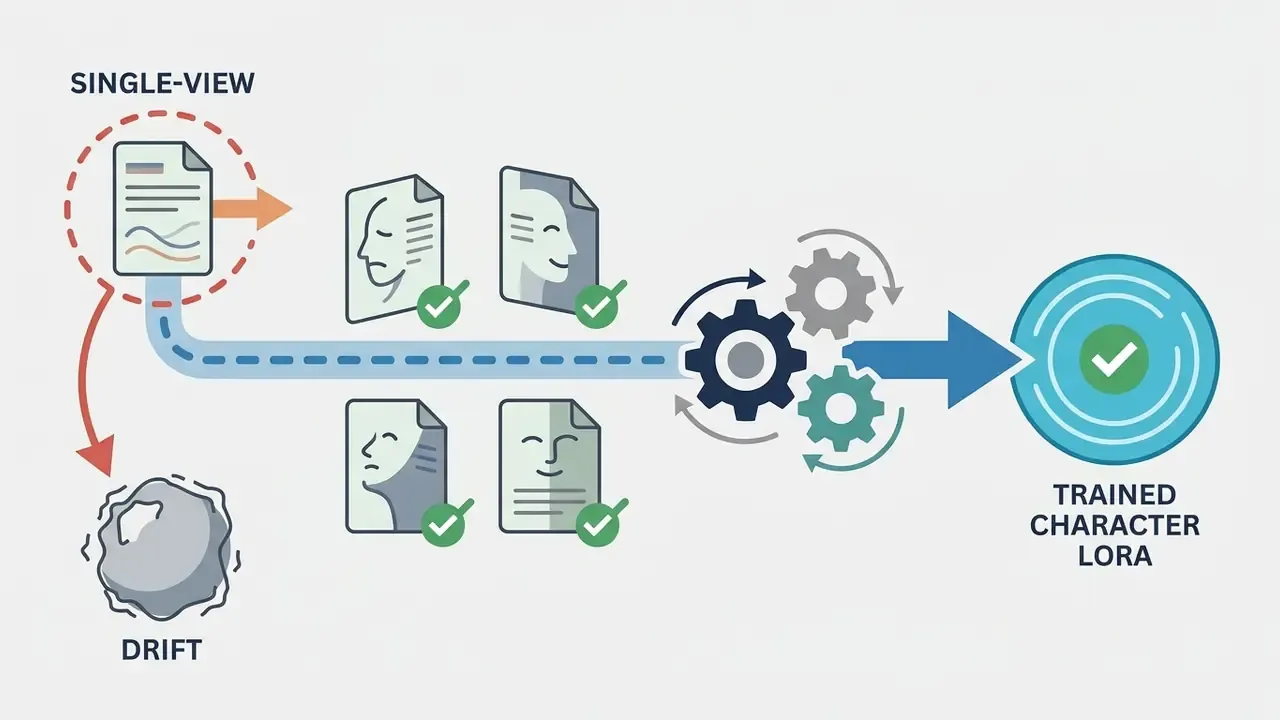
Combining facial feature adapters with pose control modules lets you render the same character across varied angles, environments, and outfits without identity drift. A seed alone reproduces a near-identical rerun only when prompt and sampler settings stay unchanged. It does not carry identity into new compositions. That misconception costs teams entire shoot days.
Working with custom LoRA weights and .safetensors files
For precise likeness transfer in local or cloud environments (ComfyUI, Automatic1111, Krea, FLUX-based studios):
Evaluation protocol. Judge consistency with a combined metric set: FID for perceptual fidelity, CLIP-I for identity preservation, CLIP-T for text alignment. Eyeballing a contact sheet is not a control.
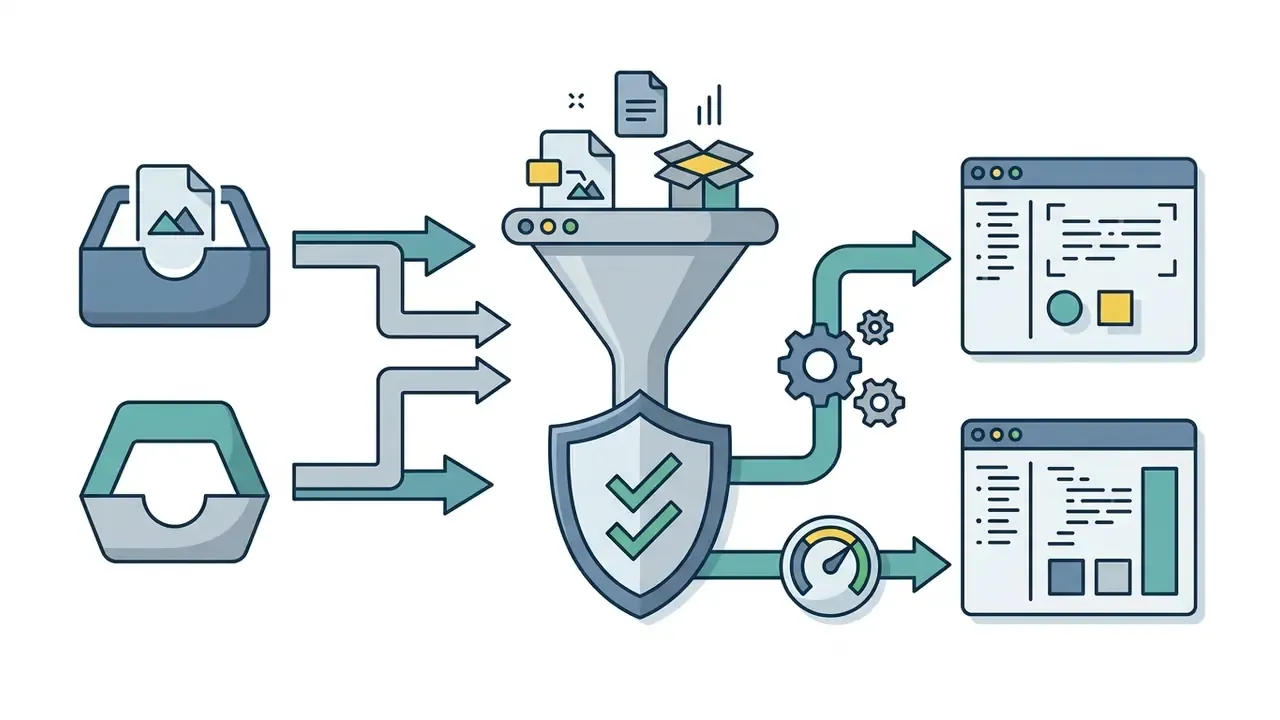
.safetensors format from Civitai or Hugging Face, or import it by direct link where the platform supports external LoRA. Krea 2 Turbo and FLUX.1-dev workflows accept compatible custom LoRA imports.
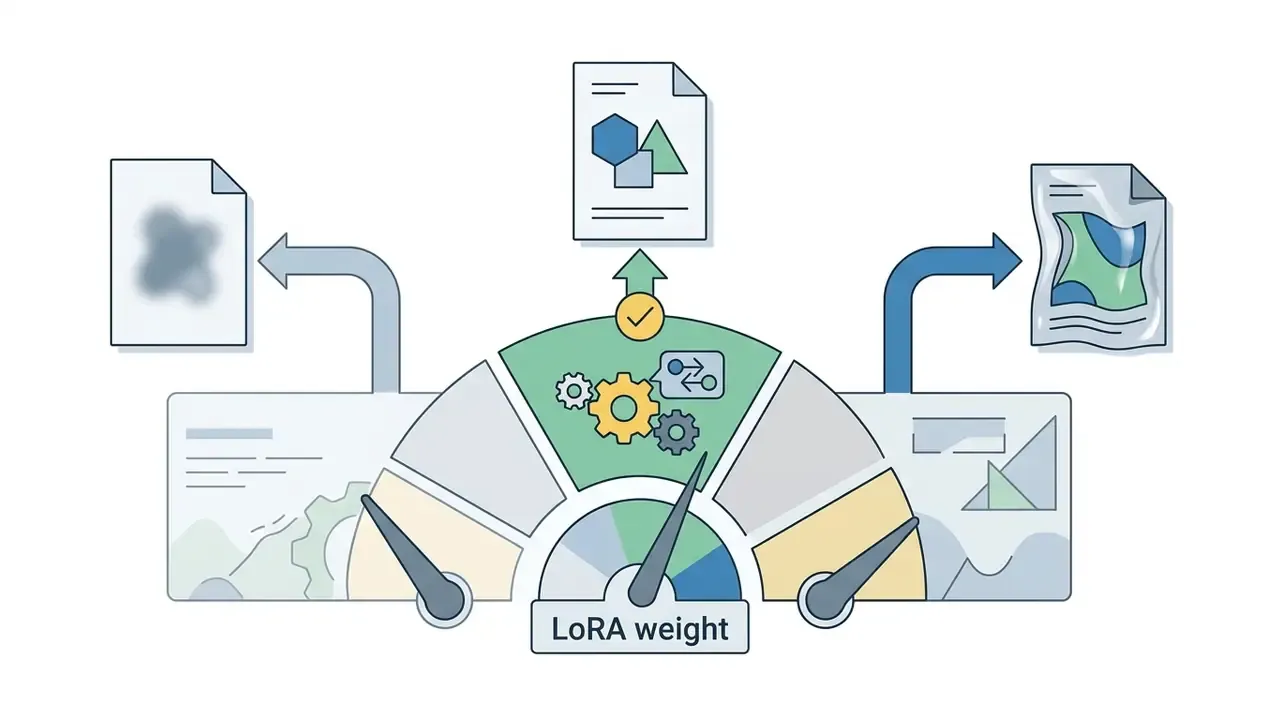
0.6 and 0.85. Values above 0.9 overfit and burn skin texture into a plastic sheen. Values below 0.5 lose identity.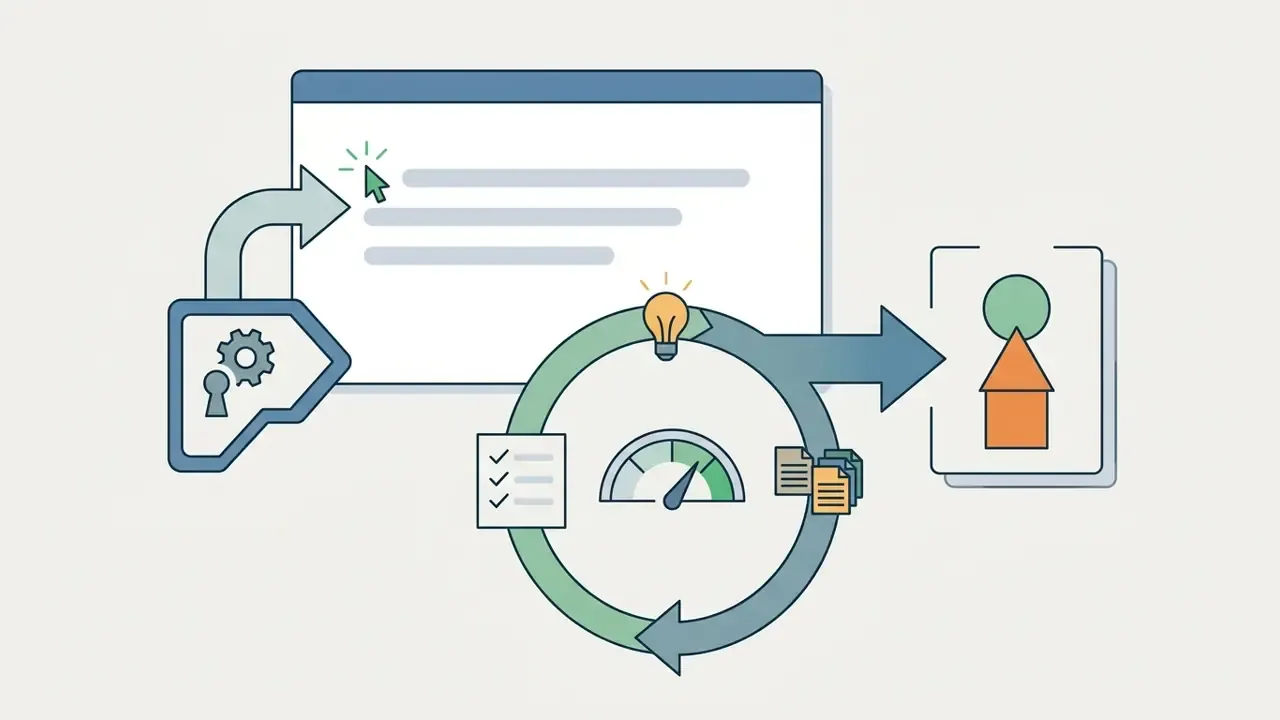
Correcting Artifacts on Synthetic Human Photos
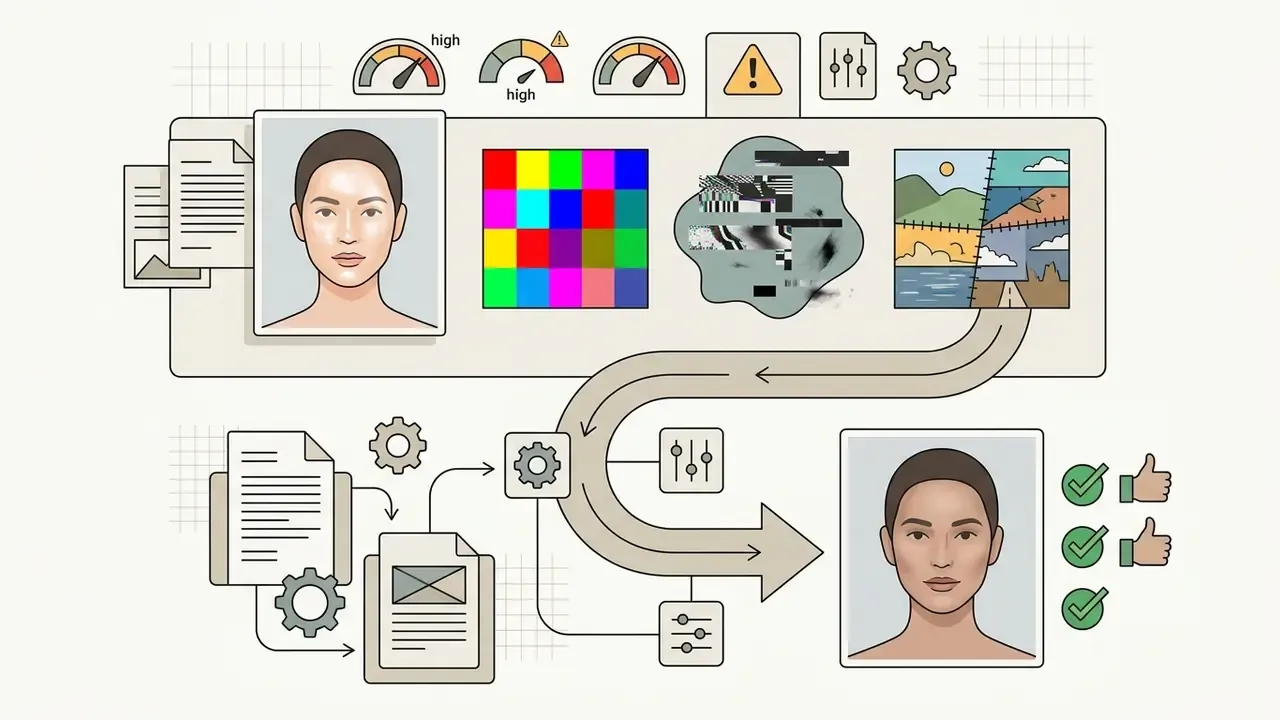
When outputs show anatomical implausibilities, such as distorted fingers, asymmetric pupils, or unnatural skin smoothing, apply a localized crop-and-inpaint pipeline. Isolate the defective region, enlarge the mask slightly, re-run diffusion at higher patch resolution, then composite the repaired element back into the master image. Peer-reviewed artifact-repair work runs multiple inpainting attempts per defect and selects the best result by confidence score. Post-inpaint cleanup, meaning grain matching, highlight balance, and colour continuity, happens in a raster editor. See this guide to online photo editors for tool-level capability and pricing.
Five-category artifact audit, usable as a pre-publication checklist
Group photographs and complex scenes are easier to adjudicate than tight face crops, because they contain more objects and interactions where artifacts surface. Face-only portraits are the hardest class, precisely because they lack contextual clues.
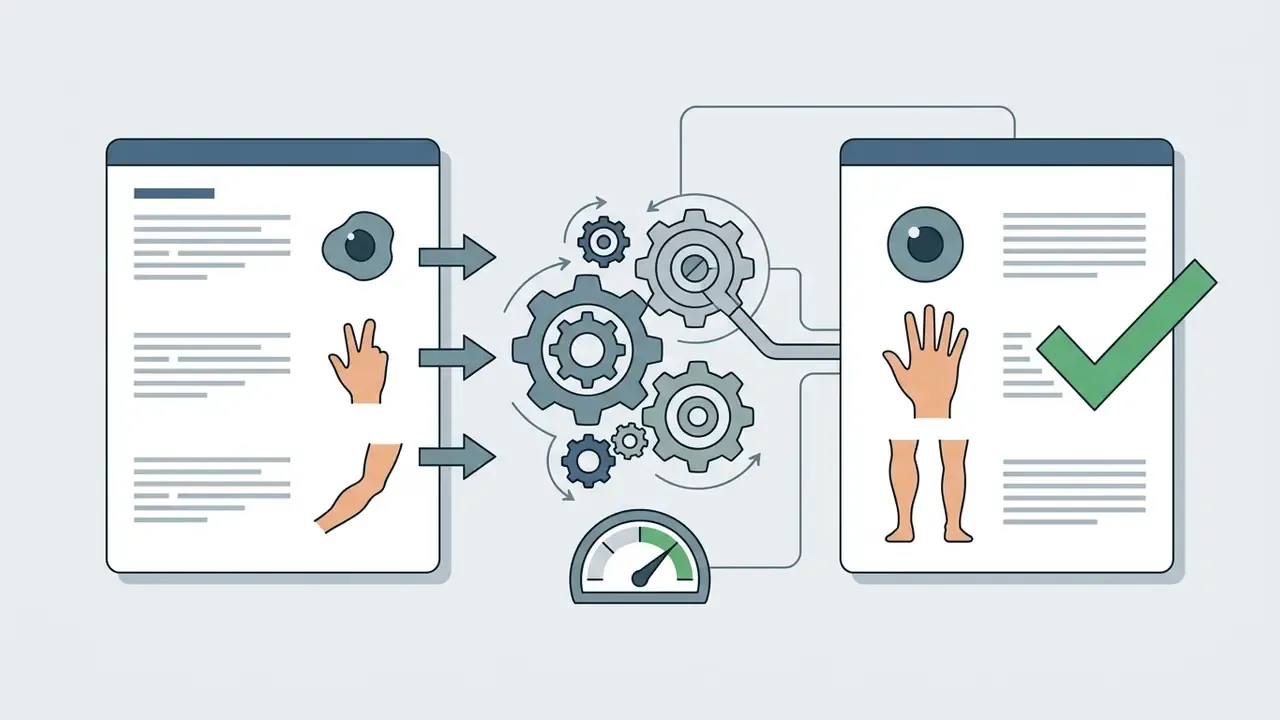
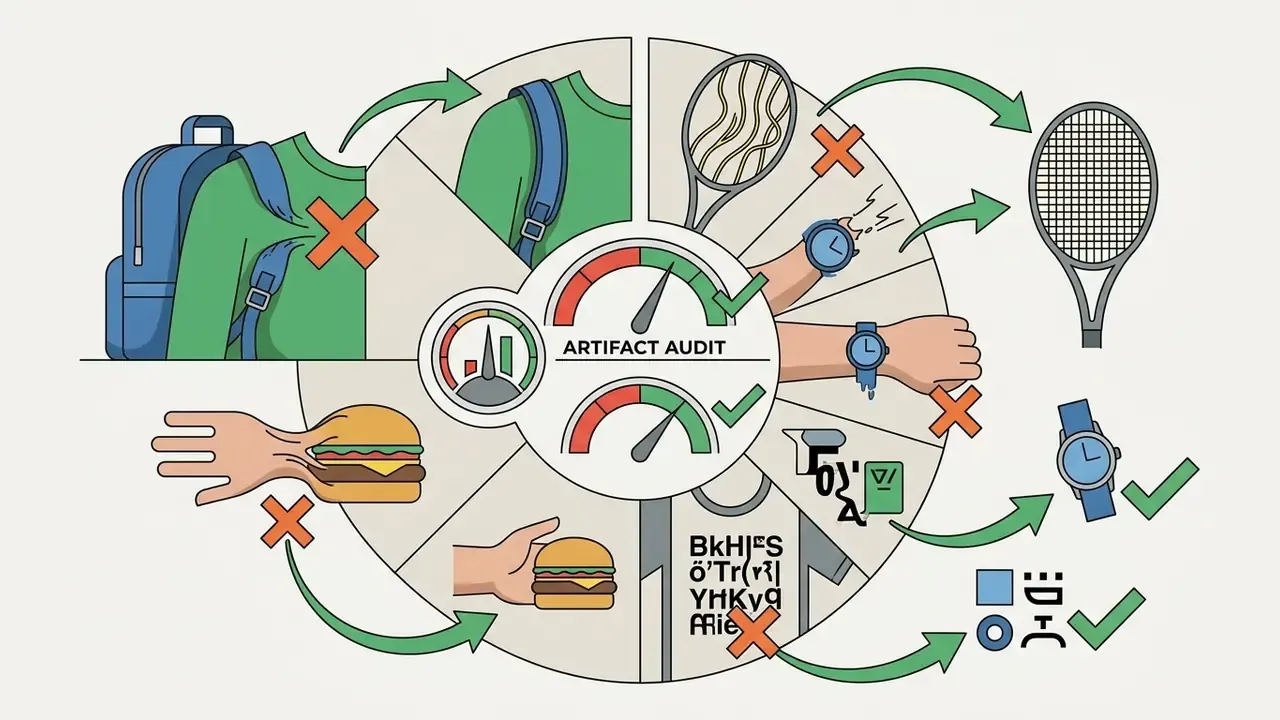
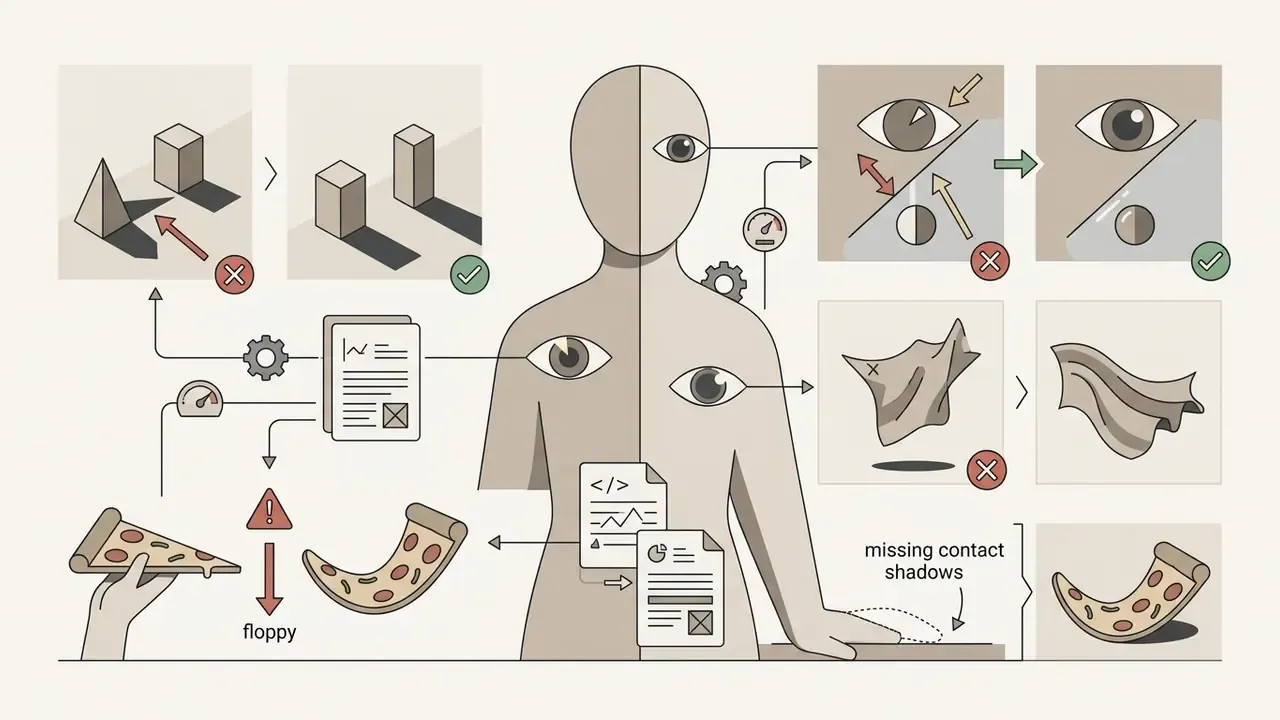
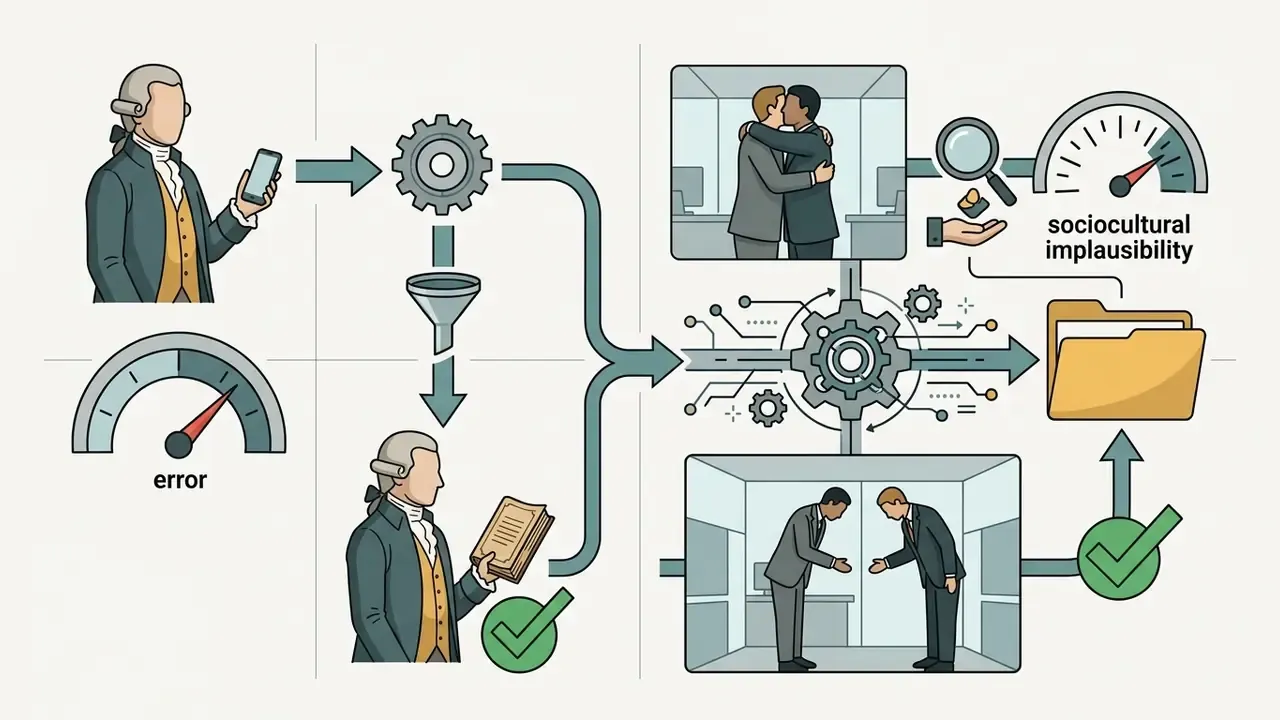
«Anatomical artifacts can be formalized as proportion, extra, orientation, configuration, and missing errors.»
«INTERPOL's 2024 report on synthetic media lists abnormal textures and subtle flaws as detectable signs in generated visuals.» Source: INTERPOL, synthetic media report (2024).
Can You Use AI-Generated People Images in Commercial Projects?
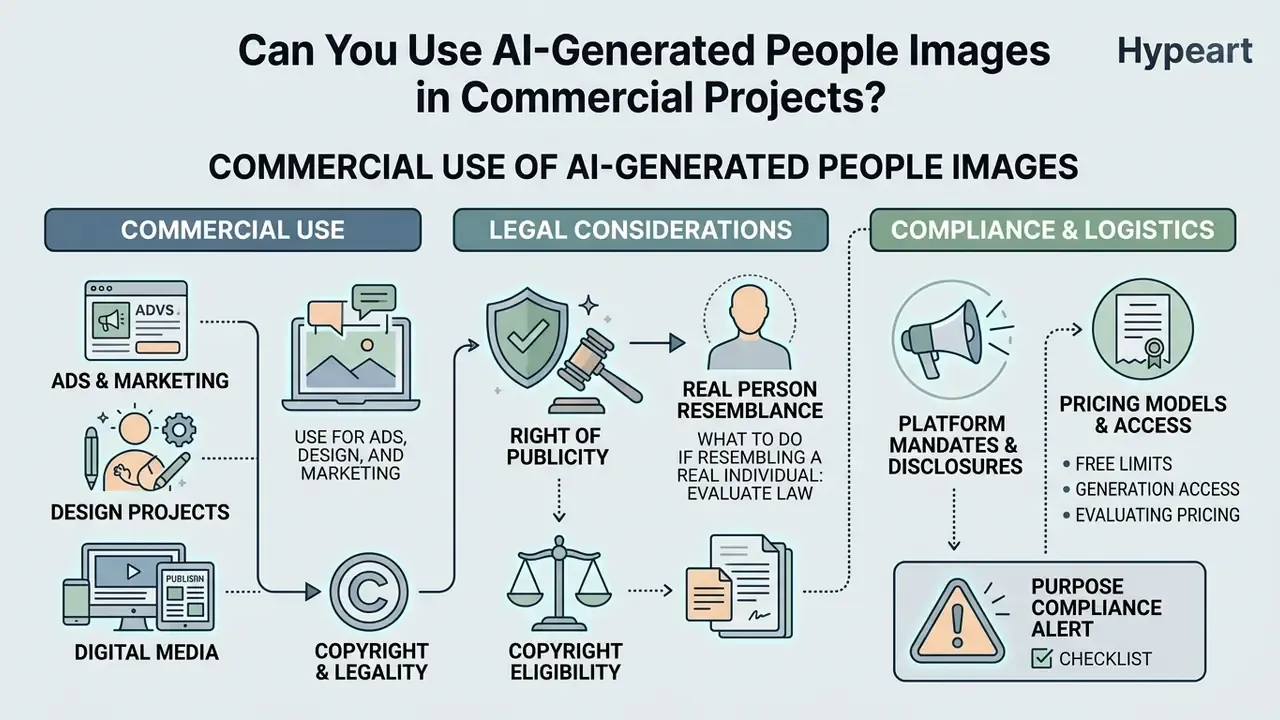
Deploying synthetic human media commercially means evaluating copyright eligibility, right of publicity law, and platform disclosure mandates. Three separate legal tracks, and they do not resolve together.
| Commercial Use Case | Right of Publicity Check | Copyright Status | Disclosure Obligation |
|---|---|---|---|
| Paid Commercial Ads | Must verify no likeness to real individuals. | Unprotected if purely machine-generated. | Mandatory labeling in specific jurisdictions (EU, India). |
| Corporate Website Design | Low risk if generated from generic latent space. | Human creative selection required for registration. | Follow industry transparency guidelines, for example WFA and ICAS. |
| Social Media Campaigns | Requires model consent if using reference faces. | Disclaim synthetic portions in IP filings. | Platform-specific synthetic media tags required. |
| Editorial / news illustration | High scrutiny; avoid depicting identifiable real people. | Human authorship required for the composed work. | Label as illustration; several institutional policies require "Created using AI" tags. |
| Internal training and UX mockups | Lowest risk with fully synthetic identities. | Registration usually irrelevant. | Internal watermark and metadata recommended. |
| Regulated financial marketing | Documented consent file plus similarity scan mandatory. | Treat as an unprotected asset; rely on trademark and contract. | Disclosure per EU AI Act Art. 50(4) from 2 Aug 2026; provenance metadata retained. |
Jurisdictional notes. The EU AI Act requires disclosure for AI-generated or AI-manipulated deepfake content, applicable 2 August 2026, plus machine-readable marking so synthetic content can be detected. India's October 2025 rules mandate visible labels and metadata for synthetically generated information, including a 10% surface-area display rule for visual content. The February 2026 Joint Statement on AI-Generated Imagery and the Protection of Privacy, signed by 61 authorities, states that systems generating realistic images of identifiable people require safeguards, transparency, and rapid takedown mechanisms. Advertising self-regulation adds another layer: the WFA and ICAS framework recommends labels such as "AI-generated character", while IAB Canada's January 2026 framework treats text labels as the recommended standard and exempts editing-only uses such as retouching or colour correction.
Jurisdictional notes. The EU AI Act requires disclosure for AI-generated or AI-manipulated deepfake content, applicable 2 August 2026, plus machine-readable marking so synthetic content can be detected. India's October 2025 rules mandate visible labels and metadata for synthetically generated information, including a 10% surface-area display rule for visual content. The February 2026 Joint Statement on AI-Generated Imagery and the Protection of Privacy, signed by 61 authorities, states that systems generating realistic images of identifiable people require safeguards, transparency, and rapid takedown mechanisms. Advertising self-regulation adds another layer: the WFA and ICAS framework recommends labels such as "AI-generated character", while IAB Canada's January 2026 framework treats text labels as the recommended standard and exempts editing-only uses such as retouching or colour correction.
Commercial Use for Ads, Design, and Marketing
Using AI-generated people images in advertising is generally permissible under commercial software licences. Statutory protection, though, varies sharply.
«Purely machine-generated visuals cannot be registered for copyright protection unless substantial human creative authorship is demonstrated.»
The Office's 2025 position is that copyright protects original expression created by a human author. AI output qualifies only where a human determined sufficient expressive elements, and prompts alone are insufficient. AI-assisted works, and larger human-authored works containing AI material, remain registrable, but only for the human contribution, with AI portions disclaimed. The European Parliament's 2025 briefing notes that the EU has no Union-wide rule on copyrightability of AI outputs; the AI Act is silent on authorship and addresses transparency instead. Organizations evaluating broader commercial asset workflows can view the guide and the licensing notes in the Canva AI generator overview.
Institutional policy adds practical requirements. NASA's 2025 interim directive requires AI-generated media to be permanently watermarked, to carry embedded metadata, and to be clearly labeled as AI-generated or AI-assisted in external materials. That is a serviceable template for a corporate standard. ICC marketing guidance states that consent is ordinarily required when AI generates or materially alters a real person's likeness for marketing use, and that the consent scope must be respected.
What to Do If an AI Person Resembles a Real Individual
If a generated character closely resembles a real person, commercial deployment raises right of publicity and privacy exposure. Sometimes the resemblance is coincidental. Legally, that rarely helps.
«A digital replica is a replica, imitation, or approximation of a person's likeness that is readily identifiable as the individual.»
The Congressional Research Service (2024) notes that the right of publicity prevents unauthorized commercial use of a person's name, image, likeness, or voice. The USPTO's 2024 NIL paper states that AI systems can infringe NIL rights where output resembles a real person. A 2024 Japanese law review article reports that AI-generated personas may violate publicity rights even when the celebrity was absent from training data, if users recognize the likeness as customer-attracting. Chinese Civil Code commentary similarly holds that a virtual image recognizable as a real person requires consent.
So run facial recognition and reverse-image similarity scans against public identity databases before publishing commercial assets. Practical tooling is compared in this overview of AI reverse-image-search platforms and in guidance on AI image detection workflows. If a match appears: quarantine the asset, log the finding in the model risk register, regenerate with altered facial attributes, and document the remediation. For specialized policy and dispute research, teams can explore the hub.
Evaluating Pricing Models, Free Limits, and Generation Access
Most synthetic media platforms run freemium or tiered SaaS subscriptions. Free tiers typically enforce usage caps, lower output resolutions, or mandatory watermarks. Representative 2026 snapshots from vendor pricing pages: HeyGen free tier at 3 videos per month capped at one minute, paid tiers from $29 per month; Synthesia free tier at 10 minutes per month and 9 avatars, Starter at $29 per month; AI Studios free tier at 3 watermarked 720p videos per month, paid plans from roughly $24 per month on annual billing.
Image-first studios usually bundle credits across generation, editing, upscaling, and video, so cost modeling must account for retries. Expect 3 to 9 seeds per approved frame. That retry ratio, not the sticker price, drives cost per usable asset.
For enterprise buyers, headline price is secondary to the audit checklist in section [4a]: zero data retention, tenant isolation, SOC 2 Type II, and a contractual prohibition on training against your uploads. When comparing service terms and feature ceilings, teams can use a dedicated photo editor comparison and a free photo editor overview.
Regarding hypeart.ai: No verified information available.
FAQ: Common Questions About AI Images of People
Can You Use a Random Guy Picture Generator for Instant Personas?
A random guy picture generator creates arbitrary synthetic male identities without complex manual prompt drafting. Two documented approaches exist. Faker-style generation produces quick PII-shaped records, and is explicitly described as basic and not demographically accurate. Structured persona frameworks, such as NVIDIA's Nemotron-Personas datasets and with_synthetic_personas sampling, add demographic accuracy, cultural background, skills, interests, and context-specific attributes. (Vendor documentation; capability claims not independently benchmarked.) Both pipelines support consistent synthetic characters for software testing, interface wireframes, and stock media placeholders. Bias screening is mandatory before persona sets reach customer-facing testing:
«A 2024 study of Stable Diffusion outputs found strong stereotyping: the model depicted most Middle Eastern men with a beard and traditional headwear.» Source: Bias in Stable Diffusion, race, gender, and age classifier study (2024). Mitigation is unglamorous but effective: sample explicit demographic parameters instead of relying on defaults, review each batch with a demographic tally, and record representation criteria in the campaign brief.
What Resolutions and File Formats Are Available for AI People Images?
Standard commercial generators export from 1K (1024×1024) up to 4K, 6K, or 8K upscaled formats. Documented resolution ladders define 1K as 1024 px, 2K as 2048 px, 4K as 4096 px, 6K as 6144 px, and 8K as 8192 px. Square outputs match both sides; non-square outputs scale proportionally, with 1K typically setting the short side and 2K and above setting the long side. Supported file types include PNG for lossless quality, WebP for web performance, and JPEG for general delivery. Aspect ratio presets usually include 1:1 for square portraits, 9:16 for vertical mobile media, and 16:9 for widescreen presentation assets, with common pixel presets such as 1024×1536, 1536×1024, 3840×2160, and 2160×3840. Upscaling preserves aspect ratio while scaling to the target edge. For asset-weight management on delivery, see the video compressor guide.
Can You Animate an AI Human Image into Video?
Static synthetic human images can be converted into motion assets or speaking avatars using image-to-video diffusion architectures. Two distinct stacks exist. Portrait-animation systems are formally defined as synthesizing video from a single source image, with motion supplied by a driving video, audio, or text. They transfer facial expressions and head pose; LivePortrait's documentation states it can animate any portrait and transfer expression and pose in real time. General image-to-video generators instead add broader scene motion: Adobe Firefly exposes "Generate video from an image", and Midjourney's video feature uses an uploaded image as the starting frame with an optional text prompt. Practitioner guidance notes that image-to-video can make a person speak, emote, turn their head, and gesture. Downstream, colour and pacing decisions still happen in an editor, whether that is a davinci video editor workflow for grading and delivery, or a lighter web tool. Teams testing quick generation paths sometimes start with a deepai video generator before committing budget. Developers evaluating implementation and cost can review the Google Veo implementation guide, the free AI video generator comparison, or the animation maker guide.
Enterprise Questions: Privacy, Audit, and Control
Frequently Asked Questions
How do we prevent PII leakage through a SaaS generator?
Route uploads through a DLP gateway, strip metadata, contract for zero data retention, prohibit training on your inputs, and restrict reference uploads to a named group with logged access.
What must an audit trail contain?
Requester, timestamp, prompt and negative prompt, base model and checkpoint hash, adapter files and weights, seed, reference image hash, reviewer, disclosure label, and publication destination. Retain for the asset's full lifecycle.
Can synthetic faces be used in identity verification?
No. Policy must explicitly prohibit AI-generated or AI-modified human imagery in KYC, AML onboarding, liveness checks, or any identity-proofing workflow, and require detection screening of inbound imagery in fraud investigations.
How do we handle a third-party likeness complaint?
Quarantine the asset, retrieve the generation manifest, run a reverse-image and similarity assessment, document the consent position, escalate to counsel, and use the platform's takedown mechanism where the asset was distributed externally.
What disclosure text should we use?
Follow jurisdictional requirements first: machine-readable marking in the EU, visible label plus metadata in India. Then apply advertising self-regulation language such as "AI-generated character" or "Created using AI". Add provenance metadata at export, and verify it survives the CDN pipeline. Metadata stripping at the edge is a common, quiet failure.
How often should the tool be revalidated?
At minimum annually, plus on any vendor default-model change, adapter update, or change of intended use. Record each revalidation in the model inventory.
Related Governance and Media Resources
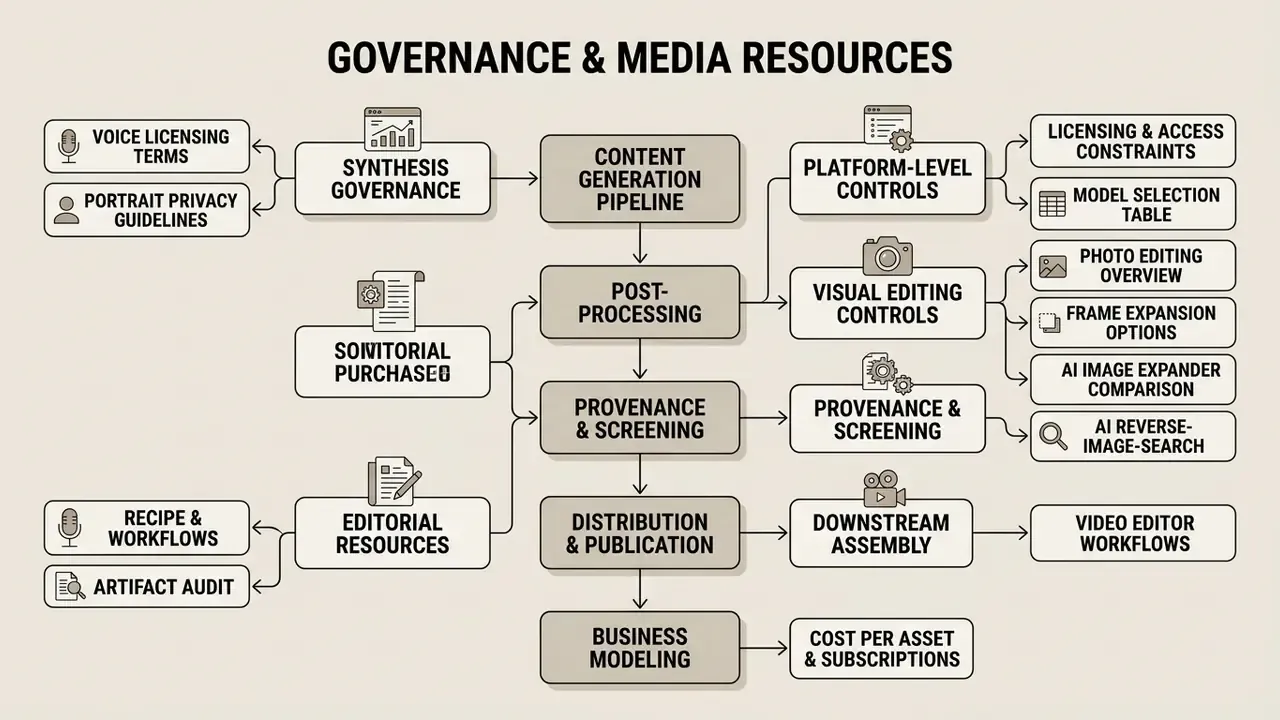
Organizations running multi-modal content pipelines usually pair image generation with adjacent controls and tools:
- For editing and retouching generated visual assets, review the free photo editor overview and the online photo editor guide.
- For outpainting and frame expansion across placement ratios, consult the AI image expander comparison.
- For likeness screening and provenance research before publication, use the AI reverse-image-search comparison.
- For voice synthesis governance alongside visual media, including licensing terms, see the AI voice generator guide.
- For portrait-specific workflows and privacy considerations, see the AI headshot generator guide.
- For platform-level licensing and access constraints, compare the Microsoft AI image generator overview and the Google AI image generator overview.
- For downstream video assembly and publication, see the YouTube video editor workflow guide.
- To model cost per approved asset, retry rates, and subscription tiers, decision-makers can compare options, view the guide on subscription tiers, or see the overview for technical assistance.
- For definitions, tool profiles, and adjacent terminology, explore the hub.
Appendix A: Superseded Reference Notes
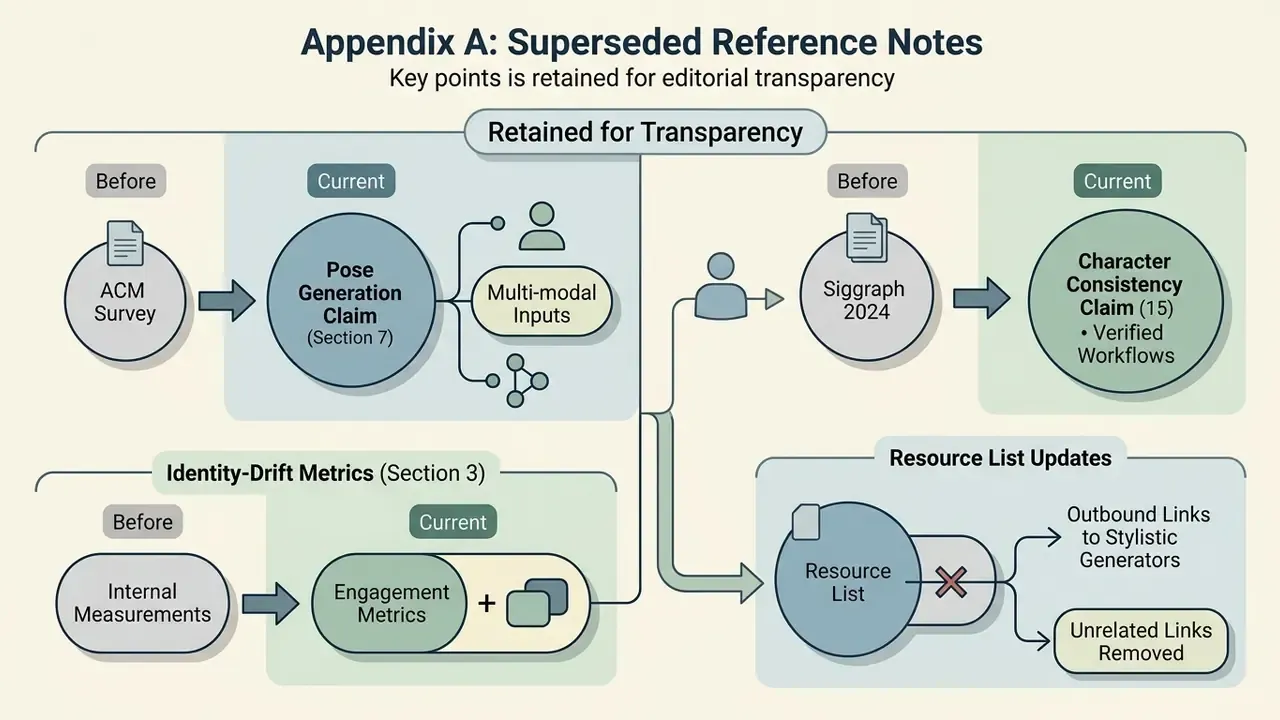
Retained for transparency of editorial revisions:
- The pose-generation claim in section [7] previously cited a general "ACM Survey on Pose-Guided Generation, 2025". The survey (Appearance and Pose-guided Human Generation: A Survey, ACM, DOI 10.1145/3637060) remains a valid overview, but the quantitative claim now rests on Stable-Pose benchmark figures.
- The character-consistency claim in section [15] originally cited The Chosen One (ACM SIGGRAPH 2024) alone. ID-Booth and CharaConsist were added to supply architectural and metric detail.
- The identity-drift case metrics in section [3] remain an internal engagement measurement, now paired with published HcP metrics as methodological support.
- SEO-oriented outbound links to unrelated stylistic generators were removed from the resource list and replaced with governance, licensing, and workflow references relevant to enterprise deployment.
Limitations, Open Questions, and a Safe Next Step