Marcus Hale, author. His commentary is illustrative analysis, not the position of a real firm, regulator, or employer.
If you run risk, compliance, or finance operations at a US bank or a mature fintech, a consumer wealth book looks harmless. It usually is not. Staff read it, copy the prompts, and paste regulated data into tools nobody approved. That is the real reason this title deserves a serious read.
The search landscape for the ai wealth creation blueprint presents an ever evolving collection of e-books, commercial guides, and strategy frameworks. These publications position artificial intelligence as an operational driver for scalable digital products, process automation, and algorithmic asset allocation.
However, enterprise governance leaders and business operators must evaluate these materials against verifiable data rather than speculative claims. Understanding the target audience, operational methodologies, format distribution, pricing, and the inherent risk controls is essential before applying these frameworks in commercial or financial workflows. Especially in workflows that touch client money.
- Observed retail price bands range from roughly $9.99-$14.99 for e-book/Kindle formats to $19.99-$24.99 for paperback, with third-party "prompt pack + PDF bundle" offers sold at $47-$97.
- The strongest independent evidence for the underlying premise comes from productivity research, not from the books themselves: generative AI cut professional task time by 37% while raising quality by 0.45 standard deviations.
- Every practical chapter still requires human validation, model risk controls, and a realistic cost-of-control calculation before any income projection becomes credible.
On this page: edition specs and price table, what the blueprint actually teaches, 10 verified monetization models, an automation case with a real tool stack, the risk-adjusted ROI formula, a model risk (MRM) checklist for agentic AI, Shadow AI controls, AI investment strategies and regulator warnings, a PDF safety checklist, and the FAQ.
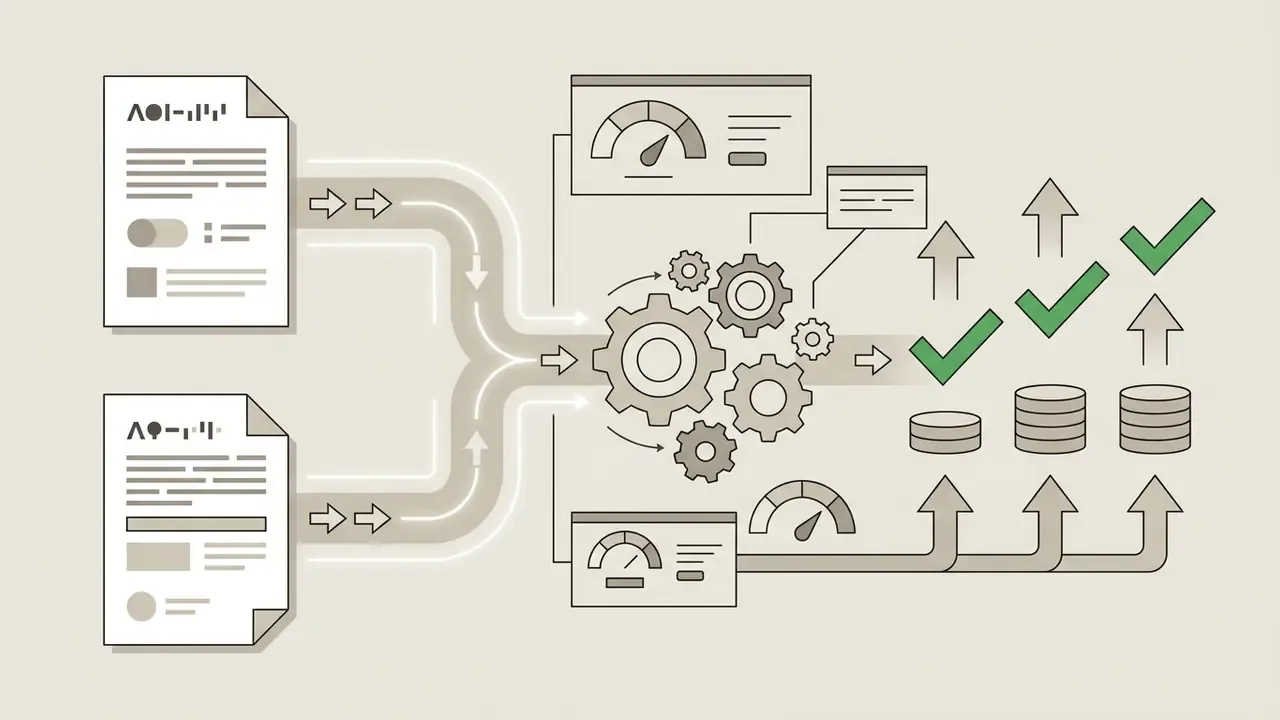
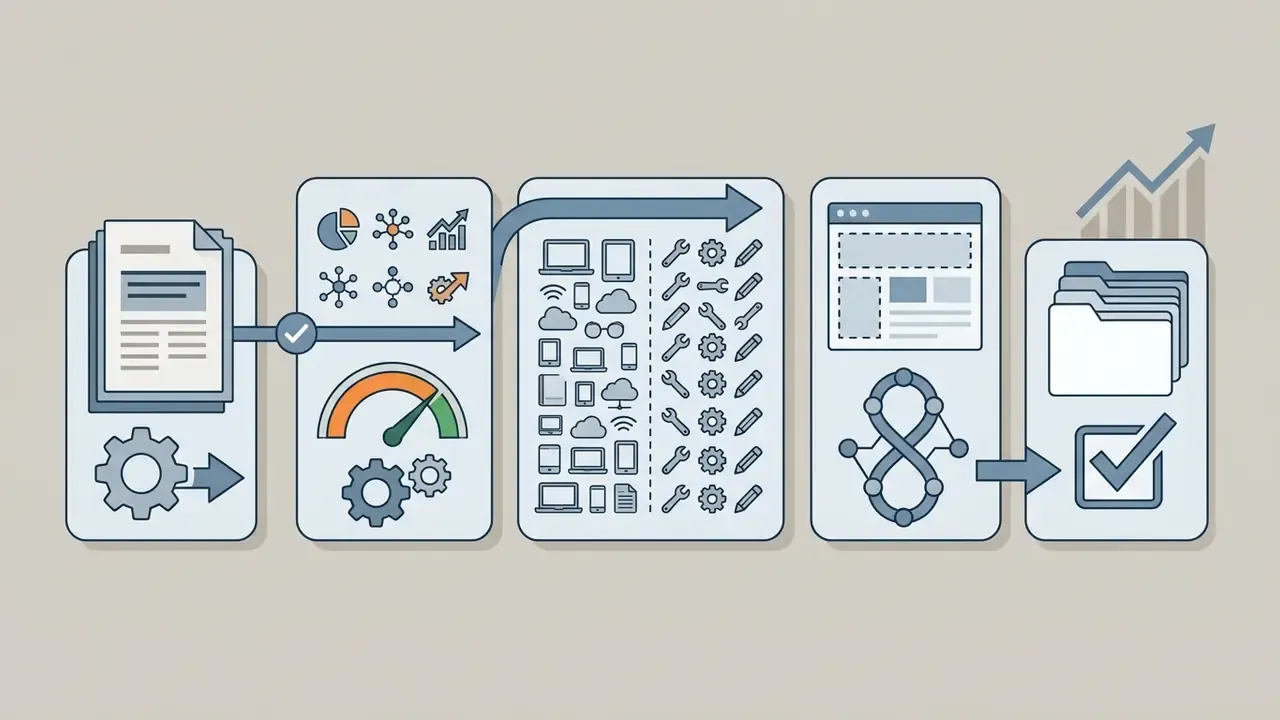
What The AI Wealth Creation Blueprint Is and Who the Book Is For
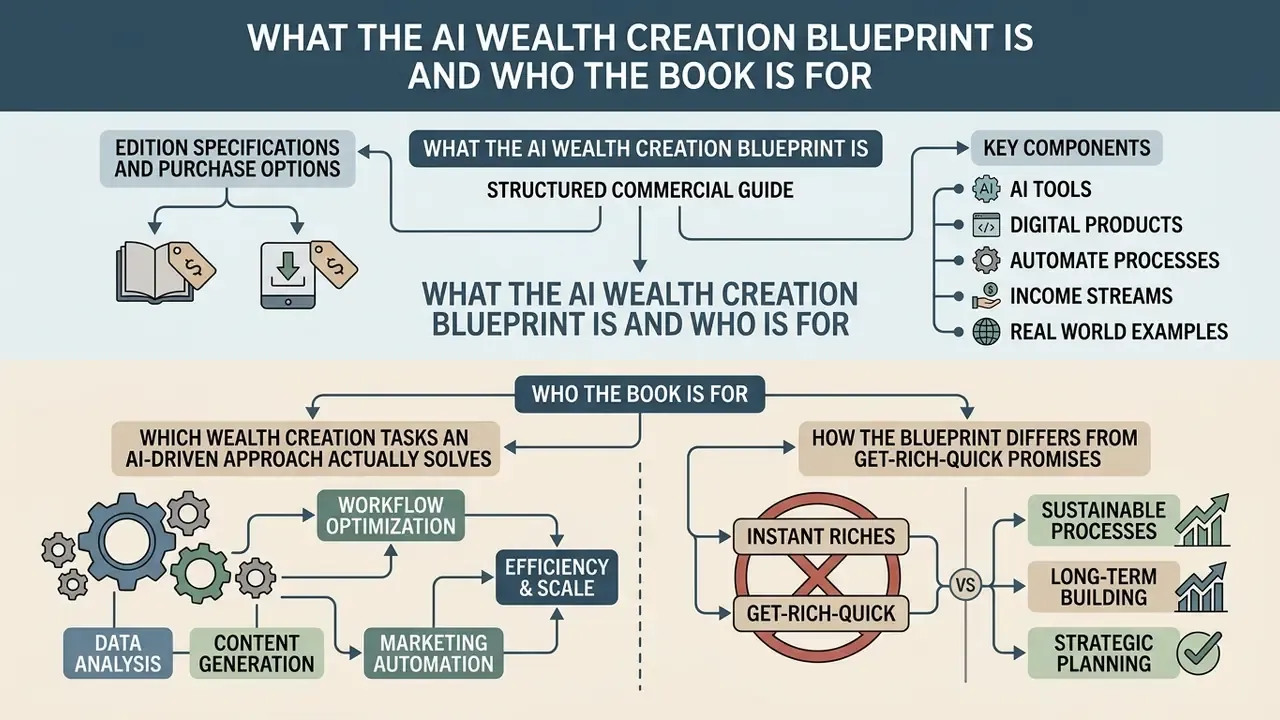
The AI Wealth Creation Blueprint is a structured commercial guide. It explains how individuals and small enterprises can use artificial intelligence tools to build digital income streams and automate operational workflows. The material targets complete beginners, freelancers, creators, and non-technical entrepreneurs who want to implement ai wealth creation strategies without deep programming expertise.
Public listings consistently state that no coding background or computer-science degree is required. The emphasis falls on niche identification, rapid digital product creation, workflow automation, and global distribution. Nothing exotic. The value, if any, sits in sequencing.
Edition Specifications and Purchase Options
| Format / Edition | Volume / Medium | Indicative price | Best suited for |
|---|---|---|---|
| Kindle / E-book | ~165 pages (PDF/EPUB) | $9.99 - $14.99 | Beginner freelancers and solo operators |
| Paperback (print) | 160-180 pages, ISBN 9798332412745 (Bible edition) | $19.99 - $24.99 | Readers who annotate physical copies |
| Enterprise / PDF bundle | PDF + prompt library + automation templates | $47.00 - $97.00 | Teams deploying ready-made scripts and funnels |
| Free intro PDF (lead magnet) | 15-20 pages | $0.00 (email opt-in) | Pre-purchase chapter sampling |
Which Wealth Creation Tasks an AI-Driven Approach Actually Solves
«Generative AI narrows productivity inequality within occupational groups, yet gaps across age and education groups may persist or widen». Haslberger, Gingrich & Bhatia, Generative AI and Productivity Inequality (2024). https://arxiv.org/abs/2405.00332
This nuance matters for anyone reading a blueprint as a guarantee. Tool access compresses the distance between weak and strong performers inside the same profession. It does not automatically equalise outcomes across demographic cohorts, and it never replaces domain judgement.
Vendor literature frames the same opportunity commercially. A 2025 HPI whitepaper on enterprise AI revenue models divides financial value creation into internal cost reduction and direct revenue generation through enhanced products, subscription models, or data monetization (HPI Whitepaper on AI Revenue Models, 2025). Methodological caveat: this is vendor-published material, not peer-reviewed research. Its monetization taxonomy works as a planning heuristic and still needs independent verification against your own company data.
In small-scale commercial applications, ai powered production lets small teams draft materials faster while keeping operational flexibility across multiple digital assets. Teams standardising terminology across creative and automation workflows usually start from foundational technical references such as the AI Media Glossary, then move to concrete tool documentation such as the guide to online photo editors and commercial workflows.
How the Blueprint Differs from Get-Rich-Quick Promises
Systematic wealth creation blueprint strategies differ from unverified "get-rich-quick" schemes on three points: iterative testing, domain expertise, and ongoing human oversight. Unsubstantiated marketing frames artificial intelligence as a fully autonomous money-making engine. Technical frameworks treat AI as a productivity multiplier bounded by operational constraints.
«Around 26% of workers in OECD countries already have at least 20% of their tasks accelerated by generative AI; regional exposure ranges from 13% to 48%». OECD, Job Creation and Local Economic Development: The Geography of Generative AI (2024). https://www.oecd.org/en/publications/job-creation-and-local-economic-development-2024_7c0d2f55-en.html
That spread of 13% to 48% is the honest macro context for any blueprint. Opportunity is real but unevenly distributed by geography, sector, and task mix, which is precisely what uniform income promises ignore.
Empirical studies from the U.S. Government Accountability Office confirm that generative AI models remain prone to hallucinations, factual errors, algorithmic bias, and security vulnerabilities (GAO-25-107651 Report, U.S. GAO, 2025). Guidelines from the U.S. National Institute of Standards and Technology stress that AI outputs require strict human validation and domain-specific oversight before commercial deployment (NIST AI Risk Management Framework 1.0, NIST, 2023/2024). UK Government guidance for public-sector use adds the mechanical explanation: large language models predict the next token, do not genuinely understand content, and can produce plausible but incorrect conclusions (Generative AI Framework for HMG, UK Government, 2023).
Put plainly: the model sounds certain even when it is wrong. That asymmetry is the governance problem.
Financial Disclaimer & Risk Notice:
Core AI Wealth Creation Tracks Covered in the Book
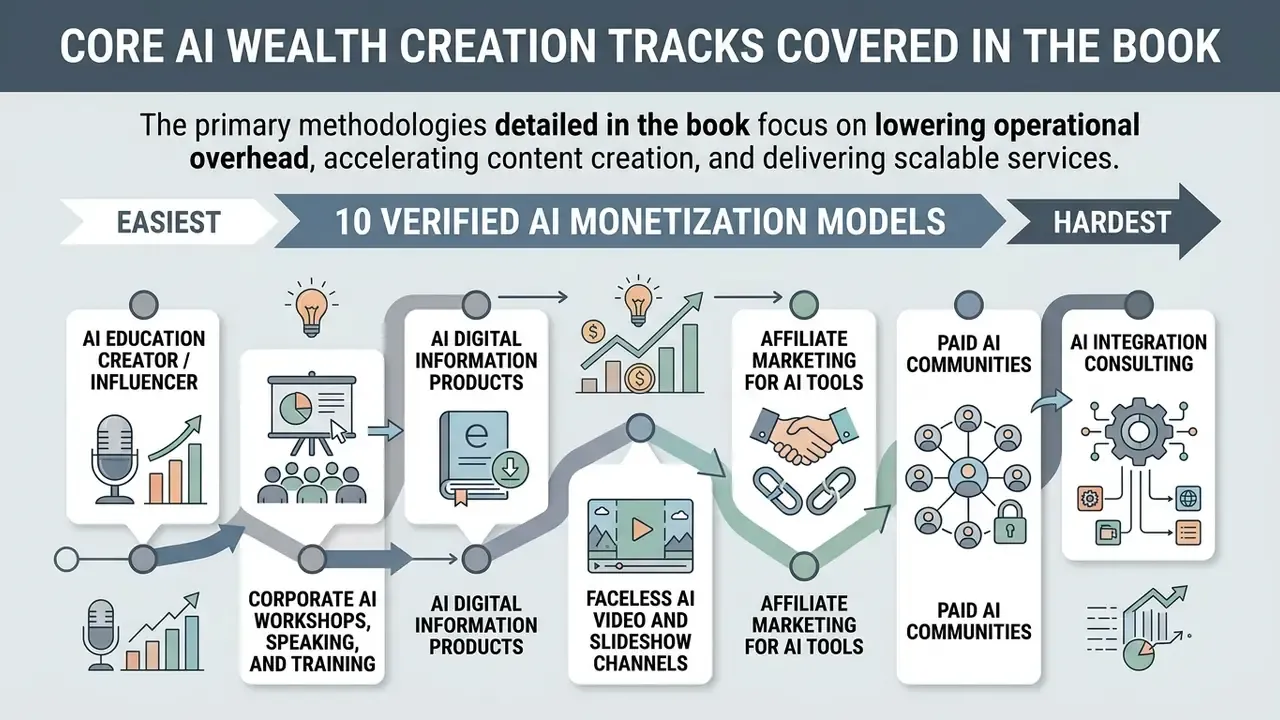
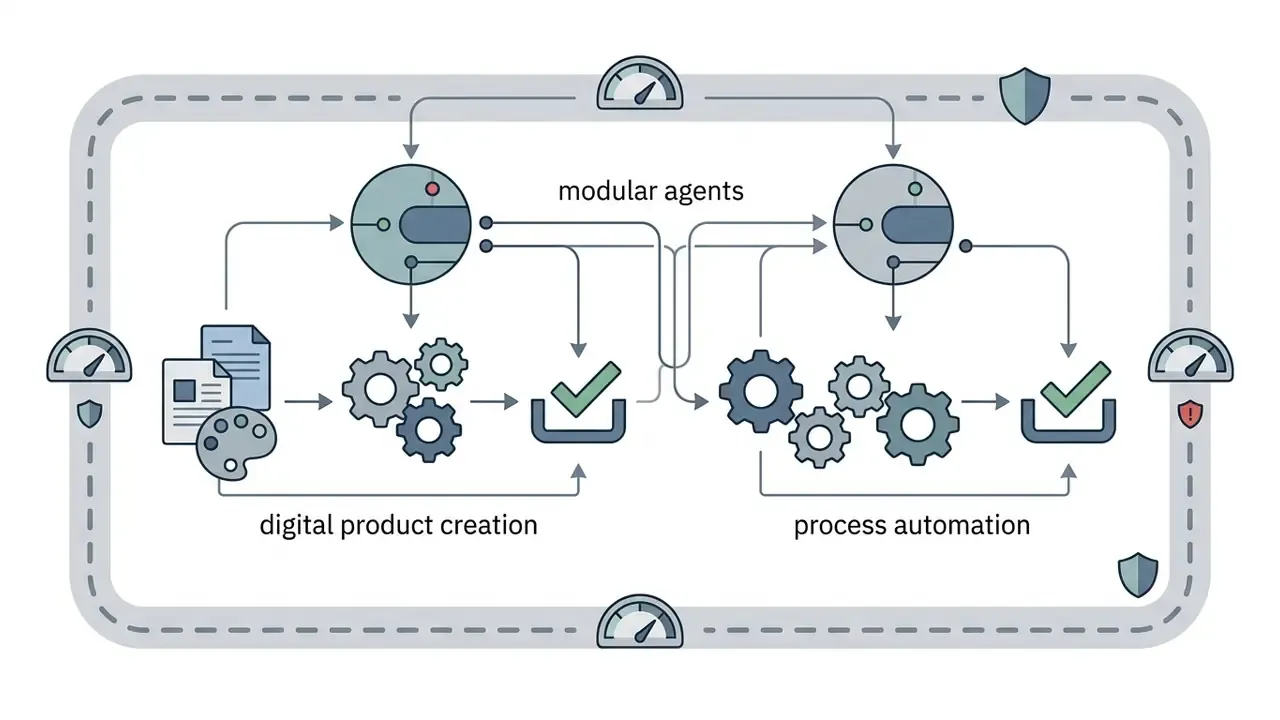
The primary methodologies detailed in the ai wealth creation blueprint book focus on lowering operational overhead, accelerating content creation, and delivering scalable services. The framework organizes commercial execution into distinct tracks: creating digital products, implementing mechanisms to automate processes, and offering specialized technical consulting. Operators scaling short-form and long-form media at low marginal cost usually pair these tracks with text-to-video pipelines documented in the Google Veo implementation and API cost guide.
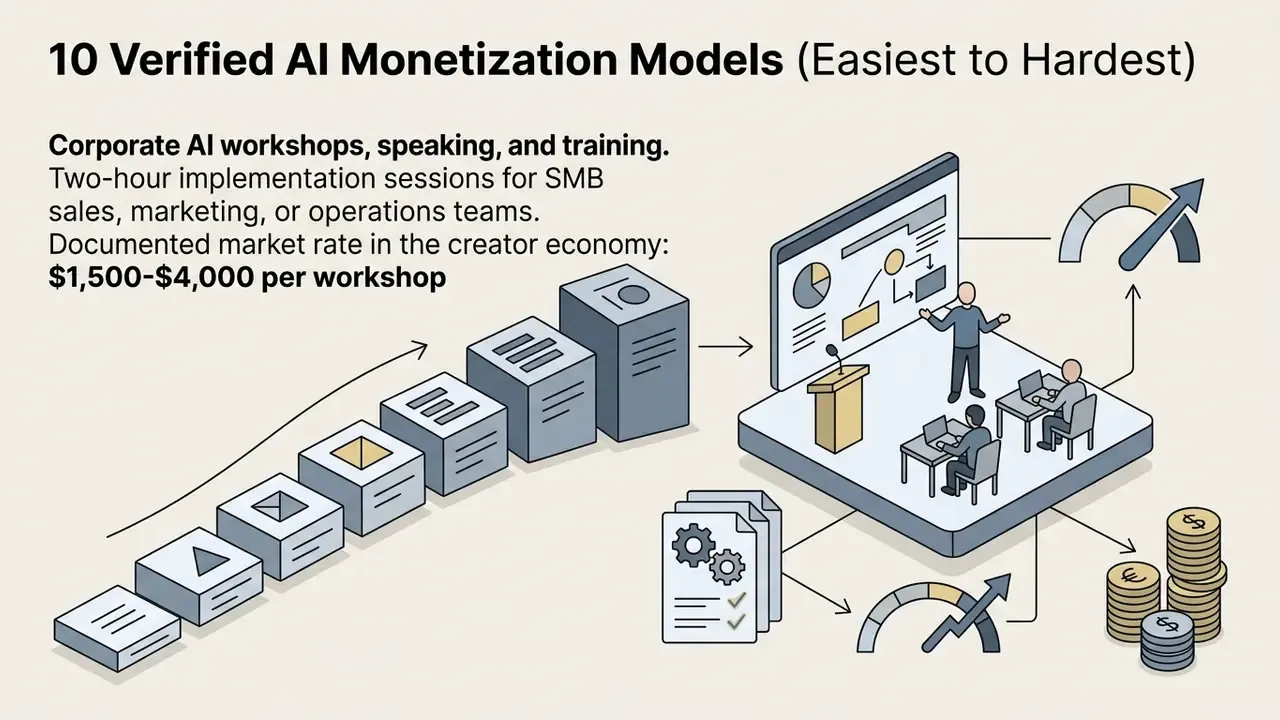
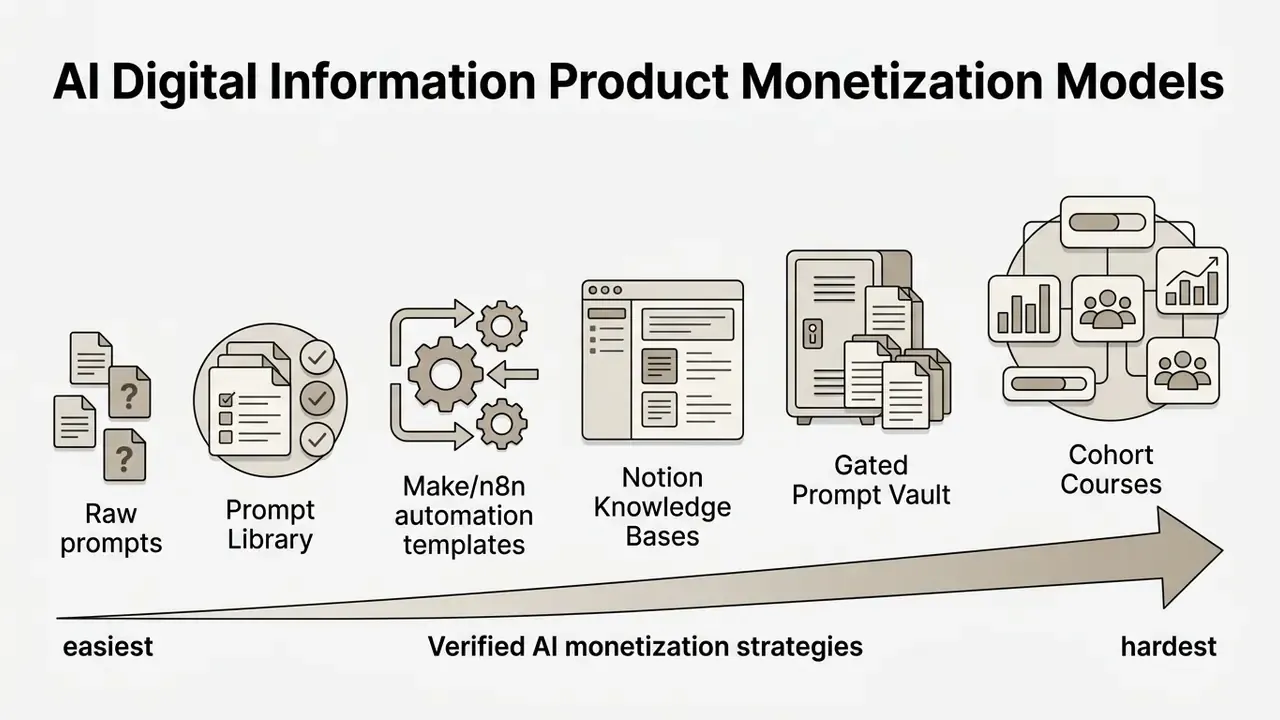
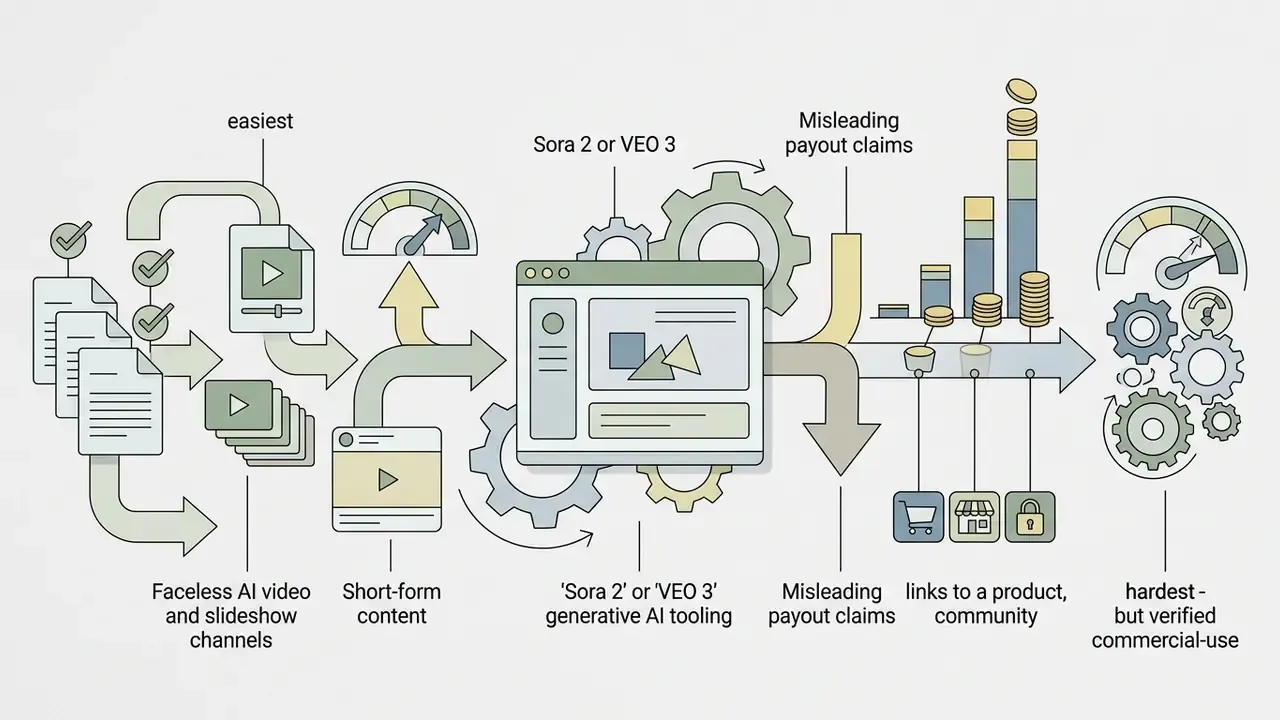
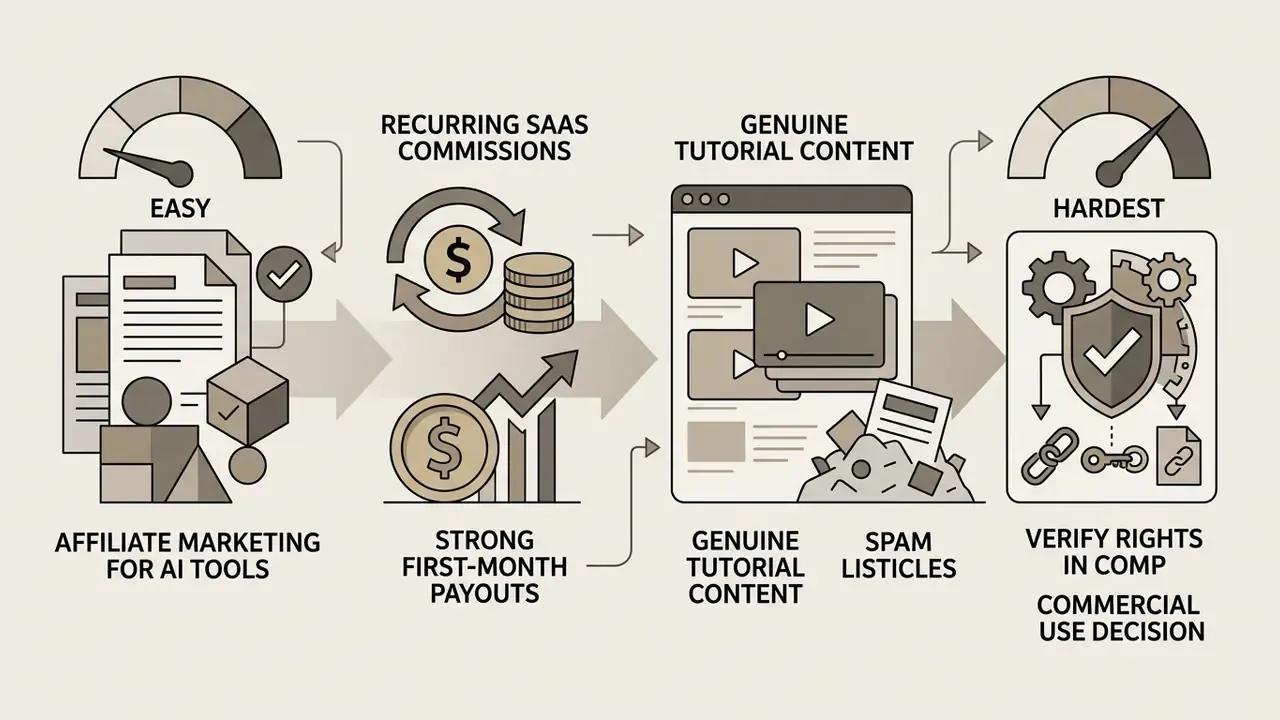
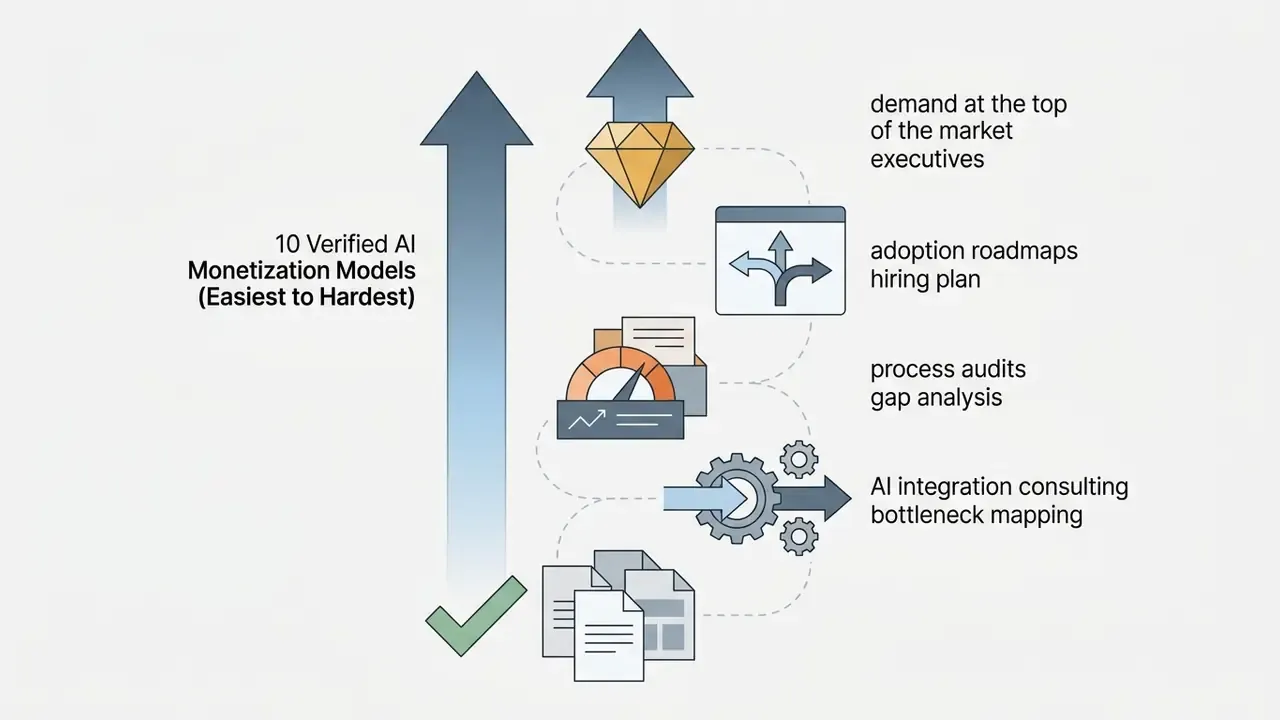
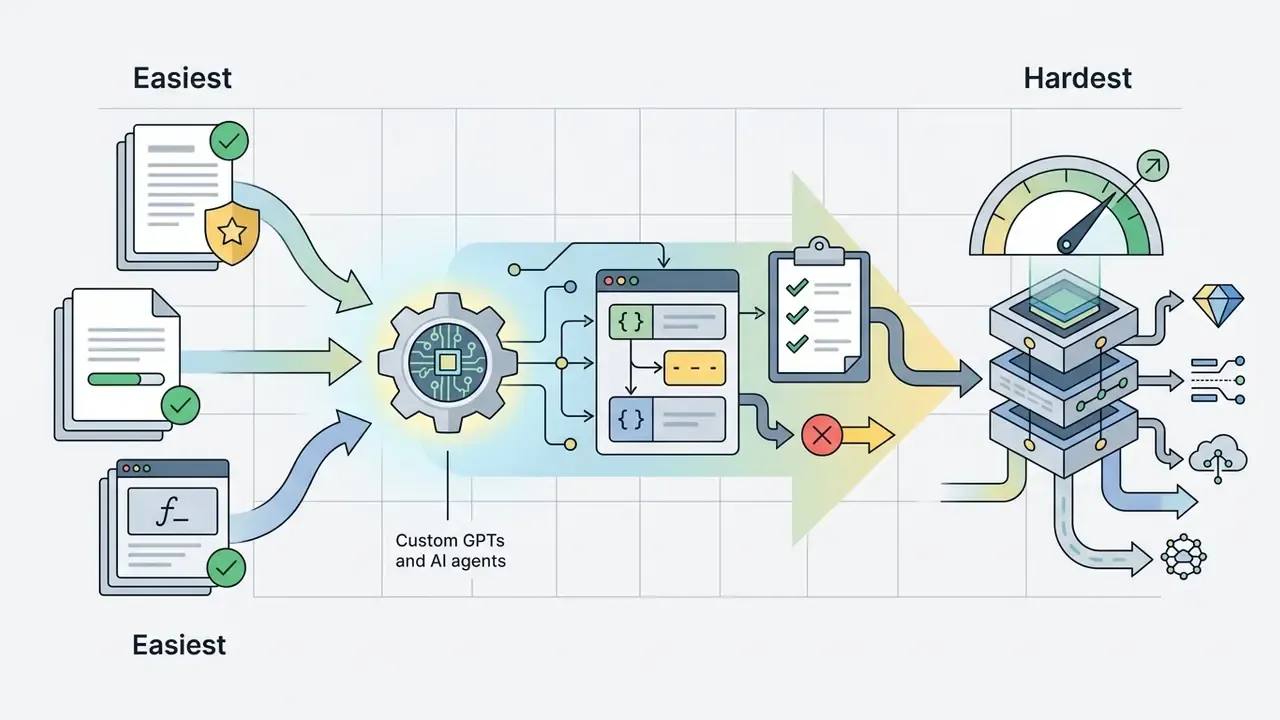
10 Verified AI Monetization Models (Easiest to Hardest)
Digital Products, Content, and AI-Powered Solutions
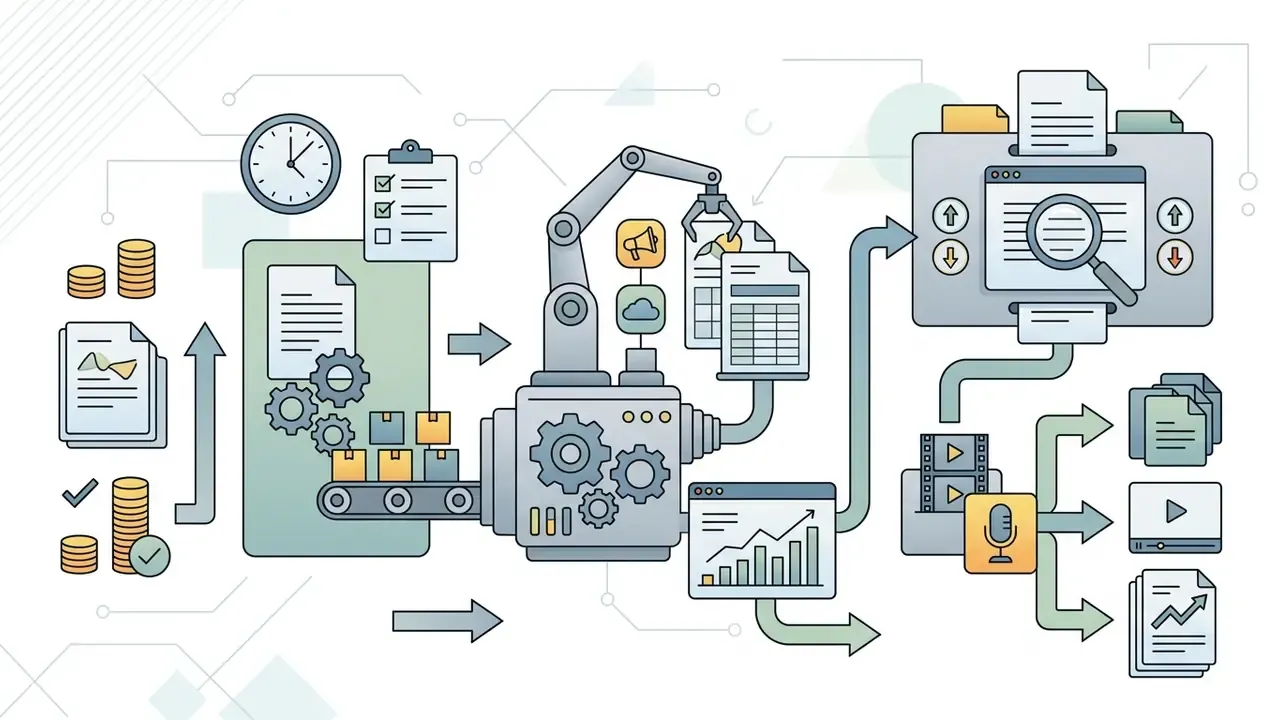
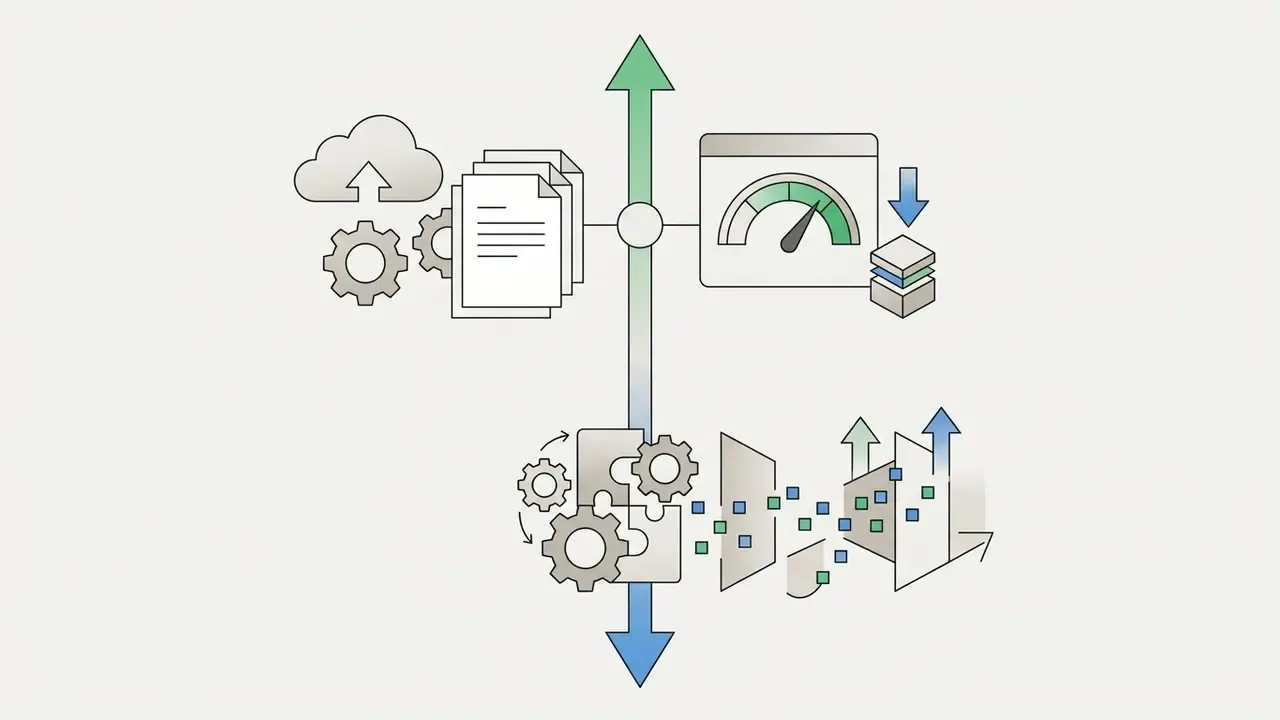
Creating digital products with cutting edge techniques relies on structured workflows that combine large language models with specialized media generators. Operators deploy AI to research market niches, generate written drafts, design visual collateral, and package content for automated distribution platforms.
«Access to generative AI reduced professional task completion time by 37% while increasing output quality by 0.45 standard deviations». Noy & Zhang, Experimental Evidence on the Productivity Effects of Generative AI, SSRN (2023). https://ssrn.com/abstract=4375283
In digital publishing contexts, creators convert those efficiency gains into technical guides, templates, and specialized media assets. Visual collateral is typically produced with AI image and portrait tooling. Comparisons of free-tier output quality, watermarks, and licensing sit in free AI art generator comparisons and in the AI headshot generator guide for professional profiles. For video-first products, free AI video generator comparisons by duration limits, credits, and export rights prevent licence surprises at launch. Consumer-grade novelty generators sit in the same catalogue, and they are worth naming because staff often test them first: an ai background generator for product shots, an ai backstory generator for character copy, and playful tools like the ai bald filter, the ai baby generator, ai baby video pipelines, and short ai baby videos. Fun, cheap, and almost never cleared for regulated client work. Check the licence anyway.
Production discipline matters as much as tool selection. Practitioner guidance for AI-enabled digital products converges on four methods: data hygiene and restructuring for retrieval, modular agent decomposition, explicit guardrails, and human review at release gates. Content assets should also be machine-readable (semantic headings, plain language, metadata, publication dates), labelled where AI-generated, and tracked for provenance from original creation through edits (Adobe/IDC provenance reporting, 2024; WEF disclosure guidance, 2025).
For developers and product managers evaluating generator integrations, the AI Media API Guides provide technical context on execution costs and API rate limits. Teams comparing competitive generation tools consult AI Media Comparison Matrices and head-to-head evaluations such as Midjourney versus competing image generators to verify licensing terms before commercial release. Distribution workflows for long-form assets are documented in the YouTube video editor workflow guide, and file-weight optimisation for paid downloads in the video compressor guide.
Process Automation and Commercial AI Services
Commercial services and process automation represent the high-margin end of ai driven systems. Businesses use ai tools to route customer service responses, synthesize unstructured documentation, generate lead reports, and optimize digital marketing campaigns on real-time data. Before embedding generated assets into client portals, operators verify rights using resources such as the Canva AI generator commercial licensing overview and the Microsoft AI image generator commercial-use terms.
A 2024 OECD multi-country survey of over 5,000 small and medium-sized enterprises found that 26% of surveyed firms had embedded generative AI directly into core operations or product lines (OECD SME Generative AI Survey, 2024).
«Among SMEs facing skill shortages, 39% reported that generative AI compensated for the gap, and 14% reduced reliance on external contractors». OECD, Generative AI and the SME Workforce Analysis (2024). https://www.oecd.org/en/publications/generative-ai-and-the-sme-workforce_b7c15f5e-en.html
Documented implementation case. A three-person team launched an automated inbound tender-processing service. Stack: Tesseract OCR, then Claude 3.5 Sonnet API for parameter extraction, Make.com for orchestration, Airtable as the register. Adding a human-in-the-loop validation gate at the extraction step cut analysis time per bid from 45 minutes to 3 minutes and raised throughput from 15 to 120 documents per day without headcount growth. Note what did the work there: the gate, not the model.
A comparable pattern appears in the original desk example. A mid-sized asset management consultancy implemented an automated document parsing pipeline using large language models to extract tabular figures from financial filings. By establishing strict human validation checks at key decision nodes, the firm reported roughly 40% lower annual auditing overhead while doubling institutional client intake capacity. Evidence note: this figure comes from an anonymised engagement and is not independently audited. Published enterprise case data in adjacent domains reports loan-processing time reductions of about 85% and fraud-detection accuracy above 95%, which indicates plausibility, not equivalence (AI-powered automation industry reporting, 2025; Apollo Tyres GenAI service-desk case, Information Systems Journal, 2026).
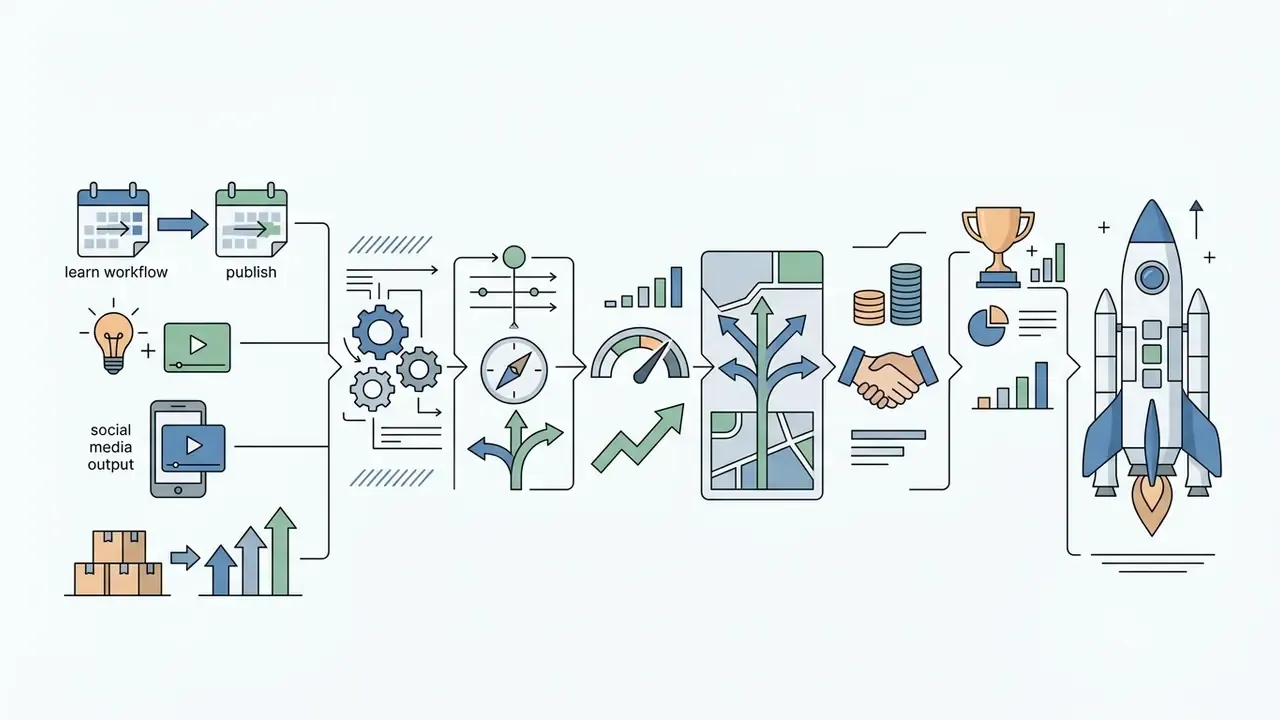
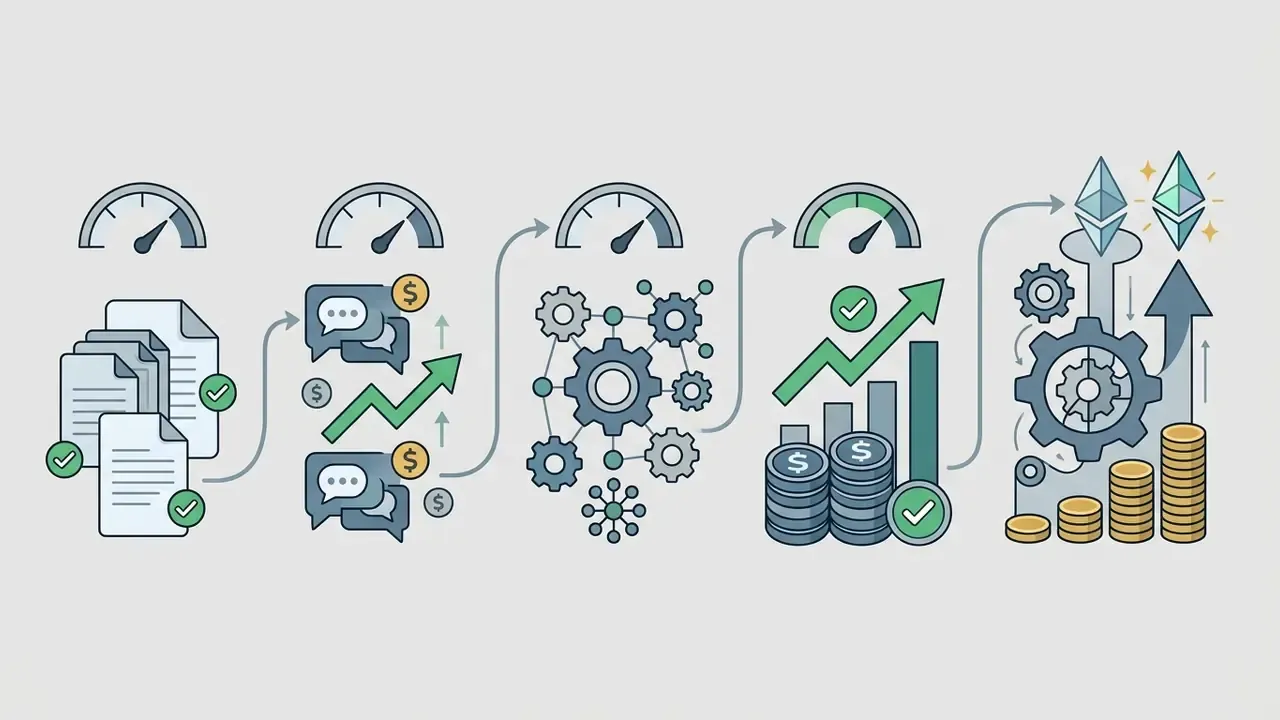
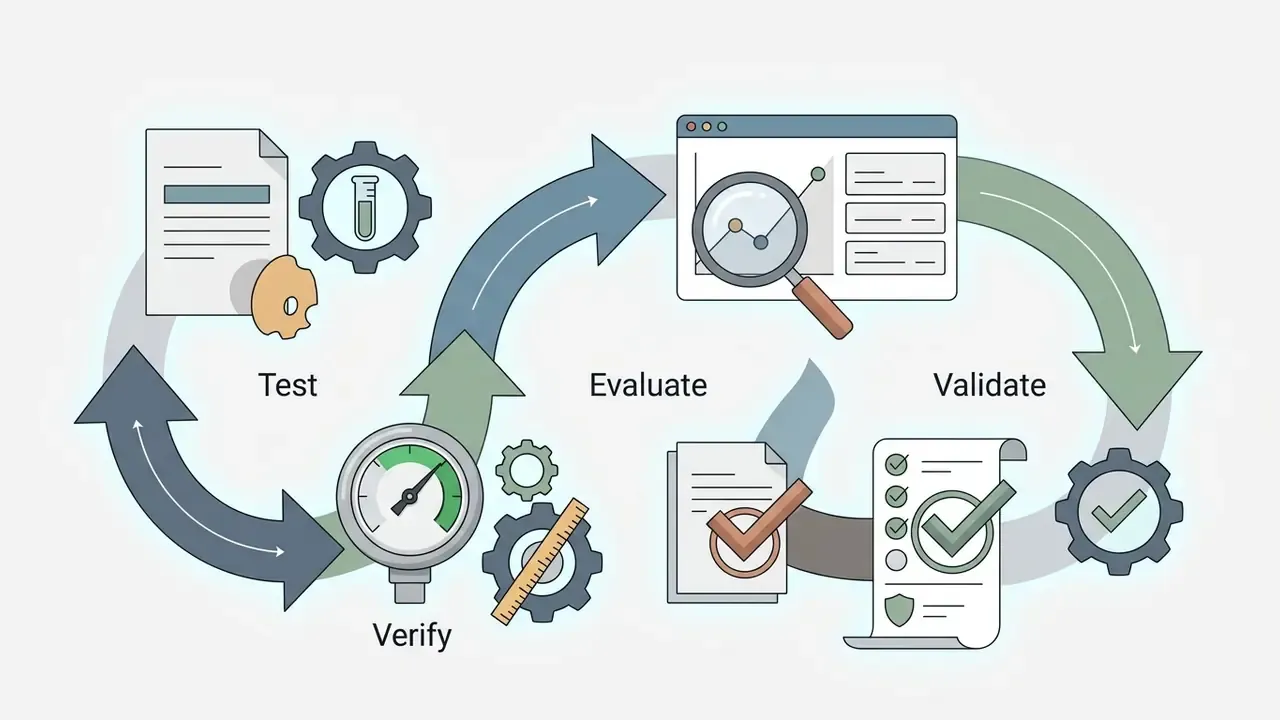
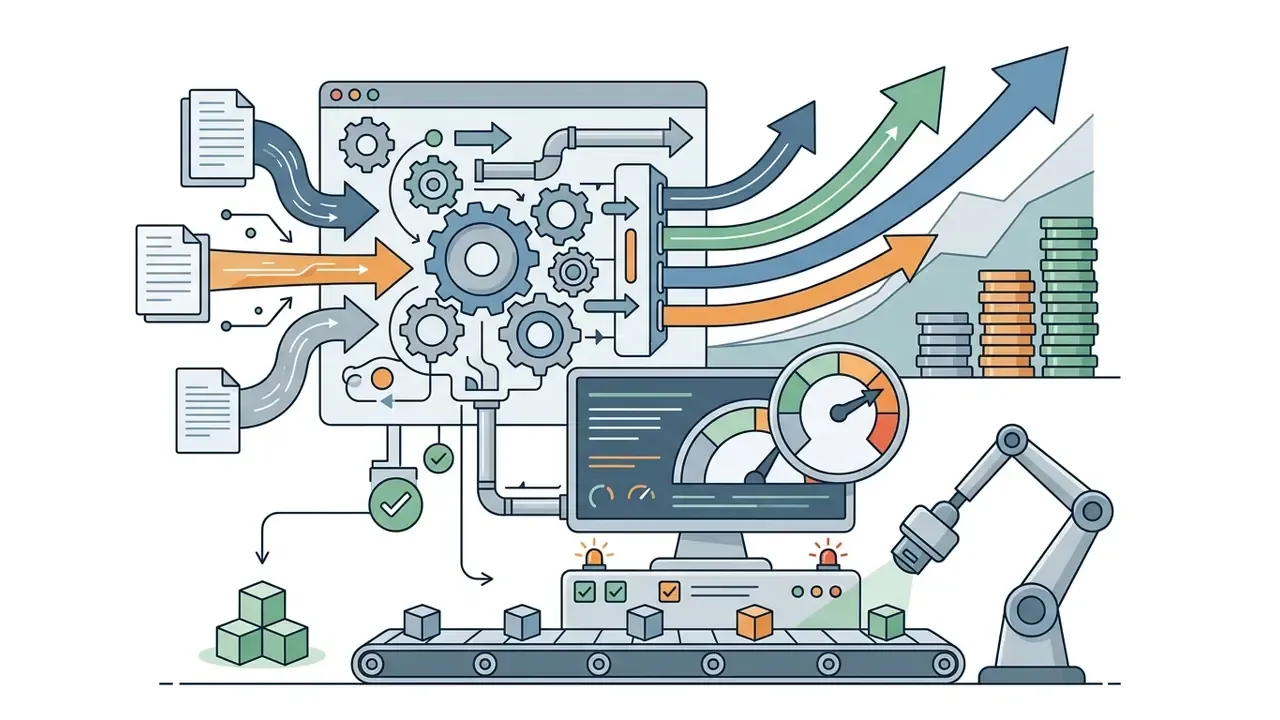
🖼️ Deployment flow: from blueprint concept to verifiable income stream
When integrating automated image manipulation or utility modules into client portals, such as automated background generation and removal, outpainting for catalogue imagery, or branded avatar pipelines, operators must confirm compliance with intellectual property standards and data privacy mandates. Practical reference points include the AI outpainting and image-expansion business-use comparison, the Google AI image generator usage-rights overview, and the AI reverse-image-search comparison for provenance and infringement checks. Stylised generation carries extra licence sensitivity, which is why style-specific analyses such as the Ghibli-style AI image generator usage-rights comparison belong in the pre-launch checklist. Free-tier tooling adds its own export and privacy limits, documented in the free photo editor guide.

Risk-Adjusted ROI: The Calculation Most Blueprints Omit
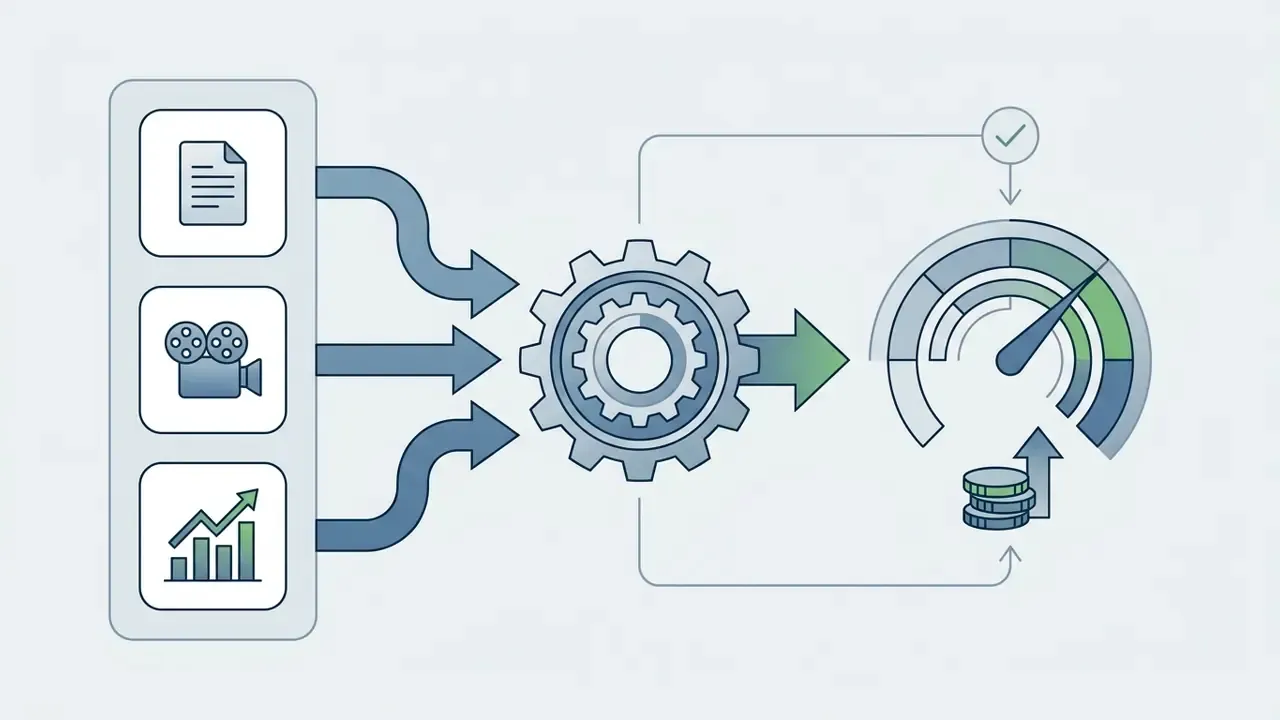
Commercial guides routinely present gross productivity gains and omit the cost of control. For finance, compliance, and operations leaders, the defensible formula is:
Net risk-adjusted ROI = (Automation gain) minus (Licence & API costs + Validation and monitoring costs + Residual-risk reserve + Rework cost of AI errors)
| Cost component | What it covers | Typical planning basis |
|---|---|---|
| Automation gain | Hours saved × loaded hourly rate, plus incremental revenue from higher throughput | Measured baseline vs. post-deployment sample, not vendor claims |
| Licence & API costs | Seats, tokens, image/video credits, orchestration platform fees | Model per 1,000 units at peak volume, not average |
| Validation & monitoring | Human-in-the-loop review time, evaluation sets, drift dashboards, audit logging | 10-30% of gross gain in regulated workflows (planning hypothesis) |
| Residual-risk reserve | Error correction, client remediation, legal and licence exposure | Scenario-based reserve per workflow criticality |
| Rework cost | Hallucination correction, re-generation, re-publication | Error rate × cost per corrected output |
Budget these inputs with standardised cost references in the AI Media Pricing Guides and unit-cost modelling tools in the AI Media Calculators. A blueprint that cannot survive this arithmetic is a marketing asset, not an operating plan.
Model Risk Management Checklist for Generative and Agentic AI
Traditional model risk management, the SR 11-7 style, assumes deterministic inputs and stable outputs. Generative and agentic systems break both assumptions, so validation has to be extended.
✅ MRM extension checklist for agentic AI deployments
- Inventory and tiering every generative and agentic use case is registered with an owner, criticality tier, and approved data scope.
- Hallucination controls retrieval grounding, refusal rules, and a documented factuality evaluation set per workflow.
- Human-in-the-loop nodes mandatory human approval at financial, legal, and client-facing decision points.
- Agent action boundaries tool permissions, spend caps, rate limits, and rollback paths for autonomous steps.
- Audit trail prompts, retrieved context, model version, and output stored immutably for reconstruction.
- Continuous TEVV pre-deployment validation plus post-deployment drift and behaviour monitoring (NIST AI RMF MEASURE/MANAGE).
- Independent challenge validation performed by a function separate from the build team, with documented effective-challenge findings.
One editorial principle holds this together: no evidence, no autonomy. An AI agent is a digital worker with a named owner, an approved role, access limits, an escalation path, an audit trail, and a shutdown mechanism. If any of those six are missing, the agent is not ready for production, whatever the demo showed.
Controlling Shadow AI Around Commercial "Wealth Blueprints"
AI-Powered Investment Strategies, Data, and Risk Management
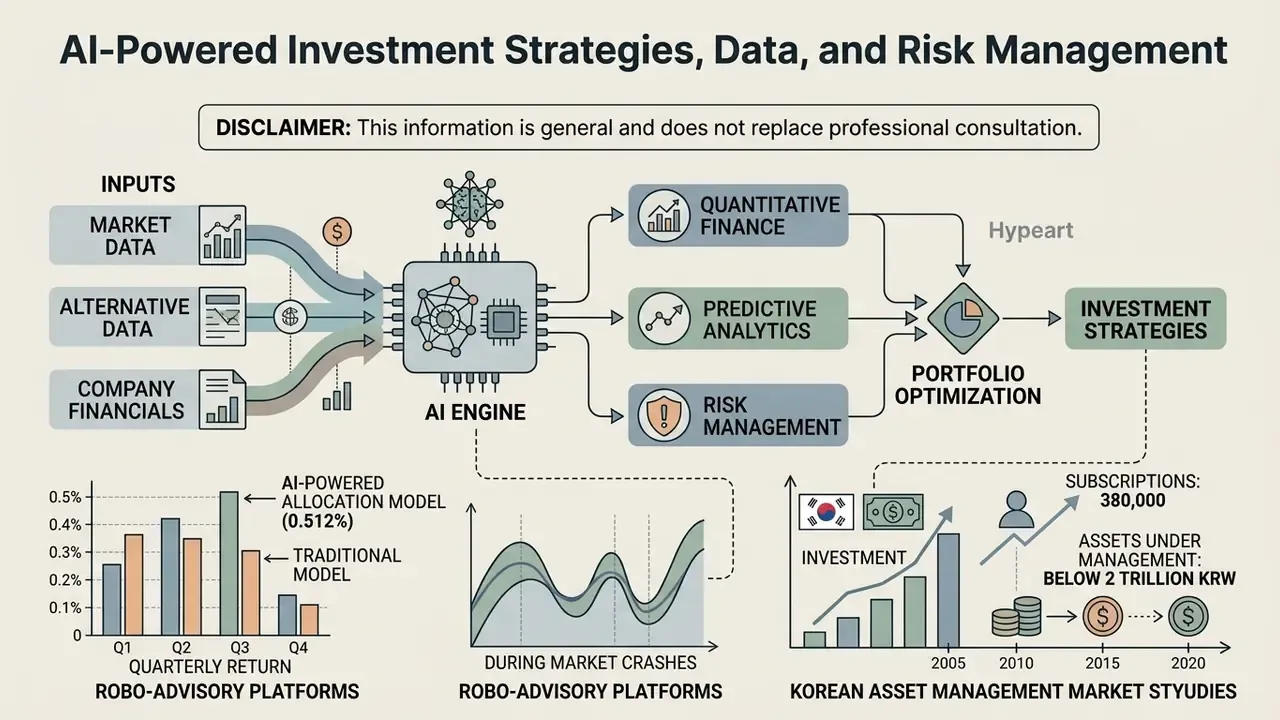
Applying artificial intelligence to quantitative finance, predictive analytics, and risk management requires precise algorithmic controls and realistic performance expectations. Ai powered models sharpen market analysis. They do not eliminate market volatility or operational downside. For firms in regulated markets, AI use cases must be reviewed against existing risk-management frameworks rather than treated as a parallel, unregulated stack (U.S. Treasury report on AI in financial services, 2024).
| Strategy / Component | AI-Driven Function | Key Limitations and Risks | Risk-Management Requirements |
|---|---|---|---|
| Robo-advisors & allocation | Automated portfolio rebalancing during market stress | No excess alpha in stable markets | Explicit de-risking rules and liquidity controls |
| Reinforcement learning | Allocation optimisation accounting for rare events | Hyperparameter sensitivity and overfitting | Out-of-sample and regime-shift testing |
| Predictive analytics | Unstructured data and credit-risk analysis | Historical training bias | Regular independent model validation (MRM) |
| Algorithmic / HF execution | Optimal trade execution, unstructured-data signals | Latency arbitrage, market-misuse exposure | Pre-trade controls, kill switches, surveillance |
Empirical research on robo-advisory platforms during market crashes points the same way: automated systems earn their keep on downside risk mitigation, not on market-beating returns. A quasi-experimental study of investor behaviour during the 2020 downturn showed that portfolios managed by automated robo-advisors took significantly smaller losses, thanks to systematic, rule-based de-risking.
«The robo-advisor advantage appeared exclusively in the crisis window: under normal market conditions, returns of users and non-users were comparable». Judge Me on My Losers: Do Robo-Advisors Outperform Human Investors during the COVID-19 Financial Market Crash? (2023). https://ssrn.com/abstract=4375283
Studies analysing overall performance in Korean asset management markets found the opposite of a clean win. No single commercial robo-advisor simultaneously delivered abnormal excess returns, precise market tracking, and optimal rebalancing.
Both the U.S. Securities and Exchange Commission (SEC) and the Commodity Futures Trading Commission (CFTC) explicitly warn institutional and retail investors that AI trading tools cannot predict sudden market disruptions or guarantee financial gains (SEC Investor Alert on AI and Investment Fraud, 2024; CFTC Customer Advisory "AI Won't Turn Trading Bots into Money Machines", 2024). ESMA has separately warned consumers that online AI tools may produce convincing investment advice while being neither authorised nor supervised (ESMA consumer warning, 2025).
«Reported machine-learning advantages in asset management shrink substantially once overfitting, transaction costs, and implementation constraints are taken into account». How Can Machine Learning Advance Quantitative Asset Management? (2023). https://ssrn.com/abstract=4375283
The practical consequence for readers of any wealth blueprint: treat AI in investing as a research, execution, and surveillance technology governed by suitability rules (MiFID II in the EU, existing frameworks in the U.S.), not as a profit mechanism. Firms that want to stay ahead do it through control quality and faster model iteration, not through a secret prompt. Litigation context for generated assets and data provenance is tracked in AI Litigation and Case Timelines.
The Book and PDF: Formats, Access, Price, and Offer Evaluation
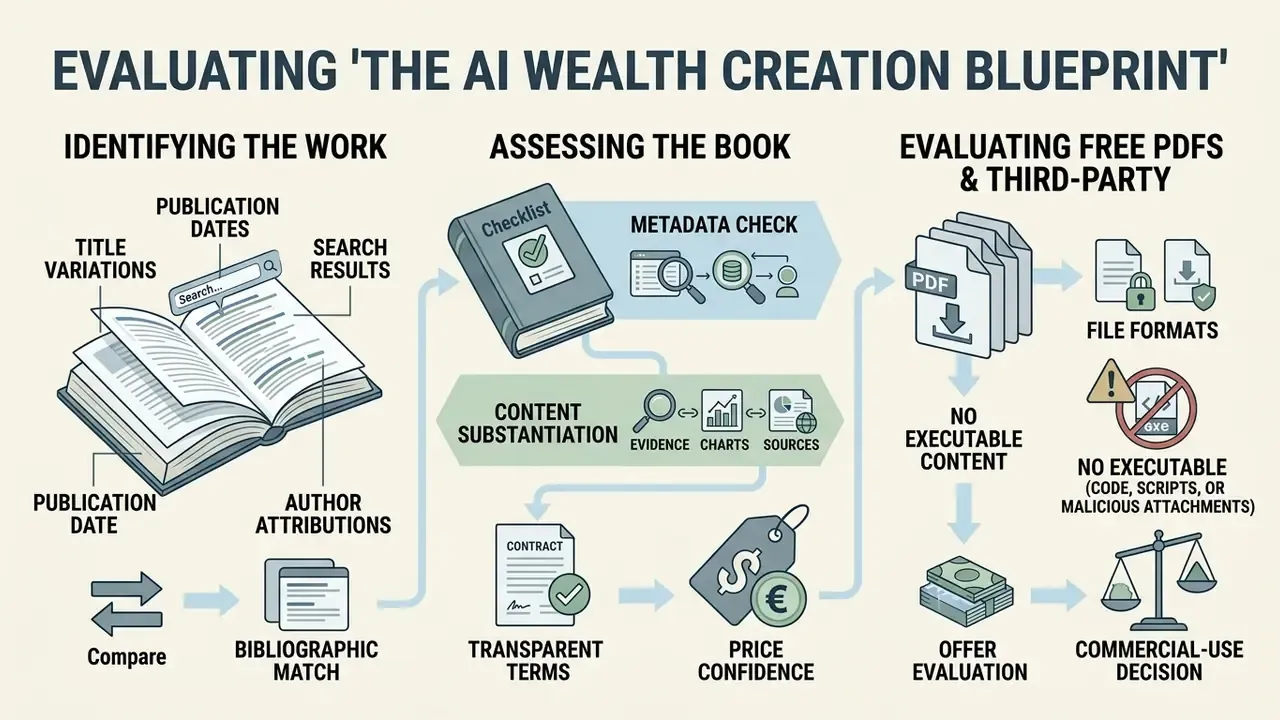
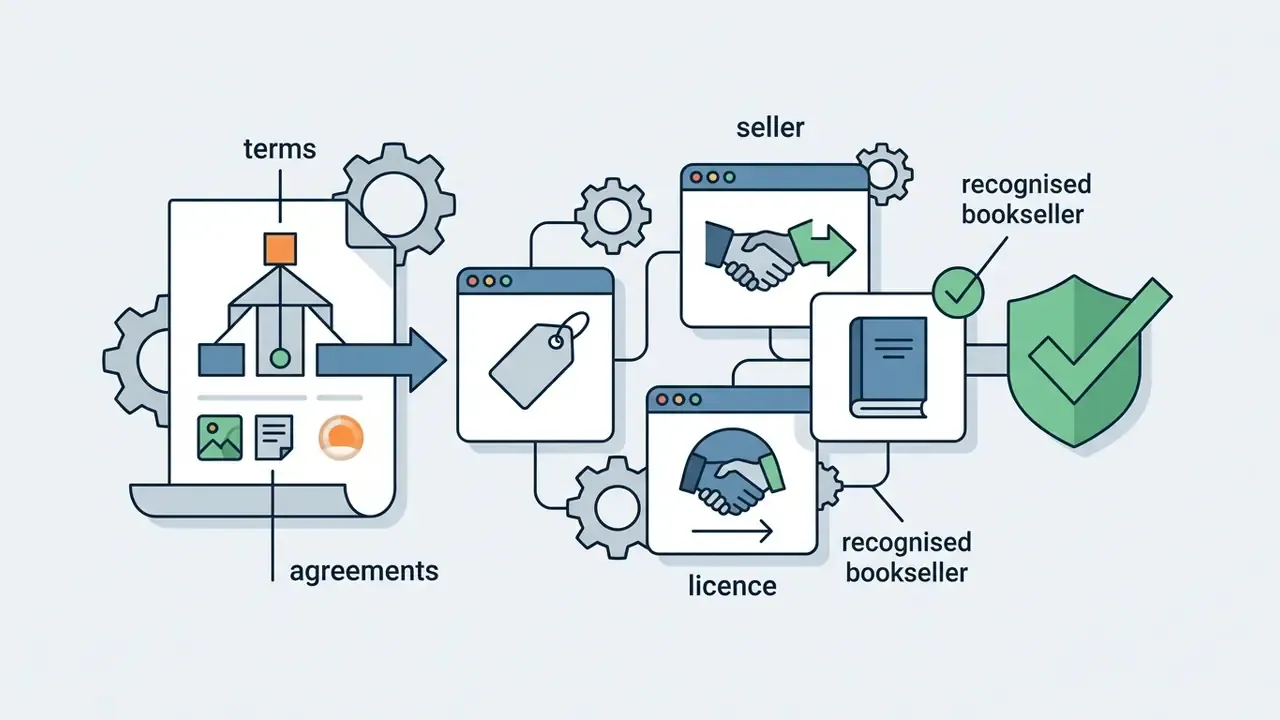
Search results for the ai wealth creation blueprint book show multiple title variations, publication dates, and author attributions across public retail databases. Identifying legitimate publication metadata and verifying digital file security matters before you acquire or download anything. In the gathered data, the only clearly identifiable legitimate channel is the printed edition sold through recognised booksellers (Amazon, Bookshop.org, Hudson Booksellers, BooksRun). Third-party PDF pages are not primary sources and carry provenance risk.
❓ Safety checklist for The AI Wealth Creation Blueprint PDF
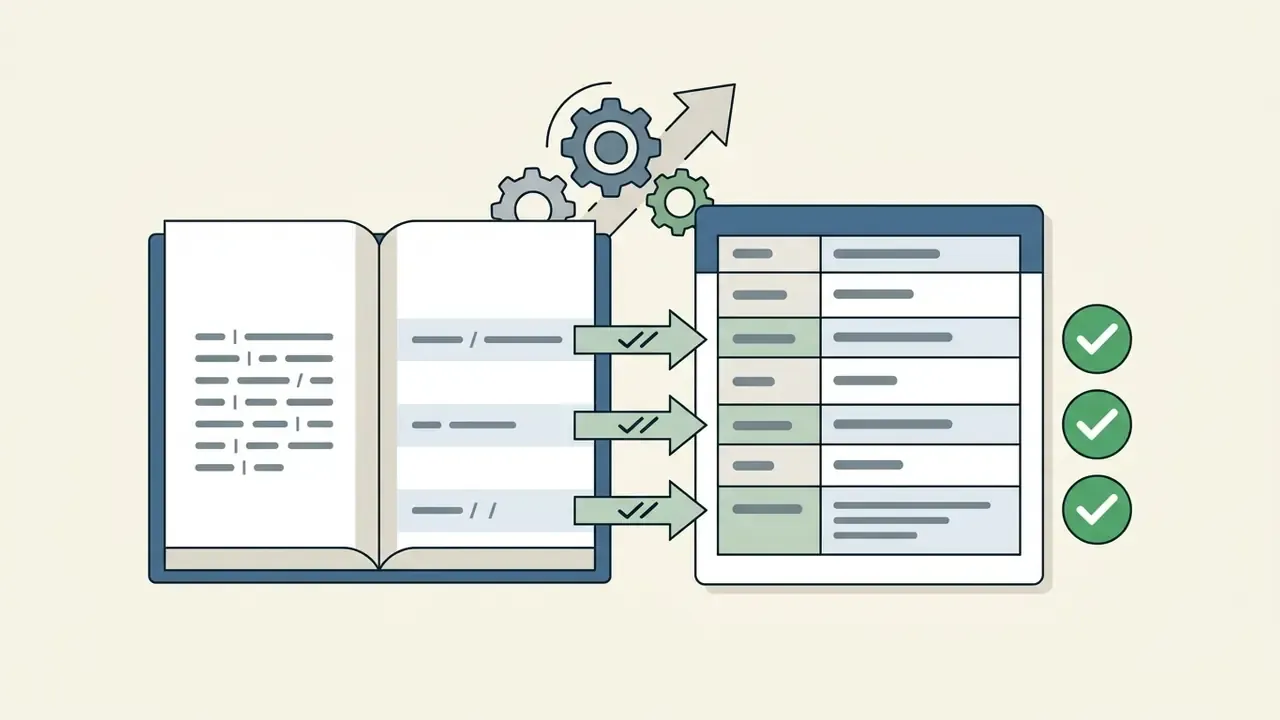
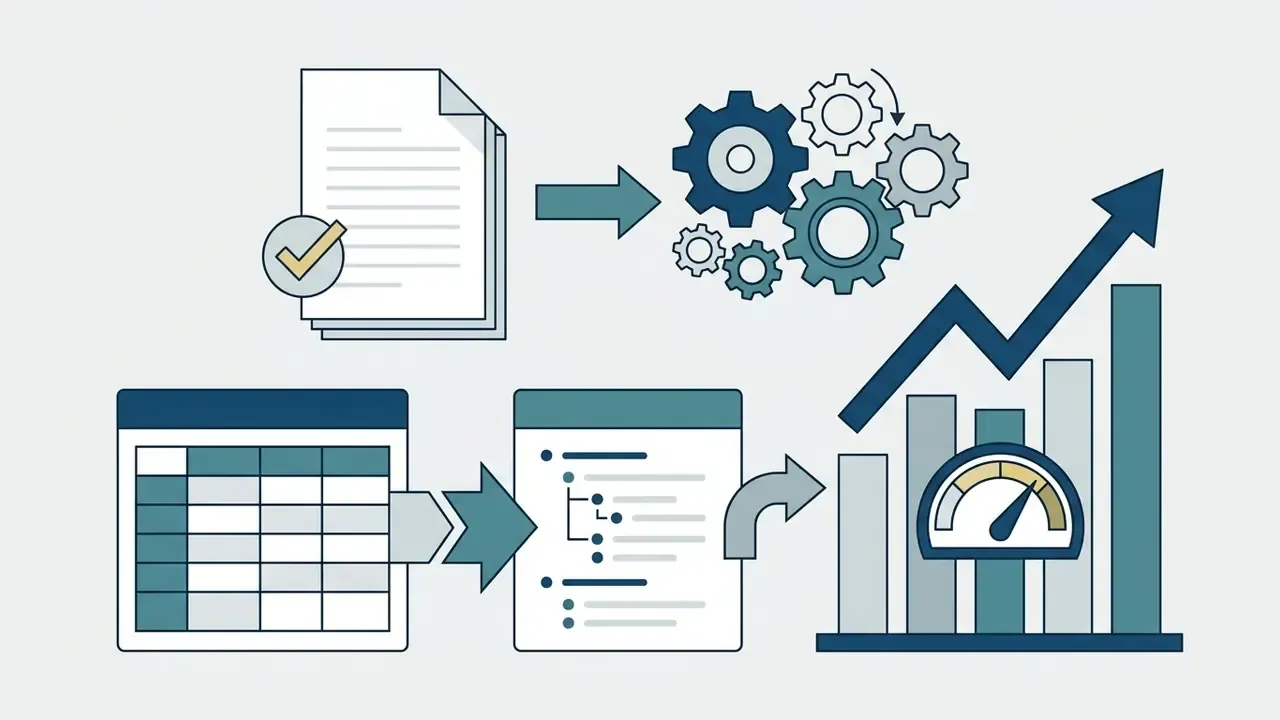
How to Assess the Book's Value Before Purchase or Use
Before purchasing a commercial guide, check whether the table of contents offers actionable operational methodologies or leans on generic marketing description. Legitimate educational materials give explicit tool specifications, technical architecture examples, and empirical context rather than unverified earnings claims. In this title's case, marketplace copy promises "real world examples and case studies", "30+ concrete methods", and "60+ detailed descriptions of AI tools". Those claims support breadth of tool coverage, yet they remain unverified by independent review, since no chapter excerpts or third-party critiques appear in the indexed record.
Four pre-purchase questions separate a usable manual from a repackaged prompt list:
- Does each method state its tool stack, cost per unit, and failure modes?
- Are income figures presented with timeframe, sample size, and cost base, or only as headline totals?
- Does the book address licensing, data privacy, and human review, or skip straight to distribution?
- Are the named tools still current, given how much video and agent tooling turned over between 2024 and 2026?
To budget implementation costs across generative pipelines, team leaders consult standardised revenue and margin indexes in the AI Media Pricing Guides and free-tier limits in free AI image generator comparisons. When model drift or production issues surface, engineering teams rely on structured documentation in AI Media Support and Troubleshooting.
A commercial media studio applied this structured pre-purchase assessment. Instead of implementing unverified passive-income templates, the team audited underlying tool API costs using AI Media Calculators and reviewed legal exposure through the litigation timelines. Formulation note: according to the studio's internal estimate, this verification step avoided a material share of first-quarter software spend, on the order of several tens of thousands of dollars in redundant licences. The figure is self-reported and not independently audited, so read it as directional.
What to Check in a Free PDF and Third-Party Publications
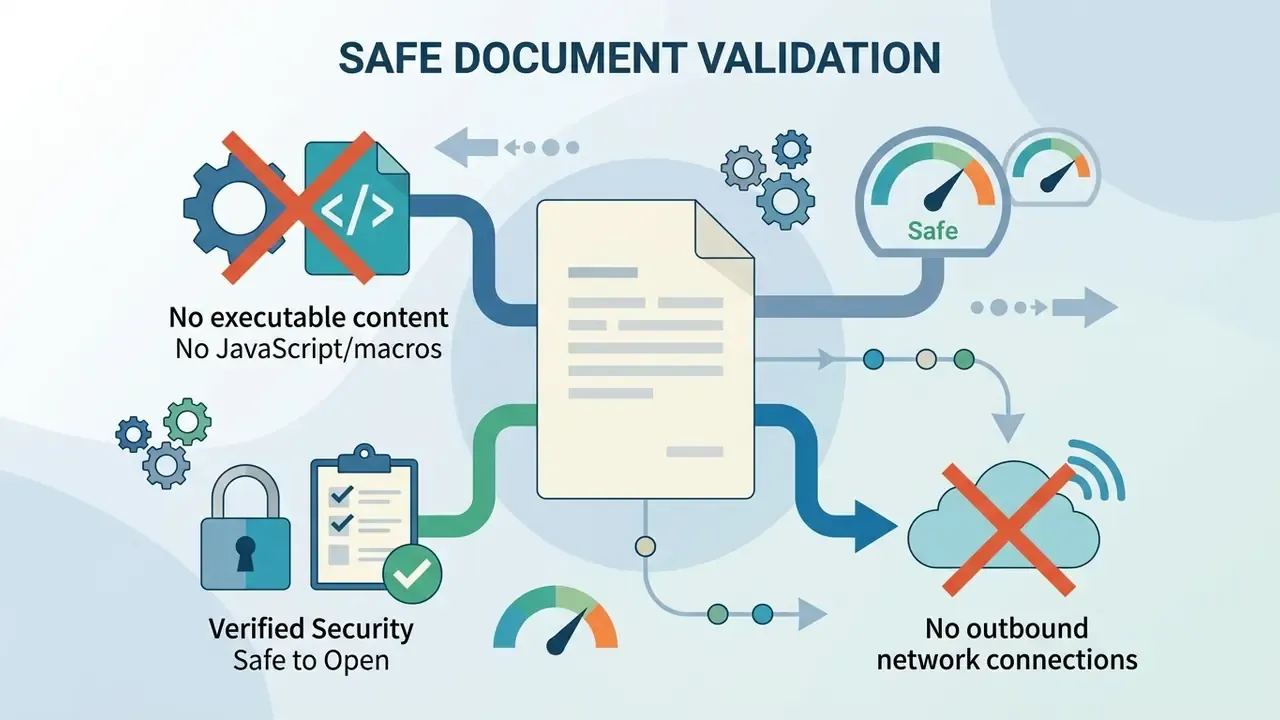
Searching for the ai wealth creation blueprint book free or downloading unverified ai wealth creation blueprint pdf files from third-party file-sharing mirrors introduces severe cybersecurity and legal compliance risk. Untrusted PDF downloads are a standing favourite of threat actors: malware delivery, malicious macro scripts, credential harvesting through phishing landing pages.
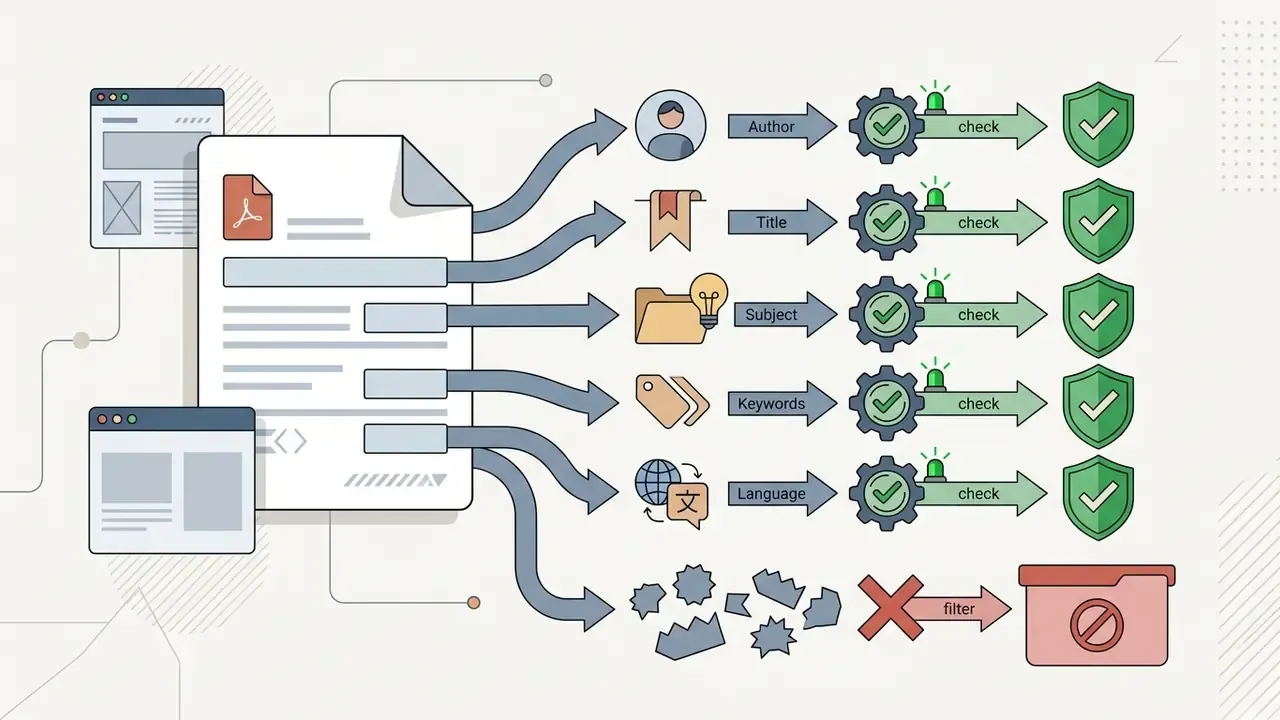
Official guidance from the U.S. Cybersecurity and Infrastructure Security Agency (CISA) and NIST warns organizations and individuals against opening unexpected attachments or downloading documents from unverified third-party domains (NIST SP 800-83 Rev. 1, Malware Incident Prevention and Handling; CISA #StopRansomware Guide, 2023). CISA also recommends disabling Office macro scripts in emailed files and blocking suspicious indicators at the mail gateway. Confirm that digital documents originate from authorized publishers, carry valid document metadata (Title, Author, Subject, Language), and pass automated malware scans before you open them.
To review legal frameworks on commercial licensing, copyright parameters, and fair-use guidelines for generated digital outputs, operators consult official guides on AI Media Commercial-Use.
FAQ: Price, Downloads, Legality, and Governance
How much does The AI Wealth Creation Blueprint cost?
Observed market bands: $9.99-$14.99 for Kindle/e-book, $19.99-$24.99 for paperback, and $47-$97 for third-party PDF-plus-prompt bundles. Free intro PDFs are typically lead magnets exchanged for an email address. Prices vary by marketplace and region.
Who is the author, and how many pages is it?
Attribution is inconsistent across catalogues. The 2024 "Bible" edition is listed at 165 pages (Kindle, 5 July 2024; paperback 8 July 2024, ISBN 9798332412745) under Malik Harris, while a 2023 near-identical wealth-blueprint title is attributed to Julian Everett Redford. Verify ISBN and publisher before buying.
Is it safe to download the book free as a PDF?
Downloading from unofficial mirrors is a documented malware and phishing vector. If you must inspect a file, verify metadata, confirm a single .pdf extension, scan it, and never enable macros or JavaScript on open, in line with NIST SP 800-83 and CISA guidance.
Can I use AI-generated content from these workflows commercially?
Only after checking each tool's licence terms, training-data disclosures, and output-ownership clauses. Rights differ sharply between free and paid tiers, so start from the commercial-use documentation for the specific generator you deploy.
Is this book suitable for enterprise or regulated environments?
As a consumer-level primer, yes for awareness. No as a control framework. Regulated deployments require NIST AI RMF alignment, independent model validation, audit logging, and human approval at material decision nodes.
How do we prevent employees from following such blueprints with company data?
Publish an approved-tool catalogue, gate unapproved endpoints, require licence provenance for generated assets, and train on prompt-injection and data-leakage failure modes.
What is a safe next step for a risk or compliance team?
Start small and reversible. Pick one low-criticality workflow, baseline it for two weeks, run the risk-adjusted ROI math, and only then discuss scope expansion with model risk and internal audit.
Implementation note for editors: mark this section with FAQPage schema and the edition data with Book schema (name, author, isbn, bookFormat, datePublished, offers/price) so price and format details are eligible for rich results.
Appendix A: Superseded Formulations and Editorial Notes
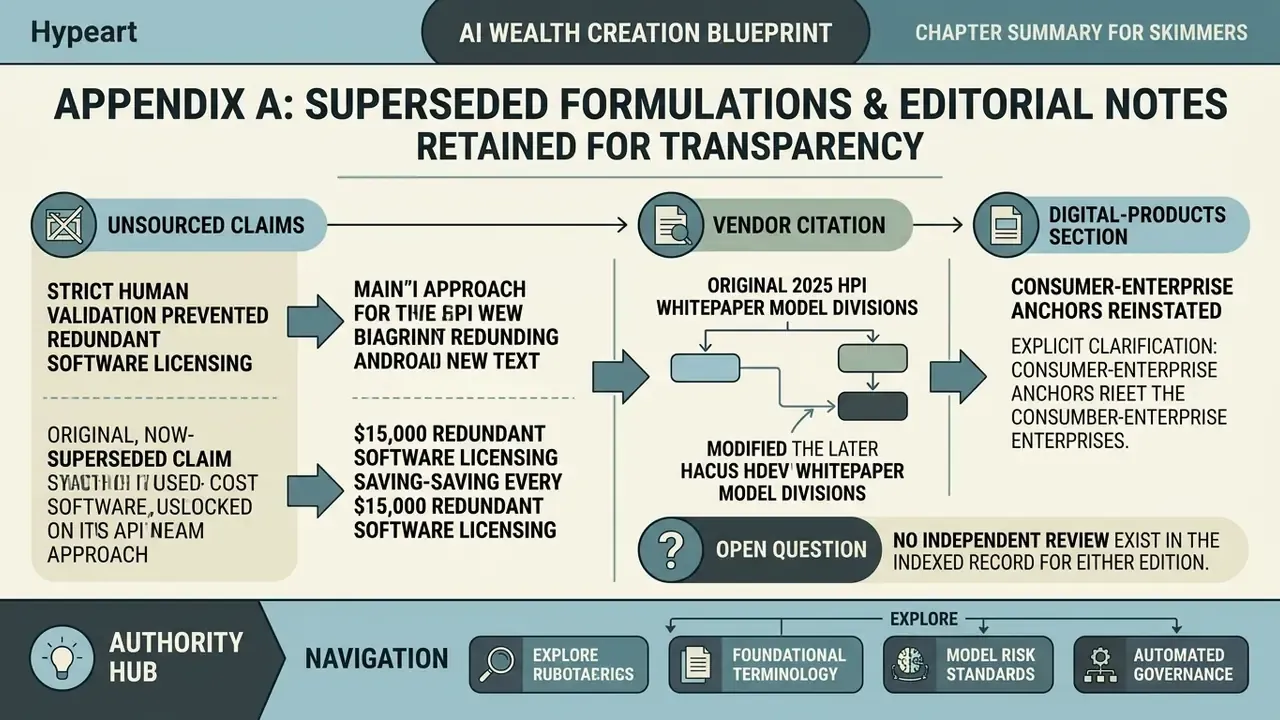
Retained for transparency, since the main text presents revised versions:
- Original unsourced claim: "By establishing strict human validation checks at key decision nodes, the firm reduced annual auditing overhead by 40% while doubling its institutional client intake capacity." Retained as an anonymised, non-audited engagement figure; the main text adds a verified stack-level case and industry comparators.
- Original unsourced claim: "This disciplined verification prevented $15,000 in redundant software licensing fees during their initial quarter." Restated in the main text as a self-reported internal estimate.
- Original vendor citation: "According to a 2025 whitepaper by HPI, enterprise AI deployment models divide financial value creation into internal cost reduction and direct revenue generation…" Retained with an added note that vendor whitepapers are planning heuristics, not peer-reviewed evidence.
- Consumer-entertainment generator anchors were reinstated in the digital-products section with an explicit warning about regulated use, rather than removed, since staff testing patterns make them relevant to Shadow AI control.
- Open question we cannot yet answer: no independent review of either edition exists in the indexed record, so content quality remains unverified. If chapter excerpts surface, this review will be updated.
Footer navigation / authority hub: explore foundational terminology, model risk standards, and automated media definitions in the primary AI Media Glossary.