What AI content creation is and how it works
AI content creation is the machine-assisted generation, transformation, and optimization of digital media through trained statistical foundation models. These algorithms process human prompts and structural constraints to produce textual copy, images, audio, and video assets based on probabilities derived from extensive training corpora.
«Generative AI systems are deep neural networks pre-trained on large data corpora and fine-tuned to produce content according to user instructions.»
Huang & Rust, Journal of the Academy of Marketing Science (2023). https://doi.org/10.1007/s11747-023-00929-3
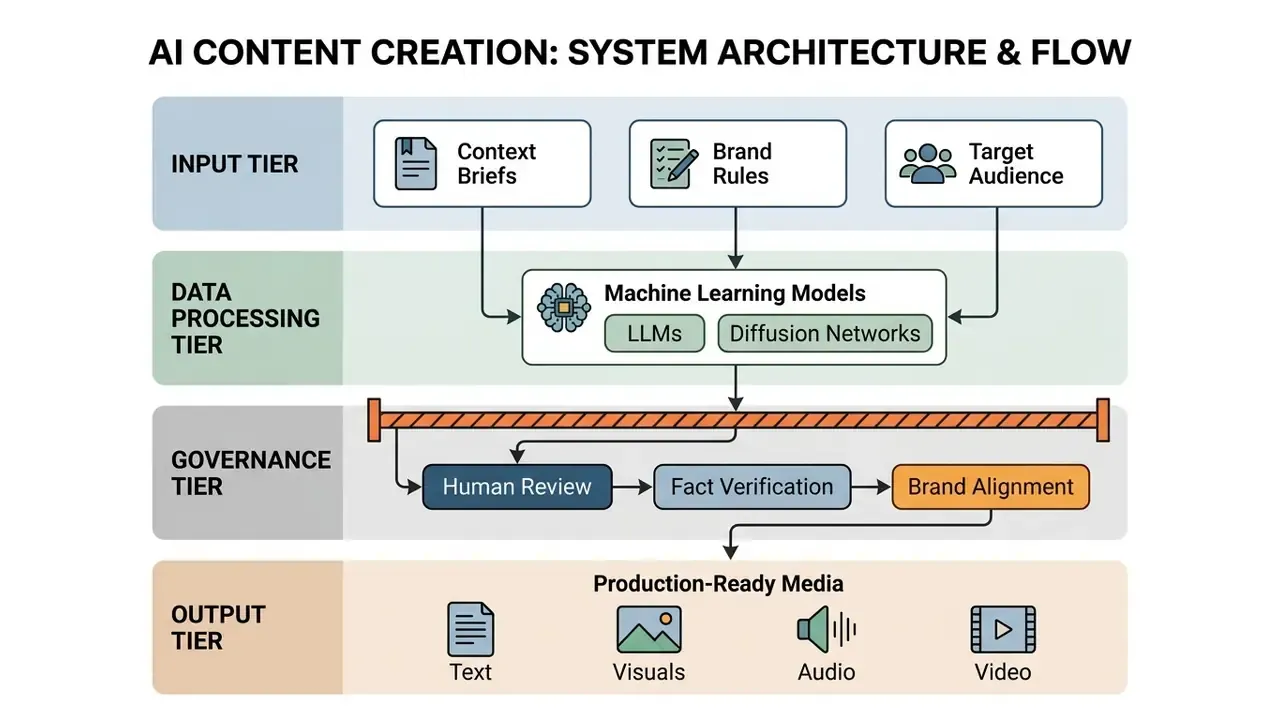
Modern content creation using ai operates as a collaborative workflow between human operators and machine learning architectures rather than a fully autonomous pipeline. The technology relies on foundational deep learning models fine-tuned to interpret contextual instructions. The machine handles initial drafting, pattern extraction, and structural scaffolding, while human professionals maintain decision ownership, direct strategy, and enforce compliance controls (NIST AI Risk Management Framework: Generative AI Profile, 2024. https://nvlpubs.nist.gov/nistpubs/ai/NIST.AI.600-1.pdf).
When implementing ai based content creation in regulated enterprise contexts, institutions structure these systems as digital assistants. Every automated process requires a designated business owner, specific operational boundaries, data security safeguards, and clear escalation protocols for non-standard outputs. In banking and fintech environments, this framing matters more than tooling. A generative model that drafts client-facing material becomes, in practice, a component inside a controlled production process, subject to the same ownership and challenge expectations as any other decision-support system.
Website and landing-page work, sometimes labelled ai web content creation, follows exactly the same control logic. Channel changes; accountability does not.
What types of content you can create with AI
Organizations deploy ai for content creation across four main media categories: text, visual media, synthetic audio, and video assets. Each modality relies on underlying neural networks designed for specific output formats and operational workflows.
- Textual media Long-form blog posts, technical documentation, marketing copy, ad text, email campaigns, and social media captions drafted via large language models like ChatGPT, Claude, and Gemini.
- Visual assets Digital graphics, concept illustrations, product mockups, and data visualizations generated through tools like Midjourney, DALL-E, and Canva AI. Compare capabilities across AI image generators, review the Canva AI Generator licensing overview, or explore visual tools in our guide to the adobe ai generator.
- Audio artifacts Synthetic voiceovers, podcast audio cleanup, multi-language dubbing, and narrative tracks produced using automated sound architectures. Voice quality, language coverage, and licensing terms are compared in our reference on AI voice generators.
- Video formats Short-form social clips, explainer videos, avatar-led presentations, and automated scene assembly using systems like Descript, Pictory, and Lumen5. Study the category in our reference on AI video generators, or for specialized workflows, consult the adobe ai video resource.
Enterprise teams frequently combine these formats into unified campaign packages. A single core document can yield localized articles, visual assets, short video scripts, and social posts while maintaining stylistic alignment across distribution channels. One quarterly market commentary, for instance, can carry an internal explainer video, three client emails, and a compliance-cleared summary card. Same source, one approval trail.
Where AI helps and where human review is mandatory
Artificial intelligence excels at rapid ideation, structural drafting, and formatting, but requires human review for fact-checking, brand alignment, and ethical validation. Automated models operate on pattern matching rather than genuine semantic understanding, making external verification essential before public release.
«When co-writing with AI, authors shift into reactive writing: they evaluate model suggestions instead of generating ideas themselves.»
How Co-Writing with AI Changes How We Engage with Ideas, arXiv preprint (2023). https://arxiv.org/abs/2305.00833
That cognitive shift explains why unreviewed AI drafts drift toward the average. The writer stops originating and starts approving. Approval is cheap. Originality is not.
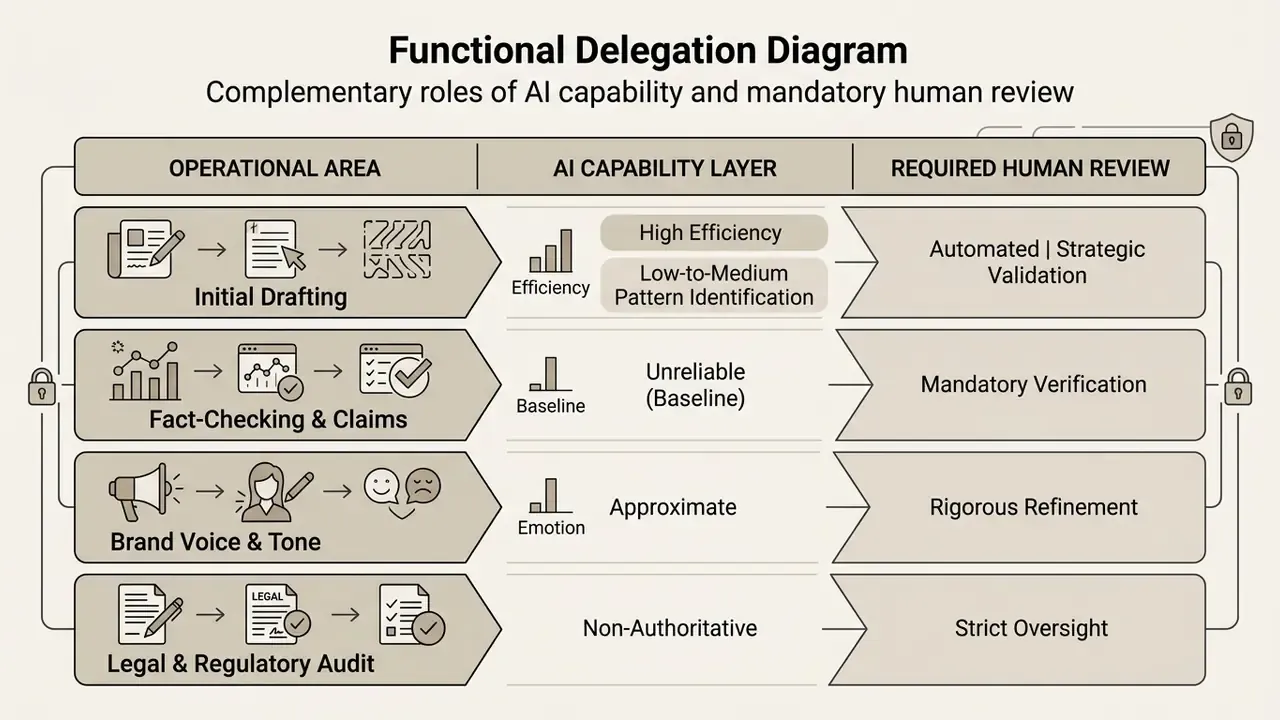
«In a randomized experiment with 453 professionals, access to ChatGPT cut task completion time by 40% and raised output quality by 18%.»
Noy & Zhang, Science (2023). https://doi.org/10.1126/science.adh2586
Performance limits and the boundary of operational risk
A field study conducted with Boston Consulting Group demonstrated that consultants using GPT-4 completed tasks within the model's capabilities 25.1% faster and with over 40% higher quality ratings. However, for tasks selected outside the model's operational boundary, participants using AI were 19 percentage points less likely to generate accurate solutions compared to unassisted peers. That performance drop is the practical meaning of the "jagged technological frontier".
«Consultants with GPT-4 access worked 25.1% faster with quality scores over 40% higher, but beyond the model's frontier, accuracy fell by 19 percentage points.»
Dell'Acqua et al., Navigating the Jagged Technological Frontier, Harvard Business School and Boston Consulting Group (2023). https://www.hbs.edu/ris/Publication%20Files/24-013_d9b45b68-9e74-42d6-a1c6-c72fb70c7282.pdf
The governance implication is direct. Productivity gains are conditional on task placement. A control framework that cannot classify tasks as inside or outside model capability will systematically export errors into published assets. Note the asymmetry: the speed gain is visible in a dashboard, the accuracy loss usually is not.
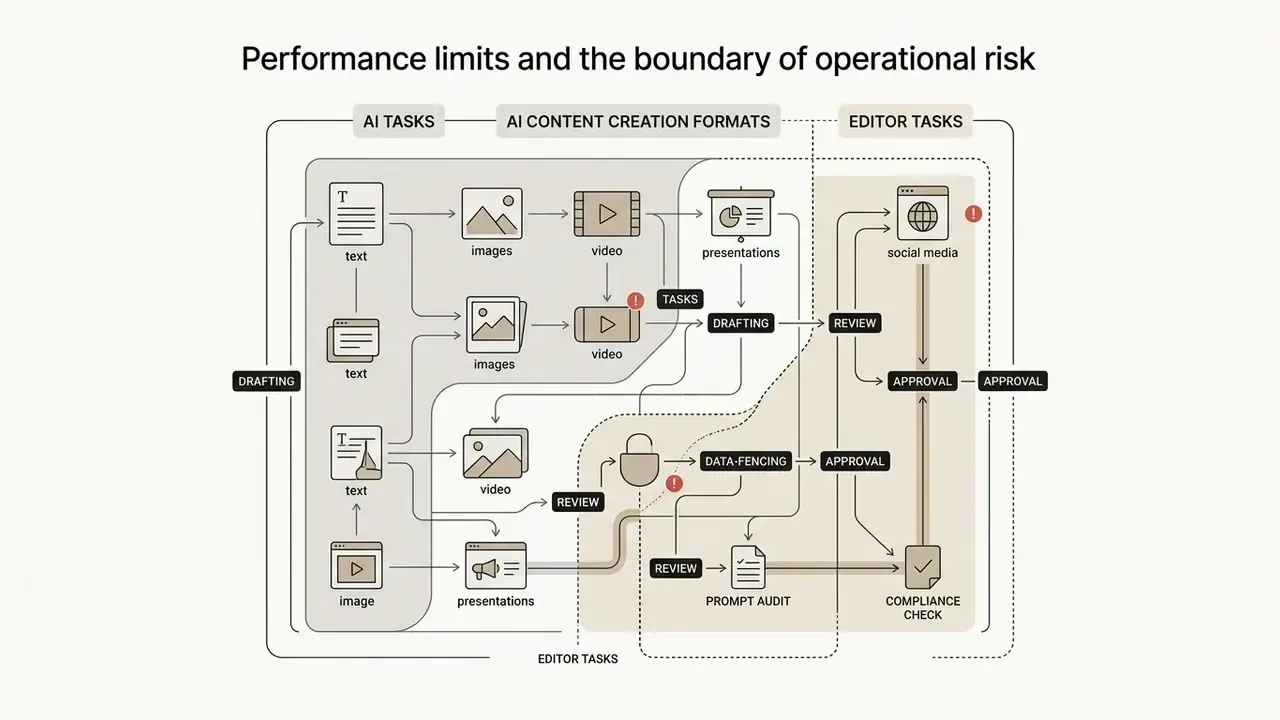
Human oversight remains mandatory for claim verification, legal compliance, contextual nuance, and brand voice protection. AI models handle high-volume processing, while human editors provide expert judgment, verify primary sources, and make the final publication decision.
Why use AI for content creation
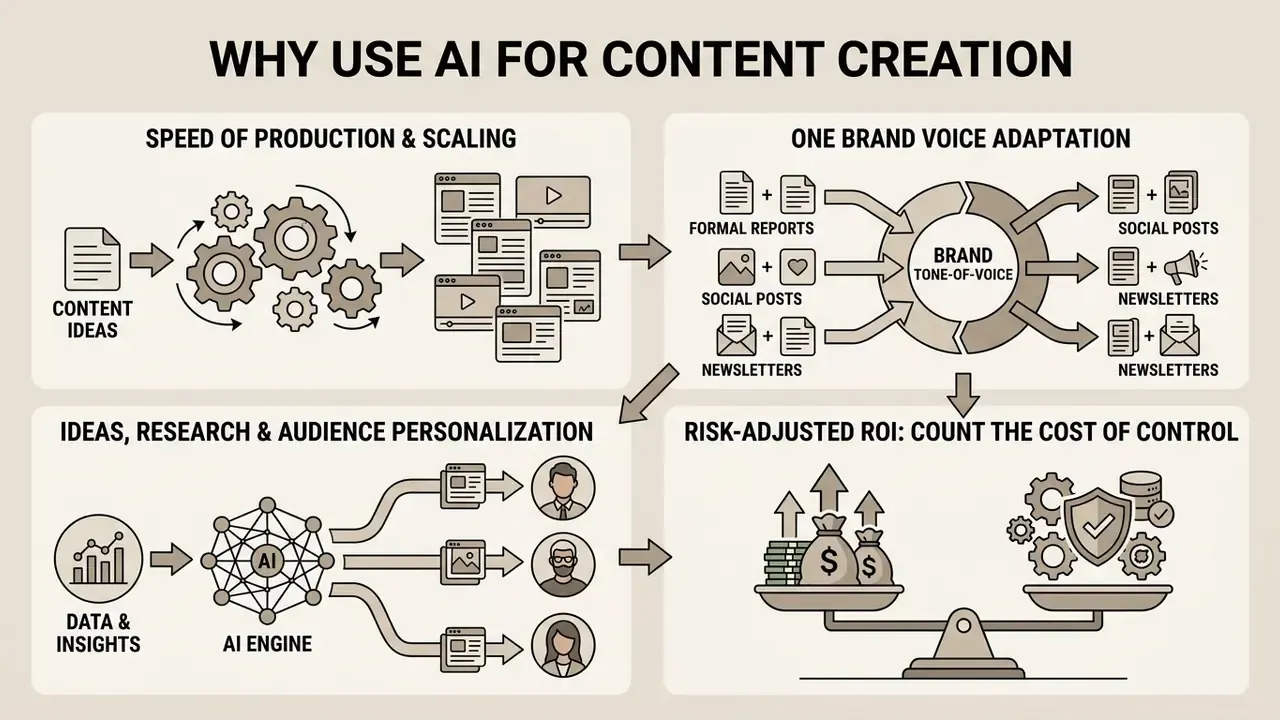
Deploying ai for content creation provides measurable improvements in operational efficiency, content scale, creative ideation, and campaign throughput. Enterprise marketing functions use automated content creation with ai tools to accelerate asset development while optimizing resource allocation across lines of business.
Research by McKinsey estimates that integrating generative AI into marketing operations yields a productivity lift equivalent to 5% to 15% of total function spend.
«Generative AI could increase the productivity of the marketing function by 5 to 15 percent of total marketing spending.»
The economic potential of generative AI, McKinsey Global Institute (2023). https://www.mckinsey.com/capabilities/mckinsey-digital/our-insights/the-economic-potential-of-generative-ai-the-next-productivity-frontier
Applied to enterprise asset creation, using ai for content creation allows teams to increase publishing output, conduct broader audience experimentation, and reduce manual drafting hours.
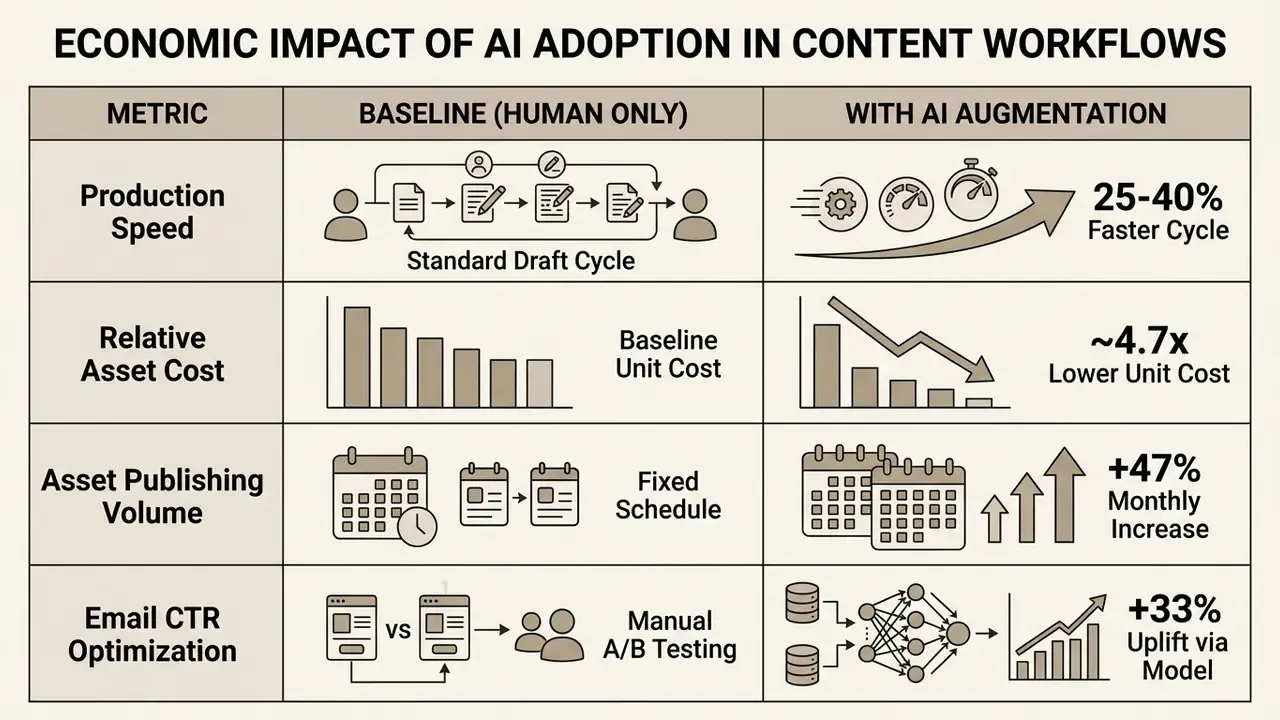
To achieve these gains, organizations must balance acceleration against risk management. Speed enhancements yield long-term value only when paired with review protocols that prevent low-quality outputs from reaching target audiences.
Speed of content production and campaign scaling
Automated workflows accelerate asset drafting and enable rapid campaign expansion across digital channels. Using ai to create content reduces production cycles for routine marketing copy, which lets teams launch multi-channel initiatives faster.
A preregistered study published in Science confirmed that professionals using generative AI completed midlevel professional writing tasks 40% faster while raising measured output quality by 18% (Noy & Zhang, Science, 2023. https://doi.org/10.1126/science.adh2586). Industry survey data from Ahrefs shows that companies using generative tools publish 47% more content per month at an average cost reduction of 4.7 times per asset.
«87% of marketers use generative AI for content creation; AI-assisted assets are on average 4.7x cheaper and increase monthly publishing volume by 47%.»
Ahrefs Content Marketing Survey (2024). https://ahrefs.com/blog/ai-content-creation/
In commercial email operations, fine-tuned models trained on historical performance data generated email subject lines that achieved a 33% higher click-through rate across 283 million impressions compared to human baselines.
«A fine-tuned language model trained on historical A/B tests raised email subject-line CTR by 33% across 36 campaigns and 283 million impressions versus the human baseline.»
Causal alignment field experiment in email marketing, arXiv (2024). https://arxiv.org/abs/2402.09723
So yes, teams do create content faster with ai, and engagement can rise when generation is tied to measured outcomes. It also demonstrates the boundary condition: the uplift came from a model fine-tuned on historical results, not from a generic public chatbot with a clever prompt.
Risk-adjusted ROI: count the cost of control
Efficiency metrics alone overstate the business case. Every published AI-assisted asset carries a control cost: verification hours, legal or compliance sign-off, model-risk review for regulated communications, GRC tooling, and remediation when an error reaches production. Finance functions in banking and fintech should therefore model risk-adjusted ROI rather than raw time savings.
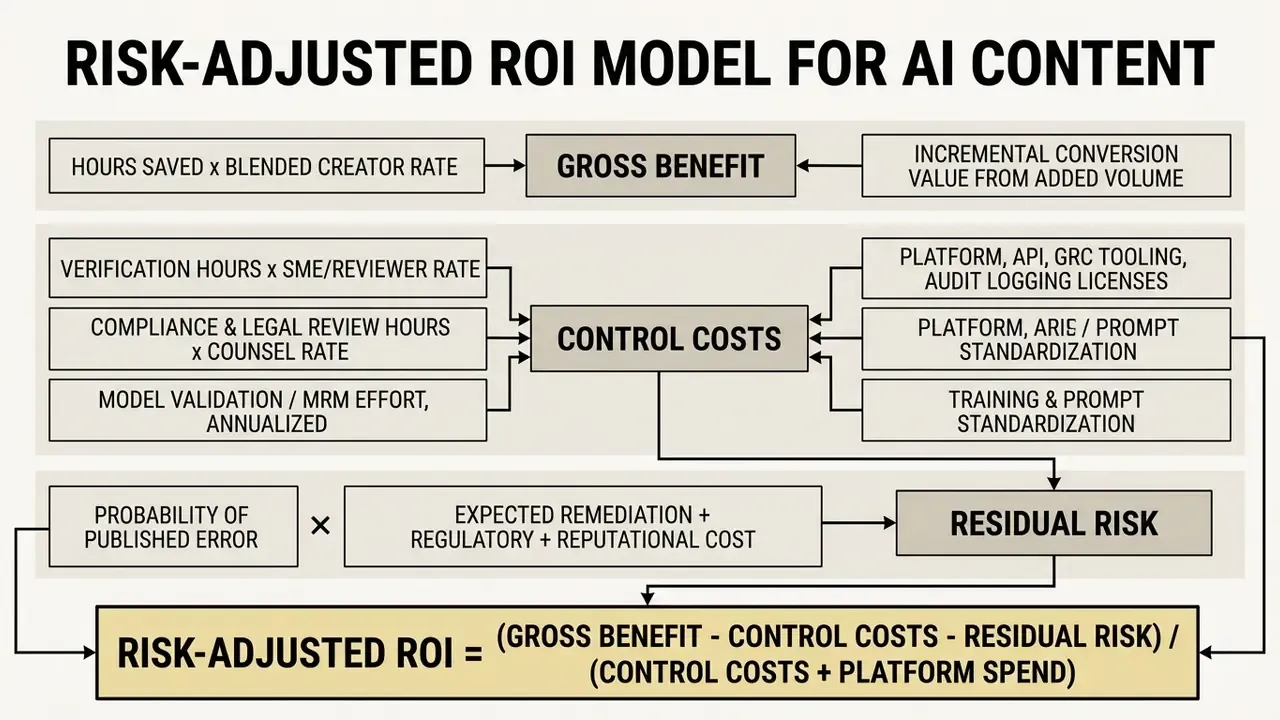
| Cost line | Typical driver | Why it is often missed |
|---|---|---|
| Verification hours | Claims per asset x minutes per claim | Treated as "editing", not as a control |
| Compliance review | Regulated communications volume | Sits in a different cost centre than marketing |
| Model risk review | Number of models in scope, change frequency | Only triggered when models are formally inventoried |
| Audit logging and GRC | Seats, retention period, storage | Bundled into IT spend |
| Remediation | Corrections, retractions, re-filings | Recorded as incident cost, not AI cost |
A practical calibration rule, and it is a rule of thumb rather than a standard: if a content category consumes more than 40% of its original production time in verification and compliance review, the automation case for that category is weak. Redesign the workflow before scaling it. Structured pricing options for tooling are indexed in our AI Media Pricing directory, and modelling templates sit in our calculators library.
Ideas, research and audience personalization
Generative models act as creative assistants, extracting insights from unstructured datasets to build buyer personas and personalized messaging frameworks. Teams use these features to evaluate audience queries, structure content briefs, and generate tailored copy variants.
When supporting consumer research, LLMs can simulate user perspectives, generate initial ideation prompts, and restructure raw data into clear audience profiles.
«LLMs can act as designer, writer, and actor in ideation, generating stimuli, improving idea expression, and simulating consumer interviews, but suggestions must be filtered for accuracy.»
Ideation with Generative AI in Consumer Research and Beyond, Harvard Business School working paper (2025). https://www.hbs.edu/faculty/Pages/item.aspx?num=66163
These tools help writers explore alternative framings, address niche customer questions, and refine messaging for distinct segments. Treat every simulated persona as a hypothesis, not a finding. Until interviews, CRM data, or analytics confirm it, it is a plausible story about a customer who may not exist.
Research also warns that weak AI suggestions can depress creative variation during divergent thinking tasks.
«Low-quality AI prompts perceived as machine-generated reduced divergent thinking scores relative to other experimental conditions.»
Medeiros et al., experiment on human and AI co-creativity using ChatGPT, Journal of Business Research (2023). https://doi.org/10.1016/j.jbusres.2023.114207
Marketers should treat AI ideation output as raw material, applying human judgment to select, validate, and develop the strongest concepts.
One brand voice and tone-of-voice adaptation
Maintaining a consistent brand tone across automated assets requires structured voice profiles, explicit instructions, and editorial review. Standard generative models drift toward generic phrasing, so targeted customization is necessary to preserve identity.
| Aspect | AI content strengths | Operational limits and risks | Control mechanisms |
|---|---|---|---|
| Speed and volume | Rapid drafting, rapid iteration, multi-channel scaling. | Risk of low-quality or repetitive volume. | Production limits, editorial verification gates. |
| Research and ideation | Pattern recognition, structural outlines, variant generation. | Potential hallucinations, unverified claims. | Source checking, primary document review. |
| Brand voice | Adaptable formatting, style matching via context inputs. | Stylistic drift, generic corporate voice. | Voice profile training, human editorial refinement. |
| Resource efficiency | Lower unit cost per asset, faster cycle times. | Hidden control costs, governance overhead. | Comprehensive ROI models, auditing frameworks. |
Vendor documentation for platforms such as Jasper and HubSpot describes tone alignment through uploaded reference material: brand style guides, preferred glossaries, approved sample texts, and banned vocabulary lists. Jasper's documentation states that a brand voice profile can be built from up to eight reference samples, with the generated voice description editable by the operator. HubSpot applies brand identity inside the editor and returns the rewritten passage for human acceptance, refinement, or rejection. In both cases the control point is identical: a human approves the voice profile before it is saved and reused. Visual brand consistency follows the same logic, so see our overviews of AI photo editors and general-purpose online photo editors for asset-level style controls.
Human editors must verify that finalized materials retain an authentic voice. Models apply technical style rules well. They do not carry twelve years of experience in a specific credit market, and readers in that market notice.
How to create content using AI: a step-by-step workflow
A structured operational process is what makes it possible to create content using ai reliably at scale. Anyone asking how to create content using ai without incidents is really asking for a pipeline with named gates. A standardized pipeline minimizes risk, holds content quality steady, and aligns automated generation with organizational goals.
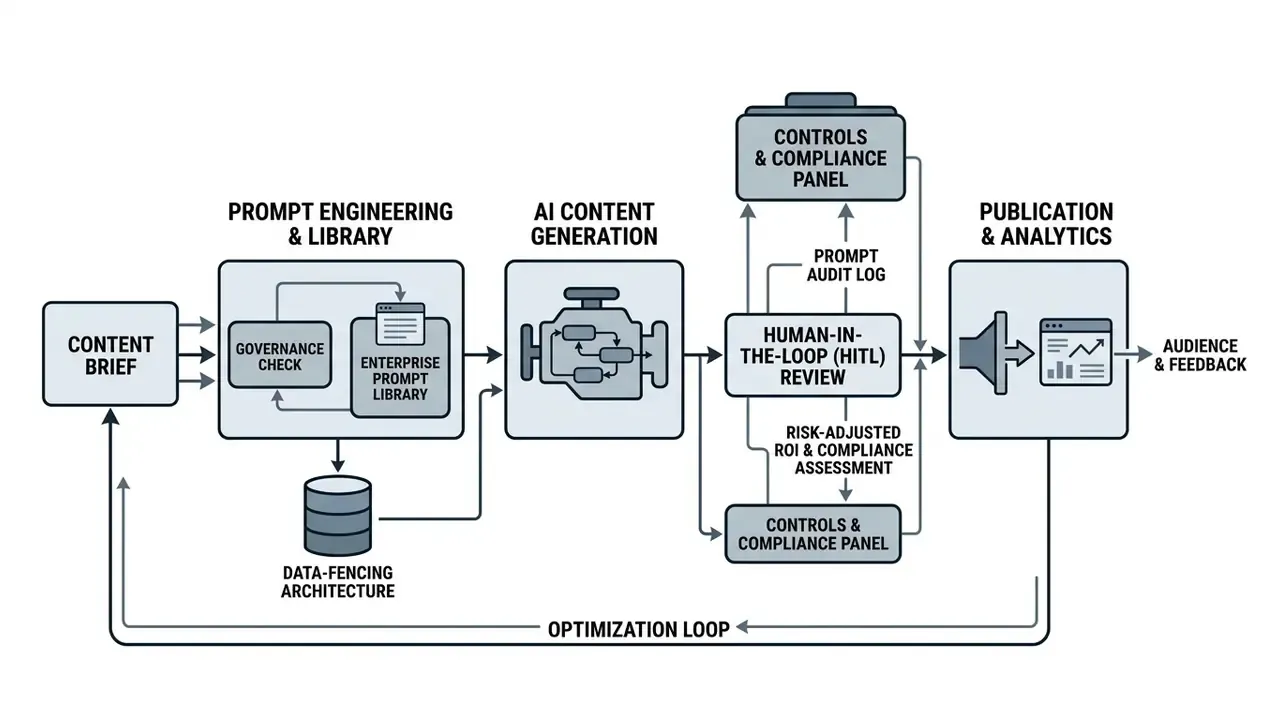
The pipeline follows eight sequential steps: goal definition, background research, content brief creation, AI-assisted drafting, editorial refinement, fact verification, technical optimization, and post-publish performance tracking (CMA AI Playbook 2.0, AI Content Quality Check, Canadian Marketing Association, 2026. https://thecma.ca/docs/default-source/default-document-library/cma-ai-playbook-20---ai-content-quality-check-3-question-to-ask-before-you-publish.pdf).
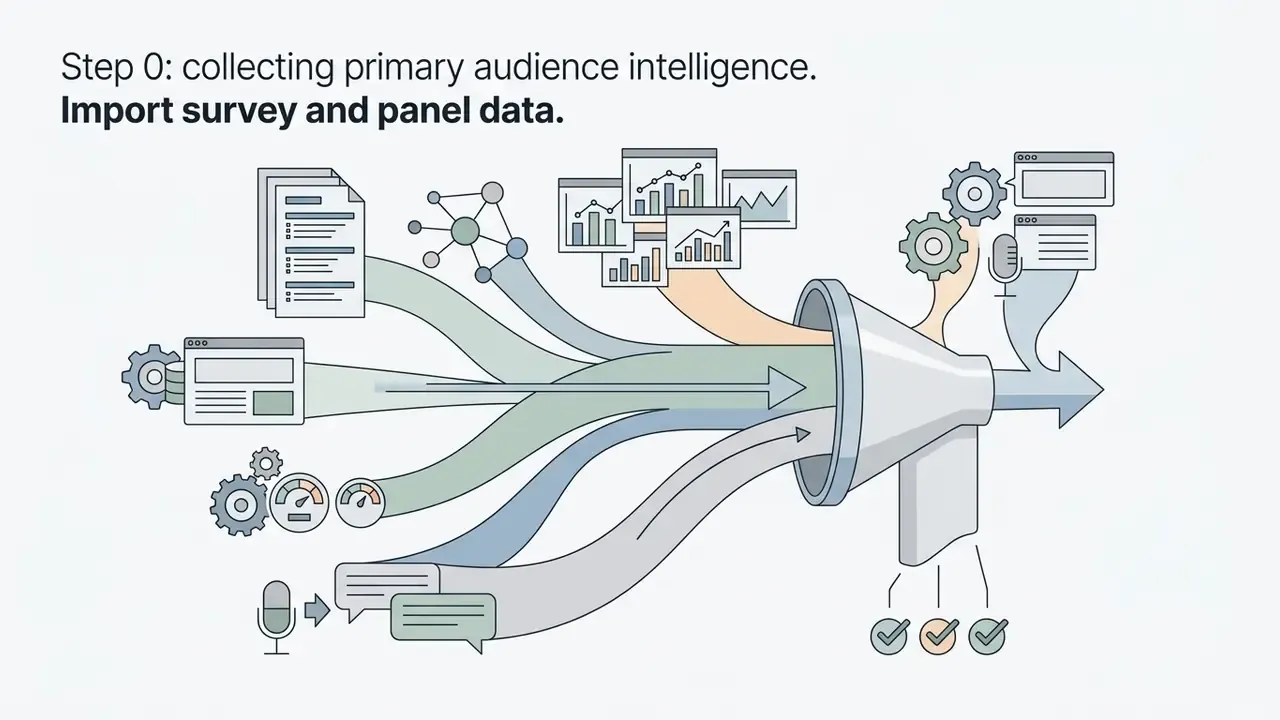
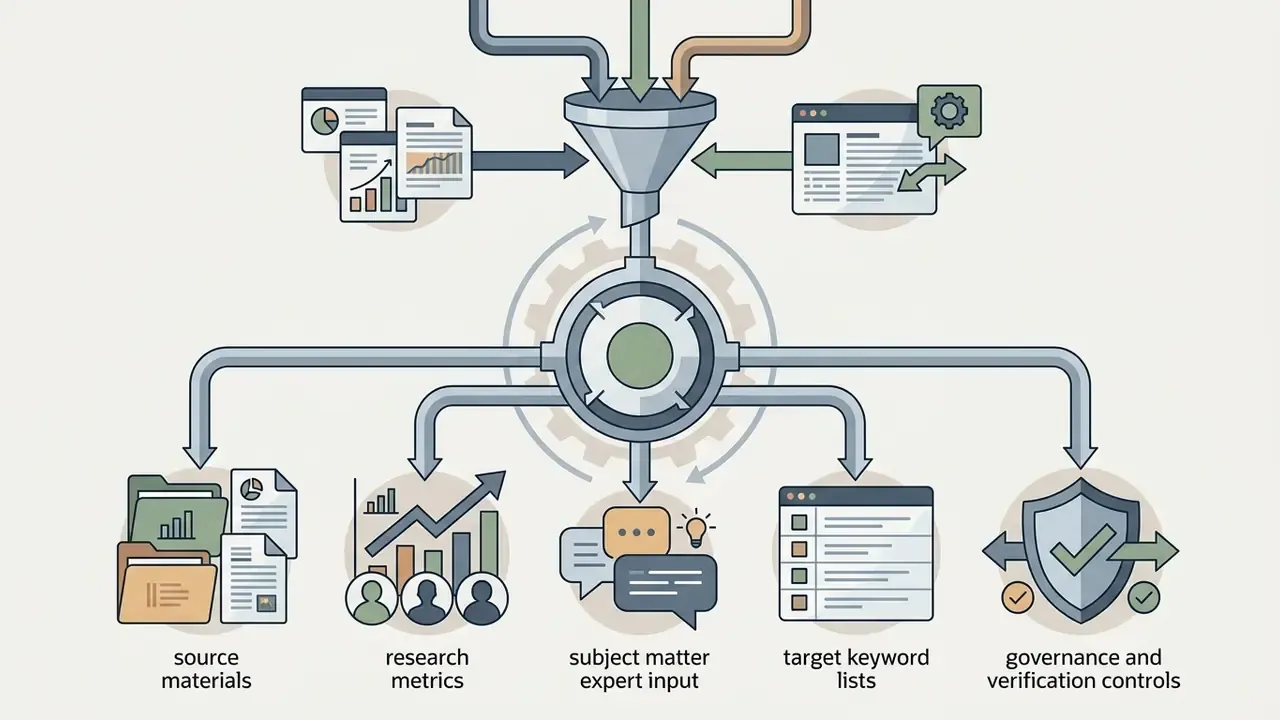
Step 0: collecting primary audience intelligence
Do not use a language model to invent audience needs. Feed it verified evidence before the brief exists.
Skipping this step is the most common cause of confident, well-written, commercially useless content. Insight is an input, not an output.


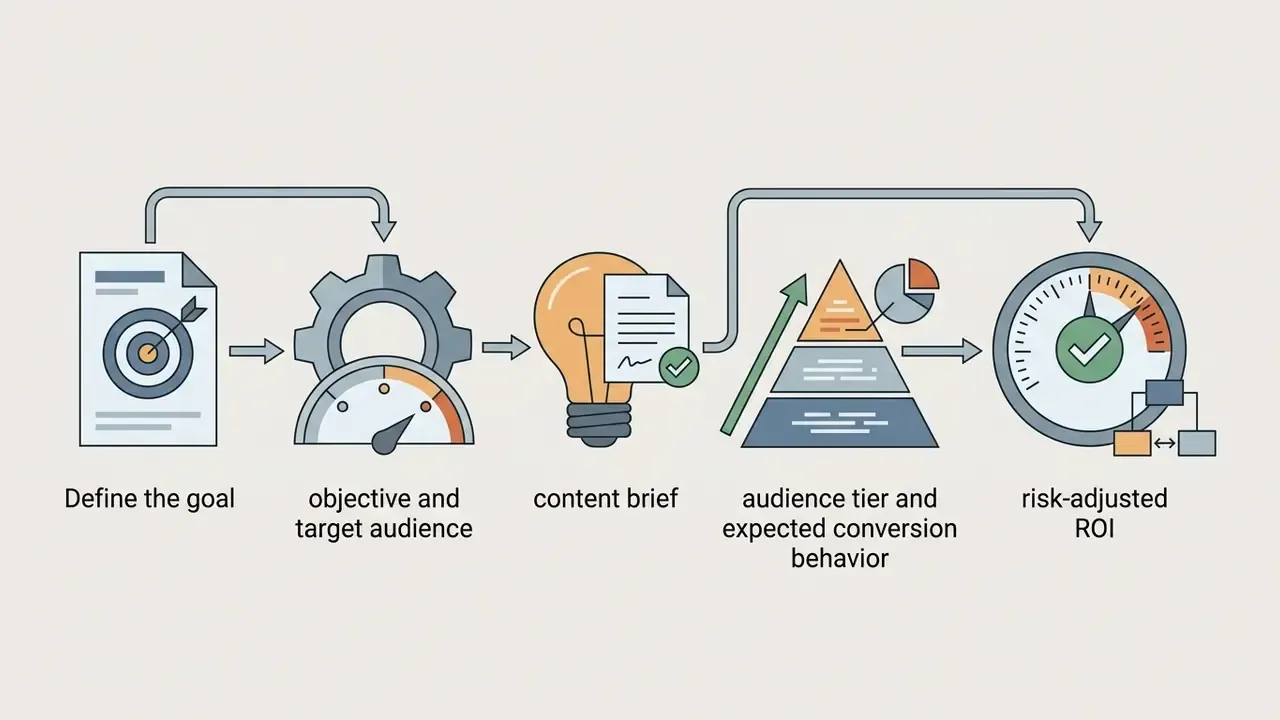
Define the goal, audience and content brief
The initial phase requires defining target outcomes, audience requirements, and structured instructions before executing model prompts. Clear parameter inputs directly influence output quality.
In one illustrative enterprise setting, an asset mandate required deploying a standardized prompt template across three business units. By mandating explicit context inputs and source references inside the brief, the team reduced initial draft rejection rates from 34% to 8% within six weeks. Treat that figure as an example of the mechanism, not a benchmark for your own funnel.

Generate ideas, structure and the first draft
With the brief finalized, the creator uses AI models to generate topic options, structural outlines, and initial text drafts.
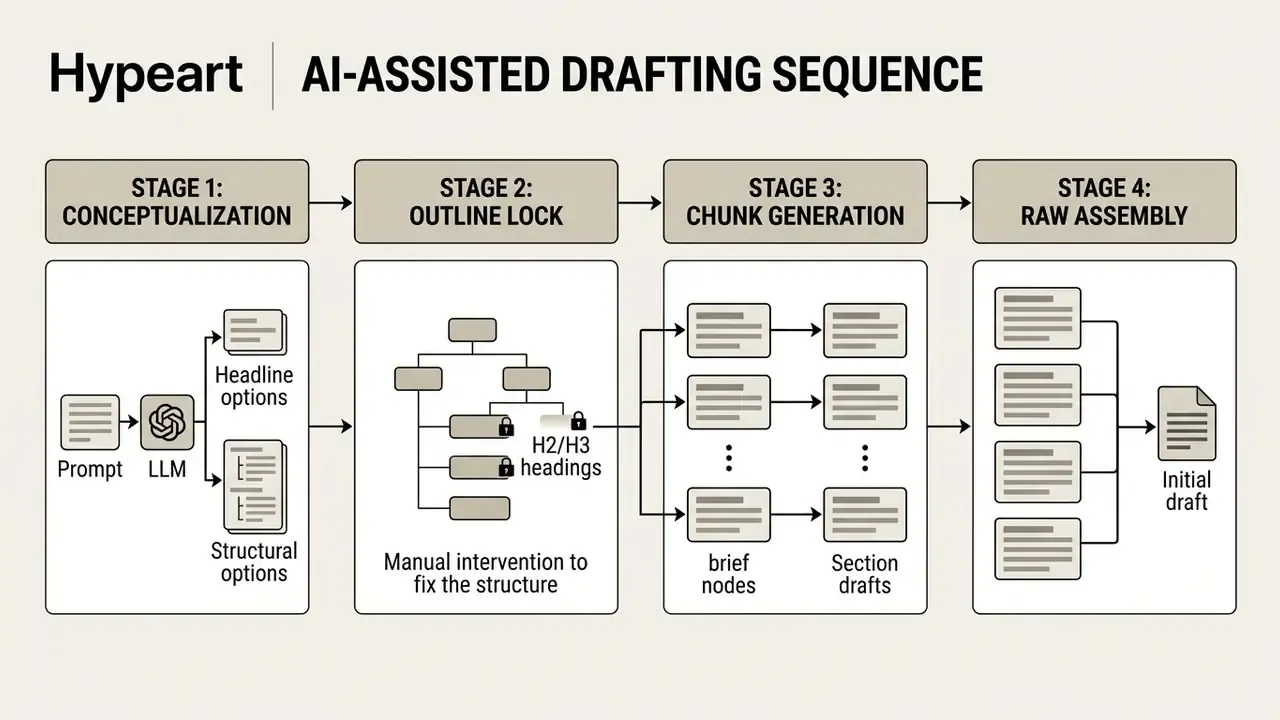
Writers construct detailed outlines before generating full text blocks (NIU AI Writing Guidelines, 2026). Prompting models section by section against an approved outline prevents structural drift and keeps the argument in focus.
The AI draft is a baseline scaffold, not a finished asset. The writer selects the strongest structural variant, identifies missing context, and prepares the draft for editorial refinement.
Enterprise prompt library for corporate functions
Generic prompts produce generic output. Structured prompts that fix role, source document, output format, and prohibited behaviour reduce hallucination and rework. Copy these directly and replace the bracketed variables.
Leadership and strategy
Sales and business development
Legal, compliance and risk
Marketing, SEO and content
HR and enablement
Operations, PR and localization
- Executive summary"Analyse the attached document [FILE]. Extract the three most material financial risks and the three strongest growth drivers for the next quarter. Return a table with columns: Risk/Opportunity | Magnitude of impact | Recommended action | Source page. If a figure is not present in the file, write NOT IN SOURCE."
- Board briefing"Summarise the strategic objectives for [QUARTER] as stated in this deck, focusing on headcount and budget. Maximum 250 words. No adjectives that are not present in the source."
- B2B proposal"Using the attached meeting transcript, draft a commercial proposal for [CLIENT_TYPE]. Address the stated pain point [PAIN], state the implementation timeline within [DEADLINE], and cite the client's own wording for each requirement."
- Objection handling"From these five call transcripts, list every pricing objection raised, grouped by buyer role, with the exact quotation and the outcome of the call."
- RFP response"Answer the technical security section of this RFP using only content from our previous approved security responses attached here. Flag any question we have no prior approved answer for."
- Policy gap audit"Compare the attached data-processing policy [DOC_A] against GDPR and CCPA requirements. Return a list of clauses requiring urgent revision, with the specific regulatory article referenced. Do not provide legal advice; produce a review checklist only."
- Marketing communications pre-check"Review this draft client-facing material against the following internal rules [RULESET]. Return every sentence containing a performance claim, forward-looking statement, or comparison, with a flag for mandatory disclosure."
- Model documentation"Draft the 'intended use and limitations' section of a model documentation file for the following use case [USE_CASE], based strictly on the attached technical specification."
- Brief-to-outline"Using the attached technical brief as the only source, draft a 1,200-word article outline. Every H2 must map to one claim in the brief. Mark any section where the brief provides no supporting evidence."
- Repurposing"Generate five LinkedIn posts from the key findings of the attached whitepaper. Each post must cite one specific number from the document and must not use the words 'landscape', 'unleash', or 'delve'."
- Email sequence"Draft a three-part nurture sequence from this product datasheet. Each email must contain one verifiable capability statement and one clear next step. Subject lines under 45 characters."
- Job description"Create a job description for a [ROLE] using the attached internal competency framework and values document. Do not invent requirements outside the framework."
- Training module"Draft a five-step onboarding guide for new hires based on this employee handbook, referencing the handbook section number for each step."
- Press release"Draft a press release about the attached signed memorandum. Use only milestones and executive quotations that appear verbatim in the document."
- Localization"Translate this campaign into [LANGUAGE], preserving regulatory disclaimers word-for-word and flagging any idiom that does not transfer."
- Video script"Convert the attached privacy policy into a two-minute internal training script in plain language, no technical jargon, reading level grade 9."
Every prompt above shares four properties: an assigned role, a named source, a fixed output format, and an explicit instruction on what the model must not do. Those four properties are the difference between a draft you can review and a draft you have to rewrite.
Edit, fact-check and optimize the material
The final production stage requires human editing, primary source verification, and technical optimization before publication.
Review editorial quality using specialized editing suites such as the adobe express video editor for multimedia assets, and compare general-purpose video editing tools or platform-specific YouTube editing workflows when the asset is destined for a video channel. Large media files should also pass a delivery check, so see our reference on video compressors for size and quality trade-offs. This multi-gate review is what keeps published content inside institutional standards for accuracy and brand consistency.
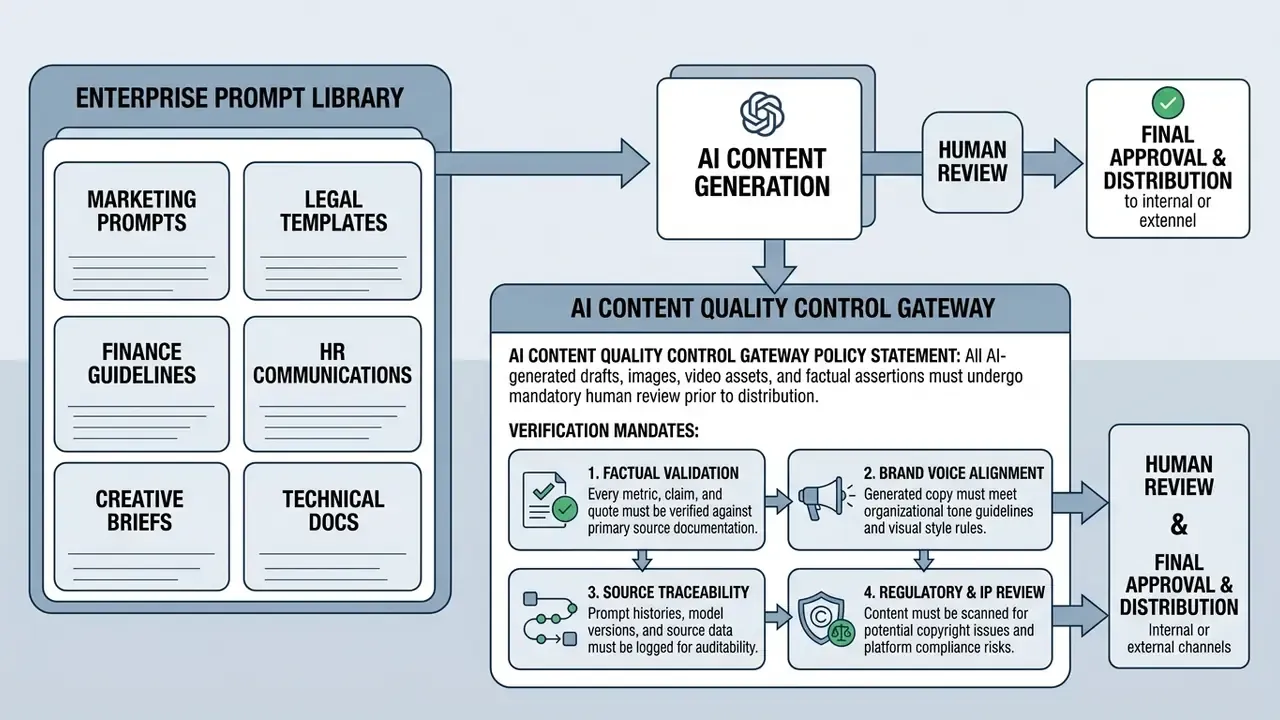
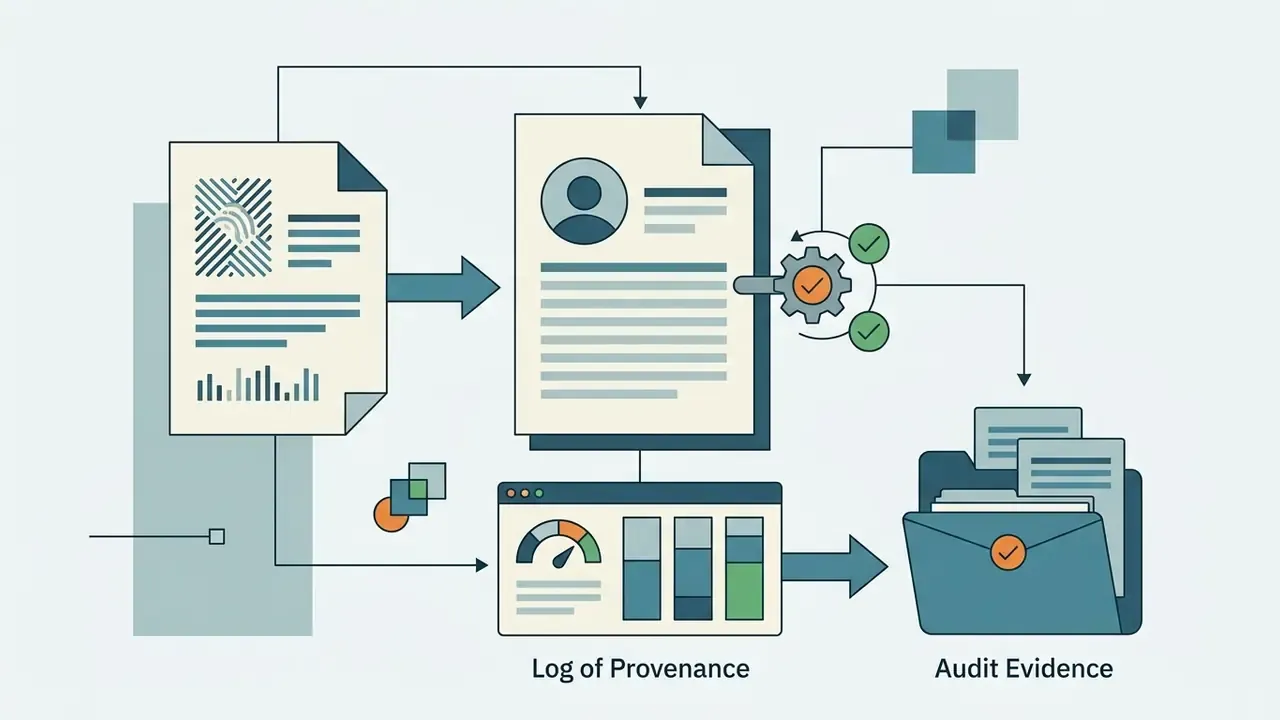
Prompt and output audit log template
Traceability requirement three above is unenforceable without a standard record. Use a single log table per asset, retained for the same period as the published material.
| Field | Example entry | Purpose |
|---|---|---|
| Asset ID / URL | MKT-2026-0431 | Links record to published output |
| Business owner | Head of Content Marketing | Accountability |
| Model and version | claude-3.7-sonnet / gpt-4.1 | Reproducibility of behaviour |
| Deployment contour | Isolated tenant, ZDR agreed | Confirms no public-model exposure |
| Prompt text (full) | Stored verbatim, versioned | Reconstruction of the generation event |
| Source documents supplied | Q3-report.pdf, panel-data.xlsx | Grounding evidence |
| Data classification of inputs | Public / Internal / Confidential / MNPI-restricted | Prevents restricted data in prompts |
| Human reviewer ID | Named individual, not team | First-line control evidence |
| Claims verified (count / method) | 14 / primary source | Fact-check completeness |
| Compliance sign-off | Required / Not required, timestamp | Regulated-communications control |
| Disposition | Published / Rejected / Reworked | Outcome tracking |
| Escalations raised | None / Incident ID | Links to issue management |
AI tools for text, images, video and audio
Selecting enterprise ai tools requires matching technology capabilities with operational tasks, output needs, and platform controls. Teams deploy distinct software across media categories while maintaining a unified delivery infrastructure.
| Tool category | Core systems | Primary tasks | Output formats | Technical limits and selection considerations |
|---|---|---|---|---|
| Text and copywriting | ChatGPT, Claude, Gemini | Long-form articles, copy, email, briefs. | Text, Markdown, HTML, JSON | Context window size; Claude PDF cap 32 MB / 100 pages per request; Gemini PDF cap 50 MB / 1,000 pages; API key rotation and audit logging. |
| Visual design | Midjourney, DALL-E 3, Canva AI | Graphics, illustrations, ad imagery. | PNG, JPEG, SVG, WebP | Prompt parameter controls (--q, hd vs standard); commercial licensing terms; IP indemnification clause. |
| Video production | Descript, Pictory, Lumen5, Veo | Transcript editing, clip generation. | MP4, MOV, WebM | Voice and likeness authorization records; render quotas; Gemini video input limit 120 seconds; per-second API billing. |
| Audio and voice | Descript, Captions, ElevenLabs | Voiceovers, noise removal, dubbing. | MP3, WAV, AAC | Consent script for voice cloning; audio input limit 180 seconds on some APIs; translation fidelity review. |
| SEO and strategy | Specialized SEO suites | Intent analysis, brief generation. | Data tables, structural briefs | Crawlability and structured-data alignment; indexing compatibility; search feature tracking. |
| Enterprise contours | Azure OpenAI Service, AWS Bedrock, private VPC deployments | Governed generation at scale | Same modalities via API | Tenant isolation, VPC peering, zero-data-retention, regional data residency, SSO and RBAC. |
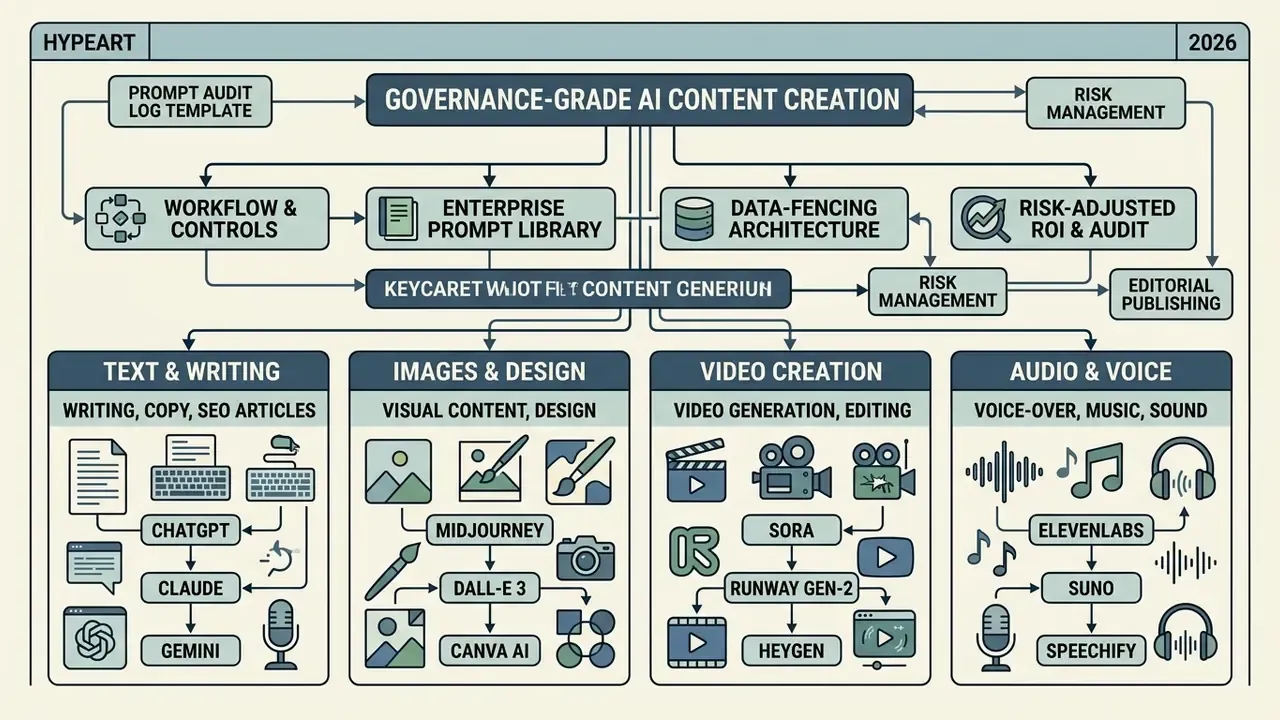
Evaluating content creation with ai tools requires looking past the generation demo. Operational criteria include data security profiles, administrative user management, integration flexibility, and clear licensing terms for commercial output. For institutional deployments, consumer subscriptions are rarely acceptable: the same model is usually available through a governed enterprise contour with contractual retention controls, and procurement should default to that contour.
Tools for writing, copy and SEO articles
Large language models form the core of text-based content workflows. Teams evaluate models on context capacity, reasoning capability, and document processing features.
- ChatGPT (OpenAI) Supports high-speed text generation, iterative editing, and code execution. Useful for short-form copy, campaign drafts, and ideation. Image capability comparisons are covered in our ChatGPT picture generator evaluation.
- Claude (Anthropic) Processes complex documentation with standard limits of up to 100 pages (32 MB) per request (Anthropic Documentation, 2025). Effective for long-form synthesis, technical reports, and structured editing.
- Gemini (Google) Offers native multimodal document processing handling up to 1,000 PDF pages (50 MB) (Google Gemini API Docs, 2026). Integrates with search data ecosystems for research support.
Visibility in search features depends on crawlability, content depth, structured markup, and unique perspective rather than the generation method used (Google Search Central, 2026. https://developers.google.com/search/docs/fundamentals/creating-helpful-content).
«Across the top 20 Google results, the correlation between share of AI-generated text and ranking position was 0.011, effectively none.»
Ahrefs study on AI content and search rankings (2024). https://ahrefs.com/blog/ai-content-seo/
Text models accelerate initial drafting, but search performance still rests on expert review and distinct insight. The generation method is not the ranking signal. The substance is.
Tools for images, design and visual content
Generative image tools create synthetic visual assets based on textual instructions and reference inputs.
- Midjourney Uses specialized prompt parameters, such as
--quality(--q), to control GPU processing time and render depth (Midjourney Documentation, 2026). The default value is1in version 7, with2and4consuming two and four times the GPU time. Suitable for high-detail concept art, so see our Midjourney comparison for output and licensing trade-offs. - DALL-E 3 (OpenAI) Integrated into ChatGPT, offering
standardandhdoutput quality options to balance generation speed with rendering resolution. - Canva AI Combines prompt-driven image generation with template-based design layouts, enabling rapid asset development for brand teams.
Visual asset deployment requires clear licensing and commercial usage rights. Review the category in our guides to AI art generators and the ranked comparison of the best AI art generators, and for provenance checks on inbound imagery see our overview of AI reverse image search. For art generation tools, review the detailed evaluation in our adobe firefly ai analysis.
Tools for video, audio and repurposing
Video and audio platforms automate media production, editing, and cross-channel adaptation.
Budget-constrained teams can evaluate the no-cost tier first. Compare limits, watermarks, and export rights in our overview of free AI video generators.

These tools compress post-production timelines for long-form repurposing. Teams extract key highlights from extended webinars or quarterly reports, then convert them into short clips for social distribution.
Dynamic personalization and content recommendation engines
AI use does not end when the file is exported. Post-publication, recommendation APIs inside the CMS decide which asset a given visitor sees next, and that decision layer is where much of the content investment is either recovered or wasted.
| Layer | Function | Typical impact |
|---|---|---|
| Recommendation API (e.g. Recombee) | Behavioural analysis and real-time selection of the next article or video per user. | +18 to 25% pages per session |
| Vector or neural site search (e.g. Algolia) | Natural-language and intent-aware retrieval across the content library. | +30% search-to-click conversion |
| CMS personalization rules | Segment-based module swapping using CRM attributes and consent flags. | Higher assisted conversion on returning visits |
Two governance conditions apply. First, personalization operates on behavioural and CRM data, so consent capture, purpose limitation, and retention rules must be verified before activation. Second, recommendation engines amplify whatever quality level exists in the library. Deploying them over unverified AI drafts increases exposure rather than value.
How to choose an AI platform for marketing content and the business
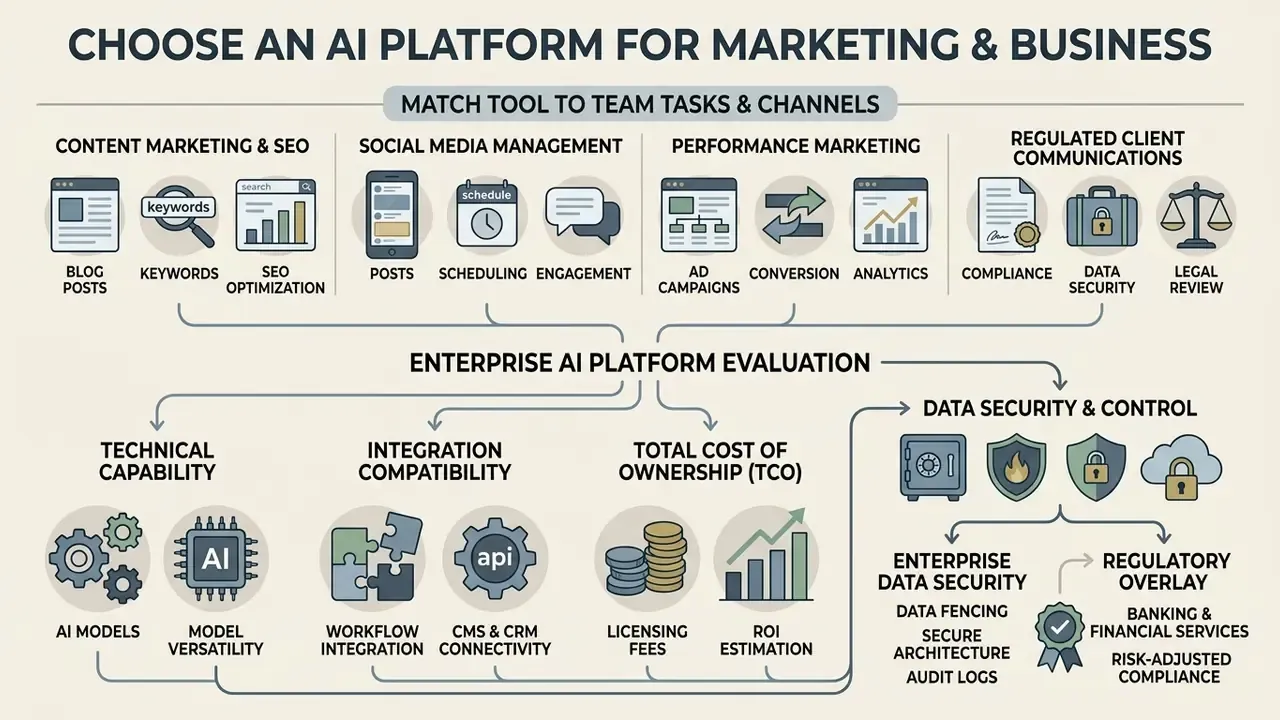
Selecting an enterprise ai marketing content creation platform requires evaluating technical capability, integration compatibility, total cost of ownership, and data security standards. Organizations avoid isolated point solutions in favor of platforms that integrate with the existing stack (WFA AI Governance Framework, 2026).
«Only 22% of marketers have fully integrated AI search and SEO workflows, pointing to a systemic operational gap in AI content management.»
Semrush, AI Content and SEO Trends Report (2025). https://www.semrush.com/blog/ai-seo/
Adoption pressure is not the constraint. Governance capacity is.
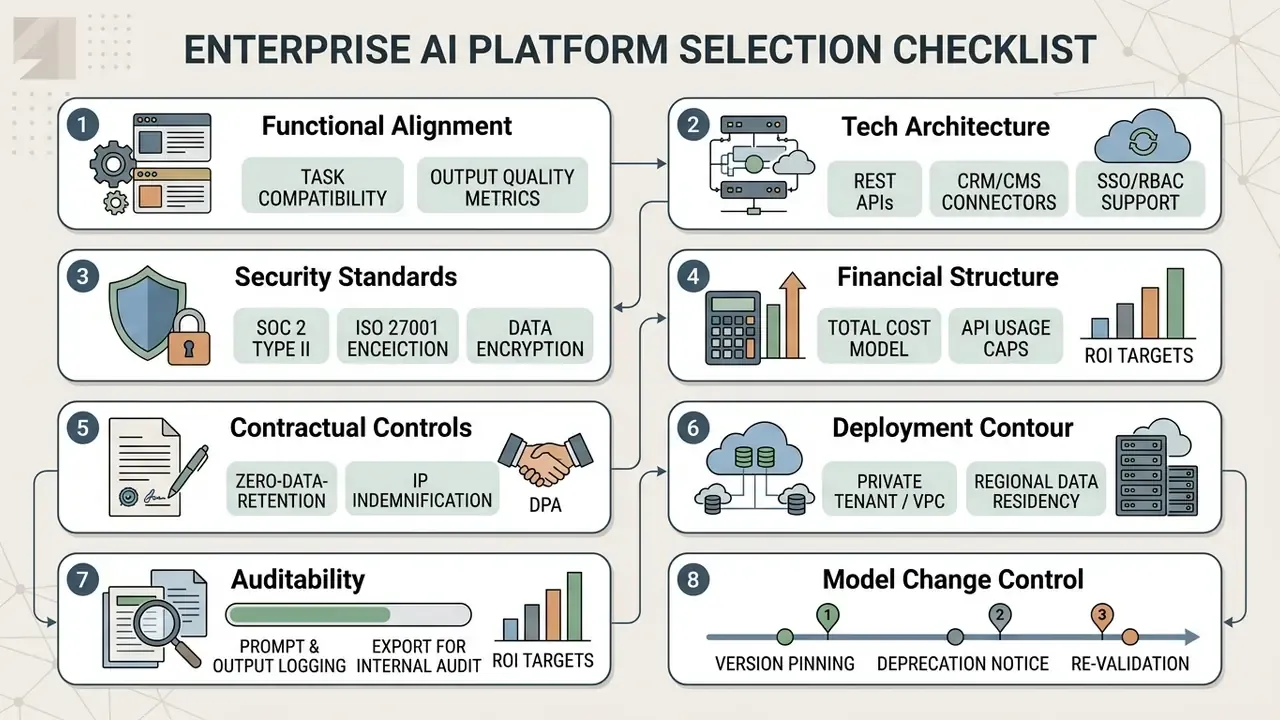
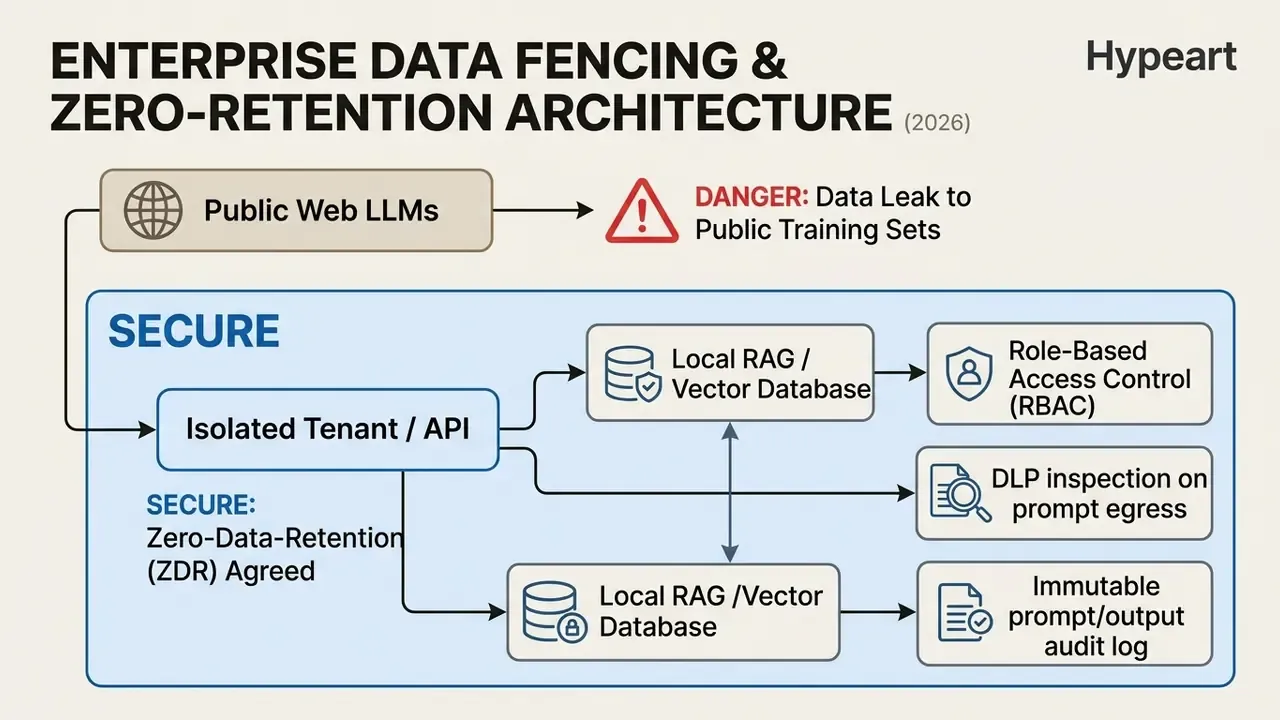
Procurement teams should run the technical assessment before onboarding, not after the first invoice. Platform viability depends on long-term scalability, data protection controls, and functional alignment with marketing goals. Two contractual items deserve specific attention in regulated industries: written IP indemnification covering third-party copyright claims arising from generated output, and a zero-data-retention clause confirming that prompts and business assets are neither stored beyond processing nor used to train third-party foundation models.
Match the tool to team tasks and channels
Platform selection begins by mapping capabilities against internal user tasks, target channels, and required output formats (Canadian Marketing Association, 2026).
- Content marketing and SEO Requires models optimized for long-form text handling, structured markup generation, and editorial workflows.
- Social media management Prioritizes high-speed caption iteration, multi-platform image formatting, and short-form video assembly.
- Performance marketing Requires automated generation of ad copy variants, direct integration with ad platforms, and rapid performance testing.
- Regulated client communications Requires approval workflow, immutable audit trail, retention aligned with recordkeeping obligations, and pre-use review by compliance.
Choosing platforms that support multiple input formats reduces stack complexity. Unified systems simplify user training, administrative oversight, and brand compliance management across teams. For video-heavy programmes, compare shortlisted vendors against our ranking of the best AI video generators.
Check integrations, workflows and data handling
Enterprise implementations rely on secure API integration, automated data handling, and robust privacy controls. Disjointed tools create operational bottlenecks and introduce security risk (MMA Global, 2025).
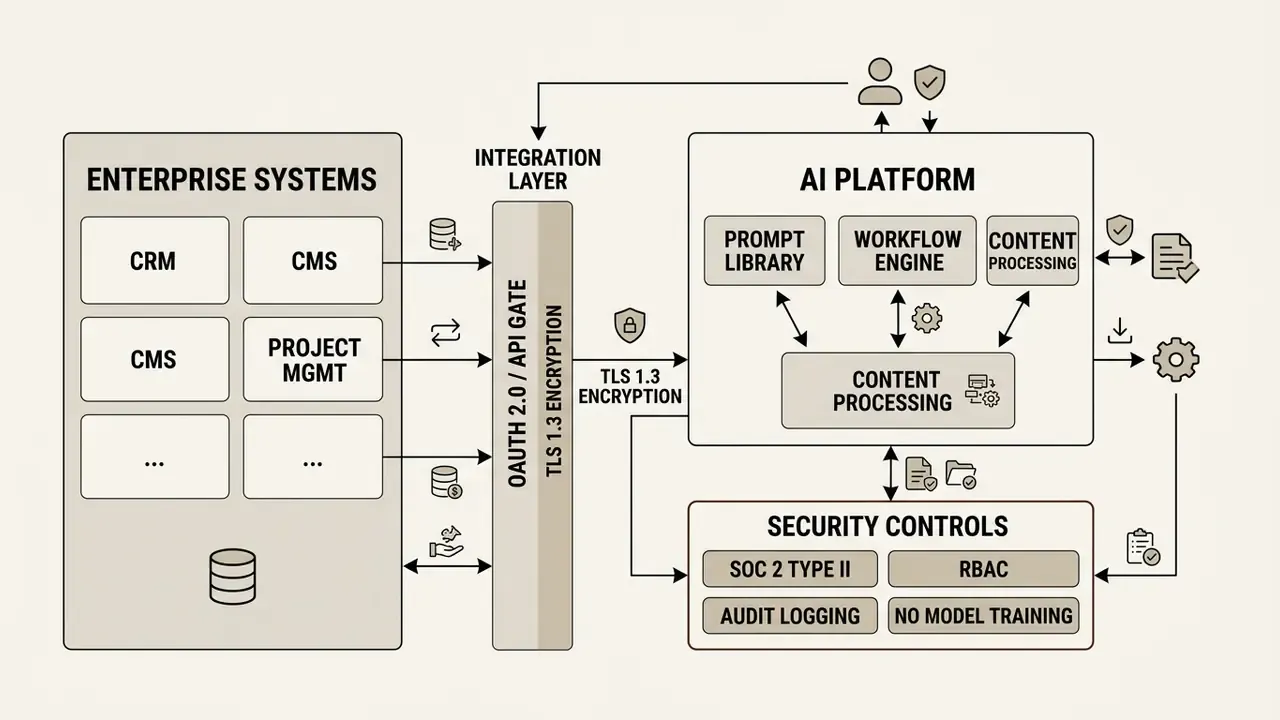
Architectures must comply with cybersecurity standards such as SOC 2 Type II or ISO 27001, enforce Role-Based Access Control (RBAC), and encrypt data in transit and at rest (BSI AI Cloud Service Compliance Criteria Catalogue (AIC4), 2025. https://www.bsi.bund.de/EN/Themen/Unternehmen-und-Organisationen/Informationen-und-Empfehlungen/Kuenstliche-Intelligenz/Kriterienkatalog-AIC4/kriterienkatalog-aic4_node.html). Commercial terms must state explicitly that user input data and business assets will not be used to train third-party foundation models.
Enterprise data security and data fencing
The dominant leakage vector is not a breached vendor. It is an employee pasting confidential material into a consumer chat window. Survey evidence indicates that 77% of employees have shared sensitive company data through public generative AI models (Cyberhaven Data Loss Report, 2024). In financial institutions, the same behaviour can move material non-public information (MNPI), client PII, or unreleased financial figures outside the control perimeter in a single keystroke.
Regulatory overlay for banking and financial services
For US banks, broker-dealers, and fintech firms, an AI content platform is rarely just a marketing tool. Once a generative system contributes to client-facing communications, several existing supervisory expectations apply without modification:
| Requirement area | Practical control expectation |
|---|---|
| Model risk management (Federal Reserve and OCC SR 11-7 supervisory guidance on model risk) | Inventory the generative system, document intended use and limitations, define effective challenge, and schedule periodic validation of outputs and controls. |
| Retail communications (FINRA Rule 2210) | Principal pre-approval where required, fair and balanced presentation, no misleading or unsubstantiated claims, retention of the approved version and the record of approval. |
| Recordkeeping and supervision | Retain the published asset, the prompt, the model version, the reviewer identity, and the approval timestamp for the applicable retention period. |
| Third-party risk (OCC third-party relationship guidance) | Due diligence on the AI vendor, contractual right to audit, subcontractor transparency, exit and data-deletion terms. |
| Disclosure and anti-fraud (SEC expectations on AI-related statements) | Do not overstate AI capabilities externally; ensure claims about AI use are accurate and substantiated. |
How to assess pricing, free mode and tool value
Evaluating platform costs requires analyzing pricing models, free-tier limits, compute thresholds, and expected operational ROI (Cloudflare Workers AI Docs, 2026).
Calculations should account for user licensing, setup costs, staff training, ongoing human review overhead, and the control costs modelled earlier. Quantifiable value emerges from labor time savings, faster asset delivery, and improved campaign conversion. Review structured options in our AI Media Pricing index, or check system capabilities via AI Media API Guides.
Best practices: raising the quality of AI-generated content
Maintaining editorial quality in AI-generated assets requires rigorous human review, source verification, and adherence to established brand standards. Automated output is an initial draft requiring expert refinement before public distribution (NIST, Guidance and Templates for Public-Facing AI Documentation: An AI Standards "Zero Draft", 2026).
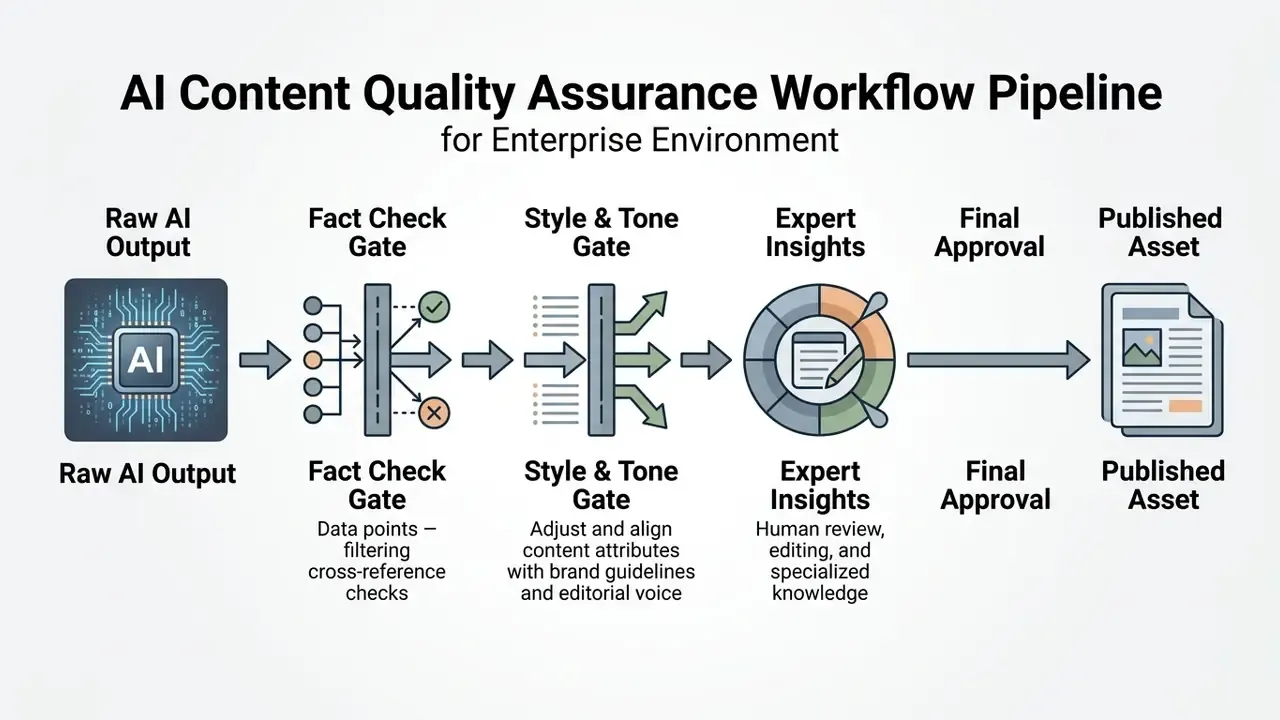
Transparency is part of quality, not a tax on it.
High-performing teams build quality control gates into the production pipeline. Those checkpoints are what keep published material specific, accurate, and worth a reader's attention.
Add expert insights and verifiable sources
Improving automated content requires adding primary research data, expert perspective, and verifiable citations (U.S. Department of Education, 2023). Generic AI output lacks original institutional experience, and readers in specialist markets detect that quickly.
Search engines prioritize material demonstrating original expertise and authoritativeness.
- Integrate original data
- Include proprietary research metrics, internal performance data, and verified survey results in the draft.
- Cite primary sources
- Link directly to official research publications, industry standards, and regulatory documentation rather than secondary web summaries.
- Incorporate SME insights
- Add direct quotes, commentary, and contextual analysis from internal subject matter experts to establish domain authority.
- Disclose AI involvement where material
- Record tool, model version, and purpose, in line with current transparency frameworks for AI-generated content.
«Google neither rewards nor penalises pages for the share of AI-generated text; ranking systems focus on quality, relevance, and E-E-A-T signals.»
Google Search Central documentation (2026). https://developers.google.com/search/docs/fundamentals/creating-helpful-content
Grounding automated text in verified research protects editorial credibility and improves discoverability. It also shortens compliance review, which is an underrated commercial benefit.
Do not publish an AI draft without refinement and final editing
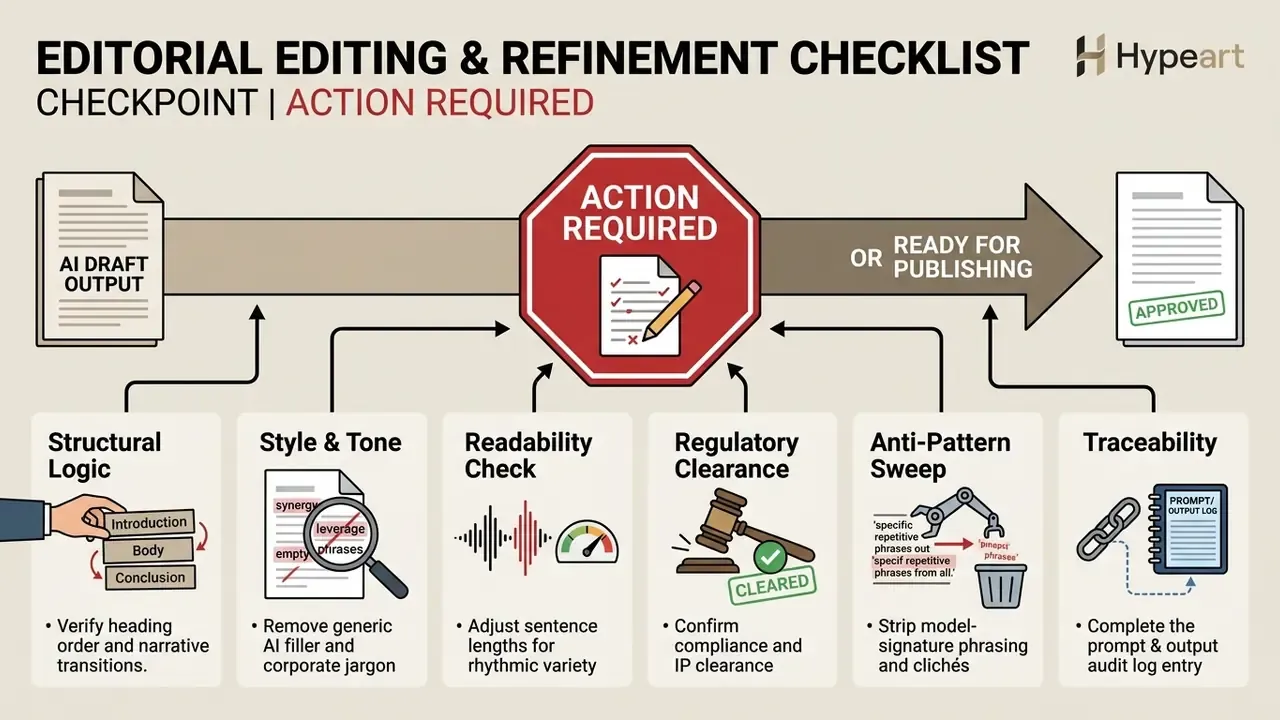
Publishing raw automated text introduces stylistic drift, factual inaccuracy, and flat phrasing. Systematic editing improves readability and protects brand identity (WordStream AI brand-guidelines checklist, 2026).
Stop words and AI generation blacklists
Readers recognise machine phrasing faster than most content teams assume. One practitioner described the failure mode precisely: "Too much bland, inoffensive copy with no perspective, too many 'in today's fast-paced world's', 'unleash the power of's'." Strip those markers before publication.
- Phrase blacklist "in today's fast-paced digital world", "in the evolving digital landscape", "unleash the power of", "delve into", "a tapestry of", "a testament to", "navigate the complexities of", "as you may already know", "spot from a mile away", "let's dive in".
- Filtering rule Replace abstract metaphor with a specific fact, number, or named example. If a sentence can be deleted without losing meaning, delete it.
- Humanization pass Language models converge on uniform sentence length, typically 15 to 20 words. Break the rhythm. Alternate three-word statements with longer analytical constructions.
- Perspective test Does the passage contain one claim only this organization could make, from its own data, cases, or operational experience? If not, it is commodity text and it will perform like commodity text.
- False-positive caution Some blacklisted phrases are also normal human habits. The target is unearned abstraction, not any single word.
An enterprise software team automated blog production without editing safeguards. Within two months, published articles showed repetitive phrasing, unverified statistics, and inconsistent tone. Audience engagement dropped 28%. Introducing a mandatory editorial review step restored performance and removed factual errors from subsequent releases. Cheap lesson, in hindsight.
For operational guidelines, consult our AI Media Commercial-Use terms. Review platform comparison frameworks in our open the hub section, or reach dedicated support resources through our view the guide directory.
FAQ on AI content creation
Who is accountable for hallucinations and errors in AI content?
Accountability sits with the named human owner of the asset, not with the model or the vendor. Federal guidance is explicit that a human must remain in the loop across the AI lifecycle, with validation and verification before and after deployment (U.S. Department of Energy, Generative Artificial Intelligence Reference Guide, 2024. https://www.energy.gov/sites/default/files/2024-12/Generative%20AI%20Reference%20Guide%20v2%206-14-24.pdf). Operationally this means every published asset has a single business owner, a named reviewer, and a logged approval. Vendor terms may cap the vendor's liability sharply; contractual IP indemnification helps with third-party copyright claims but does not transfer editorial or regulatory responsibility.
How should roles be split between Marketing, Legal and Model Risk Management?
Use the three-lines model rather than an informal handoff.
| Line | Owner | Responsibility |
|---|---|---|
| First line | Marketing and content function | Prompt design, source grounding, drafting, fact verification, audit-log completion, brand-voice conformity. |
| Second line | Compliance, Legal, Model Risk | Policy setting, pre-approval of regulated communications, effective challenge of model use, validation scope decisions, monitoring of exceptions. |
| Third line | Internal Audit | Independent testing of control design and evidence quality, including sample reconstruction of prompts and approvals. |
| The most common structural failure is a second line that only ever sees finished copy. Second-line review should also cover prompt templates and data-classification rules, because that is where the risk is created. |
How do you control shadow AI inside the organization?
Shadow AI use grows when the sanctioned tool is slower than the unsanctioned one. Effective controls combine four elements: a published acceptable-use policy naming approved tools and prohibited data classes; network and DLP controls that detect prompt egress of confidential material; a sanctioned enterprise contour that is genuinely usable for daily work; and periodic attestation by team leads. Detection alone changes little. Provide a compliant path at least as convenient as the public one, then enforce.
Should AI use be disclosed in client-facing material?
Two separate questions apply. Regulatory: retail communications remain subject to existing fairness, substantiation, approval, and recordkeeping rules regardless of how the draft was produced, and firms should not make inaccurate external claims about their AI capabilities. Reputational: experimental evidence indicates higher disclosure reduces perceived manipulative intent and brand scepticism, while minimal disclosure amplifies negative inference (Journal of Marketing, 2023. https://doi.org/10.1177/00222429231224748). Current transparency frameworks additionally point toward machine-readable marking of artificially generated or manipulated audio, image, video, and text. A defensible default: disclose materially AI-generated media, record tool and model version internally for all assets, and never present synthetic testimony or synthetic likeness as authentic.
How do you measure the effect of AI content without overstating savings?
Track four metric families in parallel: production efficiency (hours per asset, cycle time), output quality (rejection rate, claims corrected per asset, engagement and conversion), control burden (verification hours, compliance review hours, escalations), and residual risk (published errors, corrections issued). Reporting only the first family produces the inflated ROI figures common in vendor material. The risk-adjusted formula earlier in this article exists precisely to prevent that. Teams searching for a "create content ai" shortcut usually skip families three and four, then rediscover them during audit.
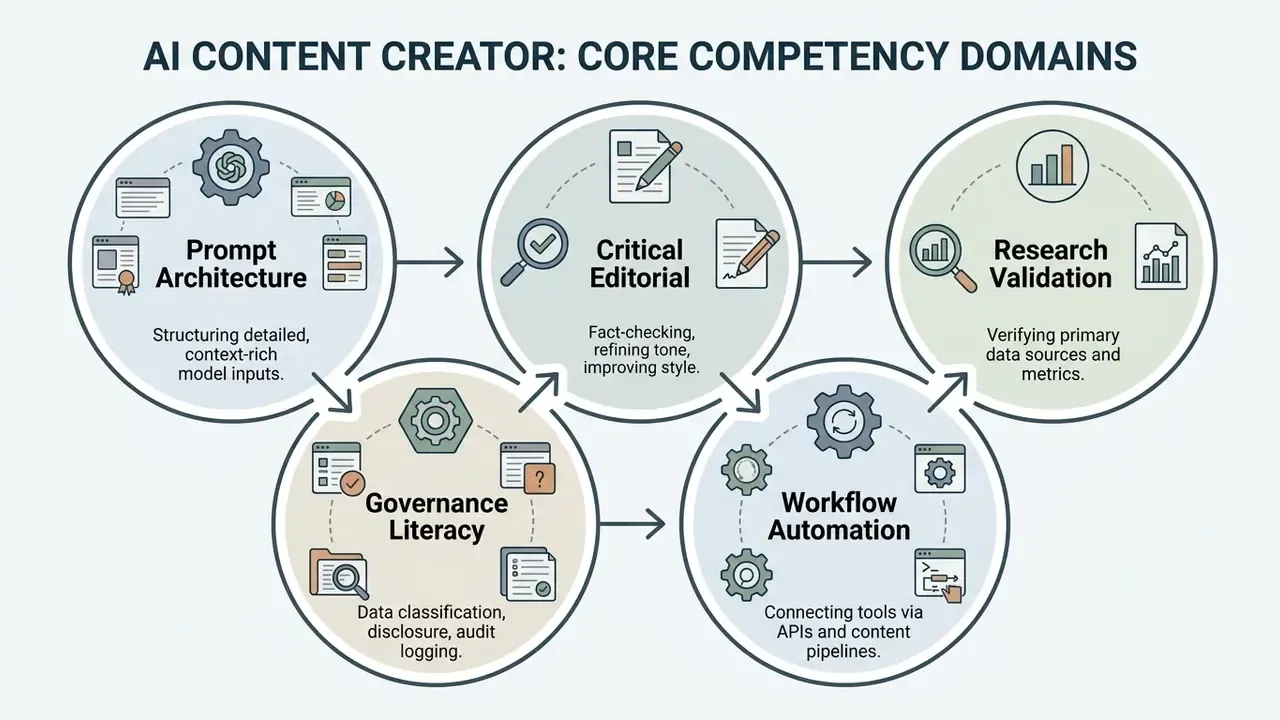
How to be an AI content creator and which skills to develop
To become a qualified AI content creator, professionals combine traditional editorial capability with technical prompt design, output evaluation, and research verification (U.S. Department of Labor AI Literacy Framework, 2025. https://www.dol.gov/general/AI/AI-Literacy). Key professional competencies include:
- Prompt engineering: Designing structured parameters, contextual constraints, and detailed briefs to guide model outputs (Singapore IMDA, 2026). Labour-market analysis of prompt-engineer postings reports four dominant skill clusters: AI knowledge (22.8%), communication (21.9%), prompt design (18.7%), and creative problem-solving (15.8%).
- Editorial refinement: Turning raw drafts into polished copy aligned with style guidelines.
- Research verification: Cross-checking claims, evaluating metrics, and grounding content in primary documentation.
- Workflow optimization: Integrating generation tools into content management and distribution systems, which is where most questions about how to use ai tools for content creation are actually answered.
- Delegation, discernment, diligence: Setting tasks for AI, judging output quality, and accepting responsibility for the final work (Toronto Metropolitan University AI Fluency Framework, 2025). Visual specialisation is a common extension path. Practitioners building that skill set typically start from the tool comparisons in our guides to the best AI art generators, free AI art generators, and AI headshot generators. The career trajectory moves from tactical tool use to strategic workflow ownership. Lead creators supervise automated pipelines, define editorial quality controls, and align technology deployment with business objectives. For broader market analysis, see the litigation risk overview in our see the overview section.
Pre-publish checklist
Checklist0 / 11
Limitations, open questions and a safe next step
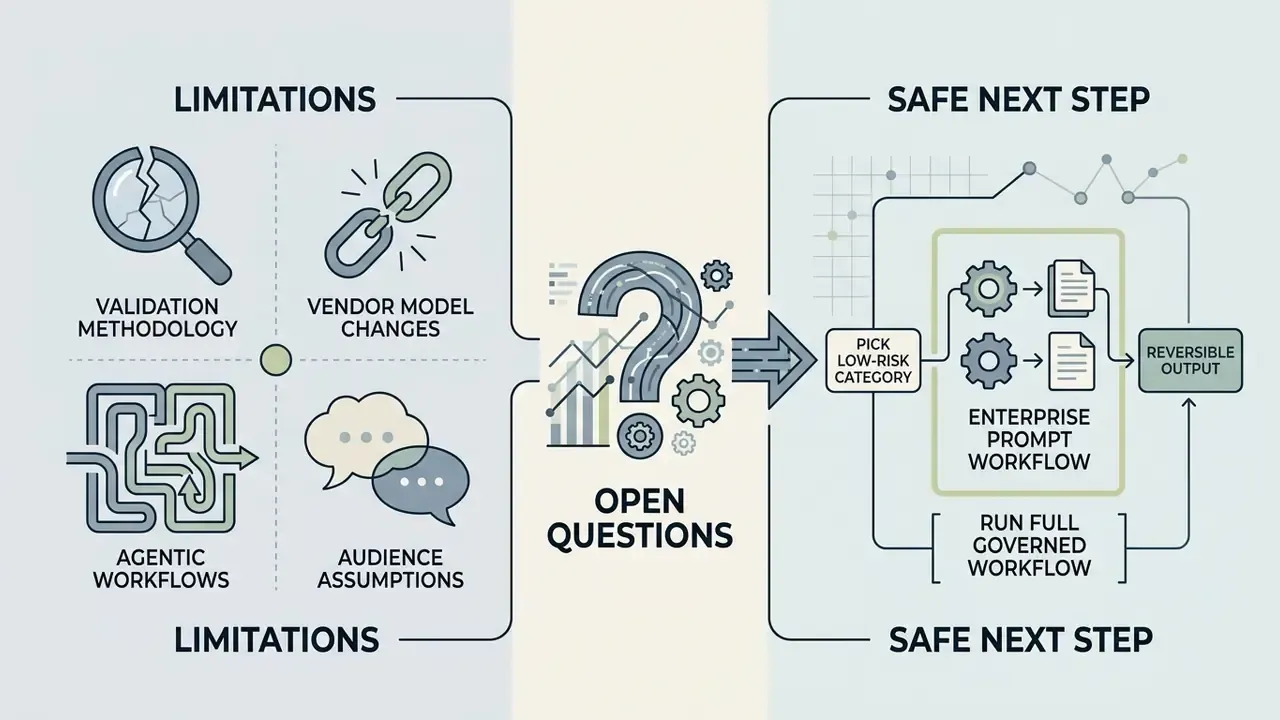
Several things in this field remain genuinely unsettled, and pretending otherwise would be a disservice.
- Validation methodology for generative output. Traditional model validation assumes stable inputs and measurable error rates. Free-text generation has neither. Sampling-based review of claims accuracy is the current pragmatic answer, not a settled standard.
- Vendor model changes. A silent model update can alter tone, refusal behaviour, and factual reliability without any change on your side. Version pinning and re-validation triggers help; they do not eliminate the exposure.
- Agentic workflows. Once a system chains steps and publishes without a human gate, the control question changes entirely: owner, access limits, escalation path, audit trail, and shutdown mechanism. No evidence, no autonomy.
- Audience assumptions. Every persona statement in this article, including the audience description behind it, should be treated as a hypothesis until confirmed by interviews, analytics, or CRM data.
A reasonable next step is small and reversible: pick one low-risk content category, run it through the full pipeline including the audit log for a single month, then compare the risk-adjusted ROI against your current baseline. If the numbers hold, extend the scope. If they do not, you have learned that cheaply.
Technical resource footnote and navigation map
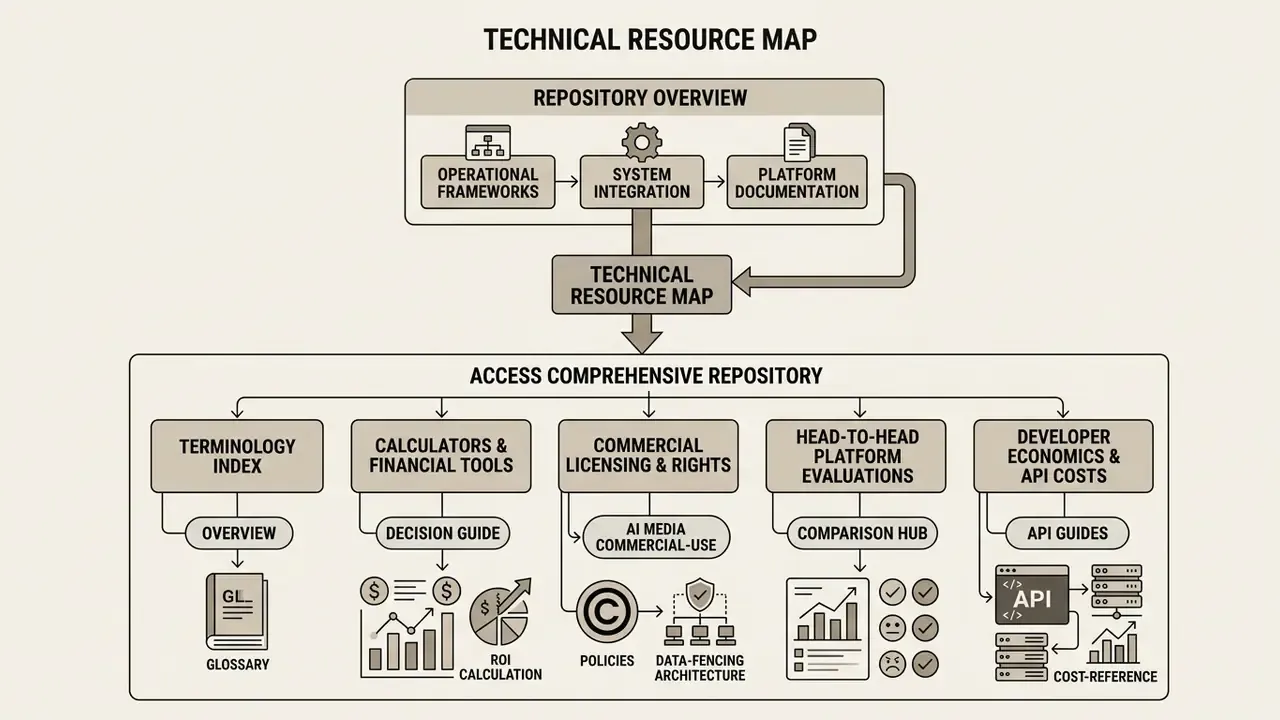
To review operational frameworks, system integration guidelines, and platform documentation, access our complete repository map:
- Comprehensive terminology index: see the overview
- Calculators and financial decision tools: view the guide
- Commercial licensing and usage rights: AI Media Commercial-Use
- Head-to-head platform evaluations: comparison hub
- Developer economics and API cost references: API guides