For a risk or compliance leader, the interesting part is not the picture. It is the paper trail behind it.
Executive Summary for Decision-Makers
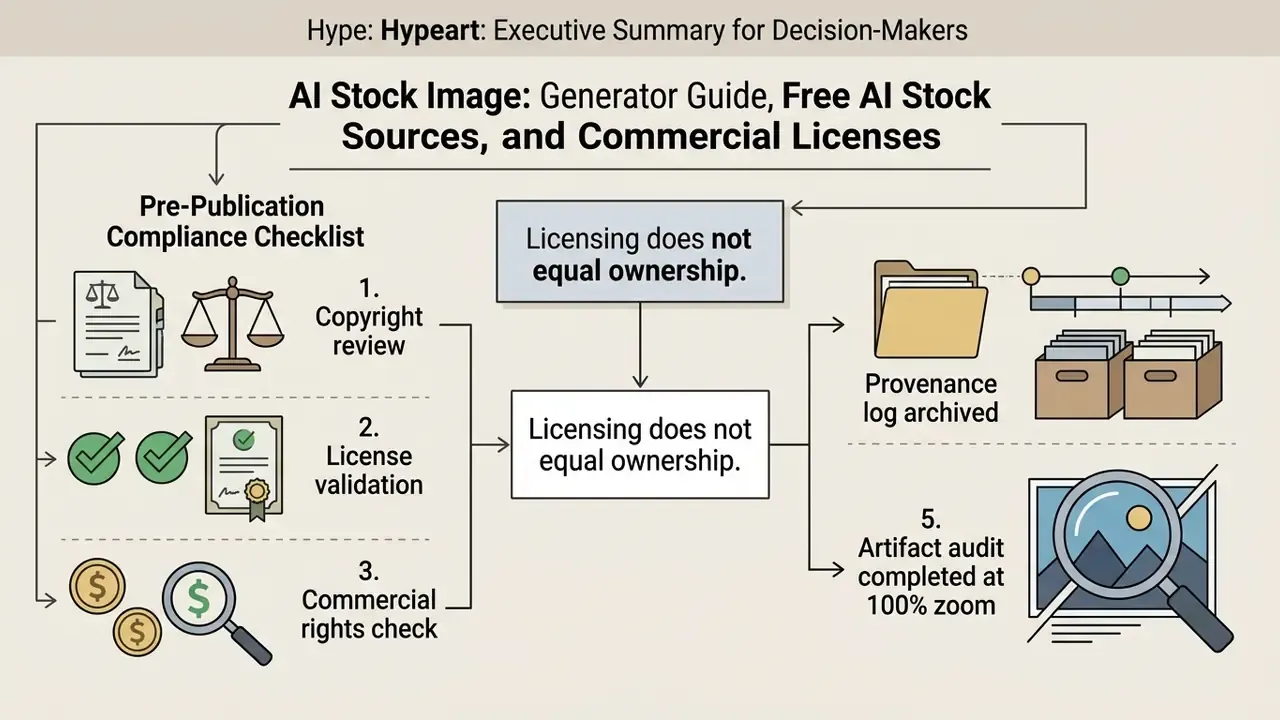
- Licensing does not equal ownership. A platform can grant you broad commercial rights while U.S. copyright law still refuses to register the output. Under U.S. Copyright Office guidance and Thaler v. Perlmutter, only human-authored contributions are protectable. Plan your brand assets on the assumption that a purely AI-generated visual cannot be defended against copying.
- The cost case is measurable. Replacing traditional $200 to $500 per-seat annual stock subscriptions with AI image synthesis can reduce creative procurement overhead by up to 85%, provided artifact-repair labor is included in the ROI calculation.
- The operational rule of thumb is simple. Use ready-made stock for generic background backdrops; generate custom AI assets for proprietary product positioning and branded concepts.
- Risk lives in three places: unverified third-party "free" catalogs, real likenesses and trademarks entering prompts, and Shadow AI, meaning staff generating brand assets on personal free-tier accounts with public galleries. All three are controllable with provenance logging (C2PA / Content Credentials), negative prompt filters, and a documented approval matrix.
- Synthetic humans solve the model-release problem. Fully synthetic face databases remove right-of-publicity exposure because no real individual is depicted.
Pre-Publication Compliance Checklist
Checklist0 / 10
What Is an AI Stock Image and How AI Images Differ from Traditional Stock Photos
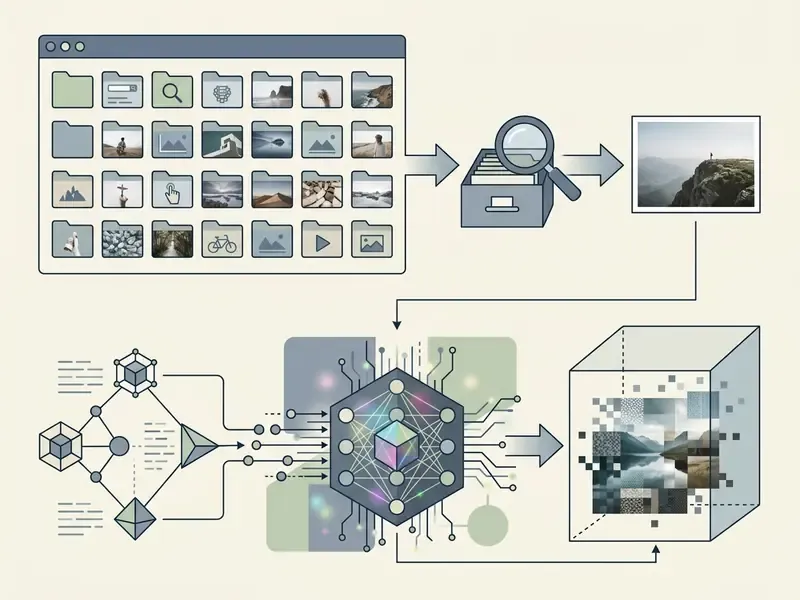
An ai stock image represents synthetic media generated by machine learning algorithms that reconstruct scenes from text descriptions, whereas traditional stock photos are physical photography captured by human photographers and cataloged for distribution. According to the National Institute of Standards and Technology (NIST), generative artificial intelligence systems create derived synthetic outputs, including graphics, audio, and text, by emulating the structural patterns of training data sets.
While catalog stock images rely on fixed photographic inventories, stock ai images offer dynamic asset synthesis tailored to specific prompts and operational parameters. That dependency on training corpora is precisely why licensing terms, training-data transparency, and indemnification clauses, not image quality alone, determine whether a synthetic asset is safe for commercial deployment.
AI-Generated Stock Photos, Catalog Images, and On-Demand Generation
AI generated stock photos fall into two primary delivery categories: pre-rendered catalog assets stored in digital repositories, and on-demand assets synthesized in real time via text prompts. Pre-rendered generated stock assets function like conventional stock assets, allowing instant downloads of existing renders from platforms like Adobe Stock. On-demand generation, by contrast, creates unique generated images tailored to specific scene instructions, lighting parameters, and aspect ratios. The U.S. Copyright Office notes that while catalog platforms license access to pre-made synthetic files, on-demand workflows generate entirely new pixel arrays based on user input.
A practical consequence for procurement teams: catalog stock images ai inventory is an inventory model (pay per asset or per subscription, non-exclusive output), while on-demand generation is a metered compute model (pay per render and per edit operation, exclusive output). Contributor rules reinforce the distinction. Adobe Stock, for example, requires contributors to flag assets created with generative AI tools and to certify that depicted people or property are fictional.
One more difference that rarely makes the pitch deck: the inventory model gives you someone else's documentation, while the metered model gives you your own. In a regulated environment, that second option is usually easier to defend.
When an AI Image Generator Is More Cost-Effective Than Searching Traditional Stock Photos
Deploying an ai stock image generator becomes more cost-effective than licensing traditional photos when organizations require high-volume variations, rapid ad creative testing, or abstract visual concepts that do not exist in conventional archives. For example, a financial services marketing team testing dozens of targeted banner variations can generate stock images with ai in seconds without paying individual per-image licensing fees. Teams building a tool shortlist can review AI image generators for commercial use to compare licensing tiers before committing budget. Custom synthetic visuals eliminate the need for expensive physical photo shoots while enabling precise alignment with visual brand guidelines across different styles.
Replacing traditional $200 to $500 per-seat annual stock photo subscriptions with AI image synthesis reduces creative procurement overhead by up to 85%. To optimize asset strategy, enterprise teams should adopt an operational Rule of Thumb: use ready-made stock for generic background backdrops; generate custom AI assets for proprietary product positioning and branded concepts. If a reader could swap your image for a competitor's and not notice the difference, licensed stock was sufficient. If they would notice, the asset needed to be uniquely yours.
Realistic ROI formula (per asset):
True AI asset cost = (compute or subscription cost per render × iterations to approval) + (designer hourly rate × artifact repair and compositing time) + (compliance review time × reviewer rate)
Compare that figure against the blended per-image cost of a traditional subscription plus search time. In high-iteration environments such as performance marketing, A/B creative testing, and localization across dozens of markets, the AI figure typically wins decisively. In low-volume, high-realism contexts requiring verified real people, products, or locations, traditional licensing or commissioned photography remains cheaper once repair labor is priced in.
A correction worth making to the standard business case: most decks compare subscription price against compute price and stop there. That omits the two line items that actually decide the outcome, namely repair labor and compliance review. Price those, or the savings claim will not survive a CFO question.
How to Choose an AI Stock Image Generator for Your Needs
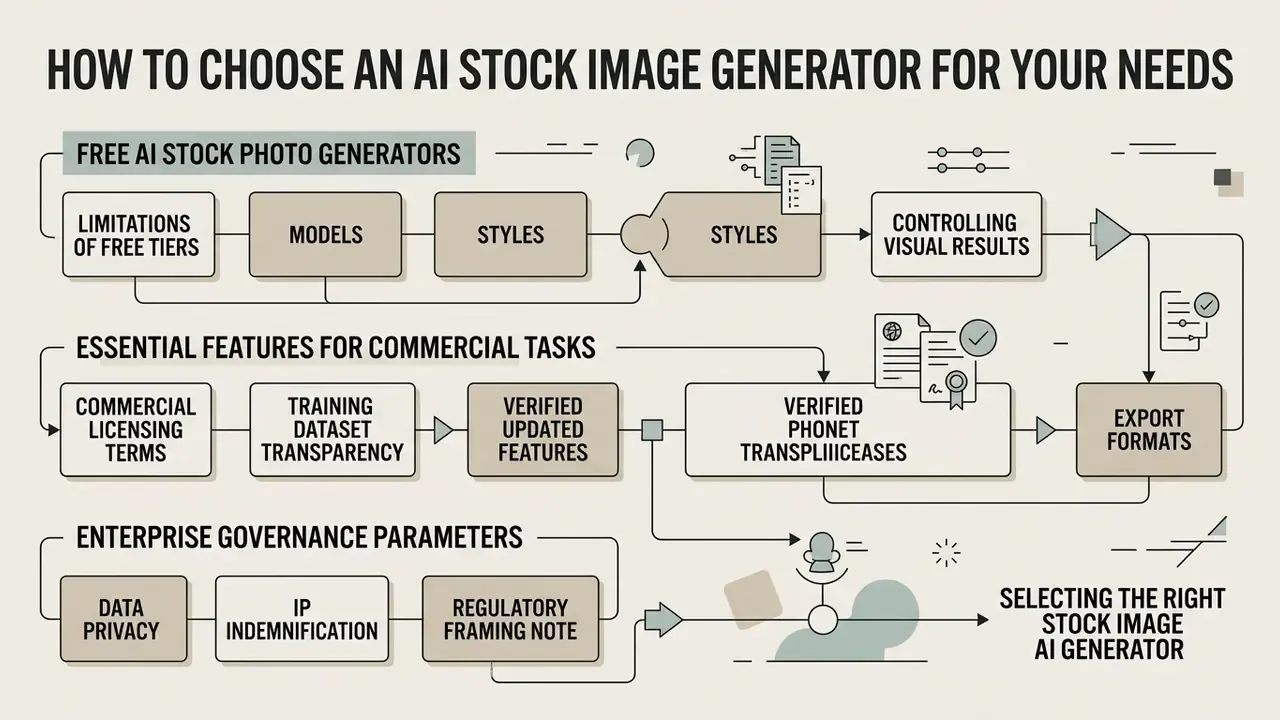
Selecting the right stock image ai generator requires evaluating core rendering architectures, commercial licensing terms, training dataset transparency, and post-processing capabilities. Enterprise buyers must assess whether a platform meets strict data privacy standards and offers reproducible output controls.
Free AI Stock Photo Generators: Limitations of Free Tiers
Using a free ai stock photo generator or a free ai stock image generator typically introduces severe operational constraints, including enforced public gallery exposure, lower rendering resolution (often capped at 1024px), credit caps, and explicit prohibitions on commercial use. Platforms such as Leonardo AI and Ideogram expose free-tier generations to public community feeds, which creates privacy risks for proprietary marketing campaigns. Many free tiers also embed visible watermarks or invisible provenance metadata that restrict commercial deployment until you upgrade to a paid enterprise tier. Teams surveying entry-level options, including anyone searching for an ai stock image generator free of charge, can review free AI image generators without sign-up to understand where access convenience trades against licensing certainty.
The underrated risk in free tiers is confidentiality, not cost. A prompt describing an unreleased product, a campaign codename, or a pricing concept becomes a public artifact the moment it lands in a community feed. This is the operational definition of Shadow AI: employees generating brand-adjacent assets through personal accounts outside procurement, logging, and legal review. Effective controls include an approved-tool allowlist, SSO-enforced enterprise workspaces, network-level blocking of consumer generator domains on corporate devices, and a written policy stating that no unreleased product information may enter a third-party prompt field.
Does the policy need to be long? No. One page, one owner, one escalation path.
Models, Styles, and Controlling Visual Results
«Adding camera descriptions to prompts raises consistency by 16%, text-image alignment by 5%, and safety metrics by 48.9% versus baseline methods.»
Incorporating precise camera instructions prevents visual distortions and helps keep brand aesthetics consistent across campaigns.
Essential Features for Commercial Tasks
Commercial deployment of synthetic visuals demands advanced technical capabilities, including high-resolution export, aspect ratio adjustments, outpainting (canvas extension), and localized inpainting (masked editing). Built-in editing capabilities allow teams to modify specific image regions without re-rendering the entire frame, saving compute credits and preserving brand alignment. When scaling digital campaigns, organizations frequently evaluate specialized tools using an overview of best art generators to verify that selected software supports enterprise-grade canvas controls and commercial usage rights. A side-by-side best AI image generators comparison helps procurement teams match feature depth to licensing tier before signing an annual contract.
| Generator Platform / Category | Free Tier Access | Photorealism & Quality Rating | Max Export Resolution | In-App Editing Tools (Inpainting/Outpainting) | Commercial Usage License |
|---|---|---|---|---|---|
| Midjourney | No (paid subscription required) | Exceptional (high texture detail and natural lighting) | Up to 4K via web upscale | Yes (Vary Region / inpainting canvas) | Permitted on paid tiers; revenue above $1M requires Pro or Mega |
| Adobe Firefly | Yes (generative credits with watermarks) | High (commercial safety focus) | 2K / 4K export via Photoshop | Yes (Generative Fill and Expand) | Permitted on released paid plans; indemnification available |
| Stable Diffusion (custom / ecosystem) | Yes (open-weights local execution) | Variable (model and checkpoint dependent) | Uncapped (hardware dependent) | Yes (ControlNet, inpainting extensions) | Governed by individual model version licenses (for example SDXL vs SD3) |
| DALL-E 3 (OpenAI) | Yes (limited via Bing and Copilot interfaces) | High (strong prompt adherence) | 1024x1024 / 1792x1024 | Yes (select and edit masking) | Permitted; full output ownership assigned to user |
Enterprise Governance Parameters: Data Privacy and IP Indemnification
| Platform | Training Exclusion (are your prompts or uploads used to retrain?) | IP Indemnification | Enterprise SSO / RBAC | Output Ownership Statement |
|---|---|---|---|---|
| Midjourney | Consumer-oriented terms; public visibility by default on standard modes, Stealth Mode on higher tiers | Not offered | Limited | Assets owned by user "to the fullest extent possible"; revenue above $1M requires Pro or Mega |
| Adobe Firefly (Enterprise) | Enterprise agreements position customer content as excluded from model training | Available for enterprise customers; scope tied to the licensed training corpus, not to user-supplied prompts naming third-party brands | Yes | Commercial use permitted on released paid plans |
| Stable Diffusion (self-hosted) | Full control; inference can run entirely inside your own VPC with zero external data egress | None (you assume the risk) | Depends on your own deployment stack | Determined by the specific model or checkpoint license |
| OpenAI / DALL-E 3 (Business and API tiers) | Business and API tiers state customer data is not used for training by default | Limited; verify current enterprise terms | Yes | All right, title, and interest in outputs assigned to the user |
Two caveats deserve explicit attention. First, indemnification is narrower than it appears: vendor guarantees typically cover claims arising from the training dataset, not from a user prompt that deliberately names a competitor's trademark or a living celebrity. Prompt hygiene remains your liability. Second, indemnification has financial caps and procedural conditions. Prompt logs, tool version, and license tier are commonly required as evidence, which is another reason provenance logging is not optional.
How to Generate Stock Images with AI: Process from Prompt to Download
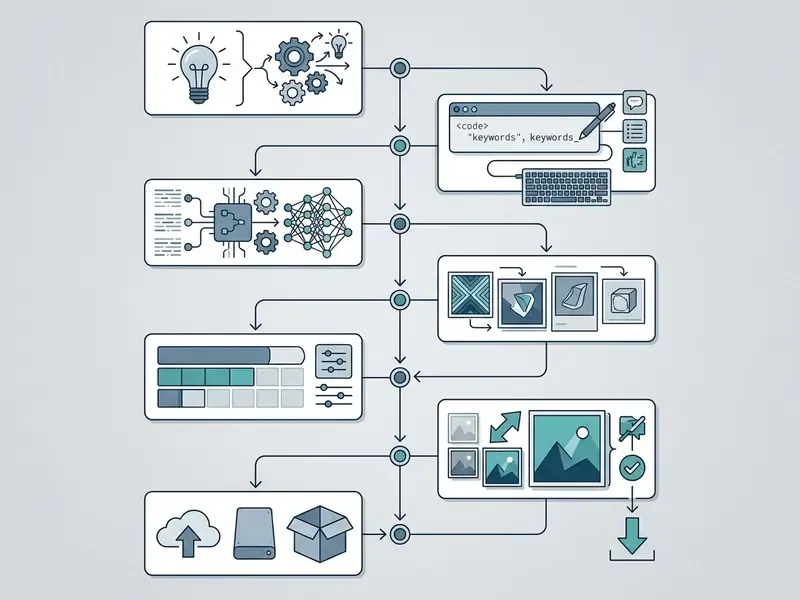
To generate stock photos with ai efficiently, creative teams must follow a structured, repeatable workflow that converts conceptual briefs into high-resolution, production-ready visual assets.
How to Write Text Prompts for AI Stock Photos
«Adding camera descriptions to prompts raises consistency by 16%, text-image alignment by 5%, and safety metrics by 48.9% versus baseline methods.»
«VisualPrompter decomposes prompts into atomic semantic units and reassembles them, achieving state-of-the-art alignment on the DSG-1k and TIFA v1.0 benchmarks.» VisualPrompter, arXiv (2026)
The practical takeaway for content teams: decompose the brief into discrete, checkable attributes (subject, expression, location, lens, aperture, light direction, color or film character, aspect ratio) rather than writing one long adjective chain. Attribute-level written prompts are also easier to audit, version, and reuse as templates across a campaign. Store them in one place, with an owner, like any other controlled artifact.
Using Reference Images and Existing Images for Precise Results
Incorporating reference images or an existing image into an image based generation pipeline allows creators to lock in visual structure, spatial composition, and color palettes. Frameworks like ControlNet and IP-Adapter enforce pixel-level structural consistency, enabling models to retain specific pose geometries while altering environmental backgrounds. Teams standardizing on repeatable brand output should evaluate image-to-image AI generators for brand consistency alongside their primary text-to-image tool. Recent research reinforces the mechanism: ControlNet++ optimizes pixel-level cycle consistency between generated images and conditional controls, while IP-ControlNet uses one or more reference images with separate visual encoders to enforce pixel-space consistency during generation and editing.
Marketers frequently leverage specialized workflows, such as an image extender ai canvas tool or other approaches to expanding canvas boundaries, to adapt existing brand photography to new aspect ratios without losing core subject details. When editing rather than generating from scratch, state the constraint explicitly: separate what must change from what must stay identical, and revise one element at a time to prevent compositional drift across iterations.
Formats, Aspect Ratios, and High Resolution for Different Platforms
Provenance, Metadata, and Audit Trails for Synthetic Assets
Governance-mature teams treat every generated file as a record, not just an image. Three layers are worth implementing:
That last point is where most programs quietly fail. The images are fine; the evidence is on someone's laptop.
- Embedded provenance.Content Credentials based on the C2PA standard attach tamper-evident metadata describing how an asset was created and edited. Invisible watermarking systems, such as SynthID-class approaches, survive some transformations that strip metadata. Decide deliberately whether your pipeline preserves or strips these signals, and document the decision.
- Sidecar generation logs.For each approved asset, archive prompt text, negative prompt, seed, model and checkpoint version, tool build number, licensing tier at time of generation, reference images used, operator identity, and timestamp. This is the evidentiary package that supports both a copyright registration claim describing human contribution and an indemnification claim against a vendor.
- GRC and MRM integration.Register the generator itself in the model inventory with an accountable owner, an approved-use description, and a review cadence. Push asset-level logs into the existing evidence repository so that audit requests resolve with a query rather than a scramble through designers' local drives.
Decision Ownership Matrix
| Decision | Marketing / Creative | Legal & Brand Protection | Model Risk / AI Governance |
|---|---|---|---|
| Approve a generator for corporate use | Recommend | Review terms, indemnification | Own (inventory, validation, monitoring) |
| Approve an individual asset for organic content | Own | Consulted on likeness and trademark flags | Informed via logs |
| Approve an asset for paid media or regulated disclosures | Recommend | Own (disclosure, claims substantiation) | Consulted |
| Decide whether to pursue copyright registration | Consulted | Own | Informed |
| Enforce Shadow AI policy and tool allowlist | Consulted | Consulted | Own |
| Retain provenance logs and respond to audit requests | Supply inputs | Consulted | Own |
Process Flow for Generating AI Stock Images
- Define content task and composition.Specify the campaign purpose, target channel dimensions, emotional tone, and subject placement requirements.
- Formulate a structured text prompt.Draft a prompt using the formula Subject + Environment + Lighting Conditions + Camera Gear/Lens + Style Constraints.
- Select model, style presets, and aspect ratio.Choose the appropriate diffusion checkpoint, set target render dimensions (for example 16:9 or 1:1), and configure quality parameters.
- Incorporate reference assets (optional).Attach pose, depth, or style reference images to lock structural layout and maintain visual brand consistency.
- Execute generation.Click generate to run an initial inference batch and produce four distinct visual variations for comparative review.
- Perform localized editing and upscaling.Apply targeted inpainting to correct anatomical flaws, expand borders via outpainting, and upscale to 4K resolution.
- Export the asset and archive the compliance log.Save the final file in WebP, PNG, JPG, or SVG format while logging prompt text, seed numbers, tool version, Content Credentials status, and licensing tier for audit purposes.
Where to Find Free AI-Generated Stock Images and Ready-Made AI Stock Collections
Organizations seeking free ai generated stock images can use curated public repositories and AI-assisted stock catalogs that offer pre-rendered synthetic visual assets. However, teams must run strict compliance audits to verify the licensing scope of every downloaded file.
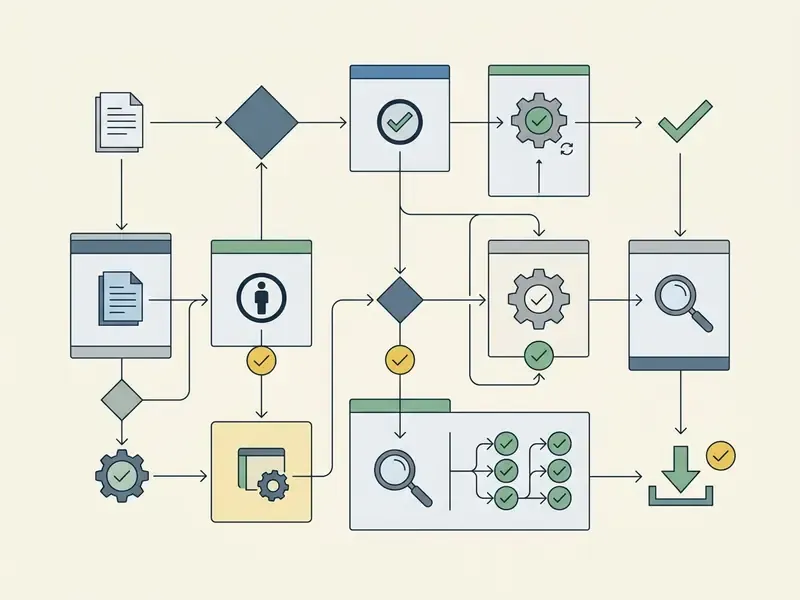
Specialized AI Stock Platforms Compared
The market for ai for stock images has split into curated libraries, high-volume raw render banks, synthetic-human specialists, prompt-art galleries, and hybrid stock sites that mix AI output with conventional photography. Each category carries a different risk profile.
| Platform | Primary Asset Type | Commercial License Terms | Key Limitation / Risk | Best Use Case |
|---|---|---|---|---|
| Lummi AI | Curated photorealistic and 3D | Free commercial (CC0-style) | Smaller library size (roughly 16k assets) | High-end marketing backdrops without uncanny aesthetics |
| StockCake | High-volume raw AI renders | Free commercial (no attribution) | Uncurated quality; requires manual artifact check; daily credit caps on free tier | Rapid content prototyping and blog filler imagery |
| Generated Photos | Synthetic human faces (2.6M+) | Free with watermark; paid for commercial HD | Niche focus restricted to headshots and full-body humans | Model-release-free human imagery for SaaS and ads |
| Lexica Art | Stylized and prompt-based art | Free tier personal; paid commercial | Distinct "AI style" requiring prompt filtering | Creative visual assets and artistic landing headers |
| Pixabay AI / Pexels AI | Hybrid stock plus AI renders | Free commercial license | Overused assets shared across public domains | Generic background media for social feeds |
| Stockimg.AI | 100% AI-generated library plus prompt generation | Free tier; paid plans for volume and quality | Output style skews toward a recognizable AI look | On-demand assets when library search fails |
| Adobe Stock (AI collection) | Contributor-submitted AI assets with rights certification | Standard and extended stock licensing | Higher cost than free banks | Enterprise use where rights clearance documentation matters |
| 123RF | 200M+ mixed assets with AI integration | Subscription and credit packs | Mixed curation across a very large catalog | Enterprise breadth with a single vendor relationship |
| Impossible Images | Surreal, scroll-stopping AI visuals | Free and paid options | Deliberately unconventional aesthetic | Experimental campaigns and editorial concepts |
When commercial campaigns require authentic human imagery without incurring right-of-publicity liabilities or signed model releases, deployment of fully synthetic human databases, such as Generated Photos' repository of 2.6M+ non-existent individuals, bypasses traditional licensing bottlenecks entirely. Because no real person is depicted, there is no identifiable individual whose likeness rights could be asserted, which removes the single most common blocker in fast-turnaround advertising production. The residual obligation shifts to honesty: synthetic faces must never be presented as real customers, real testimonials, or real employees.
Search mechanics matter as much as library size. Freepik, for example, documents text and reverse-image search with filters for category, license, orientation, color, people, file type, style, and AI-generated inclusion or exclusion, plus Boolean operators for exact phrases and term exclusion. Pixabay exposes a dedicated "AI-Assisted" collection, which lets teams separate synthetic from photographic inventory at the query level rather than by eye. For image-heavy publishing programs, that filter alone saves hours of manual triage each month.
Free AI Stock Image Sites: What to Verify Before Downloading
When sourcing free ai generated stock photos or downloading from a stock image ai free portal, teams must inspect the asset's underlying license agreement, attribution requirements, and public domain status. Assets distributed under Creative Commons CC0 permit unrestricted commercial modification without attribution, whereas CC BY 4.0 requires explicit creator attribution, including retained creator identification, copyright notice, license notice, disclaimer notice, and the source URI where supplied. CC BY-NC 4.0 restricts licensed rights to non-commercial purposes entirely. Relying on an unverified free ai photo generator without reviewing platform documentation can expose organizations to copyright claims if the training dataset used protected intellectual property.
A deeper, less-discussed risk in third-party free AI banks is upstream contamination. A CC0 label describes the uploader's grant; it does not warrant that the generating model was trained on lawfully licensed material, nor that the render is free of trademark-like elements, recognizable trade dress, or near-duplicate reproductions of protected works. Because file-level notices can be stricter than a site's general banner, legal review should sample assets rather than accept a blanket site-level assurance. Practical mitigations: prefer platforms that publish training-data provenance, run a reverse-image check on hero assets, require named-source documentation in the asset record, and reserve third-party free banks for low-stakes backdrops rather than flagship campaign imagery.
During a digital transformation initiative, a regional banking firm sought to optimize content costs by sourcing visual assets for financial literacy articles from open AI repositories. This example is illustrative rather than a documented client engagement. The marketing team implemented a mandatory three-point compliance check, verifying license class, checking for trademarked logos, and validating metadata, before publishing any free ai image. That structured audit reduced asset ingestion risk while keeping the publishing schedule intact across digital channels.
Ready-Made AI Stock Photos vs. Generating from Scratch: Which to Choose
Choosing between ready-made stock photos from synthetic catalogs and custom generation depends on the required balance between delivery speed and visual uniqueness. Catalog retrieval offers immediate asset downloads, making it ideal for standard blog posts and routine social content. Custom prompt generation, on the other hand, lets marketers create unique compositions that match niche campaign strategies precisely. Whether you're publishing two articles a week or running fifty localized ad variants, the decision is about volume and distinctiveness, not ideology. Organizations evaluating workflow efficiency often compare options to determine whether off-the-shelf synthetic assets or custom prompt workflows best serve their operational goals, and a review of the best free AI image generators clarifies where free-tier output is genuinely usable versus where paid licensing is mandatory. Teams that want definitions before tooling can explore the hub for terminology on diffusion, inpainting, and provenance.
Assessing Quality and Relevance in AI Stock Collections
Evaluating synthetic stock quality requires systematic inspection of technical parameters, including anatomical correctness, focal depth, texture continuity, and brand alignment. Empirical studies using the AGIQA-1K and AIGCIQA2023 quality datasets show that human raters penalize synthetic visuals primarily for facial distortions, unnatural lighting mismatches, and plastic skin textures.
Reviewers must zoom in on background details, hands, and text elements to confirm the asset meets professional publication standards. Score the three dimensions separately rather than assigning one aesthetic verdict: technical quality (focus, exposure, noise), content accuracy (anatomy, physics, legible text), and brand compliance (palette, styling, environment). An asset can be beautiful and still fail the brand dimension, or be perfectly on-brand and fall apart at 100% zoom.
| Operational Dimension | Ready-Made AI Stock Catalog | Custom AI Generation from Scratch |
|---|---|---|
| Acquisition Speed | Instant (search, select, and download in under a minute) | Fast (10 to 30 seconds generation time per iteration) |
| Asset Uniqueness | Low to moderate (assets are non-exclusive and accessible to other users) | Fully unique (synthesized specifically from target prompt parameters) |
| Style & Brand Alignment | Restricted to existing pre-rendered catalog options | Unlimited (customizable via style codes, prompts, and reference images) |
| Post-Processing Flexibility | Limited to standard cropping, color grading, and basic edits | High (supports inpainting, background swap, and outpainting) |
| Average Cost Structure | Fixed subscription fee or per-download catalog cost | Metered API compute units or monthly software subscription |
| Provenance Documentation | Depends on platform disclosure; often thin | Fully controllable (prompt, seed, model version logged in-house) |
How to Get High Quality AI-Generated Images and Fix Generation Artifacts
Achieving professional, photorealistic results requires understanding why diffusion models produce visual defects and mastering post-processing tools to correct flaws before publishing high quality images.
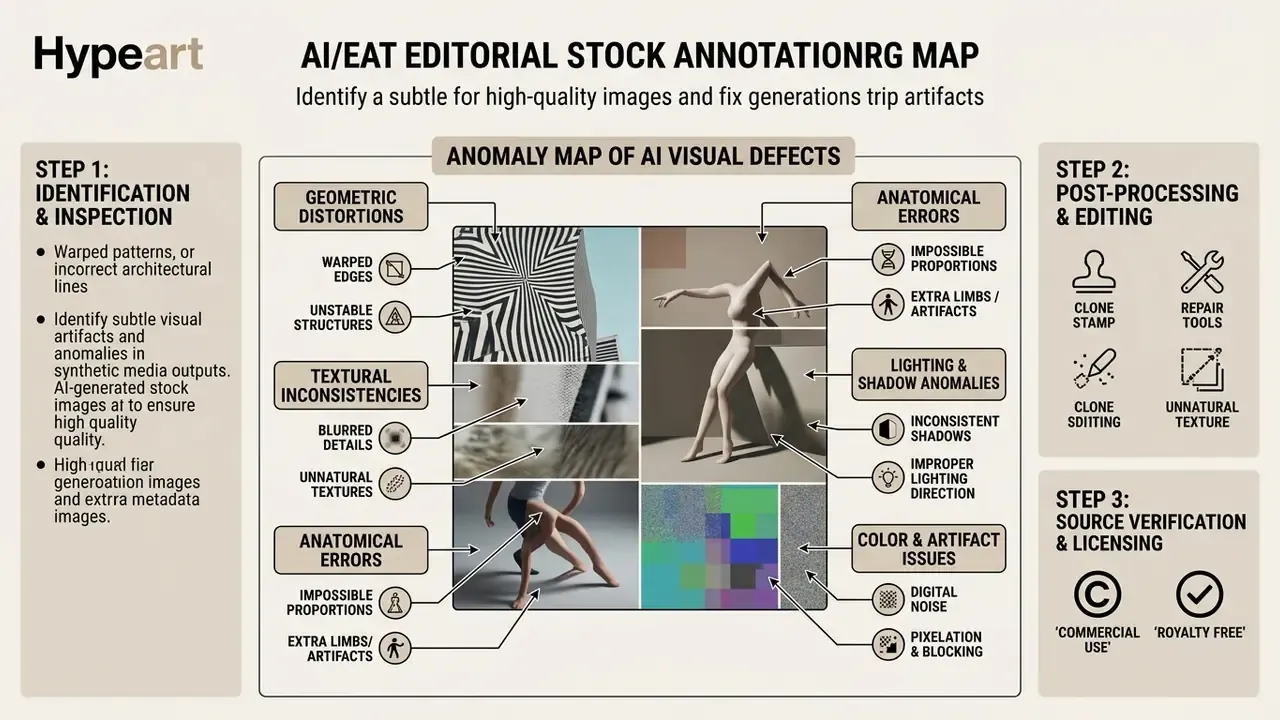
Why AI Generated Images Can Look Unnatural
Synthetic visuals often show an unnatural "plastic" appearance or fall into the uncanny valley because of missing skin micro-textures, over-smoothed surface details, inconsistent shadow vectors, and anatomical errors in hands or eyes.
That finding has a direct operational implication: automated quality scores cannot replace human review of synthetic assets. Standard diffusion models tend to generate flat, frontal key lighting when prompts lack specific physical lighting constraints. To eliminate plastic textures, prompt engineers explicitly add descriptors like "visible pores, natural skin imperfections, asymmetrical lighting, subsurface scattering," while pushing terms like "smooth, airbrushed, plastic, doll-like" into negative prompts. A practical defect map for reviewers covers waxy skin, cut-out subjects against inconsistent backgrounds, lighting direction mismatches between subject and environment, smudged edges, distorted on-image text, impossible object placement, and shadows that disagree with the implied light source.
Editing, Upscaling, and Refining Generated Visuals
Refining generated visuals into production-ready assets involves a three-stage post-processing pipeline: generative upscaling, localized inpainting, and final editorial retouching. Tools like Topaz Gigapixel AI, Magnific AI, and native Photoshop Generative Fill allow artists to isolate defective regions, such as distorted background text or misaligned fingers, and re-render only the masked area. Vendor documentation separates these operations explicitly. Precision upscaling, generative upscaling, masked inpainting, and object removal are distinct steps, and the reliable order is upscale first, then repair one localized defect at a time with a tight mask, then re-inspect at full resolution.
Teams evaluating desktop editing tools often reference a comprehensive guide to photo editors to select software that integrates AI layer masking with traditional color grading workflows. Those building a repeatable refinement stack can also review AI image enhancers for post-processing workflows to standardize the upscale-and-repair sequence across the team.
A digital media publisher noticed that synthetic hero images created for long-form editorial articles frequently contained blurry background details and altered brand logos. This scenario is illustrative. The design lead implemented an automated post-generation pipeline using a desktop free photo editor tool paired with AI upscaling software, and standardized the refinement step around AI photo editors for generative image refinement. By running targeted local inpainting over background artifacts and applying sharpening filters, the team raised asset approval rates from 62% to 98% while keeping published imagery inside editorial quality standards.
Can You Use AI Stock Images for Commercial Use?
Determining whether synthetic media can be safely deployed for commercial use depends on platform licensing terms, copyright registrability standards, and potential legal risks tied to trademark or privacy infringement.
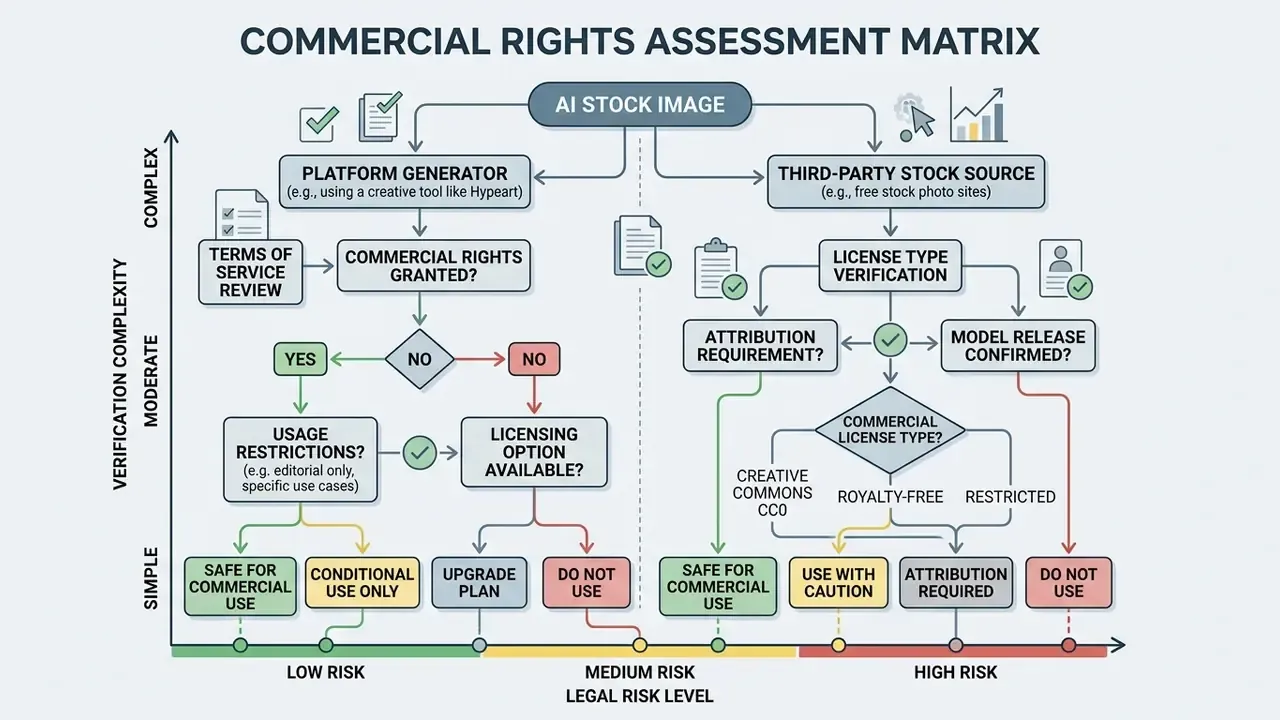
Platform Licenses and Terms of Service for AI-Generated Content
Commercial rights to ai generated content are governed primarily by the contractual terms of service of the generating platform. Platforms such as Midjourney require active paid subscriptions for commercial exploitation, with additional revenue thresholds, for example enterprise tiers for businesses generating over $1,000,000 annually. Adobe Firefly, by contrast, grants commercial usage rights on paid plans and offers intellectual property indemnification for enterprise clients, while OpenAI's terms assign users all right, title, and interest in generated outputs. Marketers evaluating integrated productivity platforms frequently review Canva AI generator terms or analyze Microsoft AI image generator options to verify commercial licensing boundaries.
Read indemnification clauses for their exclusions, not their headlines. Typical carve-outs include outputs produced from user-supplied reference images, prompts that name third-party brands or real individuals, outputs modified after generation, use outside the licensed tier, and claims where the customer cannot produce generation records. A guarantee that covers the vendor's training corpus does not cover your prompt engineering choices.
Copyright in AI-Generated Images: Key Legal Considerations
Under current U.S. Copyright Office (USCO) guidance and reaffirmed judicial precedent such as Thaler v. Perlmutter, purely machine-generated visual output lacking human creative input is not eligible for copyright protection.
«Material generated entirely by AI is not protected by copyright; protection extends only to the perceptible contribution of a human author.»
Copyright protection extends only to human-authored elements, such as creative selection, arrangement, compositing, or substantial manual modification of synthetic elements. So while businesses can legally use ai generated visuals in commercial marketing campaigns, they cannot prevent competitors from copying purely AI-generated visual assets unless significant human authorship has been integrated into the final work. Readers who want the mechanics behind that conclusion can see how do ai image models actually assemble an output. The D.C. Circuit affirmed the human-authorship requirement in 2025, and the Supreme Court declined review in 2026, leaving the rule in force.
What level of human involvement actually counts? Current guidance draws the line at whether a human determined the expressive elements of the work. Prompting alone, however elaborate, is generally treated as insufficient, because the model, not the author, fixes the expression. The following are far more defensible as human authorship, and should be documented at the layer level:
- Selecting, arranging, and compositing multiple generated elements into an original overall design, where protection attaches to the selection and arrangement rather than the underlying AI elements.
- Substantial manual modification, meaning painting, retouching, or redrawing regions so that the human contribution is itself perceptible and creative.
- Combining generated material with human-authored photography, illustration, or typography.
Trivial cleanup or a single-pass inpainting fix is closer to de minimis and unlikely to carry a registration claim on its own. When registering, applicants must disclose AI-generated material exceeding de minimis thresholds, describe the human contribution, and exclude non-human authorship from the claim. Stock agencies enforce parallel duties: Adobe Stock requires contributors to confirm that the generating tool's license permits commercial stock submission, to check the "Created using generative AI tools" box, and to certify fictional people and property; Getty Images requires rights clearance and clear disclosure of AI-generated or AI-assisted submissions.
Jurisdiction matters as much as authorship. The EU AI Act's transparency obligations apply from 2 August 2026, requiring providers to mark certain AI-generated or manipulated content and deployers to disclose deepfakes and some AI-generated public-interest content, with marking and detection duties for pre-existing systems from 2 December 2026. A single asset can therefore be commercially licensed, uncopyrightable, and subject to mandatory labeling all at once. That combination confuses people. It is worth stating plainly in internal policy.
Risks Involving Real Likenesses, Brands, and Reference Images
Deploying synthetic media that incorporates real personal likenesses, registered trademarks, corporate logos, or protected trade dress carries substantial legal and reputational risk. Using identifiable individual faces without signed model releases triggers right-of-publicity claims under U.S. state laws. Generating images that feature recognizable commercial products can likewise result in trademark infringement or false endorsement lawsuits. Artistic style is not protected as standalone federal subject matter, yet deliberate imitation of a living artist's signature look remains a reputational and dispute risk in commercial contexts.
Organizations exploring multi-modal platforms often test specialized tools, such as the Bing AI image creator, while establishing strict negative prompt filters that block unauthorized corporate branding elements. Compliance teams can strengthen verification with AI image detector tools for compliance verification to confirm asset origin before an asset enters paid distribution. Where a campaign genuinely requires human faces, routing production through synthetic-human libraries removes the release requirement entirely rather than attempting to manage it.
Legal & Compliance Fact Check:
FAQ for Legal, Brand Protection, and Risk Teams
Can we register copyright in an AI image after editing it in Photoshop?
Possibly, but only for the human-authored contribution. If your edits are substantial and perceptible, for instance compositing, repainting, or original arrangement of multiple elements, you may claim those elements while excluding the AI-generated material. Minor cleanup is likely de minimis. Keep layered files and an edit log as evidence of the human contribution.
Who is liable if a trademarked logo appears in a generated image we published?
Practically, the publisher. Vendor indemnification generally does not cover outputs shaped by user prompts or reference uploads that introduce third-party marks. Mitigate with negative prompt filters, a pre-publication visual review, and reverse-image verification on hero assets.
Do free CC0 AI images carry zero risk?
No. CC0 describes the uploader's grant, not the lawfulness of the training corpus or the absence of trademark-like elements. Treat third-party free banks as suitable for backdrops, and reserve documented, rights-cleared sources for flagship and paid-media assets.
Must we label AI-generated marketing images?
Increasingly, yes. Major ad platforms permit or require in-creative AI labels, EU transparency obligations phase in during 2026, and several institutional marketing policies mandate an explicit credit such as "Created using AI" in the caption or adjacent text. Default to disclosure.
Can we use a synthetic face as a customer testimonial?
No. Even with no real person depicted and no release required, presenting a synthetic face as a real customer is a deceptive-advertising problem, not a copyright one.
Can our output be exclusive if it is not copyrightable?
Contractually and practically, partially. You control the prompt, seed, brand kit, and reference assets, which makes exact reproduction unlikely. But you cannot use copyright to stop a competitor from copying a purely AI-generated visual. Anchor distinctiveness in trademarked brand elements and human-authored composition.
Using AI Stock Images in Marketing, Blogs, and Social Media
Integrating synthetic visual assets into digital marketing strategies lets creative teams produce engaging, tailored content at scale while holding a consistent publishing schedule.
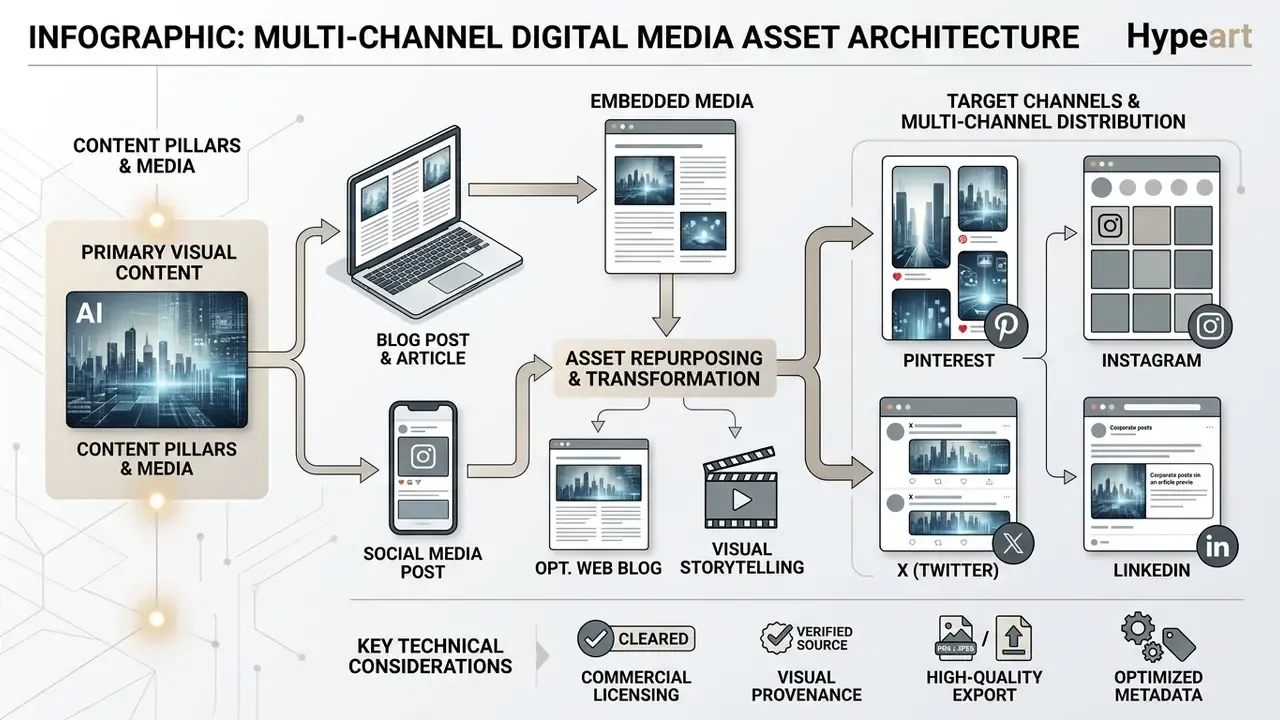
Governing a Multi-Channel Synthetic Media Program
Scaling beyond ad-hoc experimentation requires the same discipline applied to every channel, with tool selection treated as a controlled procurement decision rather than individual preference. When integrating synthetic visual assets into enterprise publishing workflows, creative leaders should evaluate alternative generation platforms like image fx ai or review custom art creation software detailed in the best free AI art generator review against the governance parameters above, namely training exclusion, indemnification scope, SSO, and export rights, rather than on output aesthetics alone. Procurement teams that prefer a single side-by-side view can see the overview before shortlisting vendors.
Teams managing complex video workflows can review dedicated resources like the YouTube video editor workflow guide or inspect technical API capabilities in the Google Veo AI video generator guide, extending prompt-and-seed logging to timeline-based assets. Broader comparisons help too: evaluations such as ChatGPT picture generator vs alternatives or Midjourney AI image generator comparisons confirm whether chosen software aligns with operational requirements, including revenue-threshold licensing clauses. For regulatory developments, teams can track ongoing litigation and intellectual property disputes in the synthetic media sector, then feed material rulings back into the tool allowlist and the indemnification review cycle. Documented process patterns live in AI Media Workflows.
Three governance habits separate mature programs from risky ones: an approved-tool allowlist enforced technically rather than by memo; a single asset register that links every published visual to its prompt, model version, license tier, and approver; and a quarterly review that retires tools whose terms have changed. The pattern mirrors established model risk practice, that is inventory, ownership, validation, monitoring, applied to creative output instead of predictive models.
Limitations, Open Questions, and a Controlled Next Step
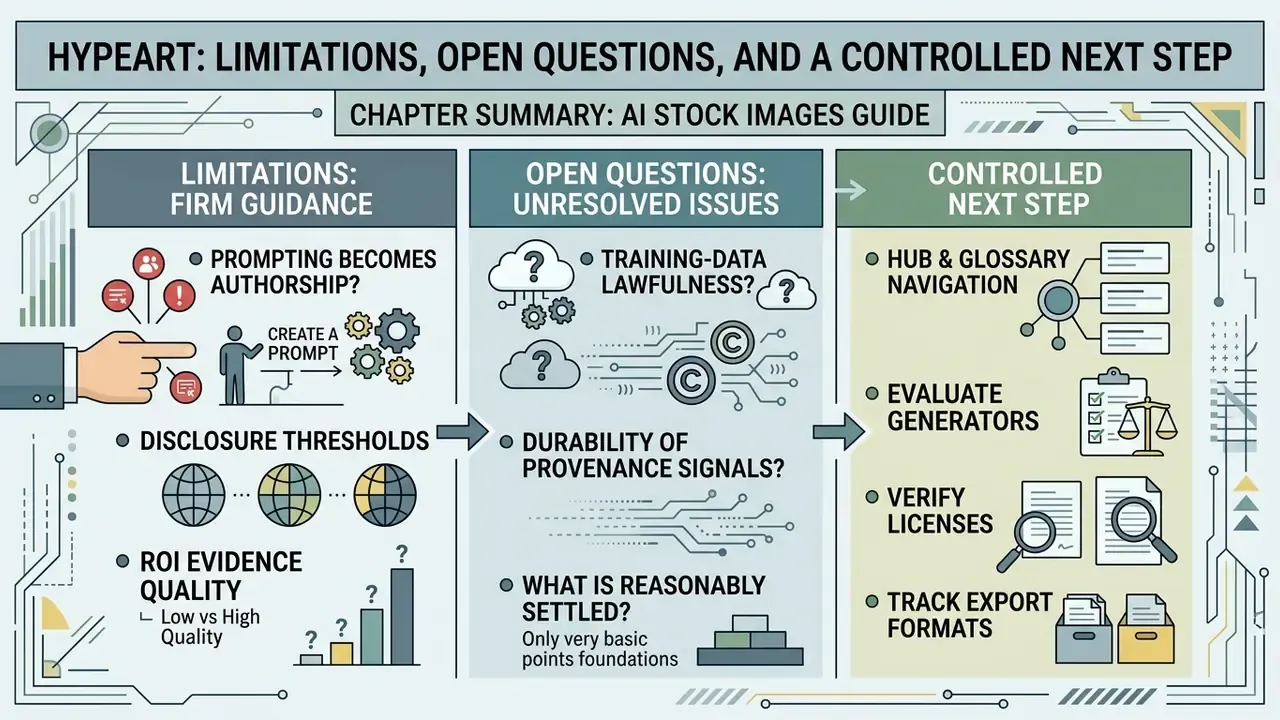
Some of this guidance is firm. Some of it is not, and pretending otherwise would be dishonest.
What is reasonably settled. Human authorship is required for U.S. copyright protection. Platform terms, not copyright, determine your commercial permissions. Provenance logs materially improve your position in both registration and indemnification conversations. Synthetic faces remove right-of-publicity exposure because no real individual is depicted.
What remains unresolved.
- Where prompting becomes authorship. Guidance says a human must determine the expressive elements, but there is no bright-line test for iterative, reference-driven workflows. Expect refinement through registration decisions and litigation.
- Training-data lawfulness. Fair use questions in pending U.S. cases are unsettled. A vendor's indemnification is a financial cushion, not a legal conclusion.
- Durability of provenance signals. C2PA metadata can be stripped by routine platform processing, and invisible watermark robustness varies. Treat embedded provenance as one control among several, not proof.
- Disclosure thresholds across jurisdictions. Requirements differ between EU transparency rules, ad platform policies, and sector-specific marketing guidance. A global campaign may need the strictest label.
- ROI evidence quality. The 85% procurement savings figure reflects blended market pricing, not an audited institutional result. Validate against your own cost data before booking savings.
A safe next step. Run one bounded pilot instead of a policy rewrite. Pick a single low-risk use case, for example blog header imagery for financial literacy content. Assign one accountable owner. Register the generator in the model inventory. Log prompt, seed, model version, and license tier for every approved asset. Require legal review only for paid media and regulated disclosures. Review after 60 days against three measures: cost per approved asset, rework rate at 100% zoom, and completeness of the audit trail. If the evidence holds, widen the scope. If it does not, you have lost a quarter's worth of effort rather than a brand position.
No evidence, no autonomy. That applies to image pipelines as much as to agents.