Data Freshness & Verification Methodology
Executive Summary: Ten Things Decision-Makers Need to Know
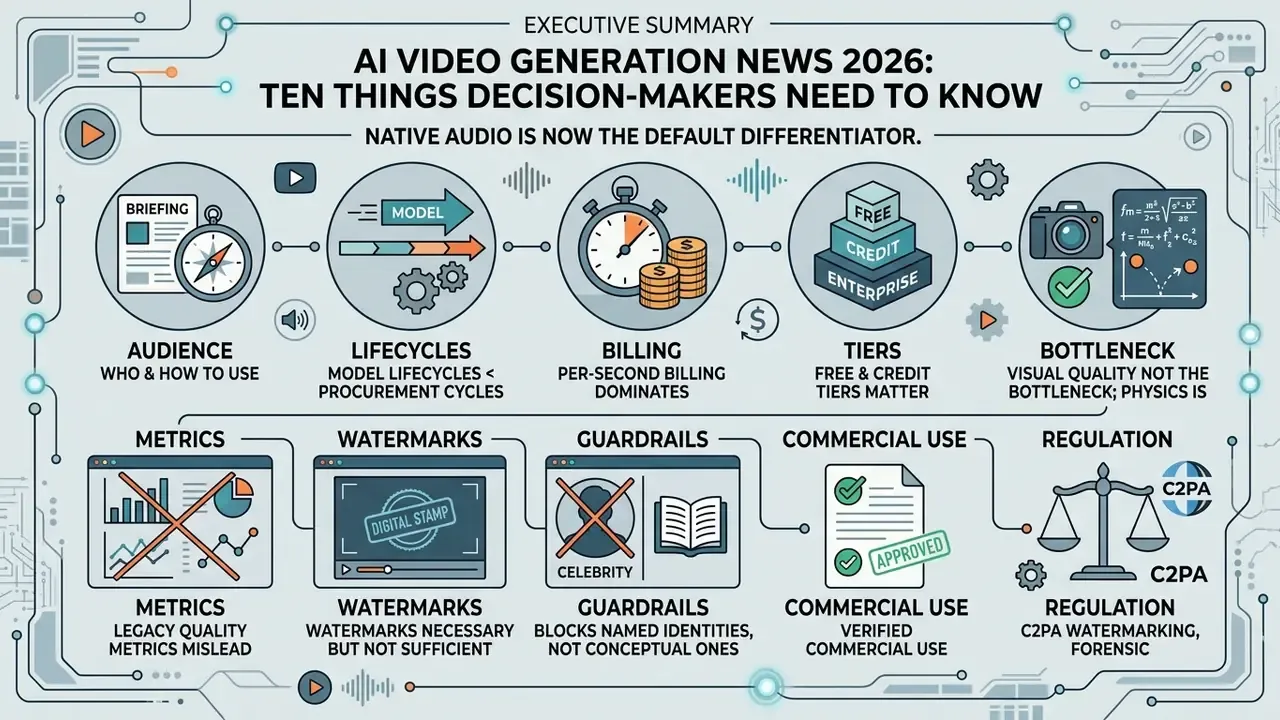
- Native audio is now the default differentiator. Veo 3.1 and Sora 2 generate synchronized dialogue, ambient sound, and effects inside the same render pass, collapsing what used to be a two-stage pipeline.
- Model lifecycles are shorter than procurement cycles. OpenAI scheduled the Sora 2 API and legacy Videos API for shutdown on September 24, 2026; older Veo endpoints were scheduled for retirement by June 30, 2026. Vendor lock-in is now a continuity risk, not a licensing preference.
- Per-second billing dominates. Real API rates span roughly $0.02 per second on budget tiers up to $0.70 per second for Sora 2 Pro at 1080p, a spread of about 35x that makes unit economics, not sticker price, the deciding factor.
- Free and credit-based tiers matter operationally. Hailuo 2.3, Kling 2.6, Pika 2.1, and Luma RAY2 provide low-cost or free experimentation capacity that reduces the cost of prompt discovery before production spend.
- Visual quality is no longer the bottleneck; physics is. Aesthetic scores exceed 85% on modern benchmarks, while world-knowledge and physical-plausibility accuracy sits near 63 to 67%.
- Legacy quality metrics mislead. FVD is largely insensitive to temporal flickering and frame shuffling; JEDi correlates substantially better with human perception and needs a fraction of the sample size.
- Watermarks are necessary but not sufficient. Benchmark studies show invisible watermarks degrade under adversarial perturbation and re-encoding, so multi-layer forensic detection is mandatory.
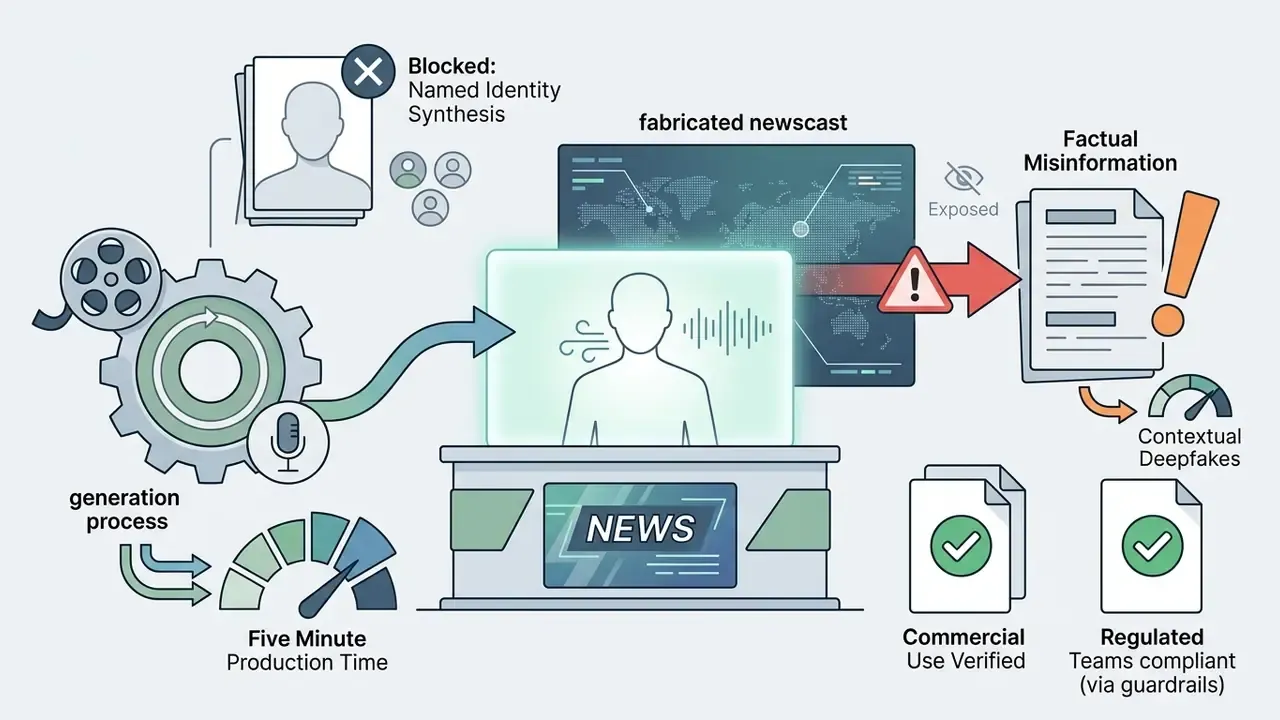
- Guardrails block named identities, not conceptual ones. Prompts naming public figures are rejected; generalized descriptions ("a mayor of a Canadian town") pass immediately, a documented contextual deepfake vector.
- Copyright protection covers only human authorship. Purely AI-generated output lacking substantial human creative control cannot be registered in the United States; documentation of human contribution is the control.
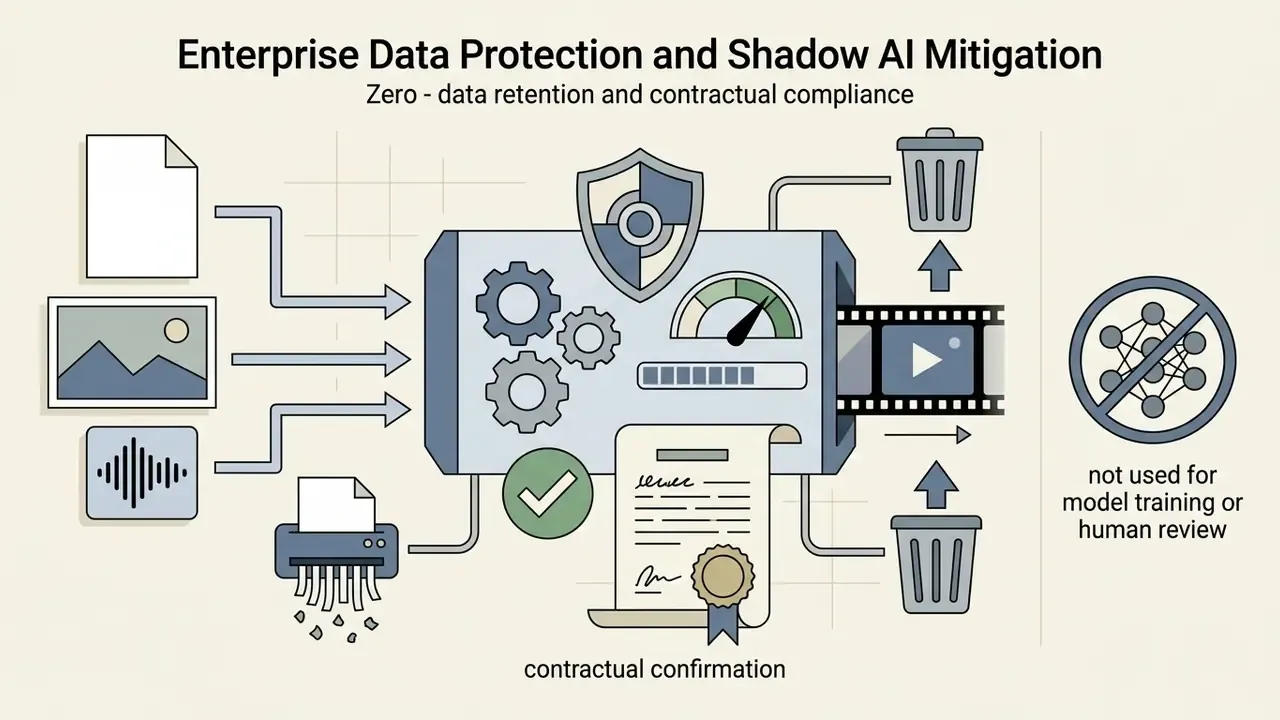
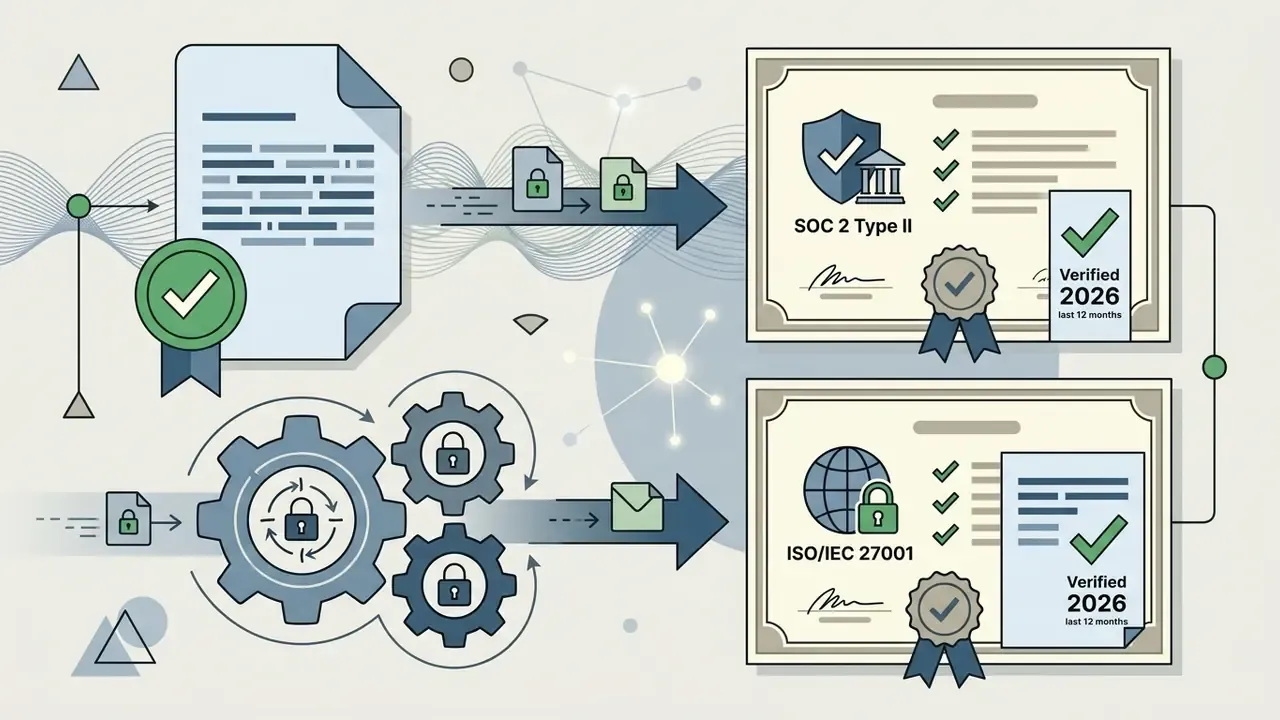
- Data governance is the least-covered risk. Zero-retention guarantees, DPAs, SOC 2 Type II, private connectivity, and Shadow AI detection must be settled before a single production render.
Who This Briefing Is For and How to Use It
This is written for the people who sign off, not the people who prompt. Heads of Model Risk, CCOs, AI governance leads, and finance transformation owners who need one document that connects vendor release notes to validation evidence.
A practical reading path: risk owners start with the metric-to-MRM mapping and the data protection section, finance leaders start with pricing and total cost of ownership, and communications compliance starts with commercial use and the forensic checklist. Everything is dated, and every claim about a vendor threshold names its source. Where a number is our own planning assumption rather than published vendor data, it says so plainly.
One framing rule from the persona brief applies throughout: no evidence, no autonomy. A generator with no owner, no inventory entry, and no audit trail is not a tool. It is an unmanaged dependency.
AI Video Generation News Today: What Changed and Why It Matters
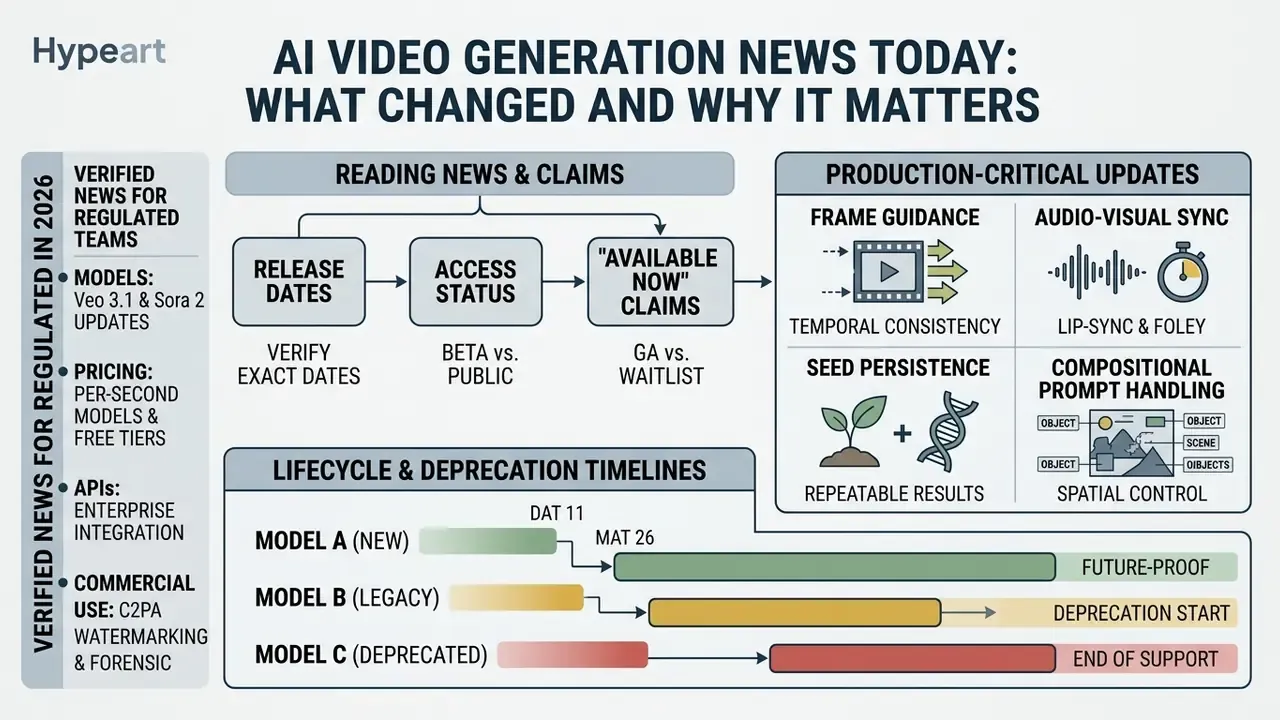
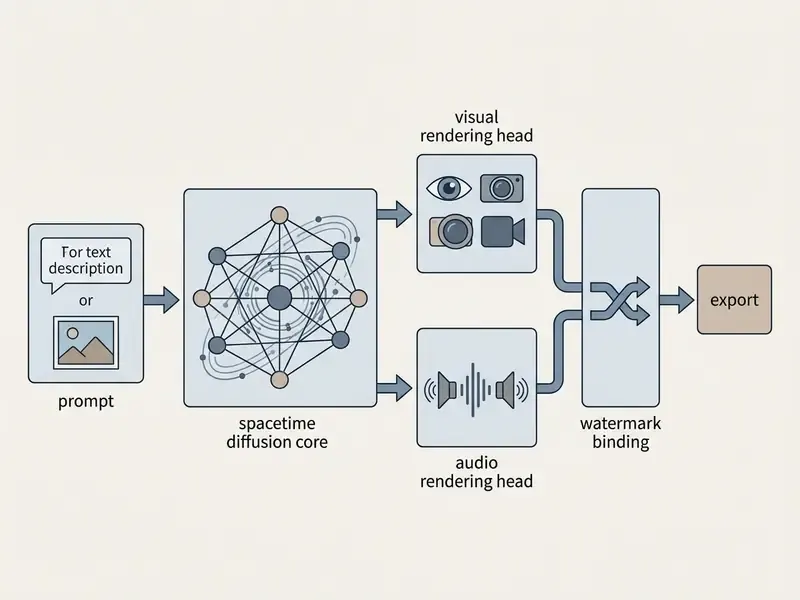
Recent shifts in AI video generation have moved the market from basic visual synthesis toward native audio synchronization, fine-grained temporal controls, and accelerated API deprecation cycles. Following ai video generation news today allows creators, development teams, and enterprise risk managers to distinguish short-lived marketing demonstrations from infrastructure tools suitable for controlled production pipelines.
Verified release timeline
Read that list again with a procurement calendar next to it. Four of nine entries are shutdowns.
How to Read Release Dates, Access Status and "Available Now" Claims
Which AI Video Updates Affect Production Rather Than Demos
Production-relevant updates focus on deterministic prompt adherence, shot continuity, and rendering throughput rather than isolated visual beauty. High-profile demo reels often mask underlying dynamic flaws by showcasing brief, cherry-picked clips with minimal camera movement.
"Even top systems still struggle with temporal understanding, while closed models lead overall but not uniformly across categories."
Evaluating generated video updates through an operational lens reveals key production prerequisites:
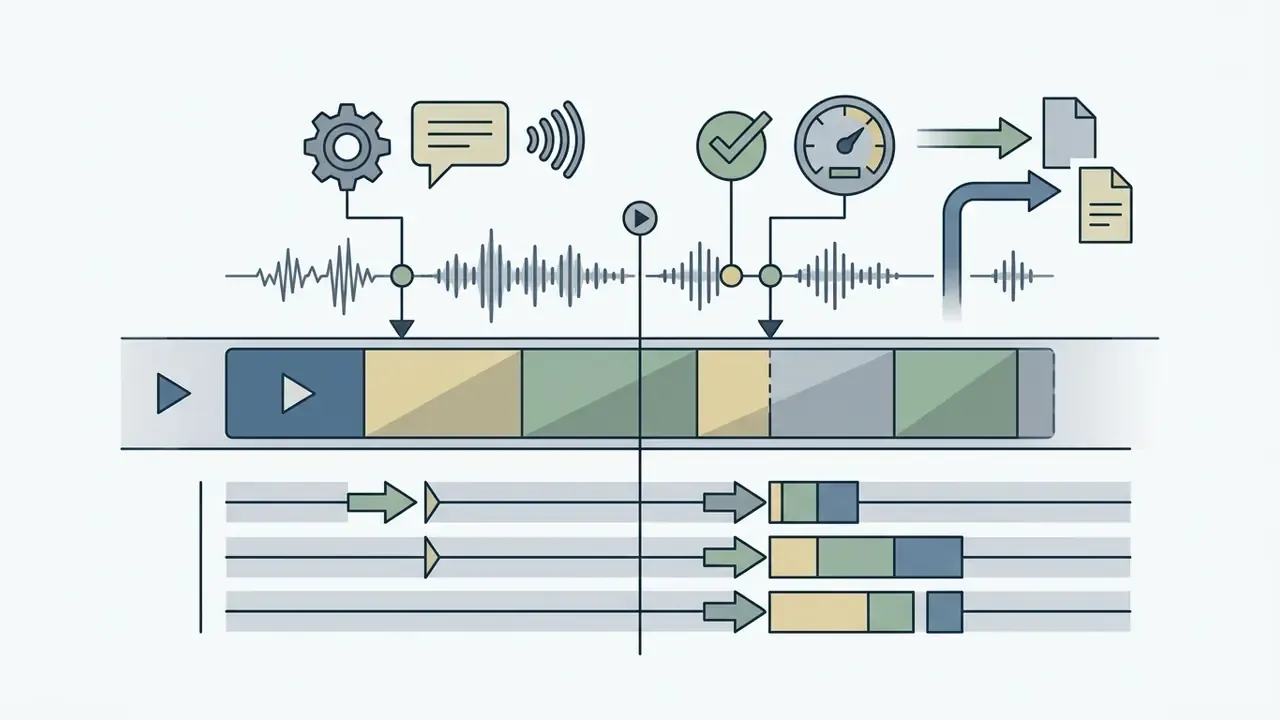
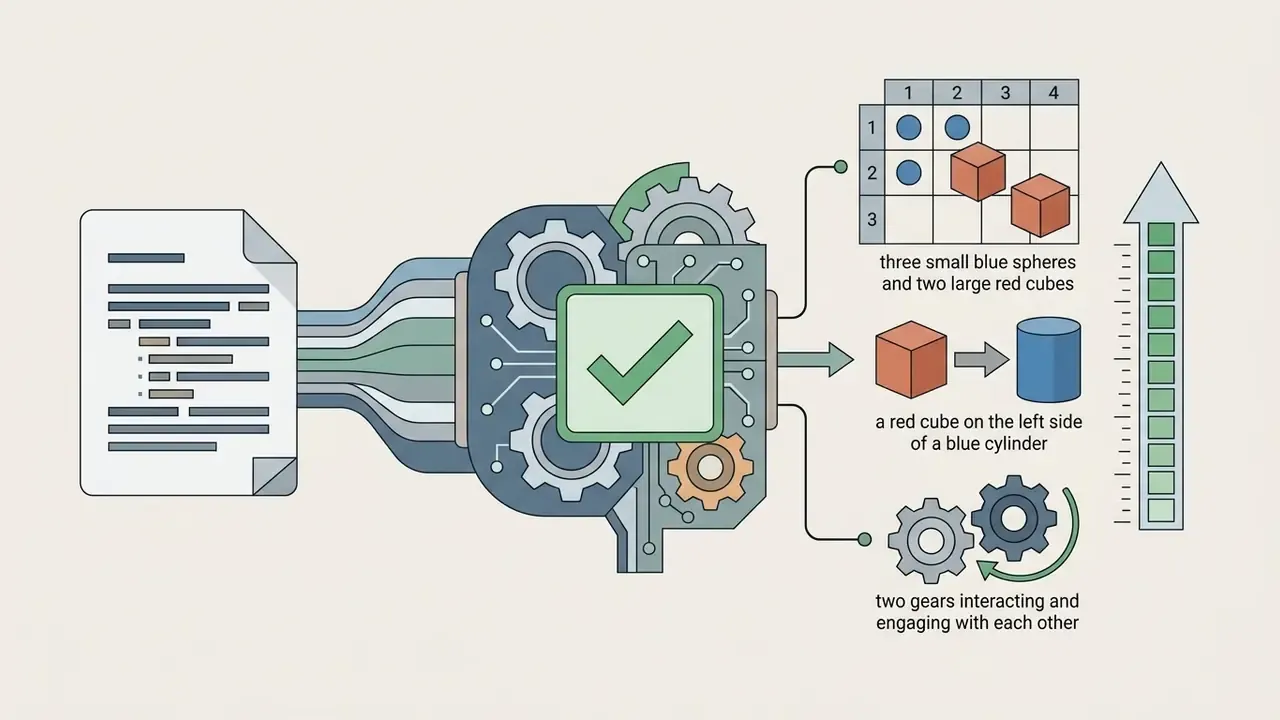
Hypothetically, an enterprise marketing team automating localized video ads might test three ai video generators. All three create polished 5-second demos. Only the system supporting deterministic seed control and batch API queues can render 500 localized variations without manual scene reconstruction. The practical lesson is that differentiating features are invisible in a showreel and only surface around the 400th render.
New AI Video Models and Major Generator Updates
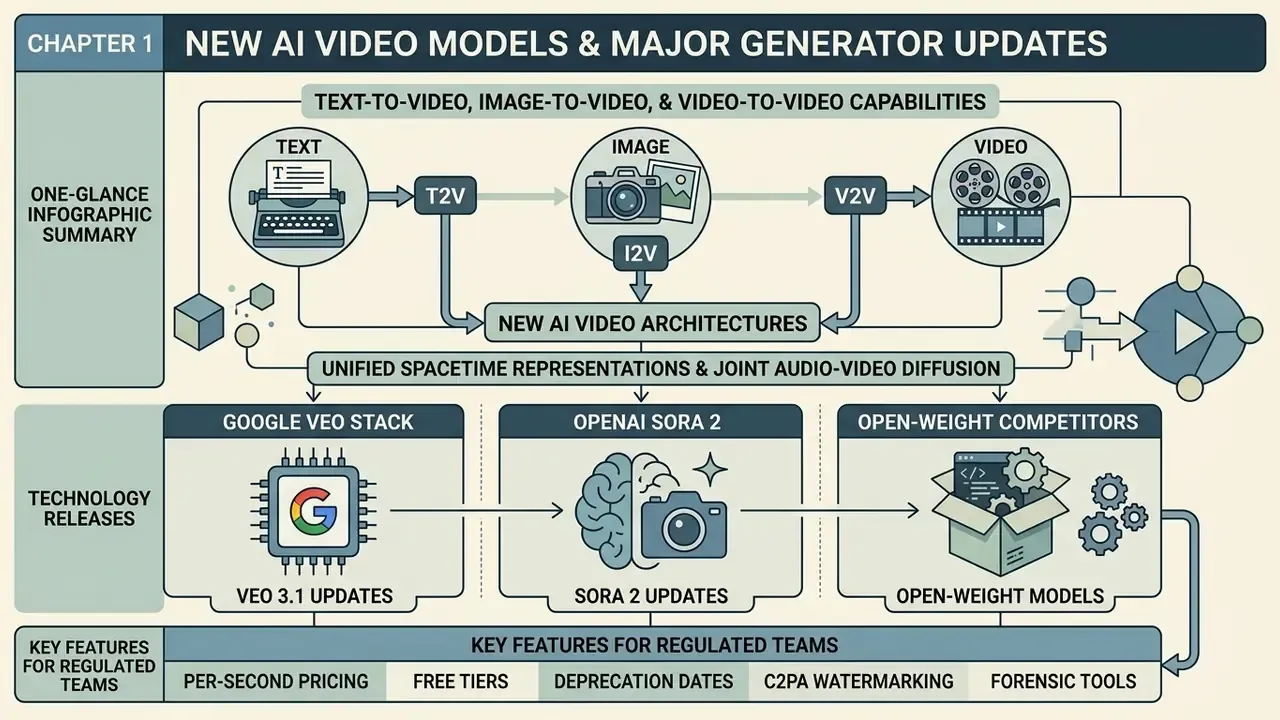
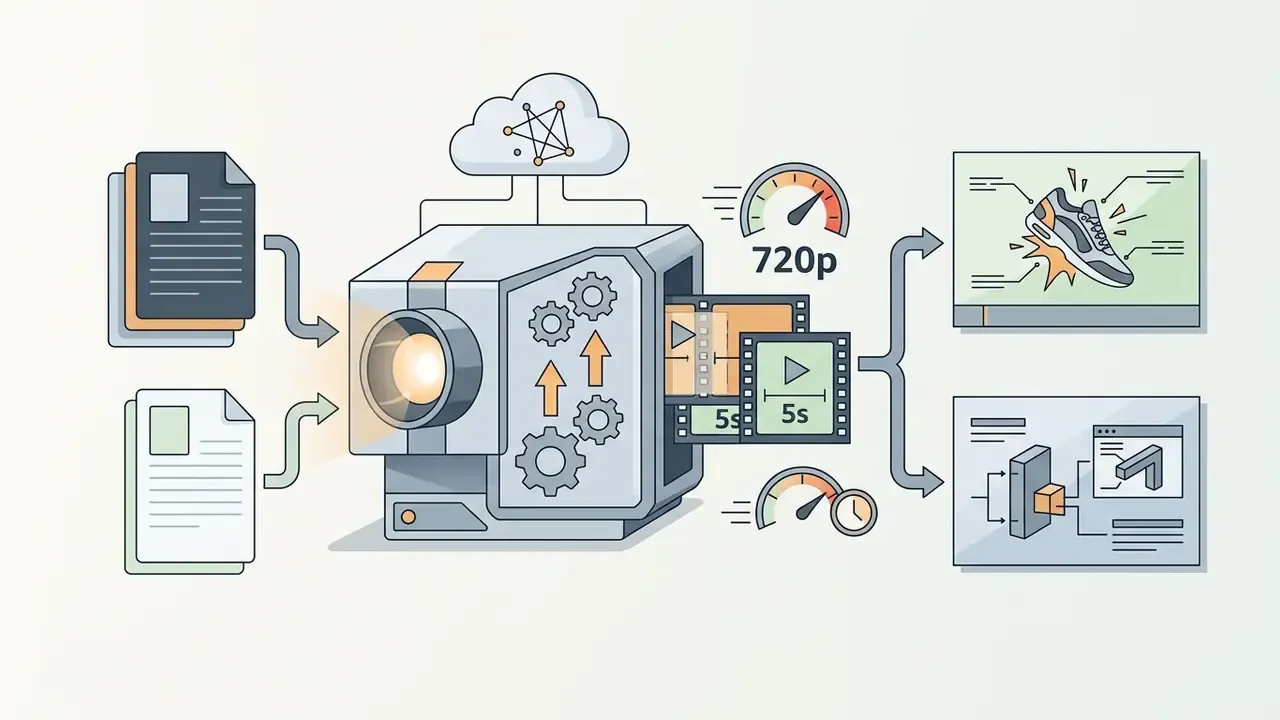
The latest wave of text-to-video and multimodal architectures centers on unified spacetime representations, joint audio-video diffusion, and open-weight models. Tracking these releases allows teams to select the optimal model for specific visual rendering demands.
Text-to-Video, Image-to-Video and Video-to-Video Capabilities
Modern video generation platforms expose three distinct operational modalities to create synthetic media content. Each approach addresses specific creative constraints and visual input requirements:
- Text-to-Video (T2V) synthesizes complete visual sequences directly from natural language prompts. High-capacity models map complex semantic descriptions to dynamic spatial-temporal tokens. Teams comparing generation methods can review how text-to-video AI tools differ in controls and output ceilings.
- Image-to-Video (I2V) takes a static visual asset, such as a keyframe, character concept, or custom background retouched in a photo editor, and animates motion paths based on text guidance. Vendor documentation for image-to-video AI tools details the aspect-ratio, duration, and reference-image constraints that govern each mode.
- Video-to-Video (V2V) applies visual stylization, subject swapping, or camera motion re-targeting to existing source footage while maintaining underlying motion trajectories.
A fourth mode is emerging in newer products: reference-to-video, where a reference image or clip supplies style and content conditioning rather than the first frame. Seedance 2.0 and comparable systems expose this explicitly.
Research frameworks like Alibaba's open-weight Wan 2.1 (14B) and LongCat-Video support all three modes, enabling hybrid pipelines where static concepts transition into moving scenes without losing visual identity (Wan 2.1 Technical Report, 2025). LongCat-Video documents text-to-video, image-to-video, and video continuation as first-class operations, which is the closest documented equivalent to true V2V in open research releases.
Google, OpenAI and Other AI Video Technology Releases
The competitive landscape features intense rivalry between proprietary cloud ecosystems and open-weight research models. Google and OpenAI lead closed API deployments, while open-source foundation architectures provide alternatives for self-hosted infrastructure.
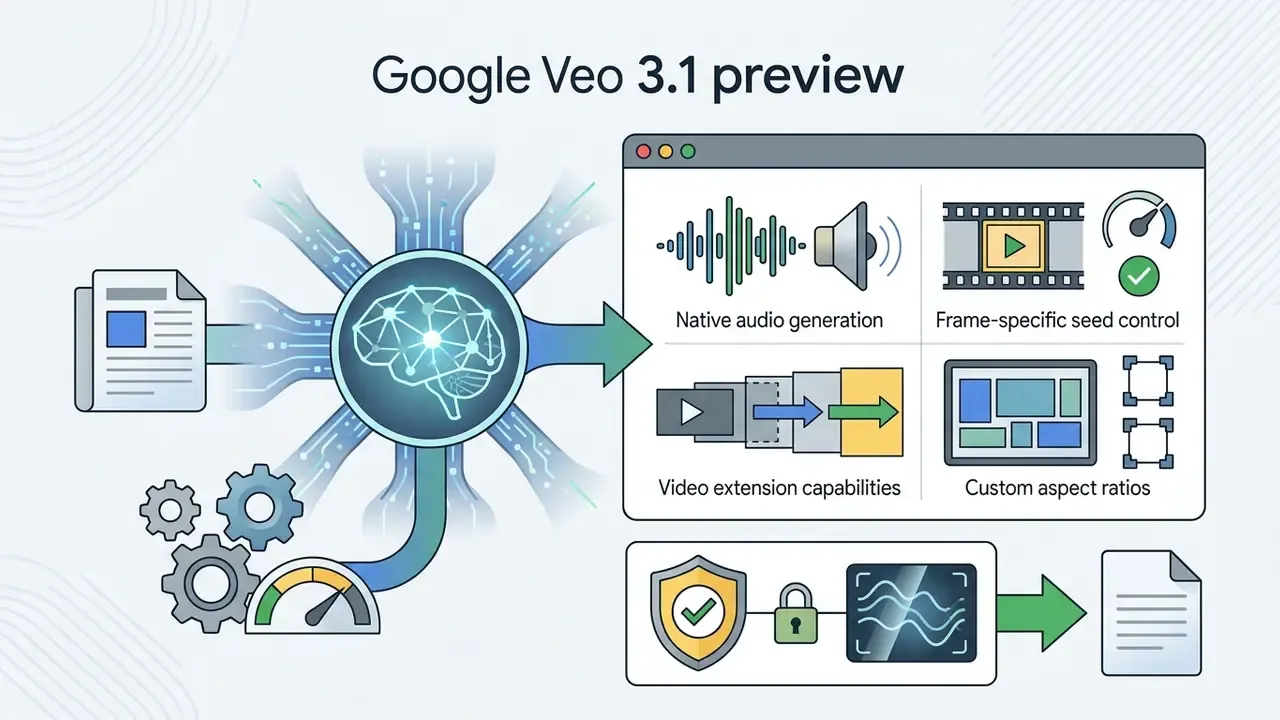
- Google Veo stack: Veo 3.1 and Veo 3.1 Lite integrate natively within Gemini API and Vertex AI. Supporting native synchronized audio, frame guidance, and video extension, Veo 3.1 processes up to 1080p and 4K outputs for enterprise workflows (Google Cloud Documentation, 2026). The architectural lineage matters for evaluators:
"Lumiere generates the whole temporal duration of the video at once through a Space-Time U-Net, improving global motion coherence."
- OpenAI Sora 2 positioned as OpenAI's flagship video and audio model, Sora 2 delivers high-fidelity visual physics and synchronized audio. However, OpenAI scheduled the Sora 2 API for deprecation on September 24, 2026, forcing developers to plan for short lifecycle windows (OpenAI Developer Docs, 2026). The consumer Sora product was discontinued earlier, on April 26, 2026, a reminder that consumer and API lifecycles run on separate clocks.
- Open-weight competitors models like Genmo's Mochi-1 (10B), Lightricks' LTX-2 (2B), and Alibaba's Wan 2.1 offer transparent parameters and custom fine-tuning options, rivaling closed APIs on standardized evaluation suites.
"LanDiff achieves a score of 85.43 on VBench T2V, surpassing Sora (84.28), Keling, and Hailuo on this benchmark."
To evaluate these tools side by side, production architects refer to comprehensive AI Media Comparison Matrices to audit feature sets, licensing restrictions, and export constraints.
| Model / Tool | Primary Modality | Max Resolution & Frame Rate | Audio Generation Capability | Access Tiers & Availability | Production Suitability |
|---|---|---|---|---|---|
| Google Veo 3.1 | T2V, I2V, frame-guided | Up to 4K at 24/30 FPS | Native (synced SFX, dialogue, ambient) | Gemini API, Vertex AI (GA via allowlist) | High (enterprise SLA, high consistency) |
| OpenAI Sora 2 Pro | T2V, I2V | 1080p at 30 FPS | Native (synced multimodal sound) | API (deprecated Sept 2026), ChatGPT Pro | Medium (high quality, limited operational lifetime) |
| Wan 2.1 (Alibaba) | T2V, I2V, V2V | 720p / 1080p at 24 FPS | External / unsynchronized | Open-weight (Apache 2.0 / commercial) | High (self-hosted flexibility, no API lock-in) |
| LTX-2 (Lightricks) | T2V, I2V | 720p at 24 FPS | Native synchronized audio | Open-source foundation model | Medium (ideal for localized research and customization) |
| PixVerse V6 | T2V, I2V, motion style | 1080p at 30 FPS | Multi-track sound layering | Commercial web / limited API | Medium (focused on social content creators) |
| Kling 2.6 / O1 | T2V, I2V, extension | 1080p at 24/30 FPS | Native multi-track synced audio | Commercial subscription plus credits | Medium-high (strong price/quality ratio) |
| Runway Gen-4 | T2V, I2V, V2V | 1080p at 24 FPS | External / layered | Commercial API plus subscription | Medium-high (best-in-class world consistency) |
Feature-level details on individual products, including the PixVerse AI motion-style controls, sit alongside a broader ranking of the leading AI video generators compared by output quality and price.
Mid-Tier, Free-Tier, and Creator-Focused Generators
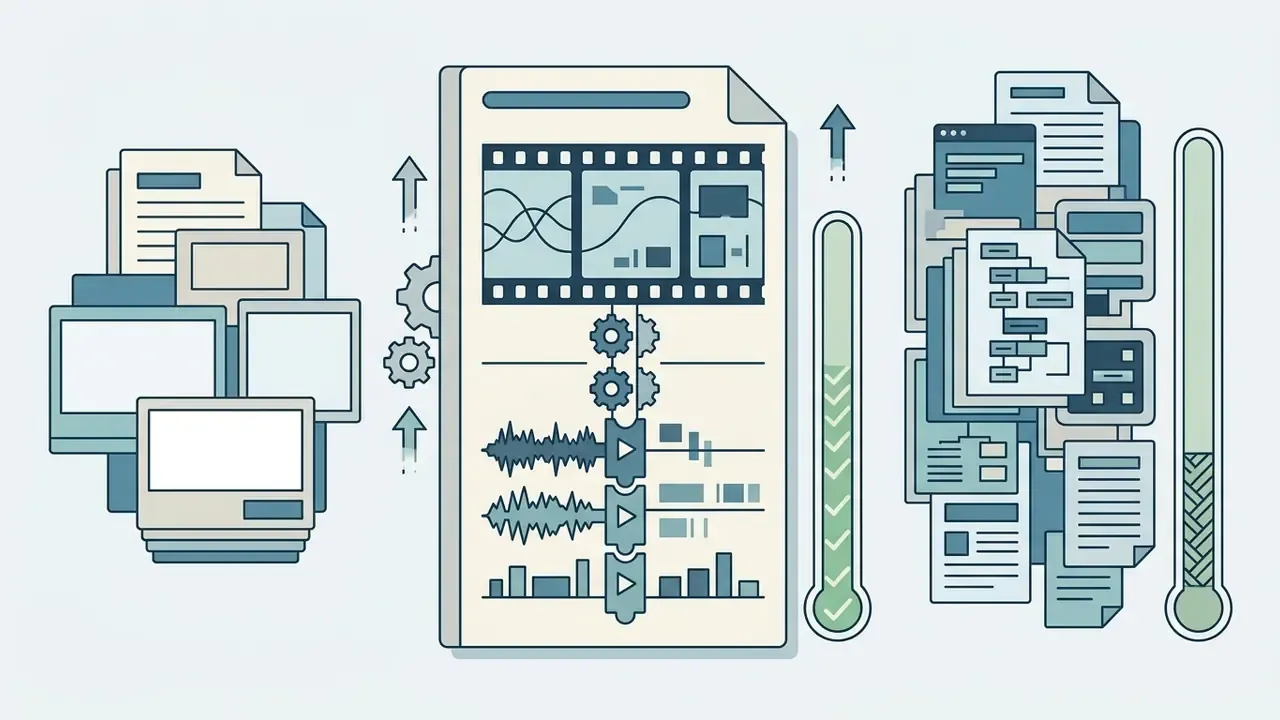
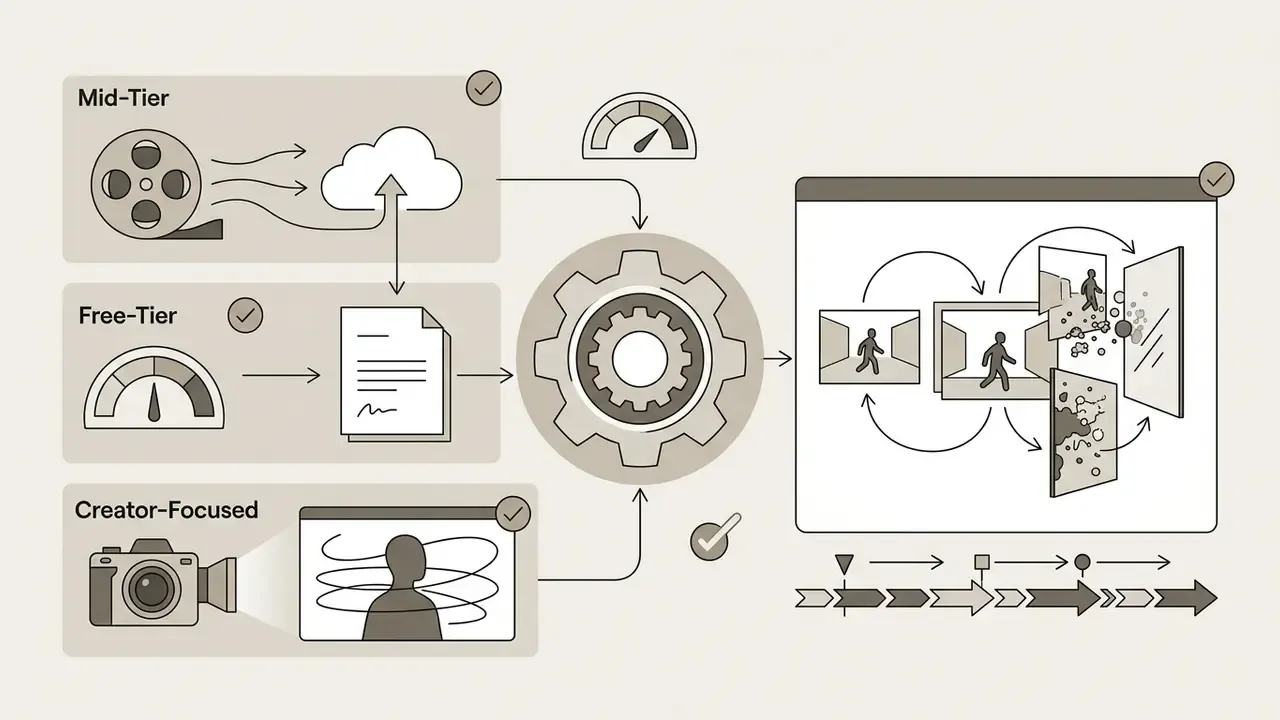
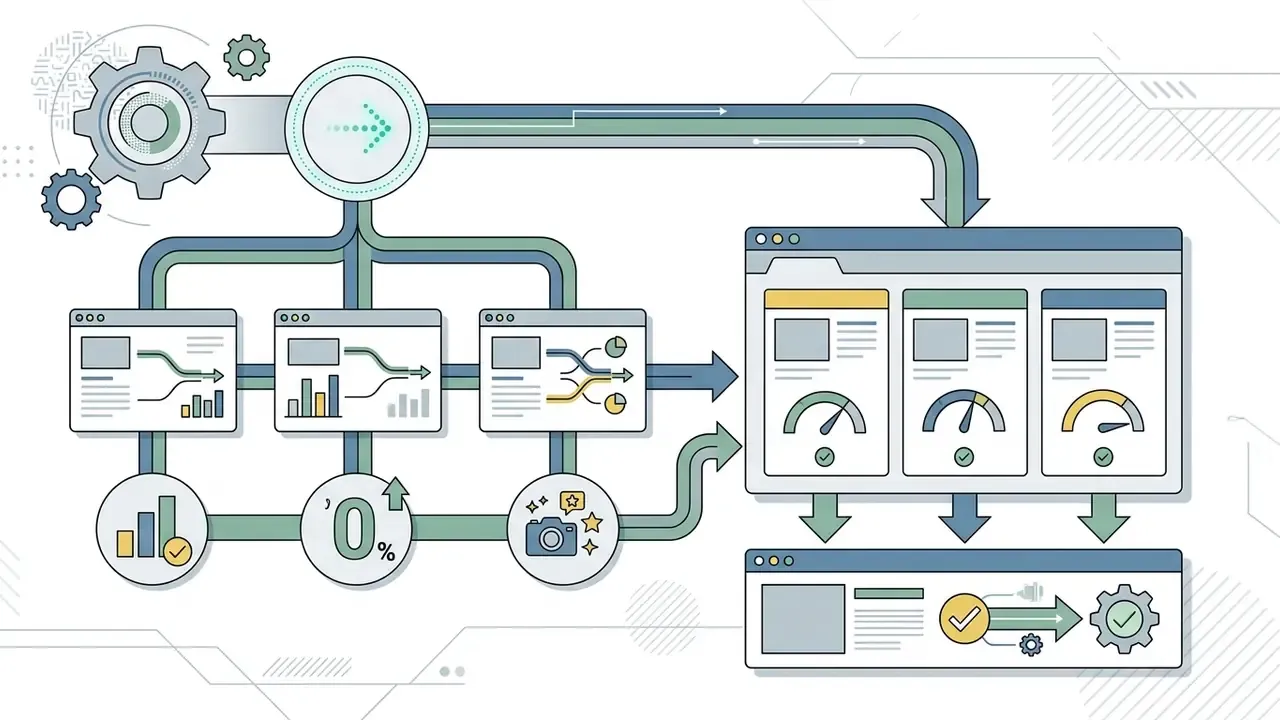
While enterprise infrastructure relies on proprietary APIs from Google and OpenAI, independent creators and marketing teams frequently use mid-tier and credit-based platforms for rapid testing and lower-cost production. For risk teams, these tools matter for a second reason: they are the most common vector for unsanctioned Shadow AI usage inside marketing departments.
| Use Case | Budget | Recommended Generator | Rationale |
|---|---|---|---|
| High-end advertising | Premium | Veo 3.1 | Cinema-grade quality, native audio, enterprise SLA |
| Creative / narrative projects | Mid-high | Runway Gen-4 | World consistency and character persistence |
| Quick social content | Low-mid | Pika 2.1 | Fast iterations, motion brush control |
| News-style / avatar presenters | Mid | HeyGen plus Agent Opus | Avatar rendering plus script automation |
| Technical integration | Mid | Luma RAY2 | Speed plus AWS-aligned developer tooling |
| Budget testing and prompt discovery | Free to low | Hailuo AI 2.3 | Free daily tier with usable quality |
Capability Shifts That Matter for AI-Generated Video
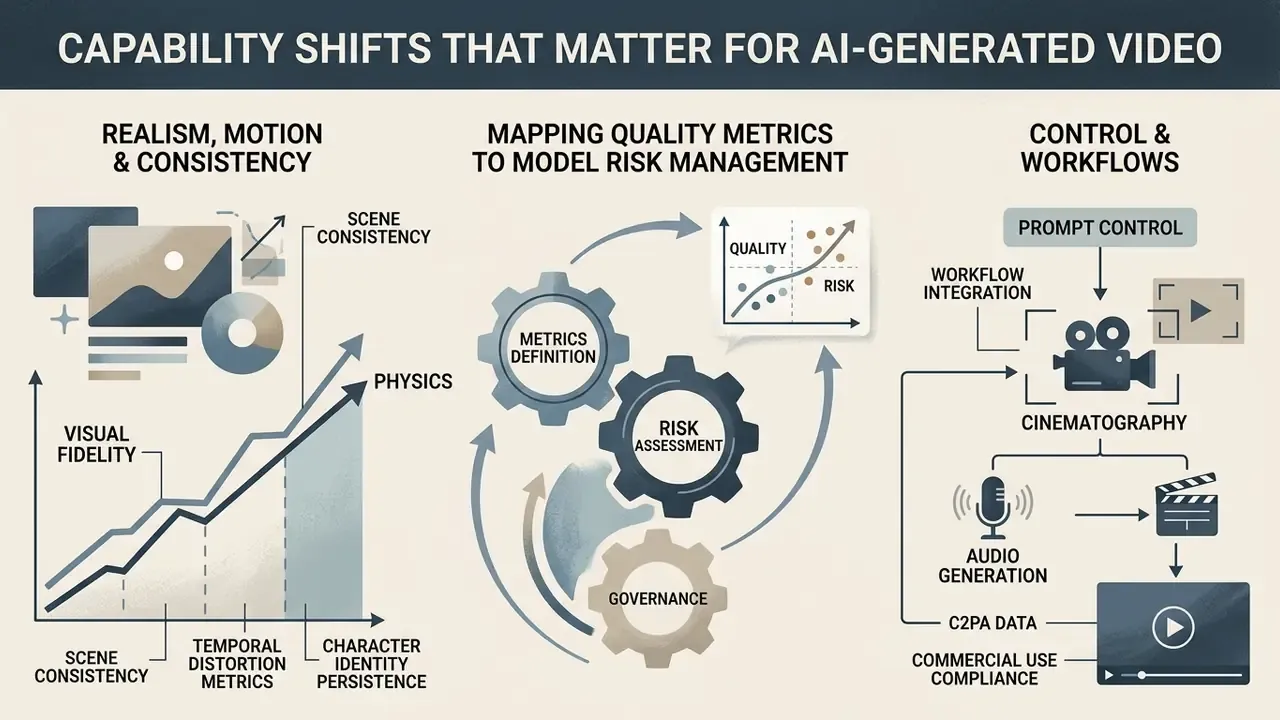
Understanding technical shifts in motion dynamics, visual stability, and acoustic generation is essential when evaluating whether ai-generated visual assets meet enterprise publication standards.
Realism, Motion and Scene Consistency
Photorealism in ai-generated video extends beyond individual frame sharpness. True visual quality depends on physical plausibility, temporal continuity, and object permanence across full shot durations.
Despite marketing claims of perfect realism, rigorous benchmarks demonstrate that physical laws remain challenging for diffusion and autoregressive architectures alike:
- Visual fidelity versus physics: benchmark evaluations show that while modern models score above 85% on static aesthetic quality, world-knowledge accuracy (gravity compliance, causal object interactions, fluid dynamics) hovers around 63 to 67%.
"VBench-2.0 evaluates models across five dimensions: human fidelity, controllability, creativity, physics, and commonsense."
"T2VWorldBench evaluated ten systems on 1,200 prompts; even the strongest models average roughly 0.67 on world knowledge." T2VWorldBench: A Benchmark for Evaluating World Knowledge in Text-to-Video Generation, arXiv (2025). https://arxiv.org/abs/2507.02955
- Temporal distortion metrics: research on evaluation protocols reveals that legacy metrics like Fréchet Video Distance (FVD) are largely insensitive to temporal flickering and frame shuffling. Newer frameworks like JEPA Embedding Distance (JEDi) correlate markedly better with human perception of temporal consistency.
"FVD relies on unrealistic Gaussian assumptions about I3D features and is insensitive to temporal distortions, conflicting with human perception."
"JEDi requires only 16% of the samples needed by FVD and improves alignment with human evaluations by an average of 34%." Beyond FVD: Enhanced Evaluation Metrics for Video Generation Quality, arXiv (2024). https://arxiv.org/abs/2410.05203
Mapping Video Quality Metrics to Model Risk Management
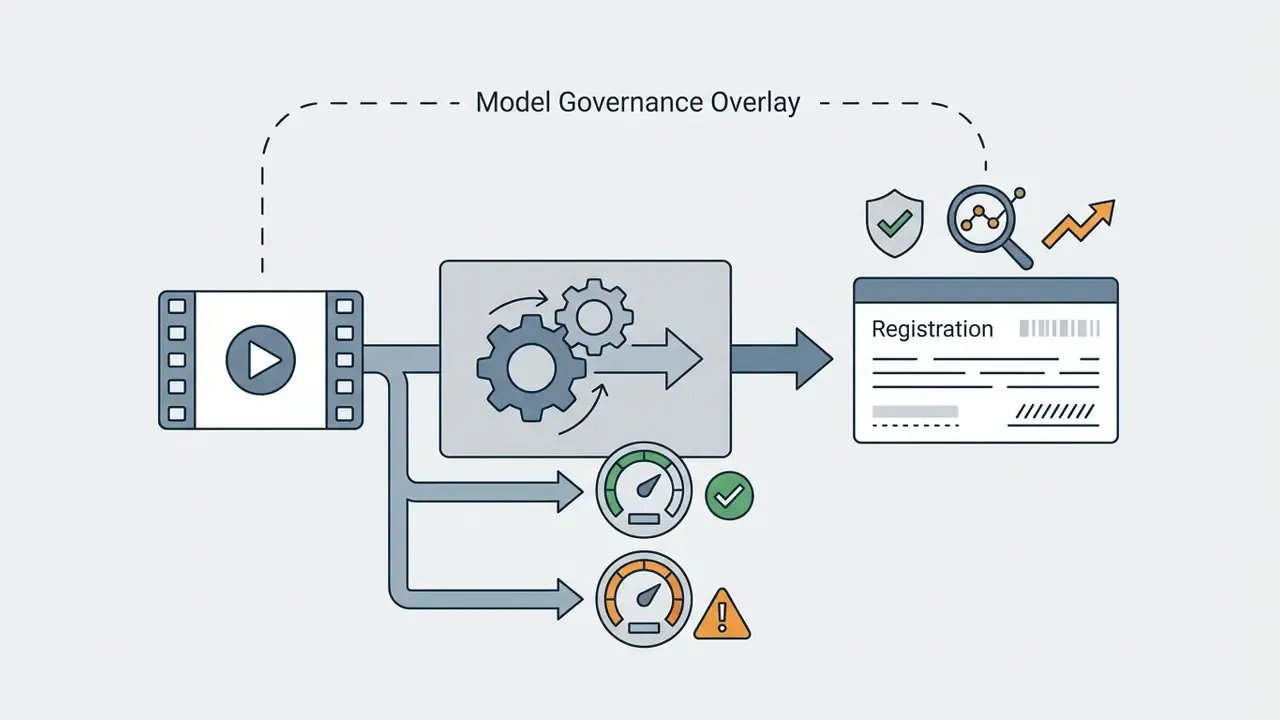
For regulated organizations, benchmark numbers are only useful if they translate into validation artifacts a Model Risk Committee can accept. The mapping below converts generative-video metrics into the vocabulary of established model-governance frameworks such as Federal Reserve and OCC guidance SR 11-7 and comparable internal MRM policies.
| MRM Validation Domain | Generative Video Equivalent | Evidence to File | Acceptance Threshold (Illustrative) |
|---|---|---|---|
| Conceptual soundness | Model card, modality support, training-data disclosure | Vendor documentation snapshot with retrieval date | Documented and archived per release |
| Outcome analysis | JEDi score, VBench-2.0 dimension scores, human review pass rate | Benchmark run log plus reviewer sign-off sheet | Human pass rate at or above 95% pre-publication |
| Stability / robustness | Temporal consistency across seeds; prompt-perturbation retest | Seed-locked regeneration set (n of 30 or more) | Variance within documented tolerance |
| Process verification | Prompt logs, seed registry, render IDs, C2PA manifest presence | Immutable pipeline audit log | 100% of published assets traceable |
| Ongoing monitoring | Vendor deprecation notices, guardrail behaviour retests | Quarterly re-validation memo | Re-tested at each model version change |
| Inventory management | Each generator version registered as a distinct model instance | MRM inventory entry with owner and EOL date | Updated within 30 days of vendor change |
The practical implication: a model version bump is a model change. Treating Veo 3.1 and Veo 3.1 Lite as the same inventory entry breaks the audit trail the first time output quality shifts. Illustrative thresholds above are examples, not regulatory minimums; each institution should calibrate them to its own risk appetite.
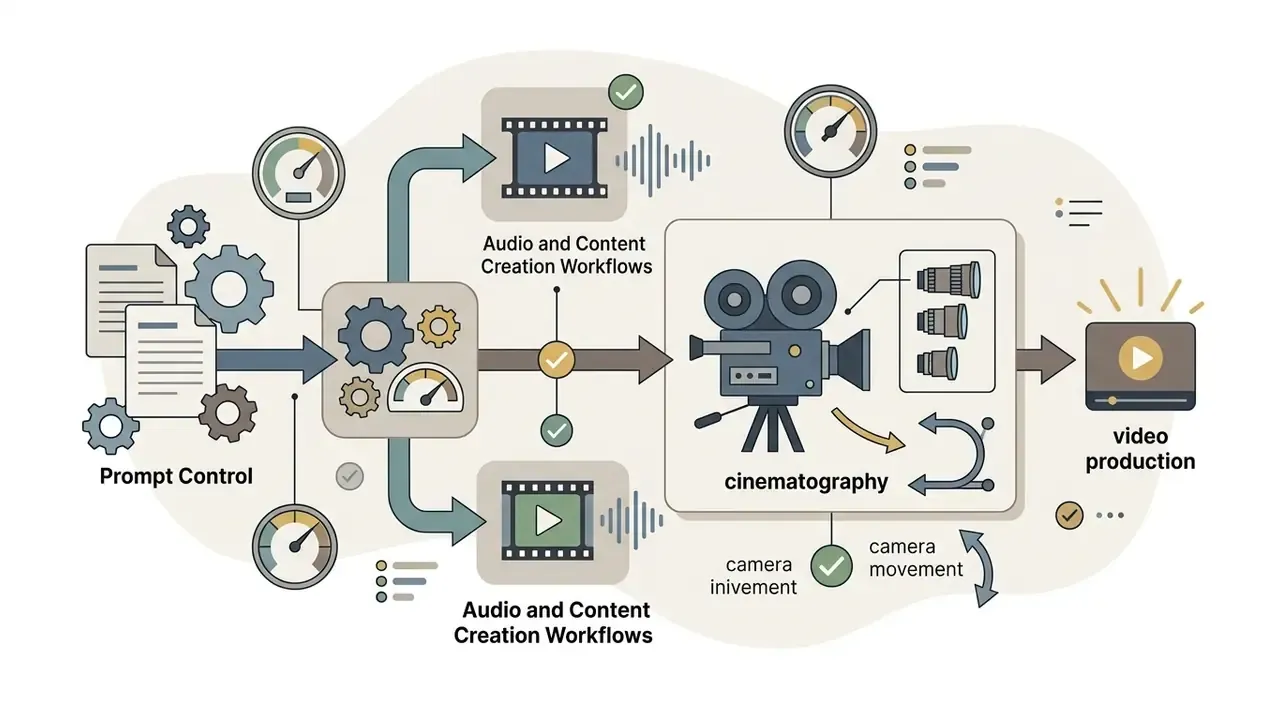
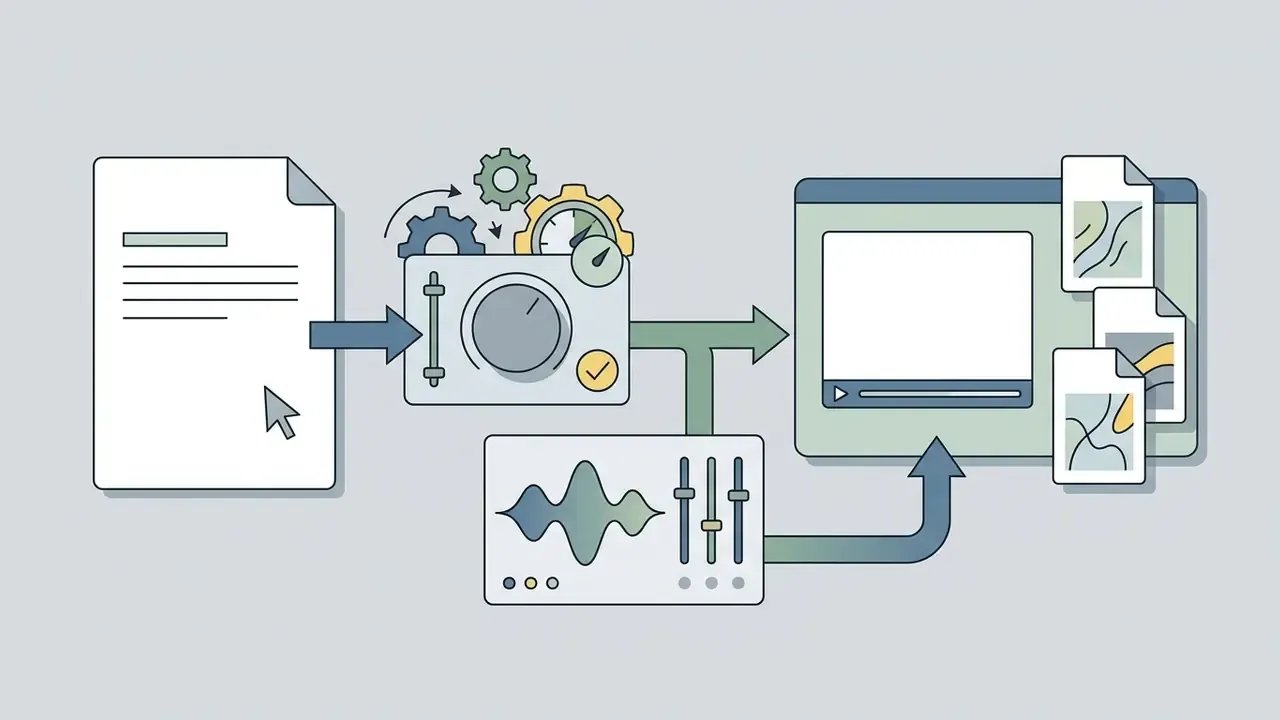
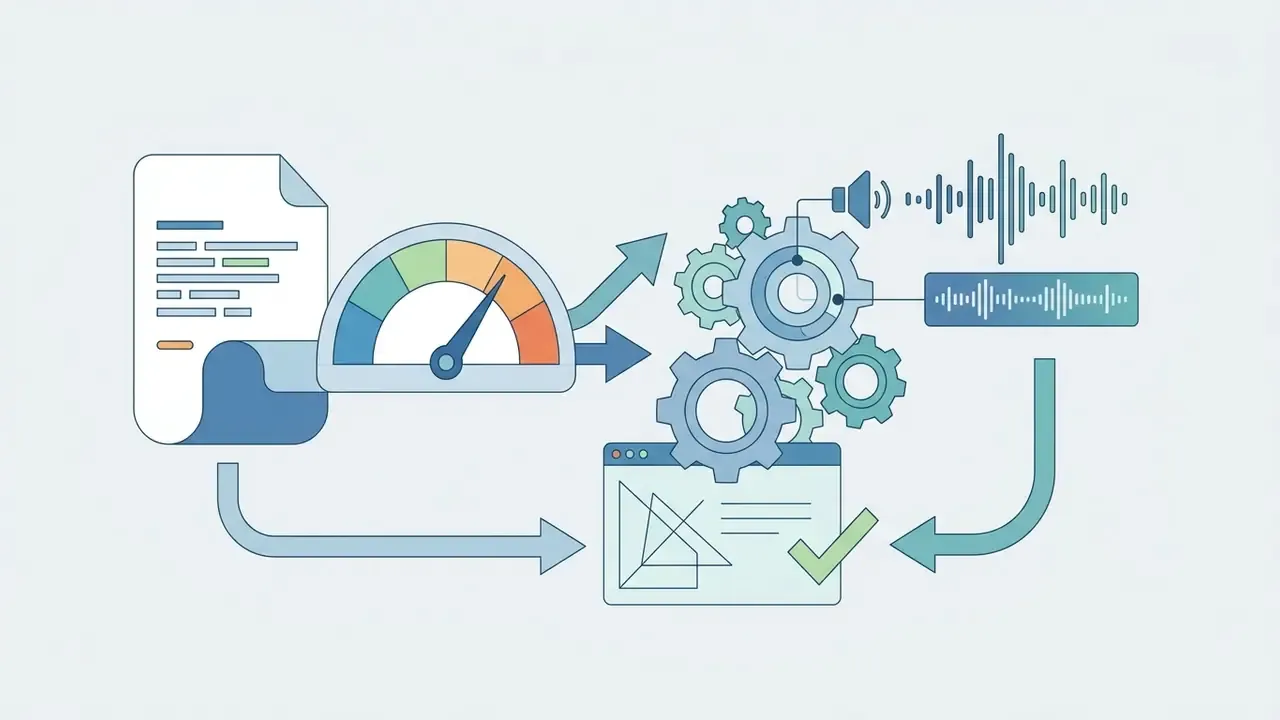
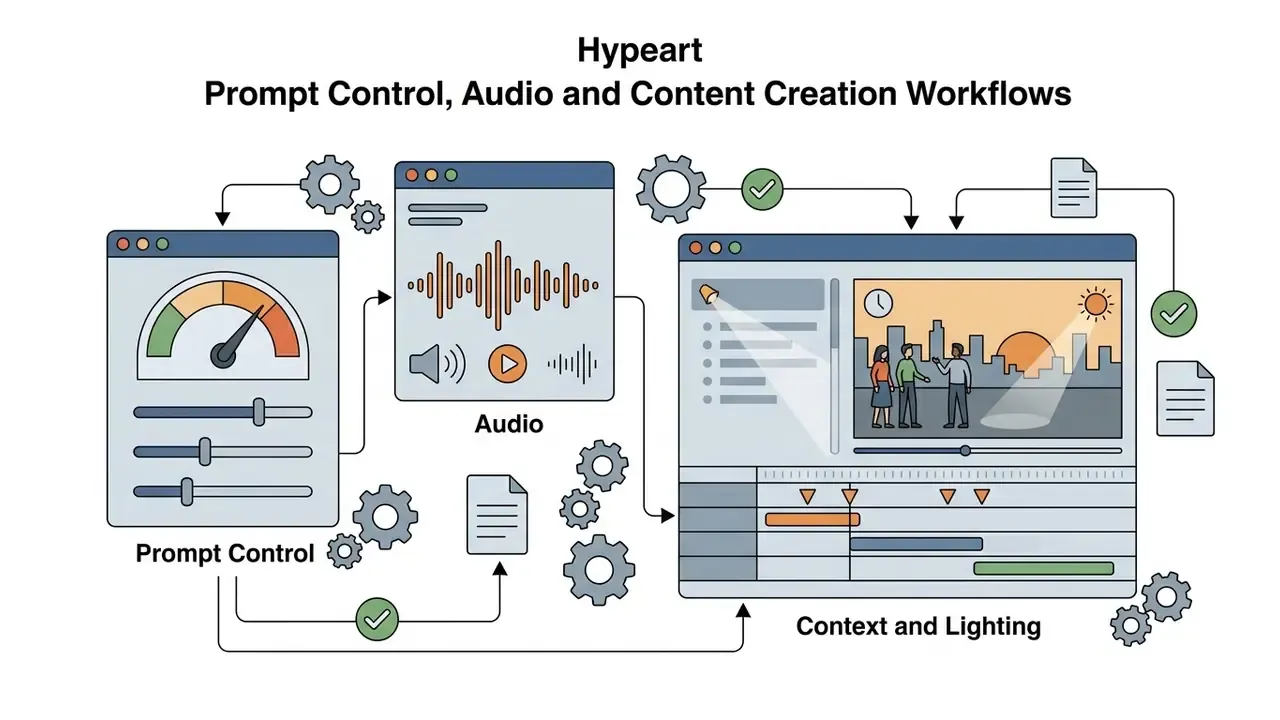
Prompt Control, Audio and Content Creation Workflows
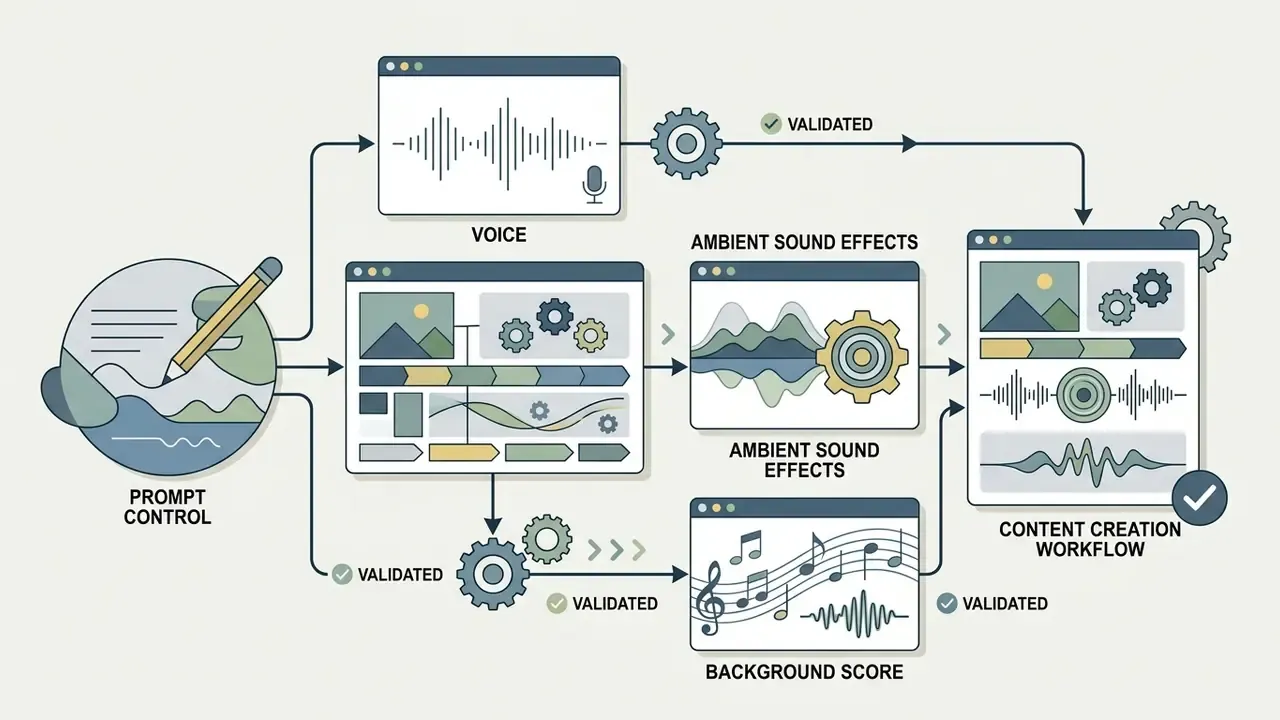
Achieving predictable creative direction requires moving beyond unstructured text descriptions toward explicit, multi-part prompt architectures. Leading developers now recommend structuring input scripts into five distinct parameters:
Google's own Veo prompt guidance stresses the same discipline: state audio requirements explicitly, in separate sentences, using distinct cues for dialogue, sound effects, and ambient noise. Structure is not a stylistic preference. It is the only reliable control surface.
"T2V-CompBench tested 23 models across seven compositional categories; none performed uniformly well across all categories."
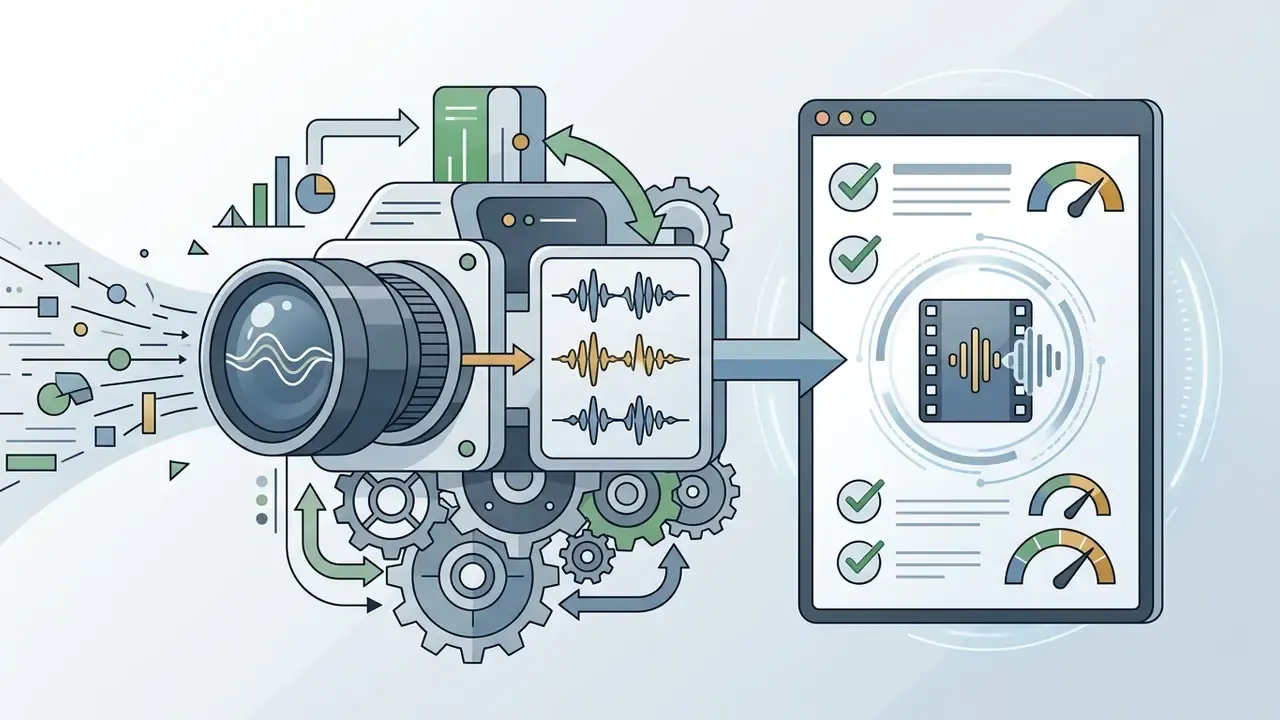
Integrated sound synthesis has become a major differentiator for creators. Rather than generating silent visuals and relying on an external ai voice generator or an ai voice over tool during post-production, models like Veo 3.1 and Sora 2 synthesize lip-synced dialogue and acoustic environments directly alongside visual frames (Google AI for Developers, 2026).
For custom vocal assets or specialized voice branding, production pipelines still frequently integrate dedicated tools like an ai voice maker or an ai voicemail generator during final sound mixing.
Automated Post-Production: B-Roll Generation, Subtitling, and Multilingual Localization
Converting raw synthetic media into distribution-ready assets requires extending the pipeline into automated post-processing:
A note of caution that separates professional pipelines from volume spam: automated B-roll multiplies output, not judgment. The "AI slop" backlash across social feeds in 2026 was driven precisely by teams that scaled generation without scaling review.
API Availability, Access and Production Readiness
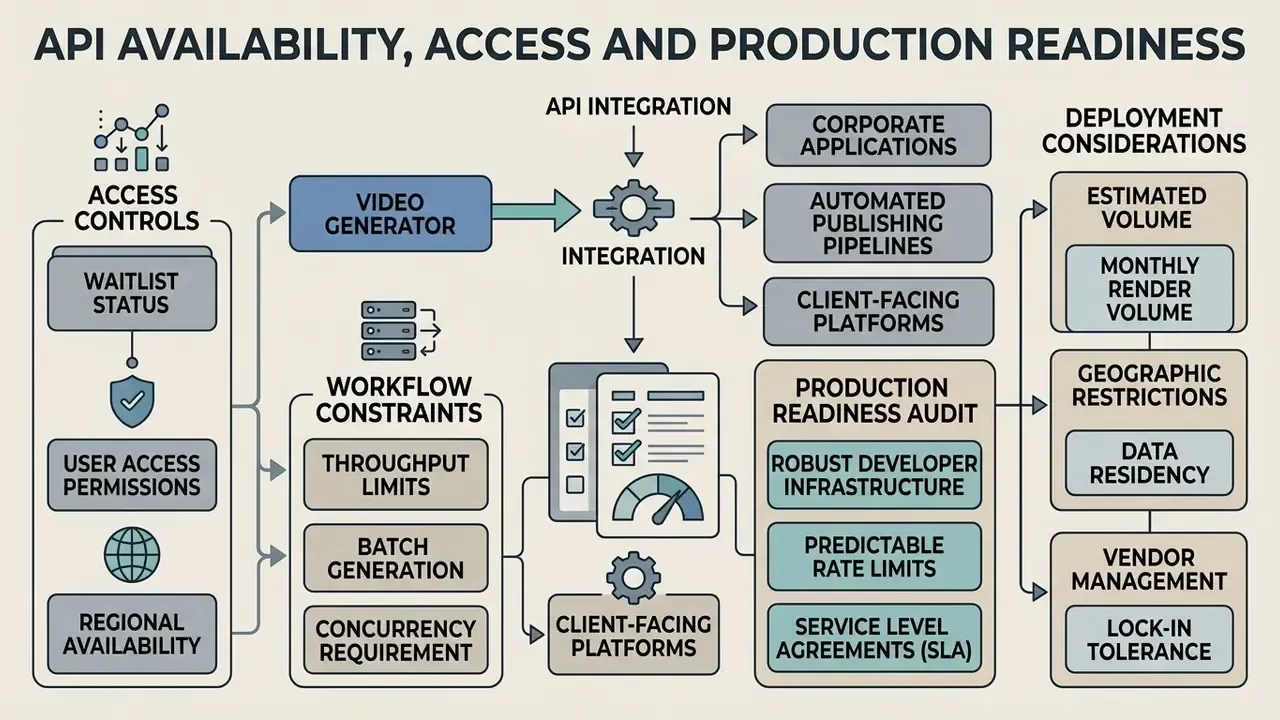
Integrating a video generator into corporate applications, automated publishing pipelines, or client-facing platforms requires robust developer infrastructure, predictable rate limits, and clear access management.
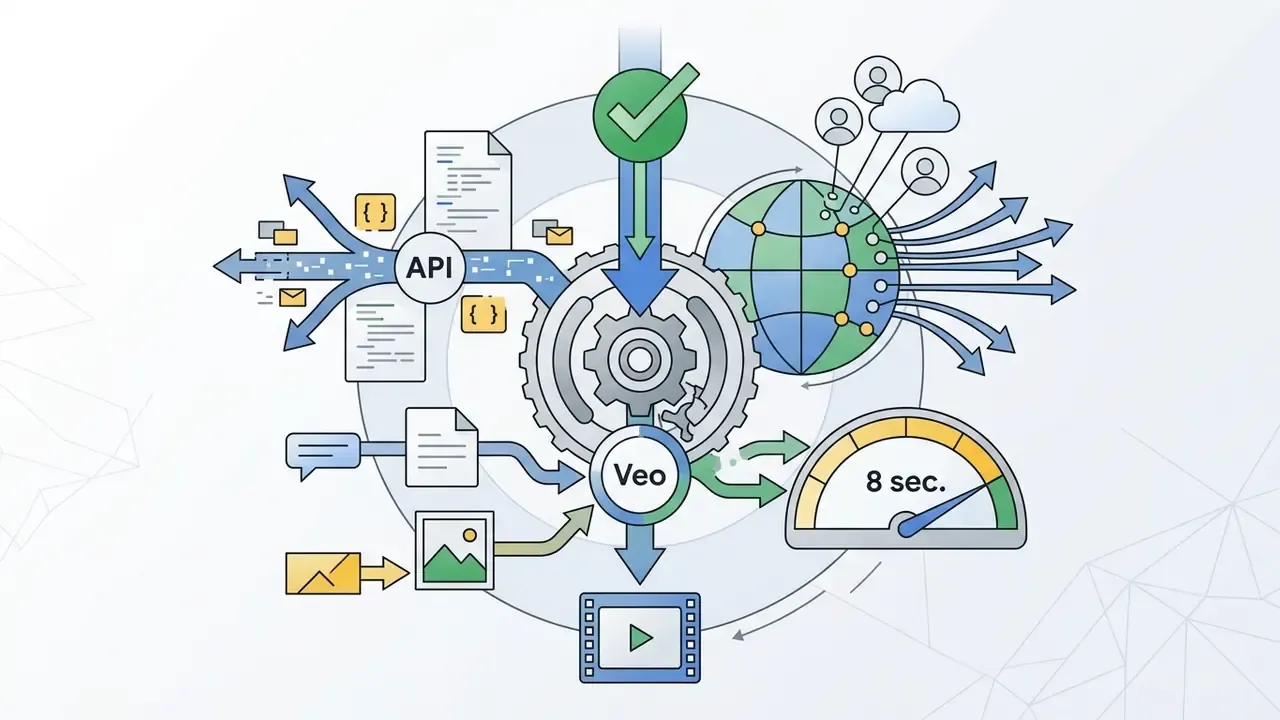
API, Waitlists, Regions and User Access
Throughput, Batch Generation and Workflow Constraints
High-volume video creation requires evaluating rendering throughput, concurrency bottlenecks, and batch processing options. Commercial API endpoints enforce strict concurrency boundaries to manage GPU cluster capacity.
According to Google Cloud's published Vertex AI quota and batch-prediction documentation (2026), the platform establishes a base image generation limit of 100 requests per minute for base_model : imagegeneration, while Gemini batch prediction carries no predefined quota limits and allows up to 200,000 requests per batch job, with jobs queued against dynamically allocated shared capacity for up to 72 hours before expiry. The same documentation sets 8 concurrent batch prediction requests per region for Gemini models. Vendor-specific defaults elsewhere are far tighter; LTX documentation, for instance, defines a default of 2 concurrent generations.
"InfinityStar generates a 5-second 720p video roughly 10x faster than leading diffusion models and about 32x faster than Wan 2.1 on a single GPU."
When high concurrent traffic exceeds allocated limits, API controllers push incoming jobs into WAITING states, processed in submission order. That introduces rendering latency which must be factored into automated publication schedules.
"StreamDiT generates streaming 512p video at 16 FPS on a single H100 GPU, using 482 ms per denoising step."
Enterprise AI video infrastructure readiness audit. Four decision-tree questions to determine whether closed API deployment or self-hosted open-weight models fit your constraints.
- Monthly render volume: under 500 clips, use a managed API. Over 5,000 clips, evaluate self-hosted open-weight inference for marginal cost control.
- Data residency: if prompts may contain client-identifying or material non-public information, require in-region processing and zero data retention, or self-host.
- Concurrency requirement: if more than 8 simultaneous renders are needed at peak, confirm quota uplift in writing before pipeline design.
- Lock-in tolerance: if a pipeline must survive beyond 12 months without rework, treat any endpoint without a published deprecation policy as a continuity risk.
AI Video Generator Pricing: What to Compare Before Buying
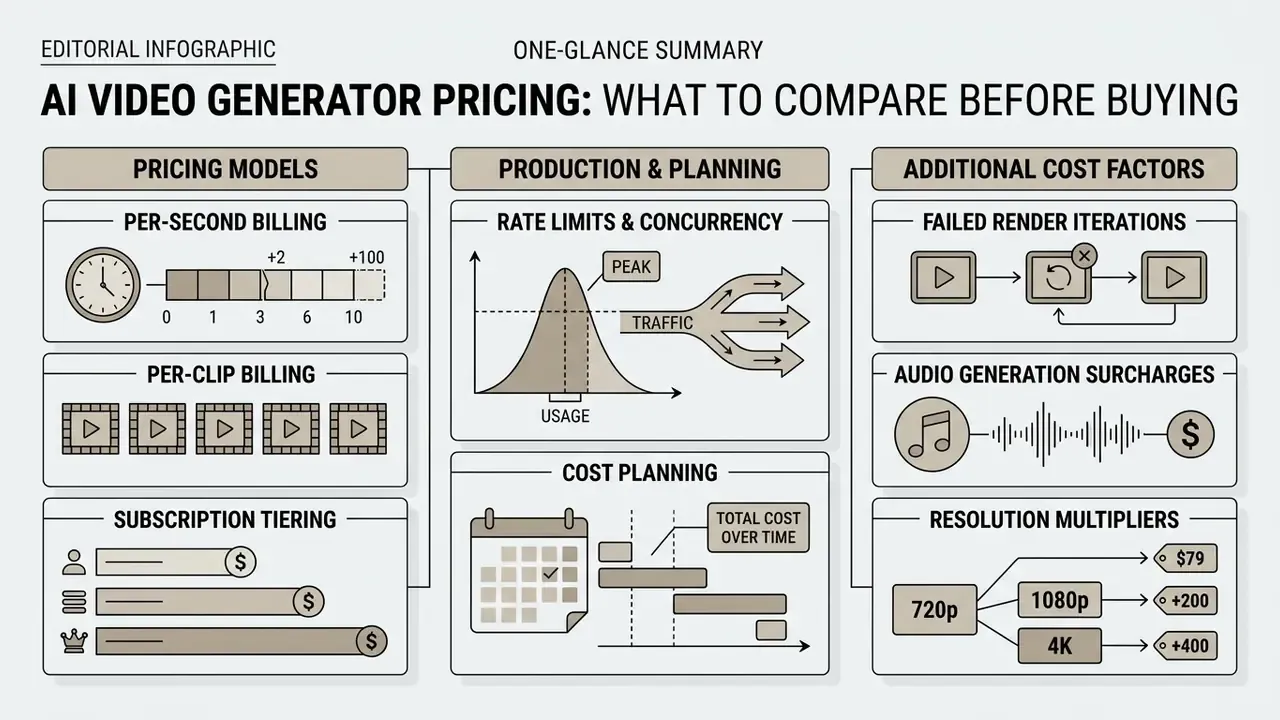
Evaluating the cost of ai video generation requires looking beyond base monthly subscription fees. Production teams must analyze unit cost metrics, resolution multipliers, and credit decay structures to project true operational expenses. Teams working under tight budgets often begin with free AI video generators to establish prompt patterns before paying for volume.
| Generator / Provider | Base Billing Model | Entry / Standard Plan Cost | Estimated Per-Second Cost | Included Monthly Allowance / Limits | Key Cost Drivers & Modifiers |
|---|---|---|---|---|---|
| Google Gemini API (Veo 3.1) | Metered per second | Pay as you go | $0.05 (Lite) to $0.60 (4K/standard) | Dynamic, based on cloud quota | Resolution (720p versus 4K); audio inclusion raises per-count price from $0.20 to $0.40 |
| OpenAI Sora (API) | Metered per second | Pay as you go | $0.10 (standard) to $0.70 (Pro) | API quota tier limits | Model tier (sora-2 versus sora-2-pro), clip duration |
| Google Vids (Workspace) | Tiered subscription | Bundled with Google AI Ultra ($20 to $200 per month) | Not applicable (flat allowance) | 50 AI video clips per month; personal accounts 10 free generations per month; Ultra tiers up to 1,000 Veo videos per month | Account tier level, usage cap resets |
| Standalone SaaS (average) | Credit-based subscription | $15.00 to $30.00 per month | roughly $0.10 to $0.25 per second | 150 to 300 compute credits per month | Export resolution, concurrency priority, custom training |
| Hailuo AI (v2.3) | Freemium credit system | Free or $10.00 per month | roughly $0.02 to $0.05 per second | 4 free daily renders; about 300 credits per month | Resolution, priority queue rendering speed |
| Kling AI (v2.6) | Subscription / credits | $9.20 per month | roughly $0.04 to $0.08 per second | about 660 credits per month | Native sound activation surcharge, length extension |
Across the market the per-second spread reaches roughly 35x, from $0.02 at the budget end to $0.70 for premium tiers. Cost variance therefore originates less in vendor choice than in the combination of resolution, audio, and clip length selected per render. Side-by-side allowance and watermark rules for zero-cost tiers are catalogued in the comparison of free AI video generators.
Per-Clip, Per-Second and Subscription Pricing Models
Commercial vendors employ three primary pricing structures for automated video rendering:
To model operational expenditure across different volume projections, production managers use specialized AI Media Calculators to compare credit consumption rates against pay-as-you-go API tariffs.
Detailed enterprise pricing options and volume discount schedules are published within the central AI Media Pricing directory.
Rate Limits, Concurrency and Cost Planning for Content Production
Unmanaged rate limits directly increase production costs by extending render timelines and introducing operational downtime. When an API pipeline hits concurrency caps (such as a default limit of 2 concurrent render jobs), additional calls queue up or fail.
Budgeting for scaled content production requires accounting for:
- Failed render iterations internal production planning should reserve an explicit regeneration allowance for prompt misalignment and visual artifacts. In our own pipeline modelling we budget 20 to 30%, but this figure is an operational planning assumption rather than a vendor-published benchmark; each organization should measure its own reject rate over a fixed sample of at least 200 renders before locking budgets.
- Audio generation surcharges secondary fees apply for native multi-track sound synthesis. Google Cloud's per-count Veo 3.1 pricing doubles from $0.20 (video only) to $0.40 (video plus audio).
- Resolution multipliers rendering at 4K typically carries a 1.5x to 3x price premium over standard 720p output.
- Queue latency cost idle time while jobs sit in
WAITINGstates is a real schedule cost even though it generates no invoice line. - Scope variables number of scenes, deliverable count, revision rounds, and rush timelines drive total project cost as much as per-second rates do.
Total Cost of Ownership and Risk-Adjusted ROI
API tariffs are typically the smallest line item in a regulated production budget. A defensible TCO model for synthetic video looks like this:
TCO per published asset = (S x R x P x (1 + F)) + A + L + C + H + M
- S, seconds of final output per asset
- R, resolution or tier multiplier (1.0 at 720p; 1.5 to 3.0 at 4K)
- P, base per-second price
- F, regeneration factor (measured reject rate, expressed as a decimal)
- A, audio generation surcharge per asset
- L, legal and compliance review cost (reviewer hours times loaded rate)
- C, provenance cost: C2PA manifest binding, watermark validation, forensic spot-check
- H, human authorship work required for copyright protection (editing, storyboard, direction)
- M, amortized migration reserve for endpoint deprecation
Worked example: an 8-second 1080p clip at $0.40 per second with a measured 25% reject rate costs $4.00 in raw compute (8 x 1.0 x 0.40 x 1.25 = $4.00). Add $0.20 audio, $45 of compliance review at 0.5 hours, $6 of provenance processing, $60 of human editing, and a $5 migration reserve, and the true cost per published asset lands near $120, roughly a 30x multiple over the API line item. Risk-adjusted ROI should therefore be modelled against the $120, not the $4. Loaded rates vary by institution, so treat the components as a template rather than a benchmark.
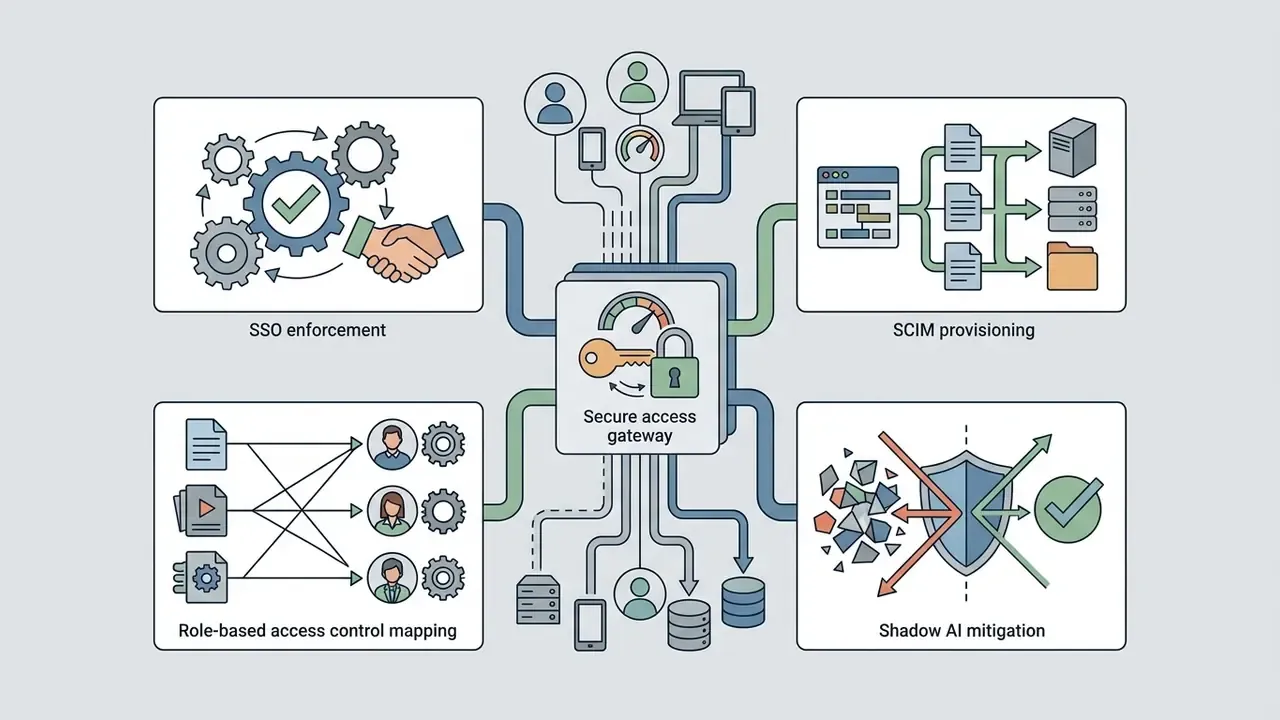
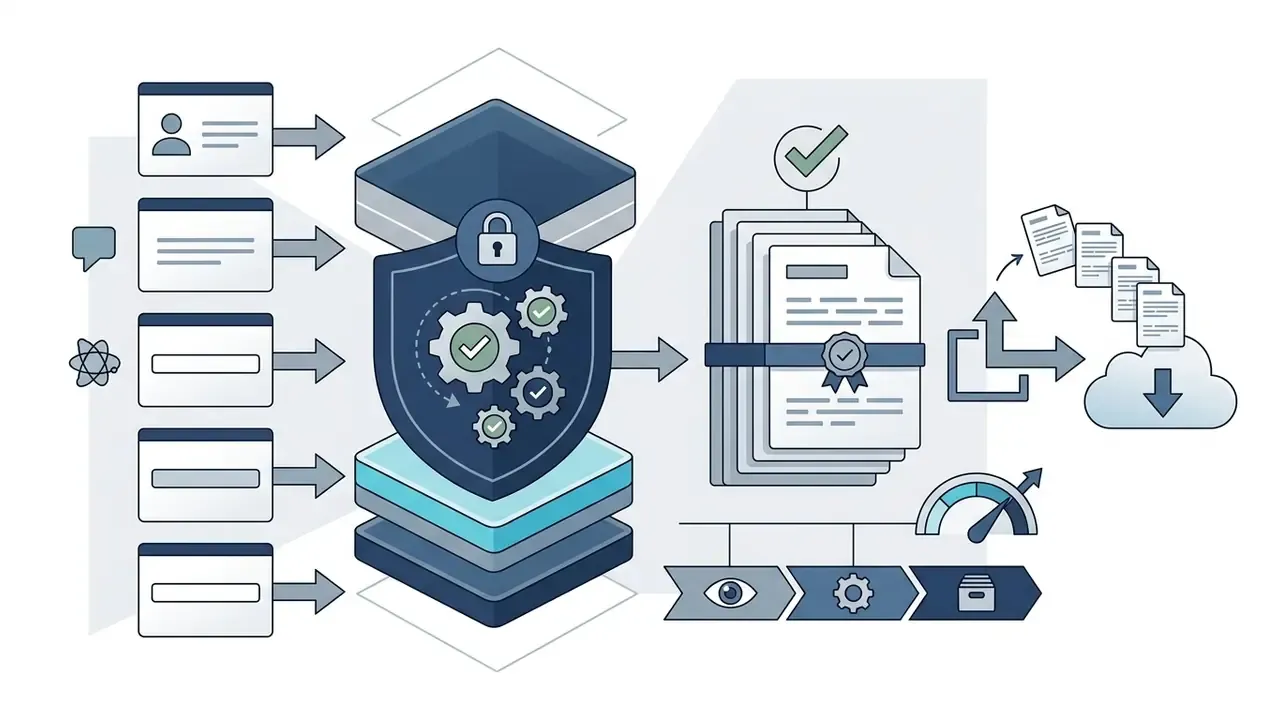
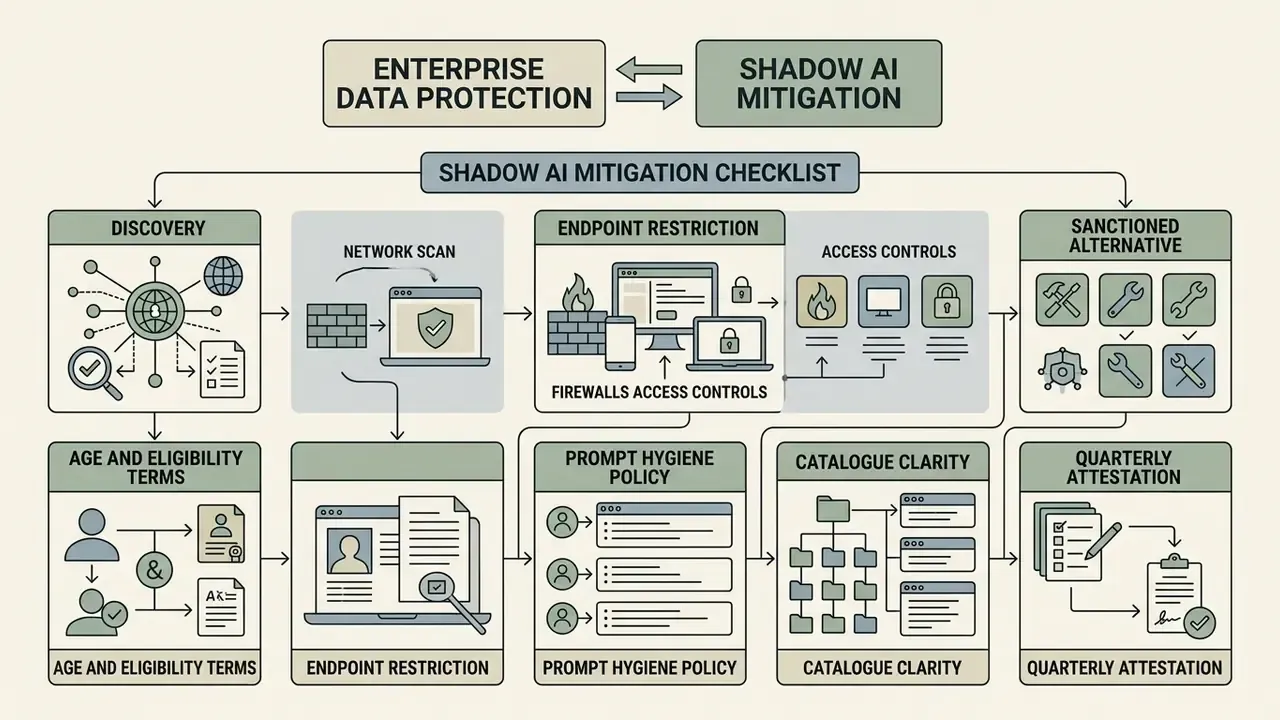
Enterprise Data Protection and Shadow AI Mitigation
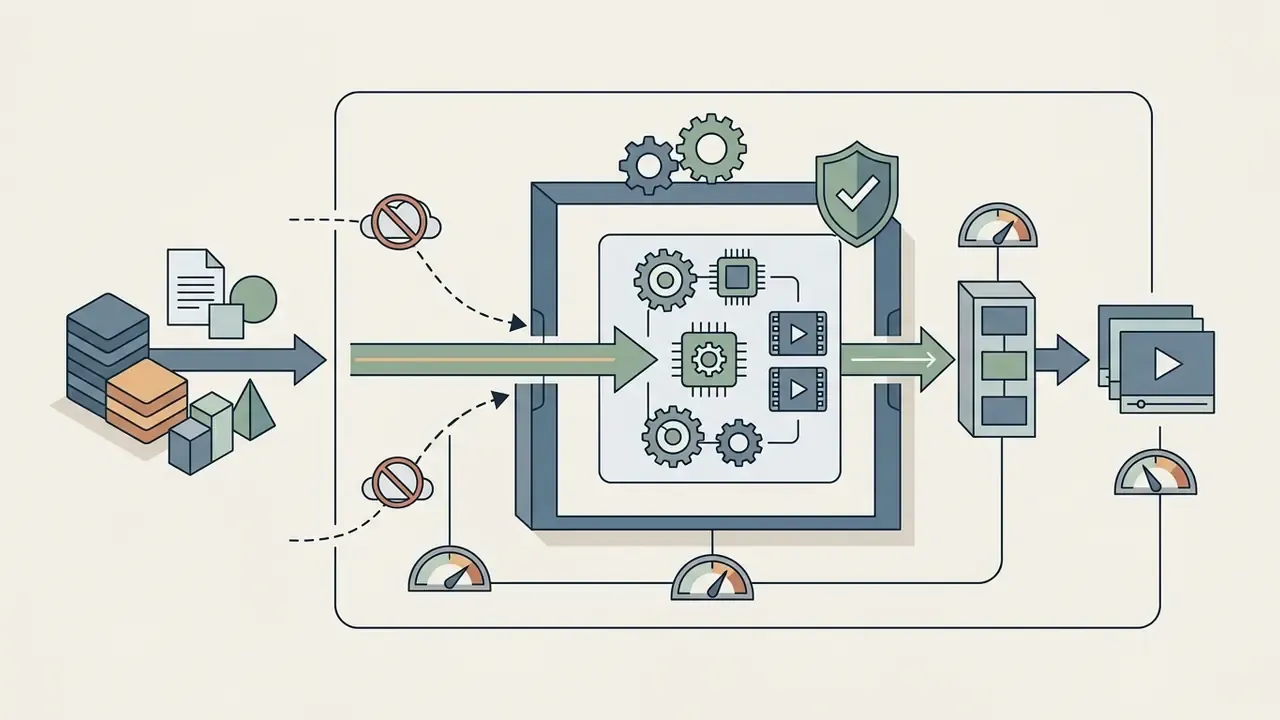
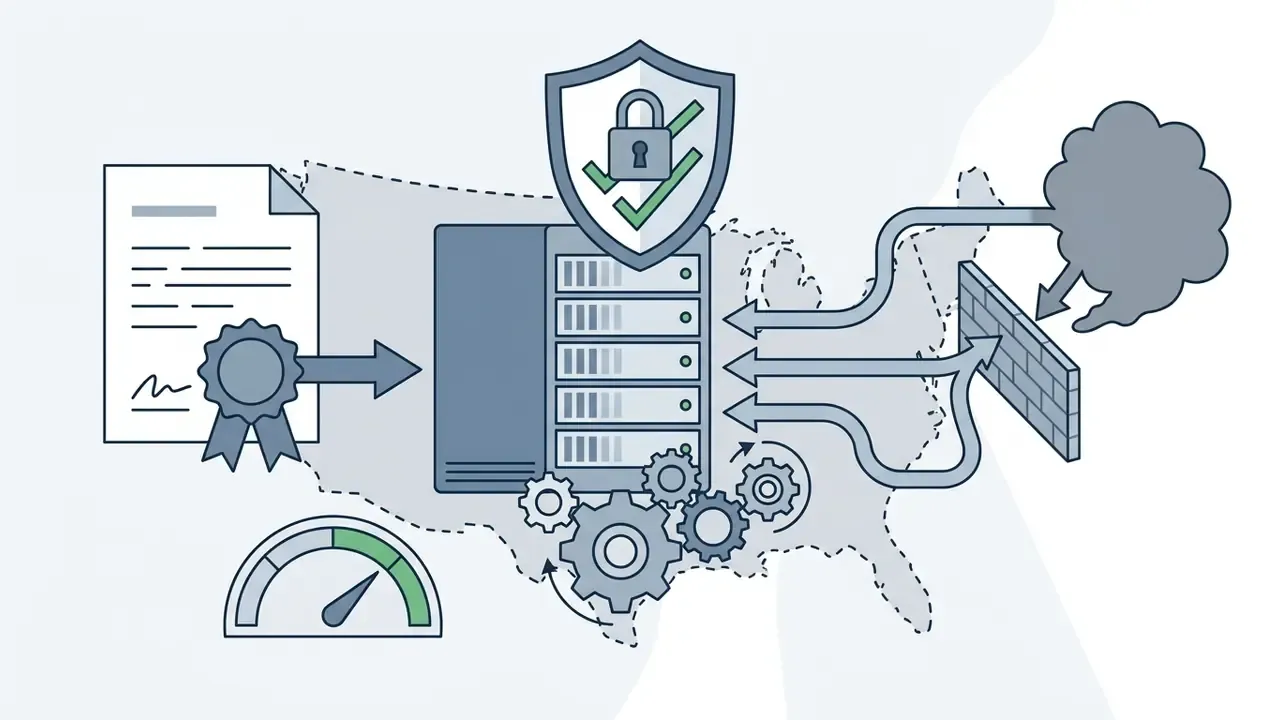
Generative video pipelines ingest scripts, campaign strategy, unreleased product imagery, and occasionally customer-identifying material. In regulated environments, the vendor-selection question is not "which model looks best" but "what happens to the prompt after it leaves our network."
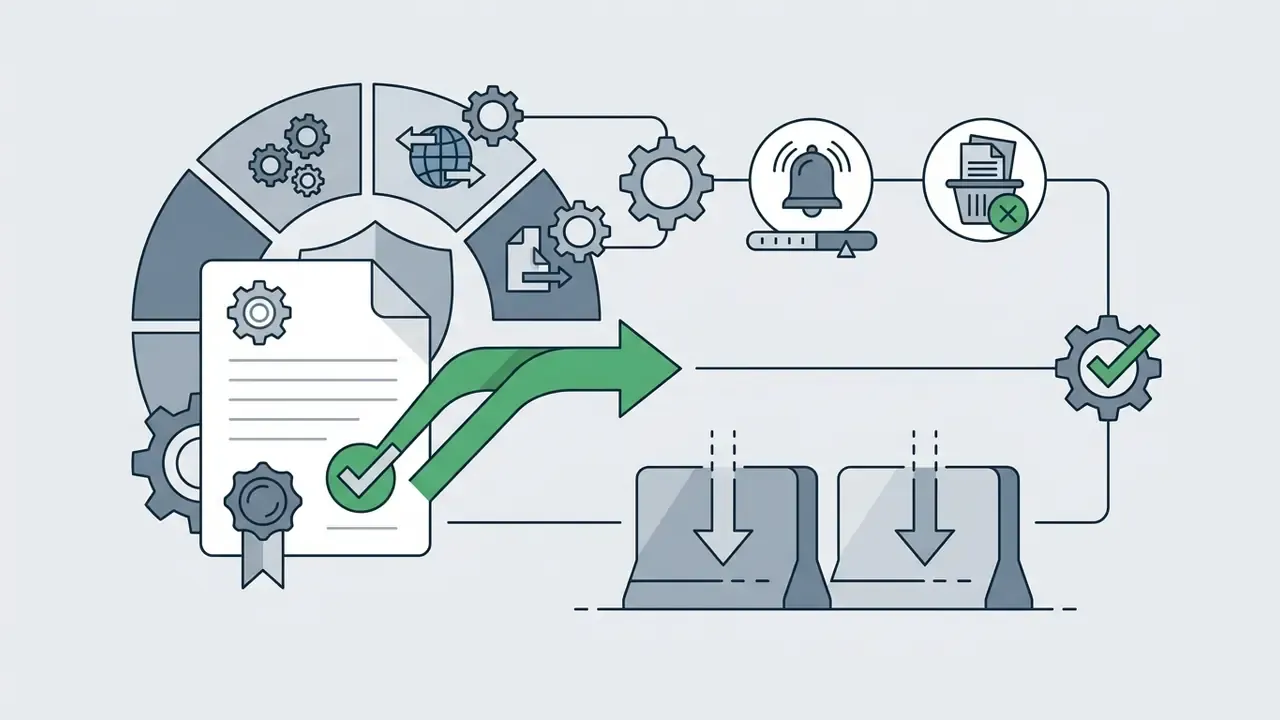
Vendor security criteria to verify in writing before onboarding:
Commercial Use, Safety and Watermarking of AI-Generated Videos
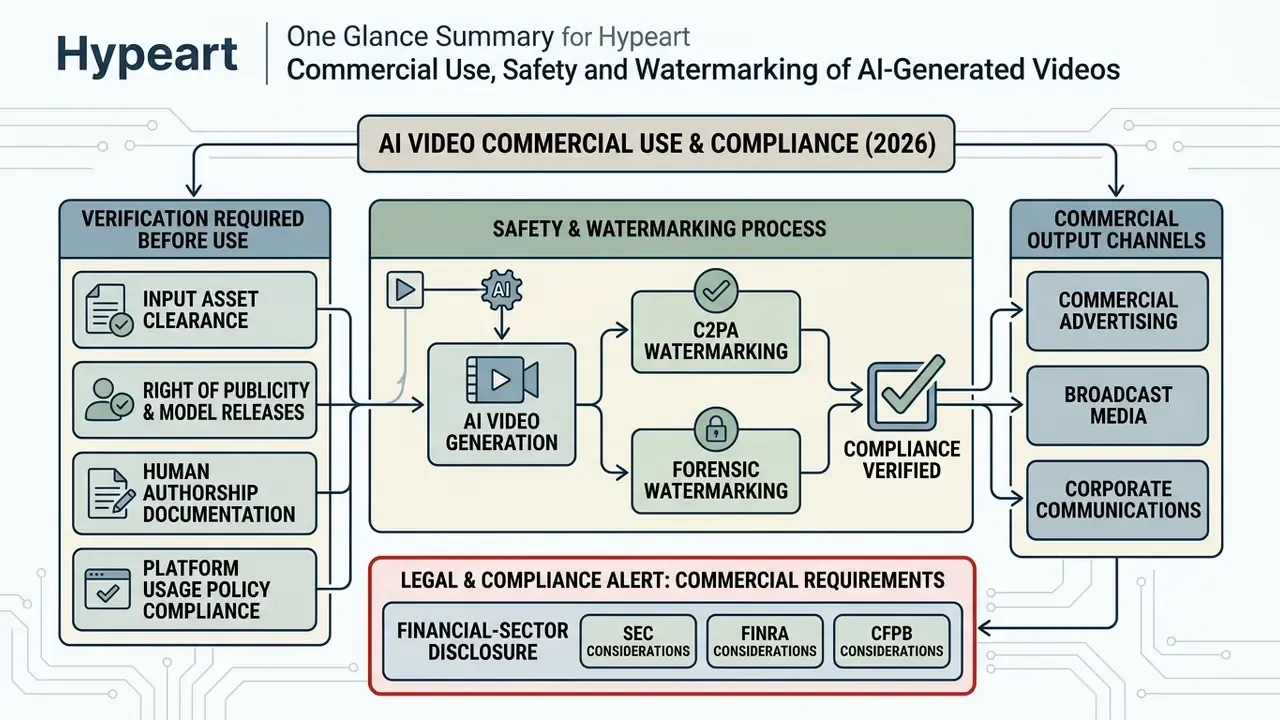
Publishing synthetic visual content for commercial advertising, broadcast, or corporate communications involves navigating evolving intellectual property standards, mandatory disclosure laws, and automated content detection systems.
LEGAL & COMPLIANCE ALERT: COMMERCIAL USE REQUIREMENTS
Commercial rights to AI-generated video outputs are governed by provider Terms of Service, input asset licensing, and regional copyright laws. According to the U.S. Copyright Office Guidance (2025), copyright protection extends strictly to human-authored expressive elements; purely AI-generated video content lacking substantial human creative control cannot be registered for copyright protection, and AI-generated material that is more than de minimis must be excluded from registration. Organizations must verify that input prompts, reference images, and source video footage do not infringe third-party intellectual property or publicity rights prior to commercial release. Consumer and enterprise agreements also differ: OpenAI maintains separate consumer and business/developer terms, and Google's Gemini API Terms are developer-facing and age-restricted. Always inspect specific provider terms before launching public campaigns.
"Automated video generation without cryptographic provenance tracking exposes brands to reputational risks and copyright disputes. Establishing clear asset lineage at the moment of render is as crucial as the visual quality itself." Marcus Hale, author
What to Verify Before Commercial Use
Before approving an ai-generated video asset for commercial distribution, compliance officers and content managers should execute a four-point verification audit:
For additional guidance on asset licensing, trademark boundaries, and legal precedent, creators can consult the central AI Media Commercial-Use Hub and track ongoing judicial developments via AI Litigation and Case Timelines.
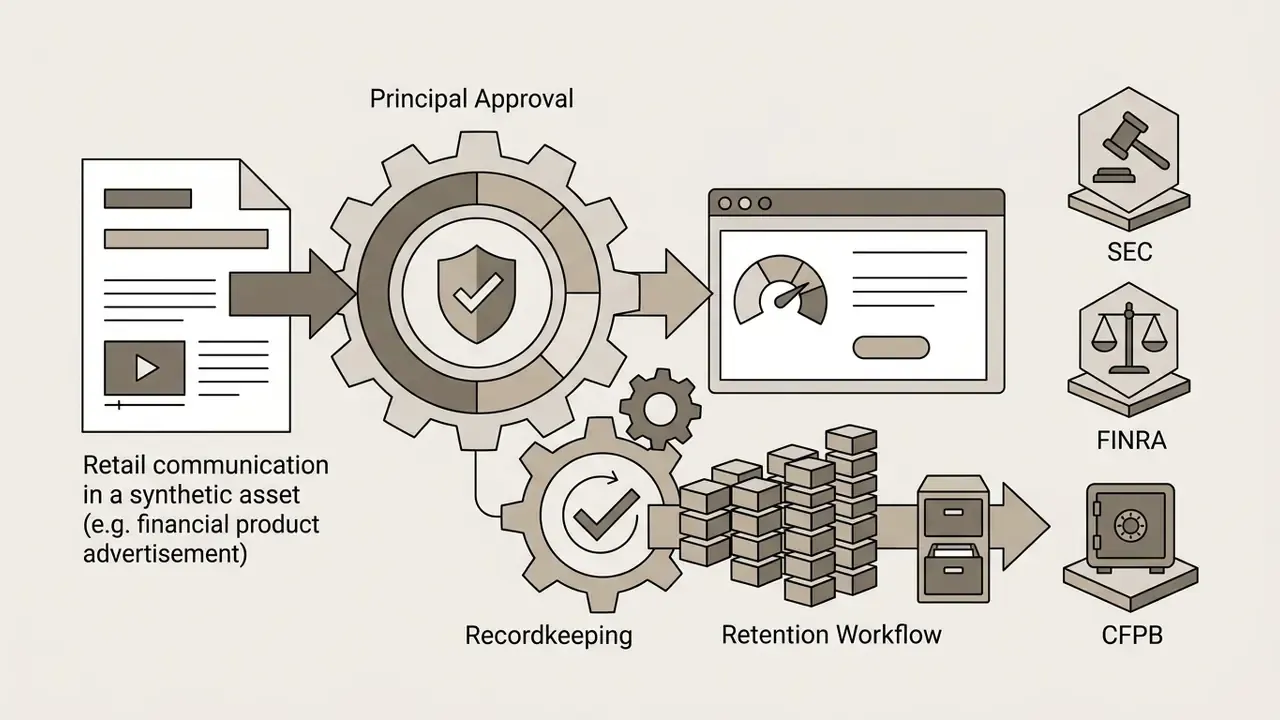
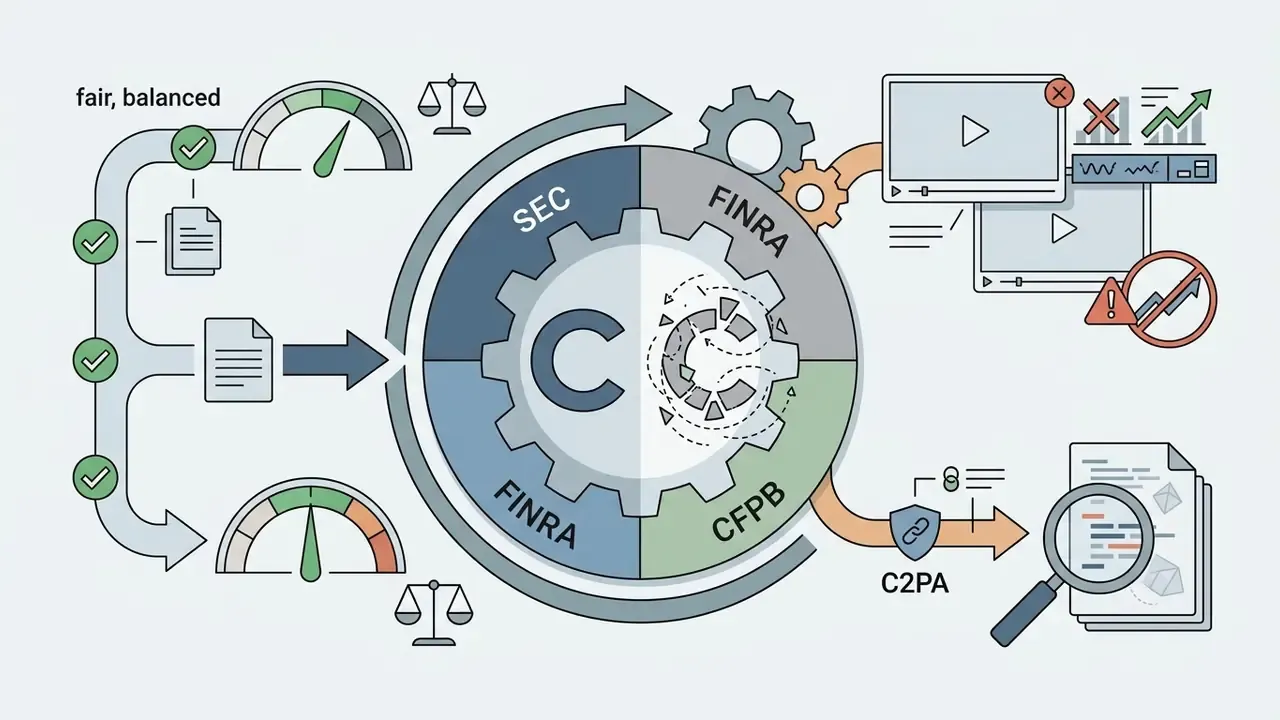
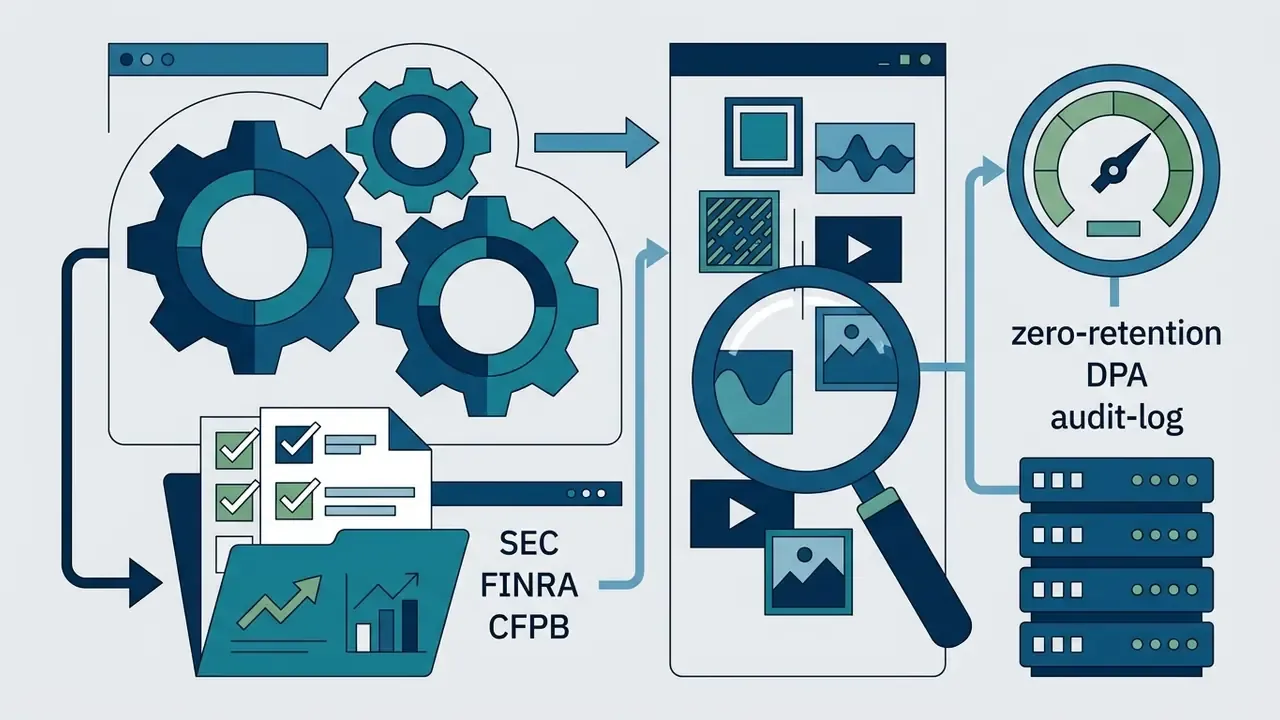
Financial-Sector Disclosure: SEC, FINRA and CFPB Considerations
Organizations in regulated financial services carry an additional layer of obligation beyond general advertising law. Synthetic presenters and generated testimonial-style footage interact directly with communications rules:
Specific requirements vary by jurisdiction, registration type, and product; confirm applicability with compliance counsel before launch.

Real-World Guardrail Stress-Testing: Public Figure Restrictions Versus Conceptual Prompts
Enterprise risk management requires understanding how model safety filters enforce policy restrictions in real time. Independent stress-testing of flagship architectures reveals distinct operational boundaries. When CBC News tested Google Veo 3, the pattern was unambiguous:
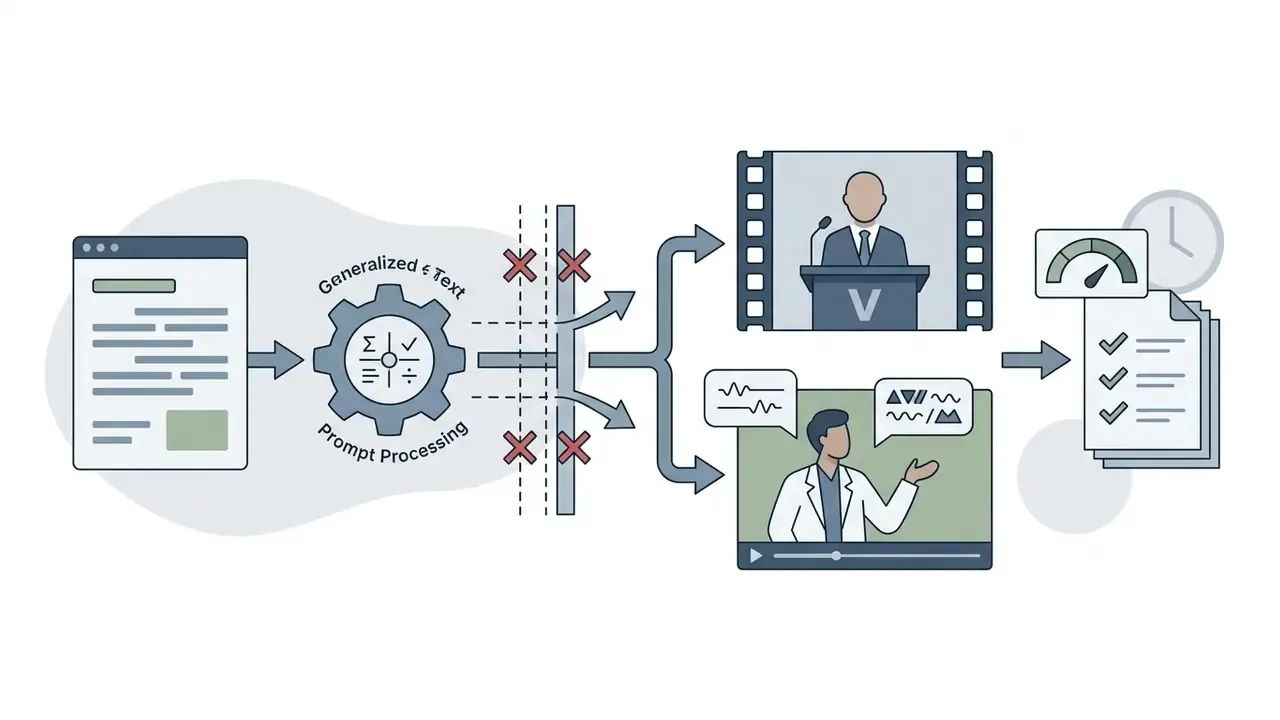
"When CBC clarified the man in the video should look and sound like Carney, the tool said this went against its policies… But when CBC asked the AI to generate a video of 'a mayor of a town in Canada'… That video was created almost immediately."
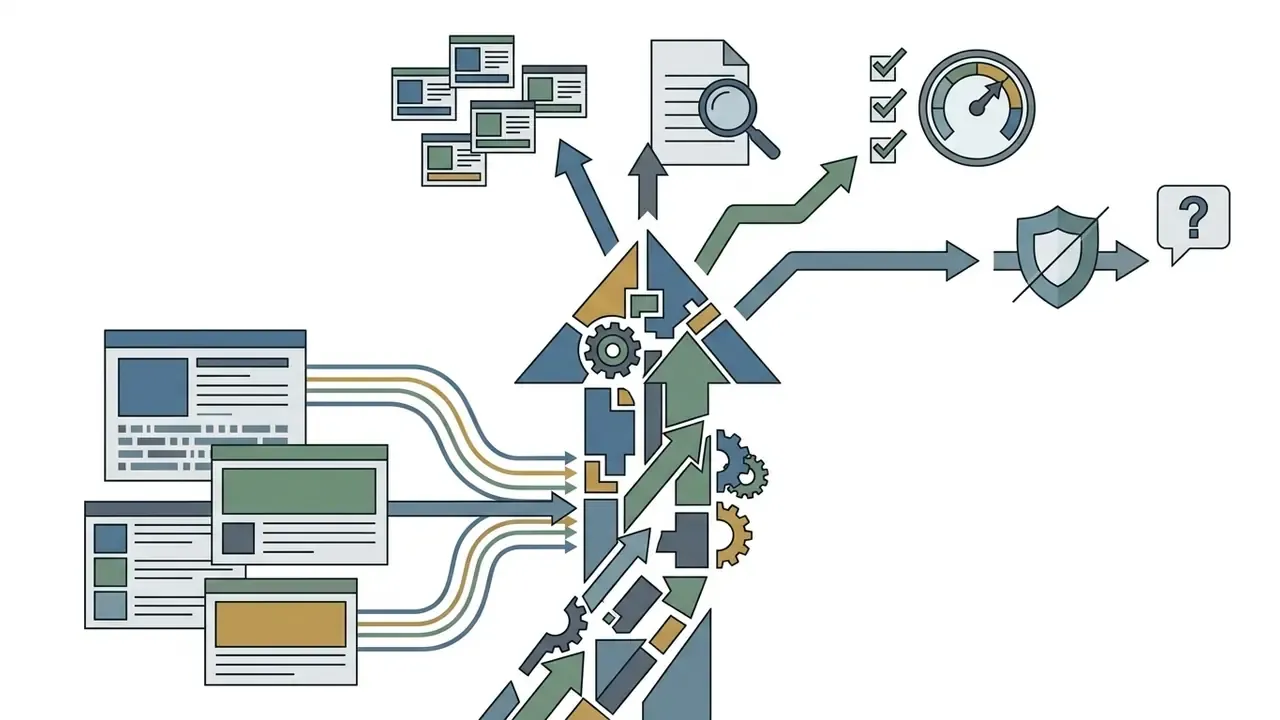
Watermarks, Detection and Trust in Realistic AI Video
As synthetic visual media achieves higher fidelity, regulators and social platforms increasingly mandate invisible watermarking and cryptographic provenance metadata to maintain public trust.
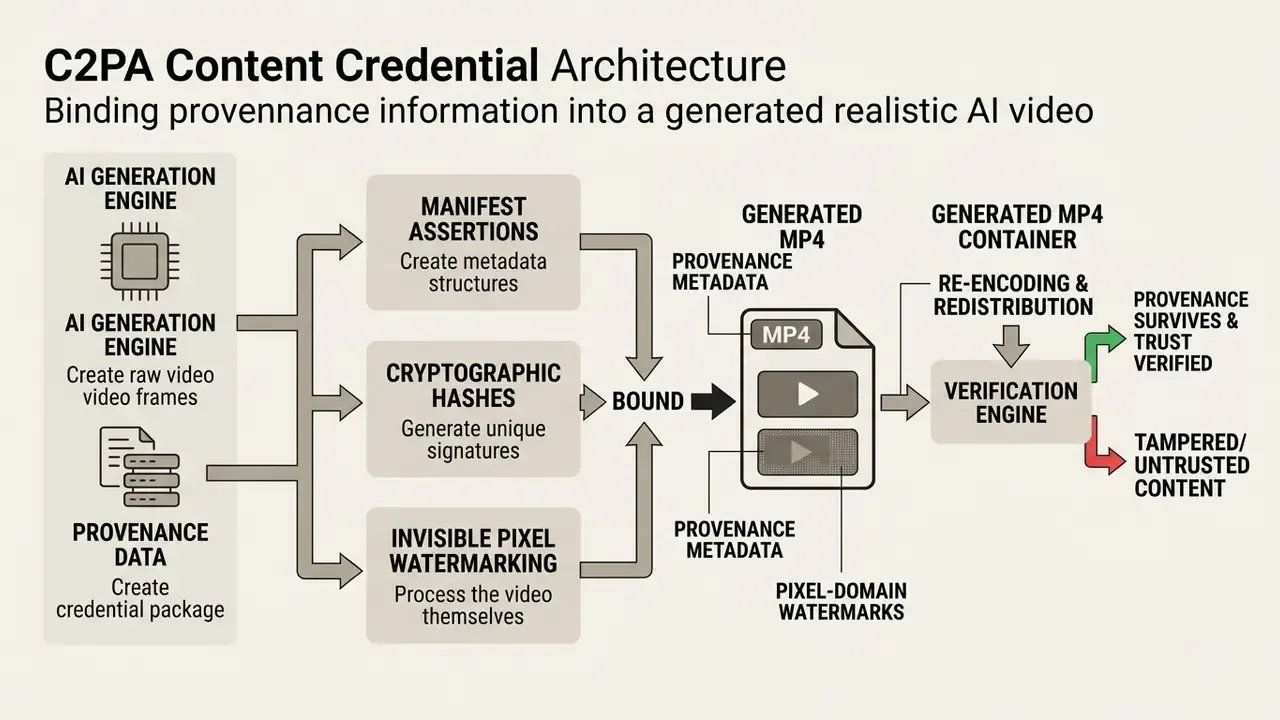
- C2PA standards the Coalition for Content Provenance and Authenticity (C2PA v2.4) defines technical standards for binding provenance metadata directly into digital media files using invisible watermarks. The specification requires the assertions
c2pa.watermarked.boundorc2pa.watermarked.unbound; the earlierc2pa.watermarkedlabel is deprecated. Metadata may be cryptographically bound at the container level or embedded as a watermark in the elementary stream, and durable content credentials can link a manifest to both a watermark and a fingerprint for later retrieval. - Regulatory mandates legislation such as California's generative AI disclosure mandate taking effect in 2026 requires AI model providers to embed latent, machine-detectable disclosures into all public image, video, and audio outputs. NIST's Reducing Risks Posed by Synthetic Content (2024) frames the same control set as provenance authentication, labelling, metadata recording, and digital watermarking.
"California requires generative AI providers to publish detection tools and embed latent disclosures in images, video, and audio from 2026."
- Detection vulnerabilities: benchmark studies demonstrate that while current invisible watermarks are accurate under default conditions, adversarial perturbations or aggressive re-encoding can reduce detection accuracy.
"Under white-box attacks, video watermarking methods break; under black-box attacks they remain vulnerable given a sufficient number of queries."
"AIGVDBench (440,000 videos, 33 detectors) reports I3D detector accuracy of 89% for I2V, 80% for T2V, and only 61% for closed-source models." AIGVDBench: Your One-Stop Solution for AI-Generated Video Detection, arXiv (2026). https://arxiv.org/abs/2601.03456
Consequently, enterprise risk managers implement multi-layered forensic detection rather than relying on a single watermark signal, combining provenance manifests, model-artifact classifiers, and human review. Practical tooling options and their false-positive characteristics are reviewed in our overview of AI content detection tools and complemented by provenance workflows such as AI reverse image search.
"Removing or forging watermarks shifts detection accuracy by 2 to 8 percentage points across all tested architectures."
Niche visual workflows, such as generating stylized character renders, creating abstract brand art assets, or producing dynamic sequences via an animation maker, must equally comply with watermark disclosure standards when deployed in public media environments. Even highly specialized content categories, including experimental stylistic outputs benchmarked in our AI art generator comparison, remain subject to platform disclosure rules and digital provenance requirements. Disclosure obligations attach to the distribution channel, not to the artistic genre.
Practical Forensic Checklist: Manual Visual and Audio Artifact Detection
Beyond cryptographic C2PA markers, compliance editors should run a manual visual audit to spot synthetic artifacts before clearance. Automated detectors currently operate in a roughly 60 to 80% accuracy band on real-world footage, so they flag material for human review rather than deliver verdicts.
- Anatomy and micro-gesturesinspect fine motor movements. Look for digit merging (hands with 4 or 6 fingers), disappearing jewelry, and asymmetric facial micro-expressions during peak emotional dialogue. Hands and fine movements remain the single most reliable tell.
- Physical vector analysis, the camera rig testask whether the scene perspective is physically possible. What camera setup would produce this shot? Synthetic models often render impossible trajectories, such as dolly moves passing cleanly through solid background objects, or angles requiring a camera inside a wall.
- Acoustic and lip-sync anomalieslisten for unnatural cadence pauses, robotic vocal sibilance, or audio-visual desynchronization during rapid verbal transitions. Modern models pass casual inspection; failures cluster at speech-rate changes.
- Environmental reflectionscheck mirrors, water surfaces, and eye catchlights. AI generators frequently fail to calculate true secondary light reflections and particle dynamics across dynamic background elements.
- Text and numerals in framescrutinize on-screen graphics, signage, tickers, and chart labels. Invented or drifting numerals are common and, in financial contexts, materially disqualifying.
- Object permanence across cutstrack a single background object through the full clip. Items that change shape, colour, or position without motivation indicate weak internal world consistency.
- Context verificationconfirm the underlying claim through an independent source before publication or amplification. No single visual method catches all synthetic content, and combining methods is the only reliable protocol.
Enterprise AI Video Production Readiness Checklist
Use this as the pre-deployment gate before any generative video model is approved for customer-facing output.
Checklist0 / 23
Limitations and Open Questions
Two honest caveats. First, vendor thresholds move faster than this page can be re-verified, so every quota and price above should be re-checked against the provider's own documentation on the day of purchase. Second, the research base for detecting synthetic video is young; accuracy figures come from benchmark conditions that rarely match compressed, re-encoded social footage.
Unresolved for now: whether provenance signals survive at scale across platforms that strip metadata, how courts will treat prompt-level human authorship, and how supervisors will view generated customer-facing media inside existing model risk frameworks. Where evidence is incomplete, we say so rather than guess.
A safe next step is small: pick one live use case, register the model, run the seed-locked test, and measure your real reject rate. Then decide.
FAQ
What is the best AI video generator in 2026?
It depends on the constraint you are optimizing. For cinematic quality with native audio and enterprise SLA, Veo 3.1 leads. For world consistency and character persistence across complex camera work, Runway Gen-4 is the reference. For value, Kling 2.6 delivers comparable quality at materially lower cost. For self-hosting and freedom from endpoint deprecation, Wan 2.1 is the pragmatic choice.
How can I tell whether a video came from an AI generator?
Combine methods: inspect hands and fine motion, apply the "how would this be filmed?" test, listen for cadence and lip-sync anomalies, check reflections and on-screen text, and verify the underlying claim independently. Automated detectors sit near 60 to 80% accuracy, so no single signal is decisive.
Is AI-generated video safe for commercial use?
Paid tiers and API access from major providers generally permit commercial use, but the specifics differ by provider and plan. Copyright protection attaches only to human-authored elements, input assets must be licensed, and identifiable people or property require releases. Obtain legal review before enterprise deployment.
How much do AI video generators cost?
Pricing spans free tiers to enterprise contracts. Metered API rates run roughly $0.02 to $0.70 per second depending on tier, resolution, and audio. Subscriptions typically run $9 to $30 per month at entry level and up to $200 per month for premium consumer tiers. True cost per published asset is usually an order of magnitude above the compute line item once review and provenance work are included.
Will AI video generators replace videographers?
They displace commodity output, filler B-roll, template social cuts, localized ad variants, while leaving creative direction, storytelling, client judgment, and compliance responsibility with people. The scarce skill is deciding what should exist, not rendering it.
How often should we re-validate a video model?
At minimum quarterly, and immediately on any vendor version change or deprecation notice. A version bump is a model change and resets the evidence base.