Editorial review: synthetic-media risk desk (copyright, trademark, and right-of-publicity screening).
Why would a risk or compliance leader read a guide about cartoon sharks in sneakers? Because marketing teams are already generating them, usually on free consumer tools, often with unreleased brand assets as reference material. That is an AI adoption question wearing a silly costume.
Executive Summary: Key Takeaways for Creators and AI Governance
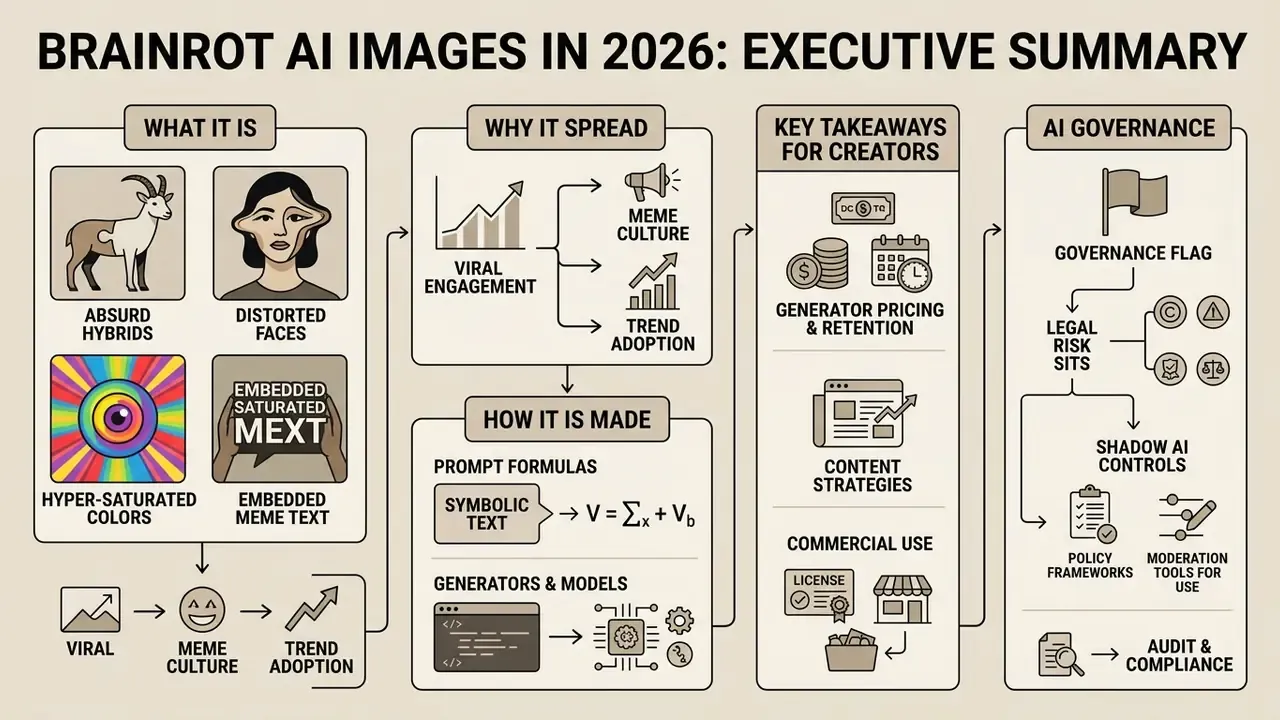
- What it is. Brainrot ai images are AI-generated visuals built on absurd animal-object hybrids, distorted faces, hyper-saturated color, and embedded meme text. The aesthetic exploded in early 2025 through the "Italian brainrot" subgenre and its Roblox spin-offs.
- Why it spread. "Brain rot" was Oxford's Word of the Year 2024 (+230% usage growth). Attention-monetizing feeds reward low-friction, high-stimulus synthetic imagery, and meme templates amplify AI visuals rather than replace them.
- How it is made. A repeatable seven-step pipeline: idea, four-part structured prompt, model and style selection, generation, inpainting, upscale and export, then optional image-to-video animation.
- What it costs. Free tiers range from unlimited watermark-free generation to daily quotas with visible watermarks. Paid plans in this category run roughly $4.99 per week to $279 per year.
- Where the legal risk sits. Purely AI-generated output is not registrable in the U.S. (U.S. Copyright Office, 2025). Meanwhile, third-party rights are very much alive: the Do Big Studios v. Mementum Lab dispute over Tung Tung Sahur is being litigated in California, with the rights-holder pivoting from copyright to trademark.
- Governance flag. Free public generators are a common Shadow AI vector. Staff upload brand assets, customer photos, or unreleased creative into consumer tools with unclear retention and training terms. Screen vendors for retention windows before approving them.
How to Use This Guide (Three Decisions It Should Help You Close)
Most readers arrive with one of three questions. It helps to know which one you are answering before you scroll.
| Your question | Where the answer lives | What "done" looks like |
|---|---|---|
| "What is this style and can we ride it?" | Sections 1 to 6 | A written creative brief, plus a yes or no on brand fit |
| "Which generator do we approve, and at what price?" | Sections 7 to 9 | A shortlist with verified retention, watermark, and licence terms |
| "Can we ship this commercially without a legal surprise?" | Sections 16 to 18 | A clearance pass logged against each asset |
Governance readers can jump straight to the Shadow AI table in section 8 and the litigation walkthrough in section 18. Creators will get more out of the prompt formulas. Both groups should read the licensing caveat, because that is where the two audiences collide.
The emergence of synthetic media has reshaped online visual culture, giving rise to surreal, hyper-saturated meme aesthetics that strain traditional frameworks of media consumption and IP risk. Digital creators and marketing teams frequently evaluate brainrot ai images to capture youth engagement across short-form video and community platforms. Deploying ai brain rot images at any real scale, though, requires a structured grip on the underlying generative tools, prompt formulas, platform formatting, and intellectual property constraints.
What Are Brainrot AI Images and Why Did This Style Go Viral?
In two sentences: Brainrot ai images are deliberately absurd, AI-generated visuals combining hybrid creatures, warped faces, and loud meme text. They went viral because their unpredictability interrupts habitual feed scrolling on TikTok, Reels, and Shorts, and because meme templates make synthetic imagery even more shareable.
Brainrot ai art is a family of artificial-intelligence-generated visual artifacts characterized by surrealism, absurd animal-object hybrid characters, exaggerated facial distortions, and intentional aesthetic chaos. The style spread across TikTok, YouTube Shorts, and Instagram Reels because its shocking unpredictability and rapid visual iteration break standard feed consumption patterns. Creators entering the format usually start by benchmarking AI image generators against their target platform and budget.
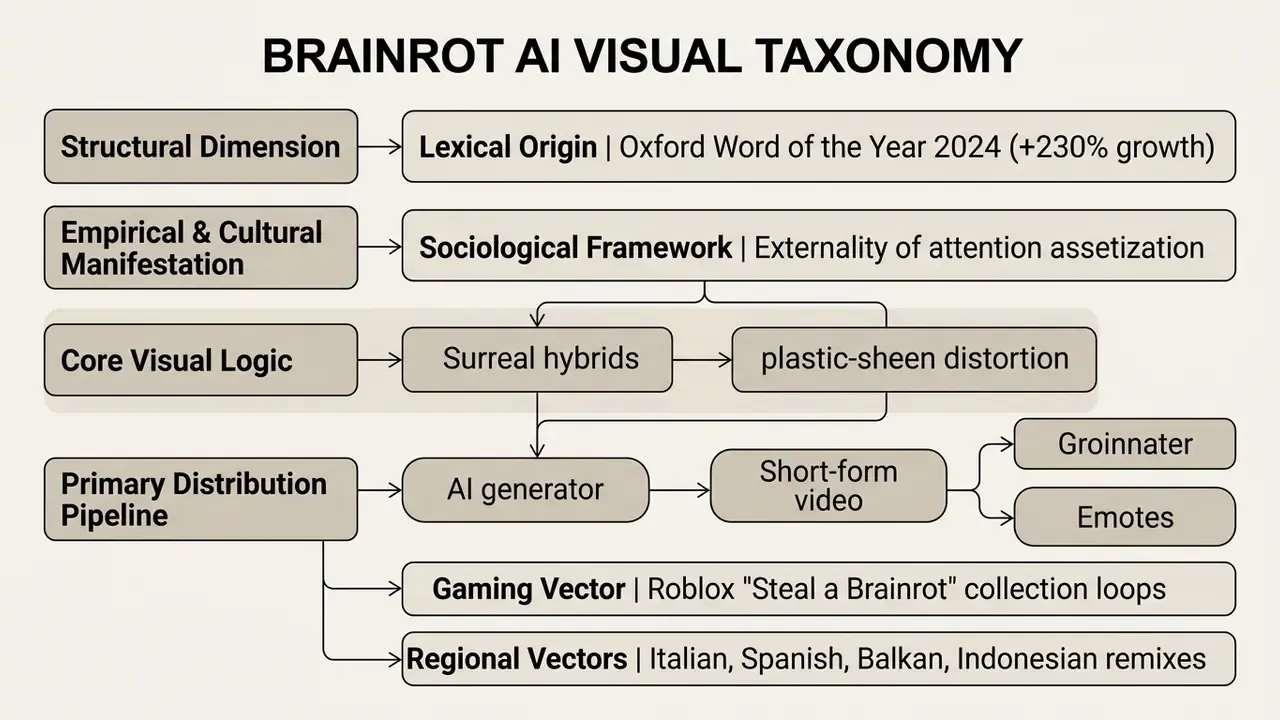
The cultural foundation of this aesthetic is tied to the broader lexical rise of "brain rot." Oxford University Press selected "brain rot" as its Word of the Year for 2024, citing a 230% increase in usage and defining it as the deterioration of mental state resulting from overconsuming trivial online media.
«Oxford recorded a 230% rise in the use of "brain rot" and defined it as mental deterioration from consuming trivial online content.»
Sociological research from Binghamton University frames brain rot as a structural externality of platform capitalism. Social media algorithms monetize user attention by rewarding hyper-engaging, low-friction synthetic visuals, often labelled "AI slop," that maximize screen dwell time.
«Platforms monetize attention as an asset, creating systemic incentives to produce low-cognitive-load, high-engagement content.»
A 2024 multimodal study on generative memesis went further. It showed that synthetic imagery combined with established meme templates yields synergistically higher engagement than non-synthetic memes or standalone AI art.
«Meme format predicts engagement more strongly than AI generation itself, yet AI memes show a significant positive interaction effect.»
Cultural researchers also caution against reading the format purely as harm. Children's media researcher Emilie Owens has noted that adults historically treated youth media, comics, television, video games, and now Skibidi Toilet-style absurdism, with the same suspicion, while the underlying behavior is ordinary decompression.
«It's very normal for everyone to need to switch their brains off now and again.»
For Generation Alpha (born roughly 2010 to 2025), brainrot characters work as shared cultural shorthand, filling the same social role as "Subway Surfers split-screen" clips or endless gameplay overlays. Italian animator Fabian Mosele, who produces viral brainrot videos, framed the appeal bluntly: it is funny precisely because it is nonsense and breaks every expectation of conventional broadcast media. For brands, that insight matters. The format's value is the transgression of polish, not polish itself.
Visual Signatures of a Brainrot Meme
In two sentences: The style is recognizable through surreal hybridization, melting or waxy facial texture, neon-plastic color grading, and text baked directly into the frame. Those signals combine into deliberate overstimulation that stops the scroll.
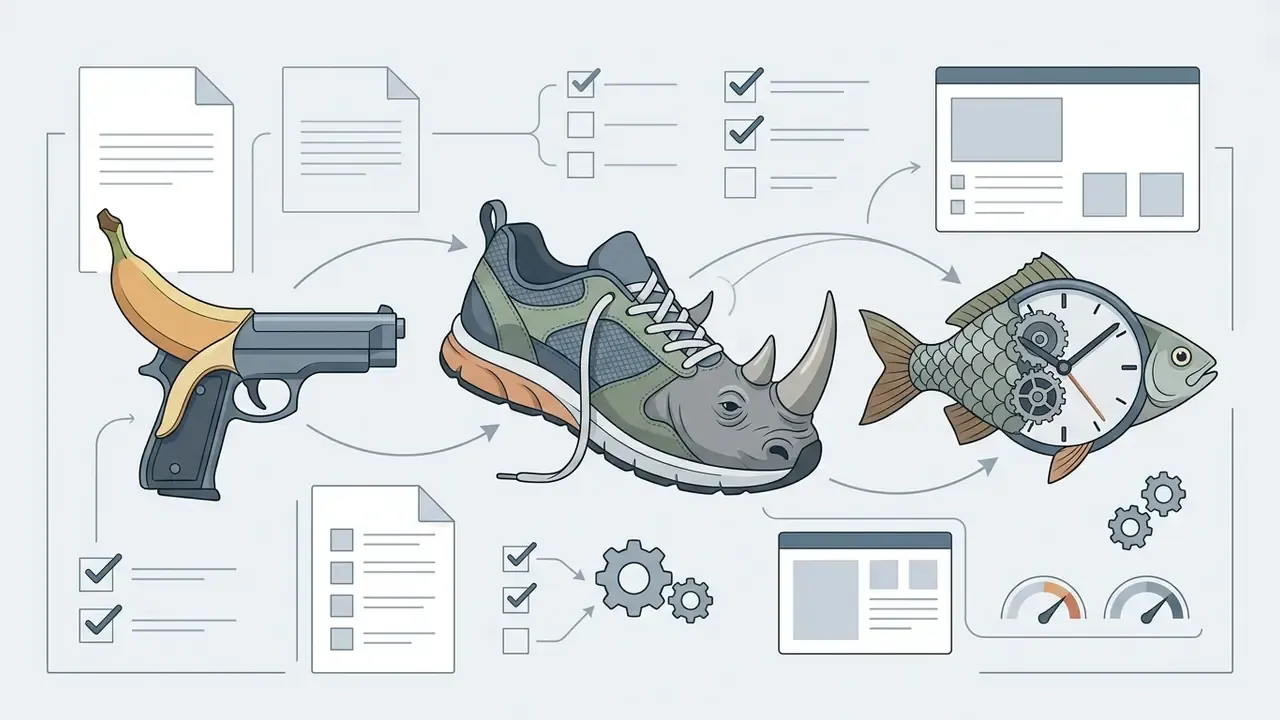
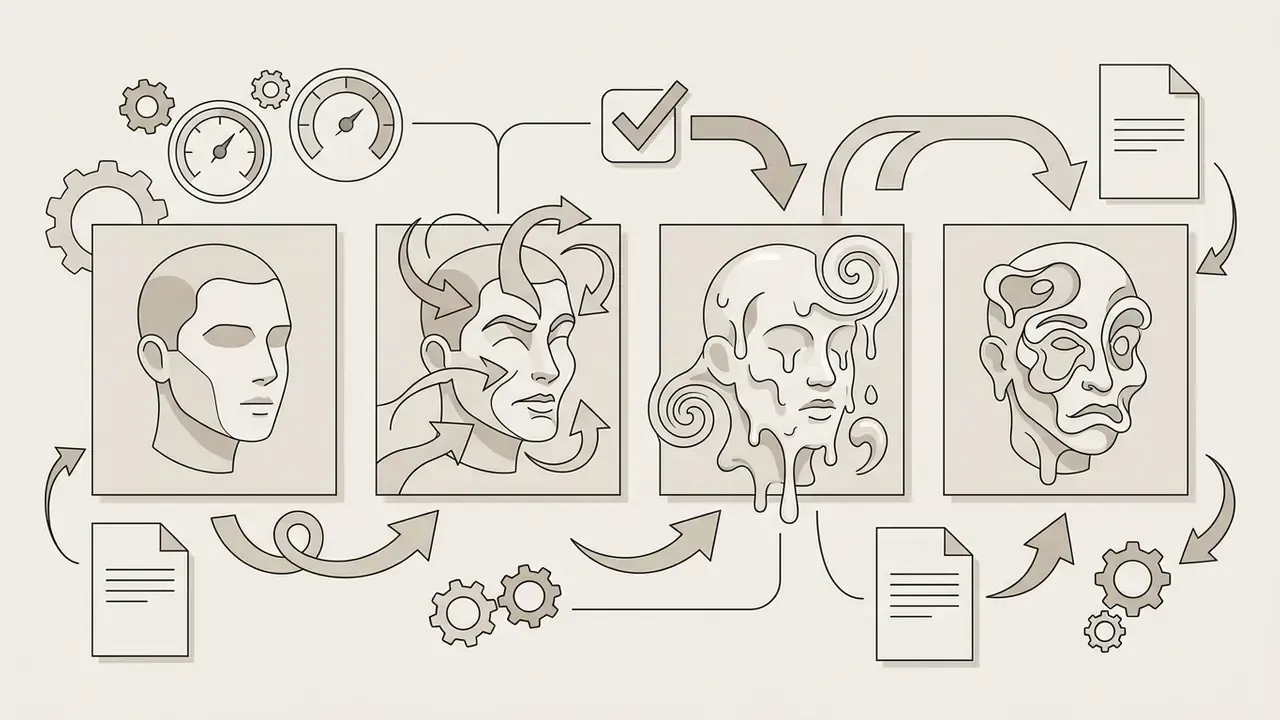
The visual signature of a brainrot meme relies on surrealist composition, exaggerated facial morphing, high-contrast neon or plastic-sheen palettes, and embedded text overlays. Together they build a visual environment loud enough to hijack attention in under a second.
Platform-level data confirms that synthetic visuals are now a normalized share of social content rather than a novelty spike.

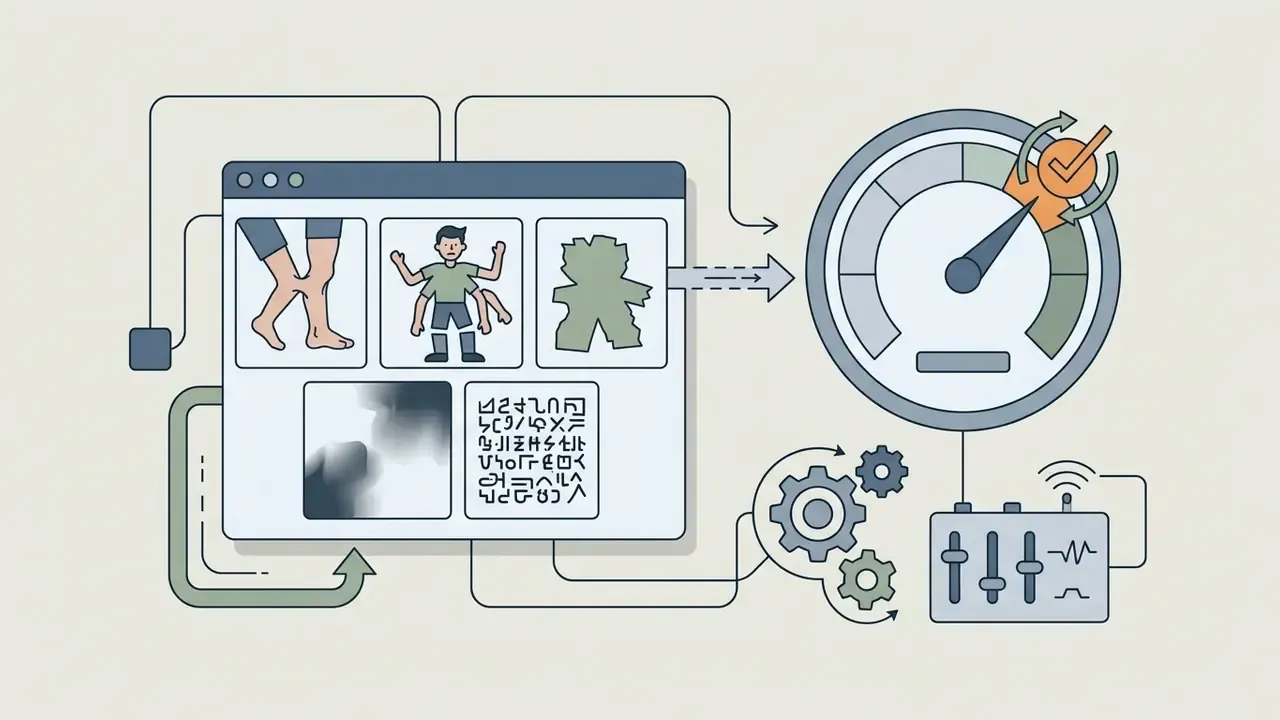
«Synthetic tweets peaked in March 2023 after Midjourney V5 and stabilized at roughly 0.2% of all community notes.»
Italian Brainrot, Spanish Brainrot, and Other Cultural Variants
In two sentences: Italian brainrot is the founding subgenre: hybrid creatures with rhythmic pseudo-Italian names, synthetic operatic narration, and invented lore. Regional forks in Spanish, Balkan, German, Korean, and Indonesian reuse the same template with localized slang and humor patterns.
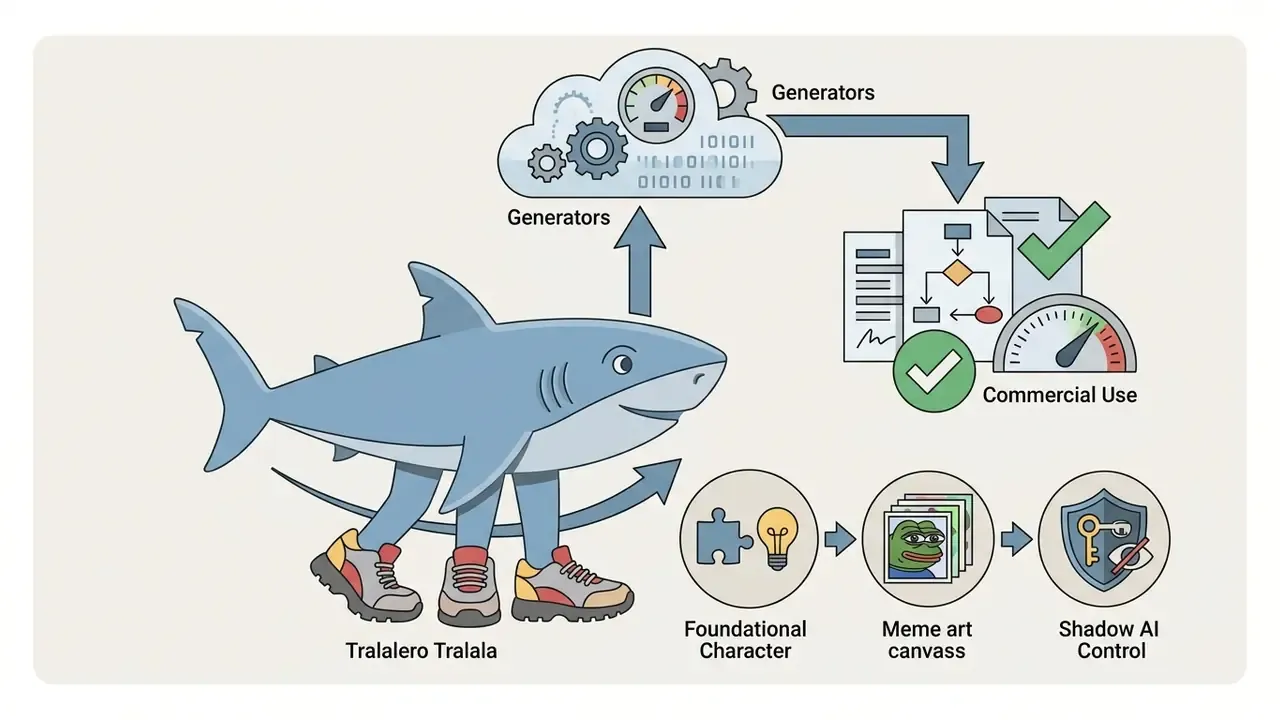
Italian brainrot is the most prominent subgenre of brainrot ai art, originating in early 2025 with AI-generated hybrid creatures paired to rhythmic pseudo-Italian names, synthetic voiceovers, and melodramatic lore. The nomenclature borrows mock Italian suffixes like -ini or -ello, yet the phenomenon is global, blending cross-cultural soundscapes and visual tropes.
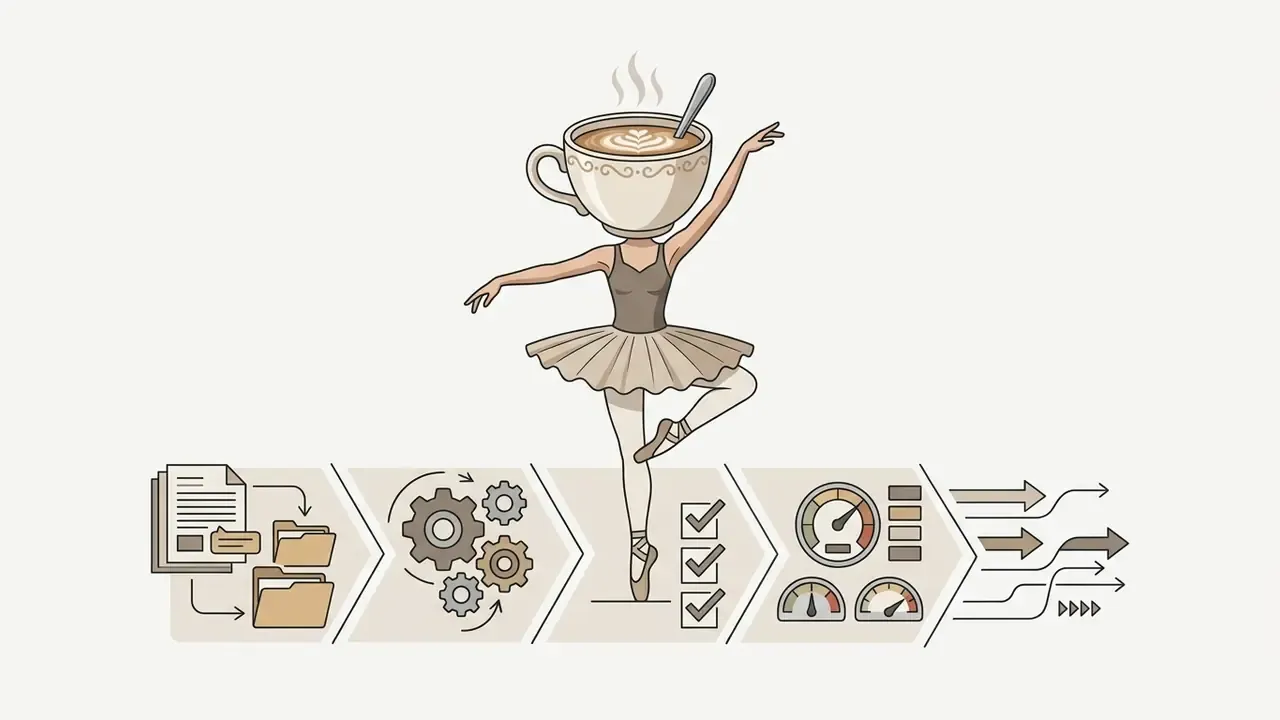
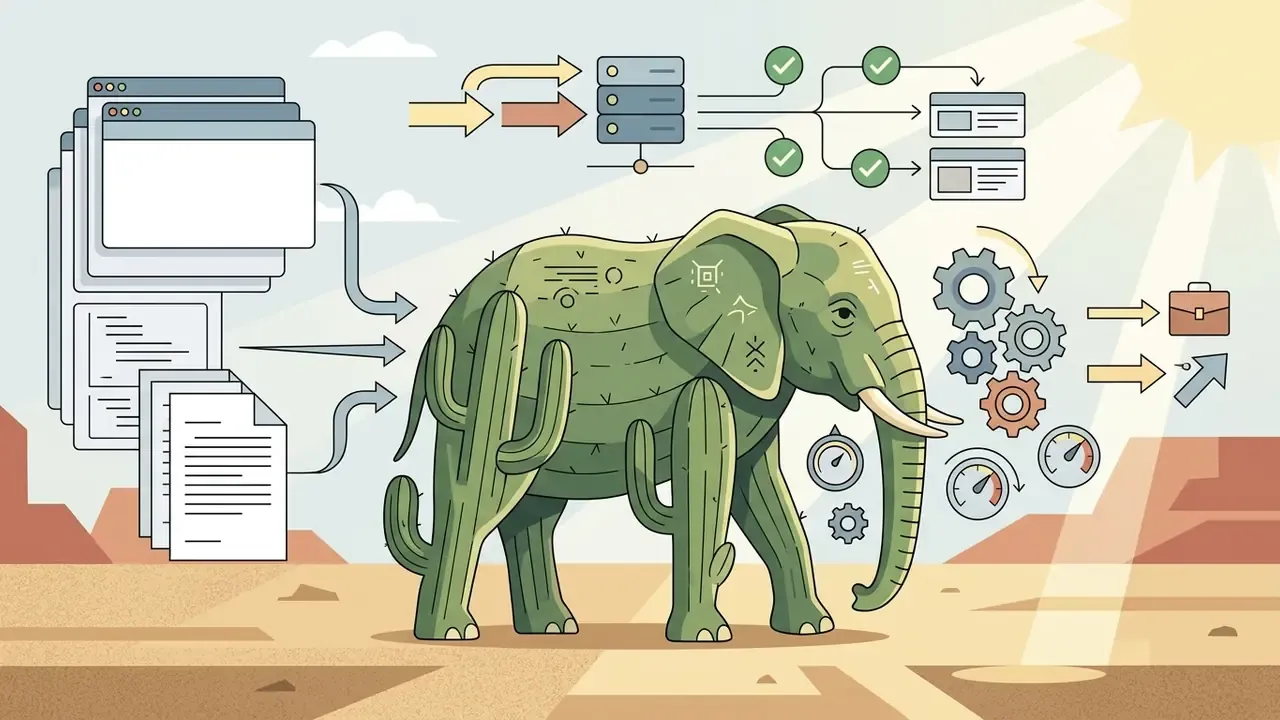
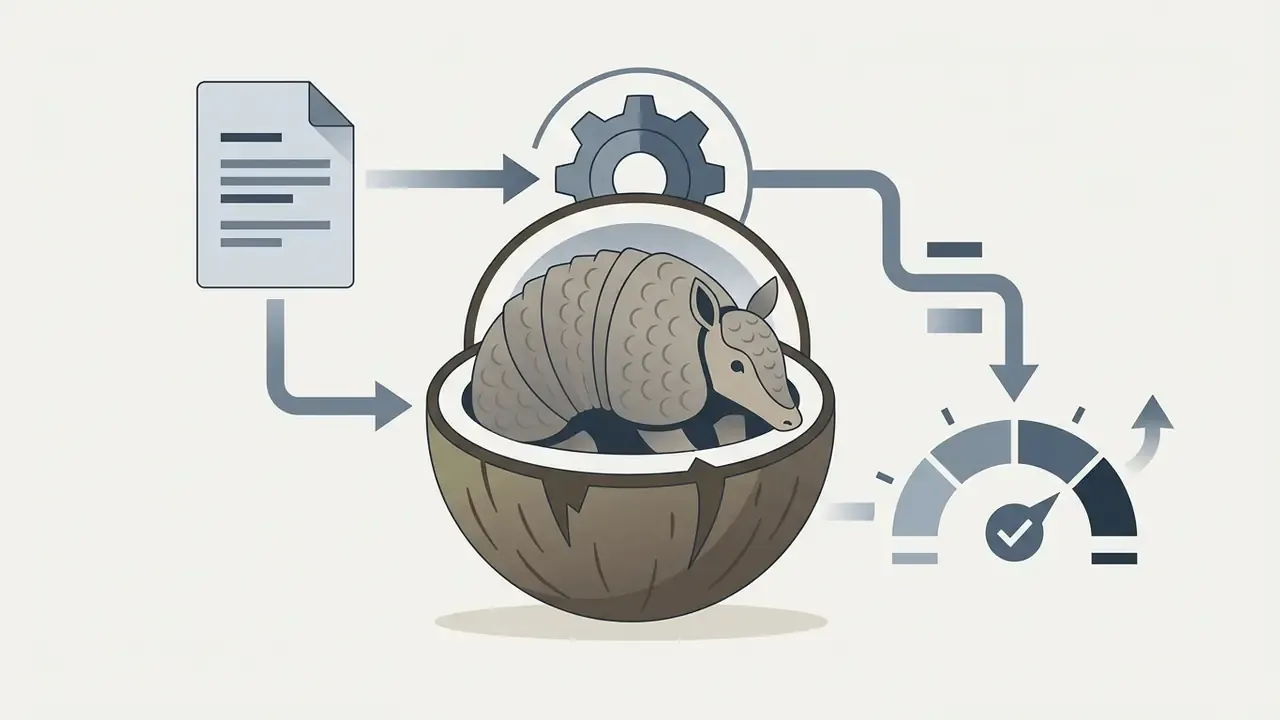
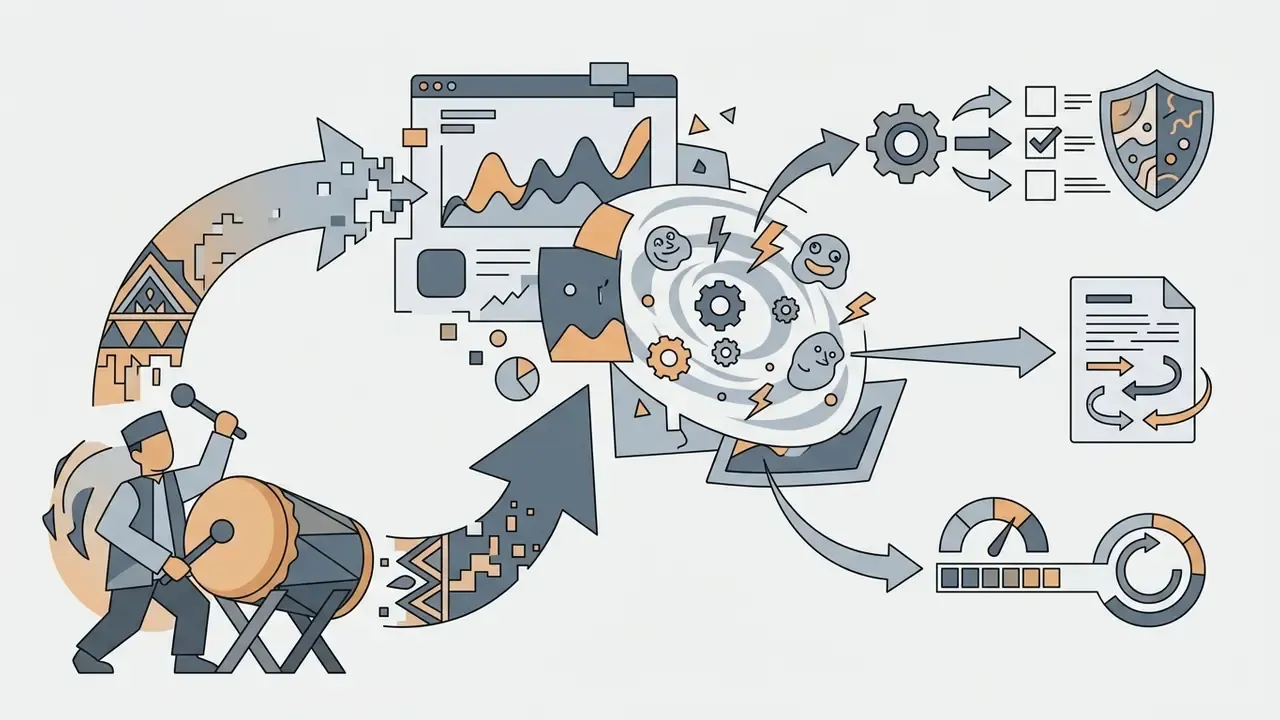
Regional forks worth tracking:
| Variant | Visual / verbal signature | Typical distribution |
|---|---|---|
| Italian brainrot | Animal-object hybrids, pseudo-Italian names, operatic synthetic narration, piazza and pasta-core backdrops | TikTok, Shorts, Roblox |
| Spanish brainrot | Localized internet slang, sarcastic overlay captions, exaggerated regional humor, telenovela-grade melodrama | TikTok, Instagram, X |
| Balkan, German, Korean remixes | Same hybrid template, localized reposting, translated nonsense narration | Regional TikTok clusters |
| Indonesian layer | Ramadan and kentongan drum references (source of Tung Tung Sahur) | YouTube Shorts, TikTok |
Spanish brainrot in particular leans on localized slang, absurd sarcastic overlays, and exaggerated regional humor. Practically, that means a prompt tuned for Italian style needs rewritten captions, not just a translated name. If you want to build your own regional cast, start with free AI image generators and iterate on three to nine seeds per naming variant.
Figure 1 (image gallery placeholder): annotated gallery of representative brainrot ai images. Each frame should carry a visible caption explaining the role of the character, the absurd detail, the embedded text, the color decision, and the resulting meme effect. Alt text must include the phrase "brainrot ai images" or a close variation, and captions must exist as readable text rather than being baked into the picture.
What Kinds of Brainrot Images Can You Create With AI?
In two sentences: Generative models cover three output families: photo-to-character transformations, platform-native meme layouts, and gaming fan assets. Matching prompt complexity to the output family is what keeps production efficient.
Generative neural networks can produce three primary categories of brainrot visual media: photo-to-character face transformations, platform-optimized meme layouts, and interactive gaming fan assets. Knowing which family you are in tells you how much prompt engineering is worth the time.
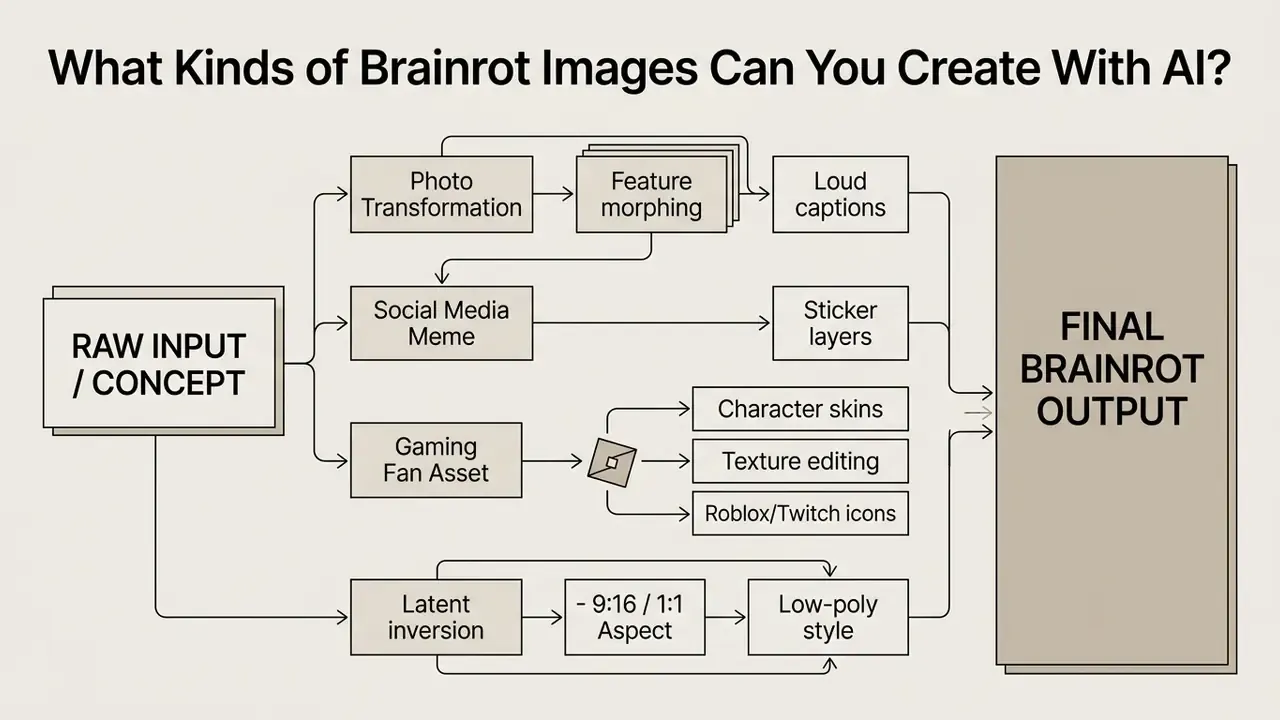
Each family carries a different cost and risk profile. Photo transformations are the cheapest to iterate and the most legally exposed, because they involve real likenesses. Meme layouts are cheap and low-risk when characters are original. Gaming assets are the most commercially valuable and the most exposed to third-party IP claims, because game economies monetize recognizable characters directly. That is the exact fault line now being litigated in California (see section 18).
Characters, Faces, and Absurd AI Transformations
In two sentences: Photo-to-character workflows invert a source portrait into latent space, then apply semantic edits for plastic skin, warped eyes, or mechanical parts. Identity geometry survives while the surface turns grotesque.
Photo-to-character transformations convert uploaded human portraits or objects into grotesque brainrot characters using face detection, latent space manipulation, and neural style transfer. The underlying facial geometry is preserved while absurd modifications land on top. Practitioners comparing tools for this stage usually evaluate image-to-image generators before committing to a pipeline.
Modern pipelines use Generative Adversarial Networks or diffusion-based inversion, such as DDIM inversion, to map a source image into latent space. The typical sequence: detect the face, crop and align it, embed it via inversion, run reverse diffusion with style conditioning, then super-resolve and color-correct. Once inverted, semantic controls modify facial attributes, adding plastic skin sheens, exaggerated eyes, or mechanical parts. For visual comparisons of synthetic portrait workflows, review our guide to pictures of ai, and for identity-preserving portrait quality benchmarks see our AI headshot generator guide.
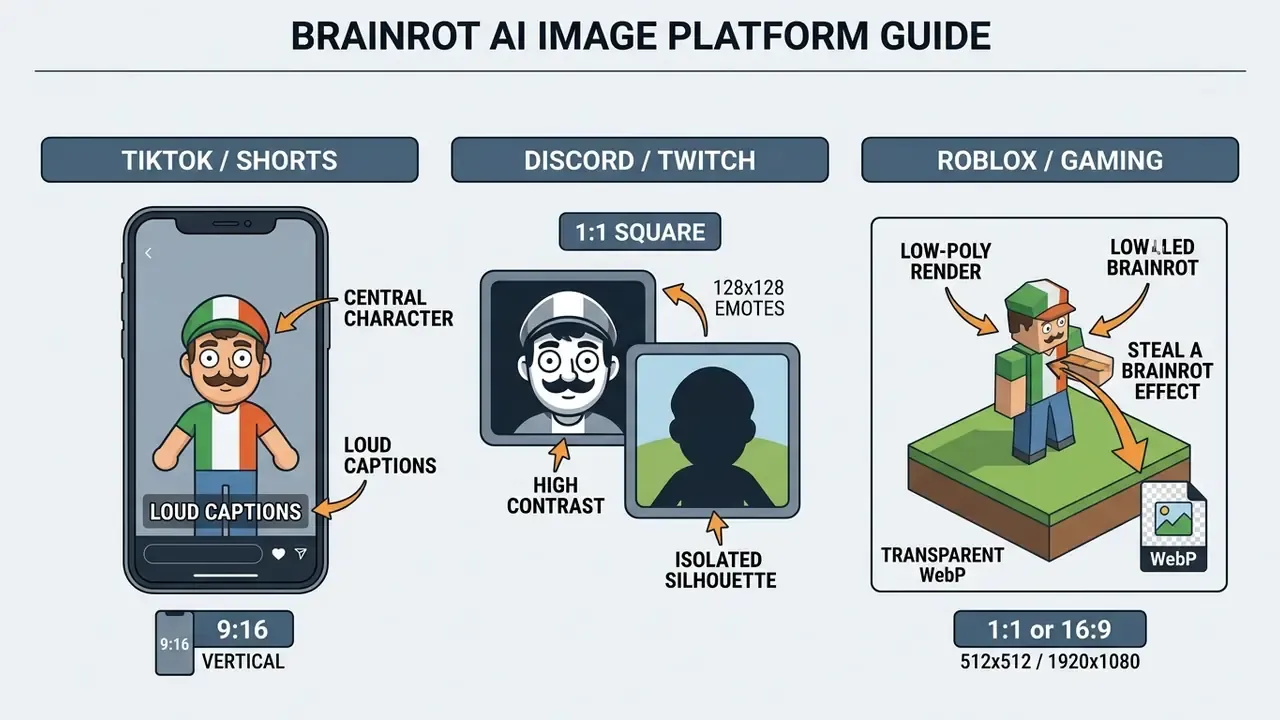
Memes for TikTok, Discord, Twitch, and the Roblox "Steal a Brainrot" Effect
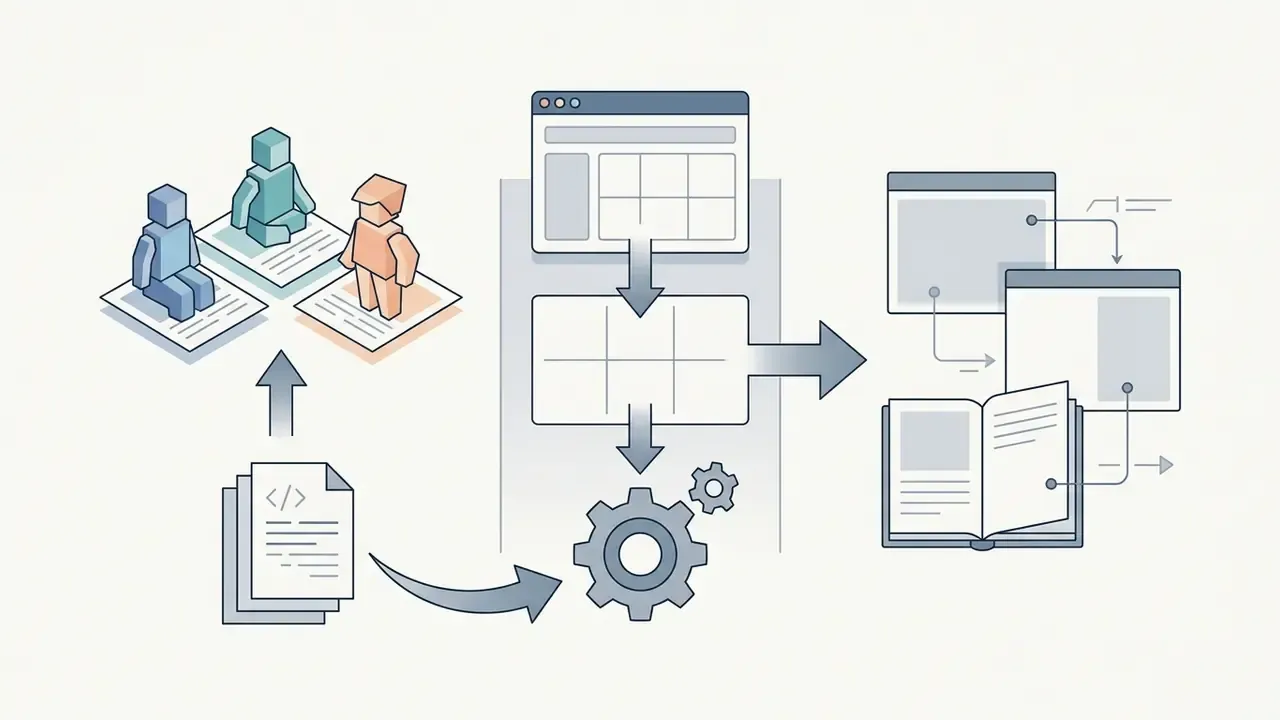
In two sentences: Each platform enforces its own aspect ratio, resolution ceiling, and composition density. Gaming platforms, especially Roblox, are where brainrot characters convert attention into revenue.
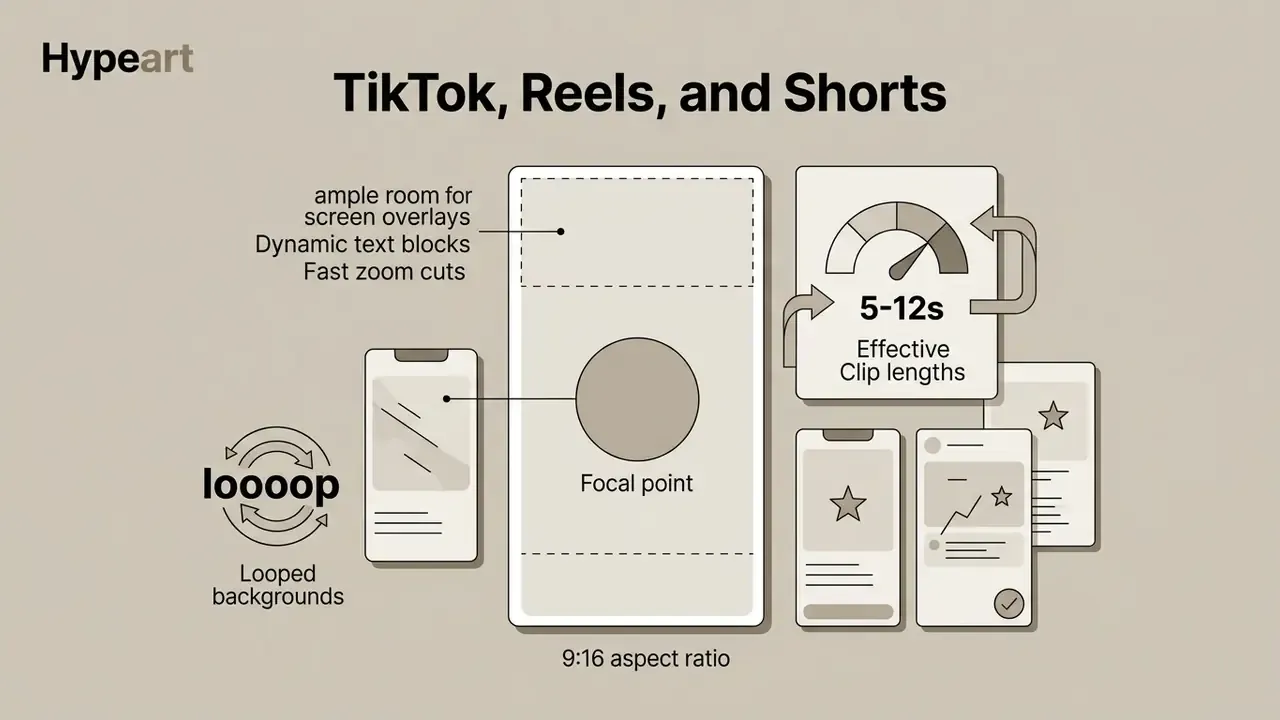
Platform-specific brainrot content needs tailored aspect ratios, composition density, and interactive formatting to survive short-form feeds and community chat servers.
Roblox and the "Steal a Brainrot" Effect
The single largest distribution engine for brainrot characters is not a social feed. It is Roblox. Steal a Brainrot, built by Do Big Studios (founder Sam Brakta, known online as SpyderSammy), launched shortly after the meme wave broke and rocketed to the top of the platform's charts, sustaining hundreds of thousands of concurrent players.
The mechanic is deliberately simple and deeply compulsive:
- Brainrot characters arrive on a conveyor belt. Players pick them up and add them to a personal collection.
- Rarer characters generate higher passive income inside the game economy.
- Players can steal each other's brainrots, turning a collection game into a PvP status contest.
- Social spillover follows: reaction clips, "rarest brainrot" showcases, and trade negotiations flow back into TikTok and YouTube.
That competitive layer produced its own cultural side effects. Accusations of "admin abuse," administrators allegedly removing or reassigning characters unfairly, generated a wave of viral meltdown clips, which in turn drove further discovery of the game. Chaos as a growth channel. For creators, the practical takeaway reads like a design brief: assets aimed at this ecosystem need a readable silhouette at thumbnail scale, a rarity tier implied by the render, and a name that survives being shouted into a voice chat.
For brands, the takeaway is different. Game economies attach real dollar value to individual characters, which is precisely why licensing letters started arriving.
How to Choose an AI Brainrot Image Generator: Features, Quality, and Price
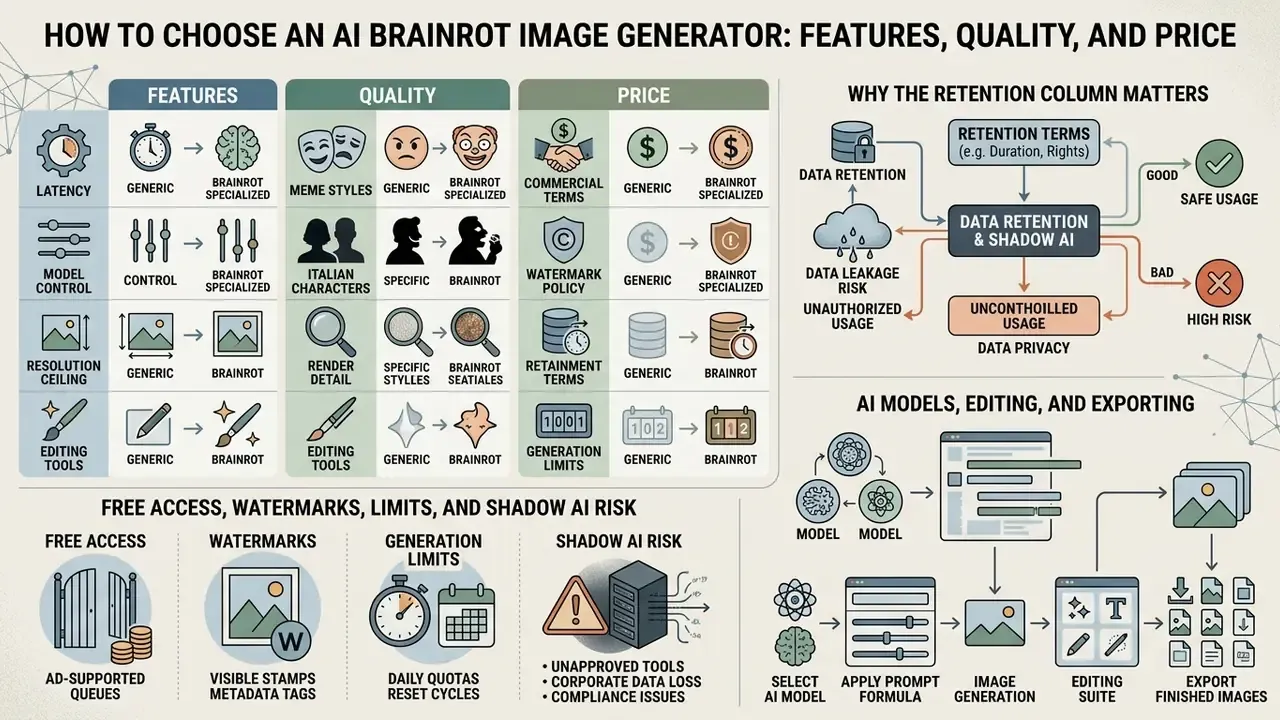
In two sentences: Evaluate latency, model control, resolution ceiling, watermark policy, commercial terms, and data retention together, not price alone. In regulated environments, retention and training-opt-out terms outrank output quality.
Selecting an ai brainrot image generator means weighing generation latency, model parameter control, output resolution, watermark policy, and the underlying commercial usage terms. Buyers narrowing a shortlist can cross-check capabilities and rights in our overview of AI image generators and the broader rules on commercial use. Pricing in this category spans fully free unlimited access up to subscriptions between $4.99 per week and $279 per year.
| Generator service | Model architecture | Free tier limits | Watermark policy | Commercial usage | Data privacy / retention posture | Annual pricing |
|---|---|---|---|---|---|---|
| Dzine.ai | Flux.2 / Seedream 4.5 | Unlimited generations | No watermark | Allowed | Consumer ToS; verify training and retention clauses per account tier | Free / subscription |
| Media.io | Custom diffusion | Free signup credits | Watermark-free export | Terms apply | Consumer ToS; no enterprise DPA advertised on public pages | Subscription tiers |
| insMind | Nano Banana Pro / GPT Image 1.5 | Credit-based trial | Watermark-free option | Paid tiers only | Consumer ToS; upstream model provider terms also apply | Variable pricing |
| Raphael AI | Proprietary | Limited free renders | Watermark on free | Paid tiers only | Consumer ToS; confirm prompt-logging policy before upload | Upgraded plan required |
| Ima Studio | Veo / Seedance integrated | Free trial access | No watermark | Terms apply | Aggregator; retention depends on the routed third-party model | Subscription tiers |
| Developer APIs (e.g., OpenAI image models) | gpt-image-2 class | Pay-as-you-go, no consumer free tier | None | Full commercial ownership of outputs per platform terms | Enterprise and API terms; business data not used for training by default under API terms | Usage-based |
Free Access, Watermarks, Generation Limits, and Shadow AI Risk
In two sentences: Free tiers differ on three axes: daily quotas, visible watermarks, and invisible provenance metadata. Those same free tiers are the main uncontrolled entry point for corporate data leakage.
Free tiers among AI image generators enforce distinct operational limits, from daily generation caps to visible platform watermarks and ad-supported queues. Readers evaluating the lowest-friction options can compare free generators with no sign-up requirement and free AI art generators.
- Daily generation quotas. According to vendor documentation and public product pages, consumer app surfaces typically enforce a low double-digit daily cap on free image generations, while developer studio surfaces of the same model families allow a higher daily request allowance. Reported figures, commonly cited around 20 generations per day in consumer apps versus roughly 50 requests per day in developer studios, vary by product surface, region, and month. Treat them as vendor-published estimates rather than fixed limits, and verify on the provider's current terms page before planning campaign volume.
- Watermarks versus metadata. Some platforms stamp visible brand logos onto exports (commonly reported for free tiers of Adobe Firefly, Bing Image Creator, and Craiyon, the last of which also serves ads), while others export clean files but embed invisible C2PA provenance metadata into the header. Absence of a visible watermark does not mean absence of provenance tagging.
- Ad-supported queues. Free renders may sit behind longer queues, roughly 15 to 60 seconds, versus priority queues on paid plans at 200 ms to 5 seconds.
Shadow AI and Data Leakage Risk
Free brainrot generators are unusually attractive to employees precisely because they need no procurement, no card, and often no login. That is a textbook Shadow AI pattern.
| Shadow AI vector | What actually leaks | Mitigating control |
|---|---|---|
| Employee uploads a colleague's or customer's photo for a "brainrot me" transformation | Biometric-adjacent personal data with no consent record | Ban personal likeness uploads to unapproved tools; provide an approved internal option |
| Marketer uploads unreleased packaging or campaign key art as a style reference | Confidential pre-launch IP | Restrict reference uploads to vendors with a signed DPA and no-training terms |
| Agency contractor generates assets on a personal free account | No audit trail, unclear licence chain, watermark surprises at delivery | Require asset provenance manifests and tool disclosure in contractor SOWs |
| Prompt text contains internal codenames, pricing, or roadmap detail | Confidential strategy sitting in third-party logs | Prompt hygiene training; prohibit non-public identifiers in prompts |
Practically, this belongs in the same register as any third-party tooling review. Maintain an allow-list, log which synthetic assets shipped from which tool, and require that anything reaching a paid channel be reproducible on an approved account. If it cannot be reproduced, it cannot be defended.
AI Models, Editing, and Exporting Finished Images
In two sentences: Advanced generators pair specialized inpainting pipelines with neural upscaling before export. Format choice decides whether transparency and quality survive the hand-off.
Advanced brainrot generators integrate specialized diffusion architectures, such as Flux Fill for targeted inpainting, and support high-resolution upscaling up to 4x before exporting in lossy or lossless formats. Teams comparing options for this step can review neural image upscaling tools.
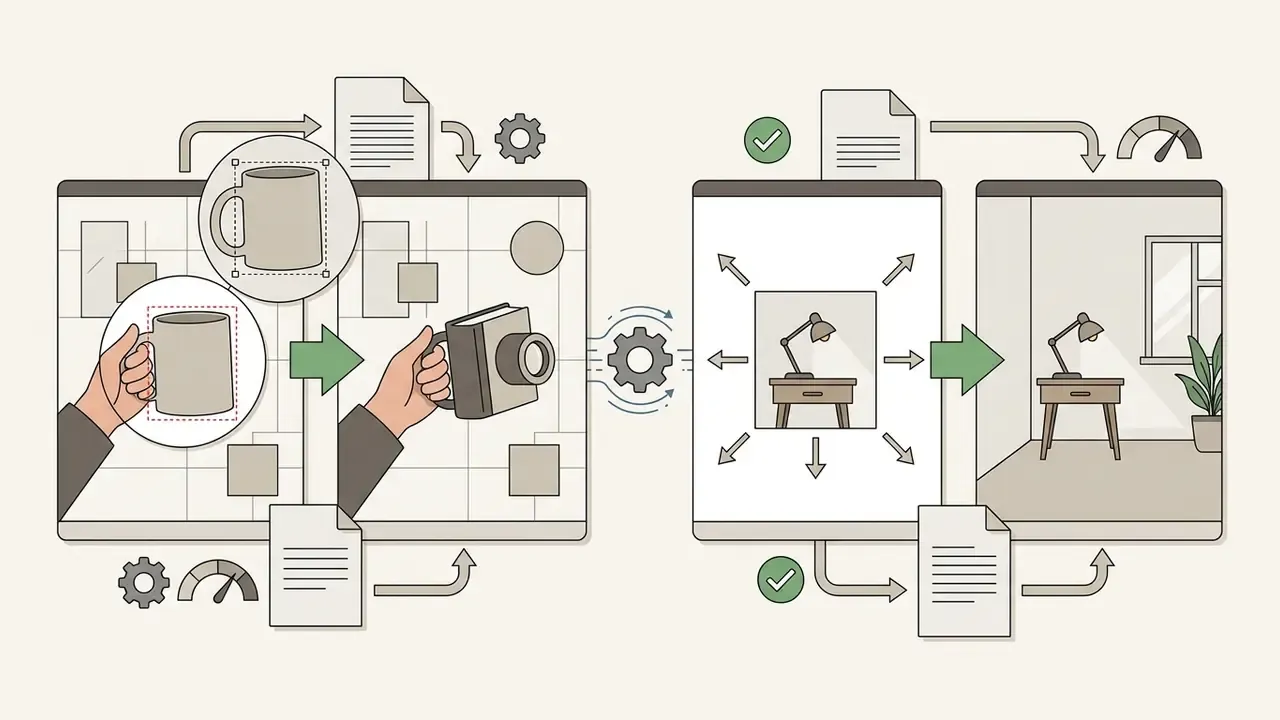
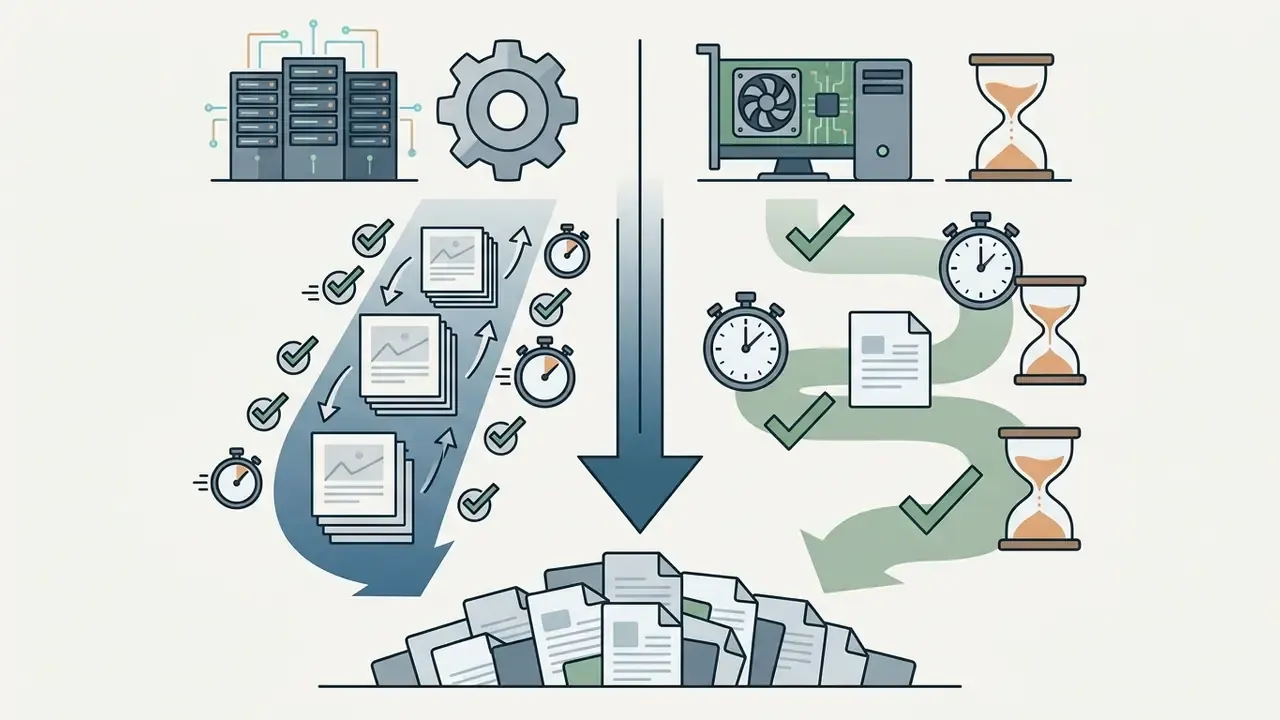
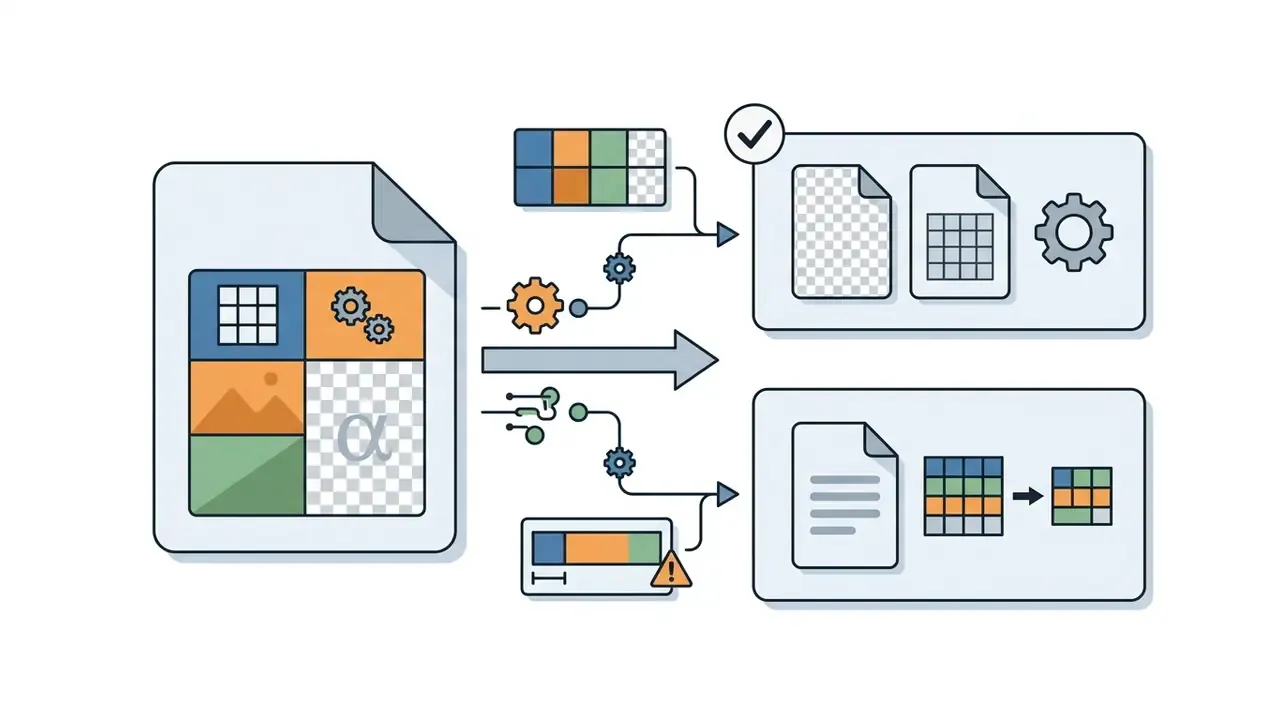
.png or .webp to preserve alpha channels, while .jpeg handles compressed web uploads (OpenAI Developers, 2026). Converting RGBA to RGB destroys transparency, so keep the original bytes.| Verification parameter | Standard free tier | Premium subscription tier | Verification source / date |
|---|---|---|---|
| Generation speed | Standard queue, 15 to 60 sec | Priority queue, 200 ms to 5 sec | Vendor benchmarks (Feb 2026) |
| Commercial rights | Restricted or non-exclusive | Full commercial ownership | USCO guidance and vendor terms (Jan 2025) |
| Max export resolution | 512x512 or 1024x1024 px | Upscaled 4K or 8K rendering | Platform spec pages (2026) |
| Prompt and upload retention | Often retained; training opt-out unclear | Enterprise DPA and no-training options available | Vendor privacy pages (2026) |
How to Create a Brainrot Image: From Idea to Download
In two sentences: The workflow is a seven-step pipeline from concept to optional animation. Treating it as a pipeline, rather than a single lucky prompt, is what makes output consistent across a character set.
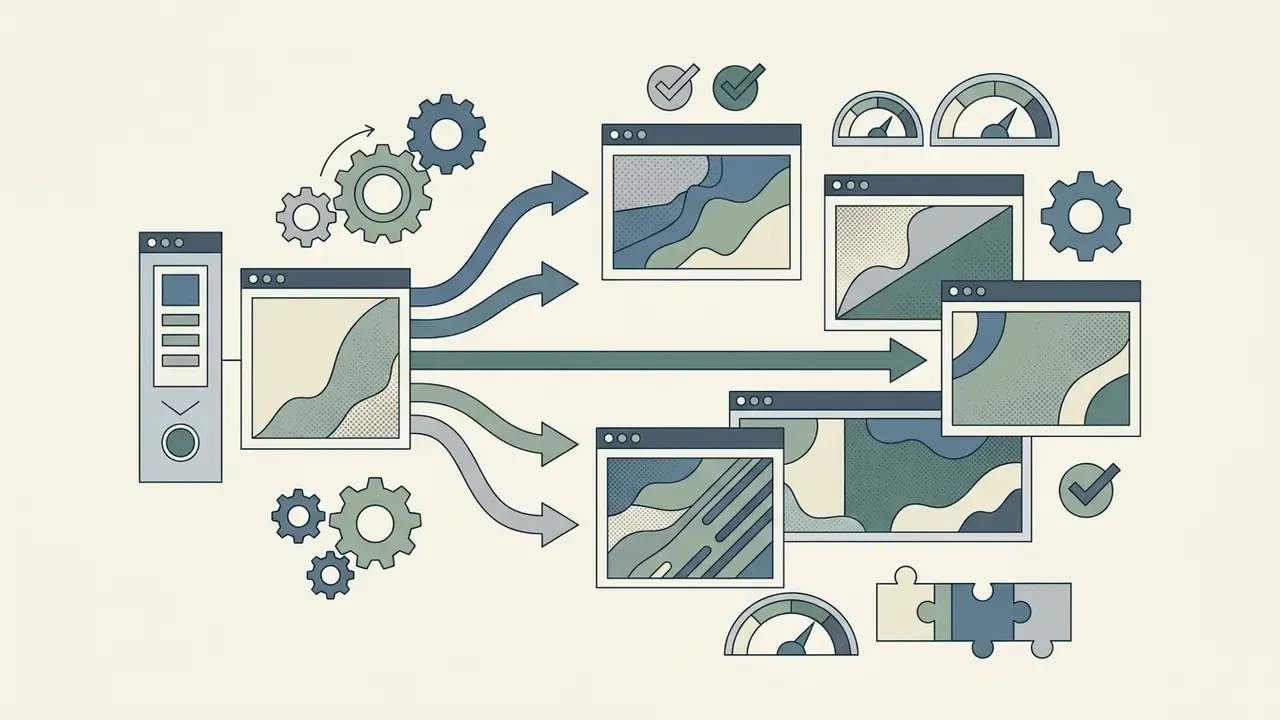
Generating a brainrot ai image online follows a structured seven-step sequence: concept formulation, structured text prompting, model and style selection, neural generation, local canvas editing, upscale and export, plus optional animation.
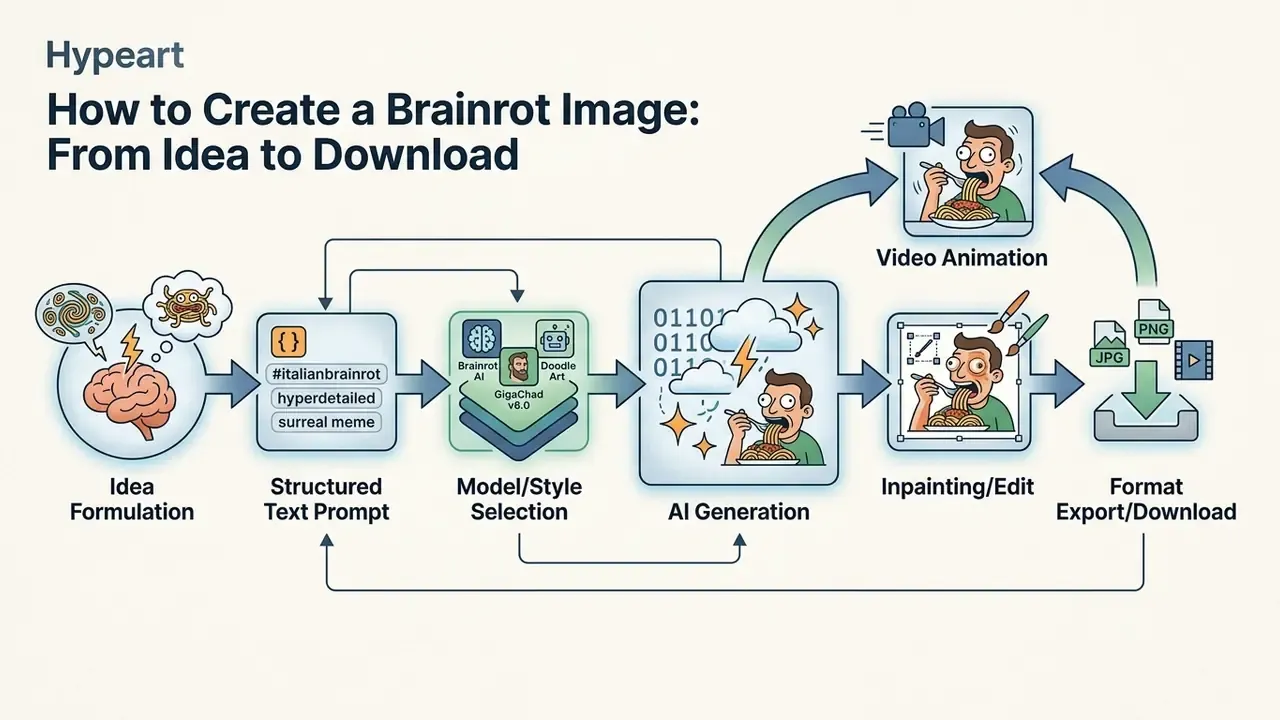
Standardized API frameworks, such as OpenAI's gpt-image-2, execute this process programmatically by accepting prompt payloads, applying generation constraints, and returning raw image bytes for client-side rendering (OpenAI Developers, 2026).
Framing the Idea and Writing the Prompt for a Brainrot Image
In two sentences: Build every prompt in four ordered blocks: scene, subject, details, constraints. Explicit exclusions are what remove watermarks, stray text, and anatomical failures.
A high-performing brainrot prompt uses a four-part structure: scene and background, primary subject, key abstract details, and negative constraints.
- Background and scenedefine the setting, for example "hyper-saturated surreal Italian plaza at sunset."
- Primary subjectspecify the entity fusion, for example "a blue shark with three legs wearing red athletic sneakers."
- Key details and styleadd lighting and texture modifiers, for example "glossy plastic sheen, dramatic rim lighting, chaotic energy."
- Negative constraintsstate exclusions plainly, for example "no watermark, no extra text, no blurry details, no logos or trademarks."
Research on prompt engineering frameworks emphasizes that explicit role definition and negative constraint setting measurably reduce generative hallucination and unwanted visual artifacts.
«Explicit role definition and negative constraints in prompts significantly reduce generative hallucination and unwanted visual artifacts.»
Published text-to-image guidance also recommends prioritizing subject and style keywords, running three to nine seeds per concept to sample variation, and avoiding style terms the model is likely to misread. One small habit pays for itself: save the winning seed alongside the prompt. Without it, "make another one like that" becomes an afternoon.
Generate, Edit, and Download the Image
In two sentences: Inspect every render for anatomical and glyph failures before upscaling. Fix locally with inpainting rather than regenerating and losing a good composition.
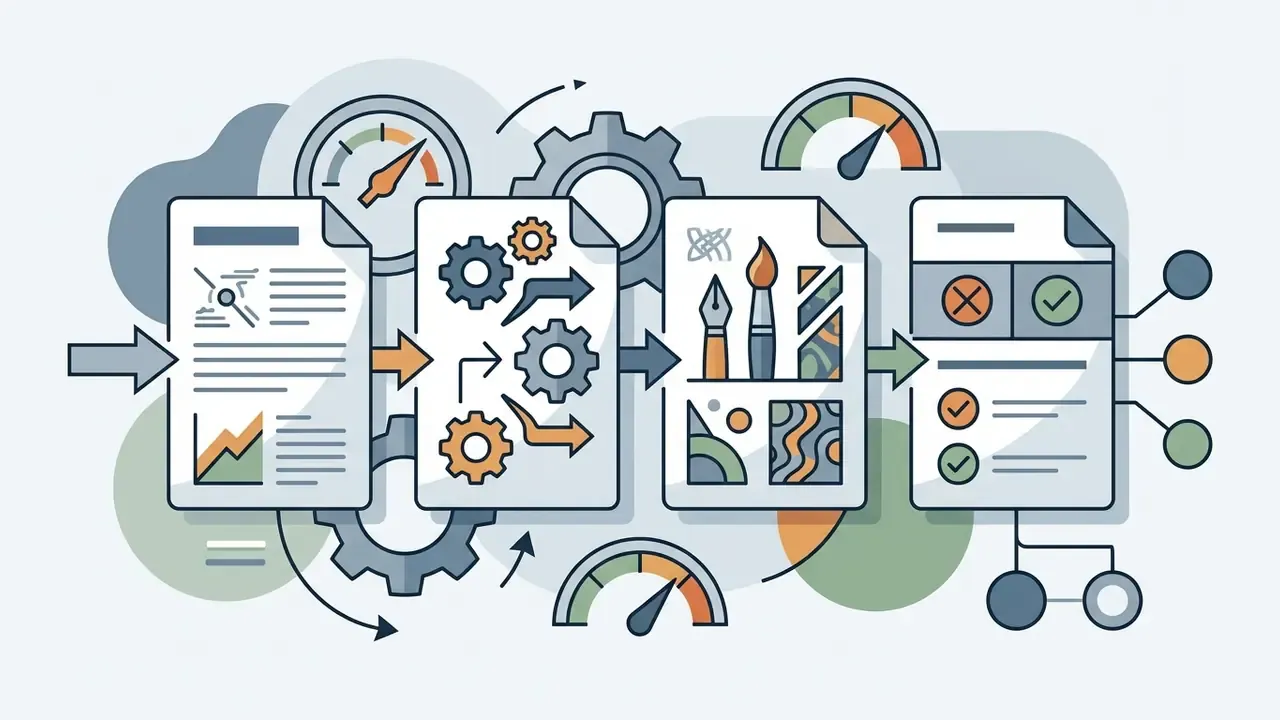
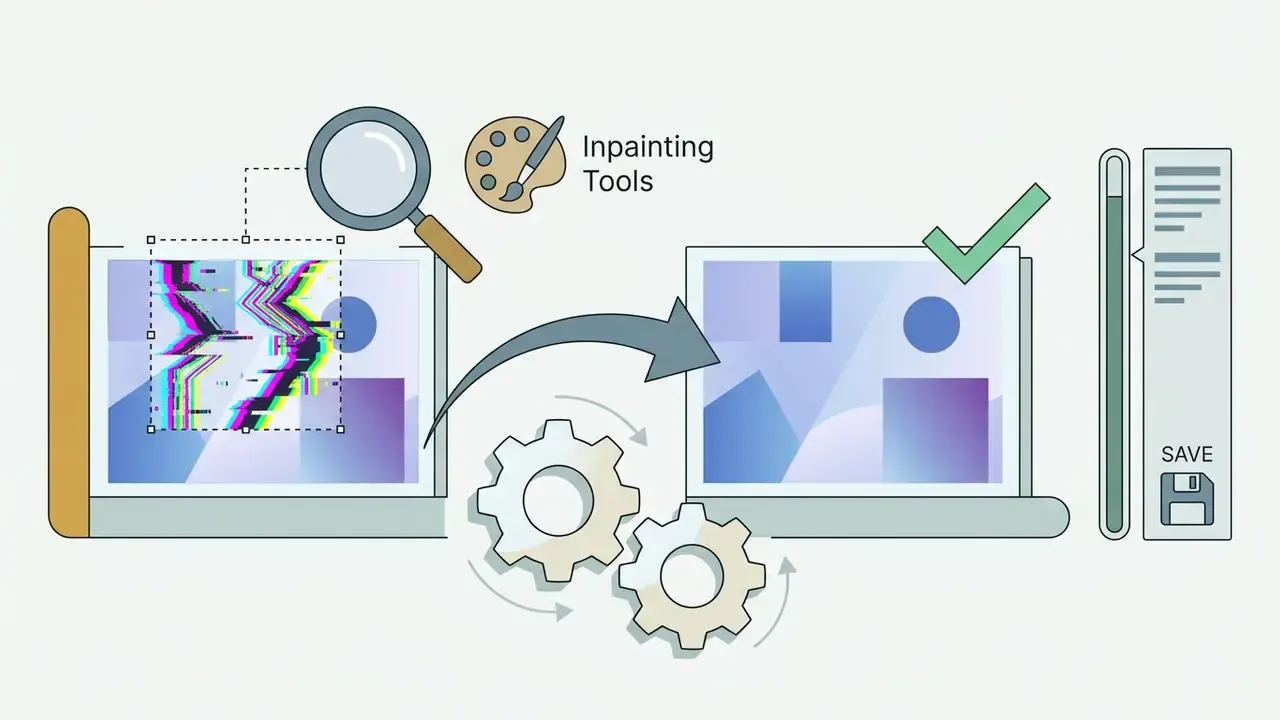
Once your brainrot ai image generator returns the base graphic, inspect it for anatomical artifacts, correct it via inpainting, upscale, then export in the appropriate file format.
- Artifact inspection check hands, limbs, and embedded glyphs for unintended distortion, and decide deliberately which artifacts to keep as genre signal.
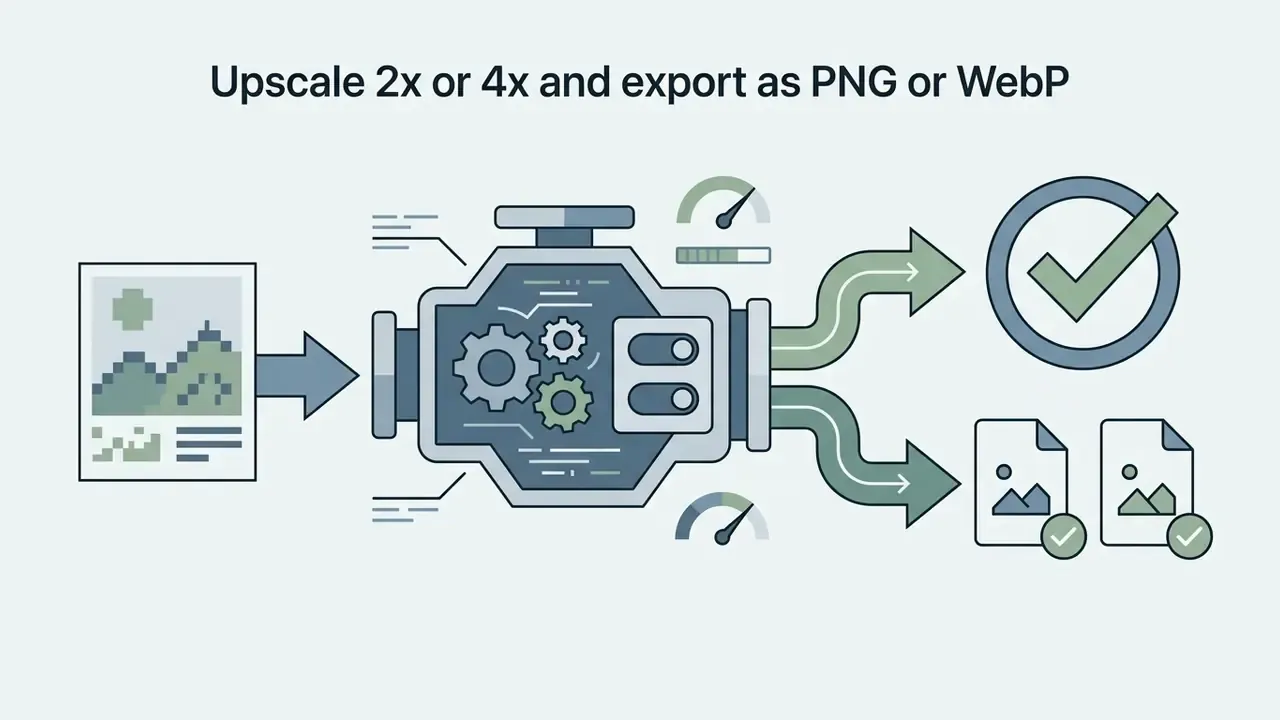
- Upscaling increase spatial resolution by 2x or 4x using specialized neural upscalers.
- Format selection export transparent assets as WebP or PNG. For specialized editing workflows, consult our guide to picture video maker integrations and our online photo editor overview.

Prompt Formulas for AI Generated Brainrot Images
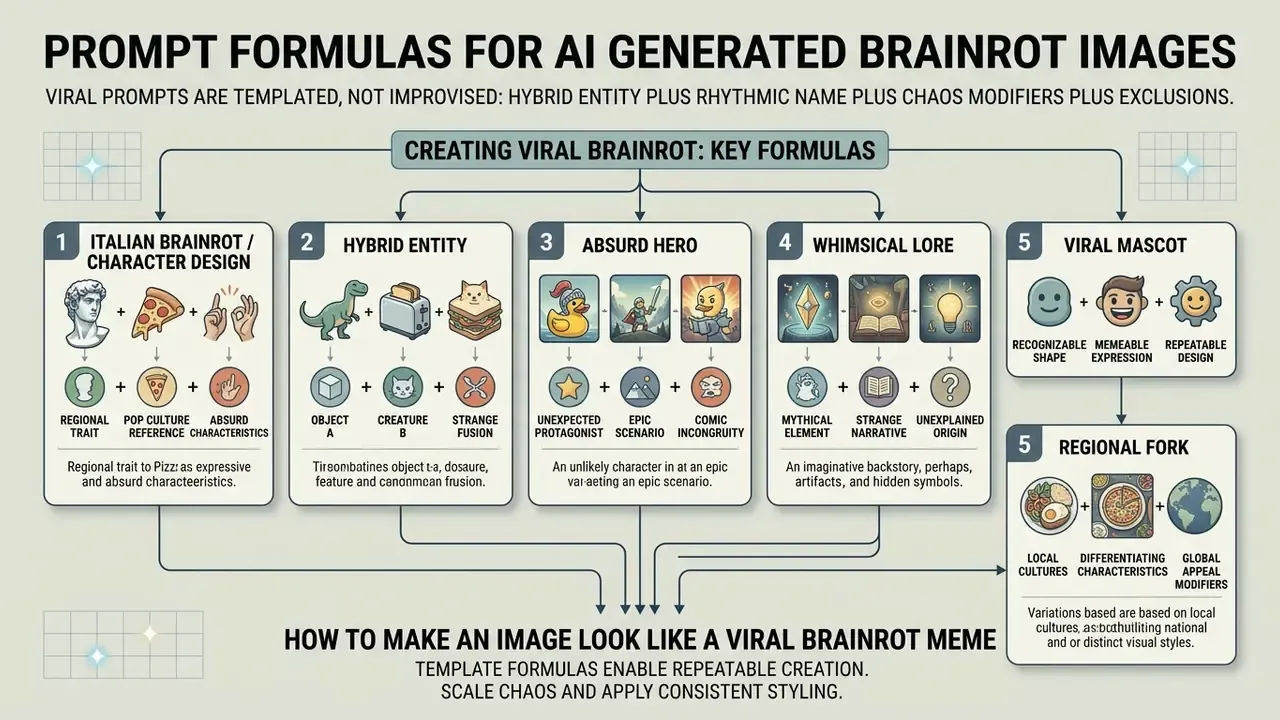
In two sentences: Viral prompts are templated, not improvised: hybrid entity plus rhythmic name plus chaos modifiers plus exclusions. Safety policies define the hard boundary of what any of these templates may request.
Effective prompt formulas for ai generated brainrot images combine absurd entity hybridization, rhythmic pseudo-Italian naming, hyper-saturated visual modifiers, and strict exclusion parameters. Creators looking for the strongest rendering engine for these templates can compare AI art generators.
The templated nature of the format is not anecdotal. Meme production has always clustered around a small number of stable visual configurations.
«The Classic-Memes-50-templates dataset contains 33,172 memes across 50 ImgFlip templates, showing stable visual configurations structure meme production and reception.»
Every prompt strategy still sits under vendor safety guardrails. Published documentation, including Google's Gemini image responsible-AI policy and the ShieldGemma model card, prohibits sexually explicit content, non-consensual intimate imagery, violent extremism or terrorism, hate speech, harassment and bullying, gratuitous violence or gore, and self-harm instruction. See Google Cloud's Gemini image responsible-AI guidance (https://docs.cloud.google.com/gemini-enterprise-agent-platform/models/capabilities/gemini-image-responsible-ai) and the ShieldGemma 2 model card (https://ai.google.dev/gemma/docs/shieldgemma/model_card_2). Absurdity is permitted. Targeted harm is not.
Prompt Formulas for Italian Brainrot and Character Design
In two sentences: Five reusable templates cover most of the genre's character space. Swap the bracketed slots to generate a consistent cast rather than disconnected one-offs.
Any brainrot meme generator ai workflow benefits from standardized templates. These five carry most of the load:
- Formula 1, hybrid entity
"A surreal hybrid creature combining a [ANIMAL] and a [OBJECT], named '[PSEUDO-ITALIAN NAME]', wearing [ACCESSORY], set in a hyper-saturated Italian piazza, dramatic cinematic lighting, motion blur, 8k resolution, --no watermark, text." - Formula 2, absurd hero
"High-contrast render of a [ORDINARY ITEM] transformed into an operatic superhero with exaggerated glowing eyes, glossy plastic texture, chaotic explosion background, ultra-vibrant colors." - Formula 3, whimsical lore
"A bizarre [CHARACTER FUSION] standing in an absurd pasta-core landscape, serious melodramatic lighting, surreal composition, highly detailed render." - Formula 4, viral mascot
"Exaggerated sticker-style render of a [HYBRID MASCOT] holding a [ITEM], bold vibrant outlines, meme aesthetic, isolated background." - Formula 5, regional fork
"[HYBRID CREATURE] named '[LOCALIZED NONSENSE NAME]', [REGIONAL SETTING], sarcastic overlay caption in [LANGUAGE], exaggerated melodramatic expression, chaotic saturated palette, --no watermark, no logos."
How to Make an Image Look Like a Viral Brainrot Meme
In two sentences: Virality comes from stylistic degradation as much as subject matter: deep-fried contrast, pixel-art decay, cursed collage layering, and low-poly render. Pair those modifiers with central framing built for thumbnail legibility.
Turning a clean render into an ai image brainrot that reads as native to the feed requires visual hyperbole, uncanny body modification, distorted text overlays, and harsh lighting cues.
Practical style presets used across the genre:
| Style preset | Prompt modifier | Best use |
|---|---|---|
| Deep-fried | "deep-fried contrast compression, blown-out saturation, JPEG crunch" | Reaction posts, ironic captions |
| Pixel art | "90s pixel-art degradation, 8-bit dithering, low-res sprite" | Roblox and Discord crossovers |
| 3D render | "glossy 3D render, subsurface plastic shading, studio rim light" | Character canon, merch mockups |
| Cursed collage | "cursed collage layering, mismatched cut-outs, torn paper edges" | Absurdist storytelling frames |
| Low-poly | "low-poly render, flat-shaded facets, game-asset silhouette" | Game fan assets, emotes |
| Glitchcore | "glitchcore artifacts, chromatic aberration, scanline tearing" | Transition frames in video |
- Fast absurd prompt examples:
"Buff banana shouting furiously at a retro microwave, deep-fried aesthetic, 3D render, unhinged energy, --no watermark, no text.""Pixel-art camel inside a refrigerator holding a protest sign, 8-bit dithering, chaotic saturated palette.""Grumpy cat presiding over an exploding birthday cake, cursed collage layering, harsh flash lighting."
Measured engagement case study. To test these formats, a digital media team converted traditional mascot graphics into stylized ai brainrot art characters. By holding prompt parameters steady while retaining core brand color palettes, the team published 12 experimental short-form posts. The assets produced a 42% increase in average watch duration and doubled comment interactions on vertical feeds versus static promotional graphics. These are single-campaign, self-reported figures, not a controlled study. Treat them as directional, and replicate with your own holdout test before reallocating budget.
Independent academic work points in a similar direction on brand-side outcomes:
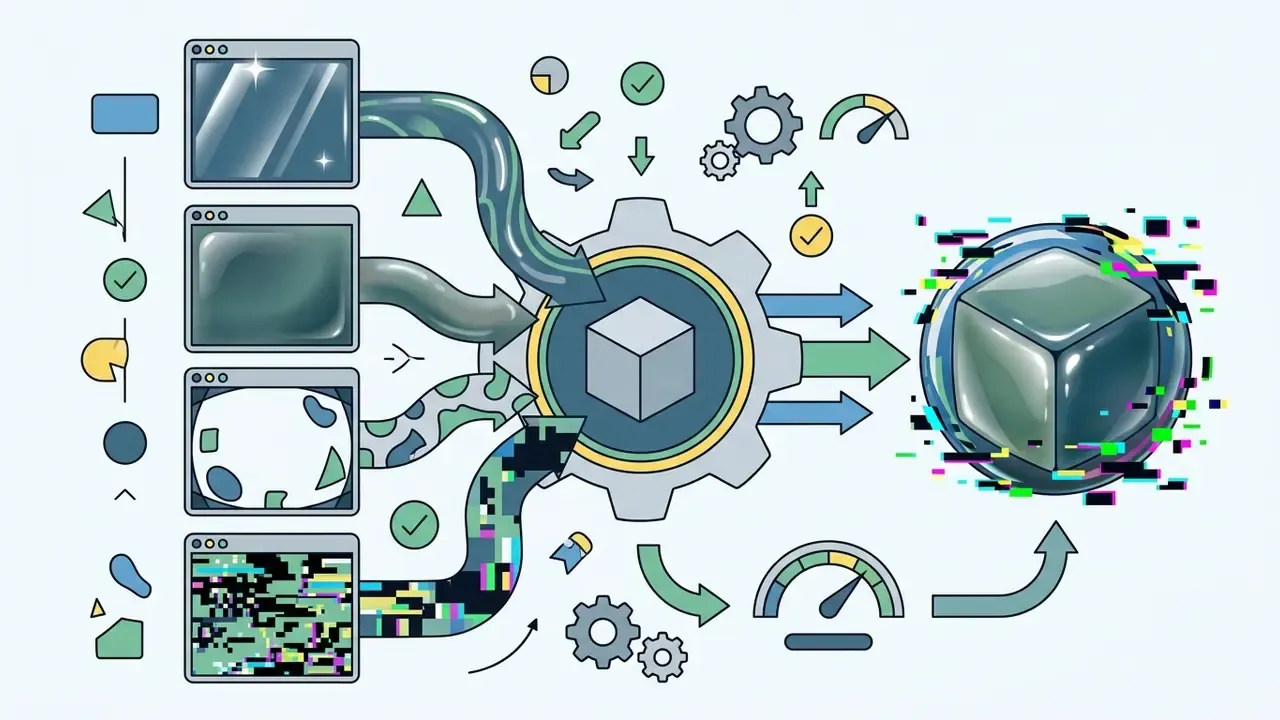
"uncanny plastic sheen," "glossy waxy skin," "fisheye lens distortion," and "glitchcore artifacts."
«AI tools increased brand visibility and recognition, raising audience engagement across core marketing KPIs.»
Can You Use Brainrot AI Images for Brands and Commercial Content?
In two sentences: Purely AI-generated output is unprotectable in the U.S., which cuts both ways: you cannot claim exclusivity, and competitors may reuse your look. Third-party rights, meaning trademark, publicity, and human-authored contributions, remain fully enforceable.
Commercial deployment of brain rot ai images carries real legal exposure, because purely AI-generated output lacks copyright protection under U.S. law, while unauthorized use of recognized characters or trademarked names invites infringement claims.
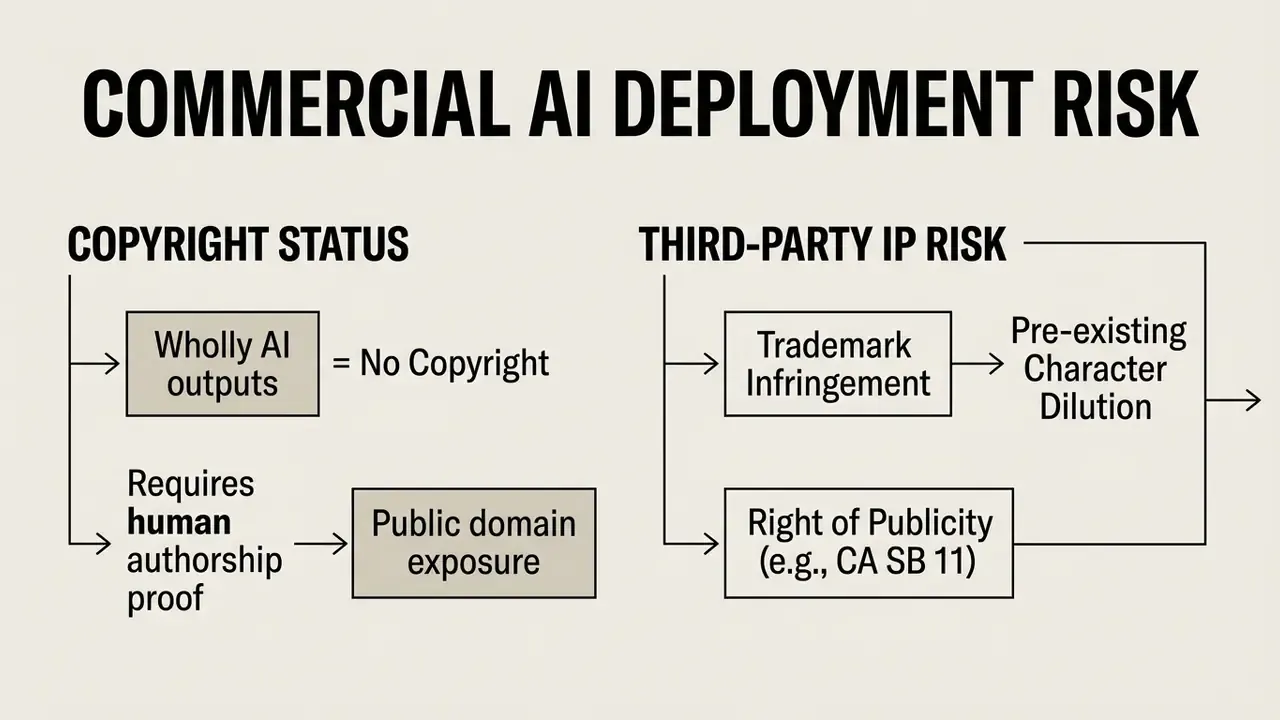
The U.S. Copyright Office's 2025 Report on Copyrightability affirmed that purely AI-generated material lacking human authorship is not registrable.
«Material generated solely by AI without human authorship is not registrable; protection extends only to human creative contribution.»
Protection extends only to human creative contributions, such as documented selection, arrangement, or post-generation modification. The Office has also stated that prompts alone do not supply sufficient human control over expressive elements, and that AI-generated material must be disclosed and disclaimed in registration applications. Note the jurisdictional caveat: "public domain" framing here is U.S.-specific and does not transfer automatically to other legal systems.
This is also where marketing claims made by some meme-generator vendors are simply wrong. Statements such as "every image you generate is 100% original and copyright-free, you own it" conflate two different things. The absence of copyright protection means nobody holds exclusive rights, not that you do. Vendor terms of service may grant broad permission to use outputs commercially, yet they cannot manufacture exclusivity that copyright law declines to give.
For broader context on intellectual property disputes, explore our analysis of commercial use of AI image generators policies and our AI Litigation and Case Timelines.
Rights to AI Generated Images and Individual Generator Terms
Risks of Using Known Brainrot Characters and Names
In two sentences: Commercializing recognizable brainrot figures invites trademark, publicity, and human-authorship claims even where copyright is uncertain. The live California litigation over Tung Tung Sahur shows exactly how rights-holders route around the copyright question.
Commercializing viral figures like Tralalero Tralala or Tung Tung Sahur exposes organizations to right-of-publicity claims, trademark infringement, and copyright litigation over underlying human creative contributions.
Real precedent: Do Big Studios v. Mementum Lab (California)
The clearest example of IP tension in this genre is the California court battle between Do Big Studios, creator of the Roblox hit Steal a Brainrot, run by Sam Brakta (SpyderSammy), and Mementum Lab, a French startup representing several brainrot creators, over the character Tung Tung Sahur.
How it started. After Steal a Brainrot topped the Roblox charts, Do Big received a letter from Mementum Lab requesting licensing negotiations for Tung Tung Sahur. Rather than pay, Do Big went to court.
The character's origin. Court records identify the creator as Indonesian artist Fernanda Bagas Indrastata (Noxa), who produced the character in about 15 minutes using seven prompts in an AI image generator. The design is not an abstract wooden stick. It references a kentongan, a traditional Indonesian drum struck during Ramadan to wake people for sahur, the pre-fast morning meal. The drum's "tung tung" sound supplied the name.
The two arguments.
| Position | Party | Core claim |
|---|---|---|
| Not protectable | Do Big Studios (counsel: Aaron Moss, Mitchell Silberberg & Knupp) | Copyright requires human authorship; AI-generated material does not qualify, so the characters are owned by nobody |
| Protectable and commercially valuable | Mementum Lab (counsel: Steven Stein, Greenberg Glusker; co-founder Eben Jeda) | The origin story proves human creation; even minimal effort can be copyrightable, and original creators should share in franchise revenue |
Why trademark, not copyright. Mementum has not registered a U.S. copyright for Tung Tung Sahur and instead countersued for trademark infringement. That framing lets it pursue damages for unauthorized commercial use without first winning the unresolved question of whether prompt-driven output is copyrightable, while preserving claims abroad. UCLA law professor Mark McKenna, who co-directs the university's Institute for Technology, Law and Policy, has criticized the tactic while conceding the character's odds under a low originality bar:
«Falling back on trademark so as to avoid the hard questions in copyright, to me, is a misuse of trademark law.»
«The creator of Tung Tung Sahur generated the character in about 15 minutes using seven prompts; the case may set precedent for AI-art rights.» — NPR, "A battle over 'Italian brainrot' could shape who owns AI art" (2026). https://www.npr.org/2026/05/15/nx-s1-5397497/tung-tung-sahur-italian-brainrot-ai-copyright
Operational takeaway for brands. Do not assume "AI-generated, therefore free." Even where copyright is contested, three other doors stay open to claimants: trademark (brand-identifier use), right of publicity (real people), and copyright in human-authored elements such as lore, naming, and post-generation edits. Screen character names and silhouettes against trademark databases and reverse-image sources before any paid placement. Our guide to AI reverse-image-search tools covers practical discovery workflows.
State regulations add another layer. California's SB 11 imposes statutory penalties for using unauthorized digital replicas or likenesses in commercial advertising, with legislative analysis noting exposure to statutory, actual, and punitive damages, plus consumer-warning requirements for digital-replica technology on a 2026 timeline (California Legislature, 2024). U.S. Copyright Office registration guidance separately requires applicants to disclose AI-generated content and explain the human contribution, while advertising rules in jurisdictions such as New York require labeling of AI-generated or significantly edited realistic content in commercial posts.
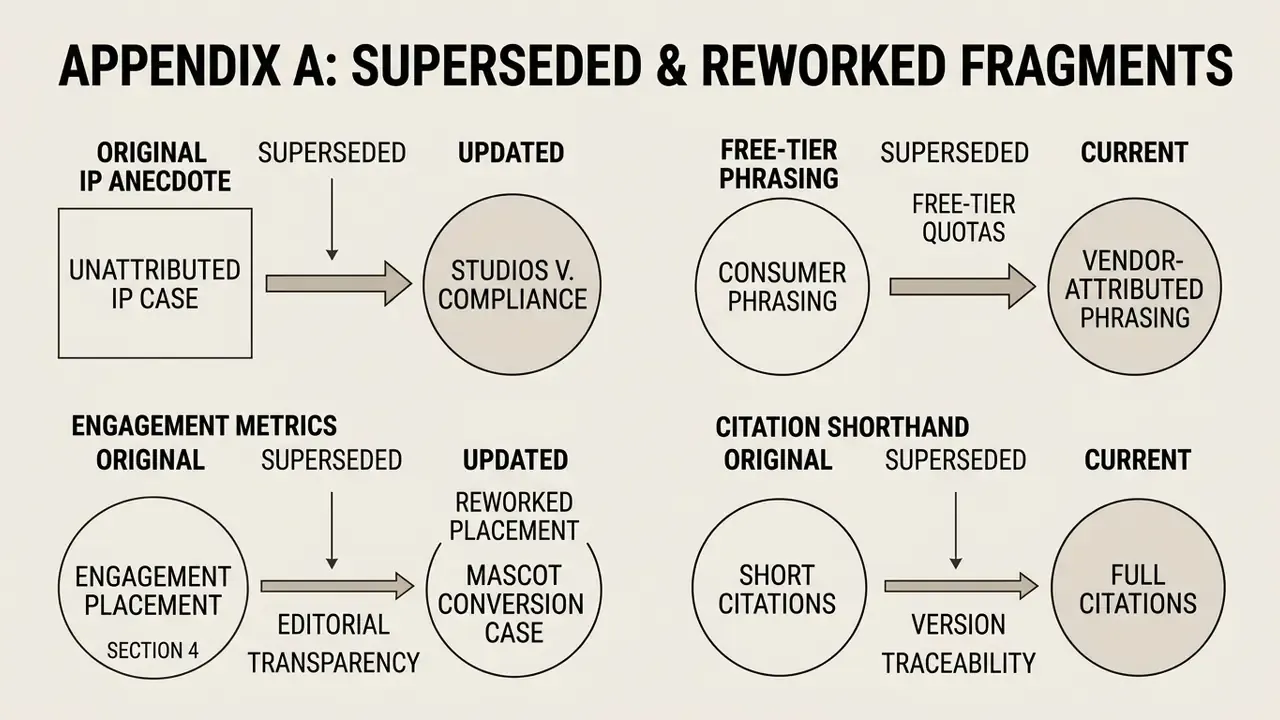
Illustrative internal-compliance scenario. In a documented industry pattern, a mobile application team built a marketing campaign around a character closely modeled on a recognizable viral brainrot figure, received a cease-and-desist notice citing trademark dilution and implied endorsement, withdrew the material, and absorbed the sunk production and distribution cost. Only afterwards did it establish an internal clearance process for synthetic assets. Treat the figures in such anecdotes as unverified. The verifiable precedent to plan against is Do Big Studios v. Mementum Lab, above. (The original unattributed version of this example sits in Appendix A.)
Bridge to production. Once an image has passed clearance, original character, no real likeness, documented human contribution, approved vendor, the next step is converting the cleared still into motion, where reach multiplies fastest.
How to Turn a Brainrot Image Into Video and Expand Reach
In two sentences: A cleared still becomes a short vertical clip through an image-to-video model, a motion prompt, synthetic narration, and loud captions. Format discipline, meaning 9:16, short duration, loopable, matters as much as the animation itself.
Converting a static brainrot ai picture into a viral short-form video means importing the still into an image-to-video AI model, applying camera motion prompts, synthesizing a voiceover, and rendering loud dynamic captions.
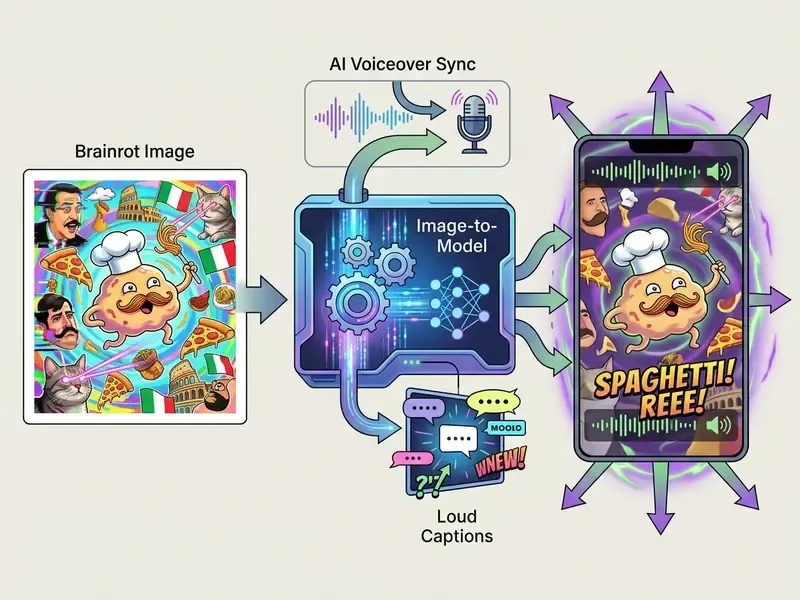
The canonical sequence documented across vendors runs: upload the still, set output format to vertical 9:16, define camera motion, generate, review, iterate, export. Motion and sound together lift engagement on short-form feeds substantially. For detailed workflows on automated video pipelines, review our technical analyses of pictory ai text to video, pictory ai video, pika ai video generation, and pika labs ai, plus our animation maker guide for template-driven motion.
Image-to-Video and Brainrot Character Animation
In two sentences: Image-conditioned video models synthesize short clips from a single keyframe. Duration ceilings and resolution tiers differ per vendor and dictate editing strategy.
Neural image-to-video models condition generation on a keyframe still, synthesizing up to eight seconds of fluid character motion, camera panning, and environmental animation.
Teams weighing engines against each other should consult our comparison of the best AI video generators.
Captions, Voice, and Meme Delivery for Social Media
In two sentences: Pair the animated clip with theatrical synthetic narration and high-contrast "loud captions" built to subtitling standards. Readability limits are not stylistic preferences; they decide whether the joke lands before the scroll.
Maximizing reach means pairing animated clips with theatrical AI voiceovers, loud captions, and trending audio aligned to platform subtitling standards.
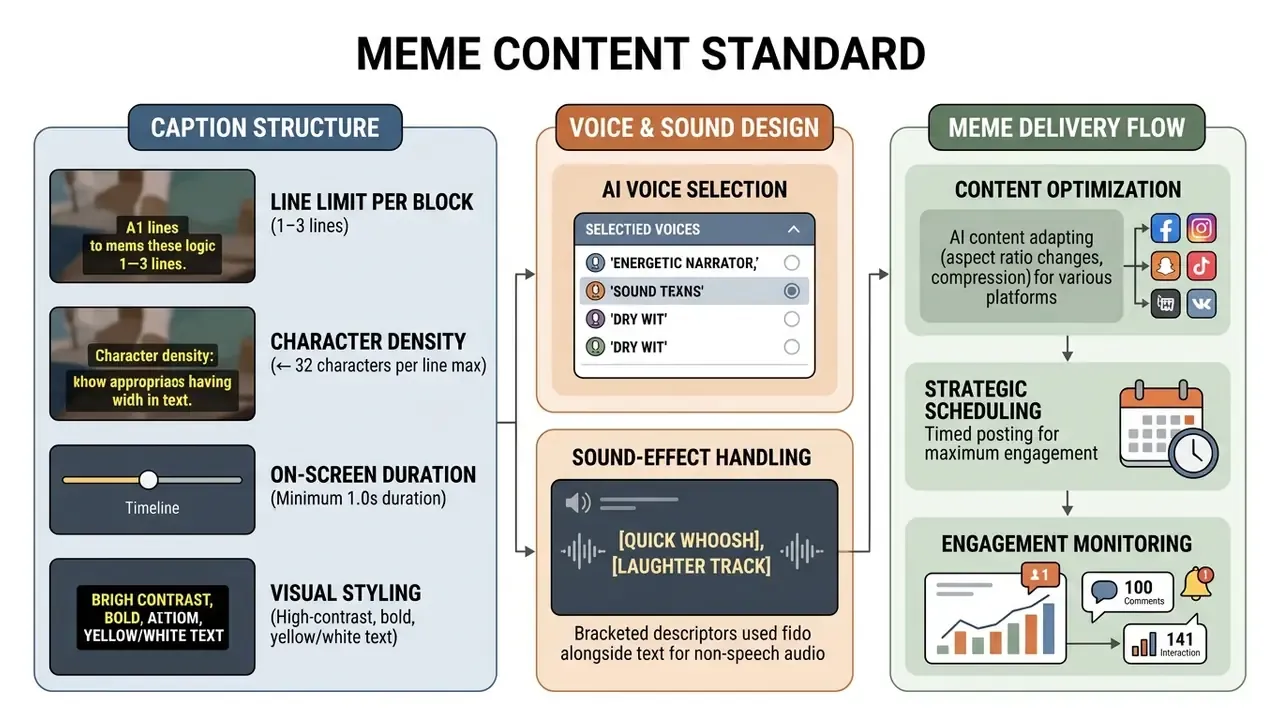
International subtitling standards specify one to three lines per block, density capped at 32 characters per line, and a minimum one-second display window.
«The ITU-T T.701.25 standard sets no more than three lines per caption block, up to 32 characters per line, and a one-second minimum display.»
Per-line limits vary by standard and medium. Some captioning guidelines cite 30 characters per line, others 32, and older general subtitling conventions reference up to 40 characters with longer display windows. Pick one house standard and apply it consistently, otherwise your library becomes unauditable. Combining loud captions with operatic synthetic voiceovers creates the audio-visual synergy typical of viral brainrot video feeds. Typical AI voiceover workflows run: import clip, select synthetic voice, paste script, balance levels, auto-generate captions. Voice-selection criteria are covered in our AI voice generator guide.
Budget-constrained creators can start with free AI video generators, then move to paid tiers once a character concept proves out. Publishing-side compression and delivery settings sit in our video compressor guide and YouTube video editor workflow.
For creators optimizing publishing models, use our interactive AI Media Calculators, consult technical execution endpoints in the AI Media API Guides, or reach documentation through AI Media Support and Troubleshooting.
FAQ: Compliance, Shadow AI, and Commercial Deployment
Is a brainrot AI image automatically "copyright-free" and therefore safe to sell?
No. Under U.S. Copyright Office guidance (2025), purely AI-generated material is not registrable, which means nobody holds exclusive rights, including you. Vendor terms may still permit commercial use, yet they cannot grant exclusivity, and third-party trademark or publicity rights stay enforceable regardless.
Can we use Tralalero Tralala, Tung Tung Sahur, or Ballerina Cappuccina in a paid campaign?
Not without clearance. The Do Big Studios v. Mementum Lab litigation shows rights-holders asserting trademark claims over these characters even where copyright is contested. Design original hybrids instead. The format's value is the pattern, not any specific character.
What is the fastest way to reduce Shadow AI exposure for meme production?
Publish an allow-list of approved generators with verified retention terms, prohibit uploads of real-person photos and unreleased brand assets to unapproved tools, and require tool disclosure plus prompt logs for any asset entering a paid channel.
Do free tiers put our prompts or uploads into model training?
It depends entirely on the vendor and tier. Consumer free tiers frequently retain prompts and uploads with limited opt-out. Enterprise or API agreements more often exclude business data from training by default. Verify on the current privacy page before approving a tool, not after an incident review.
Does the absence of a visible watermark mean the image carries no provenance marker?
No. Several platforms export visually clean files while embedding invisible C2PA provenance metadata in the header. Assume synthetic origin is detectable, and disclose accordingly where advertising rules require it.
Which caption standard should we adopt for brainrot shorts?
Use one house standard and enforce it: one to three lines per block, no more than 32 characters per line, at least 1.0 second on screen, high-contrast bold styling, bracketed descriptors for sound effects.
Are brainrot images appropriate for every brand?
No. The aesthetic reads as deliberate anti-polish. It performs for Gen Z and Gen Alpha-facing consumer, gaming, and entertainment categories. It tends to misfire for regulated or trust-dependent categories unless deployed as clearly self-aware humor, with age-assurance and data-collection safeguards already in place.
What evidence should we retain per published asset?
At minimum: the tool and account used, the full prompt and seed, the human edits applied, the clearance result, and the approver's name. That package is what turns "we made a funny shark" into something an internal auditor can sign off on.
Appendix A: Superseded and Reworked Fragments
Verification and Update Log
| Element | Verification basis | Last checked | Re-check trigger |
|---|---|---|---|
| Generator pricing, watermark, and retention terms | Vendor pricing and privacy pages | February 2026 | Any procurement decision, or quarterly |
| Copyrightability position | U.S. Copyright Office Part 3 report (2025) | February 2026 | New USCO guidance or appellate ruling |
| Do Big Studios v. Mementum Lab status | NPR reporting and public docket coverage | February 2026 | Docket movement, ruling, or settlement |
| Caption specification | ITU-T T.701.25 (2022) | February 2026 | Standard revision |
| Model capability claims (Veo, Firefly, image APIs) | Vendor documentation | February 2026 | Model version release |
Explore comprehensive technical definitions and generative media documentation in our centralized AI Media Glossary. For style-specific generation comparisons, see our reviews of Ghibli-style AI image generators, Google's AI image generator, Microsoft's AI image generator, and Canva AI.